Just when you thought Kevin Richard Martin's music couldn’t go any slower, lower or deeper, Sub Zero emerges. A slow-motion excavation of drug-tech, dub, dreamy noise and frozen ambience, the album gradually mutates into hypnotic pulsations and melodic melancholia. It is arguably Martin’s most striking release to date under his given name.
Originally released digitally on Bandcamp only in the depths of winter 2022, amid the final year of the COVID-19 pandemic and Russia’s initial invasion of Ukraine, this desolate epic went on to become KRM's best-selling digital album on the platform. With persistent demand for a vinyl pressing and a full DSP release from fans, Martin thought the time was right for Sub Zero to finally surface in its full glory: remastered and paired with fresh new artwork.
Unnervingly, the album is as beautiful as it is solemn, as glacial as it is relentless, and as subtle as it is terrifying. A trip into a sonic abyss, with a tour of a philosophical void, it’s to my ears, KRM’s most seductive work yet, and also his most emotionally resonant. Martin expertly balances tear-jerking motifs with heavier than hell rhythmic weight. With its melodic fog, eternal drones and eerie atmospherics, the peripheral throb of distant kick drums, the heartbeat punctuation of cavernous subs and the snowstorm blizzard of fuzz absolutely envelopes the mind, whilst crushing the soul.
In terms of lineage, Sub Zero might recall a more paranoid Porter Ricks, a dystopian GAS, or a brutally dubbed-out Pan Sonic. Most fitting, however, is its kinship with the deepest dub terrain Martin previously explored on In Blue, The Bug’s acclaimed 2020 collaboration with Dis Fig for Hyperdub, where he obsessively probed subaqueous pulses and low-end modulations.
Sub Zero is possibly the most minimal, desolate, and deviant dub record yet released on Martin’s PRESSURE label. It marks the point at which dub disappears into its own effects trails. Dub music capturing frozen moments in time. Dub as an addictive painkiller, that sounds both sacred and ocean deep.
quête:sub zero
Marbled Vinyl[21,22 €]
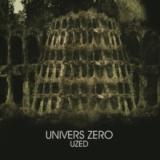
Uzed is the fourth album by Belgian band Univers Zero. It was released three years after 'Ceux du Dehors', due to a change in line-up and a new repertoire, although the EP 'Crawling Wind' had been released in the meantime.
The album marked a turning point for the band. Univers Zero explored new electric colors, giving it a more rock feel with the addition of new musicians such as Jean-Luc Plouvier, who introduced the synthesizer, guitarist Michel Delory, who played a memorable solo in 'Célesta (For Chantal)', and André Mergen on electric cello and alto saxophone, who enriched the orchestral texture. Dirk Descheemaeker on clarinet and soprano saxophone, the return of Christian Genet on bass, this evolution can also be explained by the arrival of new musicians. UZED'is entirely composed and arranged by Daniel Denis
The recording and mixing were done at Daylight Studio in Brussels in 1984, but to bring out UZED, the sound had to be improved by giving it more dynamic range, which was done at ICP Studios in 2024.
Black Vinyl[20,38 €]
Uzed is the fourth album by Belgian band Univers Zero. It was released three years after 'Ceux du Dehors', due to a change in line-up and a new repertoire, although the EP 'Crawling Wind' had been released in the meantime.
The album marked a turning point for the band. Univers Zero explored new electric colors, giving it a more rock feel with the addition of new musicians such as Jean-Luc Plouvier, who introduced the synthesizer, guitarist Michel Delory, who played a memorable solo in 'Célesta (For Chantal)', and André Mergen on electric cello and alto saxophone, who enriched the orchestral texture. Dirk Descheemaeker on clarinet and soprano saxophone, the return of Christian Genet on bass, this evolution can also be explained by the arrival of new musicians. UZED'is entirely composed and arranged by Daniel Denis
The recording and mixing were done at Daylight Studio in Brussels in 1984, but to bring out UZED, the sound had to be improved by giving it more dynamic range, which was done at ICP Studios in 2024.
First time vinyl reissue of Univers Zero's legendary Crawling Wind, originally released in 1981 on the Japanese 'Chaos International Series' label, with the original cover artwork has been beautifully redesigned by Thierry Moreau.
Toujours Plus à l'Est, as the title suggests, is heavily influenced by the traditional music of Eastern Europe, particularly Bulgaria., and paying tribute to the iconic catchphrase of Professor Calculus (Tournesol), the character from the Belgian comic series Tintin. Before The Heat, played live a few times, is an ambient composition by Andy Kirk, who is part of the EP's lineup alongside Daniel Denis, Guy Segers, Alan Ward, and Dirk Descheemaeker. Central Belgium in the Dark is a live improvisation from a period when Univers Zéro dedicated part of their concerts to complete improvisation. What makes this recording unique is that one of Andy Kirk's effects pedals picked up and emitted the sound of a mysterious radio signal, seemingly coming from "nowhere," especially noticeable at the end of the piece. The title of this improv is a nod to contemporary composer Charles Ives' work Central Park in the Dark. Central Belgium refers to the concert venue where the piece was recorded (Haine-St-Pierre).
Univers Zero represents one of the longest-living bands in Belgium. It was established in 1974. Drummer Daniel Denis had the brilliant idea to gather together a team of professionals sharing the same taste for music. The band has adopted an instrumental progressive style. Over the last couple of decades, the band has also implemented a series of influences from chamber music - most commonly, chamber music from the 20th century. Even if the line-up changes a lot over the years, the overall sound of UZ remained fairly consistent.
Univers Zero's new album (since 10 years) follows the lineage of 'Phosphorescent Dreams', originally released only on CD in Japan in 2014, and reissued as an LP on the Sub Rosa label in 2019. Lueur is the fruit of two years' work and reflection, the foundations of which were laid by Daniel Denis (keyboards, drums, percussion...), then enriched by the contributions of Nicolas Dechêne (guitars), Kurt Budé (clarinet / bass clarinet) and Nicolas Denis (bass, percussion, vocals), all three present on Phosphorescent Dreams.
With this reduced line-up, Lueur offers a dense journey, rooted in the balance between power and calm, raging and serene sound. A balance, too, between complex arrangements and more contemplative moments. While this album continues the avant-rock tradition of Univers Zero, it also features some very short pieces, more electronic, tribal and haunting sounds, and voice work that is new to the U.Z. universe. Between tradition and subtle evolution, Lueur is a major new contribution to the discography of this band, which will be celebrating its fiftieth anniversary in 2024.
Univers Zero represents one of the longest-living bands in Belgium. It was established in 1974. Drummer Daniel Denis had the brilliant idea to gather together a team of professionals sharing the same taste for music. The band has adopted an instrumental progressive style. Over the last couple of decades, the band has also implemented a series of influences from chamber music - most commonly, chamber music from the 20th century. Even if the line-up changes a lot over the years, the overall sound of UZ remained fairly consistent.
Univers Zero's new album (since 10 years) follows the lineage of 'Phosphorescent Dreams', originally released only on CD in Japan in 2014, and reissued as an LP on the Sub Rosa label in 2019. Lueur is the fruit of two years' work and reflection, the foundations of which were laid by Daniel Denis (keyboards, drums, percussion...), then enriched by the contributions of Nicolas Dechêne (guitars), Kurt Budé (clarinet / bass clarinet) and Nicolas Denis (bass, percussion, vocals), all three present on Phosphorescent Dreams.
With this reduced line-up, Lueur offers a dense journey, rooted in the balance between power and calm, raging and serene sound. A balance, too, between complex arrangements and more contemplative moments. While this album continues the avant-rock tradition of Univers Zero, it also features some very short pieces, more electronic, tribal and haunting sounds, and voice work that is new to the U.Z. universe. Between tradition and subtle evolution, Lueur is a major new contribution to the discography of this band, which will be celebrating its fiftieth anniversary in 2024.
Univers Zero represents one of the longest-living bands in Belgium. It was established in 1974. Drummer Daniel Denis had the brilliant idea to gather together a team of professionals sharing the same taste for music. The band has adopted an instrumental progressive style. Over the last couple of decades, the band has also implemented a series of influences from chamber music - most commonly, chamber music from the 20th century. Even if the line-up changes a lot over the years, the overall sound of UZ remained fairly consistent.
2022 repress
Second album by Univers Zero originally released in 1979. A classic of chamber rock music featuring heavy use of dissonance and dark, brooding and extremely complex melodies.
"This music on this LP might have little to do with rock and might also be a massive downer, but the quality of the writing and playing is extremely high. Michel Berckmans' solo work on oboe and bassoon is magnificent, and
Patrick Hanappier's string playing (violin and viola) also demonstrates the precision of a trained classical musician, along with demonic avant-garde scraping and howling on "Jack The Ripper".
Best of all, Univers Zero never cheapens the effect of the music with any of the stock cartoon licks which are associated with the gothic genre today. Group members sound deadly serious about what they're doing, which might call their sanity into question, but which makes for an incredibly powerful listening experience. In fact,
Heresie is a stunning one-of-a-kind item that has never been duplicated by anyone -- including Univers Zero. "
- All Music
2022 Repress
Third album (1981) by the Belgian band Univers Zero. The title alludes to the short story of the same name
by H.P. Lovecraft; the players read the story in studio, then proceeded to record the piece. A key release
for the band. Ceux du Dehors sometimes suggests a darker and more complex version of the motorik minimalism of classical music contemporaries Philip Glass and Steve Reich.
This album finds the group continuing to evolve and return to the more general and varied chamber music sound of their first release, except with more precision and skill. The tricky charts of percussionist Daniel Denis and new keyboardist Andy Kirk are executed with great panache. The labyrinth-like compositions are typically filled with unexpected twists and turns, and angular repetitions of jagged riffs that accelerate, decelerate and mutate in passages of acute tension or quiet but ominous dread.
Cat.no.: SR403
Format: LP
Tracklisting
Available for the first time outside Japan, Phosphorescent Dreams is another epic album of symphonic schizophrenic avant-rock from Univers Zéro. Originally released in 2014 - only on CD - through the Japanese label Arcàngelo.
Phosphorescent Dreams presents at the same time, in the same track, even on a single moment, the complex musical schemes and ways of Univers Zéro, ranging from maximalism to minimalism, classical avant-garde with a 2020 vibe in a constant flux.
In a blend of tension constantly emerging from a subtle dialogue between avant-rock and contemporary influences, harmonies and dissonance, Phosphorescent Dreams is a balanced formula of old-school know-how reshaped almost 40 years after the released of the seminal LP Univers Zéro.
Univers Zero represents one of the longest-living bands in Belgium. It was established in 1974. Drummer Daniel Denis had the brilliant idea to gather together a team of professionals sharing the same taste for music. The band has adopted an instrumental progressive style. Over the last couple of decades, the band has also implemented a series of influences from chamber music - most commonly, chamber music from the 20th century. Even if the line-up changes a lot over the years, the overall sound of UZ remained fairly consistent.
- A1: Piano Terra (Intro) – 01:02
- A2: Ricordati Di Me – 01:29
- A3: Sono In Un Van – 03:11
- A4: Onda Feat. Lauryyn – 03:07
- A5: Attesa (Skit) – 01:19
- A6: 10 Days Feat. Sup Nasa – 02:47
- A7: Avevo Un Sogno – 03:18
- B1: Ideal – 02:15
- B2: No Answer (Skit) – 00:58
- B3: La Noche En Que Te Fuiste – 03:29
- B4: Della Morte E Della Grazia – 02:28
- B5: Ikyk – 04:10
- B6: Calma – 02:22
- B7: Ultimo Piano (Outro) – 00:53
"PRONTO" is the debut album by ARYA, an Italian-Venezuelan artist who grew up in Milan. ARYA arrives with this first full-length album after the EPs
Peace of Mind (2021) and Punto Zero (2023), collaborations (Mahmood, Venerus, Ghemon, Dardust, Calibro35, and many others), and an intense live
activity, which have made her one of the most interesting voices on the Italian neo-soul/R&B scene.
Born from a personal journey of therapy and awareness, "PRONTO" takes shape as a concept album, transforming the emotional investigation into a
coherent and layered musical narrative. The title captures the meaning of the project: "Pronto" is a word that crosses all the languages present on the
album—Italian, English, and Spanish—taking on different meanings ("subito," "presto"), and is also the first word uttered in the intro. A term that introduces the listener to a space of availability, anticipation, and presence.
The entire album was produced by Claudio La Rocca (Sup Nasa), a key figure in building the project's sonic identity. Giuseppe Seccia, Matteo D'Ignazi,
Martina Tedesco, Tiziano Codoro, Stefano De Vivo, and Giulia Gentile also contributed to the album, recording the instrumental parts and contributing
to the arrangements and production of some tracks.
With "PRONTO," ARYA takes the listener on a journey through different levels of her emotional history, until the elevator starts moving again and leaves room for a new possibility of balance.
ARYA (AryaDelgado) is an Italian-Venezuelan artist born in Milan in 1994. Daughter of salsa singer Orlando Watussi, she grew up surrounded by music
and quickly developed a sensibility that blends Latin roots, nu-soul, and contemporary R&B, with a strong focus on the emotional and narrative dimensions of her writing. In 2021, she released her debut EP, Peace of Mind, followed in 2023 by Punto Zero. These releases attracted press attention
and led to collaborations with artists such as Mahmood, Venerus, Ghemon, Dardust, and Calibro35. Over the years, she has consolidated an increasingly recognizable presence, alternating songwriting, solo production, and an intense live schedule in Italy and abroad. In 2024, she accompanied Mahmood on tour and released the single, "Si Potesse Tornare." In 2025, La Noche En Que Te Fuiste and Onda were released, songs that marked the
beginning of a new artistic chapter and anticipated the release of “PRONTO,” her debut album, released in February 2026. An intimate and layered
work, which focuses on vulnerability as a language and confirms ARYA as one of the most personal and aware voices of the new Italian soul scene.
NO WAY BACK MAGAZINE
BETTER WAYS FORWARD THROUGH MUSIC AND SUBCULTURE STORIES, 1979-1994 - LEARNING FROM, NOT LONGING FOR
After all of the fun had - and, if we may brag a bit - the acclaim for NWB001, we're back with a follow-up.
So here's NWB002. Our start and end points shift this time (1979–1997 vs 1977-1989) but again the focus is on revolutionary moments in music and subculture.
We've got pieces from The Face, i-D, Time Out, Village Voice, Rolling Stone, Mixmag, The Observer and - a particularly big pleasure - Collusion magazine. We've got brilliant photography, too, documenting seminal afterdark moments. And we've put it all together with much love, craft and attention to detail.
This is material that lets us experience culture in its rawest form. In-the-moment and before endless layers of post-rationalisation have kicked in. Breakthrough events in dance music, hip-hop and pop – and parallel shifts in art, design and fashion. Inspirational, ground-level creativity and enterprise that set the scene(s) for subsequent decades.
We hope you enjoy reading NWB002 as much as we enjoyed bringing it together.
Inside No Way Back 002
Behind The Groove - the epic 1983 feature by Steven Harvey in David Toop's Collusion magazine, charting the NYC disco underground
Photographer Steve Eichner documenting the club kids scene at The Limelight, Palladium, Tunnel and Club USA
Year zero reporting as The Face's Sheryl Garratt visits Chicago in 1986, witnessing the emergent house sound
The Mudd Club - 'disco for punks' as Rolling Stone put it; the Lower East Side party which arguably spawned a thousand indie discos
In the 'socialist city' of Sheffield, meanwhile, Jon Savage heads for a night of sharp clothes and even sharper moves at Jive Turkey
Paul Morley writing in Time Out in 1988 on the tension materialising between glossy style mags and the the monochrome music press
The House That Rap Built - Village Voice celebrates the short but sweet glory years of hip-house
Mixmag in 1992 on the 'return of sex' to clubs like Roxy and the Sound Factory
Images and commentary from Eddie Otchere, rewinding to jungle's halcyon days
Kodwo Eshun reporting on jungle's full-throttle ascent for i-D in 1994
+ Editor’s notes, supporting commentary, playlists, and covers, spreads and imagery from original titles
ISSN - 2977-8530
Stevie Cox and Ansboy: two powerhouses of the Glaswegian club scene join forces for their collaborative debut EP on Rhythm Section INTL- ‘Twice Like Rice’. It’s a weighty four-track EP designed for the dancefloor, taking in myriad influences from dub techno, breaks, trance and good old fashioned house music. The Ep is full of deep, pulsating rhythms, lush textures and emotive peaks - all road tested in Stevie’s Iconic home turf: Sub Club.
Stevie Cox has long been a name long ruminating on everyone's lips, as a resident DJ of the iconic ‘Sub Club’ with an ever-growing tour schedule and back catalogue of releases via the likes of Klasse Wrecks and Optimo. Whilst the name Ansboy may be new to some, it is a fresh alias for the grammy nominated producer and mixdown engineer Robert Etherson who has long been a staple in the Scottish scene with an international touring repertoire under his belt.
The two friends met in their hometown of Glasgow and began their musical journey together last year after Robert taught Stevie how to do mixdowns. The pair clicked effortlessly, quickly discovering they shared the same passion for emotive, deep and progressive dance music. Their first track together - which took shape in the form of ‘Drift’ - a high-energy synth led anthem, came out with a special selection of tracks curated by Bradley Zero for his exclusive SHOUTS Summer sampler in 2025.
For the Twice Like Rice EP, their work evokes all corners of the dancefloor, kicking things off with ‘GC’ - a peak time breaks-infused trancey-heater - a master class in building dancefloor tension which gives way into a searing crescendo. Things spin towards a darker percussive focus on the more intense ‘Twice Like Rice’.
On the b-side things return to blissful euphoria with ‘Virgil’ - a warm up dub-techno ballad, before the emotional release of ‘Subculture closure’ inspired ‘Carter21’.
4-track EP from Milan-based producer Michele Manzo. Deep, driving cuts for the floor. Manzo’s commitment to analogue gear ensures a raw, tactile warmth, offering listeners a sonic journey that feels personal yet universal. Capturing the richness and depth of classic house while maintaining a minimalist, modern edge.
- 1: Nuvole I
- 2: Nuvole Ii
- 3: Nuvole Iii
- 4: Nuvole Iv
- 5: Nuvole Ix
- 6: Nuvole V
- 7: Nuvole Vi
- 8: Nuvole Vii
- 9: Nuvole Viii
- 10: Nuvole X
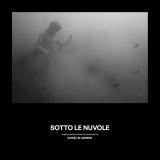
In Gianfranco Rosi’s portrait of Naples, Sotto le Nuvole, the ground shakes periodically. Between Mount Vesuvius and the Tyrrhenian Sea, the fumaroles of the Phlegraean Fields hiss volcanic gas and steam. Below the sleeping volcano, modern day Naples emerges in black and white and fills with voices, with lives. From the traces of history and the concerns of the present, Rosi documents a city immersed in its continuous past, with Daniel Blumberg’s minimal soundscape hovering in a sonic space between liquid and air.
Tasked with creating a soundscape that would suspend space within Rosi’s film, Blumberg called upon the extended technique of saxophonists Seymour Wright and John Butcher to create a gossamer fabric of traces and sounds abstracted from their instruments. Having transitioned from theoretical physics to the saxophone, John Butcher has always deeply considered space in the context of his playing. His concerns are with flow, density and how the saxophone is situated in the living world. Zeroing in on the core sonic properties of the mechanical and acoustic components of the saxophone, Seymour Wright has integrated its every breath, reed vibration, keypad clatter and hissed microtone of his alto into his own, unique improvisational language. In his work with these two seminal players, Blumberg makes his most concentrated soundtrack to date - reinforcing the film's sense of overlapping time and space, and pushing at the limits of experimentation.
Initially recorded in Daniel’s flat in London, Butcher and Wright centre themselves around long, consistent tones, so soft that it seems breath is being gently pulled from the saxophone's bell by an invisible hand. Blumberg himself adds haunting bass harmonica, and recordings of Wright’s launeddas - a traditional and ancient triple pipe polyphonic reed instrument from Sardinia, Italy. Blumberg then travelled to the volcanic region of Baia, next to Pompeii. Once a flourishing classical Roman city loved by Nero, Baia slowly sank under hydrothermal pressure, leaving the city in a kind of geological purgatory. Using specialised geophones and hydrophones, Blumberg took those initial recordings and amplified them underwater, sending them calling out across the ruins of Baia’s mosaics, Nymphaeum statues and villas.
“It was important to me that the music was whispered in the same landscape that Gianfranco has worked for the past three years, so that you can hear the volcanic air gulping, the lapping of the waves, the steam and bubbles popping against John and Seymour’s saxophone breaths – an echo from a suspended time.”
What emerges is deeply melancholic, tender, subtle and right at the edges of audio technology. Submerged in an aquarian mausoleum, the mysterious vibrations of the saxophone and its bell become an echo of an echo, wading from the future into the past. ‘Sotto le Nuvole’ is less a soundtrack than a process of aeration - a sonic puncture in the material of the film which allows its central message to breathe, and a remarkable experiment at the limits of the saxophone’s possibility.
San Francisco style driving techno tinged with dark dubs and disco from two of the town’s most explosive producers.
Brick & Zero Idea represent the same city, blazing their own paths in San Francisco’s heady techno scene. Both manage their own labels / parties, Brick with Perfect Dark and Vitamin1000 a la Zero Idea respectively, but are no strangers in the studio together.
First up, two full-bodied techno timebombs from the duo: a mega sub’n’dubchord special alert on A1’s “West End” paired with a more refined, smoother, slippier companion on the A2 “No Room For Error”. Combined-strengths banger collabs for different moments and moods of a night.
Sticking with the theme, we see contrasting solo tracks on the flip side as well. Brick’s “Sigil” spotlights the producer’s laser focus for darker, hypnotic, full force synths in impeccable arrangement, while “Xhale” ends this release on an upliftingly funky bassline disco tip showcasing Zero Idea’s ease at blending techno sensibilities with French House techniques.
- A1: Future Song
- A2: Submarine
- A3: Flute Song
- A4: Sunrise
- A5: Don’t Wake Me Up
- B1: Driving In The Sun
- B2: Fragile
- B3: Eight
- B4: Even When
- B5: Everything For
- B6: The Maker Of Heavenly Trousers
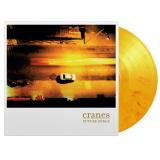
Cranes is a dream pop/shoegaze band formed by siblings Alison and Jim Shaw, who rose to stardom following a world tour with the Cure in 1992. After the influential Dedicated label folded in 1998 they went on a two-year hiatus after which they set up their own label Dadaphonic. On Dadaphonic, they released three studio albums between 2001 and 2008, of which Future Songs is their first.
Between 1986 and 1997 Cranes released a steady stream of records on Bite Back! and of course Dedicated, and when the latter folded, the Shaw siblings took a relatively long break from recording. Then, in 2001 they returned with a different bassist and drummer, their new Dadaphonic label and a fantastic new record to go along with it. A breathe of fresh air,
Future Songs acts as a bridge between their somewhat brusque approach to shoegaze from the 90s and electronica-infused sound from the zeroes. A remarkable effort, especially considering the Shaws recorded almost everything on their own.
Future Songs is available as a 25th anniversary edition of 1000 individually numbered copies on yellow marble vinyl, and includes an insert.
For this edition, the label meets this duo of producers, that has been created by the musical synergy between Zonker and Daniel Gorziza, who go by the name – “SameSame”. This disc has been titled “Unconditional Society” and has been crafted with a mission to be brought to the worldwide dancefloors and to be foreseen by the adepts of the sound it conveys. The A side is opening with a deep trancey burner “Suspect Zero”, with time passing this side of the record is morphing into the prime-time speaker ripping sound of “Rip the Jacker. The B side will see more mellow feel to it and sometimes even could be said that the vibe turns relatively melancholic by the time the record reaches its natural conclusion. The words that have been shared do not translate the profoundness of the subject that the artists have carried through, but then again, sometimes them letters have to be present even if they are kept to the slightest. The frequencies communicate much superior to the words and by now you can stop reading this and immerse yourself into the sound.
Electro as its best! SS001 marks the first transmission from Serpiente Sounds, a debut 12" split that keeps it lean, direct, and floor-focused. Viewtiful Joe handles the A-side with two cuts that balance Electro snap and Detroit discipline: clean drum architecture, crisp low-end, and synth lines that feel both futuristic and functional. On the flip, Subversive brings two late-night weapons with a colder edge and a deeper swing. SS001 is a debut statement with zero filler, a compact toolkit of Electro/Detroit tools for the booth.
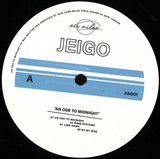
REPRESS ALERT! Long out of press and with copies regularly changing hands for close to £100 on the second-hand market, Air Miles are proud to present a limited repress of their inaugural release, “An Ode To Midnight EP’ by Jeigo.
The tone is set from the off with the eponymously named first track of the release ‘an Ode to midnight’. The tracks mellow break beat feel is met by warm rushing pads, ebbing and flowing between textures of the night before last.
Floor focussed, zero fussing ‘Wing Systems’ carries the front side at an orbital trajectory. No time for an intro, the drums jolt you into alertness, the wobbly bass perfectly counterpointed by gated, washing keys.
‘Lime Hawk’, melancholic euphoria brings the release back to the conscious. It’s structure toy-fully crescendos and builds, all while the Balearic synth peaks with the sub line keeping you grounded throughout.
Rounding off the record is ‘By My Side’ meandering the record into slightly darker territories. The shifting keys wash over, the siren call vocals penetrate and the thudding kick punches through, anchoring the track as an emotionally driven, cerebral affair.