Breaking the Balls of History, recorded in five days and produced by John Goodmanson at the legendary Robert Lang Studios in Shoreline, WA. Here are two artists at their prime, each a human library of musical knowledge and experience, entirely distinctive in their songcraft and sound. In Quasi-form, the band becomes alchemically even greater than the sum of its parts: Janet’s galloping drums and Sam’s punk-symphonic Rocksichord and their intertwining vocals make something gigantic, anthemic. In the thick of a cataclysmic social and political moment, they’ve crafted exquisitely melodic songs that glitter with rage and wild humor and intelligence, driven by a big bruised pounding heart.
Поиск:sub
Все
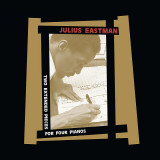
It is recognized today that these tutelary pieces for four pianos are among the most powerful in contemporary music,their impact is almost unparalleled. After the historical version recorded forty years ago, this one, featuring four of the greatest European performers, is now regaining its full power. High level recordings too.
There was some for John Cage, then came Christian Wolff, and finally Morton Feldman, from this school in New York. Only Julius Eastman remained outside the game, the last figure, the most solitary and enigmatic - undoubtedly also one of the most powerful, and it is this power that is revealed through these recordings. In the 1970s and 1980s, Eastman was one of the very few African-Americans to gain recognition in the New York avant-garde music scene. He was politically committed, a figure of queer culture and a solar and solitary poet whose melancholy influenced his genius as well as his tragic destiny : suffering from various addictions, declared missing, actually homeless. During Winter of 1981-82, he got deported from his apartment by the police, who destroyed most of what he owned - including scores and recordings. He was found dead in 1990, on the streets of Buffalo, after years of vagrancy.
The Performers Nicolas Horvath, pianist and electroacoustic composer Nicolas Horvath is known for his boundariesless musical explorations - he has collaborated with leading contemporary composers from around the world, including Alvin Lucier, Alvin Curran and Valentyn Silvestrov - the recordings of his complete works for piano by Phil Glass made a lasting impression. He has collaborated recently with Lustmord on the Deconstruction of November by Dennis Johnson (Sub Rosa SR502: The Fall).
Melaine Dalibert, a French composer and pianist, fascinated by natural phenomena which are both expected and unpredictable, Dalibert has developed his own algorithmic procedures of composition which contain the notion of stretched time evoking Morton Feldman, minimal and introspective, adopting a unique concept of fractal series.
Stephane Ginsburgh, a tireless surveyor of the repertoire but also explorer of new music, collaborated with composers such as Philippe Boesmans, Jean-Luc Fafchamps, Stefan Prins, Frederic Rzewski and Matthew Shlomowitz of whom he premiered works, as well as with choreographers such as Anne Teresa De Keersmaeker (Rosas) and recorded Feldman, Duchamp and Satie for Sub Rosa and the complete set of Prokofiev piano sonatas for Cypres. Wilhem Latchoumia, he embraces both new music and the classical repertoire with success and charisma. His two last recordings for La Dolce Volta (Prokofiev and de Falla) have been highly acclaimed by critics with a FFFF in Télérama. Winner of the Hewlett-Packard Foundation and the Montsalvatge International Piano Competition, he brilliantly won the First Prize in the 2006 Orléans International Piano Competition.
Limited Loser edition on dark green vinyl. There are times in our life when we feel magic in the air. When new love arrives, or we find ourselves lost in a moment of creation with others who share our vision. A sense that: this is who I want to be. This is what I want to share. It's a fleeting feeling and one that Kyle Thomas, the singer-songwriter who records and performs as King Tuff, found himself longing for in the spring of 2020. But knowing he couldn't simply recreate this time in his life at will, Thomas-who hails from Brattleboro, Vermont-set out to write a love letter to those cherished moments of inspiration and to the small town that formed him. The one where he first nurtured his songwriting impulses, bouncing ideas off other like-minded artists. The kind of place where the changing of the seasons always delivered a sense of perspective and fresh artistic inspiration. Where he felt a deeper connection with nature and sense of community that had once been so close at hand. And so, Thomas seized upon his memories, creating what he calls "an album about love and nature and youth." The result is Smalltown Stardust, a spiritual, tender and ultimately joyous record that might come as a shock to those with only a passing knowledge of the artist's back catalog. On Smalltown Stardust, Thomas takes us on his journey to a place where past and present collide, where he can be a dreamer in love with all that he sees. References to his Brattleboro upbringing abound, but at the core of Smalltown Stardust is Thomas's desire to commune with nature on a spiritual level. Images of the natural world, from blizzards to green mountains to cloudy days, fill the songs. "I consider nature to be my religion," he explains, and Smalltown Stardust is nothing if not a spiritual exploration. While so much of Smalltown Stardust invokes idealized traces and places of Thomas's past, the album's recording process made his communal vision a reality. Thomas's Los Angeles home in 2020 formed a micro-scene of sorts, with housemates Meg Duffy (Hand Habits) and Sasami Ashworth recording their own heralded albums (2021's Fun House and 2022's Squeeze, respectively) at the same time. A shared spirit dominated an era spent largely on the premises, with Thomas serving as engineer and contributor to both records, and Ashworth working as co-producer on Smalltown Stardust. Ashworth's contributions are vital to the album: she co-wrote a majority of the record and contributed vocals, arrangements, and instrumentation to each song. In the end, Smalltown Stardust is not merely a nostalgia trip. Thomas not only conjured a special time in his life, he found new inspiration, surrounded by collaborators and a sense of love and wonder for nature. If the first King Tuff record was content to merely state Thomas was no longer dead, Smalltown Stardust is a paean to what that life means. A statement of belief and a hymnal to the magic still to behold all around us.
There are times in our life when we feel magic in the air. When new love arrives, or we find ourselves lost in a moment of creation with others who share our vision. A sense that: this is who I want to be. This is what I want to share. It's a fleeting feeling and one that Kyle Thomas, the singer-songwriter who records and performs as King Tuff, found himself longing for in the spring of 2020. But knowing he couldn't simply recreate this time in his life at will, Thomas-who hails from Brattleboro, Vermont-set out to write a love letter to those cherished moments of inspiration and to the small town that formed him. The one where he first nurtured his songwriting impulses, bouncing ideas off other like-minded artists. The kind of place where the changing of the seasons always delivered a sense of perspective and fresh artistic inspiration. Where he felt a deeper connection with nature and sense of community that had once been so close at hand. And so, Thomas seized upon his memories, creating what he calls "an album about love and nature and youth." The result is Smalltown Stardust, a spiritual, tender and ultimately joyous record that might come as a shock to those with only a passing knowledge of the artist's back catalog. On Smalltown Stardust, Thomas takes us on his journey to a place where past and present collide, where he can be a dreamer in love with all that he sees. References to his Brattleboro upbringing abound, but at the core of Smalltown Stardust is Thomas's desire to commune with nature on a spiritual level. Images of the natural world, from blizzards to green mountains to cloudy days, fill the songs. "I consider nature to be my religion," he explains, and Smalltown Stardust is nothing if not a spiritual exploration. While so much of Smalltown Stardust invokes idealized traces and places of Thomas's past, the album's recording process made his communal vision a reality. Thomas's Los Angeles home in 2020 formed a micro-scene of sorts, with housemates Meg Duffy (Hand Habits) and Sasami Ashworth recording their own heralded albums (2021's Fun House and 2022's Squeeze, respectively) at the same time. A shared spirit dominated an era spent largely on the premises, with Thomas serving as engineer and contributor to both records, and Ashworth working as co-producer on Smalltown Stardust. Ashworth's contributions are vital to the album: she co-wrote a majority of the record and contributed vocals, arrangements, and instrumentation to each song. In the end, Smalltown Stardust is not merely a nostalgia trip. Thomas not only conjured a special time in his life, he found new inspiration, surrounded by collaborators and a sense of love and wonder for nature. If the first King Tuff record was content to merely state Thomas was no longer dead, Smalltown Stardust is a paean to what that life means. A statement of belief and a hymnal to the magic still to behold all around us.
Tape
There are times in our life when we feel magic in the air. When new love arrives, or we find ourselves lost in a moment of creation with others who share our vision. A sense that: this is who I want to be. This is what I want to share. It's a fleeting feeling and one that Kyle Thomas, the singer-songwriter who records and performs as King Tuff, found himself longing for in the spring of 2020. But knowing he couldn't simply recreate this time in his life at will, Thomas-who hails from Brattleboro, Vermont-set out to write a love letter to those cherished moments of inspiration and to the small town that formed him. The one where he first nurtured his songwriting impulses, bouncing ideas off other like-minded artists. The kind of place where the changing of the seasons always delivered a sense of perspective and fresh artistic inspiration. Where he felt a deeper connection with nature and sense of community that had once been so close at hand. And so, Thomas seized upon his memories, creating what he calls "an album about love and nature and youth." The result is Smalltown Stardust, a spiritual, tender and ultimately joyous record that might come as a shock to those with only a passing knowledge of the artist's back catalog. On Smalltown Stardust, Thomas takes us on his journey to a place where past and present collide, where he can be a dreamer in love with all that he sees. References to his Brattleboro upbringing abound, but at the core of Smalltown Stardust is Thomas's desire to commune with nature on a spiritual level. Images of the natural world, from blizzards to green mountains to cloudy days, fill the songs. "I consider nature to be my religion," he explains, and Smalltown Stardust is nothing if not a spiritual exploration. While so much of Smalltown Stardust invokes idealized traces and places of Thomas's past, the album's recording process made his communal vision a reality. Thomas's Los Angeles home in 2020 formed a micro-scene of sorts, with housemates Meg Duffy (Hand Habits) and Sasami Ashworth recording their own heralded albums (2021's Fun House and 2022's Squeeze, respectively) at the same time. A shared spirit dominated an era spent largely on the premises, with Thomas serving as engineer and contributor to both records, and Ashworth working as co-producer on Smalltown Stardust. Ashworth's contributions are vital to the album: she co-wrote a majority of the record and contributed vocals, arrangements, and instrumentation to each song. In the end, Smalltown Stardust is not merely a nostalgia trip. Thomas not only conjured a special time in his life, he found new inspiration, surrounded by collaborators and a sense of love and wonder for nature. If the first King Tuff record was content to merely state Thomas was no longer dead, Smalltown Stardust is a paean to what that life means. A statement of belief and a hymnal to the magic still to behold all around us.
It's an all electronic affair, harmonically maximalist, predominantly symphonic-synthetic, requiring active listening. Some pieces function as challengers of musical structural habits, provoking the short attention span culture, others present a problem-solution scenario, collectively via a neoteric noise aesthetic and detailed melodic weaving. Ultimately, the objective was to engineer an assortment of works full of sound, euphonic and vivid in nature.
The making of this album was intentionally a very personal process, going into self therapy territory at times interpreting the composer's contemplating mind dealing with tolerance, destruction, compassion, misery, grace and tyranny in an auditory manner. Some pieces function as challengers of musical structural habits, provoking the short attention span culture, others present a problem-solution scenario, collectively via a neoteric noise aesthetic and detailed melodic weaving. Ultimately, the objective was to engineer an assortment of works, awash with euphonic sound vivid in its essence, with a deep focus on various synthesis techniques within a compositional framework.
Dedicated to Peter Rehberg aka Pita
Ata 'Sote' Ebtekar composes music with a deeply-held conviction that rules and formulas should be deconstructed and rethought. He alters musical modal codes from their original tonality and rhythmic tradition to achieve vivid, synthetic soundscapes. Over the last three decades, his work has been published by labels such as Warp, Sub Rosa, Opal Tapes, Diagonal, Mute and Morphine, among others. In 2018, he founded a new label called 'Zabte Sote', which focuses on releases by Iranian experimental electronic composers from around the globe.
Known for creating compositions that range from the delicate to the abrasive, using sounds both of acoustical and electronic origins, Ebtekar sees music as the expression of cultural habits in sound and anti-sound (silence). Seeking to expand such traditions he creates music that, while rooted in many cultures at once, belongs to none in particular. Sote's work deals with various blueprints, in particular his solo all synthetic music, his electroacoustic audio/visual group project, and his multi-channel sound installations. Sote is on the jury panel of The DAAD Artists-in-Berlin Program, and has created commissioned work for and performed at a.o. Berghain and CTM Festival (Berlin), Unsound Festival (Krakow), Cafe Oto (London), Jazzhouse (Copenhagen), TodaysArt Festival (The Hague), Bozar (Brussels), Ultima Festival (Oslo), Donaufestival (Krems), Donaueschinger Musiktage, Mira (Barcelona), Terraforma (Milan), and many more.
"I Can't Let Go" ist das erste Album der britischen Sängerin und Schauspielerin Suki Waterhouse und wurde von dem Grammy-nominierten Produzenten und Songwriter Brad Cook (Bon Iver, The War On Drugs, Snail Mail, Waxahatchee) produziert. Neben ihrer Tätigkeit als Schauspielerin (The Bad Batch, Assassination Nation, Misbehaviour) und Model (Burberry, Ferragamo, Tommy Hilfiger) katalogisiert die Britin ihre intimsten, prägendsten und bedeutendsten Momente ihres Lebens am liebsten in Songs. Die in London geborene und aufgewachsene 30-Jährige fühlte sich schon früh zur Musik hingezogen und sah das Medium immer als eine Möglichkeit, Kreativität auszudrücken und Geschichten zu erzählen. Bis heute haben Bands wie Oasis einen ganz besonderen Platz in ihrem Herzen, Suki hört aber auch gerne Songwriterinnen wie Sharon Van Etten, Valerie June oder Lou Doillon. Bevor sie sich mit dem angesehenen Produzenten Brad Cook für ihr Sub Pop-Debüt zusammengetan hat, erschienen bereits die auf eigene Faust veröffentlichten Singles "Brutally", "Good Looking" und "Valentine", die auch ohne großes Label im Rücken bis heute fast 20 Millionen Mal gestreamt wurden.
Hot Hot Heat’s classic debut album, ‘Make Up The
Breakdown’, filled with smart, energetic, dancepunk hits, returns to vinyl with this fully remastered
LP edition.
AllMusic called the album “an addictive, densely
packed pop gem that ranks among 2002’s best
albums,” and Pitchfork agreed, including it on their
list of The Best Albums Of 2002.
Following closely on the heels of their critically
acclaimed ‘Knock Knock Knock’ EP, ‘Make Up the
Breakdown’ is Hot Hot Heat's first full length,
recorded with Jack Endino at Vancouver, BC’s
Mushroom Studios (with engineering help from
Chris Walla of Death Cab for Cutie).
SPIN Magazine had this to say about ‘Knock
Knock Knock’: “Some retro new wavers hang
themselves on their own skinny ties. While their
peers lip-synch to Cure 45s, these Canucks take
subtler cues from early ‘80s synth disco. It’s not
new-wave worship, it’s the sound of punk teaching
itself to dance.”
‘Make Up The Breakdown’ delivered on the
promise hinted at on the EP. ‘Hot Hot Heat’ (along
with peers like Radio 4 and The Rapture) blended
angular post-punk twitch with danceable pop,
effectively (and finally) persuading white dopes on
punk to get on the good foot in the early 2000s.
Opaque yellow vinyl.
White Vinyl
Technological agitation. Narcissism fatigue. A galaxy of isolation. These are the new norms keeping Weyes Blood (aka Natalie Mering) up at night and the themes at the heart of her latest release, And in the Darkness, Hearts Aglow. The celestial-influenced folk album is her follow-up to the acclaimed Titanic Rising. (Pitchfork, NPR, and The Guardian admiringly named it one of 2019's best.) While Titanic Rising was an observation of doom to come, And in the Darkness, Hearts Aglow is about being in the thick of it: a search for an escape hatch to liberate us from algorithms and ideological chaos. "We're in a fully functional shit show," Mering says. "My heart is a glow stick that's been cracked, lighting up my chest in an explosion of earnestness." And in the Darkness, Hearts Aglow opens with the wistful, winsome "It's Not Just Me, It's Everybody," a song about the interconnectivity of all beings, despite the fraying of society around us. "I was asking a lot of questions while writing these songs. Hyper-isolation kept coming up," Mering says. "Our culture relies less and less on people. Something is off, and even though the feeling appears differently for each individual, it is universal." Other tracks follow in kind. The lullaby-like "Grapevine" chronicles the splintering of a human connection. The otherworldly dirge "God Turn Me into a Flower" serves as allegory about our collective hubris. "The Worst Is Done" is an ominous warning, set against a deceivingly breezy pop melody. "Chaos is natural. But so is negentropy, or the tendency for things to fall into order," she says. "These songs may not be manifestos or solutions, but I know they shed light on the meaning of our contemporary disillusionment."
Initial copies / pressing on limited-edition coloured LP edition on blue transparent vinyl. The Milk Teeth mini album compiles singer-songwriter Suki Waterhouse's various non-album singles onto a physical release for the first time. It includes the song "Good Looking," which, in mid-2022, exploded on Tik Tok and hit #1 on the global viral chart. Suki Waterhouse catalogues the most intimate, formative, and significant moments of her life through songs. You might recognize her name or her work as an actress and model, but you'll really get to know the multi-faceted artist through her music. Growing up in London, Suki gravitated towards music's magnetic pull. She listened to the likes of Alanis Morissette and caught Missy Elliott live as her first concert. Meanwhile, Oasis held a particularly special place in her heart. She initially teased out this facet of her creativity with a series of singles, generating nearly 20 million total streams independently. Nylon hailed her debut "Brutally" as "what a Lana Del Rey deep cut mixed with Joni Mitchell's 'Both Sides, Now' would sound like." In addition to raves from Garage by Vice and Lemonade Magazine, DUJOR put it best, "Suki Waterhouse's music has swagger." Constantly consuming artists of all stripes, she listened to the likes of Sharon Van Etten, Valerie June, Garbage, Frazey Ford, Lou Doillon, and Lucinda Williams. In late 2020, she finally dove into making what would become her full-length debut album, I Can't Let Go Sub Pop Records with producer Brad Cook [Snail Mail, Waxahatchee]. Now, she introduces this chapter with "Moves" and "My Mind." Her first album for Sub Pop, I Can't Let Go, produced by Brad Cook (Bon Iver, War On Drugs, Snail Mail, Waxahatchee) and released in May of 2022, is a testament to her powers as a singer and songwriter. The Milk Teeth mini album rightly shines a spotlight on her pre-album material, giving these six songs their first physical release.
Sound architect and filmmaker from Liège, Belgium Phil Maggi is known as the lead singer of heavy-rock combo Ultraphallus. He has shared the bill with Jerusalem In My Heart, Keith Rowe, Phill Niblock, Tuxedomoon, Sote, Thisquietarmy, and many others. 'The Encrimsoned' is the second part of his diptych inspired by Henry Corbin's writings, which started with his previous album 'Animalwrath' (Sub Rosa SR423). The Encrimsoned is a four-track album, harboring a few musical friends and usual collaborators (Maja Jantar, Tom Malmendier, Radwan Ghazi Moumneh, Sebastien Schmit, Gabriel Séverin, Xavière Fertin).Ranging from free-jazz to ambient-electronic contemporary art sound, this adventurous second and final chapter is an homage to Hardy Fox, pioneer and primary composer for The Residents. Inspiration Henry Corbin, Lawrence Ferlinghetti, Bela Tarr, Farid od'din Attar, Shihab od'din Sohrawardi, The Residents. Tracklisting LP SIDE A 1 The Encrimsoned / 19'32 SIDE B 1 Will The Night Ever End / 9'18 2 Enchantment / 8'04 3 The Hidden Pole / 4'38
City Of Light was recorded in Banaras, India, and mixed in Greenpoint, NY. It is about Banaras, a city older than history, tradition, and legends. It is Shiva's land, founded at the dawn of creation. It is India's oldest and most fabled city. The Hindus call it Kashi, the luminous... The City of Light. Music composed by Bill Laswell + Coil, Trilok Gurtu, Tetsu Inoue, and features texts and vocals from Lori Carson and an historical introduction by Hakim Bay. First time ever on vinyl, re-released in our Sub Rosa Blackcore series. City of Light is the sixth solo album by American composer Bill Laswell, released on July 29, 1997. While it may appear an anachronism in his catalog, fans of Bill Laswell will find City of Light an extension of ideas he has explored throughout his career. His strong interest in Eastern music and religion resulted in this 1997 collaboration with Janet Rienstra. Part sacred, spoken word, part meditative soundscape, City of Light takes as its inspiration the holy region of Banaras, India. Said to belong to Shiva, Banarasalso contains the Ganges river: a place sought by Hindus for their cremation. Surrounding the texts is some of the most compelling music this genre has produced featuring Trilok Gurtu on tablas, Coil (Peter Christopherson + John Balance) on electronic, Tetsu Inoue at sound collages and Lori Carson at vocals. Track Listing LP side 1 01 Nothing 13'03 02 Kashi 7'19 side 2 03 Kala 13'06 04 Above the Earth 11'19
Dark-folk songwriter Chantal Acda and beyond drums-percussion musician extraordinaire. Eric Thielemans propose a new score for Koyaanisqatsi, re-actualising the incredibly beautiful, raw, rhythmic and touching images of this 80’s cinematographic masterpiece. Slow deep electric waves, lonely synths in sonic desert landscapes, rhythmic pulses, transporting drums and bells, and deeply longing sounds and voices make up the audible fundamentals of this imagined, neo shamanic, ritualistic music to accompany the Earth as it keeps on supporting our post human frenetics even today. This release contains a selection of the musical material scored for a live performance together with the screening of the movie. The live performance premiered on Film Festival Gent and Vooruit in the fall of 2022. Tracklisting LP SIDE A 1 Koyaanisqatsi Part I / 23'36 SIDE B 2 Koyaanisqatsi Part II / 13'00 3 Koyaanisqatsi Part III / 10'48
Several things happened before a warm day when I met the four members of Frankie Cosmos in a Brooklyn studio to begin making their album. Greta Kline spent a few years living with her family and writing a mere 100 songs, turning her empathy anywhere from the navel to the moon, rendering it all warm, close and reflexively humorous. In music, everyone loves a teen sensation, but Kline has never been more fascinating than now, a decade into being one of the most prolific songwriters of her generation. She's lodged in my mind amongst authors, other observational alchemists like Rachel Cusk or Sheila Heti, but she's funnier, which is a charm endemic to musicians. Meanwhile Frankie Cosmos, a rare, dwindling democratic entity called a band, had been on pandemic hiatus with no idea if they'd continue. In the openness of that uncertainty they met up, planning to hang out and play music together for the first time in nearly 500 days. There, whittling down the multitude of music to work with, they created Inner World Peace, a collection of Greta's songs changed and sculpted by their time together. While Kline's musical taste at the time was leaning toward aughts indie rock she'd loved as a teenager, keyboardist Lauren Martin and drummer Luke Pyenson cite "droning, meditation, repetition, clarity and intentionality," as well as "'70s folk and pop" as a reference for how they approached their parts. Bassist/guitarist Alex Bailey says that at the time he referred to it as their "ambient" or "psych" album. Somewhere between those textural elements and Kline's penchant for concise pop, Inner World Peace finds its balance. The first order of business upon setting up camp in Brooklyn's Figure 8 studios was to project giant colorful slides the band had made for each track. Co-producing with Nate Mendelsohn, my Shitty Hits Recording partner, we aimed for FC's aesthetic idiosyncrasies to shine. The mood board for "Magnetic Personality" has a neon green and black checkerboard, a screen capture of the game Street Fighter with "K.O." in fat red letters, and a cover of Mad Magazine that says "Spy Vs. Spy! The Top Secret Files." On tracks like "F.O.O.F." (Freak Out On Friday), "Fragments" and "Aftershook," the group are at their most psychedelic and playful, interjecting fuzz solos, bits of percussion, and other sonically adventurous ear candy. An internal logic strengthens everything, and in their proggiest moments, Frankie Cosmos are simply a one-take band who don't miss. When on Inner World Peace they sound wildly, freshly different, it may just be that they're coming deeper into their own. Inner World Peace excels in passing on the emotions it holds. When in the towering "Empty Head" Kline sings of wanting to let thoughts slide away, her voice is buoyed on a bed of synths and harmonium as tranquility abounds. When her thoughts become hurried and full of desire, so does the band, and she leaps from word to word as if unable to contain them all. As a group, they carry it all deftly, and with constant regard for Kline's point of view. Says Greta, "To me, the album is about perception. It's about the question of "who am I?" and whether or not the answer matters. It's about quantum time, the possibilities of invisible worlds. The album is about finding myself floating in a new context. A teenager again, living with my parents. An adult, choosing to live with my family in an act of love. Time propelled us forward, aged us, and also froze. If you don't leave the house, who are you to the world? Can you take the person you discover there out with you?" - Katie Von Schleicher
Dutch producer nthng returns to Delsin with another four pieces of melodic, ambient-spirited techno following his 2017 label debut Turn To Gaia. Sub-Sonar opens with the beatless, melancholic reflection of 'Looking Outside' before drifting into the submersion chamber pulse of 'Liberate Truth'. Guided by the hypnotic allure of dub techno, the track follows a linear path through spacious chord drops and understated drum jack. Following a similar rhythmic tract, 'Sub-Sonar' offers up a cloudy, sombre beatdown shot through with winsome sine wave blips. As a surprise parting shot, '1 2 Butterfly' shakes up the scene with a crooked breakbeat treatment which cuts an angular path through the hazy atmospheric tones nthng has made his own. Photography by Wolfgang Tillmans.
Sound architect and filmmaker from Liège, Belgium Phil Maggi is known as the lead singer of heavy-rock combo Ultraphallus. He has shared the bill with Jerusalem In My Heart, Keith Rowe, Phill Niblock, Tuxedomoon, Sote, Thisquietarmy, and many others. The Encrimsoned is the second part of his diptych inspired by Henry Corbin's writings, which started with his previous album Animalwrath.
The Encrimsoned is a four-track album, harboring a few musical friends and usual collaborators (Maja Jantar, Tom Malmendier, Radwan Ghazi Moumneh, Sebastien Schmit, Gabriel Séverin, Xavière Fertin). Ranging from free-jazz to ambient-electronic contemporary art sound, this adventurous second and final chapter is an homage to Hardy Fox, pioneer and primary composer for The Residents.
Dark-folk songwriter Chantal Acda and beyond drums-percussion musician extraordinaire Eric Thielemans propose a new score for Koyaanisqatsi, re-actualising the incredibly beautiful, raw, rhythmic and touching images of this 80-ties cinematographic masterpiece. Slow deep electric waves, lonely synths in sonic desert landscapes, rhythmic pulses, transporting drums and bells, and deeply longing sounds and voices make up the audible fundamentals of this imagined, neo shamanic, ritualistic music to accompany the Earth as it keeps on supporting our post human frenetics even today. This release contains a selection of the musical material scored for a live performance together with the screening of the movie. The live performance premiered on Film Festival Gent and Vooruit in the fall of 2022.
Currently based in Belgium, Dutch-born Chantal Acda (b. 1978) has worked under the Sleepingdog moniker since 2006, making three acclaimed albums that closed on the 'With Our Heads in the Clouds and Our Hearts in the Fields' (2010) album for which she collaborated with Adam Wiltzie (Stars of the Lid, A Winged Victory For The Sullen). They toured the UK and Benelux with Low in 2011. After all this, it was time for her first real solo record. Playing in various formations (Isbells, True Bypass, Marble Sounds) had made her conscious of the patterns that we all, as humans, share in. So, she sought out kindred spirits with whom she might record an album filled with freedom and intensity, and who were conscious of the patterns we so often fall back on. Nils Frahm was the first of these to cross her path. The inventive German pianist and producer is an intense and adventurous performer and was a perfect match for it. Acda also experienced a direct bond with Peter Broderick, a multi-instrumentalist known from his solo work (on labels such as Bella Union and Erased Tapes) and from his work with, among others, Efterklang. Cellist extraordinaire Gyda Valtysdottir from Icelandic group Múm had previously worked with Chantal as a member of the Sleepingdog live band. And lastly, Shahzad Ismaily stumbled into this picture by chance, but when Acda and he found themselves in the same room they formed an instant rapport. After this first record, 3 other solorecords followed. Chantal kept on searching for a deeper connection with the outside world and recorded "The Sparkle In Our Flaws" (2015) and "Bounce Back" (2017). She also released some live recordings with her band and also Bill Frisell, a highly respected jazz guitarist.(2018). These records were released on the German label Glitterhouse. Chantal and her band toured with these records in Europe. In 2019 Chantal created her first music/theatre performance P_wawau for Oerol Festival, The Netherlands. She worked with Valgeir Sigurdson (Björk, Bonnie Prince Billy,...) and singers from Het Nederlands Kamerkoor. As a result of this, she released the recorded music: Puwawau (2019). In 2021 Chantal released her most recent album Saturday Moon. (2021) For this album she worked with her band (Eric Thielemans, Alan Gevaert, Gaetan Vandewoude and Niels Van Heertum) but also with Bill Frisell, Shahzad Ismaily and Mimi and Alan Sparhawk (Low). Saturday Moon was very well received, internationally, by the press.
Eric Thielemans is a drummer and percussionist. Travelling across music scenes and disciplines, Thielemans navigates by means of his own compass. Most known for his resonant solo works like a Snare is a Bell, Sprang, Aural Mist and Bata Baba Loka and many collaborations with musicians in the experimental music scene, as well as the Jazz scene, and indie folk/pop/rock scenes Thielemans keeps on pushing the borders and expanding conscious aural spaces and territories. Recently, Thielemans has collaborated with PVT - a trio together with Mika Vainio & Charlemagne Palestine (album released April 2020) , PAT - a new trio together with Oren Ambarchi and Charlemagne Palestine, A new duo together with Oren Ambarchi, Billy Hart ("Talking about the Weather"), Chantal Acda ("The Sparkle in our Flaws", "Bounce Back", "Puwawau", "Saturday Moon"), Marshall Allen (Sun Ra), Tape Cuts Tape, Distance Light & Sky, Jozef Dumoulin, Trevor Dunn, Shahzad Ismaily, Vaast Colson, Nico Dockx, and many more. Currently Thielemans is working on r-e-s-o-n-a-n-c-e , a culminative work that encompasses and brings to the surface the underlying currents within his life in and with music. Withing r-e-s-o-n-a-n-c-e he investigates the everyday magic through conversations, writing and score writing to invite as many souls as possible to experience and co create the magic in the everyday.
Sub Pop are excitedly finally repressing vinyl versions of three scorching ‘90s
psychobilly classics by Reverend Horton Heat. All three have been out of print on
vinyl since the mid-1990s, with original pressings going for considerable amounts at
the ol’ junk shop.
The band’s 1990 debut, ‘Smoke ‘em if You Got ‘em’, made quite the first impression
with frantic stand-up bass, fiery guitar playing, and the Rev’s wild howls stirring up a
volatile cocktail of ‘50s rockabilly, punk energy, and sly humour. AllMusic said of the
album, “it’s all sleaze, it’s all wrong, and it’s all so very, very right,” while, on
encountering the hit single ‘Psychobilly Freakout’, Beavis and Butthead raved “This
dude is weird!” “Yeah, yeah, he’s like… our kind of people.”
Sub Pop are excitedly finally repressing vinyl versions of three scorching ‘90s
psychobilly classics by Reverend Horton Heat. All three have been out of print on
vinyl since the mid-1990s, with original pressings going for considerable amounts at
the ol’ junk shop.
1993’s ‘The Full Custom Gospel Sounds Of’ stepped things up a bit, with fuller
production by fellow Texan Gibby Haynes of the Butthole Surfers. In addition to the
hilarious ‘Bales of Cocaine’, the album features the furious ‘400 Bucks’, the
atmospheric creeper ‘The Devil’s Chasing Me’ and ‘Wiggle Stick’. On seeing the
video for the latter, Beavis declared, accurately, “Yes! This guy RULES!” while
Butthead agreed, “Yeah… this guy ROCKS! ROCKS!!”
Sub Pop are excitedly finally repressing vinyl versions of three scorching ‘90s
psychobilly classics by Reverend Horton Heat. All three have been out of print on
vinyl since the mid-1990s, with original pressings going for considerable amounts at
the ol’ junk shop.
1994’s ‘Liquor In The Front’ gets even more aggressive - heavy, even - sonically,
with production by Ministry’s Al Jourgensen and the high-velocity opening pairing of
the high-velocity instrumental ‘Big Sky’ and the blistering lament ‘Baddest Of The
Bad’. The highest selling of the Rev’s first three albums, ‘Liquor In The Front’ was
originally co-released with Interscope Records, with the album hitting #18 on the
Billboard Heatseekers chart and the single ‘One Time For Me’ hitting #40 on the
Modern Rock chart. In the words of AllMusic, “for sheer crank, nothing in his catalog
can touch it.”
Limitierte Loser Edition, gepresst auf "Misty Kiwi Fruit Green" farbiges Vinyl. "When The Wind Forgets Your Name" ist das erste neue Built to Spill -Album seit der Veröffentlichung von "Untethered Moon" aus dem Jahr 2015 und das achte Studioalbum dr langlebigen Band um Mastermind Doug Martsch. Es wurde von Martsch produziert, von Martsch, Lê Almeida, Joao Casaes und Josh Lewis gemischt und von Mell Dettmer gemastert. Das Cover Artwork wurde von dem Comiczeichner Alex Graham (Dog Biscuits; Fantagraphics Books) gestaltet, der auch den fünfzigteiligen Comicstrip für das Klappcover des Albums illustriert hat (erhältlich mit den CD-, LP- und MC-Ausgaben des Albums). Seit 1992 wollte Doug Martsch, Gründer von Built to Spill, dass seine geliebte Band ein gemeinschaftliches Projekt ist, eine sich ständig weiterentwickelnde Gruppe von unglaublichen Musikern, die gemeinsam Musik machen und live spielen. Nach mehreren Alben und EPs auf Independent-Labels stand Martsch von 1995 bis 2016 bei Warner Brothers unter Vertrag. In dieser Zeit nahmen er und seine wechselnden Mitstreiter sechs unbestreitbar großartige Alben auf - "Perfect From Now On", "Keep It Like A Secret", "Ancient Melodies Of The Future", "You In Reverse", "There Is No Enemy", "Untethered Moon". "When The Wind Forgets Your Name" setzt nun die Erweiterung des Built to Spill -Universums auf neue und aufregende Weise fort. Im Jahr 2018 brachten Martschs Glück und seine Intuition ihn mit dem brasilianischen Lo-Fi-Punk-Künstler und Produzenten Le Almeida und seinem langjährigen Mitstreiter Joao Casaes zusammen, beide von der psychedelischen Jazz-Rock-Band ORUA. Als Martsch ihre Musik entdeckte, verliebte er sich sofort in sie und bat sie bei Built to Spill mitzumachen, als er eine neue Begleitband für Auftritte in Brasilien brauchte. Die Auftritte in Brasilien liefen so gut, dass Martsch, Almeida und Casaes beschlossen, 2019 weiter zusammen zu spielen und durch die USA und Europa zu touren. Bei Soundchecks erlernten sie neue Songs, die Martsch geschrieben hatte, und als die Tournee zu Ende war, nahmen sie die Bass- und Schlagzeugspuren in seinem Proberaum in Boise auf. Nachdem sie nach Hause geflogen waren, begann Martsch selbst mit dem Overdubbing von Gitarren und Gesang. Das gemeinschaftliche Abmischen fand während der Pandemie übers Internet statt, in dem die Tracks hin und her geschickt wurden. Herausgekommen ist "When The Wind Forgets Your Name", eine komplexe und schlüssige Mischung aus den unterschiedlichen musikalischen Ideen der Künstler. Neben den poetischen Texten und Themen von Built to Spill sorgen die Experimente und die Liebe zum Detail für ein Album voller einzigartiger, lebendiger und zeitloser Klänge.
2022 repress
Second album by Univers Zero originally released in 1979. A classic of chamber rock music featuring heavy use of dissonance and dark, brooding and extremely complex melodies.
"This music on this LP might have little to do with rock and might also be a massive downer, but the quality of the writing and playing is extremely high. Michel Berckmans' solo work on oboe and bassoon is magnificent, and
Patrick Hanappier's string playing (violin and viola) also demonstrates the precision of a trained classical musician, along with demonic avant-garde scraping and howling on "Jack The Ripper".
Best of all, Univers Zero never cheapens the effect of the music with any of the stock cartoon licks which are associated with the gothic genre today. Group members sound deadly serious about what they're doing, which might call their sanity into question, but which makes for an incredibly powerful listening experience. In fact,
Heresie is a stunning one-of-a-kind item that has never been duplicated by anyone -- including Univers Zero. "
- All Music
'No Sub Reino dos Metazoários' is the first and only record by musician and poet Marconi Notaro, out of Pernambuco, Brazil. Originally released independently, however, with the support and distribution of Rozenblit, the 1973 album featuring Lula Cortes, Zé Ramalho and Robertinho de Recife is part of the holy trilogy of "Psicodelia Nordestina" amongst the equally mindblowing Paebiru (1975) and Satwa (1973). For its non-comercial a raw aesthetics, the record became a true rarity among collectors worldwide and one of the most important albums of Brazilian Psychedelia. For years it was known that the master tape of 'No Sub Reino dos Metazoários' had been lost during two floods that wrecked the Rozenblit Studios. Lots of equipment were damaged and plenty of material gone. However what no one expected was that the tapes were kept on the highest shelves in the studio where the water did not reach with the thought of "equipment can be replaced, master tapes are unique". Notaro's daughters inherited and rescued the tape and made it available so that Fatiado Discos could release the first and remastered version from the original tapes since 1973. The lysergic highest moments come with nature elements textures as water and wind mixing together with the unmistaken sound of the Tricórdio Acústico - which is a very unique instrument that Lula Côrtes brought himself from India and then adapted it with the help of a local luthier to the regional sound of the Brazilian northeast. The gatefold designed by Lula Côrtes is portrayed in this release and it also has its inner side designed by Cátia Mezel, apart from an extra insert with unpublished photos of Marconi provided by the musician's family.
Sub Pop debut by accomplished Greek artist Σtella, produced by Redinho (Swet Shop Boys).
‘Up And Away’ is an eclectic, compelling modern pop album showcasing Σtella’s skilled songwriting and the influence of classic love songs, Greek folk, and contemporary electronic-music production.
Σtella makes her Sub Pop debut with the mesmerizing ‘Up And Away’, an oldschool pop paean to the pangs and raptures of love. From the Greek folkinflected get-go, we’re swept up in Σtella’s world - and it’s quite the captivating place to be.
The singer songwriter joined forces with artist and producer Tom Calvert (aka Redinho), and it was a match made in Athens; the results are heavenly. Tom caught one of Σtella’s gigs on a visit to the city. He reached out, they started hanging out, and the pair soon clicked creatively. Both mention chemistry when asked about their collaboration and it’s clear, from what we hear, they had it in spades. The meld is seamless.
Σtella’s songs have always riffed on American and Greek mid-century pop but ‘Up And Away’ doubles down on the vintage aesthetic. Tom says he styled the record “as if it was a rare gem from the ’60s found in a box of records in Athens,” and Σtella notes she was ready for a more “deeply Greek touch - it felt comfortable and right, smoothly fusing with the pop.” The bouzouki appears on a full five tracks played by Christos Skondras who, she says, “was brilliant at improvising,” while Sofia Labropoulou on the kanun “brought an insane amount of dreaminess to the last two songs. Having these amazing musicians play for ‘Up And Away’ - I couldn’t be more grateful.”
While not exclusively a confessional artist, Σtella is always intimate - when she sings, it’s personal. She writes “about things I feel passion for. Stories about me, about others, about all that’s there in love and war.” Σtella was “in a very emotional state at the time, which came through in the lyrics and vocals.” And it’s true, her honeyed voice - layered in those unmistakable harmonies of hers - thrillingly runs the gamut from tender to terse, by turns bracing and smitten, aching and forlorn. But it’s the lyrics that feel key. Across her output, Σtella has proven herself a strong storyteller, and ‘Up And Away’ is no exception (the guise of the medieval bard she assumes on the cover is telling). Past releases have been studded with gem-like vignettes - a diverse array of stories set tightly together to form non-linear narratives unified by emotion. Her latest feels singular in that it seems to trace a longer-form tale across songs, with each track escalating the record’s erotic arc.
By the end of the album, ‘Up And Away’s core concerns are clear: the conflicting and conflicted emotions inherent in love, that live on in ways we can’t always understand or control. Love is like this record: when it’s over, you still feel it for time to come.
Loser Edition LP pressed on blue vinyl.
SECOND EDITION. Supersuckers original Sub Pop Demos 1989, for the first time on vinyl. Remastered by Mikey Young in 2020. Recorded by in late 1988 in Tucson, AZ (tracks 1-2) and late 1989 at Word Of Mouth by Jack Endino, Seattle, WA (tracks 3 to 13) Black Supersuckers on these recordings: Eddie 'Spaghetti' Daly, Dan Bolton, Dan Seigal, Ron Heathman,
“I’ve been playing since I was 11 years old,” says Charlie Gabriel, the most
senior member of the legendary Preservation Hall Band. “I never did anything in
my life but play music. I’ve been blessed with that gift that God gave me, and I’ve
tried to nurse it the best way I knew how.”
While he’s faced plenty of challenges nursing that gift for more than 78 years,
none likely rank with last winter’s passing of his brother and last living sibling,
Leonard, lost to COVID-19. For the first time ever, Gabriel put down his horn,
filling his days and weeks instead with dark reflection, a stubborn despondency
broken now and then by regular chess matches in the studio kitchen of Hall
leader Ben Jaffe, working overtime to bring his friend some light.
One such afternoon also included Joshua Starkman, sitting off in a corner
playing his guitar and half-watching the chess from a distance. When Charlie
returned the next day, he brought his saxophone. “I was just inspired to try it, to
play again. It had been a long time, and a guitar makes me feel free. I do love the
sound of a piano, but it takes up a lot of a space, keeps me kind of boxed in.”
That day was to be the first session for ‘Eighty Nine’, almost entirely the work of
Gabriel, Jaffe and Starkman, recorded mostly right there, in the kitchen, by Matt
Aguiluz.
Charlie Gabriel’s first professional gig dates to 1943, sitting in for his father in
New Orleans’ Eureka Brass Band. As a teenager living in Detroit, Charlie played
with Lionel Hampton, whose band then included a young Charles Mingus, later
spending nine years with a group led by Cab Calloway drummer J.C. Heard.
While he’s also fronted a bebop quintet, played and/or toured with Ella
Fitzgerald, Tony Bennet, Aretha Franklin and many more, this is the first time his
name appears on the front of a record, as a bandleader.
Since 2006, Gabriel has been a member of the Preservation Hall Jazz Band,
featuring prominently on ‘That’s It, So It Is’, and ‘Tuba to Cuba’. ‘Eighty Nine’ was
different, and not simply due to a smaller ensemble. “We had no particular plan,
or any particular insight on what we were gonna do. But we were enjoying what
we were doing, jamming, having a musical conversation,” Charlie says, further
musing, “Musical conversations cancel out complications.”
The album includes six standards and three newer pieces on which Gabriel is a
writer: ‘Yellow Moon’, ‘The Darker It Gets’ and ‘I Get Jealous’. The record also
marks Charlie’s return to his first instrument, clarinet, on many of the tracks. “The
clarinet is the mother of the saxophone,” he says. “I started playing clarinet early
in life, and this taught me the saxophone.”
Finally, ‘Eighty Nine’ includes three tracks of Charlie singing. “I always sung, but
it wasn’t my forte to become a singer,” he says. “The truth is, people often
develop a real relationship with a song once they hear the words. Sometimes I
enjoy singing them.”
First pressing on translucent gold Loser Edition coloured vinyl
The roots of Naima Bock’s music are far reaching. Born in
Glastonbury to a Brazilian father and a Greek mother, Naima spent
her early childhood in Brazil before eventually returning to England
and various homes in South East London. This heritage combines
with more recent pursuits in Naima’s music. From the Brazilian
standards that the family listened to while driving to the beach, to the
European folk traditions she tapped into on her own, and the pursuits
that interest her today - studies in archaeology, work as a gardener,
and walking the world’s great trails - Naima’s music draws from
family, the earth and music handed down through generations.
Naima’s debut album, ‘Giant Palm’, is undoubtedly infused with the
Brazilian music of her youth and regular family visits. She found
inspiration in “the percussion, the melodies, chords - and particularly
the poetic juxtaposition of tragedy and beauty held within the lyrics.”
By the age of 15, Naima was embedded in the music scene of SouthEast London, eventually forming Goat Girl with school friends and
touring the world. After six years playing bass in Goat Girl, Naima left
the band to try something new. She set up a gardening company and
started a degree at University College London in archaeology
because, as she jokes, “I liked being near the ground.” During this
time, she wrote music, played guitar, learned violin, worked with evershifting South-London collective Broadside Hacks, and met producer
and arranger Joel Burton through Memorials of Distinction labelhead
Josh Cohen. Joel’s burgeoning interest in Western classical music,
global folk music, and experience in large scale arrangement and
orchestration informed the collaborative process that eventually
culminated in ‘Giant Palm’.
Recorded with the help of over 30 musicians (including Josh Cohen
on synth / electronics) by Dan Carey of Speedy Wunderground at his
studio space in Streatham, South-East London, and engineered by
Syd Kemp, the songs on ‘Giant Palm’ represent a snapshot of a
specific feeling, of brief moments in Naima’s life that make up a larger
whole.
The expansive yet delicate arrangements highlight Naima’s love for
the collectivist values of traditional folk music, in which songs belong
to everyone, and singing can take on countless forms without the
need to exactly replicate something. “All the other representations
that I’d had of singing felt so unattainable,” she recalls. ‘Giant Palm’
finds Naima bucking these expectations to let her unique voice and
sense of communal creativity flourish.
Second Sub Pop album by acclaimed UK act TV Priest finds them building on the
post-punk of their early material and maturing into a powerhouse of tense, politically
caustic, and thoughtful rock music.
Without a brutal evaluation of their own becoming, TV Priest might have never made
their second album. Heralded as the next big thing in post-punk, they were
established as a bolshy, sharp-witted outfit, the kind that starts movements with their
political ire. There was of course truth in that, but it was a suit that quickly felt heavy
on its wearer’s shoulders, leaving little room for true vulnerability. “A lot of it did feel
like I was being really careful and a bit at arm's length,” says vocalist Charlie
Drinkwater. “I think maybe I was not fully aware of the role I was taking. I had to take
a step back and realize that what we were presenting was quite far away from the
opinion of myself that I had. Now, I just want to be honest.”
Having made music together since their teenage years, the London four-piece piqued
press attention in late 2019 with their first gig as a newly solidified group, a raucous
outing in the warehouse district of Hackney Wick. Debut single ‘House of York’
followed with a blistering critique of monarchist patriotism, and they were signed to
Sub Pop for their debut album. When ‘Uppers’ arrived in the height of a global
pandemic, it reaped praise from critics and fans alike for its “dystopian doublespeak,”
but the band - Drinkwater, guitarist Alex Sprogis, producer, bass and keys player Nic
Bueth and drummer Ed Kelland - were at home like the rest of us, drinking cups of
tea and marking time via government-sanctioned daily exercise. As such, the
personal and professional landmark of its release felt “both colossal and minuscule”
dampened by the inability to share it live. “It was a real gratification and really
cathartic, but on the other hand, it was really strange, and not great for my mental
health,” admits Drinkwater. “I wasn’t prepared, and I hadn’t necessarily expected it to
reach as many people as it did.”
As such, ‘My Other People’ maintains a strong sense of earth-rooted emotion, taking
advantage of the opportunity to physically connect. Using ‘Saintless’ (the closing
song from ‘Uppers’) as something of a starting point, Drinkwater set about crafting
lyrics that allowed him to articulate a deeper sense of personal truth, using music as
a vessel to communicate with his bandmates about his depleting mental health.
“Speaking very candidly, it was written at a time and a place where I was not, I would
say, particularly well,” he says. “There was a lot of things that had happened to
myself and my family that were quite troubling moments. Despite that I do think the
record has our most hopeful moments too; a lot of me trying to set myself reminders
for living, just everyday sentiments to try and get myself out of the space I was in.”
“It was a bit of a moment for all of us where we realised that we can make something
that, to us at least, feels truly beautiful,” agrees Bueth. “Brutality and frustration are
only a part of that puzzle, and despite a lot of us feeling quite disconnected at the
time, overwhelmingly beautiful things were also still happening.”
This tension between existential fear born from the constant uncertainties of life, and
an affirmative, cathartic urge to seize the moment, is central to ‘My Other People’, a
record that heals by providing space for recognition, a ground zero in which you’re
welcome to stay awhile but which ultimately only leads up and out. For TV Priest, it is
a follow-up that feels truly, properly them; free of bravado, unnecessary bluster or
any audience pressure to commit solely to their original sound.
Without a brutal evaluation of their own becoming, TV Priest might have never made their second album. Heralded as the next big thing in post-punk, they were established as a bolshy, sharp-witted outfit, the kind that starts movements with their political ire. There was of course truth in that, but it was a suit that quickly felt heavy on its wearer's shoulders, leaving little room for true vulnerability. "A lot of it did feel like I was being really careful and a bit at arm's length," says vocalist Charlie Drinkwater. "I think maybe I was not fully aware of the role I was taking. I had to take a step back and realize that what we were presenting was quite far away from the opinion of myself that I had. Now, I just want to be honest." Having made music together since their teenage years, the London four-piece piqued press attention in late 2019 with their first gig as a newly solidified group, a raucous outing in the warehouse district of Hackney Wick. Debut single "House of York" followed with a blistering critique of monarchist patriotism, and they were signed to Sub Pop for their debut album. When Uppers arrived in the height of a global pandemic, it reaped praise from critics and fans alike for its "dystopian doublespeak," but the band - Drinkwater, guitarist Alex Sprogis, producer, bass and keys player Nic Bueth and drummer Ed Kelland - were at home like the rest of us, drinking cups of tea and marking time via government-sanctioned daily exercise. As such, the personal and professional landmark of its release felt "both colossal and minuscule" dampened by the inability to share it live. "It was a real gratification and really cathartic, but on the other hand, it was really strange, and not great for my mental health" admits Drinkwater. "I wasn't prepared, and I hadn't necessarily expected it to reach as many people as it did." As such, My Other People maintains a strong sense of earth-rooted emotion, taking advantage of the opportunity to physically connect. Using "Saintless" (the closing song from Uppers) as something of a starting point, Drinkwater set about crafting lyrics that allowed him to articulate a deeper sense of personal truth, using music as a vessel to communicate with his bandmates about his depleting mental health. "Speaking very candidly, it was written at a time and a place where I was not, I would say, particularly well," he says. "There was a lot of things that had happened to myself and my family that were quite troubling moments.Despite that I do think the record has our most hopeful moments too; a lot of me trying to set myself reminders for living, just everyday sentiments to try and get myself out of the space I was in." "It was a bit of a moment for all of us where we realised that we can make something that, to us at least, feels truly beautiful," agrees Bueth. "Brutality and frustration are only a part of that puzzle, and despite a lot of us feeling quite disconnected at the time, overwhelmingly beautiful things were also still happening." This tension between existential fear born from the constant uncertainties of life, and an affirmative, cathartic urge to seize the moment, is central to My Other People, a record that heals by providing space for recognition, a ground zero in which you're welcome to stay awhile but which ultimately only leads up and out. For TV Priest, it is a follow-up that feels truly, properly them; free of bravado, unnecessary bluster or any audience pressure to commit solely to their original sound.
Delayed...
Rolling Blackouts Coastal Fever return in 2022 with Endless Rooms, the Melbourne quintet's third album proper. Described by the band - comprised of Fran Keaney, Joe White, Marcel Tussie and brothers Tom Russo and Joe Russo - as them "Doing what we do best: chasing down songs in a room together", Endless Rooms stands as a testament to the collaborative spirit and live power of RBCF. While initial ideas were traded online during long spells spent separated by lockdowns, the album was truly born during small windows of freedom in which the band would decamp to a mud-brick house in the bush around 2hrs north of Melbourne built by the extended Russo family in the 1970s. There, its 12 tracks took shape, informed to such an extent by the acoustics and ambience of the rambling lakeside house that they decided to record the album there. The house also features on the album cover. For the first time, the band self-produced the record (alongside engineer, collaborator and old friend, Matt Duffy), creating their most naturalistic and expansive document yet. The result is a collection of songs permeated by the spirit of the place; punctuated by field recordings of rain, fire, birds, and wind. "It's almost an anti-concept album," say the band. "The 'endless rooms' of the title reflects our love of creating worlds in our songs. We treat each of them as a bare room to be built up with infinite possibilities."
Rarely do two types of music meet on a level where they threaten to cancel each other out - let alone create something even more meaningful in their mutual vanishing. But the music created within the seminal Murder Ballads (Drift) by Martyn Bates (Eyeless in Gaza, & parallel solo career) and Mick Harris (Napalm Death, Lull, Painkiller, Scorn) creates just such a world. Murder Ballads (Drift) evolves Martyn Bates vocalisations / storytelling song-voices, by turns expressed as labyrinthine layers, calls and responses, muted and distant echoes, sung whispers and counter-melodies, ultimately resulting in a mesmeric conversation of musical inferences and correspondences. Murder Ballads (Drift) created the post-isolationist frame of reference, innovating and extemporising into a truly original dazzlingly unique form.
Mick Harris traffics in the isolationist ambience of Lull, while Martyn Bates is the emotive voice of literate cult-pop duo Eyeless in Gaza. The unlikely pair - one given to terminally frigid drone, the other to impassioned, bittersweet voicings - finds common ground in folk music's most macabre tradition, the murder ballad. These ghoulish parables are awash in blood and tears, the strands of love, hate, birth, death, sin, and salvation entwined within like the roots of an ancient tree. Mothers callously kill their children; suitors slay their maidens without remorse; and fate exacts its cruel price from all.
The archaic murder ballads that leak from Bates' vocal cords are intensely sad and carnal. They tend to leap off cliffs of hollow effects or drone darkly, offering neither a robust delivery nor an element of irony to take the edge off. The archetypal characters that live and die in them give life's full tragedy back to Harris' electronically numbed "post-isolationist" dreaming.
Drift (originally released in 1994) plays out an unbreakable and timeless cycle of bloody folklore (people) and hypnotic soundscapes (the god who watches). The effect is chilling yet engrossing. Where most ambient music has barely enough courage to ring the doorbell and run, Murder Ballads slips through the cracks of the unconscious and does its work with remarkable ease.
All the more reason to listen thoughtfully.
In 2021 - re-emerging nearly twenty years after its initial inception, and first time on vinyl - somewhat surprisingly, Murder Ballads (Drift) still remains/exists in an area overlooked by other artists, an area that truly still remains the sole province of M.J. Harris / Martyn Bates.
Rarely do two types of music meet on a level where they threaten to cancel each other out - let alone create something even more meaningful in their mutual vanishing. But the music created within the seminal Murder Ballads (Drift) by Martyn Bates (Eyeless in Gaza, & parallel solo career) and Mick Harris (Napalm Death, Lull, Painkiller, Scorn) creates just such a world. Murder Ballads (Drift) evolves Martyn Bates vocalisations / storytelling song-voices, by turns expressed as labyrinthine layers, calls and responses, muted and distant echoes, sung whispers and counter-melodies, ultimately resulting in a mesmeric conversation of musical inferences and correspondences. Murder Ballads (Drift) created the post-isolationist frame of reference, innovating and extemporising into a truly original dazzlingly unique form.
Mick Harris traffics in the isolationist ambience of Lull, while Martyn Bates is the emotive voice of literate cult-pop duo Eyeless in Gaza. The unlikely pair - one given to terminally frigid drone, the other to impassioned, bittersweet voicings - finds common ground in folk music's most macabre tradition, the murder ballad. These ghoulish parables are awash in blood and tears, the strands of love, hate, birth, death, sin, and salvation entwined within like the roots of an ancient tree. Mothers callously kill their children; suitors slay their maidens without remorse; and fate exacts its cruel price from all.
The archaic murder ballads that leak from Bates' vocal cords are intensely sad and carnal. They tend to leap off cliffs of hollow effects or drone darkly, offering neither a robust delivery nor an element of irony to take the edge off. The archetypal characters that live and die in them give life's full tragedy back to Harris' electronically numbed "post-isolationist" dreaming.
Passages (originally released in 1997) plays out an unbreakable and timeless cycle of bloody folklore (people) and hypnotic soundscapes (the god who watches). The effect is chilling yet engrossing. Where most ambient music has barely enough courage to ring the doorbell and run, Murder Ballads slips through the cracks of the unconscious and does its work with remarkable ease.


![Mick Harris / Martyn Bates - Murder Ballads [Drift] 2x12"](https://www.deejay.de/images/l/3/1/978331.jpg)
![Mick Harris / Martyn Bates: - Murder Ballads [Passages]](https://www.deejay.de/images/l/0/0/999100.jpg)