DJ Bone is a Detroit titan. He plays on the decks with high energy and next-level skill that few can match - which is why they call him the Terminator. He pulls no punches in the studio either, crafting all killer no-filler club weaponry as exemplified here by his new album Further. This is top-level techno on his own Subject Detroit label with lashings of machine soul, futuristic ideals and evocative atmospheres. Some cuts sink into deep inner grooves and take you on a mindful trip and some are more wildly expressive, but all of them bang in the club.
Cerca:subject detroit
- 1
Returning for his second full-length LP of 2018, DJ Bone steps up once more to his own Subject Detroit imprint to present 'Beyond', a full-length and physical rumination on his own emotive and psychedelic contribution to contemporary techno. Loaded with the dynamics, charisma and widescreen appeal of his finest work, 'Beyond' sees Bone enter a musical state that reflects it's ambitious title, celebrating underground ideals in a style that could only be his own.
The second in a trilogy of albums to be completed in early 2019, 'Beyond' is culled from a sequence of no less than fifty tracks completed by the esteemed Detroit DJ and producer upon returning to his home city in 2017. With it being "unfathomable" to release an LP of that length, Bone has nonetheless captured this wave of creativity and a reconnection with his home city, along with the cathartic sense of soul and energy at the heart of his attitude to dance music.
Across 'Beyond' listeners can sink into an unrelenting sequence of tracks that speak from his experimental, musical and always unexpected mind. LP opener 'Dreamers 7' reaffirms his taste for offbeat electronics shot through with rigid dance floor dynamism; a theme reaffirmed quite literally on the forceful centrepiece, 'With A Vengeance'. Elsewhere, Bone delights in blurring the lines between exotic, futurist ambience on tracks such as 'Techno Aint Techno' and 'Ahhh Life', while further cementing his reputation as master of sheer, unrelenting rhythm on 'True Definition' and 'Rosedale Park'.
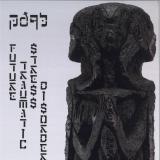
pdqb is an entity without a fixed form, moving through multiple timelines at once, performing in all of them simultaneously.
Every tone on this record was sampled somewhere else: in collapsed futures, unfinished pasts, and inside stress loops that never resolved. The tracks are not composed - they are retrieved, stitched together from moments that already happened and moments that haven't happened yet.
The music is unstable, dependent on who listens, and in which dimension, the tracks re-arrange themselves, revealing different harmonics, different fears, different exits. No two listeners hear the same, even if they play it at the same time.
The überskilled Detroit remixers provide a solution for Earthbound listeners - those unable to time-travel or shapeshift: By filtering pdqb's multidimensional signal through machine discipline, they force a temporary alignment - a version of a track that sounds the same to most listeners. Only then does collective rhythm become possible, a shared timeline where bodies on a dancefloor move to the same future at once.
---
Dr. Paul Dominic Quentin Bernard defines Future Traumatic Stress Disorder as a cognitive condition marked by a reversal of mnemonic orientation. Memory, in this model, no longer operates retrospectively but functions prospectively, encoding anticipated survival outcomes rather than past experience. Affected subjects do not recall what has been lived through; instead, they retain anticipatory memory structures of what will be survived. Bernard notes that this temporal inversion produces sustained psychological stress and warrants further empirical investigation.
Continuum - Vol. 16.219, Peer-Reviewed Scientific Journal
2025 Repress
“UR wonders” What happens to jazz if combined with the current electronic sound tools used to make Detroit techno now?
What might Jazz sound like if the inspirational pioneers of fusion ie; Return to Forever, Astral Pirates or Weather Report had access to the music production technology available now or in the future?
The artform called Jazz was a unique reflection of “The African American experience here in the United States.Unfortunately by the 90″s it had been compromised by major record companies and made “smoother” for mainstream consumption and more profits.
Born in America’s rural black south Rock & Roll had suffered the same fate years earlier. Original artists eventually replaced by well studied clones and corporate mega profits!! Also happening the original artform of jazz appeared to be caught, processed & throughly EXPLAINED by people who sought to intellectualize “struggle & human emotion” into mere words and then benefit immensely financially by being authorities on the subject.
Hmm sound familiar?
As you watch the current intellectual colonization of the urban inner city African American art forms house music, hip-hop, Jungle & Detroit techno get studied, bent, twisted renamed and turned into EDM profit formulas.
There stands records like Nation 2 Nation that defy these definitions and inspire the next generation of Pioneers who continue the undefined exploration of Jazz like Derek Jamerson, Jon Dixon, Raphael Merriweathers, Desean Jones, Timeline, Galaxy 2 Galaxy, Raphael Statin & Ian Finkelstein. Mother to daughter, Father to son,
Nation 2 Nation a work inspired and that inspired what’s next.
Spanning a decade of sophisticated funk from the Motor City, two midtempo picks from the crates of Mr. K get his trademark classy edit treatment on this Detroit-themed 7-inch.
G.C. Cameron was a solid singer in the Motown stable, a vocal chameleon whose range extended from clear tenor to soaring falsetto. Though this agility is most easily heard via his lead vocal on the Spinners’ “It’s A Shame,” he shows off the same versatility in the rare groove classic “No Matter Where,” a 1973 Curtis Mayfield-esque burner that’s the subject of Mr. K’s latest release on Most Excellent. For Krivit this has been a lesser known & hard to find floor filler for years. Intro cleanly extended, now ready for the big stage and modern club play.
Our flip side stays in midtempo, rare groove Detroit territory but jumps ahead a decade to the early ’80s with Candye’s “Time Is What You Need.” Candyce Edwards got her start in the Detroit funk powerhouse One Way (her predecessor was Alicia Myers) and soon became connected with the group’s wunderkind songwriter/multi-instrumentalist Kevin McCord. McCord had already taken Myers to the top with “I Want To Thank You,” and seeing if lightning could strike twice with Edwards. Although only resulting in this solo debut, time and the untiring excavations of latter-era vinyl junkies have subsequently made her collaboration with McCord (a union that briefly included marriage) a sought-after boogie gem in the rough. Mr. K plucks perhaps the most winsome LP-only cut and subtly extends intro and outro to provide a useful 7-inch version that should get plenty of warm weather play.
Both tracks have been carefully remastered for this release & have never sounded better.
Limited Edition COLOR Green Dark mixed Vinyl – 75 units Hand numbered
Mourad started djing in the mid-eighties. His mixing style and musical knowledge have taken him all over Europe and all the way to Asia. Born and raised in Tunis, Tunisia where he sharpened his skills by playing hip hop and electro but also soul, reggae and rare groove. His love for soul and jazz came from an eclectic father who was and still is very serious about his music. As a DJ Mourad plays a blend of Detroit techno and deep house. His sets are known for being diverse and highly loaded with soul and funk. He has played alongside people like Larry Heard, Farley jack master funk, Derrick May, Juan Atkins, Alexi Delano, Dimitri from Amsterdam, Olivier le Castor, BRS, Club Session,Darren Price, Joel Mull , Cari Lekebusch , Subject 13, Alex Reece, Ivan Smaghe , Alton Miller, Jeff Mills , Damon Wilde, 4 Hero , etc. (too many to mention all of them here). Production wise Mourad started producing music during the early 90s and Put out his first release in 1995 as CHRISMOUR Production, in collaboration with his soul brother Calico (svek, deep touch, lace, etc ) The journey continues…
Comes with insert and download coupon.
Imagine a Latin remake of Back to the Future. The mad scientist is Arsenio Rodriguez (the godfather of salsa) and the young student who travels through time with him is Eblis Alvarez (Meridian Brothers). This album can only be described as the perfect soundtrack for that movie that never was.
After the massive buzz generated by his first solo album, Mentallogenic, Alex Figueira got back in the studio to work in a more collective fashion this time, carefully assembling the second album of his largest project to date, Conjunto Papa Upa; a team of 6 musicians, spanning 3 generations of some of the best talent in the Latin and avant-garde scenes.
In an era where tropical music is dominated by purely electronic and rhythmically uniform sounds, the ten songs encompassed in “Fruta Madura” (“Ripe Fruit”) wander through the most diverse tempos, rhythms, and motifs effortlessly. A real breath of fresh air that gracefully incorporates soul, funk, jazz, psychedelia, and electronics into a solid tropical, irresistibly polyrhythmic foundation, without ever succumbing to the many genre clichés.
The distinctive production and catchy songwriting of Figueira shine in a very distinctive light on this second full-length. Living up to his reputation (Miles Cleret, founder of Soundway Records, called him “one of the scene's truly authentic and eccentric producers”), he takes the opportunity to show he’s not afraid to keep walking his own path.
Taking the band for a wild ride through the traditions of Africa, America, and the Caribbean; contrasting them with a ridiculously wide plethora of vintage, contemporary, and futuristic sounds, and pivoting on the exuberant musicality displayed by his musicians; the result leaves no doubt: this album is destined to be considered a future classic of the exciting tropical psychedelic music of the 21st century.
Addressing the most diverse themes in this new collection of songs, things take on a much more mature tone, as the title clearly suggests.
The opening track “El segundo es más sabroso” (“The second one is tastier”) sets the tone in the most assertive way imaginable, with the band boldly declaring, through multiple metaphorical references (laid upon a crazy mix of Dominican merengue, Detroit techno, classic and free jazz, dub, and electro), that the bar will be set higher with this second album.
The remaining compositions touch upon the most diverse subjects, with a fair dose of humor, sarcasm, and postmodern “magic realism”. “El Algoritmo” (The Algorithm) is a parranda-cumbia hybrid (for lack of a specific term) about the omnipresence of technology in our lives. The sophisticated Latin soul of the titling track “Fruta Madura” makes a case for the beauty of the maturity process. Some key philosophical teachings of Marcus Aurelius (the role of causality, the impositions of “the logos” and the importance of self-control) get a twisted cumbia treatment on “Reos del Deseo” (Prisoners of Desire). “No le pongas Coca-Cola” (“Don’t put Coca Cola in it”) shows us the most satirical side of the band, accusing those who mix Coca Cola with Rum of committing "sacrilege", on a powerful base of Dem Bow (the grandfather of Reggaeton), intertwined with touches of soul, salsa, and Cuban comparsa.
"Háblame Claro" (“Talk to me clearly”) is a story of heartbreak that evokes in its first part the spirit of the erotic salsa of the 80s (a subgenre deeply despised by purists), and after an unexpected samba interlude, leads to the hardest salsa of the 70s (a subgenre adored by purists), to end up in the surprising form of pure Afro-Cuban ceremonial music.
“Tu mamá tenía razón” ("Your Mom Was Right") is an attempt to exalt the spirit of the Latin American soap opera in the key of “acid bachata”, to recount a real-life case, witnessed by the band on countless occasions: the partying woman who arrives at the show accompanied by her bitter husband, who obviously does not like to dance. A very cheeky song to talk about the very serious and pertinent topic of female empowerment.
“La misma vaina” (“The same thing”) with its indescribable blend of bantú, candomblé, and Mozambique rhythms with abstract synthesizers, is an ode to adventure in favor of the aversion to taking risks and seeking predictability.
“Amigas picadas” (“Salty friends”) is another humorous song recounting another real-life case witnessed by the band on countless occasions: a love encounter sabotaged by the girlfriend's friends, who all happen to fancy the same guy. A jazzy take on the ancient Dominican rhythm of pambiche (grandfather of merengue), with generous psychedelic touches, resembling the classy late 60s releases of Guadeloupe's legendary producer / label owner Henri Debs.
“Vinimos a hablar” (“We came to talk”) takes sarcasm to the highest level, to ridicule the absurdity (also experienced by the band firsthand) seen in live music venues where people pay a ticket to go and have conversations that could be carried out much better on any bar, where no band is playing. The music alternates between a delicate melody with loose, sparse percussion and a full-on, pumping Angolan semba, with a techno kick drum included; bringing things to an apotheotic grooving finale, where the peculiar swing of Venezuelan calypso from the Callao region is thrown on top of all the precedent elements; closing the album in the most uplifting, “end of the carnival parade” feel.
The artwork is a delicate and impactful oil painting by Colombian artist Kevin Simón Mancera, who has collaborated many times with the label before (“Maracas, tambourines and other hellish things” tape and the Lola’s Dice LP).
What the experts are saying:
“Alex (Figueira) dove into this work with a brutal cohesion between lyrics and synths. Timbre poetry, sound poetry (you name it). And that, superimposed on his always impeccable percussive base, confirms the title of “avant-garde visionary of our beautiful Latin music”".
EBLIS ALVAREZ (MERIDIAN BROTHERS)
“Papa Upa's infectious quirkiness is a balm against boredom. A mature album, but without an expiration date”.
GLADYS PALMERA
“Here there is a lot of strength, drum, cadence and psychedelia, lost dance rhythms, united in an intercontinental Latin/African/and Caribbean journey, a unique winning combination that we could consider the new “Ritmo Figueira”.
DISCODELIC
Conjunto Papa Upa are:
Alex Figueira - Timbales, percussion, vocals.
Gerardo Rosales - Congas, percussion, vocals.
Ramón Mendeville - Bongos, percussion, vocals.
Randy Winterdal - Bass.
Andrew Moreno - Guitar.
Nico Chientarolli - Organ, piano, synths.
All songs written by Alex Figueira.
Arranged and performed by Conjunto Papa Upa.
Recorded, produced, mixed and mastered by Alex Figueira at Heat Too Hot, Amsterdam.
- 1: Freda Payne - Band Of Gold (Single Mix)
- 2: Chairmen Of The Board - Give Me Just A Little More Time
- 3: Flaming Ember - Westbound #9
- 4: Silent Majority - Frightened Girl
- 5: Chairmen Of The Board - You've Got Me Dangling On A String
- 6: Honey Cone - Girls It Ain't Easy
- 7: Chairmen Of The Board - Pay To The Piper
- 1: Chairmen Of The Board - Everything's Tuesday
- 2: Freda Payne - Unhooked Generation
- 3: Glass House - Crumbs Off The Table
- 4: Chairmen Of The Board - All We Need Is Understanding
- 5: Freda Payne - Deeper And Deeper
- 6: 100 Proof Aged In Soul - Somebody's Been Sleeping
- 7: Honey Cone - Want Ads
- 1: Freda Payne - Bring The Boys Home
- 2: Barrino Brothers - I Shall Not Be Moved
- 3: 8Th Day - You've Got To Crawl (Before You Walk)
- 4: Lucifer - Don't You (Think The Times A-Comin')
- 5: Honey Cone - Sunday Morning People
- 6: Glass House – I Surrendered
- 1: Freda Payne - You Brought The Joy
- 2: General Johnson - I'm In Love Darling
- 3: Chairmen Of The Board - Working On A Building Of Love
- 4: Honey Cone - Stick Up
- 7: 8Th Day – Eeny-Meeny-Miny Mo
- 1: Holland-Dozier Featuring Lamont Dozier - Why Can't We Be Lovers
- 2: Chairmen Of The Board - Elmo James
- 3: Silent Majority - Something New About You
- 4: Barrino Brothers - Try It, You'll Like It
- 5: Danny Woods - Let Me Ride
- 6: Glass House - Thanks I Needed That
- 7: Laura Lee - Crumbs Off The Table
- 1: Warlock - You've Been My Rock
- 2: Laura Lee - Woman's Love Rights
- 3: Holland-Dozier Ft Brain Holland - Don't Leave Me Starvin’ For Your Love
- 4: The Politicians - Free Your Mind
- 5: Harrison Kennedy - Sunday Morning People
- 6: Satisfaction Unlimited - Let's Change The Subject
- 7: 100 Proof Aged In Soul - Nothing Sweeter Than Love
- 1: Eloise Laws - Love Factory
- 2: Freda Payne - We've Got To Find A Way Back To Love
- 3: Brian Holland - I'm So Glad Pt.1
- 4: Honey Cone - If I Can’t Fly
- 5: Tyrone Edwards - Can't Get Enough Of You
- 6: Chairmen Of The Board - Skin I'm In
- 7: New York Port Authority - I Got It Pt. 1
- 1: Chairmen Of The Board - Finders Keepers
- 2: Hi-Lites - That’s Love
- 3: Freda Payne - Two Wrongs Don't Make A Right
- 4: Holland-Dozier Featuring Lamont Dozier - New Breed Kinda Woman
- 5: 8Th Day - She's Not Just Another Woman (Single Mix)
- 5: Eloise Laws - Put A Little Love Into It (When You Do It)
- 6: Melvin Davis - You Made Me Over
- 7: Honey Cone Featuring Sharon Cash – Somebody Is Always Messing Up A Good Thing
- 6: Flaming Ember - Gotta Get Away
Holland, Dozier and Holland are arguably the greatest songwriters ever. More prolific than Lennon and McCartney, they shaped “the Sound of Young America” and propelled the Motown sound in the mid-1960s into a creative stratosphere unmatched by any other independent music label. Their trademark catchy teenage love songs were delivered energetically by previously unknown Detroit groups like The Supremes, the Four Tops, Martha & the Vandellas & Marvin Gaye. Although synonymous with Berry Gordy’s Motown, it was their departure from Motown after a stand-off strike in 1967 and a brutal legal battle that led them to run their own group of labels, Invictus, Hot Wax and Music Merchant. This compilation is a definitive look at this period in history, exploring how H-D-H, under a new guise ‘The Creative Corporation’, drove the next generation of soul music in a myriad of different ways, towards funk, underground disco and jazz. Featuring 55 tracks, this collection documents HDH’s creativity and growth over this seminal 8 year period. During this time the trio developed new artists to rival Motown’s success such as Chairman Of The Board, Freda Payne, Honey Cone, Glass House, Flaming Ember, 8th Day, Laura Lee & Eloise Laws. The collection is complete with a detailed depiction of this period in history by award winning author Stuart Cosgrove who wrote the Soul Trilogy, a series of books on soul music and social change - Detroit 67: the Year That Changed Soul, Memphis 68: The Tragedy of Southern Soul which won the Penderyn Prize, as Music Book of the Year in 2018, and Harlem 69: the Future of Soul. Stuart’s notes detail the relationship with Motown in the final days, the immediate fall out after the trio left Motown and the creation of the new labels Hot Wax, Invictus & Music Merchant
Further is the brand new label from DJ Bone, who has started it in place of Subject Detroit which after 25 years he recently decided to put to sleep. This second EP lands on the same day as the first but is a new four-track solo outing from the now Amsterdam-based techno innovator himself. 'My Replicant Self' has synths slashing across the face of a sleek techno rhythm with sombre chords draped over the top. 'The Divine Call' ups the ante with spoken word menace and 'My Tribe' then layers up percussion and surging synth warmth. 'Remembering The Future' is a brilliantly quick and urgent track with slapping hits and bouncing drum funk.
The king is dead, long live the king, as they say - except in this case the late king is DJ Bone's legendary Subject Detroit label, which has now been shuttered after 25 years, and the newly anointed king is his new outlet Further, taken from his Amsterdam parties of the same name. It kicks off with a pair of new EPs on the same day and this is the first from Yeti Mind Tricks. 'We Ain't Like Them' is a hammering Motor City techno cut for the peak time which Bone remixes into a more stripped-back but no less edgy and potent cut. On the flip are 'Bimini Road' and 'Vandelay,' both of which bring stylish techno drenched in machine soul.
ITALIAN LIBRARY GEM RE-IMAGINED BY BEATMAKER KORALLE AND RAPPER ILLA J
Four Flies is proud to present a new installment in the RELOVED series, 'New Levels / Chartreuse', with an original track from late-70s Italian ensemble Modern Sound Quartet and a rework from producer and beatmaker Koralle featuring iconic rapper Illa J.
In keeping with the aim of the series, which is to put a modern and urban spin on tunes from Italian golden age soundtracks and library music, Koralle has used the unique jazz-funk sound of the original sample to create a smooth and stylish hip-hop beat to which Illa J adds irresistible swag and coolness. More than a remix, 'New Levels' is a new composition that takes 'Chartreuse' into the world of contemporary hip-hop and rap.
Lorenzo Nada, aka Koralle, is a musician, beatmaker and producer from Bologna, Italy. Nada is best known for his project Godblesscomputers, which kicked off a couple of years ago while he was living in Berlin. After releasing four albums/EPs and touring Europe with a four-piece band, Nada is heading into a new direction as Koralle. Firmly rooted in hip-hop, Koralle is taking his jazz crates and field recordings to the studio. Equipped with an array of synths, Rhodes and bass, he creates deeply textured tracks that touch mind, body and soul. "Each beat is like an object found at the bottom of the sea," says Koralle to describe his music. And adds: "The samples emerge from the depths of my record collection and find a new meaning, transformed, like corals from the bottom of the ocean."
Rapping on Koralle's beat is Detroit artist Illa J. Raised in a musical family (his father played piano, his mother sang, and his older brother is the late hip-hop producer J Dilla), he grew up surrounded by jazz, gospel and soul, before building a name for himself as a rapper with a distinctive flow and timbre, but also as a singer and songwriter. Illa J has said of his approach to lyric writing that "the melody comes first, then I bring the words in, even when I'm rapping, you know rhythmically. I'm a singer, so melody comes first, but in terms of the subject matter, the music tells you."
The Modern Sound Quartet was an ensemble led by Milanese pianist and composer Oscar Rocchi. It included Rocchi on keys, Andrea Surdi on drums, Ernesto Verardi on guitars, and Luigi Cappellotto on bass. 'Chartreuse' (written by Cappellotto) comes from their 1976 library LP Cocktail Bar – a collection of jazz-funk/jazz-rock/fusion tunes, each named after a famous spirit. While little known to the general public, Cocktail Bar is highly sought after by diggers, DJs and beatmakers.
'New Levels / Chartreuse' is the fifth release in the RELOVED series, following Jolly Mare's retouch of Piero Umiliani's 'Discomania' (12"), Free The Robots' rework Gianni Safred's 'Autumn 2001' (7"), Dengue Dengue Dengue's remix of Giuliano Sorgini's 'Oasi Nella Giungla' (7"), and Fratelli Malibu's reversioning of Alessandro Alessandroni's 'Tema di Susie' (12"). The 7" releases are co-curated by fellow independent label Little Beat More.
Superjock Records presents Volume 13 in the ever evolving “NOLA Breaks” series! This time around, Los Angeles producer Dan Ubick partners up with Detroit native and longtime J Dilla and Madlib collaborator, Guilty Simpson (Stones Throw). Simpson spins a cautionary tale of how limited opportunity and having to hustle to make ends meet can have dire consequences on our communities. With a lush string arrangement and a funky backbone, Connie Price & The Keystones provide the perfect soundtrack to the subject at hand. “Everybody Pays” also features the sympathetic and haunting voice of Bay Area soul chanteuse Destani Wolf (The Pharcyde, Matisyahu, Night Owls) and emotional cello stylings of Breakestra and Funky Sole grand puba “Music Man” Miles Tackett. To top it off, Professor Shorthair lays down the perfect cuts to bring the message home. On the flip-side, Professor Shorthair provides an epic remix of “Everybody Pays” with a harder edge while maintaining the emotional feel of the original. - Volume 13 in the “NOLA Breaks” series is a must for Funk and Hip-Hop fans alike. Produced, recorded and mixed by Dan Ubick for DanUbe Productions at Lions Den Studios, Topanga, CA
For Fans Of Garage Punk, Power Pop, Cheap Trick, Dollyrots, Suzi Moon, Pretenders, Blondie, The Muffs, 5.6.7.8’s. One part pop, one part poison, all “poolside glitter punk,” Hayley and the Crushers offer up a tsunami of bad girl power. Anointed “the naked embodiment of power pop punk” by New Wave icon Josie Cotton (who signed the band to her Kitten Robot Records in 2021), Modern Adult Kicks is their most ambitious and self-possessed album to date. Produced by legendary LA punk producer and ex-Screamer Paul Roessler (TSOL, Josie Cotton, Richie Ramone), the album conjures up the electricity of first-car freedom, the woes of suburban isolation and the lurid pleasures of Y2K chat rooms all wrapped in the warm glow of a late-night infomercial. While the content is no doubt “adult,” there’s no shortage of kicks to be had. The California-to-Detroit transplants have injected even the most bummer of subjects (addiction, heartbreak) with a potent venom of caffeine and heart. Sure, BUST Magazine once likened the band to a bag of Sour Patch Kids, but this new album reveals fresh depths of flavor. Crafted in a post-Covid world, Modern Adult Kicks is exactly what it advertises to be: a more put-together, wiser “big sister” to the band’s sunny 2020 release, Vintage Millennial. Like finally being old enough to party with the babysitter, Kicks is a shining example of how growing up can actually rule. In the Crushers’ world, growing jaded isn’t an option and there’s never a good reason to stop dancing. Tracks 1 Taboo 2 Cul de Sac 3 She Drives 4 Broken Window 5 I Fall 6 Click and 7 Act Now 8 Lost Cause 9 California 10 Sober 11 No Substitutes 12 Overexposed
- A1: Cool Water (Feat Ivan Conti (Azymuth)
- A2: Cycle Of Many
- A3: Admira (Feat Gigi Masin)
- A4: Flowers (Feat Venecia)
- A5: Melt Into You (Feat Alex Malheiros (Azymuth)
- B1: Flos Potentia (Sugar, Cotton, Tabacco) (Sugar, Cotton, Tabacco)
- B2: Sphere (Feat Jean-Luc Ponty)
- B3: Warm
- B4: On My Way Home
- B5: What Do The Stars Say To You
White Vinyl[31,51 €]
In 1990 Ronald Lee Trent Jr. was the teenage creator of Altered States – a raw, futuristic techno-not-techno anthem, which in retrospect was something of a stylistic anomaly for the young artist. Across subsequent years, with time spent in Chicago, New York and Detroit, came the development of his signature sound, and renown as a world class purveyor of deep, soul infused house/garage. This story has already been told, and on casual inspection, the well-worn platitude ‘house music legend’ is an old shoe that still fits. However, in fact, he’s actually so much more, and has been for quite a while. A genuine musician, songwriter, and ‘producer’ in the proper, old-school sense, the artist today has more in common with Quincy Jones than he does your average journeyman DJ track-hack.
To those in the know, these broader skills haven’t gone unnoticed, which is why on the highly collaborative, career-topping new LP ‘What Do The Stars Say To You’, it took little persuasion to recruit serious star power. Brazilian royalty Ivan Conti and Alex Malheriros from Azymuth, violin maestro Jean Luc Ponty, ambient hero Gigi Masin, hype band Khruangbin and more performed, whilst NY cornerstone François K provided mastering duties. At various points Ron himself played drums, percussion, keys, synths, piano, guitar and electronics.
Harking back to the 70s and 80s boom in adventurous, luxurious albums, WDTSSTY is a love letter to the longplayer, where rich musicality and a liquid smooth, silky flow make seemingly odd genre bedfellows acquiesce harmoniously. Each song its own high-fidelity odyssey, Trent incorporated a broad range of live instruments and electronics into a sophisticated, euphonic whole. Described by him as being “designed for harmonising with spirit, urban life and nature”, this is aural soul food, gently easing you into balmy nights, where everything is alright.
Originally wanting to be an architect, Trent’s views his approach to collaboration and music in general as having the same principles. A firm believer in the nourishing qualities of sound, he sees direct parallels between the two disciplines, being as the purpose of good architecture is to improve quality of life. “With WARM, through sound design, I built frameworks for the musicians, who furnished and occupied these structures beautifully, which was a big compliment for me”, he comments.
The conditions required for a good collab are more than simply structural though, as Trent expounds, “I’m a huge fan of everyone on the record, especially Jean Luc and Azymuth, who’re part of my DNA. Each track was made with that guest in mind – for example, when I started writing ‘Sphere’, I immediately thought ‘this IS Ponty’. I played the keys in his style, and did a guide violin solo using a synth, which he then re-did, amazingly. ‘Cool Water’ is based around Azymuth themes, so when I sent it to Ivan, he could immediately see himself in the piece; He got what I was going for straight away. For ‘Melt Into You’ I hit up Alex on Instagram, sent him the track, he liked it, and within 24 hours he’d sent back six different bass passes!”
“Conversely, Admira began with a sketch sent by Gigi and became something combining Jon Hassell-esque chords and the feel of ‘Aquamarine’ by Carlos Santana, which links back to Masin’s recurrent nautical theme”, he adds.
With community, history and the need for racial equality never far from Ron’s mind, ‘Flos Potentia’ translates from Spanish as flower power, but rather than promoting some hippy idyll, instead it refers to plants which drove the slave trade: tobacco, sugar and cotton. Joined by Khruangbin, together they propel Dinosaur L, Hi-Tension and afrobeat into an ethereal, clear-skyed stratosphere.
Aside from these esteemed guests, other key influences cited by Trent include ‘Gigolos Get Lonely Too’ by Prince, ‘Beyond’ by Herb Alpert, David Mancuso, Jan Hammer, Tangerine Dream, The Cars, Trevor Horn, Alan Parsons Project and pre-Kraftwerk incarnation Organization. A multitude of others are audible too, including George Bension, Vangelis, Loose Ends, Maze, Flora Purim, Weather Report, Atmosphere, Grace Jones, James Mason and Brass Construction.
On the subject of influences, although opposed to the fences erected by genre tags, to understand where Ron is coming from, and where he’s at, it’s important to acknowledge just how big the palette is from which he paints. Traversing jazz funk, quiet storm, sophisti-pop, new age, new wave, kosmische, Balearic, samba, afrobeat, Latin rock, soft rock and yacht rock, his deeply entrenched digger’s knowledge pays off in dividends.
- A1: Cool Water Feat. Ivan Conti (Azymuth) And Lars Bartkuhn
- A2: Cycle Of Many
- A3: Admira Feat. Gigi Masin
- A4: Flowers Feat. Venecia
- A5: Melt Into You Feat. Alex Malheiros (Azymuth)
- B1: Flos Potentia (Sugar, Cotton, Tabacco) Feat. Khruangbin
- B2: Sphere Feat. Jean-Luc Ponty
- B3: Warm
- B4: On My Way Home
- B5: What Do The Stars Say To You
Black Vinyl[24,79 €]
In 1990 Ronald Lee Trent Jr. was the teenage creator of Altered States – a raw, futuristic techno-not-techno anthem, which in retrospect was something of a stylistic anomaly for the young artist. Across subsequent years, with time spent in Chicago, New York and Detroit, came the development of his signature sound, and renown as a world class purveyor of deep, soul infused house/garage. This story has already been told, and on casual inspection, the well-worn platitude ‘house music legend’ is an old shoe that still fits. However, in fact, he’s actually so much more, and has been for quite a while. A genuine musician, songwriter, and ‘producer’ in the proper, old-school sense, the artist today has more in common with Quincy Jones than he does your average journeyman DJ track-hack.
To those in the know, these broader skills haven’t gone unnoticed, which is why on the highly collaborative, career-topping new LP ‘What Do The Stars Say To You’, it took little persuasion to recruit serious star power. Brazilian royalty Ivan Conti and Alex Malheriros from Azymuth, violin maestro Jean Luc Ponty, ambient hero Gigi Masin, hype band Khruangbin and more performed, whilst NY cornerstone François K provided mastering duties. At various points Ron himself played drums, percussion, keys, synths, piano, guitar and electronics.
Harking back to the 70s and 80s boom in adventurous, luxurious albums, WDTSSTY is a love letter to the longplayer, where rich musicality and a liquid smooth, silky flow make seemingly odd genre bedfellows acquiesce harmoniously. Each song its own high-fidelity odyssey, Trent incorporated a broad range of live instruments and electronics into a sophisticated, euphonic whole. Described by him as being “designed for harmonising with spirit, urban life and nature”, this is aural soul food, gently easing you into balmy nights, where everything is alright.
Originally wanting to be an architect, Trent’s views his approach to collaboration and music in general as having the same principles. A firm believer in the nourishing qualities of sound, he sees direct parallels between the two disciplines, being as the purpose of good architecture is to improve quality of life. “With WARM, through sound design, I built frameworks for the musicians, who furnished and occupied these structures beautifully, which was a big compliment for me”, he comments.
The conditions required for a good collab are more than simply structural though, as Trent expounds, “I’m a huge fan of everyone on the record, especially Jean Luc and Azymuth, who’re part of my DNA. Each track was made with that guest in mind – for example, when I started writing ‘Sphere’, I immediately thought ‘this IS Ponty’. I played the keys in his style, and did a guide violin solo using a synth, which he then re-did, amazingly. ‘Cool Water’ is based around Azymuth themes, so when I sent it to Ivan, he could immediately see himself in the piece; He got what I was going for straight away. For ‘Melt Into You’ I hit up Alex on Instagram, sent him the track, he liked it, and within 24 hours he’d sent back six different bass passes!”
“Conversely, Admira began with a sketch sent by Gigi and became something combining Jon Hassell-esque chords and the feel of ‘Aquamarine’ by Carlos Santana, which links back to Masin’s recurrent nautical theme”, he adds.
With community, history and the need for racial equality never far from Ron’s mind, ‘Flos Potentia’ translates from Spanish as flower power, but rather than promoting some hippy idyll, instead it refers to plants which drove the slave trade: tobacco, sugar and cotton. Joined by Khruangbin, together they propel Dinosaur L, Hi-Tension and afrobeat into an ethereal, clear-skyed stratosphere.
Aside from these esteemed guests, other key influences cited by Trent include ‘Gigolos Get Lonely Too’ by Prince, ‘Beyond’ by Herb Alpert, David Mancuso, Jan Hammer, Tangerine Dream, The Cars, Trevor Horn, Alan Parsons Project and pre-Kraftwerk incarnation Organization. A multitude of others are audible too, including George Bension, Vangelis, Loose Ends, Maze, Flora Purim, Weather Report, Atmosphere, Grace Jones, James Mason and Brass Construction.
On the subject of influences, although opposed to the fences erected by genre tags, to understand where Ron is coming from, and where he’s at, it’s important to acknowledge just how big the palette is from which he paints. Traversing jazz funk, quiet storm, sophisti-pop, new age, new wave, kosmische, Balearic, samba, afrobeat, Latin rock, soft rock and yacht rock, his deeply entrenched digger’s knowledge pays off in dividends.
Freamon is a denizen of the modern world, allegedly hailing from NY, according to some, not relevant, says he. What matters is the music - finely honed and carefully crafted dancefloor gems, served up with love the way they used to be, the way they ought to be.
The Hot Damn! EP is his second release on the mysterious Turbocapitalism label, after 2016's Black Grid EP. This time, he has decided to shine a spine-tingling light on our souls. He wants you to raise your hands and put them together in an overdose of holy joy on this unashamedly celebratory slab of sweet gospel grooving. Can you feel the spirit One listen to 'No More Crying' will settle any doubts on the subject. It's gospel-funk. Or gospel-not-gospel, which is like a million samples taken from every soul record you never heard, seamlessly stitched together as if created fresh today, with one idea - to meld together into one big explosion of spine-tingling dance floor joy!
The title track takes things down a notch with a heavy kick drum shuffle - stripped back analogue house, making for an intoxicating, dense brew of sounds, feelings and ideas. Fierce, pulsating free jazz sounds, snaking around that deliciously tense, bustling bottom end, creating an infectious groove that is fresh, different and most of all, impossible to resist.
Meanwhile, Madrid's DJF and Damian Schwartz do what they do best: they take that thing straight to the centre of Detroit, let it adjust to the new environment and then freely cruise the boulevards at night.
Copenhagen's Echocord Colour returns this August with Stephen Brown's 'Power Factor' EP, featuring three originals from the UK Techno stalwart.
Scottish producer Stephen Brown is a name synonymous with Techno across the globe having been releasing material since the mid nineties on imprints such as Derrick May's Transmat, Subject Detroit, Skudge Records, Ben Sims' Theory and Holland's Djax Up Beats amongst many more.
Here we see Brown join the roster of Echocord's sub-label Colour, slotting him in alongside the likes of Mike Dehnert, Nick Ho¨ppner, Luke Hess and Deadbeat in the back- catalogue.
Up first on the release is 'Sandtext', a stripped-back dubbed out opening cut fuelled by a robust kick and minute percussive hits running alongside a sturdy sub bass drive and spiralling dub stabs before 'Wet' takes things even deeper via muted kicks, shuffling shakers and delayed synth chords. 'Back Stroke' then rounds out the release with an amalgamation of airy reverberated stab hits, rumbling low end pulsations and a thunderous kick drum to once again create an understated, hypnotic composition.
On the second chapter of the KOOAAD Muzik saga, obscure composer Filippo Diana shakes hand with Cronenberg, Carpenter and Detroit's finest electro pioneers and delivers a masterful soundtrack to the never released sci-fi movie NEMESI.
'A neuro scientist synthesizes a protein that amplifies sensory perceptions. Using himself as test subject, in an attempt to establish the right dosage, he takes too many shots that will quickly and inevitably plunge him into the depths of insanity.'
All tracks are filled with a tension that ranges from fear and mystery to arousal and ecstasy, accompanying a vision that never became cellulose yet entrains our brain like a stroboscopic dream.
Music to play on a monochromatic screen with oscillating brightness at theta frequencies.
Seven tracks mini album selection of the original sound score.
From the ruins of the birthplace of techno ...
Detroit Underground returns with this, their twenty second release, in a catalogue that has come to define the outer limits of experimental electronics while still adhering to dance floor basics.
This edition sees DU label boss Kero return to the spotlight in collaboration with LA based sound designer and interactive director Drasko Vucevic, aka Drasko V of Los Angeles based DRASTIC Music + Technology. Drasko has recently created, among other things, sound design for a promotional featurette for the Academy Award nominated film Gravity.
Given the label's long time fascination with the intersections of music, art and technology the collaboration is as fitting as it is fruitful.
Side A ups the collaborative ante as this 12'' comes blasting out of the gate with two very strong remixes, Exponent is the subject of a relentless 4/4 treatment from LA techno exponents Drumcell while Superheavy gets an acid-style work out from Canadian producer Jesse Somfay's Borealis project.
It is not until the second side that we hear the original versions of Exponent and Superheavy, both of which reveal themselves to be undulating masses of hip hop tinged beats over dark, bass rich undertones, with the latter offering some brighter tones as well - in other words pretty much what you might expect out of a Drasko V and Kero collaboration.
Side B is further rounded out with a couple of remixes from England's Si Begg and Valance Drakes the former coming in with a super compressed, squelched out, electro inspired take on Exponent while Valance Drakes chills us back out with an impossibly mellowed out version of the same
- 1