
Поиск:suburb
Стили
Все

Zig Zags have been an L.A. institution for over a decade, never veering from their hard-riffin punk/metal mission statement. They’ve gigged all over the globe with underground luminaries such Mike Watt, Neurosis, Pig Destroyer, Oh Sees and Feral Ohms and recorded collaborations with icons like Iggy Pop. Now the power trio is set to release their fifth incendiary full-length album, Deadbeat At Dawn, named in honor of the beloved B-movie, a no-budget action revenge flick set in the mean streets of suburban Ohio. Cult cinema is an enduring Zig Zags inspiration, with the band frequently calling out exploitation films in their lyrics, odes to teen-delinquent classics like “Over the Edge” and dystopian sci-fi such as, “Terminator” and “Total Recall”. The new album sticks to this obsession with the cultural underground, riffing on everything from demonic minions to apocalyptic visions and alien attacks. The result is the most focused, intense, and catchy Zig Zags album yet, with the timing perfect for their distinctly melodic and maniacal call to arms. Finalizing recording and mixing just as the catastrophic fires hit their hometown in L.A., Deadbeat At Dawn is the perfect soundtrack for a city rising up from the ashes of destruction. “I feel lucky that we got to put out this record when we did,” Maheu said, “It’s heavy and gnarly and kind of fucked up, but it’s also a lot of fun—which is how we feel about Los Angeles.”

5
Stereogum: »Here’s a cool new musical project that feels both out-there and extremely mundane. In 2022, the great Colorado experimentalist M. Sage teamed up with Lieven Martens (Dolphins into the Future) under the name Sage Martens. Their album, »Riding Fences«, was an ambient classical exercise designed to explore the idea of ›Western‹ music. They’re back this year with another conceptual offering (...)«
»Chamber Music for Lawn Mowers« is the second album by Sage Martens. This time, Matthew Sage (RVNG, Fuubutsushi) and Lieven Martens (Edições CN, Dolphins into the Future) sing the lawn.
Did you know a clean-cut lawn is a desire we inherited from the British?
Yes, the British dumped this pleasure into our collective consciousness. Those humorless Victorians who enjoyed having their black pudding on the lawn. They came to this uninspired impression while mis-looking at Italian paintings. Yes indeed, while gazing at these paintings they mistook green lanes for green lawns. Thus it became hip. Every stuffed truffle commanded his gardener to cut the grass.
As a result, this Victorian lust for sterile gardens with pretty green lawns nudged our world into water spillage and pesticide clouds. This new priority produced exhaust clouds and prudish monocultural landscapes. Just by looking at Italian paintings.
As with most of Western history, the practice was exported to America and then turbocharged. By shearing clear the prolific brush of pastures, prairies, forests and glens, biodiversity becomes an aesthetic casualty with long-suffering ecological ripples. An inherited practice narrows the bandwidth of experience.
And so, the childhood habit of humming along in key to the drone of a gas-powered mower while trimming a suburban lawn extrapolates into something expanded — an unanswered question about the harmonics of landscape practices.
M. Sage: Bb clarinet, alto saxophone, sine wave, lawn mowing, processing L. Martens: computer, analog synthesis, digital processing With W. Van Gils: lawn mowing

- Blest
- We Belong
- Massive
- Unfair
- Perfect Pear
- Fall Apart
- Worst Of Times
- True
- Gimme Ocean
- Blitz!
Yuno's full-length debut, Blest, out May 16 on Sub Pop, finds the enigmatic indie-pop visionary transforming the emo-tinged suburban malaise of his 2018 Moodie EP into more expansive, widescreen pop drama - suited for big moves and bigger stages. The kaleidoscopic sound he devised as a millennial hermit in his childhood bedroom in Florida has since broadened his horizons, taking him on tour with Unknown Mortal Orchestra and Superorganism, and soundtracking various series for Netflix and HBO. Imbued with elements of dream-pop, rock, trap, and psychedelia, his eclectic songs serve as bids for love and connection, which especially in the fractured era of social media, have resonated with many listeners who find solace in his vulnerability. Yuno's superpower lies in the way he mines a multitude of genres for their pop potential and surfaces with a tapestry that feels novel and fresh. Take, for instance, "Blest," the immediate, blissful, and bright title track, which is inspired by Rich Harrison-breakbeats and Neptunes-esque jangle. Or the breezy single, "True," in which Yuno moderates a lover's quarrel with slick, trap percussion. Amid the breakbeated dream-rock of "Gimme Ocean," he introduces his guitar solo with a searing emo scream, run through an EarthQuaker Devices pedal. Don't let his sanguine aura or his sherbet pink wardrobe fool you; he can shred as hard as he wants to when he wants to. All songs on Blest were written and performed by Yuno, co-produced by Yuno and Frank Corr (Morning Silk), who also contributed keyboards, drums, and guitar throughout the record, with additional production and instrumentation by Patrick Wimberly (Chairlift) at The CRC in Brooklyn, and Nick Sanborn (Sylvan Esso) at Betty's in Durham, NC. Blest was mixed by Steve Vealey and mastered by Joe La Porta.

12
Wilson Tanner return to dry land with Legends, a wine-soaked agricultural fantasy, made among the grapevines at Manon Farm in South Australia. Where their earlier works settled into the sun-struck torpor of a suburban Perth backyard (69) or drifted off-course on a riverboat on Port Phillip Bay (ii), Legends trades salt air for vineyard sweat, the scrape of boots on dry earth and workers’ radios humming with the summer test cricket season.
Through this agricultural haze an image of a working vineyard emerges - ducks, dogs and plovers intrude; tractors and quads fly-by; stainless steel gleams at the edges. Recorded without mains power, the Manon demos overflow with farmyard ingenuity. Wind, brass, balalaika, balloon, pipe and synth are trained onto the staff with wire, tape and string.
A caricature of Australian viticulture, Legends is packed to the horns with the mythology and manure of natural wine. Swigging and belching in camaraderie, Wilson Tanner press their surroundings into something raw and unfiltered, letting bum notes, leftovers and sediment linger in the bottle. A cornucopia of biodynamic sounds.

5
Emerging from the suburbs of North London in the early 1990s, Hulusi was an experimental electronic music collective formed by four friends of multi-ethnic origin: Cypriot, Caribbean, Indian and English heritage. Cultivating their musical practice within very specific parameters of time and space, Hulusi instills the essence and spirit of the acid house movement (and its aftermath) that had taken much of England by storm from 1988 onwards. The ‘Dream’ EP was the collective's first release of their self-funded and limited output, offering up a categorically elusive record that could soundtrack the most esoteric and life affirming club moments, whilst simultaneously satisfying the ears and obscure desires of those found dwelling in the heavily occupied ‘chill out’ rooms and nocturnal after parties. As the emerging UK rave scene aligned with newfound accessibility of music production, the late 80s and early 90s became a fertile ground for experimental electronic music, spawning a generation of bedroom and basement producers interacting with and creating music for often the very first time. Like many, Hulusi was a musical project that connected the dots between DIY spirit, technological advancements and the burgeoning cultural phenomenon of acid house. The project operated outside of the then perceived, traditional band conventions, instead developing their sound and exchanging ideas through the format of demo tapes and floppy disks, nurturing their work through individual bedroom studios and feedback sessions. Considered a crucial and possibly defining element of the record, is Hulusi’s unconscious exploration of the groups hybrid cultural identity. Rooted in a shared desire for self-invention, the Dream EPreflects Hulusi's response to a world of rapid musical and technological change. Each track on the record draws inspiration from both Western and Eastern musical frameworks, symbolized through the record’s structure. The ‘Western Side’, featuring "Dream," echoes the ambient techno and acid house influences of early rave culture and bands like 808 State and Orbital. In contrast, the ‘Eastern Side’ of the record is highly decorated with samples, yet stripped back, through its purposeful use of organic sounds, reflecting the group's fascination with blending Western modernism with imagined Eastern themes. Despite operating in near obscurity, Hulusi - The Dream EP acts as an audible catalyst to transport the listener to a different time and place, offering a lucid snapshot into the musical and cultural explorations of the past whilst simultaneously remaining a timeless piece of music.
- A1: Blake Baxter - Sexuality
- A2: Suburban Knight - The Worlds
- B1: E-Dancer - Feel The Mood (N.y. Groove Mix)
- B2: Yvette - Pump Me (Mayday Mix)
- A1: Qx-1 - I Won't Hurt You (I Swear)
- A2: Fred Brown - Roman Days
- B1: Mr. Fingers - I'm Strong (Instrumental)
- B2: Laurent X - Machines (Apocalypse Mix)
- A1: Revelation - First Power (Original Mix)
- A2: Egotrip - Dreamworld (World Of Dreams Mix)
- B1: 33 1/3 Queen - Searchin
- B2: Bobby Konders - Let There Be House
- A1: Steve Poindexter - Computer Madness
- A2: Age Of Chance - Time's Up (Timeless)
- B1: Lfo - Lfo (Leeds Warehouse Mix)
- B2: Alice D In Wonderland - Time Problem (Techno Speed Work)
- A1: Joeski - My English Lover (Acid Mix)
- A2: Pleasure Zone - Fantasy
- B1: Mellow Man Ace - Rhyme Fighter (House Dub)
- B2: The Gherkin Jerks - Strange Creatures
- A1: The D.o.c. - Portrait Of A Masterpiece (Cj's Ed-Did-It-Mix)
- A2: Robert Armani - Circus Bells (Full Length Original Mix)
- B1: Todd Terry Presents Cls - Can You Feel It (In House Dub)
- B2: Virgo - Free Yourself
- B1: A Homeboy, A Hippie & A Funki Dredd - Total Confusion (Heavenly Mix)
- B2: 2 Men From Jersey - Track Werk (After Dark Mix)
- A1: Human Resource - Dominator (Frank De Wulf Remix)
- A2: Frankie Knuckles - Your Love
- B1: Simon Sed - Criminal
- B2: Tyree - Hardcore Hip House (Joe Smooths Too Deep Mix)
- A1: Frankie Bones - Call It Techno (House Mix)
- A2: Frank De Wulf - The Tape (Remix)
- B1: A Guy Called Gerald - Automanikk (Derrick May The Force Be With You Mix)
- B2: Sheer Taft - Cascades (Hypnotone Mix)
- A1: Tronikhouse - The Savage & Beyond (Savage Reese Mix)
- A2: The Orb - A Huge Evergrowing Pulsating Brain That Rules From The Centre Of The Ultraworld (Orbital Dance Mix)
- B1: Mental Mayhem - Where Are They Hiding
- B2: Edwards & Armani - Acid Drill
- A1: Njoi - Jupiter Re-Dawn
- A2: Basex - U-R-Self-Go (All Night Mix)
40
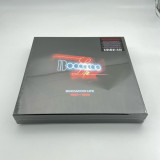
(10x12" box set, limited to 1000 copies, with premium finishing, uniquely numbered, incl. 10 records in individually printed sleeves, a booklet detailing the club's history & exclusive stickers) Boccaccio has secured its place among legendary venueslike Paradise Garage in New York and The Hacçinda in Manchester. Its bold fusion of emerging electronic genres such as New Beat, Acid, House, and Techno was way ahead of its time, drawing music lovers and clubbers from across Belgium and beyond.
Belgian label Music Man Records presents Boccaccio Life 1987-1993, a new compilation offering a fresh perspective on the legacy of the iconic Belgian club Boccaccio - often associated with the short-lived New Beat movement. The 40-track compilation highlights the raw and futuristic early house and techno sounds that were heard in the pioneering club.
Located in rural Destelbergen (Belgium), just a stone's throw from Ghent, Boccaccio has secured its place among legendary venues like Paradise Garage in New York and The Hacçinda in Manchester. Its bold fusion of emerging electronic genres such as New Beat, Acid, House, and Techno was way ahead of its time, drawing music lovers and clubbers from across Belgium and beyond. Sundays at Boccaccio were unlike anywhere else-offering sounds you couldn't hear anywhere else.
Boccaccio Life 1987-1993 is carefully curated by resident DJ Olivier Pieters and club regular Stefaan Vandenberghe, standing as the ultimate testament to a club that was more than just a venue. For those who experienced it, it was a community - a way of life. Hence the club's full name: Boccaccio Life.
This compilation stands as a testament to an innovative time in electronic music, capturing the raw, futuristic sounds of early house and techno. It sheds light on another side of Boccaccio, one that goes far beyond the short-lived New Beat scene. A carefully curated selection of 40 tracks, resonating with those who were there by offering familiar classics, while also reaching a new generation-those who never experienced it firsthand.
With tracks from Blake Baxter, Virgo, Frankie Knuckles, Tyree, and A Guy Called Gerald, the unmistakable influence of black American pioneers is clear-the originators of the firstanalog house and techno sounds. On the other hand, UK sound innovators such as The Orb and LFO bring both sharp textures and rough breakbeats to the table.
Club staple tracks include dreamy excursions from Roger Sanchez under his Egotrip moniker, the relentless basement house of Circus Bells by Robert Armani on Dance Mania, an uplifting take on a hip-house cut from The D.O.C. (Portrait of A Masterpiece in the CJ Ed-Did-It Mix), a timeless remix of UK Formation's Age of Chance from 1994, and an alternate take on The Tape by Boccaccio club regular and Belgian producer Frank De Wulf, taken from his B-Sides project.
While not always the obvious hits, these tracks have gracefully withstood the test of time, and were exclusive to Sundays at Boccaccio. Now, they are finally available to experience together in one collection, offering a timeless snapshot of a unique era.

- 1: Crazy
- 1: 2Tiger Style
- 1: 3Nature Of The Beast
- 1: 4Chainsaw
- 1: 5Prefontaine
- 1: 6It Gets Better
- 1: 7Lawn Mower Man
- 1: 8Last Emperor
- 1: 9Ftw
- 1: 0Good Vs Evil
- 1: Coal Mine
- 1: 2Kill Kill Kill
- 1: 3Blood Beast
- 1: 4Underground King
OPAQUE YELLOW VINYL. 'Lawn Mower Man' is the second studio album from Swollen Members'
Madchild, and would hit #2 on the Canadian Albums Chart and #150 on the US Billboard 200. The record
features guests including Sophia Danai, Bishop Lamont, JD Era, Prevail and Slaine. To commemorate 10+
years since its release, Suburban Noize is proudly presents a limited colorway exclusively for RSD 2024.

- A1: Alive (I Want To Feel)
- A2: Cloud Away
- A3: Joy
- A4: Buoyant
- A5: Horses Will Run
- A6: This Island
- B1: Can You Feel It
- B2: Melancholy Cave
- B3: Suburbia
- B4: The Light Won't Shine Forever
- B5: 5Am
Die in Naarm/Melbourne ansässige Rockband Floodlights kündigt ihr drittes Album 'Underneath' an, das am 21. März 2025 über PIAS Australia veröffentlicht wird.
'Underneath' entstand inmitten ausgedehnter Tourneen durch Großbritannien und Europa, Australien und den USA, und wurde von einer surrealen Phase im Leben der Bandmitglieder geprägt - voller Premieren, der Erkundung neuer Orte und den bisher größten Gigs und Festivals.
Trotz der Vergänglichkeit ihres neuen Lebens auf der Straße erwies sich der Schreibprozess als eine äußerst intime Zeit, die von ruhigen, gemeinsamen Momenten der Kontemplation geprägt war. Die Songs, die dabei entstanden sind, repräsentieren einen Prozess der Abrechnung, der Katharsis und des Wachstums innerhalb der Gruppe. Sie verschmelzen die prägnanten gesellschaftlichen Reflexionen, für die sie bekannt sind, mit persönlicheren Meditationen über Trauer, Erinnerungen und Orte und geben schließlich den unzähligen Emotionen und Erfahrungen, die unter der Oberfläche schlummern, Gestalt. Mit ihren einhüllenden Alt-Rock-Klanglandschaften malen Floodlights auf 'Underneath' eine Metamorphose in Bewegung, während sie im Kern erforschen, was es bedeutet, ein Mensch zu sein.

4
A veteran of the UK reggae scene, Peter Spence meets young and ambitious Portuguese singer Fidel of Real Rockers posse, both providing their very own unique style with sharp lyrics and flow on the brand new 'Suburban' riddim.
"Outlaw" encourages to seek for righteousness and keep on pursuing what's yours, and Peter Spence here makes his best with vocals and lyrics.
Fidel's "More Love" is a message of peace, unity and cooperation - the simple things that we always need to remember about.
This EP is the first one to feature Seafront Crew on production duties.

- 1: Adagio
- 2: Ta Vimata
- 3: Omorfo Mou
- 4: Baby Brazil Feat. Las Palabras
- 5: Can I Say
- 6: 80 Days
- 7: Too Poor
- 8: Corfu
- 9: Caravan
Almost as soon as Σtella Chronopoulou began writing Adagio, her fifth album as Σtella, she knew the time had finally come to sing in Greek, her native tongue. It would be a first. She started the record almost by accident in 2019, during an 11-hour boat ride to the island of Anafi. Σtella had recently gone through a patch of personal turmoil and needed a break from home. On the ferry, she pulled out her cell phone as the boat clipped through the Mediterranean and began with a simple melody, steadily piecing together a rough instrumental. As psychedelic keyboards twinkled and swayed above staccato drums, the track suggested some deep exhalation, as if Σtella were letting go of long-unnecessary baggage. For a spell, she set the instrumental aside. She wasn’t ready yet, or in a rush. Σtella, after all, grew up in a slow place. During her youth in a relatively rural suburb of Athens, Greece, she and her friends played unfettered in empty streets, not worried about cars or permission, and living felt easy. But in the last decade life has steadily become busier for Σtella, now based in the heart of Athens. She has become one of modern Greece’s most popular musical exports, with three sophisticated, playful pop albums rendered with international élan. After her Sub Pop debut, Up and Away, in 2022, she catapulted beyond three million monthly Spotify listeners. That success was a blessing, but Σtella sometimes found herself pining for the slower pace of her youth. That longing is the thread that loosely binds together her fifth album, the entrancing Adagio. Borrowing its name from the term for music that’s meant to be played slowly, Adagio is a pop record that feels like a very warm blanket, its nylon-string guitars and featherlight percussion swaddling its listeners for three minutes at a time. Written and recorded over the span of five years, with a consortium of international collaborators including !!!’s Rafael Cohen and British songwriter Gabriel Stebbing, Adagio is a 27-minute meditation on love and desire, rest and time. Though the bulk of it is sung in English, Σtella delivers her first two songs in Greek here—“Omorfo Mou,” the one that began on the boat, and a cover of a 1969 cult classic of the Greek New Wave, Litsa Sakelariou’s “Ta Vimata.” It is a sign of the self-assurance that radiates throughout these tender and smitten little tunes. Start to finish, Σtella sounds more at ease and comfortable than she’s ever been on Adagio. These fetching songs will not slow her career or grant her that title track’s wish. But, for half an hour, Adagio adds a measure of warmth to the world, with time loosening its grip even if it doesn’t slow down.● Athens, Greece-based Σtella’s new album Adagio is a pop record that feels like a very warm blanket, its nylon-string guitars and featherlight percussion swaddling its listeners for three minutes at a time.● Features Rafael Cohen and British songwriter Gabriel Stebbing.• Σtella’s breakout hit “Charmed” from her 2022 album Up and Away has nearly 100 million streams, and was recently featured in the hit Max show Industry.• On Spotify, Σtella has 3.4 million followers, 66k monthly listeners.

- A1: Montego Bay - Everything (Paradise Mix) 04 59
- A2: Atelier - Got To Live Together (Club Mix) 06 06
- A3: Golem - Music Sensations 04 56
- B1: The True Underground Sound Of Rome Feat. Stefano Di Carlo - Gladiators 05 26
- B2: Eagle Parade - I Believe 04 26
- C1: Dj Le Roi - Bocachica (Detroit Version) 05 28
- C2: Green Baize - Synthetic Rhythm 01 41
- C3: M.c.j. Feat. Sima - Sexitivity (Deep Mix) 05 30
- D1: Kwanzaa Posse Feat. Funk Master Sweat - Wicked Funk (Afro Ambient Mix) 06 31
- D2: Progetto Tribale - The Bird Of Paradise 06 29
- D3: Mbg - The Quite 06 59
11
также имеющийся в продаже
Vol 1[28,99 €]
Googling “paradise house”, the first results to pop up are an endless list of European b&b’s with whitewashed lime façades, all of them promising “…an unmatched travel experience a few steps from the sea”. Next, a little further down, are the institutional websites of a few select semi-luxury retirement homes (no photos shown, but lots of stock images of smiling nurses with reassuring looks). To find the “paradise house” we’re after, we have to scroll even further down. Much further down.
It feels like yesterday, and at the same time it seems like a million years ago. The Eighties had just ended, and it was still unclear what to expect from the Nineties. Mobile phones that were not the size of a briefcase and did not cost as much as a car? A frightening economic crisis? The guitar-rock revival?! Certainly, the best place to observe that moment of transition was the dancefloor. Truly epochal transformations were happening there. From America, within a short distance one from the other, two revolutionary new musical styles had arrived: the first one sounded a bit like an “on a budget” version of the best Seventies disco-music – Philly sound made with a set of piano-bar keyboards! – the other was even more sparse, futuristic and extraterrestrial. It was a music with a quite distinct “physical” component, which at the same time, to be fully grasped, seemed to call for the knotty theories of certain French post-modern philosophers: Gilles Deleuze, Félix Guattari, Paul Virilio... Both those genres – we would learn shortly after – were born in the black communities of Chicago and Detroit, although listening to those vinyl 12” (often wrapped in generic white covers, and with little indication in the label) you could not easily guess whether behind them there was a black boy from somewhere in the Usa, or a girl from Berlin, or a pale kid from a Cornish coastal town.
Quickly, similar sounds began to show up from all corners of Europe. A thousand variations of the same intuition: leaner, less lean, happier, slightly less intoxicated, more broken, slower, faster, much faster... Boom! From the dancefloors – the London ones at least, whose chronicles we eagerly read every month in the pages of The Face and i-D – came tales of a new generation of clubbers who had completely stopped “dressing up” to go dancing; of hot tempered hooligans bursting into tears and hugging everyone under the strobe lights as the notes of Strings of Life rose up through the fumes of dry ice (certain “smiling” pills were also involved, sure). At this point, however, we must move on to Switzerland.
In Switzerland, in the quiet and diligent town of Lugano, between the 1980s and 1990s there was a club called “Morandi”. Its hot night was on Wednesdays, when the audience also came from Milan, Como, Varese and Zurich. Legend goes that, one night, none less than Prince and Sheila E were spotted hiding among the sofas, on a day-off of the Italian dates of the Nude Tour… The Wednesday resident and superstar was an Italian dj with an exotic name: Don Carlos. The soundtrack he devised was a mixture of Chicago, Detroit, the most progressive R&B and certain forgotten classics of old disco music: practically, what the Paradise Garage in New York might have sounded like had it not closed in 1987. In between, Don Carlos also managed to squeeze in some tracks he had worked on in his studio on Lago Maggiore. One in particular: a track that was rather slow compared to the BPM in fashion at the time, but which was a perfect bridge between house and R&B. The title was Alone: Don Carlos would explain years later that it had to be intended both in the English meaning of “by itself” and like the Italian word meaning “halo”. That wasn’t the only double entendre about the song, anyway. Its own very deep nature was, indeed, double. On the one hand, Alone was built around an angelic keyboard pattern and a romantic piano riff that took you straight to heaven; on the other, it showcased enough electronic squelches (plus a sax part that sounded like it had been dissolved by acid rain) to pigeonhole the tune into the “junk modernity” section, aka the hallmark of all the most innovative sounds of the time: music that sounded like it was hand-crafted from the scraps of glittering overground pop.
No one knows who was the first to call it “paradise house”, nor when it happened. Alternative definitions on the same topic one happened to hear included “ambient house”, “dream house”, “Mediterranean progressive”… but of course none were as good (and alluring) as “paradise house”. What is certain is that such inclination for sounds that were in equal measure angelic and neurotic, romantic and unaffective, quickly became the trademark of the second generation of Italian house. Music that seemed shyly equidistant from all the rhythmic and electronic revolutions that had happened up to that moment (“Music perfectly adept at going nowhere slowly” as noted by English journalist Craig McLean in a legendary field report for Blah Blah Blah magazine). Music that to a inattentive ear might have sounded as anonymous as a snapshot of a random group of passers-by at 10AM in the centre of any major city, but perfectly described the (slow) awakening in the real world after the universal love binge of the so-called Second Summer of Love.
For a brief but unforgettable season, in Italy “paradise house” was the official soundtrack of interminable weekends spent inside the car, darting from one club to another, cutting the peninsula from North to centre, from East to West coast in pursuit of the latest after-hours disco, trading kilometres per hour with beats per minute: practically, a new New Year’s Eve every Friday and Saturday night. This too was no small transformation, as well as a shock for an adult Italy that was encountering for the first time – thanks to its sons and daughters – the wild side of industrial modernity. The clubbers of the so-called “fuoriorario” scene were the balls gone mad in the pinball machine most feared by newspapers, magazines and TV pundits. What they did each and every weekend, apart from going crazy to the sound of the current white labels, was linking distant geographical points and non-places (thank you Marc Augé!) – old dance halls, farmhouses and business centres – transformed for one night into house music heaven. As Marco D’Eramo wrote in his 1995 essay on Chicago, Il maiale e il grattacielo: “Four-wheeled capitalism distorts our age-old image of the city, it allows the suburbs to be connected to each other, whereas before they were connected only by the centre (…) It makes possible a metropolitan area without a metropolis, without a city centre, without downtown. The periphery is no longer a periphery of any centre, but is self-centred”.
“Paradise house” perfectly understood all of this and turned it into a sort of cyber-blues that didn’t even need words, and unexpectedly brought back a drop of melancholic (post?)-humanity within a world that by then – as we would wholly realise in the decades to come – was fully inhuman and heartless. A world where we were all alone, and surrounded by a sinister yellowish halo, like a neon at the end of its life cycle. But, for one night at least, happy."

- I Can't See The Sun
- Death By Entertainment
- Chicago Town
- Evenfall
- Gone West
- Tunnel Vision
- Baka
- City Sleeps
- Cherry
- Cornering Lights
For the past couple of years, Sam Akpro has been rising as one of the brightest talents coming from the thriving UK alternative scene. Hailing from Peckham, South London, he incorporates elements of post-punk, wave, dub, jazz and trip-hop, fueled by a fascinating range of influences (from Joy Division to SAULT, through Miles Davis, Talking Heads, Cocteau Twins, Dean Blunt, Fela Kuti, Frank Ocean). Fuzzy, moody and dreamy at times, "Evenfall" paints a refreshing picture of life in the London suburbs in your twenties. It"s the light, the darkness and the slow passing of time in an accomplished, genre-defying art form. With this beautiful debut, Sam Akpro is destined to break through in 2025.


Here we have Roto, an artist making the audio trips straight out of Spain and has already proven himself on the scene to be one of the most dedicated hardworking men from a recent wave of artists. Already landing a few releases on the respectable modern labels this musician is proving with his actions that hard work and dedication pays off. Being a multi-instrumentalist as well as a DJ, Roto delivering a message of “Dear Suburbia” with four deep and dark cuts which are oozing through with obscure vocals ready to be played loud on any type of chosen sound systems around the world. With the soundtrack which is pressed on this vinyl is the exactly the type of suburbia one can imagine itself living where every door of each neighbour can hold some dark secrets that once you find out about them there might be no way of returning back to the way the things were once before.

- Little League
- Oh Messy Life
- Puddle Splashers
- Flashpoint: Catheter
- In The Clear
- Yes, I Am Talking To You
- Basil's Knife
- Bluegrassish
- Planet Shhh
- The Sands've Turned Purple
- Precious
- Que Suerte!
Standard weight white vinyl remastered from the original tapes, restoring the original album on vinyl for the first time since 1995, including its original artwork. Includes download code.
In 1991, four kids from the suburbs of Chicago, IL formed Cap’n Jazz, arguably one of the most influential rock bands of the last 30 years. Those kids, brothers Tim & Mike Kinsella, Victor Villarreal, and Sam Zurick, were joined by Davey von Bohlen in 1994 and recorded their only full-length album before calling it quits - Burritos, Inspiration Point, Fork Balloon Sports, Cards in the Spokes, Automatic Biographies, Kites, Kung Fu, Trophies, Banana Peels We’ve Slipped on, and Egg Shells We’ve Tippy Toed Over - often referred to as Shmap’n Shmazz. Originally released on the Man With Gun label, the album quickly fell out of print after the band’s breakup, with the songs eventually making their way to the Analphabetapolothology compilation, released in 1998 via Jade Tree Records.
As a testament to this legendary debut, Polyvinyl is thrilled to announce the vinyl reissue of Shmap’n Shmazz, which has been remastered from the original tapes - restoring the original album on vinyl for the first time since 1995, including its original artwork. With the unmatched intensity heard in the opening track, “Little League,” coupled with eccentrically poetic lyrics, this iconic album has influenced countless artists since its release and unintentionally sparked a new genre. Pitchfork calls the album “a touchstone of Midwestern emo,” while Vulture placed “Little League” at #3 on their 100 Greatest Emo Songs of All Time list. Musician Devendra Banhart has also expressed his love for the band in a 2017 Joan of Arc documentary, describing Tim’s powerfully striking vocals like "going to the zoo on quaaludes, but all the other animals are on speed."
In addition to the band’s influential legacy, Cap’n Jazz was the catalyst to the formation of other notable bands featuring the original members, including American Football, Joan of Arc, The Promise Ring, Owls, Owen, Make Believe, Ghosts and Vodka and many more.
Born as a culture and art movement that began in the Bronx in New York city in 1973, Hip Hop emerged from neigh- borhood block parties thrown by the Black Spades, an African-American group that at the time was describes a being a gang, a club, and a music group. Since then, and for the last fifty years, Hip hop culture has spread to both urban and suburban communities throughout the United States and subsequently the world, Furthermore, it has become a phenomenon that influenced music, fashion and pop culture as a whole. An album that features many of the most influential artists of the genre, including Run DMC, LL Cool J, Grandmaster Melle Mel, Ice-T, Slick Rick, Eric B, & Rakim, Naughty By Nature and Big Daddy Kane among many others. It also includes a curated selection extrac- ted from the Rap Mania: The Roots Of Rap event, which was a bi-coastal simulcast concert that brought together some of the most popular Hip Hop artists of that era for a one-time-only show. East Coast Hip Hop meets West Coast Hip Hop before the gangsta craze and east vs west rivalry really got started. The show was a celebration of the 15th Anniversary of Hip Hop and took place simultaneously at the Apollo Theater in New York City and The Palace Theater in Hollywood. With fantastic artwork and remastered sound, this is essential collection, that any hip hop fan will treasure and that will help as an introduction to those interested in knowing more about a movement that changed the course of pop culture. Also, remember that this is not available on streaming platforms.

- A1: Progetto Tribale - The Sweep
- A2: Onirico - Echo Giomini
- A3: Open Spaces - Artist In Wonderland
- B1: Alex Neri – The Wizard (Hot Funky Version)
- B2: M C.j. Feat. Sima - To Yourself Be Free - Instrumental Mix Energy Prod
- B3: Mato Grosso - Titanic Expande
- C1: Dreamatic - I Can Feel It (Part 1)
- C2: Carol Bailey - Understand Me Free Your Mind (Dream Piano Remix)
- C3: The True Underground Sound Of Rome - Secret Doctrine
- D1: Don Carlos - Boy
- D2: Lazy Bird – Jazzy Doll (Odyssey Dub)
11
также имеющийся в продаже
Vol 2[28,99 €]
Volume 1 of this expertly curated project of 90s Italian House - put together by Don Carlos.
If Paradise was half as nice… by Fabio De Luca.
Googling “paradise house”, the first results to pop up are an endless list of European b&b’s with whitewashed lime façades, all of them promising “…an unmatched travel experience a few steps from the sea”. Next, a little further down, are the institutional websites of a few select semi-luxury retirement homes (no photos shown, but lots of stock images of smiling nurses with reassuring looks). To find the “paradise house” we’re after, we have to scroll even further down. Much further down.
It feels like yesterday, and at the same time it seems like a million years ago. The Eighties had just ended, and it was still unclear what to expect from the Nineties. Mobile phones that were not the size of a briefcase and did not cost as much as a car? A frightening economic crisis? The guitar-rock revival?! Certainly, the best place to observe that moment of transition was the dancefloor. Truly epochal transformations were happening there. From America, within a short distance one from the other, two revolutionary new musical styles had arrived: the first one sounded a bit like an “on a budget” version of the best Seventies disco-music – Philly sound made with a set of piano-bar keyboards! – the other was even more sparse, futuristic and extraterrestrial. It was a music with a quite distinct “physical” component, which at the same time, to be fully grasped, seemed to call for the knotty theories of certain French post-modern philosophers: Gilles Deleuze, Félix Guattari, Paul Virilio... Both those genres – we would learn shortly after – were born in the black communities of Chicago and Detroit, although listening to those vinyl 12” (often wrapped in generic white covers, and with little indication in the label) you could not easily guess whether behind them there was a black boy from somewhere in the Usa, or a girl from Berlin, or a pale kid from a Cornish coastal town.
Quickly, similar sounds began to show up from all corners of Europe. A thousand variations of the same intuition: leaner, less lean, happier, slightly less intoxicated, more broken, slower, faster, much faster... Boom! From the dancefloors – the London ones at least, whose chronicles we eagerly read every month in the pages of The Face and i-D – came tales of a new generation of clubbers who had completely stopped “dressing up” to go dancing; of hot tempered hooligans bursting into tears and hugging everyone under the strobe lights as the notes of Strings of Life rose up through the fumes of dry ice (certain “smiling” pills were also involved, sure). At this point, however, we must move on to Switzerland.
In Switzerland, in the quiet and diligent town of Lugano, between the 1980s and 1990s there was a club called “Morandi”. Its hot night was on Wednesdays, when the audience also came from Milan, Como, Varese and Zurich. Legend goes that, one night, none less than Prince and Sheila E were spotted hiding among the sofas, on a day-off of the Italian dates of the Nude Tour… The Wednesday resident and superstar was an Italian dj with an exotic name: Don Carlos. The soundtrack he devised was a mixture of Chicago, Detroit, the most progressive R&B and certain forgotten classics of old disco music: practically, what the Paradise Garage in New York might have sounded like had it not closed in 1987. In between, Don Carlos also managed to squeeze in some tracks he had worked on in his studio on Lago Maggiore. One in particular: a track that was rather slow compared to the BPM in fashion at the time, but which was a perfect bridge between house and R&B. The title was Alone: Don Carlos would explain years later that it had to be intended both in the English meaning of “by itself” and like the Italian word meaning “halo”. That wasn’t the only double entendre about the song, anyway. Its own very deep nature was, indeed, double. On the one hand, Alone was built around an angelic keyboard pattern and a romantic piano riff that took you straight to heaven; on the other, it showcased enough electronic squelches (plus a sax part that sounded like it had been dissolved by acid rain) to pigeonhole the tune into the “junk modernity” section, aka the hallmark of all the most innovative sounds of the time: music that sounded like it was hand-crafted from the scraps of glittering overground pop.
No one knows who was the first to call it “paradise house”, nor when it happened. Alternative definitions on the same topic one happened to hear included “ambient house”, “dream house”, “Mediterranean progressive”… but of course none were as good (and alluring) as “paradise house”. What is certain is that such inclination for sounds that were in equal measure angelic and neurotic, romantic and unaffective, quickly became the trademark of the second generation of Italian house. Music that seemed shyly equidistant from all the rhythmic and electronic revolutions that had happened up to that moment (“Music perfectly adept at going nowhere slowly” as noted by English journalist Craig McLean in a legendary field report for Blah Blah Blah magazine). Music that to a inattentive ear might have sounded as anonymous as a snapshot of a random group of passers-by at 10AM in the centre of any major city, but perfectly described the (slow) awakening in the real world after the universal love binge of the so-called Second Summer of Love.
For a brief but unforgettable season, in Italy “paradise house” was the official soundtrack of interminable weekends spent inside the car, darting from one club to another, cutting the peninsula from North to centre, from East to West coast in pursuit of the latest after-hours disco, trading kilometres per hour with beats per minute: practically, a new New Year’s Eve every Friday and Saturday night. This too was no small transformation, as well as a shock for an adult Italy that was encountering for the first time – thanks to its sons and daughters – the wild side of industrial modernity. The clubbers of the so-called “fuoriorario” scene were the balls gone mad in the pinball machine most feared by newspapers, magazines and TV pundits. What they did each and every weekend, apart from going crazy to the sound of the current white labels, was linking distant geographical points and non-places (thank you Marc Augé!) – old dance halls, farmhouses and business centres – transformed for one night into house music heaven. As Marco D’Eramo wrote in his 1995 essay on Chicago, Il maiale e il grattacielo: “Four-wheeled capitalism distorts our age-old image of the city, it allows the suburbs to be connected to each other, whereas before they were connected only by the centre (…) It makes possible a metropolitan area without a metropolis, without a city centre, without downtown. The periphery is no longer a periphery of any centre, but is self-centred”.
“Paradise house” perfectly understood all of this and turned it into a sort of cyber-blues that didn’t even need words, and unexpectedly brought back a drop of melancholic (post?)-humanity within a world that by then – as we would wholly realise in the decades to come – was fully inhuman and heartless. A world where we were all alone, and surrounded by a sinister yellowish halo, like a neon at the end of its life cycle. But, for one night at least, happy.

5
