Collecting Orders For 2025 Repress
Backing it up can mean so many things. According to the urban dictionary, it means to carry on drinking the next day in spite of a rather large one the night before. According to Apple, it means to take your I-phone and attach it to an I-pad or Apple Mac - and copy the information to the cloud. Or the device. But in music.....what we mean is basically this....."Damn......that was a big hit......how the hell are they going to emulate that success on the next one."And it's hard for so many reasons. Was it luck Timing That one in a million sample With all the pressure, soon the artist can start second guessing themselves........and that's when backing it up becomes a real problem.But not for our boy PURPLE DISCO MACHINE. If BODY FUNK, his last outing on CLUB SWEAT, wasn't one of THE biggest songs of last year, from Ibiza to Miami and back again.....played by every single DJ under the sun, from BLACK MADONNA to JAMIE JONES to your mama......then I'm not sitting at my lap top writing this shpeel....which I'm very sure I am. AND I'm going to back myself (see what I did there) - and say that DISHED (MALE STRIPPER) is the best way to back up a hit ever. With another hit. Doesn't sound the same....doesn't worry about what the last one did...just does what it does.....which to be honest - is GO OFF!!!! It builds and builds and builds and......In the same way that BODY FUNK masterly made the sum of 2 disco songs bigger than their parts had ever been, this time PDM takes some Italo Disco from MAN TO MAN MEET MAN PARRISH's MALE STRIPPER and mashes it with the aptly named ELLIS D's DISHAPELLA to create a 12/10. Back it up PDM - you are a legend!!!!
Cerca:success
- A1: Abay
- A2: Tew Ante Sew
- B1: Mengedegna
- B2: Kahn
- C1: Sew Argen
- C2: Nafekeñ
- D1: Abet Wubet
- D2: Guramayle
- D3: Gud Fella
- D4: Guramayle (Slight Return)
180g Heavy double vinyl LP with liner notes by Tyran Grillo. Limited Japanese Obi for the first pressing. Original artwork by Russell Mills and photography by Jean-Baptiste Mondino.
The third Time Capsule is a body of dub reinterpretations by celebrated producer Bill Laswell of Ethiopian singer Gigi. Curated by Tokyo record collector, music researcher and seasoned reissue supervisor Ken Hidaka, it is the first time Illuminated Audio is pressed to vinyl after its CD release in 2003.
Ejigayehu Shibabaw was born in 1974 in Chagni, northwestern Ethiopia and by pursuing a career as a singer, went against her father’s strict, traditional gender roles. As Gigi, she embraced the same musical freedom she had strived for in her personal life, incorporating the Ethiopian church, funk, hip-hop, West and South African music into her work. She first settled in Nairobi, then Addis Ababa, where she quickly established herself as one of the city’s leading singers. A move to San Francisco in 1998 led to a long and fruitful creative partnership with bassist and producer Bill Laswell.
Around the same time, Chris Blackwell had stepped away from Island Records to start the art house film company and label Palm Pictures. He took an interest in Gigi and together with Laswell, pulled together an all-star cast of musicians for her self-titled US debut album, including Herbie Hancock, Pharoah Sanders and Wayne Shorter. It won international critical acclaim, not just for its musicianship but for making Gigi a “defining voice for the Ethiopian expatriate community”, as journalist Tyran Grillo praises in his Time Capsule liner notes. From the nation-defining 1896 victory over Italian invaders to the quiet revolutionaries who wear simple shemma garments, Grillo believes the themes in Gigi make it “a shower of sunlight on her homeland for those ignorant of its struggles.”
After its success, Blackwell encouraged them to go back into the studio to rethink the album and Illuminated Audio was born. “Anyone can make a voice sound worldly”, Grillo remarks, “but rare are those who can make one sound inner-worldly.” Gigi was clear with Laswell to give her vocals a minor role “because it’s already been done.” Instead her Amharic verse is fleeting, exhaling through the textures like ghostly fragments; soaring yet muted. Yet the album is still titled under her name, an assertion by Laswell of her central role in the album’s creation. Not only was it a fully endorsed project by Gigi, but she would be present throughout its development, giving feedback on half-finished ideas as Laswell played them back in the studio. “It works perfectly”, she reflected after the album’s release. “We wanted to capture the whole spirit of each track, and Bill’s remixes create a different music language that really puts you in a pleasant place”.
This new vocabulary takes its lead from a technical approach that Laswell had been perfecting during a furtive creative period at the turn of the millennium. Much like his ambient interpretations of Miles Davis (Panthalassa, 1998), Bob Marley (Dreams of Freedom, 1997), and Carlos Santana (Divine Light, 2001), Laswell approached Illuminated Audio by returning to the original multitrack masters. Gigi wasn’t just reworked, but recomposed into an expansive lattice of instruments, submerged in a watery ambience of dub and trance undercurrents.
Sonically, this new language that Gigi refers to, is manifested by the original album’s more understated parts being pushed to the fore. Explaining his contrasting methods, Laswell saw Gigi as being “put together in a way that fits”. Contrastingly, in Illuminated Audio, “a lot of things that I featured in the remix weren’t as audible in the original.” Instrumentation laying near-dormant, deep in the mix, are brought to the fore: the acid rock guitar and Wayne Shorter’s saxophone on ‘Tew Ante Sew’, Graham Haynes’ flugelhorn on ‘Nafekeñ’, Laswell’s bass on ‘Kahn’, the melodica in Mengedegna or the floating synths and talking drums in ‘Gud Fella’.
Brought to his attention by mentor DJ Nori, Hidaka describes Illuminated Audio as a “masterful sonic exploration into ethereal ambience and dub” and made sure this reissue also contained a full remaster to give its “deep musicality” much better dynamics and density in the overall sound. Hidaka admits that Laswell's music “is sometimes so out-there, it is often misunderstood” and, indeed, to dub album non-believers this might seem like a prolific producer imposing himself on another artist’s work; eternally developing rearrangements that never quite get to its destination. But that’s missing its true power and triumph. This is more than the reissue of a remix, but “a wholly unique musical entity”, as Hidaka describes. Illuminated Audio refers to the illuminated manuscripts that comprise the major part of Ethiopian art and its new compositions stand in proud solitude as a rare body of reworks that both informs and enhances their originals.
- A1: Dj Ski's Intro
- A2: Nineteen Seventy Something
- A3: Son Of Yvonne
- B1: Da' Pro
- B2: Store Frontin
- B3: Me & My Gang
- B4: Crush Hour (Feat Pav Bundy)
- C1: Think I Am (Feat Big Daddy Kane & Mf Doom)
- C2: Fresh Fest Reggie B
- C3: Hoe-Tel-Leftovers
- C4: Slow Down
- D1: Home Sweet Home (Feat Pav Bundy)
- D2: Dedication
- D3: I Did It
- D4: Outtakes
Repress incoming!
Following the success of two collaborative releases (EMC “The Show”/2008 and Ace & Edo G “Arts & Entertainment” /2009), Masta Ace joins forces with the metal faced MF Doom for Son of Yvonne, a highly personal concept album that celebrates the life and legacy of Ace’s recently departed Mother. Like his 2004 landmark Disposable Arts, Son of Yvonne is meticulously constructed with stories, settings, and characters that resonate with flesh and bone humanity. Interstitial vignettes provide a thematic backbone to the experience, and each track complements and completes the previous to form a narrative whole: a sometimes visceral, sometimes nostalgic slice of Ace’s young life in Brownsville, Brooklyn. Entirely underscored by MF Doom’s iconic Special Herbs instrumentals, Son of Yvonne features the Juice Crew general Big Daddy Kane, new comers Pav Bundy (The Bundies), Reggie B and even MF Doom on the mic. It’s Masta Ace’s no frills flow, however, that looms largest above the dusty samples and digger loops that define Doom’s production. Ace’s photo-realistic rhymes about stick-up kids, spraycan artists and wack emcees add extra gravity to his already celebrated reputation as “truly an under-appreciated rap veteran and underground luminary” (Allmusic Guide). Like Eminem recalls in his 2008 autobiography The Way I Am, “Masta Ace had amazing storytelling skills. His thoughts were so vivid.” TRACKLIST: A1. DJ Ski's Intro A2. Ninteen Seventy Something A3. Son Of Yvonne B1. Da Pro B2. Store Frontin B3. Me & My Gang B4. Crush Hour feat Pav Bundy C1. Think I Am feat Big Daddy Kane & Mf Doom C2. Fresh Fest Reggie B C3. Hoe-Tel-leftovers C4. Slow Down D1. Home Sweet Home feat Pav Bundy D2. Dedication D3. I Did It D4. In Da Spot feat Milani The Artis D5. Outtakes
- 1: Talk To The Lord
- 2: Paint The Rain
- 3: The Gallows
- 4: Shine Your Light On Me
- 5: Your Love Is My Shelter
- 6: I Will Praise You
- 7: I'm Going Home
- 8: He Will Lift You Up Higher
- 9: Sweet Mary
- 10: Home At Last
- 11: You Make My World Go Round
- 12: Last Farewell
Release week Focus Track: Paint the Rain RELEASE TIMELINE 12/10 - TMR signs Natalie Bergman Announcement with video on Youtube: I Will Praise You (Live) 01/27 - Announce w/ PreSave/PreOrder IG1: Talk to the Lord + (music video) 02/24 - IG2: Shine Your Light On Me + (music video) 03/24 - IG3: I Will Praise You (album version) 04/21 - IG4: I’m Going Home Potential Video Asset - Live set of all the IG tracks released 05/05 - IG5 and Official Music Video: Paint the Rain 05/07 - STREET DATE w/ Focus Track: Paint the Rain Mercy is Natalie Bergman's debut, a self-produced solo album recorded in the strangest of times, during a personal period of profound sadness and reinvention. It's startling, and often beautiful — a rush to the edge of the cliff, with an unflinching look below Recorded at her brother's home studio in Los Angeles, CA, Bergman has already had a lengthy, successful career as one half of the brother-sister duo Wild Belle, but this is the first time she wrote and played all the material. This record absolutely pulses with redemptive power; it is replenishing and original, and deeply cathartic. And before we go any further, you should know that this is kind of a gospel record. It should also be said -- Natalie made this record because she absolutely had to. The music of Mercy began to germinate a few months after she lost her father in a wrong-way, head-on collision. He and her step-mother were killed by a drunk driver. Shortly after, Natalie visited a monastery in the southwestern desert, and there she began to embark on this album. "The first song I wrote on Mercy was 'Home At Last,'" she says. "It is the best song I have ever written. I sing a lot about home on this record. Believing in that place has been my greatest consolation. I had an urgency and desperation to know that my father was there. His sudden death was a whirling chaos that assaulted my mind. This album provided me with my only hope for coming back to life myself. Gospel music brings hope. It is the good news; it’s exemplary. It can bring you truth. It can keep you alive. These songs have kind of written themselves, and they rely on me to sing them.” Natalie Bergman made one of the first great albums of 2021.
'The Roundhouse Tapes' contains a captivating Opeth performance from
the Camden Roundhouse, London, UK, on November 9th, 2006 (a gig
which also featured Goth metal legends Paradise Lost), & sees mainman
Mikael Akerfeldt & co in scintillating form, churning out a selection of
classics from their illustrious career to date
Since their formation in 1990 in Sweden, Opeth has risen to the forefront of the
metal world over the years; bringing many aspects of progressive rock/metal to a
whole new audience by combining soft acoustic ambience with complex, melodic
& heavy guitar often familiar to forms of death/black metal, perfectly concocted
into a completely peerless sound. A constant factor of their success is that the
band have never been afraid to experiment with their song- writing, taking us
through some truly magical & hypnotic soundscapes from blackened death/prog
debut opus, 'Orchid' back in 1995, through to the highly accomplished prog/rock
outfit witnessed in recent years
The American rock band was formed in 1996 by lead singer and guitarist Alex Band and guitarist Aaron Kamin. They’re best known for their hit single “Wherever You Will Go”, which topped the Adult Top 40 for 23 consecutive weeks, making it the second longest running #1 hit in the chart’s history. The track featured on their debut album Camino Palmero, which was released in 2001. At the time, the band’s lineup included Band, Kamin, Sean Woolstenhulme, Nate Wood and the Grammy Award-nominated multi-instrumentalist Billy Mohler.
Camino Palmero was a commercial success and was certified with a Platinum status in several territories. In addition to the hit “Wherever You Will Go”, the band spawned two more singles, “Adrienne” and “Could It Be Any Harder”. The album features several guest performances; Whitesnake member Paul Mirkovich, who is also the band leader of Cher; session musician Bob Glaub, who played with artists such as Bruce Springsteen, Journey, Bob Dylan and many more; producer Ron Fair, who produced multiple #1 hits.
The heavy metal band Crimson Glory formed in Florida in 1982 and wore metallic silver face masks on-stage, for all photo shoots and public appearances. Front man and vocalist Midnight was an astoundingly powerful vocalist, so in addition to their identifiable look, they were easily identifiable in sound. After the success of their self-titled debut album, they released the follow-up album in 1988, titled Transcendence. It was received with great critical acclaim and is considered to be their finest work. The album features the popular tracks “Lady Of Winter”, “Painted Skies” and “Lonely” amongst others.
Transcendence is available as a limited edition of 1500 individually numbered copies on “Cool Blue” coloured vinyl and includes an insert.
- Data - Ja Nisam Kao Ti
- Data - Izumi
- Data - España
- Data - Damage In My Head
- Data - France
- Data - Strahovi
- Data - Ne Želim Da Tako Žive
- The Master Scratch Band - Break War (The First Version)
- The Master Scratch Band - Jailbreak (The First Version)
- The Master Scratch Band - Computer Break (The First Version)
- The Master Scratch Band - Mad Scratch
Despite its tragic breakup, Yugoslavia as a political, social and cultural phenomenon still inspires generations, especially those who were born or lived at the time of this utopian land of South Slavs. Those who didn’t enjoy the privilege are still amazed by its 1970s and ’80s music scene and the number of very modern, high quality acts that were so often ahead of their time. Two such acts were Data and The Master Scratch Band, both founded by Zoran Jevtic and Zoran Vracevic, who introduced synth-pop, breakbeat, and hip-hop music in Yugoslavia in 1984 with their releases: SP Neka Ti Se Dese Prave Stvari/Ne Zovi To Ljubavlju and miniLP Deogut (Jugoton). Our latest release, “It Was Ridiculous, It Was Amazing!” gathers their earliest unreleased material from 1981-1983, showcasing a broader range of genres – alongside synth-pop and breakbeat/hip-hop, they also experimented with industrial, EBM, minimal synth, and electro-funk!
The whole record is divided into two parts: on A side there are 7 previously unpublished songs by group DATA, and on B side there are 4 previously unreleased recordings by The Master Scratch Band.
The Data side opens with two unexpected “shocker” tracks: Ja Nisam Kao Ti” (eng. I am Not Like You) and “Izumi” (eng. “Inventions”) from 1981, where they sound like early Deutsch-Amerikanische Freundschaft with unusual vocal pan sound effects on Serbian lyrics and uncompromising synth-based sound. Equally unpredictable are the next two songs: atmospheric “España” and dusty “Damage In My Head,” where Zoran Jevtić boldly steps into the lead vocal role. But the surprises don’t end there. The next two songs, France and Strahovi (eng. “Fears”), bring a mysterious and nostalgic atmosphere, elevated by the irreplaceable sound of the modular Roland System-100M. At the end comes the greatest surprise of all: Data covers YMO-Ballet in a song called Ne Zelim Da Tako Zive (eng, I Don’t Want Them Living Like That) and puts some extra energy in rhythm without losing the original song’s sensibility. Like in the original, the lyrics are tender and yet mysterious and provocative.
The Master Scratch Band side contains the very first versions of the songs Break War, Jailbreak, and Computer Break, originally recorded in studio Druga Maca in Belgrade in 1983. These versions were not released on their mini-LP album Dégout (Jugoton, 1984), and they are actually the first ever hip-hop/Breakbeat recordings in Yugoslavia. With great enthusiasm, every sound was uniquely crafted from scratch using the finest analog gear available in the early ’80s. The two young artists, aiming for international success, chose to write their lyrics in English. The album’s final track, “Mad Scratch,” showcases their talent for creating impressive sound effects, which would be a delight for contemporary DJs and producers who specialize in sampling and scratching old-school hip-hop.
This release is truly a “100% digger’s gem” – 11 previously unreleased tracks from legendary pioneers of electronic, hip-hop, and breakbeat. A collection to discover, enjoy, play, and treasure forever!
Terrestrial Funk presents a piece of Detroit history. Born and raised in Motor City, Karl Fultz knew at the age of twelve that he wanted to be the most talented and successful DJ in the world. In 1999 he released on Juan Atkins’ Metroplex under the alias People Mover and in 2000 he released as Black Electric on Puzzlebox. Inspired by British synth-pop duo Eurythmics, Fultz says Black Electric was a way to get more women involved in the techno movement. Together alongside vocalists Tiffany Elliott, Kim Glover & Talena Fultz, Black Electric brought sex appeal to the scene. Their first and only release stays in demand and has become inaccessible until now. Terrestrial Funk’s reissue provides two fresh cuts on the new 12”. ‘Purple’ a chugging Detroit acid track describing soul modification to enhance intimacy and a proper bassed out club mix of the nasty electro sex song ‘Work That’, which was only featured as an acapella on the original release. Black Electric stands as a testament to turn of the century Detroit and the city’s undying devotion to expand our connection to music.
- 01: We Are The Biobots
- 02: Skratching Terminators (Feat. Dj D-Styles &Amp; Prime Cuts)
- 03: Coffeecuts (Feat. Dj Ben, Krootki &Amp; Pan Jaras)
- 04: Electrode (Feat. Dj Flip Flop &Amp; Prolifix)
- 05: Priority (Feat. Dj Tigerstyle &Amp; Dj Iq)
- 06: Supersonics (Feat. Dj Melo-D)
- 07: Jam Of A Borg (Feat. Daniel Drumz)
- 08: Cybots Patrol (Feat. Pan Jaras, Miyajima &Amp; Ken One)
- 09: Digital Human
- 10: 8 Bit Overheat (Feat. Mr Krime)
There are two versions of the vinyl edition: classic 140g black record or limited (Universe Edition) 140g black + 7" black vinyl with two bonus tracks.
WE ARE THE BIOBOTS is an album by Michal Baj (DJ Eprom), who has ties to Silesia. It will be released on 21th January 2026, by the legendary Polish label JuNouMi Records (est. 2002). WE ARE THE BIOBOTS is an album that not only talks about technological progress, but also touches on the digitization of human consciousness in the 21st century. Although it discusses the dangers of AI development, no artificial intelligence was used in its creation.
The album features legendary hip hop DJs, including the art of scratching. The album will feature the most outstanding DJs from Poland, England, the USA, and Japan. Thanks to this, the album has a chance to gain a broader, international context. Eprom's professional experience to date has allowed him to bring together such a wide range of artists and bring them together on the album, including:
DJ D-Styles – a legend of scratching from the USA. A pioneer of the genre. Member of groups such as The Beat Junkies and Invisibl Skratch Piklz, creator of many scratching techniques still used today.
DJ Prime Cuts – founder of the legendary Scratch Perverts from London, multiple world champion and creator of unique scratching techniques.
DJ Flip Flop, Prolifix – representatives of the DJ community from the US coast.
DJ Tigerstyle – a leading representative of the DJ community in England, multiple world champion in scratching.
DJ IQ – the most successful scratching champion in the world.
DJ Miyajima – the unrivaled master and creator of the Japanese school of scratching.
DJ Melo-d – co-founder of The Beat Junkies collective, multiple DJ champion hosting a legendary show on Radio HOT 97 in the US.
DJ Ben, Krootki – co-founders of the Modulators group from Poland, World Champions in scratching.
Daniel Drumz – Polish DJ and music producer known worldwide.
Mr Krime – pioneer of DJing and turntablism in Poland.
Michal Baj is a multi-talented musician, artist, and music producer born in Jastrzebie-Zdroj, as well as the owner of the analog Eprom Sounds Studio, where tracks based on mixing and mastering are produced and gain worldwide recognition.
The inspiration for the album is Eprom's connection to Silesia. His work at the KWK Borynia mine, surrounded by heavy equipment and mining technology, became a direct inspiration for creating a musical story about people, machines, as well as the directions of technological development and the impact they have on society.
The album is released by JuNouMi Records, a label specializing in vinyl records, founded in 2002. Your wax supplier.
- A1: Johnny And Dee Dee
- B1: Julie Is A Junkie
To commemorate the 40th Anniversary of the passing of James Darroch, singer/songwriter/guitarist for Sydney's incredible The Eastern Dark, Grown Up Wrong! is thrilled to announce a long-awaited reissue of the band's classic single "Julie Is A Junkie/Johnny and Dee Dee".
Heavily influenced by the Ramones - the band opened their first live show with 'Blitzkrieg Bop' and from then on opened with a new Ramones song every time they played, working through the band's complete catalogue in chronological order - as all manner of hyper-melodic and high energy rock. The Eastern Dark were a classic trio powered by former Celibate Rifles bassplayer James Darroch's blazing guitar and anchored by former Lime Spiders backing vocalist Bill Gibson's hard driving and melodic bass playing (and supreme backing vocals) and Geoff Milne's untouchable beat keeping. They set Sydney's Radio Birdman influenced scene alight in 1984 and quickly built an international following on the back of their classic single. Sadly, just hours after completing what would become their next release - the mini-LP "Long Live the New Flesh" - the band's life, and that of 26-year old James Darroch, was brutally ended in a road accident whilst the band was on its way to Melbourne.
On the back of the tragedy, the band's music lived on and it's global impact was reflected in the influence it bore on numerous bands, from Boston's the Lemoneads to Tokyo's Teengenenete, and obviously a succession of Australian bands from the Hard-Ons through to God and the Meanies and beyond.
After years of searching, surviving members Bill Gibson and Geoff Milne recently found the single's original multi-track tapes, and for the new release, the original recordings have been both remixed and remastered for maximum impact under their supervision.
Especial welcomes the return of Akio Nagase, Osaka's own 303 specialist, with a second EP of acid infused world music. After the success of his Asia orientated EP, here his ethno-inspired dance comes to and from Africa, the mother.
With a history of making reggae influenced electronics under the Makedub alias, his development to acid master continues to showcase a skill at fusing samples, effects and found sound in a dub-desk mix that is body moving and catchy at the same time.
With a mission to bring the music of the world closer, Acid Maasai Collecthiv sets the scene with TB 303 weaving around dub heavy bass, crossing the Athi river, seeking spirits to bind. Countries and continents are tribes and with a reopening world, the dance can encompass all; open minds to bring unity.
This is exemplified on the ethereal Morisyen Acid. Sound design, Mauritian samples and creole vibrate perfectly with Akio's acid work and simple but effective "predominately" repetitive beats to uplift like the Tamarind sunrise.
Acid mantra as mind-gateway continues with Serengeti Summer. An heir to Whoktish, this is Not Reggae, the 808 and 303 in harmony; a jam of man, machine and samples to bring today's ethno-blue storytelling through consciousness.
Closing is Jua, interweaving the fabric of life, passing down from generations the primal with the psychedelic beat to communal gathering, Akio presents the music with love and respect.
- A1: Les Masques - Il Faut Tenir (1969)
- A2: Isabelle Aubret - Casa Forte (1971)
- A3: Christianne Legrand - Hlm Et Ciné Roman (1972)
- A4: Jean Constantin - Pas Tant D'chichi Ponpon (1972)
- A5: Billy Nencioli & Baden Powell - Si Rien Ne Va (1969)
- B1-: Marpessa Dawn - Le Petit Cuica (1963)
- B2: Jean-Pierre Sabar - Vai Vai (1974)
- B3: Sophia Loren - De Jour En Jour (1963)
- B4: Isabelle - Jusqu’à La Tombée Du Jour (1969)
- B5: Sylvia Fels - Corto Maltesse (1974)
- C1: Frank Gérard - Comme Une Samba (1972)
- C2: Ann Sorel - La Poupée Des Favellas (1971)
- C3: Charles Level - Un Enfant Café Au Lait (1971)
- C4: Andrea Parisy - Les Mains Qui Font Du Bien (1970)
- C5: Audrey Arno - Quand Jean-Paul Rentrera (1969)
- C6: Aldo Frank - T’as Vu Ce Printemps (1970)
- D1: Christianne Legrand - Cent Mille Poissons Dans Ton Filet (1972)
- D2: Clarinha - Lemenja (1970)
- D3: Hit Parade Des Enfants - Aquarela (1976)
- D4: Jean-Pierre Lang - Tendresse (1965)
- D5: Magalie Noël - Une Énorme Samba (1970)
- D6: Françoise Legrand - La Lune
Ever since the late 1950s bossa-nova revolution, Brazil’s influence on French music has been undeniable. Pierre Barouh, Georges Moustaki and a vast array of lesser known artists, all made the Musica Popular Brasileira (MPB) an axis of promotion at the service of a cool and metaphysical, modern and mixed Brazilian lifestyle. Some were seduced by the poetic languors of the bossa, some were looking for fun, and others just loved the American hybridization of jazz-bossa, jazz-samba.
What is bossa nova? One of its creators, Joao Gilberto said: "Its style, cadence, everything is samba. At the very start, we didn't call it bossa nova, we sang a little samba made up of a single note - Samba de uma nota so .... The discussion around the origins of bossa nova is therefore useless”. It is nevertheless useful to remember that these magnificent Brazilian songs, which the guitarist describes as samba, were shifted and balanced around improbable chords. "I like things that lean, the in-betweens that limp with grace," said Pierre Barrouh, quoting Jean Cocteau.
With emotion, arrangements for violin and supple guitar licks, bossa nova rapidly changed. A transformation that can be heard in the Tchic, tchic, French Bossa Nova 1963-1974 compilation, the result of a cultural reappropriation, which traveled through the United States and supplemented itself in France.
A musical revolution that has remained significant, bossa nova was born in Rio. From 1956 to 1961, Brazil lived through its golden years. In five years, the country had invented its modernist style. Elected president in 1956, Juscelino Kubitschek de Oliveira, an elegant man with a broad forehead, brandished a promising slogan: "Fifty years of progress in five years". He quickly got to work. Not worried about increasing debt, he launched the project for a new federal capital, Brasilia, designed by the communist architect Oscar Niemeyer. Volkswagen opened state-of-the-art factories and created the “fusquinha”, the Beetle. In Rio, the Vespa made its first appearance. The Arpoador Surf Club crew run into the “girl” from Ipanema, Helô Pinheiro - the tanned garota ("chick"), between a flower and mermaid, who at 17 walked by the Veloso bar, where the fiery author and composer, Tom Jobim and Vinicius de Moraes, were getting drunk on whiskey. From then on, bossa symbolized cool.
In 1958, Joao Gilberto recorded Chega de Saudade, which the directors of Philips denied, calling it "music for fagots". The marketing director, who believed in it, secretly pressed 3000 78-inch vinyls and distributed them at schools around Rio, creating a tidal wave.
American jazzmen then took over. In particular, trumpeter Dizzy Gillespie and guitarist Charlie Byrd. In November 1962, the Brazilian Ministry of Foreign Affairs funded a "Bossa-Nova" concert at Carnegie Hall in New York, inviting the genre’s pioneers. Unprepared, the show soon turned to disaster. But the troupe was invited to the White House by Jackie Kennedy. The first lady loved "the new beat" and in particular Maria Ninguem, a song by Carlos Lyra, later covered by Brigitte Bardot.
In Brazil, the 1964 military coup quickly ended this euphoria. The destructive atmosphere that ensued pushed many Brazilian musicians to leave, if not to exile. Thus, Tom Jobim, Sergio Mendes and Joao Gilberto arrived to the United States. In New York, Joao Gilberto met saxophonist Stan Getz. At the time, he was married to the Bahianese Astrud Weinert Gilberto, who had a German father. She had never sung before, but she knew how to speak English. Getz therefore asked her to replace her husband on The Girl From Ipanema. The Getz/Gilberto record with Tom Jobim on piano, was released in March 1964. Phil Ramone, the "pope of pop" was in charge of sound.
Bossa nova arrived in Paris through the classic “guitar-voice” channel (Pierre Barouh, Baden Powell, Moustaki…) But France loved jazz and Paris had already welcomed its American contributors. All these good people were to pass through Saint-Germain-des-Prés. The cabaret l'Escale became the Mecca of Latin American sound where one could find Pierre Barrouh and his friends, such as the Camara Trio, samba-jazz aces, whose only record was published by the Saravah label. With a band strangely called Les Masques (a band that included Nicole Croisille and Pierre Vassiliu, among others), the Camara Trio recorded an interesting Brazilian Sound, including the track Il faut tenir which is present on this tasty compilation of rarities.
Other enlightened musicians can also be found on the compilation, such as Jean-Pierre Sabar (songwriter for Hardy, Auffray, Leforestier ...) and the French pop rock organist Balthazar. In 1975, Sabar recorded Aurinkoinen Musiikkimatka on a Finnish label, which featured the crazy Vai, Vai, included on this record. We are now following the footsteps of Brazilian electronic musicians such as Sergio Mendes, Eumir Deodato or Marcos Valle who created funk and disco sounds on their keyboards and synthesizers. A style that influenced Véronique Sanson when she wrote Jusqu’à la Tombée de la nuit in 1969 for Isabelle de Funès, the niece of Louis and a great friend of Michel Berger - Sanson did end up singing this track on her 1992 Sans Regret record.
The pinnacle of exoticism and travel, Sylvia Fels’ Corto Maltese includes bongos, sea mist and ocean sounds. The title was taken from Jacky Chalard’s concept album written in 1974, Je suis vivant, mais j’ai peur (I am alive, but I am scared), based on Gilbert Deflez’s science fiction novel.
However, bossa nova extended the scope of popularity. "In the 1970s, I was a fan of Sergio Mendes, Getz / Gilberto. I fell in love with this music that I knew because I had been an orchestral singer, " explained Isabelle Aubret, who in 1971 delivered a composite record of covers by the very funky Jorge Ben, Orfeu Negro, Tom Jobim, Vinicius de Morais and Jean Ferrat. "I recorded this album for Meys Records in Paris, far from Brazil, with wonderful musicians, François Raubert, Roland Vincent, Alain Goraguer...". The latter wrote the arrangements for Casa Forte, a very percussive title borrowed from Edu Lobo, one of the initiators of the bossa who spent time in California. "Jazz and bossa came together and produced very rhythmic music. I love singing, it allows me to dream, to have fun, to feel a high on stage, and these songs brought me joy, made me swing, my singing felt like a dance.”
The world tours of French singers and their desire for the tropics, often brought them to Rio with its hills, forests, caipirinhas and tanned bodies. There are surprises though, like this Iemenja (Iemenja is the goddess of the sea in the Afro-Brazilian candomblé religion). Not unlike the composer and musician Jean-Pierre Lang, based in Sao Paulo, Claire Chevalier taught Brazil to Brazil. In 1970, the singer and painter published a 45-inch vinyl, Mon mari et mes amants (My husband and my lovers), under the improbable pseudonym of Clarinha (little Claire). She was then living in Rio, with her husband, Joël Leibovitz, who founded a band called Azimuth, and who owned a record label specialized in "sambas enredos" songs for samba school parades.
For its B side, she asked Pierre Perret to come up with lyrics for a song composed by Carlos Imperial: "Oh goddess of the sea, o goddess Iemenja, I bring a white rose to adorn your long hair ..." . "Perret came to see us, and we had fun, remembers Joël Leibovitz. We wrote Lemenja for fun, we recorded it at the Havaí studio, behind the Central do Brasil the central station. Erlon Chaves, the arranger who worked with Elis Regina, joined us" adding his share of Afro-Brazilian percussions and funky brass to the mix.
There is a common misunderstanding in Franco-Brazilian history: that bossa, admittedly hedonistic, is perceived as funny, even though the poets who wrote the texts are often philosophizing on the human condition. Its French interpreters pull it towards a carnival inspired universe, far removed from its fundamental essence. Thus, Jean Constantin covered the famous Samba da minha terra, an ode to the art of samba written by the classic Bahian composer Dorival Caymmi, renaming it with the enticing title of Pas tant de tchi tchi pompon: "On your pier there is no tchi tchi / when you arch your back, you know everything is alright ”(lyrics by Gérard Calvi). This expedited bossa aims for the absurd, but retains a certain elegance.
Indeed, Jean Constantin was not an idiot, the rather large man had a huge mustache and liked fantasy, (Les pantoufles à papa, Le pacha, inspired by cha-cha-cha-cha, salsa and jazz) but he was also the lyricist of Mon manège à moi interpreted by Edith Piaf, the composer of Mon Truc en plume by Zizi Jeanmaire and the soundtrack of François Truffaut’s 400 Blows. Le Poulpe, published in 1970, from which this bossa is extract, was arranged by Jean-Claude Vannier, an accomplice of Serge Gainsbourg’s Melody Nelson. In short: "There is enough of samba / By looking at the parasol / Because my poor cabeza / Is going to die in the sun".
Even the American actress Marpessa Down, who was at the heart of the bossa nova revolution with her role as Euridyce in Marcel Camus’ film Orfeu Negro, winner of the 1959 Cannes Palme d'or, fed the clichée with Je voudrais parler au petit cuica - "Tell me how you manage to always make people want to dance / It's true, I must admit that I cannot resist your magic" - in consequence, once can hear the cuica, a little drum inherited from the Bantu.
But bossa nova had many angles. Societal, of course, pushing actresses who were symbols of women's liberation like Brigitte Bardot, Jeanne Moreau, or Sophia Loren to engage in the exercise of accelerated bossa. In February of 1963, Sophia Loren made a record in French in Rome, Je ne t'aime plus, featuring the song De jour en jour, a bossa written by two Italians, Armando Trovajoli and Tino Fornai, which was released a little later by Barclay. Bossa accompanied the 1960s, a decade of moral liberation. Ann Sorel, who interpreted La Poupée des favellas, caused a sensation with L’amour à plusieurs, a provocative song written by Frédéric Bottom and Jean-Claude Vannier. As for the actress Andrea Parisy, she displayed her bourgeois cheekiness in Marcel Carné's Les Tricheurs before interpreting Les mains qui font du bien. And Magalie Noël, the friend of Boris Vian, who sung Johnny fais-moi mal, was hired to sing Une énorme Samba, composed by Alain Goraguer (arranger to Gainsbourg, Bobby Lapointe and Jean Ferrat) with lyrics by Frédéric Botton.
But in the end, of what wood is bossa nova made of? The answer is given by Christianne Legrand, daughter of Raymond the conductor, and sister to Michel the composer: "With me, with jà" - jà means "immediately" in Portuguese. In 1972, the singer, an expert in vocal jazz and a member of the Double Six, published Le Brésil de Christianne Legrand. Two songs included on the Tchic Tchic compilation that demonstrate how bossa, jazz, funk, rock, etc. work like a swiss army knife: the music is used to denounce broken systems, or miracles, HLM et ciné roman, Cent mille poissons dans ton filet, two songs from the O Cafona soundtrack, a successful telenovela broadcast, at the time in black and white, on TV Globo. The first was adapted in French by the fighter and friend of the Legrand tribe, Agnès Varda. The second is content with a play on words, jostling them into a summer fun.
Véronique Mortaigne
Niels Orens is an electronic producer and live performer working at the intersection of acoustic instrumentation and immersive electronic sound design, creating deeply textural compositions that prioritize atmosphere, space, and emotional weight overtraditional song structures. "Never Again EP" expands on the introspective tone of slow night/s, pushing further into rhythm and sonic detail while exploring themes of alienation, loneliness, and quiet internal violence.
After successful collaborations with Max Cooper, the new EP marks a pivotal moment in Orens' evolution. "Never Again EP" forms the foundation of a new live chapter currently unfolding across Europe, while signaling a deeper dive into experimentation, texture, and the evolving dialogue between acoustic sound and electronic manipulation.
Roberto Zanetti, better known as Savage or Robyx, is without a doubt a fully realized artist. When he stepped into the world of dance electronics in 1983, success came instantly. Not only across Italy, but far beyond its borders. Alongside his own chart-defining run as Savage, Zanetti was simultaneously shaping the scene from behind the desk, developing talent and refining a signature sound that would define an era. By the late ’80s, Robyx was already an established powerhouse producer. Around that time, he wrote three tunes for Maurizio Felici, performing under the alias Wilson Ferguson. These tracks carried all the hallmarks of Zanetti’s late-’80s aesthetic: lush melodies, smooth, flowing arrangements and high-energy grooves built for the dancefloor. In Europe, where house music was rapidly taking over, this sound faced tougher competition, but in Japan, where Eurobeat was exploding into the mainstream, these productions were untouchable. Felici’s rich, throaty vocal delivery gave the tracks an unmistakable emotional weight and identity.
Responding to long-standing requests from fans, Vintage Pleasure Boutique now revisits the most melancholic and emotionally charged of these three recordings: “I’m Singing Again”, a bittersweet tale of lost love told through the language of Italo disco. It’s a perfect fusion of Savage’s late-’80s sonic elegance and a truly distinctive vocal performance.
For this new release, the story is pushed one step further with a fresh remix, slightly faster in BPM and clearly nodding to Robyx’s classic Eurobeat instincts, a version built to move bodies while keeping the original’s emotional core intact.
Limited Silver Vinyl Repress!
Mexican brothers Soul Of Hex are back on Delusions Of Grandeur and deliver an absolute gem of an EP entitled Constellation. With recent releases on Underground Resistance (as Mano De Fuego) and an upcoming release on Kilometro 4.5 which features Mad Mike Banks and Kuniyuki it’s safe to say Soul Of Hex are keeping good company and have earned the respect they deserve through their talent, consistency and hard work.
Leading the charge we have Face Down which is an absolute barnstormer of a track which features a killer electric bass line and low slung dubby disco drums and twisted FX. Simple, powerful and funky AF!
Constellation is up next, picking up the BPM’s for a full on soulful piano house jam which features Javonntte and Mariana Phelts on vocals. Far from being a retro throwback, Soul Of Hex have successfully created a fresh and original slice of feel good, disco-influenced house music while doffing their caps to to the OG maestro Marshall Jefferson.
Next up is Dimension Spell which brings some full on funk vibes to the table courtesy of More Lotion’s heavy guitar work. Euphoric synth pads bring the deep ness while the stripped back beats and punchy Moog bassline ensure maximum dance floor pressure.
Closing out this brilliant EP we have Into The Night, a beast of a tune which fizzes with an understated energy thanks to it’s rolling, minimal groove. In your face syncopated Rhodes stabs skip around the disco drums while a repeating vocal sample brings that top line ear candy.
BLUE & WHITE COLOUR IN COLOUR VINYL
In the culinary arts, it’s easy to overcomplicate the final product. Theme, presentation, texture…they’re important but should work to complement the raison d'etre of any food. At the end of cooking a dish, it should taste good and feed people. Some dishes, like barbeque or provoleta, resist the tendency towards hollow showmanship. One of their expressions can be more or less aesthetic, but the first purpose is to be simple and tasteful. Argentinian provoleta goes so far as to blur the line between ingredient and dish. It relies on the inherent flavor of provolone being heated at the right speed for the perfect amount of time. You can add garlic or chives or red pepper to the slice, but ultimately they serve to bring out an essence that’s already there.
Los Angeles’ Cousin Feo has developed his rapping acumen in the five years since releasing Provoleta, but returning to the project today shows that he always had the penmanship, grit and delivery that christens an emcee worthy of remembrance. Like the bubbles rising up in the appetizer that is the album’s namesake, Feo showed that true profundity is found in the simple gestures.
Since dropping the project in 2019, Cousin Feo has expanded his vision of a world where hip-hop and football, two proletarian art forms, mingle in creative and compelling ways. He has collaborated across multiple continents, chronicled football histories, aided in canonizing legends, kept the flames high in age-old rivalries and constantly forced his audience to search for the last time they heard bars this hard. In anyone else’s hands it would be too great a task.
The maturity he showed on Provoleta wasn’t nascent, it was an inherent quality forcing itself to the surface. The songs refract his experience as a working class Angeleno through the archetypes of Argentinian football legends. The kernel that unites the two worlds is hustle. When Feo was coming up, missteps had greater consequences than crashing out in the group stage and street deals had the weight of a Boca-River Plate match.
Each track uses slightly different ingredients to let Feo’s underlying talent shine. “Maradona” feels salvific, fitting for a football legend canonized from the Andes to the Alps and a Los Angeles rapper looking to inspire similar hope in the neighborhoods that raised him. On “Di Stefano” Feo massages the instrumental with the same composure of the late forward, until he pierces through the headphones like one of Di Stefano’s arrows. It’s also refreshing to hear a song celebrating Messi before his meme-ification, focusing on the universal truths contained in his footballing talent instead of using number 10 as a stand-in to make a point in a fruitless argument. And he still finds space to show deference to Batistuta, Kempes and other members of the Argentinian pantheon who’ve been erased from the popular imagination by the national team's contemporary success.
Real ones know that true players, true rappers, and true artists will always stand the attacks of time and consensus. In Provoleta’s first verse, Cousin Feo says he moves with the hand of God. Maybe one day he’ll tell the whole truth and let us know how he was able to wrestle the pen away too. Limited edition of 300 hand-numbered copies.
- A1: El Balajú / Serenata Huasteca
- A2: Mexicana Hermosa
- A3: Veracruz
- B1: Una Vida
- B2: Hasta La Raíz
- B3: Ya No Vivo Por Vivir
- C1: Mi Religión
- C2: Para Qué Sufrir
- C3: Nunca Es Suficiente
- C4: Sembrando Flores
- D1: Lo Que Construimos
- D2: Un Derecho De Nacimiento
- D3: Mi Tierra Veracruzana
VOL. 1 black vinyl[31,51 €]
Un Canto por México, Vol. 1 is the eighth studio album by Natalia Lafourcade. The album was part of a project destined for the reconstruction of the Centro de Documentatión del Son Jarocho at Jáltipan de Morelos, a cultural building that was damaged after 2017 Puebla earthquake on 19 September 2017.
The album was a great success and gave Lafourcade three Latin Grammy Awards and the album also won the Best Regional Mexican Music Album at the 63rd Annual Grammy Awards.
Un Canto por México, Vol. 1 is available as a limited edition of 2000 individually numbered copies on yellow vinyl, packaged in a gatefold sleeve, with printed inner sleeves
- A1: Irresistable U Are
- A2: Intense
- A3: I Am, I Feel
- A4: Alisha Rules The World
- A5: White Room
- A6: Stone In My Shoe
- B1: Personality Lines
- B2: Indestructable
- B3: I Won't Miss You
- B4: The Golden Rule
- B5: Just The Way U Like It
- B6: Air We Breathe
- B7: Adore U
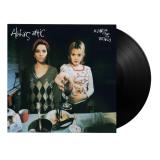
Alisha's Attic were one of the defining English pop duos of the late 1990s and early 2000s. Formed by sisters Shelly and Karen Poole, the pair first appeared in 1988 under the name Keren & Chelle, releasing their single "Sugar Daddy". In 1996 Alisha's Attic released their debut single "I Am, I Feel" which reached the #14 in the UK Singles Charts. Their debut album, Alisha Rules the World was released in November 1996, produced by Dave Stewart of Eurythmics. The album became a major success, achieving Platinum in the UK and generated a string of single "Alisha Rules The World", "Indestructible" and "Air We Breathe" all of which reached the UK Top 15.
- Amaliah - No Way Out
- Call Super - I Love Like Your Men
- Chaos In The Cbd - Orange Blank
- Charlie Dark - Foundation And History
- Dreamcastmoe - In And Out
- Isaac Carter - Take U There
- Joe Armon-Jones Maxwell Owin - Se Discoteque
- Kink Feat. Rachel Row - Its Already Here
- Manami - Scramble Clip
- Marcellus Pittman - #Eastsidechampions
- Mr. Redley Transatlantic Era
- Nat Wendell - Tell Me
- Niks - Lilac Skies
- Suze Ijó - Up There
- Yu Su - Flourish
GALA announce Ten Years of GALA – a compilation marking a decade of independent culture
Ten Years of GALA is both an archive and a horizon: a reflection on where GALA has come from, and a signal of what lies ahead.
Founded in 2016 as a one-day gathering in South London, GALA has grown into a global point of reference for dancers, artists and collectives drawn together by a shared commitment to independence, collaboration and underground music culture. Rather than charting success through scale alone, the festival has consistently prioritised integrity, community and musical curiosity – values that underpin this release.
Spanning fifteen tracks, Ten Years of GALA unfolds as a considered journey. It opens with an intimate spoken contribution from Charlie Dark, grounding the compilation firmly in GALA’s home of Peckham before gradually expanding outward into fuller, club-focused terrain. From there, the record moves between moods and tempos, tracing a path from reflective moments into the physical language of the dancefloor.
The compilation brings together longtime friends of the festival alongside newer voices drawn into its orbit in recent years. Each artist contributes a distinct perspective, but collectively the tracks form a coherent portrait – not of a single sound, but of a shared ethos shaped over ten years of gatherings, collaborations and days spent dancing together.
Rather than a retrospective in the conventional sense, Ten Years of GALA functions as a living document. It captures fragments of past editions, scenes and relationships, while remaining firmly oriented toward the future. These are not museum pieces, but records designed to be played, shared and folded back into the spaces from which they came.
Together, the compilation holds a piece of GALA’s first decade – not as a closed chapter, but as a foundation for what comes next.