- One 140 gram RED Vinyl Disc in plain white paper inner sleeve
- 4/color Single-pocket jacket - shared with 093624903444
- 4/c over 4/c Lyric Insert - shared with 093624903444
- 2/c (PMS 186 + Black) 2.0' x 4.0' FYE Exclusive Marketing Sticker
- 1/c (Black) UPC sticker and affix directly on jacket over existing barcode.
Global superstar Michael Bublé is scheduled to release(pronounced love) as his first studio album in two years on November 16th following a two year break from public life to spend time with his family.
The Canadian singer-songwriter returned to the studio with a new perspective on life and a renewed commitment to honouring the music he has always loved.
I didn't anticipate returning to recording or performing and I was fine with that. My entire world view has changed completely these last few years. I wanted to spend all my time with my wife and kids. That was my focus. During that time, I also learned how much love and humanity is out in the world from the prayers and good wishes we received. But slowly, along with understanding what my priorities in life are, I began to feel a new commitment to express the emotions and lessons I've embraced. Whether I am the narrator, the observer, the main character, the dreamer, the broken hearted guy at a bar or having the night of a lifetime, I have stories to tell on this record. It's all there in the songs. I have had so many blessings in life and one of them is that I hold the torch to keep these songs alive for generations to come. I take the responsibility very seriously. My end game for the new record was to create a series of short cinematic stories for each song I chose and have it stand on its own. I'm so proud of what we accomplished,' commented Bublé.
Bublé co-produced his new album and brings new love to several rich classics from the American Songbook. The album opens with the idealistic and dreamy 'When I Fall In Love.' It also includes a haunting take on another Rogers & Hart standard, 'My Funny Valentine.' Other standouts are an ebullient 'When You're Smiling,' a swinging 'Such A Night' as well as Bublé's hand-picked favorites including 'Unforgettable,' 'Help Me Make It Through The Night,' and 'I Only Have Eyes For You.' Two standout tracks are Charlie Puth's swinging 'Love You Anymore' and an achingly poignant 'La Vie En Rose' -a Bublé duet featuring singer Cecile McLorin Salvant. A touching Bublépenned original 'Forever Now' demonstrates his songwriting skills, which were previously shown in such Bubléwritten hits like 'Home,' 'Haven't Met You Yet' and 'Everything.' The album closes with a show-stopping version of 'Where or When.'
was produced by David Foster, longtime collaborator Jochem van der Saag and Michael Bublé. The trio brought Bublé's visions to life with luscious arrangements surrounding his rich vocals. Michael Bublé has sold over 60 million records worldwide, performed hundreds of sold-out shows around the globe, and won four Grammys and multiple Juno Awards during the course of his extraordinary career.
Cerca:such
Eno Williams, frontwoman of Ibibio Sound Machine, uses both English and the Nigerian language from which her band's name is derived for the dazzling new album Doko Mien. Long lauded for jubilant, explosive live shows, Ibibio Sound Machine fully capture that energy on Doko Mien, the followup to their Merge debut Uyai.
In a glowing piece in the New York Times, those songs were praised for following 'in the tradition of much African music, [making] themselves the conscience of a community.' By pulsing the mystic shapes of Williams' lines through further inventive, glittering collages of genre, Ibibio Sound Machine crack apart the horizon separating cultures, between nature and technology, between joy and pain, between tradition and future. That propensity for duality and paradox seems common in people whose lives span continents.
Williams was born in the UK, but grew up in Nigeria, always steeped in her family heritage. She obsessed over West African electronic music, highlife, and the like, but was equally empowered by Western genres such as post-punk, disco, and funk. The London octet have enveloped themselves in that maximalist quilt proudly since their 2013 formation. Though it can often bring with it news of stress and uncertainty, the modern world further brings all these disparate traditions into connection.
'Everyone has everything now,' says multi-instrumentalist Max Grunhard. 'Everyone has immediate access to every genre, picking things up from everywhere—like magpies.' And while they haven't suddenly left their African roots behind, Doko Mien does find increased representation of English lyrics in the ratio. By sharing more directly with more universal lyrics, the record feels more anthemic, reaching for grander heights.
'We wanted to give people a reason to sing along, to find their soundtrack every day,' Williams says. 'We wanted everyone to feel as if they're part of the music as well.'
Late album highlight 'Guess We Found a Way' addresses the change with a coy smile. 'Guess we found a way to speak to you/ Guess we found a way to say what's true/ To say what's real,' Williams coos over glistening chains of reverberant synth and diamond dust percussion, before returning to Ibibio in the chorus. Perhaps the best example of the group's ability to convey meaning across language and tradition, to blend past and future into a singular present comes on 'She Work Very Hard'. The traditional Ibibio folk tale bobs over the waves of tuned percussion, chunky synth, and pinprick highlife-esque guitar, while Jose Joyette's drums and Derrick McIntyre's bass funk groove bring everyone to the dance floor. 'These stories won't be forgotten. Feel the music: it speaks to everybody,' Williams says. 'We can travel back in time together, while convening on a futuristic, present tense. We hope that we can give people that reason to wake up, that one song to sing and dance and be happy.'
Doko Mien: Tell me everything. On their new album, Ibibio Sound Machine provide the perfect companion, ready to digest as much as possible and then further unfurl beauty and hope. They remember and honor the past and charge forward toward the future, all while intensely expanding the present.
Erell Ranson (Kalahari Oyster Cult/Childhood Electronix/Where We Met) offers up a delicate and beautiful EP of accomplished texture and melody for his Distant Worlds debut. He shows a real delicate touch here and multiple listens will ensure the melodies and earworms penetrate deep into the psyche. Future soul music dripping in emotion, indebted to Detroit, outta France....
Repress
Late afternoon, the brightness of the sun got me distracted from work, while I'm staring out the window into the mountains. Come on now, focus...only 2 hours remaining before the weekend kicks in. I'm excited, the annual party in the mountains is as crazy as the location itself... and sweet jesus on a motorbike the line up for this event is beyond...
Guys, see ya later. I'm off to dance.
X Sandra.
Funnuvojere is the new imprint founded by Massimiliano Pagliara. Now marking his third album release, after countless remixes and EPs, the Panorama Bar resident widens the horizon of his musical contributions by launching a label "deep as the ocean" as the name suggests, and open to different musical genres. The first instalment comes from James Booth. Known also as The Gardener and North Vest, the Manchester born producer has been known for his distinctive deep sound very dear to Los Angeles based imprint 100% Silk and Hamburg's Growing Bin Records that released his latest LP in 2017. "Bath Time" is a thrillingly deep-cosmic cut rich in melodies and emotions. The EP starts off with a spaced-out, italo classic cut where form assumes a different dimension as the music layers intertwine in an everlasting flow. If the title track seems ironically like a perfect place to start a party night, "Roller Chrome" is an emotional ballad for hopeful dance floors; while "Such Is Life" is a nostalgic piece of balearic tradition.
- A1: How's Your Bird
- A2: The World's Greatest Sinner
- A3: Everytime I See You
- A4: Cradle Rock
- A5: Hey Nelda
- A6: Surf Along
- B1: How Could I Be Such A Fool
- B2: Help I'm A Rock (3Rd Movement: It C
- B3: Trouble Comin' Every Day
- B4: Who Are The Brain Police
- B5: Why Don't You Do Me Right
- B6: Big Leg Lemma
- B7: Lonely Little Girl
- B8: Mother People
- A1: Standing In The Shadows Of Love
- A2: Bring Back My Yesterday
- B1: I've Found Someone
- B2: I've Got So Much To Give
- B3: I'm Gonna Love You Just A Little More Baby
- C1: Girl It's True, Yes I'll Always Love You
- C2: Honey Please, Can't Ya See
- D1: You're My Baby
- D2: Hard To Believe That I Found You
- D3: Never, Never Gonna Give Ya Up
- E1: Mellow Mood (Pt. 1)
- E2: You're The First, The Last, My Everything
- E3: I Can't Believe You Love Me
- F1: Can't Get Enough Of Your Love
- F2: Oh Love, Well We Finally Made It
- F3: I Love You More Than Anything (In This World Girl)
- F4: Mellow Mood (Pt. 2)
- G1: Heavenly, That's What You Are To Me
- G2: I'll Do For You Anything You Want Me To
- G3: All Because Of You
- G4: Love Serenade
- H1: What Am I Gonna Do With You
- H2: Let Me Live My Life Lovin' You Babe
- H3: Love Serenade
- I1: I Don't Know Where Love Has Gone
- I2: If You Know, Won't You Tell Me
- I3: I'm So Blue And You Are Too
- J1: Baby We Better Try To Get It Together
- J2: You See The Trouble With Me
- J3: Let The Music Play
- K1: Don't Make Me Wait Too Long
- K2: Your Love - So Good I Can Taste It
- L1: I'm Qualified To Satisfy You
- L2: I Wanna Lay Down With You Baby
- L3: Now I'm Gonna Make Love To You
- M1: Playing Your Game, Baby
- M2: It's Ecstasy When You Lay Down To Me
- M3: You're So Good You're Bad
- N1: Never Thought I'd Fall In Love With You
- N2: You Turned My Whole World Around
- N3: Oh What A Night For Dancing
- N4: Of All The Guys In The World
- O1: Look At Her
- O2: Your Sweetness Is My Weakness
- O3: Sha La La Means I Love You
- P1: September When I First Met You
- P2: It's Only Love Doing It's Thing
- P3: Just The Way You Are
- P4: Early Years
- Q1: I Love To Sing The Songs I Sing
- Q2: Girl, What's Your Name
- Q3: Once Upon A Time (You Were A Friend Of Mine)
15 Jahre nach seinem frühen Tod feiert - The 20th Century Records Albums (1973-1979)' Barry White als einen der größten Künstler / Songwriter / Produzenten der 70er Jahre. Er etablierte den neuen Klang der Orchesterseele, der über das Jahrzehnt und darüber hinaus zu einem Grundbestandteil wurde. Das Vinyl-Box-Set enthält alle 9 LP-Alben, die Barry White über das Label 20th Century Records veröffentlicht hat und werden hier zum ersten Mal zusammengestellt. Alle neun Alben wurden zum ersten Mal seit ihrer Veröffentlichung in den 70er Jahren von den originalen analogen Masterbändern remastert und werden hier mit ihrem originalen Sleeve und Label Art präsentiert. Die Alben wurden in den Abbey Road Studios in London auf hochwertigem 180g Vinyl geschnitten, um die höchstmögliche Audioqualität zu garantieren.
[ZZA] q4 | Oh Me, Oh My (I'm Such a Lucky Guy)
[ZZB] r1 | I Can't Leave You Alone
[ZZC] r2 | Call Me, Baby
[ZZD] r3 | How Did You Know It Was Me
State-of-the-art techno from Nico Purman. The Argentinean's vision of contemporary club music has always been located somewhere between techno and electro. His Pattern Recognition EP turns out to be Nico's most uncompromising work since his early releases on Vakant and scores with three bold and infectious tracks for the club.
Introverted Dancefloor is Bevan Smith, a New Zealander who has released music under names like Signer and Aspen, and who has played in the Ruby Suns and Skallander throughout the last decade. His prior output has been spread over many international labels and has touched on sundry genres (like techno, IDM, folk, ambient) while featuring restraint and sophistication as compositional hallmarks.
As Introverted Dancefloor, Smith has kept those features as guiding principles while allowing a more propulsive low end to dominate the construction of this music, winding up with understated but energetic dance tracks. Gestation, too, is a prominent attribute of this music, though not necessarily an obvious one. Smith started these songs with hundreds of layers, which he then pared down to a few core elements before rebuilding again.
For Introverted Dancefloor, Smith limited himself to the use of two synthesizers, one mic, one filter, and one effects processer. This constraint is not obvious upon listening as the album works across the idioms of electro, Detroit techno, pop house, and leftfield disco, playing with the line between fluid melody and drum machine programming. Each track has a playlist as its scaffolding, Smith's goal being to filter a certain set of varied influences through just a couple of instruments. Metro Area's Miura' (Original Mix) turned into Introverted Dancefloor's Happiness is such a mess/Pipedream.' If there can be such a thing as a subtle banger, then Smith may have earned that distinction here. Take it high' seems to be a constant ascent with its climbing bass and layers of chords, relying on no hackneyed drops or releases for its crescendo. Smith's layering practices show their precision on tracks like Even if you try' and Tiger bones,' in which disparate elements contribute to pointed melodies, an unidentifiable percussive part entering the same expressive plane as a sung line.
One of the record's most striking features is Smith's inclusion of certain elements of a song in a neighboring one (vocals from Pipedream' in Happiness is such a mess,' a synth line from Even if you try' in Always turn your head') to lend a phantasmagorical effect to the procession, blurring the distinction between a track and its reprise. The result is a song cycle wrought from painstaking labor, while nonetheless retaining core values of amorphousness and motion.
Bell Gardens combines the musical visions of Kenneth James Gibson (formerly of Furry Things, now recording as
*Bell Gardens' origins began arguably as more of an experiment than the duo's current 'experimental' projects - McBride's drone- and string-laden ambient symphonies, and Gibson's ventures in dub and minimalist techno - as they sought to manifest their mutual reverence for folk, psychedelia and chamber pop in a traditional band structure without cannibalising any particular past genre. Bell Gardens' sound is less reliant on effects and studio trickery than the pairs' independent guises, laying bare as it does vocals and live instruments with emotional sincerity, and presenting songs imbued with an almost pastoral or gospel simplicity and timelessness.
Slow Dawns for Lost Conclusions was again recorded mostly at home studios, but additionally the band made use of a friend's desert cabin in Wonder Valley, California, and it seems this willingness to retreat from the city has lent an expansiveness to the tracks, in particular the spacious, ceremonial 'Silent Prayer' (written in a snowbound mountain cabin in Idyllwild, C.A.) and the crepuscular 'She's Stuck in an Endless Loop of Her Decline' (mapped out under the stars in the desert).
While the addition of strings (contributed by Lauren Chipman of The Rentals and The Section Quartet) and trumpet (Stewart Cole of Edward Sharpe and The Magnetic Zeros) provides a double rainbow of tonal textures throughout, the nine tracks of Slow Dawns for Lost Conclusions are united by an understated elegance belying the newly expanded, communal effort in the studio: each instrument earns its place, nothing is overwrought or conspicuous. Moreover, it is McBride and Gibson's artistry in building stirring soundscapes from the barest of materials in their other guises that lends such assurance and sophistication to these arrangements.
The band is a result of the complimentary cross-pollination of Gibson and McBride's musical tastes - borne from a late-night conversation between the two that grew wings - and it is the universality of the sentiments and their restrained, reflective approach to writing and recording that allows the music to simultaneously straddle the past and the present. The music avoids pastiche, its pedal steel, sleigh bells and harmonies giving a nod to the ghosts of musical genres past, but never overriding or distracting from the emotional content of the sum of its parts.
The album ends with the glorious 'Take Us Away' - one of the first demos Gibson gave McBride when he was on tour with Stars of the Lid - neatly bringing their work to date full circle and exemplifying the band's mindfulness of their own serendipitous beginnings: the dawning of an auspicious, unique musical force.
Bell Gardens - Take Us Away -
Harmonies alert!! Actually, this is rather lovely. Slow-tempo, just the right side of 'twee' and packed full of strings, as if Air and Midlake had been taking balloon trips over the mid-West and sprinkling good-vibes dust across the land. From L.A. and subconsciously plugged into the '60s dream-pop scene, taking in a little bit of Mercury Rev and Brendan Perry en route, stopping off at Pearls Before Swine and Big Star's house for inspiration, before getting stoned with '70s era Brian Eno and Harold Budd.
Releases on Piekup, Blabla records and Soweso Music, Efde now feels it is time for the next step, which also includes a new musical direction. With a truckload of fresh energy and motivation there is nothing stopping Efde from making 2013 his definite breakthrough year.
Including a very nice William Kouam Djoko remix.
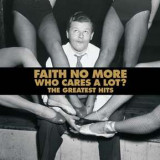
Who Cares A Lot? The Greatest Hits spotlights some of the biggest tracks released by Faith No More between 1987 and 1997. It includes massive hits such as “Epic”, “Easy”, “Evidence” and their first single “We Care A Lot.”
Presented in chronological order, this collection highlights the journey Faith No More went on, starting with tracks such as “We Care A Lot” and “Introduce Yourself”; tracks sung by original lead singer Chuck Mosley. After his departure in 1988, the band turned to current frontman Mike Patton, who’s first album with the band was the renowned “The Real Thing.”
Faith No More have maintained a cult status, being widely credited for developing alternative metal and having influence on bands such as Limp Bizkit and Slipknot. Founding member and bassist of Nirvana, Krist Novoselic, cites Faith No More as one of the bands who paved the way for Nirvana. This record presents a true celebration of Faith No More’s music and is on gold vinyl for the first time.
The band had previously announced a European tour in 2020, which had to be postponed due to the COVID-19 pandemic. These dates have now been rearranged for dates across the UK and rest of Europe during June and July of 2021, with an Australia and New Zealand tour to follow.
- A1: Les Masques - Il Faut Tenir (1969)
- A2: Isabelle Aubret - Casa Forte (1971)
- A3: Christianne Legrand - Hlm Et Ciné Roman (1972)
- A4: Jean Constantin - Pas Tant D'chichi Ponpon (1972)
- A5: Billy Nencioli & Baden Powell - Si Rien Ne Va (1969)
- B1-: Marpessa Dawn - Le Petit Cuica (1963)
- B2: Jean-Pierre Sabar - Vai Vai (1974)
- B3: Sophia Loren - De Jour En Jour (1963)
- B4: Isabelle - Jusqu’à La Tombée Du Jour (1969)
- B5: Sylvia Fels - Corto Maltesse (1974)
- C1: Frank Gérard - Comme Une Samba (1972)
- C2: Ann Sorel - La Poupée Des Favellas (1971)
- C3: Charles Level - Un Enfant Café Au Lait (1971)
- C4: Andrea Parisy - Les Mains Qui Font Du Bien (1970)
- C5: Audrey Arno - Quand Jean-Paul Rentrera (1969)
- C6: Aldo Frank - T’as Vu Ce Printemps (1970)
- D1: Christianne Legrand - Cent Mille Poissons Dans Ton Filet (1972)
- D2: Clarinha - Lemenja (1970)
- D3: Hit Parade Des Enfants - Aquarela (1976)
- D4: Jean-Pierre Lang - Tendresse (1965)
- D5: Magalie Noël - Une Énorme Samba (1970)
- D6: Françoise Legrand - La Lune
Ever since the late 1950s bossa-nova revolution, Brazil’s influence on French music has been undeniable. Pierre Barouh, Georges Moustaki and a vast array of lesser known artists, all made the Musica Popular Brasileira (MPB) an axis of promotion at the service of a cool and metaphysical, modern and mixed Brazilian lifestyle. Some were seduced by the poetic languors of the bossa, some were looking for fun, and others just loved the American hybridization of jazz-bossa, jazz-samba.
What is bossa nova? One of its creators, Joao Gilberto said: "Its style, cadence, everything is samba. At the very start, we didn't call it bossa nova, we sang a little samba made up of a single note - Samba de uma nota so .... The discussion around the origins of bossa nova is therefore useless”. It is nevertheless useful to remember that these magnificent Brazilian songs, which the guitarist describes as samba, were shifted and balanced around improbable chords. "I like things that lean, the in-betweens that limp with grace," said Pierre Barrouh, quoting Jean Cocteau.
With emotion, arrangements for violin and supple guitar licks, bossa nova rapidly changed. A transformation that can be heard in the Tchic, tchic, French Bossa Nova 1963-1974 compilation, the result of a cultural reappropriation, which traveled through the United States and supplemented itself in France.
A musical revolution that has remained significant, bossa nova was born in Rio. From 1956 to 1961, Brazil lived through its golden years. In five years, the country had invented its modernist style. Elected president in 1956, Juscelino Kubitschek de Oliveira, an elegant man with a broad forehead, brandished a promising slogan: "Fifty years of progress in five years". He quickly got to work. Not worried about increasing debt, he launched the project for a new federal capital, Brasilia, designed by the communist architect Oscar Niemeyer. Volkswagen opened state-of-the-art factories and created the “fusquinha”, the Beetle. In Rio, the Vespa made its first appearance. The Arpoador Surf Club crew run into the “girl” from Ipanema, Helô Pinheiro - the tanned garota ("chick"), between a flower and mermaid, who at 17 walked by the Veloso bar, where the fiery author and composer, Tom Jobim and Vinicius de Moraes, were getting drunk on whiskey. From then on, bossa symbolized cool.
In 1958, Joao Gilberto recorded Chega de Saudade, which the directors of Philips denied, calling it "music for fagots". The marketing director, who believed in it, secretly pressed 3000 78-inch vinyls and distributed them at schools around Rio, creating a tidal wave.
American jazzmen then took over. In particular, trumpeter Dizzy Gillespie and guitarist Charlie Byrd. In November 1962, the Brazilian Ministry of Foreign Affairs funded a "Bossa-Nova" concert at Carnegie Hall in New York, inviting the genre’s pioneers. Unprepared, the show soon turned to disaster. But the troupe was invited to the White House by Jackie Kennedy. The first lady loved "the new beat" and in particular Maria Ninguem, a song by Carlos Lyra, later covered by Brigitte Bardot.
In Brazil, the 1964 military coup quickly ended this euphoria. The destructive atmosphere that ensued pushed many Brazilian musicians to leave, if not to exile. Thus, Tom Jobim, Sergio Mendes and Joao Gilberto arrived to the United States. In New York, Joao Gilberto met saxophonist Stan Getz. At the time, he was married to the Bahianese Astrud Weinert Gilberto, who had a German father. She had never sung before, but she knew how to speak English. Getz therefore asked her to replace her husband on The Girl From Ipanema. The Getz/Gilberto record with Tom Jobim on piano, was released in March 1964. Phil Ramone, the "pope of pop" was in charge of sound.
Bossa nova arrived in Paris through the classic “guitar-voice” channel (Pierre Barouh, Baden Powell, Moustaki…) But France loved jazz and Paris had already welcomed its American contributors. All these good people were to pass through Saint-Germain-des-Prés. The cabaret l'Escale became the Mecca of Latin American sound where one could find Pierre Barrouh and his friends, such as the Camara Trio, samba-jazz aces, whose only record was published by the Saravah label. With a band strangely called Les Masques (a band that included Nicole Croisille and Pierre Vassiliu, among others), the Camara Trio recorded an interesting Brazilian Sound, including the track Il faut tenir which is present on this tasty compilation of rarities.
Other enlightened musicians can also be found on the compilation, such as Jean-Pierre Sabar (songwriter for Hardy, Auffray, Leforestier ...) and the French pop rock organist Balthazar. In 1975, Sabar recorded Aurinkoinen Musiikkimatka on a Finnish label, which featured the crazy Vai, Vai, included on this record. We are now following the footsteps of Brazilian electronic musicians such as Sergio Mendes, Eumir Deodato or Marcos Valle who created funk and disco sounds on their keyboards and synthesizers. A style that influenced Véronique Sanson when she wrote Jusqu’à la Tombée de la nuit in 1969 for Isabelle de Funès, the niece of Louis and a great friend of Michel Berger - Sanson did end up singing this track on her 1992 Sans Regret record.
The pinnacle of exoticism and travel, Sylvia Fels’ Corto Maltese includes bongos, sea mist and ocean sounds. The title was taken from Jacky Chalard’s concept album written in 1974, Je suis vivant, mais j’ai peur (I am alive, but I am scared), based on Gilbert Deflez’s science fiction novel.
However, bossa nova extended the scope of popularity. "In the 1970s, I was a fan of Sergio Mendes, Getz / Gilberto. I fell in love with this music that I knew because I had been an orchestral singer, " explained Isabelle Aubret, who in 1971 delivered a composite record of covers by the very funky Jorge Ben, Orfeu Negro, Tom Jobim, Vinicius de Morais and Jean Ferrat. "I recorded this album for Meys Records in Paris, far from Brazil, with wonderful musicians, François Raubert, Roland Vincent, Alain Goraguer...". The latter wrote the arrangements for Casa Forte, a very percussive title borrowed from Edu Lobo, one of the initiators of the bossa who spent time in California. "Jazz and bossa came together and produced very rhythmic music. I love singing, it allows me to dream, to have fun, to feel a high on stage, and these songs brought me joy, made me swing, my singing felt like a dance.”
The world tours of French singers and their desire for the tropics, often brought them to Rio with its hills, forests, caipirinhas and tanned bodies. There are surprises though, like this Iemenja (Iemenja is the goddess of the sea in the Afro-Brazilian candomblé religion). Not unlike the composer and musician Jean-Pierre Lang, based in Sao Paulo, Claire Chevalier taught Brazil to Brazil. In 1970, the singer and painter published a 45-inch vinyl, Mon mari et mes amants (My husband and my lovers), under the improbable pseudonym of Clarinha (little Claire). She was then living in Rio, with her husband, Joël Leibovitz, who founded a band called Azimuth, and who owned a record label specialized in "sambas enredos" songs for samba school parades.
For its B side, she asked Pierre Perret to come up with lyrics for a song composed by Carlos Imperial: "Oh goddess of the sea, o goddess Iemenja, I bring a white rose to adorn your long hair ..." . "Perret came to see us, and we had fun, remembers Joël Leibovitz. We wrote Lemenja for fun, we recorded it at the Havaí studio, behind the Central do Brasil the central station. Erlon Chaves, the arranger who worked with Elis Regina, joined us" adding his share of Afro-Brazilian percussions and funky brass to the mix.
There is a common misunderstanding in Franco-Brazilian history: that bossa, admittedly hedonistic, is perceived as funny, even though the poets who wrote the texts are often philosophizing on the human condition. Its French interpreters pull it towards a carnival inspired universe, far removed from its fundamental essence. Thus, Jean Constantin covered the famous Samba da minha terra, an ode to the art of samba written by the classic Bahian composer Dorival Caymmi, renaming it with the enticing title of Pas tant de tchi tchi pompon: "On your pier there is no tchi tchi / when you arch your back, you know everything is alright ”(lyrics by Gérard Calvi). This expedited bossa aims for the absurd, but retains a certain elegance.
Indeed, Jean Constantin was not an idiot, the rather large man had a huge mustache and liked fantasy, (Les pantoufles à papa, Le pacha, inspired by cha-cha-cha-cha, salsa and jazz) but he was also the lyricist of Mon manège à moi interpreted by Edith Piaf, the composer of Mon Truc en plume by Zizi Jeanmaire and the soundtrack of François Truffaut’s 400 Blows. Le Poulpe, published in 1970, from which this bossa is extract, was arranged by Jean-Claude Vannier, an accomplice of Serge Gainsbourg’s Melody Nelson. In short: "There is enough of samba / By looking at the parasol / Because my poor cabeza / Is going to die in the sun".
Even the American actress Marpessa Down, who was at the heart of the bossa nova revolution with her role as Euridyce in Marcel Camus’ film Orfeu Negro, winner of the 1959 Cannes Palme d'or, fed the clichée with Je voudrais parler au petit cuica - "Tell me how you manage to always make people want to dance / It's true, I must admit that I cannot resist your magic" - in consequence, once can hear the cuica, a little drum inherited from the Bantu.
But bossa nova had many angles. Societal, of course, pushing actresses who were symbols of women's liberation like Brigitte Bardot, Jeanne Moreau, or Sophia Loren to engage in the exercise of accelerated bossa. In February of 1963, Sophia Loren made a record in French in Rome, Je ne t'aime plus, featuring the song De jour en jour, a bossa written by two Italians, Armando Trovajoli and Tino Fornai, which was released a little later by Barclay. Bossa accompanied the 1960s, a decade of moral liberation. Ann Sorel, who interpreted La Poupée des favellas, caused a sensation with L’amour à plusieurs, a provocative song written by Frédéric Bottom and Jean-Claude Vannier. As for the actress Andrea Parisy, she displayed her bourgeois cheekiness in Marcel Carné's Les Tricheurs before interpreting Les mains qui font du bien. And Magalie Noël, the friend of Boris Vian, who sung Johnny fais-moi mal, was hired to sing Une énorme Samba, composed by Alain Goraguer (arranger to Gainsbourg, Bobby Lapointe and Jean Ferrat) with lyrics by Frédéric Botton.
But in the end, of what wood is bossa nova made of? The answer is given by Christianne Legrand, daughter of Raymond the conductor, and sister to Michel the composer: "With me, with jà" - jà means "immediately" in Portuguese. In 1972, the singer, an expert in vocal jazz and a member of the Double Six, published Le Brésil de Christianne Legrand. Two songs included on the Tchic Tchic compilation that demonstrate how bossa, jazz, funk, rock, etc. work like a swiss army knife: the music is used to denounce broken systems, or miracles, HLM et ciné roman, Cent mille poissons dans ton filet, two songs from the O Cafona soundtrack, a successful telenovela broadcast, at the time in black and white, on TV Globo. The first was adapted in French by the fighter and friend of the Legrand tribe, Agnès Varda. The second is content with a play on words, jostling them into a summer fun.
Véronique Mortaigne
- 01: We Are The Biobots
- 02: Skratching Terminators (Feat. Dj D-Styles &Amp; Prime Cuts)
- 03: Coffeecuts (Feat. Dj Ben, Krootki &Amp; Pan Jaras)
- 04: Electrode (Feat. Dj Flip Flop &Amp; Prolifix)
- 05: Priority (Feat. Dj Tigerstyle &Amp; Dj Iq)
- 06: Supersonics (Feat. Dj Melo-D)
- 07: Jam Of A Borg (Feat. Daniel Drumz)
- 08: Cybots Patrol (Feat. Pan Jaras, Miyajima &Amp; Ken One)
- 09: Digital Human
- 10: 8 Bit Overheat (Feat. Mr Krime)
There are two versions of the vinyl edition: classic 140g black record or limited (Universe Edition) 140g black + 7" black vinyl with two bonus tracks.
WE ARE THE BIOBOTS is an album by Michal Baj (DJ Eprom), who has ties to Silesia. It will be released on 21th January 2026, by the legendary Polish label JuNouMi Records (est. 2002). WE ARE THE BIOBOTS is an album that not only talks about technological progress, but also touches on the digitization of human consciousness in the 21st century. Although it discusses the dangers of AI development, no artificial intelligence was used in its creation.
The album features legendary hip hop DJs, including the art of scratching. The album will feature the most outstanding DJs from Poland, England, the USA, and Japan. Thanks to this, the album has a chance to gain a broader, international context. Eprom's professional experience to date has allowed him to bring together such a wide range of artists and bring them together on the album, including:
DJ D-Styles – a legend of scratching from the USA. A pioneer of the genre. Member of groups such as The Beat Junkies and Invisibl Skratch Piklz, creator of many scratching techniques still used today.
DJ Prime Cuts – founder of the legendary Scratch Perverts from London, multiple world champion and creator of unique scratching techniques.
DJ Flip Flop, Prolifix – representatives of the DJ community from the US coast.
DJ Tigerstyle – a leading representative of the DJ community in England, multiple world champion in scratching.
DJ IQ – the most successful scratching champion in the world.
DJ Miyajima – the unrivaled master and creator of the Japanese school of scratching.
DJ Melo-d – co-founder of The Beat Junkies collective, multiple DJ champion hosting a legendary show on Radio HOT 97 in the US.
DJ Ben, Krootki – co-founders of the Modulators group from Poland, World Champions in scratching.
Daniel Drumz – Polish DJ and music producer known worldwide.
Mr Krime – pioneer of DJing and turntablism in Poland.
Michal Baj is a multi-talented musician, artist, and music producer born in Jastrzebie-Zdroj, as well as the owner of the analog Eprom Sounds Studio, where tracks based on mixing and mastering are produced and gain worldwide recognition.
The inspiration for the album is Eprom's connection to Silesia. His work at the KWK Borynia mine, surrounded by heavy equipment and mining technology, became a direct inspiration for creating a musical story about people, machines, as well as the directions of technological development and the impact they have on society.
The album is released by JuNouMi Records, a label specializing in vinyl records, founded in 2002. Your wax supplier.
The Spoiled is an Italian post-punk project led by Giovanni Santolla, blending electronic beats, distorted synths, and reverb-soaked guitars into a dark, romantic, and nostalgic sound.
In 2024, the project self-released the debut EP Time distributed by Manic Depression, followed in 2025 by the full-length Living Ghosts via Swiss Dark Nights—an album that firmly established The Spoiled within the contemporary post-punk scene. Following the album’s release, Giovanni collaborated with international acts including This Eternal Decay, Darkways, Corlyx, Chaos International, and Hinfort, while maintaining a dense touring schedule across Europe and sharing the stage with artists such as Traitrs, Hinfort, Darkways, and Ductape.
The new album When It Rains, set for release on Avant! Records on April 17, 2026, expands The Spoiled’s artistic vision with a focus on intense, romantic soundscapes that delve deeply into human intimacy and interpersonal relationships. Embracing a warmer and more personal sonic direction, the record blends elements of indie rock and electrogaze music that enrich and revitalize the dark, melancholic palette that has defined the project’s earlier works.
Still playing homage to the forefathers of the genre such as Clan of Xymox, The Sound and Pink Turns Blue, When It Rains opens the path of The Spoiled to new soundscapes, exploring broader emotional territories while preserving the atmospheric depth and introspective tone that have become its signature.
FFO: Twin Tribes, Clan of Xymox, She Past Away, Mareux, The Soft Moon, Pink Turns Blue.
- A1: All My Love
- B1: Can't Get Over You
The world of discovering Soul music and artists can lead to sheer moments of jubilation. The thought of igniting a long lost sound, reviving the energy of a once exuberant individual . But not every story that's told is filled with joy. Some are peppered along the way with struggles and heartache. Over time artists have battled with over powering label owners, record executives who just don't back what you do. The story of Tommy Hill is one such story. Tommy along with friend and longtime collaborator Ricky Tarbo had a deal with Motown records back in the early 1980's which turned sour very quickly. His release "Flame"/"Super Star Of Love' was dropped pretty quickly with no promotion and record boss Sylvia Rhône calling the shots within the duo questioning skin colour within the group and even trying to get vocals wiped off the release to sabotage it.
This said the single didn't amount to much and nothing else was recorded for Motown records. The duo did record some 4 demo's in LA before Tommy headed to re-record them again in New York circa 1982.
The A side has never been released until now, which is such a crying shame as the quality is so damn good. It's an uptempo boogie cut called "All My Love" which we gave a sexy 45 mix so you get some slamming synth work half way in. Tommy Hill's vocal range is nothing but astonishing. Just check out the 2 step ballad of "Can't Get Over You", which was recorded and released back in 1980 by The James Simpson penetration Band written by Tommy Hill, who went back into the studio 2 years later to give the song much more depth not only within the production but also to his vocal range. Tommy Hill headed back to LA after not securing a record deal and a few years later tried to get this singing career back on track. Like many of the artists who have moved on to a higher place Tommy succumbed to his own mental health issues and took his life. We hope this record does you proud Tommy Hill
Boogie Vice & N-You-Up Return to Definitive Recordings with 'Decadisco EP'
Definitive Recordings continues its run of forward-thinking house releases with DEF2603, the new four-track 'Decadisco EP' from Boogie Vice and N-You-Up. Following their 2025 collaboration 'Come On Closer', the duo returns to the label with a fresh collection of groove-driven club tools that balance modern energy with classic house foundations. Recent releases on sister label Get Physical Music further underline the duo's strong creative momentum.
Boogie Vice is a French DJ and producer known for his groove-led house sound that blends funk, soul, and percussive club energy. With releases on labels such as Get Physical, Rekids, and Definitive Recordings, he has built a reputation for warm, dancefloor-focused productions supported by tastemakers worldwide. Now based in Cape Town, Boogie Vice has expanded his creative work into film scoring and executive production, adding new depth to his already rich musical palette.
N-You-Up, Southern France native Nick, brings decades of DJ experience and a deep-rooted love for jazz, funk, and disco. Formerly known as The Beatangers, he now channels those influences into a refined house fusion under his N-You-Up alias. Alongside Boogie Vice, his collaborative releases have appeared on labels such as Nervous Records and Get Physical Music, with their joint productions receiving support from key artists including Solomun, Dennis Ferrer, Jamie Jones, Pete Tong, Laurent Garnier, Radio Slave or Mita Gami, firmly establishing the duo as a reliable source of dancefloor-ready house music.
The EP opens with 'Game Concept', a driving house cut built on percussive drums, a rolling classic house bassline, and catchy vocal samples. Dreamy, deep synth chords float above the groove, creating a hypnotic yet energetic opener. 'Wurkin Like Dat' follows with a disco-infused house vibe, stacking groove upon groove as vocal snippets and disco elements take center stage, delivering pure dancefloor momentum. Rounding out the EP are two DJ-focused versions of 'Wurkin Like Dat'. The Invasion Tool strips the track back into a flexible club weapon, while the Drumapella isolates the rhythm and percussion, offering maximum versatility for creative mixing.
With 'Decadisco EP', Boogie Vice and N-You-Up once again showcase Definitive Recordings' ability to deliver modern house weapons that honor the genre's past while pushing the sound firmly forward.
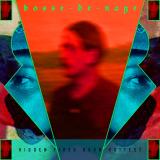
There's a tendency in metal to mistake aggression for honesty, volume for depth. To confuse the performance of darkness with its actual weight. Hidden Fires Burn Hottest, the new album from San Francisco-based post-black metal band Bosse-de-Nage, sidesteps this entirely. It’s the group’s most fully realized work yet, precisely because it refuses to be pinned down.
Bosse-de-Nage have been working with The Flenser for over fifteen years. They were one of the first bands the label ever partnered with and have the longest active relationship in the label's history. But unlike most bands who build momentum through constant touring and visibility, Bosse-de-Nage has largely existed apart from the music world's usual machinery. They've evolved on their own terms, in relative isolation, allowing the work to develop without outside pressure or influence. What began rooted in black metal anonymity has mutated into something that actively defies categorization. The aggression is still there, but it's no longer the point. Hidden Fires Burn Hottest finds the band treating emotions like physical objects, feelings with spatial properties. “No Such Place"" describes a space that can't exist but does anyway, somewhere between thought and location. ""Immortality Project"" examines infinite possibility not as promise but as problem, endless options collapsing under their own weight. These songs don't use metaphor to describe emotion. They make emotion into something you could theoretically touch.
Tracked by Jack Shirley (Deafheaven, Oathbreaker) at Atomic Garden East and mixed and mastered by Richard Chowenhill of Agriculture, Hidden Fires Burn Hottest was years in development, with some tracks beginning in 2018.
The long writing process offered time that most records don't get. Time to live with ideas, revise endlessly, to let structures settle. For the first time, lyricist Bryan Manning wrote everything in advance, creating a surplus to pull from rather than working under deadline pressure. The difference shows.
Coming off Further Still, an album built on constraint and economy, Bosse-de-Nage sought the opposite: sprawl, strangeness, fewer rules. Space for ideas to develop without rushing them. Dynamics that move through quiet as much as noise. Presence earned through atmosphere instead of volume. The record even includes ""Mementos,"" which might be considered the first love song the band has ever written.
Nothing here coheres into a theme. These are pieces pulled from low moments and private feelings made public through sound. The band has never been interested in positivity, in music that resolves cleanly or offers comfort. But bleakness doesn't mean humorlessness. There's something darkly funny running through much of it, even when it shouldn't be.
Hidden Fires Burn Hottest doesn't explain itself. It just insists: what you feel is as real as what you can see."
Unncecessary is the first EP released on his own label by Nocturnerror, extremely appreciated by the Bass scene led by Zuli, who many times has played his tracks in Web Radios such as NTS, Rinse FM, etc..
“Unnecessary" is the title of the second release on A Flooded Need. Previously tangled in the most slippery meanders of electronic music with strong punk and wave reminiscences, 1/2 of Hyperlacrimae alongside 11xxx27, Nocturnerror approaches this work in a totally different way. The six tracks of the EP, in fact, represent a melting pot of hybrid influences between audacious bass music, cinematic and cacophonic IDM, totally deconstructed techno - stripped of its dance component - and dirty rave jungle.”
Insert — Web zine