Ostinato as resistance: Rafael Anton Irisarri’s landmark work reimagined. Marking the tenth anniversary of the American composer’s critically acclaimed album 'A Fragile Geography', this new edition arrives renewed, both sonically and visually.
First released in 2015 (Room40) during a period of personal upheaval and creative reinvention, it endures as a testament to resilience, transformation, and the connection we hold with the places that shape us.
Written in the aftermath of a devastating theft, A Fragile Geography was born out of loss. Just days before a cross-country move to New York, Irisarri’s entire Seattle-based studio was wiped out. Instruments. Recordings. Archives. Gone without a trace. He arrived on the East Coast to an empty room and the daunting task of starting over.
“This album wasn’t just a record; it was a lifeline,” Irisarri reflects. “It became a way to process the emotional chaos that followed: uprooting, instability, and ultimately, the slow, intuitive rebuilding of a life.”
Composed and recorded in the rural woods of the Hudson Valley, the album took shape in seclusion, surrounded by nature, and through a process guided by improvisation. Embracing limitations, Irisarri wove textural layers of field recordings with half-remembered melodies from his Seattle years, piecing them together like fragments of memory. Tracks like “Displacement,” “Hiatus,” and “Persistence” juxtaposed haunting stillness with restless momentum, mapping an inner terrain of grief, catharsis, and rebirth.
Among its defining sounds is “Empire Systems,” a monumental centerpiece built around a simple four-chord progression, organ textures, and guitar drones. Gradually, the track expands into layers of immersive loops and thick, enveloping distortion that wash over the listener like a rolling wave. Often cited as the album’s most majestic passage, it captures Irisarri at his most sonically ambitious. With a harmonically saturated structure crafted from restraint and repetition, it remains one of his most recognizable compositions: an exercise in the art of maximal minimalism.
From the outset, “Reprisal” received praise from BBC’s Mary Anne Hobbs, who championed the track on her radio show. Her support played a key role in introducing Irisarri’s work to wider audiences and solidifying his place within the lineage of electronic, drone, and experimental sound artists. A slow-burning elegy, the piece emerges from a haze of distortion and sub-bass, with dense, unrelenting drones carrying a sense of mounting tension. Just as it seems to collapse under its own weight, flickers of guitar emerge like distant light through fog. It’s a meditation on dissonance, resolve, and the elusive possibility of release.
The closing track, “Secretly Wishing for Rain,” is steeped in saudade: a longing for Seattle’s dour grey skies, lush green landscapes, and desaturated sunsets. Through it, Irisarri mourns a vanished chapter of life bound to the city, a time documented in scattered mementos and cherished collections, now permanently gone. A reflection on what could never be recovered: an era lost to time. Julia Kent’s looped cello motifs added a melancholic warmth to the track, marking the first collaboration between the two artists and sparking a musical dialogue that would keep growing in the years that followed.
More than a career highlight, A Fragile Geography has laid the foundation for Black Knoll studio, which Irisarri rebuilt from the ground up. The studio has since grown into a creative hub for countless projects, with Irisarri engineering records for iconic music figures like Terry Riley, Ryuichi Sakamoto, William Basinski, MONO, Devendra Banhart, Grouper, Emeralds, Steve Hauschildt, Julianna Barwick, and many others. Carried by its lasting influence, the album has quietly captured the ear of a younger generation, its sound and emotional arc finding new listeners in unexpected corners.
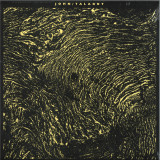
The album’s new visual language was reimagined in collaboration with Mexico City–based designer Daniel Castrejón. Irisarri captured ghostly images at Gaztelugatxeko Doniene, a historic coastal site in Bermeo, Euskal Herria. Castrejón then treated the photographs with distressed textures and spectral overlays. The final artwork channels the rugged, elemental forces that shaped both the music and Irisarri’s aesthetic, renewing his ties to ancestral ground inspired by the Basque homeland of his bloodline.
Mastered by Stephan Mathieu with exceptional attention to detail, this anniversary edition uncovers every nuance in the sound design, enhancing clarity and presence. With each listen, new elements emerge, inviting discovery and reconnection.
“I don’t experience this album as a document of grief anymore,” says Irisarri. “I hear adaptation and I'm reminded that when everything falls apart, something meaningful, maybe even beautiful, can emerge.”
Buscar:sun dial
Ostinato as resistance: Rafael Anton Irisarri’s landmark work reimagined. Marking the tenth anniversary of the American composer’s critically acclaimed album 'A Fragile Geography', this new edition arrives renewed, both sonically and visually.
First released in 2015 (Room40) during a period of personal upheaval and creative reinvention, it endures as a testament to resilience, transformation, and the connection we hold with the places that shape us.
Written in the aftermath of a devastating theft, A Fragile Geography was born out of loss. Just days before a cross-country move to New York, Irisarri’s entire Seattle-based studio was wiped out. Instruments. Recordings. Archives. Gone without a trace. He arrived on the East Coast to an empty room and the daunting task of starting over.
“This album wasn’t just a record; it was a lifeline,” Irisarri reflects. “It became a way to process the emotional chaos that followed: uprooting, instability, and ultimately, the slow, intuitive rebuilding of a life.”
Composed and recorded in the rural woods of the Hudson Valley, the album took shape in seclusion, surrounded by nature, and through a process guided by improvisation. Embracing limitations, Irisarri wove textural layers of field recordings with half-remembered melodies from his Seattle years, piecing them together like fragments of memory. Tracks like “Displacement,” “Hiatus,” and “Persistence” juxtaposed haunting stillness with restless momentum, mapping an inner terrain of grief, catharsis, and rebirth.
Among its defining sounds is “Empire Systems,” a monumental centerpiece built around a simple four-chord progression, organ textures, and guitar drones. Gradually, the track expands into layers of immersive loops and thick, enveloping distortion that wash over the listener like a rolling wave. Often cited as the album’s most majestic passage, it captures Irisarri at his most sonically ambitious. With a harmonically saturated structure crafted from restraint and repetition, it remains one of his most recognizable compositions: an exercise in the art of maximal minimalism.
From the outset, “Reprisal” received praise from BBC’s Mary Anne Hobbs, who championed the track on her radio show. Her support played a key role in introducing Irisarri’s work to wider audiences and solidifying his place within the lineage of electronic, drone, and experimental sound artists. A slow-burning elegy, the piece emerges from a haze of distortion and sub-bass, with dense, unrelenting drones carrying a sense of mounting tension. Just as it seems to collapse under its own weight, flickers of guitar emerge like distant light through fog. It’s a meditation on dissonance, resolve, and the elusive possibility of release.
The closing track, “Secretly Wishing for Rain,” is steeped in saudade: a longing for Seattle’s dour grey skies, lush green landscapes, and desaturated sunsets. Through it, Irisarri mourns a vanished chapter of life bound to the city, a time documented in scattered mementos and cherished collections, now permanently gone. A reflection on what could never be recovered: an era lost to time. Julia Kent’s looped cello motifs added a melancholic warmth to the track, marking the first collaboration between the two artists and sparking a musical dialogue that would keep growing in the years that followed.
More than a career highlight, A Fragile Geography has laid the foundation for Black Knoll studio, which Irisarri rebuilt from the ground up. The studio has since grown into a creative hub for countless projects, with Irisarri engineering records for iconic music figures like Terry Riley, Ryuichi Sakamoto, William Basinski, MONO, Devendra Banhart, Grouper, Emeralds, Steve Hauschildt, Julianna Barwick, and many others. Carried by its lasting influence, the album has quietly captured the ear of a younger generation, its sound and emotional arc finding new listeners in unexpected corners.
The album’s new visual language was reimagined in collaboration with Mexico City–based designer Daniel Castrejón. Irisarri captured ghostly images at Gaztelugatxeko Doniene, a historic coastal site in Bermeo, Euskal Herria. Castrejón then treated the photographs with distressed textures and spectral overlays. The final artwork channels the rugged, elemental forces that shaped both the music and Irisarri’s aesthetic, renewing his ties to ancestral ground inspired by the Basque homeland of his bloodline.
Mastered by Stephan Mathieu with exceptional attention to detail, this anniversary edition uncovers every nuance in the sound design, enhancing clarity and presence. With each listen, new elements emerge, inviting discovery and reconnection.
“I don’t experience this album as a document of grief anymore,” says Irisarri. “I hear adaptation and I'm reminded that when everything falls apart, something meaningful, maybe even beautiful, can emerge.”

Toko's in-house all-star Si Brad brings forth three fresh jams for the long running UK institution, ensuring record bags are festival fit and nightclub-ready for party season.
Opening with a glitzy, contemporary disco jam, 'Doublestar' provides wide-screen glitterball action with a dazzling instrumental track, busy with key changes and chord progressions that'd make Patrick Adams blush. Sure to have fellow peers like Another Taste and Perpetual Singers checking their wing mirrors, the track is rich with musical decadence - orchestral strings, punchy synth licks and frenetic live bass all shining through this highly dynamic arrangement.
'Compress' moves swiftly into beefy house territory; Si's patented full fat, cushion soft bottom end providing just the low frequency support for a wide array of warehouse-ready bleeps, vocal snips and rave motifs set to cause a whole manner of chaos and confusion come 2AM in the club. A master of functional intricacy, Brad's multi-layered compositions thread together more elements than other producers would care to consider, manifesting almost effortless and involuntary body movement which belies the complexity of the track and is sure to have the dancefloor in a spin.
Concluding with a beautiful piece of Balearic-boogie-beatdown, and with Attaboy muscling in on proceedings; 'Faro Sunset's dreamy and expansive moods cascade over a loose, conga-laden groove glued to the spot with a rugged b-line. Instantly conjuring memories of grilled calamari and poolside play, and sure to garner repeat plays across the familiar party paradises of the Adriatics and beyond; it finds the crew dialling into a deliciously languid vibe that's in contrast to the immediate urgency of the preceding tracks yet retains, assuredly, the sonic trademarks of the producer's hand.
Another unmissable addition to Toko's storied catalogue!
- A1: Hosanna (Meridian)
- A2: First Born (Redeemed)
- A3: When Angels Speak Of Love
- A4: Doubleupptown (Larocque)
- A5: W-I-S (Above Every Other)
- A6: Pistol Poem (Leadbelly)
- A7: Whip Appeal (Pipn8Ez)
- A8: Seven Trumpets
- A9: Giz'aard ($Uckets)
- A10: Helpmeet (Iyadunni)
- B1: Flir2A
- B2: U&Me (Decemberseventeen)
- B3: Illbethere, 4Everandever
- B4: Alàáfía (Cita's World)
ALTERNATE COVER[27,52 €]
Honour's debut album is a ligament stretching from Lagos to London and to New York, curling across the diaspora and brushing the darker hues of blues, hip-hop, free jazz, ambient, gospel with Christian mythology and Yoruba folklore. As cinematic as it is painterly, Alàáfíà is a meditation on themes of life, death and love that pulls inspiration from the unexpected poetic profundity of casual conversations, field recordings, literature, ephemera, or personal archives. The result is an impressionistic vision in Black and Blur that both exhausts and implicates language_substantiating a mythos proposed by Fred Moten that sublimates boundaries between everywhere and nowhere; history and the present; the individual and the universal. Alàáfíà delineates a gothic landscape cut by overdriven beats, swooping orchestral blasts, choral bursts and ear- splitting fuzz, where the fleshly and spiritual realms commune. Dedicated to Honour's late grandmother, the title track began to take form after their last embrace and remains steeped in her influence and spirit_a tape-saturated composition that starts in Lagos and ends in London's smoke-stained cityscape, the song's dream-like quality developed out of the artist's grief and PTSD coping with this loss. Beneath the stretched guitar drones and stuttering loops, their grandmother's shared faith bubbles to the surface. "When Angels Speak of Love," borrows its title from two works by Sun Ra and bell hooks, respectively. Sculpting echoes of praise music into disorienting spirals perforated with syrupy DJ Screw-inspired breaks and sharp splinters of melancholic guitar, "When Angels Speak of Love" engages a conceptual dialogue with the spirits of both late thinkers, folding them into Honour's pantheon of ancestral guides. The album's ninth track, "Giz Aard ($uckets)," is a dirge of regimented drums which anchor this somber melody as it whirls into a blizzard of heartache, uncertain if its consequence will be death or eternal joy. The album's sole lyrical offering, "Pistol Poem (Lead Belly)," begins with a darkly humorous bar, "He went thru hell and back/ came back/ 2 get the strap," that swells into a haunting allegory based on the life of Philip "Hot Sauce" Champion. A modern take on the Blues, Honour's lyrics reify the artist's status as a student of both literature and popular culture, crossbreeding the artist's clever wordplay with additional references to Richard Pryor, Robert Johnson, Kelly Rowland & Bryon Gysin. Setting core principles of hip-hop, R&B, jazz and gospel music to atemporal soundscapes and compositions, Honour crafts a record that marinates in its own knotty contradictions. The ghosts that sit on the artist's shoulders have never been more tangible than with this emotive debut.
If there is one person, who has been causing a stir on the international club circuit recently, it is Barcelona's John Talabot. Already his debut “My Old School“ (which is meant literally by the way) on Permanent Vacation in 2009 and shortly after that the single “ Sunshine”, which he put out on his own Hivern Disc imprint, made him one of the most promising musicians of the Spanish electronic scene. And those two releases also already set the mark for John Talabot’s unparalleled music: raw, loopy, heavy on the kick drum, sample based, moderate on the tempo, distorted on the drums and light years away from the clean and ever revolving house sound of today. This unique style which also blends influences from afro beat, Detroit techno, Chicago house and cosmic disco, but also northern soul or the energy of Flamenco, immediately turned some heads around. James Murphy, Âme and Aeroplane started including Talabot music in their sets like it was the most natural thing. However - and this is quite rare - he not only gained legions of fans in the house and disco community, but also amongst the leftfield pop and indie rock followers. NME and Resident Advisor both had “Breakthrough“ features on John Talabot and he can be proud of a “Best New Music“ dubbing on
Pitchfork. (Being rather elusive on showing his face in magazines or the web it also came to some funny rumors that John Talabot was the alter ego of a well-known techno producer from Detroit).
At the same time he drew the attention of like-minded artists like James Holden and Luke Abott from Border Community, Blondes or Delorean, which lead to a bunch of fertile collaborations: Luke Abbott and Blondes remixed Talabot’s “Sunshine“ single , John Talabot remixed a track by Delorean and vice versa Delorean’s Ekhi contributed vocals to the track “Journeys “ on John’s album). Another example is the Young Turks Label (home of Jamie XX, Holy Fuck, El Guincho or SBTRKT ) on which he released the “Families“ EP in 2010. It was praised beyond limits. Pitchfork for
instance hailed: “… where pop and house influences sweetly buffer up against one another to provide an unyielding sense of elation“ and even brought Talabot a comparison with artists like Four Tet or Caribou.
While staying true to his sound, John Talabot has nevertheless shown a constant evolution as a producer since his first release. He has traced a solid musical path that has turned him into one of the big references of European House and has made him also a highly in demand Remixer (for the likes of The XX, Francesco Tristano’s “Aufgang” project, Shit Robot on DFA, Thaiti 80, Joakim or Teengirl Fantasy to name just a few ).
A progression that now crystallizes in “ƒin”, his first full-length album for Permanent Vacation. A record, in which the Barcelona mastermind sets aside the danceable immediacy to expand his stylistic palette more than ever. For that purpose, Talabot melts all the elements that have constructed his distinctive sound until now and makes them emerge from a new perspective, in which the construction of complex song structures, intricate rhythms and superpositions of ever-evolving melodies and atmospheres pick up the baton of the “a kick-drum and a sampler” philosophy of his initial productions. The result brings us 11 tracks (we should call them songs really!) dominated by dark ambiances, gaseous textures and bittersweet moods that, above all, reveal a kind of vivacity that’s really hard to find in contemporary electronics. “Fin” is far from being a track collection. From the majestic opener “Depak Ine“ to it’s solemn ending with
“So Will Be Now“ , one of the two tracks that features Talabot’s soul and label mate Pional, each song traces an overall dialogue with the rest, culminating a highly emotional journey through Talabot’s always compelling and unique musical vision.
Ostinato as resistance: Rafael Anton Irisarri’s landmark work reimagined. Marking the tenth anniversary of the American composer’s critically acclaimed album 'A Fragile Geography', this new edition arrives renewed, both sonically and visually.
First released in 2015 (Room40) during a period of personal upheaval and creative reinvention, it endures as a testament to resilience, transformation, and the connection we hold with the places that shape us.
Written in the aftermath of a devastating theft, A Fragile Geography was born out of loss. Just days before a cross-country move to New York, Irisarri’s entire Seattle-based studio was wiped out. Instruments. Recordings. Archives. Gone without a trace. He arrived on the East Coast to an empty room and the daunting task of starting over.
“This album wasn’t just a record; it was a lifeline,” Irisarri reflects. “It became a way to process the emotional chaos that followed: uprooting, instability, and ultimately, the slow, intuitive rebuilding of a life.”
Composed and recorded in the rural woods of the Hudson Valley, the album took shape in seclusion, surrounded by nature, and through a process guided by improvisation. Embracing limitations, Irisarri wove textural layers of field recordings with half-remembered melodies from his Seattle years, piecing them together like fragments of memory. Tracks like “Displacement,” “Hiatus,” and “Persistence” juxtaposed haunting stillness with restless momentum, mapping an inner terrain of grief, catharsis, and rebirth.
Among its defining sounds is “Empire Systems,” a monumental centerpiece built around a simple four-chord progression, organ textures, and guitar drones. Gradually, the track expands into layers of immersive loops and thick, enveloping distortion that wash over the listener like a rolling wave. Often cited as the album’s most majestic passage, it captures Irisarri at his most sonically ambitious. With a harmonically saturated structure crafted from restraint and repetition, it remains one of his most recognizable compositions: an exercise in the art of maximal minimalism.
From the outset, “Reprisal” received praise from BBC’s Mary Anne Hobbs, who championed the track on her radio show. Her support played a key role in introducing Irisarri’s work to wider audiences and solidifying his place within the lineage of electronic, drone, and experimental sound artists. A slow-burning elegy, the piece emerges from a haze of distortion and sub-bass, with dense, unrelenting drones carrying a sense of mounting tension. Just as it seems to collapse under its own weight, flickers of guitar emerge like distant light through fog. It’s a meditation on dissonance, resolve, and the elusive possibility of release.
The closing track, “Secretly Wishing for Rain,” is steeped in saudade: a longing for Seattle’s dour grey skies, lush green landscapes, and desaturated sunsets. Through it, Irisarri mourns a vanished chapter of life bound to the city, a time documented in scattered mementos and cherished collections, now permanently gone. A reflection on what could never be recovered: an era lost to time. Julia Kent’s looped cello motifs added a melancholic warmth to the track, marking the first collaboration between the two artists and sparking a musical dialogue that would keep growing in the years that followed.
More than a career highlight, A Fragile Geography has laid the foundation for Black Knoll studio, which Irisarri rebuilt from the ground up. The studio has since grown into a creative hub for countless projects, with Irisarri engineering records for iconic music figures like Terry Riley, Ryuichi Sakamoto, William Basinski, MONO, Devendra Banhart, Grouper, Emeralds, Steve Hauschildt, Julianna Barwick, and many others. Carried by its lasting influence, the album has quietly captured the ear of a younger generation, its sound and emotional arc finding new listeners in unexpected corners.
The album’s new visual language was reimagined in collaboration with Mexico City–based designer Daniel Castrejón. Irisarri captured ghostly images at Gaztelugatxeko Doniene, a historic coastal site in Bermeo, Euskal Herria. Castrejón then treated the photographs with distressed textures and spectral overlays. The final artwork channels the rugged, elemental forces that shaped both the music and Irisarri’s aesthetic, renewing his ties to ancestral ground inspired by the Basque homeland of his bloodline.
Mastered by Stephan Mathieu with exceptional attention to detail, this anniversary edition uncovers every nuance in the sound design, enhancing clarity and presence. With each listen, new elements emerge, inviting discovery and reconnection.
“I don’t experience this album as a document of grief anymore,” says Irisarri. “I hear adaptation and I'm reminded that when everything falls apart, something meaningful, maybe even beautiful, can emerge.”
- A1: Damian Lazarus Ft. Mathew Jonson - R U Dreaming? (Harry Romero 'Raw Dog' Remix)
- A2: Damian Lazarus Ft. Teed & A-Trak - Falling Down (Jonathan Kaspar Sunrise Remix)
- B1: Damian Lazarus Ft. Jem Cooke - Searchin (Themba's Club Remix)
- B2: Damian Lazarus Ft. Mëstiza - La Hija De Juan Simon (Mëstiza Remix)
Part II[13,24 €]
Following the release of his fifth studio album ‘Magickal’ at the start of the year, Damian Lazarus now opens a new chapter in the project’s evolution with ‘Magickal Remixed (Part I)’, this first instalment of the two-part series features bold reimagining’s from Harry Romero, Jonathan Kaspar, THEMBA and Mëstiza, offering four fresh takes on standout cuts from the acclaimed long-player.
The package opens with Harry Romero’s ‘Raw Dog’ remix of ‘R U Dreaming?’, originally a deeply introspective cut featuring Canadian maestro Mathew Jonson. Here, the New York favourite dials up the low-end pressure and rhythmic weight, bringing raw tribal energy and heavyweight swing to the original’s dreamlike tones. Jonathan Kaspar’s ‘Sunrise Remix’ of ‘Falling Down’, Lazarus’ collaboration with TEED and A-Trak, comes next. Channelling radiant euphoria through rising pads and sweeping melodic phrasing, it leans into the emotional intensity of the original while transforming it into a full-blown moment of sunrise transcendence.
On the B Side THEMBA delivers striking remix of Damian Lazarus and Jem Cooke’s ‘Searchin’.
THEMBA’s remix builds on that foundation and takes it into expansive, Afro-infused club territory, layering hypnotic percussion, deep rolling grooves, and subtle atmospheric shifts that heighten the emotion and push the track into new late-night spaces. Closing out the release, Spanish duo Mëstiza return to reinterpret their collaboration with the Crosstown head honcho, ‘La Hija De Juan Simón’. Expanding on the track’s flamenco-inspired roots, they layer hand-played percussion, haunting vocal flourishes, and dense atmospheres into a hypnotic, slow-burning groove, bridging folklore and futurism in their unmistakable style.
‘Two taches intertwine. An EP born out of Demi’s visit to Melbourne during his AU tour, and Luke’s easily accessible studio based above an inviting pub, naturally the vibes were high after a couple of schooners in the summer sun.’
Life & Death welcomes a standout collaboration from Demi Riquísimo and Luke Alessi with the release of their new EP ‘Yes Bby’ landing 29 August 2025. Setting themselves the brief of, “upbeat rollers and a little bit of naughtiness,” the two producers blend their sonic identities on this club-ready two tracker, formed of ‘Basement Trash’ and title track ‘Yes Bby’.
“Basement Trash was actually the first track we wrote. A funky, fun, hypnotic groover thatlocks you in on the d floor, made for those late nights (or early mornings) in the “basement” of a grungy club. For ‘Yes Bby’ we wanted something that worked on a bigger scale. We dialled up the French rave synths, bigger builds, more drive in the groove and added a cheeky classic vocal chop for the hook.”
– Demi Riquísimo & Luke Alessi
Known for his genre-blending productions and distinctive edits, Semi Delicious head honcho Demi has steadily carved out his space in the scene, a respected tastemaker and Ibiza mainstay, while Luke Alessi has continued to establish a global profile over the last 12 months with major European and US gigs, plus releases on Shall Not Fade, SMiiLE records and of course Life & Death, making this pairing a natural fit.
Already receiving support from the likes of Chloé Caillet, Call Super, Moxie and more, ‘Yes Bby’ marks an exciting moment in both artists’ trajectories. For Demi, this EP also serves as the first in a new chapter, one that places him at the centre of a more collaborative space, setting the tone for landmark projects to follow on his own imprint later this year.
As one of dance music’s most respected tastemakers, Life & Death continues to shape the global underground through its diverse output, with ‘Yes Bby’ slotting seamlessly into the label’s catalogue of playful, sexy and forward-thinking club music.
- Everything Everywhere
- Totally
- Video (Right There With You)
- Red Sky
- Sunshine State
- Don't You Wanna Be Near Me?
- Part Of The Problem, Baby
- Take Me Away, I'm Dreaming
- Into The Wild
- Oceans Apart
Second album from North East indie rockers Fortitude Valley! "We're still very much the same band," says Fortitude Valley's Laura Kovic, describing the band's triumphant return with second album Part Of The Problem, Baby. "But the dials have all just been turned up a bit." That much is immediately apparent from the off - whereas 2021's self-titled debut was a breezily charming coalescence of effortless pop hooks and indie-punk energy, this new effort announces itself with guts and a road-earned sense of self-confidence. It's the sound of a band growing into itself; with a smartly effervescent approach to songwriting and a seemingly inexhaustible supply of swoon-inducing indiepop hooks. Over the course of Part Of The Problem, Baby's ten glorious offerings, we get treated to a miscellany of pop cultural sources of inspiration as a means of tackling themes like distance, personal growth and self-determination. For Kovic, an Australian-born musician living in the UK for almost two decades, the first of those is clearly a big one. "When I was a teenager I couldn't wait to get away," she explains, referencing her upbringing in Brisbane, "and now I can't wait to go back each time. My life is now just repeatedly visiting and then feeling sad when I leave, but knowing in my heart that I am where I'm supposed to be." Louder, wiser, in tune with each other and their identity as a collective_ Fortitude Valley may well remain the same band, but Part Of The Problem, Baby is a step forward on every level.
- A Dialogue
- The Other Side
- Ellipsis
- Noise Of The Void
- Dolls In The Dark
- Oxytocin
- Long Division
- Out Of Sequence
White & Black Smash Vinyl. Drab Majesty's third album, Modern Mirror, is a journey of self-reflection, nostalgia, love, beauty, and heartbreak told across eight addictive and emotional synth pop anthems - a seemingly classic tale delivered unblinkingly through the frame of the modern world. Elements of classic tragedy weigh heavily in the reflection of Modern Mirror in songs like "The Other Side", possessing a fundamental sound that is energetic, luminous and hopeful. Fusing the sonic aesthetics of predecessors like New Order and The Cure within the cautious instruction of Greek mythology and modern science fiction, Drab Majesty has birthed a hybrid of dreamy malaise, captured for a future moment. The first single, "Ellipsis", romantically plays up the distorted concept of courting through modern technology in a world that has yet to adapt, while on "Long Division", Deb's resounding guitar cascades around the chorus shared with No Joy frontwoman Jasamine White-Gluz, wistfully warning us against our vanity and self-obsession. Even when hope for everlasting love peeks through in "Oxytocin", a sparkling and stoic track sung by Mona D., we are firmly reminded our fleeting existence. Produced by Josh Eustis (Telefon Tel Aviv) with appearances by Jasamine White-Gluz (No Joy) and Justin Meldal-Johnson (NIN, Beck, M83, Air).
- A1: Chris Madem - Island
- A2: Nato - Macondo
- A3: Sahalé - Kaaleen
- A4: José Solano - Corazon De Verano
- B1: Larss / Papa - Mayan - (Feat Jo Paciello)
- B2: Sorä / Munaylayt / Zeina Aftimos - Ya Helli
- B3: D-Compost - Sunrise
- B4: Ablozé - Feel
- C1: Dole / Kom - Mind Up
- C2: Carlos Campos / Ravin - Danse Pour Moi
- C3: Marsey / Blue Eyes - Gone
- C4: Paul Losev - Milkyway - - (Edit)
- D1: Deni / Boterita - Paloma Blanca
- D2: Satori - Believer - (Feat Vieux Farka Touré)
- D3: Devs - Singere - - (Extended Mix)
- D4: Betrieb - Sonsuz - - (Sinan Kaya's Eastern Remix)
BUDDHA-BAR SUMMER SESSIONS - MONTE-CARLO BY RAVIN A MUSICAL ODYSSEY TO CELEBRATE SUMMER & THE 15TH ANNIVERSARY OF BUDDHA-BAR MONTE-CARLO Under the starry sky of the Riviera, lulled by the warm breeze, an invitation to travel rises. A beat, a melody... and the mind drifts away. Buddha-Bar, the temple of world music and sonic elegance, celebrates 15 years of magic in Monte-Carlo with an exceptional compilation: Buddha-Bar Summer Sessions Monte-Carlo by Ravin. Conceived as a musical odyssey, this double compilation weaves captivating atmospheres, blending ethereal lounge, organic electro, and world sounds, in an intimate dialogue between East and West, tradition and modernity. Each track (including more than a dozen unreleased tracks) has been carefully selected by Ravin, who creates a captivating and chic experience, a true invitation to dance and escape.
- A1: Vespertina
- A2: Glitches
- B1: Chaldean Oracle
- B2: In A Wonderland
Steve Queralt, bass player of pioneering shoegazers RIDE, and the writer and film-maker MIchael Smith have joined forces for a stunning four-track EP, released on Bytes in October. Over Steve’s exceptional electronic soundscapes, Michael provides spoken-word vocals in his lulling Hartlepool tones, distilling excerpts from his new book to fit with the music.
The duo were introduced by Joe Clay from Bytes during lockdown, when Steve revealed that he was looking for vocalists to work with on some music he was putting together. Joe had met Michael when he collaborated with the late, great Andrew Weatherall, who composed a soundtrack to accompany Michael reading melancholic musings from his 2013 novel, Unreal City. Joe felt that Michael could be the perfect foil for Steve and after an experiment on Vespertina, a track that had previously featured sample dialogue from Penélope Cruz, they realised they had something special and decided to work on a full release together - four tracks in the classic RIDE EP format.
“Michael’s voice has so much depth and character and I love his eye-rolling, withering view of the world,” Steve reveals. “The subject matter seemed to glue itself effortlessly to the music as if we’d been together writing in a studio working towards some grand concept.”
- A1: Pharoah Jones
- A2: Ghost Gospel
- A3: Ill Feeling
- A4: Capital Punishment
- A5: Do Not Adjust
- A6: Cool Green Trees
- A7: Chill Scratch
- A8: Poisonous Fumes
- A9: Welcome Aboard The Starship
- B1: Keep On Runnin
- B2: Sounds Impossible
- B3: Painted Faces
- B4: The Knew Style
- B5: Chicken Wing Blues Sauce
- B6: Kool Breeze
- B7: Sexx Bullets
- B8: Soul Child
- B9: Take Off Runnin
- B10: Centurian
- B11: Bozack
- B12: Church
- B13: Splash One
- B14: Hank
- B15: 73 Goatee
"Chasing the funky symphonies that filled my head and my dreams..."
December 25th, 2023 - an Instagram post. Stimulator Jones shared half a dozen FIRE tracks from his beat tape archive. We were immediately drawn to the rough hewn boom bap.
"I'd release that", Rob commented.
Hours of material was shared and the result is this: Cool Green Trees (1999-2005). A collection of beats and loops Stimulator Jones created between the ages of 14-20 at home in his basement, bedroom and computer room in Roanoke, Virginia.
You will not believe the profound soulful genius contained within these naive schoolboy melodies.
December 25th, 1998 - 25 years ago to the day and his much-coveted Yamaha SU10 sampler was finally bestowed upon young Stimmy AKA Sam Lunsford: "I immediately hooked up a CD Walkman to the input jack and looped the beginning two bars of Grover Washington Jr.'s "Mercy Mercy Me". I don't know what exactly was so thrilling about hearing two measures of music repeating over and over but it was so infectious and hypnotizing and enthralling to me. I'll never forget that ecstatic rush of making my first loop - an uncontrollable, gleeful smile plastered all over my face." When you hear the pocket breakbeat symphonies featured here on Cool Green Trees, you'll feel the same sense of frisson.
In the wake of his Stones Throw breakthrough - Exotic Worlds & Master Treasures - Stimulator Jones was pegged by many as a 90s throwback artist. However, he literally IS a 90s artist. He's been recording music most of his life and he's now 40. He created the bulk of Cool Green Trees as a teenager. Everything before 2004 was recorded when Sam was still in school. He was in 8th grade when he made the 1999 tracks - he didn't even have his learner's permit. This album is a snapshot of a young man in a simpler time. Things were still mysterious back then and he was flying blind, relying on his ears and having to figure things out for himself: "I had no road map for becoming a beatmaker. I have been collecting music since I was a kid, I am a lifelong digger and seeker of cool and interesting sounds. I was there in the golden age of Hip Hop, and while I may have been a suburban white kid in Roanoke, Virginia, I was tuned in and I bought so many classic albums when they came out. I was attracted to Hip Hop because of the musical and poetic quality. I was hypnotized by the rhythms, partially because I was a drummer. I didn't brag about collecting my breakbeat records or making beats - it was something I did in isolation. It wasn't something I generally wanted to bring attention to and it didn't really score me any cool points. I certainly wasn't flexing on social media about it."
Hell, he can do that now!
Opener "Pharoah Jones" was inspired by Yesterday's New Quintet and Madlib's ability to capture that classic 70s sound whilst playing all the instruments. Sam created this one stoned afternoon by laying down a 2 bar loop and a shaker loop on his Yamaha SU700 sampler. He hung a microphone from the ceiling and played his Yamaha Stage Custom drum kit over the top before adding ender Rhodes and playing his dad's Selmer tenor sax through an Electro Harmonix Memory Man echo pedal. Yes! Up next, "Ghost Gospel" utilises a dope loop from a gospel record and adds some soul-funk drums overtop, whilst working that filter knob. Says Sam: "The loop reminded me of something Ghostface would rap over. The sample was in 3/4 waltz time but I flipped it for a 4/4 groove, a technique I picked up from RZA. "Ill Feeling" uses sped-up pieces from a dusty old funk record and putting them over a classic NOLA drum loop; gain chopping up a slow, bluesy 3/4 time signature and bending it to a 4/4 groove. Classy shit. "Capital Punishment" features drums tapped in live, inspired by MF Doom's Special Herbs series. "Do Not Adjust" consists loops found on a compilation of 70s French music at Happy's Flea Market, a classic Roanoke digging spot.
The sublime, evocative title track, "Cool Green Trees" was created when Sam was still living at home. He dumped samples off his SU10 into the family desktop and arranged them in a demo version of Pro Tools: "This track was sort of my ode to the DJ Shadow style of sample based production. Super spacey, slow, and moody. The heavily filtered drums were inspired by Alec Empire's 'Low on Ice' album. I later added some scratches and sounds from a Spider Man storybook record." "Chill Scratch" snags the final bit of a bossanova record and pairs it with a drum loop before adding experimental scratching run through an Electro Harmonix Memory Man echo pedal. "Poisonous Fumes" was made using a sampler, mixer and a turntable; a kind of mixtape beat collage with added scratches and sounds from various records. Using dialogue from superhero records was a nod to Madlib. "Welcome Aboard The Starship" is dark, downtempo trip-hop with a spooky bent. Sam paired a slow, hard drum loop with a guitar sample grabbed off a psychedelic rock record. To finish, he added various backwards sounds and weird atmospheric effects and a little scratching. Swoon.
Side B opens with "Keep On Runnin", made on a borrowed Roland SP202 sampler. Having always loved the sound of the Lo-Fi filter on those machines, reminiscent of the Emu SP1200, Sam always imagined Del or another of the Hieroglyphics crew rapping over this beat. You can certainly hear why. "Sounds Impossible" sees Sam experimenting with layering multiple kick samples at different volumes to create patterns similar to those heard by Showbiz and Lord Finesse during their God-level 1995 period. "Painted Faces" was made by chopping up a REDACTED record which he had gotten from Happy's Flea Market and paired it with a REDACTED drum loop. By the time Sam recorded "The Knew Style", he had acquired a shitty old 1960s portable turntable off eBay. It didn't function properly when he bought it but his brother opened it up, cleaned it out and got it working: "I remember he told me that there was a bunch of sand inside of it when he opened it up, as if its previous owner had taken it to the beach. I would take that turntable on my Happy's Flea Market digs so I could preview records...that's how I found this loop."
"Chicken Wing Blues Sauce" loops up a classic blues joint and pairs it with some REDACTED drums. A bit of filtering and arranging et voilà! "Kool Breeze", from 1999, is one of Sam's oldest surviving beats, as is "Sexx Bullets". The Roots sampled the same record, leaving Sam frustrated yet vindicated. "Soul Child" was an early SU10 creation, looping a dusty old Soul Children 45 and pairing it with 70s rock drum loops to great effect. "Take Off Runnin" was another loop found digging with a portable turntable. Paired with some boom bap drums it makes for a hypnotic head-nod groove. "Centurian" was intended to be a little beat interlude a la Pete Rock. The sample is from a sun-dappled soft-psych record and it's paired with a Robin Trower drum loop that just happens to fit perfectly. Sometimes you slap things together kind of haphazardly and magic happens. "Bozack" was the first beat Sam made using Pro Tools, his first foray into using chopped sounds instead of loops, an exciting new world. "Church" is beat interlude using a Phil Upchurch loop with the "Long Red" drums - a favourite break of Dilla et al. Sam was really on a tear in late 2004, probably because he was unemployed and phoneless and able to just make beats all day. He made "Splash One" on a borrowed Yamaha SU700 and again was experimenting with tapping the drums in live with his fingers, instead of using a loop or sequenced pattern. Channeling 9th Wonder, Sam used a water splash sound effect from a Batman record as a percussive element, hence the title (also a 13th Floor Elevators reference). The main loop is a backwards portion of one of his favourite Roy Ayers songs.
"Hank" is another fun little beat interlude thing, created on a borrowed Roland SP202 sampler with the fantastic Lo-Fi effect that resembled the Emu SP1200 at a fraction of the price. "73 goatee", from 99, is another of his oldest surviving beats, created in his bedroom with his Yamaha SU10 and his brother's Vestax MR-300 4-track recorder: "This one will always feel special. I can remember having a feeling all the way back then on the night that I created it that this was a solid beat with a catchy loop. There was something in the Fender Rhodes melody that resonated with me emotionally, and I had never heard a producer sample that portion before. I felt like I had found my own unique sound, my own unique loop. It came from an Ahmad Jamal '73. I actually even recorded myself rapping and scratching over this beat way back then, I still have that version in all its imperfect sloppy glory."
Sam explains just how much these tracks mean to him: "They all have immense historical and sentimental value and I'm proud of them. These beats come from an innocent, simple time when I was just figuring out how to craft these sounds. They're something very personal to me. They are the initial part of a journey that I really was taking *alone*. There was no YouTube. I couldn't Google shit. I didn't even know any other beatmakers, producers or DJs in my town that could teach me anything. It was always just me, alone, in a room with some equipment - chasing the funky symphonies that filled my head and my dreams. What I was doing wasn't cool. Most of my peers thought I was a weirdo and couldn't care less. Creating these sounds was an anti-social endeavour. In a sense, I felt like it was me against the world, and all I had to instruct and assist me were the recordings produced by my heroes - RZA, DJ Premier, Erick Sermon, Beatminerz, Showbiz, Diamond D, Beatnuts, Prince Paul, The Bomb Squad, Pete Rock, Q-Tip, E-Swift, Mista Lawnge, DJ Shadow, Cut Chemist, Peanut Butter Wolf, El-P and so many more...I dedicate this collection to them, and to my older brother Joe who has always been a musical and technical guiding light for me.
This was a time before every kid was a self-described producer and beatmaker, before everyone had a DAW, before Kanye and "chipmunk soul", before Red Bull beat battles, before there was any social media beyond chat rooms and AOL Instant Messenger, before Soundcloud, before SP-404 mania, before lo-fi beats to study to, before Splice, before targeted ads for MIDI chord packs, etc. In 99 when I told people that I had a sampler and made beats I was mostly met with bewildered confusion and indifference. Kids and adults alike would wonder why I got this weird machine for Christmas instead of something worthwhile like a Playstation or a mountain bike or even a guitar for that matter because at least that could be used to make "real music". Back then, sampling was still not widely respected as an art form - it was seen as lazy, talentless and unoriginal at best and outright criminal theft at worst. I had gotten respect for playing drums and guitar and things of that nature but this was a step in the wrong direction in the eyes of many."
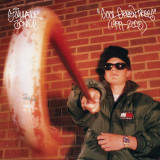
The cover photo is a picture of Sam standing on his back porch in the latter part of 1998, just before he got his first sampler. He was 13 years old, in 8th grade. His dad took the picture with his 35mm film camera: "I actually wanted to be pointing my dad's .22 pistol at the camera lens but he wouldn't let me. He gave me an old walking cane to use instead. The Tommy Hilfiger puffer jacket came from the lost and found at William Fleming High School where my mom worked as a secretary. I was thrilled when she brought it home because we never spent money on expensive name brand clothing like that - we were for the most part strictly a sale rack, bargain bin, thrift store, yard sale, flea market kind of family when it came to clothes. My watch is some cheap off-brand fake gold department store watch." Mastering for this vinyl edition was overseen by Be With regular Simon Francis and it was cut by the esteemed Cicely Balston at Abbey Road Studios to be pressed in the Netherlands by Record Industry.
Back to the future and northern velkommens to bro Morken. EPs for Prins 'Blud' Thomas' Full Pupp show early production chops, but it's his residency as part of Oslo's Jaeger crew where the range of styles is truly showcased.
Appearances on Trushmix series and his recent Road Trippin' cassette for L.I.E.S last year show depth(charge) DJ on a roll, but it's setting up the Moonlighting label where vibes came alive via some electro bass tribal sub bass wonder. Jungle dialects!
All and more over these 5 cuts >>> afro-bump-shuffle-rat-tat-hats-acid-stab-meets-storyville-dark-tom-toms-pads-relentless-hypnotic-down-down-electro-italo-endings-and-bass! Strange Thank f***.
“NO FUTURE. Una generación sin promesas, solo pulsos.”
La Tercera referencia del sello DIALECTO PERIFERICO ya esta disponible en formato físico de 12”. En ella estan los artistas: Dark Vektor, Large-scale aggressor aka Amper clap, Vema-Diodes, Spectrums Data Forces, ODR Lups Digga y Bocabeats & Ricchezza.
NO FUTURE es un manifiesto sonoro desde el colapso. Seis artistas, seis visiones que traducen el vértigo de vivir sin horizonte en beats industriales, sintetizadores quebrados, ritmos insurgentes y distorsión emocional.
Desde la melancolía sintética de Barrika’s Sunset hasta la ironía explosiva de Bullish, el álbum atraviesa el electropunk, el footwork, el techno y la abstracción electrónica para levantar una arquitectura de ruido, rabia y lucidez. Aquí no se canta al mañana: se le niega. El futuro está cancelado. Lo que queda, suena así.
In his sixth and latest album “New African Orleans”, released by ENJA and Yellow Bird, bass guitarist and composer Alune Wade explores the multiple junctions between his native West African rhythms, the Afrobeat and juju rhythms from Lagos and the brass band repertoire immortalized in New Orleans. “I’m exploring a world that goes from my roots to the lost branches on the other side of the Atlantic,” explains the musician from Senegal. He has whittled down around 50 compositions – both original and standards - to a dozen which Alune recorded in Paris, Dakar, Lagos and New Orleans. “The idea first came to me during the Jazz à Gorée festival I organized back in 2014,” he explains. “It had me reflect on the notion of reversing the musical trip most people take from the United States to the African continent. I wanted to set out westward and begin a musical conversation with the best artists, both in Nigeria and the US.”
To achieve this, Wade has invited top artists from both sides of the Atlantic, including the Nigerian talking drummer Olaore Muyiwa Ayandeji, the percussionist Weedie Braimah and the jazz drummer Herlin Riley from New Orleans. The musical inspirations are equally transatlantic, ranging from Dr. John to Manu Dibango and Charlie Parker. But the 45-year-old also pays homage to his father who was a brass band star in his native Senegal back in the Sixties.
BACKGROUND
We only have a partial idea of the birth and remarkable development of the music born of the transatlantic slave trade. From Malinke ballads to Cuban son, from call-and-response patterns to field hollers and hip-hop, Yoruba rhythms to Argentinian tango, from Angolan percussions to the New Orleans brass band sounds… all have roots in Africa and a shackled migration that lasted four centuries. No more so than Congo Square in the Louisiana capital. In 2024, we mark the 300th anniversary of the implementation of the Code Noir which “gave enslaved Africans Sundays off to dance”. A drop in the ocean, but one which shows the importance of culture as a lifebuoy against this barbaric trade. As the Guadeloupian writer Daniel Maximin once claimed: “Our music guided us from the scream to the song, from dragging our chains to dancing.”
WOW. Daniel O'Sullivan's transcendent new album, Eros, is one of the greatest things we've ever heard. A simply stunning song cycle of hypnotic, experimental contemporary chamber music composed for a 14-piece ensemble. Combining minimalism, complex syncopation, detailed acoustic textures, weird intervals and samurai precision, this record will elegantly blow your mind. When Daniel first sent us this, he pitched it as “Liquid Swords meets Michael Nyman”. Trust us, he wasn't wrong. A "unique hybrid orchestral music", it presents a confluence of Daniel's longstanding fixations; indeed, there's elements of Nyman, Antonio Carlos Jobim, Magma, Aaron Copland and RZA. But this is wholly O'Sullivan's. Originally commissioned for the Sonoton Music Library in Munich, Eros now receives a deluxe vinyl release courtesy of Be With Records, bringing this meticulously crafted work to a wider audience. Limited to just 500 copies for the world, these are gonna fly.
An English composer and multi-instrumentalist, Daniel O'Sullivan’s career has been marked by versatility and innovation. In addition to his work with Sonoton, he has composed extensively for the legendary KPM music library, contributing to its storied legacy of production music. As a deep virtuoso and collaborator, O'Sullivan has also played in a number of influential projects, including Ulver, Sunn O))), This Is Not This Heat, Grumbling Fur and Miracle (with Steve Moore), leaving an indelible mark on the contemporary experimental music landscape.
O’Sullivan’s first foray into classically informed chamber music, Eros is a culmination of his long-standing fixations and expansive musical influences. The album features arrangements that are as detailed as they are emotionally resonant, showcasing his unparalleled ear for intervals and mastery of counterpoint. The music brims with complex rhythmic syncopation and a sensitivity to texture and space, resulting in a soundscape that is both intoxicating and dauntingly precise.
Recorded June 2023 and February 2024, in Brussels, London and Carmarthenshire, Wales, Eros features members of Echo Collective (Neil Leiter and Margaret Hermant), Thighpaulsandra (from seminal post-industrial band Coil), and jazz pioneer Oren Marshall. Daniel's sonic weapons of choice, in his own inimitable words, were "Big Bad Drum, Pee Anne Oh, Low End Brass, Willowy Winds & Samurai Strings." You get the picture. As a cyclical suite, this is a record that really needs to be heard in its entitreity, from start to finish, to truly appreciate the genius at work here.
A jaw-dropping statement of intent, the minimalist "Golden Verses" sets the tone with its complex cue which has your neck snapping right when it feels like it needs to. Listen and you'll understand. A syncopated tangle of sharp strings, crunchy bass, drums percussion and bright piano and mallets vie for position with French horn and woodwind melody in the most compelling and unexpected ways. Quite simply, it's one of the finest album openers I've ever heard. It's followed by the atmospheric rippling minimalism of "Lyre Lyre", a gorgeous gem with shimmering chimes, bright melody, human percussion and syncopated pizzicato strings. It kinda comes on like a less-abstract Boards Of Canada, bursting with typical wonderment. The piano and string-drenched "Dolorous Stroke" effortlessly builds its warm, pastoral orchestration with flowing piano arpeggio, steadfast drums, expressive string quartet, rich low brass, woodwind and lyrical flute. Just sublime.
The insistent frenetic propulsion of "Plain Paper" is utterly beguiling, featuring a determined string motif, urgent drums and percussion, driving low brass and breathless, energetic flute. The haunting, interweaving string arpeggios that propel "Grapes Draped" presents a claustrophobic minimalism for chaos and darkness, with growling low woodwind and brass, spiky harpsichord, skittering flutes and tight drums. Up next, "Xanix Annum" is a stately minimalist waltz with expressive lyrical string quartet and delicate woodwind, anchored by drums and percussion. "Painting Rose" is a bouncy stop-start track with angular syncopated strings and a piano pulse underneath bright harpsichord and flutes. "Rotunda Garden" presents ethereal textural minimalism for landscapes and reflection with flowing string arpeggios, warm, low woodwind drones, floating choir and cymbal swells. Closing out this extraordinary side of music, the glowing, flowing minimalism of "Flowry Orb" features urgent organ, piano and woodwind arpeggios, half-time drums with shimmering cymbals, a soaring, beautiful violin solo and hypnotic vocal chant.
Side 2 opens with "Theia Mania" a determinedly off-kilter, angular track featuring low wind, brass and drum stomp in dialogue with lively string trio, woodwind and solo horn. The light, airy minimalism of "Painting Percy" is built around an interplay of rhythmic motifs for piano, low brass, bassoon, fluttering flutes, urgent strings, drums and percussion whilst "For Archetypes" is a delicate, gently syncopated chamber cue for nostalgia, nature, reflection and moments of calm, with steady piano motif, intimate woodwind and French horn, and warm, graceful strings. The urgent Ars Memoriae is a propulsive march for progress, processes and industry, underpinned by driving tuba, with determined strings, resolute drums, and vivid, expressive flute, clarinet and French horn.
The syncopated energetic minimalism of "Mirrored Seven" presents layers of melodic and cyclical piano, drums, low brass, harp, flute and strings. "Pure Ornament" follows, a slowly evolving chamber cue with flowing clarinet, string and harp arpeggio, plodding tuba and percussion, fluttering flute and graceful, lyrical solos. Stunning! Up next, "Brave Boy" moves from its tender, warm, lullaby-like intro with lyrical flute, clarinet and strings before opening into a playful backend driven by a bouncy tuba riff and syncopated piano, woodwind, string trio, and drums and percussion. Rounding out this astonishing piece, "Waxen Waned" is a warm, pastoral chamber cue with light lyrical woodwind, tender French horn and subtly pulsing string trio.
The album's title is a reference to Plato’s conception of Eros, which is more than romantic or physical desire. It is a dynamic and creative force that drives individuals to seek perfection whether in art, relationships, philosophy or the pursuit of truth. Wholly appropriate, here, we think. When asked what his influences were in making this astounding record, he answered thusly: "Non-musical: Householding, Pythagoras, Goethe, Grail romances, Hermeticism, Doctrine of Signatures (Parcelsus, Bohme, Pliny), Eric Rohmer, John Stezaker, Yasujiro Ozu. Musical: Duke Ellington (late suites), Smile-era Brian, early RZA, Wagner (Parsifal Overture), Magma, Mancini, Axelrod, YMO, Hildegard, Nyman, Penguin Cafe Orchestra, Jobim (Stone Flower), Alessandro Alessandroni, Tavener, Moondog, Orthodox Music, Secular Music." That's some pretty deep shit. Makes you want to dive in, no?
Mastering for this vinyl edition was overseen by Be With regular Simon Francis, and it was cut by the esteemed Cicely Balston at Abbey Road Studios to be pressed in the Netherlands by Record Industry. Truly, Eros is a work of extraordinary depth and sophistication. It invites listeners to immerse themselves in its intricate layers, to lose themselves in its hypnotic rhythms, and to marvel at the precision of its execution. With this release, O’Sullivan reaffirms his position as one of the most inventive and uncompromising voices in contemporary music. Do. Not. Sleep.
- A1: Olivia Salvadori, Coby Sey, Kid Million - With All The Senses, Su Di Te M'infrango
- A2: Upsammy - Programming
- A3: Sepehr - Divooneh
- A4: Levente - Read It
- A5: Ece + Stefan - Love Street No 90
- A6: Ben Bertrand - What To Do With My Male Body
- A7: The Spy - Paradox
- A8: Filmmaker - Broken Power Gloves
- A9: Christos Chondropoulos - The Spell
- A10: Zona Utopica Garantita - Loop Kraut
- B1: Christos Chondropoulos - Love Song
- B2: Galina Ozeran - Dvizhenie
- B3: Lamusa Ii - Le Reve (Feat Vittoria Totale)
- B4: Solid Blake - Nyx
- B5: Laurel Halo - Waves Goodbye
- B6: Annavsjune - Mirrormom
- B7: Brainwaltzera - Scratch The Sir Face
- B8: Frank Rodas - Dial Up
- B9: Black Dot - The Rainbow Children
- B10: Anpanman - Adjustic High
- B11: Fluctuosa - Lamponi
In 2022, Osàre! Editions founder Elena Colombi approached artists and musicians with a prompt: Every body, everyone needs love to flourish. In her book The Will to Change, the eminent author and social activist, Bell Hooks, invites men to excavate their innermost selves, challenging the way that patriarchal society limits their capacity for intimacy, tenderness, care and emotion. As hooks lays out, feminist thought and work requires the collective participation of all genders in order to realise a liberated world. How can we imagine cross-gender solidarity through music and art? And how can we tell sonic stories that facilitate our full potential as desiring beings? These are the questions that The Male Body Will Be Next starts out from.
The title of the record draws connections between hooks' writing, a film by Rebecca Salvadori and Peter de Potter's stunning photo series of the same name. In de Potter and Salvadori's depictions, men's bodies appear as vulnerable, naked and exposed.
Divided into two parts, the first instalment of The Male Body Will Be Next hinges on colliding energies – the melding of club dance floors and haunting ambient textures, agile techno and noisy experimentation.
'The sun on my skin… it’s so warm and gentle,’ speak-sings Olivia Salvadori on ‘Su Di Te M’Infrango’, visualising utopias. Laurel Halo crafts a dreamscape spun from golden threads of synth and strings. Pensive and reflective, Ben Bertrand’s bass clarinet roams searchingly, its piercing tonality full of longing. Yet, in between these lucid, cinematic passages and spoken word, The Male Body Will Be Next finds space to dance together. Moving in fervent, rhythmic patterns, Sepehr’s ‘Divooneh’ pivots between tension and release. Filmmaker unleashes a wave of energy and The Spy delivers a potent take on vintage electro, the track title hinting at the double-bind of gendered expectations. Propelled between these eclectic styles, the record encapsulates the full spectrum of sonic expression.
SUN SERIES | AE/SS-01 | VA is the first release in a new series conceived and produced by Adepta Editions in collaboration with guest curator Oliver Adhesive, embarking on a mythical journey through the lands of Spanish underground electronic music.
- A1: Goodbye Forever
- A2: This Is Getting Over You
- A3: Bleeder
- A4: I Lied My Face Off
- A5: My Friend Peter
- A6: Snake Oil Tanker
- B1: Southern Rock
- B2: Cooking Wine
- B3: For Your Lungs Only
- B4: Sun Dials
- B5: Nose Over Tail
- B6: 97
Another foggy day in Yorkshire. A steel grey sky. Raindrops tracing one another down the windowpane. Kirk Barley sits in his studio and assembles compositions from scraps of found sound and live instrumentation. Melodies swell, withdraw and repeat like waves. Time slows. Accelerates. Slows again. The light bends, tweaked at the edges. Twisted by rhythms that never quite resolve.
Written, recorded and produced by Barley in Yorkshire in early 2024, Lux picks up where 2023 LP Marionette leaves off, conjuring a mystical, reflective space between formal minimalism and sonic imaginaries of northern landscapes.
And yet, where Marionette relied at times on more recognisable field recordings, Lux leans into Barley’s skill as an instrumentalist and sound designer, working from a palette of short samples and utilising a variety of alternate tuning systems to build, layer and coax his compositions into being. Most evident on tracks ‘Vita’, ‘Sprite’ and ‘Descendent’, these tunings create an otherworldly harmonic language that is easier to perceive than describe.
Alongside more familiar instruments of guitar, bass, drums, organ and clarinet, here Barley draws on plastic saxophones and bells, and recordings of glass, wood and metal sound objects to provide the organic matter. Rather than directly representative of the natural world, Lux enters into a dialogue with it which, like the grasses and flowers of the album’s cover, exists somewhere between reality and artifice.
On album opener ‘Cache’, Barley constructs his own sense of time from a recording of an umbrella crank, a sparse and spectral piece which hints at memories embedded in the track’s title. Introspection blossoms into new life on ‘Vita’, crumpling again into the percussive ambience of ‘Verre’. A track that takes its harmonic lead from the clinks of glass, it features Barley’s long-time collaborator Matt Davies on drums, whose nuanced, tonally sensitive playing gives ‘Verre’ a fizzing, ice-like quality.
There are several moments where Lux picks up on themes Barley explored under electronic moniker Church Andrews on recent works with Davies, stretching and distorting temporalities most explicitly on ‘Descendent’, whose ritualistic air unfurls around a pattern in exponential decline.
Embracing the surrealism Barley absorbed over years watching classic film noir and the works of David Lynch and Federico Fellini, Lux wends its way through the enchanted sound worlds of ‘Sprite’ and ‘Balanced’ before arriving at the album’s title track.
An expression of his recent experiments in live, prepared guitar, ‘Lux’ brings the album back to earth, returning us to the room where the rain has stopped, the clouds have parted, and the soft warmth of the spring sun is pouring in through the open window.
Earthly Measures are very excited to bring to you 'Doroja', an album by Santiago Córdoba & The Bauls of Bengal. Different to past releases, EM explores another part of the world, introducing you to the traditional sounds of Bengal & its talented musicians.
Doroja, is the third album by Argentinian musician Santiago Córdoba, this time in collaboration with The Bauls of Bengal. Recorded at the Hansadhwani Studio in Calcutta, India, where Santiago arrived with only a synthesiser, some effects, and a Legüero Bass Drum (an Argentine percussive instrument used mostly in local folklore) - this album was first conceived in December 2017 during a residency in this mythical city, together with The Bauls of Bengal.
The Bauls believe the body and mind are the sources of all truths and that the expression of freedom cannot be restrained by the labelling of genres or religions, something which is evidently expressed in their music. This provides the perfect foundations for this album to develop without limitations and too effortlessly flow to whichever realms both Santiago and the Bauls of Bengal wish to take us too.
The album combines traditional songs of the Bauls, rhythmic Jhumar instrumental improvisations with the Argentinian legüero bass drum, and other compositions created together in the studio. The result is a melodic mixture/dialogue of cultures, folklore and ancestral sounds with modern influences that help create an experimental and addictive sound full of electronic textures.
Participating in these first recordings: Arpita Chakraborty (vocals), Chandan Ray (dotara), Pijush Baul (Vocals, Dubki) and Tanmoy Pan (percussion), who later, are joined by other artists from different latitudes to achieve a captivating fusion: Matías Romero on strings (Formosa, Argentina), Guilherme Peluci from Mineiro on winds and Daniel Guedes on percussion (Belo Horizonte, Brazil), Porteños Walter Broide on tabla and Cobra Rod on bass (both members of Poseidotica), and the Spanish Ángel Calvo on trumpet.
The album was mixed by Rodrigo Cursach at Delta Uno Estudio, mastered by Daniel Ovie, and the fascinating cover art is by Alejandro Sordi. It will be released on vinyl by the UK based label Earthly Measures, in addition to being available on all digital platforms.
‘Doroja’ means portal, and this album is indeed a magical portal to music, song and dance. Santiago's only means of communication with Bengali colleagues functioned as an astral portal to build the sounds of this journey through strange and unfathomable landscapes that captivate and surprise by building bridges between different cultures of our planet.
Santiago Córdoba is a multi-instrumentalist musician born in the city of Buenos Aires who has been developing his unique sound both with his solo project and with prominent bands from the Argentinian independent music scene. He has been developing his solo career through deep musical and spiritual searching, with the infinite journey as a primary objective.
In recent years, he has lived in places such as Madrid, Beirut and Berlin and has released two albums: ‘Corso’ (2015) and ‘En Other Places’ (2019).
That’s the Price of Loving Me marks Dean Wareham’s (Galaxie 500, Luna, Dean & Britta, ) evocative return, rekindling his partnership with producer Kramer for the first time since Galaxie 500's This Is Our Music in 1990.
Recorded in six days in Los Angeles, the album is steeped in lush, haunting soundscapes, driven by Wareham's signature reverb-soaked guitars and melancholic, dreamlike vocals. Britta Phillips joins on bass and harmonies, while Gabe Noel’s cello adds depth and tension. “Two takes yield more treasure than twenty,” notes longtime friend Matt Fishbeck, as Kramer's insistence on spontaneity infuses the project with raw immediacy.
Thematically, Wareham delves into the poetry of memory, set against a backdrop of wistful nostalgia and existential reflection. "Songs are in dialogue with other songs" Fishbeck writes. The lead single, “We’re Not Finished Yet,” is a playful, introspective meditation where Wareham drops his own name while relishing the tactile joy of the guitar. “You Were the Ones I Had to Betray” unfolds like a somber narrative, underpinned by Noel’s cello and crowned with a haunting bass harmonica by Kramer, encapsulating the emotional ambivalence of friendship and loyalty.
“That’s the Price of Loving Me” pulses with conga rhythms and Kramer’s vintage Moog, capturing Wareham’s musings on the life of a performer and the sacrifices it demands. Fishbeck describes “The Mystery Guest” as "an acrostic poem" and concludes by saying "We're not finished yet." 'Loving Me' also includes two covers, Mayo Thompson's 'Dear Betty Baby' and Nico's 'Reich der Träume.' The latter highlights his love for blending history and homage, sung entirely in German for a chillingly authentic touch.
Dean returns with his fourth solo album and his first album for Carpark Records. Inspired by the past yet resonant in its present-day relevance, the album’s sonic palette is reminiscent of Galaxie 500’s dream-pop roots, tempered with the matured introspection of Wareham’s later works. “Dean traffics in memory,” writes Fishbeck, reflecting on the record’s seamless blend of intimate recollections and catchy hooks. The result is a cohesive work encapsulating the duality of Wareham’s career: haunted by the past, yet steadfastly pushing forward. As Fishbeck poignantly puts it, “Imagination is nothing but the working over of what is remembered.”
That’s the Price of Loving Me marks Dean Wareham’s (Galaxie 500, Luna, Dean & Britta, ) evocative return, rekindling his partnership with producer Kramer for the first time since Galaxie 500's This Is Our Music in 1990.
Recorded in six days in Los Angeles, the album is steeped in lush, haunting soundscapes, driven by Wareham's signature reverb-soaked guitars and melancholic, dreamlike vocals. Britta Phillips joins on bass and harmonies, while Gabe Noel’s cello adds depth and tension. “Two takes yield more treasure than twenty,” notes longtime friend Matt Fishbeck, as Kramer's insistence on spontaneity infuses the project with raw immediacy.
Thematically, Wareham delves into the poetry of memory, set against a backdrop of wistful nostalgia and existential reflection. "Songs are in dialogue with other songs" Fishbeck writes. The lead single, “We’re Not Finished Yet,” is a playful, introspective meditation where Wareham drops his own name while relishing the tactile joy of the guitar. “You Were the Ones I Had to Betray” unfolds like a somber narrative, underpinned by Noel’s cello and crowned with a haunting bass harmonica by Kramer, encapsulating the emotional ambivalence of friendship and loyalty.
“That’s the Price of Loving Me” pulses with conga rhythms and Kramer’s vintage Moog, capturing Wareham’s musings on the life of a performer and the sacrifices it demands. Fishbeck describes “The Mystery Guest” as "an acrostic poem" and concludes by saying "We're not finished yet." 'Loving Me' also includes two covers, Mayo Thompson's 'Dear Betty Baby' and Nico's 'Reich der Träume.' The latter highlights his love for blending history and homage, sung entirely in German for a chillingly authentic touch.
Dean returns with his fourth solo album and his first album for Carpark Records. Inspired by the past yet resonant in its present-day relevance, the album’s sonic palette is reminiscent of Galaxie 500’s dream-pop roots, tempered with the matured introspection of Wareham’s later works. “Dean traffics in memory,” writes Fishbeck, reflecting on the record’s seamless blend of intimate recollections and catchy hooks. The result is a cohesive work encapsulating the duality of Wareham’s career: haunted by the past, yet steadfastly pushing forward. As Fishbeck poignantly puts it, “Imagination is nothing but the working over of what is remembered.”
Members went on to Sinkane, and Pompeii, This Morning. Originally recorded in the
summer of 2005 out west, while on tour, by Vince Tennant. The recording had been
shelved and unreleased. In 2023, Expert Work Records reached out to Sweetheart and
got the recording re-mastered. It will be released on limited vinyl and digital.
This is also a companion piece/ record with EW018 (Sweetheart- The Process of
Making Us Well). We highly suggest getting both records.
Sweetheart's "The Unbearable Tightness Of Being" is one of those records you should
put on your radar as soon as possible. A rediscovered artifact from 2005, the album is
a sonic panorama that intricately incorporates post- hardcore, noise rock, punk,
screamo, and indie elements into an innovative and complex sonic landscape. The
guitars, wielded with finesse, serve as the driving force behind Sweetheart's sonic
assault. From the opening chords to the closing refrains, they deliver a relentless
barrage of riffs that defy predictability. The interplay between the two guitarists
manifests as a dynamic dialogue - a musical conversation that seamlessly transitions
from chaotic dissonance to moments of clarity. Catchy, intricate, and hypnotic chord
progressions unfold, evoking the spirit of At The Drive-In and Fugazi while carving a
distinct sonic identity.
However, it's not merely about sonic assault; Sweetheart infuses the album with a
nuanced approach to melody. Amidst the aggressive riffage, this material treats
listeners with moments of harmonic beauty and unexpected melodic twists. Themes,
leads, melodies, and harmonies intermingle, creating a rich auditory experience that
transcends the boundaries of conventional post-hardcore.
The production quality of this long- lost gem further accentuates its brilliance.
Recorded in 2005 but kept in the shadows due to financial constraints and a desire for
perfection, the album has now found its moment in the sun. Expert Work's decision to
release the LP in 2024 has allowed audiences to appreciate the intelligent
craftsmanship that went into its creation.
"The Unbearable Tightness Of Being" is more than a musical journey; it's a sonic
exploration transcending all the possible sonic boundaries. Sweetheart's commitment
to experimentation and honesty, as emphasized by band members reflecting on their
creative process, is palpable. The act of listening, treated as a discipline, is evident in
the careful construction of each track - a result of repetitive practice, internalization,
and an unwavering dedication to their craft. In the grander narrative of the album's
release, the band's reflections on the passage of time and the meaning of their work
imbue the music with a poignant depth.
"The Unbearable Tightness Of Being" is a mandatory addition to any record collection.
It's not just a revival of the early 2000s scene; it's a sheer example of Sweetheart's
enduring brilliance and a celebration of a significant part of their musical legacy.
- A1: The Milkman (Blackburn)
- A2: Campus Blues (Lancaster)
- A3: Castle Bandstand (Clitheroe)
- B1: What Lurks Behind Those Illuminations? (Blackpool)
- B2: Pass The Sushi Pon The Lef? Hand Side (Burnley)
- B3: Caribbean Club (Preston)
Ajay Saggar is BHAJAN BHOY. "With BHAJAN BHOY, Saggar synthesizes all of the stylistic approaches he’s explored over the years, swirling them into an intoxicating musical blend, with an earthy spirituality. Even the project’s name reflects the dual aspects of Saggar’s upbringing coming together in harmony. In Hindi, a “bhajan” is a devotional song, sung in the mandir, or temple, while “bhoy” is a Scottish and Irish derivation for a young man. There’s a searching quality to Bhajan Bhoy, as if Saggar is still hunting for transcendence with each track, whether through an expansive drone, an orchestral facility on the piano, or an electronics-augmented raga that threatens to dip into noise” (Erick Bradshaw / writer and WFMU DJ). This album presents a rich and varied set of compositions that showcase Saggar’s skills as an incredibly talented and accomplished composer and musician. With each and every Bhajan Bhoy LP, you are are carried to a higher place. With ‘Bhoy On The Wire’, the 35 minutes laid out unfolds like a cosmic tapestry, an extraordinary exploration that shimmers and reverberates with newfound vibrancy. The songs were broadcast as part of a session on Steve Barker’s “On The Wire” radio show in April 2024. They were a gift to Steve and his team for 40 years of broadcasting. “On The Wire” is simply the greatest radio show in the world. As Ajay explains in his own words : “In September 1984, I started a degree course at the University of Lancaster. On a wet and soggy Sunday afternoon towards the end of September, I sat in my room staring out at the grey Lancashire landscape, and decided to alleviate the boredom by seeing if there was anything to listen to on the radio. Most of the stations I tuned into were as dull as the weather outside. However, as I neared the end of the FM dial (and was about to give up hope), I chanced upon a station where I was taken by the music being played. That show was “On The Wire”, introduced by Steve Barker. From there on in, every Sunday, between 2-5pm, I tuned into Radio Lancashire to listen. Steve’s shows had an incredible and wide reaching selection of music and genres, that thrilled your ears and left you wanting more. Tied to that, his deep knowledge of the material he played helped the listener dig into the sounds even more, and also left you in admiration of this trait. In 1985, I started putting on DIY shows in Lancaster (inviting the likes of Bog-Shed, bIG fLAME, The Membranes, The Wedding Present, etc etc) and Steve was kind enough to mention the shows on-air, which helped in getting people from different parts of the county to come to the shows. At the tail-end of 1985, he invited me to the studio to come and hang out. When in 1988, the group I was in, Dandelion Adventure, released our first (demo) cassette, it was Steve, who not only played tracks off it, but invited the group to the studio for an interview. Now if you’re a young band, that is a massive thrill! And in 1990, when Dandelion Adventure did a John Peel session, I actually used “On The Wire” jingles (that Steve had put on a cassette and given to me a few years before) on the track “All the World’s A Lounge”. Since then, the show has been a mainstay for me, and so many others around the world, to get turned onto incredible sounds from around the world. And over the course of 40 years, Steve has always supported my music. These six tracks are a 40th birthday gift to the “On The Wire” team (Steve, Michael “Fenny” Fenton (an absolutely critical part of the show), and Jim Ingham (engineer who keeps the technical side of things going)) for sharing so much amazing music, and making the world a better place. They were originally broadcast as an exclusive session in April 2024 on “On The Wire", and are here for your listening pleasure. Music like shower”. Artwork by Jake Blanchard
"Equinox", Gianni Marchetti's 1977 twin album of "Solstitium", released in a handful of promo copies by RCA in their renowned "Original Cast" series, takes us on a journey through the author's groovier and wilder temperament, feeling as fresh and surprising today as the day it was made, offering immediate understanding of the reasons why it has remained one of his most sought after - and virtually impossible to find - titles over the decades.
RIYL: Piero Umiliani, Sandro Brugnolini, Stefano Torossi
The limited release as part of RCA's "Original Cast" series only increased its mystique, making it a coveted piece among collectors and connoisseurs. The album's distinctive character lies in its spontaneous, freewheeling approach, which contrasts with the more polished productions of the era. It's a perfect example of Marchetti's unique vision, where each track seems to evolve organically, offering both intricate musicianship and a sense of unrestrained creativity.
- 1: Ketchaoua
- 2: Pan African Festival
- 3: Brotherhood
- 4: Speak With Your Echo (And Call This Dialogue)
After appearing with Archie Shepp at the landmark Pan-African Cultural festival in Algiers in 1969, African-American trumpeter-cornetist Clifford Thornton recorded a set of his own compositions in Paris later that year. The result was Ketchaoua, an important political and spiritual as well as musical statement that reflected the inspiration that he took from Islam. Indeed, the title of the album refers to the awe-inspiring mosque in Algiers.
Clifford Thornton’s superb band comprised his compatriots, saxophonists Archie Shepp and Arthur Jones, drummer Sunny Murray, trombonist Grachan Moncur III, pianist Dave Burrell, and bassist Earl Freeman, as well as French bassist Beb Guérin. Together they brought energy and ingenuity to the leader’s compositions, which were characterized by vivid atmospheres, exploratory, mysterious sounds and haunting themes. And the song titles conveyed an important social and cultural message. Pieces such as ‘Brotherhood’ pointed to the sense of unity and kinship that African-American artists felt with the citizens they encountered on their journey to North Africa and Europe.
This newly remastered deluxe edition of Ketchaoua provides an opportunity to hear one of the major entries in Clifford Thornton’s relatively small yet nonetheless highly impressive discography. It is an album that marks him out as a figure in the avant- garde movement of the late 60s and early 70s who deserves far wider recognition.
- One Half Of A Dream
- I Wanted To Belong
- If Nothing Is Real
- Mournful Moon
- Ninna Nanna
- Borne On The Wind
- Go Where Your Eyes
- Shadows Are
- North And South
- By Your Hand
The New Duo Album by Piers Faccini & Ballaké Sissoko: Our Calling Two decades after their very first collaboration, British-Italian folk songwriter Piers Faccini and Malian kora virtuoso, Ballaké Sissoko return with a mesmerizing album: Our Calling. Set for release in February 2025, this fascinating dialogue between a virtuoso instrumentalist at the peak of his powers and an inspired songwriter and wordsmith, succeeds in creating new song forms with a lightness of touch that bridges continents and plays with tradition.Through ten exquisitely crafted tracks, Our Calling is a sonic and narrative praise song for migration in all its forms. The two friends"s entirely acoustic dialogue was recorded in Paris side by side and live in the studio over five days. The album"s originality is that it feels deeply Malian at i s musical core, all the while being seamlessly infused with an essence of folk songwriting, sung in the English language. Recorded by Frédéric Soulard (Shapes of the Fall), the album unites an extraordinary cast of musicians, including Vincent Segal, Badjé Tounkara, and Malik Ziad.
- A1: Occult Future (4:48)
- A2: The Circle (8:09)
- A3: The Eternal Mistake (6:18)
- B1: The Adept (6:36)
- B2: The Living Dream (12:59)
Attention space cadets!
Following last year's much lauded Kaliyuga Express debut 'Warriors & Masters', Nolla (Finnish psych/space rockers) & Mike Vest (Maximalist guitar guru, Bong, Blown Out, Drunk In Hell, Artifacts & Uranium, Modoki, Tomoyuki Trio, Mienakunaru etc) combine their visions once again and explore dark futuristic mindscapes.
They set their sights to the looming eons and gaze through an occult lens. Inspired by classic space rock, driving hypnotic krautrock and bleak synth soundscapes.
The ground was laid in improvised Nolla sessions and further ascended with gloomy prophecies and lyrical explorations by Ilkka and Otto. With Ohto’s assertive drums and Teemu's solid guitars the canvas was set for Mike to paint his transcendent multilayered guitars.
Bleak and overbearing sights are explored, but the future holds a speck of hope if you are prepared to embrace the darkness.
For fans of: Hawkwind, Can, Sun Dial, Bevis Frond, Space Rock, Krautrock etc.
Otto Juutilainen - Vocals, Synth, Lyrics, Mix, Mastering, Ilkka Vekka - Bass, Electronics, Lyrics, Art, Mike Vest - Guitar, Teemu Vilmunen - Guitar, Ohto Pallas - Drums
Recorded in Finland & the United Kingdom Winter/Spring 2024
In a continued disruption to the airwaves following releases from Bondo and Monde UFO, Quindi returns to the Californian noise rock scene-not-scene to dig on the gnarled riffs of Expose. On their new release, the LA outfit double-down on a unique blend of bloated guitar fuzz and grimy analogue synths, and come out with a curiously cosmic kind of kick-ass.
If there was a dreamy, sun-bleached quality to Bondo and Monde UFO, their label mates Expose sound more wrought from sweat-drenched jam sessions under halogen strip lights in grease-stained garages. But the guttural quality of their blown-out guitar tone is matched for vibrancy by the dexterity of their playing, bringing angular free jazz to post hardcore and sludge rock, capped off with the unearthly sonic possibilities of flamboyant synthesis.
This dual-layered wall of sound lends extra weight to the likes of shit-kicking 'Speed Dial', which thunders like a kosmische juggernaut with amped up leads and a dead-eyed vocal condensed into a visceral minute, all with enough time for a dramatic breakdown, synth eruption and a final thrust. Similarly scooped out of the trash compactor, 'Description' rides for longer with one foot pressed firmly on the fuzz pedal, letting the electronics squeal around the punked-up rush of the guitars.
But Expose are not a one-dimensional band constantly thrashing it out. By contrast, 'The Constant' hits a crushing emotional note in its more structured push and pull between delicacy and heaviness, hitting bittersweet notes along the way throughout the peaks and troughs of the arrangement. 'Self Terror' washes languid, discordant guitar strum into swirling FX accompanied by sax from Monde UFO's Ray Monde.
Smart as a whip, sharp as a tack and boiling over with an untameable urgency, Expose make their presence felt in brilliant, bruising form on this particularly fierce addition to the Quindi catalogue.
--The fourth outing on Spray’s Punctuality imprint comes in the form of the much anticipated Ode to Beachball EP by Eoin DJ. The release is a fully realised vision of moods and grooves inspired by Nalin & Kane’s 1997 chart topper ‘Beachball’.
Sparse, organic percussion, simple basslines and lush atmospherics form the bedrock of the EP, placing it firmly at the intersection of starry-eyed euphoria and heads-down club-stomp, lending the tracks a timeless but contemporary feel.
Those with their ears to the ground will know that the title number has been somewhat of a sleeper hit for the past two summers. Ode to Beachall’s understated stabs, rolling bass and transcendental vocals have soundtracked many sunsets and have bore the brunt of numerous failed shazam attempts via spins in mixes by trendsetting auteurs like Job Jobse, Sally C and label head Spray.
Bliss Inc’s remix turns up the energy dial with a club-focussed remix of Ode To Beachball, adding extra dynamics to the rhythm and low end, propelling the original into a modern hard-house roller complete with big-room breakdowns and euro-centric stabs, firmly aimed at the dancefloor.
On the flip both Infinite Well and On Lilac Skies stick to the beachball brief- swung bongos and congas, undulating low end and mercurial vocal chops add to the balearic beach techno mood of the entire EP. Both tracks are exemplary practices in dancefloor restraint and are sure to be staples in bags and sticks of discerning DJs for many summers ahead. Another stellar release from Irish atlantean Eoin DJ.
Bienvenue Recordings is back on wax with two originals and a deep driving remix from the home base. We are delighted to present Gratts ‘The Lifestyle EP’ via the label, a high quality addition to his plentiful repertoire of dance delights.
Gene Tellem met Gratts in the South Australian city of Adelaide in 2022 while visiting family and touring the country for some gigs. Gratts, originally from Belgium, also finds himself in the sun for similar reasons. Being from two different French speaking parts of the world, able to communicate in a familiar way but in a whole new place really laid down the vibe for this release. Songs as much for the radio as the club, for a cold wintry night or on the shores of an Australian sunset.
'Sunsets (FBI Mix)' is Gratts & Biancolato's tribute to Sydney veteran DJ Simon Caldwell's long running 'Sunsets' radio show on FBI Radio. Gratts and Caldwell DJ'ed together in Sydney on various occasions, whereas Biancolato is a veteran Melbourne DJ and producer. The track was inspired by the dubby West-Coast deep house sound from the turn of the millennium. Adelaide's Lesley Williams provides the vocal mantra.
'Sundays With U (Neapolitan Mix)' is a jazzy and percussive venture, loosely inspired by the West London bruk sound and Charles Webster. Andreas Poppelbaum, Gratts' studio neighbour in Berlin can be heard on soprano sax. The lyrics are performed by Italian friend Ambra, who delivers them in the Neapolitan dialect.
'Sundays With U (GT Remix)’ is Gene Tellem pulling at all the elements that make the original a scorcher, stretching it out, turning the stomp up, and offering a version for a deep dance floor moment. The voice, sax, atmosphere with the snap on the one. One moment it starts, and soon you won’t know how long it’s been that your eyes are closed, body moving through the room.
For the first time in their diverse second act, they allow themselves to be a rock band, freed of adornment and embellishment. As much as Carlson’s guitar has always been the focal point of EARTH’s music, it’s been surrounded by consistently diverse instrumentation. Here the dialog between Carlson and Davies drumming remains pivotal, underpinned by the sympathetic bass of Bill Herzog (Sunn O))), Joel RL Phelps, Jesse Sykes and the Sweet Hereafter) and thickened by additional layers of guitar from Brett Netson (Built To Spill, Caustic Resin) and Jodie Cox (Narrows). Perhaps the largest left turn on Primitive And Deadly, though, is the prominence of guest vocalists Mark Lanegan and Rabia Shaheen Qazi (Rose Windows) who transform the traditionally free ranging meditations of EARTH into something approaching traditional pop structures.
On “Rooks Across the Gates,” a song stylistically the closest to the folk inspired modality of Angels Of Darkness, Carlson stretches out into some of his most lyrical playing to date, creating an almost symbiotic relationship between his performance and the vocals of old friend Mark Lanegan. “From the Zodiacal Light,” meanwhile, takes the late 60s San Franciscan/freaked-out jazz-rock transcendence of The Bees Made Honey In The Lion’s Skull and quickly re-appropriates that sound into a musky torch song for the witching hour.
This contradictive tension between a band pushing itself ever-forward whilst surveying their history is reflected in the albums twin recording locales. The foundation of the record was laid in the mystic desert highlands of Joshua Tree, California where EARTH recorded hour after hour of meditations on each track's central theme at Rancho de la Luna. Upon returning to Seattle these were edited, arranged and expanded upon at Avast with the help of long-term collaborator Randall Dunn (who was previously at the helm for the Hex, The Bees Made Honey In The Lion's Skull and Hibernaculum sessions).
With an ever-growing and insanely exciting back catalogue, including his Negative Space EP, which was released on the label in 2023, Melbourne-based artist Pugilist returns to Of Paradise, this time linking up with fellow Australian musician Pod on their shapeshifting album Iridescent, the duo’s debut collaborative release.
Comprised of nine pulsing and explorative productions, including one digital-only bonus track, Iridescent is a masterful and quietly nuanced excursion through contemporary dance music, one that sees Pugilist & Pod cultivate a unique and timeless sound of their own that varies tremendously in form, shape, and texture.
Totemic in its imaginative scope, Iridescent offers listeners a truly immersive experience that will blissfully wash over them in the safety of their own homes or take them in a transcendent grasp and guide them on a new journey through the club.
»Nuts of Ay«, the thirteenth album by the Berlin-based electronic pop duo Tarwater (Ronald Lippok and Bernd Jestram), is their first in a decade, since 2014’s »Adrift«. Beautifully poised and smartly dressed, it's an album that draws Tarwater’s various pasts into a high-definition present, while bringing the duo, yet again, into productive dialogue with all kinds of fellow travellers.
Tarwater’s music has always been marked by a hypnotic pop-ness, but that’s particularly evident on »Nuts of Ay«, where a song like »Hideous Kiss« weaves together jangling guitar, pastoral flute, and flittering electronics into a gem-like construction. While the lyrics of »Hideous Kiss« are written by the duo, »Nuts of Ay« also continues a longstanding Tarwater tradition of recasting the words of others in their own mould. This time, their remit is broad: poetry from Derek Jarman (»All Nuns«) and Millner Place (»Trapdoor Spider«); lyrics from Jean Kenbrovin (»I’m Forever Blowing Bubbles«), the late Shane MacGowan (»USA«) and, again, John Lennon (»Everybody Had a Hard Year«).
This cast of found and borrowed lyricists also finds collaborative echo in the guest musicians dotted throughout »Nuts of Ay«. Schneider TM turns up on the lovely, Felt-like »Spirit of Flux«, where guitars channel the tangled reveries of Vini Reilly and Maurice Deebank into lush pop. Carsten Nicolai joins, as Alva Noto, dappling »On Waves and Years« with intimate glitching textures; he also provides the album cover art. Elsewhere, Masha Qrella appears on »Down Comes the Goose«, and actor Lars Rudolph pitches in for »USA«.
It may have been ten years since the album's predecessor, but Lippok and Jestram have kept active with other projects. They’ve collaborated with Masha Qrella, Immersion, and Iggy Pop; worked on radio plays with Kai Grehn, some based on the writing of Nick Cave (»The Sick Bag Song«, featuring Tilda Swinton, Paula Beer and Alexander Fehling) and William S. Burroughs (»The Cat Inside«); and made music for several radio-tatorts (radio plays based on »Tatort«, a long-running German police TV series) by playwright Tom Peuckert.
Both voracious and committed in their creative energies, Jestram and Lippok report back from these experiments with »Nuts of Ay«, one of their most compelling, deeply lustrous, dreamlike albums yet. They say there was no concept for the album, which is surprising, perhaps, given its holistic mood, explaining it »grew together like a coral reef in the studio over a period of several years«. There’s something to be said for letting an album gather and mutate naturally, without an overarching framework in place, and »Nuts of Ay« certainly feels like an unforced collection of material that nonetheless inhabits a similar space, one where guitars twist like driftwood next to amorphous, aqueous electronics, Lippok’s droll yet completely convincing vocal delivery riding songs that pulse and plume with curious, unpredictable rhythms.
But you can also hear elements – submerged but still present – of other music that’s inspired the duo: they’ve drawn some connections for us with psychedelic folk, Bowie in Berlin, Burial, and the film music of Popol Vuh and Krzysztof Komeda. This music shares a strong sense of place – whether in the world, or the mind – and the twelve songs on »Nuts of Ay« have such similar presence; a shared mood, a shared world, a shared sense of the possibilities of what electronic pop music could, and should, be. A bold and brave pop experiment.
Artwork by Carsten Nicolai
Mastering by Bo Kondren, Calyx Berlin
»Trapdoor Spider«, »On Waves and Years« & »Breaking Day«: lyrics by Milner Place
»All Nuns«: lyrics by Derek Jarman
»USA«: lyrics by Shane MacGowan
»Down Comes the Goose«: lyrics from a traditional song
»Forever Blowing Bubbles«: lyrics by Jaan Kenbrovin
»Everybody Had a Hard Year«: lyrics by John Lennon
Continuing our quest to get all of the classic early AMT albums released on vinyl, we turn to 2004’s 'Mantra Of Love’, and with the help of Makoto Kawabata’s studio wizardry, we’ve made it possible.
This latest instalment in the ‘Acid Mothers Temple Vinyl Archives - First Time On Vinyl’ series (as with the three previous SOLD OUT releases in the series) have all been meticulously put together with the help of Makoto Kawabata with the original CD artwork recreated for these vinyl editions from archive photos stored in the vaults at the Acid Mothers Temple in Osaka, Japan and the original audio remastered by James Plotkin.
Here’s what others had to say upon it’s original CD only release back in 2004 …
“Acid Mothers are strong folk. You'd think they'd tire quickly, all tucked away on their island, strewn about on tree roots while baking their lungs and throats to a knotty green tinge. But instead of waltzing through life like hippies, they manage to not only tour and put out records every year, but also to fill those albums with 30-minute jams and assorted freakouts. And while evil jam bands would fill that space with guitar work taken from the Classic Rock Manual of Clichés, Makoto Kawabata and company assault listeners with frighteningly dense walls of white noise, psychedelic swirl effects and, yes, even guitar solos-- albeit ones that are more Merzbow or Keiji Haino than Gary Rossington. Truly, AMT's endurance and threshold for cosmic lashings are both worthy of admiration.
But how much AMT can you take in one sitting? If there's anything this band has taught us-- via records such as 2002's Electric Heavyland and the ferocious Acid Mothers Temple & the Melting Paraiso U.F.O-- it's that they're not afraid to reach for the upper regions of consciousness. On Mantra of Love, they offer two titles over the course of one hour, never faltering along the way, and it's as if we listeners are just brief visitors passing through a never-ending, spontaneous group trip. For all I know, Kawabata has hundreds of hours of this stuff on his hard drive-- at any single moment, this record's sheer volume of sound is a clamor to behold. However, if you aren't dialed into that the particular space AMT inhabits (for me, it's the mystical fire-baptism standby), you might not hear their glorious noise for all the, well, glorious noise.
"La Le Lo" begins as a lengthy psychedelic ballad sung by Cotton Casino (who doubles on "beer & cigarettes"), who is accompanied by her own ghostly backing vocals. The band is playing a mantra as Casino waxes earth-mother stylings to the moon. The serenity is broken by a patented AMT rave led by Kawabata's electric sitar (!) solo. Ace rhythm section Tsuyama Atsushi ("monster bass") and Koizumi Hajime hold things together, as does the generally decent recording quality (not a given for these guys), but the real money is in effects-- lots and lots effects. Much like France's Richard Pinhas or AMT's countrymen in Les Rallizes Denudes and High Rise, the band understands the collaborative power of solo + overdriven Moog sirens and screams. And, also like those artists, Acid Mothers can go on all night if need be. About 25 minutes into this piece, any hell that hadn't already broken loose gets its due, and the band speeds to a fiery climax before winding down into glimmering astro-ambience.
The second track, "L'Ambition dans le Miroir", also begins as a minor ballad featuring Casino's haunting solo vocal. The Mothers set her up with a faux-blues drag and a thick buffer of synth-rays; when Casino actually enters, she fights for airtime with an array of falling stars and cosmic dust. However, this time there is no overwhelming solo to power the comedown. Casino intermittently coos in the background while droning horns keep the auxiliary pixie haze from evaporating. As they showed on In C and La Novia, AMT are more than adept at creating calmer storms-- listeners just have to catch them in the right light. Mantra of Love doesn't necessarily capture the most inspired moments in their canon but as usual with this band's records, it's rarely at a loss for moments of horror or grandeur.”
Acid Mothers Temple & The Melting Paraiso U.F.O. : Cotton Casino - Vocal, Beer & Cigarettes - Tsuyama Atsushi - Monster Bass, Vocal, Cosmic Joker - Higashi Hiroshi - Synthesizer, Dancin' King - Koizumi Hajime - Drums, Percussion, Sleeping Monk - Kawabata Makoto - Guitar, Bouzouki, Electric Sitar, Violin, Hammond Organ, Speed Guru
- Choices Made In Anger
- Never Luuz
- Wankers Forever
- Rowdy Trinkers
- Liberty Cuffs
- Sun’s Up, Tops Down
- Joke Of The Century
- H8: Ya With A Passion
- Flat Out!
- Put A Smile On Your Dial
- Rock Above Love
- Sing Like You Mean It
- Long Arm Of The Lord ( Vinyl Lp Only Bonus Track )
Auf ihrem zehnten Langeisen zeigen sie mehr Bandbreite denn je und begeistern mit einer wilden Achterbahnfahrt durch punkige Hymnen wie dem Titelsong "Choices Made In Anger" oder den eingängigem "Liberty Cuffs", über gute Laune Rock’n’Roll ala "Sun‘s up, tops down" bis hin zu klassischem Hardrock wie "Rock Above Love" oder dem überragenden Abschluss des Albums "Sing Like You Mean It“. Nicht zu vergessen ihre Homage an die eigene Unbeugsamkeit "Wankers Forever", der mit dem passenden Video Clip schon eine Vorschau auf das 25 jährige Bandjubiläum im kommenden Jahr gibt. Die V8 Wankers, gegründet im Jahr 2000, sind Deutschlands Speerspitze des harten Motorrocks. 10 Alben und unzählige Veröffentlichungen auf Vinyl zeugen von ihrem unbeirrbaren Weg durch die Abgründe zwischen Punk und Rock. Er führte sie ins Vorprogramm von Bands wie Motörhead, The Exploited oder Gluecifer. Auf Europatourneen mit Rose Tattoo, Girlschool und W.A.S.P. sowie rund um den Globus, von den USA über Südamerika bis ins ferne Australien. Weltweit kennt man die Faust des Rock’n’Rolls. Ob große Festivals wie Wacken, With Full Force oder Mighty Sounds. Ob Autotreffen, Tattoo Conventions oder Biker Parties, die V8Wankers rocken jede Bühne mit Vollgas! Also verpasst nicht die nächste Gelegenheit Offenbach‘s Nummer Eins live zu erleben!
- A1: I’ve Played This Song Before
- A2: Anchor Child
- A3: Baby
- A4: Gum Tree
- A5: Wasted Again Side
- B1: If I Was A Stranger
- B2: You’re So Satanic
- B3: Always In Transit B4 What Else Can A Poor Boy Do
- B5: Northern Train
Cass McCombs ist zurück bei Domino. Sammlung bislang unveröffentlichter Songs erscheint am 08.11.2024.
Cass McCombs veröffentlicht mit "Seed Cake On Leap Year" eine Sammlung früher, bisher unveröffentlichter Musik, die in Jason Quevers Wohnung in der 924 Fulton Street in San Francisco aufgenommen wurde, während McCombs zwischen 1999 und 2000 in Berkeley lebte. Alles, was Cass McCombs‘ Fans lieben gelernt haben, ist auf "Seed Cake On Leap Year" zu hören. Bereits zu dieser Zeit beherrschte er die anmutigen, schwebenden Melodien, die wirken, als stammten sie aus zeitlosen Liedern von Jukeboxes und Transistorradios in ganz Amerika; ebenso seine tiefgründige, verschlungene Art mit alltäglicher Sprache umzugehen, die aufrichtige Wahrheiten in Rätsel verwandeln kann. „Songs are sung every day/So what can I say to find my own way?“, verkündet er in der ersten Zeile von „I’ve Played This Song Before“. Und mit diesen Worten schlägt er seinen eigenen Weg ein, immer verwurzelt in Tradition, aber dem Unbekannten zugewandt. Das Bemerkenswerte an "Seed Cake On Leap Year" ist, wie lebendig und roh diese Songs geblieben sind, voller Einsicht und Wunder, im Dialog mit allem, was noch kommen wird. Es gibt eine ungeschönte Ehrlichkeit in dieser Jugend, und obwohl dies vielleicht die ungeschönteste Ehrlichkeit ist, die sich Cass McCombs je auf einem Album zugestand, verstärken und vertiefen diese Songs nur das Mysterium.
Red Vinyl. Listening to Fashion Club's self-produced second album A Love You Cannot Shake feels like being caught in the crossfire of a profound beam of light. You can't help but feel both enlivened and exposed as its aberrant synth lines, artful strings and disfigured guitars swell into larger-than-life crescendos, which evoke a divine yet probing spotlight. Pascal Stevenson, the Los Angeles-based musician behind Fashion Club, likens the experience of hearing A Love You Cannot Shake to staring into the sun, and though the record wasn't written with religion in mind, its heavenly sonics and emotional sagacity also make it feel like a prophetic encounter. The album was shaped by Stevenson's gender transition and sobriety journey and parses her fluid emotions surrounding these events and other personal trials and tribulations. But as much as it's a dialogue between Stevenson's current and former selves, it's also an invitation for listeners to join her in the work of discarding bitterness and re-centering hope, especially when such efforts feel futile. Musically, A Love You Cannot Shake is an unshackling of expectations, as Stevenson's previous stint as bassist in the L.A. post-punk outfit Moaning and her first record as Fashion Club, 2022's Scrutiny, didn't necessarily reflect the full range of her taste, which includes ambient, pop, classical and dance music, or embody her sensitive tenderness and femininity. A Love You Cannot Shake also thrives on a fluid sonic palette. The album's magnetic immersiveness hinges on its strange dynamic shifts, jagged production and ambitious song structures with parts that don't repeat_choices influenced by her love of left-field electro-pop and her classical music background. While Stevenson handled most of the instrumentals on Scrutiny, this LP is much more collaborative, featuring an array of contributors who lent strings, piano, pedal steel and more. Plus, this album boasts country harmonies from Perfume Genius ("Forget"), high-pitched coos from Jay Som ("Ghost") and gauzy whispers from Julie Byrne ("Rotten Mind"). Stevenson's vocal evolution is also on display with this record, embracing a softer delivery that's more reflective of her personality and identity.