"Big Time" entstand mit einem Peitschenhieb in den seltenen, fruchtbaren Momenten, in denen sowohl frische Trauer als auch frische Liebe gleichzeitig auftreten, in denen sich Kummer und Verliebtheit gegenseitig verstärken, verkomplizieren und erklären. Verlust ist schon immer ein Thema in Olsens Songs gewesen, aber nur wenige können Elegien mit einer derart rücksichtslosen Energie schreiben, wie sie. Wenn diese aus allen Nähten platzende, bergab rasende Energie für ihre Arbeit unüberwindbar schien, beweist "Big Time", dass Olsen jetzt von einem verwurzelteren Ort der Klarheit aus schreibt. Dabei arbeitet sie mit einer elastischen Beherrschung ihrer Stimme - sowohl klanglich als auch künstlerisch. In diesen Liedern geht es nicht nur um die Transformation von Trauer, sondern auch darum, Freiheit und Freude in den Entbehrungen zu finden, die diese mit sich bringen. "Big Time" ist ein Album über die expansive Kraft der neuen Liebe, geschrieben in der Zeit, als Angel Olsen sich als queer outete und ihre ersten Erfahrungen mit queerer Liebe und Herzschmerz machte. Aber dieser Glanz und Optimismus wird durch ein tiefes und vielschichtiges Gefühl von Verlust gemildert. Während Olsens Prozess der Auseinandersetzung mit ihrem Queer-Sein und der Konfrontation mit den Traumata, die sie davon abgehalten hatten, sich selbst voll und ganz zu akzeptieren, fühlte sie, dass es an der Zeit war, sich ihren Eltern gegenüber zu outen - eine Hürde, die sie eine Zeit lang vermieden hatte. "Some experiences just make you feel as though you're five years old, no matter how wise or adult you think you are", schreibt sie über diese Zeit. Nach diesem tränenreichen, aber erleichternden Gespräch feierte sie mit ihrem/ihrer Partner*in, ihren Freund*innen, mit Austern und Wein. "Finally, at the ripe age of 34, I was free to be me." Drei Tage später starb ihr Vater, dessen Beerdigung Olsen zum Anlass nahm, den/die Partner*in ihrer Familie vorzustellen. Nur zwei Wochen später erhielt Olsen den Anruf, dass ihre Mutter in der Notaufnahme lag. Eine Zeit im Hospiz kam bald darauf, und eine zweite Beerdigung folgte kurz nach der ersten. Eine weitere Reise zurück nach St. Louis, eine weitere Trauerbewältigung, eine weitere Vertiefung und Intensivierung dieser noch jungen Liebe. Drei Wochen nach der Beerdigung ihrer Mutter war Olsen im Studio, um dieses unglaublich weise und zärtliche neue Album "Big Time" aufzunehmen. Ausgelassene Anspielungen an Tammy Wynette und Kitty Wells tauchen auf "Big Time" ebenso auf wie die komplexen Orchestrationen ihres genreübergreifenden 2019er Albums "All Mirrors". Während jenes Album voller dramatischer Veränderungen und Wendungen war, liegen die Überraschungen hier in ihrer Einfachheit - ein langsames Anschwellen der Streicher, eine Instrumentierung, die wie ein Sturm zyklisch ist, oder funkelnde Hörner in einer lichtdurchfluteten Break-up-Ballade, während kaum ein Synthesizer in Sicht ist. "Big Time" wurde zusammen mit dem Co-Produzenten Jonathan Wilson in seinen Fivestar Studios in Topanga, Kalifornien, aufgenommen und gemischt. Drew Erickson spielte Klavier, Orgel und kümmerte sich um die Streicherarrangements. Olsens langjährige Bandkollegin Emily Elhaj spielte durchgehend den Bass.
Cerca:sun orchestra
"Big Time" entstand mit einem Peitschenhieb in den seltenen, fruchtbaren Momenten, in denen sowohl frische Trauer als auch frische Liebe gleichzeitig auftreten, in denen sich Kummer und Verliebtheit gegenseitig verstärken, verkomplizieren und erklären. Verlust ist schon immer ein Thema in Olsens Songs gewesen, aber nur wenige können Elegien mit einer derart rücksichtslosen Energie schreiben, wie sie. Wenn diese aus allen Nähten platzende, bergab rasende Energie für ihre Arbeit unüberwindbar schien, beweist "Big Time", dass Olsen jetzt von einem verwurzelteren Ort der Klarheit aus schreibt. Dabei arbeitet sie mit einer elastischen Beherrschung ihrer Stimme - sowohl klanglich als auch künstlerisch. In diesen Liedern geht es nicht nur um die Transformation von Trauer, sondern auch darum, Freiheit und Freude in den Entbehrungen zu finden, die diese mit sich bringen. "Big Time" ist ein Album über die expansive Kraft der neuen Liebe, geschrieben in der Zeit, als Angel Olsen sich als queer outete und ihre ersten Erfahrungen mit queerer Liebe und Herzschmerz machte. Aber dieser Glanz und Optimismus wird durch ein tiefes und vielschichtiges Gefühl von Verlust gemildert. Während Olsens Prozess der Auseinandersetzung mit ihrem Queer-Sein und der Konfrontation mit den Traumata, die sie davon abgehalten hatten, sich selbst voll und ganz zu akzeptieren, fühlte sie, dass es an der Zeit war, sich ihren Eltern gegenüber zu outen - eine Hürde, die sie eine Zeit lang vermieden hatte. "Some experiences just make you feel as though you're five years old, no matter how wise or adult you think you are", schreibt sie über diese Zeit. Nach diesem tränenreichen, aber erleichternden Gespräch feierte sie mit ihrem/ihrer Partner*in, ihren Freund*innen, mit Austern und Wein. "Finally, at the ripe age of 34, I was free to be me." Drei Tage später starb ihr Vater, dessen Beerdigung Olsen zum Anlass nahm, den/die Partner*in ihrer Familie vorzustellen. Nur zwei Wochen später erhielt Olsen den Anruf, dass ihre Mutter in der Notaufnahme lag. Eine Zeit im Hospiz kam bald darauf, und eine zweite Beerdigung folgte kurz nach der ersten. Eine weitere Reise zurück nach St. Louis, eine weitere Trauerbewältigung, eine weitere Vertiefung und Intensivierung dieser noch jungen Liebe. Drei Wochen nach der Beerdigung ihrer Mutter war Olsen im Studio, um dieses unglaublich weise und zärtliche neue Album "Big Time" aufzunehmen. Ausgelassene Anspielungen an Tammy Wynette und Kitty Wells tauchen auf "Big Time" ebenso auf wie die komplexen Orchestrationen ihres genreübergreifenden 2019er Albums "All Mirrors". Während jenes Album voller dramatischer Veränderungen und Wendungen war, liegen die Überraschungen hier in ihrer Einfachheit - ein langsames Anschwellen der Streicher, eine Instrumentierung, die wie ein Sturm zyklisch ist, oder funkelnde Hörner in einer lichtdurchfluteten Break-up-Ballade, während kaum ein Synthesizer in Sicht ist. "Big Time" wurde zusammen mit dem Co-Produzenten Jonathan Wilson in seinen Fivestar Studios in Topanga, Kalifornien, aufgenommen und gemischt. Drew Erickson spielte Klavier, Orgel und kümmerte sich um die Streicherarrangements. Olsens langjährige Bandkollegin Emily Elhaj spielte durchgehend den Bass.
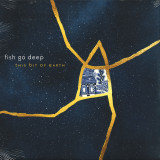
Greg Dowling and Shane Johnson return to the Go Deep label for their third album, ‘This Bit of Earth’. Beginning work in the relative normality of 2019 and finishing over the strange summer of 2020, the resulting music mirrors the thoughts that such upheaval brings out - our world and our place in it - while also functioning as a kind of travelogue of journeys past and planned, real and imaginary.
Mixing samples with modular synths, programmed drums with jazz loops, and quirky plugins with outboard gear, the album ranges far and wide while retaining a warm, natural core sound.
The title track opens proceedings on an ambiguous note. A simple double bass motif weaves around a misheard vocal sample, layers of piano and vibraphone take up the call, and the whole thing gradually spins off axis to a distorted, disjointed finish. ‘Suburban Key’ follows on a groove of busy drum work and deep sub bass, the stately piano and strings setting the stage for an undulating synth solo.
Further in, ‘Alice on Jupiter’ takes a deep breath and blends field recordings, gently swelling pads, modular bursts and a recurring picked melody.
‘Back Trace Dub’ strolls the imagined streets of Irish author Kevin Barry’s ‘City of Bohane’, noting the “taint of badness” in the air and revelling in the tense, dub-noir atmosphere. Later on, the spoken word intro of ‘I Could See’ expresses the dread of confinement and the relief and ecstasy of release, a theme the music reflects as it steadily builds to a joyful climax.
And closing the album on an optimistic note, the languid, emotional Culatra Ferry remembers better, beautiful days in the sun and looks hopefully forward to more.
“Highlights are the stunning sonics of Suburban Key, with its dusty groove and fast paced drums, stately piano, and cinematic strings reminiscent of a Four Hero orchestral masterpiece. High As Scaffold is full of warmth and soul and is yet another example of Fish Go Deep going even deeper into the dark blue waters of their brilliant musical minds.” Ban Ban Ton Ton review, Japan
“So good. Real beauty” Laurent Garnier, Radio FG, France
“Really liking this, would love to support on radio” Colleen 'Cosmo' Murphy, WorldwideFM, UK
“Lovely album” Osunlade, Yoruba Soul, US
“Very very nice album...love the new directions here” Charles Webster, Openlab, SA
“Absolutely beautiful piece of work” Darimont, RWAV, Germany
“A lovely LP of eclectic sounds” Jimpster, Freerange Records, UK
“Delightful album this. Very much appreciate the musicianship and we need that in the world right now as the commercial music world starts to fire up its nonsense for the new beginning” Vince Watson, Yoruba, Netherlands
“Such a fucking great body of work, and on par with ANY of the great albums I've listened to recently” Billy Scurry, Ireland
“There’s some REAL magic here. Possibly the deepest year from this duo” Charles Levine, Soul Clap, US
“A fabulous surprise. I'm sure if he were still alive Jose Padilla would have hailed this as his number one album of the year, it certainly is mine” Steve Miller, Afterlife, UK
“Great album... will play in next shows” Franck Roger, Real Tone, France
“Beautifully produced and great atmospherics” Ashley Beedle, Black Science Orchestra, UK
Radio and DJ support from Ron Trent, Hector Romero, Ame, Cian Ó Cíobháin, Bill Brewster, DJ Sprinkles, Harri, Honey Soundsystem, Alexkid, Moodymanc, Hifi Sean, Kassian, Freddie Garcia, 6th Borough Project, Stuart Patterson, Lars Behrenroth, Fred Everything, Mark Roberts, Cut n Shut, Will McGiven, Stefano Tucci, Tristan Jong, Matthias Schober, Trevor Fung, Ben Davis, Max P and more.
- A1: Seventh Mirror
- A2: Ionization
- A3: Cloud Chamber
- A4: Harmonic Oscillator
- A5: Transfiguration
- A6: Urzeit
- A7: Cybernetic Dreams
- B1: Interference
- B2: Computer Garden
- B3: Pyramid
- B4: Halide Crystals
- B5: Integratron
- B6: Imaginary Forces
- B7: Phantom Lfo
- B8: Opticks
- C1: Mannequin
- C2: Mind In Light
- C3: Palantir
- C4: Vertigo Of Flaws
- C5: Exit Syndrome
- C6: Stasi
- D1: Atomic Voyage
- D2: Ultraviolet
- D3: Violence Cascades
- D4: Traumsprache
- D5: Zeitgeber
- D6: Prism
- D7: Threnody
- D8: Mind Oscillation
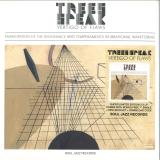
Trees Speak are back!
Speak’s new album, “Vertigo of Flaws: Emancipation of the Dissonance and Temperaments in
Irrational Waveforms” comes as a double-vinyl edition, single CD and digital release. The limitededition first pressing only of the vinyl includes a bonus 45 enclosed in an 8-page 7”x7” booklet
insert housed within the gatefold sleeve with cover artwork created by Soviet Union propaganda
artist Lazar Markovich Lissitzky in 1911.
Trees Speak are back!
This new release is a vast leap into an ocean of space and sound, a quantum leap into cybernetics, biology, anti-gravity,
time travel, dream speech and transfiguration. A seriously next step release!
Showing no signs of slowing down their rapid creative pace – incredibly this is their fourth album in the space of just over
one year – ‘Vertigo of Flaws’ is a mighty 29 tracks, one and a half hours of music across one double album that is surely
going to be a defining point in their musical career, a giant leap into the sonic unknown, an epic exploration of intensity
and sound.
Alongside their now trademark German krautrock motoric-beat rhythms, angular New York post-punk attitude, tripped-out
60s spy soundtrack, psyche-rock, and 70s synthesizers and vocoders, here you will also hear a new cosmic spacial
awareness (both personal inner space and galactic outer space) and a truly wilful pushing of sonic boundaries - as police
sirens, static noise, alarms, radio signals, avant-garde voices, and orchestral string quartets, all collide to add beautiful
dissonance to uber-powerful, intense, addictive and propulsive rhythms - in the process creating a truly unique
soundscape that Trees Speak have made wholly their own.
If you ever wanted to hear Can, Hawkwind, Destroy All Monsters, Pere Ubu, electric eels, John Cage, Liquid Liquid,
Tangerine Dream, Suicide, Neu!, Laurie Spiegel, Art Ensemble of Chicago, John Barry, Mother Mallard’s Portable
Masterpiece Company, Sun Ra, Stockhausen, John Carpenter, Electro-Acoustic and Musique Concrete and Mars in one
band - then this is it!
Trees Speak are Daniel Martin Diaz and Damian Diaz from Tucson, Arizona and their music often draws on the cosmic nighttime magic of Arizona’s natural desert landscapes. ‘Trees Speak’ relates to the idea of future technologies storing
information and data in trees and plants - using them as hard drives - and the idea that Trees communicate collectively.
Special guests from the hyper-creative hub of the Tucson music scene on this release are Gabriel Sullivan, Ben Nisbet, Saul
Millan, Stephani Guilmette, and Davis Jones.
The album Vertigo of Flaws was recorded in Brooklyn, New York, and Tucson, Arizona during the plague of 2021.
Extract from Vertigo of Flaws sleevenotes:
‘As we travel through space and time, avoiding the discarded remains of the industrial period, the
deconstruction of social norms through the expression of art, music, and philosophy guide the human
experience towards the unknown.
All that remains are musical echoes scattered throughout the universe, like ancient vibrations that now
populate the cosmos. These waves now show signs of decay. Melody, beauty, tonality have all but fallen
away as dissonance blossoms. As John Cage wrote in 1937,
“Whereas, in the past, the point of disagreement has been between dissonance and consonance, it will be,
in the immediate future, between noise and so-called musical sounds. New methods will be discovered,
bearing a definite relation to Schoenberg’s twelve-tone system and present methods of writing percussion
music and any other methods which are
free from the concept of a fundamental tone”.
Similarly, George Van Tassel claimed the Integratron as capable of
rejuvenation, anti-gravity, and time travel. So, what remains of the
“people”? We have adopted from them our own Zeitgeber: their pulses
now guide our sun, our planets, our earths, and are the new circadian,
diurnal, and ultradian rhythms of the galaxy. Traumsprache, dream
speech, is now the internal language of trees.
Decaying metal and machines liberated the note unto nature’s table,
and we sip the delicious nectar of music once more irrational, elaborate,
violent, vast. The past is the future, musical disintegration its own rebirth.
We are nature, once more the computer of the Universe.’
Ltd to 100 copies
Presented in a double vinyl gatefold edition with two beautiful paintings by Tenerife painter Sema Castro.
For fans of Sun Ra, Alice Coltrane and every single mystic brother and sister carrying the free spiritual jazz torch! Dive DEEP!
Spectacular mystical jazz infused psychedelics from Canary Islands’ cult band GAF.
Using a series of different add-ons to their (already obscure) band acronym GAF (Grifa Ambient Factory) such as Love Supreme Arkestra or GAF & La Estrela de la Muerte amongst a few, the Tenerife based band illustrate clearly what mutation or influence they’re feeding through (their mind) by the judicious use of these referential add-ons. Rotating around the vision of local lynchpin, Mladen Kurajica aka Bonni, Keroxen label head, festival organizer, producer and musician with numerous projects including helming the GAF outfit. The Love Supreme Arkestra variation here being the more Coltrane leaning (Alice rather than John) and Sun Ra- esque influenced thematic of the 6 piece band. Over a series of 7 huge sounding themes, we can hear twirling saxophones, trumpets, marimbas, modulars and rhythmic sections intertwining like flying spiral snakes over a burning sea of lava.
Recorded live and freely over a completely improvised jam session on a sunny afternoon in the mountainous region of La Esperanza in Tenerife, the band lets rip free of any previous albums particular sound choosing instead to purge into a world of musical liberation by embracing the aforementioned pioneers of the genre whilst unconsciously absorbing in their surroundings - as an additional inspiration for musical freedom.
The result really shines through its 74 mins of mind blowing adventurous music. A journey to the peaks of the Teide Volcano and down the green valleys, into the blue and black volcanic coasts of liberation!
- A1: La Justicia - Guaguanco Coroco
- A2: Ebirac All-Stars Featuring La Calandria & Ramito - Plena Matrimonial-Contraversia
- A3: La Justicia - Las Frutas Del Pais
- A4: Tipica Leal ‘79 - Donde Estabas
- B1: Juventud Tipica ‘78 - Ano Nuevo Y Reyes
- B2: La Solucion - A Bailar Son Montuno
- B3: La Justicia - Alegre Hibarito
- B4: Under The Sun Orchestra - Under The Sun (Instrumental Theme)
Far from the twin epicenters of New York and Miami, Carlos Ruiz and his Ebirac label were both feeling and generating the aftershocks of the mid-’70s salsa boom. Holed up in their own bustling Puerto Rican community center on Chicago’s west side, these third coast salseros plied their trade outside the hot lights, cutting their teeth in city parks, VFW halls, and Holiday Inn rec rooms. Nearly 50 records survive in the wake of orquestas La Justicia, La Solucion, and Tipica Leal ’79, the most impassioned, singular moments of which are compiled here.
- A1: La Justicia - Guaguanco Coroco
- A2: Ebirac All-Stars - Plena Matrimonial-Contraversia (Feat La Calandria & Ramito)
- A3: La Justicia - La Frutas Del Pais
- A4: Tipica Leal '79 - Donde Estabas
- B1: Juventud Tipica '78 - Ano Nuevo Y Reyes
- B2: La Solucion - A Bailar Son Montuno
- B3: La Justicia - Alegre Hibarito
- B4: Under The Sun Orchestra - Under The Sun (Instrumental Theme)
Far from the twin epicenters of New York and Miami, Carlos Ruiz and his Ebirac label were both feeling and generating the aftershocks of the mid-'70s salsa boom. Holed up in their own bustling Puerto Rican community center on Chicago's west side, these third coast salseros plied their trade outside the hot lights, cutting their teeth in city parks, VFW halls, and Holiday Inn rec rooms. Nearly 50 records survive in the wake of orquestas La Justicia, La Solucion, and Tipica Leal '79, the most impassioned, singular moments of which are compiled here.
Penguin Cafe's A Matter of Life album is 10 years old in 2022 so gets this loving assembled anniversary reissue on clear wax via Erased Tapes. This was their debut album after the band was formed by composer Arthur Jeffes to commemorate his late father's own avant-pop project, Penguin Cafe Orchestra. It has been remastered for this edition and has an all new recording of the lead single 'Harry Piers.' It is a joyous record that is run through with British charm and pastoral feels. Tracks like 'Finland' are beautifully melancholic.
- A1: Wham! - Wake Me Up Before You Go-Go
- A2: Huey Lewis And The News - Stuck With You
- A3: Bryan Ferry - Slave To Love
- A4: Frankie Goes To Hollywood - Relax
- A5: Pat Benatar - Love Is A Battlefield
- A6: China Crisis - Wishful Thinking
- B1: Duran Duran - Hungry Like The Wolf
- B2: Orchestral Manoeuvres In The Dark - (Forever) Live And Die
- B3: Thompson Twins - Hold Me Now
- B4: Nik Kershaw - I Won’t Let The Sun Go Down On Me
- B5: Level 42 - Take A Look
- B6: A-Ha - The Sun Always Shines On Tv
- C1: Simple Minds - Sanctify Yourself
- C2: Culture Club - The War Song
- C3: Propaganda - P: Machinery
- C4: Robert Palmer - Pride
- C5: Paul Young - Tomb Of Memories
- C6: The Christians - Forgotten Town
- D1: The Cure - In Between Days
- D2: Julian Lennon - Too Late For Goodbyes
- D3: Abc - When Smokey Sings
- D4: The Human League - (Keep Feeling) Fascination
- D5: Ub40 - If It Happens Again
- D6: Karel Fialka - Hey Matthew
- D7: Curiosity Killed The Cat - Down To Earth
The Decades Collected compilations are part of the new Collected compilation series, which is a collaboration between Universal Music and Music On Vinyl. The compilations bring together the biggest names of each decade, combined with forgotten hits and less discovered gems, giving the listener an experience of listening to their favourite tunes while uncovering new musical grounds at the same time.
Various Artists - Eighties Collected features original hits like Wham! “Wake Me Up Before You Go-Go”, Duran Duran “Hungry Like A Wolf”, A-HA “The Sun Always Shines On TV”, The Cure “In Between Days”, Pat Benatar “Love Is A Batteflield”, Culture Club “The War Song”, Robert Palmer “Pride”, Frankie Goes To Hollywood “Relax”, Simple Minds “Sanctify Yourself”, ABC “When Smokey Sings”, The Human League “(Keep Feeling) Fascination”, UB40 “If It Happens Again” and many more.
Ferocious JP / US free jazz bomb. A rare meeting between the NYC free jazz scene and the Japanese free music scene. Old-style Gatefold LP, with rare photographs & liner notes by Alan Cummings.
Following hot on the heels of the first, mid-sixties generation of Japanese free jazz players like Kaoru Abe, Masayuki Takayanagi, Yōsuke Yamashita, Motoharu Yoshizawa, etc., an exciting second wave of younger players began to emerge in the seventies. Two of its leading members were the saxophonist Kazutoki Umezu and multi-instrumentalist Yoriyuki Harada. Both were post-war babies and immigrants to the city, Umezu from Sendai in the north and Harada from Shimane in the west. They first met as students in the clarinet department at the Kunitachi College of Music, a well-known conservatory in western Tokyo. Harada was already securing sideman gigs on bass with professional jazz groups and was active in student politics, making good use of his connections to set up jazz concerts on campus. It was around this time that the two began to play together in an improvised duo, with Umezu on clarinet and bass clarinet and Harada on piano. They also experimented with graphic scores and prepared piano.
These experiments eventually led to the creation of a trio, with a high-school student called Tetsuya Morimura on drums, that they decided to name Seikatsu Kōjyō Iinkai (Lifestyle Improvement Committee) in joking reference to the Marxist discourse of the student radicals of the time. Around 1973, Umezu and Harada decided to call it a day and go their separate ways. Umezu began playing with the Toshinori Kondo Unit and Harada with the Tadashi Yoshida Quintet. In 1974 Harada formed his own trio and began to play at jazz coffeehouses across Japan.
Then, in September 1974 Umezu travelled alone to New York, where he set about building connections with the loft jazz scene in the city. It was a fortuitous moment to arrive in New York. Rents were cheap in the Lower East Side, possibilities for squatting existed, so many musicians and artists had moved to the area. Umezu soon became known on the scene as Kappo and he started to make connections with some of the young musicians like David Murray, Arthur Blythe, and Oliver Lake. He recalls making the rounds of the lofts every evening, checking out the performances, and getting the chance to sit in with many groups including Juma Sultan’s Aboriginal Music Society and trumpeter Ted Daniel’s orchestra.
Things were going so well that Umezu wrote to Harada and invited him to come to New York. He accepted and arrived in the city in July 1975. Harada and Umezu took the opportunity to resume their artistic collaboration. Their first concert together in over two years took place on July 20th at another loft, Sunrise Studios at 122 2nd Avenue. Umezu remembers Sunrise as an unusually sunny loft with the rarest of things, a grand piano. He invited along Ahmed Abdullah, a trumpeter he had got to know while playing with Ted Daniel. Abdullah led his own group and was a long-term Sun Ra sideman. William Parker, one of the key figures in the loft jazz scene of the period, was on bass. Abdullah also brought along Rashid Sinan on drums. Sinan drummed in Abdullah’s units throughout the seventies, but he had also played on Frank Lowe’s immortal Black Beings album and collaborated with Arthur Doyle, playing on Doyle’s Alabama Feeling album. By all accounts the evening was a huge success, with speed and dynamism of Harada’s piano playing gaining him lots of support.
Since they had managed to save some money from their day jobs, Umezu and Harada decided to set up a recording session with the same line-up on August 11 at Studio We, where there was a well-equipped studio on the third floor. Umezu recalls the session as follows, Of course, we recorded our performances in one take, with zero retakes as far as I remember. On all the tracks we recorded, we moved as one unit, sharp and fast. That was the nature of Lifestyle Improvement Committee, New York Branch.
Umezu and Harada would later become known for the elements of parody and entertainment that they brought to their music, a freewheeling blend of pastiche, humour and on-stage performativity that paralleled the approaches of the Art Ensemble, Sun Ra, and Holland’s ICP. But here, on their first recordings, the humour element is not yet present. Instead, there is a febrile sense of joy in creation and connection. On the Umezu-penned “Kim”, for example, Harada opens the piece with a speedy exploration of the full-range of the keyboard, hitting hard on the bass keys to create a rhythmic bed out of which patterns begin to emerge. Umezu enters at a much slower pace, longer held notes that at first float weightlessly over the urgency of the piano before they begin in splinter and accelerate. When Parker and Sinan kick in, it’s a rollicking tempo with Parker plucking deep and hard and the left-handed Sinan skittering hard across the topside of his kit. Abdullah kicks in a glorious solo twelve minutes in, bright and breathy at once. The piece slows and grows more spacious towards the end, giving Parker a chance to showcase some arco work that shades beautifully into the air against Abdullah’s trumpet.
The rerelease of Je Dis Oui on vinyl from Pink Martini. The album features 15 new tracks and includes guest appearances from ARI SHAPIRO, IKRAM GOLDMAN, KATHLEEN SAADAT AND RUFUS WAINWRIGHT “Pink Martini is a rollicking around the world music adventure…if the United Nations had a house band in 1962, hopefully we’d be that band.”—Thomas M. Lauderdale, The album features bandleader Thomas Lauderdale and his “little orchestra,” as well as lead singers China Forbes and Storm Large. “Je dis oui!” is Pink Martini’s ninth studio album; the album features three original songs co--‐written by Thomas Lauderdale. The album also features a stunning version of the classic “Blue Moon” by Rufus Wainwright, “Finnisma Di”, a new Arabic version of the band’s early hit “La soledad” sung by NPR’s Ari Shapiro, and songs in English, French, Arabic, Farsi, Portuguese, Turkish, and the band’s first forays into Armenian and Xhosa. Pink Martini have now sold over 3 million albums worldwide.
Penguin Cafe's A Matter of Life album is 10 years old in 2022 so gets this loving assembled anniversary reissue on clear wax via Erased Tapes. This was their debut album after the band was formed by composer Arthur Jeffes to commemorate his late father's own avant-pop project, Penguin Cafe Orchestra. It has been remastered for this edition and has an all new recording of the lead single 'Harry Piers.' It is a joyous record that is run through with British charm and pastoral feels. Tracks like 'Finland' are beautifully melancholic.
Highly acclaimed guitarist Philipp van Endert played and produced on
"Moon Balloon" the largest and most complex music project that he has been able to record with in his music career so far
Combined with the renowned Filmorchester Babelsberg he recorded an outstanding and unique album featuring his original tunes that combine Jazz, Classic and Film music. Philipps compositions were arranged by Peter Hinderthür and the live performance at Filmstudios Babelsberg was conducted by Jörg Achim Keller (BBC Concert Orchestra, Metropole Orkest, HR BigBand, WDR BigBand a.o.)
A cold wind blows while a disembodied drum marches in distance, diving slowly into an orchestra warm-up that ends with a bang: Marmo Music welcomes back Massimo Pegoraro, aka Modus, this time with a special tape release that carries genuinely shaped musical fantasies by the enigmatic electronic music composer and DJ from Genova. Each tune brings a new shade of his polychrome musical universe. He wrote a library music leaning ode to Moondog, recalls forgotten WW1 battles with longing choirs’ chanting along a minimal droning dream house Cello tone, and drops a melancholic fairytale that pits footage of kids laughing at a street market against Fellini-Score spinet melodies. Three of 14 mesmerizing, profoundly written pieces of music, that tell multi-layered contes with Synth reverberations, jazz ambiances, experimental Brit pop sonics, and a sundry range of field recordings. Together they build an enthralling story arc, that displays the open-minded spheres of the broad musical cosmos of Modus. To open the doors to his universe extensive, he additionally wrote some author’s notes for each single composition, that evoke vibrant images on his inspirations and their sounding outcome. Check the spell below while listening to intensely produced explorer music, that brings you obscure ideas from afar who express all the many subtle spirits of Modus.
Mura were a previously little-known group from Japan, formed by friends Kota Inukai (vocals, guitar), Masaki Endo (bass) and Sho Shibata (drums) in the late noughties. Performing mostly in small events in Sapporo, they were outsiders, and felt a kinship with few other groups, though Inukai mentions rock group Green Apple Quick Step, and hardcore band Ababazure as fellow travellers. This isolation surely feeds into the uniqueness of Mura’s music – they sound little like much that we know of the taggable Japanese underground of their times, and the music they recorded for this, their debut album, spanning a decade, is gloriously all over the shop, from delirious punk wig-outs to strange pop miniatures.
The group formed young – Inukai was only fourteen when they started, and Mura were his first ever band. When pressed on what they were listening to while making their music, Inukai recalls that he “used to listen to the works of Haruomi Hosono a lot”, and you can hear traces of this, perhaps, in the breadth of the sound Mura explores, from the lovely, country-esque shuffle of “In The Talk”, through the garage-y plunk of “Rest” and the reflective, melancholy “Younger Brother”. They were also big fans of video game music – “even orchestral covers of video games”, Inukai smiles – and that’s in there, too, in the split-second responsiveness of the playing, the way they flick through ideas and genres almost impatiently, taking minutes to cover terrain that other groups might spend albums and years exploring.
But the songs were also grounded in Japan’s history, with many of the songs inspired by “old Hokkaidō,” Inukai recalls, “from the Meiji, Taishō, Shōwa periods.” With Inukai coming up with the melodies, and Shibata fleshing out arrangements, all three members then contributed lyrics. You can hear that collective effort in the way the music moves, every player listening carefully to each other, the songs moving gracefully, but not without verve and vim. It’s a delightful album, full of pop songs that take unexpected turns, with glinting melodies sung out, here sweetly, there with gruff candour, guitars tangling together like an unholy union of Tom Verlaine and Jad Fair, every song charged with a new, unpredictable spirit.
3x12"
Extraordinary musical talent returns with a deeply textured third outing on Blu Mar Ten Music.
Having made serious waves with the release of his debut album "Coeur Calme" in 2014 and the incredible 2016 follow up album "Zawadi", Kimyan Law steers his sound in a darker, more introspective direction with the twelve heavily themed set-pieces of his new album, "Yonda".
The album title, "Yonda", homophonically flits between a location in Kimyan Law's native Congo and definitions of something situated at a distance but still visible, foreshadowing the artist's move away from his typical uplifting palette into less playful territory.
While previous work seemed to be a personal exploration of joy-tinged melancholy, "Yonda", feels much more sober and pensive, infected with external events. In conversation with Kimyan Law the artist described one piece ("Krieg") as his "portrait of war", with the music moving through phases of violence, silence, panic, redemption and peace. Ever the allegorist, Kimyan Law relates themes of conflict and war not just to obvious geopolitics but also to his own physical struggles, and even an obsessive battle with the music itself, ("Yonda" has been more than three years in the making). In 2017 the artist wrote, "I've reached a point where I couldn't sleep because it bothered me so much... I have found myself unable to make any music except for Krieg".
An accomplished drummer in his own right, Kimyan Law's intricate rhythmic sensibility is the lifeblood that runs throughout the album, incorporating ever more outlandish sources of percussion recorded from his natural surroundings and filtered through technology.
"Yonda's opener, "Jaardin", is deceptively gentle, with off-kilter rhythms and pianos providing fertile ground for Elyn's delicate singing before the whole piece careens off into what can only be described as orchestral proto-jungle territory. It soon becomes apparent that this placid introduction is misleading, with subsequent tracks fluctuating between pounding tribal beats ("Arboreal Epitone" / "Kin"), chilling orchestration ("Byo" / "Krieg") and rehabilitated jungle forms ("Seven Ant Foley"). A constant mix of light and dark, futuristic yet primitive atmosphere hangs over the album, with waves of luscious synths and deeply musical string arrangements lovingly cloaked over the razor-sharp drum work.
Unusual conceptual themes litter "Yonda"; "Dor Rhythm" is about a Dung Beetle's journey, "Lampion" is about paper lanterns, "Nova" is about plant growth while "Kilele" is a song about peace, featuring Kimyan Law's own vocals in a new language he created himself, conjuring memories of Cocteau Twin's Liz Fraser.
While "Yonda" contains moments of incontestable beauty it can often be a difficult listen, an illustration of an anxious mind yearning for peace. An obsessive and intricate musician, Kimyan Law's use of African percussion, finely honed polyrhythmic patterns and celestial sprinklings of keys melded with slabs of sub-bass power and sheer energy makes for an intoxicating listen. As ever, Kimyan Law has delivered a profoundly serious piece of work that expands the vocabulary of his genre. Despite the darkness saturating the work, a soft light still breaks through the window. It is the east, and Kimyan Law is the sun.
- A1: Starsailor - All Or Nothing
- A2: Feeder - The Power Of Love
- A3: Sugababes - Killer
- A4: Muse - House Of The Rising Sun
- B1: Stereophonics - Nothing Compares 2 U
- B2: Faithless & Dido - Dub Be Good To Me
- B3: Oasis - Merry Xmas Everybody
- B4: Elbow - Something In The Air
- C1: The Reelists - Back To Life (However Do You Want Me) (However Do You Want Me)
- C2: Manic Street Preachers - Out Of Time
- C3: Badly Drawn Boy & Jools Holland & His Rhythm & Blues Orchestra - Come On Eileen
- C4: Prodigy - Ghost Town
- D1: Jimmy Eat World - Firestarter
- D2: Darius - Pretty Flamingos
- D3: More Fire Crew - Dreams (Feat Gabrielle)
- D4: Mcalmont & Butler - Back For Good
Originally released in 2002 in partnership with NME to celebrate their 50th anniversary and 50 years since NME printed the first ever singles chart in the UK. 1 Love saw the cream of British artists come together to pick their favourite number one to cover. Having appeared on the 1995 HELP album, Oasis continued their support of War Child with an acoustic rendition of Slade’s Christmas classic ‘Merry Xmas Everybody’. Stereophonics chose ‘Nothing Compares 2 U’ with Kelly Jones’s gravelly vocal complementing this stripped back version of the track written by Prince, performed by The Family and taken to number one by Sinead O’Connor in 1990.
Reissue of the Count Basie Orchestra's 1970 album 'High Voltage',
arranged by Chico O'Farrill and featuring Eddie "Lockjaw" Davis, Cecil
Payne, Joe Newman, Freddie Green and Harold Jones among others
When in January, 1970 Count Basie entered the studio with his 17-piece big band
to record 'High Voltage', he ushered in the last full decade as bandleader of his
Orchestra. The Orchestra had left its imprint on the sixties by recording with the
likes of Frank Sinatra and Ella Fitzgerald. There would be more great albums with
star vocalists in the seventies, but the band's purely instrumental works, which
had begun in 1965, would also continue. Back then Basie had engaged acclaimed
Cuban composer/arranger Chico O'Farrill to arrange the music for such concept
albums as "Basie Meets Bond" and "Basie's Beatle Bag", transforming them into
crossover gems.
On 'High Voltage' O'Farrill demonstrates his affinity to Basie's big band sound, this
time with a repertoire of standards. For this album, Basie specifically chose
pieces the band had never recorded in their more than 30-year existence. This is
saying something, since the band covers such an impressive span of jazz history,
from the beginning of the swing era to the bop-influenced bands of the 50's on
through to the present album.
The Count's new drummer Harold Jones propels Fred Fisher's "Chicago" with a
tremendous drive. The Rogers and Hart classic "Have You Met Miss Jones"
features beguilingly dense deep- register horn lines and an almost languorous
piano, and Eric Dixon's tasty flute solo spices up "The Lady Is A Tramp". With its
smoky sophistication, Eddie Lockjaw Davis' Tenor dominates "Bewitched",
whereas guest trumpeter Joe Newman's muted tongue-in-cheek solo highlights
"Day In Day Out". Of course, Basie himself also steps forward: for instance, on the
Fats Waller-like intro to "I'm Getting Sentimental Over You", and with the playful
grace notes on "If I Were A Bell"." Reminiscent of the Las Vegas shows the band
performed with Frank Sinatra, "Get Me To The Church On Time" is also a
masterful dialogue between the horn sections.
Back in stock !
There is geological time and deep-space time. The natural world's time, and quantum time. Humans started measuring time with the stars and seasons. Then came hourglasses and sundials. The first mechanical clocks weren't in Europe until the late 13th century. Then came industrial time, a wristwatch for all and then everything had a time. A time for everything. All feeding into our recently digitised time and its marching nanoseconds. Let us not forget however another way to measure time: That would be K&D time.
Yes, you can rush, but isn't it so much nicer to amble? This onception of time may well have its roots in those smoke mists, softly blowing through the pre-history of 1995, and if that was time - then we need space. In particular, one Viennese front room that has turned its bass bins out to the cosmos. That sweet smoke, shrouding the desk and sampler. A few old keyboards (as a friend skins up at the back) unnoticed on the couch - just passing through...
Those days of K&D time had been thought to have gone. But one of times tricks is to hide itself in music. Not long ago (after a box of DATs had been found, and a DAT player prised back into service) back through the music wormhole our heroes fell into that smoke laden room of 1995. The remix time hadn't arrived nor the intense touring schedule. It was before the K&D sessions release and all that came with it, before the solo projects of the Peace Orchestra and Tosca. This was a time before all of that. A time for literally living in the studio and experiencing the joy of creating tune after tune. Just the sound and the smoke and no boundaries.
It was before people started asking about when the album was coming out. Which developed its own time specific answers. The 90s answer was soon, 00s answer was not sure and then: never! from 2010 onwards. The truth was, an album had been finished by the spring of '95 and all recorded onto DAT and placed in a box. K&D pressed up 10 copies and gave 4 away to some suitably eccentric individuals. Then the room's doors opened and in a tremendously big cloud of smoke time rushed in, K&D rushed out, and the years went rolling by. The days got filled with remixes, touring and life.
Then in early 2020 that chance moving of a box at the back of a room exposed the DATs and their time transporting properties. As K&D went through them they ended up comfortable and back in the room and that wonderful haze of 1995. The music was transferred from the DATs and K&D painstakingly rebuilt every molecule that made up the original 10 copies. From the very first takes of the mixes printed onto tape, to the solid slab of black virgin vinyl, to the abused by many plays, white cover. Even down to the labels that says "'Unverkäufliche Musterplatte" (Testpressing - Not For Sale) in rather rude German.
It now looks, feels and sounds pretty much exactly the same as those original 10 copies did in 1995. The only thing that couldn't be don is the original clouds of smoke those 10 copies were bathed in. That will be left to the listener to wrap it in the fresh harvest of 2020. In one way it's a musical time warp space travel. In another, if the music becomes classic and timeless, then it's of its time, whatever the time. So as the rooms bass bins are once again turned out towards the cosmos, K&D are happy and proud to release what they thought were lost moments. Drop through the worm hole, take your place on the couch. The friend who is skinning up, always just passing through, listening to an album for the future called 1995. It all makes sense if you measure in K&D time.