Almighty duo Hyperculte strikes back with a tremendous third album, La Pangée. More than a band, Hyperculte is a superband (!) reuniting two figures of the Geneva subculture scene: Vincent Bertholet (Orchestre Tout Puissant Marcel Duchamp) and Simone Aubert (Tout Bleu, Massicot). If you"re not familiar with the band expect some angry krautrock, high-energy post-punk and etheric voices.
Поиск:super mal
Все
Malian and French pairing Siraba return to Secret Teachings with a third superb single, ‘Nase’, from their forthcoming debut album, accompanied by US talent Joeski on remix duties.
Malian hunter Boubacar Samake and Damien Vandesande, one half of the French electronic band dOP, use their Siraba project to bring the traditional sound of the Wassoulou - a river valley of West Africa - to the electronic world. They have been friends for 20 years and look to fuse Mali’s rich musical traditions with cutting-edge electronic music, always with an underlying message of love and respect for all. Their stunning work has found a perfect home on Damian Lazarus’ Secret Teachings imprint, a left-of-centre and experimental alternative to his club-focussed Crosstown Rebels, and the pair return in excellent fashion once again to drop the penultimate single ahead of their debut album release.
Joining the package is US house legend Joeski, whose roots in the scene date back to the early 90s. A founding member of The Chocolate Factory DJ collective, he has been a vital part of the scene ever since with releases on Crosstown Rebels, Relief and an array of other heavyweight labels. His sympathetic remix elongates the groove into immersive, deep house sounds richly layered with elegant synths and soul-rousing chords that are delicate yet impactful.
Clear Marbled Vinyl[23,74 €]
To celebrate the 10th Anniversary of Major Arcana, Speedy Ortiz will release a remastered edition, on Carpark Records.
On their debut full-length, Western Massachusetts' Speedy Ortiz manages a bit of magic by conjuring the spirits of classic American indie rock, while twisting those ghosts into new shapes. It's easy to hear the influences of Helium, Jawbox, and Chavez on this album, as well as nods to their contemporaries including Grass is Green, Pile, and Roomrunner. Sweet vocal harmonies run up against gnarly distortion, aided by basic, chunky bass parts and heavy, fill-laden drums.
The album was recorded in a few days in November at Justin Pizzoferrato's (Dinosaur Jr., Chelsea Light Moving) studio, Sonelab, a huge space in an old factory in Easthampton, Mass. The sessions went from very early in the day until very late at night, with the band taking its time to experiment. Pizzoferrato's collection of old distortion pedals were utilized on both the record's guitars and vocals.
The theme of the occult and the supernatural runs deep through Major Arcana, inspired by singer-guitarist Sadie Dupuis' reading on black magic. Dupuis' sometimes knotty and abstract lyrics bring to mind fellow wordsmith Stephen Malkmus, while referencing horror film tropes, chemistry, and neuroscience. Major Arcana's literal translation is 'major mysteries,' a phrase from tarot cards. 'I don't write in a narrative way and am more concerned with use of language than meaning,' Dupuis says, 'so I like the open-endedness of the title and the way it invites interpretation.'
After too much time freelance writing and watching re-runs in a windowless Brooklyn basement, guitarist and songwriter Sadie Dupuis left New York City for the wilds of Northampton, MA in order to pursue a master's degree in poetry. In doing so, she began Speedy Ortiz, a self-recorded lo-fi project named after a minor character from the Love and Rockets comic series. Speedy Ortiz soon became something else entirely as bassist Darl Ferm, guitarist Matt Robidoux, and drummer Mike Falcone teamed up to form a full band, balancing abrasive noise with infectious earworms. The newly minted Speedy Ortiz quickly found an audience in the Boston DIY scene, playing frequently with their friends Pile, Grass is Green, Fat History Month, Sneeze, Krill, and Arvid Noe.
Almost immediately, the band recorded a two-song single, 'Taylor Swift' and 'Swim Fan,' with Paul Q. Kolderie (Pixies, Hole) and Justin Pizzoferrato (Chelsea Light Moving, Dinosaur Jr.), and self-released it in March of 2012. Shortly thereafter they spent a few weekends at the dingy yet atmospheric Sex Dungeon Studios in Philadelphia recording the Sports EP, a five-track, loosely conceptual 10' released that June on Exploding in Sound Records.
The creation of Major Arcana, their full-length debut, marks the evolution of Speedy Ortiz into a wholly collaborative effort. Darl leans toward basic, chunky parts, while Mike, a talented songwriter in his own right, helped arrange while also providing aggressive, boisterous drums. And Matt is a classically trained guitarist, but his experience in noise and experimental music comes through in his anti-melodic guitar solos, which counterbalance Sadie's angular, scalar guitar riffs and poppy vocals.
The end result is a band able to distill their influences and creative impulses into something at once dissonant and melodic, noisy yet undeniably pop.
TEMIC haben gerade mal ein Album aufgenommen, aber um an diesen Punkt zu gelangen, musste diese Supergruppe durch ein ziemliches Karrierelabyrinth navigieren. Die Jungs haben bereits mit Devin Townsend, Mike Portnoy's Shattered Fortress, Neal Morse, SHINING und Maraton gespielt. Aber erst als die Welt im Jahr 2020 stillstand, kamen Keyboarder Diego Tejedia und Gitarrist Eric Gillette dazu, gemeinsam eine Band zu gründen.
Ihre Idee war nicht gerade einfach: ihre Vorliebe für energiegeladene Electronica und Killer-Melodien in einer modernen Prog-Metal-Band zu orchestrieren. Aber mit der Verpflichtung von Sänger Fredrik Klemp und Simen Sandnes am Schlagzeug haben Temic es geschafft, dieses Konzept zu verwirklichen. Terror Management Theory" ist voller Wendungen und Überraschungen. "Count Your Losses" zermalmt tonnenweise Tech-Riffs, während "Falling Away" in ein schwarzes Loch aus sternenklaren Synthies abdriftet. Am Ende dieses labyrinthischen Albums steht "Mothalah", ein siebenminütiges Epos, das -angeführt von einem heroischen Falsett - nie aufhört, nach dem Himmel zu greifen.
TEMIC haben gerade mal ein Album aufgenommen, aber um an diesen Punkt zu gelangen, musste diese Supergruppe durch ein ziemliches Karrierelabyrinth navigieren. Die Jungs haben bereits mit Devin Townsend, Mike Portnoy's Shattered Fortress, Neal Morse, SHINING und Maraton gespielt. Aber erst als die Welt im Jahr 2020 stillstand, kamen Keyboarder Diego Tejedia und Gitarrist Eric Gillette dazu, gemeinsam eine Band zu gründen.
Ihre Idee war nicht gerade einfach: ihre Vorliebe für energiegeladene Electronica und Killer-Melodien in einer modernen Prog-Metal-Band zu orchestrieren. Aber mit der Verpflichtung von Sänger Fredrik Klemp und Simen Sandnes am Schlagzeug haben Temic es geschafft, dieses Konzept zu verwirklichen. Terror Management Theory" ist voller Wendungen und Überraschungen. "Count Your Losses" zermalmt tonnenweise Tech-Riffs, während "Falling Away" in ein schwarzes Loch aus sternenklaren Synthies abdriftet. Am Ende dieses labyrinthischen Albums steht "Mothalah", ein siebenminütiges Epos, das -angeführt von einem heroischen Falsett - nie aufhört, nach dem Himmel zu greifen.
Most of Gen X-ers who grew up in the mid-1980s Indonesia must have seen Soedjarwoto Soemarsono, known with his nom de guerre “Gombloh” performing on a state-run television station, playing some of his biggest hits from that era, pop gems like “Kugadaikan Cintaku (I Pawn Off My Love)”, “Setengah Gila (Half-Crazy).”
But of course, it is not fair to judge Gombloh only from these hits. Dig deeper and you will find buried treasure in his early stuff from Indra Records, and there are many of them.
His album with the band Lemon Tree’s Anno ‘69 (yes, that’s the name of the band) is all remarkable, but what he did for Chandra Records was no less spectacular. How can you go wrong with songs like “Kebyar-Kebyar”, the unofficial national anthem for Indonesia, dan “Berita Cuaca” one of the better epic songs in a catalogue full of epochal songs? These were all long out of print and in our journey to source the original master for these albums we met Bob Djumara of Nirwana Records, the Surabaya, East Java-based label which broke Gombloh into the mainstream in the mid-1980s. Almost all albums Gombloh recorded for his early labels, Indra Records and Chandra Records were critically acclaimed, but commercially they bombed, big time. Nirwana Records came up with an ingenious plan. What if they recorded Gombloh performing live and release it as is. After all, the first song in Gombloh debut record Nadia & Atmospheer is him strumming on his guitar backed by the cheering of a crowd, who could be heard going wild when he hurled that epithet “bastard” at the end of the song
The end result is a brilliant recording which despite being recorded live the sound quality so pristine leading many to doubt the claim of being live. Regardless, Nirwana shipped a decent number of units and Gombloh could buy his first car, a Katana Jeep, with money from the royalty.
One of the best things about Live Gila is its perfect sequencing, beginning with Gombloh’s social commentary on the rich’s debauched lifestyle of preying on young boys and girls, one of the most popular subjects allowed by the censoring machine of the New Order authoritarian government. The second song “Untuk Persada” is a soaring ode to the nation. For this song, Gombloh could be heard drawing his inspiration from The Police, which was undoubtedly popular in the early 1980s, even in a faraway port city like Surabaya.
Listening to this record as a whole (we omitted the last song from the original master tape “Bagimu Negeri” which sounds too jingoistic), we could not help but point to some of similarities it has with Bob Dylan’s Blood on the Tracks. Not a single composition in this record sound indigenous (the Malay-influenced rock of Panbers or Koes Plus come to mind); they all sound modern and effortlessly catchy, and had it not been for the language, this album could be mistaken for a musical output from someone growing up in Laurel Canyon or Southern France.
There are only limited copies of vinyl records in the second-hand market today available for Gombloh music, if at all. For his ardent fans, they have to scavenge for old cassettes to continue to be able to enjoy his music and have to pay top dollar for that. In Indonesia, where he was a superstar in the early 1980s, Gombloh was largely forgotten. With this project, we can only hope that the time is ripe for Gombloh to reemerge and now, more than ever, his music could speak to a bigger audience.
In late 2021 the JUBG gallery (run by Magazine's Jens-Uwe Beyer alongside Albert Oehlen and Alexander Warhus) showed the German brothers Schaufler. Matthias, a painter, and Aksel, a musician and DJ (Superpitcher), came up with an exhibition soundtrack that was released back then as one half of an ultra rare drawing / vinyl combination only. (https://jubg.space/editions)
Subsequently, the music caught Barnt's and Crato's ears. The bittersweet pulsating ode to being an artist, sprawling and boundless, complete with voices from the sky, seemed perfect for our label. We are happy to announce that the regular release of schaufler vs schaufler part 1 & 2 will indeed come out on Magazine now.
„Gut malen kann jeder Depp.“
Favourite Artists, DJ Koze, Robag Wruhme, Superpitcher etc.
Introducing the 2nd Volume of Super Biton of Segou’s Afro.Jazz.Folk collection, led by Malian conductor Amadou Bah, also known as “The Armstrong Malian”.
Deviation Records is thrilled to present this collaboration with The Mieruba Label Team, showcasing the diverse musical roots of 1970s Mali, combining Afro-Latin percussion, Mandingo songs, jazzy brass, and funky guitar. The album also features the captivating ArtCollage of Emma Margo incorporating visuals of Segou, Mieruba Art Center, and Françoise Huguier.
The graphic design is conceived by Les Mouches Graphic Design, with a selective varnish made from traditional Bogolan fabric of the Segou area. The audio was remastered by Raphael Jonin and cut by MB Mastering Studio in Aubervilliers.
Get ready for a full sensory experience!
We're super happy to announce our 13th release by Sharhabil Ahmed, the actual King of Sudanese Jazz (he actually won that title in a competition in the early 1970s). Sonically it sounds very different from what Jazz is understood to sound like outside of Sudan. It’s an incredible unique mix of rock’n’roll, funk, surf, traditional sudanese music and influences from Congolese sounds. Original copies of Sharhabil recordings are often hard to find, so we’re happy they will now be widely available. “Argos Farfish” which was featured on our last comp amassed close to 400.000 plays already.
- A1: Future Rent Money 04:26:00
- A2: Future Good Dope 02:53:00
- A3: Future Zoom 04:39:00
- A4: Future Draco 03:45:00
- A5: Future Super Trapper 03:50:00
- B1: Future Poa 04:09:00
- B2: Future Mask Off 03:24:00
- B3: Future High Demand 03:33:00
- B4: Future Outta Time 02:49:00
- B5: Future Scrape 03:37:00
- C1: Future I'm So Groovy 04:24:00
- C2: Future / Arcade Fire Might As Well 03:28:00
- C3: Future Poppin' Tags 03:39:00
- C4: Future Massage In My Room 02:36:00
- C5: Future Flip 04:15:00
- D1: Future When I Was Broke 03:06:00
- D2: Future Feds Did A Sweep 04:31:00
- D3: Future Feat. Drake Used To This 03:00:00
- D4: Future Feat. Kendrick Lamar / Future Mask Off 04:18:00
- D5: Future Feat. Yg / Future Extra Luv 04:02:00
Wenn man vier US-Top-Ten-Alben (darunter zwei Nummer-Eins-Alben) veröffentlicht hat, die allesamt mit Gold- und Platin-Award ausgezeichnet wurden, dann kann man sich einen derartigen Move wohl erlauben: nur wenige Tage Vorbereitungszeit ließ US-Superstar Future seinen Fans und Fachpublikum, um sich auf den Release seines fünften Albums "FUTURE" einzustimmen. "FUTURE" ist der Follow-Up zu "EVOL" udn brachte die Hitsingle "Mask Off" hervor, die in Deutschland mit GOLD ausgezeichnet wurde und über 40 Millionen mal gestreamt wurde.
Run-D.M.C.'s Raising Hell remains the turning point at which hip-hop crashed through mainstream barriers and never left. Anchored by the crossover smash "Walk This Way," the 1986 blockbuster still sounds like a revolution unfolding in real time. It has everything – hard-rock riffs, turntable scratching, itchy rhythms, hit singles – not the least of which are the trio's invigorating raps and inseparable chemistry. And now it's the first rap record afforded audiophile treatment, courtesy of Mobile Fidelity.
Sourced from the original master tapes and pressed on MoFi SuperVinyl, the reissue label's numbered-edition 180g 33RPM SuperVinyl LP elevates Raising Hell to sonic heights on par with its musical and cultural significance. Ranked the 123rd Greatest Album of All Time by Rolling Stone, 43rd on Pitchfork's Greatest Albums of the 1980s, one of the Top 100 Albums of All Time by TIME – and included on "Best of" lists by Spin, Paste, XXL, Entertainment Weekly, and basically every other significant media outlet – the triple-platinum effort rocks the house.
Benefitting from the ultra-low noise floor and groove definition of SuperVinyl, Raising Hell unleashes a torrent of massive dynamics and tsunami of frequency-plumbing details underlined by Rick Rubin's taut, crisp, albeit raw and streetwise production. Just as the Queens-based group both defined what hip-hop could represent – and displayed just how big it could get – Rubin's work melded ear-worm hooks, savvy drum loops, metal-leaning guitars, and, of course, Run and D.M.C.'s cross-fire lyrical interplay into watertight frameworks bursting with ideas, tones, samples, and beats. Heard anew on Mobile Fidelity vinyl, Raising Hell is in every regard the aural equivalent of a direct-to-console 1970s classic. And it sounds as fresh as hell.
As for the music, it ranks among the most influential, inventive, and invigorating ever released – rap or otherwise. Vanguard artists such as Ice-T, Eminem, Jay-Z, and Public Enemy's Chuck D – who declared it his all-time favorite and "the first record that made me realize this was an album-oriented genre" – have testified on behalf of its brilliance. And never mind the presence of the Top 5 single "Walk This Way," whose power helped make Aerosmith's Steven Tyler and Joe Perry relevant for the first time in nearly a decade – and literally put Run-D.M.C. in bedrooms ranging from the Bronx to Bartlett to Bad Axe.
Look instead to the rest of the entirely filler-free set, be it the corkscrew turns, slippery wordplay, and "My Sharona"-meets-"Mickey" mixology of the boisterous "It's Tricky," the fat-but-minimized bass grooves and warped turntable wobble of the hysterical "You Be Illin'," chimes-accented inertia and boombox-on- shoulder thunder of the now-iconic "Peter Piper," or voice-as-percussion attack of the funky "Is It Live." With Raising Hell, the answer to the question is always affirmative – a sensation bolstered by the fact the group always had something to say.
The definition of Golden Age Hip-Hop in every way, Run-D.M.C. avoids the negativity and misogyny that later plagued the style, spinning assertive tales about identity (the biographical and culture-changing "My Adidas"), work ethics ("Perfection"), and, most notably, pride (the Harriet Tubman- and Malcom X.-referencing "Proud to Be Black"). Pavement-packed inner cities, tree-lined suburbs, and cornfield-rimmed rural areas would never again be the same. And rocking a rhyme that's right on time would become trickier than ever.
For fans of Brian May, Slash, Zack Wylde, Classic Rock and Guitar Heroes! The Guitar Zeus 25th Anniversary 4LP/3CD set is a massive collection featuring the greatest guitar players ever including Slash, Brian May, Ted Nugent, Yngwie Malmsteem, Neal Schon, Richie Sambora, Zakk Wylde and many, many more. With 2 never released tracks featuring Tommy Thayer of KISS and Derek Sherinian (ex Dream Theater). This is the ultimate collection for any guitar enthusiast, there is nowhere else you can find this many guitar greats on one release! Curated by drum legend Carmine Appice who set the grooves for the groundbreaking psychedelic debut by Vanilla Fudge in 1967. Post-Fudge, Bogert and Appice formed Cactus (seen as an influence on King‘s X and Van Halen). Post-Cactus, the rhythm section found Grammy winning Guitar Hero Jeff Beck to form the first supergroup: Beck, Bogert & Appice (BBA). One of the premier showmen in rock, Appice became known worldwide for his astonishing live performances, in addition to becoming a highly sought-after session drummer, recording with countless artists throughout his career. In ‘76, he joined the Rod Stewart Band, touring, recording and writing two of Stewart‘s biggest hits, “Do Ya Think I‘m Sexy” and “Young Turks”. He would go on to form King Kobra, tour with Ozzy Osbourne and Blue Murder with John Sykes (Whitesnake) and Tony Franklin (The Firm)
- 01: Sell Out
- 02: Eric Cantona Stomp
- 03: Matula, Hau Mich Raus
- 04: Das Ist Heute Nicht Dein Tag
- 05: Ich Bin Ein Snob
- 06: Die Axt Im Walde
- 07: Eine Autobahn Im Regen
- 08: Nein Nein Nein
- 09: Ich Kann Nicht Nein Sagen
- 10: Guybo
- 11: Es Kann Nicht Ganz Schlecht Sein
- 12: Gespenster
- 13: Heraus Zum Ersten Mal
- 14: Der Mann Auf Der Bank
- 15: Du Hast Es Nicht Weit Gebracht
Das fing mit Superpunk Mitte der 90er vollkommen ambitionslos an. Plan war es, eine Band zu gründen, um auf Partys Kracher aus den Sixties zu spielen. Leider scheiterte die Band bereits an relativ simplen Garage-Rock-Klassikern wie "I need you" von den Kinks. Und wer hätte gedacht, dass "Friday on my mind" derart viele Akkorde hat? Das kann sich doch nun wirklich kein Mensch merken. Da erschien es erheblich einfacher, sich eigene Songs auszudenken, konnten andere schließlich auch. Aber erst mal musste ein Name her. Zur Auswahl standen "Fifi", "Schnellbus", "Hamburg Spinners", "Superminister Riesenhuber" und "Superpunk". Mit einfacher Mehrheit und wie immer ohne viel nachzudenken, entschied man sich für letzteres Mit den ersten eigenen Songs wurden dann richtige Konzerte gespielt, die zum Teil gut ankamen. Bei einem dieser Auftritte war auch Thies. Dem gefiel, dass die Band, jetzt aus dem Stegreif memoriert, "wie eine total zerkratzte Ray-Charles-Platte auf falscher Geschwindigkeit" klang. So gut gefiel das dem Thies, dass er fortan als Keyboarder dabei war. Und das ist auch wirklich eine treffende Beschreibung für den frühen Superpunk-Sound. So, jetzt aber: Es wurden fleißig eigene Songs gemacht und als genügend da waren, dachte sich die Band: "Die könnten wir eigentlich mal aufnehmen." Auf der Straße, irgendwo zwischen "Eis-Gerd" und "Pudel" trafen sie Bernd Begemann, der sagte: "Ich habe einen 4-Spur-Kassettenrekorder, ich nehme euch auf!". "Toll, danke, Bernd!" Und so brachte Bernd seinen Kassettenrekorder, mehrere Kassetten (die teuren, Chrome II), Mikrophone und eine seltsame Apparatur (ein Stimmgerät) mit in den Übungsraum im Bunker bei der Apostelkirche und nahm mit einer Engelsgeduld das Album auf. Auf der Straße, irgendwo zwischen "Heinz Karmer"s" und "Komet" traf die Band dann Bernd Kroschewski, der sagte: "Ich habe ein Label, ich bring euer Album raus!" "Toll, danke, Bernd", hieß es erneut. Und so erschien ziemlich genau vor 25 Jahren "A bisserl was geht immer" auf Fidel Bastro. Da waren, muss man zugeben, etliche Hits drauf: "Matula, hau mich raus", "Ich kann nicht nein sagen", "Das ist heute nicht Dein Tag", "Die Axt im Walde". Aus der ambitionslosen, verhinderten Partyband wurde dann doch noch eine (beinahe) richtige Band, mit Platte und Label und dem ganzen Schnick Schnack. Sogar auf Tour sind Superpunk mit dem Album gegangen, das war was, zwischen Hölle (null Zahlende in Kassel) und Himmel (ausverkaufter Pudel, Rekordgage von 300 Mark + gekühlte Freigetränke). Falls ihr noch nie "A bisserl was geht immer" gehört habt, stellt euch eine Mischung aus 39 Clocks, Cockney Rejects und dem Ramsey Lewis Trio vor. Zugegeben, leichte Kost ist das nicht, aber einer, wenn nicht der einzige Meilenstein des Hamburger DIY/ Outsider/Beats
- A1: Buy Africa Von Baloji & L’orchestre De La Katuba Feat Kuku
- A2: Lady Von Tune-Yards, ?Uestlove, Angelique Kidjo + Akua Naru
- A3: Yellow Fever Von Spoek Mathambo + Zaki Ibrahim
- A4: No Buredi (No Bread) Von Nneka, Sinkane, Amayo + Superhuman Happiness
- B1: Who No Know Go No Von Childish Gambino + Just A Band
- B2: Trouble Sleep Yanga Wake Am Von My Morning Jacket, Merrill Garbus + Brittany Howard
- C1: Sorrow, Tears & Blood Von Kronos Quartet, Kyp Malone, Tunde Adembimpe + Stuart Bogie
- C2: Itt (International Thief Thief) Von Superhuman Happiness W/ Sahr Ngaujah, Abena Koomson + Rubblebucket
- C3: Afrodisco Beat Von Tony Allen, M1 + Baloji
- D1: Gentleman Von Just A Band, Bajah + Chance The Rapper
- D2: Highlife Time Von Gender Infinity
- D3: Zombie Von Spoek Mathambo, Cerebral Cortex + Frown
- D4: Go Slow Von King
Fela Kuti lives on! Die Neuauflage eines Klassikers. Das ursprünglich 2013 erschienene Tribute-Album zum 10-jährigen Jubiläum jetzt erhältlich auf bananengelbem und rotem Vinyl. Der gesamte Erlös aus den Verkäufen kommt Red Hot zugute, einer gemeinnützigen Organisation, die sich dem Kampf gegen AIDS verschrieben hat.
Das Album enthält klassische Fela-Hymnen wie 'Lady', aufgenommen von tUnE-yArDs, ?uestlove, Angelique Kidjo und Akua Naru. 'Who No Know Go No' von Childish Gambino und Just A Band; 'Trouble Sleep Yanga Wake Am', aufgenommen von My Morning Jacket, Merrill Garbus (von tUnE-yArDs) und Brittany Howard (von Alabama Shakes); 'Zombie', aufgenommen von Spoek Mathambo, Cerebral Cortex und Frown; und 'Sorrow, Tears & Blood', neu arrangiert vom Kronos Quartet zusammen mit Kyp Malone und Tunde Adembimpe von TV On The Radio.
Seit seinem Tod 1997 an Komplikationen im Zusammenhang mit Aids hat sich Fela von einem westafrikanischen household name und einem Musiker für Musiker in Europa und Amerika zu einer weltweiten Musikikone entwickelt.
Government Commissions: BBC Sessions 1996-2003 ist ein Compilationalbum mit Sessions, die zwischen 1996 und 2003 für BBC Radio aufgenommen wurden. Es ist das erste Mal seit der Erstpressung im Jahr 2005, dass das Album auf Vinyl erhältlich ist.
This two-time Grammy nominee’s career has taken Cidny from singing back-up on tour with Elton John, working with Bob Dylan, Rod Stewart, and singing three lead vocals on the “Grease” movie
soundtrack to having nine critically acclaimed solo albums, including the award winning Somewhere Between Heaven and Earth. Cid’s friends on the albums include friends Bonnie Raitt, Lucinda
Williams, Steve Earle, Bryan Adams, Emmylou Harris, Delbert McClinton, and Sir Elton John himself.
Cidny has also co-written many Country songs in Nashville, including Radney Foster’s hit “Hammer and Nails”. Since 2007, Cidny has been one-third of “super-group”, The Refugees with Wendy Waldman and Deborah Holland. In 2011, Cidny made the difficult and daunting decision to start transitioning from female to male, from Cindy to Cidny. He has written and has been performing his one-person theatrical show Somewhere Between: Not An Ordinary Life all over the U.S. An award-winning documentary short about his life called The Gender Line screened at major film festivals around the world from 2019-2022. Cid will be releasing his first album as “Cidny Bullens” Little Pieces in the fall of 2023. Cid’s memoir, TransElectric: My Life as a Cosmic Rock Star, with foreword by Sir Elton John was released on June 6, 2023, and is now available for purchase at all major bookstore sites.
If you were to ask for a defining Habibi Funk track, there are a few that come to mind: from Fadoul’s “Sid Redad,” Dalton’s “Soul Brother” to Ahmed Malek’s “Omar Gatlato.” However, none are as widely connected with us at this point as Hamid Al Shaeri’s “Ayonha.” We heard the track for the first time when we were working on selecting tracks for your first compilation and we instantly loved it. We obviously had heard of Hamid El Shaeri’s music before, but only material from his Al Jeel phase when he was already the full-blown
superstar he is now.
Listening to his releases from the early 1980’s opened a whole new door for us. At the time, Hamid had just left Libya to pursue his career in Egypt via a detour in London, where he recorded his first album. Hamid’s distinct sound of the sound is quintessentially reliant on heavy synths and so it was particularly important to purchase these synths in a timely manner. “Whenever a new one synthesizer would come out, we would have to buy it immediately, otherwise someone else would get their hands on that sound.” London also played an important role for Hamid as a musical epicenter.
He fondly reminisces about the many live shows he attended there, including some of the biggest international musicians like Freddie Mercury and Michael Jackson. After returning to Cairo where he also recorded his following albums, he connected with SLAM! for the
release of his debut, laying the foundation of a collaboration that lasted for 5 albums. Luckily, we were able to connect with Hamid through our friend Youssra El Hawary, whose extensive network has opened many doors for us within the Egyptian music scene. We met Hamid for the first time probably in 2016 at his office / rehearsal studio in the outskirts Cairo. We were expecting a larger-than-life
character in-line with his status as a certified superstar, yet the actual person turned out to be very approachable and super easy to connect with. He liked the idea of an effort to amplify his early works again,
which, when originally released, were far from an economic success.
While he was down to assist with an interview and his blessing for the project he also told us that for any license we needed to speak with the original label SLAM! who released these songs, still held the rights and also remained in business over the decades though they didn’t actively release any new music. Hany Sabet had started SLAM! records in the early 1980s and focused on cassette tape releases, the
format that expedited the success of a new generation of record labels in Egypt. By the mid 1980’s, SLAM! had become one of the most successful and economically dominant record labels in Egypt, with Hamid El Shaeri being just one of their key artists, alongside Mohamed Mounir, Hanan, Hakim, Mustafa Amar and many more. Luckily, Hany Sabet turned out to be a friend of our colleague Malak Makar’s father, which probably helped to warm him to the idea of licen- sing “Ayonha” to this - in the scale of his world - tiny label
from Germany. Eventually “Ayonha” ended up becoming a widely successful release and either Hany or we brought up the idea of a full album dedicated to Hamid El Shaeri’s work on SLAM!.
"Maktoub Aleina” is the first single and will be released January 14th. Following the massive success of "Ayonha,” “Maktoub Aleina” is another mid-tempo groover with a beautiful, synth-forward melody, that brings together a lovely combination of soul, disco and Arabic pop music of the highest order, giving a taste of full album. The second single, “Yekfini Nesma Sotak” will be released January 28th and combines Hamid’s unique formula of soul and pop, held together by a catchy synth melody. “Yekfini Nesma Sotak” picks up the
pace a bit, making the uplifting mood of the track even more powerful. Third single, arriving February 11th, is “Dari Demou’ek,” one of the stand out tracks of Hamid’s early recordings done for SLAM! in the early 1980s. Dominated by a disco infused bassline, the track offers a lot of space of the funky production to shine while Hamid inserts his vocals at all the right moments. A masterpiece of disco touched by Arabic pop music.
Full album arrives February 25th. This release is dedicated to Hany Sabet, the founder of SLAM! and his wife Rosemary Jane Sabet (who
took the photos we used for the cover and the booklet), who sadly passed away during the time it took us to prepare the release.
Vinyl comes with an extensive booklet with an interview with Hamid as well as unseen photos
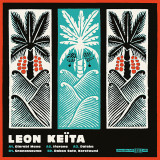
Hier hatten sich die Klänge aus dem nahen Mali und Guinea mit den lokalen Stilen vermischt und eine reiche Musikszene hervorgebracht: Bands wie Bembeya Jazz, Super Djata Band und andere Mandingue-Giganten gehörten zu den Bestsellern der Region. Leon Keïta, eine feste Größe in der malischen Musikszene, wurde 1947 in Conakry an der Atlantikküste von Guinea geboren. Leon half bei der Gründung der legendären Rail-Band, die zu einer gefeierten Stütze des Nachtlebens in Bamako wurde und die internationalen Karrieren von Salif Keita, Mory Kanté u.v.a. begründete. Leon selbst schloss sich Les Ambassadeurs Internationaux an, mit denen er durch Westafrika tourte, bevor er sich der Arbeit an seinen eigenen Kompositionen zuwandte. Als Leon bereit war, ins Aufnahmestudio zu gehen, lud er seine Freunde von Les Ambassadeurs Internationaux ein, ihm als Begleitband zu dienen; aus dieser Zusammenarbeit gingen zwei Platten hervor, die beide 1978 auf dem Label Papa Disco veröffentlicht wurden. Ein Jahr später veröffentlichte Leon "Rythmes et Mélodies du Mali", das er gemeinsam mit seinem Bruder Germain geschrieben hatte und das vom großartigen Orchestre Black Santiago begleitet wurde. Obwohl Leon nicht viele Soloaufnahmen gemacht hat, erwecken seine Lieder weiterhin die Verehrung aller, die das Glück haben, sie zu hören. In den letzten Jahren wurde der Song "Dalaka" von Carlos Estrada, dem Betreiber des Soundsystems in Barranquilla, wiederentdeckt und wurde zu einem unerwarteten Hit an der kolumbianischen Karibikküste. Zwölf Jahre nach der Veröffentlichung der von der Kritik hochgelobten Bambara Mystic Soul Compilation taucht diese neue Zusammenstellung erneut tief in die Mandingue-Kultur ein, die während Leon Keïtas legendären Sessions Ende der 70er Jahre aufgenommen wurden.
If you were to ask for a defining Habibi Funk track, there are a few that come to mind: from Fadoul’s “Sid Redad,” Dalton’s “Soul Brother” to Ahmed Malek’s “Omar Gatlato.” However, none are as widely connected with us at this point as Hamid Al Shaeri’s “Ayonha.” We heard the track for the first time when we were working on selecting tracks for your first compilation and we instantly loved it. We obviously had heard of Hamid El Shaeri’s music before, but only material from his Al Jeel phase when he was already the full-blown
superstar he is now.
Listening to his releases from the early 1980’s opened a whole new door for us. At the time, Hamid had just left Libya to pursue his career in Egypt via a detour in London, where he recorded his
first album. Hamid’s distinct sound of the sound is quintessentially reliant on heavy synths and so it was particularly important to purchase these synths in a timely manner. “Whenever a new one synthesizer would come out, we would have to buy it immediately, otherwise someone else would get their hands on that sound.” London also played an important role for Hamid as a musical epicenter.
He fondly reminisces about the many live shows he attended there, including some of the biggest international musicians like Freddie Mercury and Michael Jackson. After returning to Cairo where he also recorded his following albums, he connected with SLAM! for the
release of his debut, laying the foundation of a collaboration that lasted for 5 albums. Luckily, we were able to connect with Hamid through our friend Youssra El Hawary, whose extensive network has opened many doors for us within the Egyptian music scene. We met Hamid for the first time probably in 2016 at his office / rehearsal studio in the outskirts Cairo. We were expecting a larger-than-life
character in-line with his status as a certified superstar, yet the actual person turned out to be very approachable and super easy to connect with. He liked the idea of an effort to amplify his early works again,
which, when originally released, were far from an economic success.
While he was down to assist with an interview and his blessing for the project he also told us that for any license we needed to speak with the original label SLAM! who released these songs, still held the rights and also remained in business over the decades though they didn’t actively release any new music. Hany Sabet had started SLAM! records in the early 1980s and focused on cassette tape releases, the
format that expedited the success of a new generation of record labels in Egypt. By the mid 1980’s, SLAM! had become one of the most successful and economically dominant record labels in Egypt, with Hamid El Shaeri being just one of their key artists, alongside Mohamed Mounir, Hanan, Hakim, Mustafa Amar and many more. Luckily, Hany Sabet turned out to be a friend of our colleague Malak Makar’s father, which probably helped to warm him to the idea of licen- sing “Ayonha” to this - in the scale of his world - tiny label
from Germany. Eventually “Ayonha” ended up becoming a widely successful release and either Hany or we brought up the idea of a full album dedicated to Hamid El Shaeri’s work on SLAM!.
"Maktoub Aleina” is the first single and will be released January 14th. Following the massive success of "Ayonha,” “Maktoub Aleina” is another mid-tempo groover with a beautiful, synth-forward melody, that brings together a lovely combination of soul, disco and Arabic pop music of the highest order, giving a taste of full album. The second single, “Yekfini Nesma Sotak” will be released January 28th and combines Hamid’s unique formula of soul and pop, held together by a catchy synth melody. “Yekfini Nesma Sotak” picks up the
pace a bit, making the uplifting mood of the track even more powerful. Third single, arriving February 11th, is “Dari Demou’ek,” one of the stand out tracks of Hamid’s early recordings done for SLAM! in the early 1980s. Dominated by a disco infused bassline, the track offers a lot of space of the funky production to shine while Hamid inserts his vocals at all the right moments. A masterpiece of disco touched by Arabic pop music.
Full album arrives February 25th. This release is dedicated to Hany Sabet, the founder of SLAM! and his wife Rosemary Jane Sabet (who
took the photos we used for the cover and the booklet), who sadly passed away during the time it took us to prepare the release.
Vinyl comes with an extensive booklet with an interview with Hamid as well as unseen photos