Buscar:super sometimes
Dreamcicle Marble Vinyl[36,35 €]
Rainbow Splatter Vinyl[30,04 €]
For this edition, the label meets this duo of producers, that has been created by the musical synergy between Zonker and Daniel Gorziza, who go by the name – “SameSame”. This disc has been titled “Unconditional Society” and has been crafted with a mission to be brought to the worldwide dancefloors and to be foreseen by the adepts of the sound it conveys. The A side is opening with a deep trancey burner “Suspect Zero”, with time passing this side of the record is morphing into the prime-time speaker ripping sound of “Rip the Jacker. The B side will see more mellow feel to it and sometimes even could be said that the vibe turns relatively melancholic by the time the record reaches its natural conclusion. The words that have been shared do not translate the profoundness of the subject that the artists have carried through, but then again, sometimes them letters have to be present even if they are kept to the slightest. The frequencies communicate much superior to the words and by now you can stop reading this and immerse yourself into the sound.
- A1: Abay
- A2: Tew Ante Sew
- B1: Mengedegna
- B2: Kahn
- C1: Sew Argen
- C2: Nafekeñ
- D1: Abet Wubet
- D2: Guramayle
- D3: Gud Fella
- D4: Guramayle (Slight Return)
180g Heavy double vinyl LP with liner notes by Tyran Grillo. Limited Japanese Obi for the first pressing. Original artwork by Russell Mills and photography by Jean-Baptiste Mondino.
The third Time Capsule is a body of dub reinterpretations by celebrated producer Bill Laswell of Ethiopian singer Gigi. Curated by Tokyo record collector, music researcher and seasoned reissue supervisor Ken Hidaka, it is the first time Illuminated Audio is pressed to vinyl after its CD release in 2003.
Ejigayehu Shibabaw was born in 1974 in Chagni, northwestern Ethiopia and by pursuing a career as a singer, went against her father’s strict, traditional gender roles. As Gigi, she embraced the same musical freedom she had strived for in her personal life, incorporating the Ethiopian church, funk, hip-hop, West and South African music into her work. She first settled in Nairobi, then Addis Ababa, where she quickly established herself as one of the city’s leading singers. A move to San Francisco in 1998 led to a long and fruitful creative partnership with bassist and producer Bill Laswell.
Around the same time, Chris Blackwell had stepped away from Island Records to start the art house film company and label Palm Pictures. He took an interest in Gigi and together with Laswell, pulled together an all-star cast of musicians for her self-titled US debut album, including Herbie Hancock, Pharoah Sanders and Wayne Shorter. It won international critical acclaim, not just for its musicianship but for making Gigi a “defining voice for the Ethiopian expatriate community”, as journalist Tyran Grillo praises in his Time Capsule liner notes. From the nation-defining 1896 victory over Italian invaders to the quiet revolutionaries who wear simple shemma garments, Grillo believes the themes in Gigi make it “a shower of sunlight on her homeland for those ignorant of its struggles.”
After its success, Blackwell encouraged them to go back into the studio to rethink the album and Illuminated Audio was born. “Anyone can make a voice sound worldly”, Grillo remarks, “but rare are those who can make one sound inner-worldly.” Gigi was clear with Laswell to give her vocals a minor role “because it’s already been done.” Instead her Amharic verse is fleeting, exhaling through the textures like ghostly fragments; soaring yet muted. Yet the album is still titled under her name, an assertion by Laswell of her central role in the album’s creation. Not only was it a fully endorsed project by Gigi, but she would be present throughout its development, giving feedback on half-finished ideas as Laswell played them back in the studio. “It works perfectly”, she reflected after the album’s release. “We wanted to capture the whole spirit of each track, and Bill’s remixes create a different music language that really puts you in a pleasant place”.
This new vocabulary takes its lead from a technical approach that Laswell had been perfecting during a furtive creative period at the turn of the millennium. Much like his ambient interpretations of Miles Davis (Panthalassa, 1998), Bob Marley (Dreams of Freedom, 1997), and Carlos Santana (Divine Light, 2001), Laswell approached Illuminated Audio by returning to the original multitrack masters. Gigi wasn’t just reworked, but recomposed into an expansive lattice of instruments, submerged in a watery ambience of dub and trance undercurrents.
Sonically, this new language that Gigi refers to, is manifested by the original album’s more understated parts being pushed to the fore. Explaining his contrasting methods, Laswell saw Gigi as being “put together in a way that fits”. Contrastingly, in Illuminated Audio, “a lot of things that I featured in the remix weren’t as audible in the original.” Instrumentation laying near-dormant, deep in the mix, are brought to the fore: the acid rock guitar and Wayne Shorter’s saxophone on ‘Tew Ante Sew’, Graham Haynes’ flugelhorn on ‘Nafekeñ’, Laswell’s bass on ‘Kahn’, the melodica in Mengedegna or the floating synths and talking drums in ‘Gud Fella’.
Brought to his attention by mentor DJ Nori, Hidaka describes Illuminated Audio as a “masterful sonic exploration into ethereal ambience and dub” and made sure this reissue also contained a full remaster to give its “deep musicality” much better dynamics and density in the overall sound. Hidaka admits that Laswell's music “is sometimes so out-there, it is often misunderstood” and, indeed, to dub album non-believers this might seem like a prolific producer imposing himself on another artist’s work; eternally developing rearrangements that never quite get to its destination. But that’s missing its true power and triumph. This is more than the reissue of a remix, but “a wholly unique musical entity”, as Hidaka describes. Illuminated Audio refers to the illuminated manuscripts that comprise the major part of Ethiopian art and its new compositions stand in proud solitude as a rare body of reworks that both informs and enhances their originals.
W.R.F. was formed in 2015 by Nina and late studio partner Andrew Weatherall to help wrangle the vast output recorded together beyond his solo releases.
Spotlighting nine tracks from the Apparently Solo series of EPs recorded between 2016- 2019 and released on Bandcamp in 2023, this lustrous time capsule marks the culmination of Walsh and Weatherall’s creative relationship born after they clicked at London’s earliest acid house clubs, becoming partners then managers of their Sabres Of Paradise/Sabrettes labels before taking different paths by the late '90s.
An accomplished musician, Nina had learned the art of studio technology by the time they reunited and started working together in 2012. Created at her Facility 4 Studio situated in the dangerous, gang-ridden no man’s land between Streatham and Mitcham, Anamchara captures the super-prolific creative stretch starting in 2015 that produced Weatherall’s Convenanza and Qualia solo sets, W.R.F.’s The Phoenix Suburb (And Other Stories) plus a whole lot more. According to Nina, Andrew envisioned the spectacular ‘Borderland’ as natural successor to ‘Smokebelch’, his most revered track. When it came to his remix, Nina enlisted renowned viola virtuoso Sarah Sarhandi and composed new harmonies with Pachelbel’s Canon in D Minor in mind.
The set also catches the breakthrough period when, through Nina’s careful coaxing, Andrew started using the computer system she’d set up to better express his musical visions by arranging the elements, grooves and melodies she sent him. Still considered the UK’s greatest DJ-producer, Andrew’s arrangements were inspired by his club-igniting sets. “This allowed me to mix the colours for his palette whilst he was painting the picture,” says Nina. Anamchara straddles the gamut of musical styles explored by W.R.F. at this time, from slower paced psychedelic “drug chug” outings ‘We Two’. ‘Heat To Meat Ratio’, ‘Hidden Watchers Part 1’ to banging acid house and techno sometimes inspired by the violence outside the studio door, including ‘SCHLAP’, ‘Crack-Ed’ and churning acid juggernaut ‘Yacidik’ (“After much dangling of the acid carrot, Andrew took a bite and, after one familiar raised eyebrow, never looked back,” says Nina).
Many tracks fly elements from the enormous sonic library Nina inherited from late partner Erick Legrand that she called The Akashic Library of Sound. Marking Andrew’s 2016 admission into the vault, ‘Rattly Old Puffin’ boasts Erick’s psychedelic guitar and tumbling drum loop Weatherall would run with, including on ‘Borderland’. “Erick was like our third member,” says Nina.
Bringing down the curtain, ‘Alma’’s exquisitely poignant melody that unfolds over thirteen time-stopping minutes was composed by Nina while navigating Erick’s birth and departure date anniversaries to accompany Andrew’s reading from Gordon Burn’s 1991 same-named novel at 2018’s Durham Literary Festival. Burn’s novel imagines early 60s popstrel Alma Cogan, who succumbed to cancer in 1966 surviving to reflect on fame. “Now it just makes me think of Erick. And every time I hear those well-placed cymbal crashes I can only think of the Captain himself.”
A beautiful grand finale for this astonishing selection of pure gold from the vaults.
Kris Needs / 2026
- A1: The Bug – Hooked (Hyams Gym, Leytonstone)
- A2: Ghost Dubs – In The Zone
- A3: The Bug – Believers (Imperial Gardens, Camberwell)
- B1: Ghost Dubs – Hope
- B2: The Bug – Burial Skank (Arches, Vauxhall)
- B3: Ghost Dubs – Dub Remote
- C1: The Bug – Alien Virus (West Indian Centre, Leeds)
- C2: Ghost Dubs – Down
- C3: The Bug – Militants (The Rocket, Holloway)
- D1: Ghost Dubs – Into The Mystic
- D2: The Bug – Dread (Mass Brixton)
- D3: Ghost Dubs – Midnight
When Chuck D proclaimed "Bass, how low can you go?" on Public Enemy's anthemic 'Bring the Noise,' maybe he was pre-empting or inciting the 10,000 fathoms-deep, spine-bending basslines and sub-quake tremors of 'Implosion.'
Implosion is a crushing split album, appropriately released on The Bug's own PRESSURE label. Mapping out a new form of spectral dub, the sound is deliberately immersive, introverted, and yes, definitely implosive. In pursuit of heavy lids, blurred vision, and merciless bass bin punishment, it’s one part meditation, two parts low-end theory, and essentially a confession of devoted sound system addiction.
As expected from a tag team featuring British soundlab explorer and 'London Zoo' composer Kevin Martin, aka The Bug, and Michael Fiedler, aka Jah Schulz—a long-time graduate of Germany's new school of sound system reggae culture—the duo approaches their target differently yet share the goal of keeping their sound "raw" (Fiedler) and "brutally minimal" (Martin). This proves that opposites can attract, even if their tools are different and their methods sometimes diverge.
From such a disparate combo, hailing from different geographical and aesthetic backgrounds, contrasts are certainly on display, even within each artist's own contributions. From the melancholia and transcendence of 'Alien Virus (West Indian Centre, Leeds),' to the duality of ascension and descension on 'Hope,' or the Sunn 0))) in dub, visceral drone of 'Dread (The End, London),' to the tripped-out repetitions of 'Midnight,' which reinvents Chain Reaction for post-millennials, the result is both sacred and narcotic. Each track illuminates the emotional impact and atmospheric pressure being explored across this deceptively sparse album—a mastery of tone and texture.
This collection might be as reduced, minimal, and deep as The Bug has ever gone, perhaps echoing the solemnity of his recent Kevin Richard Martin Black release and invoking the futurist steppas self-pioneered on his previous Pressure album. Alternatively, Fiedler‘s Ghost Dubs project ventures into his most heavyweight direction yet, which is no mean feat considering his previous, the critically acclaimed album Damaged, was a monstrously massive triumph of analogue weight and enviable sound design.
Implosion is ice-cool, a stark contrast to the warmth and sociability of traditional Jamaican roots and the current trends in digi-dub. Instead, the mood is soaked in tension and intense dread, finding an unexpected melting point where classic dub's stark rhythm attack, isolationist ambience's eerie drift, dub techno's floatation strategies, and even the relentless riffs of doom metal collide. As the bass-obsessed pair drop what is arguably the heaviest ambient dub album to emerge from any electronic sector—a moody counterpoint to The Orb's fluffy clouds, etc, Martin has cited The Roots Radics, Black Jade, and On U Sound's Pounding System as heavily influencing his approach to the album, while Fiedler has expressed his admiration for Adrian Sherwood's productions and Rhythm & Sound's enchanting soundscape. Yet, the super heavyweight pulsations, emotive resonances, and bone-rattling vibrations detonated here effortlessly go far beyond these influences.
Shadowy and elusive, there’s a mysteriousness at this record's core. A haunting moodiness oscillating between nostalgia and future shock. Despite the deadly fixation with SLOW and HEAVY, the album maintains a totally hypnotic swing throughout. Implosion and its lead single 'Imploded Versions' are testaments to being enveloped in bass, seduced by bass, submerged in bass, and utterly crushed by bass, as The Bug and Ghost Dubs seek to craft a new form of dub for zonal headz and Babylon seekers.
Mastered by Stefan Betke (a.k.a. POLE) at Scape Mastering studio, this record is heavy as f-ck without resorting to continuous distortion. It’s low-end worship taken to an absolute extreme, yet remains highly listenable and definitely danceable, albeit at the slowest of paces. Sacred and narcotic, this is low-end worship amplified to the max. Dive in if you dare.
Black Truffle is pleased to announce Melopea, presenting two new pieces highlighting the incredible voice of Amelia Cuni (1958-2024), the great Italian singer, based in Berlin in later life, whose mastery of the classical Indian dhrupad developed in parallel with a commitment to contemporary experimental approaches. After two stunning archival releases documenting traditional dhrupad performances in India in the 1990s (BT079 and BT092), the two side-long pieces here embody the freedom with which Cuni explored new contexts and settings for her singing.
Both make use of a long recording of Cuni singing the pentatonic Raag Bhoop (or Bhopali) made in 2012 by her partner Werner Durand in Berlin. ‘Melopea’ began from Cuni and Durand’s superimposition of this recording with violinist Silvia Tarozzi and cellist Deborah Walker’s performance of Éliane Radigue’s ‘Occam River II’. Inspired by the beauty of this chance encounter (and other experiments with non-synchronous collaboration during the pandemic years), Tarozzi and Walker recorded independently, without hearing Cuni’s voice but ‘having her present in memory’. Tarozzi and Walker’s bowed strings places Cuni’s magisterial performance in a new context, emphasising, as Radigue commented upon hearing the initial layering of her piece with Cuni’s voice, a shared ‘searching toward the partials, overtones, these natural constituents of acoustical sounds in their richness’. Beginning with whispered bowed harmonics, the violin and cello swap the stability of dhrupad’s traditional tanpura drone for a slowly evolving, uneasy web of harmonic interactions recalling some of Harley Gaber’s work, sometimes sitting on dissonances for long periods or allowing changing interference patterns to come to the fore. Primarily focusing on her lower register, Cuni’s performance demonstrates her mastery of microtonal pitch subtleties, elegant sweeping glissandi and meditatively unhurried pacing.
The continuation of the same recording by Cuni forms the foundation of ‘Bhoop-Murchana’, with Anthea Caddy on cello and Werner Durand on soprano saxophone. In contrast to the randomised layering of the first piece, here Durand and Caddy have carefully selected pitches based on the raag Cuni sings, using the ‘Murchana’ form, which uses the constituent notes of the raag as tonics of new raags, retaining the same interval structure. Both players who have developed tones of striking depth and harmonic purity on their instruments, Caddy and Durand’s patient long tones are simultaneously rigorously grounded in the physical properties of sound and possessed of an immaterial, floating quality. Combined with Cuni’s voice and, near the piece’s end, her contributions on hammered and plucked tanpura, the effect borders on miraculous. To surrender to this music is like slipping into an onsen pool, feeling the instantaneous release of every tension. Accompanied by liner notes from Durand, Tarozzi and Walker, Melopea is both a moving tribute to the profound art of Amelia Cuni and, for the uninitiated, a perfect introduction to it.
yellow vinyl[14,71 €]
Tech-Nology was launched in 2003 specifically to make records with the artist Bjorn Svin. Bjorn was the first Danish artist who made underground crossover into commercial hit territory via "Mer Strom" - but still keeping respect in the "real" music world for his enthusiasm, non-compromising style, persona, and sweaty live performance skills - his musical understanding and need to explore new directions took the crowd on a personal musical journey from jazz and classical musicians to early electronic pioneers - but always in a tone of his own. Bjorn always felt a need to escape norms, to grow and not to repeat, but investigate and create. The first record on Tech-Nology was born under the alias - El Far: Couples of lonely dancers. "Bjorn is maybe the most talented electronic producer ever in Denmark" and he was celebrated as a wonder kid by the media back in the 90's. An insider with new knowledge of Bjorn told us: "Yeah I think its good music.. It's not for everyone I must add, but it's definitely quality music for those who dig this sound.. sometimes a bit too deep.. which kind of works against it, cause you really need to listen to it.. you cannot just skip through it, cause then you don't really grasp the soul of it.. so this is what makes it more difficult to sell - but if a guy like this was a bigger name he would sell much better.."
We love Bjorn and we agree - We have tried to sell Bjorn and his music for over 2 decades now - But you can't capture Bjorn, you can't own him - he is only making music for himself - and you can get on the ride if you want to, but don't expect all the rides to be fun - sometimes it hurts! Bjorn is difficult to sell, but we don't think Bjorn really would like to sell much better if he had the option to do a more commercial approach to his music - because Bjorn is about not selling out, he's a purist at heart, making music documents for the few. Bjorn is bigger than superficial success and streaming numbers. He made jingles for Nokia, toured and played Roskilde's main stage, the biggest Festival in Denmark, but he still doesn't care... and that is important if you want to make interesting music that last for the future. When Bjorn met Mester Jakobsen, label boss of Tech-Nology, he has been releasing on numerous underground labels, made the jump to a major label, and everything more or less turned out as a big disappointment, so Bjorn presented a completely experimental album to the Tech-Nology label under the moniker Prinz Ezo - The Body Offset. We loved it then - we still love it now - and a truly collectors item and a secret DJ tool.
Today, Bjorn is still breaking all habits and rules, still doing the same thing - just in new ways, but he has gained insight on another level, adding even more nuances and textures to his post-genre compositions.
Welcome to the second album by Prinz Ezo on Tech-Nology: KURIER Why Kurier? Because Bjorn left to explore the Berlin Underground, shortly after the first two releases on Tech-Nology - he left his roots to search for a bigger meaning, a bigger understanding, to compose real mature sounds and understanding his skills, at the point where you understand why you have to cross borders, still incognito, doing smuggler-sounds, always in transit - between cities, between cultures, between worlds, time and space. Not Restless nor rootless, just forever on the move, always discovering new landscapes! But now Bjorn is settling down - accordingly with the music - to find - not inner peace, but to be completely in balance with the music inside of him. Prinz Ezo is raw, narrative, minimalistic electronic storytelling that refuses to freeze. Tension builds and releases - feel the energy and the drama for the last 2 decades if you dare to take the journey?
Almost twenty years after the first Prinz Ezo album, it has now been possible to make the music for those who never arrived.
For his second output on his own label, the Swiss electronic composer Robin Félix, takes this time the listener to West-Africa ; that said, Incantation is lightyears away from “world music”, but closer to the first “Fourth World” LP Jon Hassell recorded with Brian Eno. Moreover, Robin has teamed up with fellow Swiss sculptor, Christian Pauchon, who makes “woodoorina”, inspired by “bolis”, some rather objects used by the Bamanas in Mali and neighbouring countries, that ethnologists view as “fascinating mediators between man and his environment” ; a topic that led the Mauritanian Abderrahmane Sissako and Damon Albarn to compose the opera, The Theft of the Boli. Right from the outset of Goat Skin, one realises that Robin has applied his idiosyncratic way of (mis)treating field-recordings, to dissect and re-model an array of woodoorina calls (sometimes close to drones) entwined to a rhythmic pulse, conjuring up a starry night under which a shaman, adresses his incantations to the spirits of Nature. Robin Félix being who he is, as soon as Corten, his form of quiet electronics show that he is no stranger to Throbbing Gristle or Cosey Fanni Tutti, the self-explanatory Ritual Smoke taking it a little further. The spellbinding organic basses of Rains and Cauris, fused to textures that remind the experiments of David Toop and the electroacoustics of Pierre Henry, lead the listener even deeper into a contemporary avatar of a spiritual journey. In tune with the “call and response” mode, ubiquitous in African music, Pangi brings the EP even closer to the beating heart of the continent, the interactions of the sculptor and the composer blending to such a point that one may wonder if they have exchanged roles. As a meeting point of disciplines and art forms which are not supposed to meet, Incantation is also a convincing demonstration of what the word “inspiration” means, the superb visuals included ; of course, it requires a lot of finesse and respect on all sides
Ira James' Vessel Recordings keeps it real with another deep house record from an array of the genre's finest. The Sometimes Dream Sampler is a class affair with an A-side taken up by a superb coming together of Jason Hodges, Eddie Leader and Hector Moralez for the weight, tasty dub version of 'No Oatmilk,' then Wally Callerio brings some fresh rhythms with his synth-infused 'Cause You Know'. Jordan Strong's 'Turn The Tide' lands with a nice bit of hip-swinging funk over rolling bass and Christopher Mohn's 'Move Your Body' rocks back and forth on its heels to hypnotic effect. All in all, a nice fresh take on classic deep house.
AN ATLAS OF LOSS
Do minerals dream of becoming semiconductors? Do they yearn to carry charges, amplify, switch, and convert energy into emotions comprehensible to humans? And what if, from the darkness of the underground, they had been listening to us sing in caves before the emergence of the first flute? Could they have guided us, through the course of history, to find them, extract them, and create new sounds through sinusoidal waves, to form valves and bend circuits?
If so, minerals would transition from what philosopher Eugene Thacker defines as the ‘planet’—that virginal and unreachable realm for humans that we study through geology, paleontology, and environmental sciences—to the ‘world,’ the space we inhabit, interpret, and synthesise in our daily lives. Sadly, we only remember the world when it erupts violently, through climate catastrophes or when a new virus emerges. Sometimes a tsunami collides with a nuclear plant, or viruses are cultivated as biological weapons in high-security laboratories, provoking a deep biological anxiety, hard to quell, which we all feel beneath our skin.
There exists a third realm, disconnected from both the world and the planet: the ‘earth’, an immense, dense rock floating in space alongside other planets, situated in the cosmological dimension. Relating to the earth is so complex that we only do so through theoretical speculations of a scientific nature or through science fiction, interweaving until one becomes the prophecy of the other, in an infinite, pendular dance. Beyond the darkness of space and Lovecraft’s cosmic horror, the fantasy of human extinction is the most recurrent: to reach a collapse so devastating that we do not survive it, even though the earth does, without us.
In a world where we quantify everything through body sensors, financial algorithms, nanometre-scale robots, and surveillance drones—a world in which everything that can be domesticated and controlled can also be commodified—a superior artificial intelligence would survive the collapse of the species (some speculate it might even cause it) and learn from our mistakes, thanks to our obsessive gathering of data.
Long after our voices fade, minerals will persist in the darkness of screens, in the silicon of chips, and in their pure form, still unexploited underground. Over the millennia, this intelligence might piece together fragments of our reasoning, as if an alien civilization finally connected with one of our spacecrafts loaded with messages cast into the void. It would sort through endless streams of data, unable to grasp the depths of emotion behind what it quantified, recreating simulations of our past, stripped of the nuance that once defined us and conducting experiments in sandboxes.
Some remnants of our existence—faint echoes of forgotten beauty—would be pieced together in an atlas of loss, buried beneath layers of numbers, decayed bots, and corroded hard drives. What will follow? Perhaps bison will once again roam—trotting to the strange pulse of techno, their ancient forms framed by the ruins of our cities.
Buildings will crumble, slowly dissolving under the soft touch of ambient music, and a thousand flowers will bloom with that ancient music created through electrical signals and computation. 7 songs for a future both improbable and inevitable—a final message from a world lost to itself, from planet Earth to planet Earth.
Alfons Pich, 2025
1. Watermelon Man
This track version actually came from an improvisation that Allesandro IIona (Keys) made on a live show at RonnieScott's at the start of the year. I think we were were having some issues with one of the monitors on stage and it juststarted making this beeping sound. Then I remember Alleh just came in with that piano riffat the start and the rest was history. This one of thefirst tracks we recorded for the EP and I'm super pleased with how this one turned out. Afterseeing Herbie Hancock live for thefirst time the year before, this felt like the perfect tribute to him!
2. Mandible
The majority of the writing on this album was done at my studio space in Hither Green, where I am every tuesday! I usethis space to record but mainly a space to develop my art. So this EP all came from a few sessions there. We all haveour own creative things going on so it was really great to collaborate as a band and trash out some ideas we had.Mandible is one of my favourite tracks on the EP. It's very simple but leaves us a lot of space to explore some more freeimprovisation. I think in some of my previous recorded music I was more focused on creating well crafted music withgreat melodies and harmony. Whereas here there's a bit more focus on playing as a group and being more explorative inimprovisation. We also didn't have a melody for this track until a week before the recording! Sometimes it just takes awhile tofind that melody or it might just pop into your head one day.
3. Slum
This is a tune that was actually written by myself in 2017/18. Round about that time, I had been playing at a jam night ata warehouse unit in Limehouse called Unit 31. The night was ran by Pianist Raffy Bushman and Drummer Sam Michnikand was focused on hiphop and Jazz fusion. We would usually play a set of instrumental music before it opened up forvocalists and other instrumentalists to come and jam. It was a great place to try out new ideas, so I wrote this tune for itbut we never recorded it. It was really nice to revisit this tune and get it recorded properly at 'That SoundStudios' (Seven Sisters). This track is all about dynamics and a slow build throughout. Descending to more chaos at theend!
4. Red Pistachio
For thefirst two sessions we wrote with a different bass player to Edmondo Cicchetti who is on the recordings. A greatbass player and friend of mine Tom Driessler. This track started kinda exactly how it starts on the record, with that basshook. I'm very influenced by Christian Scott Atunde Adjuah and his melodic writing. Particularly on his album 'StretchMusic'. So this felt really inspired by that album. The chords don't really move around too much until the solo sectionwhere it becomes more like a blues. Then Allesandro get's a bit more loose at the end with the descending sequence.
5. Jerome arrived Late
Quite simply we started writing this tune before Jerome (Drums) arrived late. In the recording session we were a bitundecided about what to do in the solo section. We tried out a few different options before we eventually landed onfeaturing Gabriele Pribetti on Sax. I'm really into his solo on this as it's rhythmically and dynamically really exciting. As Imixed the record it was also a great solo to mess with and run through lots of different plug-ins. There's some weirddelays and phasing going on that and I added some octaves too in places.
A sense of destiny hangs over Sentir Que No Sabes, Mabe Fratti’s fourth solo-credited album released in a five year span. Her work has always possessed a finely tuned sense of drama capable of expressing a range of emotional states, and across this new album, she conveys the struggle to process various relationships or situations–and the actions that come next. Sentir Que No Sabes is urgent and clear, poppy, generous and approachable, while showcasing a considerable emotional hinterland. It is also, as Fratti is quick to mention, “groovy.”
Written and recorded with her partner, multi-instrumentalist, and co-composer Héctor Tosta (I.La Católica, Titanic), Sentir Que No Sabes is the result of an intense, detail-oriented process. Fueled by a new confidence gained in their collaborative project, Titanic, and its critically acclaimed 2023 LP, Vidrio, the two hunkered down in the familiarity of their studio (aka Tinho Studios) to bash out the initial sonic coordinates of her new record. “We talked and talked, and discussed ways of playing and recording, until things became inevitable,” Fratti explains. “We recorded a bunch of demos at our home studio and that meant we had a lot of time to re-edit and experiment. We really dug in. We were super focused on detail.” Tosta also took up the controls as producer and arranger-in-chief for all additional instruments. The album was later completed at Willem Twee Studios in Den Bosch in the Netherlands, and Pedro y el Lobo Studios and Soy Sauce Studios, in Mexico City.
For the final studio recordings, the pair were joined by drummer Gibran Andrade and trumpetist Jacob Wick to fill out and expand on Tosta’s percussion and brass arrangements. This small group of friends were able to work quickly and openly, and without fear: a testament to the exhaustive groundwork put in at Tinho Studios. This can be heard in three short, intermediary tracks that also manage to be the most aggressive on the record: “Kitana” (a scratch-laden instrumental that acts as a strange prelude for the last track, “Angel nuevo”) and a pair of two-minute instrumental interludes, “Elastica” I and II. None are throwaway mood pieces; rather they act as emotional cue cards, and hint at the way Fratti and Tosta created the overall atmosphere of Sentir Que No Sabes.
A strong sense of rhythm irrigates the sound from the jump, as heard on the glorious opening track, “Kravitz.” Here, the brilliant plucked cello line acts as a bassline and props up the steady thump of the kick drum. The cello’s growl serves as a conduit for a set of slightly paranoid lyrics that tell us “Quizás haya oídos en el techo” (“maybe there are ears in the ceiling”), while the song also introduces another staple of the record: the clever brass stabs, whistles, parps, and other interjections that paint a canvas of traffic in a city. It’s a postmodern, widescreen sound that for some might recall The Blue Nile’s Hats.
Sentir Que No Sabes is a record full to the brim with a modern pop sensibility, invoked by the sort of magpie spirit that ensnares anything it can find, repositioning sounds for the here and now. The keys and melody on the melancholy “Pantalla azul” (“Blue screen error”) transport us back to the glossy mid-1980s. “Oídos” (“Ears”) is a beautiful slice of contemporary, hybrid pop, in which Fratti’s vocal lines delicately spin themselves around the lean structures erected by the brass and drums, and the descending “plink” of a set of piano chords. Then we have a gloriously strong ending with the swell of “Angel nuevo” (“New angel”), another cinematic track full of gentle, instrument-rich swells and eddies that manages to be almost endless in its range–and yet intensely personal, as Fratti’s voice is close, almost whispering in your ear. A much needed lullaby for our fractious times.
The lyrics, for their part, have a stop-start quality to them, and hint at the small, incremental emotional taxes we pay through just living our lives. They circle around the music like birds waiting to swoop. There is something of the spiritual in all of Fratti’s work that expresses itself in a form of yearning: she looks to new horizons while personal dramas find themselves internalized, contextualized, and then dealt with through metaphor. Here, she was keen to mention Tosta’s constant encouragement in her finding a path to best sing or phrase her words to impart their maximum effect. “Hector was super inquisitive about my lyrics and asked me questions about what I meant, which sometimes is something you don't wonder so much about in isolation,” Fratti explains. “Besides, he is a great poet, and you can see that in what he did on the Titanic record. This made me go deeper into my lyric writing and definitely transformed it into something that I feel super happy about now.”
Take “Enfrente” (“In Front”), a track that initially comes across as a languid, glossy number, with plucked cello strings standing in for a bass line and brittle synth parts. Soon we catch on to a brilliant minor chord switch, which mirrors the fear and doubt expressed in the lyrics as someone “trembles up to the podium” in a “search for meaning.” There’s also the startling introduction of a vocoder in “Quieras o no” (“Whether you want it or not”); it comes precisely at the point Fratti sings “Quieras o no es un desastre” (“Whether you want it or not, it's a disaster”). Moments like these leave room for interpretation and, over time, create a strong bond between the listener and the record.
In fact, across Sentir Que No Sabes, each phrase–whether instrumental or vocal–becomes at some level emblematic of acts and moods that impart deep emotional significance. We see this best on “Intento fallido” (“Failed attempt”), which could be the score to feeling trapped in self-doubt, only to suddenly be sprung free by the song’s gloriously upbeat ending. On “Márgen del índice” (“Index margin”), the quicksilver switch between initial disharmony and a beautiful melody is breathtaking, all augmented by evocative arrangements, textured production, and the slightly playful, gnomic lyrics. The track’s emotional ecosystem allows another brilliant ending, which uses the simple repeated phrase, “Cómo lo va a ver?” (“How are you going to see it?”).
So what to make of Sentir Que No Sabes? High gloss Pastoralism? The sound of a city-bound, post-post modern soulscape? No matter the emotions evoked, it's the work of an artist coming into their own, and creating a benchmark record.
Part 2 Album Sampler[18,45 €]
For over a decade, Mako has been a distinctive presence, both as an individual and through his music, a talent we've proudly showcased at Metalheadz.
This September, we are honoured to release his third album on the label, and his second solo endeavour, which serves as a seamless continuation of his earlier work. His 2020 album, 'Oeuvre', represented years of dedication and refined production, solidifying Mako's esteemed place within the Metalheadz family.
Now, four years later, we're thrilled to present 'Oeuvre – Part 2'. This 12-track album is a celebration of Mako's deep passion for music, while also reflecting his sometimes disillusioned views on a modern era that often seems to pass us by. In a world where individuality can struggle to shine amidst an overwhelming flood of content, Mako's superior production stands out as a beacon, demanding not just recognition, but active listening.
Mako's commitment to his musical community is evident throughout the album, with contributions from long-time collaborators Fields, Hydro, Villem, and Mikal, each bringing their unique expertise to the project. The album also features a special collaboration with the late Marcus Intalex, a friendship that blossomed in the years before Marcus' untimely passing and one that continues to bear fruit.
Diving into the heart of the album reveals Mako's charm as a producer: from the captivating vocals in 'Feed You', the sleek homage to techstep in "Suspension', to the pure dancefloor energy of 'Direct Source', a track long favoured by Goldie. As expected, Mako also delivers deeper, more contemplative pieces like the album's opener 'True Expression' and the graceful melodies of 'Overshare'.
Part 2 Album[18,45 €]
For over a decade, Mako has been a distinctive presence, both as an individual and through his music, a talent we've proudly showcased at Metalheadz.
This September, we are honoured to release his third album on the label, and his second solo endeavour, which serves as a seamless continuation of his earlier work. His 2020 album, 'Oeuvre', represented years of dedication and refined production, solidifying Mako's esteemed place within the Metalheadz family.
Now, four years later, we're thrilled to present 'Oeuvre – Part 2'. This 12-track album is a celebration of Mako's deep passion for music, while also reflecting his sometimes disillusioned views on a modern era that often seems to pass us by. In a world where individuality can struggle to shine amidst an overwhelming flood of content, Mako's superior production stands out as a beacon, demanding not just recognition, but active listening.
Mako's commitment to his musical community is evident throughout the album, with contributions from long-time collaborators Fields, Hydro, Villem, and Mikal, each bringing their unique expertise to the project. The album also features a special collaboration with the late Marcus Intalex, a friendship that blossomed in the years before Marcus' untimely passing and one that continues to bear fruit.
Diving into the heart of the album reveals Mako's charm as a producer: from the captivating vocals in 'Feed You', the sleek homage to techstep in "Suspension', to the pure dancefloor energy of 'Direct Source', a track long favoured by Goldie. As expected, Mako also delivers deeper, more contemplative pieces like the album's opener 'True Expression' and the graceful melodies of 'Overshare'
Northern California psychedelic sorcerers Carlton Melton are brain surfers, mind trippers, … “psychlists,” if you prefer. The band will take your head for a ride, occasionally rushing at superluminal speeds through a wormhole or gliding softly on a gentle breeze in a leafy glade. Sometimes your brain needs to rage, and sometimes it needs to repose. For a decade and a half, the band has yo-yo’ed, almost schizophrenically, between these two modes: walloping space jams with furious guitar solos in one hemisphere of the brain and ethereal, feather-light splashdowns in the other. Not to mention a track here and there that builds from the latter into the former. But with two new releases in 2023, the band has evolved. Whether psych rock or ambient trance, their sound remains driving, organic, and flowing. With the addition of Anthony Taibi (White Manna, DDT), however, the group’s metal freak-outs are Hawkwindier and their droning kraut trances are Spacemen 3-er. In January, the quartet released the playfully spacey Resemble Ensemble, recorded in Taibi’s home studio 3D Light. October now sees the band Turn To Earth, a work with scents of Autumn, a season of death and transition. The cover art evokes a vine-covered, electric crucifix. The sound is, well, earthy but also gritty and striving towards change. The album was recorded in Fall 2022 and now harvested in Fall 2023. Phil Becker (Terry Gross, Pins Of Light) contributed drums and percussion to a few tracks on Turn To Earth, recording the album at El Studio in San Francisco.
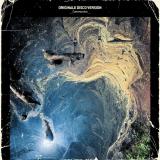
With Becker at the helm, the synths have become more prominent (“Cosmicity,” “Roboflow,” “Migration”) and the tone heavier on the doom (“Cloudstorming,” “Unlock The Land,” title track): several moments could even serve as background music for epic dark fantasy films like Conan the Barbarian, Fire and Ice, or Heavy Metal. As exquisite as Turn To Earth is, Melton are best appreciated as a live act: their recordings as well as their gigs are largely improvised – not so much composed as birthed. And yet their most recent tour ended abruptly and perilously. The group had to cancel its final three shows once members were admitted to Arnhem hospital in the Netherlands. Five years later, reinforcements have strengthened the band and restocked its arsenal of great tracks. After the rockus interruptus of that 2018 tour and the tantric tease of the intervening Covid lockdown, Melton have some unfinished business. An October 2023 tour is poised to set the freshly minted quartet back onto the stages of Europe and within the cerebral folds of its fans. Turn To Earth, sure … but keep your head in outer space. Carlton Melton is: andy duvall – drums/gtr; clint golden – bass; rich millman – gtr/synth; and anthony taibi – synth/gtr.
Superabundance is back with Extrasolar, the new 2x12” hot wax album on Future Times. The duo of Jackson Ryland (Peach Discs, Fixed Rhythms, Rush Plus) and FT honcho Max D follow up 2021’s self-titled debut LP with a hyperfunk techno gallop, hurtling further out from where they began. Extrasolar’s tracks all burst into existence, produced in a quick, sometimes entirely improvised nature.
Cuts like “Sizable Jackfruit”, “20 Spectrum” and “Tempopalace” show off brash bursts of swinging loopy DJ creation, while “Reset” oscillates between cliff-hanging and solid ground time changes and “Crossfade Diving” slides thru wet streets with a paranoid step.
On tracks like “Perplexion”, “Dex Holo”, and closer “Goth Hi Tek”, the duo paints new shades of their sound, getting into a twist on synthpop, soundworlds and Cure progressions.“Perplexion” enters smudged shoegazing territory, smearing percussion in the mix with soaring chords.
“Particle Busters” repurposes industrial junk into soundsystem punk machinery. “We XL”, a rave slammer featuring one of DC’s best, Nativesun (Black Rave Culture) is for booming warehouses only. “Big Deal” breaks out the sliced funk and melted data. TIP!
From the mountains to the sea as the region they were born in. Sometimes it's better to listen than to speak. Dmfl post-rock instrumental band deals with dreams and desires through its oneiric and cathartic compositions. Dmfl once again collaborated for their visual representations with the international street artist Millo, whose cover artwork, tuned up and focused on how listening is a way to go deeper into the emotions, descending into the core of the sound.
White Vinyl
Greyscale #10 is here for the masses! To make things even more exciting, the long awaited is a double vinyl edition! Submersion has been on many top deep and dub techno labels in the past 15 years such as Silent Season, Space of Variants, Milieu Music, Deep Electronics, diametric, Rohs! and more. A landing at Greyscale makes complete sense for the quality Submersion is known for. 'Entrainment' is for those deep dub techno fans that like extended atmospheric tracks surrounded by a heavy ambience. 3 of the 4 sides have 1 track to its entire side making the fidelity of these top notch! 'Transversal, Planetary, Capsule' fills up side A with an amazing and gentle intro that has ominous clouds on the horizon. The beat is distance, while the nuances of the airspace is fully dedicated to submerging you deep within. A truly magical and enveloping sound. The next track to uncover is 'Filter, Gradation, Centrifuge'. Imagine that the earth is a ever-evolving dub techno track and you were viewing or listening to it from the distance of the moon. This would be it! There is a tremendous distance that is created in this track where chords flow and move like clouds over large areas of distance. Sometimes, the best description is a visual one if it helps. Breathtaking! 'Stimulant, Perspective, Sensory' starts the next piece of vinyl with another epic one. It morphs like a planet is being formed before your eyes. Basslines move like mountains while chords strike like distance thunder. The last side has 2 tracks sharing the side. 'Reflectance, Reverberant, Cortisol' and 'Predawn'. The first is a grandious ambient number that sounds heavenly while the last featured song is equally stunning as almost a reprise of a previous. Entrainment will be available on white 180-gram double vinyl as well as CD digipak and digital. These are all supersonic soundscapes to immerse yourself in! Masterpieces!
- A1: Report From The Frontlines
- A2: Ask Believe Feel Receive
- A3: Lost In Solitude
- A4: Art Is The Only Real Translation Of Living For Me
- B1: We Belong To Never
- B2: Pain
- B3: Superrare
- B4: We Want To Feel Love
- C1: Musik Ist Meine Sprache
- C2: Equalista
- C3: Mirrors
- C4: Skin
- D1: Free
- D2: Still Feat Pascal Schumacher
- D3: Afterhour
ENARCHY is the debut album by Leipzig-based producer and singer Maria die Ruhe. It is the result of a deep and thorough look the
artist took into both her own inner workings and the world around her. In 14 tracks, she explores different types of energy,
oscillating between head and heart. Final destination of this sometimes painful process of self- exploration is the embodiment of
her own power and creativity; the realization, that she manifests her role as catalyst, healer, and fighter for freedom and equality
by reporting on her experiences. These songs are about nothing less than that. And you can also dance to them.
In a musical sense, Maria surpasses herself compared to previous releases. She is bolder, more explorative and dissolves genre
boundaries. Acoustic instruments like the cello and the piano unite playfully with electronic beats. Her expressive voice speaks and
sings from the lowest lows to the loftiest heights. Her self-disclosing lyrics communicate the deepest messages of the soul. One can
tell right away: something is at stake here, this is about a real human living through something real, and now reporting from the
front lines of the human experience.
With lines like „Things are changing all the fucking time“ (ENARCHY) she posts a reminder for the current zeitgeist and the resulting
global uncertainty. „Some things need to be destroyed before they can heal“ is a demand for openness towards change, even if it is
challenging, requires energy, and leaves behind some scars.
In ART IS THE ONLY REAL TRANSLATION OF LIVING FOR ME, Maria uses sentences like „I’ve been trying to please you, I got headaches
and I still don’t fit“ to express her desperation with existing structures of injustice and the lack of livability of the artist lifestyle.
„Ah, you’re an artist - and what do you do professionally?“ Everyone loves music and art! When, o when, will the understanding
follow that there need to be people who make this art as a central part of their lives?
Frustration takes turns with hope and a growing acceptance of the self. In EQUALISTA, Maria discusses antiquated conditions like the
inequality between the sexes in a kind of manifesto, with a simple proposal for solution: „Let’s both be selfish and raise our
energies, to create a whole world with all the things we need.“
In WE BELONG TO NEVER, Maria sings about the everyday horror of toxic relationships. Lines like „Disengagement and rage, I’ve become such a slave.“ express the despair of the emptiness that results from a lack of affection. She also describes treacherous
narcissistic manipulation: „You cut me small just to feel tall.“
In SKIN, she confesses: „I’m not as enough as everyone else.“ and describes the long and painful way from rejecting her own body
to loving herself unconditionally. „I hate what I feel, while I pretend to be free“ means she doesn’t want to be reduced down to
her body, doesn’t want to be seen as an instagrammable, thoroughly designed product; she wants to be acknowledged as an
individual.
In LOST, she poses a question that many are currently forced to ask themselves: „What do we do with all this solitude?“ Maybe
making use of the reclusion by exploring the shadow self. „Can you cope with the truth?“
The conclusion: energy is being freed up through the means of self-experience and living through the personal darkness -
ENARCHY. The realization: every human being is self-determined and should simply do what they feel. It is everyone’s right to
choose their own life’s path. Here, intuition serves as a signpost. This is both feminine and strong.
ENARCHY celebrates an embodied anarchy by working through the personal shadow and the genuine, healthy integration of the
struggle survived - not as a destructive rebellion, but as a testament of shameless, joyful self-empowerment.
„In the end, I want to be alive, because in reality, I’m free.“
- A1: South Funk Blvd - Skying High (Getting Off On Your Lovin')
- A2: Ad Libs - Don't Need No Fortune Teller
- A3: Atlantis - Hung Up About You
- A4: Smoke Inc - Waitin' For Love
- B1: Mandisa - Summer Love
- B2: City Lites - Now You've Gone Away
- B3: Papaya - Favela
- C1: Alcione - Este Mundo Tem
- C2: Quintaessencia - Serrado
- C3: Superior Elevation - It Was September
- C4: Keith Chism & Light - My Life & Song
- D1: Belita Woods - Magic Corner
- D2: Spare Hare - Ain't No Doubt About It
- D3: Sammy Acuna - Never Found A Girl
- D4: Sweet Mixture - House Of Fun & Love
Yellow Vinyl[30,67 €]
Here we are at the dawn of a new compilation series and we’re kicking things off with an absolute gem that features a selection of hard-to-find records (some impossible to find) and some that have been hiding in plain sight all along. They all share common qualities, being that they are beautiful, soul quenched songs that sing of love, peace and unity.
‘With Love: Volume 1’ has been compiled by Miche and presents a curated selection of rare Brazilian, gospel, modern soul and jazz-fusion fire. We have Brazilian rarities by Alcione and Quientaessencia, UFO gospel by Keith Chism & Light, the jazz-funk/AOR sounds of City Lites taken from a Radio Station album, and the anthemic feel-good emotional soul of Belita Woods to name but a few.
Tracking down artists and musicians from the past is an art form. Like a seagull swooping for treats, sometimes the prizes are easily found, and at other times, it’s the result of very late nights trolling through Facebook profiles, message boards, hitting dead ends and following red herrings, and yet still the search goes on. This compilation is a true labour of love with all the artists tracked down and licensed by Miche. It has long been an ambition of the London based musical connoisseur to compile an album, and like anything that requires craft, care, and knowledge - it takes time. There are many twists and turns in the hunt for those records that make your jaw drop.
In 2018, when just 24, Miche became a music programmer for London’s illustrious Spiritland group of venues. From this musical sanctuary, he was able to listen, learn and meet some of the best selectors from around the world. It was a musical education, and he was particularly drawn to the deep sessions by DJs such as Mark Taylor, George Arthur, Kev Beadle, Patrick Forge, Dr. Bob Jones, and Colin Curtis to name a few. He also used this time to begin running his re-issue label Discs of Fun and Love with co-owner and friend Frederika.
Sometimes the cynical knock compilations, there is certain snobbery amongst some about the original pressing, but music shouldn't just be about lucky collectors giving over large sums of money to record dealers. It's also about a bridge to the past, a celebration of the legacy of somebody’s art, and a second chance for initially overlooked work to shine. As with all the best compilations, it has been compiled with love…
Samosa Records 10 is the brand new spin off label from Samosa Records concentrating on 2 choice cuts from some of the finest producers at the label one each side of a 10” vinyl. It also see’s Samosa announce an exciting collaboration with another of the finest labels out there Tropical Disco who will be handling the digital release for this one down the line.
Launching the brand new imprint it’s only fitting for the label bosses De Gama and Les Inferno to lead things out.
First up is De Gama’s Sometimes Sometimes which see’s him creating a much more reflective track than his previous powerful peak-time percussive club jams. Despite its ever so bluesy laid-back sentiments it’s no less a sublime outing. Velvety smooth the lead vocal is definitely one of those once heard never forgotten magical musical moments. It’s a track of simplicity, a smooth bassline, subtle guitar licks and the wonderful vocal performance. It’s an entrancing life affirming track which has all the hallmarks of a track which absolutely must be listened to again and again. And yeah, maybe just one more time!
Over on the flip Les Inferno takes us off towards classic Philly territory with an equally subtle but ever so funky slice of feel-good disco in ‘Yeah C’Mon’. Smooth percussion, an ever so danceable bassline, brilliantly performed yet subtle keys and another absolute monster vocal. And did we forget to mention the disco flute? Yeah Disco flute, does it get any better. We think not?
This is a 10” which is quite simply undeniable. You must have this in your collection right now because you will need to listen to it time and again. Samosa continues its quest to dominate the disco vinyl landscape with yet another ridiculously superb release.
What are you waiting for just order this and thank us later.
Russell Paine (Super Disco Edits).
These four tracks simply blew me away when I heard them. Its raw disco funk cosmic energy that you just can't replicate. Sometimes when you get a long disco track that's eight or ten minutes long, mundane thoughts and loss of interest can start to kick in once the dums and bongo's have faded.
This isn't the case with Magique. You just keep joining the rocket ride to the stars.
From the social message disco funk of "Inch By Inch" which is still relevant to today's social problems. "Dancin" and "Disco Nights" epitomise why we love disco.
And finally "Disco Cowboy" has a sound that harks back to those Plainfield NJ P-Funk roots. I think if any of the Dj pioneers from the 1970's stumbled across these they would have been etched in Disco Folklore!
- A1: Flink Pike
- A2: Yay! Saturday
- A3: Your Fantasy
- A4: Man-Made Girl Bands
- A5: Shut Your Mouth (Sometimes)
- A6: Bff4Eae
- B1: Rage Song
- B2: She Goes
- B3: Hate The Girls (Interlude)
- B4: Tell Me I’m Pretty
- B5: Superdrug
all new super sexy girl group vinyl is here xo
includes: 12 inch black vinyl, a sheet with stickers of us on so you can customise your own cover, inner sleeve with lyrics from Think They're Looking, Let's Perform and Little Sticky Pictures which you can read and study for at least 2 hours a day
- 1: Invocation Of The Abyss
- 2: Three Nails, One Heart
- 3: Incantation
- 4: The Sigil
- 5: A Pearlescent Pulse Of Light
- 6: Ritual Of Night Violence
- 7: Sovereign Of Silence
- 8: Embers Of Calendula
- 9: Echoes Of The Drowned
- 10: Embrace The Abandon
Embrace The Abandon is the new project by THE MON, the solo vision of Urlo, vocalist, bassist, and founding member of the Italian heavy-psych veterans Ufomammut.
Structured in two complementary chapters - Songs of Abandon (November 7th, 2025) and Songs of Embrace (March 6th, 2026) - the project tells a journey of duality: loss and surrender on one side, acceptance and rebirth on the other.
“
Songs Of Embrace” is the second chapter of “Embrace The Abandon”, expanding its emotional landscape rather than closing it.
Where the first part explored abandonment and loss, “Songs Of Embrace” focuses on presence, proximity, and the physical act of staying.
It is the answering breath, the inner voice.
The album avoids resolution and comfort, embracing slowness, repetition, and bodily tension.
It is not just music, it is a stream of consciousness, an inner search, a way of inhabiting what weighs without letting go.
While “Songs Of Abandon” is a collection of songs, nine tracks written in nine days, Songs Of Embrace is a continuous musical flow.
It is a movement that changes, grows, erupts, slows down, settles, and rises again.
It feels like the sea: calm and still one moment, then moved by a simple breath of wind, suddenly breaking into a storm.
“Songs Of Embrace” was conceived more like a ritual, a work of classical music, a suite.
Different parts unfolding one into the next, each a continuation of the previous one, finding meaning only as a whole.
The pieces are deeply interconnected, like embraces: some bring comfort, others carry pain.
These are compositions meant to be listened to in one continuous breath, allowing yourself to be held, rocked, and sometimes pushed away, just like in an embrace.
Joey Valence & Brae’s critically-and-fan-acclaimed (and top ten-charting) debut LP PUNK TACTICS. Brimming with 90's references including Mortal Kombat, Nike Air and Super Mario, Joey Valence & Brae are bringing back a sound that is equal parts nostalgic and infectious, and beloved by a sometimes-surprising and eclectic audience, at the very same time establishing a sound that is undeniably original and all theirs. The 14 songs on PUNK TACTICS are larger than life, and all produced in Joey’s home bedroom in State College, PA.
- A1: Jackson Mico Milas - Sea, Interior
- A2: Majid Bekkas & Magic Spirit Quartet - Annabi
- A3: Jesse Bru - The Coast
- A4: Loket - Afternoon At Barenquell
- B1: Superpitcher - Yves (Exclusive Lnt Edit)
- B2: Scott Orr - Scott B3 Barry Can't Swim - Sometimes I Feel So Alone
- B4: Marigold Sun - Here Lies Love
- B5: Barry Can't Swim - Chala (My Soul Is On A Loop)
- B6: Freddy Da Stupid - Back To Pangea Part Ii (Jazzapella Version)
- C1: Factory Floor - How You Say(Daniel Avery Remix)
- C2: Ronald Langestraat - Lowdown
- C3: Lance Desardi - The Power Of Suggestion
- D1: O'flynn - Kola
- D2: Accelera Deck - This Bliss
- D3: Pépe - Goma (A-Mix)
- D4: This Mortal Coil - The Lacemaker
- D5: St Francis Hotel - Dawn
- D6: Barry Can't Swim - Ferdinand Magellan (Exclusive Felt Cover Version)
- D7: Seamus - Ultrasound (Exclusive Lnt Spoken Word Track)
Yellow Vinyl[25,84 €]
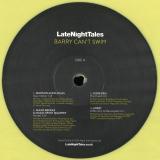
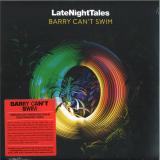
In the last two years, Barry Can’t Swim has released two albums – When Will We Land? and Loner. The debut was nominated for a Mercury Music Prize, winning 2024’s Best Dance Act on BBC Radio 1 and being nominated for Best Dance Act at the BRIT Awards in the same year. The latest album, 2025’s Loner, hit the top ten in the UK charts and was number one in the dance charts. This summer, Barry Can’t Swim cemented his position as one of the most singular new voices in electronic music with a gangbusting performance as a headliner at All Points East in London’s Victoria Park, building on his back-to-back performance with Bonobo at Coachella in 2024. Barry’s Late Night Tales mix brings together disparate styles and forms them into a coherent narrative. The powerful house tracks, like Lance DeSardi’s ‘Power of Suggestion’ and Daniel Avery’s remix of Factory Floor, intertwine with the abstract grooves of Freddie Da Stupid or Ronald Langestraat’s leftfield reading of Boz Scaggs’ ’70s smash ‘Lowdown’. There are exclusive tracks from Barry Can’t Swim himself (in the form of new single ‘Chala’ and an exclusive edit of Superpitcher’s ‘Yves’) and from friends and contemporaries, like Ninja Tune labelmate O’Flynn. Leaving aside the obvious quality of the mix, with its serpentine twists and dramatic turns, you can tell Josh is a fan of this series by bringing in his own personal poet, the brilliant Seamus, for the spoken word section right at the end. He’s a one-man Late Night Tales programmer.
- A1: Jackson Mico Milas - Sea, Interior
- A2: Majid Bekkas & Magic Spirit Quartet - Annabi
- A3: Jesse Bru - The Coast
- A4: Loket - Afternoon At Barenquell
- B1: Superpitcher - Yves (Exclusive Lnt Edit)
- B2: Scott Orr - Scott B3 Barry Can't Swim - Sometimes I Feel So Alone
- B4: Marigold Sun - Here Lies Love
- B5: Barry Can't Swim - Chala (My Soul Is On A Loop)
- B6: Freddy Da Stupid - Back To Pangea Part Ii (Jazzapella Version)
- C1: Factory Floor - How You Say(Daniel Avery Remix)
- C2: Ronald Langestraat - Lowdown
- C3: Lance Desardi - The Power Of Suggestion
- D1: O'flynn - Kola
- D2: Accelera Deck - This Bliss
- D3: Pépe - Goma (A-Mix)
- D4: This Mortal Coil - The Lacemaker
- D5: St Francis Hotel - Dawn
- D6: Barry Can't Swim - Ferdinand Magellan (Exclusive Felt Cover Version)
- D7: Seamus - Ultrasound (Exclusive Lnt Spoken Word Track)
Black Vinyl[24,58 €]
In the last two years, Barry Can’t Swim has released two albums – When Will We Land? and Loner. The debut was nominated for a Mercury Music Prize, winning 2024’s Best Dance Act on BBC Radio 1 and being nominated for Best Dance Act at the BRIT Awards in the same year. The latest album, 2025’s Loner, hit the top ten in the UK charts and was number one in the dance charts. This summer, Barry Can’t Swim cemented his position as one of the most singular new voices in electronic music with a gangbusting performance as a headliner at All Points East in London’s Victoria Park, building on his back-to-back performance with Bonobo at Coachella in 2024. Barry’s Late Night Tales mix brings together disparate styles and forms them into a coherent narrative. The powerful house tracks, like Lance DeSardi’s ‘Power of Suggestion’ and Daniel Avery’s remix of Factory Floor, intertwine with the abstract grooves of Freddie Da Stupid or Ronald Langestraat’s leftfield reading of Boz Scaggs’ ’70s smash ‘Lowdown’. There are exclusive tracks from Barry Can’t Swim himself (in the form of new single ‘Chala’ and an exclusive edit of Superpitcher’s ‘Yves’) and from friends and contemporaries, like Ninja Tune labelmate O’Flynn. Leaving aside the obvious quality of the mix, with its serpentine twists and dramatic turns, you can tell Josh is a fan of this series by bringing in his own personal poet, the brilliant Seamus, for the spoken word section right at the end. He’s a one-man Late Night Tales programmer.
- A1: Medication
- A2: Little Sally Tease
- A3: There Is A Storm Comin
- A4 19: Th Nervous Breakdown
- A5: Dirty Water
- A6: Pride And Devotion
- A7: Sometimes Good Guys Don't Wear White
- A8: Hey Joe, Where You Gonna Go?
- A9: Why Did You Hurt Me?
- B1: Rari
- B2: Why Pick On Me
- B3: Paint It Black
- B4: My Little Red Book
- B5: Sunshine Superman
- B6: Elanor Rigby
- B7: Try It
- B8: Barracuda
- B9: Riot On Sunset Strip
The debut studio album by the American rock band The Standells, Dirty Water was released by the Tower label in June of 1966. Taped in the midst of touring in a two-day session on April 4–5, 1966 at Audio Recording in Seattle, Washington, the LP takes its title from the homonymous song, which, along with its B-side "Rari," had been recorded on March 5, 1965, at Western Recorders in Hollywood, California and issued as a single. Dirty Water became the band's best-selling LP, peaking at #52 on the Billboard charts, and #39 in the Cashbox listings. The "Dirty Water" single peaked at #11 in Billboard and #8 in Cashbox. Along with Why Pick on Me, this is considered the group's strongest album.
- 1: Micha
- 2: Si Tu M’aimes Demain
- 3: Garçon Manqué
- 4: Tête Brûlée
- 5: Wherever You Hide, The Party Finds You
- 6: Cocoon
- 7: Ta Vedette
- 8: Cent Fois
- 9: Quelque Chose De
French chanson, electro beats, pared-down or synthetic piano: at 21, Iliona draws on all of this. Plural, multifaceted, elusive. Yet her lyrics resonate as if one were singing heartache—and the love one hopes for—for the very first time.
She composes, records, and produces her tracks alone, determined to keep them as close as possible to the tunes, harmonies, and silhouettes she holds in her mind. This time, they are infused with the light of an intense love, and still carried by extreme sparseness in their arrangements: nothing—from electronic arpeggios to melodic autotune—is ever superfluous; everything has its place. Lifted by a new lightness, the tracks also echo the spirit of the yéyé sound Iliona has been listening to for a few years, without necessarily knowing the name of every songwriter or the mark they left behind. It’s their longing for carefree abandon that hovers over the hypnotic Si tu m’aimes demain and its music video inspired by the New Wave, the Beatles, and all those future memories you begin to build when you’re in love.
A gentle warmth also sweeps through the hazy doo-wop contours of Tête brûlée, and the lo-fi twist of Cocoon; but always with that veil of shadow that once floated over the apparent nonchalance of Françoise Hardy’s songs. That unease, that worried smile, resurfaces in the lovely pop gallop of Garçon manqué, an ode to the deepest friendships—the ones you hold in your arms to dance or, sometimes, to cry. Or in the delicate Cent fois, which whispers, “when will the movie scenes we quietly dreamed of come to life?”
The answer, perhaps, lies in wherever you hide, the party finds you, a superb soundtrack to an imaginary drama, whose venomous keyboards unfold the pictorial strength of Iliona’s songs.
Vinyl gatefold jacket includes a 12x12 insert reproduction of the original LP jacket art.Recorded in 1956 and released in 1957, Supersonic Jazz is arguably the first long-playing album by Sun Ra and His Arkestra on his Saturn label. However, it was not recorded as a debut. Rather, the album was assembled from tapes recorded during a number of sessions at two Chicago studios (RCA Victor and Balkan), and several tracks had been released as singles before their inclusion on this album. (Sunny's first fully realized commercial album was 1957's Jazz by Sun Ra, produced by Tom Wilson on his short lived/soon to be defunct Transition label.) Prior to these sessions, Sunny was still arranging for the Red Saunders Orchestra and singer Joe Williams, in addition to arranging for and coaching doo-wop ensembles. As Sunny's ambitions achieved liftoff, the Arkestra coalesced, began building a repertoire (mostly of Ra's originals), and making forays into studios. Deciding it was time for commercial releases, Sunny and business partner Alton Abraham launched Saturn (sometimes called El Saturn) as a record company in 1956. As a first offering, Supersonic Jazz is a pinnacle Sun Ra release. While reflecting many prevailing bebop, Latin, and R&B conventions of the mid-1950s, it's evident that Sun Ra's musical voice and vision were starting to propel him away from the jazz mainstream. Biographer John Szwed finds on these recordings "characteristics which seemed alien to swing, bebop, or the new, more soulful and hard-edged music which was coming to be called hard bop."
Alvorada is Montanha’s first long play: an ambient-leaning work, nocturnal in mood yet touched by electricity, tracing a journey from waking activity into dream logic. Recorded mostly in the late hours of the evening with windows open to the city, letting its air and sounds influence the music, it sometimes reached the early moments of sunrise. The title, meaning “dawn,” reflects both the liminal hours of its making and the band’s own renewal. These tracks are closer to drawings than songs: narratives written between instruments, moments of tension and release, fragments of memory and dream. The tracklist follows this nocturnal voyage with the patience of Eno, the disquiet of Uematsu, and the madness of Miles Davis’ Decoy, oscillating between streets and sleep, routine and reverie.
Montanha was formed in 2010 by André Azevedo, Nuno Oliveira, João Sarnadas, and Tito Silva, bonding over architecture school all-nighters on videogame soundtracks (Age of Empires, Super Mario). They began as a psychedelic rock combo and in 2013 released their self-titled EP which introduced a raw, improvised energy. But the album that was meant to follow was abandoned as the band entered hiatus. The four members turned their creative drive towards co-founding Favela Discos, where experimentation with media and form reshaped their ideas of music, and developed their taste, their way of playing, and a more personal sound that was more open and disconnected from a defined genre.
By 2017, Montanha had returned to the studio with new experience, no longer a rock band in the traditional sense but a project devoted to improvisation and electronic soundscapes. An ever gentrifying city forced them to abandon acoustic drums, and they embraced electronic beats instead, and became mobile; one guitar dissolved into full synths, leaving the other to converse with bass. Improvisation remained their compass. In improvisation there are no mistakes, only missed opportunities. Montanha found their opportunity in the routine of the studio to break routines of pop and experimental. The result is a body of nearly fifty hours of recordings, sculpted into an album.
Alvorada is not only Montanha’s first LP but also the dawn of their new phase. Improvised yet carefully sculpted, the record expands the territory of the song into nonlinear narratives, letting the language of night, dream, and city seep into its form.
- A3: Main Theme & Final Boss Medley
- A4: Dignity Palace (Kain R. Heinlein Stage)
- A5: All Over With Blood (Freeman Stage)
- A6: Fullmoon - A Groan (Gato Stage)
- A7: Destruction Maniac (Grant Stage)
- B1: The Twelve Challengers (Player Select), Exotic Lady (Charlotte)
- B2: Darkness (Shiro Tokisada Amakusa 2)
- B3: Banquet Of Nature (Nakoruru) - Part 1 & Part 2
- B4: Ryuhaku Todoh Stage
- B5: The Primitive Age
- B6: The Age Of Rome
- C1: Ponponella
- C2: Vixen
- C3: The Super Spy, New World
- C4: Imputation
- C5: Game Start, Powering Up
- C6: Stage Medley
- C7: Change (Theme 2)
- C8: Termination (Ending 1)
- D1: Bioinformatics (Ufo Interior Passage 3)
- D2: The Cenotaph (Stage 4 Alternative Route~Ancient Ruins), Desert (Stage 4)
- D3: Secret Factory (Stage 3 Alternative Route~Armory)
- D4: Into The Cosmos (The Void Of Space)
- D5: Opening, Napolitan Blues, Duel R&D, Yuu, Psycho Soldier "K.o.f Version
- A1: Snk - Rhapsody For Piano
- A2: Intro, Stage 1, Stage Boss Medley
Relive the excitement of SNK's greatest games with this album featuring cult titles arranged entirely for piano!
Arranged and performed by pianist Nicolas Horvath, a Steinway and Sons artist renowned as a leading interpreter of composers such as Philip Glass, Franz Liszt, Claude Debussy, and Erik Satie.
The album contains a rich selection of tracks composed by the legendary SNK Sound Team, ranging from Prehistoric Isle to The King of Fighters 94, Samurai Shodown, The Last Blade, and Metal Slug 3.
Sometimes dark, sometimes bright, the arrangements beautifully and emotionally revisit the melodies that have marked several generations of gamers!
b a2 Intro, Stage 1, Stage Boss Medley [PREHISTORIC ISLE]
[c] a3 Main Theme & Final Boss Medley [PREHISTORIC ISLE]
[d] a4 Dignity Palace (Kain R. Heinlein Stage) [GAROU: MARK OF THE WOLVES]
[e] a5 All Over With Blood (Freeman Stage) [GAROU: MARK OF THE WOLVES]
[f] a6 Fullmoon - A Groan (Gato Stage) [GAROU: MARK OF THE WOLVES]
[g] a7 Destruction Maniac (Grant Stage) [GAROU: MARK OF THE WOLVES]
[h] b1 The Twelve Challengers (Player Select), Exotic Lady (Charlotte) [SAMURAI SHODOWN]
[i] b2 Darkness (Shiro Tokisada Amakusa 2) [SAMURAI SHODOWN]
[j] b3 Banquet of Nature (Nakoruru) - Part 1 & Part 2 [SAMURAI SHODOWN]
[k] b4 Ryuhaku Todoh Stage [ART OF FIGHTING]
[l] b5 The Primitive Age [TIME SOLDIERS]
[m] b6 The Age of Rome [TIME SOLDIERS]
[n] c1 PonPonella [ALPHA MISSION]
[o] c2 Vixen [THE SUPER SPY]
[p] c3 The Super Spy, New World [THE SUPER SPY]
[q] c4 Imputation [THE SUPER SPY]
[r] c5 Game Start, Powering Up [Vanguard]
[s] c6 Stage Medley [Vanguard]
[t] c7 Change (Theme 2) [THE LAST BLADE]
[u] c8 Termination (Ending 1) [THE LAST BLADE]
[v] d1 Bioinformatics (UFO Interior Passage 3) [METAL SLUG 3]
[w] d2 The Cenotaph (Stage 4 Alternative Route~Ancient Ruins), Desert (Stage 4) [METAL SLUG 3]
[x] d3 Secret Factory (Stage 3 Alternative Route~Armory) [METAL SLUG 3]
[y] d4 Into the Cosmos (The Void of Space) [METAL SLUG 3]
[z] d5 Opening, Napolitan Blues, Duel R&D, Yuu, Psycho Soldier "K.O.F Version" [THE KING OF FIGHTERS '94]
[b] a2 Intro, Stage 1, Stage Boss Medley [PREHISTORIC ISLE]
[c] a3 Main Theme & Final Boss Medley [PREHISTORIC ISLE]
[d] a4 Dignity Palace (Kain R. Heinlein Stage) [GAROU: MARK OF THE WOLVES]
[e] a5 All Over With Blood (Freeman Stage) [GAROU: MARK OF THE WOLVES]
[f] a6 Fullmoon - A Groan (Gato Stage) [GAROU: MARK OF THE WOLVES]
[g] a7 Destruction Maniac (Grant Stage) [GAROU: MARK OF THE WOLVES]
[h] b1 The Twelve Challengers (Player Select), Exotic Lady (Charlotte) [SAMURAI SHODOWN]
[i] b2 Darkness (Shiro Tokisada Amakusa 2) [SAMURAI SHODOWN]
[j] b3 Banquet of Nature (Nakoruru) - Part 1 & Part 2 [SAMURAI SHODOWN]
[k] b4 Ryuhaku Todoh Stage [ART OF FIGHTING]
[l] b5 The Primitive Age [TIME SOLDIERS]
[m] b6 The Age of Rome [TIME SOLDIERS]
[n] c1 PonPonella [ALPHA MISSION]
[o] c2 Vixen [THE SUPER SPY]
[p] c3 The Super Spy, New World [THE SUPER SPY]
[q] c4 Imputation [THE SUPER SPY]
[r] c5 Game Start, Powering Up [Vanguard]
[s] c6 Stage Medley [Vanguard]
[t] c7 Change (Theme 2) [THE LAST BLADE]
[u] c8 Termination (Ending 1) [THE LAST BLADE]
[v] d1 Bioinformatics (UFO Interior Passage 3) [METAL SLUG 3]
[w] d2 The Cenotaph (Stage 4 Alternative Route~Ancient Ruins), Desert (Stage 4) [METAL SLUG 3]
[x] d3 Secret Factory (Stage 3 Alternative Route~Armory) [METAL SLUG 3]
[y] d4 Into the Cosmos (The Void of Space) [METAL SLUG 3]
[z] d5 Opening, Napolitan Blues, Duel R&D, Yuu, Psycho Soldier "K.O.F Version" [THE KING OF FIGHTERS '94]
Clear Red Vinyl. In den späten 1990er Jahren zog Peter ,Sleazy" Christopherson mit Jhonn Balance - seinem Lebens- und Coil-Partner - von London ins ländliche Weston-super-Mare, und schuf ein Umfeld für alles, was ,musick, musick, musick!" heißt, mit einer wechselnden Mitgliedern, darunter Thighpaulsandra. Coil's Coil verdoppelte sich fast, und inmitten dieser fruchtbaren Zeit stellte Thighpaulsandra die einfache Frage: Warum spielt Coil nicht live? Nach einer 16 Jahren Wartezeit, dank des rasanten technischen Fortschritts in Form von MacBooks, DAWs, VSTs und Plug-ins waren Coil in der Lage, ihre Musik auf die Bühne zu bringen, wie sie es sich immer vorgestellt hatten. Mit der Performance konnten sie die Risiken und Freiheiten der Echtzeit-Klangmanipulation, wie Sleazy anmerkt: ,Die Show wird Minute für Minute umgestaltet die Show Minute für Minute... die Richtung ist sehr spontan, nicht so sehr in Jazz-Improvisation, sondern in einer Art Bewusstseinsstrom - Thighpaulsandra brachte uns seine Weisheit, und er konnte uns überzeugen, dass wir es schaffen konnten." Wenn Coil live spielten, waren sie, wie eine Schlange, die sich häutet" alle sechs Monate in etwas völlig anderes; in der Vorbereitung auf das 2004er "Even an Evil Fatigue"-Liveserie vorbereiteten, begannen Coil mit der Arbeit an ihrem nächsten, die Zeit definierenden Meisterwerk Black Antlers. Black Antlers zeigt die späte Coil-Periode: reduzierter, straffer und schlanker. Die Musik wurde rhythmischer, mit einer größeren Betonung auf Beats: ,Die Songs, die wir gemacht haben, sind eher... nicht Rock im eigentlichen Sinne, aber du weißt schon, konventioneller in Bezug auf die Struktur, aber jetzt ist das, was wir tun, eine Art elektronischen' Genre." Der Sound von Black Antlers ist eine mitreißende Energie, die Thighpaulsandras fortschrittliche Synthese, Balances poetische Lyrik und Christophersons Flirten mit Jazz und Ableton-gestütztem PowerBook Maximalismus. Vervollständigt wurde das Trio durch den renommierten Drehleierspieler Cliff Stapleton auf einer ,speziell in Auftrag gegebenen" elektrischen Variante, die sich in die ,seltsame und weltfremde Musik" der Band zu integrieren; der an der Royal Academy of Music ausgebildete Perkussionist Tom Edwards (der auch mit Thighpaulsandra in der der Live-Band von Spiritualized auftrat); und der Spezialist für europäische und nahöstliche Blasinstrumente Mike York an Pfeifen, Bombarde, Duduk und Balalaika.
A key label on the Berlin scene since the 1990s, Muller Records—famed for a deep and chunky club sound from artists like Dave DK, Claude Young and The Hacker—is back with a new EP from Beroshima feat Rummy Sharma with remixes from Namito and Pascal Hetzel. Beroshima, of course, is the production work of label Frank Muller sometimes accompanied by ethereal electronic music specialist Ulrich Schnauss. After more than twenty years together they have amassed a fine body of work that includes five albums and more than a hundred Eps!
Always mixing up acid, techno and tribal into something fresh, the Beroshima sound has its own unique signature.... For this latest single Muller steps up solo to produce another gem. The stellar Delhibelly is a slick and muscular cut that bubbles away on a bed of warming bass.... Smeared pads add soul and snares flap about like tin foil in a breeze. It's a futuristic cut that will always pack a punch in any context. The Techno Mix is just as soulful but is quicker and more expansive so as to carry dancers away on an uplifting groove. Namito is a Green Horn Records producer from Iran but based in Berlin. He is another veteran who is as relevant as ever and his mix slows things down to a deep, inviting roller with jazzy perc, absorbing synths and kinetic kicks driving things along in style. Finally Pascal Hetzel, fresh from his super CYRK release with Sierra Sam, completes this sterling great package.
His classy remix is another rounded affair full of warm synths and bass that is sure to keep energy and emotional levels high in any set. Once again here Muller Records have concocted a club ready record that both DJs and dancers will love.
- A1: Volume One (Original Mix) - Anjunabeats
- A2: Gravity (Original Mix) - Parker & Hanson
- A3: Northern Lights (Original Mix) - Smith & Pledger
- B1: Gravity (Original Mix) - P.o.s
- B2: Helsinki Scorchin' (Original Mix) - Super8 & Tab
- B3: Amsterdam (Original Mix) - Luminary
- C1: Black Is The Colour (Coco & Green Remix Edit) - Cara Dillon Vs. 2Devine
- C2: Elf (Original Mix Edit) - Bart Claessen
- C3: Chasing Love (Original Mix) - Maor Levi Feat. Ashley Tomberlin
- C4: Sun 2011 (Original Mix Edit) - Slusnik Luna
- C5: My Enemy (Rank 1 Remix Edit) - Super8 & Tab Feat. Julie Thompson
- D1: Downforce (Club Mix 2025 Vinyl Edit) - Nitrous Oxide
- D2: Sushi (Original Mix 2025 Vinyl Edit) - 7 Skies
- D3: Rebound (Original Mix Edit) - Arty & Mat Zo
- D4: Around The World (Original Mix Edit) - Arty
- D5: Easy (Original Mix Edit) - Mat Zo & Porter Robinson
- E1: In And Out Of Phase (Original Mix) - Andrew Bayer & Matt Lange Feat. Kerry Leva
- E2: Bloom (Original Mix) - Norin & Rad
- E3: Wayfarer (Original Mix Edit) - Audien
- F1: The Great Divide (Myon & Shane 54 Summer Of Love Mix Edit) - Velvetine
- F2: Big Ben (Original Mix Edit) - Ilan Bluestone
- F3: The Dark (Original Mix Edit) - Boom Jinx & Meredith Call
- F4: U (Original Mix) - Grum
- F5: Enceladus (Original Mix Edit) - Sunny Lax
- G5: All In (Original Mix) - Fatum, Genix, Jaytech & Judah
- G6: Lost (Original Mix) - Tinlicker Feat. Run Rivers
- H1: The Best Part (Original Mix) - Gardenstate & Anamē Feat. Bien
- H2: Midnight (Original Mix) - Andrew Bayer & Alison May
- H3: Sweet Feeling (Original Mix) - Amy Wiles & Leena Punks
- H4: Remission (Original Mix) - Kasablanca & Lane 8
- H5: Lifetime (Original Mix) - J Ribbon
- I1: Nobody Seems To Care (Original Mix) - 16Bl
- I2: Moth (Original Mix) - Jaytech & James Grant
- I3: A Sort Of Homecoming (Michael Cassette Extended Mix) - Paul Keeley
- J1: To The Six (Martin Roth Remix) - Boom Jinx & Andrew Bayer
- J2: Beautiful Life (Original Mix) - Martin Roth
- J3: Shadow's Movement (Original Mix) - Michael Cassette
- K1: Be Mine (Original Mix) - Lane 8
- K2: Got This Feeling (Original Mix) - Cubicolor
- K3: Wyv Auw Chu (Original Mix) - Tom Middleton
- L1: Mr Man (Original Mix) - Dusky
- L2: Personal Space (Original Mix) - Yotto
- L3: Deep In My Soul (Original Mix) - 16Bl
- M1: Night Blooming Jasmine (Rodriguez Jr. Remix) - Eli & Fur
- M2: Need You (Original Mix) - Luttrell
- M3: Tuesday Maybe (Original Mix) - Way Out West
- N1: Breathing (Original Mix) - Ben Böhmer, Nils Hoffmann & Malou
- N2: Come Together (Original Mix) - Nox Vahn & Marsh
- G1: Nightwalk (Original Mix 2025 Vinyl Edit) - Spencer Brown
- N3: Sleepwalker (Extended Mix) - Tinlicker
- G3: Only Road (Cosmic Gate Remix) - Gabriel & Dresden Feat. Sub Teal
- N4: Room 1.5 (Original Mix) - Joseph Ray
- O1: Nightwhisper (Original Mix) - Jody Wisternoff & James Grant
- O2: Sometimes It's Scary But It's Still Just You And Me (Original Mix) - Leaving Laurel
- O3: Externalizer (Original Mix) - Dosem
- O4: Never Really Get There (Original Mix) - Cri Feat. Jesse Mac Cormack
- O5: Proud (Original Mix) - Qrion
- P1: Overtones (Extended Mix) - Frost
- P2: Points Beyond (Original Mix) - Cubicolor
- P3: Muse (Original Mix) - Rezident Feat. Kate Morgan
- P4: Surge (Proff & Igor Garanin Remix) - Above & Beyond
- P5: Next To You (Original Mix) - Romain Garcia
- Q1: Tri-State (Original Mix 2025 Vinyl Edit) - Above & Beyond
- Q2: Careless Love (Original Mix) - Croquet Club
- Q3: 8 Hours, Still No Rain (Original Mix) - Hosini & Jones Meadow
- Q4: Lose Sight (Original Mix) - Andrew Bayer Feat. Ane Brun
- Q5: Before We Drown (Original Mix) - Boerd Feat. Stella Explorer
- R1: Strength From Inside (Original Mix) - Above & Beyond
- R2: Sleep Is Sacrament (Original Mix) - Cephas Azariah
- R3: Kyoto (京都) (Original Mix) - Mark Barrott
- R4: Happiness (Original Mix) - Omfeel
- R5: Silhouette (Original Mix) - Yotto
- S1: Razorfish (Above & Beyond's Progressive Mix 2025 Vinyl Edit) - Tranquility Base
- S2: Anphonic (Original Mix Edit) - Above & Beyond Vs. Kyau & Albert
- S3: Hello (Original Mix Edit) - Above & Beyond
- S4: There's Only You (Above & Beyond Club Mix) - Above & Beyond Feat. Zoë Johnston
- G2: Higher Love (Original Mix) - Seven Lions & Jason Ross Feat. Paul Meany
- G4: Lovingly (Original Mix) - Oliver Smith Feat. Amy J Pryce
- S5: Screwdriver (Original Mix Edit) - Above & Beyond
- T1: On A Good Day (Above & Beyond Club Mix Edit) - Above & Beyond Pres. Oceanlab
- T2: Sun & Moon (Original Mix) - Above & Beyond Feat. Richard Bedford
- T3: We're All We Need (Original Mix) - Above & Beyond Feat. Zoë Johnston
- T4: Northern Soul (Original Mix) - Above & Beyond Feat. Richard Bedford
- T5: Quicksand (Don't Go) (Original Mix) - Above & Beyond And Zoë Johnston
From its modest beginnings as a university project, Anjuna has grown to become one of the most influential forces in electronic music. What began as, and remains, a passion project has evolved into a global electronic music powerhouse. Led by Jono Grant, Paavo Siljamäki, Tony McGuinness (better known as Above & Beyond) and label exec James Grant - Anjuna now spans three distinctive imprints: Anjunabeats, Anjunadeep and Anjunachill. To mark the label’s 25th anniversary, Above & Beyond and James have carefully curated a selection of picks from its rich catalogue that includes countless genre defining releases to present the label’s most expansive vinyl offering to date.
Covering the full spectrum of that 25 year journey, the ten vinyl box chronicles 84 of the label’s most iconic releases across all three labels, including a vinyl dedicated to label founders Above & Beyond. Encased in a custom outer slipcase box with a debossed foil Anjuna25 logo. Accompanying the ten vinyl is a 48-page perfect-bound booklet printed on premium art paper and textured cover stock, featuring track-by-track insights from artists and Anjuna HQ staffers delving into the stories behind each record and their reflections on 25 years of music. The Anjuna25 anniversary box set is a beautifully presented tribute to 25 years of innovation, artistry and emotional connection.
"It may surprise some that, after two decades of silent films, when Alam Ara broke the silence in 1931, it and every South Asian talkie that followed was what we in the West think of as a "musical." Music had been integral to the culture's staged drama going back to the Gupta Dynasty — sometime between the 4 th and 6 th Century CE. Since its inception, South Asian cinema drew heavily from Marathi, Parsi, and Bengali musical theatre and silent film screenings were often accompanied by live music to mimic a live staged experience.
When sound films arrived, actors with serious singing skills became the next wave of stars. Songs were performed live while shooting, with musicians hidden off-camera, to the side or sometimes even in trees. Playback singing — the practice of dubbing a real singer's voice over a lip-syncing actor — didn't become standard until the 1940s.
Thus, the biggest stars of the 1930s were also the greatest singers, with some, like Govindrao Tembe and Pankaj Mullick, excelling as both composers and vocalists. None, however, were more beloved than K.L. Saigal, whose emotional, untrained crooning captivated audiences across the subcontinent. Saigal's voice inspired a young Lata Mangeshkar, who vowed to become India's greatest filmi singer to win his heart. Sadly, Saigal grew increasingly addicted to alcohol, unable to perform without it, and passed away at age 42, seven months before the Partition. Lata never married.
This collection features some of the earliest songs from South Asian cinema, sourced from CDs and LPs found in Jackson Heights, Queens, Coney Island Avenue in Brooklyn, Lexington Avenue in Manhattan, and Oak Tree Road in Iselin, New Jersey — areas home to vibrant immigrant communities. South Asian immigration to New York and New Jersey surged after the 1965 Immigration and Nationality Act, which lifted non-European quotas. By the 1990s and 2000s, the region's Indian, Pakistani, and Bangladeshi media outlets flourished, especially in Jackson Heights, where such stores outnumbered the total number of regular record shops throughout the five boroughs.
The nascent period of sound film featured a limited palette of musical styles, predominantly Marathi Bhagveet, like the Ghazal, but with greater flexibility of subject matter and rhythm, and Rabindra Sangeet, the approximately 2,000 songs and poems composed by Bengali Nobel laureate Rabindranath Tagore. But there was some evolution as well, with the success of South Asian cinema's first woman composer, the classically trained Saraswati Devi, and the introduction of Western instruments including the piano and Hawaiian guitar.
While much of the music was dark and brooding, perhaps exemplified best by Devika Rani's interpretation of Saraswati Devi's "Udi Hawa Mein" from 1936's Achhut Kannya (Untouchable Maiden), there were moments of brightness, such as R.C. Boral's "Lachhmi Murat Daras Dikhaye" sung by Kanan Devi in Street Singer, an otherwise thoroughly depressing film from 1938 that cemented Devi's and co-star K.L. Saigal's superstardom.
This selection was chosen to emphasise a range of expressivity, instrumentation and style achieved even within the decade's relatively limited scope, setting the listener up for the relative explosion of possibility in the 1940s, to be covered in the next installment of this series."
- The Slammer
- Bruiser
- Incarcerate The Rich
- Disco Misfits
- Their Law
- Vive Le Rok
- Mofo Face
- Superficial Intelligence
- Never Mind The Botox
- Built For Fun
- Play A Fast 'Un
- Where There's Hope
Formed in the mid-eighties Midlands, they are still not only eating pop but spewing it up in a chaos of thrilling ideas on new album ‘Delete Everything’. Their eighth record sees them further refine, define and deconstruct their melange of industrial rock, loop da loop techno, gonzoid hip hop and punk rock into a series of captivating sci-fi anthems. The band still look and sound like they have stepped out the pages of 2000 AD magazine with Graham Crabb and Mary Byker trading vocals like bouncing Duracell bunnies to the itching, compulsive beats surrounding them. Davey Bennett brings the bottom end and Cliff Hewitt plays the beats whilst Adam Mole delivers guitar aggro and sometimes waves his keyboard around with a delinquent glee. Still creative, still in a world of their own Pop Will Eat Itself have deleted everything and started all over again.