Cardinal Fuzz (Europe) and Feeding Tube Records (N.America) present to you - A vinyl issue of the killer CD comp that SS Records released way back in 2004 with a couple of added treats. Brace yourself for some steller hair singeing full throttle wipe outs across 4 slabs of heavy black vinyl. Comes with a folded A3 double sided insert.
Monoshock was one of THE best bands of the 90s and if they were from Seattle and not Illa Vista & Oakland, California you would already know that. During their six years they released a handful of 7"s, served as a backing band for Von Lmo, and created one of the classic psych albums of all time, Walk to the Fire. In the last few years they received praise from around the globe, raved up by Julian Cope as one of the great unknown bands of the 90s and cited as an influence by current heavy faves, Comets on Fire, as well as a whole slew of Japanese psych bands. Monoshock is fuzz-fuel, wah-wah damaged, riff-crazed punk rock which draws in Hawkwind, the Stooges, Simply Saucer, and other psych-punk gods. This double LP collects all their 7"s and comp tracks together with 7 previously unreleased tunes and two songs from their ultra-rare 1989 demo tape and 2 added digi bonus Live tracks from their reunion shows. Fans will be overjoyed. Virgins will become fans.
The band's stellar Walk to the Fire has been acknowledged as one of the classic psych albums of all time.
Search:super unknown
Unknown recording outside Ethiopia which documents Mergia Hailu & The Walias legendary early period. Beautifully-rendered instrumentals of classic Ethiopian standards, "Tezeta"is the follow-up reissue of the hugely popular seminal Ethiopian instrumentals LP "Tche Belew" (ATFA012). It was a Cassette-only release in 1975 on the band's in-house label, to fund their record store. From their genesis as members of the Venus club in-house band in the early 70s, Hailu Mergia and the Walias Band were at the forefront of the musical revolution during an era where modern instruments and foreign styles superseded the traditional fare to become the staple sound of Ethiopia. No one would argue that the Walias were the trailblazing powerhouse of modern Ethiopian music. They were the first band to form independently without affiliation to a theatre house, a club or a hotel; unprecedented and risky as they had to raise all funding for expenses by themselves including buying equipment. They were the first to release full instrumental albums, considered to be commercially unviable at the time. They opened their own recording studio, with band members Melake Gebre and Mahmoud Aman doubling as technical buffs during sessions. They were also the first independent band to tour abroad. In short, they were the pioneers every band tried to emulate; some more successfully than others. Odds are, any Ethiopian over the age of 35 who had access to TV or radio by the early 90s, will instantly recognize the sound of Walias. What is not a given is, how many would actually identify the band itself. Barely a day went by without hearing the Walias either in the background on radio or as an accompaniment to various programs on TV. This Tezeta album, the band's second recording, released in 1975, is one of those that have been impossible to find for nearly three decades. Sourced by Awesome Tapes From Africa and expertly remastered by Jessica Thompson, its unique and funky renditions of standards and popular songs of the day are so quintessentially Walias, flavorful and evocative. Hailu's melodic organ, unashamedly front and center in every track, makes even the complex pieces accessible. Profoundly engaging; it's an immersive trip down memory lane for those of us getting reacquainted with it, while also an enthralling and gratifying experience for fresh ears.
In 1970 Barney Wilen assembled a team of filmmakers, technicians and musicians to travel to Africa for the purpose of recordi ng the music of the native pygmy tribes. Upon returning to Paris two years later, he created Moshi, a dark, eccentric effort fusing avantjazz sensibilities with African rhythms, ambient sound effects and melodies rootedin American blues traditions. Cut withFrench and African players including guitarist Pierre Chaze, pianist Michel Graillier and percussionist Didier Leon , this is music with few precedents or followers, spanning from extraterrestrial dissonance to earthbound, streetlegal funk. Wilen pays little heed to conventional structure, assembling tracks like "Afrika Freak Out" and "Zombizar" from spare parts of inde terminate origins. (Jason Ankeny, AMG)
Revelatory reissue of Barney Wilen’s ambitious jazz-fusion journey, Moshi (1972), presenting the legendary French jazzman and Miles Davis-sideman’s wildly ambitious effort fusing recordings of Pygmy tribes with African rhythms and stellar avantjazz leanings, sounding little like anything before or since its release. (boomkat)
Super rare and long out of print, the ground-breaking 1972 album from saxophonist Barney Wilen receives a reissue treatment of the highest order. Complete with a 20-page booklet and a never before seen DVD chronicling Wilen’s trip to Africa, this one is sure to be a delight for fans old and new. The deepest spiritual jazz grooves meet field recordings from the Upper Volta and b eyond, whilst psych rock influences collide with hypnotic and shamanistic percussion work. Truly one of the most out -there jazz records we’ve stocked for a long time! (bleep)
Originally issued by the seminal imprint Saravah in 1972, and among the most uncategorizable and sought after artefacts of the French avant-garde, Barney Wilen’s Moshi is nothing short of a masterpiece - long holding a coveted spot in the hearts of adventurous listeners and record collectors alike. A wild unkept cultural collage. A series of sonic experiments. A spiritual, psychedelic pilgrimage into the unknown - darting from one continent to the next, each of its tangents building toward a more optimist world view through ordered sound. Its scope remains as difficult to understand today as it was when it was released. Now brought back into the light by Souffle Continu, this is a moment to be celebrated far and wide. (Soundohm)
Deluxe reissue with additional artwork & remastered audio. 20-page booklet including rare pictures, sheet music & original liner notes. Bonus DVD with exclusive artwork of Caroline de Bendern’s movie « à l’intention de Mlle Issoufou à Bilma » documenting this incredible african journey.
In 1970 Barney Wilen assembled a team of filmmakers, technicians and musicians to travel to Africa for the purpose of recordi ng the music of the native pygmy tribes. Upon returning to Paris two years later, he created Moshi, a dark, eccentric effort fusing avantjazz sensibilities with African rhythms, ambient sound effects and melodies rootedin American blues traditions. Cut withFrench and African players including guitarist Pierre Chaze, pianist Michel Graillier and percussionist Didier Leon , this is music with few precedents or followers, spanning from extraterrestrial dissonance to earthbound, streetlegal funk. Wilen pays little heed to conventional structure, assembling tracks like "Afrika Freak Out" and "Zombizar" from spare parts of inde terminate origins. (Jason Ankeny, AMG)
Revelatory reissue of Barney Wilen’s ambitious jazz-fusion journey, Moshi (1972), presenting the legendary French jazzman and Miles Davis-sideman’s wildly ambitious effort fusing recordings of Pygmy tribes with African rhythms and stellar avantjazz leanings, sounding little like anything before or since its release. (boomkat)
Super rare and long out of print, the ground-breaking 1972 album from saxophonist Barney Wilen receives a reissue treatment of the highest order. Complete with a 20-page booklet and a never before seen DVD chronicling Wilen’s trip to Africa, this one is sure to be a delight for fans old and new. The deepest spiritual jazz grooves meet field recordings from the Upper Volta and b eyond, whilst psych rock influences collide with hypnotic and shamanistic percussion work. Truly one of the most out -there jazz records we’ve stocked for a long time! (bleep)
Originally issued by the seminal imprint Saravah in 1972, and among the most uncategorizable and sought after artefacts of the French avant-garde, Barney Wilen’s Moshi is nothing short of a masterpiece - long holding a coveted spot in the hearts of adventurous listeners and record collectors alike. A wild unkept cultural collage. A series of sonic experiments. A spiritual, psychedelic pilgrimage into the unknown - darting from one continent to the next, each of its tangents building toward a more optimist world view through ordered sound. Its scope remains as difficult to understand today as it was when it was released. Now brought back into the light by Souffle Continu, this is a moment to be celebrated far and wide. (Soundohm)
Deluxe reissue with additional artwork & remastered audio. 20-page booklet including rare pictures, sheet music & original liner notes. Bonus DVD with exclusive artwork of Caroline de Bendern’s movie « à l’intention de Mlle Issoufou à Bilma » documenting this incredible african journey.
- 1: La'fez - This Is The Way I Am
- 2: Ice Cold Love - Sheer Magic
- 3: Young Mods - Gloria
- 4: Harvey & The Phenomenals - What Can I Do (To Prove My Love Is Real)
- 5: Bobby Wade - Can't You Hear Me Calling
- 6: The Soul Superbs - Just Ask Me
- 7: Now - Lovin' You Is Easy
- 8: Los Nombres - Just Call Me
- 9: Iron Knowledge - Oh Love
- 10: Foreign Blue Renaisance - Oh Yes I Do
- 11: The Donations - I'm Gonna Treat You Good
- 12: Unknown Boddie Artist - I Do Love You
The third installment of Numero’s ode to lowrider souldies, Rust Side Story compiles highly sought after sweet soul singles from the Buck Eye State. Prepare for a low and slow ride from Youngstown to Dayton, Cleveland to Columbus, Toledo to Cincinnati, all soundtracked with silky falsettos and dreamy harmonies
Paperback: 256 pages
Product Dimensions: 12.9 cm x 19.8 cm x 2 cm
• The first book to detail exactly what DJing is like for the 99% of DJs who never make it big.
• Covering electro, hip hop, rare groove, acid house, rave and the UK underground club scene, it’s a 30-odd year tale of a life lived in dance music.
• ‘Long Relationships’ is full of tales of clubs, raves, warehouses, DJing, music, record production, record deals, low-level international travel, shady promoters, dodgy club security, magical dance floor moments and much more.
Written by former DJ/producer Harold Heath, ‘Long Relationships: My Incredible Journey From
Unknown DJ to Small-time DJ’ is a biographical account of a DJ career defined by a deep love of music and a shallow amount of success.
‘Long Relationships’ is a love letter to DJing and to every small-town DJ who never made it to the big time but whose life was enriched and improved by DJing anyway. It’s packed with tales of gigs, clubs, raves, warehouses, music, record production and record deals, low-rent international travel, shady promoters, dodgy club security, magical dance floor moments and much more.
If you ever DJed, if you ever lost yourself on a dance floor, or if you ever simply fell in love with the potential contained within a dark basement, a strobe and a sound system, then this story is your story.
"Like with footballers, there are a plethora of lower-tier DJs who are just as gifted as their superstar compatriots, but for one reason or another don’t make it beyond the Vauxhall Conference league. Harold Heath is one of them. Full of highs and lows, his journey as a DJ who didn’t quite ‘make it’ is a compelling tale."
Carl Loben, DJ Mag Editor in Chief
“Excellent, well-written book which looks at the scene from a perspective we don’t usually get. Filled with great stories and anecdotes that had me hooked from beginning to end. A recommended read both for newbies and old veterans alike.”
DJ Colin Dale
TRANSVITAEXPRESS is a psycho-phonic tale of the afterlife. Maybe one of the weirdest italian albums ever released.
'TRANSVITAEXPRESS is the sonorous realization of an idea that had been developing in me for some time and to which the encounter with the poet Barbarino gave the decisive push. I used the "tape-sound" technique, that is the organization and integration of sounds, noises, speech, song and rhythm, of which the resulting sound, being the result of electronic manipulation of the sound events themselves, is audible, therefore repeatable, only by means of magnetic tape. The sound material is, in part, reportage, so the work often takes on the character of a “disc-truth”, in part it is a faithful reconstruction of parapsychological events. We have defined this work "Psycho-phonic tale" in fact it is a sound experience, that is, a journey into the world of sounds of an "afterlife", rooted in us due to childhood, ancestral reminiscences, superstitions, legends, anxieties, utopias and above all fear. Fear of the mystery, fear of the unknown.
TRANSVITAEXPRESS is therefore the sound representation of these cultural and existential limits, and is therefore a critical, liberating, provocative work. I certainly do not expect, and perhaps I do not want someone after having listened to tell me that it is "beautiful".
TRANSVITAEXPRESS is the name of a train full of ... that travels in an afterlife so "beyond" that it coincides with the most central point of my ego. Perhaps the most logical "end-continuation" of life, the least imaginative, the least corrupt. The distortions, things that are too, or too little, defined, realistic situations, clichés, monotheisms and captions are embedded in the most traditional dream fabric, the most suitable in my opinion to promote approaches with the mysterious, with the esoteric, with the magical.'
M. GIOMBINI
In 2018, Sean Worsey, a successful lawyer in California, began to receive some rather surprising emails. These were not from prospective clients, or about current cases he was working on, but rather queries from record collectors. They wanted more details about a pair of obscure, largely forgotten records he’d made in the mid 1980s as part of a virtually unknown band called Passion Theatre. To say he was surprised is an understatement. “People from around the world were emailing, calling and messaging us about the music, particularly a track called ‘Vacation Day’,” he says. “Our records were rare and gaining in value, mainly because there were not many manufactured at the time. By 2019, several individuals in the music industry had emailed me about licensing tracks.”
We eventually agreed with Sean to include ‘Vacation Day’, on Charles Bals’ second compilation, Retour Au Club Meduse. Impressed with the quality of the compilation Sean approached us again to discuss whether we would be interested in reissuing both of his old EP’s in full, an idea he’d been considering for a few months already. We jumped at the idea of course and have spent the last few months putting the reissue project together. The original studio tapes were long gone but a friend of Sean’s had some mint vinyl copies which we had shipped over from California to use as the master source, restored and mastered superbly by Technology Works in London. The striking original artwork from the two EP’s has been faithfully reworked into a gatefold double vinyl LP by designer Asger Behncke Jacobsen and features extensive interview/sleeve notes by Matt Anniss.
In the words of Sean Worsey - “One of the nicest things about the renewed interest in our music is that we can now enjoy it for what it is – back then we were a bit too worried about succeeding.”
Ridiculously rare & sought after private pressed 45 from Atlanta, Georgia, that hardly ever turns up for sale in its original issue. It features the seemingly widely unknown pounding modern soul dancer "I Wanna Take A Chance With You", an absolutely killer tune with stellar production and vocals from the talented Early. A side's "Who Are You " is an intimate and deep piece of soul music with superb songwriting techniques.
Featured on the playlists of very few crate digging DJ's out there, this 45 gets an overdue and legitimate repress in its original form. Essential! Born and raised on a small farm in the heart of Georgia, lead singer and guitarist Early Clover started his own band Early Clover and The Bosa Novas' at the age of 14. In1967,
he changed the band's name to the Middle Georgia Soul Drifters'. They became very popular locally and began being the backup band for such acts as Rufus Thomas, Joe Simon, William Bell, Jay Hines, Nancy Butts, and opening for such acts as Tyrone Davis, Marvin Sease, Clarence Carter, Betty Wright and Full Force. After the breakup of the group, Early Clover put together some musicians and went to Haywood Recording Studios in Atlanta, Georgia, and recorded Who Are You' and I Wanna Take A Chance With You' in 1977 to be a part of an album, but went on the road and didn't complete the album but performed the
song live a year and a half before releasing it as a 45 rpm single.
As has often been noted, psychedelic music can involve causal links between getting out of it and getting into it. Conversely, expansion of consciousness can be found by heading deep into the roots that a band explores, and journeying to the centre of their inspiration. Thus, a curious paradox is attained, whereby the traditional elements of an outfit’s sound are superseded by them blasting their core vibrations into unchartered territory. Such is the case with the new opus from third-eye visionaries Hills, a dizzying journey that traverses through the band’s origins and beyond to new dimensions.The Gothenburg-based Hills are entering their ninth year of existence, in which they’ve released two full-length albums, the second of which, ‘Master Sleeps’ saw a vinyl outing on Rocket last year. Part of a rich scene in their homestead also including friends and Rocket Recordings label mates Goat, they form the new chapter in a tradition of Swedish psychedelia that found its origins in late-’60s and early ‘70s freakouts and mind-melts by the likes of Baby Grandmothers and Älgarnas Trädgård - not to mention the unholy trinity of Pärson Sound, International Harvester and Träd Gräs och Stenar - before being developed by the likes of The Spacious Mind and Dungen in the last two decades. These inspirations make their mark on ‘Frid’ by journeying inward, via mantric repetition and hip-shaking pulsations as on the ten-minute monolith, ‘ Och Solen Sänkte Sig Röd’, yet they can also lurch into the unknown via the fuzz/wah odysseys of the aptly monikered ‘National Drone’ and the ceremonial exhortations of the closing ‘Death Will Find A Way.’As they also showed recently at a rare and spellbinding appearance at Liverpool International Festival Of Psychedelia, Hills have landed on a rich and intoxicating sound that sidesteps the cliches and humdrum stylistic foibles that often plague modern-day psych, in the process breathing new life into an approach that can sometimes seem in danger of appearing redundant through lack of imagination. ‘Frid’, their most out-of-mind and out-of-sight effort to date, crystallises everything that makes these Scandinavian satyrs stand out from the global herd; adventurous experimentation and fearless hallucinatory intensity, rendered with brass-knuckle fortitude. The end result is 38 minutes that translate into a feast for seasoned crate-diggers and fresh-faced converts alike. There is, indeed, gold in these here Hills.
"Over the years, I have had the absolute pleasure of meeting countless wonderful people in every corner of this beautiful planet, and a lot of times these music enthusiasts have expressed a very similar-sounding story. That our presence – whether it be via a studio recording or our ferocious show – is capable of transporting them to a better place and washing away all earthly worries. Doesn't this sound amazing – especially during these challenging times?"
This gentle voice belongs to the vocalist-guitarist Jonne Järvelä, who happens to be the creative force behind the unique Finnish ensemble KORPIKLAANI. Having experienced multiple triumphant years within the inner circle of folk-influenced heavy metal, Jonne now acknowledges his position as one of the most recognisable artists ever coming from the land of a hundred thousand lakes.
KORPIKLAANI – preceded by Jonne's own project SHAMAANI DUO (1993-1997) and the band SHAMAN (1997-2003) – was founded somewhere deep in the primeval northern forests in 2003. Ten celebrated studio albums, numerous world tours and hundreds of millions of digital streams alongside multiple other releases, have established KORPIKLAANI’s status as one of the leaders of innovative heavy music. For their diehard legion of fans, they are known as Folk Metal Superstars.
"I have always been fascinated by ancient Lappish/Samish culture and the infectious melodies of aged folk songs. However, that's only one side of the coin as I have loved rip-roaring metal since I was a frantic kid looking for some rebellious sounds. My butt was kicked by the likes of MOTÖRHEAD, IRON MAIDEN and JUDAS PRIEST", says Jonne.
"Since the early 2000s, KORPIKLAANI has combined these elements as we have tirelessly attempted to pump new life into the ancient tales of joy and heartbreak, and added the enormous energy of current heavy metal into that folk metal melting pot.We have always been on a mission to create something new and unprecedented."
Here and now, KORPIKLAANI’s fearless journey continues on – and this time, the journey is powered by rather serious subject matter. Their eleventh full-length studio record "Jylhä" (which has no direct translation but can be described as majestic, or wild and rugged in a beautiful way) brings all the well-known and essential ingredients to the table: heavy-duty guitar riffing, rhythmic folk melodies and more.
What about the tales of the wilderness then? The fascinating and miscellaneous tales have always been a crucial part of KORPIKLAANI’s journey within the realms of unspoiled Finnish nature, ancient Scandinavian myths, shamanistic voyages and beyond. "Did I already mention that "Jylhä" offers some new angles?", the singer/guitarist laughs. "Well, lyrically, there are definitely some previously unknown passages – such as fables connected to the infamous Lake Bodom murders in Southern Finland in early 1960s."
KORPIKLAANI’s long-time lyricist Tuomas Keskimäki – the renowned Finnish poet and author, comments: "When I am coming up with narratives, interesting wordplays and other ideas for KORPIKLAANI, I often feel like I am diving into some absorbing fantasy world. I would describe this state of mind as some kind of a deep trance", says Keskimäki.
"As a whole textual piece, "Jylhä" is rather widespread. For example, there are stories about the fragility of life, revealed by using nature metaphors. ‘Miero’ is one of these tales: after all, it's a fact that the lifetime of a human being is just one blink of an eye compared to the eternal aeons of the cosmos."
"On the darker side, there are several murder songs - I wasn't really planning these rather untraditional lyrics, they just happened... One of these is ‘Kiuru’, and that story is inspired by a famous Finnish double homicide case, which took place in the small village of Tulilahti in 1959. In these lyrics, the character called Kiuru – Skylark in English – acts as eyewitness and a prophet, but at the same time, this creature also functions as an allegory of many things... All in all, I am really happy with the lyrics and all these new themes!"
When asked about his current sentiment regarding the new KORPIKLAANI opus "Jylhä", the commander of the forest clan sighs and smiles. "Using "Jylhä" as our solid steppingstone, we are able to reach completely new heights. For me, it's crystal clear that KORPIKLANI has never been better."
It is a fitting album for our dark times, summed up well by the song ‘Huolettomat’ (The Careless). It talks about living in the present moment, alongside a story of joy and celebration. Today is today, tomorrow is uncertain.
Wretched Cuts is the new solo EP by gender-nonconforming techno artist, Projekt Gestalten. The release comes via the New York’s Mild Fantasy imprint run by DJ Elle Dee and features three original themes focusing on introspective techno plus a remix by veteran, The Lady Machine.
The project reflects an array of themes using as the starting point the story of Estamira and the Brazilian documentary of the same name, telling her life story. Estamira was an incredibly enlightened older woman who scattered one of the largest landfills of Rio de Janeiro for food. Not because she had to, but because she loved that place as she loved “her own children” and enjoyed making a living out of other people’s disposable goods. Simultaneously, while dealing with schizophrenia and abuse, she believed she was a superior spiritual being whose magical powers could control time, space, and other elements of nature.
The tracks are inspired by some of her most memorable quotes and moments that made an impact on Projekt Gestalten. “Wise People In Reverse” goes into a darker approach and samples Estamira’s voice talking in a mysterious unknown language with an unrevealed force, using only a broken piece of a telephone that she had just found it in the trash. “Morte Macaca” takes a rhythmic approach towards dub techno, and “Holographic Principle” gets trippier and hallucinogenic with Projekt Gestalten’s signature acid lines. The Lady Machine’s “Wise People In Reverse” remix takes the original theme to a driving, peak hour approach and transforms it into an effective DJ tool.
“There are no more innocent people on Earth, only wise people in reverse”.
- 01: Cuore Nero - Samurai
- 02: S.u.b.u.r.r.a. - Manfredi &Amp; Cinaglia
- 03: S.u.b.u.r.r.a. Theme Song
- 04: Fiore Dell&Apos;Infame - Angelica &Amp; Nadia
- 05: La Giostra - Anacleti&Apos;S Groove
- 06: É Ora Di Andare - Spadino
- 07: Scivola Via - Aureliano
- 08: Su Di Me - Cinaglia
- 09: É Ora Di Andare (F.f. Rmx)
- 10: Overture
Netflix's acclaimed series Suburra: Blood on Rome (available in over 190 countries) focuses on the deep connections between politics and organised crime in the Italian capital. The soundtrack to the third and final season was written, produced and performed by Roman rapper and songwriter PIOTTA, whose "7 Vizi Capitale" was already the theme song for seasons 1 and 2. His music beautifully complements the gripping plot and the characters' journey, capturing the atmosphere of a side of Rome unknown to many. The vinyl LP contains 10 previously unreleased tracks, including 2 instrumentals and a remix; the CD features 3 bonus tracks.
With 9 albums under his belt, Tommaso Zanello, also known as PIOTTA, is one of the pioneers of Italian hip hop. Active on the Roman rap scene since the mid-90s, he earned national fame with his award-winning single "Supercafone" (1998), which was later used by Sky Japan as a theme song for the Italian football championship. He can boast collaborations with hip hop legend Afrika Bambaataa and English musician Captain Sensible and has toured the United States with the Vans Warped Tour.
By 1995 Kwaito was already a well established and distinguishable sound compared to the International House Remixes that preceded. The tempo was slowed down, Soulful vocal samples were replaced by catchy and repetitive hooks and versus sang in vernacular. The new hit sound had a template and studios worked around the clock to pump fresh releases into the demanding market.
After the successful 1995 release of Import mixes Vol 4, The Groove City team behind the productions now decided to venture into the territory of Mid Tempo. They would craft an album for a young frontman with the help of Kwaito pioneer Oscar Warona, and without much trouble, the team had their first hit on their hands. Filling the boots of their cars with copies of the cassettes and taking the stock to various townships around Johannesburg the tape quickly circulated and sold out every new batch that was printed. Demand was high for the release but as with much of the music at the time, the fast paced demand for the music moved on. Without a follow up release Scotch failed to ride the momentum built by the debut and remained largely unknown although he is still in the music industry to this day.
Even with their first artist release being a success, the following years proved more difficult in reaching such a large audience for the Kaleidosound studio. With popularity for the genre growing, the simple templates for early classics were changing as Kwaito fused with hip hop. Rapping took over as the preferred vocals for the masses. Mysterious production teams and labels that served as guides for music lovers were eclipsed by frontmen and groups that could draw crowds. The fight for fresh sounds continued as the airwaves became the main battleground for artists and the more club oriented music was pushed back underground, eventually evolving into some of the earliest examples of Deep House seen on the continent. The Kaleidosound production team would finally strike gold again in 1997 when reviving Groove City for vol. 5 which acted as the debut for the newly formed group Chiskop. The group would become superstars of the new commercial era that followed, sparking solo careers for the members and creating some of the biggest hits the genre knew.
To this day Scotch remains one of the best albums to come out of the golden era of Kwaito. Although it was outperformed by other groups from the time it has a special place for those who knew it and can still be found as a treasured piece in many collections. The various people involved created a one off fusion of sound that has remained fresh for 25 years. Playful lyrics over floaty grooves resulted in favourites like “Jam Alley” which uses catch phrases from the beloved TV show and “Bafana Bafana” guaranteed to get the boys on the dance floor. Here you have these two tracks taken from the album pressed on a club ready Maxi Single for the Deejays
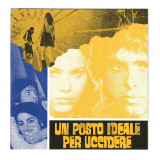
This is the first official issue of the soundtrack from Umberto Lenzi's cult film UN POSTO IDEALE PER UCCIDERE (also known abroad as OASIS OF FEAR and DIRTY PICTURES). Despite being one of the rare instances in which Italian singer-songwriter Bruno Lauzi wrote for film, this stunning work really hits the mark.
The 7-inch features an extended, previously unreleased edit of the super cool 'Babadaba', a contagious samba-jazz cut sung by Lauzi himself along with an unknown female singer – a track that will set your dance floor on fire.
On the flip side you've got 'Incontro', a groovy, jazzy, downtempo track with a fantastic leading flute melody.
- A1: Is He Trying To Tell Us Something? (Instrumental)
- A2: Rhapsody In Green
- A3: Baroque No 2
- A4: This Is My Beloved
- A5: Music For Advertising #1
- A6: Music For Advertising #2
- A7: Music For Advertising #3
- A8: Killers Of The Wild
- A9: Realizations Of An Aeropolis
- A10: Music For Advertising #4
- A11: Music For Advertising #5
- A12: Z Theme From "Music For Sensuous Lovers" (Part 1 - Instrumental)
- A13: The Blobs Son Of Blob Theme
- B1: Cathedral Of Pleasure
- B2: Ode To An African Violet
- B3: The Time Zone Space Walker
- B4: Dragonfly
- B5: The Lords Of Percussion Geisha Girl
- B6: The Electric Blues Society Our Day Will Come
BLACK VINYL[21,97 €]
Mort Garson’s road to cool cultural caché and the sublimity of Plantasia meant a decades’ long journey through an underworld of sophisticated, international, string-laced dreck (i.e., your great-grandparents’ record collection) to arrive at Music from Patch Cord Productions, this set of queasy-listening you now hold.
Music from Patch Cord Productions shows that Garson’s knack was to exist in both worlds, super-commercial and waaay out. He cut delirious minute-long blasts for commercials (as to whether or not they were actually ever aired remains unknown) and spacecraft-hovering études. Were there really account managers out there in the early ’70s that gave the greenlight to these commercial compositions which seemed to anticipate everyone from John Carpenter to Suicide? What were these campaigns actually for, Soylent Green? Regardless, Mort’s jingle work laid the groundwork for the future. As Robert Moog himself noted: “The jingles were important because they domesticated the sound.” Via Garson’s wizardry, the synthesizer transcended novelty to ubiquity and dominance.
Other curios and questions abound. How did Garson’s arrangement work for Arthur Prysock’s satiny body worship album This Is My Beloved transmogrify into the body-snatcher pulses of “This is My Beloved”? Are the two pieces even related? What is the IATA code for the airport of “Realizations of an Aeropolis”? What denomination is the “Cathedral of Pleasure”? If “Son of Blob” sounds like a hallucinatory melted ice cream truck theme, what on earth does Blob’s father sound like? Every sound wrangled out of that Moog by Garson pushes things further and further out.
Of course, these are all questions that may never get answers, as Garson wasn’t the most organized modern day composer, busy as he was conjuring strange new realms with his circuit boards and synths. He worked and wrote right up until his death in 2008, his daughter and Sacred Bones still going through all of the material left behind. He wouldn’t live to see it, but his renaissance was just around the corner, the seeds that had been scattered in record bins around the world suddenly coming to bear fruit. Take a bite!
- A1: Toshiko Yonekawa - Soran Bushi
- A2: Takeo Yamashita - A Touch Of Japanese Tone
- A3: Tadaaki Misago & Tokyo Cuban Boys - Jongara Reggae
- A4: Chikara Ueda & The Power Station - Cloudy
- A5: Chumei Watanabe - Downtown Blues
- B1: Kifu Mitsuhashi - Hanagasa Ondo
- B2: Monica Lassen & The Sounds - Incitation
- B3: Norio Maeda Jiro Inagaki & The All-Stars - Go Go A Go Go
- B4: Akira Ishikawa & The Jazz Rock Band - The Sidewinder
- B5: Masahiko Sato Jiro Inagaki & Big Soul Media - Sniper's Snooze
Back in stock!!
Active as a professional DJ in Japan since the late eighties, DJ Yoshizawa Dynamite is also a renowned remixer, compiler and producer. An avid record collector and an expert of the Wamono style, Yoshizawa published the Wamono A to Z records guide book in 2015 which instantly sold-out. The book unveiled a myriad of beautiful and rare records from a highly prolific, but still then unknown, Japanese groove scene.
After many years working as a record buyer for several stores, DJ Chintam opened his own Blow Up shop in 2018 in Tokyo's Shibuya district. A member of the Dayjam Crew and a specialist of soul, funk, rare groove and disco music, Chintam is also an expert of the home-brewed Wamono grooves. He supervised and wrote the Wamono A to Z records guide book together with Yoshizawa.
With this first volume of the Wamono series, our two DJs here guide you through some of the best and rarest jazz funk and rare groove tunes produced in Japan between 1968 and 1980. Put the needle on the record, turn up the volume and dig right now into the Wamono sound - the cream of the Japanese funk, soul, rare groove and disco music developed throughout the years since the end of the sixties in Japan!
Having studied the complicated art of dreaming on Live At The Robert Johnson earlier this year, DC Salas returns with another remarkable clutch of cosmic excursions. Linking up with long-standing Parisian chic beat connaisseurs Slowciety, it's time for Salas to show us a little 'Exquisite Chaos'…
Presentation (long version)
The clue is in the title; 'Exquisite Chaos' is smooth, classy, hi-definition piece of intergalactic drama. Sweeping synths, rocket-fuelled kicks and a bassline that could circumnavigate the universe many times over without needing to refuel, it's a classic DC Salas trip, the likes of which we've soaked up on labels such as Correspondant, Nein, BPitch and beyond.
It's backed up by the poignantly titled 'Undivided'. A call for unity, it's rattled with acid and sinewy synth lines all thrusting upwards with the positivity we missed for so long this year. Finally 'Forgotten Memories' if a full-on march into a neon unknown. Complete with flying flurries of breakbeats and rasping acid missives, it wraps up Salas's chaos theory exquisitely…. And it's backed by a remix from Roman Flügel.
Ensuring the EP climaxes with a fitting bang Flügel divides 'Undivided' into three movements, each one more bulldozing than the last. Supercharged with venomous acid and neck-snap breakbeats, it's Flügel at his most chaotic. And Slowciety at their most exquisite. We wouldn't expect anything less from DC Salas.
- A1: Is He Trying To Tell Us Something? (Instrumental)
- A2: Rhapsody In Green
- A3: Baroque No 2
- A4: This Is My Beloved
- A5: Music For Advertising #1
- A6: Music For Advertising #2
- A7: Music For Advertising #3
- A8: Killers Of The Wild
- A9: Realizations Of An Aeropolis
- A10: Music For Advertising #4
- A11: Music For Advertising #5
- A12: Z Theme From "Music For Sensuous Lovers" (Part 1 - Instrumental)
- A13: The Blobs Son Of Blob Theme
- B1: Cathedral Of Pleasure
- B2: Ode To An African Violet
- B3: The Time Zone Space Walker
- B4: Dragonfly
- B5: The Lords Of Percussion Geisha Girl
- B6: The Electric Blues Society Our Day Will Come
PURPLE VINYL[23,66 €]
Mort Garson’s road to cool cultural caché and the sublimity of Plantasia meant a decades’ long journey through an underworld of sophisticated, international, string-laced dreck (i.e., your great-grandparents’ record collection) to arrive at Music from Patch Cord Productions, this set of queasy-listening you now hold.
Music from Patch Cord Productions shows that Garson’s knack was to exist in both worlds, super-commercial and waaay out. He cut delirious minute-long blasts for commercials (as to whether or not they were actually ever aired remains unknown) and spacecraft-hovering études. Were there really account managers out there in the early ’70s that gave the greenlight to these commercial compositions which seemed to anticipate everyone from John Carpenter to Suicide? What were these campaigns actually for, Soylent Green? Regardless, Mort’s jingle work laid the groundwork for the future. As Robert Moog himself noted: “The jingles were important because they domesticated the sound.” Via Garson’s wizardry, the synthesizer transcended novelty to ubiquity and dominance.
Other curios and questions abound. How did Garson’s arrangement work for Arthur Prysock’s satiny body worship album This Is My Beloved transmogrify into the body-snatcher pulses of “This is My Beloved”? Are the two pieces even related? What is the IATA code for the airport of “Realizations of an Aeropolis”? What denomination is the “Cathedral of Pleasure”? If “Son of Blob” sounds like a hallucinatory melted ice cream truck theme, what on earth does Blob’s father sound like? Every sound wrangled out of that Moog by Garson pushes things further and further out.
Of course, these are all questions that may never get answers, as Garson wasn’t the most organized modern day composer, busy as he was conjuring strange new realms with his circuit boards and synths. He worked and wrote right up until his death in 2008, his daughter and Sacred Bones still going through all of the material left behind. He wouldn’t live to see it, but his renaissance was just around the corner, the seeds that had been scattered in record bins around the world suddenly coming to bear fruit. Take a bite!
Eric D. Clark
"Written in approximately 1996 or shortly thereafter & born of a night out on the town naturally!
...having been to hear Ranga Tikki (Ms. Codi from New Zealand) drop knowledge in Berlin's SO36: she'd
played the "I have a dream" speech orated by Martin Luther King;
...the mind stopped at "From every Mountain Top"! I walked back through the streets shouting that to myself
until entering the flat then started immediately on the song!
Written and produced: ERiC D. ClARk
publisher: SUBCURRENT Music lTd.
Hans Nieswandt:
Between 1996 and 2000 (and in some cases beyond), Cologne project Whirlpool Productions produced a lot
of music, both as a group and as solo artists, at the legendary Can Studio in Weilerswist, a small town about
20 kilometres south of Cologne. Much of this music has been released, most notable the international
classic „From: Disco To:Disco“; but some of the music never saw the light of day. These two tracks I
produced myself at some point shortly after my first solo album „Lazer Muzik“ and I’m super glad to get a
chance to finally release them - because there is the important cause of helping to save the Paloma Bar, a
place where I played times and always loved it - an experience I dearly hope to repeat many times more.
And because I always liked those two tracks a lot, they just never found their proper platform, for whatever
reasons. As I think they are quite fitting to the sound of the Paloma, I’m more than happy to support this
unique place with this humble contribution. Written and produced by Hans Nieswandt around 20 years ago
at Can Studio, Weilerswist. Original date unknown.
Lowtec & Marvin Dash:
"Es gibt ein paar Lieblingsclubs in Deutschland, kleine Clubs wie z.B. Paloma in Berlin oder Pudel in HH -
wo es nur um die pure Liebe zur Musik geht - wo keine Kompromisse eingegangen werden müssen in
Bezug auf Trackauswahl oder zu deepen Sets, weil das Publikum einfach versteht worum es geht.
Sozusagen das verlängerte Wohnzimmer... Bei gefühlt jeder 2. Platte fragt jemand nach einer Track ID, alle
paar Minuten bringt jemand etwas zu trinken...das wollen wir unterstützen." (Lowtec & Marvin Dash)
Marvin Dash – Lost in the Woods: Written and produced by Ronald Reuter in around 2010. Previously
unreleased.
Lowtec – Museum Of Natural History Of Life: Written & produced by Jens Kuhn, 2000. Previously
unreleased.
The sixth and absolutely final chapter in the EROS story.
This buy-on-sight collection of homages to the raw, decadent & formative birth of club music wraps things up with yet another stand out selection of cuts.
Darker, more electronic & mind-bending moments, mingling with an altogether more strobe-lit and full-tilt take on the glorious Disco supernova from whence we all came.
A little mystery goes a long way, but it's fair to say the appetite for unearthing those secret tunes and lost classics has rarely been stronger...
A LOVE THAT NEVER DIES give us a peek inside their formidable archive with four MORE wonderful pieces of coveted music, in very short supply in their original form
One super limited, clear vinyl pressing.
THE ONLY DIFFERENCE BETWEEN ONE AND NONE IS N TRANS HUMAN OBJECT (THO) //////////////////////////////////////////////////////////////////// THE SUPERIOR FUNCTION ************************************************ X1N SAYS: //////////////////////////////////////////////////////////////////// IN THE VAST SURFACE OF ALL MATHEMATICAL EQUATIONS, ONE CAN SENSE EVENTS WHICH SEEM TO COME FROM OTHER DIMENSIONS - RIPPLES AND PATTERNS. THE ZERO POINT NINE INFINITE NUMBER LINE NEVER REACHES ONE, YET IS ONE, NONETHELESS. 0.9999... READ THAT SEQUENCE LIKE A MANTRA. A MANTRA OF DEATH. //////////////////////////////////////////////////////////////////// “I TALK IN ALPHA NUMERALS” ************************************************ ### denotes “end”. No more messages to follow.
Newcomer Hekla releases her uniquely beautiful debut album for solo theremin and voice Á through Phantom Limb Records - run and curated by former FatCat Records, Thrill Jockey and Royal Albert Hall execs James Vella, Ken Li and Mark Pearse.
A Berlin-residing Icelander, Hekla's sparse, delicate, fractal music exists within these two worlds: dark and magical as Iceland's permanight folklore; and (though beatless) as deeply sonic and intense as Berlin's electronic scene. A long-term scholar of solo theremin, Hekla (shortened from her own name Hekla Magnúsdóttir) uses her instrument as an otherworldly and highly evocative Siren-call. A spectral, wailing, howling, lamenting yearning second-voice that underpins a soft vocal delivery, as if her studio had been haunted with a chorus of ghostly backing singers.
While a handful of reference points share a similar ground to Á - Colleen's interplay of voice and instrumentation; the richly immersive filmscore work of sadly passed fellow Icelander Jóhann Jóhannsson's; 'grandmother of theremin' Clara Rockmore's close relationship with such a singular instrument; Julia Holter's intelligent and classically-aligned songwriting - Hekla's music still exists singularly. A one-off talent, emerging from no particular scene, ascribing to no particular rules.
As a creative tool, the theremin - bizarre, unique, rarely heard - can be expressive, intuitive and highly adaptable. In Hekla's hands, her instrument covers an enormous range, from skittering birdsong of high frequency chirrups and chirps, to grinding, tectonic sub-bass. We are given the throbbing, apocalyptic dread of 'Muddle' and the baroque beauty of traditional Icelandic hymn 'Heyr Himna Smiur' in sequential tracks on the album's a-side. Appropriately, she also writes that the album title - Á - is similarly multifaceted in her native Icelandic: 'a river is an á and also it means ouch like when you hurt yourself, and also when you put something on top of something you put it á (on) something.'
The album was written and self-recorded by Hekla in her home studio in Berlin around her son's daycare schedule. Icelandic super-musician Mr Silla (a part-time múm member) guests on a number of tracks. Tallinn-based engineer Jose Diogo Neves - a stalwart of Icelandic and Portuguese music - mixed and mastered Á.
James Vella formed Phantom Limb in June 2017 after eight years in A&R for FatCat Records. Mark Pearse (formerly head of contemporary music programming at the Royal Albert Hall) and Ken Li (formerly of Thrill Jockey, now of Nettwerk) joined the team shortly after.
We were first introduced to Marumo’s ‘Modish’ album via DJ Okapi's amazing resource the ‘Afrosynth’ blog, which archives South African bubblegum/disco from the 80s & early 90s. Aside from this blog, this music would otherwise remained unknown outside of South Africa, apart from the most hardcore of digger and record collector.
‘Modish’ was originally released on Spades Record in 1982 and was recorded by producer West Nkosi, who was a member of supergroup ‘Mahlathini & The Mahotella Queens’. He worked with the big hitters in South African music such as Ladysmith Black Mambazo, Teaspoon & The Waves, Patience Africa and many more. Marumo were made up of a group of musicians from the Athlone School for the blind in Bellville, close to Cape Town. The band members, John Mothopeng, Munich Sibiya, Simon Falatsi and Marks Mbuthuma, had previously played in the groups Batsumi, All Rounders and The Orations and came together to record this versatile album. It covers a wide number of genres from Sotho soul, Mbaqanga, disco-funk, gospel & spacey-synth slow jams.
Flash forward 30 or so years later and lost dead-stock copies of the album start to appear and Marumo’s music begins to be heard across the world in the DJ sets of Motor City Drum Ensemble, Invisible City Editions, Floating Points, DJ Okapi and others.
We included the afro-disco-funk beauty of 'Khomo Tsaka Deile Kae?’ on our Mr Bongo Record Club Volume Three compilation, but felt ‘Modish’ needed to be available and heard in it’s entirety. We hope you enjoy!
Dadub is a project synonymous with the deepest rhythms from the interior of the human psyche. Low-end mysticism. Tribalist periodic audio patterns. The Berlin-based Italian producers behind the project, now constructed of sonic warlock Daniele Antezza and performance artist Marco Donnarumma, supply an unmistakably unique vision of post-apocalyptic dub landscapes. Past, present, and future blend into one, backed by the supremely sublime BASS of creators who are light years ahead in their field. A Sun Called Moon is a superior first representation on Ohm Resistance, detailing their ongoing mission of creating bass-present music, regardless of dancefloor conformity. The Time You Killed opens as a psycho-acoustic audio film, depicting the unknown world from which the EP emanates. I Would Gladly Die… introduces the first heavy rhythmic patterns, completely alien to identified structures, while unmistakably pushing a groove that entrances hypnotically. Past Times Present Ruins lowers the tempo and continues extrapolating into new rhythmic territory – or is it ancient? It Was Too Soon follows with beat driven hednod, as influences from Scorn to Autechre are subsumed into the universal language that comprises Dadub. Feeling both familiar and foreign, both modern and eternal, Dadub’s first appearance on Ohm Resistance is a fascinating drama played out in 4 acts. Spliff recommended – subwoofer required. All tracks Written and Produced by Daniele Antezza and Marco Donnarumma Mixed by Daniele Antezza and Marco Donnarumma at Dadub Studio, Berlin Mastered by Xergio Cordoba @ Eternal Midnight Studio, Madrid Photography by Flora Schwartz Layout by MachineTM
- A1: Gregorio Garcia Segura - Harlem Pop
- A2: Los Brandis Con Maria Nevada - Life's Song
- A3: Lin Barto - Sax Pop
- A4: Blas & His Friends - Supermarket
- A5: Jorge Enrique - Go Go
- A6: Roberto Serrano - Retorno
- A7: Rafael Martinez - Funny Comics
- A8: Orquesta A Latorre - Hotel Don Felipe
- A9: Orquesta Miramar - Pop Song
- A10: Conjunto Nueva Onda - A Su Aire
- A11: Ramon Gil - Mercurio
- A12: Mesie Bato - Violeta
- A13: Red-Key - Morning
- A14: Unidades - Caballo Salvaje
· This compilation features the rarest and unknown instrumental tracks of that Funky Groove early sound.
· Light music along with wind section and keyboard ready to hit the dance-floor, that we call Spanish-Grooves.
· Composers, musicians & arrangers like Gregorio García Segura, Rafael Martínez, Antonio Barco, Antonio Latorre, Jaime Botey, etc.
During the 70's, an important number of orchestras and dance bands popped up in our country but not many of them released their own songs or covers on vinyl, so we can’t say that our music library has bulky volumes, rather it’s just the opposite.
You have to dig deep in the catalogue of obscure record labels to find some quality pieces, which we will usually attribute to Tinglado 13, Conjunto Nueva Onda, The Matches, Conjunto Don Pelegrin, Rafael Martínez, Carlos de Ros, Salgado y su Grupo, Mesié Bató, Pedro González, Jorge Enrique.
Most orchestras played bossa nova, soul, some lounge and easy listening, and a usual mix of light music with wind section and keyboards, something like “spanish-soul” or “rhythm'n'blues-pasodoble”.
It was a time when the bands survived playing shows with a repertoire based, mostly, on Spanish popular songs and international hits.
Many artists recorded with nicknames, many others used licensed songs paying rights to the original authors and some orchestras changed their names when they pressed their records, in an attempt to appear modern or simply for pure commercial purposes, that's why it is difficult to trace accurately the musical path of many of these artists. This scene was especially intense in Aragon and Catalonia, where a bunch of labels emerged, often simply as platforms for bands to promote their own music.
This compilation aims to discover to a wider audience some of the most sought-after instrumental gems by discjokeys and disco music collectors, eager for soul, groove and hot sounds.
- A1: Red-Key - While New
- A2: Ray Martin - Supergama
- A3: J Tenafly - You
- A4: Nick Wilson - Sugestion
- A5: Blas & His Friends - Todo Tu
- A6: Conjunto Olivino - Cataluna Rag
- A7: El Conjunto De Rafael Martinez - Ritual Song
- B1: Conjunto Nueva Onda - Chacal Blues
- B2: Greg Segura Y Su Orquesta - Safari
- B3: Jorge Enrique - Siero Pop
- B4: Orquesta Miramar - Sagitario
- B5: Dany Roy & His Band - Intermision Pop
- B6: Sarr Incony - Afro Special
- B7: Mesie Bato - Amanecer
· This compilation features the rarest and unknown instrumental tracks of that Funky Groove early sound.
· Light music along with wind section and keyboard ready to hit the dance-floor, that we call Spanish-Grooves.
· Composers, musicians & arrangers like Gregorio García Segura, Rafael Martínez, Antonio Barco, Antonio Latorre, Jaime Botey, etc.
During the 70's, an important number of orchestras and dance bands popped up in our country but not many of them released their own songs or covers on vinyl, so we can’t say that our music library has bulky volumes, rather it’s just the opposite.
You have to dig deep in the catalogue of obscure record labels to find some quality pieces, which we will usually attribute to Tinglado 13, Conjunto Nueva Onda, The Matches, Conjunto Don Pelegrin, Rafael Martínez, Carlos de Ros, Salgado y su Grupo, Mesié Bató, Pedro González, Jorge Enrique. Most orchestras played bossa nova, soul, some lounge and easy listening, and a usual mix of light music with wind section and keyboards, something like “spanish-soul” or “rhythm'n'blues-pasodoble”.
It was a time when the bands survived playing shows with a repertoire based, mostly, on Spanish popular songs and international hits.
Many artists recorded with nicknames, many others used licensed songs paying rights to the original authors and some orchestras changed their names when they pressed their records, in an attempt to appear modern or simply for pure commercial purposes, that's why it is difficult to trace accurately the musical path of many of these artists. This scene was especially intense in Aragon and Catalonia, where a bunch of labels emerged, often simply as platforms for bands to promote their own music.
This compilation aims to discover to a wider audience some of the most sought-after instrumental gems by discjokeys and disco music collectors, eager for soul, groove and hot sounds.
- A1: Brian Bennett - Canvas
- A2: Wil Malone - Death Line
- A3: Syd Dale - Huckleberry Fine
- A4: The Harry Roche Constellation - Spiral
- B1: The Ivor & Basil Kirchin Band - Jungle Fire Dance
- B2: The Laurie Johnson Orchestra - The New Avengers Theme
- B3: James Clarke & Sounds - Folk Song
- B4: The Reg Tilsley Orchestra - Strike Rich
- B5: The Barry Gray Orchestra - Joe 90
- C1: Keith Mansfield - Soul Thing
- C2: Ccs - Whole Lotta Love
- C3: Syd Dale - Artful Dodger
- C4: John Gregory & His Orchestra - Jaguar
- D1: Nick Ingman - Down Home
- D2: Barbara Moore - Steam Heat
- D3: Alan Parker - Angels
- D4: Alan Moorhouse - Face Up
The 36 track 2CD album comes with 50-page book featuring text, biographies and photography. It also comes in a limited run two volume double-vinyl super-loud super-heavy gatefold sleeve editions. Compiled by Stuart Baker (Soul Jazz Records) and sleevenotes biographies by Jonny Trunk (Trunk Records).
TV Sound and Image features British composers who worked in television, film and music libraries the second half of the 20th century.
Aside from John Barry, whose work on the James Bond films made him a household name, or Tony Hatch and Laurie Johnson, the majority of composers featured here - Simon Park, Keith Mansfield, Reg Tilsley, Syd Dale, Keith Papworth – remain relatively unknown. And yet ironically they have created some of the most recognisable songs in British popular culture, their music widely disseminated on television.
A quick role call of these would include Neil Richardson (who composed the theme tune to Mastermind) and Barry Stoller (who wrote Match of the Day). The Simon Park Orchestra’s Eye Level, theme song to the BBC series Van der Valk, reached number one in 1973. CCS’s cover of Led Zeppelin’s Whole Lotta Love was the theme tune to Top of the Pops. And so on.
This album is not however a stroll through the TV memories of the mind, but an exploration of the serious contribution that these creative musicians have on the landscape of popular music in Britain.
Here then is a guide to the amazing music of many of the composers (both well-known and obscure) responsible for some of the most widely known music ever to come out of Britain in the second-half of the 20th century.
Reviews:
Quietus
Der Spiegel: "spannende Klänge ... die oft funky und immer lässig klingen"
"thrilling sounds.... often funky and always chilled"
New Zealand Herald: ***** "Every track is a killer... This is more than just music to mooch too."
Irish Times: **** "downright funky"
Volkskrant: "Ze leverden spanning op maat, die onbekende makers van fenomenale Britse film en tv-muziek. Door de cd TV Sound and Image opnieuw in de aandacht"
Evening Standard: "deeply funky"
Uncut Magazine "excellent 36 track set ... welcome additions to your collection"
Q Magazine: ****
Acid bordello keeps on scooting the legnds as well as the newskool unknown artists... with crzay collabs and bizarre choices... to keep music excitation alive:) That Low Entropy And MF Machinist tune, for instence is a pure melt of too mutch VS never enough... superb tune for a dancefloor as well as for a listener... Chaos goes on with a total hazardeous with printed sleeve or without printed sleeve (serygraphied actually)... No difference and no discrimination, just the big lottery of what you will get in your package. And just consider this is a total gamble thing (ahaha gamble 303 special casse-dédi) : hasardeous for real. One chance on 2 ^^
Long overdue, here comes AIR LQD’s first full-length player, Repeat Itself, making up for the direct follow-up of his acclaimed vinyl debut released on the label in 2016. Mixing science fiction, social criticism and punk ethics in the most cryptic fashion, the latest entry in the discography of the taciturn Belgian groove-maker sees him pushing further his electronic experimentation. Delving into the meanders of the human consciousness through hazy and abrasive rituals, brainpowered by robotics, artificial intelligence and urban metamorphism. The weird looping echo of a man-machine drifting through a vortex of feral scratches and overworked machinery. Slowly moving towards the event horizon of a supermassive black hole, leading to unexpected aural aberrations full of hidden, past and new meanings. Giving a last disillusioned glance at our human condition facing technological progress and the toxicity of the outside world.
LOFTSOUL x Miruga release cover version for Nina Simone's masterpiece See Line Womanon
10inch vinyl format. LOFTSOUL is the project by DJ/Producer UCHIKAWA MASAHIKO well known as Rhythm Of Elements (R2 Recordings/UK).For this Nina Simon's cover song,LOFTSOUL collaboration with Miruga (Moods & Grooves/Detroit) And featuring London's JAZZ/SOUL singer Fae Simon.
Also there include great "DUB" version by DJ D a.k.a Dominic Dawson (well known as release from Noid Otherand Reel Houze project with Rob Mello).
Marking the 15 year of Nina Simone's death,LOFTSOUL release cover version of her masterpiece See Line Womanas tribute.
See Line Womanis fantastic afro percussive number.This song is popular for club scene by 98's Kerri Chandler(Songstress)'s remake and 07's Feist's cover. LOFTSOUL x Miruga cover this song vibrant
Jazz/Soul Number. Original Versionis superlative Jazz/Soul version. There features beautiful harmony with Fae Simon's vocal and Soul-T's piano on the afro mystic groove (about BPM 90)
On the flips side ,Dominic Dawson a.k.a DJ D deliver fantastic "Dub Version" as (Dominic Dawson Dub Reversion)with afro percussive rhythm and dub wise sound&groove.
Release from UNKNOWN season x Jazzy Sport as special limited 10inch issue.
A little mystery goes a long way, but it's fair to say the appetite for unearthing those secret tunes and lost classics has rarely been stronger...
A LOVE THAT NEVER DIES give us a peek inside their formidable archive with three wonderful pieces of coveted music, in very short supply in their original form
One super limited, clear vinyl pressing.
Schmer has tried to stop, we've all gone into therapy, but there's no hope, short of setting the world ablaze: we can't stop smoking! 2019 see's Schmer pressing TECHNO records in the EU and PRICED in Europe as a domestic release. As if the continent didn't already have enough problems, here we come with our latest COMPILATION!
First to drop a match is Amber Shoshona aka Bastet. She is a live electronic music performer and DJ based in Baltimore, MD USA. Her live set is coarse-grained and atmospheric, developing a slow-burning, hypnotic groove. In the studio she creates genre bending electronic experiments. For Schmer she made 'Torn', which sneaks right up to you and lights you up.
Delivering oil to the blaze from deep in the Russian arctic is Maxim Makarenko aka 777minus111. The unknown hero from the Russian Techno label he remains in the shade and keeps it real! He runs underground parties in Moscow and is a member of Vinyl Ambulance project in India. He keeps our compilation 'Getting Dirty Quick' with his Dan Bell inspired MINIMALISM.
On the flip the fires start with Vague Audio Tapes label head Dominic Martin aka Hero/Victim. Hero/Victim is a sonic attempt at translating unanswered and unheard emotions. Visceral and physical; so as to both, engage and purge the evolving dissonance. Never content. With sound as a context-sensitive metaphor, stories are heard. He also makes weird electronic music and then Schmers all over us with a 'New Stress'.
Schmerhead BPMF hides a track from another release in this inferno. Its super short as in it goes on FOREVER with a LOCKED GROOVE at the end. If you're gonna be an emcee, do it in a Wormhole on a LOCKED GROOVE so that the rock will never stop.
Liza Weinstein, Zach Vietze and Jason Szostek were Jack Move. In 1994 they may have made two tracks together, but this is the only one we found lying around in the basement floor. Long before the skinny jean hipsters were rocking beats deliberately designed to confuse the dance floor with their lack of flow, The Jack Movers were experimenting with cryptic funk... It was a Jack Move on their part and they immediately ran out of town to escape retribution, leaving behind their 'Krippy Shit'.
We Can't Stop Smoking so you'll always be able to find us because where there's smoke, there's fire... and where there's TECHNO there's SCHMER!
James Place returns with his new LP "Still Waves To A Whisper" (the fourth release on Umor Rex). Flitting between the dreamworld of hauntological synth music and hypnotic techno functionality, Still Waves To Whisper showcases James Place's continuing development of dramatic (and varied) sound worlds.
Musically, Still Waves To A Whisper contains both some of the most immediately danceable and straight up beautiful tracks of James Place's career. Utilising voice samples from the same source as his last album, Voices Bloom, opener 'Known Cry' is a heavenly coda of sunlight bursting through clouds, warm synths drifting across restrained pulses. 'Timing and Lighting' went through countless live iterations before the current version was tracked for this album, a tunneling exploration of rhythm with a dose of sardonic humor. 'Move In Blue (Homeward Mix)' is James Places' rework of a track from 2017's Voices Bloom, obsessively remixed and revisited, here littered with additional melodies and populated by newly sampled voices. Closing track 'Names' is perhaps the most outright beautiful James Place recording to date. A stripped back rework of a live version of Living On Superstition's 'Another Mourning In America', the tune is based on a melodic line written after the studio recorded version. Interwoven with a sampled vocal, and rinsed of all of the original song, 'Names' is left behind a stark and compelling descendant. The digital release includes a remix of 'Move In Blue' by Persuasion aka Devon Hansen.
The title, Still Waves To A Whisper, stems from a conversation between Place and another artist on methods to ease anxieties and the benefits of a focused practice. The hope's for this music to continue that conversation on a larger scale.
All songs written, produced and recorded by Phil Tortoroli between 2015 — 2018 in Brooklyn, NY. Vocals by Sam Sally and an unknown guest.
Mastered by Rafael Anton Irisarri at Black Knoll Studio, NY. Photos & Design by Daniel Castrejón.