Transcendental poetry meets Southern Nightmare Jazz on the third album by Alabama-based artist Johnny Coley Mister Sweet Whisper is the meeting of poet & artist Johnny Coley and the band Worst Spills, led by guitarist & arranger Joel Nelson. (Imagine "King Tubbys Meets Rockers Uptown," but more like "William Burroughs Meets Lounge Lizards in Ghost Swamp"). Joined by vibraphone player and recordist of the group, Jasper Lee, Mister Sweet Whisper centers Coley as a gifted writer and unique elder voice, supported by an eclectic cast of friends & collaborators. Tapping into French surrealism and transgressive American poets such as John Ashbery, the songs in Mister Sweet Whisper evolve, cinema-like, with Coley as an uninhibited, almost mystical, narrator. Textural, jazz-like playing complements Coley's decadent landscapes, which glide by like cigarette-inspired invocations. Echoing, and at times, dissonant notes of saxophone, crystalline tones of vibraphone, and jagged guitar arrangements punctuate Coley's dreamlike visions, populated by ballet dancers, haunting nightclubs, and ghostly car drivers. Wistful and expansive, the songs in Mister Sweet Whisper speak of Coley's talent and natural ability to channel his poetic world into songs. A remarkable follow-up to Coley's first two albums_Antique Sadness, from 2021, and Landscape Man, from 2022_which were praised as "exquisitely haunting, sublime, hilarious" and falling "somewhere between Robert Ashley, David Wojnarowicz, and Intersystems," Mister Sweet Whisper arrives in full form: unpredictable and brilliant. LP comes with a 4-page booklet featuring artwork and writing by Johnny. Pressed in black vinyl.
quête:surreal
Pile - the trio of Rick Maguire, Kris Kuss, and Alex Molini - found inspiration in the studio while working on their latest LP All Fiction, working tirelessly to record, experiment, manipulate, mutate, and layer the songs with lush orchestration, haunting synths, and abstract textures. Challenging the confines of the standard “rock band,” they took inspiration from artists like Portishead and Aphex Twin, reigniting their passion as they explored their sound in a new realm. The sessions resulted in a flutter of productivity and before the band knew it they had completed well over a dozen songs, stretching far beyond the confines of a single LP’s runtime. After much deliberation, songs were pulled from the record, never a “trimming of the fat” but more of a consideration of which songs were able to stand best on their own. These songs form the Hot Air Balloon EP. Released digitally on January 5th, 2024, and now in LP format for the first time, the EP captures the band experimenting in all directions, from the direct to the further abstract. Following the release of “Scaling Walls,” a song Paste Magazine called “a contemplative slow-burn,” the band introduce the EP with the quasi title track, “The Birds Attacked My Hot Air Balloon,” a song that finds Pile in a more surrealist state, the meditative composition bristling with shuffling rhythms and brilliantly disorienting synths.
"We could go so far as to say that it is the human condition to be grotesque, since the human animal is the one that does not fit in, the freak of nature who has no place in the natural order and is capable of re-combining nature's products into hideous new forms." So reckoned Mark Fisher in 'The Weird And The Eerie', which chronicled the means by which the uncanny can enter the everyday. Mwg Drwg, the second album from South Wales psychic seers Obey Cobra, is an album that dwells in exactly this kind of headspace, where the otherworldly meets the kitchen sink. Always a band who've sought out new dimensions to explore via their trademark warped post-punk, electronic and industrial influences, Obey Cobra have crafted surreal new shapes here. Taking influences as diverse as Diane Arbus, David Lynch and Sonic Youth, they balance out heaviosity and grace on the likes of the majestically discordant 'Ten Of Wands' Elsewhere, on the title track, the band sculpt a Jesus Lizard-esque rhythmic pulse, eerie vocal abstraction and the crepuscular downtempo atmosphere of Massive Attack's Mezzanine into a uniquely haunting dreamscape. Mwg Drwg is where the weird and eerie are amplified to intimidating proportions It's where grotesquely and beauty happily cohabit. It's an aural exorcism of William Friedkin proportions that demands your immediate attention.
- A1: Florian Christl / Clara Büsel / Leandro Hauxwell - Prelude 0:53
- A2: Florian Christl - Origin 4:41
- A3: Florian Christl / Seeger - Saitenmusik Bavaria 3:10
- A4: Florian Christl / Raphaela Gromes - Mozart Variation (After Serenade, K. 250 "Haffner", Iv. Rondo, Arr. For Cello & Piano By Florian Christl) 3:46
- A5: Florian Christl / Kristina Suklar / Odessa Six - Vienna 4:31
- A6: Florian Christl - Liszt Variation (After Im Rhein, Im Schönen Strome, S. 272, Arr. For Piano By Florian Christl) 3:17
- B1: Florian Christl / Clara Büsel / Leandro Hauxwell - Budapest 4:06
- B2: Florian Christl / Clara Büsel / Leandro Hauxwell - Save 3:50
- B3: Florian Christl / Alik Lysiùk - Strom 2:17
- B4: Florian Christl - Muntenia 4:06
- B5: Florian Christl / Clara Büsel / Leandro Hauxwell - Bulgaria 4:03
- B6: Florian Christl / Clara Büsel / Leandro Hauxwell - Delta 6:20
Eine musikalische Reise entlang der DonauDas neue Album "Donau" von Florian Christl ist eine musikalische Reise von der Quelle bis zur Mündung des zehn Länder verbindenden Flusses in zwölf neuen, atmosphärischen Kompositionen. Für diese ließ sich der Pianist und Komponist von der anmutigen Schönheit der Natur und den unterschiedlichen musikalischen Traditionen der prunkvollen Städte und Regionen entlang der Donau inspirieren. Mit unterschiedlichen Besetzungen erkundet Florian Christl Orte wie Wien, Budapest oder das Donau Delta und nimmt jeweils ein lokales musikalisches oder klangmalerisches Element in seine Kompositionen auf. Es begleiten ihn das traditionelle bayerische Volksmusikensemble "Seeger Saitenmusik", der Akkordeonist Vladislav Cojocaru, die Geigerin Kristina Šuklar, die Cellist*Innen Raphaela Gromes und Alik Lysiùk, ehemalige Mitglieder des Odessa Opernorchesters, die in einem Streicherensemble und als Solisten mitwirken, sowie Florian Christls festes Ensemble, mit dem er das Album auch live auf der Release-Tour spielen wird.Schon als Kind faszinierte es Florian Christl, wie das Wasser der Vils, die durch seine Heimatstadt Amberg fließt, seinen Weg ins weitentfernte Meer finden konnte. Es ist die Donau, die den kleinen Fluss mit dem weit im Osten gelegenen Schwarzen Meer verbindet. Auf dem 2.857 Kilometer langen Weg von ihrer Quelle im Schwarzwald bis zur Mündung in der Nähe der ukrainischen Hafenstadt Odessa, durchquert die Donau halb Europa und kulturelle Zentren wie Wien, Bratislava, Budapest oder den Großraum Bukarest. Deren Austausch hat sie als wichtiger Reiseweg wortwörtlich befördert und die Entwicklung eines gemeinsamen kulturellen Erbes Europas mit all seiner Vielgestaltigkeit - wie etwa in der Musik - gefördert.Der Beginn des Krieges in der Ukraine ruft in Florian Christl schlagartig das Gefühl der Verbundenheit hervor. Inspiriert von der Programmmusik der Romantik - insbesondere Smetanas "Moldau" - reifte in ihm die Idee, die "Donau" auf einem Konzeptalbum zu vertonen, um ein Zeichen für den Frieden in Europa zu setzen."Der Gedanke, wie uns die Donau alle direkt mit der Ukraine verbindet, ließ mich nicht mehr los. Der Fluss symbolisiert eine wechselvolle, tragische Geschichte von Flucht, Vertreibung und Invasion in Europa, aber auch von einem beständigen Austausch, der doch die europäische Kultur erst erschaffen hat, wie man in der europäischen Kunstmusik deutlich sehen kann," erklärt Florian Christl.Mit dieser Idee begann der Komponist eine umfassende Recherche über die Donau, die Städte, Regionen und artenreichen Naturräume, die sie verbindet. Eine Reise auf dem Fluss führte ihn bis zum Donau-Delta. Dort markiert die Donau die Grenze zwischen einem Europa in Frieden mit Rumänien an einem Ufer und der Ukraine im Krieg am anderen Ufer. Florian Christl beschreibt die Situation:"Es war surreal und traurig. Der Kontrast zwischen der unglaublich schönen Natur und dem Wissen, um die Schrecken des Krieges, die hier nur wenige Kilometer entfernt sind."Der Entstehungsprozess des Albums zog sich über mehr als zwei Jahre hin. Nach den ersten Aufnahmen erlitt Florian Christl im September 2023 einen Herzinfarkt, der ihn für mehrere Wochen aus dem Leben katapultierte und bis heute nachwirkt. Eine Erfahrung, die ihn dazu brachte, neu darüber nachzudenken, was im Leben wirklich wichtig ist: "Im Alltag verlieren wir oft den Blick dafür, was wirklich zählt: Die Momente mit den Menschen, die uns wirklich wichtig sind, mögen sie noch so knapp und beiläufig erscheinen. Wir verwenden so viel Energie darauf, nach scheinbar bleibendem materiellem Einfluss, Reichtum oder Land zu streben. Wir sollten viel mehr Zeit darauf verwenden, diese, unsere Reise miteinander zu genießen."
Unbound by place or genre, mercurial, experimental pop duo Soft as Snow find freedom to intuitively reflect the disarray of human connection with their intricate, shape-shifting pop production. With each successive release, the duo evolves, unfurling into their own poetic sound, now fully realized on their intimate, third full-length, Metal.wet.
The oft-present trappings of male-female duos are eschewed here as the Berlin-based Oda Starheim and Øystein Monsen contribute equally across a canvas of analogue synthesizers, samplers, live drums, and processed guitars. At once a part of and yet apart from the zeitgeist, their forward-thinking modernity stretches the limits of expectations across Metal.wet's ten insouciant tracks. Fans of Tirzah, Hype Williams, and even Angelo Badalamenti will find much to love in this haunting work peppered with ASMR moments and rough sampling wrapped in high production –– twinkling glasses and sirens in the distance, rhythms and voices up front. The result is synth-driven, noisy, and dripping with laidback, confident sensuality.
Although Starheim's voice begins the album in a whisper, it quickly becomes apparent that the group has jettisoned their previous tendency to bury and distort her vocals. Nested in a bed of thorny electronics and broken rhythms, her multifaceted vocals might bring to mind Kazu Makino of Blonde Redhead or Hope Sandoval fronting Massive Attack. London MC Brother May (Mica Levi, CURL) makes an appearance on the driving and ethereal “Whip,” while Øystein’s own voice appears for the first time in a state of languid background haze.
Soft as Snow create and record across Europe. Defiantly averse to genre, the pair become vessels for their “electronic music pushed to the brink of collapse” (The Wire), previously released by Infinite Machine and Houndstooth. Informed by backgrounds in film and performance art, “there’s a surrealism that comes with watching Soft as Snow in the flesh,” (Vice) as seen at L.E.V. and Lunchmeat Festivals. Collaborations with visual artist Guynoid, designer AGF Hydra, and sculptor Camilla Steinum add depth to the corporeality of their “strange, mesmerising and utterly unforgettable” electronic experimentations. (DJ Mag).
Clothilde’s new album sounds like a constant departure from almost everything. Up until now, her music pieces seemed uncontrolled, a total commitment to the machines. She was, somehow, in between us - listener, audience - and the idea of a machine producing sounds she doesn’t seem to control. Of course, none of this was entirely true, she was mostly in control, but the fantasy, the orchestration of it was beautiful. It was sci-fi-ish, Metropolis-magnificent.
In “Cross Sections” everything is purposely under control. We feel, without being told, that Clothilde is directing the narrative, inviting us to partake of this raw and austere electronic sound, forcing us to learn to enjoy it. This is new. Whereas before she would expect you to stay put and listen, eventually you would understand and give in. Or your body would. Now she is telling you to be there, she doesn’t want to be alone, she wants us to feel this subterranean urgency at all costs.
The real eureka moment comes with “Medullary Rays”, when we start cohabiting with the sounds, when they feel familiar. The darkness becomes real; it is palpable how she is stretching each sound and making them come to life at every moment. It is violent, brutal. Like every track, it's a relief when it ends, it's like coming out of a car crash alive. Much of the A side of is Clothilde pushing the boundaries of her sound. She is not testing but finding new ground and sharing it with us. She is exorcising, demolishing and building over and over again, she is crying and screaming, dozing off with the demential levels of bass, making us constantly listen to alarm bells. She is scaring the shit out of us.
The B side keeps the levels of anxiety high up, especially on the 13-minute “Ring”. Surrealistic drones come and go, every second sounds like the end of something, the accumulation of tension is torrential and it never, never stops. We hope there is a conclusion to this. But there is not. “Cross Sections” builds and feeds on this darkness but, in a way, it is self-contained. Never explodes, never releases itself from itself. It is a continuous process of catharsis that it is never over. It never aims to be. Like, you know, life itself.
We've all been there. It feels familiar. Now it has a sound, or sounds. It can be heard and it is outer dimensional. “Cross Sections” is a tremendous effort from an artist trying to survive something. You never know what is. You don’t need to know what it is. It is just there. Cliché but it has to be said: highest possible volume on this one.
Black Vinyl[27,69 €]
LP Ltd vinyl picture disc version w/ DL card, 500 pressed. Vanishing Twin furthers their exploration of decidedly experimental territories with Afternoon X. Crafted with a playful balance of humour and rigour, with each member embracing the role of the multi-instrumentalist and process, over outcome. Following a series of line-up changes, Vanishing Twin is now the tightly honed collective of singer and multi-instrumentalist Cathy Lucas, drummer Valentina Magaletti (Holy Tongue, Tomaga, Moin) and bassist Susumu Mukai (Zongamin). Harnessing the diverse touchstones of its members; Lucas' left-field song-craft, Magaletti's singular approaches to experimental percussion, and Mukai's long history in the production of electronic music, the band has refined a hypnotic sound at the juncture of minimalism, kosmische, post-punk, and dream-laden, psychedelic pop. These eight fluttering abstractions, culled, collaged, and built upon from a vast constellation of instruments, samples, and unclaimed sources. Lucas employs her voice as an instrument and a generator of raw sound, weaving surreal imagery and uncanny juxtapositions amongst the dance and propellant drive. From infectious grooves of the album's title track and the constrained minimalism of "Subito", to the ambitious heights of pieces like 'The Down Below' and Lazy Garden, which unfurl a psychedelic avant-gardism on the scope and scale of David Axelrod and Scott Walker. Vanishing Twin embark upon a new multifaceted journey that collectively culminates as the bands most forward-thinking and groundbreaking release to date.
Keshavara tragen prächtige Schnurrbärte, verwegene Kopfbedeckungen und sprechen ein abenteuerliches Patois aus Englisch, Hindi, Deutsch und Gibberish. Auf ihrem neuen Album "III" kreieren die Kölner um den deutsch-indischen Musiker Keshav Purushotham Klänge, wie andere Leute Drinks mixen, nachdem sie schon drei genossen haben: Verwaschener Kraut-Pop und diasporische Dub-not-Dub-Exkursionen werden nach Augenmaß miteinander kombiniert und wild geschüttelt. Zuckersüß mäandernde Melodien, entlehnt einem fantastischen Niemandsland in der Grenzregion zwischen exotischen Library-Kompositionen und psychedelischen Soundtracks, verschmelzen mit den Grooves einer Rhythmusgruppe, die sich auch in den Tonstudios des funky Beirut der Mittsiebziger Zuhause gefühlt hätte. Das Ergebnis sind mit surrealistischem Zuckerrand gekrönte Cocktails mit der Wirkung einer halluzinogenen Götterspeise. Musik, die schillert und flirrt, wie eine Fata Morgana in der Wüste. Keshavara klingen in einem Moment, als hätte Ennio Morricone einen Bollywood-Film vertont, und im nächsten wie ein von Curt Boettcher produzierter Eden-Ahbez-Song, oder - nicht ganz so spinös aber nichts desto weniger fantastisch - als hätten Khruangbin und Sven Wunder endlich ein gemeinsames Album aufgenommen. In den glanzvollsten Momenten fügt sich das alles wie von magischer Hand zusammen und kulminiert dann in Songs wie "Spiegelmann" und "Tableau Vivant" - fantasmorgiastischen Partys voller transkultureller Clashes, die uns Hörer dazu einladen, sie in farbenprächtige Gruppenchoreografien zu überführen.
War das Debüt von Keshavara noch ein Solo- und der Nachfolger "Kabinett der Fantasie" im Kern ein Duo-Album, so sind Keshav Purushotham, Niklas Schneider, Benedikt Filleböck und Christopher Martin mit ihrem selbstproduzierten, schlicht "III" betitelten dritten Album endgültig zu einer vierköpfigen Band zusammengewachsen … und zwar um eine alte Farfisa-Orgel herum, die eines Tages als Geschenk im Proberaum gelandet ist: Ein, auf sämtlichen Songs mal mehr, mal weniger präsentes UFO aus einer Zeit der Slow-Jams, Live-Takes und des exzessiven Space-Echo-Einsatzes. Sein analoges Blubbern und sein wabernder Funk rollt dem warmen, organischen Bandsound den roten Teppich aus, und verpasst ihm einen zärtlichen Schubs Richtung 70er. Erfrischenderweise kommt er dort niemals so richtig an, sondern bleibt immer im Fluss. Denn das eigentliche Ziel der halldurchtränkten Korridore dieses Albums ist stets der Weg, genau genommen der kunstvoll gezimmerte Holzweg, der phantastische Irrpfad. "III" ist eine Reise, auf der Zeiten und Orte keine Fixpunkte sind, sondern austauschbare Koordinaten eines augenzwinkernden Vexierspiels. Da ist es nur folgerichtig über "Indische Götter im Sauerland" zu singen. Dass ungeachtet der Nostalgie, die alle neun Songs durchweht wie ein warmer Mittelmeerwind, niemals Sentimentalität aufkommt, ist nicht zuletzt diesem Humor geschuldet.
Die ätherischen Drones, sanft nuschelnden Akkorde und geisterhaft seufzenden Soundschwaden, die Keyboarder Benedikt Filleböck seiner altersschwachen Farfisa bevorzugt in den ruhigeren Momenten und den Instrumentalnummern des Albums entlockt, bilden einen stimmungsvollen Kontrast zu den beiden anderen Säulen des Keshavara-Sounds: Christopher Martins leichtfüßig hüpfenden Bass-Dreiecken und Keshavs sonnendurchfluteten Gitarren-Ornamenten. Im Zusammenspiel mit Niklas Schneiders crispen Drumbeats entsteht ein Fundament, mit dem die kaleidoskopischen Texturen und Melodien vollständig verschmelzen.
Das Ergebnis ist das bisher homogenste Album des Quartetts. Mit "III" erweisen sich Keshavara als gewiefte Soundalchemisten und Weltenwanderer, als eine softe Macht, deren Stärke sich aus ihrer enormen Musikalität, ihrer Fabulierlust und ihrem surrealistischen Witz speist.
«Memory doesn't age, it always remains the same.
"Memoria" is an album about my memories, my hometown, the scent and flavours of my childhood, things I've read, movies I've watched at the cinema and my love for music. It's about going back home, re-establishing a link with the past and recalling cheerful and happy memories.
"Memoria" refers specifically to the regions of Minais Gerais and the Brazilian northeast, its hot climate, the religiousness of the people and its faith in miracles, calling to mind images of mysterious and surreal popular tales, where time flows slowly in an intimate dimension.»
RIYL: Don Cherry, Alice Coltrane, Remi Álvarez, Juma Sultan's Aboriginal Music Society, Horace Tapscott. Atrás del Cosmos were a central force in Mexico City's creative arts community, and often considered the first free jazz group in the country. Founded by a trio composed of pianist Ana Ruiz, percussionist Evry Mann, and saxophonist Henry West, the ensemble was prolific in mentoring a generation of improvisers, cultivating an expanded additive roster, and organizing workshops in downtown Mexico City including inviting Don Cherry to play and instruct on his "organic music" approach in 1977. Between 1977 and 1983, the group lived and rehearsed in a residential space behind the Cosmos theater, hence their celestial-tinged name. But despite their central importance to the local scene, Atrás was rarely recorded and had a scant international presence, leaving behind just a single cassette before their disbandment. Now issued on LP for the first time, the aforementioned tape Cold Drinks, Hot Dreams is a red-hot recording documenting the core group plus double-bassist Claudio Enriquez performing live in 1980, a delirious improvisation with high peaks and low valleys, sucking in an amalgam of influences including New York loft style, Mexican folk music, and the surrealism of Alejandro Jodorowsky into its heady gravitational pull. Ruiz's playing style is virtuosic and expressive, pulling off monumental chords and using the piano's whole register, recalling Cecil Taylor's percussive approach, Matthew Shipp's emotive voicing, and Duke Ellington's mystifying arabesques. Evry Mann dabbles in polyrhythms in tracks like the solo marimba meditation "Clapping Music II," and Henry West wails heavy in the show-stopping cut "M.D." Now finally available after forty years, the music of Atrás del Cosmos will be sure to stun spiritual jazz veterans and newcomers alike3
Belgian saxophonist, composer, and producer Mattias De Craene (Nordmann, MDCIII) announces a new solo album, ‘A House Where I Dream,’ on VIERNULVIER Records. On his second album, he delivers a highly personal and healing journey, presented as an alternative soundtrack to the 1973 cult film ‘The Holy Mountain.’
The record will be released on October 11 on vinyl LP and through all digital platforms.
"The Holy Mountain" is a surreal Mexican film from 1973 directed, written, and produced by Alejandro Jodorowsky, who also stars in the film. The film holds a prominent place in avant-garde cinema and explores themes such as spirituality, mysticism, and the quest for enlightenment. It is in this vein that ‘A House Where I Dream’ is crafted.
“My mind and soul - and thus my music - come home to this motion picture” - Mattias De Craene
The album will be presented live with the film on October 16 at Videodroom during Film Fest Gent.
ABOUT THE ALBUM
With hypnotic tape loops, grainy textures, and mesmerizing saxophone, Mattias De Craene creates possible worlds that herald a spiritual transformation. From the Scottish Highlands and desolate mountains to the deepest recesses of the soul, this music has the power to create cinematic landscapes that transcend time and space. The sound of these 8 tracks is closely related to the minimalist compositions of Terry Riley, but the work of contemporary artists like KMRU or William Basinski is also drawn from the same material.
Above all, this album is a deeply personal journey and unintentionally serves as a metaphor for De Craene's ascent of his own mountain. For the Videodroom festival by Arts Center VIERNULVIER, the saxophonist began working on a new soundtrack for the film ‘The Holy Mountain’ in 2023, but his body and mind abruptly called him to a halt, forcing him to take a professional break. However, this project never left him, leading to an honest and raw quest to find himself as both a person and an artist, with Jodorowsky as a companion de route and music as an anchor. It initiated a long process of dismantling, searching, healing and back again. The album not only provides a sanctuary for dreaming to all who listen, but for its creator it also serves as both an outcry of despair and a source of comfort during challenging times.
All the tracks on 'A House Where I Dream' share an unfiltered grain of life, as one can almost feel the damp breath of the saxophone blowing.
The album opens with the three-part strong 'Transcention,' where the hypnotic interplay between soprano sax and lo-fi tape loops leads to higher realms of the mind and soul.
Alternating between deep frequencies and farout folk modalities, this mantra-like triptych acquires an alchemical character and ultimately transcends time and space.
In the ethereal 'Away,' one can peer into an abyss of resonance while a saturated tenor sax lends guidance in the spirit of Terry Riley's productions. 'You and Me' also bathes in a similar atmosphere, albeit in the vein of healing 90s ambient as granular sax tones converge with celestial chants. 'Gazing Upwards Towards The Sky,' offers different shades of blue as a slumbering tenor sax is juxtaposed to swift sax patterns. On 'A Stranger That Moved Me,' beauty lands in a soft and subtle manner, while the closing track 'Shepherd's Glow' drifts like a mountain wind flaring up at the darkest hour of the night.
The artwork is created by Gent-based artist Sam Timmerman, who portrays the world of 'A House Where I Dream' with playful repetition and mystique.
In 2007 an Italian film festival invites Mouse on Mars to score a film of their choice. The organizers claim to be able to clear the rights for any movie the band chooses. Werner Herzog’s fictional documentary Fata Morgana, which merges footage of several desert explorations by Herzog and his team into one continuous association, has long been a band’s favorite. The film comes with a soundtrack by Mozart, Leonard Cohen, Third Ear Band and field recordings. Andi Toma and Jan St. Werner are sent a DVD to Düsseldorf and start working. The idea is to score the film in real time so instrumentation has to be readily at hand: guitar, percussion, electronics, mouth harp, pedals, software, tapes, samplers. Once the arrangement for the three-part film is sorted Mouse on Mars bring their score to stage. Herzog Sessions is performed twice: first when the band still thought the rights had been cleared, and a second time at London’s Southbank Center knowing that Herzog would have never approved a new score.
--
Mouse On Mars – London Queen Elizabeth Hall soundtracking Werner Herzog.
By Mike Diver, 24.04.2009
Filmed in 1971, Fata Morgana is perhaps not one of Herzog’s best-known works (think Grizzly Man, Rescue Dawn, et cetera…), but then Mouse on Mars have never been ones to embrace the mainstream, quietly letting their modern, experimental take on krautrock do the talking over the years, thus producing some quietly brilliant electronica that far outweighs their modest profile.
The film itself is not altogether dissimilar to the wonderful, Phillip Glass-scored Koyaanisqatsi, with sweeping landscape shots and no obvious plot or narrative, though Fata is concentrated purely in one place – in and around the Sahara Desert, switching from images of barren wasteland to desert tribes and dead, skeletal cattle.
The obvious thing to do when soundtracking such powerful imagery is to vie for dreamy electronic soundscapes which can be sustained for a long period, and whilst this ambient shoegaze approach was present and correct (also carefully constructed and highly effective), Mouse on Mars added a human element to the performance, incorporating a live dimension by using and looping guitars, harmonicas, processed vocals and even a live horn player (quite possibly a flugelhorn. Look it up if you don’t believe me) for the final section of the film.
Some of the most interesting points arose when the duo suddenly switched from solemn, ambient tones to glitchy, bouncing electro (reminiscent of their more upbeat work) whilst on the same film shot – causing the audience mood to flick from tripped-out bliss to attentive semi-wired, utterly subverting any idea of a narrative the film may have possessed. Clever stuff.
Ranging from sinister to surreal to humorous, all the moods portrayed in Fata Morgana were successfully matched by Mouse on Mars’ live rescore – no mean feat. The duo also went above and beyond the call of duty with their own soundtrack, adding a fascinating personal signature to an already unique film.
Vanishing Twin furthers their exploration of decidedly experimental territories with Afternoon X. Crafted with a playful balance of humour and rigour, with each member embracing the role of the multi-instrumentalist and process, over outcome. Following a series of line-up changes, Vanishing Twin is now the tightly honed collective of singer and multi-instrumentalist Cathy Lucas, drummer Valentina Magaletti (Holy Tongue, Tomaga, Moin) and bassist Susumu Mukai (Zongamin). Harnessing the diverse touchstones of its members; Lucas’ left-field song-craft, Magaletti’s singular approaches to experimental percussion, and Mukai’s long history in the production of electronic music, the band has refined a hypnotic sound at the juncture of minimalism, kosmische, post-punk, and dream-laden, psychedelic pop. These eight fluttering abstractions, culled, collaged, and built upon from a vast constellation of instruments, samples, and unclaimed sources. Lucas employs her voice as an instrument and a generator of raw sound, weaving surreal imagery and uncanny juxtapositions amongst the dance and propellant drive. From infectious grooves of the album’s title track and the constrained minimalism of “Subito”, to the ambitious heights of pieces like ‘The Down Below’ and Lazy Garden, which unfurl a psychedelic avant-gardism on the scope and scale of David Axelrod and Scott Walker. Vanishing Twin embark upon a new multifaceted journey that collectively culminates as the bands most forward-thinking and groundbreaking release to date
Nap Eyes' metamorpher fünfter Longplayer versammelt neun faszinierende Songs, die in den vier Jahren seit "Snapshot of a Beginner" aufgenommen wurden. "The Neon Gate" enthält klassische Themen (das unruhige Zusammenspiel von Physik und Philosophie, umherwandernde Meditationen, Selbstbefragungen, Öffnungen der Surrealität, Videospiele), aber auch Anzeichen für abweichende Impulse in Richtung nichtlinearer Abstraktion und improvisierter Komposition in Langform (was zu ihren bisher diskursivsten, dekonstruiertesten und delikatesten Liedern führt) und erzählerischer und lyrischer Formalität (einschließlich der Adaptionen von dornigen Gedichten von Alexander Puschkin und W. B. Yeats), die den Eindruck vermitteln, dass sich Nap Eyes ebenso gewandelt haben wie ihr Verständnis davon, was ein Lied ist, was es kann und wohin es gehen könnte.
Visionary art-pop duo Faux Real (a.k.a. Los Angeles-based Franco-American brothers Virgile and Elliott Arndt) release their debut album "Faux Ever" on City Slang.
Faux Real’s long-awaited debut album "Faux Ever" is a self-described “11-piece symphony for head-banging and longing,” the album sees the fraternal duo continuing to play on the outskirts of language and sound, exploring themes of heartbreak, labor, and the home with harmonies and humor, playful beats, and en franglais. Recorded between Paris, New York, London, Los Angeles, and Provence, "Faux Ever" thrusts Faux Real’s sultry, surreal, and unclassifiable sound towards a glossier pop horizon, an existential sonic pastiche with a glistening digital sheen. "Faux Ever" also includes such certified bangers as the bold, glitchy, and infectious “Rent Free” and the acclaimed “Faux Maux,” both available everywhere already alongside self-directed official music videos streaming now on YouTube. Known far and wide for their DIY, Iggy Pop-meets-Eurodance live performances, Faux Real are building anticipation for "Faux Ever" with international shows in the UK/EU and US.
Format: 140g Crystal Clear Vinyl
About Faux Real:
Elliott and Virgile Arndt founded Faux Real in 2018, blending post-punk, glam rock, and a taste for pop grandeur, fashioning a truly inimitable musical experience. From their increasingly accomplished studio output to mesmerizing, unprecedented live performances, Faux Real invite the audience to join them an enthralling post-realist expedition through contemporary pop culture with razor-edged satire, inspired boy band choreography, and a charged sensuality that has fast earned them a fervent fan following that includes among their number such iconic stars as Duran Duran, Beck, Paramore, Metronomy, and Wet Leg. Now, with the imminent arrival of Faux Ever, Faux Real continue to gleefully ignore boundaries and barriers, assuring the journey is as exhilarating as the ultimate destination.
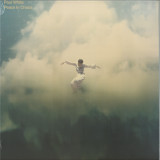
Multi-instrumentalist and synth wizard Paul White readies his third album for R&S Records, offering up a cinematic journey on ‘Peace In Chaos’ that captures the current mood with its shadowy electronic prowess. With an unabashed love of 80s synth music and film scores, the South London based producer presents an album of perhaps his most pop leaning tracks yet, following on from 2018’s ‘Rejuvenate’ and 2014’s ‘Shaker Notes’. Across eleven tracks, White delves into a world of esoteric electronic pop, as waves of melodic synths wash over towering drum patterns and majestic bass, with White adding his own enigmatic vocals to many of the productions.
- Acceptable Experience
- Lamplighter
- Cut It Like A Diamond
- Name Me
- Memorial Waterslide Ii
- Book Stall
- False Landing
- Horse Head Pencil
- I Have Been Alive
- The Politics Of Whatever
Memorial Waterslides" ist das Debütalbum von MEMORIALS, dem Duo bestehend aus Verity Susman und Matthew Simms (zuvor bei Electrelane und Wire). Es handelt sich um ein surrealistisches Pop-Album, das sowohl zeitlos als auch zeitgemäß ist und eine seltene Mischung aus klassischem Songwriting und Avantgarde-Attitüde aufweist. MEMORIALS kreieren einen Panorama-Pop, der auf Vertrautes und Fremdes zurückgreift, aber bekannte Pfade aber auch neue Wege beschreitet. Mit ihrem verspielten und experimentellen Stil, kombiniert mit einer Liebe zu Melodien, stehen sie in einer Reihe mit Broadcast, Portishead, Arthur Russell, The Velvet Underground, Yo La Tengo und Tortoise. Das Album ist voll von Bildern, die eine verlorene Zukunft, eine verschleierte Gegenwart und eine tagträumerische Vergangenheit heraufbeschwören, wobei jeder Song eine Rolle bei der Schaffung einer wirbelnden Breitwandatmosphäre spielt und den Hörer mit auf die Reise nimmt. Der Sound des Albums, das die beiden komplett selbst produziert haben, wurde von den Experimenten mit Tonbändern inspiriert, mit denen sie zunächst auf der Bühne herumspielten, als sie begannen, ihre vielschichtigen Aufnahmen für Live-Auftritte als Duo zu entwickeln. Nach ihren gefeierten 2023-Soundtracks "Women Against The Bomb" und "Tramps!", einer Europatournee mit Stereolab (sie wurden als "Stereolabs böser Zwilling" bezeichnet) und einem neuen Musikauftrag des Centre Pompidou in Paris kamen Verity und Matthew auf MEMORIALS in umgekehrter Richtung an, indem sie ihren Soundtrack-Alltagsjobs entflohen, um kosmische Reisen durch den Gartenschuppen in psychedelischen Rock, abgefahrenen Folk und wilde analoge Elektronik zu unternehmen. "Exciting and unpredictable" The Guardian. "Everything you'd expect from a duo adept in the strange and esoteric, while also in thrall to pop music's melodic bent." The Quietus. (Limitiertes) Pink farbenes Vinyl mit DLC sowie Digisleeve-CD!
Zimmerman conjures up a kind of Arcadian folk surrealism that is utterly his own.” MOJO "Startling collection of intimate, home-recorded songs from the cult singer-songwriter adored by David Bowie and Big Thief alike. I eulogised the “Arcadian folk surrealism” of his 1974 ‘Over Here In Europe’ but, if anything, this informal collection of intimate home-studiorecordings is even better. Recorded between 1973 and76 whilst living in Belgium this is the kind of assured, organic freewheeling folk music that has the mellow, introspective rough-edged feel of some lost private-press LP, the kind rightly revered by Endless Boogie’s Paul Majors as “real people” music. A true find.” Andrew Male MOJO magazine Never released before collection featuring Ian A Anderson & Maggie Holland recorded 73-77 is among Tucker’s finest - Free-ranging, Playful, Intimate - his Songpoet imagination unbound and in full bloom. Recorded between 1973-76 this is the first ever release for ‘I Wonder If I’ll Ever Come True’ a stunningly beautiful, homegrown collection by Songpoet Tucker Zimmerman and friends. The range and depth is astonishing. From the heady surreal journey of ‘It All Depends’ Upon the Pleasure Man’, to the uplifting Gene Clark-esque 'So It Goes’, to some of his most beautiful & touching love songs in ‘Let’s Start Over Again’ & ‘Song’. Only one song has seen the the light of day before now - ‘Taoist Tale’ from his 1984 album ‘Word Games’. This recording from a decade earlier loses no power in its folkier stripped down style driven by Tucker’s strong narrative.
While living in bucolic seclusion in Belgium with Marie-Claire, Tucker invited visiting musicians (Derroll Adams, Wizz Jones, Maggie Holland, Dave Evans, Ian Anderson) into his home studio to play and live tape whatever songs he had at hand. Maggie Holland and Ian A Anderson feature, while Tucker found a freeing simplicity in just guitar, ’70s organ, bass and piano. We are so grateful to Ian A Anderson, who carefully kept and curated these recordings from 50 years ago. “Every time I would leave, Tucker would hand me another tape full of songs”. Ian worked with Tucker and ourselves to present this wonderful album. The collection is among Tucker’s finest - free-ranging, playful, intimate - his Songpoet imagination unbound and in full bloom. The ethos, the playing, the freedom, feels like Ronnie Lane’s time in the Welsh Borders. Unhurried, liberated, down-home and cosmic. Extraordinary music made among friends.
FFF’s music exemplifies the Dystopian Dreamstates vibe through its ability to evoke exploration of futuristic and alienated themes, and creation of surreal sonic landscapes. His work resonates with listeners seeking music that challenges traditional structures and transports them into haunting, introspective realms. This EP evokes a complex blend of haunting dystopian elements with the surreal, shifting qualities of dream states. Such music creates an auditory landscape that can be both unsettling and hypnotic, often exploring themes of alienation, technology, and subconscious experiences.
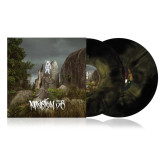
After over a year spent in a slight creative slump in a crumbling terraced house in Tottenham, Jam Baxter rang his label boss while heavily intoxicated to request they fly him to Bangkok forthwith, to rejoin forces with '...so we ate them whole' producer and engineer, Chemo. After an initial period of understandable hesitancy, the flights were booked and Baxter found himself suddenly regurgitated from the belly of a Jet Airliner into the magical and surreal surroundings of Mansion 38.
Mansion 38 is the name of the apartment block in Bangkok in which Baxter wrote the entire album, all the while going slowly insane on a heady mix of local liquor and multicoloured pharmaceuticals. The album is very much a product of the month he spent there in a dream-like state, becoming a delusional half-man half- goat figure to be admired and feared in equal measure.
Despite not being the wholesome and creative Zen retreat he anticipated and most probably needed, the backdrop of seedy late nights and impulsive tropical hedonism has resulted in some of his most intriguing and honest work to date. Chemo once again provides the haunting and evocative canvas that is all too perfect for Baxter's colourful imagery and dark psychedelic storytelling, blending a huge array of influences into an album that flows seamlessly from start to finish.
With comrades Lee Scott and Trellion flying to Bangkok on a whim to record their contributions and with videos shot in Bangkok, Hanoi and London this is truly an international project born of grand ambition and abject madness.
Mansion 38 is clear proof that after several years and multiple solo and group projects, Jam Baxter is still angrily shoving the boundaries of hip hop and lyricism further outward.