In this next installment of Token, Brussels' own Border One steps in to showcase 'Echoes from the Abyss', another swinging, modular-driven project destined for controlled sound systems. In these four tracks, the seasoned producer does what he knows best: engaging the dancefloor through his signature sound design and use of space.
'Echoes from the Abyss' the track, like the EP, is a collection of sound associations that are synonymous with Border One's sound. Resonant and cerebral yet bouncy and full of groove, the A1 presents a shimmering veil of synthwork that gives off a truly hypnotic effect. The follow up is much more sequence-based, focusing on the elements' interactions. The producer plays along freely with his drum machine, responding to a classically loopy and dissonant main synth that insists its way from beginning to end. Tension is everything, especially when met with a sustained chord in the second half, turning the record into a weapon of suspense. 'Celestial Observer' comes back straight and center with a focused tone and a progressive arrangement. With a thick low end and shrill highs, Border One flicks through percussion patterns and filter sweeps to make an intense, at times close eyed dancefloor experience. Ducking back into obscurity for the last track, 'Escaping the Void' takes on a more minimally produced style that breathes a bit after its previous, denser productions. Concluding with a question mark is always very appropriate, and here we're faced with a record caught between ethereal soundscapes and tense implications. With 'Escaping the Void', Border One closes with his latest contribution to Token with class as always, appealing to genre veterans and newcomers alike.
Search:sustain
The making of a maiden album can be a capricious process. One moment of outright musical flow paired with another period of sustained creative struggle are feats experienced by seasoned producers the world over. So when Miraclis was forced to hole away in his makeshift studio - in the midst of a global pandemic - the stage was set for something magical. Now it will see the light of day for the very first time.
Having released two singles on Secret Teachings to critical acclaim already this year, Chilean talent Miraclis will accomplish a milestone achievement in July with the release of his debut album: Origin Of Truth.
Difficult experiences were fundamental to the creation of such work, as were Miraclis’ inherent musical interests. He explains: “Origin Of Truth had its birth during the pandemic. I created it as a way of communicating to myself the sensations and feelings that were spinning around my head at the time. I've always been inspired by Bristol trip hop, as well as classical rock, and these genres definitely contributed to the making of these melancholic tracks. In a way I wanted to fuse all the musical influences that were part of my childhood, up until this point now, so this album really means a lot to me. It was my way of communicating, when there was a lack of social contact and communication itself was hard to come by.”
It's this meditative quality that initially drew Damian Lazarus to the project. “It’s a record that has its roots in electronic music, but it’s a very alternative, very deep, melancholic album. I find it both soothing and stirring at the same time, and that’s a quite interesting juxtaposition in that it feels edgy but delicious at the same time,” says Lazarus. “The fact that this was written in this place surrounded by the most incredible desert landscapes makes this a very important piece of work to me. It doesn’t sit in any particular genre, which is why it feels right for a Secret Teachings release. It hints at so many genres that I as a DJ am quite into, and it feels like a first as it’s unique and unclassifiable. That mystical, esoteric, edgy feel makes this a perfect release for the label.”
Sonnet opens proceedings, with ghostly vocals residing next to raw instrumental elements throughout. Miraclis’ signature guitar riffs soon converge on saddened keys, paving the way for Scienter. It takes the form of an instrument-based, electronic-inspired cut, building slowly before reaching a crescendo midway through via an enrapturing acoustic solo.
Floating Child comes next, brimming with a darker intensity courtesy of broody synth pulses and rhythmic hi-hats, as Shiver arrives next. There’s a rock-leaning sensibility to the piece that gives way to earnest lyrical offerings, opening swiftly into the breakbeat-esque world of Perceptions. Hard-hitting drums act as the focal point, with electric chords adding depth and intrigue, whilst Bright continues in a similarly heartfelt vein.
Introspective pads leave us feeling pensive, ahead of Interstellar taking us on a celestial journey through warped bass tones. Acting as the LP’s penultimate number, it’s a four-and-a-half minute showcase of guitar-based musical goodness and one that perfectly sets the stage for Trapped, a closing saga of suitably emotive proportions.
Miraclis earned his stripes as a DJ under the name Max Clementi in his native Chile, as well as Spain after a stint at the Barcelona SAE Institute. Playing and writing music since his parents gave him his first guitar at age twelve, he found himself inspired by synth wave, electronic pop, trip hop, and psychedelic rock of the ‘80s and ‘90s, drenching himself in music by the likes of Massive Attack, Tricky, Depeche Mode, and Nine Inch Nails. However, it wasn’t until he had to move back to Pucón to take care of his father during the pandemic that he began working on what would become Origin Of Truth.
Serendipity seems to play a large part in Crosstown Rebels’ new label Secret Teachings. Just look at the story of how Damian met Miraclis in the first place. It involved a chance midnight encounter in Pucón, Chile at a woodland campfire after the DJ was locked out of his hotel room. This meeting of minds was the start of a remarkable friendship, where Miraclis invited Lazarus to stay at his house and break bread with his family. The two kept in touch, exchanging music and ideas as a result.
DJ Support: Marco Gallerani, Manu Archeo, Faze Action, Thomas Wood to name a few
Calm, a highly regarded and influential beatmaker known for his lush downtempo sound, re-issues on LTD transparent vinyl his timeless album “Quiet Music Under The Moon”. This album showcases Calm's signature ambient style, featuring gently evolving pads and sustained, meditative chords that envelop the listener in a soothing atmosphere. Perfect for late-night introspection, this tranquil album offers a serene auditory experience, acting as an adult lullaby to calm even the most restless minds.
Blake Lee has always been fascinated by the unknown, and space, in its isolating, mysterious vastness, embodies this theme immaculately. The open void, captured so memorably by Stanley Kubrick in '2001: A Space Odyssey', is Blake's far-reaching canvas on 'No Sound In Space', a cinematic meditation on the cosmos that's painted in nuanced, emotionally sincere colors. The Los Angeles-based composer has been contemplating his full-length debut since 2021, using his guitar as a sonic paintbrush rather than find himself snared in its traditional aesthetic constraints. Transforming its characteristics with effects and subtle processes, he layers sustained tones and intimate improvisations, creating richly visual polychromatic utopias teeming with unknown life.
Since 2011, Blake has been most known for being the guitarist and a music director for Lana Del Rey, notching up three songwriting credits on her acclaimed ‘Ultraviolence’ full length. He sees his solo work is a form of escapism, a place where he can experiment and find comfort and catharsis outside of expectations and formal structure. The album was written instinctively, and Blake made sure he didn't force anything, letting go and getting out of his own way, listening intently as sounds and textures materialized organically. "I didn't want to ruin it by being a perfectionist," he laughs. And his collaboration with Kenyan sound artist KMRU, who runs the OFNOT label and contributes to two of the tracks on the album, occurred similarly organically.
Blake was moved to reach out to KMRU when he caught a performance of 'Natur' at Los Angeles' Zebulon in 2022, leading to a prolonged back-and-forth. They didn't meet in person until earlier this year, by which time they'd become firm friends, continuously sharing music and conversation. KMRU had lent a valuable ear to Blake, who sent early playlists of 'NSIS' that, over the months, slowly evolved into the finished album. It's the first release on OFNOT that's not by KMRU himself; the label emerged last year with the release of KMRU's own 'Dissolution Grip', and Blake's debut immediately expands its sonic universe. Alongside the playlists, Blake also provided KMRU with the tracks' raw stems, which KMRU began to edit and expand in his Berlin studio. 'Miura' and 'Waiting' are the result of this process, two sublime abstractions that augment Blake's dreamlike, euphoric tones with KMRU's pebbly distortions and booming low-end rumbles. And this same playful sense of freeness seeps into Blake's other compositions.
On the misty 'In A Cloud', he surrounds cascading string tones with soft-focus pads that swell until they're like crashing waves, and on the two 'Echoplexx' pieces, he uses delay and reverb to smudge his sounds until they're viscous residue, the harmonies obscured by whooshes of white noise and distant chimes. The mood is quieted somewhat on 'Moving Air', as Blake's swirling tones form half-heard lullabies, coalescing into a dense, melancholy crescendo, and he fills out the sound with reverberant airport recordings on 'Pan Am', letting pitchy My Bloody Valentine-esque drones warble beneath the transitory chatter. Each track melts into the next, forming a billowing, cryptic narrative that leaves more questions than answers. Blake is constantly searching, and fills his unoccupied space with warmth, perception and sensitivity.
Blake Lee has always been fascinated by the unknown, and space, in its isolating, mysterious vastness, embodies this theme immaculately. The open void, captured so memorably by Stanley Kubrick in '2001: A Space Odyssey', is Blake's far-reaching canvas on 'No Sound In Space', a cinematic meditation on the cosmos that's painted in nuanced, emotionally sincere colors. The Los Angeles-based composer has been contemplating his full-length debut since 2021, using his guitar as a sonic paintbrush rather than find himself snared in its traditional aesthetic constraints. Transforming its characteristics with effects and subtle processes, he layers sustained tones and intimate improvisations, creating richly visual polychromatic utopias teeming with unknown life.
Since 2011, Blake has been most known for being the guitarist and a music director for Lana Del Rey, notching up three songwriting credits on her acclaimed ‘Ultraviolence’ full length. He sees his solo work is a form of escapism, a place where he can experiment and find comfort and catharsis outside of expectations and formal structure. The album was written instinctively, and Blake made sure he didn't force anything, letting go and getting out of his own way, listening intently as sounds and textures materialized organically. "I didn't want to ruin it by being a perfectionist," he laughs. And his collaboration with Kenyan sound artist KMRU, who runs the OFNOT label and contributes to two of the tracks on the album, occurred similarly organically.
Blake was moved to reach out to KMRU when he caught a performance of 'Natur' at Los Angeles' Zebulon in 2022, leading to a prolonged back-and-forth. They didn't meet in person until earlier this year, by which time they'd become firm friends, continuously sharing music and conversation. KMRU had lent a valuable ear to Blake, who sent early playlists of 'NSIS' that, over the months, slowly evolved into the finished album. It's the first release on OFNOT that's not by KMRU himself; the label emerged last year with the release of KMRU's own 'Dissolution Grip', and Blake's debut immediately expands its sonic universe. Alongside the playlists, Blake also provided KMRU with the tracks' raw stems, which KMRU began to edit and expand in his Berlin studio. 'Miura' and 'Waiting' are the result of this process, two sublime abstractions that augment Blake's dreamlike, euphoric tones with KMRU's pebbly distortions and booming low-end rumbles. And this same playful sense of freeness seeps into Blake's other compositions.
On the misty 'In A Cloud', he surrounds cascading string tones with soft-focus pads that swell until they're like crashing waves, and on the two 'Echoplexx' pieces, he uses delay and reverb to smudge his sounds until they're viscous residue, the harmonies obscured by whooshes of white noise and distant chimes. The mood is quieted somewhat on 'Moving Air', as Blake's swirling tones form half-heard lullabies, coalescing into a dense, melancholy crescendo, and he fills out the sound with reverberant airport recordings on 'Pan Am', letting pitchy My Bloody Valentine-esque drones warble beneath the transitory chatter. Each track melts into the next, forming a billowing, cryptic narrative that leaves more questions than answers. Blake is constantly searching, and fills his unoccupied space with warmth, perception and sensitivity.
On this new LP Harry Bertoia shows why he may have been the first industrial musician. Bertoia often referred to his sound sculptures as a "collaboration with industry" and on this LP Bertoia is intentionally creating heavy, rhythmic music he described as "mechanized," "mechanical" and "factory like."
Recorded in 1971, percussion and repetition emulate the pounding rhythms of machinery on this unique pair of conceptual Bertoia compositions. Bertoia utilizes innovative performance techniques to create new sounds unheard in his ouevre. Even in the busy factory of Bertoia's mind, distant stillness rises up as Bertoia exhibits the massive amount of control he possesses over his many looming sculptures.
"Mechanization" is just one of the many sonic directions Bertoia took while composing and recording between the late 1950's and his death in 1978. He documented all of his ideas and directions in notes accompanying the hundreds of tapes discovered in his barn.
Bertoia's recordings are as much a celebration of sustained tones, intervallic relationships, healing vibrations, deep listening and shimmering harmonics as Indian Classical music, singing bowls, The Well Tuned Piano or Benjamin Franklin's glass armonica. Through these rich harmonics and pulsing pure tone, Bertoia was able to more clearly articulate his inner spirit than he could with sculpture alone – a point he made himself many times in interviews.
Harry Bertoia first came into artistic prominence in the late 1930s and his sculptural, ergonomic chairs, produced by Knoll Furniture beginning in 1952, were soon modernist furniture classics. Inspired by the resonant sounds emanating from metals as he worked them and encouraged by his brother Oreste, whose passion was music, Harry restored a fieldstone "Pennsylvania Dutch" barn as the home for this experiment in sounding sculptures which he had begun in the 1950s. Bertoia was an obsessive composer and relentless experimenter, often working late into the night and accumulating hundreds of tapes of his best performances; Oreste, too, would explore and record the sculptures' sounds during his annual visits to his brother's home in rural Pennsylvania.
Learning by experimentation was common for Bertoia and he mastered the art of tape recording, turning the Sonambient barn into a sound studio with four overhead microphones hanging from the rafters in a square formation. He would experiment with overdubbing by performing along to previous recordings, sometimes backwards, constantly improving his methods while also honing his performance skills. Bertoia was a careful editor of his own work and only chosen recordings remained, each with a date and carefully considered observations written on a note included with each tape. Through these pieces of paper a greater logic can be uncovered, a careful approach to composition, ideas, feelings and forms. The story of Sonambient barn collection will slowly be told through the release of recordings from the archive as well as installations and performances built from Bertoia's own recordings, lectures and a book.
When Bob Vylan won the first MOBO award for Best Alternative Music Act in 2022, the punk-grime duo took to the stage and used the platform to speak about how they managed to achieve the impossible as independent artists in a genre-defying space. “We released an album this year that we produced entirely, mixed entirely, recorded entirely, all from my bedroom…so everybody that’s here, bigging up Atlantic and bigging up Warner, fuck that, us man did it ourselves”.
It was an acceptance speech that rattled the room and built anticipation for their next projects.
Humble as the Sun, the forthcoming album from Bob Vylan continues with much of the rage and urgency that they have come to be known and loved for, but this latest project shows that they are now stronger and wiser, bolstered by the wins and learnings that they have fought hard for along the way. The resulting tracklist aims to leave the listener feeling power alongside their anger, and brings a fresh and compelling blend of punk, rock, grime and rap together in an experimental way.
Following on from the last album, Bob Vylan Presents the Price of Life, the message woven throughout Humble as the Sun remains dark in places but is high-energy, defiant and unapologetic in its critique of a broken social and political system that so many have fallen victim to, but feel powerless against.
This album is for the underdogs, the ones who come out swinging and those who refuse to be defeated in the face of injustice, and aims to remind listeners that anger is a fire that can be harnessed and put to use. The album creation started from a conversation with the sun, which is, after all, a big ball of fire that sustains life.
From masculinity to myths about the G Spot, the themes and topics explored on Humble As The Sun make for an often humorously empowering celebration of the peoples ability to endure, overcome and bring about change.
The lyricism on this album is even more layered than their previous projects, still darkly humorous, anti-establishment and unforgiving but at times pauses to deliver much-needed words of afrmation to listeners, “You are loved. You are not alone. You are going through hell but keep going.” Bobby assures the listener, ofering an antidote to the state of the world, aiming to give some power and agency to those who hear it. At a time when so little trust or faith exists between the people and the powers that be, Bob Vylan ofers out a hand in the despondent darkness that has overwhelmed so many in the shadow of a burning planet. They guides the listener to a place where they can see some light and feel empowered to do something, to fight back, to continue pushing forwards despite the challenges faced along the way.
Mixing all of the best quintessentially British - and Jamaican - musical elements from punk to drum and bass, grime and rock, Bob Vylan creates a sound that reflects the state of the nation, at once voicing the frustrations that normal people have, while also highlighting one’s ability to persevere, overcome hardship and to change.
Błoto’s bold 2020 debut brought forth three albums in just twelve months. This prolific creative burst, followed by an ongoing tour and involvement in other projects, meant that fans had to wait over three years for the next release. During this time, new ideas took shape, and the vision for their fourth LP crystallized. The wait for Błoto's new album is nearly over. As always, autumn signals the arrival of Grzybnia (Mycelium).
The idea for the album had been simmering within the band since the release of Kwasy i zasady and finally took shape in late January 2023 at Warsaw's Studio Pasterka, under the careful guidance of Piotr Zabrodzki. It was by far the most fruitful session in the group's history, with ideas flowing in abundance. The chosen tracks not only resulted in two well-received singles, Szlam / Ścieki and Bakteria, but also provided enough material for an EP set to drop next year.
The seemingly chemical title of the album Kwasy i zasady (Acids and Bases) ultimately referred to interpersonal relationships, describing traits that prevent harmony. The album embodied the polarization of societies in the 21st century. The metaphor of Grzybnia (Mycelium) goes a step further. It emphasizes the importance of cooperation as a fundamental skill that can yield various results (fruits, fungi)—both good and bad. Above all, it underscores the power of collective action beyond divisions.
In a complex, unstable modern world that is breaking apart into pieces, the concept of mycelium offers a powerful model. Mycelium thrives in degraded, seemingly lifeless environments created by humans. A key aspect of the broader significance of mycelium is that cooperation benefits all involved parties, where each contributes something and receives something in return. Mycelium is a symbiont, meaning it forms a symbiotic relationship with certain tree species through mycorrhiza, where the roots of the trees and the mycelium exchange essential life-sustaining substances. This results in mutual benefits. The world of mycelium exemplifies cooperation.
A single mushroom, like a person, dies, but mycelium endures, much like humanity itself. Thus, similar to culture, it is immortal. Błoto operates in a manner akin to mycelium. It undoubtedly belongs to the underground realm, embodying the essence of the underground. It is also a destructor of music. In what sense? The Polish Nobel laureate Olga Tokarczuk noted in her book Primeval and Other Times that “... Mycelium thrives by drawing the last remnants of life from what dies, decomposes, and seeps into the earth. Mycelium is the life of death, the life of decay, the life of what has died.” In the same way, Latarnik, Cancer G, Wuja HZG, and OlafSaxx, through their collaboration, process cultural products to create entirely new and surprising combinations. The result of this work is both edible and poisonous mushrooms, manifested in the form of fat beats, house, spiritual jazz, improvised music, illbient, organic techno, and genre-defying electronics.
The peak mushroom season in Poland occurs in autumn, which is why Grzybnia will be released on October 11, 2024, via Astigmatic Records.
Next up on Feral Child, sees not only a second ever release from New Zealand based VOR-STELLEN but a teaming up with one of label head dom’s favourite ever labels, the mighty Flying Nun. Despite some patchy European distribution the first VS release “Parallelograms”, was a constant player at FC HQ; 4 superb tracks of super laid back, kraut flavoured slow burners, (lead track “Voyager” especially, comes hugely recommended with its accompanying film clip), so when the band OK’d a second release for Feral Child, we were stoked. Vor-stellen is the experimental project of Brendan Moran, which blends fixated guitars and drums with ad-hoc electronic layers producing perforated waves of sustain which echoes off the fourth wall. Brendan has released work previously as part of avoid!avoid (their album “Particle and Wave” was released by Flying Nun in 2016) and The Subliminals, of which Flying Nun re-released -in 2021- a vinyl edition of their highly acclaimed album “United State”. With Vor-stellen he picks up where those other projects have left off as a foray into 'kraut' inspired compositions “which seek to transform pre-determined ideas of music into open-ended sound objects, untethered from any sense of conventional outcomes”. On this, second VS record, he teams up with his Subliminal buddies once again to continue on an exploration, “folding the weird and the eerie into a dark ecology of long-sound via indefatigable environments of modulation and improvisation, creating sonic counterpoints that hinge on a reanimation of musical gestures”. The record features two side long slow builders and are released in a beautiful Brendan Moran designed sleeve.
Rediscovered and compiled for release shortly before her death in November 2023, Further Selections from the Electric Harpsichord presents a never-before-heard recording of composer and artist Catherine Christer Hennix's early magnum opus. Originally debuted in 1976 at the festival Brouwer's Lattice at Stockholm's Moderna Museet, The Electric Harpsichord has steadily mystified fans and students of Western minimalist music for its implacable, transformative qualities, and the long-held, relative obscurity of its creator. Like the work of Hennix's close friend La Monte Young, the piece is set in just intonation and focuses on the transcendental potentials of precise tuning, inspired by their studies with Pandit Pran Nath. Composed of bursts of oscillating, synthetic tones using a carefully retuned synthesizer and a tape-based system for feedback delay, the sounds swirl, twinkle, and appear to bend time, space, and perception. Additional, sustained chords on the sheng, most likely played by her Deontic Miracle bandmate Hans Isgren, are present at the opening of the piece and reemerge towards the end of the recording. The release of Further Selections constitutes the most comprehensive original recording of this foundational work to date. Originally billed as The Well-Tuned Organ during its debut in Sweden, The Electric Harpsichord has developed a legendary reputation, predicated on a twenty-six minute fragment salvaged and circulated by Hennix's friend Henry Flynt. Promoting its importance on multiple occasions, Flynt aired the work on WBAI radio, organized a pair of tape concerts at New York alternative arts spaces in 1970s, and later penned a 1998 essay which served as the liner notes to its eventual CD release in 2010. For him, this work not only represented a sterling milestone in minimal sonic aesthetics, but also spawned a new genre that he dubbed "hallucinogenic/ecstatic sound environments (HESE)," which in turn inspired his own drone-like compositions. Gradually, interest in the recording led to a spate of archival projects, public performances, and new compositions by Hennix in the 2010s, in turn drawing into focus her multifarious practice, which includes serious contributions towards mathematics, poetry, sculpture, Noh drama, philosophy, and light art. Since 2018, Blank Forms has spearheaded a comprehensive publication effort in support of her work, including the writing collection Poësy Matters and Other Matters (2018); archival recordings like Selected Early Keyboard Works (2018) and The Deontic Miracle's Selections from 100 Models of Hegikan Roku (2019); and recent compositions such as Blues Alif Lam Mim (2021) and Solo for Tamburium (2023).
In 2007 an Italian film festival invites Mouse on Mars to score a film of their choice. The organizers claim to be able to clear the rights for any movie the band chooses. Werner Herzog’s fictional documentary Fata Morgana, which merges footage of several desert explorations by Herzog and his team into one continuous association, has long been a band’s favorite. The film comes with a soundtrack by Mozart, Leonard Cohen, Third Ear Band and field recordings. Andi Toma and Jan St. Werner are sent a DVD to Düsseldorf and start working. The idea is to score the film in real time so instrumentation has to be readily at hand: guitar, percussion, electronics, mouth harp, pedals, software, tapes, samplers. Once the arrangement for the three-part film is sorted Mouse on Mars bring their score to stage. Herzog Sessions is performed twice: first when the band still thought the rights had been cleared, and a second time at London’s Southbank Center knowing that Herzog would have never approved a new score.
--
Mouse On Mars – London Queen Elizabeth Hall soundtracking Werner Herzog.
By Mike Diver, 24.04.2009
Filmed in 1971, Fata Morgana is perhaps not one of Herzog’s best-known works (think Grizzly Man, Rescue Dawn, et cetera…), but then Mouse on Mars have never been ones to embrace the mainstream, quietly letting their modern, experimental take on krautrock do the talking over the years, thus producing some quietly brilliant electronica that far outweighs their modest profile.
The film itself is not altogether dissimilar to the wonderful, Phillip Glass-scored Koyaanisqatsi, with sweeping landscape shots and no obvious plot or narrative, though Fata is concentrated purely in one place – in and around the Sahara Desert, switching from images of barren wasteland to desert tribes and dead, skeletal cattle.
The obvious thing to do when soundtracking such powerful imagery is to vie for dreamy electronic soundscapes which can be sustained for a long period, and whilst this ambient shoegaze approach was present and correct (also carefully constructed and highly effective), Mouse on Mars added a human element to the performance, incorporating a live dimension by using and looping guitars, harmonicas, processed vocals and even a live horn player (quite possibly a flugelhorn. Look it up if you don’t believe me) for the final section of the film.
Some of the most interesting points arose when the duo suddenly switched from solemn, ambient tones to glitchy, bouncing electro (reminiscent of their more upbeat work) whilst on the same film shot – causing the audience mood to flick from tripped-out bliss to attentive semi-wired, utterly subverting any idea of a narrative the film may have possessed. Clever stuff.
Ranging from sinister to surreal to humorous, all the moods portrayed in Fata Morgana were successfully matched by Mouse on Mars’ live rescore – no mean feat. The duo also went above and beyond the call of duty with their own soundtrack, adding a fascinating personal signature to an already unique film.
Classic album, rriginally released in on 23 October 1989, via RCA Records, The Wedding Present’s second studio album, "Bizarro", marks its 35th anniversary this year. It is home to two of their biggest tracks – Brassneck and Kennedy, their first UK Top 40 hit. The band are touring Europe and the UK with special Bizarro 35th anniversary shows in September and October. This release is on Orange BioVinyl, a more environmentally sustainable product as it doesn’t contain any petroleum content
If a “sound” is unique, it can often expect a reasonable success. However, it takes a great deal more than just uniqueness to sustain this success. The Fleetwoods did this – and more. They became America’s top teenage vocal trio. Their sound was more than just different and identifiably their own. It was a perfect blend of young voices, just right for so many of the fine ballads they were singing. The Fleetwoods’ secret, if you can call it a secret, was sincerity. They simply gave each lyric they sang its truest and sincerest meaning. Over the years, many others have tried to imitate them, but none have come close to the overwhelming success they had. We hope you will enjoy this album of The Fleetwoods’ very best recordings.
- 1: Parallelograms (6.42)
- 2: The Transcendentalist (3.18)
- 3: Glass Teeth (4.5)
- 4: Galadali (2.20)
- 5: Traumzeit (4.18)
- 6: Salpêtrière (4.19)
- 7: Nereides (3.52)
- 8: A Forest In The Sky (4.23)
- 9: Yourcelium (3.16)
- 10: The Oneironaut (3.47)
Hawksmoor’s new album ‘Oneironautic’ on Soul Jazz Records follows on from last year’s critically acclaimed ‘Telepathic Heights’, as well as a re-release of his album ‘Saturnalia’ on the Library of the Occult label earlier this year.
James McKeown, AKA Hawksmoor, continues his fascination with the sounds and sensibilities of 70s/80s German electronic groups – think early CLUSTER, HARMONIA, CAN, NEU!, HANS-JOACHIM ROEDELIUS and MICHAEL ROTHER.
On this new album ‘Oneironautic’, he successfully combines these pulsating ripples of Germanic electronica with a number of decidedly English references: the soaring, hypnotic and pastoral qualities of BRIAN ENO, circa ‘Another Green World’; the long, sustained lines of ROBERT FRIPP’S FRIPPERTONICS; and the poetic feel of early DURUTTI COLUMN.
McKeown combines all of these elements while also remaining with one foot firmly in the British melodic hauntological modular synth aesthetic of hauntology – Ghost Box, Mount Vernon Arts Lab, Focus Group et al.
Once again using strictly modular synths, electronic drum rhythms, and guitars, Hawksmoor has created an electronic landscaped music world that is both new and old, immediately identifiable and yet utterly unique.
Following a run of chamber recordings, Samuel Reinhard returns with a suite of electroacoustic collages.
"Movement", the New York–based composer’s latest offering, is built from notes softly held. In his ongoing investigation of musical duration, perception, and attention, Reinhard deemphasizes progress through an embrace of repetition and negative space, inviting listeners to linger in time. Instrumental recordings are arranged according to a predetermined system, iterating fragments of sound in overlapping intervals of various sizes. Delicately layered snippets of decaying piano are joined by cello (Leila Bordreuil), bass flute (John Also Bennett), double bass (Vincent Yuen Ruiz), baritone sax (Michael Biel), and harp (Shelley Burgon). This breadth of instrumentation, arriving as individual notes stretched and overlapped, is treated not as an opportunity for immersive coalescence, but rather a gentle augmentation of texture, free-floating counterpoint. Notes are accompanied by the traces of the bodies and actions that produce them: a hand pressing a key or an arm keeping a bow aloft; breath filling an instrument’s body or glancing off its surface; a string vibrating and then softening to stillness. In sum, we hear resonance in the process of being sustained, as well as in the release that follows.
Black Vinyl[21,22 €]
Maggot Mass, the fifth full-length album by Pharmakon on Sacred Bones Records, marks the project's return after a five-year hiatus. This album signifies a departure from the original rules and structures established by Margaret Chardiet for Pharmakon, evolving into a new form. It retains the project's experimental roots in power electronics and noise while incorporating industrial and punk influences. The album stems from a profound disgust with humanity's dysfunctional relationship with the environment and other life forms. It explores the loneliness resulting from this broken bond and challenges us to acknowledge our personal and systemic responsibility. What peace can we make with privilege when the true cost of our comfort is not measured in dollars but in death? How can we reconcile with death when we impose the same hierarchical structures on it that we do in life? Is life worth living in the isolation of this self-imposed species loneliness? Humans often measure worth by accumulation _ money, assets, objects _ mistaking this for power and influence. Western heritage dictates a hierarchy, placing humans at the top, separate from the natural world. This delusion turns bodies into objects, land into property, and people into expendable tools. If our value were instead determined by our contribution to the ecosystem, who could claim that a human is more valuable than a maggot? Maggots recycle death into life, breaking down matter and nourishing new growth. They transform into flies, pollinating plants and sustaining the Earth's flora. In contrast, humans pollute rather than pollinate, with a select few profiting from exploitation at the expense of biodiversity and the well-being of many. In grappling with grief and loss on both personal and global scales, Margaret sought solace in the idea of rebirth through death, celebrating the beauty of regeneration through decay. However, she had to confront the stark reality of the disconnection from the earth under oppressive systems. Pharmakon is here imagining a path where the final act is to give back what was received from creation, offering our lives and deaths to sustain existence. once I slough off this human skin I will find my home and ancestral kin_ in the coffin-birth of my cadaver's ecosystem
Back In Stock!
Debuting on Fluid Funk with a lush and lax voyage dreamy coastal scapes, Dutch artist Uzu Moon dishes out feel-good, Cali-funk-informed vibes by the dozen over the course of four delectably smooth tracks, infused with elements of LA beat, soulful house and post-balearic elevation - including a rework from Cody Currie.
A bespoke late-summer joint to bump out loud in your open-top, "Asa" gets the ball rolling slo-mo style, brittle piano stabs chiming alongside mangled rap samples, playful acid spurts and a languid jazzy shuffle to drive it all. Funky synth hooks blazing, "Sunder, Love" lets off washed-out RnB vibrations over beds of 303-emulating squelch, topped off with a guitar solo a la Santana like you're chilling out in Venice Beach.
"When I Get Home, I'll Know It's Over" then heads for the opposite side of the Pacific with its koto-esque resonances, soft tapping drums and rugged acid loops weaving a melancholia-laced, loungey narrative for the dance floor and not. "Sunder, Love" as reshaped by Shall Not Fade affiliate Cody Currie revs things up two notches further, turning the original into a doped-up chugger, primed for sustained hustlin' n bustlin' in the ballroom with its convulsive congas and vaporous melody fluttering like a groovy butterfly.
Frankfurt’s Max Buchalik is in the early phases of his production career but has many years of experience throwing parties in his hometown, where he is a pioneering force. With his deep understanding of dancefloor dynamics, he now pairs his love of the 80s with rich sound designs on his debut release for Brooklyn-based imprint Melodize.
Opener ‘Higher State’ is a bright house cut awash with sugary, pixelated chords and twinkling pads. Its retro-future charms and colourful, uplifting arps all serve to get hands in the air and heads amongst the stars. Remixer Venice Arms is an alias of accomplished dark disco don Curses, who has long been a fixture in the Berlin underground. His take on ‘Higher State’ is a snappy proto-house cut with 80s synth work and natty chords that are busy and full of fun.
The second original ‘Midnight Passion’ is another vibrant track with throwback synth progressions and retro textures. The melodies shine bright as they rain down over snappy drums and melancholic leads packed with exciting emotions. Remixing this one is Italian DJ, producer and label owner Fabrizio Mammarella, who has a fine discography that takes in releases on DFA, Permanent Vacation and Correspondant, as well as his own Slow Motion Music, Wrong Era Records and Emet. His lively disco-house version is lit up with shiny chords, chattery percussive patterns, woodpecker-like hits, and sustained chords that will dazzle the dance floor.
Juho Toivonen is a 25-year-old experimental musician from Pori, Finland whose debut solo tape “Lament & Rejoice” was released in 2021 and soon after that his sophomore follow up "Suurpää" came to see the light of the day. After these releases filled with deep drones and ominous ambience, Toivonen is reaching for new heights.
On his first solo vinyl "Kasveille ja Eläimille" Toivonen meditates using improvised repetitions made with untuned piano that is accompanied with occasional field recordings and sustained synthesizers.
Continuing his fruitful relationship with Discrepant after the third volume of his ongoing Organic Music Tape Series on Sucata Tapes, Tiago Sousa returns with two longform pieces for organ with 'A Thousand Strings'. A self-explanatory title in itself, 'A Thousand Strings' drifts fluidly into a celestial realm of cascading melodies and cycling patterns that never feel forced or strict throughout its two hypnotic tracks. Pulsating with life and ecstatic abandon.
Taking cues from the tradition of American minimalists like Steve Reich and, particularly, Terry Riley, the Portuguese composer's work flows with a life of his own, that, while acknowledging those influences, transcends them into his own signature. On the A side, 'A Thousand Strings' goes seamlessly from intertwining crepuscular harmonies to ascending keyboard runs in the manner of 'Persian Surgery Dervishes' finishing with a coda of rhythmic marimba-like pulses. On the flipside, 'The Things Passed' creates this maze-like tapestry of melodies that seem to drift apart only to converge back again into its internal process before setting on sustained tones infused with a sense of longing. For all things passed. For what is yet to come.
- A1: No Fun Ft. Iggy Pop (Adf30 Rework)
- A2: Comin' Over Here Ft. Stewart Lee (Afd30 Remaster)
- A3: Broken Britain Ft. Chowerman (Adf30 Special)
- A4 10: 00 Mirrors Ft. Sinéad O'connor & Ed O'brien (Adf30 Remaster)
- A5: Raj Antique Store Ft. Likkle Mai & Dry And Heavy (Adf30 Remaster)
- B1: Taa Deem Ft. Nusrat Fateh Ali Khan (Adf30 Remaster)
- B2: Culture Move Ft. Mc Navigator (Adf30 Remaster)
- B3: Free Satpal Ram Ft. Primal Scream (Bendran Lynch Mix)
- B4: Toulouse Ft. Zebda & Chandrasonic (Adf30 Rework)
- B5: Black Steel In The Hour Of Chaos Ft. Chuck D (Live At Somerset House)
- B6: Collective Mode Ft. Audio Active (Adf30 Remaster)
Legendary UK band Asian Dub Foundation is celebrating its 30th Anniversary this year!
Asian Dub Foundation are a genre unto themselves. Their unique combination of jungliest rhythms, dub bass lines and wild guitar overlaid by references to their South Asian roots via militant high-speed rap has established them as one of the best live bands in the world. The story began in the early 90’s when ADF formed from a music workshop in East London at the institution which is their spiritual home, Community Music. Their unique beginnings in a music workshop in east London shaped both their sound and their educational aspirations, setting up their own organisation ADF Education (ADFED), plus instigating campaigns on behalf of those suffering miscarriages of justice.
Building a solid live reputation in the mid-90’s, they gained worldwide recognition sharing the stage with Rage Against The Machine, the Beastie Boys, Radiohead and Primal Scream. On record, they've collaborated with Radiohead, Sinead O'Connor, Iggy Pop, Adrian Sherwood, and Chuck D. In addition to their blistering live reputation ADF were one of the first bands to experiment with live film re-scores (“Cineconcerts”), beginning with their rapturously-received re-interpretation of the French classic La Haine back in 2001.
In 30 years, Asian Dub Foundation have racked up 1000’s of unforgettable shows, 9 studio albums alongside a social and educational activism that both created the group and sustains them today. In celebration of the longevity of this unique project they are announcing an extensive European tour for 2024-25 of more than 60 shows and a special album showcasing their many iconic collaborations. “94-Now: Collaborations” will be released on September 27, 2024!
h B3 Free Satpal Ram ft. Primal Scream (Bendran Lynch Mix) ADF30 Remaster
j B5 Black Steel in the Hour of Chaos ft. Chuck D (Live At Somerset House) ADF30 Rework)
h B3 Free Satpal Ram ft. Primal Scream (Bendran Lynch Mix) ADF30 Remaster
j B5 Black Steel in the Hour of Chaos ft. Chuck D (Live At Somerset House) [ADF30 Rework)
Scott Diaz taps into some old school garage class with this new EP on Pirate Cutxz, but never is it too slavish to the OG sound. Instead, he brings fresh ideas and modern production skills to four characterful cuts. 'Holdtight' opens in bunch fashion with big drums and busy chords dancing about next to yelps and sustained pads. 'So Hot' is a more subtle 2-stepper with a ducking and diving groove bathed in warm synth work and natty bass notes. 'Ikigai' shuts down with some 90s organ chords and sleazy, shuffling speed-garage style drums and well-deployed vocal samples. Effective stuff.
Long Vehicle is back on the street with a new record that's ready to take us on a journey as diverse and exciting as a cross-country road trip from Leipzig Neuschönefeld to Vienna Ottakring. Presenting "Bumper 2 Bumper Two" by Reece Walker & Salomo sharing the driver's seat again – already proven their prowess with a hithouse EP for the label three years ago, and now they're back with another quartet sustainable pieces – guaranteed to get your Birkenstocks tapping while jiving.
Calm's superb Before album is the gift that keeps on giving as Hell Yeah serves up a collection of the best remixes from it. Willie Graff, Gallo and Aura Safari all step up on a fresh 12" that lands this summer.
Before arrived on double vinyl in 2022 after a CD-only release in Japan in 2021. Since then it has become a Balearic mainstay and go-to record for lovers of lavish downtempo sounds. Now, remixes of three tracks from it all appear on this one record with Ibirican-American Willie Graff going first. He is a deep house don who has held several key residencies around the world while dropping his sublime sounds on the likes of Leng, Music For Dreams and many more. His remix of 'I Love You' is a gloriously horizontal one with blissful piano keys rippling over the bubbly drums and bass. Yearning reed melodies add an emotional romantic edge to make this a standout in any setting. Then comes Gallo, the Balearic Gabba Sound System member and resident at Berlin Balearic nightspot Buena Onda. His 'Tropical Hinterhof' remix of 'I Love You' is expertly exotic and soothing as mellifluous keys rain down over a groove as smooth as silk. It's a heart-achingly beautiful sound that will make for truly special moments on the dance floor.
Italian collective Aura Safari then offers two different remixes. They are master musicians who have served up a superb double album Islands Dreams here in late 2023 where they showcased their escapist blend of dub, jazz, Afro-cosmic, Balearica and boogie. First up, 'Feel It' (Aura Safari Desert mix) is six minutes of oriental melody over loose drums. There's a playful feel to the dancing piano keys and richness in the percussion that makes this one a sophisticated sound for both early evening warm-ups or moments of late-night reflection. 'Kunpoo' (Aura Safari Daydream mix) has a nineties feel with its gentle breaks, hypnotic string loops, and sustained chords. They break over you in gentle rays of earth and euphoria to ensure utterly blissed-out results.
These four versions all bring sophisticated dance floor energy to the timeless originals.
Saxophonist and composer Wayne Escoffery reflects on love, loss, and solitude on his stunning new album, an atmospheric and haunting mood piece, Alone, featuring a remarkable all-star quartet with pianist Gerald Clayton, bassist Ron Carter, and drummer Carl Allen. In the summer of 2023, saxophonist and composer Wayne Escoffery found himself alone in a way that he’d never quite experienced before. He was away from home, on sabbatical in Europe with a month to himself between tours. A long-term relationship had just ended, and he was confronted with the loss of friendships that he’d once valued. Worst of all, he’d suffered a broken finger that left him unable to play the saxophone for the first time since he’d picked up the horn in high school. “Normally, my coping mechanism would be the saxophone,” Escoffery laments. “But even that wasn't available to me for about nine weeks, so I just had to be alone in my thoughts.” He made good use of this alone time, conceptualizing the music that makes up his striking and singular new album. What emerged from that solitude was an extended mood piece, a workunique in Escoffery’s typically wide-ranging catalog for its sustained atmosphere of stark melancholy and searching introspection. Alone was conceived during a time of isolation, heartbreak, regret, and reflection, but the experience of the album is far richer even than that. In the end, “I was forced to reflect on life and what was most important to me,” Escoffery concludes. “The concept of this album grew out of that reflection.”
When the Amsterdam singer-songwriter Jana Mila (pronounced Yah-nuh
MEE-lah) began writing a song called "Chameleon," she thought she was
writing about someone else--a friend who seemed to be changing her
colors to please other people "But the more I lived with the song, the
more I felt like I was writing about myself," she admits "Doesn't everybody
try to reflect other people? Don't I change my own colors in order to be
accepted? Especially when you're young, you can lose yourself in other
people if you don't know who you are"
That is the central idea behind her debut album, also titled Chameleon, which
introduces Mila as an artist deeply committed to self- reckoning and selfpossession. Our innate desire to belong and to be loved can lead to a kind of selfannihilation, making us strangers to ourselves. Writing songs is her means of
finding and sustaining her identity."The album is a conversation with myself, a
way of getting to know myself better. There are little fears woven into every lyric,
but there's also advice to myself. I'm writing to find a part of myself that has
some wisdom."
Musically, Mila is the best kind of chameleon. The album draws from a wild array
of sources, entertaining new ideas on every song: dusty Laurel Canyon folk on
"It's True," catchy Nashville country on "Let Me In," driving '70s rock on "I Wasn't
Gonna." She puts her stamp on every note, turning those fears into an album of
remarkable confidence, eloquence, and power. Chameleon is a self- portrait
rendered in vibrant detail.
Katya Shirskova - David Maranha - Le Héron / A Reuniåo
Stellagedelivers a compelling split LP fromKatya ShirshkovaandDavid Maranha, "Le Héron / A Reuniåo," set for release in July 2024. Created and produced in residence at La Box contemporary art gallery at ENSA - École national supérieure d'arts de Bourges in 2023, this album is a profound exploration of the two artists' respective voices, showcasing their distinctive approaches.
Katya Shirshkovaopens the LP with side-long "Le Héron." This piece is an unadulterated exploration of voice, devoid of any field recordings or added effects. Embracing minimalism, the work revolves solely around vocal loops and re-recordings, creating choral structures that evoke folk traditions while delving into experimental realms. The ASMR-like techniques employed serve not merely as an auditory gimmick but as an intricate tool to illustrate the delicate flight of birds, mirroring the ethereal quality of the entire composition.
"Le Heron" aptly draws inspiration from its avian namesake, weaving birds into its fabric through the concept of vertical polyphony. The piece is underpinned by a profound understanding of this polyphonic approach, demanding meticulous precision in its looping technique. Each fragile construction is crafted in a single, unbroken take, showcasing an impeccable blend of simplicity and complexity.
David Maranhatakes over on the flip side with "A Reuniåo," delivering seven suites of powerful, minimalist drone compositions. Maranha's mastery of sustained tones and evolving harmonics creates a mesmerizing, meditative experience that is both intense and transformative.A dynamic interplay of harmonics creates a dense, immersive auditory environment, a study in sustained tones and subtle variation, leaving a lasting impression.
Mixed and mastered by Giuseppe Ielasi
Larry Heard's Alleviated Records label shirt in Heather grey with the classic varsity style logo in blue/black silk screen. Heavy Cotton Adult T-Shirt Size S: White / Heather Grey Unisex 100% jersey cotton (180g/m²) from ethical and sustainable sources Measurements S: chest: 46 cm, back: 72 cm Measurements M: chest: 51 cm, back: 74 cm Measurements L: chest: 56 cm, back: 77 cm Measurements XL: chest: 61 cm, back: 79 cm Measurements XXL: chest: 67 cm, back: 81 cm
Lebanon oud master Rabih Abou-Khalil's stunning 1996 album 'Arabian
Waltz' is appearing here on vinyl for the first time."Arabian Waltz is the
pinnacle of Rabih Abou-Khalil's achievement as a composer and arranger
It is a sublime fusion of jazz, Middle Eastern traditional music, and Western
classical. In addition to Abou-Khalil on oud (the Arabic lute), Michel Godard on the
tuba and the serpent (the tuba's antique kinsman), and Nabil Khaiat on frame
drums, the album also features the Balanescu String Quartet instead of the usual
trumpet or sax. The presence of the Balanescu might seem to pose a dilemma
for the composer: traditional Middle Eastern music uses no harmony but a string
quartet is all about harmony. Abou- Khalil achieves a compromise by generally
writing the string parts in unison (or in octaves), in effect using the quartet as a
single voice, but also letting the quartet split up to play parts in unison with the
other instruments or to provide ornamentation. Without surrendering jazziness at

all, the presence of the strings makes possible a wondrous atmosphere, almost
as if one is listening to the soundtrack of a classy movie set in Beirut or
Damascus during the '40s. This feeling is greatest on "Dreams of a Dying City"
with its brooding tuba and cello motifs and grave, repeated rhythms. "The Pain
After" starts with an impressive tuba solo that turns into a long interlude for tuba
and string quartet; sad, slow music that sounds like one of Beethoven 's late
quartets. Then Abou- Khalil finally enters on oud, bringing a sustained note of
wistfulness. Fortunately, beside the darker numbers lie the propulsive drama of
"Arabian Waltz" and the bobbing and weaving quirkiness of "Ornette Never
Sleeps." Abou- Khalil is known for experimenting with the possibilities his guest
musicians bring to his style. In this case, the guests have inspired the host to
reach a new height and maybe even a new style. This recording suits every fan of
world music, jazz, classical, or just good music." - Kurt Keefner
Sun Reflector is the debut LP collaboration by Heffernan (Ivan The tolerable, All Structures Align, King Champion Sounds, University Challenged) and Pärk (Black Tempel Pyramid, Teeth Of Glass, Kosmonaut). Sun Reflector is steeped in a haze of primitive drum machines, fanned phase and sustained scuzz-rippled guitar chimes, an ambient electronic creation with emphasis on repetitive trance-inducing rhythmic pulsations of electronic sound and subtle counterpoints that slowly unfold as the rhythmic drive marches forth utilizing the Motorik 4/4 beat with the lysergic kosmische sonic textures of Cluster. With Heffernan (bass, guitars and drones) based in the Northeast of England and Pärk (synths, drones and loops) based in Colorado USA on the border with New Mexico - the portal they opened up between these environments creates a travelogue that unites physical and inner space, a series of trance induced states rendered in vivid colour, a delirious portal into the ether. ‘Harmonic Coast’ opens and is a heady downtempo affair, an earthly vibration that slips effortlessly between peyote peaking trekking trips & Balearic sunset vibes. The somnambulistic drift of 'The Sun' sets the stage with a series of shimmering, circular synth pulses where hidden details slowly emerge over multiple listens. Album closer ‘Fever Mirage’ creates a clear-eyed appreciation of the pastoral beauty that surrounds us, it’s a journey that summons up an occult-like dream of glacial arpeggios and whispering synths that pull your attention in to this hypnotizing listening experience. Sun Reflector is a collective sound in which a lot is allowed, and a lot is done. That combined with the compositional ingenuity where the heterogeneous timbres create a time travelled cosmic mysticism that summons up the spirits and visions of Harmonia, Cluster, Eno and Phillip Glass. Shimmering and transcendent we present to you for your listening experience ‘Sun Reflector’
Repress!
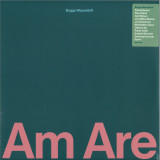
** Now available on vinyl* Steve Reich remains one of the most important figures in
20th century music. Though he studied at the prestigious
arts institutions Julliard and Mills College, by the mid-
1960s Reich set about dismantling the very orthodoxy that
he had been trained in. Forming a new musical language

based on repetitive processes, Reich became established
as part of the so-called 'Big Four' of New York minimalists
(along with La Monte Young, Terry Riley and Philip
Glass). Reich's influence can easily be seen today in both
the classical world and contemporary pop music.
'Four Organs' is the ultimate minimalist composition.
Performed by Reich, Glass, Art Murphy and Steve Chambers,
four identical Farfisa organs strike a single chord and
gradually lengthen each note to produce polyrhythms between
the players. Anchored by Jon Gibson's stoicallysteady
pulse on maracas, the piece deconstructs its opening
burst to a sustained mass of sound - stretching the tones to
create (in Reich's words) 'slow-motion music.'
Inspired by Reich's early training on drums, 'Phase Patterns'
treats the keyboards like tuned percussion instruments:
a basic rhythm pattern is played in unison and almost imperceptibly increases tempo to move out-of-sync.
Each progressive cycle emphasizes unique figures that are
not generated by an individual alone, but rather emerge
from the communal expression of the group.
Originally released on Shandar in 1971, Four Organs /
Phase Patterns is one of most highly regarded avant-garde
recordings in the past 45 years. This CD release features
cover photography by artist Michael Snow and is recommended
for fans of Neu!, Glenn Branca and Tim Hecker.
Steve Reich remains one of the most important figures in 20th century music. As part of the so-called "Big Four" of New York minimalists (along with La Monte Young, Terry Riley and Philip Glass), Reich influenced both the classical world and contemporary pop music.
Back in print ! Steve Reich remains one of the most important figures in 20th century music. Though he studied at the prestigious arts institutions Julliard and Mills College, by the mid-1960s Reich set about dismantling the very orthodoxy that he had been trained in. Forming a new musical language based on repetitive processes, Reich became established as part of the so-called "Big Four" of New York minimalists (along with La Monte Young, Terry Riley and Philip Glass). Reich's influence can easily be seen today in both the classical world and contemporary pop music."Four Organs" is the ultimate minimalist composition. Performed by Reich, Glass, Art Murphy and Steve Chambers, four identical Farfisa organs strike a single chord and gradually lengthen each note to produce polyrhythms between the players. Anchored by Jon Gibson's stoically-steady pulse on maracas, the piece deconstructs its opening burst to a sustained mass of sound – stretching the tones to create (in Reich's words) "slow-motion music."
Inspired by Reich's early training on drums, "Phase Patterns" treats the keyboards like tuned percussion instruments: a basic rhythm pattern is played in unison and almost imperceptibly increases tempo to move out-of-sync. Each progressive cycle emphasizes unique figures that are not generated by an individual alone, but rather emerge from the communal expression of the group. Originally released on Shandar in 1971, Four Organs / Phase Patterns is one of the most highly regarded avant-garde recordings of the past 50 years. This first-time vinyl reissue features cover photography by artist Michael Snow and is recommended for fans of Neu!, Glenn Branca and Tim Hecker.
Northampton, Massachusetts. The Five Colleges. Hampshire College. Forward-thinking education. Electronic Music studies. A vast student population created and sustained a vibrant cultural scene. This is but a snapshot of a fraction, but a fertile and significant one that impacted the lives of many who came in contact with it. The book follows a tight group of people who got together, made music, promoted and released it, created the conditions for others to record and release music, booked bands and then scattered throughout the Midwest and East Coast.
First person memories and memorabilia from Christopher Vine, Craig O'Donnell, Elliott Sharp, James Whittemore, Nicholas Brown, Sean Elias and others, patch up a story of joyous action, firm and enthusiastic DIY endeavours to make things happen as they would like them to happen. It is about a local scene and some key protagonists and it communicates values and methods that are still current — and probably will always be in some form or another among young people with a serious drive to act upon their artistic inclinations. This is also a depiction of what was in fact a model of a music scene. A complete ecosystem was in place during this period. Northampton, sure, but extended across the whole of Pioneer Valley in Western Massachusetts. Bars, music and record stores, live music, College radio, electronic music studios, written press and a lot of energy going into creative work. The immediate "punk effect" motivated the appearance of numerous bands, many short lived, others evolving into New Wave / Power Pop territory, eventually crossing into Post-Punk experimentation.
Turning The Crank is also a companion to an EP of the same title, including music played, produced and recorded in Northampton between decades (1970s going into the 1980s) by different combinations of individuals resulting in The Higher Primates, The Scientific Americans and Human Error. Music in turns mechanical and austere, gorgeously loose, in love with Dub.
Jaqee's last album with the promising title "Fly High" leads the inclined listener into a sometimes idiosyncratic fermentation of street-ready R'n'B, pop aesthetics, jazz intellect, world music earthiness, chanting Afro soul and sensitivity and softness of classical music and orchestral warmth, which is defined by Jaqee's voice throughout all tracks, but never overridden. Thilo "Teka" Jacks, who produced "Fly High", is looking for musical salvation and the courage to change things up in order to illustrate unity, also in busy, heated, African sub-currents like High Life, but also in European dancefloor stereotypes and even traces of soca and merengue, all of course always only thought of, because the real main actor is and remains Jaqee's sustained singing, her unique intonation and her voice, which sometimes sounds clear and angry, other times fragile and sensitive - that's the way it should be. Despite or precisely because of this immensely expressive character of the album, it is advisable to listen to the work several times: Jaqee makes music with sophistication and expression and a look that also allows for sheer black music entertainment, "Fly High" proves this with lasting effect. "Fly High" is now available on vinyl for the first time.
2x12"[41,39 €]
“The place where I’m taking my inspiration from is a place of pure harmony and light. I’m just like everyone else – I’m very anxious, I have my issues and demons, but there is a place inside me which is much more in peace and harmony, so I took inspiration from this part of myself, rather than the dark part.”
As the world we live in grows darker and more bewildering with every passing day, the transformative power of music has never been more vital. Formed in the small French town of Bagnols-sur-Cèze at the dawn of the century, underground icons Alcest have always been clear about their desire to transport listeners to somewhere different, somewhere better. Led by founder and multi-instrumentalist Neige, the French artists have been one of the most consistently radical voices in all of heavy music, with a sound that eschews metal’s often myopic devotion to casting shadows, in favour of a sublime blend of darkness and blinding bright light.
The release of Alcest’s debut album Souvenirs d’un Autre Monde in 2007 blazed a unique trail through the underground metal world, eliciting high praise and feverish condemnation in equal amounts. Ostensibly a black metal project, Neige’s crew gifted an entirely new perspective to the black metal scene: wherein beauty, fragility, melody and positive vibrations co-exist with the fast, furious aesthetic of true extreme metal. Almost instantaneously influential, Alcest were able to steadily establish themselves as a unique force, both with a series of acclaimed albums and a sturdy reputation as a transcendent live act.
From the enlightened primitivism of 2010’s Écailles de Lune, and the definitive, holistic squall of Les Voyages De L’Âme (2012), to the magical, post-rock splendour of Shelter (2014) and the dark, dynamic Kodama (2016), Neige’s vision has been presented in the most vibrant and revelatory colours. Meanwhile, the legions of like-minded “blackgaze” bands that have followed in Alcest’s wake speak volumes about the Frenchmen’s profound and enduring influence.
Released in October 2019, Alcest’s sixth studio album marked another grand milestone in their story. Their first record for Nuclear Blast Records, Spiritual Instinct deftly sustained the conceptual and musical preoccupations of past achievements, while taking Neige and long-time drummer Winterhalter into new sonic realms, both grittier and more nuanced than ever before. Inevitably, plans to tour their new music were eventually scuppered by the global pandemic that broke out early in 2020. But Alcest’s creative journey continued regardless, and the results can be heard on the band’s latest album, Les Chants de L’Aurore.
Having redirected his artistic energies, Neige began work on the follow-up to Spiritual Instinct, newly inspired by the experiential essence that first led him to his band’s ground-breaking musical life. As with Souvenirs d’un Autre Mode, Les Chants de L’Aurore draws inspiration from the spiritual childhood experiences that have shaped Neige, both as a musician and a human being. A liberated nosedive into the very notion of consciousness and the layered mists of reality, the seventh Alcest album amounts to a euphoric homecoming.
picture LP[31,51 €]
“The place where I’m taking my inspiration from is a place of pure harmony and light. I’m just like everyone else – I’m very anxious, I have my issues and demons, but there is a place inside me which is much more in peace and harmony, so I took inspiration from this part of myself, rather than the dark part.”
As the world we live in grows darker and more bewildering with every passing day, the transformative power of music has never been more vital. Formed in the small French town of Bagnols-sur-Cèze at the dawn of the century, underground icons Alcest have always been clear about their desire to transport listeners to somewhere different, somewhere better. Led by founder and multi-instrumentalist Neige, the French artists have been one of the most consistently radical voices in all of heavy music, with a sound that eschews metal’s often myopic devotion to casting shadows, in favour of a sublime blend of darkness and blinding bright light.
The release of Alcest’s debut album Souvenirs d’un Autre Monde in 2007 blazed a unique trail through the underground metal world, eliciting high praise and feverish condemnation in equal amounts. Ostensibly a black metal project, Neige’s crew gifted an entirely new perspective to the black metal scene: wherein beauty, fragility, melody and positive vibrations co-exist with the fast, furious aesthetic of true extreme metal. Almost instantaneously influential, Alcest were able to steadily establish themselves as a unique force, both with a series of acclaimed albums and a sturdy reputation as a transcendent live act.
From the enlightened primitivism of 2010’s Écailles de Lune, and the definitive, holistic squall of Les Voyages De L’Âme (2012), to the magical, post-rock splendour of Shelter (2014) and the dark, dynamic Kodama (2016), Neige’s vision has been presented in the most vibrant and revelatory colours. Meanwhile, the legions of like-minded “blackgaze” bands that have followed in Alcest’s wake speak volumes about the Frenchmen’s profound and enduring influence.
Released in October 2019, Alcest’s sixth studio album marked another grand milestone in their story. Their first record for Nuclear Blast Records, Spiritual Instinct deftly sustained the conceptual and musical preoccupations of past achievements, while taking Neige and long-time drummer Winterhalter into new sonic realms, both grittier and more nuanced than ever before. Inevitably, plans to tour their new music were eventually scuppered by the global pandemic that broke out early in 2020. But Alcest’s creative journey continued regardless, and the results can be heard on the band’s latest album, Les Chants de L’Aurore.
Having redirected his artistic energies, Neige began work on the follow-up to Spiritual Instinct, newly inspired by the experiential essence that first led him to his band’s ground-breaking musical life. As with Souvenirs d’un Autre Mode, Les Chants de L’Aurore draws inspiration from the spiritual childhood experiences that have shaped Neige, both as a musician and a human being. A liberated nosedive into the very notion of consciousness and the layered mists of reality, the seventh Alcest album amounts to a euphoric homecoming.
Missing out on that super-chill, uber-jittery minimal groove thing? Let"s get real, real Ghosted again. Oren Ambarchi has been collaborating with the Fire! trio (Mats Gustafsson, Johan Berthling and Andreas Werliin) for over a decade - and both Johan and Andreas played on Oren"s Live Hubris as well. Oren and Johan began music-making together back in the early aughts - but it wasn"t until 2021 that the three of them got together to record music. That became the first Ghosted album. When they were done, it was clear they had founded a new group. A music of sustained tension and deep atmosphere marked by subtle, shifting dynamics, Ghosted was released in May of 2022 to psyched response everywhere; the trio embarked upon an ongoing series of concert bookings around Europe, with loads of other people in the world still hoping to have the chance to be in the room at the next show. Two years on, Ghosted has gone through several represses, now it"s time for the "dreaded follow up album"! Rather than go back to the well, the guys decided to tear everything down and start all over again, reimagining themselves from scratch. Just kidding! As we"ve noted, Oren, Johan and Andreas have been playing together for years and years, developing an essential telepathy within their shared space. They get each other and feed each other"s music processes on an elemental level. Why change that? What made the most sense was to go back to Daneil Bengtsson at Studio Rymden in Stockholm for a couple days, then have Oren and Joe Talia mix and Joe master it at Good Mixture in Melbourne again, then get Pål Dybwik to do some well-distinctive cover art, and once more, call it a record. That"s just what they did - and it should be no surprise at all that the new Ambarchi/ Berthling/Werliin album looks and sounds as engrossing as their debut, if not more so! Ghosted II has a definitively fresh quality radiating throughout. The mutual feeling among the three players goes deep, allowing for lots more to say every time they get together - a further recombination of elements, a new expedition through alternative angles... there"s always more, and incredibly, it"s all improvised, with next-to-nothing prepared going in and minimal overdubs after they"ve laid things down. References are shared in shorthand, with just a single word, like "Santana," or "Police" acting as working titles for certain pieces on this record (have a guess!). It"s a disservice to call them jams: above and beyond the innate feel of the songs, there"s a strong sense of structure, informed by the band"s communal aesthetic, and edified immeasurably by their time spent in concert the last couple years. As noted at the top, these guys balance their music improbably between a relaxed feel and a nervy resolve, as each member holds down their corner in an open sound field. Making Ghosted II, the band found that there"s a different kind of tension making something for an established project rather than the kind one feels making something for the first time - and they used this new variety, as before, as a kind of fuel - driving their terse minimalism fruit-fully through the process of succumbing to and then transcending guilty pleasures. Finding fresh territory in funk sketches, jazzy heads, ambient pastorals and droning soundtrack pieces, Ambarchi, Berthling and Werliin compellingly haunt a mad variety of spaces, leaving us wanting to get Ghosted II.
The Guardian wrote “the Canadian songwriter has one of the all-time great singing voices in popular music, an intensely romantic Chet Baker-ish instrument that seems to float with piercing direction, like a paper aeroplane thrown hard through mist.” With Uncut describing his songcraft “as delicate and lovely as a rare orchid” and Record Collector praising the album’s “sublime alien balladry” such are the accolades that have accrued throughout Chenaux’s unique and consummately uncompromising solo music for well over a decade now. Delights Of My Life opens a new chapter for the singer/guitarist and formally introduces the Eric Chenaux Trio, with Toronto-based musicians Ryan Driver on Wurlitzer organ and Phillipe Melanson on electronic percussion. Driver is a longtime collaborator, appearing on several of Chenaux’s solo albums (even embedded into the very title of the 2010 masterpiece Warm Weather With Ryan Driver). Melanson has a long list of involvements that include Bernice, Joseph Shabason, and U.S Girls, and a recent release with his Impossible Burger project on Chenaux’s own experimental label Rat-drifting, but this marks the first fulsome involvement between the two as players on a recording. In many ways Delights Of My Life also picks up right where Chenaux’s previous album left off, in its subversions of a classic, timeless jazz-inflected balladry, while the interplay of the trio formation indeed unfurls many new delights. Recording together at Chenaux’s spartan home studio in rural France, Driver’s harmonically warped organ and Melanson’s electroacoustic sampling and percussion hold time in newfound ways. Where previously Chenaux relied on a freeze/sustain pedal and minimalist rhythmic triggers to generate both pulse and chordal foundations, Melanson now paints timekeeping with expressive and intricate colourations, through live deployments of fluid sampled percussion (including orchestral timbres like timpani, kettle drums, and woodblock) that blur the boundaries between acoustic and electronic. Driver also ramps up his role in the song arrangements (prefigured in his support playing on Say Laura), teasing out chords and melodic filigree on Wurlitzer that percolate more prominently with Chenaux’s signature fried guitar solos and succulent singing. Both trio members add dulcet backing vocals, most notably on the 10-minute tour-de-force of fuzzed and ring-modulated swing “This Ain’t Life” that opens the record. All seven songs on the album groove and sway, simmer and sparkle, like nothing in the inestimable Chenaux discography to date. Chenaux’s tunes have the uncanny ability to sound like jazz standards; songs you feel you’ve heard before, though certainly never quite like this. Yet these are of course all originals, compositionally and interpretively, bent through an inimitable avant/out-music lens. Delights Of My Life conveys warm familiarity, shot through with the exuberantly experimental subversion and playful, even mischievous, iconoclasm that continues to mark Chenaux as defiantly, virtuosically, and genially one-of-kind
Horo proudly presents the long-awaited fourth studio album, Forces of Consciousness, by Ancestral Voices.
Following Liams first venture, 'Night of Visions,' a diary of a physical and life-changing journey to South America, he took a trip into seismic, dark, and heavy frequencies with his second LP, 'Divination,' which plunges into the notion of ritual. The third LP delved into the cosmic, devising custom tuning systems for the meditative 'Navagraha'.
Liam continues this conceptual approach that threads his work together with Forces of Consciousness - an exploratory dive into metaphysics, how consciousness creates reality, and how sound exists to bind and sustain our thoughtforms in harmony.
"I am fascinated by the intricate workings and unexplained phenomena beyond the physical. This has become a journey as I seek to understand the interconnectedness of all things. The threads that bind us to this experience.
Everything is consciousness; all things in existence are inherently conscious, including living and non-living entities. Consciousness is not merely a product of our brains and bodies but a fundamental universal aspect.
Consciousness creates reality; our consciousness shapes our perception of the world. Our thoughts and beliefs play a significant role in shaping the reality we experience.
While intangible thoughts cannot be measured physically, they shape our reality tremendously. Our thoughts significantly impact the world around us.
We are waveforms, and everything around us is sound. Sound plays a vital role in maintaining balance, whether the sound of a chirping bird, the whistles of dunes, or the resonance of the Earth.
As a collective, we make up chords that continuously merge and try to find a harmonious balance that sustains our consciousness. In essence, thought forms coexist to create harmonic structures, a lattice of electrical current that manifests as the lives we live every day."
The patterns change with the observer.
Matter is a limitation of consciousness.
That which was first was the immeasurable.
The harmonies remain.
"Family Style is a blues rock album by the Vaughan Brothers, originally released in 1990. The album features the brethren guitarists and vocalists, Jimmie and Stevie Ray Vaughan, in their only studio collaboration. In his early years, Stevie Ray Vaughan often remarked that he would like to do an album with his brother. He fulfilled that wish in his very last studio performance, which was released nearly a month after his death. The liner notes end with ""Thanks Mama V. for letting us play."" With slick production from Nile Rodgers, this is bluesy, but far from purist. Jimmie makes his vocal debut on ""White Boots"" and ""Good Texan,"" and the brothers blur the lines between their expected guitar styles - Stevie sometimes going for a less sustainy twang, Jimmie moving into Albert King territory. Family Style is available as a limited edition of 2000 individually numbered copies on translucent blue coloured vinyl and includes an insert with lyrics. "