Scintillating, alchemical kosmische; visionary, deep, and luminous; and beautifully sleeved, with gold foiling and silver ink.
Works In Metal fans out a set of acid treatments and finely sharpened blades — cutting, shaping, suspending form. Sounds are melted down and forged as if liquid metal.
The works are paired. Arc’s Blue Flame previews the smoking volatility at the album’s core. Echoes and resonance soften the dissonant, bright textures; all overlaid with Fofana’s signature, percussive kick drums. Welding drills into the discordant thrills and spills of metamorphosis. Sparks fly and the bittersweet arc of change unfolds.
Fofana discreetly folds in text, poetry, and field recordings, spooring their decomposition and recomposition with a prismatic point of view. The coupling Obscure Light (Decomposition) and Obscure Light (Recomposition) marks something new in his music. The pulse is brightly honed, cascading beyond the dancefloor, exultingly eluding musical genre.
Works in Metal is perhaps Fofana’s most narrative album. At its heart is the killer, extended Lure of the Fragment / So Another Sound Suggests Itself. Melodies circle in call-and-response patterns, balancing proximity and distance, signalling the inward gravity required to work with metal. A nested story-line, with birds flying in; an album within an album. Dredging up memories and associations, Fofana filters in selections from his sound-archives. Layered with synths, field recordings become instruments in their own right. The last three minutes proffer precious clarity — a memory, in miniature, flashed onto molten metal.
In 1943 Suzanne Césaire declared that ‘our surrealism will then supply them the leaven from their very depths. It will be time finally to transcend the sordid contemporary antinomies: Whites-Blacks, Europeans-Africans, civilized-savage: the powerful magic of the mahoulis will be recovered, drawn from the very wellsprings of life. Colonial idiocies will be purified by the welding arc’s blue flame. The mettle of our metal, our cutting edge of steel, our unique communions — all will be recovered’. Works in Metal is a tribute to her prophecy; its enactment, sculpted in sound.
Buscar:suz
Returning with its final instalments, Die Schachtel's Decay Music series extends its explorations of inspired contemporary experimental efforts of the ambient, ethereal, and emotively abstract with Luigi Turra and Elio Martusciello’s “Liminale” and Sergio Armaroli and David Toop’s “And I Entered Into Sleep”, two astounding electroacoustic gestures of blurred space and time, plumbing complexity of meaning bound to sonority. Creatively groundbreaking and inspired, radically rethinking the terms of what ambient music can be perceived to be, they stand among the most striking efforts to appear within the series to date.
Reconfiguring the notion of bridge building on a multitude of terms, it feels fitting that the tenth and final installment of Die Schachtel’s Decay Music series, Sergio Armaroli and David Toop’s “And I Entered Into Sleep”, was co-created by an artist whose work featured in the first suite of LPs issued by Brian Eno’s Obscure Records in 1975, the groundwork toward which Decay Music’s own efforts nod. Since that auspicious debut, “New and Rediscovered Musical Instruments” — his split with Max Eastley — David Toop has been regarded as a pioneer in British experimental and improvised music: a sonic voyager who has continuously challenged the sources and materiality of sound through rigorously thoughtful performances, a vast catalog of recordings, and a steady flow of highly influential texts. Be it as a member of Alterations, his group breaking group with Peter Cusack, Terry Day, and Steve Beresford that ran between 1977 to 1986, or through is noteworthy work with artists like Rie Nakajima, Thurston Moore, Paul Burwell, Rhodri Davies, Lee Patterson, Ryuichi Sakamoto, Akio Suzuki, Elaine Mitchener, and numerous others, collaboration has always played a central role within Toop’s singular practice, but few can claim the sprawling sense of beauty and intimacy that’s achieved by “And I Entered Into Sleep”, his first recorded outing with Sergio Armaroli.
A composer, percussionist, vibraphonist, and multidisciplinary artist, Armaroli has been issuing radical and forward-thinking musical gestures for decades, working as one of Italy’s most noteworthy interpreters of composer’s like Giacinto Scelsi, John Cage, Franco Evangelisti, Giancarlo Schiaffini, and Walter Branchi, as both a solo performer and member of the highly regarded Rib Trio, as well as forging a singular practice as a composer, intertwining his efforts as a painter, concrete percussionist, fragmentary poet and sound artist, within a total art, rooted “within the language of jazz and improvisation” as an “extension of the concept of art”. Like Toop, Armaroli’s career has been populated by many collaborators, notably with Riccardo Sinigaglia, Alvin Curran, and Walter Prati, among others, setting the stage for a remarkable meeting between the pair.
Featuring Armaroli on vibraphone and prepared vibraphone and Toop on electronics, “And I Entered Into Sleep” is “a sonic journey, a Proustian suggestion à la Recherche, into the unconscious between electronic and acoustic sounds”. Using a bell that sounds at the beginning of Proust’s “À la Recherché du Temps Perdu”, which reappears more than 3,000 pages later — signaling a transition of phases, as well an auditory trigger of memory — as a departure point, as an association to the percussive vibraphone pulses that thread the album’s two sides, the pair weave a striking interior world of immersive psychological depth. Feeling almost subaquatic at times, like captured glimpses of rumbling, shadowy ecosystems lost within murky ambiences, before washing ashore in a series of pointillistic, highly detailed alien landscapes of the mind, each artist’s markedly different sound-sources, and treatment of the subsequent material elements, dance in abstract grace, incorporating subtle nods to minimalism, free jazz, and musique concrète within its seamless total form of sparse texture and tone.
Easily one of the most striking and memorable releases by either artist to appear in recent years, Sergio Armaroli and David Toop’s “And I Entered Into Sleep” traverses uncharted realms at the borders of literary reference, sound art, ambience and abstraction through delicately musical sounds, revealing new depths at every turn. Issued as the tenth and final album in Die Schachtel’s Decay Music series, highlighting inspired contemporary experimental efforts of the ambient, ethereal, and emotively abstract.
- A1: Naminokoe Feat. Maco Marets
- B1: Naminokoe (Instrumental)
TOSHIKI HAYASHI (%C) creates music in a variety of genres, including hip-hop, city pop, and R&B, and has released works with a variety of artists,
including BASI, Mamiko Suzuki, iri, SKRYU, chelmico, Tokimeki Records, and CBS. While continuing to release his own music as a rapper/singer-songwriter,
maco marets has also garnered attention for his work in new culture, appearing on television, collaborating with other artists, publishing poetry collections,
and writing. A 7-inch release featuring a collaboration between the popular beatmaker and the highly anticipated rapper, themed around the ocean,
is now available!
This collaboration between the two longtime friends was realized for the surf music compilation "SALT... meets ISLAND CAFE -Sea of Love 3-"
The ocean-themed track, "Naminokoe," features laid-back electric piano and guitar, a boom-bap beat, and mellow vocals and rap, creating a chill track that
washes over your soul like the sound of waves. An emotional song perfect for listening to at the beach at the end of summer.
This single is taken from the surf music compilation "SALT... meets ISLAND CAFE -Sea of Love 3-," curated by the magazine "SALT...," which proposes
new values in beach lifestyle and surf culture.
Millénium, a cry for life, a dance on hot coals, a punch of hope in the face of the world. After a gold record, two nominations for the Victoires de la Musique awards (winner of the new live talent award) and more than 450 concerts, Suzane returns with Millénium. A true mirror of our times, she explores the excesses of an ultra-connected world, the struggles of a generation in search of meaning, and the fragile beauty of humanity in the face of machines. With her sharp pen, her unique voice and her powerful yet poetic electro sound, Suzane has created a bold masterpiece, somewhere between rebellion and hope.
Colour Vinyl[28,53 €]
"Album Blurb:
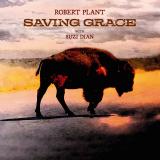
Robert Plant's ""Saving Grace"", sein erstes Album mit einer neuen, hochkarätig besetzten Band, ist, wie er es nennt, ""ein Liederbuch der Verlorenen und Gefundenen"". Es entstand während der Lockdowns in „The Shire“, als Plants übliches Umherwandern fast verboten war. Auf dem englischen Land fand er engen Kontakt zu einer Gruppe von Musikern - der Sängerin Suzi Dian, dem Schlagzeuger Oli Jefferson, dem Gitarristen Tony Kelsey, dem Banjo- und Streicherspieler Matt Worley und dem Cellisten Barney Morse-Brown -, die alle eine gemeinsame Vorliebe für seine stimmungsvollen Lieder hatten. Saving Grace wurde von Plant und der Band produziert und über sechs Jahre hinweg in den Cotswolds und an den walisischen Grenzen aufgenommen. Das Album haucht einem Schatz von Songs von Memphis Minnie, Bob Mosley (Moby Grape), Blind Willie Johnson, The Low Anthem, Martha Scanlan, Sarah Siskind und Low neues Leben ein."
Black Vinyl[26,85 €]
"Album Blurb:
Robert Plant's ""Saving Grace"", sein erstes Album mit einer neuen, hochkarätig besetzten Band, ist, wie er es nennt, ""ein Liederbuch der Verlorenen und Gefundenen"". Es entstand während der Lockdowns in „The Shire“, als Plants übliches Umherwandern fast verboten war. Auf dem englischen Land fand er engen Kontakt zu einer Gruppe von Musikern - der Sängerin Suzi Dian, dem Schlagzeuger Oli Jefferson, dem Gitarristen Tony Kelsey, dem Banjo- und Streicherspieler Matt Worley und dem Cellisten Barney Morse-Brown -, die alle eine gemeinsame Vorliebe für seine stimmungsvollen Lieder hatten. Saving Grace wurde von Plant und der Band produziert und über sechs Jahre hinweg in den Cotswolds und an den walisischen Grenzen aufgenommen. Das Album haucht einem Schatz von Songs von Memphis Minnie, Bob Mosley (Moby Grape), Blind Willie Johnson, The Low Anthem, Martha Scanlan, Sarah Siskind und Low neues Leben ein."
RELEASE INFO: Robert Plant's "Saving Grace", sein erstes Album mit einer neuen, hochkarätig besetzten Band, ist, wie er es nennt, "ein Liederbuch der Verlorenen und Gefundenen". Es entstand während der Lockdowns in „The Shire“, als Plants übliches Umherwandern fast verboten war. Auf dem englischen Land fand er engen Kontakt zu einer Gruppe von Musikern - der Sängerin Suzi Dian, dem Schlagzeuger Oli Jefferson, dem Gitarristen Tony Kelsey, dem Banjo- und Streicherspieler Matt Worley und dem Cellisten Barney Morse-Brown -, die alle eine gemeinsame Vorliebe für seine stimmungsvollen Lieder hatten. Saving Grace wurde von Plant und der Band produziert und über sechs Jahre hinweg in den Cotswolds und an den walisischen Grenzen aufgenommen. Das Album haucht einem Schatz von Songs von Memphis Minnie, Bob Mosley (Moby Grape), Blind Willie Johnson, The Low Anthem, Martha Scanlan, Sarah Siskind und Low neues Leben ein. MARKETING: Umfassende Marketingkampagne mit Print-Anzeigen in MINT, Classic Rock, ROCKS, Slam Magazine und GoodTimes. Begleitend Digitalmarketing mit Fokus auf Onlineversandhändler.
This is the monumental first album by Tsuyoshi Yamamoto, who later became one of the two major artists on the TBM label along with Isao Suzuki. A groovy and heartwarming popular disc by the Japanese piano trio
As Inagaki himself said, "I did black funk" by fusing the explosiveness of jazz rock that he had cultivated up until then with the tenacity and elasticity of black music, his musicality has leapt to another dimension. Combined with the ingenious arrangements of master Hiromasa Suzuki, the groove is polished, glossy, and shining mysteriously. All the songs are worth listening to, such as the dynamism and speed of "Painted Paradise" the coexistence of funkiness and mellowness of "Breeze" and the low-centered and sharp cover of Cool & the Gang's "Funky Stuff". It is now a definitive masterpiece that is in demand all over the world.
text by Yusuke Ogawa (UNIVERSOUNDS/DEEP JAZZ REALITY)
- A1: Vital Disorders - Zombie
- B1: Kotoa - Zombie
Wah Wah 45s present a unique moment from 1982 where New Wave and Post Punk collided with Afrobeat in the shape of Norwich DIY outfit Vital Disorders and their subversive yet instantly memorable version of the Fela Kuti classic, Zombie.
Band member Suzy Cox explains more:
"The song came to the band through our vocalist Lenneka Van Gilst who was in the group between January 1980 and December 1981. Lenneka grew up in Nigeria and had the original track on vinyl. When she moved to Trowse House, Norwich, the flat under Chris, the VD's bass player, he heard the vibes floating through the floorboards. One thing led to another and it was in our set for ages. Lenneka had left the band to travel to Mexico by the time we recorded the track. We did well to choose it as the song has really stood the test of time. Lenneka had a lot of African Beat which was a big influence on us."
The track came to label boss Dom Servini's attention having been unearthed by BBC 6 Music DJ Gilles Peterson in late 2024, and a vinyl reissue of this rare and one-off gem was the obvious choice. Rather than pairing it with its original punky B-side though, Dom enlisted new signings to the label - young Afro-dub outfit Kotoa - to record their take on the Kuti classic. The quintet delivered what is a three minute, intense take on the Afrobeat genre, complete with youthful voices of protest echoing those of over 30 years ago.
The 7-inch vinyl only release of Zombie comes with re-worked art courtesy of our award winning designer Animisiewasz, taking the home-made look of the original cover and updating it respectfully for 2025.
Previous album, "Brow Up," which made it known to the jazz world, this is Isao Suzuki's second album. You can enjoy the interplay with the Watanabe Kazumi, ...etc. This is a masterpiece of one creature.
Re-issue of the long out of print Virtual Geisha album by Japanese Telecom (aka Dopplereffekt / Der Zyklus) first released in 2001. A further exploration of the culture and technologies from the land of the rising sun by Heinrich Mueller on the successor to the Japanese Telecom EP. This time the inspiration is more adult and Manga orientated and even goes a little more 'poppy' with Y.M.O insprired tracks. On Virtual Geisha there's also a first glimpse of the directions he'd take his other projects in the future on tracks like 'Enter Mrs. Suzuki' and 'Japanese Matrix'. While still keeping true to his Detroit Hi-Tech Machine Funk roots with Electro anthems like 'The Making Of Ultraman' and 'Beta Capsule'. Remastered and re-issued for the first time since its original release. Essential!!!
- 01: River
- 02: The Destroyer
- 03: Constellations
- 04: Tsunami Waves
- 05: Star String Radio
- 06: We Are The Clouds
- 07: Time Machine
- 08: Magical Thinking
- 09: Shattered Stars
- 10: Broken Dragon Wings
- 11: Eulogy
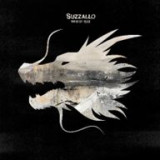
Suzzallo (pronounced Süe-zahh-Lōw) is a new Seattle based rock band fronted by Rocky Votolato. After the devastating loss of his child in a tragic car accident, Votolato created an entire new world inside of aggressive anthemic rock songs to transmute extreme grief and loss into something healing and beautiful. This is a return to form for Votolato, who for the past 2 decades has had a successful career as an Indie-rock solo artist, but who started out playing in heavier bands - most well known for his work in Waxwing.
With Rudy Gajadhar on drums (ex-Waxwing), Steve Bonnell on bass (ex-Schoolyard Heroes) and teaming up with legendary producer John Goodmanson, Suzzallo recently finished recording their debut album “The Quiet Year” at Robert Lang Studios in Seattle, WA. Ben Gibbard (Death Cab For Cutie / The Postal Service) is featured on several tracks on the album, adding some levity to the songs with beautifully placed backing vocals, electric guitar, bass 6, and piano.
Funded via a crowdsourcing campaign that raised over 100K dollars, Suzzallo’s highly anticipated debut is due to be released on Thirty Something Records in the spring of 2025.
- Laugh
- Living Machine
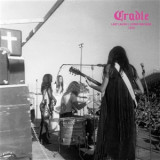
Cradle was a late-60s/early-70s Detroit rock band that evolved from the groundbreaking all woman rock group The Pleasure Seekers, led by the Quatro sisters-Patti, Nancy, Suzi, and Arlene, By the final lineup of The Pleasure Seekers, Nancy Rogers had joined as drummer, bringing a new thunderous presence with her double bass drum kit and playing a key role in the group's transfornation into their heavier sound under the new moniker, Cradle. With raw, intricate instrumentation and powerful dual vocals-Suzi's Joplin-esque edge and Nancy Quatro's Robert Plant-like wail-the band delivered socially relevant hard rock with grit and attitude. Touring extensively, they shared stages with legends like Mountain. Ten Years After, Jeff Beck, Santana, and Jefferson Airplane, cementing their place in Detroit's hard rock movement. Despite theit undeniable talent and determination. Cradle faced industry roadblocks, disbanding in 1973. But today, their music sounds better than, ever-and their legacy serves as an important chapter! in music history, helping pave the way for women in heavy rock.
- A1: Catherine Wheel (2:11)
- A2: I Could Write A Book (3:05)
- A3: February Face (2:16)
- A4: Love In The Afternoon (2:33)
- A5: Winter In Boston (2:05)
- A6: Caravan (3:07)
- B1: Down Maundies (2:39)
- B2: Suzy (2:41)
- B3: Tale To Tell (2:54)
- B4: One More Flight To Parker (3:01)
- B5: At The Silver Slipper (3:00)
- B6: How About Then (2:30)
Originally released In July 1970 “Wil Malone”, a typically idiosyncratic supper-club/chamber pop take on the singer/songwriter genre that was so in vogue at the time. Featuring such earnest/facetious nuggets as 'I Could Write A Book' and 'At The Silver Slipper', the album has many admirers these days.
The original release is considered a rare collector's item, with some original copies fetching high prices. This reissue on Morgan Blue Town is available as a limited edition 180-gram yellow coloured vinyl pressing.
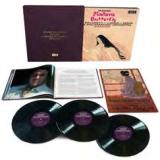
Diese brandneue Deluxe-Edition ist Teil des Jubiläumsprogramms von Decca zum 100. Todestag des großen
Opernkomponisten Giacomo Puccini. Die im Januar 1974 in den Wiener Sofiensälen entstandene Aufnahme
präsentiert die beste Besetzung der damaligen Zeit: angeführt von Mirella Freni und Luciano Pavarotti
sowie unter der Leitung von Herbert von Karajan. Bei ihrer Erstveröffentlichung wurde die Einspielung
von Kritikern und Musikliebhabern gleichermaßen gelobt. Das Magazin Gramophone beschrieb sie als „ein
Set zum Träumen“. Dieses Erbe wird mit der neu präsentierten Edition fortgesetzt. Die Aufnahme wurde
von den Original-Bändern aus dem Jahr 1975 neu gemastert und ist nun auf audiophilem Vinyl sowie als
Hybrid-SACD mit einer Auflösung von 192 kHz/24 Bit erhältlich.
a1 E Soffitto E Pareti (LP1: Act 1) (2:19)
a2 Sorride Vostro Onore? (3:26)
a3 Dovunque Al Mondo Io Yankee Vagabondo (2:00)
a4 America For Ever (2:47)
a5 Ier L'altro Il Consolato Sen; Venne A Visitar (3:43)
a6 Ecco. - Son Giunte Al Sommo Del Pendio (2:51)
a7 Gran Ventura (3:40)
a8 L'imperial Commissario, L'Ufficiale Del Registro, I Congiunti (3:50)
a9 Vieni, Amor Mio! VI Piace La Casetta (2:13)
b1 E Un Presente Del Mikado (3:52)
b2 Tutti Zitti! (5:21)
b3 O Kami! O Kami! (4:36)
b4 Cio-cio-san! Cio-cio-san! Abbominazione! (1:15)
b5 Bimba, Bimba, Non Piangere (3:52)
b6 Viene La Sera (4:33)
b7 Vogliatemi Bene (3:19)
c1 E Izaghi Ed Izanami (LP2: Act 2 - part 1) (4:15)
c2 Un Bel Di, Vedremo Levarsi Un Fil Di Fumo (2:59)
c3 C'e - Entrate (3:17)
c4 Si Sa Che Aprir La Porta E La Moglie Cacciar (4:41)
c5 Udiste? (3:20)
c6 Ora A Noi - Sedete Qui (4:22)
c7 Ebbene. Che Fareste, Madame Butterfly (3:11)
c8 E Questo? E Questo? (3:16)
d1 Che Tua Madre Dovra Prenderti In Braccio (3:13)
d2 Vespa! Rospo Maledotto! (4:05)
d3 Una Nave Da Guerra (2:47)
d4 Scuoti Quella Fronda Di Ciliegio (4:35)
d5 Or Vienmi Ad Adornar (4:27)
d6 Humming Chorus - Summchor (5:09)
e1 Intermezzo - Oh Eh! Oh Eh! (LP3: Act 2 - part 2) (2:16)
e2 Twittering Of Birds From The Garden (2:59)
e3 Gia Il Sole! Cio-Cio-San! (2:30)
e4 Chi Sia? (2:27)
e5 Io So Che Alle Sue Pene Non Ci Sono Conforti! (2:09)
e6 Non Ve L'avevo Detto? (4:20)
e7 Addio, Fiorito Asil Di Letizia E D'amor (2:48)
e8 Suzuki! Suzuki! Dove Sei? (2:36)
f1 Tu, Suzuki, Che Sei Tanto Buona, Non Piangere! (3:39)
f2 Come Una Mosca Prigioniera L'ali Batte Il Piccolo Cuor! (5:15)
f3 "Con Onor Muore Chi Non Puo Serbar Vita Con Onore" (5:10)
- A1: Sinfonia Al Sole Che Nasce
- A2: Miss Springtime (...Mia)
- A3: Non Una Corda Al Cuore
- A4: Lady Moon
- A5: La Ragazza Che Amava Il Mare E Il Vento
- B1: Disco Divina
- B2: Oasis
- B3: Immenso Mare, Immenso Amore
- B4: Zenith
- B5: Finale
The Time Capsule label unites record collectors and DJs of Brilliant Corners and Beauty & The Beat communities in London. For each release, Kay Suzuki works alongside one co-curator to reinstate and repackage the music they hold dear into perfectly restored historic artifacts.
For the first release, Brilliant Corners regular and Meda Fury signing Ryota OPP curates the reissue of Il Guardiano Del Faro’s 1978 album Oasis.
Born 1940 in Milan, Federico Monti Arduini was a child prodigy who studied piano and was already performing at concerts from the age of eight. He composed pop songs for other artists which sold millions of copies, but his own solo success came after he encountered synthesizers in the early 70s.
Viewed as a precursor of New Age sound art, Arduini was one of the first producers in Italy to use the Moog synthesizer and a meeting with Bob Moog in New York only added to this obsession. He was also an early adopter of the tradition among electronic producers to use a moniker to disguise his identity. Il Guardiano Del Faro (translated as “the guardian of lighthouse”) is a nod to the small Italian fishing town Porto Santo Stefano, where Arduini created his studio in the mid-70s.
He produced a number of albums from this seaside idyl of electronic instruments and tape recorders, but Oasis stands out from the pack. Released in 1978, it became a cult classic for its experimental sounds and emotional expressions. Spiritual synth sounds cover the album in a dreamy haze, oscillating between ambient and psychedelic. Sparing deployment of the Roland rhythm box gives dance floor favourites ‘Disco Divina’ and ‘Oasis’ touches of space disco and even teases proto-house elements like the great Sun Palace.
“The passionate, sweet and dramatic sound of Il Guardiano Del Faro made me fantasise about so many romantic aspects of Italian culture. Oasis is sonically more interesting than his other albums and these exotic, eccentric rhythms sound quite familiar to the modern music fans.” – Ryota OPP