The long-rumored, sweat-soaked live album from the night Bill Davis (Dash Rip Rock) and Fred Le Blanc (Cowboy Mouth) dared Jello Biafra to join them during Jazzfest and sing all classic New Orleans soul, rhythm and blues, and (at Jello's request) garage songs! Joining in were piano Wildman Pete Wet Dawg' Gordon (Mojo Nixon), Pepper Keenan (Down, Corrosion of Conformity) and a wacky horn section from Egg Yolk Jubilee and Morning 40 Federation that even includes a sousaphone! You want loose We got loose! You want crazy That's here, too. Walk on Jindal's Splinters is one of the all-time great you are there' high-energy live albums—audience participation galore, plenty of trademark Jello banter, and full-on soul / trash / frat / garage gumbo from eleven of New Orleans' finest, just playing their asses off and having a good time doing it. The album also showcases a whole 'nother side of Jello Biafra: his deep, pre-punk roots known only to a handful of vinyl junkies and anyone lucky enough to catch his DJ gigs. For all those whose interest in Jello goes beyond the punk persona to Jello Biafra, the singer, this is for you. Maximum trash appeal! Southern roadhouse debauchery at its finest! Calls to mind those sing-along, clap-along frat-rock platters from The Premiers to The Kingsman to Geno Washington's Hipsters, Flipsters... series, Swingin' Medallions, or even Slade Alive! You can almost feel the grease and voodoo dripping from the walls!" Showcases a rarely seen side of Jello—his pre-punk roots. Personnel includes members of Dash Rip Rock, Cowboy Mouth, Mojo Nixon, Corrosion of Conformity, etc. Vinyl includes digital download card
Поиск:sweat x
Все
The world of item expands. Small or significant, material, immaterial, items define much of our daily life. We are in the era of itemisation.
Itemise yourself
The first item in the catalogue, hardware evangelist and live performer Otis.
Presenting sounds for the higher self: Red Flags written and produced by Otis. Built for dark rooms and soggy limbs. A devout purveyor of hardware and analogue, Otis’ revered live performances are greedy with drive and dance. Machine-led but felt in toes and gut. His live act craft can be traced through this EP garnering influence from industrial, early 2000s electro and progressive trance. Sweat as currency the common thread.
This, another item for your dance directory. Trinket thing piece music. A keepsake.
- A1: All For Metal
- A2: Bastardos
- A3: If I Can’t Have You - No One Will
- A4: Soldier Of Metal
- B1: Turn It Up
- B2: Blood, Sweat And Rock’n‘roll
- B3: Don’t Break My Heart Again
- B4: Love’s Gone To Hell
- C1: Freunde Fürs Leben
- C2: Backstage To Heaven
- C3: Be Strong
- C4: Black Ballad
- C5: Bring My Hero Back Home Again
Wilson Tanner return to dry land with Legends, a wine-soaked agricultural fantasy, made among the grapevines at Manon Farm in South Australia. Where their earlier works settled into the sun-struck torpor of a suburban Perth backyard (69) or drifted off-course on a riverboat on Port Phillip Bay (ii), Legends trades salt air for vineyard sweat, the scrape of boots on dry earth and workers’ radios humming with the summer test cricket season.
Through this agricultural haze an image of a working vineyard emerges - ducks, dogs and plovers intrude; tractors and quads fly-by; stainless steel gleams at the edges. Recorded without mains power, the Manon demos overflow with farmyard ingenuity. Wind, brass, balalaika, balloon, pipe and synth are trained onto the staff with wire, tape and string.
A caricature of Australian viticulture, Legends is packed to the horns with the mythology and manure of natural wine. Swigging and belching in camaraderie, Wilson Tanner press their surroundings into something raw and unfiltered, letting bum notes, leftovers and sediment linger in the bottle. A cornucopia of biodynamic sounds.
Recorded at Dreamland Studios (a literal converted church) in 2017, this long-out-of-print record is now back in print on both vinyl and, for the first time, CD formats. The Bobby Lees’ “Beauty Pageant” overflows with the kind of raw punk energy you can only bottle once—when you’re young enough to play every chord like it might be your last. “A Woodstock, New York garage-rock quartet with sex, sweat, and lightning bolts of electricity surging through their collective veins.”- POPMATTERS. “Primal, rural, feral, rock’n’roll.” - LOUDER THAN WAR. “Storming to the scene with a howling sense of rebellion and nonconformity.” - ALTERNATIVE PRESS
Pink Acid Wash[31,05 €]
"In a world where there are no more heroes, the Fleshtones walk the earth like Roman gods. Since their inception in 1976 in Queens, New York, and their sweaty, boozy gestation at legendary venues such as CBGB, Max’s Kansas City, and the storied Club 57— recently feted at the Museum of Modern Art, where their proto-video underground film “Soul City” was unspooled for art stars, glitterati, and a raft of punk rockers who managed to get past the front gate — they have perpetrated their proprietary brand of SUPER ROCK, a frenetic amalgam of garage punk and soul, punctuated by the big beat and unleashed with the spectacular show business majesty which has kept them on the road for over forty years, adored by audiences whose love for them borders on religious fervor.
It’s Getting Late (…and More Songs About Werewolves) is a smash that could have dropped at any point in their epic career — it is an outburst, and a celebration of the SUPER ROCK sound. Unlike their contemporaries, they have not dialed down the tempos to compensate for osteoporosis, they have not lost anything on their fastball, and continue to throw it for strikes. The hardest working band in garage rock has never sounded better, and now you see why they've been your favorite band's favorite band for decades."
- A1: Prelude - Rats
- A2: Anise
- A3: Sweat
- A4: Magnolia
- B1: Hamellin
- B2: We Echo
- B3: Closer
- B4: The Day We Lost Everything
Die griechischen Progressive Rocker King Garcia präsentieren ihr Debütalbum 'Hamelin'. Wenn Ennio Morricone eine Band mit Russian Circles gründen würde, würde sie wahrscheinlich genauso klingen! Eine Empfehlung für Fans von Bands wie Russian Circles, V.I.C. und Mogwai.
On ‘Animal’, Ash Fure appeals to “animal intelligence” by using sounds that are inherently physical and driven by perception, athleticism and interaction. Placing polycarbonate sheeting over an inverted subwoofer she built alongside her partner Xavi Aguirre and brother Adam, Fure isolates the physical impact of sound by focusing on psychoacoustic sub-bass pulses, semi-perceptible micro-rhythms and discomfiting white noise bursts, linking the process to her experiences in Berlin and Detroit’s techno dungeons where the sound has to adapt to the space it’s performed in. When she performed ‘Animal’ for the first time, Fure fabricated a “listening gym”, allowing the audience to interact in real-time by circuit training in response to the sound. The sweat is almost audible across the record, a run-on selection of rhythms, resonances and abstractions that sound like interlocking heartbeats on a series of treadmills. Her fascination with techno’s cavernous cathedrals is clear from the beginning, but Fure doesn’t worship at the altar: we’re hit with the feeling, not the aesthetic. The beats themselves, made from unstable vibrations and waterlogged, reverberating clicks, echo the brain’s unconscious reaction to repetition in a vast concrete box, the feeling you get when each percussive snag ricochets from every surface in the building. Coddling these whirring, criss-crossing polyrhythms with harsh, distorted low-end retches, Fure accurately recreates the energy and fatigue of the endless weekend sesh. We never once encounter techno in its expected shell, just its residue - the outline of humans figuring out their relationship with technology, architecture and each other. Fure’s use of dynamics is also deviously smart, marking out an overall rhythm that’s not tied to the strength of the sounds themselves, but just volume and physical impact. Often her most brutal sounds - ear-splitting squeals and overdriven mechanical whirrs - are reduced to an almost inaudible level, a bit like the bandy legged trip to the bathroom, or the escape to some dimly lit nook, the part of the night where you can still detect the sound on your skin without being battered by it. When the undulating rhythm returns in earnest, Fure masks acidic sequences in jet engine expulsions, still refusing to objectify anything that an AI model might be able to pick up on.
- The Static God
- Nite Expo
- Animated Violence
- Keys To The Castle
- Jettisoned
- Cadaver Dog
- Paranoise
- Cooling Tower
- Drowned Beast
- Raw Optics
The Oh Sees wasted no time in racing headlong into nightmarish battle with the mighty Orc, clawing even farther up the ghastly peak stormed so satisfyingly by their previous A Weird Exits. The band is in tour-greased, anvil-on-a-balance beam, gut-pleasingly heavy form, nimbly braining—with equal dashes of abandon and menace—on this fresh batch of bruisers and brooders, hypnotically stirred into to the cauldron of chaos you’ve come to expect. On Orc, fresh blood Paul Quattrone joins Dan Rincon to form a phalanx of interlocking double drums, alternately propelling and fleet-footing shifting ground to pinion John Dwyer’s cliff-face guitars to the boogie. Tim Hellman keeps it swinging like a battle-axe to the eyebrows. The tunes veer toward the violence of their live shows, with a few tasty swerves into other lanes: heavy to lush, groovy to stately. Throughout, it remains sinister in its swaggering skulk, manic in its fuzz-fried fugues. They hit all the sweet spots the heads foggily remember, and there’s plenty to sweat over if you just hopped into the sauna. More evil…more complex…more narcotic…more screech… more blare…more whisper…there’s even more Brigid. Less “Thee,” but more of everything else.
After the dazzling debut of their first LP "Latin Freaks", the Funkool Orchestra is back with a brand new single that anticipates the release of their second studio album. A pure adrenaline double sider 7" vinyl with two dancefloor killer tracks.
"Tengo che ffà"
A dancefloor where the sun never sets, pulsing with a Mediterranean heartbeat. Funkool Orchestra return with "Teng Che Fa", a vibrant fusion of funk, disco, and Neapolitan groove. Following their sold-out debut Latin Freaks, this Maledetta Discoteca production delivers pure feel-good energy: sweaty, euphoric and made for endless dancing under golden skies. Perfect for global grooves, nu-disco, and upbeat funk playlists.
"P-Funk (Dance with Pezz)"
A rhythm that grabs your hips and won’t let go, while you smile to the world. Funkool Orchestra set the dancefloor on fire with ‘2-P–Funk’, a percussive, Latin-infused groove drenched in funk and soul. This Maledetta Discoteca production is built for shaking and radiating pure joy, packed with irresistible horns and unstoppable rhythm. Perfect for Latin funk, soulful disco, and global grooves playlists.
FUNKOOL ORCHESTRA: Valentina Conte – Voice; Daniele Mango – Voice; Pask Bluenne – Voice; Adriano Rubino – Trumpet; Riccardo Colicchio – Saxophones; Mario Tammaro – Trombone; Enrico Pizzuti – Guitar; Mattia Leone – Keyboards; Dario 'Pezz' Gessato – Bass; Peppe Shaf – Drums; Paolo 'Batà' Bianconcini - Percussions
Recorded, mixed and mastered by Fabrizio Piccolo at Auditorium Novecento (Naples)
Graphics and Illustrations by Jack Bulgaro
He's the original (and maybe only self-proclaimed?) house gangster and he is back in 2025 and sounding as good as ever. Puerto Rico by way of Chicago's DJ Sneak makes beats as raw as the meat he likes to chuck on his BBQ grill and UK house legend Nail must be a fan cause it's his label he lands on now. This is a solid four-tracker that ticks all the boxes with its killer grooves and smart loops. 'All I Need In Life' is a playful opener, 'Das Gud!' gets more intense and trippy with its bleepy melodic refrains and 'Help Me Somebody' then sinks back into loose and dusty, disco-tinged drums with classic cowbell hits. 'What You Expecting From Me' is a sweaty and gritty warehouse banger to close with aplomb.
Dave Lee continues to be one of Britain's most accomplished disco dons. An established remixing extraordinaire, proven once more here as he tackles some stunning Disco-Funk heaters. First is the Psychedelic Funk mix of '2001 Disco Party' a hypnotic, sweat inducing slab of frenzied funk-action, did we mention this release brings the funk enough? His Synth Vamp mix of 'Potion Of Love' is a must for hi-energy synth solo aficionados, backed up with glorious strings, pulsating guitar and classic disco diva vocals. Last of all his 'Strut Your Strat Dub' of the opener brings irresistible guitar frets to the party, doubling down on the groove factors for some serious heads down, hands up feet stomping.
Fresh Blood straight from NYC, big tip!!
NYC’s underground producer Sweater On Polo back on the machines for the first release on Signal Route. “Mechanical Confusion” favors the techno and basement house approach of early 90’s Chicago innovators found on labels such as Dance Mania, Relief Records, and Saber Records. His style and approach carry a familiar old school angst, creating an intergenerational dialogue between the now and then. Going from acid house, to techno, and then synth punk, this 6 track EP captures the relentless range of the young artist.
Team TD take a break from re-scoring Colin McCrae Rally to pay our own oddball homage to some of our DJ deities in the form of Talking Drums Volume 8.
Keeping things diverse-yet-disco, this little mover grooves through Muzic Box pump, Lofty symphonics and a Ku-curveball with a smile on its face and a pep in its step.
The A-side erupts in a flash of sexy Euro-NRG, twisted and lifted to give any sweatbox a massive Hardy-on. Sequencers throb, swell and burst, horns wail and not one, but two, killer basslines blast the floor with erogenous urgency. Chuck in a coquettish vocal, delay madness and a fist pumping breakdown and you've got pure peak-time play folks.
The B1 belongs to the sumptuous strings, loose funk and live disco strut of 'Too Hot'. Low slung, low tempo but plenty punchy, this classy cut builds and builds through Merc-y repetition before blooming a fully fledged groover. Taut funk breaks sit beneath a floor-filling vocal and twinkling Rhodes, the wah guitar works overtime, and it all adds up to take the dance floor temperature sky high. Enjoy on a hi-fi sound system with plenty of spiked punch.
The curtain call comes via the alfresco flamenco-frenzy of Ronseal-approved 'Maximum Balearic Dancer', which does exactly what it says on the tin. The TD troupe takes a tiny snippet of Swiss fusion and fleshes it out into the fully fledged floor-filler it always deserved to be. Blessed with a buoyant bassline and balmy mood, this beauty sways along through some weird but wonderful synth riffs, holding you close for that soul-soaring piano solo.
Sometimes you gotta wake up on a beach naked.
Limited Press - Numbered Insert - Drum Fun Guaranteed. .
The first recorded collection of songs from celebrated Arkansas songwriter Nick Shoulders and the Okay Crawdad band. Recorded live to tape and firmly below sea level at Mashed Potato Records in New Orleans, Louisiana. This is three mics, two tracks, and two afternoons sweating it out in the oppressive May heat with some very patient pals while the nearby Mississippi river churned overhead. Featuring "Snakes and Waterfalls", "After Hours", three countrified covers and a little bit more.
- Creases Of Desire
- Incense Puma At The Foot Of The Staircase
- The Pauper
- Snake Eyes
- Velvete
- Mosquito Boat
- Setanakam Acid
- Elephant
- Cold Sweat
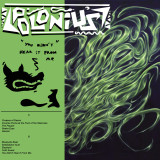
- You Didn’t Hear It From Me
Full page feature in Wire Magazine (March 2025, Issue 493) 'the freak audio series continues with the lysergic You Didn't Hear It From Me which combines dubbed out sampledelia and metallic beats with ghostly saxophone soaked in an acid bath'
Polonius AKA Egyptian-French artist Seif Gaber, whose works spans a decade of “science fiction archeomiragical time travel" explorations and is an important piece of the healthy electronic/far out mosaic in Milan.
With a considerable number of releases under his name, both self released and through such likeminded labels as Ikuisuus, Goaty Tapes or Sun Araw's Sun Ark, Polonius grand vision encompasses a myriad of languages culled from kosmische travelings, exotica's dreamlands, soundtrack psychedelia, spiritual jazz escape routes and transmuted beat science to convey them into a sonic fiction where all these trails intertwine in a cosmological soundscape filled with wonder and speculation.
Building on last year's more beat-centric excursions of his self-titled vinyl debut on Stoned to Death, Polonius' first entry into the Discrepant extended family via Souk finds him dwelling deeper into rhythmic mystic extrapolations through a series of hallucinatory tracks. Conveying jungle's kinetic energy, dubwise meditations on bass weight, collapsing beats, globetrotting percussion accents and synth-driven night drives, 'You Didn't Hear It From Me' finds Polonius with a strong sense of purpose and direction, reconvening bits and pieces from the netherworld into a more urban scenario, not quite any we can stand or dance on. Just dream of.
Following several releases that continue to establish Glitterbox as the hub for independent house and disco worldwide, four sought-after mixes that have soundtracked the label's parties appear on wax for the first time. Leading Glitterbox Jams Volume 7 is label head Melvo Baptiste alongside Detroit trio Dames Brown with the infectious 'Sweat', a track that made waves in 2023 with its irresistible rhythms and stellar vocals. Marking their first original track on the label, Lovebirds ‘Burn It Down’ showcases the Berlin-based duo as the house and disco authorities that they are. Next up, Art Of Tones & Inaya Day make dancefloor magic with their uplifting collaboration 'Give My Love', before sensual earworm ‘Smooth Sweet Talker’ by Young Pulse & Fleur De Mur closes out the compilation. This four-track package once again shows the disco, funk and soul sound of Glitterbox at its very best.
- Dusty
- Draggin
- Mountain
- Earthstar
- Rag
- Una Spiaggia
- Summer Sweat
- Shoe
- Baby You're Lying
- Dog Years
Es fragt, was es bedeutet, ein Leben zu führen: Wie entscheiden wir, welche Richtung wir einschlagen? Wie bleiben wir dort? Und was passiert, wenn uns der Boden unter den Füßen weggezogen wird? Wieder einmal arbeitet sie mit ihrem Partner und Kollegen Sam Evian in ihrem Heimstudio Flying Cloud zusammen. Hannah Cohens viertes Album „Earthstar Mountain“ ist ein Andenken an Cohens Zeit in den Catskills, entstanden im Zeitraum 2020–2024, als verschwommene, schimmernde Erinnerungen scharf werden und eine Collage aus Echos und akustischen Souvenirs entstehen.
Featuring Mit Beiträgen von Sufjan Stevens, Clairo, Sean Mullins, Liam Kazar, Oliver Hill und anderen ist Earthstar Mountain ein Liebesbrief an die Catskills und an die Vernetzung aller Dinge: an ihre Vergangenheit, Gegenwart, Zukunft und ihr alternatives Selbst, an ihre Freunde – hier und verschwunden – und an den Berg, der durch sie hindurch blickt Fenster.
- A1: Montego Bay - Everything (Paradise Mix) 04 59
- A2: Atelier - Got To Live Together (Club Mix) 06 06
- A3: Golem - Music Sensations 04 56
- B1: The True Underground Sound Of Rome Feat. Stefano Di Carlo - Gladiators 05 26
- B2: Eagle Parade - I Believe 04 26
- C1: Dj Le Roi - Bocachica (Detroit Version) 05 28
- C2: Green Baize - Synthetic Rhythm 01 41
- C3: M.c.j. Feat. Sima - Sexitivity (Deep Mix) 05 30
- D1: Kwanzaa Posse Feat. Funk Master Sweat - Wicked Funk (Afro Ambient Mix) 06 31
- D2: Progetto Tribale - The Bird Of Paradise 06 29
- D3: Mbg - The Quite 06 59
Vol 1[28,99 €]
Googling “paradise house”, the first results to pop up are an endless list of European b&b’s with whitewashed lime façades, all of them promising “…an unmatched travel experience a few steps from the sea”. Next, a little further down, are the institutional websites of a few select semi-luxury retirement homes (no photos shown, but lots of stock images of smiling nurses with reassuring looks). To find the “paradise house” we’re after, we have to scroll even further down. Much further down.
It feels like yesterday, and at the same time it seems like a million years ago. The Eighties had just ended, and it was still unclear what to expect from the Nineties. Mobile phones that were not the size of a briefcase and did not cost as much as a car? A frightening economic crisis? The guitar-rock revival?! Certainly, the best place to observe that moment of transition was the dancefloor. Truly epochal transformations were happening there. From America, within a short distance one from the other, two revolutionary new musical styles had arrived: the first one sounded a bit like an “on a budget” version of the best Seventies disco-music – Philly sound made with a set of piano-bar keyboards! – the other was even more sparse, futuristic and extraterrestrial. It was a music with a quite distinct “physical” component, which at the same time, to be fully grasped, seemed to call for the knotty theories of certain French post-modern philosophers: Gilles Deleuze, Félix Guattari, Paul Virilio... Both those genres – we would learn shortly after – were born in the black communities of Chicago and Detroit, although listening to those vinyl 12” (often wrapped in generic white covers, and with little indication in the label) you could not easily guess whether behind them there was a black boy from somewhere in the Usa, or a girl from Berlin, or a pale kid from a Cornish coastal town.
Quickly, similar sounds began to show up from all corners of Europe. A thousand variations of the same intuition: leaner, less lean, happier, slightly less intoxicated, more broken, slower, faster, much faster... Boom! From the dancefloors – the London ones at least, whose chronicles we eagerly read every month in the pages of The Face and i-D – came tales of a new generation of clubbers who had completely stopped “dressing up” to go dancing; of hot tempered hooligans bursting into tears and hugging everyone under the strobe lights as the notes of Strings of Life rose up through the fumes of dry ice (certain “smiling” pills were also involved, sure). At this point, however, we must move on to Switzerland.
In Switzerland, in the quiet and diligent town of Lugano, between the 1980s and 1990s there was a club called “Morandi”. Its hot night was on Wednesdays, when the audience also came from Milan, Como, Varese and Zurich. Legend goes that, one night, none less than Prince and Sheila E were spotted hiding among the sofas, on a day-off of the Italian dates of the Nude Tour… The Wednesday resident and superstar was an Italian dj with an exotic name: Don Carlos. The soundtrack he devised was a mixture of Chicago, Detroit, the most progressive R&B and certain forgotten classics of old disco music: practically, what the Paradise Garage in New York might have sounded like had it not closed in 1987. In between, Don Carlos also managed to squeeze in some tracks he had worked on in his studio on Lago Maggiore. One in particular: a track that was rather slow compared to the BPM in fashion at the time, but which was a perfect bridge between house and R&B. The title was Alone: Don Carlos would explain years later that it had to be intended both in the English meaning of “by itself” and like the Italian word meaning “halo”. That wasn’t the only double entendre about the song, anyway. Its own very deep nature was, indeed, double. On the one hand, Alone was built around an angelic keyboard pattern and a romantic piano riff that took you straight to heaven; on the other, it showcased enough electronic squelches (plus a sax part that sounded like it had been dissolved by acid rain) to pigeonhole the tune into the “junk modernity” section, aka the hallmark of all the most innovative sounds of the time: music that sounded like it was hand-crafted from the scraps of glittering overground pop.
No one knows who was the first to call it “paradise house”, nor when it happened. Alternative definitions on the same topic one happened to hear included “ambient house”, “dream house”, “Mediterranean progressive”… but of course none were as good (and alluring) as “paradise house”. What is certain is that such inclination for sounds that were in equal measure angelic and neurotic, romantic and unaffective, quickly became the trademark of the second generation of Italian house. Music that seemed shyly equidistant from all the rhythmic and electronic revolutions that had happened up to that moment (“Music perfectly adept at going nowhere slowly” as noted by English journalist Craig McLean in a legendary field report for Blah Blah Blah magazine). Music that to a inattentive ear might have sounded as anonymous as a snapshot of a random group of passers-by at 10AM in the centre of any major city, but perfectly described the (slow) awakening in the real world after the universal love binge of the so-called Second Summer of Love.
For a brief but unforgettable season, in Italy “paradise house” was the official soundtrack of interminable weekends spent inside the car, darting from one club to another, cutting the peninsula from North to centre, from East to West coast in pursuit of the latest after-hours disco, trading kilometres per hour with beats per minute: practically, a new New Year’s Eve every Friday and Saturday night. This too was no small transformation, as well as a shock for an adult Italy that was encountering for the first time – thanks to its sons and daughters – the wild side of industrial modernity. The clubbers of the so-called “fuoriorario” scene were the balls gone mad in the pinball machine most feared by newspapers, magazines and TV pundits. What they did each and every weekend, apart from going crazy to the sound of the current white labels, was linking distant geographical points and non-places (thank you Marc Augé!) – old dance halls, farmhouses and business centres – transformed for one night into house music heaven. As Marco D’Eramo wrote in his 1995 essay on Chicago, Il maiale e il grattacielo: “Four-wheeled capitalism distorts our age-old image of the city, it allows the suburbs to be connected to each other, whereas before they were connected only by the centre (…) It makes possible a metropolitan area without a metropolis, without a city centre, without downtown. The periphery is no longer a periphery of any centre, but is self-centred”.
“Paradise house” perfectly understood all of this and turned it into a sort of cyber-blues that didn’t even need words, and unexpectedly brought back a drop of melancholic (post?)-humanity within a world that by then – as we would wholly realise in the decades to come – was fully inhuman and heartless. A world where we were all alone, and surrounded by a sinister yellowish halo, like a neon at the end of its life cycle. But, for one night at least, happy."
Anoesis is the duo of Doc Bozique and Oxidation and this is their third release on Cosmic Soup. It is one that has been long anticipated by fans of their well designed breakbeat sounds and their first since 1995 when they dropped Blood & Sweat on D*Fusion. As such there is a hint of 90s post rave magic to the 11 cuts here, all with cosmic intent and deep grooves. They are tunes that have you lost in a reverie on the heart of the dance floor but with your gaze turned skyward. Essential stuff.