The original 1975 version on Roulette is a much loved classic. Ron Foster’s 1985 instrumental version is a completely different interpretation with a full 21+ orchestra and now it takes on a new identity with the original lead singer of Whirlwind, Sandi Everett, who recently recorded a new vocal - This composition’s 48 year journey is now fulfilled!
On the flip we are proud to present LEE McDONALD’s LET’S PLAY LUCK, a hidden gem from his iconic LP ‘Sweet Magic’; released on a 7” for the very first time and as an extended mix!
Suche:sweet spirit
Tears are in the eyes of Xabiib Sharaabi, nicknamed the Somali King of Pop when he entered the stage of Berlin’s HKW. It is a mix of nostalghia, pain and joy. Like many Somalis he had been deprived overnight of both glamour and friends, the war in his homeland had sent him into exile. The glamorous discos and beachfront stages Mogadishu had once been famous for, had disappeared as the city was bombed to the ground. The King of Somali pop found himself stranded in Sweden, others like the members of Dur-Dur Band Int. ended up in London which until today has the largest Somali diaspora in Europe.
In the last decade many early recordings of Somalia’s funk, soul and disco era have been reissued. This record is not a reissue. The Berlin Session – is the first studio album of its kind since the golden days of Mogadishu came to a halt three decades ago. It is the living proof that Somali music is hot, funky and (!) well alive.
The record captures a historic reunion which took place in 2019 in Germany’s capital Berlin. London-based Dur-Dur Band Int. an eight-piece powerhouse of Somali live- music unites with three legendary Somali singers: Xabiib Sharaabi, Faduumina Hilowle and Cabdinur Allaale for a concert at Berlin’s HKW. Fueled with a restored sense of pride, the freshly reunited musicians decided to get together in a Neukölln studio for two amazing days of recording.
Female vocalist Faduumina Hilowle opens the album with an invitation to kickass: “Let’s shake off the dust, boys!” (Inta ka hurguf). Grooving with such a strong accent on the off-beat, any non-Somali listener may think of Reggae. But when you ask the musicians, they tell you: “They took it from us! It’s Dhaanto! It’s our rhythm”. Originating from the Ogaden region (now in neighbouring Ethiopia’s borders), Dhaanto dates back to the era of “clap & chant”. Some say it is an imitation of the camel’s bounce. Xabiib Sharaabi was once nick-named Somalia’s King of Pop for the body language and magnetising voice with which he incorporated the latest global musical trends - even recording two disco albums entirely in English. On the album Xabiib chooses to sing his Somali adaptation of “Lady” originally by Afrobeat pioneer Fela Kuti. Not unlike the Motown Sound of Detroit and Kingston’s Studio One: a small scene of musicians were fueling that new Somali Disco scene in Mogadishu. Cabdinur Allaale, the third vocalist on the album comes from neighbouring Djibouti. In the heydays the leader of then famous Sharaf Band was a frequent visitor, flying back and forth between Mogadishu, Hargeisa, Kismayo & Djibouti entertaining his fans on the Horn of Africa.
Dur-Dur Band Int. ‚The Berlin Session‘ brings the spirit, joy and hope of this era back: In the last decades Somalis stars have lived among us, spread all over the world, it is time to see them step into the limelight again.
Nicolas Sheikholeslami:
In 2015 Berlin-based Nicolas Sheikholeslami became fascinated by Somali music and ended up compiling a mixtape to share his passion. He did not know that his tape Au Revoir, Mogadishu Vol. 1 - Songs From Before The War would spark a massive international interest for Somali music. Soon later Nicolas co-compiled Sweet As Broken Dates: Lost Somali Tapes from the Horn of Africa for Ostinato records which got a Grammy-nomination in 2017. Berlin’s venue HKW took notice and asked him to set up a show with a selection of Somali artists from the golden era. This lead to this remarkable reunion. A studio was booked and within 2 days this album was recorded. The Berlin Session captures this emotional moment. In 2021/22 Nicolas Sheikholeslami finally sat down and mixed the recorded material. This record is the living proof that Somali music is hot, funky and well alive.
- A1: Al Norte 01 00
- A2: Into Love / Stars 05 44
- A3: Exit Strategy To Myself 03 08
- A4: Where You Find Me 02 31
- A5: Ship 04 04
- B1: Loose Ends 05 31
- B2: Into The Ice Age 06 21
- B3: Oh Sweet Fire 03 50
- B4: Ghost 01 23
- B5: Sans Soleil 03 16
- C1: Night‘s Too Dark 02 55
- C2: *Stars* 01 10
- C3: Al Sur 03 18
- C4: Into Love Again 05 08
Yellow Vinyl[37,52 €]
2023 Repress On Vertigo Days, the first album in seven years for The Notwist, one of Germany’s most iconic independent groups are alive to the possibilities of the moment. Their music has long been open-minded and exploratory, but from its engrossing structure, through its combination of melancholy pop, clangorous electronics, hypnotic Krautrock and driftwork ballads, to its international musical guests, Vertigo Days is both a new step for The Notwist, and a reminder of just how singular they’ve always been. Most importantly, the core trio of Markus and Micha Acher and Cico Beck are reaching out: as Markus reflects, “we wanted to question the concept of a band by adding other voices and ideas, other languages, and also question or blur the idea of national identity.”
It’s been seven years since The Notwist’s last album, Close To The Glass, and in that time the various members of the group have been busy with side projects (Spirit Fest, Hochzeitskapelle, Alien Ensemble, Joasihno), guest appearances, a record label (Alien Transistor), movie scoring, helping organise the Minna Miteru compilation of Japanese indie pop & running a festival (Alien Disko). Those divergent paths feed back into Vertigo Days in surprising ways, from its structure, built from group improvisations, with songs flowing and melting into one another in a collective haze, to its spirit, which feels refreshed and alive. There’s something cinematic about Vertigo Days too, reflective of the group’s time working on soundtracks, and reflected in the rich, moody photographic artwork by Lieko Shiga that adorns the cover.
The first sign of this newfound openness was the album’s lead single, “Ship”, where the group were joined by Saya of Japanese pop duo Tenniscoats, her disarmingly hymnal voice sighing over a propulsive, Krautrocking beat. Elsewhere, American multi-instrumentalist Ben LaMar Gay sings on “Oh Sweet Fire”, also contributing “a love lyric for these times, imagining two lovers in an uprising hand in hand.” American jazz clarinettist and composer Angel Bat Dawid adds clarinet to the spaced-out dream-pop of “Into The Ice Age”, while Argentinian electronica songwriter Juana Molina gifts some gorgeous singing and electronics to “Al Sur”. Saya also reappears as a member of Japanese brass band Zayaendo, who guest on the album. Throughout, The Notwist also capture the openness of their live performances, too, where they mix and link their songs in unexpected ways.
Indeed, what’s most impressive about Vertigo Days is the way it sits together as one long, flowing suite, the album conceptualised as a whole entity – it’s perfect for the long-distance, dedicated listening experience. This is also captured by the album’s lyrics, which Markus states, “feel more like one long poem.” The dimensions of that poem are multi-faceted, something intensified by the geopolitical weirdness of its times: “As the situation changed so dramatically, while we were working on the record, the theme of ‘the impossible can happen anytime,’ more about personal relationships in the beginning, became a global and political story.” But it also works at a level of poetic abstraction, such that each song gestures in multiple directions – the deeply private pans out to the global. The one certainty is that there is no certainty. “It’s maybe mostly about learning and how you never arrive anywhere,” Markus concurs. To sit within uncertainty is brave, but it’s also where we feel most alive, and Vertigo Days is an album that is brimming with life, with enthusiasm and love for music and for community, all wide-eyed and dreaming.
- A1: Al Norte 01 00
- A2: Into Love / Stars 05 44
- A3: Exit Strategy To Myself 03 08
- A4: Where You Find Me 02 31
- A5: Ship 04 04
- B1: Loose Ends 05 31
- B2: Into The Ice Age 06 21
- B3: Oh Sweet Fire 03 50
- B4: Ghost 01 23
- B5: Sans Soleil 03 16
- C1: Night‘s Too Dark 02 55
- C2: *Stars* 01 10
- C3: Al Sur 03 18
- C4: Into Love Again 05 08
Black Vinyl[26,85 €]
2023 Repress on Yellow Vinyl
On Vertigo Days, the first album in seven years for The Notwist, one of Germany’s most iconic independent groups are alive to the possibilities of the moment. Their music has long been open-minded and exploratory, but from its engrossing structure, through its combination of melancholy pop, clangorous electronics, hypnotic Krautrock and driftwork ballads, to its international musical guests, Vertigo Days is both a new step for The Notwist, and a reminder of just how singular they’ve always been. Most importantly, the core trio of Markus and Micha Acher and Cico Beck are reaching out: as Markus reflects, “we wanted to question the concept of a band by adding other voices and ideas, other languages, and also question or blur the idea of national identity.”
It’s been seven years since The Notwist’s last album, Close To The Glass, and in that time the various members of the group have been busy with side projects (Spirit Fest, Hochzeitskapelle, Alien Ensemble, Joasihno), guest appearances, a record label (Alien Transistor), movie scoring, helping organise the Minna Miteru compilation of Japanese indie pop & running a festival (Alien Disko). Those divergent paths feed back into Vertigo Days in surprising ways, from its structure, built from group improvisations, with songs flowing and melting into one another in a collective haze, to its spirit, which feels refreshed and alive. There’s something cinematic about Vertigo Days too, reflective of the group’s time working on soundtracks, and reflected in the rich, moody photographic artwork by Lieko Shiga that adorns the cover.
The first sign of this newfound openness was the album’s lead single, “Ship”, where the group were joined by Saya of Japanese pop duo Tenniscoats, her disarmingly hymnal voice sighing over a propulsive, Krautrocking beat. Elsewhere, American multi-instrumentalist Ben LaMar Gay sings on “Oh Sweet Fire”, also contributing “a love lyric for these times, imagining two lovers in an uprising hand in hand.” American jazz clarinettist and composer Angel Bat Dawid adds clarinet to the spaced-out dream-pop of “Into The Ice Age”, while Argentinian electronica songwriter Juana Molina gifts some gorgeous singing and electronics to “Al Sur”. Saya also reappears as a member of Japanese brass band Zayaendo, who guest on the album. Throughout, The Notwist also capture the openness of their live performances, too, where they mix and link their songs in unexpected ways.
Indeed, what’s most impressive about Vertigo Days is the way it sits together as one long, flowing suite, the album conceptualised as a whole entity – it’s perfect for the long-distance, dedicated listening experience. This is also captured by the album’s lyrics, which Markus states, “feel more like one long poem.” The dimensions of that poem are multi-faceted, something intensified by the geopolitical weirdness of its times: “As the situation changed so dramatically, while we were working on the record, the theme of ‘the impossible can happen anytime,’ more about personal relationships in the beginning, became a global and political story.” But it also works at a level of poetic abstraction, such that each song gestures in multiple directions – the deeply private pans out to the global. The one certainty is that there is no certainty. “It’s maybe mostly about learning and how you never arrive anywhere,” Markus concurs. To sit within uncertainty is brave, but it’s also where we feel most alive, and Vertigo Days is an album that is brimming with life, with enthusiasm and love for music and for community, all wide-eyed and dreaming.
The Belgian minimal synth band's three releases – a cassette and two vinyl EPs – were all titled »Against The Dark Trees Beyond«. This compilation collects the songs from these records.
"They were interesting times, the early eighties. Against a backdrop of cold war and economic crises, the DIY attitude of the earlier punk movement had spawned near countless new genres where artists and bands broke the three-chord guitar mould and experimented with new content matter, singular song structures and – in many cases – new instruments. Synthesizers became affordable and were no longer the sole privilege of rock millionaires. All around the globe, musical creativity boomed as never before, and Belgium was no exception: Digital Dance, Snowy Red, The Names, Pseudocode, Marine, 1000 Ohm, De Kommeniste, M.Bryo & D.M.T., De Brassers, Struggler, Siglo XX are but a few legendary names of bands and artists who started making a name for themselves.
In Leuven, things were happening as well. Until then, the music scene in this rather provincial town had been dominated by straightforward rock and blues acts. Not for much longer, though: in places like Arno'z and (later) The Gladhouse, where young budding artists met with kindred spirits, bands were often formed on the spot and, more importantly, started to make ripples.
Ludo Camberlin and Karel 'Bam' Saelemaekers already had a certain track record in Leuven's burgeoning music microcosm. But what they shared would become the cornerstone of A Blaze Colour (Against The Dark Trees Beyond): a fascination for new forms and instruments, a penchant for sonic adventure and a profound love for gripping songs. The full band name, by the way, was inspired by a phrase from the Irish-American novelist J.P. Donleavy, a writer who belongs in the definitely-worth-checking-out section.
After appearing on the first No Big Business LP (1981) with the instrumental 'Fisk', A Blaze Colour's first proper release, as was so often the case in those days, was a self-produced cassette. The music – which would later be dubbed 'minimal' – was characterized by the use of basic rhythm machines (Boss Dr. 55, mainly) and analog synthesizers (for the synth geeks: Korg Delta and MS20, Roland SH-2 and Jupiter IV, and the infamous Casio VL-1). Camberlin’s vocals, meanwhile, displayed an aloofness totally in sync with the zeitgeist. Equally important, though: all five tracks on this cassette were bona fide songs with a clear sense of structure, aided by a sonic mastery that demonstrated a high level of experience: 'Means To An End' started out as a proto-industrial track before bursting out into a moroderesque finale. The remix of 'Fisk' was as sprightly as the next river salmon, while 'Or Lie Again' proved the perfect soundtrack to a nightly walk through wet deserted streets. On the other hand, 'Through With Life', rife with disturbing sound effects countered by a slow portamento, could have been a prize track on a post punk 'Lamb Lies Down On Broadway'. And in true dramatic fashion, 'Follow The Signs' was the perfect ending of this five-song cycle: a driving sequencer and gripping chord progression coupled with a simple but powerful vocal line. Considering the limited technical means the duo was working with, this was no less than a triumph.
A few months later, the band released a seven-inch single on its own ABLACO label. 'Dark Trees Beyond', a quirky pop song, was coupled with 'Addict Of Time', a dark and brooding spoken word piece. Not the kind of single to storm hit parades, but it didn't go unnoticed. The Minny Pops' Wally van Middendorp, who had founded the Plurex label in 1978, invited A Blaze Colour to his studio in the Netherlands, to record an EP. It would prove to be a massive step forward: recording in a semi-professional studio offered great possibilities, the recently acquired TR-808 drum machine allowed for a broader rhythm palette, and the three new tracks (next to the re-recording of 'Through With Life') showed a band on the top of their game: 'The New Ones' was a wry and haunting song built around a live drum loop and an ominous bass pattern, while 'Nowhere Else' was a near-pop track with very un-minimal vocal harmonies. And it's a mystery why 'Altitude' – another instrumental – was never used in a stylized, high-profile detective soundtrack.
Another song from these sessions, the revved-up 'Cold As Ever' turned up on the high-profile Plurex "Hours" compilation, where it shone brightly, next to songs of a.o. X-Mal Deutschland, Nasmak, Minny Pops and Section XXV.
Meanwhile, Camberlin had already carved out a bit of a reputation for himself as a producer, while Saelemaekers was a respected graphic designer. It remains uncertain if this played a big part in the end of A Blaze Colour, but the fact remains: as studio recordings go, 'The Ultimate Fight' on the "No Big Business 2" compilation, was to be their swan song. What a way to go, though: maybe their best song ever, this was a synthetic bastard funk groove, complete with shout-out chorus and punch-drunk middle-eight. It shut a door, for sure, but it did so with a resounding bang.
So there it is and there it was. Short, sweet, visionary, pioneering and highly influential. And as anybody listening to this first ever compilation will be able to assess probably one of the most colourful electronic acts of its time.
On a more a personal note, A Blaze Colour proved to be instrumental in my own coming of age as a lyric writer, when Ludo and Bam graciously adopted some of my earlier writings, warts and all. To hear them translated into songs was no less than magic, and it certainly gave me the confidence to start our own band a bit later. And the magic continued when Ludo became our producer and Bam designed our record sleeves. But that’s another story, obviously. Because this is the place and the time to dive back into the wondrous world of A Blaze Colour!"
Bart Azijn (Aimless Device)
This is Freebreak : an alliance between tribe datas and the break free spirit... Heard that long time ago on the Strange breaks from the Spiral tribe, anbd after ward with Kamehouse (Capsule) and after again with Cycloscotsch (Hokus pokus), or Rislo (Triphase)... This long tradition of beautiful « hard to sell records » leaded to some really nice mixes... and a sweet dance in parties.. Hopefully this record reaches his public because it's quiet courageous and deserve a true audience. Big up to all Freebreas makerz !
The Microphones, Bon Iver, Lomelda, Vegyn, Hovvdy, Dijon. “Lemon Cream” vinyl is for Indies Only. Follow up to 2019’s critically acclaimed ‘bunny’. Sam Hall’s new album as ghost orchard, ‘rainbow music’, is a collage of patience and meditation. It’s filled with nuances as quietly imperceptible as the seasons, or the profound movement of time, where one day looking back you realize your whole spirit has shifted. Where 2019’s critically revered ‘bunny’ was a love letter to a romantic relationship, ‘rainbow music’ documents the culmination of Hall’s first personal experience with loss in several forms. At the end of 2020, his longterm childhood pet passed away, and with it the last continuing threads of familiarity between being a kid and adulthood. Still based in the Grand Rapids, Michigan town he’d grown up in, the static ease of familiar living seemed to be coming apart at the seams, as friends moved on to bigger cities, relationships shapeshifted and in a short period of time, another kitten he’d adopted passed away prematurely, leaving Hall to question the trajectory in which he himself was headed. Like “songs in the key of life,” the title ‘rainbow music’ refers to the myriad of colors and qualities within Hall that are refracted throughout. It’s a symbolization of hope and the aftermath, the flickering light at the end of the tunnel (or “when a rainbow shows up after a big storm”). “Wish I could have fun anymore,” Hall ruminates on “dancing”, as well as confessing he “wish he made more upbeat bangers.” But reality packs more of a punch, and this collection of songs sees him finally be at peace with the current state of affairs. Relatable to anyone who has contemplated what it means to settle down, or even just catch your breath in an era where anguish is commonplace, the release of ‘rainbow music’ is a happy ending in its own right, a marker of survival that remains close to the bone. // Ghost Orchard’s “bunny” is a blushing, beatific beat. - The FADER // Fluttering and transportive, a swirl of beats and plucky guitar and strings that feels like a cocoon. - Stereogum // Hip-hop inflected, stream-of-consciousness confessionals that’ll have you swooning in the lazy summer sunlight. – Paste // Track listing: 01. Rest 02. Jessamine 03. Cursive 04. Maisy 05. Cut 06. soot 07. memory storage 08. Dancing 09. bruise 10. sweet song 11. comfort (rainbow)
As a duo they embrace both sides of the coin, drums and guitar, chaos and order, male and female, ying and yang, the angel and the devil. They are more than the sum of both counterparts though, making for a maximalist auditory experience. PIKA brings her skills of mystifying performance to the table, all free-drum bluster and vocals veering between shrine maiden and wild spirit. Kawabata's guitar-work moves from a roar to a whisper, a yell to a sob, he's working on the same canvas of extremes. The aim of their unity is to write truly celestial hymns for the outer world and odes of love for the inner cosmic context.
No strangers to one another, the pair have not only gigged together with their respective bands but also recorded together, when these two outfits temporarily fused in 2005 to become Acid Mothers Afrirampo (releasing an album of the same name). Two years later they distilled their collaboration, all other players being stripped away to leave the core of Pikacyu's manic drums and pop vocal, and Makoto's schizoid guitar conjurings. In 2011 they spent five weeks touring the US and their first album, 'OM Sweet Home: We Are Shining Stars From Darkside', which was released by the esteemed UK label of all things heavy and brilliant, Riot Season. Last year they spent two weeks touring through Europe whilst writing a new album suffused with the outreaching sound and message of their impulsive live performances. This new album is entitled 'Galaxilympics' and will be released by Upset The Rhythm on August 4th on LP and CD.
'Galaxilympics' is an album of contrasts, so much colour, so much shade! 'Space Sumo' kicks off the record in explosive style. Pikacyu's drums jitter, crash and stumble, but steadfastly refuse to groove. Makoto attacks his guitar, cloaking himself in reverb to produce a wall-of-sound, alternating between melody and noise. 'Funifunikonefuni' follows with it's frenzied take on pop music, bubbling with energy and PIKA's multiple vocal layers. 'I'll Forgive' is chant-like in its devotion to following the tumbling melody line of the song even to absurd and unpredictable dimensions. 'Pika Mako Hall' is a more serene affair, with whispered echoes and guitar drones swirling amongst bursts of rapid sequencer ambience. 'Castle Of Sand' picks up on this more spacious approach with slowly developing programmed electronics, before the title track erupts with gurgling synths, soaring guitar trails and PIKA's most searching vocal yet.
The album concludes in reflective manner with the suitably titled 'Sayonownara', a song as much in the present as it is in the act of saying farewell. It's positively elegiac with washes of cymbal and deep acres of guitar drone for the first five minutes before PIKA's drums take things up a gear and into more psychedelic out-rock terrain. This insurgence eventually peaks and the album melts away to silence. PIKACYU-MAKOTO have made an album that takes you on a trip into your very soul before emerging once more at the edge of another galaxy. 'Galaxilympics' is a triumph of opposites united, it enjoys walking out into the unknown, but it's also a portal into the very real world of two musicians who find peace and semblance through their interaction. Hymns and odes to one side, this is a giant album of future-facing song and noise, where better to find harmony enthroned
REISSUE
Following on from the runaway success of Soundway"s Kiki Gyan 24 Hours In A Disco, another Ghanaian legend looks to have his time to shine. One of the most well-known disco and burger highlife artists of the time, Charles Amoah originally began his career as a drummer. Playing with Alex Kunadu"s band, as well as the Precious Jewels and even Nana Tuffour, he then moved to Germany in the early 80s. His first album Sweet Vibration spawned several hits which went on to be released as separate singles, namely "Scratch My Back" and "Shake Your Body To The Beat". From the irresistible funk hooks of these singles, to the Lionel Richie-esque instrumentation of "Life"s Like Being In A Boxing Ring", or the kraut-rock stylings of "Jungle Rock" - there is little doubt that the blend of disco, funk and highlife that was unique to the Ghanaian-German scene can be experienced in its full splendour on Sweet Vibration.
It’s time to testify, brothers & sisters and it’s about time. It’s so about time to put this gem out on vinyl. Properly! It was released twice on small editions before, but – no offense – they both sounded terrible. Now the tapes been re-mastered by Jürgen Hendlmeier and put right on wax, brand new artwork included. In our eyes this is one of the best and most powerful and pure garage rock albums ever. You have to hear it to know what I’m talkin about. GET DOWN – OR GET OUT! …and listen to a fine collection of soulful, rocking collection of raw songs that make you move(, unless you’re dead). With this album the Sideburns became the Finnish leaders of the new wave of Scandinavian Rock’n’Roll (along with the Hellacopters from Sweden, Gleucifer & Turbonegro [both from Norway]). The Hellacopters covered „Ungrounded Confusion“ from this album! This collection of songs is well inspired by bands such as the Sonics or the Wailers. And in the 90s and early 2000s more than ever before, bands everywhere are claiming the MC5 as their primary influence. Most bands, however, don't really get the sound right, or somehow lose the spirit of the music in a '70s rock haze. What makes the Flaming Sideburns feel authentic is that they understand the grooves that make this type of music work, and there's a ton of real enthusiasm behind it all. Songs like "Testify" are obviously inspired by Tyner and Co. but have a fresh energy that makes this old sound worth listening to. The mid-fi production also keeps the music sounding exciting and hot, without getting too heavy. They reach back a little in time to the mid-'60s with covers of the Wailers' "Out Of Our Tree" and the Electras' "Action Woman." Also super rocking is the wild "Jaguar Girls" and the spasm inspiring "Rock N Roll Boogaloo." If you like Detroit-style rock'n'roll with an unpretentious '60s edge to it, the Flaming Sideburns are for you. Track listing: La Bruta; Crashing Down; Close To Disaster; Rock n’ Roll Boogaloo; Testify; Out Of Our Tree; The Witch; Jaguar Girls; Ungrounded Confusion; You Weren’t Using Your Head; Women; Sailin’ Thru Cloud Nine; Sugar Ain’t That Sweet; Action Woman
Eric Dolphy's final studio album is hailed as one of the finest examples of mid-'60s post bop. Its reputation is purely one of backwards significance. Dolphy, having recorded the album in February 1964, was in Europe less than six weeks later and his all-too-brief life ended less than two months after that. Though likely he never held a copy in his hands or heard any critical opinion of it, it marked his last flurry of original compositions and is considered his apex. It is fascinating to consider whether he would had moved past or away from the album in 1965, had he lived.
Though Dolphy should not be considered an avant-garde musician by the term's most common definitions, most interpretations of Out To Lunch have been done by players working squarely in that area. So it is with this album, the most ambitious in its recreation of the five-tune disc (with one original added to the final "Straight Up and Down, extending the piece to almost thirty minutes). All five compositions from the original quintet LP are revisited in the same order, the record sleeve even duplicates the old album jacket, down to the typeface and black-and-blue color scheme, although a photo taken by Daidō Moriyama inside Tokyo's massive (and massively busy) Shinjuku railway station replaces the Dolphy's album's enigmatic "Will Be Back" sign, whose clock hands indicated no conventional time of expected return.
Otomo Yoshihide first came to international prominence in the 1990s as the leader of the experimental rock group Ground Zero, and has since worked in a variety of contexts, ranging from free improvisation to noise, jazz, avant-garde and contemporary classical. The always surprising and sometimes confounding turntablist, sound artist, onkyo improviser and now avant jazzer heading up a 15-piece aggregation of Japanese and European experimentalists. Who better to grapple with Dolphy's legacy -- so idiosyncratic in its day and yet so influential to creative improvisers who followed -- than a musician with his own singular take on how sounds can be organized in the jazz realm over 40 years later and half a world away? In other words don't expect the conventional from Otomo any more than you would from Dolphy himself. That's not to say that recognizable themes ("Hat and Beard," "Out to Lunch," "Straight Up and Down") don't appear, or that individual players -- including Alfred Harth on bass clarinet bursting into the mix and leaping across the instrument's tonal range in a way that recalls the master himself -- don't carry forward echoes from the past in the spirit of a sincere and heartfelt homage.
However, a good deal of the time all bets are off; in addition to the usual brass, reeds, bass, and drums (and of course a bit of vibraphone, here played by Takara Kumiko in far less prominent role than that of Bobby Hutcherson) are such sonic paraphernalia as sine waves, contact mike, no-input mixing board, and, of course, "computer." (Otomo himself plays skronky electric guitar.) From composition to composition and even during episodes within compositions, the band takes radically different approaches. There are blasts of free jazz energy not too far removed from the Peter Brötzmann Tentet, an impression reinforced by the presence of spluttering wildman Mats Gustafsson on baritone sax. Not surprisingly and often in contrast with the Dolphy original, the music is dense and filled to overflowing with sounds -- sometimes due to fundamental reworkings in structure rather than just the larger size of the ensemble. The middle section of "Something Sweet, Something Tender" somewhat belies the original's title with elongated howls and cries from the horns over slo-mo bass, drums, and electronic noise poised somewhere between dirge and drone, and the sudden explosion of punk-ish rock energy in the following "Gazzelloni" is a startling contrast.
At times, the feeling is that of listening to the original Out To Lunch while a séance is going on to contact Dolphy's ghost, with supernatural sounds swirling around the stereo. The effect is disconcerting, as is the post-apocalyptic cloud hanging over the arrangements, but it makes the effort more than an unnecessary tribute album. Instead, Dolphy is transported into the 21st Century and allowed to romp through modern developments in music. An inspiring concept and an album that will stretch the boundaries of anyone who comes into contact with it.
(Ricardo Villalobos, Ada & Tolouse Low Trax Remixes)
This EP is more than your usual remix package—»Remixed« is a meeting of kindred, idiosyncratic spirits. Ricardo Villalobos, Ada, and Tolouse Low Trax each give a new spin to one track from »You're Super In Diagonal«, the latest album by Ant Orange. Their versions of »Monogome«, »Flutter«, and »Cracker« are complemented by the brand-new track by the elusive artist, »FFF«.
Villalobos keeps it short and sweet—at least by his standards. His rendition of »Monogome« translates the mutant jungle vibes of the original into an entirely different dialect while maintaining its psychedelic qualities. The chugging, nine-minute-long »Siebhouse Remix« is at once rhythmically intricate and positively disorientating. Ada proves to be as imaginative as ever with her first remix in three years. Her take on the album opener »Flutter« extracts the track’s warmth and transplants it into a laid-back downbeat track. She also incorporates the vocals from »Monogome«, but gives it a very different spin and adds a healthy dose of autotune to it in the process. Dreamy, hazy, blissful.
On the flipside, Detlef Weinrich approaches things very differently. His »Bo Bo Zy Remix« of »Cracker« offers industrial at its most inebriated, dub riddims after a bottle of hard liquor instead of a spliff. Ant Orange’s »FFF« then seems to mediate between those three very different approaches: danceable yet melancholic, challenging yet restrained, it picks up on the underlying concept of »You're Super In Diagonal«, combining IDM’s penchant for complex rhythmic structures and a directness inherent to hip-hop music since the early days of the genre up until the age of UK drill.
- A1: Quad
- A2: Don't Know Yet
- A3: Chipped
- A4: Slow Down
- A5: U33
- B1: Television
- B2: Woke Up
- B3: Widowmaker
- B4: Taken Too Much
- B5: Coogan's Bluff
- C1: Chipped (Peel Session, Maida Vale 10/11/95)
- C2: Widowmaker (Peel Session, Maida Vale 10/11/95)
- C3: Theme (Peel Session, Maida Vale 10/11/95)
- C4: Woke Up (Peel Session, Maida Vale 10/11/95)
- C5: Spliff Riff (Peel Session, Maida Vale 10/11/95)#
- D1: Quad (Live Bbc Radio 1 Rock Show, Glasgow 31/03/96)
- D2: U33 (Live Mark Radcliffe Bbc Radio 1, Manchester 02/05/96)
- D3: Television (Live Mark Radcliffe Bbc Radio 1, Manchester 02/05/96)
- D4: Jellystoned Park ( B-Side Of Television 7")
BLACK VINYL REPRESS
ITS 25 YEARS Since the first Heads album was released.. .so.. for 2021..Rooster has decided to get the album back in print on vinyl.. but changing the artwork. With some silver foiling and bordering, the single sleeve has been boosted to a sweet gatefold, Rooster also got the Radio 1 sessions from the time remastered, and re-cut along with the huge b-side to their Television 7” “Jellystoned Park”.
So there you have it, a double vinyl silver jubilee reissue of a fantastic debut album!
From the original reissue sales notes:
“The Heads had self-released a couple of 7"', and then Cargo Uk's inhouse label Headhunter UK got to release a further 7", and then the Debut album in 1996. Amidst a world suffocating in Britpop smarm, the Heads cut a timely swathe with their unkempt rock psychedelique. The album contained 10 tracks of guitar driven, amp destroying rock, with cues taken straight from the US underground, Stooges, MC5, Mudhoney, Pussy Galore, early Monster Magnet too but with a disitinctly British stamp, some of the drone and fuzz from Loop / Spacemen 3, some of the attitude of the Fall, Pink Fairies and Walking Seeds and overlaid with the spaced rock of early Hawkwind. It was obvious that the four members of the Heads were music obsessives. The debut album was recorded at Foel studios (owned by Dave Anderson from Hawkwind) and engineered by Corin Dingley, it was mastered by John Dent at LOUD.”
We’ve asked for some new appraisal of the Heads for the Silver Jubilee edition from good friends....
Stewart Lee February 2021
“The Halley's Comet victory orbits of historic heavy artefacts from Detroit, like The Stooges or The MC5, leave grateful onlookers aghast. But, hidden away in Bristol, The Heads are still with us now, our homegrown acid-garage godfathers, an ongoing thirty-two year old concern with a back catalogue arguably more consistent than the super-dense psyche-rock groups that inspired them. The Heads arrived fully formed and have spent three decades becoming more like themselves, a musical black hole that sucks in all surrounding matter. I love The Heads “
Phil Alexander February 2021
“The Heads make music for freaks in the know. If you were there in 1996, you’ll know just what that means…
Back then, they were gloriously out of step with the pop-cheese of the time and geezerly lumpiness of Britpop. Theirs was an altogether different take on music – a take inspired by the glorious burn-out of the ‘60s, the sonic overdrive of the ‘70s and the axis of joy created by the combination of excess volume and repetition.
We could name-check some inspirations and kindred spirits: The Stooges, Hawkwind, Floyd, Loop, Sabbath, Amon Düül II, Spacemen 3, Walking Seeds, Mudhoney, Monster Magnet among them... But in all honesty, The Heads have always existed in a world of their own, surfacing as and when the mood takes them, before returning to their subterranean rehearsal room to jam their way through yet more mind-altering riffs and mood-altering rhythms.
Relaxing With The Heads is their first defining statement. It is also possibly their most straight-forward release, the sound of a band attempting to find structure in their playing rather than abandoning themselves to their wildest impulses. That would come later…
And yet, 25 years on, this album blasts forth like few records from that time, its slacker charm welded to super-fuzzed riffs that propel its 10 tracks ever onwards. Righteous is probably the only word for it…”
Repress !
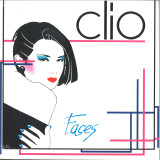
Worthy italo re-issue (in a newly mastered version) of this early Roberto Ferrante's project. Roberto started his career being part of various electronic music groups in Naples around the early 80s! His career took off when he made his first deal with Best Record by Claudio Casalini for ''Come On Closer'' by Pineapples which obtained worldwide success and was played at the legendary Chicago Radio Station WBMX by the mythological DJ's collective, Hot Mix 5. In 1985 it was time for another classic named â??Facesâ?Â�, a simple but direct and honest song with an irresistible rhythm and lyrics that tends to move away from that typical dark sound in other Italo-Disco songs of that era. This song is a triumph for synthesizers and electronic drums as it's fully electronic, something still a rarity in those days! The beautiful melody and spiritual essence of ''Faces'' represent the revolution of a new beginning of the Italian pop of the 80s with a perfect arrangement by Roberto Ferrante, a bouncing bassline, and strong and clear vocal. The sweet and sensual voice, full of personality and charm is by Clio (Maria Chiara Perugini). The graphics are by Patrizio Squeglia and all together it made this groundbreaking release which is one of the best Italo-Disco songs ever made.
- A1: South Funk Blvd - Skying High (Getting Off On Your Lovin')
- A2: Ad Libs - Don't Need No Fortune Teller
- A3: Atlantis - Hung Up About You
- A4: Smoke Inc - Waitin' For Love
- B1: Mandisa - Summer Love
- B2: City Lites - Now You've Gone Away
- B3: Papaya - Favela
- C1: Alcione - Este Mundo Tem
- C2: Quintaessencia - Serrado
- C3: Superior Elevation - It Was September
- C4: Keith Chism & Light - My Life & Song
- D1: Belita Woods - Magic Corner
- D2: Spare Hare - Ain't No Doubt About It
- D3: Sammy Acuna - Never Found A Girl
- D4: Sweet Mixture - House Of Fun & Love
Black Vinyl[26,85 €]
Here we are at the dawn of a new compilation series and we’re kicking things off with an absolute gem that features a selection of hard-to-find records (some impossible to find) and some that have been hiding in plain sight all along. They all share common qualities, being that they are beautiful, soul quenched songs that sing of love, peace and unity.
‘With Love: Volume 1’ has been compiled by Miche and presents a curated selection of rare Brazilian, gospel, modern soul and jazz-fusion fire. We have Brazilian rarities by Alcione and Quientaessencia, UFO gospel by Keith Chism & Light, the jazz-funk/AOR sounds of City Lites taken from a Radio Station album, and the anthemic feel-good emotional soul of Belita Woods to name but a few.
Tracking down artists and musicians from the past is an art form. Like a seagull swooping for treats, sometimes the prizes are easily found, and at other times, it’s the result of very late nights trolling through Facebook profiles, message boards, hitting dead ends and following red herrings, and yet still the search goes on. This compilation is a true labour of love with all the artists tracked down and licensed by Miche. It has long been an ambition of the London based musical connoisseur to compile an album, and like anything that requires craft, care, and knowledge - it takes time. There are many twists and turns in the hunt for those records that make your jaw drop.
In 2018, when just 24, Miche became a music programmer for London’s illustrious Spiritland group of venues. From this musical sanctuary, he was able to listen, learn and meet some of the best selectors from around the world. It was a musical education, and he was particularly drawn to the deep sessions by DJs such as Mark Taylor, George Arthur, Kev Beadle, Patrick Forge, Dr. Bob Jones, and Colin Curtis to name a few. He also used this time to begin running his re-issue label Discs of Fun and Love with co-owner and friend Frederika.
Sometimes the cynical knock compilations, there is certain snobbery amongst some about the original pressing, but music shouldn't just be about lucky collectors giving over large sums of money to record dealers. It's also about a bridge to the past, a celebration of the legacy of somebody’s art, and a second chance for initially overlooked work to shine. As with all the best compilations, it has been compiled with love…
Hailing from Ancaster, Ontario, Carl Didur has been an enigmatic fixture of Toronto’s underground music community for close to two decades. Originally traversing the Golden Horseshoe with The Battleship, Ethel, a band which sprung from his first outfit CEDRUMATIC, Didur soon moved to Toronto. Throughout the mid-2000’s he could be spotted playing his trademark ace-tone organ as a member of No Dynamics and Rozasia in the city’s crammed rogue venues, such as The Bagel and the infamous and transient Extermination Music Night. During these years The Battleship, Ethel continued to tour, often performing as backup band for Damo Suzuki, while at other shows inviting Dave Byers (Simply Saucer) and Bob Bryden (Spirit Of Christmas) to perform alongside the band. Perhaps the most enduring legacy of "The Battleship, Ethel", which dissolved in 2009, is that it laid the creative foundation for Carl and bandmate Michael McLean's next project, the prolific, studio focused, Zacht Automaat. As Zacht Automaat released music at a frantic pace, Carl continued to collaborate with members of a tight-knit group of Toronto’s downtown scene including touring with U.S. Girls and Slim Twig, performing and recording with Colin Fisher as Fake Humans, guesting on Absolutely Free’s Currency EP and producing New Fries’ most recent album The Idea of Us. Throughout the last decade Didur’s purely solo output has served to document his unimpeachably singular approach to music making. I Cannot See You Too Well (2011), Nothing is the Secret to Anything (2014) and Is It Yesterday? (2020) all released on cassette were followed by a digital album of gentle minimalism called Natural Feelings Vol I (2020). His solo shows consist of multiple tape machines running loops through various analog devices (a Certified Electronics Technician Didur now spends his non-piano playing hours of the day repairing all manner of tape echoes and synthesizers) or solo Wurlitzer electric piano improvisations, his performances gracing both stage and gallery. With his latest release Maybe Next Time, Didur further establishes himself as a singular artist with a unique methodology honed from years of music-making and listening. The album’s compositions swing from lush Axelrod-ish affairs filled with Mellotron strings to the album’s spiritual jazz influenced centerpiece The River Meets The Sea. “I was inspired by Eno's Here Come the Warm Jets, Crazy Horse but only when they are sad, Alice Coltrane, Jessica Pratt, McDonald and Giles, and so many others…” states Didur. Infused with a melancholic tone throughout, tracks such as Close My Eyes and Autumn’s Here invoke cinematic memories with tape echo and reverb applying a softened focus to the proceedings. Carl explains the context for the tone and the setting for the record’s gestation: “Maybe Next Time is a record I made after the world lost a sweet person that many in our community loved. Unlike most of my albums this one never seeks to shock or surprise you. It is about sadness, confusion, dissolution, transformation and ultimately a deeply forgiving sense of love. It is a concept record about being a human being!”
Tape
Los Angeles native Sha Sha Kimbo undeniably lives for the rave. As exemplified through her every intentional move as a producer, DJ, promoter, radio host and label owner, Sha Sha radiates an unwavering love for amplifying, nurturing and supporting the culture of underground electronic music and the community that surrounds it, with her forthcoming release absolutely no exception to this.
Set for release as a digital download and limited edition cassette tape on August 13, the LA rave staple is happy to announce her debut EP on Evar Records, Total Chaos. A brilliant testament to the cathartic importance of staying up late and getting lost in a buzzing crowd of kindred spirits, Total Chaos harnesses the universal experience of having pent-up energy into massive, angst-ridden breakbeat anthems. Over six tracks, Sha Sha channels the hair-raising spirit of '90s rave along with her formative experiences with DMZ-via-Low End Theory dubstep and punk rock. Finding her place within LA's bass music, house, techno and rave scenes while defying easy categorization, Sha Sha personifies the no-rules electronic music ethos behind John Frusciante and Aura T-09's Evar Records. To supplement Total Chaos' three originals, LYZZA, Machine Girl and LCY provide three raw remixes highlighting various aspects of Sha Sha Kimbo's renegade rave spirit.
Drawing from the Los Angeles punk rock and '90s rave music that soundtracked her youth, Total Chaos personifies how she grew up on the dance floor, showcasing Sha Sha's tried and true ability to express rich, nuanced emotions through tracks that, first and foremost, can level a warehouse party. Kicking off the vibe on July 30, the EP's lead single "Save The World" is a perfect representation of this, with the jump-up rave cut employing a megaton breakbeat and sickly-sweet vocal samples over simmering base of dark, UK-influenced atmospherics. From the late night energy of the title track to the euphoric, dawn-breaking feel of "Limited Perfect," Total Chaos offers the refuge of a robust dance floor with the warm reassurance to be one with the universe.
Rounding out Total Chaos EP are three remixes that amicably and serendipitously support Sha Sha Kimbo's visionary aim to both explore the unknown and bring people together along the way. Brazilian-born, Amsterdam-based powerhouse LYZZA adds a full verse and a nest of serrated rhythms to her version of "Total Chaos," while New York's Machine Girl applies their trademark punk electronics approach to "Save The World." Meanwhile, Bristol's own LCY hollows out "Limited Perfect" into a haunting amalgam of post-punk minimalism and low-frequency pressure. A study of the opposing light and dark energies of underground dance music, Total Chaos presents a breakbeat-heavy vortex, sure to awaken everyone's inner raver.
- A1: Pale Blue Care Biobiopatata06 09
- A2: Crossing The Tamariver Maher Shalal Hash Baz 48
- A3: Bayern Mitamurakandadan? 02 39
- A4: Anton Popo 04 08
- A5: Tohonoko Kourakuen 03 03
- A6: People Have Called Them Flowers Various Sighhorns 03 32
- B1: A Sparkle To Your Eyes Zayaendo 04 58
- B2: Swamp Strada05 18
- B3: New Window (Onto A Collapsed House) Sekifu 01 41
- B4: Gone Astray Hose 04 44
- B5: Ghhgh Compostela02 40
- B6: Wippi Zayaendo 01 25
- C1: Just Watching Gratin Carnival 04 35
- C2: Apple Ringo Pascals 02 50
- C3: Way To The Seatail 02 59
- C4: Pensive Miss Noahlewis’ Mahlon Taits 03 33
- C5: Nagyon Szeretrek Mindenkinek K`dlokk 05 57
- D1: Kemuri Fuigo 04 28
- D2: Mado Petit Daon 05 53
- D3: Minato Nrq 02 35
- D4: The Ending Theme Tenniscoats 02 59
- D5: A Day With The Saints Satomi Endo 03 13
Alien Transistor present Alien Parade Japan, a joyous double-album compilation of groups from Japan’s indie-pop and avant-garde undergrounds, all of which feature brass or woodwind instruments as part of their line-up. Compiled by Markus Acher (Alien Transistor, The Notwist, Hochzeitskapelle) with plenty of support and help from his Spirit Fest bandmate, Saya (also of Tenniscoats), it features some familiar names – Tenniscoats, naturally, but also Zayaendo, Tori Kudo’s Maher Shalal Hash Baz – alongside lesser-known groups like Biobiopatata, Mitamurakandadan?, Kourakuen, sekifu, and Noah Lewis Mahlon’ Taits, amongst many others.
The collection of songs here rests upon a simple question, and an interesting parallel: Why do so many groups from Japan include brass and woodwind, and how closely does this echo the scene that Acher is involved with in Munich? The idea was formulated in Acher’s mind after one of his groups, Hochzeitskapelle, had been invited by Saya to Japan in 2019, to take part in the Alien Parade Japan tour. “Saya and her friends recommended a lot of music to me that I didn’t know of,” Acher recalls, “and I was surprised and excited to find so many Japanese bands who use brass and woodwind instruments.”
This approach was something Acher had been familiar with for a while, thanks to his experiences in Munich: “Until then I thought of the Munich scene, where Hochzeitskapelle come from, as being quite unique in having ex-punk and still-indie musicians form loud acoustic bands with many brass instruments and play a wild mixture of styles.” And indeed, that variety is reflected in the twenty-two songs on Alien Parade Japan, which flits from the pastoral melody of Maher Shalal Hash Baz’s “Crossin The Tama River”, through the tenderness of various sighhorns’s “people have called them flowers”, to the folksy lament of Gratin Carnival’s “Just Watching”.
Alien Parade Japan reaches further afield, too, drawing in some groups, like HOSE, Fuigo, and popo, that feature musicians like Toshihiro Koike, Masafumi Ezaki and Taku Unami, who may be better known for their experimental and improvised releases on labels like ftarri and Erstwhile. It also looks back to material recorded in the 1990s - the swinging slide guitars and sax/tuba duet of Strada’s “Swamp”, from 1998, and Compostela’s energetic, rousing “ghhgh”, from 1990. Both pieces were written by, and feature, saxophonist Kanji Nakao; Compostela’s membership also included late saxophonist Masami Shinoda, who was also part of such storied Japanese groups as Pungo, A-Musik, Orquestra Del Viento, Ché-SHIZU, and the fiery free jazz outfit, Seikatsu Kōjyō Iinkai.
Groups like Compostela help to draw some through-lines to the aesthetics of chindon’ya, a type of Japanese marching band made up of costumed street performers who advertise businesses; the music made by these bands is brash, spirited, and full of energy. Alien Parade Japan weaves all of this together – chindon’ya; jazz; indie-pop; psych-folk; big band – into one beautiful, big tapestry of gorgeous melody, sweetness, and melancholy, with plenty of creative fraying at its edges. “The collection is a very personal view of Japanese bands using brass and woodwind instruments,” Acher concludes: “it’s not a representative anthology, it’s mainly held together by my personal taste, experiences, and friendships.” But it’s also a wonderfully coherent collection of some of the most playful and elated music you’re likely to hear this year. As musician and writer David Grubbs says:
„Now it is confirmed: my favorite genre of music is Alien Parade Japan. Hopefully now people will know what I’m talking about when I gush about the unassailable brilliance of longtime favorites like Maher Shalal Hash Baz, Popo, Mitamurakandadan?, Hose, and Tenniscoats, presented here alongside others whose music I have only begun to search out. Please share in my gratitude and enjoyment of this lovingly assembled collection, one that I welcome into my home as I would a long-anticipated guest.“