Support by Green Velvet, Rebolledo, Dr. Rubinstein, Cormac, DJ Hell and many more! Summer 2013, Comeme label's studio - The District Union. Behind the analog console and hardware - 20-year-old Philipp Gorbachev and Djs Pareja from Buenos-Aires. No plugins, reels, or LTE. Sweltering heat, peak of summer EU tour, the musicians had just a few hours to record. The track drops on the label's compilation and immediately lands in a mix by Chicago legend Green Velvet. It spreads afterwards in all possible ways - Do You Believe in House Music? is blasting in bars, DIY spaces, raves, cars and street parties, the lyrics get sprayed on walls or inked as tattoos System 108 proudly presents the official reissue of the original, boosted with brand-new remixes from shining artists of the Russian dance scene - those whose journeys also began in the 2010s and who, in some way, crossed paths with either the track itself or that very vibe of faith and love, without which a dancefloor can hardly pulse with life. A house is not a home, when there's no one living there
Buscar:swel
Sea Oleena is the project of Montreal-based musician Charlotte Oleena. Drifting between ambient dream pop and atmospheric folk, her music is rich with textural warmth. With her softly whispered vocals and atmospheric tones, Oleena's music has been compared to acts like Grouper and Julianna Barwick, though in her more structured moments there are echoes of alternative pop icons the Cocteau Twins and Julee Cruise. Alded by her brother Luke Loseth, she released a stf-titled mini-album in 2010, followed by a second LP titled Sleeplessness a year later. Her third release, Shallow, arrived in 2014. Six years later, Sea Oleena returned with Weaving a Basket, a seven-track album that combines austere piano and guitar arrangements with ebbing swells of instrumentation and misty harmonies layered in a spectral chorus. Throughout the record, Oleena embraces the ambient backdrops of her surroundings - birds chirping, wind rustling, urban traffic - creating a close, intimate, and lived in listening experience. Released one year ago, in late fall 2020, these sounds capture the dual interiority and solemnity of that moment. The result is a wistful and impressionistic collection of songs, in turns haunting and hymnal.
This exciting new collaboration between Cara Tolmie and Rian Treanor is a highly kinetic and playful endeavour. Body-centric vocal explorations merge with intricate rhythmic systems forming a deliciously disorientating, hypersurreal space of semantic modulations, concrete poetry, cut-up beats and mimicked samples. Their sound is singular and tactile: dissociative dance music that reassembles contorting vocal lines and knotting biomechanics in an explorative network of unstable forms. It's a blur of bodily fragility and ecstatic disruption, where swells of meaning rise and fall through clouds of synthetic buzz, fleeting breath, and stream-of-consciousness imagery.The duo first performed together when Counterflows Festival paired them for a new commission at the historic Arches venue in 2023. Glasgow-born, Stockholm-based vocalist and performance artist Cara Tolmie brought her hypnotic vocal technique, Internal Singing _ an intimate practice using breath, movement, and touch that explores the subtle binds between voice and body in an unsettling, engrossing sonic space. Treanor's richly innovative work provided a compounding counterpart: radical, rave-infused structures that bent and contorted around Tolmie's incantation.Growing out of a series of charged, improvisational performances, Body Lapse was recorded between Stockholm and Rotherham in 2024. Echoes of their live energy run throughout _ a voice shaking through the body, responding to touch and physical modulation, translating performance into something tactile and immediate. Body Lapse marks their debut release together, it conjures a sound of unsettling beauty and frictional intensity _ a playful, physical mesh of computer music, voice, and speculative storytelling. In this gnawing, dreamlike space, breath and body become sites of both connection and disruption, sparking thrilling encounters with the unexpected, the playful, and the decisively weird
Steve Moore reprises his beloved Lovelock guise by presenting his unique riff on the library breaks genre. Business And Pleasure contains grimy groove and sleazy, funk-laden lounge music.
This vinyl release is hyper-limited, with just 500 pressed for the world.
The LP is ushered in by the spacey synth-funk of the sleazy, woozy title track. This is that serious slo-mo cosmic-balearic head-nod shit. Laidback bass, heavy funk with dreamy synth and electric guitars. An outstanding opener. Up next, the dynamic, swaggering "Last Call" is a sophisticated, elegant stroll - sweeping, mellow strings, a smooth bassline and gorgeous percussion with urgent keys and swelling synths.
"Slinky Strut" is another spaced-out, sleazy funk groove with jazz rock by way of a heavy, heavy guitar riff, mellotron and bass breakdowns which build to brass crescendos. Gigantic. "First Class" closes out the side, and, like classic Hawkshaw / Bennett noir, it's got that mysterious and murky stretched out sleuth / detective soul with a great bassline and percussive elements, with swelling strings, ace synths and smooth Rhodes piano melodies entering the mix halfway through. Dramatic guitars and groovy percussion add extra intrigue. It's 7 minutes of funk!
Side B opens with the stretched-out psychedelic funk and jazz groove of "Stank 49". It takes its sweet time to unfurl, creating enormous - almost sensual - anticipation for the ensuing beauty but, as it does, we're left beguiled and straight-up hypnotised. Heaven-sent synth flourishes and a laidback bassline over smooth drums cement its simple, vivacious grace. "Dangerous Man" is that creeping crime funk we all love; heavy bass and fuzzy guitar riffs, mellow strings and sumptuous piano/synths. It's irresistible, it's ominous and it's pretty gargantuan. It's basically like an El-P hip-hop instrumental. We need to get some rappers over this stuff, stat!
"Stinkbug" is a dazzling and funky groove-fuelled jazz-rock workout with fizzing synth riffs joined by full percussion and drum breaks, building with strings to a strong swagger. Vigour! To close out this remarkable set, the breezy "Win Or Lose" is laidback soul-inflected funk, utilising urgent, skipping drums and galloping basslines. Just stunning.
This collection was written and recorded in Spring and Summer of ’24. Everything was tracked at Steve's home studio in Albany, NY except the drums and percussion, which were recorded by Jeff Gretz at his space in NYC. The whole collection is basically a rhythm section feature, so Steve's Rickenbacker 4003 and Fender Jazz Bass play very prominently. The bass guitar serves as lead instrument in a lot of these tracks. Also, lots of Rhodes and stringers (Solina, Logan etc) and guitar (Strat and Les Paul). He even dusted off my sax for this one, which he doesn’t do as often as he’d like!
This type of groove-oriented library music has been a steady part of Steve's diet since the late 90’s. In heavy rotation while writing this collection were the following classics: “Time Signals” by Klaus Weiss, “Tilsley Orchestral No. 10” by Reg Tilsley, and “Heavy Truckin’” by Simon Haseley. “Voyage” by Brian Bennett was also a big one.
Lovelock started as a dedicated Italo-disco project, but over the years Steve expanded it to include anything directly informed by the commercial/pop side of the music of his childhood (70s/80s). Writing and recording this album was, like a lot of Steve's music these days, basically a test to see whether or not he could do it.
The song titles, like the music, are meant to be evocative yet vague. But there is a bit of a travel theme. Steve imagined this record being the soundtrack to a sleazy salesman’s business trip. The kind of guy who, when asked if he’s traveling for business or pleasure, responds “both.” Beyond the traveling salesman comparison, the title directly relates to the creation of this album. This was something he wanted to do just for his own enjoyment. Yet, like our sleazy salesman, he still found a way to get paid.
The album’s cover was designed by Chris Stevenson, with no little direction from Steve. He knew that he wanted to go with something photography-based for this cover so, in true DIY/cheapskate spirit, Steve started by looking through his own photos. He found the cover image on his phone, taken through an almost empty bottle of beer, and it clicked. The whole album has a very boozy vibe (especially with titles like “Last Call”) so this shot seemed appropriate. We, hic, agree.
Mastering for this vinyl edition was overseen by Be With regular Simon Francis, and it was cut by the esteemed Cicely Balston at Abbey Road Studios to be pressed in the Netherlands by Record Industry.
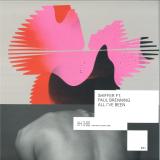
Blazing onto ICONYC for its 21st release, Swiss sonic alchemist Shiffer makes a striking debut with the magnetic All I’ve Been EP. Celebrated for his emotional finesse and innate ability to connect with unexplored corners, Shiffer’s latest creation, including a lucious collaboration with Paul Brenning and capped off by Jonathan Kaspar’s trademark rework, is a tantalizing suite designed to echo in our timeless halls.
The journey begins with Shiffer & Paul Brenning’s opening manifesto, “All I’ve Been”, a track that unfurls with both confidence and caution, as if self-aware from its very first beat. Mechanical whirs and fractured frames give way to low-end swells that drive forward with an unrelenting undertow. Brenning’s unmistakable vocals start to break a warmer ground as they linger in the liminal space between today and tomorrow before slowly growing in gravitas. Suddenly, the piece begins to contort, drawing spellbinding figures as arresting arrangements and melodic flourishes allow for decompression. Imbued with a tantalizing breakdown that amplifies their exquisite use of negative space, “All I’ve Been” is a fascinating and intimate take that feels as expansive as it ever could.
The follow-up, “Urban Legends”, takes a bolder stance. Anchored by heavy drum programming that carves its place with deliberate force, the track is haunted by ghostlike vocal fragments that lend an unsettling, cinematic edge.. Out from the left field, Shiffer deploys undulating synthetics that intertwine with consummate ease as they glide under the spotlight. An alluring act that treads unhurried and unconcerned, “Urban Legends” operates at its own pace, far from the demands of a world lost in the metropolitan hustle, allowing us to bask in a lore of things that might or might never have happened.
Closing the release, ICONYC calls upon Cologne innovator Jonathan Kaspar, who delivers a singular reinterpretation of “All I’ve Been”. Immersed in iridescent textures, Kaspar layers lush, swelling pads over pulsing low frequencies, their ebb and flow punctured by flashes of distortion that spark like electric currents.. Reflective and equally immersive, Jonathan Kaspar’s take on “All I’ve Been” pushes the collaboration into a brash new terrain while retaining the spiritual ethos intact
Texas drone pioneers Stars of the Lid take stock of a landmark career with this 30th anniversary edition of their debut LP Music For Nitrous Oxide on their own Artificial Pinearch Manufacturing imprint. Long before the brittle-yet-warm racket Adam Wiltzie and Brian McBride kick up became synonymous with the achingly beautiful decay of America they were two audio geeks in Austin with almost no connection to the city’s vibrant, but rock and roll focused music scene. Finding brotherhood in mangled tape collages and engulfing fuzz, Stars of the Lid was born out of their mutual abstraction from what surrounded them. While to its creators, Music For Nitrous Oxide may have simply been a (slight) refinement from the drones Wiltzie and McBride were unleashing on unsuspecting college radio listeners at UT Austin, the rest of the world was slowly catching up to the duo’s noise-addled magic.
Phantasy are delighted to introduce Greek duo Boys' Shorts for their debut EP on the label, ‘Athena’. The project of music obsessives Vangelis and Tareq, the Boys’ Shorts sound has helped redefine timeless strains of disco, house and Italo for Europe’s queer club underground, with similar charisma spilling into their collaborative productions on labels including Live at Robert Johnson, Permanent Vacation and Polari.
Boys' Shorts appearance on Phantasy is coupled with their most ambitious and fulfilling songwriting to date. Featuring a rare vocal performance from beloved selector and cosmic disco expert Budino, appearing alongside Elisa Paradiso, the instantaneous lead cut ‘Summer’s Here and Summer’s Missing’ recounts a sun-drenched romance cut short. The duo’s soft, bittersweet synthesis mingles with Budino’s Italian-language lyrics, gently pulsing to find closure, or at least further pleasure, while up late in a Balearic discoteque.
Under those same hot lights, Boys' Shorts go deeper still with the leading oscillations of ‘Stereo on Acid’, in which classic, wobbly-hearted 808 sounds flirt playfully with a bassline that bumps like downtown traffic on a sweltering Athens afternoon. Reflecting the hidden pleasures and true underground culture of the city after nightfall, title track ‘Athena’ is a sensual and sophisticated groove with an epic yet understated touch, that one can imagine soundtracking a future soiree or centuries of ancient history alike.
Wolfgang Voigt makes a return to Astral Industries, seeing the continuation of his long-running Rückverzauberung (Reverse Enchantment) series. In line with previous volumes, one may expect the unconventional, idiosyncratic sound Voigt is reputed for. ‘Im Tunnel’ however, takes a more concentrated viewpoint - a metaphysical transmutation that brings with it an experience of mind-melting drones and swelling intensity.
Entering the tunnel is like opening a portal, but as the fabric of time-space begins to collapse on itself, it feels more like a rude awakening. Pulsing undulations rise and fall like the turbines of a spacecraft, marked by dissonant chords and a simmering cloud of complex and ever-shifting textures. Pushing thresholds and expectations, the unearthly nature of the tunnel over time disintegrates any proposed state of completion.
A treacherous voyage, and possibly bewildering for some, the work is both unrelenting and uncompromising. Should one decide to step into the tunnel, be sure to take all necessary precautions and procedures.
First LP in new series from Finland, this subdue jazz drone album has the quality of dusk, but is never darker than the Nordic summers. Atonal & forceful at times, still padded and invitingly warm, it has 4 classy pieces that enjoy being on the fringes while slowly capturing the ear when organs drone, the TR-808 thumps, the percussive double bass and the saxophone layers fog of melodic growing waves of groove.
Slowly yet firmly blooming into focus, An Unfinished Rose is the new album from Australian duo Troth.
This is their first since relocating to Hobart, Tasmania and their introduction to Night School Records. With a detailed web of past releases on labels A Colourful Storm, Mammas Mysteriska Jukebox, Knekelhuis and Bowman’s own Altered States Tapes imprint, An Unfinished Rose is the group’s most realised and composed work thus far. While still drawing on the improvisatory and DIY practices that informed Troth’s beginnings, it points to a new incarnation of the duo’s music; an intentional language emerging from the fog of obfuscation and mists of uncertainty.
Over these 9 meditations on change, acceptance, renewal and rebirth, An Unfinished Rose finds Amelia Besseny and Cooper Bowman peeling back some of the roughhewn architecture that defined their earlier releases to reveal a masterful - if auto-didactic - use of space and melody. Composition and improvisation compliment and feed each other throughout, with locked-loop earworms providing the springboard for lines of clarinet or synth melody, and the negative space between chord clusters giving ample room for Besseny’s most confident vocal performances to date. Shaving off a little of the defining dissonance and tape compression of old reveals Troth’s music in radiant daylight, humbly accepting of its place in the world while yearning for better, more sympathetic modes of living. Leaning more heavily on acoustic instrumentation and post-production processes than previously, the result is a transcendent body of work infused with an almost zen-like presence.
Troth’s music exists in the border between forming and becoming, its goal to project a kind of preternatural beauty, leaving interpretation open to the listener. Field recordings, happenstance and improvisation may provide seeds for the duo’s compositions, particularly on Side A, but there is a deft touch of songcraft on show. Loam Loom Leaf Litter opens An Unfinished Rose, directly referencing natural cycles of life, death and regeneration, before the blissed-out drum machine groove of Gold Plum continues a discussion concerning the totality of nature and one’s place in it. Besseny’s vocal, swelling like an ocean churn in duet with itself is adorned with synthesised harp and a revolving synth pattern, conjuring plumes of medieval smoke. Thistle’s rounded, bass-heavy drums, nodding to the vast echo of dub, is a relatively new terrain for Troth. It’s propulsive and thumping, pulsing with a meaning and symbolism consistent with Troth’s past work, referenced overtly in Bessey’s lyrics - “Say it too much and it loses its meaning…”. Similarly, the sprawling modern-classical suite, Tides Reflected In Her Eyes, is intentional in its lyrical themes while traversing new ground, revelling in layers of bowed cello and vocal intonations. Side B’s 4 tracks feel like Troth’s most thoroughly accessible and affecting music to date. Leaning into their own detoured version of Synth Pop, Cocoonist explores downtempoisms via a crunchy low frequency synth, and dream-like, fuzzy trip-hop modalities, not unlike Besseny and Bowman’s other group, Th Blisks. Following on, Myrtle Mystes is an open and searching DIY pop song, forged out of drum machine, bass guitar and cello. (An) Unfinished Rose’s title-track is a clear stand-out, built upon an evocative rhythm sample that appears to change emotional resonance with each undulating repetition. Its cascading waves of affect, interjected with a subtle breeze of synth, bowed instrumentation and soaring, densely-layered vocals.
An Unfinished Rose is enveloping, warm, forgiving. Difficult, yet retaining a unique beauty. Troth’s music aims to celebrate the duo;s shared experiences of being in the world, despite the complexity often surrounding us all. Theirs is a message of hope and perseverance, learning and patience.
Gladstone Deluxe is one of the most exciting musicians in the US right now. They make futuristic, deep, percussive yet smooth techno, deep house and electro. They also play timbales in NYC queer and trans salsa band Las Mariquitas, and are a frequent collaborator with fellow East Coast sonic trailblazers Kiernan Laveaux, Johnny Zoloft, and Mira Mira. They have released on Black Techno Matters, Data Disk, Misc, Innocent Music, How Things Are Made, and now Fixed Rhythms is excited to add to the Gladstone lore with their new offering, “No Haterade EP”.
A1 “Cleanse” is zippy tech-y house…think groovy, up-beat, sexy, like something you’d hear in a Titonton Duvante set. A2 is a remix, “Teakup – Where’s My Snare (Gladstone Deluxe Remix)”. Now the EP takes a turn towards psychedelic electro. Spacey trippy vocal manipulations, swelling deep space gravitational waves swelling and resolving. The B side opens with the “No Haterade” track. Arpeggiated electro that slaps with swagger. The final track is a longer, 9 minute driving deep housey techno tune. A bass line that you never want to stop, luscious pads, brain-tingling pings, melodic percussive synth runs, and a touch of acid.
If Gladstone is not already on your radar, take heed! Big tunes here!
The writer Max Sebald often pondered over the nature of human memory, specifically, how our thoughts and desires - and their results - overlap and mutate over time. In A Place in the Country, he writes of the significance of what see as “similarities, overlaps and coincidences”. Are they the “delusions” of the self and senses, or manifestations of “an order underlying the chaos of human relationships, ... which lies beyond our comprehension”?
Song of the Night Mists, the new album by post-classical composer Stefan Wesołowski, often feels it draws on Sebald’s premise.
On a simpler plane, the one where the market dictates the neatly ordered information we consume, Song of the Night Mists can be described thus: recorded in the main by Stefan Wesołowski in Gdańsk, both in his studio and in Saint Nicholas' Basilica, the album incorporates acoustic instruments - piano, violin, double bass - and classic synthesizers such as the Roland Jupiter-8, the Soviet Polivoks. A Roland Space Echo RE-150 tape delay was also pressed into service as an instrument. We also hear the basillica’s organ and field recordings from the Tatra Mountains. Other musicians were Maja Miro, who played the flute parts on ‘Glacial Troughs’ and brother Piotr Wesołowski, who played the organ on ‘Wilhelm Tombeau’. Sound engineer was Marcin Nenko, who was also on hand to record the basilica organ parts. The album was mixed in New York by Al Carlson (Oneohtrix Point Never, Jessica Pratt, Zola Jesus, Lady Gaga, and Liturgy) and Rafael Anton Irisarri handled the mastering.
Ostensibly, Song of the Night Mists is the last in a trilogy, following on from albums Liebestod (2013) and Rite of the End (2017). All three deal with existential matters such as love, death, decay and “an ultimate end”; apocalyptic and Promethean in spirit, and betraying very human conceits. The Sebaldian nature of the new record starts to make itself felt when Wesołowski talks of how he used sampling. One element is unexpected, that of sampling himself: “I go back to dozens of my own unused sketches and recordings, treating them as raw material to cut, slow down, reverse, and transform in every possible way.” Memory as sound, to be reemployed by the listener through their own imaginings.
Another set of samples made by Wesołowski plays another role. These are field recordings, originally created for an audio illustration of the formation of the Tatra Mountains, and used in a film by sound designer Michał Fojcik. Wesołowski: “You can hear cracking ice, streams, footsteps in the snow and the wind, and a real avalanche, recorded from the inside.” The “Tatra connection” on the album is also found in samples referencing composer Karol Szymanowski. The album’s title alludes to a poem about the mountains by Polish poet, Kazimierz Przerwa-Tetmajer.
Wesołowski’s Tatra recordings are “about a world without humans - about the fact that the world existed, was beautiful, and had meaning long before people arrived, and for the vast majority of its history, it was a place without us.” Wesołowski, using one iteration of the natural world, plays out in sound Sebald’s idea of another order, underlying the chaos of human relationships lying beyond human comprehension.
These feelings play themselves out on the five album tracks. Sonorous and rich, they illustrate tectonic shifts we have no control over. Wesołowski hints that the overall sound is a “meditation on the metaphysics of the non-human set against the spirituality that human presence has brought into it.” In that light, the opening number, ‘Core’, with its slow build, and crackling and straining sound effects, create an effect of the earth groaning into life in a creation myth. Once the piano part raps out a simple melody and modulated tonguing trumpet samples add to the overall atmosphere, the listener can certainly find a cue in the “spiritual”, or “human” side of the story. Human versus nature: from the strains and harmonic muscle stretches of the second number, ‘Glacial Troughs’, through to the powerful and filmic ‘Stalagmite’ and heart-on-sleeve romance expressed in closer, ‘Wilhelm Tombeau’, we listeners are cast as Friedrich’s wanderer, looking out over a landscape that will appear only if we engage with it.
Formations of melody appear incrementally, almost appearing by chance - like hidden footings in the rock shelves to give us something to grasp onto. Rhythms are used sparsely: the prolonged percussive taps on ‘Glacial Troughs’ are an anomaly and maybe there to give pace to the album to come; essentially to keep the listener strapped in. Elsewhere, percussion is used as an aid to mood, the two thudding, timpani-style passages on ‘Peak’ there to offset the short, beautiful, kosmische passage that splits them.
Elements of the borderline religious spirit that drove German electronic music in the late 1960s and 1970s also find a place on Song of the Night Mists. The swells and recessions of the organ find their emotional climax on ‘Wilhelm Tombeau’, a track which summons up echoes of the “mountain magic” vistas created by Popol Vuh or Tangerine Dream, especially with the slightly atonal wobble of the Mellotron that counters it.
This is a dramatic album, but it does feel a strangely short, or curtailed listen on ending, evoking the feeling one gets when waking from a dream, and, for all its incipient grandeur, a track like ‘Stalagmite’, for instance, ends on a minor note. Wesołowski admits that Song of the Night Mists is born of the all too human process of temptation, doubt and recalibration - Sebaldian overlaps and coincidences forming something that must live another life, away from its creator. In Wesołowski’s words, the album is “a newborn foal must stand up and walk right after birth.” Now it is yours to ponder.
- A1: Cloud Nine
- A2: I Heard It Through The Grapevine
- B1: Run Away Child, Running Wild
- C1: Love Is A Hurtin’ Thing
- C2: Hey Girl
- C3: Why Did She Have To Leave Me (Why Did She Have To Go)
- C4: I Need Your Lovin’
- D1: Don’t Let Him Take Your Love From Me
- D2: I Gotta Find A Way (To Get You Back)
- D3: Gonna Keep On Tryin’ Till I Win Your Love
The Temptations Get High on Psychedelic Soul: Cloud Nine Soars with Ambitious Arrangements and Production, Features Standout Vocal Performances and Instrumentation by the Funk Brothers
The Temptations’ Cloud Nine announced that Motown — and “The Sound of Young America” — would never be the same. Influenced by the emergence of cutting-edge rock and pop currents, as well as increasing sociopolitical turmoil, the album broke down barriers between rock, psychedelia, and soul while heralding the arrival of visionary arrangements and production techniques. Bookended by traditional R&B numbers, the 1969 record sent the Temptations in bold new directions and signaled the advent of psychedelic soul.
Sourced from the original master tapes, strictly limited to 3,000 numbered copies, pressed at Fidelity Record Pressing, and housed in a Stoughton gatefold jacket, Mobile Fidelity’s 180g 45PM 2LP set presents Cloud Nine in audiophile sound for the first time on a domestic pressing. This collectible reissue bestows Norman Whitfield’s extraordinary production with the grand-scale dynamics, natural tonality, expansive openness, and low-end weight it deserves. The timbre of each of the five members’ voices is readily identifiable — even within the group harmonies — bestowing a realism never experienced outside the recording studio.
Making its debut on 45RPM, the album further benefits from the wide groove space by playing with greater separation and more realistic presence than prior editions. Everything from the brassiness of the horns to the dry snap of the snare comes across with reference-grade clarity and positioning. And since Motown’s renowned Funk Brothers backing band plays on many of the cuts, you’ll want to savor every note. The imaging, soundstaging, and organic bloom-and-decay of the notes make that possible.
Amid Cloud Nine, the instrumentation and architecture stand out as much as any element. Never before had a Motown album contained such ambitious patterns and complex passages. Seemingly conscientious of the departure from their past methods, the Temptations and Whitfield bunched together the tracks that mark a deep dive into psychedelic territory and counterbalance them with seven sterling soul cuts that dovetail with Motown tradition drenched with heartfelt vocals, swelling strings, and finger-snapping beats.
On the original 33RPM release, traditional Motown soul — laden with heartfelt vocals, swelling strings, and finger-snapping beats — occupies Side Two. These songs reveal an ensemble still very much on top of delivering pristine pop-soul material graced with romantic sweetness, persuasive insistent, and soaring highs. Re-energized after the departure of lead singer David Ruffin, who was fired for a variety of reasons in June 1968, the Temptations seamlessly meld with his replacement, Dennis Edwards, on one melodic gem after another.
The collective tackles five songs co-written by the legendary Motown team of Barrett Strong and Whitfield. Not the least of which are the smooth, shuffling “Why Did She Have to Leave Me (Why Did She Have to Go)” and deceptively simple, horn-spiked “Gonna Keep on Tryin’ till I Win Your Love.” On these tracks, as well as on a lush rendition of the ballad “Love Is a Hurtin’ Thing” and pleading, tender send-up of the Gerry Goffin-Carole King classic “Hey Girl,” Edwards and Paul Williams take turns on the lead with the estimable Eddie Kendricks, Melvin Franklin, and Otis Williams providing backing support.
All five vocalists trade-off leads on the simmering title track, a groundbreaking composition shot through with wah-wah-pedal effects, liquid funk, deep bass lines, Cuban percussion, saturated reverb, and gang choruses. Whitfield mines each member’s natural vocal range with spectacular results, keeps time with cymbals, and channels both the heated temperatures and escapist desires of a society embroiled in war, conflict, and experimental drugs.
Amazingly, the Temptations top themselves on the similarly revealing “Run Away Child, Running Wild.” Nearly 10 minutes in length, the song explodes R&B parameters and harbors a cinematic scope. Urgent pianos, distorted guitars, stripped-down percussion, steamy Hammond organs, minimal bass motifs, five distinct voices narrating the tale of a boy who fled home and now finds himself amid the scary, unforgiving external world: They combine to give the urgent tune a walls-closing-in atmosphere where fear and desperation reign. Bolstered by an extended instrumental section that precedes a climactic return of the singers’ voices, “Run Away Child, Running Wild” equaled the success of the record’s title track, with both reaching No. 6 on the pop charts.
Italy’s Tuccillo is back on Kaoz Theory this July with his ‘First Summer’ EP, once again showcasing his widely lovely interpretation of stripped-down, groove-led house. Making his start in the 90’s and still as relevant as ever, Tuccillo, has become highly sought after both for his records and as a DJ, his name is synonymous with gritty, groovy and dance floor focused jams which have found a home on many reputed imprints such as Visionquest, 20/20 Vision, Free-range, his own House Of Tucci and of course Kerri Chandler’s Kaoz Theory where he returns here. Tuccillo also operates as one half of the Doublet duo alongside Holic Trax boss Tomoki Tamura amongst many other sonic side ventures. Opening is title-track ‘First Summer’, perfectly setting the tone with Tuccillo’s distinctive style which utilises, fluttering stab sequences, bouncy bass tones, choppy vocal cuts and a bulbous bass groove atop a raw, reduced rhythm. ‘One More’ follows next and leans heavily into dub house realms with gritty, echoing dub chords, ethereal pad textures and murky bass swells delicately ebbing and flowing around a saturated swinging drum groove. ‘People For The People’ follows next and lays down organic percussion with filtered funklicks, a snaking bass line and jazzy keys before ‘Gotta Be Free’ concludes the release, heading back to a more stripped-back aesthetic courtesy of twitchy acid-tinged bass hits, fluttering synth melodies, crisp drums and an amalgamation of processed vocal chants throughout.
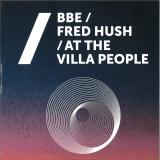
BBE, the iconic force behind the techno trance sensation, is making a powerful return with not one, but two electrifying new tracks: Hurricane and Sturm der Liebe. "Hurricane" sweeps listeners away with its nostalgic, heart-stirring melody and smooth, captivating vocals, creating a wave of emotion that’s impossible to resist. "Sturm der Liebe" is a masterfully crafted DJ tool that builds and swells, effortlessly blending ethereal, trance-like elements into an exhilarating journey of sound. With these two tracks, BBE proves once again that they are at the forefront of creating truly unforgettable, genre-defining music. On the b-side the new collaboration between At The Villa People & Fred Hush is all about techno, trance and acid influences mixed with dreamy vocal details, "Indian Summer" is a peak killer that will definitely make your dance floor explode. Not to be missed.
SHDW's Mutual Rytm imprint is back with its third release of 2024, marking a full label debut from Sonic Propaganda with their 'Native' EP.
Sonic Propaganda comes from the collaborative minds of Earwax and Rosati, a pair who favour dark and intense techno sounds and take inspiration from Jeff Mills and Robert Hood. In the studio, they blend analog and digital technologies into smoky warehouse atmospheres and immersive journeys that connect with listeners on an emotive level, and this full EP lands following their contribution to the third instalment of the Mutual Rytm's Federation Of Rytm compilation series in February.
The powerful 'Native' opens up at high speed with tightly coiled drum loops that never let up. Sleek metal percussive sounds peel off the grooves and lock listeners into a perfect state of hypnosis. 'Soul Pressure' is just as absorbing, with a tense bassline keeping you on edge as the train-like drums march under incendiary hi-hat ringlets. There is plenty of perfect machine funk to 'Terminal', which has more rusty synth textures and chopped-up vocal fragments humanising the turbulent grooves. 'Basic Path' brings an extra skip to the kicks as they enter, scuffed up and flowing just above the groove, while vocal pulses and twitchy synth modulations bring the detail. 'Body Empire' closes the vinyl package with a deeper vibe and pensive synths that add warmth and soul to the brilliantly mechanical grooves, while digital bonus 'Acid Riot' closes with squelching acid lines amongst a swell of analog crunch and laser-sharp percussion.
Netherlands-based artist Jonny Nash returns to Melody As Truth with his new solo album, ‘Once Was Ours Forever.’ Building on 2023’s ‘Point Of Entry,’ this collection of eleven compositions draws us further into Nash’s immersive, slowly expanding world, effortlessly connecting the dots somewhere between folk, ambient jazz and dreampop.
While ‘Point Of Entry’ was characterised by it’s laid-back, daytime ambience, ‘Once Was Ours Forever’ arrives wrapped in shades of dusk and hazy light, unfolding like a slow-moving sunset. Built from layers of gentle fingerpicked guitar, textural brush strokes, floating melodies and reverb-soaked vocals, moments come and go, fleeting and ephemeral.
From the cosmic Americana of ‘Bright Belief’ to the lush, layered shoegaze textures of ‘The Way Things Looked’, Nash’s versatile guitar playing lies at the heart of this album, gently supported by a cast of collaborators who each add their unique touches. Canadian ambient jazz saxophonist Joseph Shabason makes a return appearance, providing his delicate swells to ‘Angel.’ Saxophone is also provided by Shoei Ikeda (Maya Ongaku), cello by Tomo Katsurada (ex-Kikagaku Moyo) and Tokyo acid folk artist Satomimagae (RVNG) lends her haunting multilayered vocals to ‘Rain Song.’
As with much of Nash’s work, ‘Once Was Ours Forever’ deftly finds an equilibrium between softness and weight, offering the listener ample space to interpret and inhabit the music on their own terms. Through his uncanny ability to blend the pastoral and the profound, the idyllic and the insightful, ‘Once Was Ours Forever’ arrives as a tender and understated offering, infused with warmth and compassion.
Modeight steps into 2025 with a thrilling entry from Vedana, the Leeds-born, New Zealand-based artist making waves in the underground scene. With a career shaped by years behind the decks and a newfound passion for production, Vedana distills his rich clubbing heritage into four cutting-edge tracks on Epiphany EP. The journey begins on A1 with "Epiphany". This groove-heavy minimal house piece is powered by rolling basslines and jagged modular sequences that ignite the dancefloor. Perfectly tuned for pre-parties and equally ready to take over peak-time sets, it's a versatile cut that balances tension and release in all the right places. Next up is A2's "Flawless Victory". As the name suggests, this track hits with triumphant energy. A massive beat locks in with deep, dynamic basslines, building a sense of pressure that commands attention. Add in trippy atmospheres and enveloping textures, and you've got a dancefloor weapon primed to elevate the vibe. Flipping to the B-side, "Onomatopoeia" lives up to its playful title. Short, synthetic stabs cut sharply across the soundstage, synchronized with a hypnotic groove that feels both meticulous and spontaneous. It's a standout piece, rich in personality and brimming with rhythmically charged creativity. Closing the record is B2's "Present in the Culture". An absolute heavyweight of a track, it delivers a mix of atmospheric swells and plucky, tactile sounds that pull listeners deep into a trippy sonic journey. With its driving force and immersive vibe, it's a fitting finale to a stellar EP.
North View Records is an emerging Bristol-based label that values the music’s atmosphere and integrity equal to it’s technical production, aiming to resonate with listeners through immersive electronic soundscapes. For their debut release, label founder oliver presents ‘Quiet Thud’, an album inspired by expansive and untamed coastline. The 11 tracks take a hallucinatory trip through techno, downtempo, ambient and guitar-led music, drawing on diverse influences whilst remaining distinctive and ethereal.
‘Closer Thud Mix’ and ‘New Light’ introduce panoramic soundscapes to club focused tracks, with warped electronics and swelling wide-angle pads giving contrast to the fine-grain textures and driving percussive elements. Tracks such as ‘Plaza’, ‘Ribbon’ and ‘Joyride’ lend a nostalgic character to the album, presenting wistful and distant melodies that interplay with the off-hand live instrumentation, building a gentle and nuanced sonic palette.
‘Ruin’ balances delicate arpeggios with pulsing distortion and drum programming, evoking a brooding scene fitting of its title. Album closer ‘DRM Reprise’ also explores darker themes, led by a piercing vocal emulation that warps and evolves amongst sparse percussion. In contrast, ‘Still Life’, ‘Everything’, ‘Coastal’ and ‘Overground’ bring warmth and balance to the overall experience, offering moments of lightness and reflection as the clouds break, sunlight spilling across the open landscape.
b A2. Closer Thud Mix
Yecad welcomes BRYZ onto its roster with his ‘Arcane’ EP, comprised of three originals from the Romanian artist.
Over the past decade the Bucharest, Romania based producer and DJ, Bryz, has been etching his mark on the underground scene through releases on the likes of Tzinah Records, Storytellers Records, Nazca, Esente Records and many more, as well as being a prominent DJ on his home turf in Romania and bringing his sound further afield throughout Europe.
Here we see BRYZ deliver his latest collection of works via Yecad, home to music from the likes of Barac, Dana Ruh, Constratti, Sepp and more.
Opening the release is the title-track ‘Arcane’, a hypnotic excursion through ethereal voices, spiralling delays, immersive atmospheric textures and a crisp, shuffled rhythm section.
‘Calida’ follows next to open the B-side, laying down raw drums, intricate, wandering resonant synth licks, weighty sub bass swells and plucked guitar licks throughout before ‘Iridian’ concludes the release, employing plucked bass notes and sweeping pad lines alongside bubbling arpeggios, oscillating synth flutters and shuffling, reduced percussion.