The emblematic Chilean producer Camilo Gil tells a story of life through ink and sound. In its original version, the creativity between bass, MPC, garage influences, and Break Deep elements gives us a unique work.
In the alternate version, the legendary MARK AMBROSE takes us on a journey through space, with captivating voices, tones, and his signature sound.
On the B-side, the remix by Detroit legend GARI ROMALIS showcases the soulful, emotional side of the Motor City, featuring pianos and a hypnotic bassline that brings us closer to the 313. Closing the EP is the energetic deep jazzy minimal style of AUDIO WERNER, a track designed for the dancefloor, with a playful swing between vocals and bass, complemented by a hypnotic string that makes us want to dance at any moment.
Buscar:swing city
Khadim is a stunning reconfiguration of the Ndagga Rhythm Force sound. The instrumentation is radically pared down. The guitar is gone; the concatenation of sabars; the drum-kit. Each of the four tracks hones in on just one or two drummers; otherwise the sole recorded element is the singing; everything else is programmed. Synths are dialogically locked into the drumming. Tellingly, Ernestus has reached for his beloved Prophet-5, a signature go-to since Basic Channel days, thirty years ago. Texturally, the sound is more dubwise; prickling with effects. There is a new spaciousness, announced at the start by the ambient sounds of Dakar street-life. At the microphone, Mbene Diatta Seck revels in this new openness: mbalax diva, she feelingly turns each of the four songs into a discrete dramatic episode, using different sets of rhetorical techniques. The music throughout is taut, grooving, complex, like before; but more volatile, intuitive and reaching, with turbulent emotional and spiritual expressivity.
Not that Khadim represents any kind of break. Its transformativeness is rooted in the hundreds upon hundreds of hours the Rhythm Force has played together. Nearly a decade has passed since Yermande, the unit's previous album. Every year throughout that period — barring lockdowns — the group has toured extensively, in Europe, the US, and Japan. With improvisation at the core of its music-making, each performance has been evolutionary, as it turns out heading towards Khadim. “I didn’t want to simply continue with the same formula," says Ernestus. “I preferred to wait for a new approach. Playing live so many times, I wanted to capture some of the energy and freedom of those performances.” Though several members of the touring ensemble sit out this recording — sabar drummers, kit-drummer, synth-player — their presence abides in the structure and swing of the music here.
Lamp Fall is a homage to Cheikh Ibra Fall, founder of the Baye Fall spiritual community. The mosque in the city of Touba is known as Lamp Fall, because the main tower resembles a lantern. Soy duggu Touba, moom guey séen / When you enter Touba, he is the one who greets you. After a swift, incantatory start Mbene sings with reflective seriousness. Her voice swirls with reverb, over a tight, funky, propulsive interplay between synth and drums, threaded with one-two jabs of bass. Cheikh Ibra Fall mi may way, mo diayndiou ré, la mu jëndé ko taalibe... Cheikh Ibra Fall amo morome, aboridial / Cheikh Ibra Fall shows the way forward, he gives us strength, he gathers his disciples... Overflowing with grace, Cheikh Ibra Fall has no equal.
Interwoven with Wolof proverbs, Dieuw Bakhul is a recriminatory song about treachery, lies, and back-biting. Over moody, roiling synths and ominous, lean bass, Mbene throws out fluttering scraps of vocal, as if re-running old conversations in her head. The music shadows her despair to the verge of breakdown, at one moment seemingly so lost in thought and memories, that it threatens to disintegrate. Bayilene di wor seen xarit ak seen an da ndo... Dieuw bakhul, dieuw ñaw na / Stop judging your friends and companions... A lie is no good, a lie is ugly.
Khadim is a show-stopper; currently the centrepiece of Ndagga Rhythm Force live performances. The song is dedicated to Cheikh Ahmadou Bamba, aka Khadim, founder of the Mouride Sufi order. Serigne Bamba mi may wayeu / Serigne Bamba is the one who makes me sing. The verses name-check revered members of his family and brotherhood, like Sokhna Diarra, Mame Thierno, and Serigne Bara. Though Islam has been practised in Senegal for a millennium, it wasn’t until the start of the twentieth century that it began to thoroughly permeate ordinary Senegalese society, hand-in-hand with anti-colonialism. The verses here recall Bamba’s banishment by the French to Gabon, and later to Mauritania, in those foundational times. During exile, his captors once introduced a lion to his cell: gaïnde gua waf, dieba lu ci Cheikhoul Khadim / the lion doesn’t budge, it gives itself over to Cheikh Khadim. Deep, surging bass, steady kick-drum, and simple, reverbed chords on the off-beat lend the feel and impetus of steppers reggae. A reed plays snatches of a traditional Baye Fall melody; the dazzling polyrhythmic drumming is by Serigne Mamoune Seck. Mbene compellingly blends percussive vocalese, narrative suspense, exultant praise, introspection, and grievance.
Nimzat is a devotional tribute to Cheikh Sadbou, a contemporary of Bamba, buried in a mausoleum in Nizmat, in southern Mauritania. Way nala, kagne nala... souma danana fata dale / I call upon you and wonder about you... If I am overwhelmed, come to my aid. The town holds special significance for Khadr Sufism. An annual pilgrimage there is conducted to this day. The rhythm is buoyantly funky; the mood is sombre, reined-in, foreboding. Punctuated by peals of thunder, Mbene sings with restrained, intense reverence; huskily confidential, steadfast. Nanu dem ba Nimzat, dé ba sali khina / Let us go to Nimzat, to seal our devotion.
Mbene Diatta Seck: vocals.
Bada Seck: bougarabou, thiol, mbeung mbeung bal, tungune.
Serigne Mamoune Seck: bougarabou, khine, mbeung mbeung, tungune.
Text by Mark Ainley (Honest Jons).
Mastered by Rashad Becker.
Everything else by Mark Ernestus.
The debut recording by The Ancients, the intergenerational coalition of Isaiah Collier, William Hooker, & William Parker formed by parker to play concerts in conjunction with the milford graves mind body deal exhibition at the institute of contemporary art los angeles & now a working group. across x2LPs of side-length long-form improvised sets recorded at 2220 arts & archives in LA & the chapel in San Francisco, The Ancients bring the free jazz trio languages first explored by the Cecil Taylor Unit & Ornette Coleman’s -Golden Circle- band (expanded upon in later eras by Sam Rivers' Trio & Parker’s collective trios with Charles Gayle/Graves & Peter Brötzmann/Hamid Drake) into their own unique & scintillating realms of expression.
As we tumble further into the throes of history’s tides, people of hope & creativity rely on the works of our great artists to lift our spirits & focus our resolve. -ascension- was recorded less than a year after the passage of the civil rights act & four months after the assassination of Malcolm X. -journey in satchidananda- was recorded the month reagan was re-elected governor of California. M’boom made its debut recording weeks after the watergate scandal broke & a couple months after the wounded knee occupation ended. The music of the ancients builds on these great musical legacies. it resounds with the pride of survival & the joys of making & sharing music. It delivers to us hope & balm. something real in you, real in history, & real in the music is shared, right on time.
When Eremite records commenced operations during the 1990s free jazz resurgence, heavyweight freedom-seeking tenor saxophonists such as Fred Anderson, Peter Brötzmann, Charles Gayle, Kidd Jordan, & David S. Ware were at the height of their powers. Isaiah Collier’s tenor playing in the ancients is bracing testimony that the wellspring lives on. to hear the young chicago firebrand blowing freely with veteran improvisers in an entirely open-form group music is a revelatory study of his vast talent, personal voice, & the intensity of his expression —as well as a bold complement to his composition-based albums as a bandleader (including -the almighty-, a new york times' best albums of 2024 selection).
I've admired drummer William hooker since first encountering his music in a hartford ct city park, early ‘90s (on a double bill with Jerry González & Fort Apache Band). From the man himself right off the bandstand i bought his even-then rare 1st recording, the 1976 self-released x2LP opus -is eternal life- (reissued 2019 by superior viaduct). An imposing force on his instrument & an intrepid DIY cat, Hooker’s been exuberantly swinging in&out of free time for 50+ years. informed by the innovations of Sunny Murray & Tony Williams yet entirely himself, there is no other term for it than “pure hooker.” at age 78, with the ancients & everywhere else, THE HOOK is in peak form.
With a discography approaching 600 entries & 50+ years working across the musical maps, including in the history-defining bands of Don Cherry, Cecil Taylor, Bill Dixon, Peter Brötzmann, in his own wondrous ensembles from small group to orchestra to opera, a bastion of compassionate leadership & a poetic champion of his musical community, in tireless service to what he rather egolessly refers to as “the tone world”, multi-instrumentalist, improviser & composer william parker is a living hero of the grassroots & the black mystery musics, not to mention one of the great bassists in the history of jazz. To quote George Clinton, conquering the stumbling blocks comes easier when the conqueror is in tune with the infinite.
Live to 2-track concert recordings by Bryce Gonzales, Highland Dynamics. Mastered by Joe Lizzi, Queens, NY.
- A1: So Many Miles Away
- B1: Groovy Thang
Chicago recording artist Reggie Soul (real name Reginald Stone) recording career consisted of three 45singles spread over 3 separate labels. Firstly, the funk outing “I Got Jody” backed with the soulful “I Feel So Bad” for the Red Balloon label. “I Feel So Bad” was a Lee Sain composition which Lee himself recorded under the title of “Baby Don’t Leave Me” for the Broach label. Reggie’s “I Got Jody” also came out a second time on Nation Time Records as the flipside to “Soul Walkin’” a cover version of the James Brown song but mis-credited as the performing artist Reggie Smith?
Reggie’s third release “My World of Ecstasy/Mighty Good Loving” was released on the Scott Brothers owned Capri Records label in 1968. The fledgling Capri Records Company having been set up in premises at 409, East 47TH Street in Chicago’s Southside, used the front of the building as a record store with the rehearsal studios situated at the rear, the final recording sessions took place initially at some of the smaller independent studios across the city before using the major Columbia and RCA Recording Studios as Capri Productions grew. Reggie co-wrote both sides of his Capri 45 with Charles and Walter Scott respectively. The arrangements were provided by John Jackson and Bill McFarland who alongside Claude Williams provided the horn section to many of the Scott’s future productions. The Scott Brothers were also the house band at one of the Southside’s most popular night clubs ‘The Bonanza Lounge on 7641, South Halsted. Besides performing, they used the club to scout for potential artists for their label and it is believed that’s where their business relationship with Reggie Soul initially began.
Surviving witness accounts always cite Reggie as a solo performer which begs the question who are the credited ‘The Soul Swingers’ on the Capri 45? Well, it transpires that this was a pseudonym used by the Scott Brothers present on the recording, Charles (Chuck) drums, Tommy (bass guitar) and Walter (Rhythm guitar).
At the beginning of Soul Junction’s working relationship with Scot-Tees a further Reggie Soul unissued session was mentioned and sure enough two tape boxes arrived one containing “My World Of Ecstasy/Mighty Good Loving”, great, but disappointingly the second named tape had been reused as a rehearsal tape of several recognizable riffs of later Scott-Tees productions, doh!
Then months later lady luck intervened, a box containing two unmarked acetates held together with a nut and bolt was found. After considerable investigation, it transpires that they are the missing Reggie Soul tracks which we now present to you. Both songs are A.C Carson compositions, The A-side “So Many Miles Away” is a wonderful crossover song that shares some lyrical similarities to fellow Capri stablemate Judson Moore’s released Chicago Music Bag 45 “Lisa” while the flipside of our release features Reggie’s interpretation of Judson’s “Groovy Thang”. So, at long last Soul Junction are able to present to the lost Reggie Soul sessions that several veteran soul scribes who known their onions have likened to another great Chicago recording artist, the mighty, Tyrone Davis.
With their EP triptych "Thee Church Ov Acid House Volume 1–3," Oliver Bradford and Jörn Elling Wuttke created a holy trinity of diverse dancefloor variations, a self-contained circle of rave history.
In itself already a heavyweight statement, which they now crowned with “Bells & Whistles - Thee Remixes”. So to speak the quadrature of the circle And as with their original material, this release also reveals a profound knowledge of dance history in the selection of remixers - combined with the best of the here and now.
A1:
The trip begins with Jamie Hodges' ( Born Under A Rhyming Planet ) version of “Acid House Planet”. Hodge was responsible for a number of legendary EPs on Richie Hawtin's Plus 8 label in the early 90s, which explored the deep poetry of techno music. In this sense his remix is also a delicate affair of rarely heard beauty.
A2:
There's Thee Church Ov Acid House themselves, who stretch the swinging groove of Tyson's “G Phunk”, far too short in the original, to almost six minutes. A groove that won't stop.
B1:
And that brings us to the next two legends, this time from the local area. D-Man and Move-D have had a significant influence on dancefloor culture between Heidelberg and Mannheim since its inception. Their lysergic “Theme” remix, with Terrence McKenna vocals and acid twist in the middle, is an epic open air classic to come.
B2:
Lennard Poschmann's aka O-Wells' version of “Rave Mantra”, on the other hand, is deep, digging bass techno for the darkest moments of the night.
Vinyl EP2 featuring remixes of Man Power, As One ( Kirk Degiorgio ), HRDVSION ( Nathan Jonson ), Cosmic Cars ( Pudel Produkte, Smallville, Bureau B )
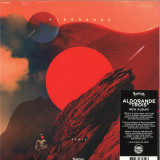
ALDORANDE is a band of five groove adventurers, led by their founder and captain Virgile Raffaëlli, who are pushing the boundaries of music with boundless passion and unparalleled instrumental mastery. After two critically acclaimed albums, the group returns with Trois, the final chapter of their cosmic trilogy, recorded on tape at a prestigious Parisian studio.
Trois is an epic album, driven by bold instrumental explorations and waves of celestial choirs. Drawing inspiration from the 70s fusion movement, it honors the genre’s masters while adding a unique, contemporary twist. The galactic textures and sophisticated arrangements transport the listener on an unforgettable astral journey.
Once again, Favorite Recordings has poured its heart and soul into this album. Every note, every arrangement has been meticulously crafted to capture the essence of that era, with a relentless drive to ensure that every step of production and recording stays as true as possible to the genre’s iconic references.
On drums, Mathieu Edouard lays down a killer groove that leaves no one indifferent. Florian Pellissier, on keyboards, unfolds an interstellar sound palette with a spectacular collection of instruments: Fender Rhodes, Yamaha CP-70B, Moog Minimoog Model D, Sequential Prophet 5, ARP Solina String Ensemble, Roland Juno 106, Roland Jupiter 8, and Oberheim OB-8. On percussion, Erwan Loeffel scatters a jungle of intoxicating rhythms. Laurent Guillet, on guitar, fires off hypnotic, irresistible riffs, while Virgile Raffaëlli, on bass, anchors the entire experience with deep, melodic bass lines that give the band a captivating and unique dimension.
Get ready to take off with ALDORANDE and their album Trois, which promises to take you beyond the stars.
Ground-breaking afro-rock and jazz with Memphis soul roots on this lost 1972 gem. Lovingly restored and reissued by Matsuli Music
'Black Soul' from 1972 is the third and last known album by The Anchors, a soul group originally formed in Johannesburg's Alexandra township in 1968. Their first two albums, 'Soul Upstairs' from 1969 and 'Everything' from 1971, were issued on Teal's City Special label alongside other prominent South African soul groups of the era like The Beaters, The Movers and The Flaming Souls.
On 'Black Soul', The Anchors undergo a notable shift, moving away from their early Memphis soul influences towards a pioneering African-driven sound. These changes laid the foundations for an emerging afro-fusion scene in the years to come from groups like Batsumi, The Drive and Harari.
'Black Soul' features a who's who of intergenerational musicians from great South African bands over the decades. In addition to Zacks Nkosi, the renowned bandleader of the Jazz Maniacs and long-time member of the African Swingsters in the 1940s and 50s, this album includes kwela star Little Kid Lex Hendricks, known for his Columbia recordings of the late 1950s; as well as Zack's son Jabu Nkosi who would go on to play with The Drive, Roots and Sakhile; and Banza Kgasoane later a member of The Beaters, Harari and then Mango Groove.
Now remastered for its first release since the original 1972 pressing, this lost gem offers a revealing glimpse into the evolution of South African music during a transformative era.
Zacks Nkosi (Sax), Patrick Jabu Nkosi (Organ and Flute), Anderson Nkosi (Lead Guitar), Given Sabela (Bass Guitar), Kid Lex Hendrix (Sax), Banza Kgasoane (Trumpet), Peter Morake (Drums), Hamilton Nzimande (Musical Director).
Original LP issued in South Africa on GRC’s CBS label (LAB 4037) in 1972.
Produced for reissue by Chris Albertyn and Matt Temple at Matsuli Music, and Siemon Allen at Flatinternational.
Original vinyl sourced from the Flatinternational Archive.
Artwork restoration and design by Siemon Allen.
Audio restoration, mastering and lacquers by Frank Merritt at The Carvery.
Manufactured at Pallas, Germany.
- Young Bean
- In A Mellow Tone
- Budd Johnson
- Time After Time
- De-Dar
VERVE ACOUSTIC SOUNDS SERIE: Stereo, komplett analog von Ryan K. Smith bei Sterling Sound von den Originalbändern gemastert, QPR-Pressung (180 g), stabiles Tip-On-Gatefold (Stoughton Printing), wattierte Innenhülle.
“Ben Webster & Associates” war 1959 das dritte und letzte Projekt, für das der Produzent Norman Granz die beiden Tenorsax-Ikonen Ben Webster und Coleman Hawkins im Studio zusammenbrachte. Als dritter Tenorist gesellte sich bei dem entspannt swingenden Austauch noch Budd Johnson hinzu, von dem Ben Webster in seiner Jugend in Kansas City seine ersten Saxofonstunden erhalten hatte.
Big new release by Peter Van Hoesen! Continuing his exploration of intricate techno systems, their effect and direct perimeter of action, Peter van Hoesen turns in his newest four-track piece, ‘Prime Directive’: a fascinating dive into the artist’s shape-shifting headspace and inner creative chaos.
Fuelled on a furnace-hot mix of abstract-leaning immersion and hi-octane rhythmic thrust, ‘Prime Directive’ looks at contemporary techno from the angle of experimentation and intuitive abandon. The result comes in the form of four distinct movements, each carving out their own logic and associated behaviour out an endless pool of potentialities. Here comes chaology unfolding in all its unadulterated, visceral glory.
‘Definition by Absence’ breaks the trip in to the sound of a faux-random symphony: its train-like swing and fiery bass seesaw coalesce through an elliptic fluttering of sorts, iterative and not, patterns moving in and out of synchronicity as van Hoesen applies more or less pressure on both ends. All in gusty in-your-face-ness, ‘Variables Edit 1’ whirls and swirls like an ominous vengeance of nature; Its puncturing kicks and whistling menace set against stellar winds and rabid machinery on the prowl for its next victim.
An even more unsettling piece of disjointedly arrhythmic, anti-club music for the dance floor, ‘Prime Directive’ will have you zoning out like a bad dream, flush with metronome-faced monsters and molten clocks hanging from dead trees. ‘Morphology’ could be PVH’s attempt at giving his concepts a carnal carcass to hold onto. Here, rhythm becomes somewhat less erratic, offering his 360-degree vision more melodic surface and actual room for dispersion. One to keep the boundaries pushed and status-quo challenged, this is techno at its most entrancingly bold and fearless.
*This new four-track epic from Peter van Hoesen comes draped in a fine piece of artwork courtesy of Atact, and pressed according to our standards in 180g audiophile quality so you get to experience the Belgian master's chiselled sound design in all its glory.
If the jazz of François Tusques is “free”, his spirit is even more so: having recorded Free Jazz with other like-minded Frenchmen (Michel Portal, François Jeanneau, Bernard Vitet, Beb Guérin and Charles Saudrais), the pianist had covered a lot of ground, with Barney Wilen (Le Nouveau Jazz) or even solo (Piano Dazibao and Dazibao N°2), so as not to repeat himself…
In 1971 he founded the Inter Communal Free Dance Music Orchestra which, as the notes the this album stated, “is an interpretation of a music which synthesizes the different communities living and working in France.” In 1976, on the first album (L’Inter Communal) we can already hear Tusques playing without borders in the company of Carlos Andreu (vocals), Michel Marre (trumpet and saxophone), Jo Maka (saxophone) and Ramadolf (trombone). It is a meeting between jazz and music from Catalonia, Occitanie and Africa. So far so good, but what about Brittany, that, Tusques knows “by heart”? Having lived for a long time in Nantes, he would expand his ‘brittanitude’ on the canal linking the city to Brest by playing with, for example the Diaouled-Ar-Menez. With these “devils from the mountain” who, under the baton of Yann Goasdoué, worked throughout the 1970s on the renewal of music from Brittany, Tusques met, notably, Tanguy Ledoré and invited him one day, with trois bombards and some bagpipes (Jean-Louis Le Vallegant, Gaby Kerdoncuff and Philippe Lestrat), to join the ranks of the Intercommunal. And so they set of towards a new music from Brittany, as the title states; Vers une Musique bretonne nouvelle!
With percussion from Samuel Ateba and Kilikus, the association launches the ‘bombardier’: the repetitions and dissonance of the different members all serve a common cause however: the dance, which is always the reason for the party. This sets a whole universe spinning, which can bring to mind Chris McGregor’s Brotherhood of Breath (“La rencontre”) when not taking on board waltz, swing, blues and gavotta or even revealing mysteries like those of Gurdjieff (“Les racines de la montagne” or “Le cheval” sung by Andreu). Only one thing to say to this Brotherhood Of Breizh: Mersi!
- Skrag Theme
- Vivea
- Safeless
Unearthed from the neolithic tar that eventually swathes all history, Aerial M"s early-98 Peel Session is once again among us. Compared to the studio takes, played strictly and singly by Aerial/Papa M-astermind David Pajo, these versions swing from the necks of road-burned players, breathing more bestially than their canonical cousins, glinting "pon the dark metallic roots that fed all of Pajo"s best guitar lines, winding thru time immemorial.
Black vinyl / 505mcn paper / 30 x 60 cm Insert with Liner Notes by Tony Higgins printed on 250 mcn Lenza Top Recycling Paper / Condensed interview to Spata Sisters and exclusive pictures.
Personnel:
Enzo Randisi - Musser Percussion Keyboards
Riccardo Randisi - Acoustic Piano, Rhodes, ARP & Korg Keyboards
Marcello Pellitteri - Drums
Giuseppe Costa - Acoustic Bass & Electric Bass Guitar
Mimmo Cafiero - Congas & Percussions
Sandro Palacino - Tenor and Soprano Saxes
Loredana Spada - Vocalist
Cinzia Spata - Vocalist
Mary Lo Giudice - Vocalist
Mariella Gueli - Vocalist
Notes:
Did someone say Summer? Sicily is what Cuba is to the Caribbean, sun, sea, easy and friendly people with lots of troubles! You won't find anything better around that identifies the summer more than this album by Enzo Randisi who at the beginning of the 80s put together a Swing Ensemble as a tribute to that "cheerful" movement of Jazz music. But Enzo and his fellas just couldn't stay on track and put in the best that the alternative Palermo area could offer in that historical period, like the sisters Cinzia and Loredana Spata, who brought the production to a next level in the vocal version of All Blues or in Chic Corea's Spain. But what really struck us was Charles Cables' version of "Quite Fire" (here missspelled as "Quite Fair"), released a few months earlier only in Japan and which would only become famous in the 90s with the Acid Jazz movement, and this tells us a lot about how hungry Enzo and Riccardo were of musical knowle, to be able to find some pearls in a city with basically no record shops and isolated...well...it's on an island! For this re-press we enlisted Tony Higgins, who recently finished a very long commitment and greenlight to delight us with his polished English...Welcome back Tony!
Vinyl Only / Sleeve manufactured with 400 mcn Fedrigoni "Shiro Eco" paper / Original unreleased poster with alternative artwork insert with notes by Tony Higgins printed on schedography peach past color paper / PVC outers / original artwork /
Personnel:
Tete Mbambisa - Piano
Basil Coetzee - Tenor Sax and Flute
Zulu Bidi - Bass
Monty Weber - Drums
Notes:
Mbambisa first gained prominence as a pianist in 1961 as a member of the Jazz Giants, this time with Pukwana as saxophonist, bassist Martin Mgijima and drummer Makaya Mtoshoko, setting the sound and shape of a scene that became known as Cape Jazz. Following an introduction from Chris McGregor, Mbambisa formed a band, The Swinging City Six, with saxophonist Ronnie Beer before going on to play at the end of the 1960s in the groups The Soul Jazzmen and Spirits Rejoice with Duku Makasi. As a member of The Soul Jazzmen, Mbambisa recorded the breakthrough album 'Inhlupenko Distress' in 1969 for the City Special label. After a recording hiatus, Mbambisa returned in 1974 with an octet album, 'Tete's Big Sound' released on a newly formed label, As Shams or The Sun, established by South African record store owner and independent producer Rashid Vally. 'Tet's Big Sound' included tracks like 'Unity' and the 'Black Heroes Lamentation', now considered a classic in the South African jazz underground.
The sound that Mbambisa carved in this period was wholly acoustic, and is a style that now is often loosely labelled spiritual jazz, a sound that alludes to deep African textures and rhythms balanced with clear nods to American hard bop and modal jazz, sometimes edging toward free improvisation in echoes of John Coltrane and Pharaoh Sanders. The music is often centred around a fulcrum of trance like vamps with repeated motifs that allow for extended pieces that create a hypnotic effect. This clearly exemplified on Mbambisa's next album, 'Did You Tell Your Mother', released in 1979, once more for The Sun label. (Tony Higgins)
Brooklyn Sounds legendary second album from 1972, full of heavy Nuyorican underground salsa dura propelled by raw trombones, off-kilter piano and in-your-face percussion. A perfect blend of barrio attitude and Caribbean swing, the album proves Brooklyn has sabor y salsa! Pressed on 180 g vinyl, our reissue includes liner notes featuring never-before seen photos. “Libre – Free” is the now legendary second album by the short-lived Brooklyn Sounds and is arguably even better than their self-titled debut, displaying a more mature and practiced sound, no doubt honed by their experiences playing more gigs in support of their first record. Brooklyn Sounds were one of a handful of garage salsa bands from the independent scene that was gathering steam in the early 1970s in the New York boroughs, despite little support or exposure in the mainstream Latin music industry from more dominant labels like Fania, Mericana, Cotique and Alegre. As with many others, Brooklyn Sounds briefly fluoresced in a burst of creativity and defiance, yet flamed out shortly thereafter, dying like a flower among the ruins of burned-out apartment blocks in the barrios of its home city. Though the band only cut two LPs and a couple singles in their brief half-decade of existence, and never really broke out of the cuchifrito circuit in the tri-state area of New York, New Jersey and Connecticut, their music gradually spread far and wide, eventually becoming a sought-after global commodity by the late 1990s. In contrast to the first album “Libre – Free” is uptempo and ebullient, with fewer slow songs and more confident, creative arrangements, full of heavy Nuyorican underground salsa dura propelled by raw trombones, off-kilter piano and in-your-face percussion. Standout tracks include the uplifting, anthemic ‘Libre soy’, and ‘Ha llegado el momento’, with its minor key ‘Moliendo café’ quote at the
beginning—both of which have become dance floor anthems over the years. Another mid-tempo killer is ‘Guaguancó tropical’, a favorite in Colombia since the 1970s. A perfect blend of barrio attitude and Caribbean swing, the album proves Brooklyn has sabor y salsa!
Prehistoric Sounds is the third studio album by the Australian punk rock group The Saints, released in 1978. This was the final album to feature founding lead guitarist, Ed Kuepper, who left the band shortly after the release. The record was described by AllMusic as ""the textbook by which to make a great rock record where horns play as much of a role as guitar"". In 2010, Prehistoric Sounds was listed in the top 50 100 Best Australian Albums. The album features two cover versions of the soul classics ""Security"" by Otis Redding, and ""Save Me"" by Aretha Franklin. Prehistoric Sounds is available as a limited edition of 1000 individually numbered copies on silver coloured vinyl and includes an insert.
The Swiss trio divr debuts on We Jazz on 2 February with their new album "Is This Water". divr is Philipp Eden on keys, Jonas Ruther on drums and Raphael Walser on bass, and they play largely acoustic improvisations which loops without ever quite repeating. Their music swings, but never feels like it’s doing so in response to a fixed, single pulse. The new album is mixed & post-produced by Dan Nicholls (of Y-OTIS).
“We play in multi-directional time. You could hear three different timings, but on the other hand it’s together. We land in the same place. It’s not done with maths, it’s more about entering a flow”, say the band members, based in Basel (Eden) and Zurich (Ruther, Walser), the city where they all met more than 15 years ago.
“It’s a free approach to playing time. We don’t refer to a straight metre. But play around it. We never repeat something exactly, it develops with every turn, there’s always a small difference.”
- A1: Burnt Cork Face
- A2: Exceptional Negro Prod. Deener
- A3: Child In Iron Collar Prod. Walz & Bohemia Lynch
- A4: Spook’s Blues Prod. Cities Aviv
- A5: Melanin Child Prod. Sb11
- A6: Grease Paint Tap Dancer
- A7: Black(S) N Control Prod. Walz
- B1: A Colored Night Prod. Lukah
- B2: A Black Man’s Worst Fear Prod. Deener
- B3: Beautifully Blackface Prod. Hollow Sol
- B4: Fly Blackface Fly Prod. Hollow Sol
- B5: Shoe Polished Face
Written and recorded in a firestorm of creativity during the mastering phase of Lukah's upcoming double LP with Real Bad Man, Permanent Blackface is a monstrous vignette displaying the true power of Lukah's songwriting and the technical brilliance of his team. The album flashes before you like a lightning strike illuminating a barren cityscape.
Introducing himself as Mr. Blackface, Lukah identifies the true artist's responsibility to hold a mirror to the listener in order to confront and disarm taboos. In both content and music, the record balances vulgarity and introspection, the horror of silence, and the comfort of colossal, discordant sound. Over 12 songs the celestial, often blood-soaked color palette of soul and R&B that gave emotional weight to Why Look Up and Raw Extractions has been scraped away like a charred skeleton. With a small cast of voices consisting entirely of Lukah's immediate family, and production duties handled in-house by WALZ, Deener, Hollow Sol, Cities Aviv, SB11, and Lukah himself, the record has the intimacy of a theater production. The only voices present are Lukah, joined by his mother providing scat vocals, and his grandfather discussing the Jungian self-hatred of the colonial project and its terrifying repercussions for contemporary Black Amer-icans, with a fitting invocation of Dr. Frankenstein's monster. The beats here are reminiscent of noir, 78rpm swing and big band, evoking the underlying horror of a pre-Civil Rights movement America, where segregational binaries invert-ed folk tales through the white terror of ghosts, the black "spook", and mythic themes of fate and free will. The whip-lash of shifting perspectives keeps your head on a swivel in way only Lukah's superior pen can elucidate. Will it trigger anger that first voice you hear on Permanent Blackface is Judy Garland singing "Sweet Chariot"? But isn't this just Lukah speaking through her, announcing he's got "The Southin his mouth"? As the internet endlessly debates intention and appropriation in our artistic history, the insignificance of this small sample is put into perspective: another white pebble in a black ocean of Lukah's creation. "If the sun don't shine today / pray the sun come out tomorrow...pray the sun pierce through the sorrow"
The album introduces an unnamed character beset by disposition. As the story's scope increases, the gaze of the mir-ror shifts. How would white society feel if historical roles were reversed? How does a presumed white listener experi-ence the trauma of interacting with police?
- A1: Is Chicago, Is Not Chicago
- A2: Sugar Free Jazz
- A3: Casiotone Nation - Live
- A4: Blueeyed Devil
- A5: Bus To Beelzebub
- B1: True Dreams Of Wichita
- B2: Screenwriter’s Blues
- B3: Moon Sammy
- B4: Supra Genius
- C1: City Of Motors
- C2: Uh, Zoom Zip
- C3: Down To This
- C4: Mr. Bitterness
- C5: Janine
- D1: Buddha Rhubarb Butter
- D2: Murder Of Lawyers
- D3: Amy Fisher
- D4: Rachel
- D5: Screenwriter’s Blues (Mood Swing Mix)
Clear Vinyl[35,50 €]
- A1: Is Chicago, Is Not Chicago
- A2: Sugar Free Jazz
- A3: Casiotone Nation - Live
- A4: Blueeyed Devil
- A5: Bus To Beelzebub
- B1: True Dreams Of Wichita
- B2: Screenwriter’s Blues
- B3: Moon Sammy
- B4: Supra Genius
- C1: City Of Motors
- C2: Uh, Zoom Zip
- C3: Down To This
- C4: Mr. Bitterness
- C5: Janine
- D1: Buddha Rhubarb Butter
- D2: Murder Of Lawyers
- D3: Amy Fisher
- D4: Rachel
- D5: Screenwriter’s Blues (Mood Swing Mix)
Black Vinyl[34,24 €]
- The House Is Rockin
- Hoodoo Voodoo Doll
- Town Without Pity
- Rumble In Brighton
- The Man With The Magic Touch
- (The Legend Of) Johnny Kool
- Ghost Radio
- (Everytime I Hear) That Mellow Saxophone
- Buzz Buzz
- My Baby Only Cares For Me
- Hey, Louis Prima
- Sammy Davis City
For fans of The Stray Cats, Brian Setzer, Swing and Big Band! The Brian Setzer Orchestra (sometimes known by its initials BSO) is a swing and jump blues band formed in 1992 by Stray Cats frontman Brian Setzer. In 1994 they released their debut album which was followed up in 1996 with Guitar Slinger. In 1998, for their breakout album The Dirty Boogie, the group covered Louis Prima's "Jump, Jive an' Wail", which originally appeared on Prima's 1957 album The Wildest!. The BSO's follow up single, appearing on the album Vavoom!, was "Gettin' in the Mood." Now get Guitar Slinger from the Brian Setzer Orchestra for the first time on vinyl since 1996. Remastered on 180g vinyl in an amazing limited- edition color. There are only 700 of the Silver Melt. Guitar Slinger is the second release from the Brian Setzer Orchestra and where the band really started to come together. The album leads off with "The House Is Rockin'" and features the Brian Setzer/Joe Strummer (The Clash) penned tracks "Ghost Radio" and "Sammy Davis City". There are 12 tracks in all, and it clocks in at just over 43 minutes. This is the first in a series of three reissues coming from Deko Entertainment with The Dirty Boogie scheduled to also hit by the end of 2024, with Vavoom! to follow in early 2025.