Igorrr ist das visionäre Projekt des französischen Multi-Instrumentalisten und Produzenten Gautier Serre, der seit zwanzig Jahren unter diesem Namen operiert. Seit der Unterzeichnung bei Metal Blade Records im Jahr 2017 hat sich Igorrr von einem Ein-Mann-Projekt zu einer vollständigen Bandidentität entwickelt, wobei Gautier als Mastermind und kreative Leitfigur fungiert.Das Projekt ist bekannt für seine kompromisslose Verschmelzung von Classical, Death Metal, Electronic und Breakcore - eine Musik, die sowohl von Bach und Chopin als auch von Cannibal Corpse, Aphex Twin und Meshuggah inspiriert ist. Mit jedem Album überrascht Igorrr selbst die treuesten Fans mit radikaler Vitalität und experimentellen Wendungen.Current Lineup:• Gautier Serre: Machines• Jb Le Bail: Vocals• Marthe Alexandre: Vocals• Remi Serafino: Drums• Martyn Clément: GuitarsAktiv seit: 2005Herkunft: FrankreichCHART-ERFOLGE & STREAMING-ZAHLEN• #12 Official German Album Charts (Spirituality & Distortion)• #57 Swiss Official Album Charts (Spirituality & Distortion)• US Billboard Charts: Multiple Top 10 Positionen• Über 74 Millionen Streams auf Spotify gesamt• 255.000 Follower auf Spotify• 28 Millionen Streams für "Spirituality & Distortion" alleinLIVE-PERFORMANCE & TOURNEEN• Massive Headlining-Tour in Europa (1.500-2.000 Kapazität)• Ausverkaufte US-Shows: Regent Theater LA (1.100), Irving Plaza NYC (1.110), The Crocodile Seattle (750)• Major Festival-Auftritte: Hellfest, Wacken, Download, Sweden Rock, Graspop, Nova Rock, Bloodstock• Weitere US-Shows für 2026 geplantSPECIAL FEATURES• Gastauftritte: Scott Ian (Anthrax), Trey Spruance (Mr. Bungle), Mike Leon (Soulfly)• Echter Chor in Kirche aufgenommen für authentische AtmosphärePLAYLISTING-ERFOLGSpotify: All New Metal, Alternative Metal, Kickass Metal, New Music Friday (USA/UK)Apple Music: Avant-Garde Metal Essentials, Extreme Metal, Metal Rewind, Breaking MetalDeezer: Industrial, Metal Radar, French Metal
Search:swiss t
- A1: Zombie Radio
- A2: In My Cage
- A3: Demon Possession
- A4: Corpus Domini (Instrumental Version)
- B1: Lobotomics
- B2: Vortex
- B3: A Sakris (Instrumental Demo Version)
- B4: Mother Church Klinik (Instrumental Version)
- C1: Blind Oracle (Instrumental Version)
- C2: Tranz Anima (Instrumental Version)
- C3: The Lost Tribes
- D1: Mindgun (Instrumental Version)
- D2: Super Collider
- D3: Silent Mind
Infoline proudly presents a compilation of tracks by Deo Cadaver on double 12' inch vinyl LP! Active from 1987 to 1993, Geneva-based trio Deo Cadaver stood at the vanguard of Switzerland’s electronic body music scene. Formed at just 17 years old, the group drew early influence from the visceral intensity of acts like The Young Gods, Front 242, Laibach, and Skinny Puppy—but quickly forged a sound and performative presence entirely their own. Their live shows became infamous: loud, theatrical, and uncompromising. Covered in grey-green clay and fake blood, suspended from chains, or locked in cages wired with sensors, projections, and video monitors, Deo Cadaver unleashed chaotic storms of samples, distorted drum machines, live percussion, and seismic basslines. At the center stood a vocalist whose voice and energy pushed the limits of physical endurance. Despite their undeniable force, Deo Cadaver remained largely unknown beyond their immediate circles. “There was no support structure—barely any venues, press, or labels for what we were doing,” they reflect. “Apart from our parents and a few community associations, we were completely on our own.” The internet, still confined, offered no relief. Connections were built face-to-face, and tapes were copied by hand. Still, the band found kinship in the Swiss experimental collective MXP, alongside other likeminded outliers pushing electronics beyond the dancefloor. Their spirit was one of invention, defiance, and independence.
While Belgium reveled in its New Beat wave and the UK fell into euphoric ecstasy, Deo Cadaver raged in the shadows—loud, isolated, and ahead of their time. This compilation finally brings their work into the light: a long- overdue snapshot of an uncompromising force from the margins of EBM history
- A1: Heatstrokes
- A2: Bedside Radio
- A3: Come On
- A4: Streamer
- A5: Shy Kidside
- B1: Tokyo Nights
- B2: Lady Double Dealer
- B3: Fire
- B4: No Way
- B5: Back Seat Rock'n Roll
Includes 4-page booklet
Featuring "Heartstrokes" and "Bedside Radio"
Quadruple platinum certified album
Limited edition of 666 numbered copies on blue coloured vinyl
Metal Rendez-Vous is the fourth studio album by Swiss hard rock/heavy metal band Krokus, originally released in 1980. It marked the debut of vocalist
Marc Storace and became the band's international breakthrough. The album features energetic, riff-driven songs such as “Heatstrokes,” “Bedside Radio,” and
“Tokyo Nights,” blending classic hard rock with the rising heavy metal sound of the early 80s.
The album was a commercial success, reaching four times platinum certiciation in Switzerland. “Heatstrokes” hit No. 1 on the British Heavy Metal Charts, while “Bedside Radio”
received international airplay, helping the band build a strong following across Europe and North America.
Metal Rendez-Vous is available as a limited edition of 666 numbered copies on blue coloured vinyl and includes an original 4-page booklet with lyrics.
Within the nine carefully composed tracks of Young Bones, Mel D’s characteristic voice stands out in all its facets, varying from fragile to powerful, haunting to playful, but most of all soulful. With a voice that’s both extraordinarily clear and melancholic, Mel D is something surprisingly rare: a singer whose artistic expression goes beyond the mere use of her voice. On Young Bones, Mel D uses contemporary figures, rephrasing them into timeless formulas. Her unique musical language embodies references to genres like Indie or Alternative. In other moments, her sound leans baroque, then jazzy, soulful, and contemplative. Each song represents an ode to being connected: to the world, other people, and most of all to the beauty of music. Mel D draws her inspiration from struggles felt in the current world climate: “I have felt overwhelmed by the world we live in and its countless challenges,” said Mel D. “As if we’re all a bit directionless in our own lives.” Nevertheless, Mel D uses her musicality as a tool for resistance - using it to transform sadness and anger into creativity, and to give world-weariness a voice that seduces, comforts, and inspires. On Young Bones, Mel D sings us to a place where we might find hope - with songs rooted in concern, solidarity, humanness, and empowerment, inviting the listener to lean into those feelings. Bring the Witches Back, a hymn to witchcraft, is a quiet song that summons the return of witches with feminist urgency, for more love and magic to open ourselves towards each other and the world. Soft, a soulful song with a tender melody, gently lulls the listener into an in-between dimension, full of opportunities. Meanwhile, in the coming-of-age ballad, Slowly Growing, she raises questions about belonging and identity, pointing directly at our emotional core. Where Do You Look When It Hurts? speaks to the sensation of exhaustion and emptiness, offering musical warmth and a sense of community in moments of lethargy. Finally, listening to the album, one always feels in good company. Playfully working in folk and electro-pop elements, Mel D takes us on a ride toward love and a sense of belonging, particularly on the track We win. Young Bones was recorded in Zurich and Paris with two outstanding producers of our times: Renaud Letang, who has previously collaborated with Feist, Chilly Gonzales or Lianne La Havas, and Dino Brandão. The latter recognized Mel D’s artistic uniqueness during their first meeting, inviting her to a recording session in his studio and bringing her into the band of Swiss superstar, Faber. Mel D’s solo project was more a product of coincidence than planning, as she says, even though an undisputed talent and passion for music had always been apparent throughout her youth. During her studies in fine arts in Zurich, she founded the electronica-duo mischgewebe, and composed soundtracks for theater and movie productions, as well as for exhibitions. Long before forming her current artistic identity, she went by the nickname Mel D, in a humorous reference to the Spice Girls. Although her personality and musical language suggest thoughtfulness and a melancholy touch, Mel D acknowledges that an honest laugh is never out of place, making her sympathetic and approachable.
For their inaugural release, London-based Vysyon presents Mercuri: an enchanting EP of enigmatic techno featuring work by Swiss artists Varuna & Mateo Hurtado. Having developed their brand of abyssal club music through releases on Amenthia Recordings & their own imprint A Walking Contradiction, Varuna dive into the void on 'Remote Pulsar'. Driven by a disorientating polyrhythm cloaked in opaque atmospherics, the trio's otherworldly approach to sound design is on full display. By contrast, the pounding 4/4 kick & propulsive acid bass of 'Uvez Echos' entrance the listener into a state of dancefloor reverie. Mateo Hurtado casts his own unique magic over the flip, showcasing his archetypal mystic sound established via an album on Annulled music & remixes for Space Drum Meditation. The mesmerising flute melody of 'An Invisible Fire, Working In Secret' casts a spell of hypnosis, while the flowing, amorphous pads & twisted bass of 'The Eternal Mirror' conjure visions of worlds unknown.
Swiss maestro and Vibes and Grooves label head Shaka AKA aka Kurt Spichiger is a long-time soulful house devotee who has been at it since the mid-90s on labels like Nervous, Kolour LTD and Local Talk. Here he lands on Mister Bear with an EP that oozes classy house soul from the off with 'High On You' featuring original vocals written and performed by Eva Christine Flury. 'Smooth Cut' is just that, with its heartfelt pain chords and noodling synth solos, 'Latin Love Affair' brings the heart with a samba-inspired percussive shuffle and big horns to close an essential EP for summer fun.
Turnend Tapes is back with some superb cuts from Swiss duo Le Lab Registered. These have only previously been available on CD having dropped back in 2006 and are indicative of their experimental, rule-breaking techno sound which is full of life and imagination. 'The Pitch' kicks off with rugged drums and haunting synth notes, 'Radio Tirana' then layers spoken words into eerie synth modulations and moody drones and 'CB Music' is a slithering and minimal sound with retro-future chords. 'Broadcast All Electronic' shuts down with another wiry arrangement, bleeps, squeaks and the sound of muffled vocals and radio interference all adding an occult edge.
Hamburg-born composer, pianist and producer Niklas Paschburg announces his latest project, 'Mexican Alps' EP due for release on July 11th. 'La Hormiga' is a rhythmic exploration of life in motion. Pulsing beats and textured synths create forward momentum, echoing the journey through the winding paths of Oaxaca's mountainous surroundings, where tradition and nature intertwine. 'Mexican Alps' combines inspirations gathered from the picturesque mountains of southern Mexico and the majestic peaks of the Swiss Alps. The EP is a mesmerizing journey through those landscapes; drawing inspiration from nature's grandeur and the vibrancy of Día de los Muertos, Niklas blends electronic textures, atmospheric samples, and innovative instrumentation to create a soundscape that is both grounding and transcendent. Without relying on his signature piano, this EP explores new creative territories, evoking deep emotional resonance and moments of introspection. -- If his first album, 'Oceanic '(2018), was conceived as an ode to the Baltic Sea, for his next release, 'Svalbard' (2020), produced with Andy Barlow of Lamb, the Hamburg-born musician, now a Berliner by adoption, sought refuge on an island in the Arctic Ocean, surrounded by snow, ice, darkness and breathtaking landscapes. This time, however, the setting is completely different. "It all started with an invitation to play at a festival in Oaxaca," Niklas says. "Since I had never been to Latin America, I began considering how to take advantage of the opportunity to stay for a while and write something there. I started looking for houses, but I quickly realized it was almost impossible to find one with a piano—it's not a common instrument in Mexican culture. I thought, why not try immersing myself in a writing process that doesn't involve one? I was so excited about the idea that I jumped in." 'Mexican Alps' is the result of a challenge in which Paschburg harnessed his collection of synths and effects to create an ambient-electronic record. On the one hand, an evolution of the work primarily carried out in 'Svalbard' and 'Panta Rhei'; on the other hand, an episode in its own right, distinct from its predecessors due to the absence of the piano and the greater role played by improvisation, by coincidence, it became his first work created without his signature instrument. "Not having the opportunity to write chords, harmonies, and everything else on the piano, I improvised more, focusing on the sound. This was the approach I used to record demos in Mexico, which I then brought with me to Switzerland, where I carried on working on the EP. In addition to my usual setup (the OB-6 by Dave Smith and Tom Oberheim and the OP-1 by Teenage Engineering, plus my ever-beloved Hohner accordion, inherited from my grandfather), I was also guided by the purchase of a new Moog Matriarch with a unique delay. All this helped me build the sound I had in mind: a spacious, abstract, 3D sound that is definitely immersive." He expands. It is an emotional landscape that translates into music. In some of the tracks, Paschburg has also included field recordings collected during the Día de los Muertos, a deeply felt Mexican holiday: "A great celebration, a colorful parade of skeletons, skulls, flowers, and decorated altars, so engaging and intoxicating that I felt compelled to use its sounds in my music." It was precisely from this blend of influences that the fourth track, "Oaxaca de Juárez", emerged—a single characterized by a catchy funk procession and enhanced by the guitar work of Tal Arditi, a rising European jazz artist and singer-songwriter based between Basel and Berlin. 'Mexican Alps' is his new calling card, featuring an enveloping sound crafted by Paschburg in collaboration with Gijs van Klooster, who mixed the EP in a studio specifically designed for Atmos music. Mastering was handled by Bo Kondren at Calyx Studio in Berlin.
Ultramarine is the London & Essex-based electronic duo Ian Cooper and Paul Hammond.
Following the reissue earlier this year of Ultramarine's 1998 album 'A User's Guide' by Swiss label WRWTFWW, Blackford Hill present 'Routine', a collection of thirteen previously unheard tracks recorded between 1996-97.
These tracks are drawn from the daily working practice adopted by the duo at their studio of the time on Coronet Street, behind London's Hoxton Square.
Often the result of a single day's work, these pieces find Ultramarine developing their palette, experimenting with sounds, treatments and techniques. Recorded as live mixes straight to tape, the results have the immediacy of new ideas freshly captured.
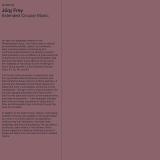
Since its founding back in 2014, Blume has carved a unique place in cultural landscape, issuing free-standing works, spanning the historical and contemporary, that represent singular gestures of creativity within the field of experimental sound. Joining their broad efforts in building networks of context and understanding that already includes the works by Werner Durand, Sarah Hennies, Bruce Nauman, John Butcher, Jocy de Oliveira, Mary Jane Leach, Valentina Magaletti, Alvin Curran, Julius Eastman, Alvin Lucier, and following the first ever vinyl release to attend to James Tenney's legendary Postal Pieces, the label now presents the first LP published by the visionary Swiss composer Jürg Frey. Drawing from the transformative power of breath and resonance, this release represents one of the most profound explorations of musical metamorphosis to emerge from the contemporary experimental landscape.
The completed work represents a "conjunction of these two artists" that has "activated a transformative form of experimentalism." These renderings "dance with an airy lightness, humour, and play, imbuing them with a beauty and emotiveness that can be rare within experimental music." They exist as "breaths, carrying the curiosities of life, belonging to no time and all time, to no one and everyone: a human music to be inhaled and pondered, for which the outcome remains unknown." In this liminal space between composition and interpretation, between breath and resonance, Zurria and Frey have created something that transcends the boundaries of experimental music itself, offering what might be called a metaphysical cartography of sound in its most essential form. As Bradford Bailey observes in his penetrating liner notes, "music is rarely a fixed entity," existing instead in a state of perpetual flux, "taking on the influences of its interpreters and performers." This fundamental truth finds its most eloquent expression in the transformative collaboration between Italian flutist Manuel Zurria and Frey, longtime member of the Wandelweiser Group. Where conventional recordings might preserve a definitive version, this release activates what Bailey calls "states of unknowing and continued experimentation," allowing Frey's compositions to evolve into entirely new dimensional territories. The original string quartet and piano works dissolve into breath-carried architectures of sound, where "the original remains in a constant dialogue with its transformation." This is not mere arrangement but ontological metamorphosis - an alchemical process through which crystalline harmonies are reborn as atmospheric phenomena.
The metaphysical dimensions of this transformation become clear through detailed analysis of the musical result. Where Frey's original compositions operate through what he calls "basic confidence in the clear and restricted material," Zurria's interpretation activates entirely new perceptual territories. Space holds almost atomic sense of weight against the airy punctuations of timbres, textures, and tones, creating "suspensions of time within which questions and identities posed by instrumentation fade." The Extended Circular Music pieces - each comprising "a small number of bars to be repeated an undetermined number of times" - become organizations of sound that defy being definitive or fixed. Originally scored for different combinations of violin, viola, cello, and piano, these works now exist as pure phenomena of breath and resonance, where "hanging, breath-length utterances dance and intertwine amongst complex harmonic clusters and conjunctions."
The philosophical implications of this transformation illuminate a lineage of composers who have moved "away from abstraction and responding to the need to create" something beyond mere technique. Drawing parallels to Morton Feldman's understanding of non-functional harmony, Zurria's approach represents "a transformative form of experimentalism" that activates what Frey calls the "thaumaturgic power" of music - its capacity to heal and transform consciousness itself. The result is "a radical reimagining of ambience: sprawling sonorities and resonances adrift in space, carrying the liberated traces of the work's former incarnations and their truths." In Zurria's interpretation, Frey's String Quartet n.3 becomes something approaching "an organ played in slow motion, its seals leaking," while the Extended Circular Music pieces transform into "glacial chords from a diverse palette of voicings, harmonies, timbres, and tones."
Performed by Manuel Zurria. Recorded and mixed by Zurria at BigCardo, Catania between 2022-2024, with mastering by Bruno Germano at Vacuumstudio, Bologna, this Blume release represents a profound exploration of musical transformation.
- A1: 1000 Light Years Dub (Feat. High Times Players, Lloyd Obeah Denton)
- A2: In The Shadow Dub (Feat. Vin Gordon, Glen Dacosta, Sheldon "Atiiba" Bernard)
- A3: Whitewater Dub (Feat. Ibo Cooper, Lew Chang)
- A4: Memories Of Old Dub (Feat. Ernest Ranglin, Tyrone Downie)
- A5: Rose Hall’s Birds Dub (Feat. Vin Gordon, Glen Dacosta)
- B1: Squirrel Inna Barrel Dub (Feat. Ernest Ranglin, Vin Gordon, Karl Bryan)
- B2: Under The Cotton Tree Dub (Feat. Glen Dacosta, Ibo Cooper, Cat Coore)
- B3: 45 Charles Street Dub (Feat. Roots Radics, Dwight Pickney, Dean Fraser)
- B4: Everlasting Love Dub (Feat. Sly & Robbie, Dean Fraser, Peace Diouf)
Bringing together over 50 of Jamaica's greatest session musicians, whose work spans from the birth of reggae in the late 1960s until today, Roots Architects is the largest gathering of Jamaican musical talent on one all-instrumental album. Never before have so many veterans, who helped create the immortal rhythms that made reggae internationally successful, been assembled to play on new material without vocals. This project aims to celebrate and pay tribute to the unsung heroes of reggae music: the rhythm builders or Roots Architects. Following the outstanding success of the first chapter of the project, From Then 'Til Now (2024), Fruits Records is pleased to reveal the dub album From Dub 'Til Now. A veritable immersion in the mythical sound of Kingston studios in the late 1970s. Dub master Roberto Sánchez sublimates the work of the Roots Architects with wildly inventive sound experiments. Reminiscent of the finest years of King Tubby, Lee "Scratch" Perry and Scientist.
The project is the brainchild of Swiss keyboardist and producer Mathias Liengme. In 2013, he travelled to Kingston, Jamaica, to produce The Inspirators project, an all-star album gathering Leroy ”Horse-mouth” Wallace, Lloyd Parks, Earl ”Chinna” Smith and Sangie Davis, the four of them acting both as musicians and vocalists. This first experience in Kingston studio life paved the way to what would become the Roots Architects project. In February and March 2017 Mathias Liengme travelled for the fifth time to Kingston to record as many of reggae’s greatest living veteran musicians as he could. With the help of a few of these Architects like Robbie Lyn, Fil Callender or Dalton Browne, he managed to gather over 50 session musicians aged 60 to 85 on nine instrumental songs.
Roots Architects are legends back together in Kingston studios doing what they do best: creating in-strumental music all together!
Swiss percussionist Julian Sartorius and UK electronic artist Dan Nicholls team up as Clay Kin, presenting their debut record on Squama.
They had never planned to make an album yet through pure improvisation and spontaneity, Clay Kin have crafted Vevey. An album of seven tracks, distilled from over seven hours of improvised percussion and electronics. Recorded mostly outdoors––on pedalo boats, up mountains and deep in forests near the namesake Swiss town of Vevey, it is imbued with the soft fascination of birdsong, rushing water and chattering children.
Vevey resists genre. As musicians, Sartorius and Nicholls bridge the divide between acoustic and electronic soundscapes. Sartorius’ raw, organic percussion interweaves with Nicholls’ keyboard-triggered samples and harmonic landscapes, creating a dialogue where the lines between rhythm, melody and noise dissolve. Clay Kin identify their outfit as an audio-visual collective, with visual artist Lou Zon (Louise Boer) rounding out the group, creating videos to accompany both the recorded music and the live experience.
- Boat Called Predator
- I Had A Thought
- Kristen Stewart
- Thank You And Goodbye
- Puppet Museum
- Crayon Potato
- Take You Somewhere
- Perennial
- Let's See What We Can Find
- On Our Way
- Try Try Try
- You Can Give It (But You Can't Take It)
SASSYHIYA want to take you somewhere. The journey starts in Kathy and Helen's flat in South London. Sit down, close your eyes, and immerse yourself... You are on your way to a musical rainforest a long way from Camberwell. Explore your new surroundings, and you will find beautiful pop blooms like Let's See What We Can Find, as bright and vibrant as The Sundays, thrusting their colourful faces up from the forest floor. You'll find tangles of sharp-edged guitar, as if Swiss she-punks Kleenex had been left to evolve here in the rich fertile soil (I Had A Thought). You'll find dark pools full of lyrical complexity, deceptively deep and immersive, with shimmering reflections of The Go-Betweens (Perennial). And you'll come across delicate love songs, creeping up the trunks and branches of the bass and drums, displaying their fragile beauty (Thank You And Goodbye). And what's that exotic striped animal prowling through the undergrowth? Actually, it's Crayon Potato, Sassyhiya's pet cat, the other resident of their flat in South London, taking up her role as the feline star of a lilting, singalong anthem written in her honour. That's what is so great about this album. You are somehow, simultaneously, exploring the most exotic forest in the world while also sitting in a flat in an ordinary, familiar English street with Sassyhiya and their cat. This album transports you without pretending the real world doesn't exist: it doesn't get all mystical on you (Take You Somewhere is as unlike Enya as anything you've heard). Sometimes you might be reminded of Girls At Our Best, and then Delta 5. You might even, on occasion, think of Echo and the Bunnymen. Sassyhiya (pronounced "Sassy Hiya") were formed when Helen and Kathy, real-life partners and co-songwriters, joined up with Pablo and Neil (drums and guitar). Helen had previously been in Boys Forever and Basic Plumbing, collaborating with much-missed Veronica Falls musician Patrick Doyle. She and Kathy then formed Barry, a stripped-down queercore outfit, with Bart McDonagh (The Male Gays) and Mark Amura (My Executive Dysfunction). Sassyhiya feels like a culmination of all these elements, hitting the sweet spot between post-punk and indie pop. They know their way around a melody but still keep it wonky, with influences ranging from the Breeders and Broadcast to Dolly Parton.
Dirty Dynamite is the seventeenth studio album from Swiss melodic hard rock/heavy metal band Krokus.
Well received by critics, partly due to the surprising element of their Beatles cover of “Help”.
The band origins from the seventies, and have since sold over 15 million records, toured the world and received gold and platinum discs in the US and Canada. The legendary English journalist Malcolm Dome quite rightly said:
“If you look at the long-term output of this band, Krokus is clearly one of the best hard rock bands of the last 40 years”.
Dirty Dynamite is available as a limited edition of 666 numbered copies on silver coloured vinyl and includes an insert with lyrics
- A1: Paul Older - Che Disco Vuoi (Extended Version)
- A2: Riva Starr - Allora Amore (Extended Mix)
- A3: Valentino Vivace - Statua Greca
- B1: Hey Cabrera! - Tutto Matto (Extended Version)
- B2: Sam Ruffillo & Fimiani Feat Gianni D'uomo - Non Era Facile (Extended Version)
- B3: Kymono - Lasciati Andare (Extended Version)
- C1: Dov'e Liana - La Notte Infinita (Extended Version)
- C2: Mille Punti - Matto (Extended Version)
- C3: Bruno Belissimo - Donna Piu
- D1: Fimiani - Proibito (Extended Version)
- D2: Alessandro Rotter - La Sera, La Discoteca, La Spiaggia
- D3: Alberto Melloni – Credimi
Toy Tonics ITALOMANIA Vol. 3 is a compilation dedicated to NEW ITALIAN DISCO. (Not Italo Disco.) 14 young contemporary Italian producers made new organic disco, indie dance, pop house tracks with Italian vocals. Everything on this compilation has been produced in 2024. Fresh dance music by Italian artists Paul Older, Riva Starr, Valentino Vivace, Sam Ruffillo & Fimiani, Kymono, Mille Punti, Mind Enterprises, Bruno Belissimo and legendary cosmic disco pioneer Daniele Baldelli + french italo hitmakers Dov'e Liana. The ITALOMANIA compilation was initiated by Toy Tonics boss Kapote. Italo-German producer, DJ, keyboarder and head of Toy Tonics and Gomma records. ITALOAMNIA is a MANIFESTO to show the status of Italian Disco of today. Kapote invited the most relevant Italian producers to make new tracks with Italian vocals and show different styles of modern Italian disco with Italian vocals.
Italian Disco is not Italo Disco. The last years the trashy pop music of the 1980’s called Italo Disco (with English lyrics) had a big revival. But this compilation is about something else: It’s about this Italian Disco. Because the popularity of good Italian pop music is rising all over the world. And Toy Tonics want to show a new way to combine Italianity with dance culture. Its funny that also in France, Swiss and Germany there are new artists singing in Italian. Let’s not forget: The culture of party, dancing, show bizness and pop music would be unimaginable without the heritage and creativity that Italians contributed Italy is not just the country of good food, beaches and high fashion, but it’s also the original country of dance music. Since the ancient roman times the Italians have been the kings of entertainment. And if it comes to music; The DISCO wave of the 1970ies and the Pop music of the 1980ies has been co-created by Italians (and Italoamericans in New York).
“Recorded at BBC Broadcasting House and partially aired on BBC Radio 3’s Late Junction, the first studio encounter between London-based duo Exotic Sin and Swiss percussionist Julian Sartorius is now published in full on this album from Sagome.
Winding through six distinct and interconnected paths, the trio effortlessly create a shared language in this expansive improvised session.
Listening back two years later — the session was recorded on March 24, 2023 — it’s evident how they build at a relaxed pace, offering space for the listener to enter into their evolving sound. Anchored by piano, delicate wood, metal, and air instruments, a fluid system of interactions develops: repeating, deepening, but not fixating. The direction of travel is not cyclical or linear and the pace insists on forward confidently, avoiding the trap or comfort of recurring motifs.
Percussion is not a timekeeper, but a key element, introducing new textures that even on the final track Path 6, trace out a horizon that feels more like a blurred beginning than a definitive end.
In Session, Exotic Sin moves into a lighter, perhaps more playful language for improvisation than on their debut album Customer’s Copy. This could be influenced by Sartorius’ tactile approach to sonic materials or the more stripped-back nature of the improvised session, with less emphasis on synthesised and electric sounds. While the emotional imprint from their debut album—murkier and insistent—remains, it has been aired out to dry. In Session, their sound-world is broad and moves with levity.”
Andrea Zarza Canova – April 2025
Music by
Kenichi Iwasa (electric and acoustic percussion, trumpet, horns, thumb piano, effects).
Naima Nefertari (piano, Yamaha keyboard, flute, bells, percussion).
Julian Sartorius (drums, percussion).
Recorded and mixed live for Late Junction at BBC Broadcasting House, London, on the 24th of March 2023 by Joe Yon and John Boland.
Mastered by Giuseppe Ielasi.
Produced by Silvia Malnati at Reduced Listening for BBC Radio 3.
Extracts from the session were played on Late Junction on the 14th of April 2023.
Artwork by Josef William Back.
Graphic design by Nicola Tirabasso.
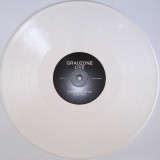
WRWTFWW Records is very happy to release Swiss cult band Grauzone’s recording of their April 12th 1980 live show at Gaskessel in their hometown of Bern. The 9-track album, documenting the very beginnings of the group, is available as a limited edition white vinyl LP in heavy 350gsm sleeve with special artwork by band member Stephan Eicher.
Experience the early Grauzone days, live from Bern, Switzerland, with a concert recorded at legendary local venue Gaskessel, with Martin Eicher on guitar and vocals, Christian G.T. Trüssel on bass, Marco Repetto on drums, Stephan Eicher on synth, and Claudine Chirac on saxophone. The performance is a true time capsule of the early 80s underground, showcasing the punk side of Grauzone with renditions of songs that were never officially released, as well as future fan-favorite “Moskau”. A piece of Swiss music history, This limited release is a must have for all Grauzone fans and DIY archivists.
About Grauzone:
The pioneering band from Bern (Switzerland) had a short-lived but highly-regarded career which birthed a cult discography that still fascinates and resonates today. Consisting of core members Martin Eicher, Stephan Eicher, and Marco Repetto, and on-and-off participants Christian GT Trüssel, Claudine Chirac, and Ingrid Berney, the elusive group broke new grounds in the early 80s, experimenting with punk and industrial music, early techno sounds, minimalism, new wave, pop, and various electronics. With an innovative and polished approach to design, visuals, performance, and all around style and philosophy on top of their superb music, the constantly transforming unit developed a whole experience - the Grauzone experience: wild and unpredictable, yet sophisticated and cohesive, or as Swiss music historian Lurker Grand would call it, "an Art band with a Punk attitude".
Completely rejecting the music industry rules and refusing to play the game of promotion, touring, release schedules, and TV appearances even though they had a multi-platinum international hit with the song "Eisbär", the band quickly disintegrated in full convention-defying glory, leaving behind an inspiring music legacy for the world to discover and discover again, one generation after the other.
Stephan Eicher went on to be, arguably, the most successful Swiss musician ever, with an international career extending from pop chanson to experimental escapades and collaborations with Moondog, artists Sophie Calle and Sylvie Fleury, and author Martin Suter among many other luminaries. Marco Repetto flourished as a techno and ambient producer, releasing multiple projects including releases on Aphex Twin’s Rephlex label.
Partly based on Gadigal Land, partly based in London UK, Zara strengthens her European connection with a debut release on experimental Swiss imprint amenthia recordings. With previous outings on Australian outlets such as Animalia, Salt Mines, Pure Space and her own Kinesis Recordings this EP marks an important moment in her young but prolific career. Zara is known for her hypnotic and genre-fluid approach to music.
Senselessness 1/2 is the very first solo issue of the Swiss electronic composer Robin Félix, on his own label De l’Aube (Of Dawn), the occasion for him to prove that field recordings can be (or should be?) an integral part of the global matter, when so often they are just something hovering in the background because it’s “nice” or reminds the artist of a place he loves.
Throughout the length of these four tracks, they are litterally central; moreover, they are electronically transformed, manipulated, skewed and twisted in order to form some sort of framework, a backbone on to which sounds and genres intertwine. On Cluster, violins and cellos (recorded in the gardens of the Venice Biennale) are soon transmuted into the abrasions of the electroacoustic realm, until the pulse of a relentless bass introduces a pure and pristine electronic music that knows and uses the roots of dub, drum’n’bass and the meticulousness of Jan Jelinek’s Glitch aesthetics. A tad “housy”, Chi comes as a second pulse where a modified didgeridoo and African percussions (recorded in a Swiss forest) lead the listener to a sort of tribal mode, as suited to dancers than to those who prefer inner journeys; here, the spatial dub of King Tubby moves from background to foreground.
The more abstract Boiler verges on the IDM and the heady, elegant and spartan Detroit techno – headphones reveal its numerous minute and delicate details. Based on the recording of insects, of which one can hear the actual rubbing of elytras, the closing Swarm ends the record with and intricate blend of ambient, which in some way winks to the Aphex Twin and The Future Sound Of London. Overall Senselessness 1/2 is a mesmerising and concise update of the famous Deutsche elektronische musik of old, that gathered on its way the other genres that made Robin Félix tick. Since field recordings have hardly been that meaningful, one wonders where Senselessness 2/2 will lead us to
- Mission Creep
- Lonely Town Feat. Emma Anderson
- High Teens
- A Porsche Shaped Hole
- Swiss Air Feat. Emma Anderson
- I Don’t Know How To Sing
- Messengers Feat. Verity Susman
- 1988:
- Motor Boats
Neon Green Vinyl[27,94 €]
Ride bassist Steve Queralt’s debut solo album Swallow is a beautifully brooding nine-track collection that combines the darkly textured soundscapes of early M83 and Sigur Rós with an electronic sheen reminiscent of Boards Of Canada. It also features guest vocals from Sonic Cathedral labelmate Emma Anderson (formerly of Lush and Sing-Sing) and Verity Susman (Electrelane, Memorials).Swallow has been slowly but surely pieced together between Ride albums and tours over the past five years and, perhaps as a result, has a slightly dystopian, Blade Runner feel that reflects the liminal spaces in which it was created.Despite the fact that the majority of the album is instrumental, there is plenty of power and emotion poured into these moody, moonlit soundtracks. When words do appear, an underlying anger and political slant emerges and amplifies the album’s dark intensity. This is most notable on the closing track, ‘Motor Boats’, where he overlays words from Julie Sheldon’s polemic poem The Same Boat (“We’re all in the same boat they say, but I would disagree”). According to Steve, these simple words of rejection “capture the reality of our times perfectly”. However, it was the collaborations with the two guest vocalists that tied the whole thing together and paved the way to the finished album. “After a few false starts, I had started to doubt the project altogether. It was going nowhere,” says Steve. “Then, out of the darkness, Emma got in touch to tell me that she’d found her voice and could I send her some tracks. A few files back and forth and an afternoon in the studio later and we had ‘Lonely Town’ and ‘Swiss Air’.”In the meantime, Verity from Electrelane had added vocals to the song ‘Messengers’ and transformed the track. Matthew Simms, now her bandmate in Memorials, would go on to mix the finished album.“Swallow has turned out so much better than I had hoped,” enthuses Steve. “I’d fallen out of love with it so many times I was thinking of calling it Loveless. But then, that wouldn’t be the whole story.”