After offering the label a beautiful closing composition on its various artists compilation Reflection EP, Rotterdam live act, producer, and DJ Mata Disk returns to Polychrome Audio with LFH-Proxy EP. Featuring two original club tracks and their interpretations by producers Eversines and Jopie, this project further cements Julian Determann’s singular musical identity while opening it up to new dimensions and patterns.
A1. Life Force Harmonizer (“LFH”) opens the dance by capturing the sweet nostalgia experienced during club morning hours. Mata Disk’s sound palette is here in full display, the energy carried by sharp drum design and a propulsive bassline is lifted by melodious pads offering the track its tenderness. On the B1, Rotterdam producer Jopie creatively re-imagined these feelings, stripping down and reshaping LFH onto a track flirting with breaks and IDM progressions.
With Proxy, Mata Disk dims the light slightly, with a drum workout track to keep the dance alive. The very progressive and low-end focused build-up paired with a tension-building synthesized lead offers the A2 track a smooth build-up. De Lichting member Eversines elegantly switches the sound narrative, transforming Proxy into a dark electro-leaning tech house track carrying the same tension. Adding emotion into the mix with an anthemic melodic lead, Eversines’ Proxy Ziggo Mix serves as a perfect closer.
Suche:switch tech
Standard redefined The professional RMX-95 4+1 channel club mixer blurs the lines between analogue workflow and digital technology. The RMX-95 is a cutting-edge, extraordinarily versatile creative tool thanks to its dual-USB 2.0 interface, redesigned effects section, optional MIDI mapping of all controls and smooth integration of the djay Pro DJ software. The club mixer has a familiar and user-friendly interface, making it suitable for both professional and hobby DJs.
Surgical sound manipulation in every detail Will you go for ''Classic'' or ''Kill''? The RMX-95's 3-band EQ can be adjusted to allow maximum sound control for unique results. Echo, Reverb, Flanger, Phaser, Vinyl Brake, Loop Roll, Noise, Pitch Shift, Delay, Ping Pong Delay, Tape Delay, Bit Crusher and Transformer are just some of the many studio-quality effects included in the brand-new Beat FX unit. The dedicated FX frequency control (LPF/HPF) lets you apply the effects to a specific frequency range for a more unique sound. And that's not all: Each channel also features a bipolar filter unit (LPF and HPF) with real-time resonance adjustment. This allows for even more complex sound productions. Two digital displays show parameter changes in real time for precise control that goes beyond hearing. Connections galore The RMX-95 also excels in terms of connectivity: Four CD, two line, and two phono inputs are available on the four input channels. The separate microphone channel has two microphone connections (1 x jack, 1 x jack/XLR combination jack) and an additional AUX input. The master output offers RCA or balanced XLR cable connections. The booth output has two jack connections for stereo operation. However, it can also be used in mono mode.
A recording device can be connected to the Rec output via RCA jacks to record DJ sets regardless of the master output level. Last but not least, the DJ mixer has two jacks for headphones. Crisp cuts and smooth blending The adjustable curve of all faders provides DJs with the creative flexibility they want while mixing. Turntablists and scratch wizzards can also upgrade the crossfader with the contactless RMX innoFADER. Maximum flexibility: dual-USB audio interface Superior 24-bit sound quality is provided by the ten inputs and outputs of the high-quality dual-USB 2.0 interface. The two USB ports allow smooth transitions between DJs and maximum flexibility when using different setups in a single club night. In addition, the active USB hub enables the connection of additional USB devices. Fully digital architecture The RMX-95's digital architecture transforms the DJ mixer into an individually mappable MIDI controller. As part of this, the setup menu provides a wealth of customisable options, such as EQ frequency range, Neural Mix EQ mode, audio interface routing, and zone routing for the booth output. DVS-enabled for djay Pro & Neural Mix The RMX-95 works with Algoriddim djay Pro via plug and play. The DJ app's ground-breaking Neural Mix function lets you isolate beats, melodies, and vocals in the mix in real time. The RMX-95 supports djay Pro's advanced DVS integration with Mac, PC, iPhone and iPad.
The DJ software is also compatible with streaming services like Apple Music, Tidal, SoundCloud, Beatport and Beatsource. Indestructible design The club mixer's sleek black metal surface is not only eye-catching but also highly durable. The solid metal housing and hard-wearing metal shafts in all of the built-in potentiometers and switches provide a long service life, even with heavy club use. An internet connection and a separate Apple Music, Tidal, Beatport, Beatsource or SoundCloud subscription is required to use this service.
Professional 4+1-channel DJ club mixer - DUAL 10 In/Out USB 2.0 audio interface with superb, 24-bit sound quality
New Beat FX unit with multiple effects in studio quality: Echo, Reverb, Flanger, Phaser, Vinyl Brake, Loop Roll, Noise, Pitch Shift, Delay, Ping Pong Delay, Tape Delay, Bit Crusher,Transformer - FX frequency control (LPF/HPF) for manipulating effects in selected frequency band -
Sound filters: Bi-polar filter unit with LPF and HPF - Realtime resonance control for channel filters - Active USB hub to connect USB accessories
3-band EQ with adjustable behaviour (classic/kill) -
Two digital displays showing real-time information of parameter changes -
Digital mixer architecture with extensive adjustment options - Extensive setup menu, including:
- EQ frequency range (low, high)
- Neural Mix EQ mode
- Audio interface routing
- Booth output zone routing (matrix)
- Cue solo option
- RMX innoFADER compatible
- Adjustable linefader and crossfader curves
- MIDI-compatible control elements
- 2x High-retention USB 2.0 port, especially durable
- 2x Headphone outputs via 6.3/3.5 mm stereo jack with split cue
- 2x Mic inputs with dedicated MIC ON button
- Booth output in stereo or mono
- High-quality and hard-wearing, pure black metallic finish
- Sturdy construction in a metal housing with bolted metal shafts
- Kensington lock to secure the device
- Incl. instruction manual, power cord and USB cable
- Frequency Range: 20 Hz - 20 kHz +2/-3dB - Inputs: 7x line RCA, 2x phono RCA, 1x mic combo-XLR/jack, 1x mic 6.3mm jack (TR), 2x USB port - Outputs: master XLR (balanced), master RCA (unbalanced), booth (TRS) (balanced), rec RCA (unbalanced), 1x headphones 6.3mm jack, 1x headphones 3.5mm jack - EQ range classic at 70 Hz, 1 kHz, 13 kHz: -26 dB/+9 dB - EQ range isolator at 70 Hz, 1 kHz, 13 kHz: -90 dB (total kill)/+9 dB - EQ range mic at 100 Hz, 10 kHz: -12 dB/+ 12dB - EQ headphones at 100 Hz, 10 kHz: -29dB - Power Source: AC100-240V, 50/60Hz - Power Consumption: 29 W - Dimensions: 322(W) x 387(D) x 107.5(H) mm - Weight: 6.8 kg
dimensions (LxWxH) in mm
445x442x153
dimensions outerbox in mm
460x452x327
Vol.1[26,01 €]
"...When I make music, I'm always trying to create a temporary refuge for myself, a refuge from the increasingly frightening world out there. A kind of remote island where I can hide, switch off for a while, feel at peace. In any case, I feel inner peace when making this music, and I hope, in some way, it does the same for you..."
"Dub Tapes. Volume 2 picks up exactly where its predecessor left off, employing a very similar sonic palette, drawn from analog instruments and effects. All 4 tracks are driven by Lars' live B-line virtuosity. He's played bass for a host of jazz bands and it shows. The bottom-end throughout is a constant, reassuring, warm, womb-like presence, that packs a deceptively powerful pulse. The subtle splashes of studio trickery might have their root in Basic Channel-esque techno, but the results reside somewhere far less minimal, more relaxed, more melodic and musical.
The reverb and delay twisted into soothing, rather than room-shaking shapes. Resembling birdsong and mountain streams.
Lars' piano improvisations are also integral to everything...Stuffed with rich, diverting detail for stoners and siesta seekers, the EP is certainly a set that you're supposed to sit back, settle into and savour."
"All four tracks are superb, the opener 'Ferry From Torkwrith' setting the scene - languorous, beatific Balearic dub from Berlin, music to hide inside, to temporarily block the outside world with.
Second track 'Morning Hour' is slightly more sunlit, a guitar joining the mix. 'Starlings' sets off with birdsong and the thud of a kick drum, a wave of synth chord and some bass guitar, unhurried and mellow.
Fourth track 'Isle Of Stonsey' drifts in, a nine minute excursion into a chilled-out version of space, Hawaiian guitar and dub bass prodding us gently into the cosmos."
On his second EP for Altered Circuits, "Signal Drift", Jacopo Latini further distills his sound. Taking a more minimalist approach, he unreservedly treats the groove as the focal point. Still relying on his staple talent for weaving melodies and hooks, he delivers four trippy club tracks that show more can be done with less. Opener "Sharp" delivers immediate proof. After starting with a sequence of eerie sci-fi atmospherics and recondite vocoded vocals, the adding and subtracting happens so ingeniously, the track switches to club velocity 303 squelches and enhanced drum programming seamlessly. Similar techniques in building and layering are deployed on "Impulse", but this time, the shifts seem a tad more dramatic. The track revolves around an FM bass melody that's equally effective as it is simple, and its return to this stripped theme, surrounded by characteristic jittery hats, squashed claps, and a little more frills, keeps the listener on his toes. A bass patch, its sustain knob turned wide open, somewhat buried in the mix, drives "Bright Sound" together with a heavily modulated formant mid lead. Deadpan vocals add icing, and slightly euphoric, phased chords bring in a touch of subtle contrast. Closer "Rave Harvey" is a rare diversion as it starts in medias res with chords that reconfigure nineties trance and a distinct bassline immediately going for the limelight. It also shows Latini switching up his palette, trading restraint for vigor, with a slab of direct, unfiltered hi-energy as a result.
Sa Pa's trademark fantastical and thickly textured sound twisted in four new directions, closely treasured and finally released: some of his most delicate and hypnotic work, and fathoms deep. Switch on your sub or find one to borrow!
The first release on Short Span, a new label from Matthew Kent, co-runner of the label Mana before this, and who ran mix music platform Blowing Up The Workshop before that.
A series of longer, dubbed out, ambient and flowing tracks. techno, minimal, bass and groove. Chosen and cut to drop the needle on and just let play for a while. For warming up, coming down, never leaving the house.
Mastered by Miles.
Photography by Will Bankhead, layout by Bene Pooley.
Psycho Bummer is thrilled to present our latest release from QUAAD, a leading figure in Seattle’s emerging jungle scene and, in our opinion, one of the finest tracker enthusiasts out there.
Made on an Amiga 1200 with Octamed, QUAAD's “PAULA EP” is a nod to the Amiga's revolutionary sound chip of the same name, as well as a love letter to the primitive sampling techniques and demoscene aesthetics that the Amiga is famous for.
PAULA’s characteristic grime and grit is evident on tracks like EP opener “King Russ”, which cuts up a gorgeously degraded smooth-jazz sample across lethal amen chops and brutal subs. Likewise, the absurdly heavy drop of “Gone Postal” is offset by QUAAD’s particular sense of humor, striking a balance between caricature and dancefloor devastation. “Erb Man Dub” and “Van Nuys Crew” round out the EP, the later switching up the intensity for a more laid back R&B vibe, hinting at QUAAD’s versatility.
Two years after releasing the acclaimed Crash Recoil, Anthony Child aka Surgeon returns to Tresor with new LP, Shell~Wave. Retaining the minimal equipment list and studio-version-of-live-show-sets approach of the previous album in order to focus on the work itself, Shell~Wave is a deeply personal document of both where Surgeon is and has been, converging three decades of experience with a continued curiosity in the untested.
“To make this project, I had to dig really deep in terms of what my relationship was to techno; I’ve been involved with it for a really long time and there’s a lot about it I feel dislocated from, so I had to really think hard about what techno is to me. I often get asked “what is techno to you?” but I can’t answer that with words; this album is the answer.” From the complex, twisting track Infinite Eye to the caustic Soul Fire, the eight tracks that make up the body of the album are single-take explorations of the vast, hard yet minimal techno Child is synonymous with.
Neatly dividing the record in two, the emotional centre of the record comes in the form of Dying, a vibrating, beatless piece that with a mantra-like vocal loop steeped in reverberating effects. Further echoes of dub production appear throughout the record as tracks like Divine Shadow, and Empty Cloud have an almost ever-present mist of reverberation, driven by the appearance of a new delay unit in the equipment list; while much of the philosophy of Crash Recoil’s creation is present, the process and the instruments have changed as Child again switches up his approach to studio work.
This insistence on trying novel techniques doesn’t preclude returning to old ones, as this use of modern digital machines with live, hands-on takes that are as inspired by 60s producer Joe Meek and 70s reggae as they are by this year’s synthesiser expos.
“For me, it’s an interesting experience returning to old techniques again after 30 years. I’m always exploring and finding myself back at the beginning. Connecting the present with the past.”
This philosophy of ‘time travel’ is inherent to the music itself as the synchronised loops repeat while the delay and effects branch out, forming unique eddies; distinct quantum moments within the circular whole; the future leaking through the spaces between the sounds. All of the concepts on the album are perfectly communicated through the painting by Taiwanese artist Jazz Szu-Ying Chen which suggests the movement of water, sound waves, and the chitinous shells of sea creatures.
Hailing from Rimini, Italy, Matteo Gatti is fast becoming one of the country and Europe’s most respected underground names.
Inspired by several of the industry’s leading names, including Sven Vath, Marco Carola, Luciano, Danny Tenaglia, Ricardo Villalobos and many others, Matteo’s refined sonic blueprint of Deep, Tech and Minimal House has led to ever-growing appeal as a DJ and Producer globally.
His unwavering studio ethic has seen Matteo go on to release music on some of the scene’s most-loved imprints, including Neverdogs’ Bamboleo Records, Dennis Cruz & Eddy M’s MUSE, and Riva Starr’s Snatch! Records, Artslaves’ Moan, Stefano Noferini’s Deeperfect and countless others.
(Limited edition to 500 copies, remastered audio, pressed and printed in Indonesia) The 13 tracks contained in this compilation “Begadang: Soneta Group Best Songs, 1975-1980” are some the most innovative music that came out of Indonesia’s music scene in the 1970s, tunes that has cemented Rhoma Irama’s status as the king of the genre.
Dangdut is the biggest musical genre in Indonesia. Dangdut, onomatopoetic name from the sound of hand drums used in this type of music, is what reggae to Jamaicans, country to Americans or skiffle to mid 20th century British people. And in this genre of dang dut, the name Rhoma Irama looms large. He is until today the undisputable king of dangdut and his role as pioneer of the music is already in the history book. In fact, there's one book documenting the outsized role of Rhoma in establishing dangdut as the father of this music. The book is aptly titled Dangdut Story, written by Pittsburgh University music professor Andrew N. Weintraub.
Among Indonesian fans of dangdut, there’s this one misconceptions that dangdut music is that it is an indigenous art form from Indonesia and that it constitutes an amalgamation of local, traditional music of this Southeast Asian nation, with Malay music being the most prominent feature in the mix.
Dangdut pioneer Rhoma Irama is among the first to reject this assertion. “Dangdut music may have originated in Deli (in North Sumatra) but then got the influences from the West and India”, he said.
Indeed, most of Rhoma’s well-known compositions may have been influenced by Indian tunes but some of his best quality works owed much to the West.
Rhoma had long found home in Western pop music. In the early 1960s, after honing his guitar playing skill, Rhoma set up his first band Gayhand to play the tunes of The Beatles, Paul Anka and Tom Jones. In 1972, Rhoma won best singer title in a Southeast Asia singing competition in Singapore playing Tom Jones “I Who Have Nothing.”
Yet, nothing changed Rhoma’s fortune in the music industry, to a point where he decided to leave pop and switched to playing Orkes Melayu (Malay Orchestra) music, first with Orkes Melayu Purnama and later with Soneta Group.
His career soon took off with Soneta, especially after he introduced what ethnomusicologist William H. Frederick considered as “theatre”, through which Rhoma borrows many elements from stage performances of British and American rock bands. These elements, kitsch and pomp, he liberally adopted and became an inseparable part of dangdut itself; tight pants, long hair, platform shoes, glitter and glamour which would not be out of place in Elton John and David Bowie stage show.
And this is actually the contradiction of Rhoma’s brand of Malay music. “One might legitimately ask how imaginative, not to say bizarre, costuming and dancing with abandon could be related to some of the objectives of Rhoma has set for himself and soneta group”, Frederick wrote on his seminal work on the singer, Rhoma Irama and the Dangdut Style: Aspects of Contemporary Indonesian Popular Culture, published in 1982.
From technical point of view, Rhoma not only replaced the acoustic elements from Melayu Music with electric instruments but also created new synthetic sounds that has never been attempted before in Indonesia’s music industry.
Detractors like to point out how much he was indebted to Deep Purple, but a closer inspection reveals how he in fact had mined his influences even deeper.
Notice how Rhoma reproduced funk, which is all the rage in early 1970s, in the song “Santai” (Relax), this album’s closer or “Credit Title (Instrumentalia)” which opens this Darah Muda (Young Blood) soundtrack. The rubbery bass lines that open both songs can easily find home in any Sly and the Family Stone’s or Isaac Hayes’ tunes from that era. Other highlights of the song is the funky guitar licks and the droning Hammond a la George Clinton that stabs deep in the record groove. In the guitar solo, you can also hear the bark of George Harrison’s licks from “Taxman”.
The 13 tracks contained in this compilation “Begadang: Soneta Group Best Songs, 1975-1980” are some the most innovative music that came out of Indonesia’s music scene in the 1970s, tunes that has cemented Rhoma Irama’s status as the king of the genre. Only 500 copies were pressed for this compilation.
Second VHF solo LP from the Pelt/Black Twigs mainstay, following 2022’s acclaimed “Evening Measures.” “April is Passing” builds on the striking solo Hardanger-style fiddle performances on the previous LP to take the music even further out, with deep drones and extended techniques defining a vocabulary that is Americana-adjacent, but a unique and special sound that Mike is pursuing almost alone. Joined on selected tracks by Cara Gangloff’s Sruti and Kaily Shenker’s sonorous Cello, the all-original, all-live performances are resonant with both overt melody and a cloud of thick string overtones, whether on the more upbeat tunes like “Ironto Dancer” or the epic 11+ minute LP closer “Helen’s Song.” “September Air” is a mournful slow build, the fiddle embroidering a minor-key melody over the drone of the Surti box and a low cello counter point. “A Fallen Palace of Snowville” is a solo performance where the additional sympathetic strings of the hardanger fiddle are strongly heard as a ghostly accompaniment, as Mike’s elegant melody switches back and forth from minor to major. “Helen’s Song” closes side 2 with a complex, ever-changing swirl of melodic and harmonic invention, with Mike’s keening, languorous bowing leading the way through multiple moods and sounds.
Especial welcomes new artist DJ 1985 to the label. As so often, the idea of pushing new music has been the raison d'etre of the past decade. An EP of a love for Acid, from the breaks anthem of the title We Trippin’ to exploring the ethereal and even mind-melting Ambient House and Balearic of how the Roland TB-303 has become a fundamental element in the history of electronic music.
Soviet born; Belgrade exile Stanislav Grishchuk is DJ 1985. A man of many monikers, came to House later, originally progressing from Breaks, Hardcore and onto Drum and Bass as DJ Saint Man, a Mixmaster in the truest sense, switching it up to include Ghetto House and Booty, DJing led to producing, finally seeing DJ 1985 emerged to encompass Acid, Bleep, Breakbeat, Chicago and beyond.
A DJ supreme from the old school – check his Boiler Room mix for live vinyl dexterity – his productions nod to Aphex Twin and the Rephlex / UK lineage, the Techno. Electro of masters Underground Resistance and Drexciya and on to Italo, Italian House and early 90s New Jersey and New York’s golden period and of course the masters Kraftwerk, all influence the sounds of this debut EP.
Starting as 808 and 909 Electro and Techno jams, all the tracks are recorded live, MPC, synth and drum machines, no computers involved. We Trippin’ is built around the “Think” break, with trippy 303 line, some 808, synths and off we go “we trippin”.
Dolphin and Sirens was inspired by the Boka Bay dolphins of Montenegro, near where the recording was made. A flotation bath of warm dreamy acid beats and aquatic found sound, fast, shifting breaks, the Adriatic Sea of Croatia and beyond beckoning.
Catland’s title is a nod to Stanislav’s love of all the feline, but the breaks’n’303 cut is an endlessly uplifting spark, celestial, a cosmic evolutionary odyssey.
DJ 1985 completes his debut EP with the aptly titled The Last One. Spherular, mysterious, this rise of spatial breaks is a reawakening of symbolic music that is touched by both East and West. Stanislav’s music intersects, trans-national, almost spiritual and psychedelic. Live jamming, more hearted, the snap electro percussion, dream-laden pads are twinned with an ethereal otherness via the endless possibilities of the TB-303.
Securing his place in the scene as a mainstay after consecutively acclaimed releases on his own record label and beyond as well as lengthy touring around the globe's best venues, Altinbas returns to Token the only way he knows how. The Fuse resident's ethereal mark on driven techno comes this time with an aquatic touch, diving further into his bubbly architecture and melodic intrigue.
'Voyage' can mean many things; the past few years have been an incessant trip across the world's greatest sound systems and most dedicated audiences for the Belgian producer, or then perhaps it's a reference to the climactic and emotional nature of his productions. In any case, it's also the title track for his third EP on Token Records. Balancing warmth and anticipation, Altinbas is able pack in all the elements of a timeless record while still providing the space to breathe. Smooth and introspective, 'Voyage' kicks off the EP on a cloud of a club roller. 'Stygious Night' shares the first side with a more minimal but nonetheless effective approach. The tonal synth work on this record begs for a powerfully round system worthy of only the best dancefloors, and the space that washes around in the background gives it true dimension. Maintaining minimalism with structure through drum arrangement, 'Stygious Night' is reminiscent of a not so distant past in Berlin crafted with a clearly modern approach. As the record flips, 'Venus Ballroom' takes us by surprise with an uncommonly resonant sound at the forefront. This stylistic switch blends perfectly with historic tracks on the label that have come to define its sound since 2007. Hypnotic, psychotic, quirky, and mental - 'Venus Ballroom' proves a deep understanding of the music and appreciation of versatility. 'Psychosphere' closes down the EP with a classic sound of dissonant stabs to resonate through a foggy room. Altinbas highlights his sound with frantic clap sequences and short rides to keep his percussion rolling but dry while his synths create the acoustic he's been known to craft for the past few years. To have everyone agree on level of taste and technical capability is tough, which is why this certainly won't be the last time Altinbas will team up with Token to roll out his cutting-edge work.
Federsen inaugurates his new imprint Alt Dub this May with a split EP comprised of original cuts from himself and Hidden Sequence and a remix of each by the opposing artist.
Over the past decade and a half San Francisco based artist Federsen has been making his mark on the dub infused techno and house sound, delivering his vintage tape delay and analogue gear driven sound via the likes of Silent Season, Greyscale, Lempuyang and Ohm Series among others. Here though, Federsen opens a new chapter with the launch of his own imprint, Alt Dub, which kicks off here with music from himself and Federsen / Hidden Sequence - Positive Charge EP
Köln, Germany duo Hidden Sequence, whose music has found a home on the likes of Mosaic, Lempuyang and more.
Hidden Sequence’s ‘Switch’ leads the release and sees the duo smoothly blending an amalgamation of airy chord sequences, swelling pads, spiralling dub echoes and bumpy bass grooves with a shuffled, stripped back rhythm. Federsen’s ‘Polarity’ follows and dives into darker realms via expansive dub chords, intricately intertwined percussive reverberations, cascading bass flutters and crisp, minimalistic drums.
Opening the flip-side, Federsen interprets Hidden Sequence’s ‘Switch’, shifting the original’s ethereal aesthetic into a haze of billowing atmospherics, delayed percussion and vacillating low-end pulsations. The Hidden Sequence remix of ‘Polarity’ then rounds things out, upping the energy levels with a more upfront, robust rhythmic drive being intertwined with fragments of the original’s haunting textures and subtly unfurling feel.
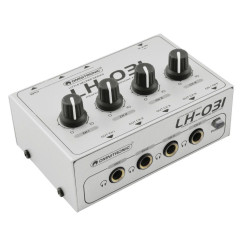
4-channel headphone amplifier, RCA and 6.3 mm jack
Distributes the signal of 1 audio source to 4 sets of headphones
1 stereo input (switchable to mono) via RCA, 3.5 mm and 6.3 mm jack connectors
4 separately controllable headphone outputs via 6.3 mm jacks
Technical specifications
Power supply: 100-240 V AC, 50/60 Hz
12 V DC 150 mA
Power connection: Mains input Coaxial power connector (M) Power supply cord with AC adapter (provided)
Frequency range: 20 - 20000 Hz
S/N ratio: >90 dB
THD: 90 dB
Klirrfaktor: <0,008 % bei 1 kHz
Impedanz: Eingang 100 kOhm , unsym.
Ausgang 51 Ohm
Gain: 20 dB
Max. Pegel: Eingang: +14 dBV
Farbe: Silber
Maße: Breite: 11,3 cm
Tiefe: 8,5 cm
Höhe: 5,5 cm
Gewicht: 570 g
Gerät
Gewicht: 390 g
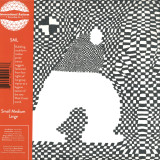
SML is bassist Anna Butterss (Jeff Parker, Daniel Villarreal, Makaya McCraven), synthesist Jeremiah Chiu (Ariel Kalma, Marta Sofia-Honer), saxophonist Josh Johnson (Jeff Parker, Makaya McCraven, Nate Mercereau, Marquis Hill), percussionist Booker Stardrum (Amirtha Kidambi, Carl Stone, Lee Ranaldo, Patrick Shiroishi), and guitarist Gregory Uhlmann (Sam Wilkes, Meg Duffy, Perfume Genius). Their debut album Small Medium Large began as a collection of long-form improvisations recorded during two
separate two-night stands at beloved Highland Park venue ETA, a major development site for the burgeoning new LA jazz & improvised music sound, which unfortunately closed its doors permanently at the end of 2023.
The venue, perhaps best known outside of LA for Jeff Parker’s 2022 album Mondays at the Enfield Tennis Academy, was the perfect location for the start of SML, especially given that both bassist Anna Buterss and saxophonist Josh Johnson are in the quartet featured on that record. Small Medium Large was engineered and recorded in stereo direct to Nagra by Bryce Gonzales and compiled, arranged, and edited with additional production, recording, and
studio composition by SML.
While editing, chopping, and rearranging stereo mixed improvisations is hardly a new concept (for a modern and relevant example we can look to Makaya McCraven’s output on IARC) these results are a stunning expansion of the Teo Macero / Miles Davis editing concept explored on classics like Bitches Brew, On The Corner, and Get Up With It. Stylistically though, these recordings have more in common with the proto trance repetitions of Harmonia, and with Holgar Czukay’s re-assemblage technique used in his work with Can. Throw in a supremely intuitive utilization of Susumu Yokota’s floating patterns polyrhythm concept and we have a truly entrancing take on time-clocked electronic rhythms augmenting with live percussion, yet maintaining that elusive human sway.
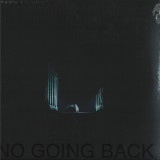
Following a four-year hiatus from solo releases, the British musician Matt Karmil returns with the soft-focus gentle beauty and subtly stealthy beats of new LP, ‘No Going Back’.
With inspired moments of creation happening incrementally, the album came together amidst a busy mixing/remixing/ mastering/co-production schedule. Artists who’ve enlisted his^multiple skills includes Bicep, Underworld, Mall Grab, Jayda G, DJ Koze, Neneh Cherry, Sofia Kourtesis, DJ Fett Burger, Matias Aguayo and Carmen Villain.
Feeling the benefits of this new approach, ‘No Going Back’ is the strongest expression of Matt's artistic vision to date, honing the spectrum of styles for which he’s renowned, all smudged together by a warm, gauzy haze. The microhouse anthem ‘SFP’ is followed by the broken tech science of ‘No Going Back’, the spectral dub techno spookiness of ‘Old Haunts’ and the sublime misty shimmer of ‘The Last Time’.
Further switching things up is the oddball dancefloor experimentalism of ‘Still Something There,’ the washed-out electroid balm of ‘Things Really Happen’, and the epic dark ambient closer ’15 mins’.
Introducing the Headliner R4, a 4-channel analog rotary mixer
designed to elevate your DJ experience. Continuing the
tradition of precision, warmth, and affordability, the R4 is
packed with enhanced features and top-notch components,
including genuine ALPS potentiometers, ensuring an unparalleled mixing experience.
Crafted with four Line inputs, three Phono inputs, and one
Mic input on four stereo channels. Each channel boasts
essential features like gain control with peak LED, a 3-band
isolator EQ, headphone cue selector, generous channel volume
knob, and a filter activation switch, granting DJs precise control
over their sound.
At the heart of the R4 lies the Master channel, equipped with
an analog filter, headphone monitoring, and a comprehensive output control section.
Seamlessly toggle between High Pass / Low Pass Filter modes
with Frequency and Resonance controls to shape your signature sound.
Featuring independent Master and Booth outputs, both
equipped with volume controls and balanced XLR and
unbalanced RCA connectors, the R4 ensures seamless connectivity across various sound systems. Dual LED level meters for the Master output facilitate precise monitoring and
adjustment of audio levels. Additionally, the mixer boasts a
dedicated Record output with unbalanced RCA jacks, and an
additional microphone input with level control located on the
front panel.
The Headliner R4 stands as a testament to precision and
warmth in the DJ realm. Whether spinning house, techno, or
the timeless funk/soul/disco beats, this versatile mixer elevates
your setup, ensuring your mixes stand out with exceptional
quality and control
• Three stereo channels with selectable Line and Phono RCA inputs and one channel with selectable stereo Line and mono Microphone.
• Each channel features Gain control with Peak LED, 3-Band Isolator EQ, Headphones Cue selector with LED, channel
volume control and filter activation switch with LED.
• Master channel features analog filter, headphone monitoring and output control section.
• Analog filter features selectable High Pass / Low Pass Filter modes with Frequency and Resonance controls.
• Genuine ALPS potentiometers.
• Headphone Cue control section features headphones volume control, headphones mix control (Cue/Master), and split
monitor switch.
• High current headphone amplifier with dual 1/4” and 1/8” jacks.
• Independent Master and Booth outputs with volume controls, balanced XLR outputs and unbalanced RCA outputs.
• Additional Record output with unbalanced RCA jacks.
• Dual LED level meters for the Master output.
• Microphone input with level control on front panel.
• Sturdy metal enclosure with stained wood side panels for a classic look
• Modular internal construction for superior audio performance
• External split rail power supply connected via locking Mini XLR connector.
• Push-button power switch on rear panel
Microphone Input
Nominal Input Level: -50dBu
Frequency Response: 20Hz – 20kHz (+/- 0.1dB)
THD + N: 100dB (A-Weighted)
Crosstalk: 100dB
Übersprechen: < -65dB
THD + N: < 0,05%
Kopfhörerausgang
Maximaler Ausgangspegel: 70mA/Kanal in 150Ω
Minimale Lastimpedanz: 32 Ohm/Kanal
Stromversorgung
Typ: Extern mit verriegelbarem Mini-XLR-Stecker
Eingangsspannung: 100-240v ~ 50/60Hz
Ausgangsspannung: +/-15V; 500mA
Spezifikationen:
Abmessungen: 320 x 310 x 106 cm / Gewicht: 3,5 kg
After leaving a huge mark in the techno scene with many high quality EPs on labels like Hayes, Klockworks and Planet rhythm, Portuguese mega talent Vil, finally releases his first long player on dolly's TS series! ''Birds Of Prey'' is a stunning mix of raw, percussive, groovy, distinct house and techno, with an elegant Detroit flavour. 8 tracks that lock you in on an impressive dancefloor journey where Vil shows his diversity as a producer. Switching effortless between the energy fields of deep melodic uplifting bliss and dark, out of the ordinary, groundbreaking drivers!!!
The 2015 edition of Winnipeg’s send + receive festival, focussed on rhythm, turned out to be a generative meeting of minds. There, Mark Fell encountered the music of Will Guthrie, a meeting that was eventually to result in the frenetic acoustic drumkit and digital synthesis pairing heard on Infoldings and Diffractions (2020). At the same festival, Limpe Fuchs first heard and appreciated the music of Mark Fell, planting the seed of a collaboration that came to fruition when Fell (along with his son Rian Treanor) visited Fuchs at her home in Peterskirchen, Germany in September 2022. Black Truffle is pleased to announce the release of the results of this extensive session in the audacious form of a triple LP, housing over two hours of music across its six sides. The collaboration might appear unlikely: what common ground could exist between Fuchs, classically trained pianist, legend of improvised music, instrument builder and sound sculptor active since the 1960s, whose group Anima Sound connected the dots between free jazz, krautrock and ritual, and Fell, proponent of radical computer music, known for his bracingly austere productions that twist remnants of club music into algorithmic stutters? For all their seeming disparity in technology, approach and background, the music on Dessogia/Queetch/Fauch makes it immediately evident the pair share a great deal in their essentially percussive approach and ability to, in Fuch’s phrase, ‘establish silence’. Recording at her home studio, Fuchs had the use of her entire array of instruments, found, invented, and traditional, and treats the listener to some that don’t often make their way to concerts, including extensive passages performed (with Gundis Stalleicher) on pieces of wooden parquetry. Alongside metallic, wooden and skin percussion of all kinds, sounded and struck in every conceivable way, we also hear bamboo flute, viola, and Fuchs’ distinctive free-form vocalisations. Fell also stretched himself, with his contributions ranging from characteristically fizzing pitched percussive pops to swarms of sliding tones and abstract digital noise. Showing both remarkable restraint and improvisational freedom, much of the music consists of duets between a single percussion instrument and a distinctive mode of digital sound, often lingering in one timbral-rhythmic space for minutes at a time. Improvisational forward momentum coexists with a free-floating, wandering quality. On opener ‘Dessogia I’, the shimmering almost-gilssandi tones of Fuchs’ enormous set of microtonally tuned metal tubes ripples across Fell’s rubbery pulse, which moves up the frequency spectrum as Fuchs becomes more animated and switches to horn. At some points, as on the metallic chiming tones that open ‘Fauch I’, only the unexpected dynamic behaviour of Fell’s sounds distinguish them from Fuchs’ acoustic instruments. At others, like on ‘Queetch III’, the waves of sliding tones and noise textures are bracingly synthetic, joined by piercing squeaks and scrapes from Fuchs’ metal objects. Epic in scope, immersing the listener in an entirely distinctive world of sounds, and thrillingly bold in its melding of the most ancient musical procedures with cutting edge technologies, Dessogia/Queetch/Fauch is an unexpected major statement from two of the great mavericks of contemporary music.
After recent explorations into ambient and pop under his full name, Sacha Renkas switches back to his Antenna moniker for ALT013. The Kiev-born, longtime Rotterdam-based artist uses a rough-around-the-edges, hiss-laden palette to construct his intricate, pensive club tracks. Often recording on the fly, he embraces the limitations and quirks of the hardware he works with, curating the happy accidents that come with them and that help make his music feel as alive as it does. It is emotional and imaginative in spirit, yet raw, almost instinctive in its rendering. Renkas cites the new wave and synth-pop from his youth and the sounds coming from Chicago and Detroit, as well as the Dutch West Coast he encountered later on, as inspirations. The sensitivity and hands-on approach associated with these are also tenets throughout his work. The ''Another Wave EP,'' a selection of tracks created over nearly a decade, further substantiates this approach. Made on multiple MPCs, Juno synthesizers, and an Akai S900, and mixed on a Mackie 16-channel mixer, it blends, among others, elements of first-wave techno and European proto-trance. Opener ''Alisa'' stacks angular sine melodies and formant basslines one upon another yet flows like silk, its balance immaculately kept in check. On ''Everyone M1,'' the bass organ patch from which the track derives its title finds itself amidst a lo-fi flux of capricious arpeggiators, ethereal pads, and decocted drums. ''Another Wave'' is a carefully sculpted slow burner, collected in its unfolding. Wisps of melody, gated pads, and whisper seem to wind between its drum patterns; the tension looming beneath this patchwork never entirely reveals itself. ''Quasar'' blends signature dramatic chords and off-rhythm bells with a creeping acid bassline and more kaleidoscopic drum patterns. It closes an EP distilled in its form, confident in its intent, and nowhere too bothered by genre boundaries or other formal constraints.