Dean Spunt"s all-new Basic Editions is an excursion in electronic sound that instrumentally unpacks his fascination with language - in this case, the syntax of systems and processes. By turns meditative, compulsive and consumptive, Basic Editions distills a 64 voice module through a head full of ideas - somewhat like pouring a cornucopia of possible ambient moods and EZ listening impulses backwards through a funnel, inspiring a deceptively absurd rainbow of soul to spray out the other end. With this new release, Dean IDs his process as "using sounds, rather than making sounds". This approach to music-making is a train of thought that"s been rolling out from the far horizon of the past for ages now - but for Dean, whose previous works within and without No Age depended on their making of sounds, it"s a fresh work stance. Given, however, No Age"s traditional sonic manipulations (via loops and treatments), Basic Editions delivers further unexpected hard-rights and lefts in the non-aesthetic aesthetic that has defined Dean"s path over the past two decades. Steering toward wacked digital soundscapes that bounce colorfully across the stereo azimuth, Dean creates a kind of post-ambient neo-exotica that hinges upon a giddy conflation of cosmic and comic.
Suche:sy us
Black Vinyl. In Rumi's poem A Great Wagon he writes of a place of total acceptance. "Out beyond ideas of wrongdoing and rightdoing, there is a field. I'll meet you there," It is a boundless, liminal space where we can release the judgments we make and carry of ourselves, and the comparisons to others. When we think of this field, there is a sense of tranquility that only comes when we are undisturbed by the shadow self and see existence as neither bright nor dim, white nor black. But as lead singer Greg Bertens explains, arriving there is a whole different story. "This is a poem I've returned to over the years, and I love the idea of this place, but getting there is life's journey." Bertens adds "I think the longing for and elusiveness of this field is a recurring theme in our music." Field is enveloped by themes of regret, disconnection and frustration but with the space to understand that these feelings are a natural part of the struggle between reconciling the inner and outer self. The Los Angeles/San Francisco-based group have been indie shoegaze stalwarts since their formation in 2001. After two decades and a handful of line-up changes, their extensive discography presents a dynamically textural, lush psychedelic rock that has featured guest appearances by members of Pavement, My Bloody Valentine, and Snow Patrol, among others. 2021's LP We Weren't Here (Sonic Ritual) was hailed for its dense instrumental blanket, where unrelenting hi-hats and heavy kicks exist alongside dreamy drone guitar. This propulsive nature permeates Field, as members Bertens, Noël Brydebell (vocals), Nyles Lannon (guitar), Jason Ruck (synths), Justin LaBo (bass), and Adam Wade (drums) produce a kaleidoscopic sonic landscape. Patient, sprawling instrumentation builds a foundation in which Bertens' themes of endurance, perseverance and clarity can bloom with a considered poise. As a lyricist who writes in response to the instrumental arrangements, rather than a focus on a specific theme or person, Field is a testament to Film School's ability to create in the moment, and to showcase the magic that stems from when we are truly present. With over two decades in the industry, Field cements Film School as a distinct, dominant force in the shoegaze scene. Soaked in an emotionally open, imaginative atmosphere, the album is both singular and expansive, and leaves the door open for a constantly evolving interpretation. Film School have never confined themselves to the rigidity of specifics, and it's on Field that they urge us to look beyond the binary of certainty, and to take a second look.
For the past two decades, Dr Roman Belavkin (Solar X) has been deeply involved in AI research and mathematics at British universities. His albums from the 1990s are a testament to an era defined by the early internet-bulletin boards, FTP sites and mailing lists. In keeping with this, Solar X's music sounds surprisingly futuristic, a romantic artifact of a time eagerly anticipating tomorrow.
Following the re-issue of Solar-X's "Xrated" in 2019, GALAXIID is releasing his debut "Outre X Mer". All tracks are from the original DAT tapes and have been remastered for this release. "Pozdno Utrom", "Dileg" and "Solar X" were originally released on the "Outre X Mer EP" on Defective Records in 1995. Other tracks are out on vinyl and digital platforms for the first time.
"I was homebound for two years between 1992 and 1994, and the only way I could escape was through computer networks and writing," Belavkin recalls. Before the nasty car accident he was a member of the USSR/Russia national wushu team. Confined to his home, Belavkin started creating tracks based on ideas from his school days in the late 1980s, when he first recorded melodies on cassette tapes. This time, however, he fused those sounds with Soviet analogue synthesizers and PC sound cards. He shared these tracks via email with friends in different countries, becoming part of the "Analogue Heaven" mailing list, a community of enthusiasts united by their passion for analogue synthesis dating back to the 1960s.
During his initial pursuit of a PhD in Computer Science, Roman wanted to explore the intersection of what electronic music could offer humanity, the potential for AI to experience emotions, and whether emotions enhance or hinder intellect. These themes resonate in the music of Solar X. The album embodies ambient techno with intricate rhythms and ear caressing melodies, choppy percussion and blissful synths, making it both tranquil and danceable. Like a shimmering spaceship navigating between anxious dreams and visions, it transports the listener to a naively hopeful era yet to come.
- Milan Knízák - (Maybe) Sonata (1971)
- Henning Christiansen - Mond-Glass-Fiber-Rohr (1986)
- Milan Knízák - Novelties (From The Cycle Processes Mainly For The Space Of Mind) (1978)
- La Monte Young - Piano Piece For David Tudor #2 (1960)
- Philip Corner - Cello Walking - I. Walk The Walk (2017)
- Philip Corner - Cello Walking - Præludium: Cello Slow Drag (2017)
- Bengt Af Klintberg - Triad No. 2 (2021)
- George Maciunas - Solo For Violin (For Sylvano Bussotti) (1962)
- Milan Knízák - Negations (From Cycle Processes Mainly For The Space Of Mind) (1978)
- Takako Saito - Untitled (2018)
- Toshi Ichiyanagi - In Memoriam Of John Cage (1992-93)
- George Maciunas - Solo For Sick Man (1962)
- Milan Knízák - Destroyed Händel & Chopin (1981)
- Philip Corner - Good Jew, After A Listen To Julius Eastman's Evil Nigger Version Iii
- Philip Corner - Man In Field (Sound As "Hero") (2020)
- John Cage - Mozart Mix (Edit) (1991)
- Geoffrey Hendricks - Sky Music V. Ii (1985)
- Nam June Paik - Video Flag (1985)
- Sara Miyamoto - Peck And Plunk (2022)
- Ken Friedman - Rational Music (1987)
- Yoko Ono - Voice Piece For Soprano (Scream Against The Sky) (1961)
- Yoko Ono - Voice Piece For Soprano (Scream Against The Wall) (1961)
- Yoko Ono - Voice Piece For Soprano (Scream Against The Wind) (1961)
- Josef Anton Riedl - Tabchiernchau (Für Sprechen) (1998)
- Giancarlo Cardini - Foglie D'autunno Lentamente Trascolorano (1983)
- Ay-O - Ha He Fu Hi Ho (1976)
- Milan Knízák - Tramp Sonate (2021)
- George Brecht - Water (1963)
- Philip Corner - Good Jew, After A Listen To Julius Eastman's Evil Nigger Version I (2021)
- Jen Friedman - Zen For Record (1966)
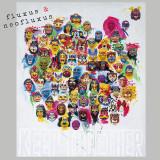
In April 2023, there was released the first part of the Fluxus edition called Stolen Symphony. The year has come and gone and there is the second part of the Fluxus edition called Keep Together. At the centre of both parts of this edition was a broken piano, acquired by the Opening Performance Orchestra for the purpose of making live and studio recordings. During this time other new works for this broken piano were written by diverse Fluxus and non-Fluxus composers. In the spring of 2022, the Opening Performance Orchestra and broken piano participated in an event hosted by Mieko Shiomi. This was a new version of her early work Spatial Poem, documentation of which was presented at the 2022 Aichi Triennale in Tokyo. At present, broken piano lies in the open air in Prague and is subject to gradual decay.
These both parts of this edition contain 73 new and old pieces, live and studio recordings, finished pieces and scores to be performed, solos and pieces for ensemble, using classical and special instruments from 33 Fluxus artists, which have been played by 10 soloists and 4 ensembles. There are new essays and articles from 15 writers on the theme Fluxus, original photos and other documentation in the booklets.
Black Vinyl[30,46 €]
The Flat Earth is the second studio album by English new wave and synth-pop musician Thomas Dolby, it was released on 10 February 1984 and peaked at No. 14 on the UK Albums Chart. The first single from the album was “Hyperactive!”, which peaked at No. 17 in the UK Singles Chart. The album charted at No. 35 on the US Billboard Hot 100.
The album has held up very well 40 years after its release; a crisp production, brilliant songwriting by Thomas Dolby and a fantastic ensemble of supporting players makes this record a classic in its own kind.
The Flat Earth is available as a limited edition of 750 individually numbered copies on translucent blue coloured vinyl and contains an insert.
Confirmed feature article in Electronic Sound Magazine and other media. “There’s A Rhinoceros In The Mega Church” is their debut LP released on Sound Records. U.S.E. (also often expressed as Unicorn Ship Explosion, but feel free to interpret this yourself), are unfortunately two boys known to their mums as Rob & Sash. Since we last saw Rob he has been working really hard as a multi-instrumentalist. He’s almost mastered the drums (he’s even been to jazz school), and he’s near to the final chapter of piano lessons. He’s really talented. He has his own music studio where he produces & writes music for the likes of, The Staves, Holysseus Fly & other fantastic acts that are well worth a listen if you have the time. Sash (or Sasha) is a great guy. Everyone loves working with him. He’s an average musician with big ideas, which is why he uses modular synths. He has written much music for many artists you’ve probably not heard of and has collaborated with some musicians you’ve definitely heard of. He sometimes works as a sound designer for some fashion brands you can’t afford, but you wouldn’t want to wear them anyway (so don’t feel bad for not being successful enough to spend £400 on a t-shirt). Sometimes a really cool woman called, Agnieszka Szczotka, collaborates with these two loveable boys. She is a performance artist of great skill. She studied art at the Royal Academy and chose to abandon her supreme painting and sculpture skills to dedicate her life to confrontational live performance art. Big respect. Together they are Unicorn Ship Explosion (not yet known as U.S.E. as it hasn’t caught on yet). It’s a creative attempt to be in the present and not overwork music as is often the norm these days.As a result an exciting new genre is emerging from this album. The genre hasn’t a name yet, but what is certain is that A.I. can’t recreate it, and wouldn’t want to either. Let’s be human together and accept and appreciate we can’t always be great. Enjoy the good moments with the bad. And together, yes together, you the reader and us(e) your new best friends, shall show A.I. that humanity is beautiful.
- A1: Zdenka Vuckovic - Ja Cu Prezivjeti (I Will Survive)
- A2: Gabi Novak - Pjesma Je Bila Zivot Moj
- A3: Krunoslav Slabinac - Juzni Vjetar
- A4: Arian - Do Posljednjeg Daha
- B1: Moni Kovacic - Be My Bear
- B2: Kim - Naivke
- B3: Rok Hotel - Disko
- B4: Grupa St - Superkazanova
- B5: Ivica Surjak - Julija
- C1: Vera Kapetanovic - Ne Gubi Vreme Sa Mnom
- C2: Milka Lenac - Zeljo Luda
- C3: Nano Prsa - Dzingis Kan
- C4: Dubravka Jusic - Stani Stani
- D1: Ljupka Dimitrovska - Robot (Version 1983)
- D2: Ana Sasso - Krenimo Niki
- D3: Elvira Voca - Drugo Vrijeme (The Second Time)
- D4: Opatijski Suveniri - Vamos A La Playa
- D5: Roman Butina - I'm Gonna Get Your Love
A collection of 18 rare disco tracks from Yugoslavia. Compiled by Leri Ahel & Zeljko Luketic from original master tapes. Fox & His Friends label owners Ahel & Luketic selected obscure 7'' singles, b-sides, out-of-print releases and digged deep into the vaults of Jugoton to tell the story of how disco infiltrated clubs and pop music. This compilation is vinyl counterpart to their pioneering research and work in two major exhibitions tracing roots, influences and social significance of disco in music, fashion and design held in 2015 in Klovicevi Dvori Museum and HDD Gallery in Zagreb. "Socialist Disco - Dancing Behind Yugoslavia's Velvet Curtain 1977-1987" double gatefold LP with extensive liner notes contains tunes from KIM Band, Gabi Novak, Arian, Ljupka Dimitrovska, Ana Sasso, Moni Kovacic, Milka Lenac, Rok Hotel, Ivica Surjak, Grupa ST, Nano Prsa and many more in various sub-genres including classical orchestrated disco, dance reworkings of international chart hits and synth-filled italo-disco stompers performed by Yugoslavian music stars, fashion models and even sports and football heroes. Disco, a vital Trojan horse (in local notion: a pop music you can dance to), stayed quite a long time In Yugoslavia, refusing to be silenced and refusing to jump into the bandwagon of expected. It was influenced by American and European disco sound, for example, by the Boney M, Amanda Lear or Love Machine, who all visited Yugoslavia and had live concerts. The producers and the big record companies like Jugoton, PGP RTB, Diskoton or ZKP RTVL, noted the hype in music and they constantly probed the market with limited run of seven inchers or special performances. Some artists were quite successful, but the rest were in the 7'' single empire which was free enough to experiment with all things disco had to offer - genre hybrids, use of electronics, sexual innuendo, bizarre lyrics and most importantly, great musicians and major composers having fun. The no-restrictions policy of disco was there to evade the rules and surely it did.
Unreleased themes from Kornelije Kovac for commissioned documentary short 'Raport iz Sarajeva', directed by Miodrag Zdravkovic in 1982. This music themes precede the official songs, idents and audio logos for the XIV Winter Olympic Games Sarajevo 1984 opening ceremony made by Kornelije Kovac in his Belgrade based studio from 1982 to 1984. Sourced from the original master tapes with full color artwork by Eric Adrian Lee. Includes insert with photographs from Kornelije Kovac private collection and liner notes by Zeljko Luketic. XIV Winter Olympic Games in Sarajevo 1984 had immeasurable status in the history of Yugoslavia and is widely recognized by organizing committee to be the best in recent history of the Games. However, they were also the pop-culture melting pot of the times, with posters by Andy Warhol and famed local designers and the music by Kornelije Kovac, leading the selected best-of-the-best composers of the times. The recordings on this release share the same musical approach to melody and structure Kornelije Kovac (1942 - 2022) was using at the beginning and the mid of 1980s: while exploring the possibilities of synthesizer, fresh from his collaborations in London with famed composer Hans Zimmer, and almost a decade since he shared Eurovision Song Contest stage with ABBA in Brighton with his Korni Grupa, He also collaborated with Bernie Marsden (Whitesnake), Paul Jones (Manfred Mann) and Andy Pask (Landscape) among others. Kornelije Kovac always insisted on the freshness of the harmony layers combined with DJ friendly rhythm backing track. With the warm analogue feel that resonates in today's digital world this was chosen for a purpose to be an old-school 12'' maxi-single, as it was intended to be, cut loudly for the sakes of all lost and existing discotheques in Sarajevo and all over the world.
The link up between Mantra and Vivek goes back to 2013 when Mantra used to frequent his System nights at The Dome. Both share similar values in grafting hard, focusing on the music and not getting distracted by the noise surrounding the culture. This EP has been in the making for over 2 years and we’re proud to finally be releasing Mantra’s debut SYSTEM EP.
4 cuts spanning different corners of electronic music - from broken beat, garage, and jungle, all with a heavy dub influence. Chopped up breaks, carefully programmed hits, dub baselines, heavenly pads - this release is raw, weighty & System to the core!
The follow up to the largely instrumental (and apparently sold out) "FUSION TO ILLUSION" LP takes us back to the deep house + boogie RNB zone this duo does so well. Side A sees a previous 7" only tune "PURPLE" get a 12" treatment alongside instrumental "EAR DREAMIN". The flip has instrumentals.
- A1: All In (Original Mix)
- A2: Golden (Original Mix)
- A3: Axen (Original Mix)
- A4: Dicktator (Original Mix)
- A5: Give It To Me (Original Mix)
- A6: Ergh (Original Mix)
- B1: Treat Yourself Badly (Original Mix)
- B2: Try Again (Original Mix)
- B3: Flummi (Original Mix)
- B4: Rabbit Underground (Original Mix)
- B5: Your Mother (Original Mix)
- B6: Seven Rivers (Original Mix)
- C1: Dicktator (Club Mix)
- C2: Golden (Cub Mix)
- C3: Treat Yourself Badly (Club Mix)
- D1: Give It To Me (Club Mix)
- D2: All In (Club Mix)
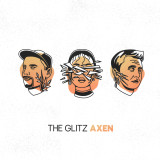
Heavy support by Radio Slave, Sam Divine, Acid Pauli, Green Velvet and Maceo Plex to name a few, while also being played on radio stations world wide. The album marks the beginning of a new chapter for The Glitz as they embark on a journey beyond the world of electronic music. After a wide range of beautiful, inspiring, provoking and uplifting The Glitz-singles, we are now approaching the full album in all its might. The singles have shown us the diverse soundscapes you can find in Andreas and Daniels musical multiverse, with the genres ranging from the classic House and Techno genres, to also introducing their take on Trip Hop, Neo RnB, Hip Hop, Ballad and Electronica. This journey into their musical realm has resonated with fans and colleagues alike the last months, putting the first single on position 1 in the German Club Charts for four weeks straight (it is still in the Beatport top100 after 7 months). Born out of a desire to create a space to explore and expand their unique sound, their new album is a bold extension of The Glitz vision and purpose. It has been a long time coming and is the result of four intense years in the studio together with the unique and talented singer and songwriter Mulay. And now it is time to present the full album to the world. is the mesmerising product of one of their many jam sessions in the studio. It carries the unique The Glitz fingerprints all over it while also letting them shine in a new context. The slow flowing Hip Hop beat paired with Mulays raw vocals and incredibly poetical and personal lyrics is a must hear for old and new The Glitz-fans alike.
Placed between some of the beautiful singles we have heard before, "Ergh" hits us with full force. The track takes us on a breaky, synth loaded trip. As an energetic and driving fresh breath of air, the track combines a frisky attitude with a tension building arrangement, showing that while Andreas and Daniel embrace new genres and styles, they still have good ears for club oriented, heavier hits as well. "Flummi" is put to work in a similar setting, but with a completely different world of sounds. Bright synths slowly build up, paralleled with the pulsating low end and guiding the listener towards an explosive breakdown. The track is followed by the wild and intoxicating "Rabbit Underground" that swoops you off your feet like a rocket launch. A skilfully crafted yet raw drum work with an exquisite snare creates a foundation for tantalising synths and captivating vocals that radiates with power. After this rollercoaster of a track, the wilderness is countered with the soft and playful "Mother". The Glitz bring together various layers of soft synths and smooth percussions, creating a beautiful sphere where the captivating vocals by Mulay shine in a new way. Ending this incredible journey of sound exploration is the stunning ballad "Seven Rivers". No noise, no distractions, just a beautifully stripped down ballad that carries an ocean of emotions. A perfect completion of "Axen". In their own way, each song carries the unique sound characteristics that Andreas and Daniel are so known and loved for, while giving them space to experiment and show themselves in new ways. The mix of emotionally charged, dance floor oriented and vibrant songs are bound to give the listeners an entrancing, unforgettable experience.
Rodenwald - Tauchstation ENNI2
by Rodenwald feat. Remixes by Pozek & Too Old Boys
With their grandiose deep techno remix of Peska's "Kick It Slow", released on Endless Night 1 (ENNI1), the duo from Rodenwald shot themselves straight into the role of favorites for the subsequent release on our sister label. And here it is, the latest Rodenwald creation - Tauchstation. Flanked by 2 outstanding remixes by Pozek and Too Old Boys.
It goes pumping downwards into the depths of nighttime worlds when „Tauchstation“ sets off on its journey. We sink deep with whipping synthesis in which the acid soon gets involved... a grandiose intro that prepares you for the fact that this journey will expand your consciousness... It's good that you're on board! It's going to be long…and deep!
Pozek´s Remix tickels the potential for the driving force of this journey. 145 bpm is a must - your training pulse - so stay calm - we sink together and experience worlds that no individual has seen before. You can feel the passion with which Pozek navigates here.
The Two Too Old Boys (Tommers and Introspective Views) bring a harder gear with their remix. The characteristic sound of 90s synths underpinned by biting industrial beats lets us sink deeper with Rodenwald's "Tauchstation" - and feels like you're in the middle of one of Stefan ZMK's superbly arranged sets. Goosebumps that will make you realize once again - What looked like morning was the beginning of Endless Night.
Includes digital download code, artwork sticker & label sticker and the highly coveted “What looked like morning... “ sticker
CREDITS
Creation/Performance: Rodenwald, Pozek, Too Old Boys
Mastering: Pozek
Artwork/Layout :TDSiGNZ
Executive Producer: Lyta Hall
The multi-media project Kraftwerk was started in Düsseldorf, Germany 1970 by Ralf Hütter and Florian Schneider. They set up their electronic Kling Klang Studio where they conceived and produced all Kraftwerk albums.
Kraftwerk created the soundtrack for the digital age of the 21st century. AUTOBAHN 1974, RADIO-ACTIVITY 1975, TRANS EUROPE EXPRESS 1977, THE MAN-MACHINE 1978, COMPUTER WORLD 1981, TECHNO POP 1986, THE MIX 1991, TOUR DE FRANCE 2003. Their compositions, using innovative techniques, electronic sounds and synthetic voices combined with computerised rhythms, had a major musical influence on Electro, Hip Hop, Techno and Synth-Pop.
- A1: Januaries (Am Anfang)
- A2: To The Train
- A3: At Least We Got To Sit On The Ground, Pt 1 &Amp; 2
- A4: Made / Found (For C)
- A5: Imperfect / Conditional
- B1: Januaries (Am Fenster)
- B2: She Translates
- B3: Abwaschen
- B4: Improvisation On Our City (For Lyra)
- B5: Brücke
- B6: Stoopy
- B7: Prelude For The Hinterhof (To Lg)
We are delighted to present the debut record by pianist, poet and radio producer Phil Smith. Turning his attention away from BBC feature-making, and his cult Jazz-Disjunction NTS show, Phil offers us the diaristic, heartfelt and homespun "Tagebuch".
"Tagebuch" is a collection of musical journal entries, spanning Phil's time living in Berlin from 2013—2017. Using sweetly tumbling piano as a starting point, he flexes his storytelling chops, shifting from scene to scene via voice, folk-jazz arrangements, musique concrète and the occasional techno-synth chugger.
Don't be fooled by Phil's back-of-envelope charm, this is an expertly-crafted radio biopic without words; the minutiae of life percolated through layers of accordion, U-Bahn harmonics and beer foam. A talented cast of guests and friends, notably multi-instrumentalist Zac Gvi, add an unassuming weight and emotional muscle to this deeply personal source material.
Recommended if you like John Carroll Kirby, Penguin Cafe Orchestra or Alabaster DePlume. The vinyl edition of "Tagebuch" comes complete with a book of poems and photos by Phil.
“Überkeine underlines his inclination towards textured techno drifts with this second Ep. Four tracks designed for the club, designed for motion, stirring up disorder on the dancefloor. Aggressive Starter, as its name implies, lays the foundations of the record with assertiveness.
Infatuated with Broken beat techno debauchery, Überkeine continues
experimenting the relationship between kick drum layers and synthetic rambunctious sounds. Revolving around a simple yet effective loop, this track toggles between various stages of distortion bringing emotions through force and discharge. Piggyback Ride brings us into a wavering and unhealthy yet very danceable chamber of depravity.
Energetic, odd and straightforward, the track is divided into two different sections acting as trauma resolving pieces of cake. Radical Jazz starts the B side with ruthless energy, delivering a noteworthy slap dipped in lunatic infringement. A not so sorry, carnal bassline, that hits you in the guts, right where it belongs. Techno with a lack of boundaries. Last but not least, Atomic moog’s proficiency in making deep and spaced out techno acts as leverage for the record. A breath of fresh-air, dedicated to the after-hours. Solid, dubbed-out and delectable piece of equipment. Black and clear “split effect” vinyl, each record is unique !”
"‘A virtuoso guitarist with a galvanising charm that electrifies her audience.’ - Guardian
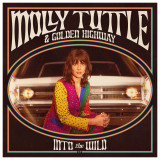
Molly Tuttle & Golden Highway release a new six-song EP, Into the Wild, via Nonesuch Records. The EP, a follow-up to their Grammy-winning and critically acclaimed 2023 album, City of Gold, includes three new songs as well as previously released covers of Jefferson Airplane’s ‘White Rabbit’ and Olivia Rodrigo’s ‘good 4 u’, and an alternate version of the City of Gold track ‘Stranger Things’.
In addition to the band’s previously scheduled US tour dates, which include a performance at the Ryman in Nashville in September, they have announced a new batch of US dates in November, including stops in North Carolina, Virginia, Maryland, upstate New York, Massachusetts, and more.
.
Of the new release, Tuttle says: “With this new EP we invite you to come on a journey with us Into the Wild. I wrote the title track with Ketch Secor after a week spent in the redwoods. This song is about getting lost in the wilderness even if it’s just in the forest of your mind. ‘Getaway Girl’ was an unfinished song I had started writing for our last LP City of Gold. It’s about a whirlwind romance set in New York City, kind of like Carrie Bradshaw meets bluegrass. In addition to these two new original songs, we included some of our favorite covers that we’ve woven into the live show, ‘White Rabbit’ by Jefferson Airplane and ‘good 4 u’ by Olivia Rodrigo.”
She continues: “We paid tribute to one of my favorite California songwriters Kate Wolf with a new version of her song ‘Here in California’ which features my dad, Jack Tuttle, and longtime friend AJ Lee singing with me. I used to play this one with my family band back in the day! On ‘Stranger Things’ (Down the Rabbit Hole Version) I wanted to go for a stripped back ethereal version of this song originally played by the full band on City of Gold. It features a trio with Dominick Leslie on mandolin, and Nathaniel Smith on cello and synth. I hope you enjoy trekking deeper into the woods with us as we pick up where we left off on City of Gold and explore new territory as a band.”
Earlier this year, Tuttle and the band—fiddler Bronwyn Keith-Hynes, mandolinist Dominick Leslie, bass player Shelby Means, and banjo player Kyle Tuttle—earned their second consecutive GRAMMY win for Best Bluegrass album for City of Gold, released last year on Nonesuch Records. Earlier this month, the band was nominated for eight IBMA Bluegrass Music Awards: Tuttle and the band are up for Entertainer of the Year, Vocal Group of the Year, Instrumental Group of the Year, and Album of the Year for City of Gold. Tuttle is nominated for both Female Vocalist of the Year and Guitar Player of the Year, and Bronwyn Keith-Hynes for Fiddle Player of the Year and New Artist of the Year. Additionally, Jerry Douglas, who produced City of Gold with Tuttle and is up for Resophonic Guitar Player of the Year, will be inducted into the Bluegrass Hall of Fame.
Raised in Northern California, Tuttle moved to Nashville in 2015. In the years since, she has received many accolades; in addition to the two GRAMMY wins she was also nominated for Best New Artist. She has earned three wins at the 2023 IBMA Bluegrass Music Awards and Tuttle won Album of the Year at the 2023 International Folk Music Awards. Additionally, she has earned Instrumentalist of the Year at the 2018 Americana Music Awards, and Guitar Player of the Year at the IBMAs in both 2017 and 2018. Tuttle has performed around the world, including shows with Billy Strings, Béla Fleck, Hiss Golden Messenger, Jason Isbell, Old Crow Medicine Show, and Dwight Yoakam, as well as at several major festivals including Newport Folk Festival and Pilgrimage."
'Good Time' is the debut album from Austin, TX noise-pop band DAIISTAR, due out September 8th via Fuzz Club. Creating a narcotic blend of noise and melody, the band takes their inspiration from the neo-psychedelic era of the 80s and 90s and pull it into the future with modulating synthesisers, heavy guitars, bouncing bass lines, and spiralling hooks. 'Good Time' was produced by The Black Angels' Alex Maas and engineered by James Petralli of White Denim. Made up of Alex Capistran (guitar/vocals), Nick Cornetti (drums), Misti Hamrick (bass) and Derek Strahan (keys), DAIISTAR formed in the spring of 2020, just weeks before the pandemic started. "To us, these songs were a glimmer of light", Capistran says: "Starting a band at the peak of the pandemic to some might seem ill-timed, but to us it was a way to escape for a moment. There was something to look forward to and we kept our heads in the future. These songs guided us through some dark times and hopefully they can do the same for you. GOOD TIME is here." Pressing info for LP: 180g neon orange vinyl, printed inner-sleeve, download card included
Aesthetically, Ed Schrader’s Music Beat hates to tread water. At the same time, the Baltimore-based two-piece of vocalist Ed Schrader and bassist Devlin Rice won’t force their songs to fit a preconceived style. “The next album’s always gotta be different from the last one. We’re different people from record to record. So, writing authentically to ourselves will always bring our work to a place that we haven’t been to yet,” Rice said. Schrader added, “We’re terrified of turning into AC/DC. We never want to be married to one scene or time or sound. We want to be the Boba Fett of bands! Constantly altering the way in which we make records has been pretty key in that process.”
For Orchestra Hits, the band’s latest, that alteration was welcoming longtime musical comrade Dylan Going into the fold as a co-writer and co-producer. A songwriter in his own right, a guitar sideman for ESMB on their last two tours, and a collaborator with Rice in the noise riffage band Mandate, Going had both a unique vision and an intimate familiarity with the ESMB vibe.
“Dylan came to every show we’ve ever played in New York—no matter how weird it was,” Schrader said. “He’d be standing there ready to move an amp or feed us barbecued cactus after the gig and toss on some Golden Girls so we could decompress. It felt like family as soon as we began working, but I honestly had no idea how damn good he was at tossing out these hooks.”
According to Schrader, the songs “just poured out of us” over the course of a highly caffeinated three-day weekend in a tiny room in Devlin’s house while his cat, Sandy Goose, screamed continually. “It was like three kids hiding from the world to get into some lovely mischief,” they said. The lack of external pressure in the process gives Orchestra Hits an almost paradoxical vibe. For all of the album’s layers, that mix live and sequenced instruments, it never loses the raw energy of a small handful of friends in the same room plugging in, cranking up, and playing until they pass out.
Lyrically, the album finds Schrader, now 45, meditating on experiences in their youth to make sense of the present moment. “We are not into the garden,” Schrader wails on the relentless “Roman Candle,” a song about the sad debacle of Woodstock ’99, and a direct response to Joni Mitchell’s “Woodstock,” a utopian ode to hippie idealism. A 19-year-old Schrader, having snuck into Woodstock ’99 through a hole in the fence, was there the night members of the crowd used candles intended for a vigil for victims of the Columbine High School massacre to set fires all over the grounds. Even before the fires, Schrader remembered feeling disconnected from the music, the nostalgic cash grab, and the meatheads in the crowd. After watching a press tower collapse, they boarded a random shuttle bus and were dropped off near a Denny’s. “It was a far cry from the Garden of Eden,” Schrader said. “That experience defined what I didn’t want to be a part of, and yet America is more like Woodstock ’99 than ever.”
With percolating synthesizer arpeggios, and climbing bass grooves, “IDKS” is the album’s dance-floor slapper. “’IDKS’ is a funny one,” Schrader said. “We already had a pretty satisfying suite of songs when Dylan was packing up to head back to New York, but he missed the train because of a freak snowstorm. Realizing he’d be stuck in town another day, he says to me, ‘Here’s this other weird thing I have.’ It was ‘IDKS.’ The hooks were so good I felt like Homer Simpson at a free donut convention. I just dove right in, and we cranked that baby out in like 20 minutes.”
Lyrically, “IDKS” is a letter from the true self to public-facing self. “It’s an angry song,” Schrader said. “Because the public-facing self is always looking for an easy escape, but it forces the true self into a cage. I honestly thought my lyrics were corny and was about to change them, but Dylan was digging it just the way it was. So that’s what you hear.”
With the soaring “Daylight Commander,” the band went against all of their musty-basement-bred instincts. “I went full High School Musical with the vocals,” Schrader said. “At first it felt almost embarrassing, but I remember reading somewhere that Bowie recommended always floating a little bit above your comfort zone, and that’s what we did here.” The song is part exercise in absurdity and part pop Trojan horse. “If ever we had a ‘Shiny Happy People’ moment, I guess this is it,” Schrader said.
German Powerhouse Labels Public Possession and Running Back Team up to bring you a nostalgic tribute to 80s Disco-Synth-Pop and Balkan Self-Pity. In a blend of cultural nostalgia and contemporary resonance, be-friended artists Krystal Klear and La Raf are set to release their first collaborative record titled "Boli Boli" (It hurts, it hurts) this autumn. The record is a steamy homage to the 80s disco-synth-pop. La Raf’s vocals equipped with Krystal Klear’s sound remind us of the bittersweet memories of the bygone yet still beloved music-era from former Yugoslavia.
The song came to life during a spontaneous creative outburst when Krystal and Raf reunited in a studio in London last year. Singer La Raf, a Croatian native based in Berlin, channeled the raw emotions of a not so recent break-up regret into the lyrics of "Boli Boli."
Infused with Balkan self-pity, the song delivers a very personal experience of pain and regret, not as mere sorrow but as a confident, joyful indulgence in one's own grief. This emotional depth finds a perfect counterpart in Krystal Klear’s talent for crafting melodies
that evoke both happiness and melancholia. Together, they have created a track that is as introspective as it is danceable, offering its listeners a glimpse into a world where sadness is embraced with a sense of pride and joy, capturing the cultural tapestry of the Balkan region.
What an unbelievable record. From the wild cover to the iconic breakbeats, Roots from Ian Carr’s Nucleus is one of the dopest albums we know. This is seriously thick, funky-prog jazz-rock heaven. Originally released on Vertigo in 1973, other than a couple of versions at the time for other territories, Roots was never re-pressed since so it’s gone on to become another one of those impossible to find records.
Maybe it was a little too out there for the time, but it’s aged very, very well indeed and this Be With re-issue, re-mastered from the original analogue tapes, shows off just why this deserves to be back in press.
Genius trumpeter and visionary composer Ian Carr was one of the most respected British musicians of his era. He was a true pioneer and saw the potential in fusing the worlds of jazz with rock, just as Miles Davis and The Tony Williams Lifetime did in the US. In late 1969, following the demise of the Rendell-Carr quintet, and tiring of British jazz, Carr assembled the legendary Nucleus. Regarding music as a continuous process, Nucleus refused to “recognise rigid boundaries” and worked on delivering what they saw as a “total musical experience”. We can get behind that.
Under bandleader Carr, Nucleus existed as a fluid line-up of inventive, skilled musicians. This constant evolution and revolution was all part of the continuous musical exploration and discovery that took jazz to new levels.
Working together with producer Fritz Fryer and engineer Roger Wake, the seven compositions by Carr, Brian Smith and Dave MacRae that make up Roots flirt with perfection, and Nucleus at that time made up of the cream of 1970s UK jazz with Brian Smith on tenor saxophones and flutes, Dave MacRae on piano and electric piano, Jocelyn Pitchen on guitar, Roger Sutton on bass, both Clive Thacker and Aureo De Souza on drums and percussion, Joy Yates delivering the vocals and of course Carr on trumpet.
The spellbinding title track immediately renders the album indispensable. Riding the illest of loping breakbeats, “Roots” is low-slung, doped-out heist-funk. An absolute monster. If it sounds familiar then that’s likely down to it being sampled by Madlib for Lootpack and Quasimoto’s “Loop Digga”, as well as by a whole host of beat manipulators. “Roots” conjures prime instrumental hip-hop / beat music, only 20 years ahead of its time. Truly, these are the roots. Through sinuous bass, twinkling keys and a hypnotic guitar riff, a smoky brass motif weaves its way into a gloriously deep haze around Carr’s solos. “Roots” is over 9 minutes long, but there’s not a single wasted second, not surprising given that this is a condensed version of an originally 40 minute long commissioned composition.
The soothing vocal fusion delight of “Images” follows. Meticulously constructed, with gorgeous flute work from Brian Smith, with Joy Yates’ silky vocals and Dave MacRae’s Rhodes never sounding better. The cool, driving “Caliban” closes out the first side. Originally the third movement in a four part commission to celebrate Shakespeare’s birthday it stands up on its own, all robust rhythms and blended brass. Keyboard colour and Carr’s trumpet are splashed across the funk drums and basslines (and there’s even some bamboo flute). This really is fusion: the elements of jazz and rock coming together in beautifully synthesis.
Side two opens in riotous fashion with the short, thrilling samba of “Wapatiti”. Next up, “Capricorn” forms a smoothed-out, jazzy constellation. Mellow and dreamy, its twinkling percussion and languid horns slowly build the vibe before head-nod drums and a killer bassline enter the fray. With a distinct heaviness that Black Sabbath would’ve envied, “Odokamona” is a venomous slice of riff-soaked jazz metal (yes, you read that right), elevated by Carr’s wah-wah horns.
The album closes with MacRae’s exceptionally cosmic “Southern Roots and Celebration”. Very much in conversation with Weather Report, it opens as a languorous, spiritual jazz of chiming keys and serene guitar that turns slowly, gorgeously into a mid-paced, brass-laced banger. It’s another sure-fire party starter and the sound of the band having a righteous blast, building an ecstatic chaos that ends with Yates screaming.
And of course we need to talk about Keith Davis’ cover for Roots. Perhaps the coolest record cover of all time? Certainly one of the most bonkers. Just your run-of-the-mill high-gloss, acid-tinged airbrush dystopian/utopian living-room party scene. Consider this your chemical flashback trigger warning.
Front-and-centre the hip-to-death green robot holds court with their giant ball of yellow barbwire wool, hooked up to… something(?) being teased out from under the stairs (probably best not to ask). A thoroughly zoned-out, long-legged Pop Art party-goer lounges half-plugged in to the painting behind her as a pair of legs flail into shot from the the top of the stairs opposite. We won’t even begin to guess what the chap’s up to in the middle, but the view out of the windows is rather nice, and someone’s already got the hoover out ready to tidy up. All of the Nucleus sleeves are something special, but this particular one? Crikey.
This Be With edition of Roots has been re-mastered from the original Vertigo master tapes, Simon Francis’ mastering working together with Pete Norman’s cut to weave their usual magic with these wonderful recordings. The crazy cover has been restored at Be With HQ as the finishing touch to this long overdue re-issue.