WEorUS has long been synonymous with forward-thinking electronic music, and their upcoming vinyl release further cements their reputation for sonic innovation. Featuring four distinct tracks from Anushka, Dragosh, Fabrizio Siano and Kaitaro, this record presents a nuanced exploration of groove, minimalism, and jazz-infused experimentation.
The release opens with Anushka’s “LVOE” a track that radiates warmth and rhythmic fluidity. Built upon a foundation of deep grooves and hypnotic layers, it embraces organic textures that evolve subtly throughout the arrangement. Expect an inviting bassline, shimmering synth work, and a rhythmic interplay that beckons dance floors into motion.
Dragosh delivers “Lampone” a groovy minimal cut that balances intricate percussive elements with a refined sense of space. There’s an air of elegance in the way this track unfolds—tight drum programming meets delicate sound design, resulting in an immersive experience that feels both intimate and expansive. A staple for selectors who appreciate understated yet compelling compositions.
Fabrizio Siano’s “What is Jazz” a contemporary minimal jazz experiment that defies conventional genre boundaries. Jazz-inflected chords weave through delicate electronic structures, resulting in a fusion that feels both nostalgic and futurist. A celebration of improvisation and groove, this track adds a sophisticated touch to the vinyl.
Dark, introspective, yet strangely hypnotic, Kaitaro’s “Nightmare” introduces a deep minimal aesthetic that veers toward atmospheric intensity. Layers build with eerie precision, each element strategically placed to create an evolving soundscape that feels cinematic yet firmly rooted in club dynamics. This is minimal at its finest—moody, unpredictable, and meticulously crafted.
Suche:sy us
Hailing from Detroit, Ryan has earned great respect over the years as a deej with a deeeeeeep
bag of records. This EP is a perfect reflection of that ethos - with tracks that will have you
covered no matter what time of night you're dropping the needle on this thing.
The A is heavyweight, peak time, disc jock business. Sarah O leads vocals to the A1, woozy,
dubbed out, blissy joy ride that is the club mix of "Between Dreams." It would sound at home on
all your favorite dancefloors, but especially those outside. The Great Outdoors baby: the biggest
room there is!
Next comes the mighty Acid Mix of the title track. Cop now so you won't HAVE to Shazam it the
next time you're hearing Mike Servito or Josh Cheon DJ!!! And the A side is wrapped up by 24
Hour House Music. A jittery proto house work out perfect for a night drive in YOUR city!!!
The B side gives us a more of a downtempo vibe, perfect for life's breeziest occasions. LA
legend Benedek lends his considerable talents to all 3 tracks, while Steven Grady and Noah
Triplett for the EP's final track - "Love Dub." All reminscient of Ryan's work as part of Symptoms
of Love, this side feels more like you're in a dream than between them.
- A1: Tafese Tesfaye - The Dove &Amp; The Pigeon
- A2: Yetemwork Mulat - Heathen &Amp; Earth
- A3: Alemu Aga - The World Is But A Place Of Survival
- B1: Sosena Gebre Eyesus - Save Us From Our Death
- B2: Abiy Seyoum - The Last Judgement
- B3: Tafese Tesfaye - You Who Take Good Care Of Me
- C1: Sosena Gebre Eyesus - When I Say Your Name
- C2: Akalu Yossef - Who Can Doubt
- C3: Abiy Seyoum - We Are All Mortals
- D1: Yetemwork Mulat - The Second Coming Of Christ
- D2: Akalu Yossef - Our Father
- D3: Alemu Aga - Song Of Praise Played With A Plectrum
Cassette[16,18 €]
The begena is a large ten-stringed lyre which is part of the traditional Amharic heritage of Ethiopia. The Amharas, who have long formed the politically and culturally dominant people of Ethiopia, mainly inhabit the central and northern part of the country. In the majority, they follow the monophysite Orthodox Tewahido Church established in the early fourth century AD.
Music plays a very important part in the life of the church. Most of the liturgy is sung and, contrary to secular music, it is accompanied by percussion instruments only. The begena occupies a special place because it is the one melodic instrument exclusively dedicated to the spiritual repertory. Because of its mythical origin, it is highly respected. Tradition holds that the begena was given to king David by God, and brought to Ethiopia by Menelik I, together with the Ark of the Covenant. It has always been the instrument of kings and nobles. Played by pious men and women of letters, it never became widespread. But it never disappeared either, not even under the Derg regime (1974-1991) which had banned the instrument.
Among Amhara string instruments, the begena is the most carefully crafted, especially with regard to the ornately sculpted crossbar. Its ten gut strings are cleaned and twisted several times. The characteristic buzzing timbre equalled by no other Amhara instrument is due to the enzirotch, that is, small bits of leather placed between each string and the bridge. This plays an important part in the sound production by creating a brief contact between the string and the upper rim of the bridge, thus modifying the vibrating properties of the string. In this manner, the spectrum of the sound is considerably enhanced (up to over 10 kHz).
The begena is a very powerful instrument, it keeps the devil thirty steps away, and its presence in the home wards off malicious spirits. Priests and preachers recommend its presence, especially during Lent (Fassika Tsom) when the Orthodox Amharas ponder their sins and repent. Because of its spiritual import, the begena generates intense emotion. According to some musicians, playing the begena brings them into direct contact with God or the Virgin Mary. The religious role of the begena is underscored by the shape of the instrument, each part symbolises an important element of the faith. The crossbar for instance, which reaches across the entire width of the instrument, represents God who is above all things. The belly which "gives birth" to the sound represents the Virgin Mary, and the ten strings recall the Ten Commandments.
Recorded by Stéphanie Weisser in Addis Ababa, Ethiopia, March 2002-December 2005.
Mastered by Renaud Millet-Lacombe.
Issued under license from VDE-Gallo, Switzerland.
Celebrated DJ, producer, and sonic explorer Auntie Flo (aka Brian d’Souza) — described by The Guardian as “one of global club culture’s most vital voices” — returns this autumn with ‘Birds of Paradise’: a rhythmically rich, emotionally resonant, and ecologically grounded new album, out 23 October via his A State of Flo imprint. The album will be launched with a special live show at London’s Jazz Caféon the same day.
‘Birds of Paradise’ draws on d’Souza’s global club experience while deepening his connection with the natural world. Built around classic Roland drum machines and iconic vintage synths, the record is a joyful, body-driven celebration of rhythm and movement, but one grounded in ecology and place. The album’s spiritual centre lies in Saligao, Goa, near d’Souza’s maternal homeland where his Auntie Florie (where the name is derived from) is buried. Where he found his ‘paradise’ nearby, staying in a converted fisherman’s hut and recorded dawn choruses from a riverside studio overlooking mangrove-lined waters. Environmental textures from Japan also make their way into the music, creating a sonic map rooted in lived experience.
“Birds of Paradise is about finding beauty and rhythm in a chaotic world. It’s about listening, to nature, to our bodies, to what’s real. It’s a reminder that dance music can be both joyful and grounded.” The album blends Afro-Latin polyrhythms with Western 4/4 patterns, fusing instinctive, dancefloor energy with field recordings that anchor the music in the earth. Described by d’Souza as “tropical with a few deeper edges, a balance of light and dark.”
The new record follows the acclaimed ‘In My Dreams, I’m A Bird and I’m Free’, which earned 4 stars and Global Album of the Month from The Guardian, featured in Disco Pogo’s Albums of the Year, and received support from Luke Una, Resident Advisor, Juno, Bandcamp, Mixmag, DJ Mag, Electronic Sound, The Skinny, Beatport, Ban Ban Ton Ton, and more. The album’s launch show at Omeara London sold out. Other recent projects include the ‘Outernational Dance’ EP on cult label Multi Culti, event series ‘Plants Can Dance (and Mushroom’s Sing)’ which explore plant and fungi bioelectricity as a means of live composition, and ‘Black Beacon’, a haunting cassette release and soundwalk series recorded on the abandoned military island of Orford Ness. There, d’Souza explored the eerie intersection of nature, decay, and deep time, gaining special access to restricted buildings to capture long-form soundscape compositions.
Alongside his production work, d’Souza has emerged as a leading voice at the intersection of sound and science. He curated music for Imperial College’s groundbreaking psychedelic therapy trials, developing six-phase playlists to guide participants through psilocybin-assisted sessions treating conditions such as fibromyalgia and gambling addiction. His five-hour ambient set at Watching Trees Festival, selected as Resident Advisor’s Mix of the Day, continued this exploration into the therapeutic potential of sound in altered states. He also spent six months collaborating with BBC producer Tom Raine on a documentary for BBC World Service, centred on a two-week journey through Kenya and Goa. There, he performed live, led plant music workshops, and joined a deep listening retreat rooted in field recording. “I realised my studio isn’t just four soundproofed walls filled with instruments — it’s the journey itself. It’s the people I meet, the natural world I listen to, and the connections I feel.”
This same commitment to deep listening fuels his live concept Plants Can Dance, a project that combines the biosonification of plants and fungi with modular synthesis. The next event, on 14 September at Hideout Hackney Wick, will feature performances by Stella Z and Lapalace, with d’Souza and resident Lamine playing live alongside responsive plants in collaboration with Repot Hackney Wick and the label Music To Watch Seeds Grow By. “I’ve spent years exploring how electronic music can connect us, not just to each other, but to the natural world. Whether it’s translating mushroom data into melody or capturing birdsong at dawn, it’s about finding resonance across bodies, ecosystems, and machines.”
Rooted in his Goan and Kenyan heritage and shaped by years of travel and collaboration, d’Souza’s creative mission is simple: to reconnect the electronic world with the natural one. Through A State of Flo, he continues to blur the boundaries between club culture, sound art, and ecological awareness.
- A2: The Boy With The Gun
- A3: Maria
- A4: Orpheus
- A5: The Devil's Own
- B1: When Poets Dreamed Of Angels
- B2: Mother And Child
- B3: Let The Happiness In
- B4: Waterfront
Secrets of the Beehive ist das vierte Studioalbum von David Sylvian, erschienen am 19. Oktober 1987 in Europa und den USA (Japan-Release: 21. November 1987). Das Album erreichte Platz 37 der UK Album Charts und gilt als eine seiner atmosphärischsten Arbeiten.
Diese Neuauflage erscheint als Corona Yellow Opaque Black Vinyl und nutzt die neueste Remaster-Version.
Meet Dr. Brown, a world-renowned astrophysicist who arrives with a ten-pound bag of gummy bears and a DVD box set of a reality show about competitive dog grooming. Before she loses herself in the flamboyant world of puffed poodles and outrageous hairdos, she organizes the gummies by color...
Judge White, on the other hand, unboxes a newly released LEGO set. But he isn't building a replica of the Supreme Court; he is constructing a bright pink, glitter-covered unicorn palace.
Opera singer Miss Black... growls along at the top of her lungs to Chesney Hawkes' "The One and Only", standing on a chair in a red-and-white striped bikini, using nunchucks as a microphone.
And finally, Mister Red, the MIT professor, known for his ironclad logic and severe demeanor, brings a collection of classic comic books. He isn't interested in modern, gritty superhero stories. His joy comes from the simplistic, colorful tales of superheroes with outlandish names like bqdp and ridiculous powers like the ability to selectively negate gravity for objects weighing exactly 13.37 kilograms (but only when standing in moonlight).
They are all members of a club where the rules are simple: no judgment, no professionalism, and no apologies. They understand that the most infamous guilty pleasures aren't those that are truly bad, but those that remind us that we are all, at our core, just human - finding joy in the simplest, most wonderful things, no matter how silly they may seem.
pdqb and DMX Krew gift you with six minutes of pure, unadulterated pleasure. You'll feel like you're locked inside an 80s mall with your best friend, free to do whatever you want. And you'll never want to leave.
KinAhau returns to Crosstown Rebels with expansive new single ‘Under the Flowerpot’, featuring Luke Cusato. Backed by a cosmic, synth-driven remix from Perel, the release lands on the label. After debuting on the label with his remix of Airrica’s ‘Hi Speed Lover’ last year, surging wonderkid KinAhau steps forward with his first full solo release for Crosstown Rebels. ‘Under the Flowerpot’ captures a moment of raw honesty and transition for the young Mexican artist, revealing a more expansive, song-led direction in collaboration with UK vocalist Luke Cusato.
The single was born during a turbulent period, written in the wake of a panic attack shortly after relocating to Rome. That sense of fragility and release runs through the record, pairing Cusato’s stirring topline with KinAhau’s widescreen production to create a cut that blurs the lines between club energy and confessional songwriting. For the remix, Damian Lazarus welcomes Perel to Crosstown Rebels. A unique voice within the electronic landscape, crafting her own lane with a genre-blurring approach, her remix is chugging, synth-led, and infused with a signature retro-futurist touch, channeling cosmic energy and slow-burning tension for dancefloors that like things deep and driving.Now 22, KinAhau’s journey has already taken him from handing Solid Grooves founder Michael Bibi a USB disguised as a trash collector to playing at DC10, Fabric, Space Miami and Mayan Warrior. His breakthrough collaboration ‘Different Side’ with Bibi and Audio Bullys carried his name onto global stages, while his 2024 mixtape comprised of old demos, drafts and edits revealed a more confessional, unfiltered edge to his sound. Yet ‘Under the Flowerpot’ feels like a deeper statement, one rooted not in hype but in self-exploration.
DJ support: Michael Bibi, Solomun, ANOTR and more
Rising duo Moontalk step into the spotlight on Planet X with ‘Hot Line 84’, a track that channels tightly wound grooves, warped guitar licks and infectious vocal touches into a rolling dancefloor cut. Built with a sharp focus on rhythm and texture, the single captures the duo’s forward-thinking approach and delivers a fresh statement of intent on one of the underground’s most closely watched labels.
Planet X head Ben Sterling completes the release with his own reinterpretation, steering ‘Hot Line 84’ into darker, hypnotic territory. Crafted live using various guitars and analogue synths, Sterling’s remix brims with raw energy, tunnelling its way through Indie Dance textures while retaining the future-facing edge of the original. A track already championed by the likes of Michael Bibi, Solomun, ANOTR and more, it’s another bold showcase of Sterling’s versatility as both a producer and label curator — and a reminder of Planet X’s commitment to cutting-edge, cross-genre sound.
Together, the original and remix strike a balance between groove-driven immediacy and late-night depth, capturing two distinct yet complementary sides of the Planet X universe. ‘Hot Line 84’ stands as a compelling snapshot of where the label is heading next: innovative, immersive and firmly in tune with the dancefloor.
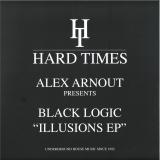
Hard Times welcomes back Alex Arnout and his BLACK LOGIC project, following their recent ‘Pull Up’ EP with a second installment of new music from collective - The Illusions EP.
Hailing from West Yorkshire, Arnout spent his formative years on the Hard Times dancefloors, absorbing the beats and vibes that would later shape his own productions. His journey with the label reignited when he was invited to remix Michael Watford’s classic 'Love Change Over' and Steve Silk Hurley’s fresh hit 'All I Need'. Now, he returns with something truly special.
“Black Logic was born out of the pandemic,” says Arnout. “I wanted to move away from drum machines and synths, getting back to sampling jazz and the deep house sounds of the ‘90s - taking inspiration from artists like Bugs in the Attic, Jazzanova, and Ernest Saint Laurent.”
What began as a solo project soon evolved into a collective effort. Bassist and guitarist Alan Riggs, a former member of Delta 5, joined the sessions, bringing warmth and groove to the productions. Vocalists Tempo O’Neil, Anthony Beckford, Mariana Orsho, and Sophie Barker added their distinct voices, completing the vision
Across four tracks, The Illusions EP pulls us deeper into Black Logic’s rich, live-wired universe. The title track pairs Tempo O’Neil’s vocal with a grooving, low-slung bassline, whilst “Dusty” drifts in on brushed snares and ghostly Rhodes, its saxophone lines curling through the mix like smoke. “Chasing Daze,” analog synth shimmer and Tempo’s velvet tones, is a track suspended between head-nod groove and astral lift.
The curtain falls with “Disco Down,” a jubilant ensemble of Hammond organ, flute, guitar, bongos, and horns locking into joyous conversation.
'Don't Turn Your Back On Me feat. Pauline Taylor' originally featured on US house innovator and Basement Boys co-founder Teddy Douglas's ‘I’m Here’ album in late 2024. It's a true soulful house anthem with funky bass and a glorious vocal that was primed for a A-list remix package. Douglas himself opens up this package with joyous organ chords and soft melodies lighting up the smooth, seductive drums. Swiss DJ and producer Shaka goes next as an artist who has spent decades blending acid, Chicago, and Detroit influences into his own tunes on top labels like Nervous, GooD MooD, and Mister Bear Records. His 12-inch Club version strips things back to go deep and dubby before rebuilding with sunny melodies, expressive organs, and proggy guitar licks that bring joyous energy and real dance floor unity.
Next is NYC DJ Tedd Patterson, a true originator, resident at Ladyfags’ Battle Hymn party and a regular at Horse Meat Disco, Berghain’s Panorama Bar, and Glitterbox, as well as releasing on Strictly Rhythm, Nervous, Defected, and more. His sophisticated remix boasts a warm and bouncy sound, complemented by soulful vocals that lend richness. Then it's seminal NYC favourite Danny Krivit, who is part of the cult Body and Soul crew, is a renowned remixer and editor with hundreds of credits to his name on the most important labels in the scene, and is resident DJ at New York’s legendary 718 Sessions. He draws on his vast experience to edit the original into a playful disco stomper, complete with neat guitar riffs and zippy synths, all bursting with joy as the funky beats roll on and the lush vocals soar to new heights.
More Rice and Jugaar Records – Two Bangkok-affiliated labels – bring together an assemblage of their mutual friends for a heady, floor-focused VA with moods to soundtrack peak flow, after-hours rabbit holes, and just about everything in between.
Rudoh of Jugaar Records fame kicks us off with ‘Madoh’, a bendy groove that initially bares flex of early 2000s Minimal with its trimmed, rubbery percussion and obscured vocal snippets. As the track progresses, a hefty break and a catchy synth line bolster things before breakdowns unfold like little trippy slumbers rudely interrupted by bold, punchy drops.
Next up is Tokyo legend Gonno who follows up with ‘Rad’, a broad-shouldered banger propelled by a heaving kick and clap combo. A wrought synth is paired with odd shocks of acid and a sequence that flickers like a strobe. All the while a thick, gnarled bass line rumbles underneath, keeping vibes at boiling point throughout.
More Rice’s DOTT follows up with a swampy excursion propelled by a potent kick and nimble submarine tones. Drums are neatly stacked in polyrhythms as an infectious swing unfolds, one that’s decorated with ghostly synths and a generous dose of psychedelic synthesis.
Sarayu – also of More Rice fame, closes things up with ‘Fuijan Groove’, a brilliantly lean cut that lets the subs do the talking. Sharp tonal blobs flesh out a simple but highly effective march as spectral pads expand in plumes of smoke until the conclusion of a rich and varied record that unites two kindred labels perfectly.’
‘More Rice and Jugaar Records – Two Bangkok-affiliated labels – bring together an assemblage of their mutual friends for a heady, floor-focused VA with moods to soundtrack peak flow, after-hours rabbit holes, and just about everything in between.
Rudoh of Jugaar Records fame kicks us off with ‘Madoh’, a bendy groove that initially bares flex of early 2000s Minimal with its trimmed, rubbery percussion and obscured vocal snippets. As the track progresses, a hefty break and a catchy synth line bolster things before breakdowns unfold like little trippy slumbers rudely interrupted by bold, punchy drops.
Next up is Tokyo legend Gonno who follows up with ‘Rad’, a broad-shouldered banger propelled by a heaving kick and clap combo. A wrought synth is paired with odd shocks of acid and a sequence that flickers like a strobe. All the while a thick, gnarled bass line rumbles underneath, keeping vibes at boiling point throughout.
More Rice’s DOTT follows up with a swampy excursion propelled by a potent kick and nimble submarine tones. Drums are neatly stacked in polyrhythms as an infectious swing unfolds, one that’s decorated with ghostly synths and a generous dose of psychedelic synthesis.
Sarayu – also of More Rice fame, closes things up with ‘Fuijan Groove’, a brilliantly lean cut that lets the subs do the talking. Sharp tonal blobs flesh out a simple but highly effective march as spectral pads expand in plumes of smoke until the conclusion of a rich and varied record that unites two kindred labels perfectly.’
Next up on Bosconi, the ever-persistent Italian outpost helmed by DJ sorcerer Fabio della Torre, comes a bold new chapter from label mainstay Lapucci—a familiar name to heads who remember his trippy debut Levitated Sensor Detector (LSD).
With Level of Control, the Florence-based Burbi Dub dubplate conjurer delivers a four-track EP that travels across moody electronics, psychedelic grooves, and off-world rhythms.
Kicking off the A-side is “Radio Controller”, a dark and melodic new beat jam with deep ‘80s roots—think obscure synths, rolling drum-machine funk, and a haunting vocoder line that crackles like forgotten transmissions.
Next up, “Einstein”. This one’s a jacking electro-techno burner, all drive and tension—built for those peak-time moments where things feel like they could go off the rails. There’s a cinematic sense of anticipation here, a nod to the cosmic weight of relativity and dancefloor gravity.
Flip to the B-side for “Level of Reality”—a trance-soaked electro weapon, laced with a screaming guitar-like lead and a soaring, emotional melody. It’s peak-time power with sunrise sensitivity—equal parts rave and revelation.
Closing things out is “Irabijanti”, a stripped-back, hypnotic afterhours tool with a fresh, effortless groove. Subtle nods to Middle Eastern scales and rhythms give it a dreamlike, drifting feel—like getting lost in the dunes of some alien desert.
Another must-have from the Bosconi mothership—Lapucci pilots us further out, not with a bang but with a slow magnetic pull into somewhere weird, warm, and wired.
Die Cinematic-Funk-Visionäre The Diasonics liefern mit ihrem neuen Album ,Ornithology", das am 3. Oktober über Record Kicks veröffentlicht wird, ein weiteres solides Set aus östlich angehauchtem Psychedelic, Cinematic und Disco-Funk. Nach ihrem 2022 von der Kritik gefeierten Debütalbum ,Origin of Forms", das von PopMatters zum Library Music Album of the Year gekürt wurde, kehren die in Moskau ansässigen Instrumentalisten The Diasonics mit ,Ornithology" zurück, einem zweiten Album, das ihre klanglichen Grenzen erweitert und gleichzeitig ihrem unverwechselbaren Stil treu bleibt. Aufgenommen in ihrem eigens errichteten Studio 23, das sich in einer umgebauten Lampenfabrik aus der Sowjet-Ära befindet, ist das Album das Ergebnis von zwei Jahren intensiver kreativer Erkundungen und Experimente. Mit ihrer ganz eigenen Mischung aus cineastischem Funk, östlich angehauchten Melodien, instrumentalem Hip-Hop und analogem Soul haben sich The Diasonics einen einzigartigen Platz in der globalen Funkszene geschaffen. ,Ornithology" markiert ein neues Kapitel: Inspiriert von wiederkehrenden Vogelmotiven in ihrer Umgebung, von Zügen und Bahnhöfen bis hin zu lokaler Folklore und den Schreien der Vögel, die über ihrem Studio kreisen, kanalisiert die Platte Ideen von Bewegung und Freiheit, sowohl thematisch als auch musikalisch. ,Das Thema Vögel und Ornithologie ergab sich ganz von selbst - wir fingen einfach an, überall um uns herum vogelähnliche Namen zu bemerken: Züge und Bahnhöfe, Geschäfte, Orte, Nachnamen von Menschen, Bücher und Filme", sagt die Band. "Wir besorgten uns ein paar alte Synthesizer und stimmten die Oszillatoren, während wir den Schreien der Möwen lauschten, die um die Fabrik flogen, in der sich unser Studio befand. Die Ideen von Flug, Freiheit und Raum wurden zentral für die Musik des neuen Albums." Klanglich gehören zu den wesentlichen Merkmalen von Ornithology nicht nur die Synthesizer, sondern auch Diana Grebs hypnotischer Gesang, der sich nahtlos in die Klangpalette einfügt und dem instrumentalen Funk Leben und Seele einhaucht. ,In unserer Vorstellung balancieren wir wie Vögel zwischen der Erde und dem Himmel und haben versucht, unsere eigene musikalische Sprache innerhalb des Konzepts der Ornithologie zu erschaffen, die den Wunsch eines jeden Menschen widerspiegelt, den Vögeln näher zu kommen und frei zu schweben, jenseits von physischen oder mentalen Grenzen." Die 2019 gegründete vierköpfige Band, bestehend aus Daniil Lutsenko (E-Gitarre), Kamil Gazizov (Keyboards), Maksim Brusov (Bass) und Anton Moskvin (Schlagzeug & Perkussion), erlangte durch eine Reihe von begehrten 45er-Scheiben auf Mocambo Records und Funk Night Records schnell Kultstatus. Ihr von der Kritik hochgelobtes Debütalbum Origin of Forms,, das von Henry Jenkins, dem Produzenten der australischen Kultband Surprise Chef, gemischt wurde, erschien 2022 auf Record Kicks und wurde von PopMatters (US) zum Library Music Album" des Jahres und von FIP (Radio France) zum Album des Monats gekürt. Das Vinyl war innerhalb weniger Wochen ausverkauft und ist nun in der internationalen Cinematic-Funk-Szene sehr gefragt. ,Origin of Forms" erhielt begeisterte Kritiken von Zeitschriften wie Wax Poetics, Mojo, Rolling Stone FR, Clash, Uncut und wurde von Jamie Cullum (BBC2), KEXP, Radio France und Huey Morgan, Don Letts, Cerys Matthews und Tom Ravenscroft von BBC 6 Music, um nur einige zu nennen, unterstützt und gespielt. Mit dem neuen Album Ornithology tauchen The Diasonics in üppige Synthesizer, stripped-down Grooves und rohes instrumentales Zusammenspiel ein, schöpfen aus der Library-Musik der 1970er Jahre, sowjetischer Jazz-Fusion und Disco-Funk und liefern eine weitere supersolide Veröffentlichung, die all die Einzigartigkeit bestätigt und vorantreibt, die ,Origin of Forms" so verlockend machte. Unverzichtbar für Fans von Khruangbin, Surprise Chef und instrumentalen Funk-Grooves.
GP04 is brought to you by DJ Ali, the Lebanese-Australian artist based in Melbourne. In this EP, Ali explores the realms of percussive Techno, showcasing his distinctive use of melodies, vocals, and irresistible rhythms. Transformation EP is a collection of tracks where the perception of time is manipulated and stretched into a parallel realm. Come on board & enjoy the journey!
Next up on Mesh is Throwing Snow’s ‘Jackals’, a five-track EP drawing on echoes of UK subcultures.
Written in Ireland late last year with the London 2010s in mind, ‘Jackals’ is Throwing Snow’s love letter to his time spent there, tapping into a detailed web of sounds and styles through a personal lens, but skillfully produced to resonate with many. Locating memories in a transient city that is constantly reconfiguring itself, each track is an attempt at honouring fragments of recent, but seemingly distant, musical history. Taking us from DMZ at Brixton Mass to FWD at Plastic People, or Future Garage Fridays in Soho (IYKYK) to early days of NTS, the EP captures some of the fleeting moments that continue to play a significant part in the city’s sonic patchwork.
Production-wise, all the tracks share the same sounds twisted in different directions. The hats are vocoded with noise and random LFOs, and much like the chaos of London, every bounce has a unique pattern.
Opening track ‘Jackals’ walks the line between dub and UK bass, quickly overtaken by a wonky synth lead that spirals eternally upwards. ‘Ohnein’ jumps in with a massive pad swirling above a half-time step. In Throwing Snow’s own words, ‘I had to check with Martyn whether I'd ripped him off, turns out I hadn't, but it's a heavy head nod crossed with Un Vingt from my first 12"’. ‘A Cloud Mountain’ - a nod to the timeless James Holden remix of Nathan Fake’s ‘The Sky Was Pink’, leans into a maximalist progression of deep chords and fractured synths. ‘Forged’ steps into a weightier space with sparse drums driven forward by a deep cut of bass and twitchy echoes. Rounding things off, ‘Path Dependency’ speeds things up with touches of DnB in the drums, distant echoes in the forefront and the occasional sub wobble holding things together.
Space Echo is proud to present the new single by Derane Obika and Go.Soul.Map., arranged and performed by Sicilian
mastermind producer Salvo Dub - an overwhelming fusion of electronic sounds and soulful vibes. This track is a balance
of pulsating rhythms and enveloping melodies, a sonic journey that invites dancing and reflection.
The production stands out with its electronic soul — a rich blend of synthesizers and deep bass lines that pull the listener
into an energetic and immersive atmosphere. Every beat is crafted to move your feet and light up even the most
sophisticated dance floors.
It’s an explosion of energy, set against the unmistakable voice of Derane Obika. With his warm, soulful tone reminiscent of
Seal, Derane brings a unique spirit to the track, infusing every word with raw emotion and deep.
Here, Derane and Go.Soul.Map. don’t just celebrate dance music — they invite the listener into a full-bodied sensory
experience, where electronic beats meet soul tradition to create something truly extraordinary.
The lyrics expresses the idea of a complete fulfilment found in someone or something essential. It suggests that this
presence — a person, an emotion, or a spiritual guide — is so fundamental and complete that everything else becomes
unnecessary.
It evokes a profound sense of connection, purpose, and clarity. Like a path that leads directly to the essence of existence,
it conveys the feeling of being guided, inspired, and grounded all at once. It is a declaration of absolute trust, of love or
devotion — where the journey and the destination fully coincide.
Side B features a new version of “Walkin’ a Dream” from the debut album “Peaceful Sound for Broken Minds”. The new
rework 25, offers us futuristic and electronic sounds with 70s and 80s disco influences, mixing with space and cinematic
themes - very interesting!
Hot Piroski Boss Robin 12Tree Beams Back with “Interstellar Vibes Vol. 1” A Balearic Odyssey in 5 Tracks.. Strap in and sunscreen up - Robin 12Tree is back with Interstellar Vibes Vol. 1, a scorching 5-track EP of cosmic Nu Disco and Balearic goodness inspired by strobe lights, sunsets and surfside odysseys. Opening blast The Wriggler is a peaktime disco/house rocket, all teasing arps and synth liftoffs. Feelin Free glides into deeper territory, with lush strings giving nods to deep house royalty. Then comes Who Will Heal Us, a slo-mo sunset serenade featuring new Barcelona rising soul queen, MaYa. Things get extra-terrestrial with Need You In My Life, a deep-house jam born from a Barcelona afters with Soul Mekanik’s Danny Mekanik. Finally, Tupambame brings us gently back to Earth, dripping sunshine and jazzy warmth thanks to Tanzanian vocalist Miss Vivandra. Robin 12Tree launched Hot Piroski from his Barcelona bunker in 2018, scoring early BBC Radio 1 love with his N’Gwode edit. His studio passport is stamped by the likes of Jose Padilla, Stanton Warriors, Visage, Keith Flint and more. Whether as one half of Bubble Club, founder of The Backstage Sluts, or Slyde co-pilot, he’s brought Balearic vibes to Fabric, Bugged Out!, and far-flung festivals from Australia to South America - often as The Prodigy’s tour DJ. Check out this latest release from the man with disco in his blood and chorizo in his lunchbox… Interstellar Vibes Vol. 1 will be released in digital stores from July 14th with vinyl availability from July 30th.
Gwenan Spearing, known for her perceptive, groove-oriented DJ sets, and more recently as a live performer working with hardware improvisation, launches a new imprint, Phase Space, with Degrees of Freedom, a debut album diving deep into generative electronics, modular systems, and real-time response. Composed and recorded in 2019-2020, the album treats constraint as creative fuel, floating between ambient,
sonic sculpture, and improvisation, mapping Gwenan’s path from rural Wales to Berlin’s outer zones of experimental sound.
Sync opens with a theme on a slow triangle wave, expanding the space as it evolves. Some Pluck explores generative counterpoint using LFOs and Euclidean rhythms. Generator I unfolds in an oscillating time where keyboard and bass circuits cross-modulate. Sleep Pressure is a lullaby for grown-ups, capturing that eerie threshold before sleep, followed by Loper, where time flows fluid and unstable. The closer, Generator II, holds machine heartbeats in delicate equilibrium before unraveling into graceful decay, a soft farewell. (That’s the Universe waving.) Degrees of Freedom is algorithmic music with a pulse: visceral, hand-wired, and built for deep listening.
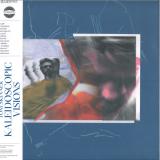
Drummer-composer Tom Skinner announces Kaleidoscopic Visions, his second solo album, out 26th September 2025 via Brownswood Recordings and International Anthem
Kaleidoscopic Visions unfolds across two distinct sonic landscapes. Side A presents entirely instrumental compositions performed by Skinner's live Bishara band—bassist Tom Herbert, cellist Kareem Dayes, and Robert Stillman and Chelsea Carmichael on various woodwinds and reeds—with electric guitar on two tracks courtesy of Portishead's Adrian Utley. A drummer-composer bringing his wealth of experience to bear on the role of bandleader, Skinner composed primarily on guitar, embracing the freedom that came with writing on his secondary instrument.
These compositions include "Auster," dedicated to late novelist Paul Auster, and "Margaret Anne," which honours Skinner's mother Anne Shasby, a former classical concert pianist prodigy who abandoned her own promising career in the face of systemic misogyny, only to impart on her son what Skinner calls "the gift of music."
Skinner’s musical world opens further on Side B, where a collection of poised vocal collaborations stretch out from jazz and improvisation towards a more dream-like, soulful sound. The centerpiece is "The Maxim," a ten-minute collaboration with Grammy Award-winning Meshell Ndegeocello, a dubby, spacious meditation on life and death, delivered with a free-spirited grace. For Skinner, working with Ndegeocello—whom he first saw at Glastonbury as a teenager in 1994—represents a full-circle moment, indicative of the indirect paths and inspirational detours that have shaped his life.
The album goes on to feature South Carolina-based singer Contour (Khari Lucas) who appears on the low-lit soul ballad ‘Logue’, and closes with ‘See How They Run’, featuring London keyboardist-vocalist Yaffra (Jonathan Geyevu). It is the album’s most overtly lyrical track, an articulate exposition of jazz-inflected spoken word that speaks not only to the genre-fluid nature of the music but the breadth of Skinner’s palette.
This should come as no surprise. On Kaleidoscopic Visions, one of London’s most vital musical figures gives us a sparkling glimpse of the multi-coloured lens through which his unique sound is now refracting.
Black Truffle is pleased to announce Melopea, presenting two new pieces highlighting the incredible voice of Amelia Cuni (1958-2024), the great Italian singer, based in Berlin in later life, whose mastery of the classical Indian dhrupad developed in parallel with a commitment to contemporary experimental approaches. After two stunning archival releases documenting traditional dhrupad performances in India in the 1990s (BT079 and BT092), the two side-long pieces here embody the freedom with which Cuni explored new contexts and settings for her singing.
Both make use of a long recording of Cuni singing the pentatonic Raag Bhoop (or Bhopali) made in 2012 by her partner Werner Durand in Berlin. ‘Melopea’ began from Cuni and Durand’s superimposition of this recording with violinist Silvia Tarozzi and cellist Deborah Walker’s performance of Éliane Radigue’s ‘Occam River II’. Inspired by the beauty of this chance encounter (and other experiments with non-synchronous collaboration during the pandemic years), Tarozzi and Walker recorded independently, without hearing Cuni’s voice but ‘having her present in memory’. Tarozzi and Walker’s bowed strings places Cuni’s magisterial performance in a new context, emphasising, as Radigue commented upon hearing the initial layering of her piece with Cuni’s voice, a shared ‘searching toward the partials, overtones, these natural constituents of acoustical sounds in their richness’. Beginning with whispered bowed harmonics, the violin and cello swap the stability of dhrupad’s traditional tanpura drone for a slowly evolving, uneasy web of harmonic interactions recalling some of Harley Gaber’s work, sometimes sitting on dissonances for long periods or allowing changing interference patterns to come to the fore. Primarily focusing on her lower register, Cuni’s performance demonstrates her mastery of microtonal pitch subtleties, elegant sweeping glissandi and meditatively unhurried pacing.
The continuation of the same recording by Cuni forms the foundation of ‘Bhoop-Murchana’, with Anthea Caddy on cello and Werner Durand on soprano saxophone. In contrast to the randomised layering of the first piece, here Durand and Caddy have carefully selected pitches based on the raag Cuni sings, using the ‘Murchana’ form, which uses the constituent notes of the raag as tonics of new raags, retaining the same interval structure. Both players who have developed tones of striking depth and harmonic purity on their instruments, Caddy and Durand’s patient long tones are simultaneously rigorously grounded in the physical properties of sound and possessed of an immaterial, floating quality. Combined with Cuni’s voice and, near the piece’s end, her contributions on hammered and plucked tanpura, the effect borders on miraculous. To surrender to this music is like slipping into an onsen pool, feeling the instantaneous release of every tension. Accompanied by liner notes from Durand, Tarozzi and Walker, Melopea is both a moving tribute to the profound art of Amelia Cuni and, for the uninitiated, a perfect introduction to it.