Jukebox Disco Divas makes a fine entry into the world of wax with this first too-classic-to-fail edit offering. First up is an instrumental rework of a well-known and strident disco delight from the golden 70s era. It's sympathetically done with big drums, hooky trumpets and enough original vocals from the Moroder-style gem to make sure the floor catches fire. On the flip, an equally delicious tweak of an equally great original. This first 7" sets a fine standard for what is sure to be a very useful new label for lovers of old and new disco and plenty of sounds in between.
Поиск:sy us
Все
Chicago-based composer/producer Joey Meland makes music under the moniker Cocojoey. Treating genre conventions and ostensible barriers between disparate musical vocabularies like playthings to gleefully smash and reshape at will, Meland channels decades of experience as a polymathic professional musician adept in styles like metal, jazz, synthpop, and experimental sound design into their infinitely combinatory compositions. STARS, their first album on Hausu Mountain, follows the self-released COCOJOEY’S WORLD with a spellbinding burst of heart-on-sleeve self-expression. The album finds Cocojoey indulging their most adventurous impulses in production and technical instrumental performance, launching into a constantly morphing program that contrasts day-glo earworm hooks against cathartic moments of screaming intensity. Cocojoey’s music exudes warmth and finger-wagging mischief as it exhumes the depths of their psyche with the pure-hearted goal of making their audience smile — when those listening find a chance to breathe within the ecstatic overstimulation.
The album’s tightly constructed song cycle blasts the listener with moment after moment of novel juxtaposition, both in terms of genre and emotional energy, that keep us reeling in a state of delirious whiplash. Warp-speed piano solos over bossa nova-inflected chord progressions segue into detonations of death metal that front-load Meland’s ferocious screaming vocals and meticulously programmed double-kick drum patterns. A strain of iridescent prog emerges in the sheer overload of notes and ideas, as drum n’ bass breaks collide with labyrinthine multi-time signature keyboard lines and bright flashes of clean vocals. Despite whatever contrasting styles might hit within any given Cocojoey song, Meland returns again and again to the upheaval and release provided by extreme metal — though that idiom lands with joyful exuberance, an abrasive yet heartwarming flavor whose positive energy carries through even to those who might not encounter screams and hyper-technical drum breakdowns in their typical listening regimen.
New Environments & Rhythm Studies finds Andrew Pekler returning to the humid zones he explored on previous albums such as Sounds From Phantom Islands and Tristes Tropiques. Split between longer immersive compositions and shorter glimpse-like sketches, these 12 tracks feature new juxtapositions of Pekler's familiar palette of synthetic field recordings, warm, undulating electronic textures, shifting percussion patterns and serene melodies.
As with much of his recent work, Pekler's compositions here are structured around the beguiling effect of synthetic and non-synthetic sounds mirroring, mimicking and modulating one another. The teeming atmospheres within tracks such as Globestructures, Cymbals In The Mist or Globestructures: Option II are, despite their seemingly anthropogenic nature, entirely synthetic. Elsewhere, the lopsided grooves of Cumbia Para Los Grillos or Fabulation For K are derived from recordings of crickets and other insects which Pekler loops and uses to trigger electronic percussion – producing a pleasantly skewed rhythmic base for the fragments of melody which are layered on top. The six Rhythm Studies also follow the same principle – a playful interweaving of the organic and synthetic.
New Environments & Rhythm Studies is a further attempt to re-describe past tropes which laid claims to authentically represent music and sound from beyond the Western world (exotica, ethnomusicology, field recording) as undertakings of the imaginary.
Written and produced by Andrew Pekler, mastered by Giuseppe Ielasi, artwork by Morgan Cuinet, graphic design by Dmytro Nikolaienko.
Having crested the west coast modular-ambient wave in just a few releases - including 2018's Sharing Waves on the influential LA experimental imprint Leaving Records - Sean Hellfritsch has swapped the mossy analog synth improvisations of his prior output for refined melodic arrangements dressed in sprightly dawn-of-digital textures. Big Earth Energy plumbs the depths of Hellfritsch's multimedia mind and naturalist heart, spinning an impressionistic narrative world off of cultural touchstones like the PC game MYST, and the work of Studio Ghibli composer Joe Hisaishi. Inspired by the aforementioned, and guided by Hellfritsch's experience as an animator and filmmaker, Big Earth Energy is the soundtrack to a hypothetical video game with a pointedly ecological premise, and a twist of psychedelic charm. In Hellfritsch's imagined virtual journey, the player assumes the perspective of a treefrog sixty-five-million years ago, hopping epochs with each new level, forming a comprehensive picture of the massive changes the planet has gone through over the eons. The ultimate goal of the game is not to amass resources, defeat enemies, or gain power, but to fully witness the unfolding of one of the biggest systems of energy imaginable - or as the album's creator puts it - "to explore the incomprehensibly vast energetic expression and mystery that is Earth." Big Earth Energy is steeped in exploratory RPG intrigue, possibility, and contemplation, lovingly overlaid with Miyazaki-an sentiments and aesthetics. The through-composed, organic, meandering synthesis heard on previous Cool Maritime albums has been fully replaced by meticulous polygonal arrangements that recall the computerized sheen of late 80s work by composers like Hiroshi Yoshimura, and Yoichiro Yoshikawa - using true-to-period gear no less. Even given its referentiality, Big Earth Energy comes off as forward-facing where so much reminiscent music remains fixed to a bygone moment in pop culture. Hellfritsch has created a musical world where the endless verdancy of the biosphere finds its parallel in the golden age of early 1990s video games, and late 80s Japanese environmental music, all while pointing to a hopeful planetary and artistic future that vindicates the motives of all of these muses.
First Word Records are proud to present the debut single from Above The Clouds (aka kidkanevil & Magic Manfred) with their instrumental take on an MF DOOM classic, 'Arrow Root'
One of the original First Word roster, UK Producer/DJ and all-round laptop music geek kidkanevil has developed a distinctive and progressive sound over the years, gleefully exploring the beats and bleeps of the electronic music universe to international recognition. Leeds born, sound system bred and raised on a (un)healthy diet of video games and anime, his solo work inhabits the curious space between bass frequencies and otaku culture. But as a devoted teenage backpack rap nerd, somewhere in the back of kid's mind was a lingering desire to reconnect with his first love, hip hop.
Not long after moving to Berlin he joined a studio space in graffiti plastered Kreuzberg, where he met multi instrumentalist wizard Magic Manfred; a disciple of all things boogie, disco, funk and soul. Born and raised in Berlin, and currently a touring musician for many an act, Manfred's musical map joins the dots from piano lessons at four, to starting a band with his teenage friends, leading him to his true calling - the bass - via the club vibrations of his hometown, which introduced him to the world of DJing and production, and a stint studying in the explosive London jazz scene to finalise his Jedi training.
Bonding over their mutual love of '90s hip hop, a friendship and musical kinship developed, coupled with a desire to honour past eras but push things forward, Above The Clouds was born; named after their joint favourite DJ Premier beat, with a touch of irony regarding their basement based studio of a windowless variety.
kidkanevil explains "We did a number of covers to sort of get warmed up and in the pocket, of which 'Arrow Root' was one. I actually interviewed DOOM once, mask and all, and I always regretted I forgot to ask him about the original sample. It's been one of my favourite DOOM beats forever and it came up in conversation one day, then manifested pretty quickly into a session. It came together with relative ease and quickness, which is usually a good sign. Manfred worked out the chords and I remade the drums in about the same time frame. Mario is an exceptional saxophone player based in Berlin, so a few text messages later she came by the studio and nailed the entire thing on her first take. And that was that, our humble tribute to the supervillain!"
This one is backed up on the flip side with 'Tram Delay Beat'; a low slung neck-snapper teasing more of what's to come.
This is the first single from the duo, with a long player now in the works…
Above the crowds, above the clouds, where the sounds are original, infinite skills create miracles…
Last year, 2024, the inimitable Future Sound of London graced us with 'Pulse Five', a CD instalment and follow-up to the classic Pulse EP series that began over 30 years ago as vinyl EPs. Now, as an extension of that original UK 12” series, six tracks have been hand-picked to create, “The Pulse E.P.-Volume 5” containing what had been previously unreleased DAT tape material from the early 90s. These unheard vintage recordings date back to the era of FSOL's much sought after classic singles and highly acclaimed Accelerator album.
“We go through life. We shed our skins. We become ourselves.”
This line from Patti Smith was going round and round Felix Manuel’s head as he gradually constructed Under Tangled Silence, his first album in six years and a record of a literal creative rebirth. Felix originally began it in earnest in 2020 Covid lockdown, but a catastrophic hard-drive meltdown destroyed almost all his work and sent him close to psychic collapse himself. However, ultimately this pushed him to rebuild from scratch and in so doing to confront and reassess every part of his musical and psychological processes.
The result is utterly extraordinary. Felix was a child prodigy as an instrumentalist and his advanced musicality has always been prominent in his music, but here he has put himself front and centre as pianist, harpist and more. And this sense of exposure as a performer interweaves with an unflinching emotional openness too. Where sometimes electronic production as advanced as this can use intellect and techniques as shields from soul-baring, this is the sound of someone who can boldly say “I feel things, I cry all the time, and I'm not afraid to say it or show it in the music.”
But this doesn’t mean there’s a move away from the soundsystems and dancefloors where Felix made his name as a uniquely innovative vinyl DJ. Even just in the opening track “A Tune for Us”, minimalist piano ripples and jazz drumming flow into the breaks of vintage jungle – and as the structure of the LP unfolds, a deep ambient meditation like “Hold” can sit very naturally in between the futurist dancehall of “L’Ancienne” and the high-definition acid house mind movie of “Galaxy in Silence”. In fact, as with the hands-on musicianship, that gutsy big-speaker electronic impact is delivered with more certainty, more expertise, more personal flourishes than ever. And all of those elements are more integrated than ever too: the sound of a total musical personality emerging afresh is truly something to behold. An already remarkable talent has been refreshed, reborn and is making the music of his life.
"The restorations of The Lost Recordings are worthy of those devoted to master paintings." — Le Journal du Dimanche
"We discovered these previously unpublished tapes in the archives of the RBB — the Berlin radio. This discovery is absolutely major because these two incredible musicians had recorded too little together and because this recording offers us the possibility to listen to them in works that were unpublished so far in their discography — notably an extraordinary sonata by Prokofiev! And what can we say about this Bach sonata, with an Andante that brought tears to the eyes of everyone present in the studio at the time." — Frédéric D'ORIA-NICOLAS, Musical treasure seeker
János Starker, cellist, and György Sebok, pianist, were both born in Hungary early in the 20th century. They were welcomed into the formidable Franz Liszt Academy of Music in Budapest, and emigrated to the USA, where they both held the title of Distinguished Professor at the Indiana University School of Music in Bloomington. Both heavy smokers and sometimes reputed — unjustly — to be harsh, austere and insensitive to trends, they were drawn to music in all its varieties and fascinated by its many colours. They had one aim only, one noble objective: to showcase the works all composers, as evidenced by this recording made in the legendary Studio 3 of Berlin Radio on 24 October 1963.
Starker and Sebok were fully imbued with the aesthetics that Prokofiev proclaimed: "I cultivate melody and strive to introduce feeling and emotion into my works. No matter that some call me a cubist, adding that I systematically avoid any emotional or romantic elements in my quest to reach only objectivity."
Next, and at the opposite end of the spectrum, is the Spanish passion of the two pieces by Granados and De Falla, pieces that nevertheless also convey melancholy. Starker and Sebok launch into the works with enthusiasm and intensity.
The last piece, Bach's Sonata in G Major, BWV 1027 for Viola da Gamba and Keyboard, is one of three he composed, probably in Köthen. Because they may have originally been written for other instruments, they can easily be transcribed for the cello and piano. They reveal the rich influences that pervaded the German region during the first half of the 18th century. The two musicians give us a sublime interpretation of the beauty of the counterpoint in this Sonata.
These recordings attest to the importance that the two superb musicians attached to working in the service of the composers. We wonder if, in that enchanted studio in Berlin in 1963, they knew how much further they went to bewitch us and touch us so profoundly.
- 1: North
- 2: Aspect From The Window
- 3: Arna
- 4: Polar Day
- 5: In Wonder
- 6: Transient Light
- 7: Like Breathing Statues
- 8: Shale
- 9: In The Blue Hour
- 10: Floes
- 11: Further North
- 12: Polar Night
There are imagined landscapes we all carry within us—dreamed,
half-remembered, or just beyond reach. Lofoten, the new album by
Cate Francesca Brooks on Clay Pipe Music, is a musical reflection on one such place.
Located above the Arctic Circle, Norway's Lofoten Islands are known for their dramatic peaks, open seascapes, and distinctive red fishing cabins dotting the shoreline. Though Brooks has never visited this remote northern region, it became an unexpected source of inspiration.
The project began when Cate listened to a narrated "sleep story" set in the islands. Intrigued, she researched the region and found herself drawn to its stark beauty."I fell in love with creating an impression of somewhere I would probably never visit, but felt a real affinity with," she explains.
This ambitious album translates that connection into sound. Through carefully crafted electronics, melodic themes, richly layered textures and big production, Brooks captures the essence of Lofoten—its icy light, vast horizons, and profound quiet."The other thing that happened around the same time was the first lockdown here in the UK. I had taken the opportunity of having some extra time to learn a new (to me) method of synthesis; that of the Synclavier, which uses one aluminium wheel and an array of buttons to control every parameter of the sound.
"I took to it with intrigue and before I knew it, I had built up hundreds of original sounds, many of which were perfect for the textures I could hear in my head for Lofoten. So that (along with a Prophet synth and a TR-808) became the sound world." Lofoten stands as an evocative testament to how music can transport us to distant places, transforming geographical limitations into imagined creative possibilities.
- A1: Truly Gone
- A2: Haze
- A3: More Than You Thought To Use
- A4: Crazy, Stoned, And Gone
- A5: Fade
- B1: On My Way Home
- B2: I'll Wait For The Others
- B3: Dreaming Of The Moon
- B4: I Hope That All Of Your Dreams Come True
Swim Inside The Moon is a delicate, confident, quiet singer songwriter record by 24 year old Angelo De Augustine. Angelo’s setup was simple: a Shure SM57 microphone next to the wall of the shower and a cable back to an analogue reel-to-reel in his nearby bathroom. For some songs, he played his mother’s 100-year old piano in the living room and on others he added synth and electric guitar. Listeners might hear Nick Drake’s intricate arpeggiated guitar parts, Elliott Smith’s pure vocals or, at times, a likeness to the soulfulness of artists such as Robert Johnson, Vashti Bunyan and Judee Sill.
Unearthed from the vaults of funk veteran Tim Tucker, this fantastic Got That Energy EP delivers two unreleased boogie gems from the 80s that have been reworked by SoCal DJ and producer Knoe1. A lifelong musician and unsung hero of the scene, Tim always brought raw authenticity, while Knoe1 sharpens the sound for modern dancefloors. Title track 'Got That Energy' is a high-octane ass-shaker packed with punchy bass and irresistible swagger. On the flip, 'Don't Hesitate' slows the pace by blending emotional vocals and synth-soaked soul. This is pure summer heat for a range of different settings.
- A1: Pharoah Jones
- A2: Ghost Gospel
- A3: Ill Feeling
- A4: Capital Punishment
- A5: Do Not Adjust
- A6: Cool Green Trees
- A7: Chill Scratch
- A8: Poisonous Fumes
- A9: Welcome Aboard The Starship
- B1: Keep On Runnin
- B2: Sounds Impossible
- B3: Painted Faces
- B4: The Knew Style
- B5: Chicken Wing Blues Sauce
- B6: Kool Breeze
- B7: Sexx Bullets
- B8: Soul Child
- B9: Take Off Runnin
- B10: Centurian
- B11: Bozack
- B12: Church
- B13: Splash One
- B14: Hank
- B15: 73 Goatee
"Chasing the funky symphonies that filled my head and my dreams..."
December 25th, 2023 - an Instagram post. Stimulator Jones shared half a dozen FIRE tracks from his beat tape archive. We were immediately drawn to the rough hewn boom bap.
"I'd release that", Rob commented.
Hours of material was shared and the result is this: Cool Green Trees (1999-2005). A collection of beats and loops Stimulator Jones created between the ages of 14-20 at home in his basement, bedroom and computer room in Roanoke, Virginia.
You will not believe the profound soulful genius contained within these naive schoolboy melodies.
December 25th, 1998 - 25 years ago to the day and his much-coveted Yamaha SU10 sampler was finally bestowed upon young Stimmy AKA Sam Lunsford: "I immediately hooked up a CD Walkman to the input jack and looped the beginning two bars of Grover Washington Jr.'s "Mercy Mercy Me". I don't know what exactly was so thrilling about hearing two measures of music repeating over and over but it was so infectious and hypnotizing and enthralling to me. I'll never forget that ecstatic rush of making my first loop - an uncontrollable, gleeful smile plastered all over my face." When you hear the pocket breakbeat symphonies featured here on Cool Green Trees, you'll feel the same sense of frisson.
In the wake of his Stones Throw breakthrough - Exotic Worlds & Master Treasures - Stimulator Jones was pegged by many as a 90s throwback artist. However, he literally IS a 90s artist. He's been recording music most of his life and he's now 40. He created the bulk of Cool Green Trees as a teenager. Everything before 2004 was recorded when Sam was still in school. He was in 8th grade when he made the 1999 tracks - he didn't even have his learner's permit. This album is a snapshot of a young man in a simpler time. Things were still mysterious back then and he was flying blind, relying on his ears and having to figure things out for himself: "I had no road map for becoming a beatmaker. I have been collecting music since I was a kid, I am a lifelong digger and seeker of cool and interesting sounds. I was there in the golden age of Hip Hop, and while I may have been a suburban white kid in Roanoke, Virginia, I was tuned in and I bought so many classic albums when they came out. I was attracted to Hip Hop because of the musical and poetic quality. I was hypnotized by the rhythms, partially because I was a drummer. I didn't brag about collecting my breakbeat records or making beats - it was something I did in isolation. It wasn't something I generally wanted to bring attention to and it didn't really score me any cool points. I certainly wasn't flexing on social media about it."
Hell, he can do that now!
Opener "Pharoah Jones" was inspired by Yesterday's New Quintet and Madlib's ability to capture that classic 70s sound whilst playing all the instruments. Sam created this one stoned afternoon by laying down a 2 bar loop and a shaker loop on his Yamaha SU700 sampler. He hung a microphone from the ceiling and played his Yamaha Stage Custom drum kit over the top before adding ender Rhodes and playing his dad's Selmer tenor sax through an Electro Harmonix Memory Man echo pedal. Yes! Up next, "Ghost Gospel" utilises a dope loop from a gospel record and adds some soul-funk drums overtop, whilst working that filter knob. Says Sam: "The loop reminded me of something Ghostface would rap over. The sample was in 3/4 waltz time but I flipped it for a 4/4 groove, a technique I picked up from RZA. "Ill Feeling" uses sped-up pieces from a dusty old funk record and putting them over a classic NOLA drum loop; gain chopping up a slow, bluesy 3/4 time signature and bending it to a 4/4 groove. Classy shit. "Capital Punishment" features drums tapped in live, inspired by MF Doom's Special Herbs series. "Do Not Adjust" consists loops found on a compilation of 70s French music at Happy's Flea Market, a classic Roanoke digging spot.
The sublime, evocative title track, "Cool Green Trees" was created when Sam was still living at home. He dumped samples off his SU10 into the family desktop and arranged them in a demo version of Pro Tools: "This track was sort of my ode to the DJ Shadow style of sample based production. Super spacey, slow, and moody. The heavily filtered drums were inspired by Alec Empire's 'Low on Ice' album. I later added some scratches and sounds from a Spider Man storybook record." "Chill Scratch" snags the final bit of a bossanova record and pairs it with a drum loop before adding experimental scratching run through an Electro Harmonix Memory Man echo pedal. "Poisonous Fumes" was made using a sampler, mixer and a turntable; a kind of mixtape beat collage with added scratches and sounds from various records. Using dialogue from superhero records was a nod to Madlib. "Welcome Aboard The Starship" is dark, downtempo trip-hop with a spooky bent. Sam paired a slow, hard drum loop with a guitar sample grabbed off a psychedelic rock record. To finish, he added various backwards sounds and weird atmospheric effects and a little scratching. Swoon.
Side B opens with "Keep On Runnin", made on a borrowed Roland SP202 sampler. Having always loved the sound of the Lo-Fi filter on those machines, reminiscent of the Emu SP1200, Sam always imagined Del or another of the Hieroglyphics crew rapping over this beat. You can certainly hear why. "Sounds Impossible" sees Sam experimenting with layering multiple kick samples at different volumes to create patterns similar to those heard by Showbiz and Lord Finesse during their God-level 1995 period. "Painted Faces" was made by chopping up a REDACTED record which he had gotten from Happy's Flea Market and paired it with a REDACTED drum loop. By the time Sam recorded "The Knew Style", he had acquired a shitty old 1960s portable turntable off eBay. It didn't function properly when he bought it but his brother opened it up, cleaned it out and got it working: "I remember he told me that there was a bunch of sand inside of it when he opened it up, as if its previous owner had taken it to the beach. I would take that turntable on my Happy's Flea Market digs so I could preview records...that's how I found this loop."
"Chicken Wing Blues Sauce" loops up a classic blues joint and pairs it with some REDACTED drums. A bit of filtering and arranging et voilà! "Kool Breeze", from 1999, is one of Sam's oldest surviving beats, as is "Sexx Bullets". The Roots sampled the same record, leaving Sam frustrated yet vindicated. "Soul Child" was an early SU10 creation, looping a dusty old Soul Children 45 and pairing it with 70s rock drum loops to great effect. "Take Off Runnin" was another loop found digging with a portable turntable. Paired with some boom bap drums it makes for a hypnotic head-nod groove. "Centurian" was intended to be a little beat interlude a la Pete Rock. The sample is from a sun-dappled soft-psych record and it's paired with a Robin Trower drum loop that just happens to fit perfectly. Sometimes you slap things together kind of haphazardly and magic happens. "Bozack" was the first beat Sam made using Pro Tools, his first foray into using chopped sounds instead of loops, an exciting new world. "Church" is beat interlude using a Phil Upchurch loop with the "Long Red" drums - a favourite break of Dilla et al. Sam was really on a tear in late 2004, probably because he was unemployed and phoneless and able to just make beats all day. He made "Splash One" on a borrowed Yamaha SU700 and again was experimenting with tapping the drums in live with his fingers, instead of using a loop or sequenced pattern. Channeling 9th Wonder, Sam used a water splash sound effect from a Batman record as a percussive element, hence the title (also a 13th Floor Elevators reference). The main loop is a backwards portion of one of his favourite Roy Ayers songs.
"Hank" is another fun little beat interlude thing, created on a borrowed Roland SP202 sampler with the fantastic Lo-Fi effect that resembled the Emu SP1200 at a fraction of the price. "73 goatee", from 99, is another of his oldest surviving beats, created in his bedroom with his Yamaha SU10 and his brother's Vestax MR-300 4-track recorder: "This one will always feel special. I can remember having a feeling all the way back then on the night that I created it that this was a solid beat with a catchy loop. There was something in the Fender Rhodes melody that resonated with me emotionally, and I had never heard a producer sample that portion before. I felt like I had found my own unique sound, my own unique loop. It came from an Ahmad Jamal '73. I actually even recorded myself rapping and scratching over this beat way back then, I still have that version in all its imperfect sloppy glory."
Sam explains just how much these tracks mean to him: "They all have immense historical and sentimental value and I'm proud of them. These beats come from an innocent, simple time when I was just figuring out how to craft these sounds. They're something very personal to me. They are the initial part of a journey that I really was taking *alone*. There was no YouTube. I couldn't Google shit. I didn't even know any other beatmakers, producers or DJs in my town that could teach me anything. It was always just me, alone, in a room with some equipment - chasing the funky symphonies that filled my head and my dreams. What I was doing wasn't cool. Most of my peers thought I was a weirdo and couldn't care less. Creating these sounds was an anti-social endeavour. In a sense, I felt like it was me against the world, and all I had to instruct and assist me were the recordings produced by my heroes - RZA, DJ Premier, Erick Sermon, Beatminerz, Showbiz, Diamond D, Beatnuts, Prince Paul, The Bomb Squad, Pete Rock, Q-Tip, E-Swift, Mista Lawnge, DJ Shadow, Cut Chemist, Peanut Butter Wolf, El-P and so many more...I dedicate this collection to them, and to my older brother Joe who has always been a musical and technical guiding light for me.
This was a time before every kid was a self-described producer and beatmaker, before everyone had a DAW, before Kanye and "chipmunk soul", before Red Bull beat battles, before there was any social media beyond chat rooms and AOL Instant Messenger, before Soundcloud, before SP-404 mania, before lo-fi beats to study to, before Splice, before targeted ads for MIDI chord packs, etc. In 99 when I told people that I had a sampler and made beats I was mostly met with bewildered confusion and indifference. Kids and adults alike would wonder why I got this weird machine for Christmas instead of something worthwhile like a Playstation or a mountain bike or even a guitar for that matter because at least that could be used to make "real music". Back then, sampling was still not widely respected as an art form - it was seen as lazy, talentless and unoriginal at best and outright criminal theft at worst. I had gotten respect for playing drums and guitar and things of that nature but this was a step in the wrong direction in the eyes of many."
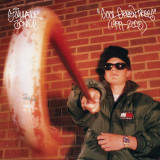
The cover photo is a picture of Sam standing on his back porch in the latter part of 1998, just before he got his first sampler. He was 13 years old, in 8th grade. His dad took the picture with his 35mm film camera: "I actually wanted to be pointing my dad's .22 pistol at the camera lens but he wouldn't let me. He gave me an old walking cane to use instead. The Tommy Hilfiger puffer jacket came from the lost and found at William Fleming High School where my mom worked as a secretary. I was thrilled when she brought it home because we never spent money on expensive name brand clothing like that - we were for the most part strictly a sale rack, bargain bin, thrift store, yard sale, flea market kind of family when it came to clothes. My watch is some cheap off-brand fake gold department store watch." Mastering for this vinyl edition was overseen by Be With regular Simon Francis and it was cut by the esteemed Cicely Balston at Abbey Road Studios to be pressed in the Netherlands by Record Industry.
- A1: Kisk - I Wanna Dance With You
- A2: Osunlade - Cucumber Sweat
- A3: Tuccillo - Stray
- A4: Hnqo, Collateral Lab - Whisper
- A5: 2Ks - Saynomore
- B1: Ghosten - Iii Steps Ii Ecstazi Feat Francesca Touré & Izzy Nu
- B2: Marcel Vogel & Lyma - Keep The Lid On
- B3: Eduardo - Wdac
- B4: Erin Buku & Inkswel - Find Your Way Feat Leon And Charles
LP - First Pressing in White Color Vinyl - Limited to 150
Includes: Gatefold. stickers + poster (60cm x 60cm) + download code
5 Years, All Ears, All Heart. Fifteen years ago there wasn't a grand plan, no vision board or 10-year strategy. It wasn't about fame and acclaim, it has always been about feelings and encounters. Meeting people who made music, loved music, were music. Fast forward a bit and the family just kept expanding. It wasn't just producers and DJs anymore, designers, writers, random hype people, "vinyl faced" ones... Everyone brought something different to the table and somehow, through our filter, it took us here. House, Jazz, Techno, Experimental, it didn't matter. The only rule was that the music had to feel alive, with a Jazzy twist, where "Jazzy" means a propensity to improvisation, not just music. This is not a story about numbers or streams. It's about people and places. Every track has a face behind it: the producer who turned a three-note loop into gold, the designer who nailed an album cover in one chaotic night, the heads who spun the story for the release and the friends who supported and listened. That is the soul of Apparel Music and that's why the cover for this "B-Day15" isn't gleaming or shiny, it's real. It's a celebration of encounters. The messy, magical moments when people connect and make something bigger than themselves. It's a big THANK YOU to all the characters who hopped on this ride. This record, dropping in both vinyl and digital formats and featuring artists from all over the world, is the symbol of the Apparel Music essence. From the USA with Osunlade to Australia with Erin Buku & Inkswel; from Denmark with Ghosten (featuring Francesca Touré and IZZY NU) to Italy with 2KS and Kisk; Argentina and Brazil with Eduardo and HNQO (with Collateral Lab), Spain with Tuccillo, Germany and The Netherlands with Marcel Vogel & LYMA. It's about exploring genres, diving into far-off worlds, being curious about other places, other people and figuring out how to make them all feel comfy under the same roof, chilling in the same room. A room we've been furnishing for a while with our little treasures, some fancy furniture, some not-so-fancy, but always with passion. There's more music to make, more stories to discover, more people to meet. Apparel Music is not just a label anymore, it's a big, instinctive, unplanned love letter to everyone who's been and who'll be a part of it. 15 Years, All Ears, All Heart.
- A1: Everybody's Somebody's Fool (Alternative Version)
- A2: Young At Heart
- A3: I'm Falling
- A4: Will She Always Be Waiting
- A5: Some Sweet Day
- A6: Cath
- A7: H.o.l.l.a.n.d
- B1: Red Guitars
- B2: Syracuse University
- B3: Learn To Love
- B4: The Patriot Game
- B5: South Atlantic Way (Full)
- B6: Aim In Life
- C1: Forevermore
- C2: Cath (Extended Version)
- C3: All I Ever Said
- C4: Fall From Grace
- C5: Sugar Bridge
- C6: Happy Birthday (Turn Gold)
- C7: Everybody's Somebody's Fool (Original Album Version)
- D1: Young At Heart (Extended Version)
- D2: Tender Mercy
- D3: All I Am (Is Loving You)
- D4: The Ballad Of Joe Hill
- D5: Goodbye And Good Luck (Bbc Session, 29Th Nov '81)
- D6: Young At Heart (Club Remix '93)
The Bluebells' Sisters is a perfect snapshot of early '80s "Sound of Young Scotland": Glasgow indie pop with bittersweet spirit, sharp hooks, and heartfelt harmonies. Signing to the then-nascent London Records, and working with a procession of esteemed producers (including Elvis Costello who became a mentor and teacher to the band), The Bluebells enjoyed three UK hits in the 1980s ('Cath', 'Young at Heart' and 'I'm Falling') before touring widely throughout Europe and North America, developing their live sound and signing to Seymour Stein's Sire Records in the U.S.
A decade later in 1993 that 'Young at Heart' hit the U.K. No 1 spot following its use as a T.V. advert for Volkswagen. Fast forward to this decade The Bluebells have reformed with a flurry of shows across the past two years including a triumphant return to Glasgow at Barrowlands for Celtic Connects, and just announced for the Acoustic Stage for Glastonbury Festival 2025.
This new edition of Sisters has been remastered and produced in consultation with the band, using the best audio sources available, including non-album singles and B-sides, bonus tracks from the original cassette edition and new liner notes from Will Hodgkinson.
The first and most independent of all independent producers, Joe Meek needs little introduction. He was the first to chart in both the UK and the USA with an independently produced song -which was actually recorded in his home’s kitchen- when The Tornados' Telstar took the world in 1962. Meek was, of course, one of the most in vogue producers of the first half of the 1960s, providing the soundtrack to the evolution of UK Rock’n'Roll to Swinging London, scoring hits with actors like John Leyton (Johnny Remember Me), showmen like Screaming Lord Sutch and bands like The Outlaws and The Tornados. He also produced a wide stream of R&B and freakbeat 45s that are nowadays hardly sought after by the collectors with the biggest bank accounts.
Joe Meek experimented with all kinds of recording techniques in his home studio, his tricks and gimmicks won his productions chart placement and critical and public acclaim, but none of his projects was so advanced and way out as the avantgarde experimentation showed in his I Hear a New World electronic symphony from 1960. Aided by The Blue Men formed by Rod Freeman (group leader, guitar, vocals), Ken Harvey (tenor sax, vocals), Roger Fiola (Hawaiian Guitar), Chris White (guitar), Doug Collins (bass), Dave Golding (drums) -also known as Rodd-Ken and The Cavaliers- who provided a tight base to his electronically produced sounds, Meek came up with what he envisioned as the soundtrack of the future, the sounds he envisioned were to be heard in outer space. It was too way out for its time, certainly. To the point that of all the opus, only four tracks saw the light of day on a 7" EP released on Triumph, Meeks very own label. It wouldn’t be until 1991 that the whole recordings from the I Hear a New World sessions would see the light of day on a CD issued by the RPM label.
Wah Wah offers a new reissue of this now classic early electronics masterpiece, housed in a beautiful front-laminated back-flapped sleeve and offered as a limited 400 copies only black vinyl version and an ultra-limited 100 copies only transparent purple vinyl. Get yours before they fly!
RIYL : Delia Derbyshire and The BBC Radiophonic Workshop, Louis and Bebe Barron’s soundtrack to Forbidden Planet, Raymond Scott, Tom Dissevelt & Kid Baltan, Morton Subotnick…
The first and most independent of all independent producers, Joe Meek needs little introduction. He was the first to chart in both the UK and the USA with an independently produced song -which was actually recorded in his home’s kitchen- when The Tornados' Telstar took the world in 1962. Meek was, of course, one of the most in vogue producers of the first half of the 1960s, providing the soundtrack to the evolution of UK Rock’n'Roll to Swinging London, scoring hits with actors like John Leyton (Johnny Remember Me), showmen like Screaming Lord Sutch and bands like The Outlaws and The Tornados. He also produced a wide stream of R&B and freakbeat 45s that are nowadays hardly sought after by the collectors with the biggest bank accounts.
Joe Meek experimented with all kinds of recording techniques in his home studio, his tricks and gimmicks won his productions chart placement and critical and public acclaim, but none of his projects was so advanced and way out as the avantgarde experimentation showed in his I Hear a New World electronic symphony from 1960. Aided by The Blue Men formed by Rod Freeman (group leader, guitar, vocals), Ken Harvey (tenor sax, vocals), Roger Fiola (Hawaiian Guitar), Chris White (guitar), Doug Collins (bass), Dave Golding (drums) -also known as Rodd-Ken and The Cavaliers- who provided a tight base to his electronically produced sounds, Meek came up with what he envisioned as the soundtrack of the future, the sounds he envisioned were to be heard in outer space. It was too way out for its time, certainly. To the point that of all the opus, only four tracks saw the light of day on a 7" EP released on Triumph, Meeks very own label. It wouldn’t be until 1991 that the whole recordings from the I Hear a New World sessions would see the light of day on a CD issued by the RPM label.
Wah Wah offers a new reissue of this now classic early electronics masterpiece, housed in a beautiful front-laminated back-flapped sleeve and offered as a limited 400 copies only black vinyl version and an ultra-limited 100 copies only transparent purple vinyl. Get yours before they fly!
RIYL : Delia Derbyshire and The BBC Radiophonic Workshop, Louis and Bebe Barron’s soundtrack to Forbidden Planet, Raymond Scott, Tom Dissevelt & Kid Baltan, Morton Subotnick…
- Introit
- Sanctus
- Kyrie Eleison
- Pie Jesu
- Sequentia
- Agnus Dei
- Lux ?Terna
- In Paradisum
All Men Unto Me is a project led by Rylan Gleave, composer and vocalist (most notably in Ashenspire and various Paraorchestra projects). Today, All Men Unto Me announces their second album Requiem, an album which re-imagines an ancient mourning in a real, contemporary setting. Taking the broad emotional arcs of the Missa pro Defunctis, these structures pave way for new songs, ruminating on patriarchal power systems and the conditions of transmasculinity within these, through the haze of Queer reverence and forgiveness. In Rylan's words, the Missa pro Defunctis "translates to ‘Mass for the dead’, and refers to the Catholic text taken from the Roman Missal. When set to music, it is called a ‘Requiem’. Requiem masses are usually performed at funerals. I’ve sung in a few Requiems — Mozart, Fauré, Duruflé — when I’ve been in choirs, and felt those dramatic arcs of the structure in my own voice. Writing a Requiem felt like processing my own complex feelings about the Church, patriarchal power within it (and more broadly), and the death of a part of me in a framework that allowed for mourning. The contours of sorrow, light, forgiveness, and reverence made space for these songs to speak to my own identity as a survivor, and use that structure in a way that let me direct an ancient narrative myself." Marrying traditional Anglican soundworlds of electro-pneumatic church organ and stacked choral vocals with heavier sounds, closer to experimental/noise rock and doom metal, Requiem sits at times near Swans, Kayo Dot, Lingua Ignota, Greet Death, and Scott Walker.
[e] SEQUENTIA [video]
- A1: St. Maarten's The Rolling Tones - It’s A Feeling
- A2: Mohammed & The Black System – Let’s Dance The Spank
- A3: Suede – Determina$On
- A4: The Soul Searchers - Funk To The Folks
- A5: Jbss -Love Somebody - Cavallaro Rework
- B1: Paolo Ormi E La Sua Orchestra – Cocco Secco
- B2-: Augusto Martelli & The Real Mc Coy – Calories
- B3: Trio Ternura - A Gira(Cavallaro Edit)
- B4: Pino Pres$ - Funky Bump
- B5: Danze Cardellaro – Açucar
- C1: Ayx - Ayx Teca
- C2: Burnis Moleme - Where Is The Answer
- C3: The Whatnauts - Help Is On The Way
- C4: Danze Cardellaro -Toma El Flow
- D1: Ron Richardson – Ooh Wee Babe
- D2: The Imperials – Fast Freddie The Roller Disco King
- D3: Mad Dog Fire Department - Cosmic Funk
- D4: Hrtmn - Underwater - Cavallaro Rework
Unreleased electronic / jazz / madness from two titans of jazz and experimentation: JOHN SURMAN and KARIN KROG.
I could now write a load of blown up puffery about how amazing this is, but everyone does that, and a lot of the time it’s all a load of bollocks. But basically this was sent to me by Karin / John when I asked if they had anything hanging about that had not been released. This came through and blew my tiny mind. Like something from prime Annette Peacock “Pony” period. Here is what John Surman said…
John Surman writes:
Back in 2012/13 there had been some talk about a big futuristic open air urban dance/theatre production for about 80/100 actors/dancers with lasers and all kinds of lighting effects on different stages. I was invited to get involved and, together with Ben and Karin, we eventually decided to get to work on some ideas. I think that the original plan was that in performance there would be a mixture of live music and electronica.
Not altogether surprisingly, bearing in mind the complexity of the project, it never moved forward and developed into anything more than an interesting idea. It was probably over ambitious & I guess the funding never came through.
The only information I that I can find relating to the production refers to two silent movies made in 1927/1928 by the filmmaker Eugene Deslaw, entitled `La Marche Des Machines´ and `Les Nuits Électriques.These were clearly intended to act as inspiration for the project.
After months turned into years it became obvious that the project was going nowhere, and so the recorded music laid around gathering dust until Johnny Trunk asked Karin if she had any interesting music that he might be interested in releasing. One thing led to another and so, finally, Electric Element found a home!
For anyone interested in the equipment used this will have to be an approximation since the memory might be playing tricks. Karin was probably using a Yamaha Rex50 f/x unit, a Roland VT-3 Voice Transformer and an Oberheim Ring Modulator. I was playing Bass Clarinet and Contrabass Clarinet through various f/x units together with a Yamaha WX5 wind synth. All the instruments and voice were also processed through Ben´s equipment. After writing this I asked Ben for his recollections and he came up with the following:
John, Karin and I created this music in 2 or 3 days in the winter of 2013 at their studio in Oslo, Norway. I followed up with another 2 or 3 days of mixing, editing and post-processing . We kept a collaborative, improvisational and free-form approach to the sessions. I grew up immersed in music such as Cloudline Blue, the 1979 duo album of Krog/Surman, and this felt like a similar approach. I have mixed sound for many of their live duo concerts and I would use effects and electronics as an
accompaniment and counterpoint to the performed music. The relation of organic and artificial sound sources in music has always fascinated. In this case, I used some contemporary digital signal processing to introduce my own aesthetic into the conversation, in particular using granular synthesis to recombine small 'clouds' of sound into alternate forms. Some of the software tools I used included Ableton Live, Max/MSP and Reaktor.
Civilistjävel! x Mayssa Jallad’s ‘Marjaa: The Battle of the Hotels (Versions)’ is a radical response to Mayssa Jallad’s 2023 original LP, a lyrical account of epochal events in Beirut at the dawn of Lebanon's civil war. ‘…(Versions)’ sees Civilistjävel! (aka Swedish producer Tomas Bodén) apply a stripped, dub methodology to Mayssa's rich stems, refracting the Arabic source through the hazy prism of Northern European electronica. Retaining ‘Marjaa…’s deep spatial framing and vaporous, shifting nature, traces are lifted and set down in a new landscape: a ghost of a ghost. Informed by Tomas' singular strand of ambient, minimalist, dub techno, ‘… (Versions)’ recalls the reductive, shimmering pulse of pioneering Berlin-based practitioners Basic Channel/Chain Reaction, but with the parameters stretched into the ether. Where versions typically focus on a rhythm, here the anchor is the tone and texture of Mayssa’s voice, around which a new world has been constructed. Disembodied and liminal, it conjures an eerie panorama that feels like a postscript to the original, further emphasizing the geopolitical events that have had such devastating effect in Mayssa’s homeland of Lebanon since that record’s release. ‘Marjaa…’ (tr. ‘reference’) combined Mayssa Jallad’s two main vocations: music and urban research/architectural history. The album was co-written with Fadi Tabbal and based on Mayssa's Historic Preservation master's thesis (‘Beirut’s Civil War Hotel District: Preserving the World’s First High-Rise Urban Battlefield’). The thesis examined a 5-month conflict that took place within Beirut's skyscraper-laden luxury hotel district of Minet El Husn near the start of the Lebanese Civil War. Addressing a post-war generation who have never been taught this difficult history, ‘Marjaa…’ was an attempt to process trauma, and “a call to protest for the renewal, rather than the recycling of the political class that once destroyed the country and holds us, to this day, hostage of its violence.” Often perceived as a mysterious, shadowy presence, Civilistjävel! has come increasingly to the fore in recent years through a consistently dazzling stream of records, released both anonymously and via Fergus Jones’ FELT imprint, often appearing with scant information and tracks for the most part untitled. Having featured tracks from ‘Marjaa…’ on mixes, and included the album in his picks of 2023, in early 2024 Tomas asked Mayssa to provide vocals for a track on his album ‘Brödföda’. Mayssa remembers, “Tomas asked me to choose one of the tracks he was working on. I was in Boston at the time, so I took a walk and chose a track. I wrote the lyrics at the public park, wondering if I was the only one around that was losing sleep over the genocide in Palestine and the war in South Lebanon. I went back to the apartment and recorded the vocals on my phone, while listening to the track on headphones. Tomas reworked it with the voice and sent it back. I liked it immediately.” Despite the geographical distance from Beirut to Uppsala, Sweden, where Tomas resides, Mayssa’s contribution sounds very much at home in Civilistjävel!’s atmospheric, contemplative sound-world. Tomas’ request was reciprocated by Mayssa soon after, resulting in the spectral, glassy ambience of ‘Etel, Kharita (Version)’. This was followed by an invitation to work on more tracks, which Tomas immediately embraced, intensively jamming out versions live to two-track tape in downtime between travelling. If not entirely dissimilar to his regular working practice, the immediacy of it was unusual. Much was improvised live with just a keyboard (not tethered to a grid), and a restricted set-up that largely forbade later edits - only the rhythm tracks are programmed. A sharp conceptual thinker and composer, Tomas takes creative liberties with Mayssa’s songs in a way that is deeply felt and sympathetically aligned, whilst unashamedly outside of the original context of the record. The voice is leaned into as an instrument, without the clear, specific details of language, and this axis provides an uncertain, amorphous footing - structure is often suggested or hinted at, before disappearing or collapsing into fog, and folding back into the message within the song. A somewhat unprecedented source for an album of versions, even those familiar with ‘Marjaa: The Battle of the Hotels’ may at points struggle to hear the songs these versions are rebuilt from, despite the vocal narratives remaining virtually intact. The light has shifted; eroded buildings are foregrounded; fragments of memories appear in chiaroscuro. Signs and signifiers have been replaced. Shorn of the original's warm guitar, ‘Baynana (Version)’ feels like an ominous visitation, the sun no longer visible. ‘Holiday Inn (March 21 to 29) (Version)’ is a molten, clattering invocation. The beat-less tracks nod towards the cold, otherworldly sound-scaping of late '90s isolationism. More propulsive and embodied, ‘Holiday Inn (January to March) (Version)’ and ‘Kharita (Dub)’ are strobing, iridescent techno - lithe, shifting and mutating with almost implausible finesse. A stunning addition to Civilistjävel!’s growing catalogue, ‘…(Versions)’ is a luminous counterpoint to ‘Marjaa…’, and a welcome reminder of how incredible that record remains.