Die Songs von Faye Webster sind ein direkter Draht zum menschlichen Unbewussten, und "Underdressed at the Symphony" dokumentiert, was passiert, wenn man beginnt, aus den Trümmern der alten Routinen ein neues Selbst aufzubauen. Schon ihre zuvor veröffentlichten Songs "But Not Kiss" und "Lifetime" zeigen das selten erforschte Gebiet emotionaler Intimität, in dem Verlangen und Leidenschaft im Konflikt mit Trost, Verständnis und sogar platonischer Liebe stehen. Diese Themen finden sich in "Underdressed at the Symphony" wieder, zusammen mit hyper-spezifischen Symbolen, die ein Bild von Websters Leben zeichnen, wie z.B. "eBay Purchase History" oder die physischen Objekte, die sie begehrt bei "Lego Ring". Eine Art Unbeschwertheit, allerdings mit melancholischem Rückgrat, ist die treibende Kraft hinter dem Song "Lego Ring", auf dem Atlanta-Multikünstler Lil Yachty als einzige Gaststimme auf dem Album zu hören ist. An einigen Stellen schwebt sein gespenstisches Trillern direkt unter Websters Stimme und sticht durch die Leere über einem tiefen Grollen des Basses. Es ist die Art der klanglichen Zusammenarbeit, die auf der Grundlage eines langen gegenseitigen Verständnisses und einer engen Freundschaft gelingt, die bereits seit Schulzeiten besteht. "Underdressed at the Symphony" wurde mit ihrer langjährigen Band in den Sonic Ranch Studios in Texas aufgenommen und schwelgt in Experimentierfreudigkeit, Verspieltheit und Abenteuerlust. Vocoder-Momente, Schnörkel eines Orchesters, gruselige Harmonien und Synthesizer kommen zum Vorschein, ohne die räumliche Qualität von Websters früherer Musik zu beeinträchtigen, sodass ihre Texte nach wie vor genügend Raum haben, mit zusätzlichen Bedeutungsebenen an die Oberfläche sprudeln. Matt "Pistol" Stoessels Pedal Steel-Klänge sorgen für genau den richtigen Schimmer, während Nels Cline von Wilco seine unbestreitbar gefühlvollen Fingerfertigkeiten zu einer Reihe von Songs beisteuert. Das Zusammenkauern an der buchstäblichen Grenze zwischen den USA und Mexiko bot den Musiker*innen Raum zum Isolieren, Konzentrieren und Experimentieren. Alle Songs auf diesem Album sind Live-Aufnahmen, von denen einige bereits beim ersten oder zweiten Take aufgenommen wurden und Websters Talent zeigen, aus einem ganz bestimmten, scheinbar kleinen Moment eine universelle Erfahrung zu ziehen.
Search:sy us
The Last Wave (also known as Black Rain in the US) was the final chapter in a trilogy of films scripted and directed by the leading auteur of the Australian New Wave, Peter Weir. Beginning in 1974 with the absurdist black comedy-horror The Cars That Ate Paris, and followed a year later by the lush gothic mystery Picnic At Hanging Rock, The Last Wave was a landmark in existential horror. Sitting alongside other Australian eco-terror films (e.g. Long Weekend) the film featured a haunting electronic soundtrack that is as mysterious and beguiling as the spiritual themes of the film itself. With no LP issued after the films premiere in 1977, and together with the mystery surrounding the true identity of its enigmatic composer 'Charles Wain', the score is a largely unheard recording of pioneering experimental film electronics, easily compared to the music that contemporaries Klaus Schulze and Tangerine Dream were composing for Australian films during the same period or the electronic soundtracks of John Carpenter. Tense atonal electronics, synthesizer drones and manipulated Didjeridu all perfectly capture the film's ominous atmosphere, punctuating the slow hypnotic pace of this brooding supernatural thriller.
Fred Ventura and Rafał Lachmirowicz, aka Also Playable Mono, have teamed up, All We Need being the pairing’s audio vision of italo disco.
Steady kicks and cascading cowbells pave the way for an infectious synthline before a vocoder-enveloped Ventura smoulders with a burning intensity. Bold chords and pulsating rhythms are at the robotic heart of “System Breakdown On Wikileaks”. Bombastic and brilliant, this electrified disco dreadnaught swings with the power of a wrecking ball; a power that only amplifies the track’s impacting message of our very civilisation’s future. Scaling notes spiral ever higher in the addictive groove of “In The Night”, A.P.Mono’s computerised words adopting the mantle of his machines. Circling samples introduce “The News”. Rhythms are clean and tight, snapping at the tails of soaring synthwork with Ventura’s smoky social commentary, coupled with the silken and sonorous Chelsea Muller, offering something better for us all.
Following his recent EP, The Circle of Life, on Pushmaster Discs, Milan's rising techno star Maike Depas returns with a brand-new release on his renowned The Innovation Studio Records. Titled “Sexy Devil Horse”, it is a powerful 10-track collection, featuring many iconic international artists from the Hard Techno space such as Etruria Beat’s headmaster Luca Agnelli, Dutch-based sensation OGUZ and the “Demon of hard techno” also known as Michael Katana, as well as Southern Italian talents CHRS and Gianni Di Bernardo.
This release marks a pivotal moment in Maike Depas’ journey to become one of the highest rated talents in the Hard Techno scene. It will also be followed by a key paradigm shift his label’s business model in 2025. For this occasion, Maike has lined up an amazing group of artists to celebrate those who have shared his musical vision along the way.
The title is meant to be provocative and captivating, just like its content: catchy and fresh enough to attract ravers and clubbers from around the world. Its artwork was created by the master Luden Works. It features a plastic female figure with an undefined appearance, yet with sensual curves and a powerful surge of energy, like a wave enclosed in a sphere, representing Maike’s and The Innovation Studio Records’ logos.
From the galloping rhythm of “Sexy Devil Horse” and “Hear The Sound” to the groovy and elegant “Ce Soir” there is an immediate feel about the artist’s singular touch and eclecticism. Same goes for the tangible contrasts which make a key element of this release, where the minimalistic mood of “StarKiller” and its maximalist counterpart “Dark Serenade” carry the listener through a full-spectrum emotional rollercoaster.
Hard Techno and Psy Trance vibes go hand in hand with ‘90s Trance and Rave echoes, creating a blend of recognisable and innovative samples that can resonate with many different types of audience and like-minded artists. This aspect is fundamental in the direction Maike and his team have decided to take.
It all comes from afar: starting with a classical musical background – playing the piano at Conservatory level for many years, including Berlin’s own Funkhaus. This theoretical and practical knowledge, mixed with a long-time passion for electronic music, made it easier for Maike to shape and cultivate his authentic sound since a very young age.
As part of its evolution, The Innovation Studio Records will officially open its doors to new talent and renowned artists starting in 2025. The team’s vision is to create an international reference point for quality and innovation, shaping a brand-new artistic movement based on combining the modern vision of our generation with our cultural heritage from the past, thanks to the team that we put together, both in terms of approach and technique.
It'll be a structure built from the ground up, combining the best of analogue technology in a modern workflow with the highest level of music hardware, audio monitoring and studio design. In their view, there are two types of productions: those that stay ‘inside the box’ and those that get into your heart.
The desire to unite instead of dividing, to join forces instead of competing, is the key to Maike’s success and a real drive to turn the studio lights on every single day. Despite playing a lot with dystopic, cyberpunk-like atmospheres throughout his artistic journey, music doesn’t feel like a means to escape reality for Maike. In fact, it’s quite the opposite.
The definition Maike uses the most to describe what The Innovation Studio Records wants to become is “a mysterious display cabinet”: a place where an artists will never know what emotion will arise or what direction will be taken next. Although hard work, professionalism and common inspiration will ultimately still be its main fuel, a true sense of community and empathy will be crucial to shape the future Maike and his team have in mind for it.
In a very romantic way, the idea is to re-create the same atmosphere from the Italian Renaissance masters’ workshops. Places where different artists - with opposite backgrounds and styles - could all mingle and inspire each other, in order to foster the creation of something unique. A collective effort for a greater good.
About MAIKE DEPAS
Young hard techno DJ-producer Maike Depas (born Michelangelo De Pasquale) has seen the future of music and it’s called metaverse: “In the future it will blow up,” he predicts. “And it’s going to revolutionize the way we experience music.” Bowled over by Skrillex and Martin Garrix by the age of eight, and DJing at smaller Milan clubs by the time he was eleven, Depas went on to study composition and piano at the prestigious
Milan Conservatory before learning ‘life- changing” lessons from the best in the business at Catalyst’s 4-week Advanced Sound Design course in Berlin’s Funkhaus . His production gets inspired by huge 90s trance synths as much as pounding hard techno from artists such as Kobosil, In Verruf and Amelie Lens.
2024 marked the launch of MAIKE DEPAS 2.0, a tectonic audio-visual shift that entails a wide array of content from DJ sets livestreamed from Berlin’s Teufelsberg and other dystopic locations around Europe to cyberpunk-inspired outfits designed by Demobaza, a cyberpunk-inspired casual couture brand best known for their sustainable Dune X Demobaza collection. Over the course of a developing metamorphosis from a flesh-and-bone individual to a mysterious CGI character, Depas is another step closer to revolutionize the dance music scene through the metaverse.
“Get Me In the Zone EP” is Waajeed’s final release on his Detroit-based label DIRT TECH RECK for 2024. He shared some of his inspiration for this dynamic four-track offering.
"Get Me In the Zone" is a soulful, rhythmic track blending Waajeed's production with Miles Bonny's repetitious vocals and trumpet, using hypnotic rhythms to create an uplifting, jazzy banger.
"All the Way Thru" produced by Waajeed, intricately weaves samples into a seamless blend of funk, soul, and house, creating an irresistible anthem for dancers and DJs. "I sat on this track for some time, unsure if it would fit into this EP, but ultimately decided to include it because of its undeniable effect on the dance floor.”
Neptune is the eighth and farthest known planet from the Sun in our solar system. It remains one of the least explored planets. Waajeed says, “I’m always reaching toward unknown territories in my creative adventures, so I called this one 'Neptune’s Symphony' to celebrate those exploring new sonic landscapes."
“I picked up this term from Dam Funk during a long drive in his '84 Regal. He explained "Dry Hatin" is a way of indirectly showing negativity, resentment, or jealousy towards someone or something. I wanted to address my naivety about entering the dance music scene several years ago—I thought it would be different
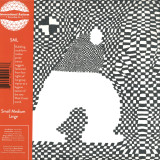
SML is bassist Anna Butterss (Jeff Parker, Daniel Villarreal, Makaya McCraven), synthesist Jeremiah Chiu (Ariel Kalma, Marta Sofia-Honer), saxophonist Josh Johnson (Jeff Parker, Makaya McCraven, Nate Mercereau, Marquis Hill), percussionist Booker Stardrum (Amirtha Kidambi, Carl Stone, Lee Ranaldo, Patrick Shiroishi), and guitarist Gregory Uhlmann (Sam Wilkes, Meg Duffy, Perfume Genius). Their debut album Small Medium Large began as a collection of long-form improvisations recorded during two
separate two-night stands at beloved Highland Park venue ETA, a major development site for the burgeoning new LA jazz & improvised music sound, which unfortunately closed its doors permanently at the end of 2023.
The venue, perhaps best known outside of LA for Jeff Parker’s 2022 album Mondays at the Enfield Tennis Academy, was the perfect location for the start of SML, especially given that both bassist Anna Buterss and saxophonist Josh Johnson are in the quartet featured on that record. Small Medium Large was engineered and recorded in stereo direct to Nagra by Bryce Gonzales and compiled, arranged, and edited with additional production, recording, and
studio composition by SML.
While editing, chopping, and rearranging stereo mixed improvisations is hardly a new concept (for a modern and relevant example we can look to Makaya McCraven’s output on IARC) these results are a stunning expansion of the Teo Macero / Miles Davis editing concept explored on classics like Bitches Brew, On The Corner, and Get Up With It. Stylistically though, these recordings have more in common with the proto trance repetitions of Harmonia, and with Holgar Czukay’s re-assemblage technique used in his work with Can. Throw in a supremely intuitive utilization of Susumu Yokota’s floating patterns polyrhythm concept and we have a truly entrancing take on time-clocked electronic rhythms augmenting with live percussion, yet maintaining that elusive human sway.
Following a handful of singles and EPs, and a series of live performances that have only served to heighten the group's intensity and strengthen its sound, Bada-Bada - the trio of sought after instrumentalists/producers Lilian Mille, Tiss Rodriguez and Leo Fumagalli - finally unveil Portraits, their debut album. As a flagship of a new exciting French scene, melting the jazz idiom with the most innovative instrumental music, Bada-Bada stands out for its rare ability to transcend genres and to use the studio as an instrument in its own right.
“With this band, it’s all about searching for a sound”, says drummer Tiss Rodriguez. “It’s a quest for a sound as much as a quest for meaning," adds Leo Fumagalli (saxophone). A quest that requires unrushed studio experiments, of course, but one that never forgets to draw on the unmatched energy of the live performance and the chemistry at work between an audience that understands a band’s language and intentions and give it time to unfold them, and musicians at the top of their game.
Bada-Bada's sound is informed by its members’ backgrounds – all of whom have put their academic training to good use by confronting it with experience; by the way they relate to the time they’re living as much as the History of music; and by their ability to encapsulate a body of forward-thinking instrumental music (electronica, symphonic music, trance-based music and 21st century jazz).
- A1: The Style You Haven't Done Yet
- A2: Why Is That? (Single Edit)
- A3: The Blueprint
- A4: Jack Of Spades (Lp Version)
- B1: Jah Rulez
- B2: Breath Contro
- B3: Who Protects Us From You?
- B4: You Must Learn
- C1: Hip Hop Rules
- C2: Bo! Bo! Bo!
- C3: Gimme Dat (Woy)
- C4: Ghetto Music
- D1: World Peace
- D2: Jack Of Spades (Remix)
- D3: Why Is That? (Remix)
PRESSED ON BLUE INK-IN-CLEAR COLORED VINYL IN A GATEFOLD JACKET WITH OBI, A FOLD-OUT LYRIC INSERT AND TWO BONUS REMIXES
Among hip-hop fans, Boogie Down Productions first two albums – Criminal Minded (1987) and By All Means Necessary (1988) – loom very large. And for good reason: they both captured one of the late 1980s most important and influential crews at their highest powers of lyricism and musical invention. That said, too many people sleep on BDPs third LP, Ghetto Music. Released in 1989, when the hip-hop world was truly beginning to explode and reach new heights of sales and exposure around the world, the album is arguably as powerful as the group's first two. As on By All Means Necessary, in the wake of the tragic death of the founder, producer, and DJ Scott LaRock, KRS-One pushed along mightily on the production side, with help from his extended crew. Musically the sound created on albums 2 & 3 was funky, catchy, and continually innovative, giving him the perfect backdrop to build his Edutainment syllabus. Lyrically there was never a question about KRS-One's power, and on Ghetto Music he continues to impress, teach, and ask important questions. Clear cases in point are two of the album's singles, "You Must Learn" and "Why Is That?" but he gets even deeper on tracks like the anti-police thought-piece "Who Protects Us From You" (still sadly relevant in 2024), "Ghetto Music" and "World Peace." Out of print on vinyl since 2017, Get On Down in partnership with Sony's CERTIFIED is proud to present this '89 classic fresh for 2024 you suckas! Pressed for the first time on double-colored vinyl and packaged in a gatefold jacket with a fold-out lyric sheet and two bonus remixes.
Vinyl reissue of 2021 cassette release: Tokyo visionist Soshi Takeda’s second album took shape across eight months of the winter and spring, inspired by an iconic mid-80’s photography book of Chinese landscapes. Scenes of lantern-lit fishing boats on misty mountain lakes seeded a mood of hidden paradise, with ancient waterways snaking secret paths into the past.
Recorded at his home studio using hardware synths and samplers from the 1990’s, the six songs of Floating Mountains (plus digital-only bonus track, “Deep Breath,” from the 2nd Life Silk compilation) evoke shrouded vistas of liquid skies and shining lakes, like some Li River twist on Balearic half-light house. Shades of cosmic drift and crystalline electronica ebb and flow within the nocturnal pulse, pagodas and pearls reflecting the waning moon: “I hope you can feel the cool and exotic atmosphere.”
- A1: Ouverture
- A2: Opéra Sirocco
- A3: Il Était Une Fois
- A4: L'envol
- A5: L'ascenseur
- A6: Un Petit Tour
- A7: Le Cadeau
- A8: L'ile Aux Mariés
- A9: Le Deltaplane
- A10: Orage
- B1: Berceuse Flashback
- B2: Terres Interdites
- B3: Duel
- B4: Le Souffle De Vie
- B5: La Marelle
- B6: Le Souffle Magique
- B7: Le Passage
- B8: Les Adieux
- B9: Le Royaume De Sirocco
« Most aresting, however, is the film's use of sound and music, which give each scene an atmospheric lilt. »
Maya Phillips
In order to celebrate the first anniversary of Sirocco and the Kingdom of Winds, the animated film by benoît Chieux, Stereo Rônin Records partners with Cristal Publishing, Sacrebleu Production, Take Five, and Ciel de Paris to offer a limited vinyl edition of the original soundtrack composed by Pablo Pico.
The soundtrack of Sirocco and the Kingdom of Air Currents, composed by Pablo Pico, stands out for its melodic richness and immersive atmosphere. It accompanies the journey of Juliette and Carmen through a fantastical world. The music blends traditional instruments with modern sounds, creating a nostalgic yet dynamic ambiance. The themes evoke adventure, discovery, and magic, enriching the film’s visual narrative. With his captivating compositions, Pablo Pico captures the essence of the story, providing an auditory experience that perfectly complements the film's universe.
Synopsis
Juliette and Carmen, two fearless sisters aged 4 and 8, discover a secret passage to the Kingdom of Air Currents, their favorite book. Transformed into cats and separated from each other, they must show courage and daring to reunite. With the help of the singer Selma, they will try to return to the real world by confronting Sirocco, the master of winds and storms... But is he as terrifying as they imagine?
“Being able to release this magnificent soundtrack composed by Pablo Pico is a great pride and a real pleasure. I want to open our catalog to unique works and universes. Being able to do this from our second published title, with a first foot in the world of animation, with Sirocco is an important shift for the label”
Frédéric Claquin – Stereo Ronin
“Sirocco’s music is like a deep breath. It was inspired by the fantastic universe of the film, the epic breath and the fantasy of the characters. I hope that with this vinyl edition, you will be able to relive the adventures of Juliette and Carmen and that the songs of Selma will take you far to the Kingdom of Air Currents”
Pablo Pico – Composer
“Cristal is a music publishing house, specializing in music for images, committed to working alongside composers for over 25 years. Our mission is to highlight the emotions sought in audiovisual productions, we choose our projects carefully, Sirocco was a real favorite, both on the subject and on its treatment, where music has its place, and becomes a real actress in the film. The talent of Pablo Pico brings this accuracy to the story”
Eric Debègue – Cristal Group.
- How Maps Work
- Second Piano
- Perpetual Underground
- Hook & Sinker
- Wrong Pocket
- Odd Numbers
- Short Circuits
"It's a game of hopscotch while drunk on sleep deprivation. It's a dance based on inaudible, but irrepressible rhythms. It's interaction dressed up like a call & response game wrapped up in a sparring match full of agitation and confusion. It's a manic pursuit over wobbly scaffolding, broken roof tiles or a creaking suspension bridge. It's an irregular movement that snaps, roars, drips, defies, tumbles, slithers, cajoles, interrupts, sizzles, triples, dodges, throws curveballs, causes panic, restores order, well kinda, and stutters and mutters. It's like Jaap Blonk's invented Onderlands: a language that sounds familiar, but that ultimately defies comprehension. It's part application and part imagination, it's a mystery and a trap. It's a system, perhaps, and an attempt at something, probably, but it's not, definitely not, a holiday. The idea!" - Guy Peters Ken Vandermark (US) and Terrie `Ex' Hessels (NL) have been playing together for years. For example, the Chicago reed player has been a guest with The Ex almost 100 times and the two are also part of Lean Left, an explosive improvising quartet with Andy Moor and Paal Nilssen-Love. It took them until 2014 before they went on stage for the first time as a duo. A dozen concerts followed on various international stages and resulted in their first LP `Scaffolding' recorded upstairs in the Witte Villa, Wormer. Released in 2019. This new release is the result of an blasting tour in Poland, 2021. Recorded live in the SARP Social Club in Poznan. `This is not a holiday!' Eight improvisations; eight musical adventures!
- A1: Suzanne Ciani - Jungle Vint
- A2: Marina Herlop - Collige Virgo Gladium
- A3: Lord Of The Isles - Ca11
- A4: Le Motel - Serenade Of The Seas
- B1: Pépe - And Everything Glimmers
- B2: Kettel - Opsterland 99
- B3: Wordcolour - Weightless
- B4: Plaid - Unions
- C1: Seph - Lunarglass
- C2: Kode9 - Nuvola
- C3: Simo Cell - Jesus Suave
- C4: Nueen - Potentia Gaudendi
- D1: Gazzi - Trece
- D2: Μ-Ziq - Holmbush 2
- D3: Naemi - Ambergris
- D4: Claraguilar - Vega
A gas generator, a hi-fi system, a semi-abandoned house, and 20 hastily printed flyers. That's how, almost without realizing it, Lapsus was born in 2004. Over the course of two decades, we've ridden a rollercoaster of emotions: from soaring epiphanies, convinced that nothing could stop us, to moments of near defeat when we almost threw in the towel. Let's be honestMaking a career out of music is not exactly choosing the easy path. But epic tales aside, today we look back with pride at having created something that, in our humble view, is genuine. To celebrate Lapsus' journey and what lies ahead--and also keeping an eye on what is yet to come--we've gathered some of the artists who have joined us along the way, musicians we consider friends and for whom we have the deepest admiration. In a way, VINT (Catalan for ''twenty'') is like a sonic photo album, a tracklist that tells our story better than we could ourselves, a collection of unreleased music that celebrates the fact that we've made it this far. Leading this outstanding compilation are forward-thinking producers, with contributions from some of the most respected names in cutting-edge electronic music (A-Z): CLARAGUILAR, GAZZI, Kettel, Kode9, Le Motel, Lord Of The Isles, Marina Herlop, naemi, Nueen, Pepe, Plaid, Seph, Simo Cell, Suzanne Ciani, Wordcolour, and u-Ziq. VINT is our way of thanking you for your unwavering support over these 20 years. We hope you enjoy it!
- A1: Prologue 3 02
- A2: Abel's Theme 1 49
- A3: Saori's Determination 2 16
- A4: Death Of Athena 3 20
- A5: Fight Against The Gods 1 21
- A6: Fervent Knights 2 36
- A7: Underworld 3 48
- A8: Phoenix Phantom 1 43
- A9: Gemini Knight's Rebellion 2 13
- B1: Never-Dying Spirit 3 14
- B2: Great Flood Of Deucalion 4 07
- B3: Face-Off 1 11
- B4: Reincarnation Of Athena 4 01
- B5: Collapsed Temple Of The Sun 5 24
- B6: You Are My Reason To Be 2 34
*Saint Seiya* continues its epic journey on vinyl!
With a new release, *Movie Collection*, dedicated to the music from the film *The Warriors of Abel*.
The Sun God, fallen from Greek mythology and brother of Athena, appears on Earth accompanied by his Corona Knights and the resurrected Gold Saints. He announces the imminent end of the Earth and comes to take his beloved sister, Athena. Seiya, Shun, Shiryu, Hyoga, and Ikki watch helplessly as their goddess abandons them and joins the all-powerful Abel. Is this the end of Athena's Saints and the Earth?
As with the previous vinyls, Seiji Yokoyama and the Andromeda Harmonic Orchestra transport us with their symphonic music through this dark yet hope-filled universe.
In addition to the unique musical proposals and the large body of work that they have developed separately, Amelia Cuni and Werner Durand have been performing together as a duo as well as in collaborations (Tonaliens, Born of Six) for more than 20 years. Fusing her Indian Raga singing in the Dhrupad style with his minimalist and experimental approach, they have expanded the reach of their soundworlds as well as proposed new paths for contemporary music.In this occasion, Uli Hohmann joins them in a range of hand drums from the Middle East and North Africa, plus a dulcimer-sounding hammered guitar. Durand's various self-made wind instruments, soprano sax, and blown kalimba shine along with Cuni's astounding vocals, which are sometimes sung through a mirliton (a medieval type of kazoo). Clearing is the trio's first published recording.
Seconds of Thirst, recorded in one session at Uli´s studio in Bavaria in early 2014, is truly a conjuring where distinctive balances come to gather. A deep drone unfolds patiently in a hypnotic manner, comprised by Werner's characteristic PVC clarinets, a hammered guitar played by Hohmann, and subtle electronic tones. Above all, Amelia's singing voice, filtered through the mirliton, drifts buzzing along the gradually shifting harmonic waves, meandering through serpentine melodic lines and microtonality.
In the middle pieces, vocals turn into an ethereal multi-layered chorus, an exotic and astonishing instrument pulsing delicate and vaporously, like a gliding silk sail without a mast to bind it. Misty ambiances linger on as the soft atmosphere disperses the weight of undelivered syllables. Just intonation aligns the pan-ney's winds with vocal navigation. Foe to scattering, hurry, and affectation, Clearing's pace has lifted a fog translucent enough to reveal treetops calmly appearing, efficiently condensing damp into definite drops that fall drumming, forecasting what's yonder.
With a condensing sound going from Buddhist morning chants down to Indian festive traditional music, the title track, which closes the album, is the most vibrant of all, permeating a bit of commotion through buzzing drones and galloping percussion. Without disorder, yet without measure. Clearing is therefore this shuttle into the distance, this space that weaves, unites, and tenses the different cords that we are made up of.
When the clouds advance silently, gray, until they become dark in a few minutes, it means that the monsoon is coming. It reaches us without apparent noise, but then resounds in its images, leaving behind lightness, freshness, clarity, and a tremendous luminosity that comes from so far away: from the Himalayas, from so ancient, from Sanskrit, from a sound where the darkness and the divine, where the concrete and the landscape, where the rock and the humidity leave a mark that brings together and ties a sky loaded with new clouds.
DJ PT is a series dedicated to the minimalistic side of dance music.
Recorded in one take using an MPC and synth, these tracks allow you to get familiar with the sounds while delivering a high dose of machine funk. With no further editing, Dona offers an unfiltered, genuine interaction between himself and his machines—transparent and true to the moment
It’s abundantly clear from the first bars of their 5th studio album Through Other Reflection, that this is, and could only ever be, The Soundcarriers. From the enchanting vocal duets of folk-bidden Chanteuses Leonore Wheatley and Dorian Conway; to the precise bass lines of Paul Isherwood and the limber, jazz-cool, Hal Blaine-esque drums of his his co-songwriter Adam Cann; from the fairy-like flutes, 60s-garage guitars and organ sounds pilfered from the archives of exotica - listening to the Soundcarriers resembles a rediscovery of all the most prized, esoteric corners of the 1960s, all bundled up, warped and refracted through the quartet’s astutely modern cultural lens. Channelling Tropicalia, Middle Eastern psychedelic Jazz/Funk, The French Library sounds of Nino Nardini, and a whole host of lavish obscurites beside, Through Other Reflection delivers another sonic adventure from one of the most unique and distinctive voices of British Psychedelia. After an 8 year wait for their album 4 - 2022’s Wilds - it thankfully didn’t take so long for the follow-up this time round. In many ways, this feels like a companion to Wilds; recording again at their Nottingham warehouse studio, Through Other Reflection retains that same organic glow, all the passions and imperfections of a tightly clipped unit jamming out these living, breathing pop-art nuggets as if straight onto the acetate.”We wanted to keep an air of spontaneity with this album and not get too bogged with the recording process”, explains Cann, “It was more a case of getting the songs as tightly written and arranged as possible first so we could get them down quickly in the studio. It always takes longer than you think” Less packed with strident pop hooks as its predecessor however, the music of Through… has been given extra licence to breathe, stretch out, and wander more uncharted terrains. While gleaming psych-pop of tracks like ‘The City Was’, or ‘Already Over’ confidently carry on from where they left off, from the album’s 2nd track ‘Always’, the trip becomes a little less predictable. Starting out as a smoky Procol Harum-meets-French-Psych organ ballad, the music drifts, as if of its own accord into an eerie, garage trance that lingers, cycles, and hypnotises, growing ever stranger, reaching ever-further away from its point of conception. And almost every track on Through Other Reflections holds that outer-body moment, where the band fix themselves on a limber, lysergic groove, lose all grip on time and reality, and melt themselves away into a liquid state of blind euphoria. There are sequences on this record that feel more like rituals than songs, built upon a single hypnotic rhythm which, like the centre of a vortex, pulling everything under its beatific command. Take the finale to ‘What We Found’ for instance, sounding like a ghostly march across the psychedelic moors, or ‘Feel The Way’, where a single athletic drum-loop rises and rises, growing ever more urgent and suspenseful underneath its frantic harpsichords and rasping flutes. Full of such rich stylisms as these, The Soundcarriers showcase themselves as abstract storytellers par excellence by virtue of their textures and arrangements alone. Resembling Romantic composer Maurice Ravel, but if he had just a four-piece rock band at his disposal, Through Other Reflects is rich with detail; there’s shakers, rattles, clarinets, booming drums; there’s synthesiser swarms, chiming xylophones, vintage organs and experimental Cluster & Eno-esque ambiences. Within all this nuance the music flows like some undisclosed narrative swathed in a magnetic secrecy. “It almost comes across like a story in some ways”, says Cann of the album, “the music is quite sectional with elements of exotica and cinematic type layers, it's a good balance of grooves, tunes and weirdness”. No more is this “epic cinematic feel” heard more proudly than on short instrumental ‘Sonya’s Lament” - its innate, hauntological atmospheres befitting a Peter Strickland soundtrack, or the classics of Lex Baxter, the so-called ‘Founder of Exotica’ himself. On the other hand, providing a greasier undercurrent to all these bucolic sounds is a leaning towards a more “direct” lyricism referencing more “external concerns. Laying down the first tracks for the album in the wintry gloom of pre-lockdown 2020, and drawing inspiration from time spent in Berlin, Through Other Reflections returns to some of the post-apocalyptic futurism explored in 2014’s Entropicalia - a loose concept album inspired by J.G Ballard’s The Drowned World. “The songs explore a disillusionment with the way things are going particularly after 40 years of neoliberalism”, says Cann, “They follow that folk-song tradition of wanting to escape to an imagined time, but here it’s more urban than pastoral. The first couple of ideas I came up with when doing some music in Berlin and had some time to wander aimlessly. And think the atmosphere seeped in, particularly on The City Was and Already Over. He continues, “One aspect of the title, ‘Through Other Reflections’ is about synthesis and layers of influence. How things can be filtered through other things and change the perspective. This is something you get in cities as well.” Though, as with everything The Soundcarriers make, “It can mean anything. It also just sounds kind of cool.”
"This is the time that we, who have benefitted from the Last Poets shouldbe able to say, 'it's the Last Poets. It's them we should be honouring, because we did not honour them for so many years_"
KRS One wasn't just addressing the hip hop fraternity when he uttered
those words by way of introducing the video for Invocation - a poem
written thirty years ago, around the time of the Last Poets' last significant comeback. He was speaking to everyone who's been affected by the word, sound and power issuing from the most revolutionary poetry ever witnessed, and that the Last Poets had introduced to the world outside of Harlem at the dawn of the seventies.
In 2018 the two remaining Last Poets, Abiodun Oyewole and Umar Bin
Hassan, embarked on another memorable return with an album -
Understand What Black Is - that earned favourable comparison with theirseminal works of the past, whilst showcasing their undimmed passion andlyrical brilliance in an entirely new setting - that of reggae music. Trackslike Rain Of Terror ("America is a terrorist") and How Many Bullets demonstrated that they'd lost none of their fire or anger, and their essential raison d'etre remained the same.
"The Last Poets' mission was to pull the people out of the rubble o f their lives," wrote their biographer Kim Green. "They knew, deep down that poetry could save the people - that if black people could see and hear themselves and their struggles through the spoken word, they would be moved to change."
Several years later and the follow-up is now with us. The project started when Tony Allen, the Nigerian master drummer whose unique polyrhythms had driven much of Fela Kuti's best work, dropped by Prince Fatty's Brighton studio and laid down a selection of drum patterns to die for. That was back in 2019, but then the pandemic struck. Once it had passed, the label booked a studio in Brooklyn, where the two Poets voiced four tracks apiece and breathed fresh energy, fire and outrage into some of the most enduring landmarks of their career. Abiodun, who was one of the original Last Poets who'd gathered in East Harlem's Mount Morris Park to celebrate Malcolm X's birthday in May 1968, chose four poems that first appeared on the group's 1970 debut album, called simply The Last Poets. He'd written When The Revolution Comes aged twenty, whilst living in Jamaica, Queens. "We were getting ready for a revolution," he told Green. "There wasn't any question about whether there was going to be one or not. The truth was many of us still saw ourselves as "niggers" and slaves. This was a mindset that had to change if there was ever to be Black Power." He and writer Amiri Baraka were deep in conversation one day when Baraka became distracted by a pretty girl walking by. "You're a gash man," Abiodun told him. The poem inspired by that incident, Gash Man, is revisited on the new album, and exposes the heartless nature of sexual acts shorn of intimacy or affection. "Instead of the vagina being the entrance to heaven," he says, "it too often becomes a gash, an injury, a wound_" Two Little Boys meanwhile, was inspired after seeing two young boys aged around 11 or 12 "stuffing chicken and cornbread down their tasteless mouths, trying to revive shrinking lungs and a wasted mind." They'd walked into Sylvia's soul food restaurant in Harlem, ordered big meals, then bolted them down and run out the door. No one chased after them, knowing that they probably hadn't eaten in days. Fifty years later and children are still going hungry in major cities across America and elsewhere. Abiodun's poem hasn't lost any relevance at all, and neither has New York, New York, The Big Apple. "Although this was written in 1968, New York hasn't changed a bit," he admits, except "today, people just mistake her sickness for fashion." Umar is originally from Akron, Ohio, but had arrived in Harlem in early 1969 after seeing Abiodun and the other Last Poets at a Black Arts Festival in Cleveland. That's where he first witnessed what Amiri Baraka once called "the rhythmic animation of word, poem, image as word- music" - a creative force that redefined the concept of performance poetry and stripped it bare until it became a howl of rage, hurt and anger, saved from destruction by mockery and love for humanity. When Umar's father, who was a musician, was jailed for armed robbery he took to the streets from an early age where he shined shoes and raised whatever money he could to help feed his eight brothers and sisters. By the time he saw the Last Poets he'd joined the Black United Front and was ready to join the struggle. Once in Harlem, Abiodun asked him what he'd learnt in the few weeks since he'd got there. "Niggers are scared of revolution," Umar replied. "Write it down" urged Abiodun. That poem still gives off searing heat more than fifty years later. In Umar's own words, "it became a prayer, a call to arms, a spiritual pond to bathe and cleanse in because niggers are not just vile and disgusting and shiftless. Niggers are human beings lost in someone else's system of values and morals." And there you have it. It's not just race or religion that hold us back, but an economic system that keeps millions in poverty and living in fear - a system born from political choice and that's now become so entrenched, so bloated on its own success that it's put mankind in mortal danger. It was many black people's acceptance of the status quo that inspired Just Because, which like Niggers Are Scared Of Revolution, was included on that seminal first album. Along with their revolutionary rhetoric, it was the Last Poets' use of the "n word" that proved so shocking, but it would be wrong to suggest that they reclaimed it, since it never belonged to black people in the first place. There's never any hiding place when it comes to the Last Poets. They use words like weapons, and that force all who listen to decide who they are and where they stand. Umar's two remaining tracks find him revisiting poems first unleashed on the Poets' second album This Is Madness! Abiodun had left for North Carolina by then where he became more deeply enmeshed in revolutionary activities and spent almost four years in jail for armed robbery after attempting to seize funds related to the Klu Klux Klan. Meanwhile, the 21 year old Umar was squatting in Brooklyn and had developed close ties with the Dar-ul Islam Movement. A longing for purity and time-honoured spiritual values underpins Related to What, whilst This Is Madness is a call for freedom "by any means necessary," and that paints a feverish landscape peopled by prominent black leaders but that quickly descends into chaos. "All my dreams have been turned into psychedelic nightmares," he wails, over a groove now powered by Tony Allen's ferocious drumming. Those sessions lasted just two days, and we can only imagine the atmosphere in that room as the hip hop godfathers exchanged the conga drums of Harlem for the explosive sounds of authentic Afrobeat. Once they'd finished, the recordings and momentum returned to Prince Fatty's studio, since relocated from Brighton to SE London. This was stage three of the project, and who better to fill out the rhythm tracks than two key musicians from Seun Anikulapo Kuti's band Egypt 80? Enter guitarist Akinola Adio Oyebola and bassist Kunle Justice, who upon hearing Allen's trademark grooves exclaimed, "oh, the Father_ we are home!" Such joy and enthusiasm resulted in the perfect fusion of Nigerian Afrobeat and revolutionary poetry, but the vision for the album wasn't yet complete. He wanted to create a new kind of soundscape - one that reunited the Poets with the progressive jazz movement they'd once shared with musicians like Sun Ra and Pharoah Sanders. It was at that point they recruited exciting jazz talents based in the UK like Joe Armon Jones from Mercury Prize winners Ezra Collective, also widely acclaimed producer/remixer and keyboard player Kaidi Tatham, who's been likened to Herbie Hancock, and British jazz legend Courtney Pine, whose genius on the saxophone and influence on the UK's now vibrant jazz scene is beyond question. The instrumental tracks on Africanism are in many ways as revelatory and exciting as the Last Poets' own. It's important to remember that the kaleidoscope of styles and influences we're presented with here aren't the result of sampling but were played "live" by musicians responding to sounds made by other musicians. That's where the magic comes from, aided by Prince Fatty's peerless mixing which allows us to hear everything with such clarity. Music fans today have grown accustomed to listening to all kinds of different genres. Their tastes have never been so broad or all- encompassing, and so the music on this new Last Poets' album is as groundbreaking as their lyrics, and perfectly suited to the era that we're now living in. John Masouri
Lamina is the moniker of multi-disciplinary French artist Clarice Calvo-Pinsolle. 'Olas Curativas' is Calvo-Pinsolle's first vinyl release. Taking influence from the natural world, works of hydrofeminism, and experiences with hypnotism, Calvo-Pinsolle prolifically performs and records her own refreshing take on ambient music alongside working as an established installation artist. She has previously released two full-length albums on Orila Records & Complex Holidays, as well as a joint LP with Kitchen Cynics, and a collaboration project with Bear Bones Lay Low under the moniker XAXI. Her discography is fleshed out by various contributions to compilations, including the opening track 'Soupire' on Twin System's 'Tendrils Lurched Purple In The Slush' tape series. Radio play of Laminas music includes Graham Dunning / NTS, Emil Mirzoev/ Kiosk Radio, Laura de Diaz / CAMPO BASE, xYsse / Radio Vacarme, Melina Despretz / Kiosk Radio, Chris Penty Alvarez / Noods Radio, Leoni Leoni / Radio Alhara, Laura Connant / Ola Radio, Bravo Tounky / Rootradio. Performances of material from 'Olas Curativas' include shows at Cafe Oto / London, Cosmos / Lisboa, TV Control Center / Athens, Iklektic / London, Braille Satellite / Lithuania, Slug Gallery / Leipzig, Spazio X / Treviso, Krut Festival / Ghent, Schiev Festival / Brussels, Woodblocks Festival / Brussels.
'Olas Curativas' was developed and written in 2022, with these pieces first heard as live jams at shows mainly around Brussels and Portugal, before being honed into this mesmeric full-length LP. Calvo-Pinsolle's effective use of manipulated field recordings and tape loops provide a backdrop for harmony that leans towards the mystical, brimming with melodies equal parts haunting and enchanting. Alongside harvesting a sound library over the past several years, Calvo-Pinsolle has developed an approach to composition using field recordings that informs both her musical and sculptural work. These recordings are transformed much like the ceramics seen in the record artwork; shaped, chiseled, and transformed. These ceramics were crafted and painted by Calvo-Pinsolle herself, and hints at this bridge between her two disciplines of music and sculpture. Although an expansive realm, throughout Calvo-Pinsolle's output there are consistent moods and qualities that are absolutely distinctive to this artist's creative worldview, and of which 'Olas Curativas' is a perfect encapsulation.
- Sonores
- Brushstrokes
- Moonfall
- Lifted
- Embrace Before We Forget
- Flutterings
- Encore Elektrik
- Paris-Berlin
- Giving Thanks
- Breve
Black Vinyl[24,58 €]
Breve is the new album by Stefan Paul Goetsch aka Hainbach.
"After a ceaseless amount of work and family struggles, 2023 had left me empty and tired. Instead of the many hats I usually wear, I shifted my focus exclusively on my music. For two weeks every day I sat down behind a few modular synths, a toy piano and an Ondioline, recording tape after tape. I did not lock myself in though - my kids were playing around me, commenting, touching knobs, adding oscillations. What in „deadline times“ can be disrupting, became restorative. I was with my family, just drifting on waveforms. I hope some of that atmosphere shines through, and the album can help you to find peace as it did for me.
Thanks to Forgotten Futures for the loan of the Ondioline and technician Daniel Kitzig for the beautiful restoration work." - Hainbach
Based out of Berlin, Germany, electronic music composer and performer Hainbach creates shifting audio landscapes THE WIRE called "One hell of a trip". His music has been released on Opal Tapes, Seil Records, Spring Break Tapes, Limited Interest and Marionette. He has been fascinated with sine tones, noise and FM since he discovered the dial on the radio. Never losing his childhood wonder, he still searches for the sounds in between on modular synths and other devices.
- The Line
- Red Rainbow
- Mercy
- Falsetto
- Aegis
- Redeemer
- Doorstep
- Trick Of The Light
RIYL: Portishead, Thom Yorke, BEAK>, SUUNS, TR/ST, Radiohead. Solo project of Robert Toher who was the creator of ERAAS. Covered by Quietus,Pitchfork, NME, Stereogum, Earmilk, The 405, Clash, BBC Radio, Clash and more.... Public Memory is a mixture of damaged and dubbed-out percussion, unfurling synths and sparse sampling - all strung together by producer Robert Toher's spectral tenor. The project's sophomore LP, Demolition follows 2017's Veil of Counsel EP and 2016's Wuthering Drum LP with cinematic fortitude. While Public Memory's prominent krautrock and trip-hop rhythms are represented here, Demolition explores a greater range of tempos and an expanse of alien emotions with layers of electronic drums, live drums, Korg synths and samples from nature. Themes of rebirth and reflection imbue the album's atmosphere, rich in tape delay, spring reverb, and textures that conjure a sci fi and supernatural narrative. Opener "The Line" sets the album in motion with a driving energy and introspective unease, as if estranged from the world it was created in. A meditation on impending collapse, "Red Rainbow" begins with an arpeggiated melody that hints at a sense of dread. Like the darkness of night descends, the track unfolds with haunting atmospherics and howling synths, finishing with an unexpected climax that ominously builds until at last it falls apart, quickly, softly, without incident. The slowtempoed "Aegis" reflects on the banal reality of love lost, with shuffling rhythms, lingering inflections and a growling synth at its core. Toher's adept use of space and tension articulates the world of Demolition as eerie, emotive, and above all, narcotic. Each track is an existential procession. "Turning out the lights on your illusion," Toher sings to close the album, accepting that change is an inescapable condition of being.