The EP lands hot on the heels of her relocating to London after selling out three
Australian headline shows in Melbourne, Sydney & Brisbane and a packed out
summer of touring across the UK/ EU festival circuit. The multi- hyphenate has
been releasing left- leaning house & techno over the last few years which has
been causing a stir on dancefloors worldwide alongside playing dozens of
festivals across the UK, Europe & Australia (Glastonbury, Lost Village, AVA,
Parklife, Gottwood & more) With DJ support from Bonobo, Fred Again.., Barry
Can't Swim, George Fitzgerald, Romy (from The xx), Confidence Man alongside
international media support from Resident Advisor, Mixmag, BBC Radio 1, DJ
Mag, Triple J, Dazed & more.
Enveloping the space between all-out bangers and bittersweet love songs, Pretty
Girl's new EP is a six- track missive that demonstrates her ability to balance
romantic mood pieces with euphoric club moments. Glittering vocals, high-energy
drums and masterful production provide the musical backdrop for the new EP,
which is laced with symbols of transformation and personal development.
quête:symbol one
Presenting 3+5, the long-awaited eighth album from Tokyo-based noise-rockers Melt-Banana on their own A-Zap label! The album showcases the duo’s visionary musical approach and extraordinary abilities as performers: Yasuko Onuki’s giddy, hyperactive vocalizing and Ichiro Agata’s glitchy, cyberpunk guitar, delivered at dizzying speed, bathed in aggressive electronic sounds. Their aesthetic approach is exultantly experimental, fusing diverse genres imbued with chaotic energy. As on their previous works, the music on 3+5 is unpredictable, always filled with surprises and excitement. 3+5 synthesizes elements of a variety of extreme music, hyper-pop, classic punk, vintage metal, and noise. It partakes of Japanese culture overall, especially the subcultures of gaming, anime and underground music. Melt-Banana seek to offer possibilities to musicians who won’t start a band if they can’t find a drummer, young women afraid to express themselves in their own unfiltered and unique voices, bedroom musicians and egg punks seeking to blend electronic noise with live instrumentation. 3+5 provides a fresh experience and perhaps inspiration for all. While Melt-Banana hasn’t explicitly explained the meaning behind the album’s title, 3+5, prime numbers symbolize mathematical integrity and independence, which could represent the band’s uniqueness and freedom. Why “3+5” and not “1 + 7”? One is left to ponder.
Kompakt is proud to announce, finally, a reissue of the first, self-titled GAS album. Originally released on electronica imprint Mille Plateaux back in 1996, it’s been unavailable in its original form ever since – the version of GAS included in 2008’s Nah Und Fern box featured several different tracks. Here, however, GAS is restored in all its glory, the debut full-length from Wolfgang Voigt’s most enigmatic, quixotic project.
There had, of course, been signs of what was to come. Back in 1995, Voigt essayed the first GAS release, a slender, yet remarkable four-track EP, Modern. Its centre label featured a reduced symbol – an overhead or lamp light, switched on, its glow radiating outwards in four bold black lines – a perfect representation of the tight, stylised ambient electronic pop contained on that 12”. A few curious compilation tracks were floating around, too, for Mille Plateaux’s Modulation & Transformation and Electric Ladyland series. If you were attentive enough, you could tell something was up.
But nothing quite prepared us for the languorous, effervescing loops and regular-like-clockwork beats that Voigt folded together on GAS. Its six long tracks, all untitled, neither begin nor end but hazily fade into earshot, vibrate majestically in your cochlea for fifteen-or-so minutes – some a bit shorter, some longer – and then meander away, reading the mise-en-scène for the next example of Voigt’s drift and dream logic to unfold. The material is referential in the most distant way, and you can sense only the most evanescent of ghostly presences, haunting these six compositions.
GAS feels, also, like a more pliable hint at what’s to come, as the GAS concept really solidified on its successor, 1997’s Zauberberg, and reach its apotheosis on Königsforst and Pop. Those three albums share a very similar palette – blurred, hazy samples, often of classical music, stacked and cross-thatched across a muted 4/4 thud. GAS, then, is an outlier of sorts: it’s more expansive in its remit, lighter in its mood, perhaps more fleet of foot. This, of course, is part of its charm.
In clearing space for Voigt, by preparing the terrain, GAS sits both at the edge of the forest, and at the verge of an expansive, wide-eyed future; one where GAS would become truly eternal.
Text by Jonathan Dale
Kompakt ist stolz, endlich eine Neuauflage des ersten, selbstbetitelten GAS-Albums ankündigen zu können. Ursprünglich im Jahr 1996 auf dem Electronica-Label Mille Plateaux veröffentlicht, ist es seitdem nicht mehr in seiner ursprünglichen Form erhältlich – die gleichnamige Version von GAS, die 2008 in der Nah Und Fern Box enthalten war, enthielt verschiedene andere Titel. Nun liegt das 3er Album in seinem naturbelassenen Originalzustand wieder vor.
Bereits 1995 zeichnete sich mit der Maxi GAS - Modern auf Profan, sowie einigen Kompilation-Beiträgen auf Modulation & Transformation und Electric Ladyland auf Mille Plateaux dieser frühe, weltentrückte, rätselhafte GAS Sound ab, der sich erst in den sechs scheinbar endlosen, majestätisch-sprudelnden Tracks des Albums voll entfaltete. Die Musik ist von ätherischer Leichtigkeit, in der wie aus einer anderen Sphäre abstrakte Referenzen aus weiter Ferne nur andeutungsweise herüberzuwehen scheinen.
Dieser frühe, eher sphärisch-leichte, gleich einer sonnendurchfluteten (Wald-)Lichtung anmutende GAS Sound, stellt gewissermaßen den Ausgangspunkt der audiovisuellen „Welt“-Reise in den düster-romantischen Acid-Wald dar, in den sich GAS ab 1997 mit den Alben Zauberberg, Königsforst, Oktember und ab 2000 mit Pop an anderer Stelle wieder hinaus und in seine ganz eigene Ewigkeit begeben hat.
Not everybody has not one, not two, but twelve producers attached to her debut release. Not everybody has her one and only album pranked by British artist Banksy (who substituted a topless photo for the cover). Nope, not everybody is Paris Hilton, who has lived in the public eye since, well, forever. She first announced plans to make an album in 2003, during her run on the reality TV series The Simple Life. Originally entitled Screwed, and then Paris Is Burning, the record—finally simply entitled Paris—came out in 2006. And it was…uh… good? Yeah, for real. This record goes expensively pedicured cuticle to cuticle with anything Britney Spears, Jessica Simpson or any other pop culture chanteuse of the like ever put out, and the Paris the heiress displays some real savvy both in her taste of material and the Madonna-like manipulation of her sex symbol image. And her voice? Definitely respectable despite what the haters said. Indeed, the single “Stars Are Blind” went top 20, and the album itself went all the way up to #6, selling over 600,000 copies worldwide. Since Paris has finally answered the pleas of her fans and made a second album, we thought the time was right for a revival of Paris, so we’ve taken the fetching photos from the CD package and given them plenty of acreage to show their stuff, with a gatefold jacket and 4-color printed inner sleeve. And for this release, we’re pressing Paris’ album in her favorite color, pink…and of course it’s hot! A pop culture keepsake from an enduring pop culture icon!
Not everybody has not one, not two, but twelve producers attached to her debut release. Not everybody has her one and only album pranked by British artist Banksy (who substituted a topless photo for the cover). Nope, not everybody is Paris Hilton, who has lived in the public eye since, well, forever. She first announced plans to make an album in 2003, during her run on the reality TV series The Simple Life.
Originally entitled Screwed, and then Paris Is Burning, the record—finally simply entitled Paris—came out in 2006. And it was…uh… good? Yeah, for real. This record goes expensively pedicured cuticle to cuticle with anything Britney Spears, Jessica Simpson or any other pop culture chanteuse of the like ever put out, and the Paris the heiress displays some real savvy both in her taste of material and the Madonna-like manipulation of her sex symbol image. And her voice? Definitely respectable despite what the haters said. Indeed, the single “Stars Are Blind” went top 20, and the album itself went all the way up to #6, selling over 600,000 copies worldwide.
Since Paris has finally answered the pleas of her fans and made a second album, we thought the time was right for a revival of Paris, so we’ve taken the fetching photos from the CD package and given them plenty of acreage to show their stuff, with a gatefold jacket and 4-color printed inner sleeve. And for this release, we’re pressing Paris’ album in her favorite color, pink…and of course it’s hot! A pop culture keepsake from an enduring pop culture icon!
Boxed set of five 7-inch vinyl records, 300 copies limited edition. Artwork poster included.
All tracks remastered from the original master tapes.
Alessandro Alessandroni is no longer remembered simply as 'the whistler' in Morricone's spaghetti western soundtracks – and rightly so, since he was the key figure behind much of Italian 'secret music' from the 60s and 70s, always there in the studio during recording sessions, whether as a multi-instrumentalist or as the leader of session vocal group I Cantori Moderni di Alessandroni. Today his pervasive presence and important role has been finally recognized by music professionals and enthusiasts alike, so much so that he is now considered the true father of Italian library music – a genre whose sound he shaped since 1968.
As a film composer, Alessandroni often worked for small productions that had very limited (and often regional-only) distribution, and whose budgets were worlds apart from those in the 'top league' where friends and colleagues like Morricone, Bacalov, Trovajoli or Piccioni thrived. Rarely released as a soundtrack, this music ended up, at best, forgotten inside dusty ¼-inch reels or, at worst, disappearing into thin air.
After a string of releases that have brought back to life forgotten or lost works by Alessandroni (Sangue di Sbirro, Afro Discoteca, Lost and Found, etc.), it was pretty natural for us at Four Flies to start delving into a little investigated area of his filmography: his scores for erotic films, the last genre to gain popularity in the flourishing Italian film industry of the 60s and 70s, and perhaps the most extreme too, the one that, by pushing things too far, eventually put an end to that industry and its genres.
So, we're now very proud to present Alessandroni Proibito, an exclusive boxed set of five 7-inch records. It contains a total of 14 previously unreleased tracks from the soundtracks of 4 soft-core erotic films that included hard-core sequences and, therefore, fell somewhere in-between normal commercial distribution and the underground scene of adult movie theatres.
Taking an artisanal approach to his musical craft, Alessandroni was not afraid of having to deal with spicy subject matter, wobbly productions, implausible plots, improvised actors, or cinematographers who were clearly no disciples of Storaro. And he was so good at making a virtue out of necessity, at turning budget constraints into creative advantages, that he created soundtracks that far surpass the films' quality, with music that at once captures and elevates the spirit of the erotic genre as if into a condensed symbol.
More specifically, the maestro recorded many of the pieces in a DIY fashion at home, using a 4-track Teac tape machine to arrange his compositions. The Teac allowed him to play different instruments on each track, which meant he could basically put an entire soundtrack together all by himself, or almost all by himself.
These recordings often feature drum machines – which provide that retro, early electronic music vibe – as well as funk guitars and exotic-sounding percussion in the rhythm tracks. In addition, there is an extensive, almost bewildering use of synthesizers to replace solo instruments that would have required a paid session player. On top this minimalist arrangement, Alessandroni layered what he could: some piano chords, a little flute and, most importantly, his signature 12-string guitar phrasing.
The result is just stunning: a unique mixture of electronic music and acoustic instruments, in a style that stops short of kitsch and ranges from cinematic ambient pieces like "Tensione erotica" to disco-funk tracks like "Snake Disco" and "One Sunday Morning", both of which feature vocals by Alessandroni himself.
Alessandroni Proibito comes with artwork by Eric Adrien Lee and a matching 30x70cm folded poster inspired to the insert-size posters which used to be hung outside movie theatres to attract cinema-goers.
The boxed set is being released in a limited edition of just 300 copies and will never be reissued. First come, first served.
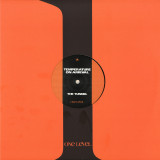
Temperature On Arrival. The immediate sensory impact as you enter the venue. The vibe, energy and intensity. The movement of the crowd, the atmosphere of the space, the initial impression when stepping onto the dancefloor. The surge as the music hits you.
Temperature On Arrival is here to deliver the feels and control the climate, with the coldest beats and toastiest grooves. The UK-based duo are set to soundtrack the seasons, kicking off with two scintillating house cuts that resonate within the intimate confines of smaller venues, to the vast openness of clubs and summer terraces. Featuring the soulful vocal talents of London's Deli OneFourz on 36 Degrees and the inspirational Minister and singer, Anthony Hainsley on The Tunnel, with Adrian McLeod on keys across both tracks.
The sunshine vibes are high on '36 Degrees’ as Temperature on Arrival move the mercury, whilst setting the vibrations of the dancefloor. Throbbing drums and a thick bottom-heavy bassline are adorned with chimes, rhodes chords and the velvety vocals of Deli OneFourz. All fused together with a serious serving of bump.
Spirits rise further on the Gospel-infused, ’The Tunnel’, as Anthony Hainsley inspires with his message of perseverance.The track's relentless four-four stomp symbolises the resilience and collective spirit to keep moving, “somehow”, and serves as a joyous reminder of the celebration of dancing together.
TOA, the new tone setters, tastemakers, and temperature takers – and the heat is undeniably rising.
The limited edition Deep Purple “Pictures Of You” 12” Maxi Single contains the 2024 Deep Purple songs ‘Pictures Of You’ and ‘Portable Door’ as well as two unreleased live recordings recorded live in Milan, Italy in 2022.
'=1' is the highly anticipated new album from one of the greatest rock bands of all time, Deep Purple. Produced by the legendary Bob Ezrin, this album captures the band's seminal classic sound without relying on nostalgia, embodying the essence and attitude of their 1970s incarnation possibly more than any other recent album. The enigmatic title '=1' symbolizes the idea that in an increasingly complex world, everything can eventually be reduced to a single, unified essence. Everything adds up to one. With three consecutive No.1 albums behind them and a new energy driving them forward, '=1' represents Deep Purple at their peak.
- Azoka Eguna (Feat. Toots)
- Euskal Herria Jamaika Clash (Feat. U-Roy)
- Baxua Eta Lurra (Feat. I-Threes)
- Plastic Turkey
- Askatasun Parabolikoa (Feat. Luciano)
- Mongolian Barbacue
- La Fille Du Quartier Populaire (Feat. Lisa Dainjah)
- Yalah, Yalah, Ramallah! (Feat. Yacine Belahcene)
- La Línea Del Frente (Feat. Masta Blasta)
- Basque Xamuraia (Feat. I-Threes)
- Beamon Jauzia (Feat. Sorkun+Masta Blasta)
- Le Mouv'dub
- Azoka Eguna - Remixed By Xabi Pery
- Baxua Eta Lurra - Remixed By Rob Smith
- Plastic Turkey - Remixed By Neil Perch (Zion Train)
- Mongolian Barbacue - Remixed By Peter Rose
- Yalah, Yalah, Ramallah - Remixed By Dmd (Nebukhednezzar & Daniel Díaz)
Remastered edition on 180 grams double vinyl of 'Euskal Herria Jamaika Clash', released by Talka Records & Films in 2006. To the 12 tracks that appeared in the original CD edition we have added 5 remixes made by producers as renowned as Xabi Pery, Rob Smith, Neil Perch, Peter Rose or Nebukhednezzar and Daniel Díaz. DESCRIPTION "On the wall of the toilet a freshly made graffiti, "Get out of the ghetto, organize the hate", reminded me of the rage we owe to this society. However, I was also at ease, savoring our Original Soundtrack: "ROOTS, ROCK, RAP, REGGAE". This phrase belongs to the song "B.S.O." from the album "Gure Jarrera" by Negu Gorriak. For music fans, the real ones, the ones who spend their fingers searching for rare vinyls in second-hand shops, there are records that have a special meaning. That record has special meaning for me for several reasons, but one of them is singular: it has helped me to discover a multitude of music. It turns out that the credits of that album were full of fundamental names in rock, hardcore, funk, Hip Hop, soul, ska, Latin music... a good guide for the young man of musical discoveries that I was fifteen years ago. But there was also that song, "B.S.O.", with the word "REGGAE" at the end of the chorus. A genre that I had never paid much attention to and that since then, slowly, I have been tasting... from classic figures to new trends, from Jamaican reference records to admirable peninsular formations (Basque Dub Foundation, Lone Ark or The Starlites). A few years ago I had the opportunity to interview Fermín Muguruza and in one of his answers he said: "It's clear that the basis of reggae is going to remain firm, because it's been a constant since Kortatu's first album. Reggae will be there in any of its expressions or derivations, of which there are already many". And it's true. Going through Fermín Muguruza's discography, and his groups, forwards or backwards, we come across reggae in different doses, proportions and orientations, but it has been present in all his albums. And in his "solo" stage, in a more prominent way. Now he releases "Euskal Herria Jamaica Clash", a coherent link in his chain of albums, where he accentuates that proportion of reggae, looking more than ever at the classic conception of the genre, but with some mestizo nuances present (rock strength, some Hip Hop drums or the sound of the trikitixa). The album has been recorded in Jamaica and has featured some renowned figures from those lands: U-Roy, Luciano, Lisa Dainjah, Masta Blasta, Yacine, Toots and the I-Threes (the usual female vocal trio in Bob Marley's albums, to which Rita Marley belongs). The new album offers twelve tracks, where, apart from reggae, one can also feel the optimism of the new lights that illuminate the future of the Basque Country ("Euskal Herria Jamaika Clash")... an optimism that is intertwined with descriptions of local customs ("Azoka Eguna"), rebellious spirit ("Mongolian Barbecue", "Basque Xamuraia", "La Fille Du Quartier Populaire"), songs of hope ("Yalah Yalah Ramallah"), a snapshot of a symbolic triumph ("Beamon Jauzia"), criticisms of alienation ("Askatasun Parabolika"), to the dictatorship of the empire ("Plastic Turkey"), a poetic air of rest on music and feelings ("Baxua eta Lurra"), a final instrumental ("Le Mouv Dub") and a luminous and hopeful revision in reggae key of an old song by Kortatu ("La línea del frente"). "Euskal Herria Jamaika Clash. The soundtrack of the present: DREAMS, HOPE, ROOTS, REGGAE." FM-Hop (2006)
The color green can represent many things. It can symbolize money, of course, but also weed. And envy. It implies newness, the rebirth of spring, but it can also evoke illness and infection. It’s an apt name for a band that is defined by its adaptability, by its knack for doing many different things all at once. On the Color Green’s second full-length—their first as a quartet—they ground their cosmic jams in earthy melodies, drawing from ‘60s SoCal folk-r0ck, ‘70s classic rock, ‘80s underground rock, ‘90s psychedelic dance-rock, and many other sources.
In the two years the band has been touring, it has already shared stages with a range of groups that reflect both the sophistication and the wild malleability of their sound, including Fuzz, Kikagaku Moyo, Circles Around the Sun, and Young Guv. “When we play live, I don’t really know what’s going to happen,” says guitarist Noah Kohll. “You really have no idea what you’re going to get with this band, which keeps things fresh for us and maybe makes the live experience special.”
Adds drummer Corey Rose, “One thing about this band that I really appreciate is that we can camouflage into any environment or any show. We can play with Hiss Golden Messenger and lean into that funky country vibe, or we can play with the Brian Jonestown Massacre and get evil. We all love a variety of music, so let’s not put ourselves in a box.”
That wild, mercurial quality is reflected on Fool’s Parade, a meditation on loss, grief, confusion, frustration, and the clarity to which they all lead. Their songs are vehicles for self-explorations, not just a means of putting their feelings into lyrics and notes but molding them, night after night, into different shapes to get different insights.
“More than ever, people need to hear songwriters talk about their lives. We don’t always have to search for monster hits. We can just write about our lives and maybe that might actually work. That’s what this record is a lot of. A lot of massive songs, but also a lot of me just writing authentically and honestly about my life. Flyin symbolizes the next phase of my career. I feel like I'm flying into this chapter where I’m the best version of myself that I've ever been. Y’all better catch-up or you’re getting left behind. I’m on fire!”
SABÏRE has now returned in 2024 with a 15 track epic, self-styled "half-concept" album, "Jätt", 5 years in the making. SABÏRE began at the tail end of 2010 as an idea to have a band that played simply what came naturally on guitar to Scarlett Monastyrski with no set genre or category. Simply the natural music. Shortly thereafter, the concept grew to accompany that sound with a big show and distinctive stylisation. The biting and sharp sound production, along with their personal lyrics, birthed for them a label for their music: ACID METAL. Not to be confused with the mind altering substance, Acid Metal took its name from the concentrated corrosive fluid not unlike the blood of the Xenomorph in the Alien films. The instruments are awash with acidic modulation, "like a drop of acid in the dark." The lyrics all hold a tinge of biting realism that once realised by the listener, stings them like a droplet of acid resting upon their skin. To take their metaphor further, their distinctive production style let's stand apart from the rest of the "modern" sound that degrades the potentcy of many new bands. They call it "brick culture," because it all sounds the same. Concentrated acid burns all the way through anything solid leaving a hot trail behind it, like the band continues to do so with garnering the attention of the world of heavy music. Band leader Scarlett Monastyrski comments : " 'Jätt' is meant to be THE sound of SABÏRE. A monolith to what we stand for artistically. We wanted this album to be its own art piece rather than simply a collection of arbitrary songs, a really 'blue' coloured sound. The physical copies hold beautifully styled texts detailing the concept for those chosen songs, as well as small epistles to accompany each track," says . “ 'Jätt' is a “blue” sounding album; the colour. You may understand that more when listening to the album yourself. The cover of 'Jätt', “Dante and Virgil in the Ninth Circle of Hell” - Gustav Doré, 1861, could be seen through a symbolic lense in which the listener is symbolised as Dante, the artist as Virgil, and the bodies locked within the ice of frozen lake as the music surrounding them; we as the artist are shepherding the listener through the mire. This could be perceived like this, or you may just see it as an attractive album cover. “ "We put our heart and soul into this one and can't wait to give our Wild Ones and Acid Fiends what they've been so patiently waiting for
- A1: Bye Bye Betty
- A2: Moments Of Joy
- A3: Lemongrass Citronella
- A4: Cant Stand In The Past
- A5: Besafe Airtel
- A6: Today Only Happens Once
- A7: Incense Holder
- A8: Salt And Sugar Look The Same
- A9: A Lead Balloon
- B1: Sandalwood In The Summer
- B2: How They Made It
- B3: Somewhere In Time
- B4: Old Plates And Desirable Traits
- B5: Drawing To Relax And Pass The Time
- B6: The Maybes Are Endless
- B7: Yume-No-Yume
- B8: Twice
- B9: Expected To Fade
Music From Memory is pleased to announce the upcoming release of ‘Salt And Sugar Look The Same’, a collaborative album from Tim Koh and Sun An.
Tim Koh is an American multi-instrumentalist and visual artist born and raised in Los Angeles. He has been touring, releasing music and showing art works internationally for nearly two decades. Sun An is a Southern California-based graphic designer, art director, and sound designer who has self-released music since 2012.
‘Salt And Sugar Look The Same’ plays somewhat like a dreamlike collage; across 18 short compositions, finger-picked guitars melt with electronics and warped samples to create a form of American Primitivism bent and refracted through Tim and Sun’s unique lens.
Their collaborative journey unfolded gradually, exchanging snippets via email over the span of a year or so, Sun in LA and Tim in Berlin. Amidst personal struggles and uncertainties, the act of recording and composing became a refuge, a safe space where they could navigate life's complexities together. Though they didn't converse much, mostly just sending music, their musical dialogue spoke volumes, shaping a narrative that evolved naturally over time. As they shared their musical ideas, they discovered a profound sense of connection and understanding with one another. The music became a conduit for healing, bridging the gaps between them and offering comfort in times of need.
Their musical influences and backgrounds anchored them. From reminiscing about past scenes to exploring cultural intricacies of being Korean American in Los Angeles, infused with a natural sense of shared identity, their collaboration reflected a mergence of old and new memories into a hallucinatory, dream-like experience. Across the 18 compositions that make up the album, incense emerges as a poignant motif, symbolizing the passage of time. Each incense stick becomes a vessel carrying the essence of moments gone by, while the holder becomes the custodian of these ephemeral memories.
‘Salt And Sugar Look The Same’ invites the listener on a boundary-transcending journey of introspection, joy, and pain, creating an experience that lingers long after the last note fades.
Sleeve art by Brian DeGraw, design by David McFarline.
Any reasonably knowledgeable fan of post-punk will likely recognise the name of Una Baines. A founder of both The Fall and Blue Orchids, Una's influence in the development of both bands is a matter of historical fact . . . so much so that people scarcely realise how few recordings she's actually made - a solitary 7" with The Fall, one LP and a few singles by Blue Orchids, and that's it, barring her most recent recording, The Fates' obscure album "Furia", released nearly forty years ago on a tiny label until its rediscovery a few years back on the Finders Keepers label. Una's spent much of the last four decades working in community organising, raising a family, and functioning as a symbolic godmother to many Mancunian artists and musicians who cite her as an aspiration and mentor. Her band Poppycock has undergone several line-up changes between their sporadic - almost exclusively local - live appearances. Una was never shy in describing her personal ideals and artistic expression in terms of feminism - even if the term was occasionally derided by some female punk artists. "Magic Mothers" displays a consistency of vision rare traceable back to interviews she did during The Fall. Hearing it, we're reminded of the emotional fierceness set against pop arrangements from acts like Look Blue Go Purple and Dead Famous People, or the spare pop jazziness found in songs by Marine Girls, Tracey Thorn's pre-fame combo. The arrival of "Magic Mothers" will come as a surprise to many. Though recorded in fits and starts over the last fifteen years, it's a cohesive statement with an expansive cast of friends and allies, including Blue Orchids' Howard Jones and The Fall / House Of All's Simon Wolstencroft, plus many others. The original keyboardist for both The Fall and Blue Orchids, Una Baines returns with her brilliant musical partners for her first album in 39 years
repress!
Signed by the Cogo protagonist Tonske, Anatman is a work of depth, intensity and a great attention to detail. Defined as well-formed, knowledgeable character with a strong artistic and technical background, Tonske produced a powerful, future oriented techno with atmospheric inserts.
The release is also rounded with two remixes by well known techno pillars.
Most known for his work in the famous Cassegrain project, Magna Pia is a composer, producer and a DJ whos combative dance floor trips are ripping through underground scene for some time now. He left his mark on variety of labels such as Infrastructure NY, Prologue, Killekill, Ostgut Ton, Counterchange and Semantica. His interest in combining contemporary techno music with archaic symbolism and unorthodox sonic nmoods with subtle 90s techno references is making him a true gem of the scene today. Co-founder of the infamous Traum nights in Croatia and Secession label boss, Volster is also a well established protagonist in techno circles. Somewhat mysterious, this broad but no nonsense techno artist is most known for his hypnotic, spiral and somewhat detroit sound which earned him an impressive list of feedback till this day. After two decades of continuous work and dedication, he is pawing his mark further with collaborations with names like Cassegrain, Aubrey and Anthony Linell and gigs from Croatia to the rest of the Europe, most notably the latest one in Berghain.
Longtime enthusiasts of ambient music have much to celebrate as Rafael Anton Irisarri's cherished out-of-print cassette, "Midnight Colours," returns in a meticulously remastered edition and makes its inaugural debut on vinyl. The significance of this album's announcement is accentuated by its historical resonance, coinciding with the same day in 1952 when the world bore witness to the first-ever test of the hydrogen bomb.
"Midnight Colours" is far more than a mere album; it's an exploration of the enigmatic relationship between humanity and time. Conceived as a sonic interpretation of the Doomsday Clock, which symbolizes the world's existential vulnerabilities, Irisarri's work beckons listeners to contemplate the gravity of our existence and the delicate balance that envelops it.
"I wanted to capture the essence of humanity's relationship with time, both the anxiety and the serene beauty that coexists within the shadows of the night," explains Irisarri. "The vinyl format adds a tactile dimension to the experience, inviting listeners to physically engage with the music."
Known for his contributions to the ambient and electronic music genres, Irisarri often explores themes of introspection, nostalgia, and the interplay between sound and emotion.
Recorded in 2017, when the Clock was at 2½ minutes-to-midnight (and at the time, the second-closest to midnight since the Clock's inception in 1947), "Midnight Colours" permeates with the melancholy of memories resurfacing as one approaches the end of life: the regrets, the closure, the uncertainties, the anxieties.
Originally released as a limited tape on the beloved Atlanta-based label Geographic North, "Midnight Colours" swiftly garnered praise and acclaim within the ambient music sphere. Now, with this newly remastered edition on his own Black Knoll imprint, fans, both longstanding and newfound, can rediscover the album's captivating beauty in unprecedented clarity and depth.
"I've wanted to release 'Midnight Colours' on vinyl since it first came out, and I'm thrilled to finally be able to. The remastering process, brilliantly done by Stephan Mathieu, has breathed new life into the work, and I'm eager for listeners to experience it in this format."
The reissue of "Midnight Colours" features band-new artwork and design by the renowned Mexican visual artist Daniel Castrejón. A frequent collaborator and friend of Irisarri, Castrejón's imagery impeccably complements the album's mood and themes, extending a compelling invitation for listeners to explore its aural world visually.
This landmark release serves as a testament not only to Irisarri's enduring impact on the ambient music genre but also as a long-awaited gift to those who have patiently anticipated the album's vinyl debut.
"IHR SPIEL HAT FÜR MICH ETWAS, WAS FLORIAN SCHNEIDER UND RALF HÜTTER GEMACHT HABEN, ALS SIE NOCH EXPERIMENTELLE MUSIK RODUZIERTEN." - WOLFGANG FLÜR (EX-KRAFTWERK)
Die Band Chogori aus Düsseldorf verschmilzt auf ihrem Album "Minor Green" analoge Synthesizer und Kontrabass zu einem fesselnden Klang. Aufgenommen in den legändären Hansa Studios /Berlin, strahlt die Live-Session des Trios eine zenartige Leichtigkeit aus. Mit dem Bruch des 12-Ton-Systems erhebt sich ihre Musik in himmlische Sphären, angeführt vom visionären Ralf Stritt. Gregor Kerkmanns Bass sorgt für Bodenhaftung. Jeder Track präsentiert Chogoris Synergie und symbolisiert das Gleichgewicht zwischen Mollakkorden und Natur. In einem digitalen Zeitalter feiert "Minor Green" den analogen Reiz und lädt die Zuhörer zu einer immersiven Reise ein. Begleiten Sie Chogori auf eine kosmische Erfahrung, eingehüllt in klangliche Wunder.
- A1: Gwaing Reverie
- A2: Lucelle Sista Of The Soil
- A3: Mantis Praise
- A4: Amaseh Amen
- A5: For Peter & Ruth
- A6: Terug Blik
- A7: Threnody For The Khoisan
- A8: Ambient Khoi
- B1: Mcinci Song I
- B2: Morenga
- B3: Evidence Of Things Unseen
- B4: Lockdown Duet Milano-Cape Town
- B5: Roesdorp Requiem
- B6: The Ascension Of Milford Graves
Garth Erasmus is an artist and musician based in Cape Town, South Africa. 'Threnody for the KhoiSan' is his first album under his own name. Since 1985 his artistic interests have broadened to include music-making, designing and making his own instruments based on indigenous KhoiSan knowledge. From 1999 to 2012 he was a member of the South African First Nation activist group Khoi Khonnexion. In the past couple of years Garth Erasmus has also been a pivotal part of various international performance pieces and exhibition projects which brought him regularly to Europe. Most of these activities were developed and performed in collaboration with the Hamburg based band Kante and his band Khoi Khonnexion. In April 2024 Garth Erasmus will be part of the group exhibtion 'Oscillations' at Akademie der Künste, Berlin.
His works in music are predominantly characterized by a restless quest for alternative forms of expression and materials including self build instruments, field recordings or various electronic music devices.
In this context the music on 'Threnody for the KhoiSan' takes on a primal and metaphorical meaning. Rather than a formal, physical initiation, this process is more spiritually inclined, yet it is a spirituality which is consistently put into action.. “Ever since I was an art student I have experimented with alternative materials to release me from the Western education values I received. When I started to make these instruments in the 1980s, my intention was to create art objects but when I discovered the sound they made, it unlocked a door that transported me deeper in my quest in the realization that I was on the right path.
In fact all instruments which appear on 'Threnody for the KhoiSan' are products of a process of discovery starting from square one. All this is based and founded on the beauty of simplicity and minimalism as symbolized by the single string Khoisan musical bow and arrow as trance musical instrument. In this sense it soon became manisfest for Garth Erasmus to combine the bow instruments with various electronic instruments. Besides developing his own unique language in music he also shared an expressed interested in experimental sound aesthecis, Avantgarde composition and Free Jazz. However, his non - academic approach towards sound and music was always fueled by the desire for a reconnection to the land and to the idegenious knowledge of the KhoiSan, whose struggle for First Nation status continues.
Song for Morenga
This song is dedicated to a guerilla leader, named Jacob Morenga, who was the leader of the nama/herero anti-german uprisings that occured between 1904 and 1907.
Amaseh Amen
This is a classic mouthbow piece that conjures the spiritual nature of Khoisan cultural praxis.
Gwaing Reverie
It was composed as a personal gift to the other members of newly formed electro-acoustic trio „Gwaing". „Gwaing" is an ancient Khoisan place name, meaning the mouth of the river.
Mcinci Song
A typical meditation on the traditional Mcinci flute. This flute was originally played by shepherds and was made of reed.
The Ascension of Milford Graves
This piece attends to capture the risen spirit of the legendary African American drummer Milford Graves. It was composed soon after his death in 2021.
Song for The Sisters of the Soil
A live improvisation dedicated to Lucelle and Melissa (The Sisters of the Soil) on the occasion of visiting them at their residence, known as „Oppieyaart" on the Cape Flats. On 10 September 2022 there is an online event with them at Kunsthaus Hamburg.
- A1: Magic Momentum
- A2: Rockets To Mars
- A3: The News These Days
- A4: Life (Skit)
- A5: Love Vibration
- B1: Original Flow
- B2: Hold On
- B3: Surviver (Skit)
- B4: Tatamaka Pt.1
- B5: Tatamaka Pt.2
- C1: Time (Skit)
- C2: Time
- C3: Jinja (Skit)
- C4: Kochirakoso
- C5: Our Tactus
- C6: Nah Personal
- D1: No Chains
- D2: Push Comes To Shove
- D3: We No Let Y'all In
- D4: Mexico (Skit)
- D5: Future For Our Children
We Release JAZZ is very happy to announce an exciting new body of work by Joseph Deenmamode aka Mo Kolours. The singular musical spirit’s new 21-track album Original Flow is available as a double LP housed in a heavy 350gsm sleeve with original artwork by Mo Kolours himself and the classic WRJ obi strip, as well as in digipack CD and digital formats.
A catalog of critically acclaimed records, including his self-titled debut (2014), ‘Texture Like Like Sun’ (2015), 2018 album ‘Inner Symbols’ and three companion EPs, established Deenmamode as a prodigious musician and vocalist. Pitchfork extolled his “hypnotic, tribal-infused dance grooves”, DJ Mag appreciated the “colourful celebration of soundsystem culture”, and Resident Advisor advocated that “no one sounds quite like Mo Kolours”. Musical analogies were drawn by The Guardian as “The best album Curtis Mayfield never made with A Tribe Called Quest and Lee Perry” and Mojo as “like Marvin Gaye produced by J Dilla”.
Five years ago, Deenmamode moved to the Japanese countryside. Far away from familiarity, he contemplated his place and further questioned his identity. “I had none of my ‘own’ people around. I had time to really find what makes me tick musically. Japan has helped me go back to those subconscious leanings, really go deep, and reflect the aspects that make up my story”.
The tracks on ‘Original Flow’ have been constructed from sessions, improvisations and soundbites captured around the world during this time; collecting contributions from musicians including Deenamode’s brothers Reginald Omas Mamode and Jeen Bassa plus Andrew Ashong, Charles Bullen, Dwaye Kilvington, Eddie Hick, Stefan Asanovic, Myele Manzanza, Ross Hughes, and Tom Dreissler. Deenamode says “I’m proud of this album’s creative process. Coming from a tradition of scouring through hours of records, I wanted to create my own samples, to find that perfect loop that no other producer could put their hands on. I decided to invite a group of friends and acquaintances, who also happen to be incredible musicians, to a studio in Crystal Palace to improvise based on some loose ideas I had. We spent all day, and recorded everything”.
‘Original Flow’ is an album of UK street-soul nouveau, future indigenous jazz fusion, Rasta Segga, Nyahbinghi jazz, Malagasy Hebrew hip hop. While retaining a spirit of exploration and improvisation, it sees Deenmamode grow and flex beyond beat tape brevity, expanding composition and stretching his musical muscle to play live with other musicians. Themes of empowerment, overcoming adversity, and mental liberation coexist with notes from ancient history, futurism, and science, as well as musings on family and togetherness.
‘Magik Momentum’ springs from a discussion that features at the start of the song, an inspiring mentor answering a question from Deenmamode about improvisation and what role it plays in life when planning and manifesting the future. ‘Rockets to Mars’ questions the lack of care for the billions of people with nothing, while governments plan to explore space. “This sparked a comparison in my mind to a Sonny Okuson song that I would reference when performing. Okuson’s song talked of the lack of resources in many communities in the world, while governments go to the moon”.
He says the music behind ‘The News These Days’ is “possibly my favourite on the album”. Looped like he would a late sixty jazz-fusion sample, there was nothing added and the track was complete within a matter of minutes. “It was the first and best moment from the entire Crystal Palace session”, he adds. The album’s contrasting title track with minimal instrumentation played solo by Deenamode. While frustratingly searching for gems in past recordings, he thought in a burst of ego, “I don’t need no-one else to make a dope beat!” picked up his ravanne, (the traditional frame drum of his fathers home-land of Mauritius), pressed record, and started to play. He says, “In my thoughts were the rhythms of the Nubians in Upper-Egypt and Sudan, the swing of the huge drums played by Mauritanian women, of-course the Sega beat of Mauritius, and the ever inspiring beat of James Yancey”.
Driven by UK broken beat, Cuban congas, Nigerian and Mauritian inflections, ‘Love Vibration’ follows the concept that all emotions carry a vibratory frequency and pays homage to the frequency of creation and the power of love. The two part ‘Tatamaka’ tells of the history of Deenmamode’s ancestors, the maroons of Mauritius. “We are people who managed to run from our oppressors and find refuge in a corner of the island called ‘Le Morne’ where they could not reach us. One bloody day they came in numbers to re-capture, to revenge. Many of us chose to jump to our deaths, rather than be taken back into subjugation. The poem by Creole Richard Sedley Assonne says; “there were hundreds of them, but my people, the maroons chose the kiss of death over the chains of slavery”. Tatamaka was the name of a famed maroon leader who was murdered for claiming his, and our people’s freedom. The song is the imagined journey of escape and freedom by an ancestor of the maroons of Le Morne”.
Born in the west midlands and raised on the traditional sega music of his father’s Indian Ocean homeland of Mauritius alongside records by the likes of Jimi Hendrix, Santana and Michael Jackson; his influences expanded with late 90s jungle and drum and bass nights in Bristol, experiments at art college in Camberwell, and the rich culture of Peckham, “at the time we called it the Afro Quarters of London” says Deenmamode, adding hip hop, dub, soul and soundsystem styles to his individual sound.
He explains, “I love drum music, from hand-drums to 808s. I love music from the ancient past, heritage music, indigenous music, traditional music passed down from the beginning of time. Music from the body, hand claps, grunts and foot stomps. Music with audible depth, busy, bustling, highly charged. Music from the soul, the music from beyond. I love music from the islands and the mountains. The music of the streets, hustle music, alleyway beats. Club music”.
He describes the creative process as thinking in images. “The visual world and the world of sound seem to intermingle in my thought process. When I play the drum with my eyes closed, a world of imagery dances and moves with beat. Improvised drumming feels like I am listening to what I want to hear, rather than trying to play what I want to hear. Following the rhythm and finding new pathways to walk within the patterns is what I experience. In this way I often feel I am just a listener, instead of the player”.
Original Flow is pressed on biovinyl, a sustainable alternative to traditional vinyl. Biovinyl replaces petroleum in S-PVC by recycling used cooking oil or industrial waste gases, resulting in 100% CO2 savings in bio-based S-PVC production. Furthermore, it is 100% recyclable and reusable, embracing the circular economy ideology.
"Nothing and no one can extinguish this flame within you," sings Emilie Simon from the opening title of Polaris, her first true album in ten years. An apparent long eclipse that the French singer, musician, and producer has nevertheless used to explore new territories, open uncharted paths, and reinvent her musical vocabulary and narrative threads. Like Ariane in a dreamlike world, she stretches these threads along her journey, inviting us to blindly follow.
After composing music for the film "The Jesus Roll" with John Turturro, and a musical journey between Earth and Mars through a series of singles, in 2023, Emilie Simon chose to revisit her debut album, both in the studio and on stage, to definitively close a chapter begun twenty years earlier. She also published "Phoenix," a gothic tale with a "vampiric" theme, sung and spoken in alexandrines. The central character, Lily Mercier, is the same one found at the heart of the Polaris adventure. Clearly, Lily is a projection of Emilie, on a quest for the North Star that symbolizes the never-extinguished desire to find her way. The dazzlement too, when one is a musician always eager to ignite again for the infinite mysteries of sound and to translate its shivers into songs.
This album, sung in both French and English, succeeds in combining the clarity of melodies with the demands of production. It immediately captivates (the irresistible burn of the Sun) and enchants over repeated listens, like a lasting iridescence of a thousand sonic fragments. Recorded in New York (where Emilie lived for a long time), Los Angeles, Montreal, Rome, and Paris (where she returned to settle), Polaris has its own cartography. Its universe is the standard scale, its pulsation inspired by cosmic rhythms, and its unique poetry both disturbs and captivates. A sign that nothing and no one can extinguish this flame within her.