The experiment aboard orbital station Sequoia-4 began as a routine test of the acoustic array. The team attempted to synchronize an analogue resonator with a quantum audio synthesizer. The two incompatible frequencies were expected to cancel each other out. Instead, the instruments registered a stable wave. It didn’t fade, on the contrary, it did respond to every sound, every movement around it.
At first, they assumed a coding error, but the wave began adapting to the researchers’ voices, shifting its amplitude and rhythm. Within hours, its spectrum started to resemble a heartbeat. The recording was forwarded to the Analysis Division, where it was named Hybrid Dub — a hybrid resonance formed between the machine and the human senses. The phenomenon proved unpredictable: each listener described different effects, from gentle euphoria to vivid recollections of memories that had never occurred.
Even after the system was powered down, a faint signal persisted in the ether — as if the mechanism had learned to breathe on its own. Some claimed that, when replayed, traces of the ocean, rustling leaves, and distant voices could be heard — as though the signal had passed through layers of living matter and remembered them.
The project was shut down, and the archive sealed. Only one line remained in the final report: “The signal wasn’t created — it discovered us.”
Search:sync
Kerrie makes a welcome return to Sync 24's CE camp, with "Waves of Reverie PT1" dropping in March on Cultivated Electronics. It follows her two part "We Continue" vinyl 12"s, on sister-label Cultivated Electronics Ltd back in 2021. Irish-born, Manchester-based Kerrie is a multidisciplinary artist and resident DJ at Tresor Berlin. She performs live sets, produces music, DJs and runs her own label, Dark Machine Funk, as well as an extensive discography on the likes of Tresor, Blueprint Records, Don't Be Afraid, Cultivated Electronics, I Love Acid and Symbolism. On her new EP, "Waves of Reverie PT1" Kerrie once again channels a distinctive electro aesthetic rooted in acid and electro traditions but filtered through her own raw, industrial-leaning production style. A staple for fans of analogue hardware-driven electro and forward-thinking electronic music.
- A1: Intuition, Nimbus (5:34)
- A2: Alignment, Orbits (7:46)
- B1: Impatience, Magma (11:15)
- B2: Persistence, Buds (8:27)
Caterina Barbieri & Bendik Giske's At Source resounds music as wellspring, that which is essential and unknowable, and yet utterly primary. It finds two acclaimed composer-musicians building a world together in self-contained collaboration between analogue synthesis and an extended approach to the saxophone that conjures its own universe of sound. It is at once intimate and cosmic, drawing on the challenges and possibilities of their artistic exchange, tearing down technique to access all the expansive possibilities of their sonic meeting point.
At Source is a document of the world of sound to be conjured when two artists strive for something together, discovering the expansions and limitations of performance by bodies and machines. It is not an exercise in assimilation, but in productive exchange and creative confrontation. It does not draw on outside energies or influences, but grapples with what there is to find in their respective playing. "It also reflects how natural the collaboration was," says Barbieri, "a meeting at the source which was spontaneous, graceful and natural".
Barbieri and Giske first met and were enthralled by one another's performances at Kunsthaus Glarus in 2019, a meeting that spurred conversations on the power of transitions as a compositional force. Giske later contributed a rework of Fantas for Fantas Variations (Editions Mego, 2021), an ambitious undertaking to rescore Barbieri’s work for his saxophone and voice, a challenge Giske had started undertaking two years prior as an ongoing practice of transcription. “The request came as a proof of aligned ideas”, says Giske.
Their new collaborative project then started during an artistic residency in Milan’s ICA in 2021, by invitation of swiss artist and curator Jan Vorisek, as the world was emerging from lockdown. This meeting, and the preceding closure of sites for cultural exchange, made their work together 'feel like springtime' says Barbieri. Giske, who was on the brink of releasing his sophomore album, Cracks, then joined Barbieri's light-years tour, which functioned as an inaugural incarnation of her newborn label and platform through a series of multi-artist curated shows with appearances of Lyra Pramuk, Nkisi, MFO, among other artists.
Through the tour, they continued to develop material live, and this release, laid down in the studio, is true to that ever-evolving process of creation, where live feedback stays essential to the vitality of this collaborative effort. The tracks are each named with two evocative words that contain the two poles of their sound. Theirs is both abstract and cosmic, in the synth as machine undermined by Barbieri's naturalistic playing, and in Giske's continuous exploration of the symbiosis between his instrument, voice, and body. These binaries, of body and machine, posed various challenges, notably in how the stepped patterns Barbieri uses were near-impossible to translate for Giske's body to perform, and other times where mathematical resolutions were needed to sync their playing. Explains Giske: "It forced me to go to the core of what I am and what I have to offer”. Barbieri says that it "explores the liminality between the machine and the human, and the vulnerability in this process".
At Source is testament to two divergent practices finding a whole cosmos in which to convene; music is crystalised and made utterly enveloping through the focused and critical work of two musicians working at their peak. The versions here are, temptingly, "just one of many versions" of this abundant source material Giske explains. Like the best collaborations, At Source is more than the sum of its parts – bringing more to the feast than the simple combination of two musicians, promising versions upon versions of the exquisite material captured here.
A welcome return for Boogie Café on vinyl with one of the standout moments from Piers Kirwan’s COLLABS series receives a high-spec remix package from the legendary Sean McCabe.
Sean McCabe delivers three distinct flavours: the main vocal remix provides a sophisticated, club-ready pulse; the Cosmos Dub shifts gears into syncopated, bruk-leaning territory; and the Instrumental offers pure groove utility.
This physical release features a Vinyl-Only Exclusive Dub, making this a must-have.
Alt Dub boss Federsen once again joins forces with cv313 and Echospace Detroit to deliver a second instalment in their ‘Altering Dimension’ series, once again merging hazy textural sonics with delicate dub leaning aesthetics.
Detroit’s dub techno lineage continues to evolve as cv313, Stephen Hitchell of Echospace, teams up with Federsen for Altering Dimensions Part Two, another collaborative EP set to land on Federsen’s Alt Dub imprint.
A defining figure in the genre, cv313 has long shaped its language through seminal works like Seconds to Forever and the Dimensional Space LP, fusing enveloping atmospheres with tactile rhythmic structures. Alongside him here,
Federsen whose music can also be found on Echospace Detroit as well as Grayscale, Synchrophone, Lempuyang and Avant Roots, has carved out a distinct voice rooted in precision and analogue-rich depth. Altering Dimensions Part Two again captures the intersection of these two perspectives, linking Detroit’s enduring sonic heritage with a refined, forward-facing approach to dub techno.
‘First Dimension’ opens the release, laying down heavy doses of sub bass, bubbling percussion and ever evolving, murky dub echoes amidst a crisp, stripped-down rhythm section.
‘Second Dimension’ follows and leans into vacillating atmospherics, a swaying bottom end groove and hypnotic, subtle evolution that’s synonymous with the cv313 sound.
‘Third Dimension’ kicks off the b-side next, further embracing this introspective and immersive style as textural elements shift and mutate atop intricately modulating percussive hits, bubbling synth tones and weighty low-end percussion.
‘Fourth Dimension’ then concludes the release, reducing things down to bare bones of hypntic dub, embracing a beatless construction the composition relies on spatial depth, nuanced delays and an underlying tension that decays
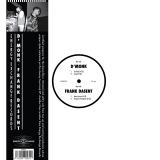
London's underground upstart D'Monk opens proceedings on the A side with two new cuts showcasing his raw and intuitive approach to production with an innate sense of swing. His grooves are literally steaming from the first bar. You can feel the condensation of bodies in the room, feel the bass rattling the building and feel hips grinding to the syncopation.
The flip side features long-time Berlin resident and currently Sydney-based Frank Dasent. Don't be fooled by this cat's lo-key approach to releasing music. Upon further research one can see that Dasent has been behind the scenes on many productions spanning the world of jazz, R&B and dance music, as well as building his own catalogue of soulful and electro-inspired dance music.
On his fourth solo album, and debut work for Nick Klein's Psychic Liberation imprint, Henrik Munkeby Nørstebø presents »Faint Light Blackens«, a negotiation between the atomized instrumentation of the solo trombone is pushed towards a full range wall of sound over the concise sprawl of seven distinct acts on two sides of a vinyl record.
The seven acts that make up the album were developed specifically for recording within Emanuel Vigeland’s »Tomba Emmanuelle«. The fresco within the mausoleum anchors themes of existential weight, ripe with weighted imagery of love, birth, and death. The solemn space is a cavernous acoustic terrain wherein reverberant reverie makes it almost impossible to speak aloud, let alone sing through horn and electronics. This chamber's expanse is baked into the compositional directions employed on »Faint Light Blackens«.
Experientially, the record was produced in a long form performance gesture, with no overdubs. While edited to fit the record format, no additional post production coloring took place. Here Nørstebø shines as an instrumentalist, wherein the symbiosis of the site specific architecture and his sound sources are synced. At once musing and brooding, the gamut of emotive sonic landscapes is at play for a fully dynamic listening experience. The territory in Nørstebø’s vocabulary through interplay with the mausoleum is not vaulted , unlike Vigeland’s urn’ed ashes. On »Faint Light Blackens«, the spirit takes bound beyond the cavern and reanimates the listeners stereo alters for a holistic listening experience of perfectly challenging electroacoustic endeavors.
Henrik Munkeby Nørstebø – acoustic & amplified trombone, monotron, feedback, sound files.
Recorded by Espen Reinertsen October 10. and 11. 2023 in Tomba Emmanuelle, Oslo Norway.
Cover Photos and mix by Henrik Munkeby Nørstebø
Mastered by Helge Sten (Deathprod) at Audio Virus Lab
Fresh from a run of must-check EPs on Syncrophone Recordings, Black Jazz Consortium man Fred Peterkin inaugurates a new label, Base. The New York-based producer appears to be the man at the helm, since his next scheduled release also appears on the freshly minited imprint. He begins with 'There & Back (Long Player)', a languid, mid-tempo chunk of string-laden deep house classiness, before opting for a breezier, dreamier and sunnier sound on the impeccable 'Something For The Road'. Peterkin's ability to fuse looseness, heaviness and subtly soul-flecked instrumentation comes to the fore on EP highlight 'Rhythm & Movement', while 'BTA10711 (4am Mix)' tiptoes the fine line between dubby deep house and spacey, far-sighted futurism.
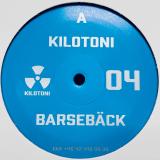
Entering the abandoned warehouse full of haze and blinded by the strobe lights, you feel the rush when the bass kicks in. You have no idea if the year is 1996 or 2026, but it doesn't matter as long as you are alive.
Indeed, another batch of forgotten and previously unreleased radioactive acid techno has surfaced on the anonymous, vinyl-only Kilotoni imprint — possibly their strongest release so far.
A1 The peak of acid techno is perhaps found in its most stripped-down form. As the bass line throbs your breath out, you try to chase the kick drum in a game of hide-and-seek until complete exhaustion. It's something you play after the copies of Betty Ford and Sync In start to melt during a nuclear reactor accident.
A2 A ravey or hard-techno-oriented approach is applied to the acid techno formula here. The squelching, pulse-width-modulated synth makes for an eerie yet irresistible call to the dance floor. The snare rolls might just be your guilty pleasure.
B1 The flip side opens with funkier techno that the Voyager probes could bump to in outer space a million years from now. A wild acid line is accompanied by playful chords and beats. Detroit influences meet Nordic melancholy.
B2 The kick drum keeps pounding its way through while a lonely TB-303 is traveling in its own space and time. Influenced perhaps by the Midwest acid techno style, this could be a mid-90s DAT-tape lost inside the transatlantic postal system on its way to the Analog Records USA headquarters.
Xistence Records is destroying the boundaries between house and techno. The Rise E.P. simply goes to show you a good label does not lose it's competency after 4 years of releasing music. This 4 tracker sounds sublime! If you like deep emotional melodic music, you should have this 12”.
Difficult to pick a standout track as they all offer something different…
The original version of Resilience is a stunning track, reminds of the early Octave One sound with a great mixture of percussion, classy bassline, nice layering of textures and melodies.
While Gerald Mitchell (Underground Resistance/Los Hermanos) retouch is a soulful stripped back tune with elegant drum work, linked together by a uplifting synth pattern.
Sunset To Sunrise, a delightful piece of haunting electronica. It’s a real journey back to the birth of Los Hermanos. Class!
Meteoric Rise original version came out as digital earlier on the label, Journey Around The Sun Mix here has the UR sound. It’s more complex, Detroit lesson in syncopation and rhythmic programming with chord stabs and shuffling drum work drives this one forward..epic!
“Without Hope None Of Us Have Anything “
- A1: Eighteen Days
- A2: Sir Casey Jones
- A3: The Highest Tree
- A4: Deed I Do
- A5: Hide And Seek
- B1: Twig Folly Close
- B2: Lady Margaret
- B3: Cold Early Morning
- B4: Monday Morning’s No Good Coming Down
- B5: The Waterman’s Song To His Daughter
- C1: Seven Dials
- C2: Up The Hill
- C3: Quiet Joys
- C4: Would Be King
- C5: Stone Cold
- D1: Tell Me Tomorrow
- D2: Mary Anne
- D3: Dawn
- D4: Cod’ine
- D5: Flowers Of The Forest
“Released on Joe Boyd’s Hannibal label here was a band rooted in Thompson/Swarbrick Fairport but also a snatch of the Velvet Underground and a sprig of The Byrds. The Eighteenth Day Of May evoked a legendary era, and now they are a justifiably legendary band too.” – KLOF Mag
Beginning life as a trio in London, 2003, the original line-up consisted of Allison Brice (vocals, flute), Richard Olson (acoustic guitar) and Ben Phillipson (guitar, mandolin) before expanding the following year to include the rhythm section of Mark Nicholas (bass) and Karl Sabino (drums, autoharp) and finally Alison Cotton (viola).
This being the mid zeros, the independent music scene in the UK was reluctant to embrace a sun-dazed folk band but this, their sole album, has gradually feathered a bed of affection amongst international folk fans. Twenty years on, the album is now rightfully seen as a trailblazer for the myriad alternative/psych folk bands that emerged in its wake.
Andy Childs who signed the band originally takes up the story. “I first heard their music on a cover mounted CD with the much missed Comes With A Smile magazine and as far as I could tell no-one was making music like this anymore, certainly not with such panache and confidence. To my jaded ears it all sounded so uninhibited - old weird folk songs, Americana, original psych-folk, minimalist drones. Great melodies and all six of them could sing! A joyous, unfettered sound that could in one moment conjure up flashes of The Byrds and then effortlessly the spirit of Velvet Underground would drift through. They even covered a Spacemen 3 song. I loved the fact that they had the aplomb to tackle traditional folk songs like Lady Margaret and Flowers In The Forest and not be afraid to stamp their own identity on them.
Signing them to the Hannibal label was straightforward. If anything the album somehow sounds fresh and undated, even better than it did in the day when perhaps eclecticism was out of synch with the times; its subtleties have become more apparent.”
“Their rendition of Lady Margaret builds to a headswirling crescendo that challenges anyone who claims Shirley Collins, Buffy Sainte-Marie or Trees have recorded the definitive version and the hallucinatory The Waterman’s Song To His Daughter raises an already brilliant album to an unholy level” - IT’S PSYCHEDELIC, BABY Magazine
Convergence is an ambient album formed through a series of morning rituals during rehabilitation following a severe medical event and an extended hospital stay. After weeks immersed in the constant alarms, beeps, and environmental signals of medical equipment, the act of listening itself became recalibrated. The music was performed and assembled using glass marimba, flute, and analog synthesizers, with each instrument treated as a source of resonance and gradually dissected through spectral analysis—allowing melody to emerge from fragments through repetition, attention, and daily practice, where synthesis functions not as traditional composition but as an exchange of signals.
Working slowly and intuitively, Stardust Multiplier approaches sound as a communicative medium between humans, the natural environment, and non-ordinary states of perception. Motifs evolve through repetition and subtle variation, informed by ceremonial music, mythic structures, and speculative communication frameworks associated with non-human intelligence—not as narrative devices, but as metaphors for attuned listening and pattern recognition.
Rather than moving toward resolution, Convergence documents moments of alignment—instances where intention, system, and environment briefly synchronize. The result is a restrained, deeply focused record, less concerned with atmosphere than attention, where synthesis functions as both a grounding practice and a method of inquiry.
- 1: I Can See The Light
- 2: Unit Circle
- 3: The Earth Knows
- 4: Spring Moon
- 5: To The Sacred Mantle
- 6: Wounds
- 7: Extinction Of The Sun
- 86: Am Carpet Candlelight
After releasing two albums with the UK label Rocket Recordings, the Italian psych band Julie"s Haircut now release the new album on its own Label Superlove. With a title taking inspiration from the I Ching book of divination, and a six piece lineup introducing new singer and songwriter Anna Bassy joining the consolidated team formed by Nicola Caleffi, Luca Giovanardi, Andrea Rovacchi, Andrea Scarfone and Ulisse Tramalloni, Radiance Opposition collates an eight tracks cycle that generates a consistent yet multifaceted musical journey, combining psychedelia, electronica and polyrhythms - all blended together thanks to a syncretic vision juxtaposing apparently irreconcilable factors. None of this is more evident, perhaps, than in the opener "I Can See The Light", with its sudden yet flowing shift from a dark pulsating preamble to an invigorating, hypnotic coda; or in the transition from the stoner-drenched heavy chthonic blues of "Extinction Of The Sun" to the liquid nocturnal moods of closing piece "6AM Carpet Candlelight". But it is the whole record that finds a rare balance, with tracks melting deep atmospheres and summoning vocals, synth-driven shapes and dynamic cadences, noise textures and evoking chants - all of them making the album a cohesively transformative experience. Nestled in a visual frame by contemporary artist Zoë Croggon suggesting an aura of ritualistic tension and mystique, Radiance Opposition sets Julie"s Haircut in a renovated form, at once rooted in their history and rushed to a creative renascence.
Seven years after the haunting resonance of Voids, electronic pioneer Martyn returns to the album format with Music For Existing. Arriving on 15 May 2026, the record is more than a collection of tracks; it is a profound exploration of what it means to remain devoted to a craft in an era of relentless noise.
The album’s announcement is heralded by the lead single "Heavy Sound." The track serves as the perfect bridge between Martyn’s past and present - a masterclass in tension and release that previews the album’s dialogue between the producer, the musicians, and the audience. We live inside a culture that has prioritised and monetised restlessness. The modern apparatus runs on the continuous production of "next," driven by algorithms that value novelty over depth.
Music For Existing serves as a love letter to the communal act of making music - something that is both healing and inherently defiant. For Martyn, a musician often finds solace in musical conversation with others; in the moment we press record, we simply exist together. This record is an invitation to build human infrastructure around what we love, leaning into the fluid nature of community and seeing exactly where the music takes us when we choose to listen.
The album is a sprawling, "off-the-grid" tapestry that echoes Martyn’s profound appreciation for jazz - free, instinctive, and bursting in every sonic direction. This collection features an expansive cast of collaborators, including Duval Timothy, Dan Only, Lucinda Chua, and Mark Cisneros. The record is further elevated by the contributions of jazz talents Mischa Porte and Cees Bruinsma, alongside the evocative words of writer and poet Musa Okwonga.
While the acoustic textures and improvisational spirit of this record may feel like a departure, they represent a homecoming. Jazz has always been ingrained in Martyn’s work; even in his most stripped-back club tracks, the DNA of swing, syncopation, and free-form structure was always present, if not always visible.
Music For Existing marks the beginning of an exciting journey that will continue from the studio to the stage, celebrating the radical act of existing in the moment.
Peach’s Soak Vol. 1 is a cross-Canadian link-up with Mood Hut that moves through slower, deeper waters.
The mini-LP was written after a tour through Asia that opened up something new in how Peach approaches making music. The turning point, as she tells it, came during a visit to a neighbourhood sento in Tokyo, while surrounded by steam rising in suspended time, something clicked about the relationship between the body and the sounds she wanted to make.
She’d been learning about cycle synching and working out with the phases of her hormonal cycle, respecting energy fluctuations throughout the course of a month, and decided to apply the approach to writing music. She allowed shifts in energy to guide tempo, density, and emotional tone rather than strictly answering to the floor.
Soak came out of this exploration, sketched and layered with field recordings from her trips to Vietnam and the Philippines during a challenging time in her life. Fragments of heat, air, and shoreline are absorbed into the music itself. Vapourous pads, low-end weight, fractured percussion, and melodies hover at the edge of dissolution. Water runs structurally through the record in surges, in tidal pacing, in the slow accumulation of texture.
Wherever this music finds you, please enjoy the Soak.
An improvisational musician, composer and poet, Titi Robin has travelled extensively since the early 1980s – from Brittany to Catalonia, India to Morocco – crafting his own musical aesthetic. Throughout his journey, he has built bridges between his native Anjou, where he still resides, and the Gypsy cultures of many lands. Neither a compilation nor a mere summary, this selection offers a certain perspective on his body of work, which has earned him praises by luminaries like Peter Gabriel or Brian Eno.
Despite his many travels, it would be a mistake to view Titi Robin as an explorer of the "elsewhere". While he plays the guitar, the bouzouq, or the oud, he does not seek to imitate a Gypsy, Syrian, or Greek style; rather, he plays in a voice that is uniquely his own—a syncretism of his personal journey, from his teenage years playing at Moroccan community celebrations to his collaborations with Gypsy musicians from Southeast France and India. In Angers, in the Roseraie neighbourhood, he was immersed in the rhythms of Moroccan chaabi from an early age. Later, he frequented the gypsy neighbourhood of Saint-Jacques in Perpignan. These encounters nourished an aesthetic territory he likes to call ‘Titistan’, which includes Perpignan and Rajasthan. He views Mediterranean culture as "a bridge, a crossroads, a network of long-standing links woven between North and South, East and West." In this selection, you will hear the palmas marking the compas of the Catalan rumba; strings enveloping the melody of the bouzouq, answered at times by the clarinet or the kaval flute popular in the Balkans and Anatolia.
Produced between 1993 and 2011 these songs have been fully remastered and are presented here for the first time on vinyl, with extensive liner notes.
- A1: Judy Cantor - Palabras De Chucho Valdes
- A2: Conjunto Artistico De La Far - Sincopancia
- A3: Grupo V.c. - K.1
- A4: Grupo Candombe - El Bailador De Mi Cuba
- A5: Felipe Dulzaides Y Los Armonicos - Juan Antonio
- A6: Grupo Achere - Este Es Mi Sucu Sucu
- B1: Grupo Havana 75 Ejt - Este Tumbao
- B2: Los Barba - Ciento Once Compases De Ritmo
- B3: Los Bocucos - Mi Quimbin
- B4: Combo Tiempos Nuevos - Camina Con Los Codos
- B5: Maggie Carles & Luis Nodal Y Los Magneticos - Solo Por Ti
- B6: Osvaldo Rodriguez (Los 5U4) - Para Las Pailas
This tidy joint release between Future Rootz and Luchando Music compiles rare recordings from 1970s and 80s Cuba, all sourced from private archives and reel-to-reel tapes. This is the sort of selection to get serious diggers hot under the collar as it explores funk-driven arrangements, jazz-informed horn sections and rhythm-led compositions contoured with Afro-Cuban percussion. There is plenty of tape saturation and analogue noise present throughout that reinforces the archival origins of the music and instrumentation centres on brass, keys and layered percussion, with grooves built from syncopated patterns and live ensembles. Alongside the music, restored credits and contextual research foreground the musicians and recording histories behind these previously unavailable works. Do not sleep on this one.
2x12" Brown Marbled Vinyl 2026 Repress
A foray into deep, organic, cinematic dance music. Subterranean bass, intercepted alien transmissions, and stripped down dance-beats meld with sheets of sounds that roll over the listener like waves lapping up on the shore. Shimmering, watery, brain hemisphere synchronization tones caress and melt stress away. Dance floor friendly tracks that work equally well in one s private listening space. Immersive music with a distinctive aquatic quality. Inspired by Detroit & Berlin s dance genres, but tempered by more ambience / atmosphere than one would expect from those genres. Music without harshness or rough edges. Fuzzy, out-of-focus, soft-sounds that slip in and out of the listener's consciousness. Uniquely melds current dance rhythms with lushness and spirituality. Synesthetic sounds that trigger sensory experiences in cognitive pathways other than hearing smells of perfumes, thoughts of colours, and altered perception of time and space. Psychoacoustic, cerebral, electronic listening music for those wanting a different experience than the current harsher, darker dance trends are offering. Responsibly made gentle music designed from the ground-up to have a positive effect on the nervous system and leave the listener invigorated and recharged. Chi-building sonic balm. Timeless, exotic dance tracks for a new school of electronic music enthusiasts who are searching for beautiful sounds, crafted with a higher purpose in mind.
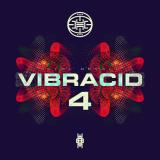
The Vibracid network reaches its fourth phase — the moment of awakening.
What was once hidden beneath layers of programming now resurfaces: the total recall of collective memory.
Encrypted memories from multiple worlds are decoded through sequences of electro-bass, acid warfare, and cinematic techno tension.
Six sound engineers from the Galactic Confederation synchronize their signals to reassemble what was erased — transmitting across psychic fields, dancefloors, and forgotten neural corridors.
Calagad 13 opens the operation with Mad Flava, pure raw energy — the ignition spark that reactivates the buried code.
5ZYL follows with To Your Knees, a dark and heavy descent into pressure and distortion.
Saigg brings the direct, high-voltage electro of Procesos Continuos, channeling precision and drive.
On the B-side, Lups Digga delivers Just Dance, a floor-oriented electro-bass detonator built for propulsion.
Roi expands the field with Despoiled — cinematic, tense and electrified, balancing techno discipline with emotional depth.
Finally, Cliff Dalton closes with Snowbirds, an introspective and elegant comedown: the calm after total awakening.
Mastered and crafted with precision for a strictly limited edition of 150 copies on purple vinyl.
Bill Converse should be a household name in every head’s abode. He’s been DJing live with 3+ turntables since he was a teenager, always under the same name. Unfathomably envious record collection. Your favorite DJ’s as well as very likely your favorite DJ. Whether it is DJing or a live set, his presentation is head-spinning, hard-edged but hypnotic. His avalanching drum programming is as recognizable as Coltrane’s timbre. His records have been released on Dark Entries, Fit Sound, Texas Recordings Underground, Tabernacle Records, Immortal Sin, Acid Test, Feral Colony and Obsolete Future. Now Fixed Rhythms presents a 2×12” pack of Bill’s characteristically bewildering excellence.
The first 12” has four cuts. Woozy, heavy, bombastic machine workout opener “Stress Test” followed by the tension peaking sustainer “ZoneZone” on the A side. On the B side, “770” brings us to a new place of plucky bass lines and unconventionally tuned drum workouts, with “lure me” closing the first 12” with flexing low-end, percussive stabs syncopated with heavy snaredrum riffing.
Where does this music come from? Although you hear the decades of Midwest techno, jacking Chicago house, brain-tickling Warp Records cuts, and his dizzying skills as a DJ in the brew, his sound is uniquely Bill’s. The second 12” peels back the curtain a bit more, as the C and D side are two extended cuts from his live set at 2024’s Jackie O’Body Vol. 2 in Denton, Texas. We here at the label were at that gig. Pure energy. Sexy distortion. Rhythms that made you scream. After the set, the room erupted in a chant of “BILL! BILL! BILL!”. Dear reader, witness the power of Bill Converse’s raw, overdriven, drummy, jack house tech madness!