Marian Himburg, the artist known as Causa, believes that less is more, both in his productions and his release schedule. With a lean and heavy catalogue built from releases on labels like Crucial Recordings, Infernal Sounds, and Artikal Music UK, Causa is as focused on producing quality dubplate ammo as he is with proper releases. His second chapter for ZamZam is exactly what you’d hope: heavy 140 wares for dark dances- soon may they return!!
"Hiss" is nothing if not cinematic: a queasy melody circling in a dying orbit until it crashes into its first monstrous drop. Led by a squelching, lumbering single-note bassline that crushes like an unstoppable beast freed from its chains, no-nonsense kick-snare power and a steadily rising hum increase our fight-or-flight response until the very end.
Causa says the tune was created after “re-listening to my very first couple of beats and getting inspired by how little I cared about certain placements and how I worked drums at that time… I didn’t follow any rules - because I didn’t know any back then."
“Palms” is the perfect companion, another 140 stormer with drums seemingly built from white noise and distortion, funked-up by syncopated brush hats & an utterly swarming bassline. Add paranoid textures and a bizarre monosyllabic vocal pitched this way and that, and you have another dystopian side to fall in love with in the bunker or the ball.
Cerca:sync
Returning home after the acclaimed Holding EP and the highly regarded Clap! Clap! Remix, Lurka continues with his journey into sonic bat country. Partials kicks off with Lurka's typical intrigue, pads swell with distant spectres of percussion build into the most saturated kick of the year slapping you in the face like wet rag, while an architecture of syncopated hats and bit crunching snares lock the angles a shower of haunting bells falls. Dancehall for witching hour. Mach steps in with an equally holo-deck soundscape. Drums swing in awkward alliance with dry wooden blocks and woozy binary language. Both tracks united in their skewed viewpoint and distinctive awkward funk.
Warok music releasing the fourth featuring collaborations with various artists, from breakbeat techno to mental driving techno.
In the Ponorogo series, Warok is continuing revealing the story behind the label which is inspired by the fascinating Indonesian culture.
French artist JC Laurent returns to label with a hypnotic cut in collaboration with label co-founder Coltur entitled "The Vault" featuring syncopated, spacious rhythms, zappy synths revolving underneath the reverberating bass grooves before Enemy Records' Blenk & Materia's Ruhbarb join to create a shimmering techno roller in the form of "Day One" which pulsates with breaky drums and rubbery modulations.
On the flip, Skrypton's Moteka & Shekon provide a psychedelic experience within "Gallia" featuring tunneling oscillations, rising synths and undulating effervescence taking you on an otherworldly trip until Eyth & Hearthug round things off with "Patchworks" which offers up acid squelches, alleviating, angelic pads and scattered, broken percussion which keeps the enthralling energy flowing until the end.
Turned on by a new dawn of chemical love, Sydney dance-funk combo Bellydance laid down their sampledelica blueprint in 1991, thinking in parallel with Weatherall's revelatory work with Primal Scream. A candy flip of streetsoul, festival jam band and Chip Monck's cautionary brown acid address, 3 Days Man! was primed for open fields and discotheques, in an age when the deejay was royalty.
With an elastic lineup that boasted up to 9 members, Bellydance synchronised more with the club scene than the city's straight-ahead pub rock racket, naturally recruiting hometown heroes Peewee and John Ferris to remix their multi-track concoction. A certified party closing anthem, the brother's sun-smacked breakbeats elevate a collective consciousness beyond the clouds.
Originally issued on Regular Records sub-label Boomshanka Music as a precursor to their album One Blood, the now sought-after 12" sports characteristic artwork from Mambo visionary and Mental As Anything co-founder Reg Mombassa. Instigated by Sydney selector Ben Fester, this Efficient Space reboot arrives fashionably late to Woodstock's 50th anniversary but just in time to help soothe universal division.
Enigmatic producer RNDTXTR debuts on Rekids with a deep techno three tracker entitled‘Random EP’ this September.
“Some tracks just stick with you. They never leave your box, or in this case USB, and I’ve been playing these tracks from RNDTXTR for well over two years. Everywhere from Tokyo to Berlin. These have a universal appeal, being hypnotic and just the right balance between pushy club sounds and spatial melodies” - Radio Slave
Shrouded in murky atmospherics, ‘RND009’ opens the package with rigorous drums, shuffling shakers, sweeping pads and scintillating synths. ‘RND007 (Dub Mix)’ continues with a similar cantering rhythm as various rattling percussive elements work alongside clever automation for a tracky cut designed to lock listeners into a trance. Concluding matters, ‘RND004’ is the wonkiest number on the package with its syncopated groove and otherworldly melody.
Neotnas feat. Philosopher is a new collab of electronic music producers from Russia (Chelyabinsk and Moscow accordingly). As the environment of the cities mentioned as well as social milieu vary significantly a profound personal reflection of the artists results in a very specific outlook sculpted by both history and presence of Russia – a surprisingly nice stuff inspired mainly by jazz, ambient and trip-hop. Four new tracks give a deep insight into the way the artists feel the groove and associate it within a dancefloor culture regarding its roots and worldwide influence. Two of them (Jazz Engine and You're Mine) – are 124 BPM house party cuts place all the emphasis on intensively syncopated TR-808 hi-hats layered with properly selected percussive jazz elements and flavored with brass licks and reverbed chords, catchy vox and driving by a grit kick and pumping low bass patterns. Another one (Spirits Of A Dawn) cautiously takes a listener to a personal journey to the edge of an imaginary big city, leaving its downtown, and moving out of the night shade slowly, coming near a sleepy morning glimmering focusing on a light sparks of a new day. The last but not the least track (Traffic Love) is a dense powerful banger galvanizes trip-hop beats and house chords with a lush and mystic 90`s female vocal all together aimed to stir up a crowd on a dancefloor and make them wet and happy. This release – fresh and diverse – will definitely hits it off with a large audience and joins a marketplace properly.
West coast composer, artist, and producer Kaitlyn Aurelia Smith has chartered a pioneering career with multiple critically-acclaimed albums since 2015. Following the release of The Kid in 2017, Smith focused her energy in several directions. She founded Touchtheplants, a multidisciplinary creative environment for projects including the first volumes in her instrumental Electronic Series and pocket-sized poetry books on the practice of listening within. She's continued to explore the endless possibilities of electronic instruments as well as the shapes, movements, and expressions found in the physical body's relationship to sound and color. It is this life-guiding interest that forms the foundational frequencies of her most recent full-length, The Mosaic of Transformation, a bright, sensorial glide through unbound wave phenomena and the radiant power discovered within oneself. "I guess in one sentence, this album is my expression of love and appreciation for electricity," says Smith. While writing and recording, she embraced a daily practice of physical movement, passing electricity through her body and into motion, in ways reflecting her audio practice, which sends currents through modular synthesizers and into the air through speakers. Not a dancer by any traditional definition, she taught herself improvisatory movement realizing flexibility, strength, and unexpectedly, a "visual language" stemming from the human body and comprised of vibrational shapes. Understood as cymatics, as Smith says, "as a reference for how frequencies can be visualized," much like a mosaic. Smith describes her first encounters with this mosaic; "the inspiration came to me in a sudden bubble of joy. It was accompanied by a multitude of shapes that were moving seamlessly from one into the other...My movement practice has been a constant transformation piece by piece. I made this album in the same way. Every day I would transform what I did yesterday...into something else. This album has gone through about 12 different versions of itself." As it has arrived, in a completed state, The Mosaic of Transformation is a holistic manifestation of embodied motions. Smith's signature textural curiosity that fans have grown to adore pivots naturally into a proprioceptive study of melody and timbre. Airy organ and voice interweave with burbling Buchla-spawned harmonic bubbles. "The Steady Heart" quivers to life, peppering blasts of wooden organ between winding vocal affirmations. As with a body, moving one portion requires a balance and counterbalance; here, subtle tonal twitchy signals fire in conjunction with coiling arias to create a mesmeric core. When the beat arrives at the midway mark, a swooping and jittery waltz, a sense of stasis in motion, a flow state, is sonically achieved. As soon as it syncs, it disappears back into the swirling ebbs of electric force. Other tracks stray into more ruminative physical realms. "Carrying Gravity" is built around string-like pads that expand and contract like a solar plexus, becoming taught and then loose. If the record could be summarized in a single movement, it is the 10-minute closing suite, a rapturous collage called "Expanding Electricity." Symphonic phrases establish the piece before washes of glittering electric peals and synthesized vibraphone helix into focus. Soon, Smith's voice grounds it all with an intuitive vocal hook, harmonized and augmented by concentric spirals of harp-and-horn-like sounds. Smith's music doesn't capture a specific emotion as much as it captures the joys of possessing a body, and the ability to, with devotion and a steady open heart, maneuver that vessel in space by way of electricity to euphoric degrees.
Repress!
For its second release, Radiant Love sticks to family values. Paying homage to the party and label’s co-director and resident Byron Yeates, Byron’s Theme comes from the likes of Vani-T (one half of Berlin’s forceful, femme party Climax) and D. Tiffany (who threw down a ruthless remix on the label’s first release by Fio Fa). Together, they take the name of Pillow Queen – a semi-pejorative term for the kind of sub who expects to receive pleasure like a well catches rainwater. No reciprocation, just a reign of sexual passivity.
Their tracks, however, give plenty. “Byron’s Theme” presents a rich palette in its 2-minute buildup: a dry trance hook, high-end synths buzzing and wavering, pitch-shifted voice samples and a pan-flute ran through with tremolo. Throbbing, the 303 bassline picks up after a breakdown at the 4-minute mark, and only then does one realise the song’s still building. There’s still room in the last 40 seconds for some percussion modeled on a breakbeat loop – which is to say, the track is incredibly cheeky and hard-hitting – all that I would hope for in any lover.
While the EP’s first track feels wide, rangy, “Estrel Nights” opens the EP’s B-side in a much closer, tighter space. The build is percussive: bongo taps, claps, cowbell; then a hi-hat snaps things into shape, and in lopes the kick drum. And rhythm remains the central player here. It’s not until 3 minutes in that the percussion finds a melodic backdrop – a dreamy, detuned pad, choral, like a moan.
Ex-Terrestrial’s remix of “Byron’s Theme” repositions some of the elements and ratchets up the tempo of the original, but maintains its respiration: the energy and erotics flow into a different structure, closer to traditional trance, with sharp hi-hats and loopy arpeggios that phase in and out of syncopation, measure to measure. Diagonal, we incline to a climax that dizzily plateaus at 6 minutes, de-escalates and breaks down over the next 2, glows until it’s just a kick drum, slower, slower still; we’re catching our breath.
Bridging the link between the drummer's hometown in Montana and the love of african rhythms, Beat Bronco Organ Trio offer us this sublime, lilting instrumental full of precussive warmth and mid-tempo syncopations.
This 2-part song is not featured on their recent Road Trip LP, but following hot on the theme of musical travellings. Departing from the land of the shining mountains and heading across continents to the sound of the twangy, rolling guitar, parts 1 & 2 are a delightful yet raw aural journey carried out across a live, 4-track tape machine.
Totally analog and fresh, as we often wish music could be.
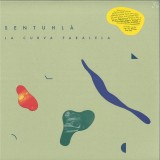
Senthulà is one of the many aliases of musical jack of all trades José Guerrero, a long standing figure in the already rich underground scene of Valencia. In this solo excursion he explores the vast possibilities of mechanical repetition, the machine funk of dirtbag rhythms and proper boogie DIY synth music, sculpting a syncopated sound that is both modern and atavistic. Coming from a deep knowledge and ability to communicate very diverse sounds, slow jams unfold into dance music for clear eyed lounge lizards for whom sleaze comes not dizzy but focused. Whitened african rhythms beat up no wave disco pleasure points, managing the hard task of being very cool and nonchalant, but also hot and dedicated.
This closed door nightclub music will appeal to fans of the new developments in dance music that put Cabaret Voltaire, impLOG or Orchestre Poly-Rythmo de Cotonou into XXI Century basements. The record comes also with a killer remix by Tolouse Low Trax, probably our favourite producer in modern rhythmic music.
Faitiche presents a new album by Frank Bretschneider. abtasten_halten was made as part of the raster.labor installation first presented at CTM Festival in 2019. It is perhaps the most radical work in Bretschneider’s distinctive oeuvre: abtasten_halten is a self-generating composition for synthesizer modules whose sole sound source is the movement of two VU meter needles. The resulting percussive sounds coalesce into rhythmic combinations – all random, without repetition. The album resembles a meditation on infinite rhythmic variation. abtasten_halten is Frank Bretschneider’s first release on Faitiche.
One sound can give birth to thousands of tones through self-fertilization. Pierre Henry, 1982
Frank Bretschneider on abtasten_halten:
abtasten_halten (sample_hold) is a largely self-generating composition for a modular synthesizer system. Self-generating here means that as soon as a current flows, the various modules interact, but within limits set by the composer via the connections between the modules (patches): timing, tempo, timbres, dynamics. These conditions are kept variable to a certain extent or left to chance, so that the composition created is always similar but never the same. On the one hand, the use of random generators opens up possibilities that would not otherwise have been considered. On the other, it offers the fascination of the unfinished and the unique: totally unexpected musical events that you might hear only once.
abtasten_halten combines my preferences for percussive music in general and electronic music in particular. Largely avoiding repetitive structures, the piece is more like a free improvisation, quiet and diffuse, but also extremely dense, in ever-changing contrasts and transformations.
The tone generators are two modified VU meters whose needles, driven by trigger impulses, create a simple one-bar pattern by hitting against a metal spring that is connected to a piezo element (thanks to Gijs Gieskes / Gieskes.NL). The tempo is continuously varied over a period of about ten minutes by several mutually modulating LFOs, ranging from about 0.06 Hz up to the lower audio range of about 18Hz.
The percussive sounds thus obtained are then passed through low-pass filters with moderate resonance and random frequency modulation to additionally colour the sound. Further processing is then executed by an echo module whose tempo and repetitions are again determined by random parameters. Finally the audio signal is occasionally enriched with reverb to add more spaciousness to the sound.
The concept for the installation raster.labor was developed by Olaf Bender, Frank Bretschneider and David Letellier. Many thanks to raster - artistic platform.
On Frank Bretschneider:
Frank Bretschneider works as a musician, composer and video artist in Berlin, making mainly electronic work based on complex rhythmic structures and interlocking textures, whose many-layered sound is inspired by the experimental set-ups of modern physics, often supplemented by perfectly synchronized computer-generated visualizations. In 1986, he founded AG Geige, one of the most influential underground bands in East Germany. In 1996, he co-founded the label raster-noton and has since released many solo albums.
For PM002, Antechamber ’s tectonic plate shifting grooves are carved into slabs of deep-dyed ochre vinyl. Four new tracks bring uncompromising sounds for the mature palette. Antechamber’s sound
blends opposing feelings of claustrophobia with a bold transporting musicality that reveals 25 years of perfecting a craft.
The opener, Archaic Idol, is a rude awaking in a foreign land - and alludes to the iconoclasm evident in the shattered panes of the cover artwork by Alcarcia. Track two, Ossolstone lays down the foundations for the new reality. Sparse, rich reverb, allowing the blocks to fall into place as the listener discovers and becomes acclimatized to the new sonic reality. Opening with an exquisitely dense and profound synth we are plunged into a landscape where Antechamber has free reign to show off skills.
Bordering on regimented syncopation, yet with enough space to allow the track to breathe. Susurrus pulses in an organic sense, tapping into a primordial vision. Remix duties are handled by Lemna (Japan) and Lakker (Ireland). Lemna’s take on Archaic Idol opens up the sound. The emotional heart of the original is maintained but with an unexpected direction that rewards the listener with lavish full range
mesmerizing intention.
Concluding the release, Lakker stamp their unmistakable mark on Ossolstone. A haunting circular bass competes with high-end percussion.
The different seeds that have been planted throughout the life of Croatian Amor come to bloom on 'All In The Same Breath,' affirming an equilibrium that's all its own. Spiralling through the half-light electronics are gentle bumps and breaks that are layered into moments of elevation. A coarse edge remains just an arm's length away, but there is an unmistakable element of celebration throughout the album's 10 tracks. As the syncopated terrains ring out, their perpetual rhythmic motions call a medley of human voices that speak in security. They sing to everyone just as they sing to themselves. In the years since the seminal Croatian Amor album 'Love Means Taking Action' Loke Rahbek has strode a twofold path. There are the delicate, meditative compositions that he has made with Frederik Valentin; setting acoustic instrumentation against affecting digital treatments, each of their collaborative albums are an exercise in the magnificence of subtle restraint. And with the sharpest of turns you'll find Rahbek's parallel universe of rave-shocked rhythms and kinetic helixes that eddy through genre and tempo with few constraints. Collaborations with Varg²™ have yielded the wildest of this, and remain ongoing, yet the traces were already apparent across much of the previous Croatian Amor album 'Isa' with its treated vocalizations and cascading rhythmic mechanics. 'All In The Same Breath,' arrives as a steady handed synthesis of these divergent instincts. Elaborating the distinct techniques and themes that form the wistful essence of the project, the album's quiet composure is a sign that these familiarities have been set adrift to settle into their own private ecosystem.Small vessels travel in a perfect array. Light following shadows, following light. Every movement a signal, every second is camouflage. 'All In The Same Breath' is perhaps more than anything an invitation to be open to wonder.
Truth is stranger than fiction they say, 2020 has proven it. This is not the year we asked for, but it's the year we received. Remarkably, even as clubs and social events across the world shuttered, the spirit of Techno remained alive in living rooms, bedrooms, and basements planet-wide. We hope you still draw inspiration, and excitement in the culture we've collectively nurtured for so many years. Before long we will see each other again, hug and kiss one another, and reconnect under more auspicious stars. For now, we wait. Luckily, we have new music for you to pass the time. We present our latest vinyl 12” record release: 'Life Under Lockdown', featuring tracks by Kessell (1/2 of the legendary Spanish duo, Exium), Joton (founder of Newrhythmic Rec.), HD Substance (co-founder of Sub_tl, and teacher at the Bass Valley), and JX-216 (co-founder of From 0-1). Modern, syncopated Techno for the new world.
Timeless Legend are Jackie Hogg, Allen B. Burney, Donald Harmon, and Michael Harmon from Columbus, Ohio.
Their music is among the most elusive on the rare funk/soul scene with “I Was Born To Love You” a huge crossover club anthem and with ‘timeless’ appeal.
The ‘Synchronised’ album from 1980 is iconic and one of the rarest ‘rare grooves’ and original copies currently sell for over £1,000 a copy. There will only be 1000 copies of this numbered reissue
Runden is a collaboration by Martin Brugger (bass) and Simon Popp (drums), both of contemporary Jazz quintet Fazer, and neo-classical pianist Carlos Cipa. Their debut LP is a conceptual record reflecting on Minimal Music, Afrobeat, and Dub Techno of the late 90s/early 2000s.
While Cipa's solo works build on clear harmonies, for the recordings of Runden he prepared the piano to make it sound like a faintly tonal percussion instrument and his mechanical patterns contrast the syncopated drum grooves of Popp and the deep and sparse basslines of Brugger.
The musicians explore, over the course of seven tracks, the concept of circular music. Each piece is based on a four-bar-motif played in a loop and varied subtly but steadily over time, creating a sense of eternal recurrence and timelessness.
This makes Runden a meditative but demanding record, that only grows with every listen.
Sublime, unique, sexy and peculiar unreleased scores by electronic and jazz pioneer Ron Geesin, made for the sublime, unique, sexy and peculiar films by maverick director Stephen Dwoskin. There. we’ve said it. And if you have not heard of one or either of these two dudes it doesn’t really matter. Geesin made great music and worked with Pink Floyd. Dwoskin made odd films, most of them are in the BFI permanent collection. They are great and a bit strange.
These superb unreleased soundtracks come from a fascinating, progressive and important period in British film history. They represent an intriguing collaboration between the lively Ron Geesin from Scotland and the American Stephen Dwoskin, who both met in London.
Musically they are minimal, charismatic and quite groundbreaking. Here is the story…
HISTORY:
Steve Dwoskin arrived in London in 1964, aged 25, with several 16mm films in his trunk, shot in the cold-water flats of Greenwich Village. He had been on the fringe of the Factory scene, and some of his films starred Beverly Grant, ‘the queen of the underground’. But they had scarcely been seen, and they didn’t have soundtracks. For almost a year they stayed in the trunk, and stayed silent. Then he met Ron Geesin, somewhere around Portobello Road.
‘Slept last night, completely dressed after working over 12 hours on sound tracks at Ron’s,’ wrote Dwoskin in his diary for 29 July 1965. ‘My films are not anywhere near being anything. I need more energy, more concise and positive ideas and less inhibition. And of course space, money and people.’ Dwoskin, who taught and practised graphic design by day, had recently decided to stay in London beyond the term of the Fulbright scholarship that had brought him there.
Ron, living with Frankie in a basement flat in Elgin Crescent – they would marry the next year, with Dwoskin as best man – was about to leave the Original Downtown Syncopators, the trad jazz band he had joined aged seventeen-and-a-half, and was trying to go solo. On stage he would make vigorous use of piano and banjo; at home Frankie had bought him a new kind of instrument – a tape recorder. ‘Soon I had one tape recorder, two tape recorders, three tape recorders.’
Ron, wrote Dwoskin in his unpublished autobiography, ‘loved to record, and to cut and splice the quarter-inch recording tape to make new sounds. This triggered in me the idea of getting back to my films and finishing them’. Soon he was living in a dank basement in Denbigh Road, a few minutes’ walk from Elgin Crescent. Ron’s soundtracks for Dwoskin’ films, recorded in the Geesins’ flat, encompassed Ron’s very eclectic range of styles – madcap piano and fretted banjo as well as tape manipulation.
Aside from Ron’s soundtracks, some of which belong to films that no longer exist (including Pot Boiler), Frankie would act in one of the films that Dwoskin either lost or never finished during these years. He was disabled, having contracted polio as a child, and Ron and Frankie were both carers and collaborators; Ron had met him when he was struggling into his car.
There was no London equivalent to the underground film scene that Dwoskin had known in New York, and his films remained unseen until such a scene began to come into being, in the autumn of 1966. Some of them made their debut at the Mercury Theatre, near Notting Hill Gate, that September. Dwoskin wrote that Alone, starring Zelda Nelson (from Ron Rice’s Chumlum), and Chinese Checkers, with Beverly Grant and Dwoskin’s friend Joan Adler, went over best.
Soon both Dwoskin and Geesin became involved in the nascent London Film-Makers’ Co-op, which put on screenings in Better Books on Charing Cross Road – ‘if you can call them screenings,’ Ron recalls; ‘I’d call it fifteen blokes in various stages of disarray, peering through the smoke’. One or more of the films had been ‘striped’ with magnetic audiotape; with others ‘we had no means of direct syncing to the picture, so he started the film and I started the tape recorder’.
In the same autumn, Dwoskin moved into a flat almost opposite the Geesins on Elgin Crescent. More collaborations followed, including Naissant, on which Gavin Bryars, whom Geesin had met during a stint on the northern club circuit with novelty act Dr Crock and His Crackpots, played double bass.
Around the end of 1967 Geesin released his first solo LP, A Raise of Eyebrows, and Dwoskin won recognition the Fourth Experimental Film Competition, aka EXPRMNTL 4, an occasional film festival staged at Knokke-le-Zoute in Belgium. By now the films had optical soundtracks.
It was only after this that Dwoskin completed his first ‘British’ films, including Me Myself and I, with Barbara Gladstone, an American dancer who had appeared in Barbara Rubin’s Christmas on Earth, and with whom Dwoskin and Geesin had at one point devised a stage show, never produced. For Moment, a single-shot film, Geesin provided his most experimental score yet. At the time of its debut in 1970, Dwoskin and the Geesins were sharing a house in Ladbroke Grove.
By then, Ron was working with Pink Floyd, and soon afterwards he and Frankie moved out to the country, to be replaced by Bryars both in the house and as Dwoskin’s principal collaborator.
Until now these scores have remained part of the Geesin Archive and have never been issued.
The next release in the Phonica Special Edition series comes from Ukrainian duo Asyncronous who first came to our attention after hearing their critically acclaimed debut on Berlin label Slow Life, 'The Art of Fighting In A Dream'.
A Phonica favourite, it provided the soundtrack to many days in the shop throughout the year, culminating in its inclusion in our top ten Best Singles of 2019!
The Phonica Special Edition series is focused on one-off projects, special remixes or collaborations, highlighting music that is slightly left of the dance floor and pairing it with unique artwork.
This time featuring a beautiful piece by celebrated Ukrainian artist, Mykyta Storozhkov.
The pair initially joined forces in an effort to explore human imagination and life experiences through music, focussing on creating feelings and atmosphere rather than be constrained by genre limitations. The result on this EP is a hazy cosmic trip through their universe of synth swells, deep sub bass and meticulous percussion.
The journey begins on 'Padma Kirtanam' with a constant drone providing the backbone to a building tension scattered with drums. The tension releases and makes way for A2 'Shinkansen', a beautiful track with minimal drums and dubbed out synths which echo around the listener's ear. Closing the A side 'Volta' continues this aesthetic but adds a 4x4 kick drum upping the groove to a cosmic deep house jam.
'Avalanche' kicks off the B side of the record with a syncopated bass line and skitterish hi hats. The energy is at its highest level here and only stops to make way for the next track 'Blocks of Despair'. The tempo drops and drum hits reverberate above stretched out bass notes creating arguably the most heartfelt tune of the release.
The EP ends with 'Midnight Sun' an ambient excursion that invites you to drift off with Asyncronous into outer space.
Today we have many opportunities to discover the world and travel through it without leaving your own room. In the age of globalisation, with the help of knowledge, technology and imagination, you can instantly teleport yourself to mystical temples of India or see the sun above the polar desert at midnight. No more borders - we are connected like never before, as if we are not at different ends of the globe, but on a single and indivisible continent that is not mapped but exists in a plexus of global events, information flows and digital environment.
This is our common home. Our new Pangaea.