In keeping with tradition, the new year brings another offering from Portuguese pianist and composer Tiago Sousa.
The fourth volume of the Organic Music Tapes series concludes this cycle that has significantly transformed Tiago Sousa’s music. Compositions in a fluid state, forming nebulae of sounds with vague contours for piano, organ, and tape loops, based on techniques pioneered by American minimalism, particularly by composers such as Steve Reich, Terry Riley, and Charlemagne Palestine.
While throughout this series the electric organ has played a more prominent role in contrast with pre-recorded loops, this is the moment when this technique is extended to the piano compositions. New opportunities arise for the repetition and variation of small motifs to induce subtle perceptions and psychoacoustic effects. This final edition represents the maturation of the Portuguese composer’s intentions surrounding the idea of organic music. In music, too, the organic world is quite different from the one built on the rules of syntax and grammar. It refers instead to a type of interdependent relationships and patient, repetitive processes that are simultaneously spontaneous and unpredictable, which shape rivers and mountains, the grain of wood, muscle fibers, or marks on a jade stone.
Enter then the fourth volume and be locked in a new theatre of eternal music by an artists that keeps pushing his own style to ebullient highs.
Поиск:syntax
Все
“Stuck in My Head / Home is Behind” marks the most profound and personal release from Jamie Collomb, known to many as Oneduz - artist, father, husband, and co-founder of The Global DNB Collective. This vinyl project, created with unwavering passion and intention, was Jamie’s proudest work, a true reflection of his artistic soul.
Tragically, Jamie passed away unexpectedly just as the record entered production. Featuring original tracks by Eclipsed Shadows and Noisesmith, and powerful remixes by two of Jamie’s heroes: drum & bass legends Blame, and longtime friend and inspiration Danny Styles. This release stands as both a musical statement and a lasting tribute.
Following Jamie’s passing, his creative partner Andy (Syntax Era) and GDNBC designer Ryan Feyler (Drbblz) came together to carry his vision across the finish line. Every detail of this release honors Jamie’s legacy.
All profits from this album will go directly to support Jamie’s wife, Shanda, and their two young children, Porter and Hadley. This is more than a record, it’s a celebration of Jamie’s life, his music, and the community he helped build.
- A1: This Is A Never Ending Story (You Just Need To Close It)
- A2: Hidden Road (For Yoo Jae-Ha)
- A3: It Must've Been The Sunset (That Altered My Memory From That Day)
- A4: Good Morning, Harrison, It's Time To Go
- A5: Let's Walk Down To The Swamp Together
- B1: Rainy Night Ride With Roy
- B2: Crows Over My Shoulder (Take Me)
- B3: Spiral Dance (Up Or Down, I'm Not Too Sure)
- B4: Dear Oddie, Today Rainbows Are Falling From The Sky
- B5: Lying Here Half Awake, I Hear Kids Outside Laughing With Their Hearts
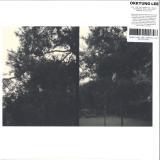
Unlike anything we have heard from her before, Okkyung Lee returns to Shelter Press with "Just Like Any Other Day: Background Music For Your Mundane Activities", a deeply intimate body of recordings at the juncture of ambient music, minimalism, and the baroque, that stands as radical intervention with what experimental music can be, and the place that organisations of sound occupy in our lives. For more than two decades, Okkyung Lee has stood at the forefront of the most radical trajectories of experimental music: a virtuosic cellist and improviser, renowned for her creative rigour and emotive depth. Particularly noteworthy for her range, dexterity, and adaptability, over the last five years Lee's output has revealed unexpected shifts and developments that move far afield from the realms of free improvisation for which she is most well known. 2020's "Yeo - Neun", a heart-wrenching, ambient chamber work - drawing inspiration from the Korean popular music of her youth - was issued by Shelter Press to great critical response, followed closely by "Teum (The Silvery Slit)" - one of a series engrossing electroacoustic works created at Groupe de Recherches Musicales in Paris - on Portraits GRM, and then "Na-Reul" in 2021, regarded by Lee as a closing statement of more than two decades living in New York, which set the precedent of her allowing her emotions to fully occupy the forefront of the music for the first time. Marking her return to Shelter press, "Just Like Any Other Day": Background Music For Your Mundane Activities", encounters Lee upturning the apple cart once again, weaving a profoundly intimate artistic statement on completely unexpected terms. Like its three aforementioned predecessors, "Just Like Any Other Day" belongs to broadening shift in Lee's approach to composing that roughly aligns with her return to her native South Korea, having lived in the United States since her late teens. Infused with a deep reengagement with her own culture and relationship to memory, it is equally a response to those critical challenges and questions provoked by significant life change. Worked on in isolation, and continuously returned to, over the course of four years, the album's nine pieces began with a simple recognition that experimental music is not always what we imagine it to be. It is a practice and a pursuit - a music for which, at its inception, the outcome is unknown - rather than an idiom defined by certain syntaxes, approaches, and qualities of structure and sound. From this departure point, Lee began to inquire after the utility of music itself: what is it for, what does it do, and what place does it (or can it) occupy in our lives? This solitary and durational journey, each composition gradually moving through different phases and evolutions over years, led Lee toward uncharted ground: a music that is not only playful, introspective, and seductive, but also intended to provoke a relationship to experimental music beyond its normative expectations. Rather active or deep listening, it pursues passive listening. Rather than a grand statement, it is discreet. Rather than virtuosity, it embraces the elegant and direct. Even more strikingly, for the first time, the music of "Just Like Any Other Day" encounters Lee leaving the cello entirely behind. Created at home on keyboard, computer, and an inexpensive cassette recorder, "Just Like Any Other Day" presents a remarkable form of ambient music - organisations of sound that become their own environment, to be occupied - intended, as the album's subheading infers, as Background Music For Your Mundane Activities. An expansion of the creative pathways opened by the Korean pop imbued compositions of Yeo - Neun, aspects of electronic process explored by "Teum (The Silvery Slit)", and the emotive foregrounding of "Na-Reul", each of the pieces presented across the two sides of "Just Like Any Other Day" implies something far greater than the limits of its own temporarily: a mood, provocations of memory and place, mirrors for the solitude within which it was made, and palpable emotion lingering just out of grasp. For Lee, each of the album's compositions could be continued or looped for an indeterminate duration: straddling a ground between the minimal and the baroque, enveloping the listener in endless cycles of appreciating, repetitive and rhythmical notes, flirting with the melodic and implying a disembodied imagism that borders on the profound. Remarkably beautiful and direct, Okkyung Lee's "Just Like Any Other Day: Background Music For Your Mundane Activities" - issued by Shelter Press on vinyl - represents a radical reconfiguration of experiential music, stripped to its bare essence in defiance of the widely presumed aesthetic signifiers. Unlike anything we've heard from her before, this immersive body of intimate recordings not only reveals new dimensions of Lee's striking range as an artist, but also of how we might regard and occupy music itself: an ambience to lived and felt like a second skin.
KILN return with an opulent new display of hue and swing on Lemon Borealis , a sumptuous
gallery of dazzling motifs that display a finely hewn concoction of visual tones and vital pulse.
Across its 12 cuts, this collection utilizes a fresh process of condensing immersive sprawl into compact, punchy and colorful sound.
Using aspects of live performance, beatmaking and waveform sculpting, the troika of Kevin Hayes, Kirk Marrison and Clark Rehberg III create
evocative and invigorating dioramas, continuing to surprise and enchant listeners after over thirty years into their collaboration.
Deep in waves of Hi-meets-Lo Fi, KILN delivers a panchromatic daymark arranged to biochemically align and stimulate your personal syntax, forging
a tapestry of sonic reveries ranging from the aquarium-on-fire radiance of DrnkGrlfrnd, a garden groove of field-recorded percussion in
Maplefunk Diptych, to the sizzling guit-noise whiteout of Deacon Rayhand.
Their eighth album, and first for A Strangely Isolated Place, on Lemon Borealis, KILN expands upon the long-explored themes of mosaic
texture, subtle melancholy, eroded consonance, and vivid cadence to reveal yet another aperture to their unique magnetic universe.
Lemon Borealis will be available on 12” Transparent Ochre Smoke vinyl and digital on July
18th. Mastered and cut by Andreas Lupo Lubich, and featuring artwork by KILN.
“Ti Ho Sposato Per Allegria” (1967) is a comedy directed by Luciano Salce, taken from the theatrical play of the same name (1965) by Natalia Ginzburg. The main characters are Pietro and Giuliana, respectively interpreted by Giorgio Albertazzi and Monica Vitti. A lawyer from a good family, serious, accustomed to a calm and regular life who got married to a indolent and dazed girl with a difficult past a month after meeting her at a party. Despite Giuliana's inability to transform herself into a good housewife, his relationship with Pietro continues to flourish, because he seems to find enjoyment in each of his wife's many mistakes. The reason for their union lies not in love but, perhaps, in a genuine sympathy, as strong as it is mutual. The story has become a minor classic with each new representation. On both stage and screen the themes of everyday life, and the more complex and existential ones, are addressed. The subtle irony of the work relies on recounting problematic events in a carefree tone: realities such as abortion, death, separation and the couple's incommunicability are underplayed with naturalness. The funny events of the film are commented on by Piero Piccioni's music, published for the first time on vinyl by Musica Per Immagini, with an harmonious tracklist. For this first orchestra rehearsal with the director, which will be followed by other important soundtracks, the composer makes an effective and elegant synthesis: on the one hand he reworks moods and aesthetic intuitions of some previous and happy experiences, while on the other he identifies and anticipates the first bars of that unmistakable sound between bossa nova, funk and lounge nuances that will characterize almost all the production of the Seventies. In fact, the Turin-native artist simplifies in a positive sense the articulated harmonic structures that have always distinguished his authorial figure – where the so called jazz features are to be considered more than central in the musical texture, as prominent elements of the harmonic syntax – and he tries a melodic reduction that will make the compositions more catchy or memorized, but not easier for this. Lightness of spirit and rarefied elegance are the keys of this new Dionysian world.
- 01: Baton Feat. Phill Most Chill, Dillon & Kyza
- 02: Walker Mill Road Feat. Yu & Richard Halligan
- 03: The Gift Feat. Prince Po, U-George & Jazz T
- 04: Hits Hits Hits Feat. Jehst
- 05: Perfect Match Feat. Large Professor, Tiye Phoenix & Nick Maxwell
- 06: Back In The Days Feat. Truck North & Richard Halligan
- 07: Aisle 9 Feat. Dynas
- 08: Get It Feat. Maddy & Wordsmiff Flip
- 09: Valiant Feat. Press1, Essa & Dr Syntax
- 10: Ego Juice Feat. Big Ole Lil Young Blaise
- 11: Influential Feat. Supastition & Boog Brown
Salsa Verde is the latest release from artist, Tom Caruana and, the newest instalment of Def Pressé’s series of projects made in partnership with KPM (and associated music libraries).
In 2021 Def Pressé entered into a deal with KPM whereby the deeper KPM and associated libraries can be used, exclusively, by Def Pressé. Sampled, replayed and reimagined, this vast catalogue has provided music for TV and Cinema for decades. Sampled, often illegally, by practically every Hip Hop producer ever, the library is available to select Def Pressé artists to utilise in order to create new pieces of music. This music is then fed back into the KPM/Sony AVI library for use in TV and Cinema, and the Def Pressé artist in question is then a KPM Artist in their own right. Completing the circle and hopefully providing music to inspire the new generation of beat makers/sample-based producers.
With several titles in the series, notable names like Blockhead, Damu the Fudgemunk and Stro Elliot since its inception in 2021, the Def Pressé Editions x KPM series, Crate Diggers continues into the seventh episode.
Producer & multi-instrumentalist Tom Caruana has been producing Hip Hop for over 25 years. Incorporating both samples and instruments in his production has helped him create a signature sound which covers a wide range of moods. He has produced quirkier and more humorous material for the likes of Dr Syntax & Professor Elemental, live production for his band Son Of Sam,
sample heavy material in a range of projects with MCs as well as notoriously remixing Wu-Tang Clan with The Beatles and Jimi Hendrix.
The Invisible Road: Original Recordings, 1985–1990 compiles an unheard, previously unreleased body of recordings by Sussan Deyhim and Richard Horowitz, dissidents from diametric backgrounds who met during the heady days of Downtown New York in the 1980s. This collection reveals the creative and life partners’ radical shared vision of avant-garde pop in all of its boundary pushing freedom, combining Deyhim’s singular approach to vocalization, Horowitz’s invention of new musical languages, and touchstones of traditional music from around the world, creating a new music that ultimately retains a voice entirely its own. Despite their difference in backgrounds and respective journeys, at the time of their meeting in the early 1980s in New York City, Sussan Deyhim and Richard Horowitz were both products of the search for freedom and understanding (and resultant awakenings) that swept the globe and helped culturally define the late 1960s and 70s. Deyhim, born and raised in Tehran, spent her teens dancing with Iran’s Pars National Ballet company, performing weekly on Iranian national television, and travelling her home country studying with master folk musicians and dancers, before relocating to Belgium and joining Maurice Béjart’s prestigious Béjart Ballet of the 20th Century. Horowitz, born and raised in Buffalo, New York, had spent much of the decade before abroad, first departing for Paris under the shadows of the Vietnam War, where he studied piano, Eastern philosophy, and became entrenched the city’s free jazz scene, playing with the likes of Steve Lacy, Anthony Braxton, and Alan Silva, before embarking south to Morocco where his friendship with Paul Bowles helped cultivate a deep passion for the country’s musical traditions and a shift in his musical practice.
The pair met by chance sometime in 1981 at Noise New York, a small studio on West 34th Street founded by the musician and recording engineer, Frank Eaton, as a utopian creative laboratory that beckoned artists and bands like Arthur Russell, Christian Marclay, Liquid Liquid and Butthole Surfers into its orbit. Both artists had recently relocated to the city, Horowitz having recently released his debut album, Oblique Sequences (Solo Nai Improvisations), on the legendary Paris based imprint Shandar, and fallen in with members of New York avant-garde like La Monte Young, Jon Hassell, David Byrne, and Brian Eno, and Deyhim having begun to more actively incorporate singing into her practice, notably recording a vocal score for choreography she was doing at La MaMa Experimental Theatre.
Initially bonding over a cassette tape of field recordings made by Paul Bowles that had been given to mutual friend and writer Brian Cullman (seeking answers for Ornette Coleman’s question “what is the sound of sound”), their earliest collaboration was documented on Horowitz’s 1981 album, Eros In Arabia, with Deyhim contributing vocals to the track “Queen Of Saba.” Over the coming years, their deep connection would routinely gravitate them into the studio, culminating in the body of recordings that would appear on their 1986 album for Crammed Discs, Desert Equations: Azax Attra. Unknown to nearly all but the artists, laying in wait over the decades on numerous multi-track and stereo reels, DAT tapes, and reference cassettes, were a vast array of recordings made by Deyhim and Horowitz bookending Desert Equations. The 13 pieces represented on The Invisible Road: Original Recordings, 1985–1990 were recorded largely between Noise New York and Daylight Studio in Brussels, during a period that Deyhim describes the partnership between herself and Horowitz’s as seeking a music “free of any specific cultural reference, with a personal musical signature,” blossoming into a body of sonority that embraced the energy of contemporary boundary pushing pop and the avant garde, filtered through their mutual love and study of various musical traditions from across the globe and deep engagement with the ideas and tactics of experimental music.
Undeniably rooted in Horowitz’s study of the North Africa ney and the music of the Berber and Gnawa cultures during his time in Morocco, Deyhim’s deep engagement with the folk traditions of Iran, and the couple’s immersion in the interconnected Downtown underground music scenes, each piece on The Invisible Road offers its own vision creative and cultural hybridity. Deyhim sings in both English and Farsi, as well as a composite tongue that she developed by drawing upon numerous indigenous vocal techniques from around the world, intuitively responding to Horowitz’s simultaneous sound syntax forming and combining a wide range synthetic and acoustic instrumentation, and experimental tape techniques, within a visionary series of free-standing expressions.
The Hippo Sound System is a collective formed in 2018 by Bristol UK’s notorious ‘samba junglist’ DJ Hiphoppapotamus. "Origins" is their long-awaited debut album!
Touring the festival scene across the UK and Europe their explosive live performances have earned them a well trusted reputation for blowing up dancefloors, moving feet and uplifting souls! Their tracks have been featured on BBC Radio 1, BBC Radio 1Xtra, BBC Radio 6 by Jeremiah Asiamiah, Don Letts and Craig Charles. Don Letts also included their track “Into The Jungle” on his “Best of 2020” round up. Fusing their favourite elements of world music and sound system culture, they explore new possibilities between musical cultures, fusing ancestral rhythms with modern dance music.
Percussive rhythms and heavy bass drive this vibe train as this Hippo and his percussionist/production partner, Munki, draw influence from all over, Including Afro/Latin/world music, Jazz, Hip Hop, House, Breaks, Dub, Drum and Bass & Jungle for their productions. The result? A uniquely high energy and psychedelic global bass sound – complete with the flair of live musicians and the exciting builds and drops of bass music! Passionate about collaboration with both their recordings and performances, they often call upon guest features from artists such as K.O.G, Franz Von, Simo Lagnawi (Electric Jalaba), MC Spyda, Dr Syntax and many more.
With almost no tempo untouched from 70-180BPM, they’re an extremely eclectic and versatile band that can customise sets for most stages and occasions.
qebrus (pronounced Ké-brusse) was a project by Thomas Denis, an enigmatic French musician and producer born in 1981 and based in Caen, France, before his untimely passing in February of 2018. His undefinable otherworldly compositions and internet glitch trickery turned many heads catching the attention and support of esteemed artists such as Aphex Twin, Four Tet and Venetian Snares. The appeal of his music to other forward-pushing producers was emblematic of the uniqueness of his productions and led to collaborations with the likes of Tom Middleton, Otto Von Schirach and Mr Bill. His only release on Love Love Records, 'ᐔ ᐌ ᐂ ᐍ ᐚ', proved to be one his furthest reaching, originally released on CD during a flurry of musical productivity during 2017. Those 6 tracks of intricate extraterrestrial electronics now get the vinyl treatment, having been lovingly remastered or this reissue and pressed on green coloured wax.
The qebrus guise was that of an alien stranded on Earth and this concept was consistent throughout. The project gained notoriety almost exclusively on the internet, with many people's first experiences of his persona coming from the use of chaotic ASCII syntax in track titles which at the time 'broke' many of the websites he used to host his music. This theme of incomprehensibility extended to the sonic qualities of his music, foregoing any shred of familiar sounds in favour of an entirely electronically synthesised sound palate resulting in jarring and frenetic works full of near-imperceptible micro-details.
qebrus rarely performed live with one of the few occurrences being at an after-party following the now legendary Day For Night Festival 2016 in Austin, Texas where Aphex Twin played some of Qebrus' music to a crowd of 20,000 as Thomas watched on in what was undoubtedly an otherworldly experience for him.
Despite his vision being entirely self-driven without a care for popularity or recognition, there were many people across the globe that connected with the sheer weirdness of it all. 7 years on 'ᐔ ᐌ ᐂ ᐍ ᐚ' still sounds wholly futuristic and will likely remain so for centuries to come. In a time where it seems everything has already been done before Thomas leaves behind a legacy of an artist who was truly 'doing their own thing'.
Thomas is survived by his two children who will be receiving his proceeds from sales of this release.
“really alien sounding music”
Aphex Twin —
“Did you know that guy, Qebrus? He was on his own shit, he was making some really out there music, his music was incredible”
Venetian Snares —
“Listening to intelligent dance music producer Qebrus feels a lot like entering another dimension, his music stumbling its way through electronic chaos, leaving the listener unsure over what just happened.”
Thomas Hobbs — Crack Magazine
Ltd edition of 50 hand numbered cassettes from the magnetic north, containing Scopeotaku’s next incarnation of DIY tape manoeuvres.
Sounds for the mythology of a dystopian society that is tired of being spoon fed the common denominator, where police states and clandestine government activities are the norm.
This, the fourth, album from scopeotaku bridges the gap between 4040 and They Came From The Sea. Modern electronics with a experimental dub mentality.
Dean Spunt"s all-new Basic Editions is an excursion in electronic sound that instrumentally unpacks his fascination with language - in this case, the syntax of systems and processes. By turns meditative, compulsive and consumptive, Basic Editions distills a 64 voice module through a head full of ideas - somewhat like pouring a cornucopia of possible ambient moods and EZ listening impulses backwards through a funnel, inspiring a deceptively absurd rainbow of soul to spray out the other end. With this new release, Dean IDs his process as "using sounds, rather than making sounds". This approach to music-making is a train of thought that"s been rolling out from the far horizon of the past for ages now - but for Dean, whose previous works within and without No Age depended on their making of sounds, it"s a fresh work stance. Given, however, No Age"s traditional sonic manipulations (via loops and treatments), Basic Editions delivers further unexpected hard-rights and lefts in the non-aesthetic aesthetic that has defined Dean"s path over the past two decades. Steering toward wacked digital soundscapes that bounce colorfully across the stereo azimuth, Dean creates a kind of post-ambient neo-exotica that hinges upon a giddy conflation of cosmic and comic.
- A1: Koliko (Feat K.o.g)
- A2: Knock Me Off My Feet
- A3: No Flash (Feat Ohmega Watts)
- A4: I Feel It
- A5: Freak The Speaker (Feat Andy Cooper)
- A6: My Own Way (Feat Dr Syntax &Amp; Skunkadelic)
- B1: Let Me Hear You Say
- B2: Breakthrough (Feat Andy Cooper)
- B3: One Time (Feat Dynamite Mc)
- B4: Watch What You Say
- B5: Somewhere To Be (Feat Andy Cooper &Amp; Marietta Smith)
- B6: Ever Been
'Freak The Speaker' is an evolution of The Allergies trademark sound, seeing duo Moneyshot and Rackabeat deliver their biggest beats to date on their latest album. They enlist a quality melting pot of artists to bring additional vibrancy with K.O.G, Ohmega Watts, Dynamite MC, Dr Syntax, and Skunkadelic, all stepping up to the plate. Long-time collaborators and live tour band members Andy Cooper Ugly Duckling, sax supremo James Morton and soul sensation Marietta Smith, continue to keep it nice and lively, rounding off another quality album full of funk, soul and hip-hop, guaranteed to provide good vibes and shake your sound system.
Promo
"A banger from those Bristol boogie boys" Craig Charles on 'Koliko'
"Obsessed with this new track from The Allergies." Lauren Laverne on 'Koliko'
"I love that it's recognisably you but also an evolution from what you've done before... " Adam Walton - BBC Wales
"All over this one. Absolutely incredible." Lauren Laverne on 'No Flash'
"Hot new release." Steve Lamacq on 'No Flash'
"Boom-bap rap cut from the finest cloth." Chuck D (Public Enemy) on 'No Flash'
- A1: I Been Good (Feat Fullee Love)
- A2: Dance With Me (Feat Carys Abigail)
- A3: Strut
- A4: Get Out The House (Dirty Version)
- A5: Doin` My Thing
- A6: Here It Comes
- B1: Get Loose (Feat Dr. Syntax & Professor Elemental)
- B2: Watch Me Walk (Feat Carys Abigail)
- B3: Gimme Soul
- B4: Bap Bap
- B5: Love Inside
- B6: Talkin` (Album Version)
Introducing X-Ray Ted's debut album 'Moving On', a testament to years spent honing his craft and refining his signature sound. Seamlessly blending Funk, Soul, Hip Hop, Beats and Breaks, X-Ray Ted delivers a collection that encapsulates his diverse influences as both a producer and turntablist who is endlessly crate digging for hidden gems. From the infectious opening guitar riff to the final beat, it is clear that 'Moving On' promises an experience that is as engaging as it is dancefloor focused. Each track showcases X-Ray Ted's innate ability to re-interpret vintage sounds from decades past, offering listeners something that is both alluringly familiar and refreshingly new.
X-Ray Ted is not alone in creating his musical vision. He is joined by Hip Hop royalty in the form Jungle Brother's Afrika Baby Bam, Jurassic 5's Fullee Love (AKA Soup), and UK MCs Dr Syntax and Professor Elemental. Adding soulful depth and irresistible hooks to the mix are the vocals from fellow Bristolian Carys Abigail. Together, they effortlessly bridge the gap between retro 60's vibes and contemporary beats, creating something that is truly timeless, celebrating the past while embracing the future.
d 04: Get out the House (Dirty Version) feat. Afrika Baby Bam
Besides being a leading session musician in Milan's jazz scene between the 60s and 90s, Italian pianist Oscar Rocchi created a number of exquisite library albums in the pop-jazz genre. These include among others "Erbe Selvatiche", "Pop-Paraphrenia" and "Woman's Colours" (the latter co-written with his friend Giancarlo Barigozzi) as well as "Alchemy in Jazz", which is now available in digital format for the first time ever.
Originally released on Ring, an imprint of Edizioni Minstrel, the album was recorded by a quintet featuring Rocchi on piano plus long-time collaborators Hugo Heredia (sax and flute), Sergio Fanni (trumpet), Gianni Cazzola (drums) and Furio Di Castri (double bass), and has since become a cult record in countries from the US to Japan, where it was released for the first time on CD in 2013.
With a palette ranging from frenzied post-bop echoes("Gold-Fast", "Nigredo") to sentimental nocturnal ballads ("Solution", "Rubedo") to cheerful modern-jazz vibes ("Mercury", "Silver-Bop", "Sulphur"), here Rocchi paints an elegantly syncopated musical fresco that, like the magical, alchemical process referred to in the title, transmutes the harsher aspects of jazz syntax into a graceful and more euphonic style that is approachable for jazz neophytes and yet enjoyable for seasoned jazz lovers.
Gabriel Birnbaum cuts straight to the spiritual essence of the characters he inhabits, painting affecting and lovingly drawn scenes bolstered by cathartic hooks. Like one of his own espoused patron saints, Paul Simon, Birnbaum sets new challenges for himself with each recording, honing the nuts and bolts of his songcra and pinpointing unexpected new aesthetic contexts for it. The lush and psychedelic folk-rock songs on his new album Patron Saint of Tireless Losers confidently cut to the essence of his artistry, highlighting a mature narrative voice, and a consistently surprising musical syntax. As much as anything Birmbaum has put into the world, it's a tour de force that thrives on both self-assuredness and restlessness_marks of a crucial and constantly evolving artist whose work it's impossible to turn away from once you tap into its frequency.
Church Andrews and Matt Davies weave intricate patterns from Fibonacci sequences on new mini-album, Yucca.
Producer and composer Church Andrews (aka Kirk Barley) and drummer Matt Davies return to explore the outer limits of rhythm on a six-track suite that is at once angular and fluid, natural and systematic. Drawn to the restrictions of working solely with one synth and live drums, the pair found creativity in limitation, developing a compositional dialogue between the sonic timbres of Kirk’s productions and Matt’s percussive practice.
Evoking the primitive yet complex form of the plant from which it takes its name, Yucca features tracks that are built around rhythmic ratios of the Fibonacci sequence. Mirroring spiral patterns exhibited in nature, each track evolves like a cellular structure of its own, from the livewire syntax of ‘Chirp’ and the deconstructed ebb and flow of ‘Ferns’, to the mini-album’s title track, where crisp grooves flit between modulated electronics like fireflies.
“I’ve always been inspired by music that is complex without sounding complex,” Matt explains. He maintains a sense of bounce amid the intricate phrasing and cites drummers Roy Haynes and his grandson Marcus Gilmore as inspirations, alongside sabar drummers from Senegal and Mridangam drumming of South India.
With a shared background in hip-hop and the swung beats of J Dilla and Flying Lotus, Kirk Barley and Matt Davies were also inspired by the minimalism of Terry Riley and the sparse palette of dub techno.
Written and recorded in Lewisham in the spring and summer of 2023, Yucca follows the release of Axis in 2022, with the duo having also performed at festivals such as Rewire and Waking Life, and recorded live sessions for FACT magazine and Worldwide FM.
The third release on Yorkshire-based Odda Recordings, following Kirk Barley’s Marionette and Flaer’s Preludes, Yucca confirms the label’s reputation for championing music on the unstable ground between the organic and the synthetic.
- A1: Goldne Abendsonne, Wie Bist Du So Schön
- A2: Aprilnacht
- A3: Urin Deiner Blüten 1
- A4: Mutter Maria Zwischen Den Himmeln
- A5: Requiem Für Eine Ringelnatter
- A6: Urin Deiner Blüten 2
- B1: Apfelbaum, Kuh Und Backofen
- B2: Nie Kann Ohne Wonne, Deinen Glanz Ich Sehn
- B3: Requiem Für Ein Schwalbennest
- B4: Morgensonne
- B5: Afra Altar Maidbronx
Originally released on tape by SicSic in 2014, Aprilnacht commemorates a decade of music from Brannten Schnüre and marked the spring in a tetralogy of albums about the four seasons when it came out. Back then the Würzburg-based project consisted solely of Christian Schoppik, who later welcomed Katie Rich to take over the vocals. He used to perform as Agnes Beil, but dropped the name when, while making this album realized his music was becoming "much gentler and more fragile". Aprilnacht already captured the particular musical ideas that Schoppik would thoroughly keep exploring, delving deeper and deeper into the use and manipulation of samplers from sources so diverging as to wander between the five continents to post-war German family television and cult cinema. Heir of the ritualistic intensity of Coil, of the intricate sampler assemblies of Ghédalia Tazartès', and of the dusty, dismal old ballads from around the world, Brannten Schnüre manages to make these paths cross in a territory that is as inherent as it is uncanny; sieged by the past and intimate as a hearth. An organic approach to folk, ambient, and sound collage, where ethereal yet thoroughly textured pieces coalesce in enthralling, delicate, and innermost musical rituals.
The album cover paintings reveal the temper: dreary old towns where shadows come to dim the slow passage of crepuscular colors, a soft area of reanimation where wind and light come close and foresee the night of spring. Aprilnacht was inspired by the stories of German philosopher and writer Friedrich Alfred Schmid Noerr, whose work exhaustively examines the conflict between paganism and Christianity, safeguarding myth in a way that Schoppik describes as boldly modern, humorous and unpredictable in its variations of the Germanic folklore motifs. "I wanted to do the same with the music," he states, and the music here could as well be suitable for a night when household deities welcome wandering will-o'-the-wisps, water nymphs, and gyrovagues to discuss Perchta's leadership of The Wild Hunt, but this album is not a folk tale, it's not an elegy to worlds already gone, hidden in years; it's an intersection of routes that open mysteriously before our ears like a congregation of vapors. Aprilnacht is a gathering of voices; "There are too many children, and none of them keeps quiet," reads the last verse of «Requiem für eine Ringelnatter.»
Sensuality drips over the music to celebrate both the voluptuousness and tragic quality of nature; "It's raining on me, urine from your flowers," Schoppik sings in «Urin deiner Blüten» and later on, faced with a snake's erotic features, as if he wanted to be embraced by it: "Your quick, sharp tongue and your warm venom; that's what the pond is missing." Orality is where this profusion of contents thrives. When the voices get closer and condense, the words reveal the saliva employed to pronounce them; we feel the mouth and the tongue, but when breath envelops them in sorrow and softens their edges, they sound distant, diffused in the atmosphere, letting go of the body that held them. These two vocal facets oscillate permanently and interact naturally with the fertile assembly of samplers and instruments that develop throughout the album, which condense and disperse impersonating each other, interweaving to search for a specific syntax. Tangled whisperings of enigmatic phrases, timid voices that stick out to check the scene but hide away quickly, shivering trance chants and monastic ambiances, distant screams and clamors in between chaos and warfare swirl until bursting into subtle songs where even Mother Mary comes forth softly. Soothed by foggy atmospheres and crackling punctuations, these voices shape a vulnerable crowd, an occasion of fragility. Along this swarm of songs thrown into thin air, accordions sound like heavy-breathing lungs; clarinets sigh like curtains shaking; violin solos wander around like bees; Gjallarhorns cries distend like fleeing cattle; glockenspiels evoke remote music boxes and inherited toys; backward emanations emerge like slender waves retreating. On the banks of stretching loops and ember textures is where the songs slowly nest, collecting the words to find their tone.
A poem by Jorge Teillier says, "To talk with the dead you have to choose words that they recognize as easily as their hands recognized the fur of their dogs in the dark. To talk with the dead you have to know how to wait: they are fearful like the first steps of a child. But if we are patient one day they will answer us with a flame that suddenly revives in the fireplace." This may be Brannten Schnüre's main purpose: To find the voice to speak to those of whom we were a vision. Not in mourning, but acknowledging the obscure and volatile nature of spring's regenerative force, searching for the treasure of balance, as evidenced in the lyrics of «Requiem für ein Schwalbennest,» "Its nest was destroyed so many times before it was finished, and despite that, the shallow builds as if it is infatuated." The same idea is here in the words of Schmid Noerr, who made poetry an act of resistance to the horror of Nazism; "Since having seen the ability of a brilliant spirit to die, with a calm mouth that everyone saw, health is true again and we affirm it, even if rivers of blood flow." And as we call for the dusk's kindness, waiting to return home and eat with our kin by the stove, our ears become used to the games of the night. We feel like we're rowing on wetlands, while the "moon musick" keeps us vigilant against the slightest movement of water or sweet moan because eeriness here is imperative for survival. Do not succumb to the insipid howl of death, for nothing may last but mutability. You see, the rock has moved a little during the night; the rest is just wind fleeing from the void.
- 01: What Seed Quests For A Coralline Mud Slump
- 02: Where The Body&Apos;S Distant Arrivals
- 03: Bake Airwaves Into Symbols?
- 04: Like Aurochs Who Fraternized With Syntax Of The Riverbed
- 05: We Stop Short, Frothy, Outdoing The Grass
- 06: Rake A Song-Gush From The Outcrop
- 07: Or The Noun Of Naïve Particles
- 08: Leeching Off The Glow-Work Of Organ Rooms
- 09: We Go Candied In The Marrow
- 10: Grow Dream-Bark, A Tree
Music is a form of world building. I love to develop sonic characters and set them into fictional ecosystems with unique textures, acoustics and atmospheres. Each song forms a different landscape, through which a vocal character guides us and tries to tell us its stories." — Ludwig Berger
Ludwig Berger's 'fictional' debut album "Garden Ediacara" unfolds as a musical eco-fiction, guiding listeners through a speculative ecosystem with synthesized vocals. Infused with storytelling techniques from sci-fi and fantasy, the album intertwines melodic songwriting with electroacoustic sound design. Inspired by hydrofeminism and eco-fiction novels, such as "A Door Into Ocean" by Joan Slonczewski, the album delves into the geological period of Ediacara around 600 million years ago — an era so remote it resonates as a glimpse into a possible future. The Ediacaran period was characterised by a peaceful and thriving ecosystem inhabited by soft-bodied creatures without eyes and bones, which were completely wiped out through the appearance of a new species. "Garden of Ediacara" alludes to this period, celebrating both the pleasures of biodiversity as well as mourning its inevitable loss. The narrative unfolds as an exploration of growth and interconnection in the shadow of a coming extinction. The track titles, written by Daisy Lafarge, reveal themselves as a cohesive poem and contribute to the album's narrative.
Informed by his practice of field recording that focusses on intimate encounters with plants, animals and geological phenomena, as well as his studies in electroacoustic composition, Berger expands his palette for his debut in 'fictional' music. The album prominently features a post-human, non-binary death metal voice synthesizer, physical modeling instruments, and microscopic field recordings of plants, insects, as well as aquatic and geological life. With impressionistic strokes, Ludwig Berger crafts vibrant worlds using glassy timbres and more-than-human voices, guiding listeners through emotionally ambiguous terrain, seamlessly oscillating between moments of intimacy and irritation, melancholy and playfulness.
Ludwig Berger is a landscape sound artist, educator and musician. In his compositions, installations and performances, he enables intimate and playful sonic encounters with plants, animals, buildings and geological entities. He is founder and curator of the label Vertical Music, which releases field recordings and experimental music. Berger holds degrees in electroacoustic composition, as well as musicology, art history and literature. As a sound researcher and teacher at the Institute for Landscape Architecture at ETH Zurich from 2015-2022, he studied the sonic dimension of Japanese gardens, alpine glaciers and urban landscapes, which among other things led to the release of the acclaimed album trilogy 'Melting Landscapes', 'Dammed Landscapes' and 'Buried Landscapes'.