Cerca:synth sense

Generi
Tutto
ADULT. - RESUSCITATION LP (2x12")

Classic 2001 collection from Detroit's ADULT. 20th anniversary of the original release, 10th anniversary of the first vinyl pressing. Available for the first time in red & black marbled vinyl. "We've wanted to re-release this album for some time," says ADULT.'s Adam Lee Miller, "but we weren't ready until now. We have some new material in the pipeline, and we thought this would be a nice way to reintroduce ourselves." It is indeed a nice way for the hugely respected Detroit duo to herald their return to the world of music, especially for anyone who missed out on Resuscitation the first time around _ the album was never available digitally until the 2012 re-release and vinyl pressing on Ghostly International. The reissue thus presented the chance to own one of the more influential records of the early 2000s: either on double 12" LP or, for the first time, as a digital release. Now, in 2022, the vinyl is available for the first time in a new red and black marble colorway. When it first dropped in 2001, Resuscitation served as a de facto introduction to the duo, collecting a bunch of songs on CD that had only previously been available on hard-to-find singles and EPs. Eleven years later, it does the same thing, except this time around, we can see just how influential its creators' work has been _ and ADULT.'s music only sounds more remarkable with the benefit of hindsight. At the time, Resuscitation's combination of crisp beats, squelch-laden synths and Nicola Kuperus' detached monotone sounded like a broadcast from the future, steeped in the analog synth sounds of forebears like Kraftwerk but possessed of an ultramodern sheen all its own. The duo's visual aestheticwas just as important _ Kuperus' photography adorned all their album packaging (including this re-release), and their liveshows drew on a sense of what a reviewer once called "detached intrigue." Echoes of ADULT.'s aesthetic can be heard today in everythingfrom today's surfeit of analog synth-toting minimal wave bands to the highly stylized divas who dominate the pop charts. But really, in 2022 Resuscitation still sounds like no-one else.

non in magazzino

Ordina ora e ordineremo l'articolo per te presso il nostro fornitore.

25,17

Last In: 3 years ago
Azu Tiwaline - Vesta EP

Azu Tiwaline

Vesta EP

12inchIOT082
IOT RECORDS
21.06.2022

‘4-Vesta’ is the brightest asteroid visible from Earth. Measuring around 500km in diameter, it’s one of the four largest objects in the asteroid belt between Jupiter and Mars. Fragments of Vesta have been found on Earth, as meteorites that were ejected into space after two collisions that left huge craters on its surface. These fragments show that Vesta was probably once a planet itself, made of the same material as the four terrestrial planets (Mercury, Venus, Earth and Mars).

It was an encounter with one of these fragments that inspired the name for Azu Tiwaline’s latest EP for I.O.T Records, ‘Vesta’, which features tracks that were written and recorded around the same time as ‘Magnetic Service’, her break-through EP for Livity Sound. Holding a piece of Vesta that had been found in the Saharan Desert - already a place of deep significance for her - she felt a sense of wonder, on a cosmic scale. In her hands, was an object so apparently familiar, of the same age and made of the same fundamental materials as the Earth on which she stood, yet from somewhere else entirely. A perfect name for the four tracks that make up ‘Vesta’. And also the perfect source material for the EP’s cover, an electron microscope image of a razor-thin slice of that same cosmic fragment that Azu held in her hand.

‘Vesta’ is familiar, yet distinct. It’s recognisably Azu Tiwaline from the very start, yet the unexpected always finds a way in. A booming, echoing kick opens ‘Low’, followed by the rattling, shivering sound of a tanbur hand-drum, courtesy of his regular collaborator, Franco-Iranian percussionist and producer Cinna Peyghamy. But then, tentatively at first, a jazzy synth line emerges, and disappears again, only to reappear later. An another colour to add to Azu Tiwaline’s already rich palette?

Azu Tiwaline’s music has always explored the dynamics between space and depth, and the contrasts between light and density. ‘Vesta’ often feels like a high-wire act, an exercise in finding space even as the air fills with drum patterns and synth lines. ‘Medium Time’ builds from a chorus of buzzing insects into a thick percussive track across eight minutes, without ever losing that initial wide-open sound of the dusk. ‘Into The Void’ pays homage to her well-worn collection of Rhythm & Sound and Basic Channel 12-inch singles, all swaying dub echoes and languid kick drums. Then mid-track, it pivots in intensity, each element suddenly expanded and magnified: a psychedelic shift. Those who’ve had the chance to see Azu Tiwaline perform in the past few years might get a few flashbacks - it’s been a key part of her live set.

But it’s the final track ‘Deep Theko’ that best fits the EP’s cosmic title. A shape-shifting ‘ambient’ track that never seems to settle, it drifts restlessly, sporadic percussion and synth washes injecting random bursts of activity. A sonic representation of planetary debris floating through space? Here, as with the airless void of space, emptiness enables a certain perspective. If the distances between the stars weren’t so enormous, we wouldn’t be able to gaze upon them in their entirety, after all.

non in magazzino

Ordina ora e ordineremo l'articolo per te presso il nostro fornitore.

14,08

Last In: 10 months ago
Ron Trent Presents WARM - What Do The Stars Say To You LP

In 1990 Ronald Lee Trent Jr. was the teenage creator of Altered States – a raw, futuristic techno-not-techno anthem, which in retrospect was something of a stylistic anomaly for the young artist. Across subsequent years, with time spent in Chicago, New York and Detroit, came the development of his signature sound, and renown as a world class purveyor of deep, soul infused house/garage. This story has already been told, and on casual inspection, the well-worn platitude ‘house music legend’ is an old shoe that still fits. However, in fact, he’s actually so much more, and has been for quite a while. A genuine musician, songwriter, and ‘producer’ in the proper, old-school sense, the artist today has more in common with Quincy Jones than he does your average journeyman DJ track-hack.

To those in the know, these broader skills haven’t gone unnoticed, which is why on the highly collaborative, career-topping new LP ‘What Do The Stars Say To You’, it took little persuasion to recruit serious star power. Brazilian royalty Ivan Conti and Alex Malheriros from Azymuth, violin maestro Jean Luc Ponty, ambient hero Gigi Masin, hype band Khruangbin and more performed, whilst NY cornerstone François K provided mastering duties. At various points Ron himself played drums, percussion, keys, synths, piano, guitar and electronics.

Harking back to the 70s and 80s boom in adventurous, luxurious albums, WDTSSTY is a love letter to the longplayer, where rich musicality and a liquid smooth, silky flow make seemingly odd genre bedfellows acquiesce harmoniously. Each song its own high-fidelity odyssey, Trent incorporated a broad range of live instruments and electronics into a sophisticated, euphonic whole. Described by him as being “designed for harmonising with spirit, urban life and nature”, this is aural soul food, gently easing you into balmy nights, where everything is alright.

Originally wanting to be an architect, Trent’s views his approach to collaboration and music in general as having the same principles. A firm believer in the nourishing qualities of sound, he sees direct parallels between the two disciplines, being as the purpose of good architecture is to improve quality of life. “With WARM, through sound design, I built frameworks for the musicians, who furnished and occupied these structures beautifully, which was a big compliment for me”, he comments.

The conditions required for a good collab are more than simply structural though, as Trent expounds, “I’m a huge fan of everyone on the record, especially Jean Luc and Azymuth, who’re part of my DNA. Each track was made with that guest in mind – for example, when I started writing ‘Sphere’, I immediately thought ‘this IS Ponty’. I played the keys in his style, and did a guide violin solo using a synth, which he then re-did, amazingly. ‘Cool Water’ is based around Azymuth themes, so when I sent it to Ivan, he could immediately see himself in the piece; He got what I was going for straight away. For ‘Melt Into You’ I hit up Alex on Instagram, sent him the track, he liked it, and within 24 hours he’d sent back six different bass passes!”
“Conversely, Admira began with a sketch sent by Gigi and became something combining Jon Hassell-esque chords and the feel of ‘Aquamarine’ by Carlos Santana, which links back to Masin’s recurrent nautical theme”, he adds.

With community, history and the need for racial equality never far from Ron’s mind, ‘Flos Potentia’ translates from Spanish as flower power, but rather than promoting some hippy idyll, instead it refers to plants which drove the slave trade: tobacco, sugar and cotton. Joined by Khruangbin, together they propel Dinosaur L, Hi-Tension and afrobeat into an ethereal, clear-skyed stratosphere.
Aside from these esteemed guests, other key influences cited by Trent include ‘Gigolos Get Lonely Too’ by Prince, ‘Beyond’ by Herb Alpert, David Mancuso, Jan Hammer, Tangerine Dream, The Cars, Trevor Horn, Alan Parsons Project and pre-Kraftwerk incarnation Organization. A multitude of others are audible too, including George Bension, Vangelis, Loose Ends, Maze, Flora Purim, Weather Report, Atmosphere, Grace Jones, James Mason and Brass Construction.

On the subject of influences, although opposed to the fences erected by genre tags, to understand where Ron is coming from, and where he’s at, it’s important to acknowledge just how big the palette is from which he paints. Traversing jazz funk, quiet storm, sophisti-pop, new age, new wave, kosmische, Balearic, samba, afrobeat, Latin rock, soft rock and yacht rock, his deeply entrenched digger’s knowledge pays off in dividends.

non in magazzino

Ordina ora e ordineremo l'articolo per te presso il nostro fornitore.

24,79

Last In: 4 months ago
Ron Trent Presents WARM - What Do The Stars Say To You LP

In 1990 Ronald Lee Trent Jr. was the teenage creator of Altered States – a raw, futuristic techno-not-techno anthem, which in retrospect was something of a stylistic anomaly for the young artist. Across subsequent years, with time spent in Chicago, New York and Detroit, came the development of his signature sound, and renown as a world class purveyor of deep, soul infused house/garage. This story has already been told, and on casual inspection, the well-worn platitude ‘house music legend’ is an old shoe that still fits. However, in fact, he’s actually so much more, and has been for quite a while. A genuine musician, songwriter, and ‘producer’ in the proper, old-school sense, the artist today has more in common with Quincy Jones than he does your average journeyman DJ track-hack.

To those in the know, these broader skills haven’t gone unnoticed, which is why on the highly collaborative, career-topping new LP ‘What Do The Stars Say To You’, it took little persuasion to recruit serious star power. Brazilian royalty Ivan Conti and Alex Malheriros from Azymuth, violin maestro Jean Luc Ponty, ambient hero Gigi Masin, hype band Khruangbin and more performed, whilst NY cornerstone François K provided mastering duties. At various points Ron himself played drums, percussion, keys, synths, piano, guitar and electronics.

Harking back to the 70s and 80s boom in adventurous, luxurious albums, WDTSSTY is a love letter to the longplayer, where rich musicality and a liquid smooth, silky flow make seemingly odd genre bedfellows acquiesce harmoniously. Each song its own high-fidelity odyssey, Trent incorporated a broad range of live instruments and electronics into a sophisticated, euphonic whole. Described by him as being “designed for harmonising with spirit, urban life and nature”, this is aural soul food, gently easing you into balmy nights, where everything is alright.

Originally wanting to be an architect, Trent’s views his approach to collaboration and music in general as having the same principles. A firm believer in the nourishing qualities of sound, he sees direct parallels between the two disciplines, being as the purpose of good architecture is to improve quality of life. “With WARM, through sound design, I built frameworks for the musicians, who furnished and occupied these structures beautifully, which was a big compliment for me”, he comments.

The conditions required for a good collab are more than simply structural though, as Trent expounds, “I’m a huge fan of everyone on the record, especially Jean Luc and Azymuth, who’re part of my DNA. Each track was made with that guest in mind – for example, when I started writing ‘Sphere’, I immediately thought ‘this IS Ponty’. I played the keys in his style, and did a guide violin solo using a synth, which he then re-did, amazingly. ‘Cool Water’ is based around Azymuth themes, so when I sent it to Ivan, he could immediately see himself in the piece; He got what I was going for straight away. For ‘Melt Into You’ I hit up Alex on Instagram, sent him the track, he liked it, and within 24 hours he’d sent back six different bass passes!”
“Conversely, Admira began with a sketch sent by Gigi and became something combining Jon Hassell-esque chords and the feel of ‘Aquamarine’ by Carlos Santana, which links back to Masin’s recurrent nautical theme”, he adds.

With community, history and the need for racial equality never far from Ron’s mind, ‘Flos Potentia’ translates from Spanish as flower power, but rather than promoting some hippy idyll, instead it refers to plants which drove the slave trade: tobacco, sugar and cotton. Joined by Khruangbin, together they propel Dinosaur L, Hi-Tension and afrobeat into an ethereal, clear-skyed stratosphere.
Aside from these esteemed guests, other key influences cited by Trent include ‘Gigolos Get Lonely Too’ by Prince, ‘Beyond’ by Herb Alpert, David Mancuso, Jan Hammer, Tangerine Dream, The Cars, Trevor Horn, Alan Parsons Project and pre-Kraftwerk incarnation Organization. A multitude of others are audible too, including George Bension, Vangelis, Loose Ends, Maze, Flora Purim, Weather Report, Atmosphere, Grace Jones, James Mason and Brass Construction.

On the subject of influences, although opposed to the fences erected by genre tags, to understand where Ron is coming from, and where he’s at, it’s important to acknowledge just how big the palette is from which he paints. Traversing jazz funk, quiet storm, sophisti-pop, new age, new wave, kosmische, Balearic, samba, afrobeat, Latin rock, soft rock and yacht rock, his deeply entrenched digger’s knowledge pays off in dividends.

non in magazzino

Ordina ora e ordineremo l'articolo per te presso il nostro fornitore.

31,51

Last In: 3 years ago

REKAB - BACK IN FLIGHT

Four killer tracks of high grade electronic soul from James Baker AKA REKAB. A fantastic EP showing both breadth of style and respect for the roots and traditions of the music from this artist.The first, Locked on Dodge, is a driving deep Detroit techno track with a hypnotic arpeggiated lead and filtered atmospherics to lose yourself inside. Don’t get too comfortable though, it’s capped with a surprise electro switch in the breakdown to keep the floor on their toes! The second track, We Need to Care, delivers a cool clear synth sound design over Chicago influenced house tempo beats and lush pads. Simultaneously groovy and comforting, this is a track for those special moments. Jacking with your eyes closed and a big grin on your face.
Third we have a clear tribute to Drexciya with In Search of the Deep Sea Dweller. Tough 808 beats and laser zaps punch through a bed of evocative strings whilst a filtered single note loop rises and falls like the tide. An abstract robotic voice presides over the track, adding atmosphere whilst giving it a sense of mysterious machine driven intelligence.
Lastly, Too Much Time gets its space boogie on. Electro funk beats jump round staccato synth chords and a simple but effective Moog-like bass line. Once the scene is set, a writhing 303 joins the proceedings accompanied soaring pads and beautiful melodic leads that make you feel like you’re being lifted into the cosmos.
----------
ReKab aka James Baker from the UK started Djing in the early 90’s. Later on he started playing around with music. Finally the ReKab sound was established in 2019 with his first release on Where We Met records. Other releases followed soon on Móatún, Withhold, Intellitronic Bubble, We’re Going Deep and Fourier Transform.
His music is very deep and full of emotions and influenced by his love for Detroit.

non in magazzino

Ordina ora e ordineremo l'articolo per te presso il nostro fornitore.

10,71

Last In: 13 months ago
A.B. CRENTSIL'S AHENFO BAND - OBI BAA WIASE

A.B. Crentsil is a heavyweight of Highlife music and the main vocalist of Sweet Talks, one of the most popular Ghanaian bands of the 1970’s. In 1992, musician Charles Amoah and producer Richie Osei Kuffour offered him the opportunity to explore a new popular sound: Bürger Highlife. Little did he know these studio sessions would give birth to the biggest song of his career.
Charles Amoah, who had released his Sweet Vibrations LP in 1984 to great acclaim, extensively toured in Europe with bands such as Black Earth and Saraba, was eager to bring a new sound to Crentsil, an artist he had admired for years. Throughout the 1980’s, Highlife had been changing pretty radically, following the same evolution as Congolese Soukous, Caribbean Zouk and most popular black music
genres of that era: Heavy use of drum machines, synths and digital technology was conveniently replacing big bands and expensive
analog studios and equipments. Mostly recorded, produced or mixed in Germany, this new breed of electric Highlife dubbed ‘Bürger Highlife’ could be defined as a fusion of Disco, Jazz, Funk and Pop with the popular Highlife beats, rhythms and lyrics.
According to A.B. Crentsil, the name was a reference to the ever present American cultural influence on Ghanaian musicians. Charles
Amoah has his own take: “I initially called this particular kind of Highlife ‘Ethno Pop’. Bürger is the German word for citizen, and that’s how Ghanaian musicians living and working in Germany were calling each other”.
The music for both “Obi Baa Wiase'' and “Sika Be Ba” was entirely composed and played by Charles Amoah, using minimal equipment: a
DX7 synth, a Korg M1, a Yamaha RX5 drum machine, and an Akai 1000 sampler. A.B. Crentsil provided the lyrics for both tunes on the spot. Obi Ba Wiase’s message is one of gratitude and faith: it says we should appreciate our life way more and follow the example of people who have a lot less but still praise God all day.
Charles remembers fondly Crentsil’s larger than life personality: "A.B. slept a lot, he really loved sleeping. His lack of punctuality was easily dismissed by his wonderful sense of humour and it wasn't uncommon to find musicians rolling with laughter on the studio floor."
Charles also remembers vividly the "Obi Baa Wiase" session: he could feel the magic in the air while working on the soon to be hit, and
knew something special was happening. A.B. asked for a break in the middle of the session, which Charles adamantly refused until the song was finished and the magic fully captured.
Success was not immediate, and Charles was first a little concerned by the lack of buzz following the immediate release of the Gyae Me
Life Ma Me album. But a few months down the line, the situation took a new turn. "Obi Baa Wiase" was making its way into radio playlists,
weddings and festive celebrations. It was covered by local bands, and soon most of Ghana and its European and American diasporas were hooked. It became A.B. Crentsil’s most requested song at live events for the following decades.
As producer Richie Moore wrote on the album back cover : "A perfect integration of two musical geniuses, the result of which are the
scintillating tracks of music on this record… so all you party fans go onto the floor and dance the body music"

non in magazzino

Ordina ora e ordineremo l'articolo per te presso il nostro fornitore.

15,92

Last In: 3 years ago
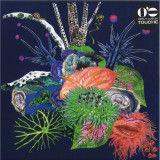
O’o - Touche LP

O’o

Touche LP

12inchIF1074LP
InFiné
17.06.2022

O’o share many of the musical characteristics of their ornithological namesake. The Kaua’i O’O produced the most exquisite birdsong before its extinction in Hawaii in the late 1980s. The beauty and character of its voice was delicate and mysterious, tuneful and surprising. You can experience it with just a cursory websearch, a haunting cri de coeur from the last century. If the poor O’O is consigned to history, then life is just beginning for this French duo, based in Spain, who’ve won plaudits and awards already in their short musical lifespan.

O’o are about to release their sublime debut album Touche. This is not an endling, it’s just the beginning: “I found the name on a website of weird English language words, and I loved the way the letters were arranged like a pair of glasses,” says O’o singer Victoria Suter. “Afterwards, I went onto YouTube and started listening to the last bird of its species, calling for a mate that would never come. I thought: ‘Oh my God, that’s so sad’. Then we talked about the name and we thought it could be a nice thing to honour it and keep it alive in some way.”

Suter met her musical partner Mathieu Daubigné at college in Agen, South West France, when the pair were studying music theory in their teens. Victoria moved to Barcelona in 2010; Mathieu followed six years later. Their debut EP, Spells, appeared in 2018 a beautifully crafted patchwork of vocals and samples that is redolent of the uncanny vocalese of Laurie Anderson. The bird makes an appearance at the beginning of the EP: “Sweet tooth beak. Soft melody peak / Oh O’o, go round and round in circles / Looking for a honeydrop, til you vanish, til you drop”.

That sense of profound longing for something lost is carried over to Touche, as well as the same heightened sensory awareness of the world around them. What has developed in spades is the creative process. O’o have blossomed organically, augmenting their pop sensibilities. Avant-garde techniques have been brought to heel as the pair create off-kilter pop music that warms the heart and nourishes the brain. The catalyst that enabled this bold pop transformation came with the song ‘Touche’ itself, a saucy chanson at the heart of the album. Suter’s wry narrative about a botanical femme fatale is inserted into a lithe and skittish song with reggaeton beats and an inviting, balmy atmosphere.

“The song is about a flower which attracts male insects, producing the very same smell as the female of the species,” explains Victoria. “The poor male is fooled by the sex-appeal of this botanical trap, and gets so excited that he exhausts himself and wastes all his other chances of ulterior mating and having any offspring. The flower entices the insect in in mermaid-like fashion, to come nearer and touch her. It’s the hot track!”

‘Touche’ reaches into hitherto unexplored areas of pop, while the rest of the album is accessible in the way that James Blake, Radiohead or Kate Bush are accessible, and it always challenges, in a way that pop isn’t supposed to. Suter writes playful, poignant, observational songs that tell stories as well as tell us something about ourselves. Songs like ‘Dorica Castra’ are built upon the voice as an instrument, centrifugal and layered from its core.

Complimentary to this method is Daubigné, who brings startling innovation with found sounds, samples and clever vocal manipulations—creating unique, otherworldly sonic flourishes. A guitar whirs like a musical spinning top on ‘Spin’, created in Ableton; an Ondes Martenot appears to make a guest appearance on the title track, though it’s the ingenuity of the Prophet 8 synthesiser. “I’ll often say to Mathieu, ‘what’s that?’” says Suter, He’ll reply, ‘that’s your voice’.”

O’o found their own voice when they won a competition held by the legendary festival organisers Primavera Sound. Victoria entered the band into a competition she saw on Instagram, sending off rough demos on the final day of entry, thinking little more about it other than the fact Mathieu might be annoyed. Soon they would have to build a live set from scratch and figure out how to present their music for the first time. At stake was seventy hours of recording time at Aclam studios, used by Rosalía and Kendrick Lamar, and for the winner a coveted spot at the festival. A pool of 350 acts were whittled down, and then O’o triumphed at a Battle of the Band style face off.

The O’O might be extinct, but O’o the band have learned how to fly. Just watch them go.

non in magazzino

Ordina ora e ordineremo l'articolo per te presso il nostro fornitore.

19,75

Last In: 3 years ago
Auntie Flo / Sarathy Korwar - Shruti Dance EP

Propulsive tabla percussion and meditative drones collide in deep instrumental conversation on Shruti Dances, the debut collaborative album between UK heavyweights Auntie Flo and Sarathy Korwar, forthcoming on the newly relaunched, Make Music imprint.

Across six exchanges of dynamic electronic production and richly layered Indian classical percussion, Shruti Dances discovers two architects of rhythm and movement on an explorative journey through South Asian tonality and diasporic identity.

One an elemental force on drums, the other on the decks, London-based, Indian-raised drummer/composer, Sarathy Korwar and Scottish-Goan producer/DJ, Auntie Flo first connected back in 2019, unaware both were navigating opposite ends of the beat equilibrium. Where Auntie Flo (aka Brian D’Souza) was new to Korwar’s reimagining of jazz, Indian classical music, electronics and spoken word, Korwar was already a big admirer of Auntie Flo’s intl-facing club output, having first discovered D’Souza’s Rainfall On Red Earth off his Soniferous Garden 12” and 2019 SAY award-winning (Scottish Album of The Year), Radio Highlife. Once properly acquainted, Korwar invited Auntie Flo to remix a track off his landmark 2019 album, More Arriving, described by The Guardian as “a stylistic leap from jazz to hip-hop to spoken word…a protest record encompassing the breadth of immigrant experiences”.

The seeds of an unlikely yet powerful musical bond had been sown and when mutual friend, co-founder of Mixcloud, and Make Music label organiser, Nikhil Shah, asked the duo to inaugurate the label’s new live/electronic direction (previously home to Leon Vynehall, U and George Fitzgerald), Korwar and D’Souza hit the studio. Expanding on early conversations around traditional Indian instrumentation, practicing meditation and improvisation, Shruti Dances (a riff on free dance movement, Ecstatic Dance) was born. Meaning 'that which is heard' in Sanskrit, shruti refers to a note in musical terms, but in this case also references the album’s most prominent influence and instrument, the shruti box.

“The shruti box formed the basis of the sound of the project. It’s a drone instrument, similar to a harmonium, and it makes an amazing sound. I’ve spent the last two years studying sound therapy, and immersing myself in ambient and drone through the Ambient Flo project, and am particularly interested in how they can induce meditative states of consciousness. I was really excited to hear what the Shruti box could do with this EP.” Auntie Flo

Across six tracks, (each named after 6 of the 7 main musical notes in the Indian solfege system), Shruti Dances draws on a celestial mix of traditional percussion and processed digital effects. On opening track Dha, Korwar’s sparse tabla rhythms hop across D’Souza’s scattered, arpeggiated synths, where as on Pa, a Balearic shuffle channels Moroccan Gnawa music and Senegalese sabar meets Mark Ernestus’s Ndagga Rhythm Force. Harmonic speed tabla and roaming drones provide a sense of the ethereal and fourth-worldly on Ma, a track that’s resplendent, curious atmosphere would fit snug into the deep listening-focused programming of Auntie Flo’s Ambient Flo online radio station, a curatorial platform and avenue exploring his interest/promotion of mental health, launched over the UK’s first lockdown. Ni sees Korwar pick up the sticks, thrashing toms in a spirited frenzy, whilst downtempo album closer Sa offers some room for reflection, its slow, swirling chords cloud our focus, leaving us with all but the distant sound of birdsong.

non in magazzino

Ordina ora e ordineremo l'articolo per te presso il nostro fornitore.

15,50

Last In: 17 months ago
Mark Barrott - Travelling Music

International Feel founder and guru of the sunset soundtrack, Mark Barrott returns with a new EP entitled Travelling Music. After spending the last few years writing & producing for other people, Mark is focusing his creative efforts inwards & rediscovering his own musical compass, calling it ‘the best medicine and therapy there is’. It’s this energy he looks forward to sharing via a number of releases over the coming months, including a new La Torre compilation, a series of Bandcamp only releases (Bandcamp Editions), the soundtrack to a new Japanese documentary (??) and this new vinyl release, Travelling Music.

He refers to the title track as Balearic trance. Not in the overblown Dutch sense, but trance as a metaphor/mechanism for an altered state, through hypnotic unraveling synth lines and a dash of wonkiness thrown in for good measure . Elsewhere on the EP, Arcade Scene flexes its melodic Italo dance moves with a slight nod to New Order, but a version of the group that’s beamed in from an alternate reality, where The Haçienda was called Il Tesoro and relocated to Ancona via a Gerd Janson DJ set circa 1991.

Chillin’ 4 work channels Aphex Twin from his easy listening Gentle People remix era, with added Sketches from an Island / Ry Cooder-esque guitars and the reprise of Travelling Music already feels like a La Torre sunset classic, bouncing with sequenced polyrhythmic arpeggios, before gently evaporating into a Vangelis-meets-Edgar Froese heat haze.

As with most of his work, Barrott calls this folk music…the telling of stories from everyday life and being Ibizan in origin, there are always a lot of varied & crazy stories to tell, but this chapter in particular feels like a deep burnt therapeutic transmission straight from the heart.

non in magazzino

Ordina ora e ordineremo l'articolo per te presso il nostro fornitore.

10,04

Last In: 3 years ago
Joyful Joyful - Joyful Joyful LP

Having initially met more than a decade ago at a local community radio station, sometimes doing guest slots on each other’s live, improvised noise shows, Cormac Culkeen and Dave Grenon knew they had a mutual interest in working with sonic textures. They listened to each other’s bands for a handful of years, and in 2017, “made good on a threat” that they’d been making for quite a long time: to start a band. At Cormac’s gentle but clear urging—declaring that they’d gone ahead and booked a space in which to record a video—the two wrote their first song, “Sebaldus,” an ambitious 12-minute trip, which also serves as the fireworks finale to their self-titled debut album. With surges of pathos that smooth out into something more soothing in turn, Cormac goes: “The hunter, you’ve seen him / The archer, his arrows are strong / And hunger, you’ve known her / I know the winter is long.” The track is as much about enduring a Canadian winter as it is about the eponymous 8th century hermit, shot through with sublimated desire. As Cormac put it, Joyful Joyful’s songs are “a little bit outside of time.” But while the lyrics beg close, oblique reading unto themselves, there’s also a distinct sense that they’re only one of many more ways that the duo shapes sound. Cormac, whose voice is like a sea with irregular tides, lights up about an idea in traditional sean-nós Irish music that songs already exist and are out there; it’s up to the singer to become the conduit. This belief in music as something to be channelled, and something more than sound, resonates with the singer’s fundamentalist religious past. To paraphrase: lots of group singing, harmonies, no instrumentation, totally unmediated, no priest, congregational—not choral, not a performance, not about talent, the spirit moves through people. “Of course that informs how I think about singing,” Cormac says. So, when they were exiled from the church because of their queerness, they took the music with them, dislocating it from its dogmatic bounds but not from its transcendent potential. This record might be thought of, then, as a kind of queering of sacred, devotional traditions—or at the very least, a space where all of these things can be held at once. Perhaps perceivable by some as contradictions, these intersecting influences create the conditions for an incredibly singular sound. Dave is steady and exploratory in his handling of this multiplicity, arranging sounds as they’re revealed, corralling them, coaxing them into form. “Because Dave is there,” Cormac says, “I get to sing three times higher, and three times lower, and faster, and backwards, and all of these sounds! That are there. They’re all there.” When asked about early musical memories, Cormac recalled an immediate fascination with harmony: from demanding that the first person they ever heard singing it explain what they were doing, to always (still, to this day) singing in harmony with their twin sister around the house, to being part of a children’s choir that sang soprano in Handel’s Messiah—not realizing until they entered the room with all the other ranges that their learned melody was but one part of the whole. Just as tellingly, Dave reflects on his early attraction to “abstraction and becoming abstract,” describing childhood afternoons messing with microphone and speaker feedback loops, producing long, enduring sounds with almost undetectable variations. In a way unique to the coalescing of these two listeners, notions of harmony are central to their output. Dave samples field recordings, old keyboards and synths, and vocal drones, running the live singing through four or five parallel effects chains, sampling and treating everything again in the moment. “Another way to put it is that Cormac’s voice comes into the board and then comes back out shifted, delayed, and shattered; Cormac and I hear it, live with it, and respond,” Dave says. This work is contingent not only on a deep intuition (neither of them read sheet music) of polyphony and due proportion (something St Thomas Aquinas famously listed as an attribute of beauty) but also on their connection to each other and ability to read subtle cues. Dave says they’d hold each other’s hands while performing if it was more convenient to do so, riffing on something else Cormac mentioned about traditional Irish singing: that someone would always hold the singer’s hand, for fear that without a tether to the ground they might find themselves utterly lost, unsure how to return. Joyful Joyful doesn’t shy away from offering such experiences of departure; they’re willing to unsettle their audiences because they themselves are unsettled. Their shared penchant for spooky, heavy music, and self-described “omnivorous” listening practices equip them with an array of sonic concepts that support this effort; Diamanda Galás, The Rankin Family, Pan Sonic, Pauline Oliveros, Keith Fullerton Whitman, Yma Sumac, and Catholic hymnody were just a few that came up. Observing their audience gives them insight about the effect of each song—something they considered while arranging the album. Its arc is marked by soft, sometimes sudden oscillations between cacophony and euphony, day and night (listen for insects), and from sexual, visceral entanglements to more ephemeral, celestial ones. Front to back, it arouses expansion, unraveling. Of lightning, Vicki Kirby writes: “quite curious initiation rites precede these electrical encounters. An intriguing communication, a sort of stuttering chatter between the ground and the sky, appears to anticipate the actual stroke.” By all accounts, something similar seems to happen at Joyful Joyful shows, between those on the stage and those off it, between what’s earthly and what’s beyond. “A lightning bolt is not a straightforward resolution of the buildup of a charge difference between the earth and a cloud … there is, as it were, some kind of nonlocal communication effected between the two,” writes Karen Barad, extrapolating on Kirby’s thought. Cormac acknowledges that while they and Dave play a role in this mysterious charge that comes about, they’re not solely responsible. However ineffable it may be, it’s undoubtedly a form of communion—and a sensuously shocking one at that

pre-ordina ora10.06.2022

dovrebbe essere pubblicato su 10.06.2022

23,32
Kaitlyn Aurelia SMITH & Emile MOSSERI - I Could Be Your Dog / I Could Be Your Moon

"His music filled me with the urge to connect with the world," Kaitlyn Aurelia Smith says of Emile Mosseri. She first heard his work while watching the 2019 film The Last Black Man In San Francisco; just minutes in, she paused it to look up who did the score and wrote to him immediately. "I love Emile's ability to create melodies that feel magically scenic and familiar like they are reminding you of the innocence of loving life." Those talents saw recognition in 2020 with an Oscar nomination for Mosseri's original score to the film Minari. He was already a fan of Smith's and became increasingly intrigued by her impressionistic process as they started to talk. "The music feels so spiritual and alive and made from the earth," Mosseri says. "I think of her as the great conductor, summoning musical poetry from her orchestra of machines." I Could Be Your Dog / I Could Be Your Moon, their two-part collaborative album, introduces an uncanny fusion of their sonics. Constructed using synthesizer, piano, electronics, and voice, this soft-focus dream world is lush, evocative, and fleeting. It finds two composers tuning their respective styles inward as an ode to mutual inspiration, a celebration of the human spirit and its will to surrender to the currents of life. As a full album set, I Could Be Your Dog / I Could Be Your Moon moves fluidly from track to track, panning through textural vignettes. Two roughly 17-minute halves, the set evokes the bittersweet sense of something too bright or rare to last, a short-lived glimpse into a golden hour. There is a dreamy, elemental intention to this music, which Smith and Mosseri say came naturally, as they both embraced intuitive interplay throughout their creative back-and-forth. The stylistic threads of each composer are recognizable yet become more ambiguous as the album progresses, sewn into a singular vision.

non in magazzino

Ordina ora e ordineremo l'articolo per te presso il nostro fornitore.

21,22

Last In: 3 years ago
Various - Kicks & Hugs 01

Kicks & Hugs, a multi-disciplinary platform established in 2017 to hold space for like-minded creators, now launches its own label showcasing emerging sonic spheres that reach beyond momentary hype and trends alike. Based in Berlin, the foundation of Kicks & Hugs lies at intersectional crossroads of music and art, with their first record establishing a definite attitude towards contemporary artistry. Kicks & Hugs celebrates an immersive spectrum of talent across different mediums and promotes ideas composed of color to challenge a steady current of long exhausted black & white patterns within the realm of electronic music. The debut EP available on black & limited edition colored marble vinyl assorts a kinetic flow of ideas produced by a seemingly divergent roster. Completely ecstatic & exhilarating maze of rhythm by The Lone Flanger, additionally reworked with Varg2TM versus contrasting yet innovative dancefloor mechanics by Bertrand., ending with a hypnotic mix by Dasha Rush, the record is an absorbing material of dynamics that subtly surprise and leave nothing but an ambitious statement for what’s yet to come. KH01 is dedicated to a musical shape-shifter, a paramount figure, ephemeral talent & a dear friend – Andrew Smith. To end in his own words, Keep It Fungki. The Lone Flanger was an audio-visual project from the artist Jasen Loveland also known as Andrew Smith (1980-2021). Dedicated to exploring the intersection of music and visual arts in the expanded dimension, the work of TLF picked up where Loveland’s eponymous acid-based project left off, aspiring for a kind of transcendence that takes the listener beyond the previously known concepts to experiments with the possibility of creating a resonant bridge between frequencies, worlds and dimensions. The work of TLF questions, obfuscates and complexifies notions of rhythm, melody and musical genre… even our ability to rely on our senses for accurate information about the work in question Varg2TM also known as Jonas Rönnberg casts a cryptic shadow from the North over contemporary aesthetics, continuing to create in his largely collaborative and always thrilling approach. Tempering a caustic rhythmic sensibility with a pneumatic palette for high definition synthesis, his unique embrace of risk tests the reliability of the forms he works in as well as the genre borders he surveys. Bertrand.’s work as a producer incorporates a wide spectrum of influences and aims to create beyond the common means of electronic dance music. Bertrand.’s restless nature and desire for technical perfection bleed into his productions of bass-heavy futuristic soundscapes often juxtaposed with playfully intense dancefloor fundamentals. Dasha Rush constructs a rather wide assortment of electronic music and arts projects. She sees the genre as a starting place, not a destination. Rush brings up a mixture of rather rare electronic experimentation more akin to the brief movement of underground music. Credits: Mastering and mastercut by Andreas LUPO Lubich at Loop-O Cover artwork by Fredrik Altinell Graphic Design by Marta Braga Inner label artwork by Tommy Dwane Vocals by Kawala Bravo

non in magazzino

Ordina ora e ordineremo l'articolo per te presso il nostro fornitore.

12,56

Last In: 4 years ago
Jon Porras - Arroyo

Jon Porras

Arroyo

12inchTHRILLX563
Thrill Jockey
20.05.2022

Jon Porras draws a staggering array of atmospheres out of even the simplest instrumentation. Across his work as one-half of psych-drone duo Barn Owl and his solo releases, Porras welds monoliths and ether into propulsive music that is deeply felt. Arroyo, named for the Spanish word for "stream" in a nod to Porras' heritage as a first generation Colombian?Japanese American, drifts gently from one tributary to the next in unhurried contemplation and euphoria. The portentous weight and abrasive textures of Porras' previous work give way to the trickle of richly detailed acoustic instruments slipping in and out of the fold. On Arroyo, Jon Porras evokes a distinct sense of resplendent anticipation and calm with a fathomless flow and softly gorgeous colors. For Porras, Arroyo became a rumination on simplicity and simple truths, a work of complete immersion and continuous motion where separate elements coalesce into an ever-changing whole. Porras spent the year leading up to 2020 living nomadically across Europe where he was able to soak in a deep appreciation for the effortless beauty of overgrown gardens, the basic principles of classical architecture and a more transient sensibility. The album was written and recorded in a time of even more change for Porras: after the birth of his daughter. Like a stream's steady glide across bedrock that waxes and wanes with each gradual turn, the music of Arroyo exhibits a transportive stillness. The compositions take on a light, gaseous buoyancy as discreet drones swell with measured fluctuations and ripples of piano rest atop the surface. Arroyo borrows harmonic concepts from modal jazz to create a unique sense of ease and endlessness. Each of the four pieces on the album centers around a single suspended chord, a chord most commonly associated with devotional music which embodies a space between harmonic tension and resolution. Porras embellishes that liminality with arrangements that feel less like distinguishable layers of instruments and more like one undulating nebula of sound. In the past decade of Porras' solo work, his music has grown increasingly engaged with elaborate synth textures and detailed processing. With Arroyo, Porras consciously takes a step back from those more intricate compositions and focuses on more organic, unadorned textures and places each sound with the same precision. Stark piano and guitar patiently hover over modest currents of Hammond organ and Yamaha DX7 with the sustain of each chord and phrase acting as a natural guide to the album's subtle rhythm. The four pieces that comprise Arroyo each encompass their own idyllic channel, slowly weaving their way in and out of the album's elegant stir. Porras' reflections on simplified elements take shape in gorgeous arrangements that impart clarity amidst a tranquil mist. Arroyo is an album that unearths splendor in a unified feeling of space, serenity in perpetual renewal

pre-ordina ora20.05.2022

dovrebbe essere pubblicato su 20.05.2022

28,15
Z.I.P.P.O - Sense

Z.i.p.p.o

Sense

12inchVOI030
Voitax
19.05.2022

With the VOI 030 - "Sense", the project Z.I.P.P.O enters a new sphere within its own sound direction. This release is characterized by IDM texture work, glitchy percussion and drum patterns, that find their room within deep atmospheric spaces and carefully placed delay programming. Certainly, recognizable is Maffei's eclectic taste for more complex electronic bits, which are also known from his more demanding DJ sets. "Sense" brings together different factettes of his nicely equipped studio arrangement, as you get to hear a range of grainy saturated hardware synthesis to innovative and more complex sound design. The sound of this record combines a bit of everything while keeping its very own character. If you like to give it a name, then it might feel like Aphex Twin meets Doppler Effekt and Pan Sonic.

non in magazzino

Ordina ora e ordineremo l'articolo per te presso il nostro fornitore.

10,04

Last In: 3 years ago
Bon Voyage Organisation - La Course

French finest synth-pop band Bon Voyage Organisation release his second opus after a feature on Cocktail d'Amore 10 Years compilation.

"La Course" is a cinematic, synthesized and library-esque journey that could be a mixed-up between Italian early 80's productions and french 00's disco.

"This record marks the beginning of a new attitude towards recording," says Bon Voyage Organisation's Adrien Durand. "Switching from a busy studio that I shared to having my own very quiet cabin in the North West of Paris has inspired me to adopt a more meditative approach."

Whilst it's fair to say Durand has been constantly on the move for some time - be it touring or producing records for the likes of Amadou & Mariam, Papooz and Bagarre - there's a sense of new momentum, as well as stillness, that hangs over this record. One that's fully instrumental and as he describes being more free.

The band's trademark glistening production, disco flair, shimmering electronics and incandescent melodies still remain but a more intuitive and striped back approach was favoured this time around. Some of this attitude stemming from an evening opening for Kamasi Washington. "Because of the constraints of being an opening act we played as an instrumental quintet instead of our usual 9-piece band," says Durand. "We rehearsed the day before, our set opened with John Coltrane's 'Naïma' followed by a hard-bop ish version of Kraftwerk's 'Trans Europe Express'. It felt so good to perform that repertoire in that configuration that I had the vision of bringing this aspect of the band in the studio."

There was also a removed sense of pressure with this record - no major label expectation of a radio friendly record, combined with a deconstructed approach to songwriting. "Since 2014 I've been working mostly on projects involving a lot of conventional songwriting," Durand says. "I was keen on producing a record based on performance and atmospheres more than repertoire." He also sought inspiration from a perhaps unlikely source: The Arctic Monkeys. "I was really encouraged by them going out of their comfort zone on their last album - it really caught my attention in a Bowie / Berlin period way."

The result of the album is one that oozes the natural momentum of experimentation, texture, mood and intuition while managing to retain a sonic coherence. In a none-obvious and zeitgeist clichéd way, there is perhaps a more jazz-leaning approach to the record that weaves between soft subtle moments to the more atonal and experimental, all underpinned by sweeping, engulfing soundscapes and the usual touch of non-Western musical flourishes. This vibe came from a distinct lack of editing, says Durand. "In the studio we had everyone sitting in the same room - sometimes up to 6 players - and I never edited the playing. I just went on to record some additional synth and percussion, insert the soundscapes, and mix the record."

This less is more approach, avoiding indulgence and superfluousness, is something Durand can't help but feel is an artistic response to the pace of modern life. "There is a frenetic approach to everything," he says. "People want to binge on everything, expect ultra fast changes on any political cause etc. The response is a big comeback of things like the practice of meditation, yoga and ambient music." There are times when this record falls into the territory of meditative ambience, as on the immersive plunge one takes swimming through the beautiful 'Un Am Ricain En Danger'. It's an album to bathe in and to be carried along by, it's gripping by being so rather than fighting for your attention

Ultimately the record is one that feels it's been allowed room to breath, a sonic sphere in which musicians have been allowed to roam as freely and thoughtfully as the listener. "This record is about welcoming the music and being able to let each musician express themselves during the recording process," says Durand. "This is a valuable trade that takes time."

non in magazzino

Ordina ora e ordineremo l'articolo per te presso il nostro fornitore.

25,08

Last In: 5 years ago
CROATIAN AMOR - REMEMBER RAINBOW BRIDGE LP

Remember Rainbow Bridge', the new album by Croatian Amor, is a homage to youth and the delicate metamorphosis that occurs as childhood trips into maturity. Focused on this tender flux, the songs on 'Remember Rainbow Bridge' are infused with the restless energy of adolescence and a dawning sense of mortality. From the sun-kissed title track, to the night burn and wet pavement of 'Paper Birds', monumental highs are shuffled with great lows that we perhaps feel most clearly and earnestly in those formative years. Since the earliest collages committed to tape under the name of Croatian Amor, Loke Rahbek's alias has at every step gravitated towards constant discovery and experimentation. The sound collages are still present while the unity of each song's construction now often conceals the juxtapositions and overlapping edges. Employing a medley of diffuse electronic music traditions, fantastical synthetic worlds are evoked and while 'Remember Rainbow Bridge' heavily relies on rhythmic structures to propel the compositions, Croatian Amor continues to tend a highly textured field in his own inimitable way. 'Remember Rainbow Bridge' is a celebration of the liminal space between phases of life, the chrysalis of youth. It is a record about coming to terms with our ever-changing place in the world, its title urging us to see the world with a child's eye, to never forget the miraculous at play only an arm's-length away. "This world as we see it is passing away"

non in magazzino

Ordina ora e ordineremo l'articolo per te presso il nostro fornitore.

23,82

Last In: 4 years ago
Martin Matiske - Circle of Enlightenment EP

Martin Matiske's superb new six-track EP Circle Of Enlightenment on LDI Records is based around the concept of one-mindedness and togetherness. This German artist was fascinated with mixing records as early as his 10th birthday and had his first release on the legendary International Deejay Gigolo Records aged just 15. In the 20 years since he has released a selection of records on labels like Moustache Records and Bordello A Parigi. His timeless sound comes with a vintage touch and always fuses electro, italo and techno in fresh new ways. This new EP aims to describe the direct connection between human beings and the universe. Martin says: "Human beings are aliens always looking for answers to questions like why are we here and what life is about? We know the answer but won't accept it. We are made up of the elements of space and are directly connected to the universe. Each person contains the energy of the universe and is connected with everything that surrounds it. We are one! We are here because we are here! Our mission is to be!" The EP opens with 'Memory', and Martin explains that "Remembering is the ability to do things right but most of the time it causes pain." The track is a slick and icy electro workout with gorgeous retro-future pads bringing a cosmic sense of soul while the corrugated bass keeps busy below. 'Breakout' describes breaking out of normal thought and reaching a state of "no-mind." It is a playful and dynamic electro cut with characterful bass and synth stabs like shooting stars as shimmering arps ride up and down the scale. 'Lost In Space' deals with the idea that human beings on earth are just as lost in space as aliens. It's an interplanetary electro trip with glistening synths shining bright next to more twisted, tortured bass. 'Microbot' is about miniature robots that make our lives easier and ride on a punchy bassline, with neck-snapping snares and pads that circle around like spacecraft during battle. It is another lush electro workout that leads into 'Stars' and pays homage to the importance of these twinkling rays of light. It's a widescreen track with withering leads, cyborg vocals, and a real sense of hope as the snappy drums march into an unknown future. Last of all, 'Solaris' pays tribute to the life-giving force of the sun with another super crisp electro groove, slithering arps and conversational pads that make both a physical and emotional impact. Circle Of Enlightenment is a brilliantly adventurous and storytelling new EP from the ever-excellent Martin Matiske.

non in magazzino

Ordina ora e ordineremo l'articolo per te presso il nostro fornitore.

10,29

Last In: 23 months ago
Sankt Otten - Symmetrie und Wahnsinn

After the 2020 album "Lieder Für Geometrische Stunden", Sankt Otten finally make us happy again with a new release at the beginning of 2022. "Symmetrie Und Wahnsinn" (Symmetry and madness) fits here skillfully, both creatively and musically, in an album series with geometric context.

The album starts unusually buoyant with "Hymne Der Melancholischen Programmierer" (Hymn for sentimental programmers). A Kraut-Pop pearl, which could go on forever with its Motorik swing and with its catchy melody the track doesn't come across as melancholic as the song title predicts. You have to listen twice to not succumb to the illusion that it was composed in Düsseldorf at the end of the seventies. Here (and on the track "Sei Symmetrisch Zu Mir"), Sankt Otten were supported in the studio by drummer friend DIRK PELLMANN.

The drum machine in rumbling funky mode. "Die Glücklichen Unglücklichen", the secret hit of the album? They bend the beat into geometric shapes, let the bass play in circles and cover the song with ghostly choirs. The echo of a spinett-like sound overlays the sound, spitting out a deceptively cuddly dream world.

The 10 minute long "Die Ordnung Des Lärms" could be called an Ambient-Kraut symphony without hesitation. An enormous swelling to ecstasy, a guitar sings distantly in the background. Silence. Synthetic strings pave the way and are supported by choirs. A crackle that suggests a rhythm until it is taken over by a drum computer in the main part of the track. Bombastic mountains of synthesizers pile up and yet a catchy melody finds its way through this mishmash of hypnotic electronics. Fourth movement - Kosmische-choirs in suspension over a bass synth and an Ebow guitar. Is this already Prog-Rock? The question doesn't arise, in the end everything merges into reverb. "Luftspiegelung Der Sentimentalitäten" begins cautiously with a gentle sequence and a discreet kick drum. The mini-Moog sounds like a guitar. Anyway. A surface floats by and returns, layers and shapes build up. At last, everything melts into perfect harmony with a plaintive-sounding synth. This track was composed as a stripped back reprise of the first track from the last album "Sentimentale Sequenzen". A hypnotic Motorik-beat of an 808 that encourages head nodding and could almost be danceable. True to style with warm analog 80s electronic sounds and a loose echo guitar. This is "Angekommen In Der letzten Reihe". Man and machine hand in hand as a homogeneous musical unit and the connection of tradition and vision.

Sankt Otten like images of infinity. In the religious sense of meditative mantras, or also in the mathematical sense of an elongated curve that eventually returns to its starting point. "Bis Das Helle Licht Uns Holt" goes exactly in this direction with its classical use of sequencers and a sound carpet of choirs. Sound worlds that, through a clever repetitiveness, barely noticeably guard the constant changes in the compositional mesh like a secret and only reveal what is to be discovered by listening closely and letting it be seen. Such a thing is probably called Berlin School?

The Osnabrück duo Sankt Otten, founded in 1999, has been releasing on Denovali since 2009. With their now 12th album they give us again a gem of timeless instrumental music. The holy trinity of Krautrock, Ambient and contemporary Electronics, but always stylistically confident and unmistakable Sankt Otten. For the mastering New York based RAFAEL ANTON IRISARRI could be won. Also with the cover layout again good taste is proven. As part two of a cover series, this extraordinary die-cut cover artwork was again created by designer DANIEL CASTREJÓN.

pre-ordina ora29.04.2022

dovrebbe essere pubblicato su 29.04.2022

21,22
THE SOUNDCARRIERS - WILDS

The Soundcarriers

WILDS

12inchPHOSLP004EM
PHOSPHONIC
29.04.2022

We've always done things our own way and without any outside pressure,” says Paul Isherwood of The Soundcarriers. “Making music like this keeps things fresh, you always lose something and gain something as you go along but I think of it as just another chapter.”

There have been many chapters in the life of the band to date and each one is defined by the singular approach and style of the group. Since forming in 2007 the band - comprised of Isherwood, Adam Cann, Dorian Conway and Leonore Wheatley - have released three albums that position them as a distinct and unique force in British music. Eschewing fads and trends that come and go, they have instead focused on honing their own sonic world that glides between woozy psychedelia, immersive grooves, subtle pop and rich, enveloping soundscapes. They’ve consistently moved at their own pace and on their own terms and on their fourth album, Wilds, they return after seven years since their last. “The sessions started in a cottage in the wilds so there's a literal meaning,” Isherwood says of the title. “But figuratively we've pretty much been in the wild for the last few years as far as a lot of people are concerned.”

The recording was staggered over a few different locations, from cottages to primary schools, before finishing in an art gallery. “The beauty of recording in non-studio studios is you have the time for the unexpected to happen,” says Isherwood. “Which is really what keeps you coming back for more.” As a result of the timeframe of the album, it’s one that has changed and grown a lot over the years. “The record has been through a lot of stages,” says Isherwood. “It's almost been circular. We started off wanting to do an album of more shorter, concise tracks and then sort of sidestepped into some more spacey ambient ideas so in a way the album is kind of a synthesis of the two phases, overall carrying on with many of the themes and influences of the first three but with a more focused approach.”

The opening ‘Waves’ leaps out the gate with an infectious hook kissed by a touch of French pop before leaping into a devilishly catchy chorus and into a mini prog-like flute breakdown. It sets the tone for an album that is rich in adventure and unpredictability that manages to balance experimentation with accessibility. ‘At The Time’ is almost unrelenting in its grinding charge, managing to create a groove that cracks and pulses at the same time, ‘Wilds’ is a gorgeously floating piece of music that skips along with strutting bass as Wheatley’s vocals merge melody with texture magically. The closing ‘Happens Too Soon gently stirs to life with an almost pastoral folk air to it, as it slowly builds into swirling psych pop rich in texture before reaching a rousing crescendo. “I feel this album sums up a lot of our influences,” says Isherwood. “There’s a strong folk influence in the sense of the actual songwriting but musically we wanted to create songs that were like those rare oddities you find on a bizarre charity shop record. A collection of "one offs" capturing a moment rather than trying to make a hit song.”

This sense of it being an album of unique songs is clearly apparent throughout but it also maintains a natural flow and cohesion. This is something that stems from the band’s approach to songwriting for the record. “A lot of the tracks started with a feel or groove,” says Isherwood. “Then building it into a more concise arranged piece. We were conscious that we didn't want the recording to sound too over-polished so although a lot of the tracks were quite painstaking in how they evolved we wanted the actual recording to be quite raw and not be reliant on cutting things up or overly editing things. We wanted it to sound natural rather than perfect.”

pre-ordina ora29.04.2022

dovrebbe essere pubblicato su 29.04.2022

27,10
Erasers - Constant Connection

On their third album »Constant Connection«, West Australian-based Erasers create hypnotic compositions of synth, guitar and voice, evoking the vast expanse of their native landscape and the shrouded emotions behind the senses. Comprising of vocalist, synth player Rebecca Orchard and Rupert Thomas on guitar and synths, Erasers have developed their earthly kosmische music into an open language based on drone, variation in repetition and minimal song structures. Based in Perth, regarded one of the most isolated cities in the world, Orchard and Thomas’s music has brewed in the city’s vibrant DIY/Outsider community and evolved into a meditation on landscape, power, the shadow-world of human emotions and stream of consciousness. »Constant Connection«, with its waves of sound and chant-like vocals evokes a trance that suggests an infinity just beyond the senses.

At the heart of each Erasers composition is the interplay between the instrumentation, played with stoic restraint and recorded directly with minimal effects and the transcendental states induced in the listener. It’s a magic that is performed in plain sight and all the more powerful for it. The recognisable vibrato of Fender Rhodes keyboards and simple drum machine loops, the subtle strands of analog synth melodies that snake in and out of the ear, above all the towering encantations of Rebecca Orchard’s undeniably Australian-accented hymns; all of this is presented with minimal ostentation and yet it instantly engenders a dream state, hints at an infinity beyond the material.

Shades of John Cale’s 70s work with Nico, early 70s German synthesists Kluster and even fellow Australians Fabulous Diamonds can be seen as stylistic touchstones for Constant Connection. Where Nico hinted at the macabre and gothic, Rebecca Orchard’s similarly gliding vocal is more zoned in to a kind of oceanic openness, with words becoming chants and spells that suggested themselves to the singer during recording sessions. It’s this hidden hand of improvisatory, automatic writing that lends a sense of expanse to the music. On opener I Understand, while the lyrics might hint at discontent the emotional spectrum it opens up is far more rich and complex, as layered as the waves of droning chords that are the bedrock of each Erasers track. The title track talks of flow, continuum and balance, the protagonist in the song seemingly weightless, gently pulled through a walking reality that borders on dream. In Erasers’ world, it seems, the borders between reality and dream, consciousness and sub-consciousness are blurred and eroded.

On Constant Connection, Erasers’ music might be deeply evocative of landscape but it’s never clear which one. The vast, open terrain that surrounds Perth is dusty, burned by the sun into desert and Constant Connection feels like the product of the heat and relative isolation, the altered states these elements can create. But it’s these altered states of mind that appear to be the real landscape described by Erasers. It’s a landscape that’s hazy, in-and-out of focus, with emotional undertows pushing and pulling you into a weightlessness. On album closer Easy To See the band dispense with percussion all together, field recordings of the water at the edge of their native city ushering in two duetting synths. Orchard’s vocal undulates with the flow, viewing both the geographical and psychological landscape from the perspective of a consciousness not bound by bodies and from a timescale measured in millennia. The album ends as it begins, with field recordings of the real world that the music seeps out from, temporarily, before regressing back into the other realm it feels like it belongs to.

Between these two recorded hints of reality, Erasers manifest a deeply sensual dreamscape that constantly feels like it’s dissolving at its seams. A desert psychedelia emanating from a real world that might not be that real in the first place.

pre-ordina ora29.04.2022

dovrebbe essere pubblicato su 29.04.2022

19,79
Articoli per pagina:
N/ABPM
Vinyl