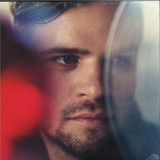
Compositions and lyrics by Conny Fornbäck. Eurorack, LYRA-8, speech synthesis and vocals by Conny Fornbäck. Additional drums on Geosmin by Zeke. Produced, recorded and mixed at Grappling Hook Studios, Stockholm, Sweden. Mastered by Rude 66. Curation and executive production by Mika Hallbäck Vuorenpää. Artwork by Titta Kallio and Fredrik Möller. Photograph: “Attentive gaze - Painful attention” (detail) by Guillaume-Benjamin-Amand Duchenne de Boulogne.
Buscar:synthesis
“When I was asked to put my hands on the original tracks of Blancmange I was instantly excited. They were one of my favourite Bands when I grew up as a teenager in the 80’s. Listening to their music walking around with my Walkman back then was adventurous. Mainly because I was already in love with the aesthetics of synthesisers and drum machines. But also because it was unusual pop music with an extraordinary energy that made it in the charts. Remixing a favorite Band is challenging but I’ve tried to keep the free spirits and playfulness in my mix that makes Blancmange still so special after all these years” – Roman Flügel
Roman Flügel remixes the cult 1980s classic that is ‘Living On The Ceiling’, and the result is a killer, off-kilter slice of club-focussed machine funk that contains the same wonderfully bizarre cocktail of traits, that Blancmange always boasted in spades. Eerie and schizophrenic but also both bright and triumphant. Also features the original and sought after extended mix.
The first in a new series of ‘London Records Remixed’ releases on 12” and digital. Now at its new home as part of the Because Music Group the London Records catalogue is being revisited by pioneering, contemporary electronic producers.
It’s a family affair on the second Growing Bin 7”, as Peter & Patrick Jahn enjoy some father and son boogie with a smooth split release. A sunblushed moocher served two ways, this disc is designed for horizontal dancing…
Rooting around the cupboards in his family home outside Nuremberg, Patrick Jahn unearthed a dusty box of cassettes, saved for posterity but eventually forgotten. Somewhere between ‘True Blue’ and ‘Brothers In Arms’ was a faded C60 full of unreleased demos by his father Peter, recorded in the mid to late 80s. Back then Jahn Sr owned a pub club called Schrank (Cupboard to the Anglophones), with an upstairs office he used as a music studio. In amongst naïve synthesiser experiments and carefree noodling was a Balearic boogie bomb, all strolling synth bass, clipped funk guitar and seaside melancholy – like Brenda Ray on a Wim Wenders soundtrack.
Too impressed to keep it a secret, Patrick played the cut to Carsten “Erobique” Meyer, when he was over there jamming, and Hamburg’s premier funk freak suggested this might be of interest to his likeminded hometown freak Basso. Instantly in love, the Growing Bin boss suggested Patrick provide his own version for the flipside, and so it was, reborn with percussive sway, moonlit keys and beefy bass tones for the next generation. Here’s to the Jahn family, father and son but brothers in calms…
Patrick Ryder
The Current Inside”, Marja Ahti's sophomore album for Hallow Ground, plays with the theme of currents - connecting and animating movements in the form of air, water and electricity. It approaches sound as a poetic medium, focusing both on the experience of sound as form and energy and on a loosely narrative arc, suggesting a riddle on the relations between the sounds. It implements alternative as well as intuitive tunings, analog and digital synthesis, recordings of sonorous spaces and vessels, electromagnetic fields transduced into audio, acoustic close-ups of elements in motion and other field recordings. Fluently connecting quite diverse sound sources, Ahti's music lingers in a zone between abstract sonorities and vaguely familiar acoustic environments.
The first half of the album consists of ”The Altitudes”, a piece commissioned by Ina GRM for Présences Électronique and Sonic Acts. It was inspired by descriptions of the layers of Earth's atmosphere. Imagining a movement through layers of air, the piece unfolds with a slow intensity, interweaving concrete sounds and closely tuned electronic sonorities. Traversing the altitudes, a landscape of entangled elements, masses and currents emerges. The air around us has weight and it presses against everything it touches. As gravity pulls it to Earth, it is sensed as pressure. The rotation of the planet, the angle of the sun at any new moment sets the elements in motion in a chain reaction.
The other side consists of four shorter pieces. ”The Currents” opens with a dance of trembling charged movements. ”Lost Lake” extracts resonant tones from a trail of close-up recordings of winter environments, while ”Fluctuating Streams” channels streaming air in different forms. The closing track, ”Sundial”, could be construed as the steady turning of the planetary angle towards the sun, unfolding through fragments of everyday activity against the backdrop of piercing, slowly twisting, suspended tone.
Marja Ahti (b. 1981) is a musician and composer based in Turku, Finland. Originally from Sweden, Ahti has been a part of the Finnish experimental music scene for more than ten years in different constellations. She is currently active in the duo Ahti & Ahti with her partner and as a member of the Himera artist/organizer collective. Her critically acclaimed 2019 solo debut, Vegetal Negatives, explored a new formal language and sonic palette inspired by a short text by René Daumal.
In 1981, London-based E.G. Records released the debut album from a young Ghanaian group called Edikanfo. Edikanfo quickly rose to international notoriety following the release of “The Pace Setters” because of the infectious, forward-looking highlife meets afro-funk synthesis the band committed to tape. But the album also caught an additional wind of publicity due to its producer, the already legendary British musician and sound conceptualist Brian Eno. During that time, Eno was researching and openly propagating West African musics. He often mentioned his love of Fela Kuti and called his own rhythm-driven experiments the search for a “vision of a psychedelic Africa.” He had recently been collaborating with The Talking Heads on their Avant-funk masterpiece “Remain in Light” and with The Talking Heads frontman David Byrne on “My Life in the Bush of Ghosts,” an album which foretold the sort of cross-pollination and global music interconnectivity that today we take for granted. Eno and Edikanfo’s work together at Studio One in Accra (Ghana) was yet another inspired morphing of soundworlds and processes and a significant touchstone for both artists. As Brian Eno recently noted: “the actual recording sessions were joyful - the band played with such verve that you couldn't resist.”
But just when the sky seemed the limit for Edikanfo, the coup d’état in Ghana on the last day of 1981, tragically put the brakes on the band’s quickly developing fortunes. For years after that, the country endured enforced curfews at night, which of course ultimately gutted the live music scene in Accra and elsewhere. Because of this and other financial setbacks, the band ceased activity and its members spread out in exile, all over the world. It clearly seemed as though the story of Edikanfo, one of Ghana’s greatest bands of that era, had come to a premature end.
Now, almost four decades later, Edikanfo has returned. And with its surviving members gearing up to reissue and tour their classic 1981 album, “The Pace Setters,” the band is once again excitedly pointed towards the future.
► One half of duo Lumisokea and persistent sonic explorer ANDREA TAEGGI (Opal Tapes, SM-LL, Type, Präsens Editionen) debuts on OOH-sounds with a new solo album under-the-influence of mushrooms.
► Recorded at Willem-Twee synthesis studios in Holland, Mycorrhiza is a lucid excursion into a new form of 'ritual-computer-music' — gamelan from the future.
►Master + Cut by Helmut Erler, D&M Berlin. Limited Edition of 200, 12" black vinyl housed in gold cardboard sleeve with 'ad-hoc' fluo sticker.
Of course this is not the first album born under-the-influence of mushrooms, but apparentlyTaeggi doesn't take them here as he rather observes the cognitive and intelligent behavior of mycorrhizal fungal roots—one of the great mysteries inhabiting the forest soil, and from which a network of beneficial underground relationships with plants sprouts. Known as Mycelium, this fascinating wood-wide-web very much resembles the intricacy of the human neural system—transporting carbon, water and nutrients from one tree to another. A mutualistic symbiosis that Taeggi similarly establishes with the rather rare arsenal of sound machineries he had access to at Willem-Twee synthesis studios in Holland—a center for experimentation inspired by Berio and Maderna's Studio di Fonologia RAI in 1950s Milan.
In the process of tweaking and feeding electric impulses and sound signals into instruments of the likes of the iconic ARP 2500/2600 and a number of testing/measuring units from the 50/60s—originallynot conceived as musical instruments—Taeggi engages into an exchange of nutrients and information, while abruptly sabotaging un-welcome elements, hence accelerating the sound superhighway towards spectral psychedelic tension—a process he seems to be extremely in control of. Taking a step aside from his usual minimal approach to address more complex structures and augmented mind-sets, Mycorrhiza sounds at times like gamelan from the future: a lucid excursion into a form of "ritual-computer-music" with a conspicuous penchant for detail,alluding to a continuitybetween pseudo-cerimonial and laboratory-like computer music, steering clear from any reference to a specific creed or religion—imagine Stockhausen drinking the Amazonian sacred brew Ayahuasca..
The swarming micro-movements of "Cuttleburrs" multiply in a series of crescendos marked by sudden falls, saturated drums incursions and tense sonic clusters, introducing the more explicit gamelan percussive tones and compositional forms of "Kodama" and "Icaro". Recorded on the ARP 2500, "Mycorrhiza" uses white noise generators, resonant bass and spring reverb to conjure up a magical fungal diorama, which expands into the spooky shadows of skeletons and demons of "Phantasmagoria" and the spectral mystics of "Oculus Cordis"—the Eye of the Spirit — in which Taeggi grapples with the same sine-wave generators that Stockhausen used in his seminal "Studie I" and "Studie II".
On his new record "Companionship", London-based Soft-Rock, Soul and Disco artist Joel Sarakula keeps the mood easy and the grooves deep. Ten new songs see Sarakula develop a deeper, more introspective lyrical style from his previous works as he celebrates and laments friendships, love and loneliness. Interspersed with a few standout up-tempo tracks to keep the ship sailing, "Companionship" is a chill-out album and listening experience of the highest order.
"Companionship" opens with "Midnight Driver", a driving soft-rock fantasy where the narrator laments his partner's nocturnal habits: 'When she's coming up, it gets me down'. The Californian sun-kissed guitars, vocal stylings and percussion all help to set a cinematic mood which unsurprisingly also makes it a great driving song. On the introspective "King Of Clowns", Sarakula creates a pop song that calls to mind the craftmanship of Hall & Oates and Elvis Costello. Both an admission of guilt and an unapologetic statement of intent, his low vocal careens in the dangerous divide between self-pity and self-parody: "My bad decisions worked out for a while, I'd do my dance tried to make you smile, I'll never wise up it's just the way I am". These confessions all occur over a down-tempo funk groove complete with some vintage synthesizer musings that makes the track ready to be sampled for a hip-hop record.
"Sunshine Makes Me" steps straight out of its mid-1970s swimming pool, heavily dripping in jazz fusion to dry off in the cold light of today's sunshine. The chorus is a mantra of desire, needs and reality that sees Sarakula sing 'Sunshine makes me lose my mind, thirty degrees and my eyes get so wide. Dreaming big and living slow, don't you know that time is on our side". On "Companionship", Joel Sarakula, prolific writer, producer, performer and multi-instrumentalist finally unleashes his chill-out pretensions. In this follow up to the critically acclaimed "Love Club" (2018) he develops a deeper and more mature compositions and production style. His love of all things vintage extends to a devotion to analog synthesizers and on "Companionship" you can hear a genuine love of synthesis that at moments is reminiscent of 70s synth production pioneers Todd Rundgren and George Duke.
Joel Sarakula will tour "Companionship" through Europe and the UK this Spring and Summer 2020 with his musical companions. Born in Sydney, based in London and a true internationalist, Sarakula tours with pickup bands sourced from each territory he plays in: a Barcelona band for Spain, a Berlin band for Germany and so forth. This cross-cultural exchange is a sly nod to the golden era of the 1960s and 1970s when travelling US pop, soul and blues artists would do the same.
Tilman Robinson’s third album, CULTURECIDE, is an investigation of the anthropocene; a seven part lamentation for our chaotic world.
Tilman Robinson is an Australian composer and sound designer creating electro-acoustic music across a range of genres including classical minimalism, improvised, experimental, electronic and ambient. Tilman’s diverse output focuses on the psychological impact of dense sound employing acousmatic and psychoacoustic principles. His third album CULTURECIDE will be released on Iceland’s Bedroom Community label in April 2020.
CULTURECIDE: “...processes that have usually been purposely introduced that result in the decline or demise of a culture, without necessarily resulting in the physical destruction of its bearers.” D Stein
CULTURECIDE is a rich sonic collage, harvesting sounds from a range sources including field recordings, medical machines that monitor the human body, traditional instruments and synthesisers, often melted electronically. The result is an unsettling paradox with sounds constantly on the edge of recognition. Each piece references a specific socio- political issue ranging from colonialism to neo-liberalism to climate change and the impending singularity of humans and machines. Far from an answer to these questions, CULTURECIDE invites us to meditate on their place in our life and approach personal understanding.
Recorded and produced almost completely in Australia, a land at the forefront of the devastation of climate change, CULTURECIDE was an attempt at catharsis for its author frequently appalled at his country’s incredible apathy and inaction. Mixed by Bedroom Community regular Daniel Rejmer and mastered by Lawrence English, works from the ambitious and unsettling record saw Tilman nominated for the 2019 Melbourne Prize for Music.
UPSIDE DOWN SMILE WAS RECORDED AND PRODUCED BY EWA JUSTKA AND BY SELF-DESIGNED, SELF-MADE, SELFSELFSELF, ODD LOOKING SLIGHTLY DYSFUNCTIONAL SYNTHESISERS AND BY A TRANCE PURPLE KILLER ROLAND JP8080 AND BY HIS BROTHER VIRUS AND SOME OTHER ROLAND BROTHERS NO SISTERS INCLUDED DURING THE TIME WHEN EWA JUSTKA WHO CURRENTLY LIVES IN GLASGOW, GOVANHILL, ALLISON STREET, WHERE RECENTLY HER PASSPORT WAS STOLEN DUE TO THE BURGLARY, WHERE SHE LIVES IN JOY, ALTHOUGH SOMETIMES THE FLOOR GETS WET DUE TO THE LEAKING WINDOWS AND SOMETIMES ONE CAN FIND DEAD PIGEONS LAYING ON THE STAIRCASE BUT IT'S NICE AND COSY AND EWA JUSTKA HIGHLY INFLUENTIAL PERSON IN THE DEEP DARK TRANSISTOR LADDER CIRCUITS LIVES SINCE SHE IS STUDYING PHD AT EDINBURGH COLLEGE OF ART WHERE SHE THINKS A LOT ABOUT IMITATION IN SYNTHESISER DESIGN AND FILTERS AND VCOS AND FORMANTS AND ACID AND HARDCORE MUSIC AND TWIN T FILTERS AND OPERATIONAL AMPLIFIERS AND SHE TURNS KNOBS AND THINKS AND THE UPSIDE DOWN SMILE ALBUM WAS MADE IN THE DEPTH OF THOSE THOUGHTS QUITE OFTEN SAD THOUGHTS UPSIDE DOWN SMILE IS A BIT OF A CYNICAL SMILE BUT AN HONEST SMILE CYNICAL BUT HONEST UPSIDE DOWN SMILE IS A SMILE THROUGH TEARS BUT TEARS OF JOY SCOTTISH JOY UPSIDE DOWN SMILE IS UPSIDE DOWN ACID ONE COULD SAY UPSIDE DOWN SMILE COULD BE INTERPRETED AS A SAD SMILE BUT IT IS A SMILE IN THE END OF THE DAY
DJ Dem’s new 12”, called I Videre, translates into I See in English. Continuing the sonic explorations of timbre and rhythm, the three tracks that comprise the new EP are an envisioning mix of the artificial and the natural acoustic environment. Streets, ambulances, laughter, air; hints of Berlin techno intertwined with the cymbals of an acoustic drums set and Berlin itself; synthetic and human voices creating mazy soundscapes. A blend of house tempos, techno’s futuristic take on sound synthesis, ambientesque stillness/movement and musique concrète’s intertemporal idea of montage music. Rather than going for the usual tropes of dance music’s canon, the music on the EP folds and unfolds on an axis of her own, giving DJs a multi-purpose sonic twister.
2020 Split release with contributions by ELEH and NYZ.
ELEH: This side is possibly the artist's most complicated electronic composition. It navigates myriad timbral, tuning and temporal processes while winding itself to completion. It was composed/constructed over a period of months in early 2019.
NYZ: Two crunchy microtonal drone meditations in mono, using techniques of digital FM and hybrid analogue/digital modular synthesis. FM60P::fbk1#03 is from a number of sessions recorded on my very battered SY99 recorded from 2013 to 2014. As the name suggests, this particular session revolved around using feedback in the FM algorithm. EML DRNPi was recorded as part of the 2015 Plum Island Sessions where I had a host of synths on loan from John Brien at Important Records. For this recording I used the EML ElectroComp 101 and my own 4 voice digital microtonal oscillator running a Lambdoma Matrix to make a hybrid analogue/digital system.
This split release between ELEH and NYZ (David Burraston) is packaged in a heavy duty sleeve printed on both sides of the packaging and utilizing metallic inks. This is a first edition of 500 copies and a brand new full length from NYZ is being released at the same time via Important Records.
Distorted Sensory Perception is back with a journey of deep space exploration in the form of their 2nd Various Artists release ‘Outer Solar System’. Featuring a diverse selection of deeper Electro and Techno of the broken beat variety.
The A-side boasts a nostalgic stripped back yet progressive cut ‘Persistence’ from Maltese duo Moodex. Next up, a deep ethereal musical statement ‘Early Morning Hours’ from fellow Maltese producer Sound Synthesis in his unique style.
The B-side opens with the moody, new school heavy hitter ‘Impulse Control’ from French producer and label co-founder Oshkossh. The penultimate track ‘Brainacid v2’ comes in the form of dusty machine music from Italian newcomer Caramel Chameleon that is reminiscent of AFX ambient works. Last but by no means least the record is brought to an epic conclusion with the frantically emotive and intricate ‘Grny89’ from France's Foreign Sequence.
Kicking off 2020 – Great Circles takes a step away from the dance floor with the release of the monolithic new work from Philadelphia-based artist Radere, ‘I Do Not Want What I Have.’ This long-in-gestation set of slow burning electronics and shadowy drones is part of the label’s growing selection of releases dedicated to deep listening, following on from the 2017 Prefix Moniker LP.
Radere is the ongoing project of Carl Ritger, who has worked under the nom de plume since 2009 and has deep ties to the Great Circles family. He played some of his earliest shows at Inciting HQ, the recently shuttered, label-affiliated venue, and invited Justin Gibbon AKA Westov Temple and Great Circles label founder to contribute to some of his earlier recordings. While he started out as a more straightforward ambient guitarist, Ritger’s work developed into more experimental textures as he explored modular synthesis and processed found sounds.
Ritger’s releases from his time spent living in Denver, CO c. 2011-2018 are marked by a particular strain of east coast nihilism and an angular aesthetic that keeps the listener off balance. Now back in his native Philadelphia, the two long-form pieces that comprise ‘I Do Not Want What I Have’ represent a perhaps more nuanced meditation on pain and loss. “Spitty Kisses,” the 15-minute album opener, takes aim at the listener with a brutal salvo. It is almost sadistic in its sonic intentions – acerbic modular sound and abrupt stuttering in the material leave a listener personally affected. “You’ve Been A Ghost Your Whole Life,” on the flip, delivers a salve for the A-side’s wounds and resolves its masochistic tones.
Written through a period of intense personal trauma as a means to seek comfort and solace through creative action, it’s clear that the puerile humor of nihilism is gone and grown out of in Ritger’s work.
FFO: taking long walks off of short piers, the legend of the monk Kelpius living among the trees of the Wissahickon, traditional creation and destruction stories in polytheistic faiths, and John Coltrane.
The record is accompanied by a digital-only series of remixes by friends of the artist and regular collaborators, including new works from Borne and Shivers, as well as Great Circles alums Westov Temple, Chaperone, and WOLF DEM.
“…In The City Of Lights Where Nothing Is Grey…" In the City Of Angels by way of Prague, Pink Gloves channels classic Italo Disco on their Italians Do It Better debut. Petr Pliska weaves a tale of introspection on the neon soaked streets of Los Angeles.
Act 1 – Downtown. The title track is a hypnotic journey to the city center over a symphony of synthesis. He laments that he “Never Wanted To Come… Never Wanted To Stay… In The City Of Lights Where Nothing Is Grey”. It’s a place where nothing ever changes
& fantasy greets us in every direction. Beneath the sedated vocals, the synthesizers strike deep & dissolve quickly into a haze blanketing the strut of the heavy backbeat. The stage is set.
Act 2 – The Dancefloor. “Dancing on My Own” infuses Robyn’s four on the floor classic with it’s own cocktail of ethereal melodies & a rhythm section ala Ultravox. In the face of the Narrator’s lament, a mirror ball shimmers reflections of resilience.
Act 3 – The Highway. The downtempo “Wilderness” haunts us, bursting with silken synthesizers & spectral electronics reverberating like the ghosts of last night’s party. The tempered cinematic landscape blends with a mesmerizing sorcery as we drive into the unknown.
Act 4 – End Credits. Suddenly, the film is over. We hear the sunrise straight out of an ‘80s John Hughes film & the beautiful grit of Power, Corruption & Lies.
Produced By Johnny Jewel. Mixed By Lukáš Turza & Johnny Jewel. Mastered By Mike Bozzi At Bernie Grundman Mastering. Vinyl Cut By Bernie Grundman, Hollywood.
La Sabbia is a group of friends who share the passion for music. In the last five years we succeeded in building and developing our own studio, where nine people are working and researching. We see music as a universal language to connect people, telling stories and creating new life shapes and patterns accessible to everybody, without boundaries of any kind.
Voltage Controlled Fingerz is Alessandro Paolone's first album, the synthesis of his trip in the various forms of electronic music. From the obsession for the Yamaha DX7's and Roland 707's raw sounds, through the complexity of jungle drums and poly-rhythm, to an almost maniacal analysis of the '70s progressive rock scene, you will taste these classic ingredients mixed in the new recipe of Doc Pavlonium.
Vermonische Melodien is a collection of compositions by DJ-producer M.RUX, made with old VERMONA machines from Eastern Germany. The nine Electronica tracks can’t conceal their influences from Exotica records of the 1960s as well as their fondness for vintage music technology. We hear voices singing lullabies (“Magische Time”), mumbling chopped up syllables (“Seelnatrax”) or reciting a Shakespeare quote (“Bakelit”) - are they real? Yes! But they are mostly generated by the world’s first speech synthesis hardware, the IBM 704 from 1954, and processed into off-key melodic beauty with vocoders. "I’ve always been curious about musical visions from the 1970s", says M.RUX about his inspiration for Vermonische Melodien. "Those nifty Vermona machines can today be seen as future machines from the 1970s. They seem almost mystical to me. Like relics from an epoch long ago… and I wanted to find out how music from that time could have sounded." On the album M.RUX uses, above all, equipment by Vermona, a brand from Eastern Germany manufacturing electronic musical instruments until 1990. The drum machine VERMONA ER-9 (1976) was the first instrument M.RUX ever possessed. It forms the rhythmical backbone of his studio on this record. The melodies on the other hand have mainly been played on a Vermona Formation-1, a suitcase synthesizer from 1980. Although these two machines are joined by countless other instruments and effect units, their particular soft sound is present in every single moment of this soothing album. "I also take a deep bow to the late Reinhard ‘Lacky’ Lakomy", M.RUX adds. "His releases were the first electronic instrumental records on the Amiga label which has been a huge influence for my work in general and this record in particular." M.RUX has appeared as a solo producer with his “In the Hold“ EP (2016) on his own YNFND imprint. Before that he had become famous for his edits which gently transform songs by Nina Simone, Townes Van Zandt, Tom Zé and many more into slow, dancefloor-ready gems. Pingipung is proud to present this first full-length album by M.RUX. He is not only a talented multiinstrumentalist and original producer but also a skillful remixer - as he has shown twice to the Pingipung audience in the last two years with his touches on Umeko Ando’s Ainu folklore songs
- A1: China Crisis - Jean Walks In Fresh Fields
- A2: Turquoise Days - Grey Skies
- A3: Simple Minds - Real To Real
- A4: Illustration - Tidal Flow
- A5: Care - An Evening In The Ray
- A6: Soft Cell - Youth
- A7: John Foxx - Europe After The Rain
- A8: Patrik Fitzgerald - Personal Loss (Mono)
- A9: Eyeless In Gaza - Lights Of April
- A10: Orchestral Manoeuvres In The Dark - Sealand
- A11: Thomas Leer - Private Plane
- A12: The Electronic Circus - Direct Lines
- A13: The Pale Fountains - Unless
- A14: Chris & Cosey - October (Love Song) (Love Song)
- A15: New Musik - A Map Of You
- A16: The Human League - Wxjl Tonight
- A17: Paul Haig - Christiana
- A18: The Teardrop Explodes - Tiny Children
- A19: Oppenheimer Analysis - Behind The Shades
- A20: Trevor Bastow - Feather Bed
At the turn of the 80's, a new generation of musicians appeared who saw synthesisers not as dehumanizing machines but as musical instruments that could be coaxed into creating modern, beautiful and decidedly emotional music. It was almost as if the musicians were intentionally creating this music to prove the doubters wrong.
Compiled by Saint Etienne’s Bob Stanley and Pete Wiggs, “The Tears Of Technology” celebrates this brief period when scruffy synth duos from the provinces broke through and took over British pop. Like mellotrons before them, synths could project a strange and deep emotion; listen to OMD’s ‘Sealand’, or the Human League’s ‘WXJL Tonight’, and it was clear that something in the wiring had an inherent melancholy.
In the 60's and 70's, the synthesiser had mostly been regarded as either a novelty or a threat. Tomorrow’s World warned us that the cold, heartless synth would soon make orchestras redundant. But by 1980, Korgs, Moogs and Rolands were becoming affordable for all, and post-punk had created a safe place for new groups to experiment with these new toys.
The influence of Kraftwerk – who had made a landmark appearance on Tomorrow’s World in 1975 – is all over this collection. Big names rub shoulders with obscurities by Turquoise Days, Electronic Circus and Illustration, all highly prized recordings among ‘cold wave’ and ‘minimal synth’ afficionados. There are pioneers like John Foxx and Thomas Leer, alongside unexpected synth sadness from Simple Minds and the Teardrop Explodes.
“The Tears Of Technology” celebrates an era of electronic melancholia, synthesized intimacies and insights – even Tomorrow’s World didn’t see that coming.
Welcoming, 'Come Together' - a five track various artists EP drawn from our network of associates locally and internationally. With artists hailing from Japan, Italy, the USA and Australia the 12" features the sounds that bring our families together on dance floors around the globe.Italy's Matisa opens the record with a designer italo-house trip "Garbadine", armed with punchy drums, a warped guitar loop and hypnotic bass line. Melbourne group Polito's "Wallis Axiom" juxtaposes this with a guttural, gurgling outsider-techno piece. Frenetic percs and crunchy distortion collide with alien FX and bleepy modular synthesis for a dark journey.On the flip, New York City master producer Physical Therapy jumps into the deep end with "10000% Pure Love", a raw, hard hitting club weapon. The Allergy Season boss distils the pure, unbridled energy of a sweaty dance floor through a woozy bassline and manic cowbell action. Slowing the pace slightly, Berlin via Japan producer Yuzo Iwata delivers "Acid House" a rugged, growling beast which trips and chugs along as a monstrous 303 weaves in an out of the penetrating vocals "ACID HOUSE". The mysterious Serpent finishes you off with "In The Garden" a syncopated drum workout imbued with a ritualist, primitive energy by the heavily layered percussion and flickering synths.
Having released his last fantastic EP Melodius Hubbub a year previous, ED1999 is back with his newest project, named Moving Glow on Porpax records, illustrated by Graphic Designer Oliver SPERL, representing Belgiums best talent. Remaining serious in sentiment but developing his sound, ED1999 uses elements of light to contrast with the dark. As his previous EP followed the theme of interpreting pathways, this EP isn’t all too much different, as it captures the autonomous and excitable nature of light. Even though the speed of light is the fastest most constant definitive, ED1999 manages to bend, warp and interpret light itself through each track’s alternate paces and elements.
That makes it no surprise that Beam of Light starts us off with a full-body feeling of suspense. His classic momentous techno beat with a gratifying and anchoring kick drives the track the entire way through. Then, as the title foreshadows, the glimmers of light - in the form of synthesisers - manage to push their way through the cracks and eventually bleed out until they’re completed absorbed by the beats and become one.
Unknown Luminescence is nothing short of a fun, intense and gyrating episode; in true groovy techno fashion, it’s designed to get any listener’s shoulders swinging and body’s sweating. The repetition of the light ambient melody throughout gives the sense of a far off signal call, drawing in techno lovers from far and wide to enjoy the experience in synchronicity.
Darker again with more sinister undertones, Flamboyant Ray is an assertive approach to techno, yet cloaked in mystery thanks to its muffled kick drums and reverbs. As a more consistent track meant to maintain intensity, it’s style and confidence hardly alters throughout its duration.
The final track on the EP, Photonic Energy, embodies the environment of electrical currents swimming through dark and damp corridors; reacting and gurgling as electricity meets moisture. Distant murmurs give the effect that the space is alive and every inch of existence is thanks
As the world turns the page towards yet another decade the Two Swedes from SpaceTM in MLU embraces new beginnings and paves the way for their very first, and very own musical outlet. MLU Private Press is their new label-not-label and the result of years of joint music making. “We looked ourselves in the mirror and all we saw was us” - it’s a vanity label in the truest sense. An audial outlet candidly and simply releasing streams of future and past sounds flowing through a crack from their Stockholmian mountain and out into the world.
The first release features three tracks of MLU-matic electronics, spanning in making over the last decade. From the energetic rave-sentimentality of “Blue...” eloquently dreaming of approaching future skylines to the sound of breakbeats, to the nostalgic arpeggios of “Astro Travelling Pt. 2”. A track which got lost but recently resurfaced in the MLU lost-and-found bin, recorded almost 10 years ago and sound-wise very reminiscent of their earliest work. The aptly named “Madame of the Magic Mushroom” with it’s mix of acoustic drums and shroomy synthesis ends the 12” in weightless psychedelia recollecting memoria of ecstatic driven 70’s loft-rock.