Renude19’s debut single Blah Blah Blah is a Synthpop protest song; an original piece of music sampling Greta Thunberg’s famous Blah Blah Blah speech from the Youth4Climate Conference in Milan, in September 2021.
The feel of the track is reminiscent of Kraftwerk, Cabaret Voltaire and early Human League, a dark marble slab of electro, sat on a mid-tempo break beat and underpinned by classic synths that give the piece a beautiful retro feel. The track has the vibe of a house record, a slow builder that reaches a subtle climax and makes a hard hitting point about climate change.
The song itself is powerfully delivered by Brighton based vocalist Christabel, who has recorded with artists such as the Freemasons and Skylab 9. The piece has an unusual song structure with Greta Thunberg sampled in the chanted chorus, and her speech used to dramatic effect.
Recorded in Brighton UK by producer Ash Huntington; engineered by veteran techno artist Iain Rive (Cydonia, Semsis, Universal Sound); mastered by the wonderful Walter Coelho; and the sleeve design was created by the world class album sleeve designer Pete Hayward, who has designed for Paul McCartney, Kylie Minogue, Simon Cowell, Universal Music, Sony and Wham!
The single is being promoted with Facebook and Youtube campaigns, has already had over 65’000 plays on Youtube, and is gaining radio support from 6music DJs.
Поиск:synths
Все
Luuk van Dijk has unveiled his hotly-anticipated debut album First Contact, out 11th November on his own Dark Side Of The Sun label. The Dutch DJ and producer’s maiden LP is the end result of a long and intense voyage of discovery.
Years in the making, it’s a project that Luuk can fully stand behind and be proud of. Next to a search for his own identity and his own place in music, it has also become a passage
through time.
By far his largest body of work to date, the 13-track release kicks off with the suitably-titled ‘Cosmiq’, a deep, grooving sonic exploration that immediately sets the tone. “Because of this
track I wanted to make an album to showcase my other kind of music that people won’t maybe expect of me,” Luuk explains.
Next up is the shimmering, ethereal sounds of ‘Love You’, a track that features the irresistible vocals of US singer-songwriter Dawn Richard and will be released as a single in October. “She really brought this track to a whole new level,” says Luuk. “I couldn’t be more happy with the result.”
Further collaborations come in the form of ‘Wolf’, a majestic, strings-led house cut featuring Steve Burton of oneofmanysteves; ‘Master Plug’, a deep, jackin’ number with Chicago artist
Kid Enigma; and the Detroit-indebted ‘Together We Rise’, punctuated by the spiritual vocals of MC Roga. “I tried making a track the way they used to make music,” Luuk says of the latter.
“With as few machines as possible, just a mixer, sampler and some synths.” Additional highlights include the enchanting ‘Let The Bass Kick’, orchestral ‘Lightning
Striking’ and hypnotic ‘Hot Stuff’, before ‘Knowing How To Love’ closes things out on a peculiarly wistful note. “The last track of the album, also a track that started as an interlude and
ended up being a full song,” says Luuk.
“This song basically sums up how I’ve been feeling the years 2020 and 2021, very emotional, sad, but also hopeful. Everything will be alright.”
One of the hottest new names coming out of Amsterdam’s bustling club scene, Luuk van Dijk is currently making waves in international waters with his infectious take on spirited house
music.
He has already released on labels like Hot Creations, Cuttin’ Headz, Solid Grooves Records and Eastenderz have established his name as a house music prodigy.
He launched Dark Side Of The Sun in 2020 with the aim of exploring a broader approach to his signature style.
First Contact represents a vivid sonic snapshot of one of electronic music’s brightest young talents.
Early DJ Support :
Jamie Jones
Marco Faraone
Carl Craig
Yuksek
Sasch BBC
CamelPhat
Paco Osuna
Stacey Pullen
Tocadisco
*Ltd Coloured Vinyl on Transparent Blue Vinyl* London-based musician and producer Ryan Lee West, aka Rival Consoles, creates driving, experimental electronic music that makes synthesisers sound human. His consistent desire to create a more organic, living sound, sees him forming pieces that capture a sense of songwriting behind the machines.
‘Now Is’ marks a new chapter in an ongoing quest for refinement and evolution. More playful and melodic, the album draws from much experimentation in minimalist songwriting and seamlessly blends synthesisers and acoustic instruments. “There are some pieces that are influenced quite strongly by the isolation and anxiety of these times. There are also pieces which are more optimistic and vibrant, which I think is a consistent attitude of my records, as I want art to express many aspects of life.”
From the elevating arrangements of ‘Beginnings’ and motorik beats of ‘World Turns’, to the isolation of ‘Frontiers’, influenced by the barren landscapes of Iceland, Rival Consoles’ eighth studio album subtly morphs and evolves. “The title of the record ‘Now Is’ interests me because it is the beginning of a statement, but it is incomplete. I like art that is open and suggestive of ideas even if they are inspired by very specific things. With my previous record ‘Overflow’ being very dark, heavy and almost dystopian, I wanted to escape into a different world with this music and ended up creating a record which is a lot more colourful and euphoric.”
For the sonic ‘Vision of Self’, West looked to create the kind of movement and colour a string section in an orchestra would construct, but with synthesisers. “I think there’s a lot of synergy between the two worlds. I wanted to create a hypnotic journey, where the synths and sounds weave in and out of each other, so you get lost in the music and don’t know where one sound starts or another ends.” This “journey” West refers to is symbiotic of the way he has approached music throughout a progressive career – an ongoing project that is never static and always moving forward.
A sense of euphoria is reached with the pulsating title track which bursts into colour like the appearance of the summer sun, while ‘Echoes’ is a vivid exploration of rhythm and sound for summer nights. The track starts with a dense collage of modular synths, fragmented metallic tones, broken sounding drums and a downcast melodic synth line. “This is a piece where the main melody has been in my head for a long time and was just waiting to come out. I kind of think of it as the sonic equivalent to an impressionist painting in that I wanted to explore the sensation of lots of small layers of different colours and textures that are constantly moving around each other.”
Rival Consoles is set to appear at festivals across Europe this summer, with headline shows expected to follow in the autumn.
With I was born by the sea, Richie Culver brings to a close a period of intense introspection and emotional reckoning with a debut album that serves as both an optimistic statement of intent and a final glance back at the painful places it explores. Following recent work with Blackhaine and Pavel Milyakov, I was born by the sea picks up where Culver’s EP for Italian label Superpang, Post Traumatic Fantasy, leaves off, painting an unabashed portrait of contemporary malaise, detailing a life lived behind closed doors, pinned under the crushing weight of austerity, sapped of the strength to do anything other than gaze out to sea and all the grey possibilities it represents. Where Post Traumatic Fantasy saw Culver returning to his hometown of Hull after a period spent entangled in London’s relentless sprawl, his first full length project reaches further back to his formative years working in a caravan factory and going to raves in and among Hull’s outskirts. Unspooling like a fever dream, I was born by the sea is the anxious clutter of a racing mind spoken clearly, a stark reflection on how it feels to have too many ideas and too much time to act on them.
Though unquestionably a snapshot of a time of significant difficulty, Culver reflects on this period with tender empathy and pitch-black humour, stitching together unflinching observations from England’s neglected corners, ‘there’s more mobility scooter repair shops and bookies than there are bookshops,’ and devastating vignettes of everyday struggle, ‘tears on the tin foil’, with surreal depictions of industrial grit, ‘skimming stones in a small pond by the slaughterhouse’. His DIY approach to production stretches the rough sinew that connects these fragments of memory, a process he describes as using a paired back collection of synths and drum machines to the best of his ability, ‘but to the least of their capabilities,’ wringing out visceral sound with self-taught urgency. During the album’s most impressionistic passages it’s as though Culver has transposed past internal turmoil into powerfully resonant noise, the Sisyphean sonics of ‘Create A Lifestyle Around Your Problems’, which evokes in its concrète clatter and MRI machine barrage the sound of making the same mistake again and again, or the stuttered jumble of ‘Its Hard To Get To Know You,’ its garbled vocal modulation and frayed edges of distortion channeling the paranoia of somebody listening to muffled voices through thin plaster, climbing the walls of their bedroom with the curtains closed, a nervous breakdown in stereo.
In counterpoint to this glides the ever-present spirit of the dance floor, which haunts the record from the moment it is invoked in its first few seconds. Opening onto a sea wall of bright synthesis, the stuttering vocals and bass tone chops of ‘Nervous Energy’ dump us directly into post rave ecstasy, the echoing cry of a voice amplified by loudspeaker carrying the loose energy and surge of crowds moving in darkness. The incessant, dead phone line beep of ‘Pigeon Flesh’ builds to a pulse that suddenly swells into an anxious technoid surge, shapeshifting at lysergic speed into head shrinking audio hallucinations, a descent into the void of the present via machine music hypnosis. Even ‘Its Hard To Get To Know You’ summons the ego death drive of hardcore techno within its scorched textures, flickering indiscernibly between attritional noise and frazzled hardware stomp. Paying homage to both the parties of his youth and a countless succession of Sundays spent offering himself up within Berghain’s hallowed architecture, Culver’s experiments in addressing his formative relationship with rave provide an energetic glimpse at where he might take his sound next.
Between spikes of propulsive energy and grim mood pieces Culver returns to suspended passages of aching, glacial drift, the cold swell of the North Sea, accompanied by some of his heaviest testimonials. The gauzy ebb of ‘Daytime TV,’ its tumbling loops reminiscent of boats bobbing off a distant shore, sees the artist at his most checked out, slumped in front of his television, seven days a week. ‘I used to dream of doing something,’ he admits, ‘anything to get out of this town.’ ‘Love Like An Abscess’ pairs swirling currents of ambient shimmer with violent images of baseball bats lying next to beds and blood-stained mattresses, next to which Culver pleads in a desperate mumble, ‘let our love grow, like a broken abscess.’ Yet it’s with the album’s final word and title track that Culver reveals a glimmer of cautious optimism, a parting gesture of exposition and closure. ‘I knew I had to get away,’ he asserts, ‘so I did and I never looked back.’ What follows builds from a low throb, the flutter of a tiny heartbeat, to a resonant glow, embellished with unfurling synthetic burbles, oil rigs sparkling in the distance, golden light spilling across the sea. In reckoning with the place he had to escape, Richie Culver is now free to look towards the promise of something new, something hopeful.
new pressing on red & black swirl vinyl. RIYL: New Order, Drab Majesty, The KVB, Black Marble, The Soft Moon. Layering synths, guitars, electronic percussion and live drums, Houses of Heaven fuses early industrial and techno rhythms with the melodicism of shoegaze and a heavy dose of dub-influenced effects on their first full-length album titled 'Silent Places.' Written against the backdrop of the Northern California wildfires, ever-growing tent cities and the continued rise of empty luxury housing in the Bay Area, the album explores the intimate experiences that transpire within the chaotic confines of modern living. Opener "Sleep" basks in the tension surrounding the album's inception with blown-out kick drums, claustrophobic verses, and deteriorating vocal effects. Sharp arpeggiated synths and woozy strings neutralize the track's subterranean anxiety with texture and sensuality. Produced by Matia Simovich (Inhalt) and with engineering credits that include Monte Vallier (Weekend) and John McEntire (Tortoise), it's a potent introduction to the muscular sound design underpinning the album. Booming taiko drums sound the beginning of "Dissolve the Floor," the album's most club-ready track. A pulsing arpeggio gives the song its industrial heartbeat while disintegrating tape delay throws menace into the hazy atmosphere. The undulating techno beat breaks and repairs itself with seductive and satisfying timing. "In Soft Confusion" doesn't stray from the album's obsidian narrative as it envisions and ponders the aftermath of human extinction. Sonically speaking, though, it's the album's most uptempo offering with Tecon's supremely infectious chorus vocal hook and Beck's dizzying guitar riffs. The intricate electronic drum programming is elevated by Ott's live drumming, which lends a refreshingly human touch to the potentially icy, and often mechanical, sonic territory of synthdriven music. Adding density to the album's shadowy allure are the unusual sounds and vintage outboard effects that Tecon and Simovich impressively maneuver into the album's tonal palette. Great care has been taken to finesse familiar pop structures with an inventive edge. It's this mindfulness of past and present that is sure to secure Silent Places as a standout album in the new decade. Also Available From Houses Of Heaven: Remnant 12" EP
Visitor Kane, a band always in search of new ground, has gone through some changes over the last 5 years. Releasing their first album “Easy Concern” as a two piece, an album that dove into new wave sounds, with synths, drum machines and a crooning voice, soon became a fully electrified band, transforming into a classic rock and roll outfit. Their second full length “Change of Heart” showcased a sonic turn. Drum machines and synths were replaced by acoustic guitars, old Casio organs and drums, making the album sound substantially different from its predecessor. Now after 4 years, they are ready for new adventures, and it comes in the form of a new album titled “At Issue” out on November 11th, 2022. The album is a humble look into different aspects of interaction within the boundaries of society. Patrick from Visitor Kane elaborates; “At issue is me trying to describe the world and its affairs through abstraction. It’s tough to understand so it seemed fitting to do so. It being hard to fathom means that it can come across as a bit pessimistic, although it’s something I try hard not to be, because there’s a bright side to almost anything. The title for me represents it very well with its dualistic nature. On one side it’s analogue as hell, but on the the other, it’s all about ones and zeroes...” ‘At Issue’ will be available on vinyl and digitally on November 11th via Part Time Records.
2022 Repress
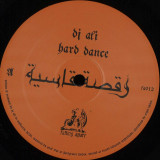
Falling Apart Record comes after a lo-fi chill out record with a brutal answer from DJ ALI. The Melbourne based artist who origins from the beautiful Lebanon comes from the hard techno scene and his thing is to play live, record live and just using some machine and synths for the perfect workflow. Just how we like it! All tracks on this 12 inches are recorded live in 1 clip. "1 shot. 1 opportunity." - Em.
MONO’s first-ever feature-length motion picture soundtrack. My Story, The Buraku Story is a new feature-length documentary film that explores the discrimination against a group of people – commonly called “the burakumin” who were classed into lowly groups and segregated from the rest of Japanese society. This discrimination is not by race or ethnicity, but rather by place of residence and bloodline, and has existed for centuries – albeit very rarely acknowledged or discussed in Japan. When director Yusaku Mitsuwaka imagined the exemplary score for such a culturally sensitive and significant subject, he idealized MONO to help tell this story through their legendarily cinematic music. Following their recent experiments with electronic textures infused into their trademark dynamic rock compositions, My Story, The Buraku Story finds MONO at their most understated and elegiac. The songs that make up My Story, The Buraku Story are largely built around piano, strings, synths, and choral vocal loops. As one might expect from MONO, the arrangements are masterworks of understated execution with oversized emotional resonance. By far MONO’s most delicate album, it is a fitting document of the band’s first-ever full-length film soundtrack.
While frontman Tom Greenhouse’s off-kilter observations and bizarro anecdotes remain front and centre, this time round the band up their game with a more vigorous sound that keeps pace with Greenhouse’s wholly distinctive lyrical style. Greenhouse continues to revel in telling increasingly surreal short stories, rejoicing in the power of the deadpan one-liner and bedecking his songs with far-flung cultural references. But now the band employ a variety of techniques with improved pro- duction, from the impulsively bashed keyboards and jubilantly repetitive guitar stabs that have be- come their trademark, to flirtations with–heaven forbid!–melody, chord progressions and arrangements which elevate their tried-and-tested blueprint into a more exciting and cohesive whole.
Opener Musicians is the perfect embodiment of this conscious development. Here, Greenhouse re- counts a sarcastic tale of half-truths that see him galavanting around town trying to put a band to- gether. Sonically, it begins with a caustic callback to the group’s first EP Crap Cardboard Pet and its über-minimalist aesthetic. But by the end of the song a joyous festival of afrobeat-inspired in- struments including samba whistles, bongos and saxophones are added to the mix as the front- man, ironically, fails in his mission to recruit more players.
With Get Unjaded, the band have somehow conjured something close to pop, without abandoning the repetition and wit that’s relished by their early fans. I Lost My Head also adopts a jangle-pop sheen with a luscious synth melody, as the frontman ditches the spoken-word for a surly croon (his first known attempt at actual singing!) that provides a welcome breather from the onslaught of dense recantations that are the band’s bread-and-butter.
While the lyrics here are still often humorous and political, Greenhouse has also notably expanded his interests on this album to include a new host of topics. The influence of extraterrestrials, for ex- ample, infiltrates the subject matter frequently. On The UFOs, the mysterious protagonist Blinkus Booth’s isolationist lifestyle is apparently interrupted by the spectres of otherworldly visitors, while closer The Neoprene Ravine feels like an extract from a deep space rock opera. Here, jaunty and angular instruments pile-on as we are fed images of an interstellar Spinal Tap, the titular fictional band “The Neoprene Ravine” who are “the alien equivalent of the Velvet Underground” and include an alien Lou Reed yelping “too busy sucking on my little green ding dong!”.
Meanwhile, Hard Rock Potato is propelled by a vortex of keys and synths, a real noise-pop gem comprised of real guitar chords (!) and rock-orientated riffs. Here the stream-of-consciousness lyrics take shots at the sinister financial industry, and include one of the many top-tier one-liners on the album: “It’s not gambling if you’re wearing a tie (even if you’ve got no trousers on)”.
On Sod’s Toastie, The Cool Greenhouse have pushed their distinctive flavour of post-punk to the point of perfection – their incongruous riffs, alchemical instrumental chemistry, and irreverent spo- ken-word vocals are a delight throughout. Sod’s Toastie is hilarious at times, and at others just hilariously good – a not-so-difficult second album.
Collaboration between Broken English Club and Autumns exploring dub, post-punk atmospheres and political unrest. Debut EP is a bold and eclectic taster of this duo. Vacant Heads is the duo of Christian Donaghey (Autumns) and Oliver Ho (Broken English Club). Anyone familiar with their work, or underground electronic music in the last two decades, probably needs no further introduction. Having worked together (Autumns' album ‘Shortly After Nothing’ was released on Oliver’s ‘Death and Leisure’ label) and shared stages over the years. Vacant Heads was borne from a desire to collaborate on tracks and form a live unit.
Their debut self-titled EP is a bold taster of where Vacant Heads are at and where Vacant Heads are headed. These four tracks reek of a brutal and busted city - after-hours prowls with fuck all to do and nowhere to go. In “Crawling Up The Pisser”, Ho’s world-weary treatise on consumerism drools over the nag, nag, nag of the tightest and tautest post-punk electronics. “Heavy Rain Dub” is a ten-minute low-end cruiser. A deep, Digi-dub riddim underpins clarinet squalls, jaw harp twang and screwed vocals that feel like a nocturnal trip into Chris Morris’ ‘Blue Jam’…On Side B, “Street Toucher’s” rowdy snare hits, new wave synths and trademark distorted howl from Donagheyhint at the potential ferocity of their upcoming live shows. “Swan Dive” rounds off the EP - slowing down the tempo and pulling influence from the renegade sound of Adrian Sherwood’s revered production work with the likes of Tackhead and Keith LeBlanc. The heaviest breakbeats meet industrial churn and clipped vocal samples. Vacant Heads. Nothing up top. Pure body music.
- A1: Love Song
- A2: Young Bastards
- A3: Stop It
- A4: Blind Man
- A5: Skin O Daayba - Complex Habits No.3
- A6: We Are Waiting
- B1: Mantra
- B2: Skin O Daayba - Feedbackless World
- B3: Cupping Glass
- B4: Half Monk Half Herring
- B5: Ukoidm - Fishing (Edit)
- B6: Eric
- B7: In The Garden
- B8: Sequencer
- C1: Who Are We
- C2: Hit
- C3: Yozti 2
- C4: Voices Cricket
- C5: Attempt To Raise Hell
- C6: Anna's Assignment
- D1: In Our Culture (Surname Version)
- D2: Lesson 4 Voices
- D3: Intermission
- D4: Chicken
- D5: Untitled
- D6: Against Soap
- D7: Bereshit
- D8: Caretakers
Black Truffle is pleased to announce Uri Katzenstein’s Audio Works, produced in collaboration with Holon’s Centre for Digital Art. Spanning sculptural installation, performance, video art, and many other media, Katzenstein’s absurdist, poetic, and often hilarious work made extensive use of sound and music. This, however, is the first release dedicated to the artist’s audio work, collecting 28 tracks produced between the early 1980s and 2017. Compiled from dozens of hours of recordings left uncatalogued (and in some instances unheard) at the artist’s death in 2018, these four sides are a treasure trove, offering a captivating glimpse into a uniquely uninhibited creative practice. Predominantly recorded alone, with some contributions from regular collaborators such as Ohad Fishof on the later pieces, many of these tracks stem from Katzenstein’s time living in New York in the 1980s. Feeding on the cross-pollination of post-punk energy, radical art practice, and new media possibilities that characterised the New York scene at this time, many of Katzenstein’s recordings squeeze multilayered vocal experimentation into synth-based miniatures with a distinctively pop twist, their forms ruptured with anarchic bursts of free-form electronics, sounds from self-built instruments, and field-recorded snatches of the outside world. Katzenstein’s electronic production calls up touchstones of skewed 80s art pop like Laurie Anderson, Ambitious Lovers, and Scritti Politti, but imbued with DIY directness and economy of means. The arrangements of synths, percussion, and noise elements are invigoratingly raw and, at times, almost austerely minimal. On ‘Intermission’, thick distorted chords accompany a wandering portamento melody, inhabiting the wayward carnival space of Roedelius’ most unhinged efforts. Many of the tracks centre on Katzenstein’s multi-tracked vocal performances, often moving between multiple languages, (most commonly English, German, French, and Hebrew). A bewildering range of vocal approaches are present on these pieces, from sweet wordless harmonies to hammed-up growls and monastic recitations. On ‘Skin O. Daayba – Complex Habits no. 3’, improvised resonance singing against a backdrop of echoing electronics and radio snatches. ‘Half Monk Half Herring’ layers multi-lingual syllabic fragments, crossing sound poetry techniques with melodic invention in a way rarely heard outside of Caetano Veloso’s Araçá Azul. On ‘Attempt to Raise Hell’, Katzenstein’s distorted voice spits out streams of alliterative nonsense (‘the hemlock of Henry, he was a hermit…purple pumpkin pulsates to pops’), while on the hilarious ‘Eric’, Katzenstein appears to instruct a small boy simultaneously in basic French and German conversation. On ‘Chicken’, vocal harmonies accompany the pecking and clucking of the titular fowl. Moving from bent, outsider synth pop to snatches of Jo Jones-esque automated instrumental clang and absurdist linguistic experiments, these are far more than footnotes to an artist’s gallery works. Accompanied by extensive, beautifully written liner notes by Roee Rosen and the little information that exists on the individual tracks, Katzenstein’s Audio Works inhabits an outer fringe of DIY pop and sonic experiment reminiscent of Pascal Comelade or Die Welttraumforscher, where accessible forms convey radical interrogations of song, word, and sound.
Over the past decade, Vienna-based Florian Stöffelbauer – also known as Heap, has built a consistent reputation as a skilled DJ, producer and Neubau’s label head.
Isla is proud to present his latest effort “False Hope” which explores the intersections between industrial, electro and dark wave – all with a leftfield twist.
As diverse as it is powerful, the 7 tracks featured here almost feel like nocturnal tales, chalking out Heap’s observations wandering through the streets of a silent city, with cigarette smoke permeating the air and sirens ringing in the distance.
The cinematic essence of the release emerges from the very beginning, with the atmospheric beauty “Diall” transporting us straight into some late-80s scenery of Kraftwerkian nostalgia. In “Jetzt Oder Nie” a sharp knit of drums is placed on top of the grave frequencies of the bass: it’s indeed “now or never”, the moral imperative of the release, requiring us to take action.
Throughout the whole album, hypnotic sounds punctuate the dark space, bouncing between the polyrhythmic and uplifting energies of “Inner peace” and “No Palm Too Big”, a sneaky slow-burner with a nocturnal groove and Gayna Rose Madder’s robotic voice reciting the stream of consciousness of this urban wanderer.
“Trist” rises slowly yet powerfully thanks to its mystical synths covering the ground and preparing us for what comes next.
The title track “False Hope” holds the unique charm of a creature effortlessly floating in between dualities. As obscure as it is airy, as delicate as it is forceful, this hybrid composition is rich in details and plot twists.
At the end of this journey, “Losing time” reminds us of the urgency to take action expressed at the beginning of the album. In a rarefied canvas, an off-kilter solitary sound comes in, starting off as insistent as a car horn in rush hour, and evolving into a beautiful instrument arpeggiating the melody.
Here Heap concludes his narrative for now. We like to imagine him walking away, a shadow fading in the smoke of the city as the first lights of the day appear.
After his latest ‘Youth EP’ that experimented with spacious vocal chops and whimsical soundscapes, Nocow returns with a relentless flurry of blows on the heavily computerized ‘Magnit EP’ released on npm. Featuring gloriously broken melodies and hard-hitting rhythm, Nocow explores the darker, more formulaic side to his sound. Brooding acid-infused synths shimmer across the four tracks, morphing between moods as the EP progresses. ‘Magnit S’ kicks off the EP with scattered bass hits, driving dark techno arpeggios, and a hint of footwork-esque percussion. The intense atmosphere is a relatively new direction for Nocow, straying from his more meticulous, introverted beats prior. ‘Kali’ incorporates warbled synth with a more subdued rhythm, playing with a modular sound and distant echoes of robotic vocals. This fragmented track is more akin to his 2018 sound of the Voda/Vozduh/Zemlya trilogy as the kinetics of sound play a strongly defined role in the overall sonics. ‘Sputnik’ commences with a blistering arpeggio of bit-crushed synth and chimes. The rocket-propelled pacing creates a frantic, yet ultimately controlled piece, worthy of a place in a club 300 years from now. Yet, after the frenzy comes the calm. The closing track ‘Extasy’ grinds the EP to a kaleidoscopic halt. Vocoder passages drift across the dense soundscape as Nocow transports you to an other-world, filled with spacey percussion. This closer is a well-deserved return to solid ground, following the perpetual trio of dark, yet utterly compelling techno pieces. Once again, Nocow exhibits his multi-faceted approach to electronic music that truly sets him apart.
Yellow and black splatter
While frontman Tom Greenhouse’s off-kilter observations and bizarro anecdotes remain front and centre, this time round the band up their game with a more vigorous sound that keeps pace with Greenhouse’s wholly distinctive lyrical style. Greenhouse continues to revel in telling increasingly surreal short stories, rejoicing in the power of the deadpan one-liner and bedecking his songs with far-flung cultural references. But now the band employ a variety of techniques with improved pro- duction, from the impulsively bashed keyboards and jubilantly repetitive guitar stabs that have be- come their trademark, to flirtations with–heaven forbid!–melody, chord progressions and arrangements which elevate their tried-and-tested blueprint into a more exciting and cohesive whole.
Opener Musicians is the perfect embodiment of this conscious development. Here, Greenhouse re- counts a sarcastic tale of half-truths that see him galavanting around town trying to put a band to- gether. Sonically, it begins with a caustic callback to the group’s first EP Crap Cardboard Pet and its über-minimalist aesthetic. But by the end of the song a joyous festival of afrobeat-inspired in- struments including samba whistles, bongos and saxophones are added to the mix as the front- man, ironically, fails in his mission to recruit more players.
With Get Unjaded, the band have somehow conjured something close to pop, without abandoning the repetition and wit that’s relished by their early fans. I Lost My Head also adopts a jangle-pop sheen with a luscious synth melody, as the frontman ditches the spoken-word for a surly croon (his first known attempt at actual singing!) that provides a welcome breather from the onslaught of dense recantations that are the band’s bread-and-butter.
While the lyrics here are still often humorous and political, Greenhouse has also notably expanded his interests on this album to include a new host of topics. The influence of extraterrestrials, for ex- ample, infiltrates the subject matter frequently. On The UFOs, the mysterious protagonist Blinkus Booth’s isolationist lifestyle is apparently interrupted by the spectres of otherworldly visitors, while closer The Neoprene Ravine feels like an extract from a deep space rock opera. Here, jaunty and angular instruments pile-on as we are fed images of an interstellar Spinal Tap, the titular fictional band “The Neoprene Ravine” who are “the alien equivalent of the Velvet Underground” and include an alien Lou Reed yelping “too busy sucking on my little green ding dong!”.
Meanwhile, Hard Rock Potato is propelled by a vortex of keys and synths, a real noise-pop gem comprised of real guitar chords (!) and rock-orientated riffs. Here the stream-of-consciousness lyrics take shots at the sinister financial industry, and include one of the many top-tier one-liners on the album: “It’s not gambling if you’re wearing a tie (even if you’ve got no trousers on)”.
On Sod’s Toastie, The Cool Greenhouse have pushed their distinctive flavour of post-punk to the point of perfection – their incongruous riffs, alchemical instrumental chemistry, and irreverent spo- ken-word vocals are a delight throughout. Sod’s Toastie is hilarious at times, and at others just hilariously good – a not-so-difficult second album.
"Most of this record was created in the shadow of COVID and deep in the maw of Melbourne’s 2020 long winter lockdown. It is a meditation on the nature of connection.
Restricted to a 5km zone, one of the only people I saw outside my family during this time was my old friend and teacher, Ania Walwicz. We met in the overlap between our zones on the waterfront near Docklands to walk and talk on bright, cool winter afternoons. Those conversations became large in my thoughts when Ania suddenly passed away in September. Her voice was in my head as I worked on this music, trawling through threads of ideas, recordings made on my phone, and thoughts jotted down in notebooks.
Ania’s practice as a writer relied on ‘automatic’ processes. Her work was informed by everything she had read (a lot) but it was created in the manner of dreams. In a state where the subconscious might bubble up and the words arrange themselves into meaning bearing forms that resonate more than represent. I thought a lot about that as I made this music. I recorded everyday using the trumpet, my old Revox reel-to-reel, a couple of synths, a harmonium I lent from a friend, and whatever else was around. I worked mostly on just diving a little deeper each time I sat down to it.
Through the simple process of exhalation, I explored my relationship with the trumpet, which has been through so many twists and turns. I let the tones produced by my breath unfurl on long tape loops and degrade beyond recognition through pedal and plugin chains, until the only imprint of the initial gesture remained.
My process also involved long bike rides during which I’d listen to the work of previous days on ear buds, gliding through familiar streets made slightly strange by the absence of people and movement. Often my rides took me along Footscray Rd next to the port, and as I washed down towards Docklands past the old boat moorings I stopped pedalling to coast. The sounds from my darkened studio mingled with the low rush of air past my helmet, the click and whirr of my bike gears, a squalling bird, a whooshing car. And I remembered my last conversation with Ania. Sitting in the late afternoon sun, squinting against the light that raked across the water, she was telling me about all the different words for they have for blue in Polish and Russian, and how words don’t just change our perception of things, but also actually change the thing being perceived.
As I rode home that afternoon, I felt like anything was possible. "
Peter Knight
This record is a representation of everything that has led me to this point
- It's been a long, bizarre path, says Zenizen's Opal Hoyt of both her life
and her journey to make this record
Like Peter and the Wolf, the Russian symphony Hoyt used as a creative
framework, P.O.C. (Proof of Concept) is a series of vignettes "the collection of
which mirrors Hoyt's long journey, from her adoption in Alaska to her many moves
between DC, Jamaica, Vermont, and New York.Along this unconventional path,
Hoyt met the talented cast of musicians who would go on support her in the
recording of P.O.C: variegated bass by Jonathan Maron (Erykah Badu, D'Angelo);
drums by Vishal Nayak (Nick Hakim, Empress Of); moments of magic on horns by
Sly 5th Ave (Prince); guitars by Benamin (IGBO); intricate mixing by Nick Herrera
(Hiatus Kaiyote), Benamin, and Jon Bap; with mastering by Heba Kadry and Davy
Levitan. Then there's Hoyt herself, whose rich alto pierces through with poetic
lyricism, supported by her contributions of Rhodes, synths, and sample
arrangements (think: babbling brooks and birdsong). In other words, Hoyt isn't
just a songwriter in the classic sense. She's also a skilled producer with an ear for
excellent arrangements "the kind of musician who enjoys meandering and
allowing her artistic vision to percolate. Likewise, P.O.C is a record that blooms in
beauty over time "the kind of record that you can take anywhere in any season, as
any version of yourself.
Red Vinyl[20,97 €]
Renowned fiddle player and tireless musical adventurer Sam Sweeney
returns with the passionate, raw and expressive new album 'Escape That'
The record ties together the threads and footpaths of all of Sam's musical loves;
an honest and fearless expression of himself, combining pop hooks and
aesthetics with his pioneering work in the world of traditional dance tunes.
'Escape That' simultaneously presses the reset button on what a folk record
should sound like while marking a major stride forward for Sam into the world of
composition. Written without ever touching the violin, Sam retreated to his attic
during the lockdowns of 2020-21 and created over twenty pieces of
music. Composed almost entirely on synths and guitars, with snapshots of loved
ones and memories as inspiration in a time of isolation, he devised a way of
writing where he'd lay down a chord sequence and then record an improvisation
over the top. On listening back, anything that could be considered a hook would
be kept, everything else was deleted and tracks developed by linking the hooks
together to create dance tunes. Sam then translated the melodies back to the
fiddle, an instrument of which he is considered a modern master. Nominated four
times, and winner in 2015, of Musician Of The Year at the BBC Radio 2 Folk
Awards, Sam has been at the forefront of the revival in English music for the last
fifteen years.
He is a veteran of the mighty Bellowhead, former and inaugural Artistic Director of
the National Youth Folk Ensemble, a founder member of ground- breaking trio
Leveret as well as a passionate and experienced educator. He has collaborated,
recorded and performed with The Full English, Eliza Carthy, Martin Carthy, Jon
Boden, Fay Hield and Emily Portman as well as creating his own theatre
production Made In The Great War.
Black Vinyl[20,97 €]
Renowned fiddle player and tireless musical adventurer Sam Sweeney
returns with the passionate, raw and expressive new album 'Escape That'
The record ties together the threads and footpaths of all of Sam's musical loves;
an honest and fearless expression of himself, combining pop hooks and
aesthetics with his pioneering work in the world of traditional dance tunes.
'Escape That' simultaneously presses the reset button on what a folk record
should sound like while marking a major stride forward for Sam into the world of
composition. Written without ever touching the violin, Sam retreated to his attic
during the lockdowns of 2020-21 and created over twenty pieces of
music. Composed almost entirely on synths and guitars, with snapshots of loved
ones and memories as inspiration in a time of isolation, he devised a way of
writing where he'd lay down a chord sequence and then record an improvisation
over the top. On listening back, anything that could be considered a hook would
be kept, everything else was deleted and tracks developed by linking the hooks
together to create dance tunes. Sam then translated the melodies back to the
fiddle, an instrument of which he is considered a modern master. Nominated four
times, and winner in 2015, of Musician Of The Year at the BBC Radio 2 Folk
Awards, Sam has been at the forefront of the revival in English music for the last
fifteen years.
He is a veteran of the mighty Bellowhead, former and inaugural Artistic Director of
the National Youth Folk Ensemble, a founder member of ground- breaking trio
Leveret as well as a passionate and experienced educator. He has collaborated,
recorded and performed with The Full English, Eliza Carthy, Martin Carthy, Jon
Boden, Fay Hield and Emily Portman as well as creating his own theatre
production Made In The Great War.
“24” is Minuit Machine’s 4th LP. Electronic masterpiece, subtle mix of dark wave, techno and electropop, “24” is both surprising and seductive. Authentic, emotional and powerful, “24” is a real immersion into Minuit machine’s dark, dystopian and futuristic world. Through this LP, Hélène and Amandine are facing all obstacles and disappointments life brings on their way. Each track is a self-affirmation, a rallying cry and an urge to live. The instrumental part is clearly marked and contributes to create the band’s unique sound. The strong beats are a call to dance while the synths, stabbing and emotional, will definitely move you. Finally, the deep basses give the tracks an “EBM” touch. Vocal lines are more pop, with less reverb. They are meant to obsess and stay in your head all day long. They were thought of as a 90's dance music chorus, but with feelings. As usual, the lyrics are very personal and describe several states of mind. Since their creation, Hélène and Amandine kept on reinventing themselves in order to translate their inner questioning and emotions into music. From this point of view, “24” could be Minuit Machine’s most accomplished work since each track sounds like a confession.
Sunda Arc are brothers Nick Smart and Jordan Smart. Best known as key members of folk and jazz influenced minimalists Mammal Hands, their Sunda Arc project takes inspiration from the likes of Jon Hopkins, Rival Consoles, Moderat and Nils Frahm as well as their own music world. Their debut EP 'Flicker' was released in December 2018 and now the duo are set to release their debut LP, 'Tides' on 7th February 2020.
Named for a volcanic arc in the Indian Ocean, created by the process of massive tectonic plates colliding, Sunda Arc strives to mingle electronic and acoustic sounds until they become almost indistinguishable from each other. It's a process where they draw the acoustic properties and quirks out of electronic sounds and find the electronic potential in acoustic sounds. "Finding the ghost in the machine or blending the human elements of playing live is something we are always trying to explore in our work.
Experimentation is a large part of our process and we tend to combine carefully composed material with chaotic ideas to find the balance between the two" — Sunda Arc 'Tides', their debut album, takes its name from the idea of unseen forces that can affect our lives in myriad ways, being pushed and pulled and at the whim of powerful forces outside of our control as well as offering a nod to things such as the tides on our planet, tectonic plate movements and weather systems. There are often chaotic elements in these systems that function in a way that produce a type of controlled randomness on a large scale. This is something they try to reflect in their music by adopting some of the ways these systems work into musical sequences, and using ideas such as chaos theory to control musical parameters. "Tides is a reference to themes we were thinking a lot about during the making of this album. These include the similarities between macro and micro systems, or the circulatory and nervous systems in the body. Things that produce a type of controlled randomness on a large scale". — Sunda Arc 'Hymn', the first single from the album, uses Nick's voice sampled and played back through a keyboard to create a human yet electronic feel.
It mixes soft vocals with heavier electronic elements to create a danceable yet human sound world. 'Dawn', is best described as uplifting-techno, its use of repeated phrases building in intensity and variations to put you into a hypnotic state whilst also being industrial and danceable. 'Daemon' is one of the tracks that really resonates live. Drawing on the sound of UK dubstep it's intense but fun and the bass clarinet blends with synths at the end to create a sound almost like a vocal. 'Secret Window' brings forward another side of the band, focusing around a lo-fi recording of felted piano and bass clarinet.
These are blended with granularised and processed versions of themselves which emerge like ghosts of the instruments throughout the track. 'Cluster' is another key track. It utilises a small group of notes looped in an unusual way to create a sense of cascading patterns over a solid danceable drum groove. It emphasises soprano sax blended into the sound world half-way through to lift into the final section.