One of the greatest UK White Labels of all time. Terrestrial Funk brings you an absolute summer sensation over three decades delayed. Relegated to obscurity until now, this four track EP boasts the downtempo hit ‘Summertime’ alongside three electronic bangers… and mash. The dubbed out stabs of ‘Jennifer’ on the A2 and two never before heard versions of ‘Let’s Climb’. Feel the festival ready power of the ‘Come To Me Mix’ and lose yourself to the hypnotic squelch of the ‘Glad You Made It Dub’, ready for sweaty summer nights.
In the late eighties, Simon Akers and Jason Brown began producing in a quaint home studio. Later collaborating with likeminded talents through the early nineties. Terrestrial Funk has worked with the group to transfer all their old digital audio tapes and bring you a series of fresh music yet to see the light of day. Jacqueline Foster aka Jacquoda brought her stunning voice to the project on this massive single showcasing vocals that shine brighter than the summer sun. Grab your copy today!
Cerca:system exclusive
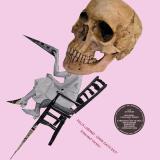
Often when music is constructed with synths and other electronically generated sound makers, their level of exactitude and control is such that the vocalist will either wittingly or otherwise seek to emulate the relative artifice of the soundscape. This is often done to great effect, think Kraftwerk. But what if there was a unit whose music was synth-generated but the vocals were coming from a hot-blooded, singing-for-the-cheap-seats approach? If done well, it’s a case of two great tastes that taste great together, which brings me to System Exclusive.
Their multi genre / time period collision is like a car accident where all parties walk away not only unscathed but sure they had a great time, like two different recording sessions sharing the same space and making it work. Vocalist Ari Blaisdell (previously of Lower Self, The Beat Offs) co-exists excellently amidst the driving beats and synth waves and her guitar further helps to jailbreak the tunes from the often sterile entrapments that synths provide. Matt Jones (previously of Male Gaze, Blasted Canyons, and continuing Castle Face behind-the-scenesman)’s smart use of live drums bring great juxtaposition against the machines. Ari’s irony-free sincere delivery is the perfect closer on this very cool record, recorded ably by Enrique Tena Padilla (Osees, Wand, Beach House) in their backyard studio mid-pandemic and adorned with original artwork by Miles Wintner (L.A. Takedown, Mr. Elevator, Devon Williams). If you don’t get this slab of goodness, well, that act of non-compliance will confirm you as the pain-in-the-ass that many have described you to be in great detail during Zoom chats. How dare they! Prove them wrong! Reduce their snark to mere pseudo-intellectual piffle! Your lifeline arrives in March. Grab it. — Henry Rollins
- A1: Nils Frahm - 4:33
- A2: The Baka Forest People Of South-East Cameroon - Liquindi 2
- A3: Carl Oesterhelt / Johannes Enders - Divertimento Fur Tenorsaxophon Und Kleins Part 4
- A4: Four Tet - 0181 (Excerpt)
- A5: Boards Of Canada - In A Beautiful Lace Out In The Country
- A6: Bibio - It Was Willow
- B1: Dictaphone - Peaks
- B2: System - Sk20
- B3: Rhythm & Sound - Mango Drive
- C1: Victor Silvester - It's The Talk Of The Town (Nils Frahm's '78' Recording)
- C2: Miles Davis - Générique
- C3: Colin Stetson - The Righteous Wrath Of An Honorable Man
- C4: Penguin Café Orchestra - Cutting Branches For A Temporary Shelter
- C5: Nina Simone - Who Knows Where The Time Goes
- C6: Gene Autry - You're The Only Star (Nils Frahm's '78' Recording)
- D1: Dinu Lipatti - O Herr Bleibet Meine Freunde, Bmv 147
- D2: Nina Jurisch - Cleo The Cat
- D3: Dub Tractor - Cirkel
- D4: The Gentlemen Losers - Honey Bunch
- D5: Nils Frahm - Them (Solo Piano Edit)
- D6: Cillian Murphy - In The Morning (Exclusive Spoken Word)
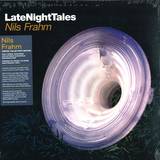
Composer, musician and producer Nils Frahm steers the new edition of Late Night Tales, set for release on 11th September. A hypnotic voyage through modern and classical composition, experimental electronics, jazz, dub techno, soundtracks and soul; Frahm's Late Night Tales haunts and beguiles. It's not mixing, so much as gently layering, like a particularly fluffy goose-down duvet folding in on itself, the folds part of the attraction, the layers part of the overall picture being painted. Many of the tracks have been edited, effected and re-made. The subtly overdubbed parts on Rhythm & Sound's 'Mango Drive' adding to the haunting hypnosis, while choral interruptions aid Miles Davis' 'Générique' on its journey towards the light. Meanwhile, on Boards Of Canada's 'In A Beautiful Place Out In The Country', the tempo is somewhat sluggish, the organs slurred, as Frahm slows it down to a funereal 33rpm that nevertheless fits perfectly. The purring of his girlfriend's cat Cleo transitions playfully between Nina Simone's definitive version of 'Who Knows Where the Time Goes' and unearthing the gentle electronics of Dub Tractor. Eddy Arnold's 'You're The Only Star', a country tune that sounds like its transmitting from a mid-west diner wireless circa 1947, is straight from the soundtrack to an imaginary David Lynch movie, comforting and dismaying all at once. This crackly reality abounds, as on Finnish band Gentleman Losers' 'Honey Bunch', that adds an unsettling texture, with a sound that is modern but as nostalgic. Frahm's own tracks bookend the mix, opening with an inspired "rework" of the infamous silent John Cage piece '4:33' ("I sat at the piano in silence and worked from
there. I listened and took in the atmosphere and this is what came out of it") and ending with a solo piano version of 'Them', taken from his recently released score of the film 'Victoria'. The traditional Late Night Tales spoken word epilogue is voiced by actor Cillian Murphy (Inception, Batman, 28 Days Later), reading a short story by Edna Walsh (Hunger, Disco Pigs).
- 1: Uptown Top Ranking With Eva Lazarus
- 2: Gideon Boot With General Levy
- 3: Session Haffi Cork With Mr Williamz
- 4: Indian Sun With Biga Ranx & Ruffian Rugged
- 5: Jump Around With Cheshire Cat
- 6: Rainbow Country With Cian Finn
- 7: Amsterdam (Flight Mode Mix) With Eva Lazarus
- 8: Bubble N Wine With Solo Banton
- 9: Searching (Stepper Mix) With Marina P
- 10: Got The Vibes With Charlie P
- 11: Ice Cream Gal With Gardna
- 12: Rise And Gravitate With Kenny Knots
Glasgow reggae collective Mungo’s HiFi celebrate 25 years of pulsating music with a follow-up to game-changing second studio album Soundsystem Champions. Released in 2008, the original Sound System Champions became an instant 21st century classic - thanks to its industrial strength basslines, blazing horns and lineup of scorching microphone talent. To commemorate a quarter century of rocking dances and building rhythms, Mungo’s have created Soundsystem Champions 2. They’ve lovingly assembled some of their biggest dubplates, previously only heard in a soundsystem situation, now available to the world. Fans of the first Sound System Champions will hear musical echoes in the new version. Irrepressible Junglist General Levy rides the Belly Ska riddim that kicked off the 2008 edition, with the militant Gideon Boot. Italy’s Marina P returns to the new record on the expansive Searching, as does Kenny Knots, closing the track list with heartfelt roots anthem Rise and Gravitate. For Soundsystem Champions 2, Mungo’s have invited many more voices from their epic journey. Bristol’s Eva Lazarus revisits Althea and Donna’s immortal Uptown Top Ranking. Reading’s Solo Banton turns his lyrical versatility to hip hop banger Bubble N Wine. The beautiful grainy tones of Ireland’s Cian Finn reimagine the Wailers’ Rainbow Country. With this historic sequel album, Mungo’s look back while going forward, the exclusive becomes the inclusive, and the Sound System comes to you!
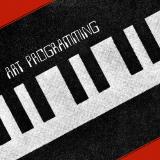
We are excited to continue our work with Art P / Art Programming by finally offering the first full-length work from this Bremen-based electronic group. Originally released only on cassette in 1983, the self-titled album has now been fully restored and remastered, complete with bonus tracks and unreleased mixes unearthed from a rare demo.
The LP opens with "Wesen vom anderen Stern" ("Beings from Another Planet"), a downtempo, 808-driven electro synth wave track with German lyrics telling a story of aliens capturing earth, becoming the new "Herren" (lords), while humans are reduced to mere "objects." Art Programming founding member Jens-Markus Wegener notes that this track has always been a favorite during live performances, and it's easy to imagine how the futuristic sounds would have blown people away at the time.
Next is the electro/proto-techno title track "Art Programming," which we previously issued on a limited 12" in its full-length form. With its straightforward Roland 808 rhythms, catchy synth lines, and vocoder vocals, it's a classic example of German electro, and one of the earliest proto-techno tracks - long before Cybotron claimed the techno mantle. Its extensive break and electronic twist make it an early precursor to the genre. Wegener recalls that this track was created exclusively by him and Grotelüschen, with Grotelüschen contributing most of the melodic elements, while Wegener focused on drum machine programming and vocoder vocals.
On "That's Me," the album welcomes back singer Claudia Roebke. Although it's an electronic composition, Roebke adds a rock-infused, almost psychedelic vibe to the song. The lyrics, written by Wegener, depict a person obsessed with their appearance, using irony to critique societal beauty norms, questioning the obsession with perfection and attraction.
The album continues with a series of uptempo electro tracks: "Videoscreen," "La Gare," and "Genscher Pull 'N' Push." The first two feature slightly different mixes from an earlier demo that we personally prefered over the versions that were available on the final cassette release. "Videoscreen" expands on the theme of social isolation, with lyrics reflecting on a world obsessed with watching video all day - a topic that resonates strongly with today's culture of doom scrolling and social media addiction.
Next up, "Genscher Pull 'N' Push" is an incredible electro/wave/proto-techno track recorded in October 1982 with a political edge. Originally omitted from the album, it was only available on the demo cassette we mentioned earlier. The song takes aim at German politics, with lyrics that shout "bitte geh nach links / bitte geh nach rechts" ("please go to the left" and "please go to the right"), referencing the shifting political allegiances during the 1982 coalition change, when Genscher's party, the FDP, left the Helmut Schmidt cabinet to join the CDU/CSU opposition. The track was never released as the political topic had become outdated just a few months later.
The album closes with "Light and Fire," which originally served as the album's opening track. Its quirky, upbeat vibe now makes for a fitting outro.
The gear used on this album reads like a dream list for early 80s electronic music production: Roland Jupiter 4, TR 808, TB 303, System 100, SVC 350, Korg Mono/Poly, Moog Prodigy, FRICKE-Sequenzer, Roland CSQ-100 Sequenzer, Coron DS-8, MM 12/2, Sony TC 399, TEAC-244 Portastudio, Ibanez DM 1000, EH-Electric Mistress, EV-Micro. This unique lineup of equipment sets the album apart from NDW releases of the era, lending it a distinct sound with heavy proto-techno leanings and that straightforward electro vibe we all love.
The album is being released as a very limited edition of 300 copies on transparent red vinyl, complete with a full picture sleeve and lyrics inlay. This is yet another rediscovered and restored 80s gem on our label that you definitely don't want to miss!
- A1: The End
- A2: Polonium
- A3: It's All Over
- A4: Addis Abba Ft. Vinnie Paz
- A5: Imminent Danger (Interlude) Ft. Sunez Allah
- B6: Black Caesar Ft. General Steele & Maitre D
- B7: Spilled Sphinx Ft. Nejma Nefertiti
- B8: Bombardians Ft. Cf & Dontique
- B9: Think Dominant Ft. Skam2, Innocent & Maitre D
- B10: Water Seeds (Interlude) Ft. Eloh Kush
- B11: Masked Assassin
- C12: Tough Skin - Napoleon Da Legend Ft Skyzoo
- C13: Break The Chains Ft. Gregg Green
- C14: Kill Bots Ft. Passport Rav
- C15: Star Wars Ft. Crazy Dj Bazarro & Maitre D
- C16: Sinners And Saints
- C17: Mind War Ft. Goretex
- D18: G.a.m.o
- D19: System Error (Interlude)
- D20: Ultimate Power
- D21: Alan Wattage Ft. Ghost Machine
- D22: Save Point
- D23: The Beginning Ft. Bbass
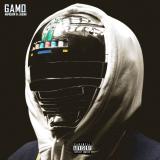
G.A.M.O. (Gods Against Man's Oppression) recounts events leading to Napoleon Da Legend transformation after being bestowed a metal helmet, which is a weapon against our modern dystopia. The album features a blend of soulful and dystopic grit featuring the likes of Vinnie Paz, Goretex, General Steele, Skyzoo, Passport Rav, Nejma Nefertiti, Innocent?, SKAM2?, Eloh Kush, CF, Dontique and more. It has production from Dub Sonata, Maitre D, Homage Beats, Passport Rav Proffeny and Napoleon Da Legend. The result is 23 tracks that blend retro-sci fi "Noir Wave" and modern Boom Bap. It features an exclusive 2 page comic illustrated by UK's Dan Lish. Limited to 300 copies only.
Joe Fujinoki centered the compositions of his latest album Glass Torso round the idea of the fragility of the human body. Fujinoki described the narrative thread of the album as that of “holding the shape of a human body as if it might shatter like glass”. The precariousness of the body, the essence of the body as defined by Fujinoki as the torso, and the object relations between the boundaries of dialectical exercises pack themselves into his creative process.
Fujinoki recorded Glass Torso exclusively with analog synthesizers, stumbling in and out of structural loops to find space for accidental discoveries. The ten pieces of recorded material feel somewhere on the edge of typified form, feeling like a vascular system pumping in and out its undulating liquidities. Maybe this is the hollowed space held together by Fujinoki’s notion of the torso where you hear a microscopic world, dubby and generative. Fujinoki is adept at organizing this realm of subtle sound sources, giving proper considerations of shared tonal space. Seemingly, this handling of the precarity of sonic material elucidates Fujinoki’s mature attention to detail.
Ambient music genre tropes often affirm the listeners vessel for escape and dissociation. It provides an intoxicating allure by respite from an overwhelming exterior reality far outside the listeners controls. Here this space becomes apolitical, or its protest vocabulary softer and subtle. Fujinoki does not aim to tackle hyperobject topics on how to course correct the world, but he does something increasingly rarer to come across. On Glass Torso an alternative space is created not as shelter, but as a meditation on negotiation and compromise. This twenty eight minutes of audio lays down a foundation for imagination, for imagining how to negotiate the fragility of the self. Zoomed out, the implications of his negotiative sonics can be a playground for broader reflections on distributive care and attention.
Fujinoki says he feels “alert” to his physicality and placement in the world amidst vast digital cultures creating impositions on him and his surroundings. On Glass Torso he creates a concretized space on a vinyl record, where the virtual and the tangible antagonize one another that create the spectacle of the listening experience. This spectacle is a soft one, a considered one, and an utmost enjoyable one. Fujinoki juggles opposing forces brilliantly, and formulates an exquisite palette of soft passing music so he can also help the listener with the exquisite burden of their own Glass Torso.”
- Nick Klein, January 2026
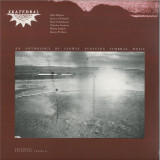
XKatedral Anthology Series II (An Anthology Of Slowly Evolving Timbral Music), featuring exclusive music from Kali Malone, Jessica Ekomane, Mats Erlandsson, Theodor Kentros, Wilma Hultén, and Maria W Horn.
"XKatedral Anthology II is the second instalment in a series of archival releases dedicated to presenting music by composers affiliated with XKatedral working within the realm of slowly evolving harmonic and timbral music. This double-vinyl set contains an array of pieces dating from 2018 - 2020. This collection of pieces focuses on the use of synthetic sound and algorithmic composition languages as tools for precise work within the realm of spectral exploration. In addition to this, the electronic instrumentation in many of the pieces is augmented by acoustic instruments.
The first piece on side A is Kali Malone’s Music for Low Quartet. This piece is an adaptation of the composition “Rose Wreath Crown” originally released on The Sacrificial Code in 2019. In this iteration, the music is scored for two double basses played by Vilhelm Bromander and Zach Rowden, and sine tone electronics performed by Malone herself. The recording of this piece was made at EMS in 2019.
Closing side A is Jessica Ekomane’s ‘First Light’. This computer music piece focuses exclusively on digital sound, layering razor sharp synthetic textures into an otherworldly dynamic weave. The music heard here is a reworked version of a piece originally commissioned by Semibreve in 2020.
Side B contains the work ‘Hands Melt In The Sun’ by Mats Erlandsson. This composition is built from electronically processed tuned zithers and synthetically generated tones arranged in a series of chordal inversions over a sustained fundamental tone. This music, written as a love-letter to the localized drone tradition of Stockholm in the years 2008-2012, was composed and recorded in seven days while in residence at Ställbergs Gruva in Bergslagen, in the summer of 2018.
Opening the second half of the collection is Rough Draft v.7 by Theodor Kentros. Kentros’ compositional practice usually combines acoustic and electronic source material and in this piece he molds the sound of the Buchla 200 and a collection of recorded wind instruments into a molten mass of sound. In its original form, this music was presented as a multichannel immersive work and even in the current stereo configuration it retains some of that enveloping sense of depth.
The second piece on side B, Inertia, is by Wilma Hultén, who makes her debut on record here. An exclusively synthetic piece, Inertia utilizes internal digital feedback in a sealed synthetic system to manifest a harmonic field that swells and abates throughout the length of the piece, interspersed by small gestural elements.
Closing Anthology II is Maria W Horn's work ‘Dies Irae’ for female vocal quartet, pitched glass and synthesis. ‘Dies Irae’ uses a modified form of traditional tonal harmonic language to invoke an uncanny and restless middle ground between the classical western polyphonic vocal tradition and contemporary electronic music. The version heard here is a live recording from Eric Ericssonhallen in Stockholm on May 30th 2020. Performing the piece here are the vocalists Katarina Henryson, Lisa Holmgren, Vilma Ogenblad and Paula Wegmann, as well as Maria herself on glass and electronics."
Yellow Vinyl[17,61 €]
Johannes Albert brings back the iconic anthem that is "More Action Pleeease!". This time stretched across a full A-side, cut at 45 rpm for maximum punch and pressed on a weighty 180 grams. Built sturdy, loud, and ready to tear through any system. The full-cover artwork seals the deal, but the B-side brings the real twist: the Disco-House edit everyone's been craving (yes, exclusively on vinyl!). Dompe's "Lemon Ice" gets the full "Action" vocal treatment, transforming it into a guaranteed dancefloor riot. Finally - the complete "Actionpella" is attached for the hard-working DJs and the lazy ones alike. Now? More Action Pleeeeeeeeeeease!
DJ support from Charlie Bones, Phil Mison, Balearic Social, Moe, J-Walk, Phat Phil Cooper, Trujillo & Simon Caldwell
Born a Dance in a Berlin basement in 2016. MANY HANDS have been dishing out soul-derived genre-fluid selections via their Podcast since 2019, now launch the MANY HANDS imprint. This package of Special Exclusive DJ versions, reflects the wide-angle music ethos that goes down in a MANY HANDS session. Inspired by those utility discs that don't leave the bag, for Dancers, Dark rooms, and Heavy sound systems. Unitaaay baby!
- A1: Hurts And Noises
- A2: Wake Up
- A3: I Don't Wanna Be A Rich
- A4: Terrorist Bad Heart
- A5: Provocate
- A6: Lucifer Sam (Pink Floyd)
- B1: Happy!?
- B2: So Lazy
- B3: I Feel Down
- B4: Stupido
- B5: Guilty
- B6: Caroline Says (Loo Reed)
UILTY RAZORS, BONA FIDE PUNKS.
Writings on the topic that go off in all directions, mind-numbing lectures given by academics, and testimonies, most of them heavily doctored, from those who “lived through that era”: so many people today fantasize about the early days of punk in our country… This blessed moment when no one had yet thought of flaunting a ridiculous green mohawk, taking Sid Vicious as a hero, or – even worse – making the so-called alternative scene both festive and boorish. There was no such thing in 1976 or 1977, when it wasn’t easy to get hold of the first 45s by the Pistols or the Clash. Few people were aware of what was happening on the fringes of the fringes at the time. Malcolm McLaren was virtually unknown, and having short hair made you seem strange. Who knew then that rock music, which had taken a very bad turn since the early 1970s, would once again become an essential element of liberation? That, thanks to short and fast songs, it would once again rediscover that primitive, social side that was so hated by older generations? Who knew that, besides a few loners who read the music press (it was even better if they read it in English) and frequented the right record stores? Many of these formed bands, because it was impossible to do otherwise. We quickly went from listening to the Velvet Underground to trying to play the Stooges’ intros. It’s a somewhat collective story, even though there weren’t many people to start it.
The Guilty Razors were among those who took part in this initial upheaval in Paris. They were far from being the worst. They had something special and even released a single that was well above the national average. They also had enough songs to fill an album, the one you’re holding. In everyone’s opinion, they were definitely not among the punk impostors that followed in their wake. They were, at least, genuine and credible.
Guilty Razors, Parisian punk band (1975-1978). To understand something about their somewhat linear but very energetic sound, we might need to talk about the context in which it was born and, more broadly, recall the boredom (a theme that would become capital in punk songs) coupled with the desire to blow everything off, which were the basis for the formation of bands playing a rejuvenated rock music ; about the passion for a few records by the Kinks or the early Who, by the Stooges, by the Velvet mostly, which set you apart from the crowd.
And of course, we should remember this new wave, which was promoted by a few articles in the specialized press and some cutting-edge record stores, coming from New York or London, whose small but powerful influence could be felt in Paris and in a handful of isolated places in the provinces, lulled to sleep by so many appalling things, from Tangerine Dream to President Giscard d’Estaing...
In 1975-76, French music was, as almost always, in a sorry state ; it was still dominated by Johnny Hallyday and Sylvie Vartan. Local rock music was also rather bleak, apart from Bijou and Little Bob who tried to revive this small scene with poorly sound-engineered gigs played to almost no one.
In the working class suburbs at the time, it was mainly hard rock music played to 11 that helped people forget about their gruelling shifts at the factory. Here and there, on the outskirts of major cities, you still could find a few rockers with sideburns wearing black armbands since the death of Gene Vincent, but it wasn’t a proper mass movement, just a source of real danger to anyone they came across who wasn't like them. In August 1976, a festival unlike any other took place in Mont-de-Marsan – the First European Punk Festival as the poster said – with almost as many people on stage as in the audience. Yet, on that day, a quasi historical event happened, when, under the blazing afternoon sun, a band of unknowns called The Damned made an unprecedented noise in the arena, reminiscent of the chaotic Stooges in their early adolescence. They were the first genuine punk band to perform in our country: from then on, anything was possible, almost anything seemed permissible.
It makes sense that the four+1 members of Guilty Razors, who initially amplified acoustic guitars with crappy tape recorder microphones, would adopt punk music (pronounced paink in French) naturally and instinctively, since it combines liberating noise with speed of execution and – crucially – a very healthy sense of rebellion (the protesters of May 1968 proclaimed, and it was even a slogan, that they weren’t against old people, but against what had made them grow old. In the mid-1970s, it seemed normal and obvious that old people should now ALSO be targeted!!!).
At the time, the desire to fight back, and break down authority and apathy, was either red or black, often taking the form of leafleting, tumultuous general assemblies in the schoolyard, and massive or shabby demonstrations, most of the time overflowing with an exciting vitality that sometimes turned into fights with the riot police. Indeed, soon after the end of the Vietnam War and following Pinochet’s coup in Chile, all over France, Trotskyist and anarcho-libertarian fervour was firmly entrenched among parts of the educated youth population, who were equally rebellious and troublemakers whenever they had the chance. It should also be noted that when the single "Anarchy in the UK" was first heard, even though not many of us had access to it, both the title and its explosive sound immediately resonated with some of those troublemakers crying out for ANARCHY!!! Meanwhile, the left-wing majority still equated punks with reckless young neo-Nazis. Of course, the widely circulated photos in the mainstream press of Siouxsie Sioux with her swastikas didn’t necessarily help to win over the theorists of the Great Revolution. It took Joe Strummer to introduce The Clash as an anti-racist, anti-fascist and anti-ignorance band for the rejection of old-school revolutionaries to fade a little.
The Lycée Jean-Baptiste Say at Porte d’Auteuil, despite being located in the very posh and very exclusive 16th arrondissement of Paris, didn’t escape these "committed" upheavals, which doubled as the perfect outlet for the less timid members of this generation.
“Back then, politics were fun,” says Tristam Nada, who studied there and went on to become Guilty Razors’ frontman. “Jean-Baptiste was the leftist high-school in the neighbourhood. When the far right guys from the GUD came down there, the Communist League guys from elsewhere helped us fight them off.”
Anything that could challenge authority was fair game and of course, strikes for just about any reason would lead to increasingly frequent truancy (with a definitive farewell to education that would soon follow). Tristam Nada spent his 10th and 11th unfinished grades with José Perez, who had come from Spain, where his father, a janitor, had been sentenced to death by Franco. “José steered my tastes towards solid acts such as The Who. Like most teenagers, I had previously absorbed just about everything that came my way, from Yes to Led Zeppelin to Genesis. I was exploring… And then one day, he told me that he and his brother Carlos wanted to start a rock band.” The Perez brothers already played guitar. “Of course, they were Spanish!”, jokes their singer. “Then, somewhat reluctantly, José took up the bass and we were soon joined by Jano – who called himself Jano Homicid – who took up the rhythm guitar.” Several drummers would later join this core of not easily intimidated young guys who didn’t let adversity get the better of them.
The first rehearsals of the newly named Guilty Razors took place in the bedroom of a Perez aunt. There, the three rookies tried to cover a few standards, songs that often were an integral part of their lives. During a first, short gig, in front of a bewildered audience of tough old-school rockers, they launched into a clunky version of the Velvet Underground's “Heroin”. Challenge or recklessness? A bit of both, probably… And then, step by step, their limited repertoire expanded as they decided to write their own songs, sung in a not always very accurate or academic English, but who cared about proper grammar or the right vocabulary, since what truly mattered was to make the words sound as good as possible while playing very, very fast music? And spitting out those words in a language that left no doubt as to what it conveyed mattered as well.
Trying their hand a the kind of rock music disliked by most of the neighbourhood, making noise, being fiercely provocative: they still belonged to a tiny clique who, at this very moment, had chosen to impose this difference. And there were very few places in France or elsewhere, where one could witness the first stirrings of something that wasn’t a trend yet, let alone a movement.
In the provinces, in late 1976 or early 1977, there couldn’t be more than thirty record stores that were a bit more discerning than average, where you could hear this new kind of short-haired rock music called “punk”. The old clientele, who previously had no problem coming in to buy the latest McCartney or Aerosmith LP, now felt a little less comfortable there…
In Paris, these enlightened places were quite rare and often located nex to what would become the Forum des Halles, a big shopping mall. Between three aging sex workers, a couple of second-hand clothes shops, sellers of hippie paraphernalia and small fashion designers, the good word was loudly spread in two pioneering places – propagators of what was still only a new underground movement. Historically, the first one was the Open Market, a kind of poorly, but tastefully stocked cave. Speakers blasted out the sound of sixties garage bands from the Nuggets compilation (a crucial reference for José Perez) or the badly dressed English kids of Eddie and the Hot Rods. This black-painted den was opened a few years earlier by Marc Zermati, a character who wasn’t always in a sunny disposition, but always quite radical in his (good) choices and his opinions. He founded the independent label Skydog and was one of the promoters of the Mont-de-Marsan punk festivals. Not far from there was Harry Cover, another store more in tune with the new New York scene, which was amply covered in the house fanzine, Rock News (even though it was in it that the photos of the Sex Pistols were first published in France).
It was a favorite hang-out of the Perez brothers and Tristam Nada, as the latter explained. “It’s at Harry Cover’s that we first heard the Pistols and Clash’s 45s, and after that, we decided to start writing our first songs. If they could do it, so could we!”
The sonic shocks that were “Anarchy in the UK”, “White Riot” or the Buzzcocks’s EP, “Spiral Scratch” – which Guilty Razors' sound is reminiscent of – were soon to be amplified by an unparalleled visual shock. In April 1977, right after the release of their first LP, The Clash performed at the Palais des Glaces in Paris, during a punk night organised by Marc Zermati. For many who were there, it was the gig of a lifetime…
Of course, Guilty Razors and Tristam were in the audience: “That concert was fabulous… We Parisian punks were almost all dressed in black and white, with white shirts, skinny leather ties, bikers jackets or light jackets, etc. The Clash, on the other hand, wore colourful clothes. Well, the next day, at the Gibus, you’d spot everyone who had been at this concert, but they weren’t wearing anything black, they were all wearing colours.”
It makes sense to mention the Gibus club, as Guilty Razors often played there (sometimes in front of a hostile audience). It was also the only place in Paris that regularly scheduled new Parisian or Anglo-Saxon acts, such as Generation X, Siouxsie and the Banshees, the Slits, and Johnny Thunders who would become a kind of messed-up mascot for the venue. A little later, in 1978, the Rose Bonbon – formerly the Nashville – also attracted nightly owls in search of electric thrills… In 1977, the iconic but not necessarily excellent Asphalt Jungle often played at the Gibus, sometimes sharing the bill with Metal Urbain, the only band whose aura would later transcend the French borders (“I saw them as the French Sex Pistols,” said Geoff Travis, head of their British label Rough Trade). Already established in this small scene, Metal Urbain helped the young and restless Guilty Razors who had just arrived. Guitarist for Metal Urbain Hermann Schwartz remembers it: “They were younger than us, we were a bit like their mentors even if it’s too strong a word… At least they were credible. We thought they were good, and they had good songs which reminded of the Buzzcocks that I liked a lot. But at some point, they started hanging out with the Hells Angels. That’s when we stopped following them.”
The break-up was mutual, since, Guilty Razors, for their part, were shocked when they saw a fringe element of the audience at Metal Urbain concerts who repeatedly shouted “Sieg Heil” and gave Nazi salutes. These provocations, even still minor (the bulk of the skinhead crowd would later make their presence felt during concerts), weren’t really to the liking of the Perez brothers, whose anti-fascist convictions were firmly rooted. Some things are non-negotiable.
A few months earlier (in July 1978), Guilty Razors had nevertheless opened very successfully for Metal Urbain at the Bus Palladium, a more traditonally old-school rock night-club. But, as was sometimes the case back then, the night turned into a mass brawl when suburban rockers came to “beat up punks”.
Back then, Parisian nights weren’t always sweet and serene.
So, after opening as best as they could for The Jam (their sound having been ruined by the PA system), our local heroes were – once again – met outside by a horde of greasers out to get them. “Thankfully,” says Tristam, “we were with our roadies, motorless bikers who acted as a protective barrier. We were chased in the neighbouring streets and the whole thing ended in front of a bar, with the owner coming out with a rifle…”
Although Tristam and the Perez brothers narrowly escaped various, potentially bloody, incidents, they weren’t completely innocent of wrongdoing either. They still find amusing their mugging of two strangers in the street for example (“We were broke and we simply wanted to buy tickets for the Heartbreakers concert that night,” says Tristam). It so happened that their victims were two key figures in the rock business at the time: radio presenter Alain Manneval and music publisher Philippe Constantin. They filed a complaint and sought monetary compensation, but somehow the band’s manager, the skilful but very controversial Alexis, managed to get the complaint withdrawn and Guilty Razors ended up signing with Constantin with a substantial advance.
They also signed with Polydor and the label released in 1978 their only three-track 45, featuring “I Don't Wanna be A Rich”, “Hurts and Noises” and “Provocate” (songs that exuded perpetual rebellion and an unquenchable desire for “class” confrontation). It was a very good record, but due to a lack of promotion (radio stations didn’t play French artists singing in English), it didn’t sell very well. Only 800 copies were allegedly sold and the rest of the stock was pulped… Initially, the three tracks were to be included on a LP that never came to be, since they were dropped by Polydor (“Let’s say we sometimes caused a ruckus in their offices!” laughs Tristam.) In order to perfect the long-awaited LP, the band recorded demos of other tracks. There was a cover of Pink Floyd's “Lucifer Sam” from the Syd Barrett era – proof of an enduring love for the sixties’ greats –, “Wake Up” a hangover tale and “Bad Heart” about the Baader-Meinhof gang, whose actions had a profound impact on the era and on a generation seeking extreme dissent... On the album you’re now discovering, you can also hear five previously unreleased tracks recorded a bit later during an extended and freezing stay in Madrid, in a makeshift studio with the invaluable help of a drummer also acting as sound engineer. He was both an enthusiastic old hippie and a proper whizz at sound engineering. Here too, certain influences from the fifties and sixties (Link Wray, the Troggs) are more than obvious in the band’s music.
Shortly after a final stormy and rather barbaric (on the audience’s side) “Punk night” at the Olympia in June 1978, Tristam left the band ; his bandmates continued without him for a short while.
But like most pioneering punk bands of the era, Guilty Razors eventually split up for good after three years (besides once in Spain, they’d only played in Paris). The reason for ceasing business activities were more or less the same for everyone: there were no venues outside one’s small circuit to play this kind of rock music, which was still frightening, unknown, or of little interest to most people. The chances of recording an LP were virtually null, since major labels were only signing unoriginal but reassuring sub-Téléphone clones, and the smaller ones were only interested in progressive rock or French chanson for youth clubs. And what about self-production? No one in our small safety-pinned world had thought about it yet. There wasn’t enough money to embark on that sort of venture anyway.
So yes, the early days of punk in France were truly No Future!
Dragon’s Breath is the new signature release from Airual Recordings, a project that highlights the label’s forward-thinking identity through a curated selection of tracks crafted by some of the most distinctive names in the contemporary electronic landscape. Featuring exclusive contributions from Heirs of Wave (Mario Lauriano & Baz!), Samuel L Session, Claudio Mate & Submoon, the release delivers a refined blend of cutting-edge production, rhythmic precision, and modern club energy.
Designed for both DJs and listeners, “Varius” showcases a wide sonic palette — from driving, floor-oriented grooves to more atmospheric and immersive moments — all engineered with attention to detail, clean dynamics, and powerful low-end structure. Each track has been produced to perform at its best on large club systems and high-fidelity streaming platforms, ensuring maximum impact across the full range of listening environments.
By combining established international artists with rising talents, “Dragon’s Breath” positions itself as a high-value release with strong commercial potential, appealing to DJs, curators, and electronic music enthusiasts worldwide.
- A1: Facts
- A2: Fuck It
- A3: Royalty
- A4: Both Ways
- A5: How Could
- B1: Usa
- B2: Let Me See
- B3: Get Paid
- B4: On My Way
- B5: It’s Goin Down
- B6: Real Life
Ten years ago, Adolph Robert Thornton Jr. planted his flag. Released on February 19, 2016, King of Memphis wasn't just a debut studio album; it was a bold declaration of independence and a flawless blueprint for self-made success. To celebrate a decade of this foundational Southern rap masterpiece, Paper Route Empire is honoring Young Dolph’s legacy with a series of exclusive, limited-edition 10th Anniversary vinyl variants.
Before King of Memphis, Dolph had already built a massive underground following through a relentless run of mixtapes. But this official debut elevated him from a local hero to a national powerhouse.
By bypassing the major label system and releasing the project entirely through his own Paper Route Empire (PRE), Dolph proved that undeniable talent, relentless hustle, and business savvy were all you needed to take the crown. The album peaked in the Top 50 of the Billboard 200, an incredible feat for a fiercely independent artist at the time, and cemented his status as a CEO who called his own shots.
King of Memphis is all killer, no filler. Over 11 tracks, Dolph's signature slow-flow delivery and larger-than-life charisma glide over heavy-hitting, trap-defining production from a legendary lineup of producers, including Mike WiLL Made-It, Zaytoven, TM88, and Cassius Jay.
With zero guest features, the project relies entirely on Dolph’s magnetic presence. From the motivational hustler's anthem "Get Paid" to the menacing confidence of "Let Me See It" and "Royalty," the album plays like a victory lap for a self-made king.
- A1: Kraftwerk - Numbers/Computer World 2
- A2: A Split Second - Flesh
- A3: Ims (International Music System) - Nonline
- B1: Soft Cell - Tainted Love / Where Did Our Love Go? (Extended Version)
- B2: Zwischenfall - Flucht ‚84 (English Version)
- B3: Front 242 - Quite Unusual
- C1: Heaven 17 - Let Me Go! (12“ Extended Version)
- C2: Moskwa Tv - Generator 7/8
- C3: Telex - Moskow Diskow (2021 Remaster)
- D1: Yello - Lost Again (Extended Dance Version)
- D2: Tears For Fears - Shout (Extended)
- D3: Anne Clark - Our Darkness
40 Years Techno Club – The 80s Vinyl Edition (Limited Coloured Double Vinyl) Following the huge success of the 4-CD compilation 40 Years Techno Club, which thrilled countless fans with over 60 club hits, the eagerly awaited vinyl edition is finally here: ‘The 80s Vinyl Edition’ – a strictly limited, coloured double vinyl for lovers of electronic music.
This special edition pays tribute to the beginnings of the legendary techno club with iconic 80s tracks by Kraftwerk, Yello, Soft Cell, Tears For Fears, Front 242 and other artists who shaped the electronic sound and influenced an entire generation. The exclusive collage cover, accompanying band
poster and high-quality coloured vinyl pressing make this release a unique collector‘s item for connoisseurs and music lovers.
‘40 Years Techno Club – The 80s Vinyl Edition’ – vinyl that makes history – right on your turntable.
- A4: Daniele Baldelli, Francesca Amati - Inner Light
- A5: Ruins - Sexual Desire
- B1: Midnight Magic - Beam Me Up (Eli's Mix)
- B2: Musclecars - Running Out Of Time
- B3: Working Men's Club - Ploys (System Olympia Edit)
- B4: Royalty - Heart Strings
- C1: Dirty Art Club - Daysleeper
- C2: Admiral - Soho Girl
- C3: Tom Sharkett & Raf Rundell - Where's It All Go?
- C4: Gina Calabrese - Nobody Lives Forever
- D1: Romolo Grano, Gianni Oddi & Edda Dell'orso - Kilimangiaro
- D2: Lndfk - Hana-Bi
- D3: Fitness Forever - Vederti Distante
- A1: System Olympia - The Heat Of The Night (Feat. Reinen)
- A2: Flavia Fortunato - Se Tu Vuoi
- A3: See Thru Hands - Hot City
- D4: Piero Umiliani - Chaser
- D5: Stefano Torossi - Feeling Tense
White Vinyl[32,35 €]
System Olympia presents a bold, cinematic compilation that redefines the sound of sensuality. Love Language is an
18-track double-vinyl release pressed on deluxe heavyweight black vinyl.
It’s accompanied by a provocative, limited-edition 24-page fanzine, exclusive to 18+ audiences.
This is not just a compilation, Love Language is a manifesto. A carefully curated sonic journey through eroticism, artistic rebellion,
and liberation, it spans nearly five decades of music and features exclusive edits and rare gems that illuminate System Olympia’s
radical aesthetic vision.
****
Since her emergence on the electronic underground, System Olympia has carved out a distinct, sensual sonic universe, equal parts
vulnerable and defiant. With Love Language, she presents her most audacious project to date: a compilation rooted in what she
calls The Aesthetics of Sexual Desire in Sound.
It’s a daring declaration that desire is more than a feeling - it’s a language. Across 20 tracks, including her own sultry opener “The
Heat Of The Night (feat. REINEN)” and a rare System Olympia edit of Working Men’s Club’s “Ploys”, this compilation speaks in
rhythms and textures that evoke longing, intimacy, and ecstatic release.
This is not a traditional compilation. System Olympia’s sequencing is cinematic and deliberate. Every track a scene in a film that exists
only in the listener’s imagination. From the retro-futurist seduction of Flavia Fortunato’s Italo gem “Se Tu Vuoi” to the deep, extended
tension of Musclecars’ “Running Out of Time,” each piece plays its part in an arc of anticipation, climax, and reflection.Uniting artists as diverse as Daniele Baldelli, Piero Umiliani, and DJ Rocca, Love Language refuses boundaries of genre, era, or
expectation. It dances between vintage Italo-disco, dreamy electronica, sweaty club tracks, and avant-garde jazz, forming a rich
tapestry of sound and sensation.
System Olympia explains, “This is music for lovers, outsiders, and dreamers. It's a rebellion made of velvet and
basslines.
The accompanying 24-page fanzine insert, restricted to adults, further deepens the narrative, with erotic visual fragments and
poetic texts that amplify the compilation’s raw, sensual energy. A tangible extension of the music’s spirit, the zine invites listeners to
step into Olympia’s world and engage their senses fully.
As much a provocation as it is a celebration, Love Language is a deeply personal curation and a radical act of creative freedom. It
champions eroticism as art, desire as dialogue, and music as a liberatory force.
a A1. System Olympia - The Heat Of The Night (feat. REINEN) 3:44
b A2. Flavia Fortunato - Se Tu Vuoi 3:38
c A3. See Thru Hands - Hot City 3:57
[d] A4. Daniele Baldelli, Francesca Amati - Inner Light [4:43]
[e] A5. Ruins - Sexual Desire [3:14]
[f] B1. Midnight Magic - Beam Me Up (Eli's Mix) [5:13]
[g] B2. musclecars - Running Out Of Time [5:10]
[h] B3. Working Men's Club - Ploys (System Olympia Edit) [4:56]
[i] B4. Royalty - Heart Strings [5:05]
[j] C1. Dirty Art Club - Daysleeper [3:45]
[k] C2. Admiral - Soho Girl [4:14]
[l] C3. Tom Sharkett & Raf Rundell - Where's It All Go? [3:41]
[m] C4. Gina Calabrese - Nobody Lives Forever [4:40]
[n] D1. Romolo Grano, Gianni Oddi & Edda Dell'Orso - Kilimangiaro [3:55]
[o] D2. LNDFK - Hana-bi [1:55]
[p] D3. Fitness Forever - Vederti Distante [2:47]
[a] A1. System Olympia - The Heat Of The Night (feat. REINEN) [3:44]
[b] A2. Flavia Fortunato - Se Tu Vuoi [3:38]
[c] A3. See Thru Hands - Hot City [3:57]
[d] A4. Daniele Baldelli, Francesca Amati - Inner Light [4:43]
[e] A5. Ruins - Sexual Desire [3:14]
[f] B1. Midnight Magic - Beam Me Up (Eli's Mix) [5:13]
[g] B2. musclecars - Running Out Of Time [5:10]
[h] B3. Working Men's Club - Ploys (System Olympia Edit) [4:56]
[i] B4. Royalty - Heart Strings [5:05]
[j] C1. Dirty Art Club - Daysleeper [3:45]
[k] C2. Admiral - Soho Girl [4:14]
[l] C3. Tom Sharkett & Raf Rundell - Where's It All Go? [3:41]
[m] C4. Gina Calabrese - Nobody Lives Forever [4:40]
[n] D1. Romolo Grano, Gianni Oddi & Edda Dell'Orso - Kilimangiaro [3:55]
[o] D2. LNDFK - Hana-bi [1:55]
[p] D3. Fitness Forever - Vederti Distante [2:47]
[a] A1. System Olympia - The Heat Of The Night (feat. REINEN) [3:44]
[b] A2. Flavia Fortunato - Se Tu Vuoi [3:38]
[c] A3. See Thru Hands - Hot City [3:57]
[d] A4. Daniele Baldelli, Francesca Amati - Inner Light [4:43]
[e] A5. Ruins - Sexual Desire [3:14]
[f] B1. Midnight Magic - Beam Me Up (Eli's Mix) [5:13]
[g] B2. musclecars - Running Out Of Time [5:10]
[h] B3. Working Men's Club - Ploys (System Olympia Edit) [4:56]
[i] B4. Royalty - Heart Strings [5:05]
[j] C1. Dirty Art Club - Daysleeper [3:45]
[k] C2. Admiral - Soho Girl [4:14]
[l] C3. Tom Sharkett & Raf Rundell - Where's It All Go? [3:41]
[m] C4. Gina Calabrese - Nobody Lives Forever [4:40]
[n] D1. Romolo Grano, Gianni Oddi & Edda Dell'Orso - Kilimangiaro [3:55]
[o] D2. LNDFK - Hana-bi [1:55]
[p] D3. Fitness Forever - Vederti Distante [2:47]
[a] A1. System Olympia - The Heat Of The Night (feat. REINEN) [3:44]
[b] A2. Flavia Fortunato - Se Tu Vuoi [3:38]
[c] A3. See Thru Hands - Hot City [3:57]
[d] A4. Daniele Baldelli, Francesca Amati - Inner Light [4:43]
[e] A5. Ruins - Sexual Desire [3:14]
[f] B1. Midnight Magic - Beam Me Up (Eli's Mix) [5:13]
[g] B2. musclecars - Running Out Of Time [5:10]
[h] B3. Working Men's Club - Ploys (System Olympia Edit) [4:56]
[i] B4. Royalty - Heart Strings [5:05]
[j] C1. Dirty Art Club - Daysleeper [3:45]
[k] C2. Admiral - Soho Girl [4:14]
[l] C3. Tom Sharkett & Raf Rundell - Where's It All Go? [3:41]
[m] C4. Gina Calabrese - Nobody Lives Forever [4:40]
[n] D1. Romolo Grano, Gianni Oddi & Edda Dell'Orso - Kilimangiaro [3:55]
[o] D2. LNDFK - Hana-bi [1:55]
[p] D3. Fitness Forever - Vederti Distante [2:47]
- A3: See Thru Hands - Hot City
- A4: Daniele Baldelli, Francesca Amati - Inner Light
- A5: Ruins - Sexual Desire
- B1: Midnight Magic - Beam Me Up (Eli's Mix)
- B2: Musclecars - Running Out Of Time
- B3: Working Men's Club - Ploys (System Olympia Edit)
- B4: Royalty - Heart Strings
- C1: Dirty Art Club - Daysleeper
- C2: Admiral - Soho Girl
- C3: Tom Sharkett & Raf Rundell - Where's It All Go?
- C4: Gina Calabrese - Nobody Lives Forever
- D1: Romolo Grano, Gianni Oddi & Edda Dell'orso - Kilimangiaro
- D2: Lndfk - Hana-Bi
- A1: System Olympia - The Heat Of The Night (Feat. Reinen)
- A2: Flavia Fortunato - Se Tu Vuoi
- D3: Fitness Forever - Vederti Distante
- D4: Piero Umiliani - Chaser
- D5: Stefano Torossi - Feeling Tense
Black Vinyl[29,83 €]
System Olympia presents a bold, cinematic compilation that redefines the sound of sensuality. Love Language is an
18-track double-vinyl release pressed on deluxe heavyweight black vinyl.
It’s accompanied by a provocative, limited-edition 24-page fanzine, exclusive to 18+ audiences.
This is not just a compilation, Love Language is a manifesto. A carefully curated sonic journey through eroticism, artistic rebellion,
and liberation, it spans nearly five decades of music and features exclusive edits and rare gems that illuminate System Olympia’s
radical aesthetic vision.
****
Since her emergence on the electronic underground, System Olympia has carved out a distinct, sensual sonic universe, equal parts
vulnerable and defiant. With Love Language, she presents her most audacious project to date: a compilation rooted in what she
calls The Aesthetics of Sexual Desire in Sound.
It’s a daring declaration that desire is more than a feeling - it’s a language. Across 20 tracks, including her own sultry opener “The
Heat Of The Night (feat. REINEN)” and a rare System Olympia edit of Working Men’s Club’s “Ploys”, this compilation speaks in
rhythms and textures that evoke longing, intimacy, and ecstatic release.
This is not a traditional compilation. System Olympia’s sequencing is cinematic and deliberate. Every track a scene in a film that exists
only in the listener’s imagination. From the retro-futurist seduction of Flavia Fortunato’s Italo gem “Se Tu Vuoi” to the deep, extended
tension of Musclecars’ “Running Out of Time,” each piece plays its part in an arc of anticipation, climax, and reflection.Uniting artists as diverse as Daniele Baldelli, Piero Umiliani, and DJ Rocca, Love Language refuses boundaries of genre, era, or
expectation. It dances between vintage Italo-disco, dreamy electronica, sweaty club tracks, and avant-garde jazz, forming a rich
tapestry of sound and sensation.
System Olympia explains, “This is music for lovers, outsiders, and dreamers. It's a rebellion made of velvet and
basslines.
The accompanying 24-page fanzine insert, restricted to adults, further deepens the narrative, with erotic visual fragments and
poetic texts that amplify the compilation’s raw, sensual energy. A tangible extension of the music’s spirit, the zine invites listeners to
step into Olympia’s world and engage their senses fully.
As much a provocation as it is a celebration, Love Language is a deeply personal curation and a radical act of creative freedom. It
champions eroticism as art, desire as dialogue, and music as a liberatory force.
a A1. System Olympia - The Heat Of The Night (feat. REINEN) 3:44
b A2. Flavia Fortunato - Se Tu Vuoi 3:38
[c] A3. See Thru Hands - Hot City [3:57]
[d] A4. Daniele Baldelli, Francesca Amati - Inner Light [4:43]
[e] A5. Ruins - Sexual Desire [3:14]
[f] B1. Midnight Magic - Beam Me Up (Eli's Mix) [5:13]
[g] B2. musclecars - Running Out Of Time [5:10]
[h] B3. Working Men's Club - Ploys (System Olympia Edit) [4:56]
[i] B4. Royalty - Heart Strings [5:05]
[j] C1. Dirty Art Club - Daysleeper [3:45]
[k] C2. Admiral - Soho Girl [4:14]
[l] C3. Tom Sharkett & Raf Rundell - Where's It All Go? [3:41]
[m] C4. Gina Calabrese - Nobody Lives Forever [4:40]
[n] D1. Romolo Grano, Gianni Oddi & Edda Dell'Orso - Kilimangiaro [3:55]
[o] D2. LNDFK - Hana-bi [1:55]
[2:47]
[a] A1. System Olympia - The Heat Of The Night (feat. REINEN) [3:44]
[b] A2. Flavia Fortunato - Se Tu Vuoi [3:38]
[c] A3. See Thru Hands - Hot City [3:57]
[d] A4. Daniele Baldelli, Francesca Amati - Inner Light [4:43]
[e] A5. Ruins - Sexual Desire [3:14]
[f] B1. Midnight Magic - Beam Me Up (Eli's Mix) [5:13]
[g] B2. musclecars - Running Out Of Time [5:10]
[h] B3. Working Men's Club - Ploys (System Olympia Edit) [4:56]
[i] B4. Royalty - Heart Strings [5:05]
[j] C1. Dirty Art Club - Daysleeper [3:45]
[k] C2. Admiral - Soho Girl [4:14]
[l] C3. Tom Sharkett & Raf Rundell - Where's It All Go? [3:41]
[m] C4. Gina Calabrese - Nobody Lives Forever [4:40]
[n] D1. Romolo Grano, Gianni Oddi & Edda Dell'Orso - Kilimangiaro [3:55]
[o] D2. LNDFK - Hana-bi [1:55]
[2:47]
XTRICTLY ELEKTRO returns with Volume 2, further establishing its vision of innovative and forward-thinking Electro. Featuring six producers with razor-sharp sound design and solid trajectories across the international circuit, this collective work reinforces Cosmic Tribe’s commitment to rhythmic synthesis, harmonic tension, and the structural discipline of the genre — unafraid to step outside orthodoxy.
EC13 opens the release with another chapter of his retro-futurist signature, marked by strong conceptual intent and cinematic pulse.
Spectrums Data Forces, a side project of C-System, brings the most technical edge from southern Spain, blending depth, precision, and modular design.
Atix, hailing from Lyon, contributes decades of refined energy and craftsmanship, always with a club-oriented focus.
On the B-side, Calagad 13 returns with a deep, introspective electro bass cut, reaffirming his role as a central sonic pillar of the series.
Final Dream, one of Phil Klein’s aliases, delivers a powerful piece built on heavy low-end and epic atmospheres, in line with his legacy as a key figure in UK Electro.
Elektrotechnik, a German producer, closes the release with an industrial-leaning, bold, and uncompromising statement.
Six exclusive tracks showcasing the genre’s vitality and the diversity of creative visions driving its continuous evolution.
Limited to 150 copies.
System Error is proud to present our first LP, a feature length presentation from Vortex.
A dedicated DJ since the ‘90s and deeply rooted in the Neapolitan underground, his highly technical, delicate sound is beautifully presented on this LP. Crafted exclusively with analogue machines, the LP seamlessly melds influences from House, Acid, Techno, Trance, and IDM, for a masterfully curated journey.
This record is dedicated to Cristiano’s family, and to Franco and Alfredo, with love, wherever you are.
The debut release of Collective Direction explores the incredibly broad and fascinating variety of work of Tasti Box, operating in San Francisco in the early 90’s.
This previously unreleased album, made in the early 90’s, captures the spirit of the San Francisco free party scene that exploded around that time. DJ Harvey, Doc Martin, the Hardkiss Brothers, the Wicked Crew and a host of international guests played at legendary all-night parties at locations such as under the Golden Gate Bridge, on huge custom-built sound systems. Helping to define not only the West Coast scene but also influencing the rest of the country throughout that decade. The cultural impact of this moment in time continues to inspire today’s dance music landscape.
Opening on the delicate and melodic ambient tracks Mim and Quetzcal, the A side closes on Dr Tripi, a house-infused track preluding the uniqueness and diversity of the emblematic Tasti Box sound, explored more broadly on the B side with the triptych of Desire, U Can Fly and Box, a trippy journey melting influences from breaks, house, experimental and techno, one that can be experimented at home or in a club setting. The C side opens with the killer trancey and psychedelic club track Feel It, one expected to be definitely heard on dancefloors over the Summer. It is complemented by the almost balearic Story of O and bleepy and esoteric Electrons. On the D side, some Daisy Glow tracks, showing strong late Tasti Box influence, close the musical journey with four tracks of joyful and melodic house music, a perfect ending to a night and to the double LP.
It’s a compilation for music collectors and dancers alike and those excited to explore the history of a sound not afraid to experiment. The vinyl includes a limited edition A4 design of the artwork cover, an exclusive conversation with the artists and two vinyl exclusive tracks. One not to miss!
SINFONÍAS DEL ABISMO, the debut album by EC13, blends Electro, Techno-Bass, and IDM, shaping a distinctive and cutting-edge sound. The album unfolds through cinematic, epic-toned narrative developments, creating an immersive listening experience.
This limited edition double vinyl release (150 silver colored copies) features two exclusive remixes:
Atix delivers a breaks-driven reinterpretation of Sinfonía Primera.
C-System offers a techno rework of Odisea en el Abismo.
The physical edition is carefully crafted with premium artwork and mastering to enhance the vinyl listening experience.
- A1: Madness
- A2: You Were Mine
- A3: Revolution Come
- A4: Man Free Dub
- A5: Days Of Old
- B1: Dubb Girl
- B2: Dubb Girl Rhythm
- B3: Official Sound
- B4: Fragile Rhythm
- B5: Kid Phil Rhythm
- C1: Zion City - Jacob Miller
- C2: Zion City Dub Wise
- C3: Lorraine Dub Wise - Jacob Miller
- C4: Rock My Soul Dub Wise
- C5: Trying Man - Johnny Clarke
- D1: You Were Dubbing
- D2: Sit And Cry
- D3: Iron Bird - Jacob Miller
- D4: Riding On A High & Windy Day (Alt. Take) - Breezy & Hugh Mundell
- D5: Riding Rhythm
This compilation is dedicated to the memory of the late great “Prince” Philip Smart - the first apprentice of King Tubby and the first engineer at Tubby’s studio besides Tubby himself. Alongside Tubby, Philip was integral to the innovation that took place at Tubby’s studio in the mid 1970s, where the mixing of new roots reggae revolutionized the sound of Jamaican music and created styles and techniques that are still being echoed today, nearly 50 years later.
Though rarely credited on records in comparison to Tubby, Philip also mixed a lot of the paramount music produced by those close associates of Tubby’s studio such as Bunny Lee, Yabby You, and Augustus Pablo. Philip was closely tied to Pablo due to their childhood friendship and was a partner in his stylistically significant early production works. In the early years of Tubby’s studio, both men were making and cutting custom dubs there for their sound systems before starting to produce their own tunes from scratch, and Philip becoming the second chair engineer.
Several of the songs on this compilation are a selection of the aforementioned work. All of the songs here are sourced from Philip’s personal tape archive, and basically all of these mixes and versions have been scarcely if ever heard, and never released before. This double album comprises a rare and genuine glimpse into the dubplate workings of the inner circle of Tubby’s studio in the mid 1970s, where the prime players and emerging giants of reggae music production and sound system versioned, remixed and voiced rhythms for custom and exclusive cuts. Some of the cuts heard here were formerly exclusive power plays on King Tubby’s own legendary sound system, and unlike some previous issues of such material, these are genuine mixes done at the time. Some other tracks clearly exude the youthful enthusiasm of the participants. In both cases we find this collection of tracks to be truly compelling, so please enjoy this glimpse into such rare air. Rest in power Prince Philip Smart.
-RB/DKR, Summer 2023
Since its founding back in 2014, Blume has carved a unique place in cultural landscape, issuing free-standing works, spanning the historical and contemporary, that represent singular gestures of creativity within the field of experimental sound. Joining their broad efforts in building networks of context and understanding that already includes the works by Werner Durand, Sarah Hennies, Bruce Nauman, John Butcher, Jocy de Oliveira, Mary Jane Leach, Valentina Magaletti, Alvin Curran, Julius Eastman, Alvin Lucier, and others, Blume return with the first ever vinyl release to attend to James Tenney’s legendary “Postal Pieces”, Marking the first ever appearance of five of the suite’s works - “Maximusic, for Max Neuhaus” (1965), “Having Never Written a Note for Percussion, for John Bergamo” (1971), “FFor Percussion Perhaps, or... Night, for Harold Budd” (1971), “Cellogram, for Joel Krosnick” (1971), and “Beast, for Buell Neidlinger” (1971) - on vinyl, drawing upon recordings made in 2003, by the Amsterdam based ensemble, The Barton Workshop, under the direction of James Fulkerson. Among the most important and highly regarded efforts in Tenney’s canon of compositions, as well as within the history of 20th Century music, these five pieces represent a crucial bridge between Fluxus-oriented conceptualism, minimalism, and the microtonal complexities that would emerge in their wakes. Issued in a highly limited vinyl edition of 300 copies, it includes exact replicas of the original postcard graphic scores, and features newly commissioned liner notes by Bradford Bailey, Blume’s brand new edition takes great steps to centring Tenney at the eye the storm during some of experimental music’s most important years.
A student of composition under Carl Ruggles, John Cage, Harry Partch, and Edgard Varèse - remaining close to all of them, and later performing in both Cage and Partch’s ensembles - as well as acoustics, information theory, and tape music composition under Lejaren Hiller, James Tenney carved a wide path within the contexts of experimental and avant-garde music during the second half of the 20th Century. Not only was he a tangible bridge between the generations of composer’s who laid much of the groundwork and the later movements of Fluxus, Minimalism, and the broader practices of experimental music, but Tenney is credited as having contributed one of the earliest applications of gestalt theory and cognitive science to music in 1961, before helping to pioneer the field of computer music at Bell Labs, during the following years.
Over the course of his career, Tenney produced music of such complexity and sophistication - paying little mind to the seductions of taste or dominant tropes of its own moment - that his work and legacy have largely remained under-recognised by the broader publics that have attended to most of his peers. Perhaps more pertinently, the body of work he produced can be perceived as too varied and complex to fit neatly within standard creative histories or critical frameworks, comprising harmonically complex works for acoustic instrumentation, musique concrète, the groundbreaking 1961 “plunderphonic” composition, “Collage No.1 (Blue Suede) (for tape)” - sampling and manipulating a recording of Elvis Presley - as well as algorithmic and computer synthesized music. Even here, within this single decade, a clear image of Tenney’s endeavours remains elusive. In addition to penning important theoretical texts, he collaborated and / or played with Max Neuhaus, La Monte Young, Steve Reich, Philip Glass, Michael Snow, Terry Riley, and numerous others; was an active member of Fluxus; starred in and composed music for Stan Brackage’s films; regularly worked with the Judson Dance Theater; co-founded and played in the ensemble, Tone Roads, with Malcolm Goldstein and Philip Corner; was a vocal advocate of the works of Conlon Nancarrow and Charles Ives, playing a significant part in the revival of both of their legacies; and regularly collaborated as a composer, musician, and actor with his then-partner, the artist Carolee Schneemann, notably co-starring in her film, “Fuses” (1965) and her legendary 1964 performance, “Meat Joy”, as well as creating sound collages for her films “Viet Flakes” (1965) and “Snows” (1970). Curiously, for a relatively absent figure in the historical and critical narratives, Tenney seems to have been the thread that bound multiple generations and disciplines of avant-garde practice in New York during this period.
Tenney was deeply invested in the quality and perception of sound. By 1970, this led him back to composing exclusively for acoustic instrumentation (though sometimes processed with tape delay) - in most cases utilising non-well tempered tuning systems to explore harmonic perception - a practice that he would remain steadfast to for the remainder of his life. This development roughly corresponded with his relocation to California, at the outset of the 1970s, following an invitation to teach at the newly founded music department at California Institute of the Arts (CalArts) in Valencia. Finding himself in regular contact with the harpist Susan Allen and the artist Allison Knowles, as well as at a great distance from many of his friends, in 1971 he completed (with the assistance of Knowles and Marie McRoy) “The Postal Pieces”, a project he had begun in 1965.
A suite of eleven compositions, “The Postal Pieces”, stands among Tenney’s well known and celebrated compositions, and illuminates the dualities embraced by the composer, notably his use of sound to develop consciousness in and of others, and his willingness to draw on elements and observations of everyday life; citing his strong dislike of writing letters as being the primary inspiration for their inception. In lieu, he conceived to send his friends - John Bergamo, Allison Knowles, Pauline Oliveros, La Monte Young, Harold Budd, Philip Corner, Joel Krosnick, Buell Neidlinger, Susan Allen, Max Neuhaus, and Malcolm Goldstein - short scores on the back of postcards. The suite is composed around three themes: Tenney’s concept of swell form (utilizing repetition and progressing through a structurally symmetrical arch), intonation, and the desire to produce “meditative perceptual states”.
A hugely important addition to Blume’s ever expanding efforts in context building and networks of creative practice, James Tenney’s “Post Pieces” is issued in a highly limited vinyl edition of 300 copies, which includes a exact replicas of the original postcard graphic scores, and features newly commissioned liner notes by Bradford Bailey.
- A1: Dj Oyster – Ricci One (Gerd Janson Remix)
- A2: Lauer X Johannes Albert – Mokka Paradise
- B1: Cinthie – Set Me Free
- B2: Wolfram - Macho
- B3: Lui Hill – With You
- C1: Phonk D – Medusa
- C2: Levitation Venue – Calippo (Super Mix)
- D1: Sound Support – Subway Location
- D2: Accent Circonflexe – Manipulation? Non!
- E1: Lukas Lehmann – Pull Up The Blinds
- E2: Move D – Dance On
- F1: Terry Lee Brown Junior – Mono Mono Mono
- F2: Retina Dreams - Strachelrochen
Since ten years Galerie Kurzweil enriches the electronic club scene and has made a name for itself worldwide, not least thanks to excellent bookings and its impressive sound system. To celebrate its anniversary, Galerie Kurzweil releases a 3 x color vinyl compilation with beautiful artwork by Jofeca and exclusive tracks by renowned artists Gerd Janson (aka DJ Oyster), Cinthie, Lauer x Johannes Albert, Sound Support, Wolfram, Move D and its residents Thomas Hammann (aka Retina Dreams), Terry Lee Brown Junior, Lui Hill, Phonk D, Lukas Lehmann, Levitation Venue and Accent Circonflexe. If you want to get hold of this sexy collector's item, you should pre-order directly – the compilation is limited to 400 copies.
Perfectly timed for Systematic's 20th birthday, we have this super special collector's item for you. 19 years after its release, the label presents you with a transparent vinyl version of one of the biggest club hits on the label, "Freakin" by Blake Baxter and Marc Romboy.
Blake has previously released tracks on prestigious labels like Underground Resistance and Tresor. This edition is limited to only 300 copies, and in addition to the two versions from 2005, we've pressed an exclusive and brand-new SID version for you, which teleports the track into the pixelated worlds of SID and Commodore C64 sounds. Close your eyes and feel like you're in a video game. Don't miss out before it's too late!
Introversion launches his own label, Makatao, with the powerful 4-track solo EP titled "Sea Of Life." Influenced by 90s chords and trance elements, alongside 2000s hardgroove drums, he establishes the label's sound as diverse yet consistently on point. All tracks are crafted for booming sound systems and energetic dancefloors exclusively.
Mint Condition - A record label focused on excavating the outer fringes of classic House and Techno. Unreleased mixes, classics, overlooked gems and never heard before material, mined from the last 30+ years of contemporary dance music are the order of the day. From Chicago, Detroit and New York to Manchester, London and beyond. Mint Condition have got their digging hats on to bring you exclusive heat and those rarer than rare jams that have been in your wants list for years. Dig in......
MC065 presents a highly anticipated reissue of Kilowatt's 'The Last EP' – a coveted 4-track compilation featuring a blend of technoid electro-funk and Detroit-inspired house grooves. Originally unleashed on Rob Gretton's legendary Manchester label 'Rob's Records', this EP seamlessly meshes with contemporary sounds and promises an immersive experience on a powerful sound system. Catering to aficionados of the more intricate and funk-infused facets of electronic music, Kilowatt unleashed this underground gem in 1995, earning it a well-deserved cult status among dedicated music explorers and DJs alike. Secure your copy of this exceptionally rare piece of UK musical brilliance now, courtesy of your friends at MC.
All tracks have been lovingly remastered by London's Curve Pusher from the original sources especially for Mint Condition. 100% legit, licensed and released. Dug, remastered, repackaged and brought to you by the caring folks at your favourite reissue label - Mint Condition.
This is it. Poly dance theatre 006 arrives. Fresh arrival. For the 6th POLY DANCE THEATRE release, androo has decided to release exclusive dubplates from NS Kroo sound system (androo & baba). Yes. 2 tracks from the smoky, always intense and sometimes very special sessions of the NS Kroo sound system over the last 10 years. Exxxperienceee. Wave Dub style is a blend of synth wave, dub stepper and club elements. A side: Fast Dub, tribute to Kitachi, (Iration steppas). Indeed, NS Kroo didn't wait for the recent re-issues to play Kitachi tracks, and has been inspired by this vibe from the outset. Club meets Dub! Fast Dub is trance, it's raw, it's sporty, it's for the legs, it's good support (aducteurs), it's for nimble feet, it's a book whose last sentence ends on the first, it's repetition, it's different style, it's dance, it's wild, it's club rhythm, it's baba operator, it's androo selector, it's sound system vibes, it's NS Kroo in 2019, it's a discreet, slightly punkish non-chalance, it's distortion, it's "we don't give a fuck about codes", it's that and lots of other things... B side: Wave Dub Style Is Back. It's all in the title. This track is probably from 2014? Wave dub... A mix of new wave/synth pop and dub, with a club mix feel. Again, trance music, the kind you play when the night never ends to end, an epic end-of-session odyssey. Soft and strange synth with strong 808 rhythm. 2 mixes. 1st mix: pop synth experience. 2nd mix: raw trance club mix. Wave Dub Style Is Back was remastered by androo in 2023 with the support of poly dance theatre compagnie.
No time to rest at Dubquake Records HQ! Freshly recovered from the release of O.B.F's brand new 'MIXXTAPE', the Dubquake team kick off 2024 with an explosive double drop; putting all their energy into one of dub’s most exciting project: Iration Steppas and O.B.F's joint album 'Revelation Time' due to release on April 5th.
The label unleashes 'Warrior' & 'Serious Time', the first two singles built by Mark Iration, Dennis Rootical & Rico O.B.F. Putting the massive to work while they prepare for the double LP and live show to kick-off.
Both tracks are taken from the album, mixed octopus-style, dubplate-style and pressed onto transparent vinyl in screen-printed sleeves. Exclusively available on Bandcamp and in record shops. Strictly sound system material!!
No time to rest at Dubquake Records HQ! Freshly recovered from the release of O.B.F's brand new 'MIXXTAPE', the Dubquake team kick off 2024 with an explosive double drop; putting all their energy into one of dub’s most exciting project: Iration Steppas and O.B.F's joint album 'Revelation Time' due to release on April 5th.
The label unleashes 'Warrior' & 'Serious Time', the first two singles built by Mark Iration, Dennis Rootical & Rico O.B.F. Putting the massive to work while they prepare for the double LP and live show to kick-off.
Both tracks are taken from the album, mixed octopus-style, dubplate-style and pressed onto transparent vinyl in screen-printed sleeves. Exclusively available on Bandcamp and in record shops. Strictly sound system material!!
- A1: Island Band – Idle Hours 4 55
- A2: Chaz Jankel – Manon Manon 4 56
- A3: Gilbert O’sullivan – So What (Nail Edit) 8 44*
- B1: Rheinzand – Kills And Kisses (Scorpio Twins Remix) 8 10*
- B2: Canada High – Le Chiffre 5 02*
- B3: Lanowa – Burning Up 6 38*
- C1: Khruangbin – So We Won’t Forget (Mang Dynasty Irreverent Dub) 7 16*
- C2: Fernando – 1998 7 00*
- C3: Debbe& The Code – Code Of Love 6 02
- D1: Jana Koubková - Nijána 6 15
- D2: Ipg V Hot Toddy – Open Space 7 32*
- D3: Smashed Atoms & Backdoor Man – Hey Dreamer 6 50*
This July the esteemed scribe, proper DJ, and discreetly deft twiddler Bill Brewster, drops the latest instalment in his ‘After Dark’ series, for Late Night Tales.
A throbbing, louche and leisurely affair, groove is very much at the heart of this freestyle selection, a vibe which Bill de- scribes as “a basement, a red light and a sound system. Or, as the Beastie’s once rapped, slow and low, that is the tempo”.
There’s Hawaiian drum machine bossa balearica from Island Band, percussive afro post punk from Czech jazz singer Jana Koubkova, and breathy-bubbling-dubwise-slap-bass-soul from Debbe& The Code.
There’s also sultry deep house mood music from Lanowa, infectious bouncy jazz funk breaks from Canada High, and Nail’s life affirming re-edit of singer songwriter Gilbert O Sullivan’s electro pop gem ‘So What’.
Bill’s own studio skills are present and correct too, featuring an undulating bassy version of country troubadour Jeb Loy Nichols, reworked along Alex Tepper under their Hotel Motel moniker, and a chugged-up squelchy disco take on Khruang- bin, this time paired with Raj Gupta, as Mang Dynasty.
Chock full of exclusives, tracks are either completely brand new, or available digitally for the first time, whilst others are wallet-rinsing rarities if purchased elsewhere. Whichever way you slice it though, every tune is a highlight, working equally well as standalone nuggets, or within Bill’s fluidly cohesive mix.
Whether he’s taking the roof off a club with his unique selec- tion of deep and tough house music, enchanting a backroom with a genre-bending set of disco, Balearic, rock and hip hop or playing chillout music in a bay in Croatia, Bill Brewster is the man for all occasions.
In a former life, Bill was a punk rocker, a chef and also the co-editor of football magazine When Saturday Comes but has been a record nerd all of his life. He began DJing in the 1980s, but came into his own in the early 1990s, particularly during a two-year stint in New York running DMC’s office, where nights at the Sound Factory and hanging out with Danny Tenaglia gave him the musical grounding you can still hear in his music today.
Bill was also one of the founding residents at Fabric in London, a position he held for five years. There are few still playing regularly today that have his dedication, eclecticism and encyclopedic knowledge of music.
His parallel life is as a writer, and with his long-term part- ner-in-crime Frank Broughton, they have written four books together, including the acclaimed ‘Last Night A DJ Saved My Life’ (latest edition published last July), ‘How To DJ (Prop- erly)’ and ‘The Record Players’.
He has been working in the industry’s fringes for over 40 years including the running of various labels from Twisted UK and Forensic in the ’90s to Disco Sucks and Anorak in the noughties.
He is one of NTS radio’s new residents for 2023 and his ‘Low Life Loves You’ show is available on the first Tuesday of every month.
After a long hiatus, Rotate is back for its 8th release. "Inner Space EP" by the duo Abé & Lowris as Labello is a three-track 12-inch with a strong focus on psychedelic sounds, warped vocals, hypnotic synths and finely-tuned drum programming.
Like yin and yang, both tracks on the A-side of the EP display exquisitely opposed tones crafted for distinct dancefloor moments. The bright, funky and appropriately named 'Goodtimes' stands very different from the dark, cinematic and thrilling 'Invisible Red'. Still, ensembled, they serve as a statement on the raw potential of sonic hypnotization, where shuffling grooves, wacky melodies and cinematic atmospheres work together to set the dancer's minds into a seemingly perpetual state of flow. B-side's extended cut 'Pkaila' is one of the deepest arrangements here, reminiscent of the golden age of techno minimalism where dancefloors needed little more than a rolling groove, shuffling drums and impeccable sound design slapping from its sound systems.
Bandcamp buyers also get "FCT", an exclusive downloadable bonus 18-minute jam that further showcases Labello's explorational side, rounding off "Inner Space" in a delightfully varied manner.
Luca LTJ Trevisi (LTJ Xperience) began his dj/producer career in the 80s. As resident dj in two of the most famous Italian clubs of the
time, Kinky in Bologna and Cap Creus in Imola, he was one of the first Italian jocks to spin House and to re-propose those black music,
jazz and latin-bossa classics from the 70s that at the end of the same decade would have given birth to the Acid Jazz and Rare Groove
movements. His first single release in 1988, titled First Job, together with Kekkotronics, was also the first release ever on Bologna
based Irma Records. It was featured in a lot of compilations of the time and entered several playlists, rapidly reaching cult status for
many UK and US djs. During the early 90s LTJ delivered a couple of singles in a kind of pre-breakbeat style: Dont Stop The Sax, released all over Europe, and Funky Superfly. He also produced US singer Tameka Starrs single Going In Circles, always for Irma Records, still a classic in the downtempo/r&b field. In the second half of the nineties Luca began to produce acid jazz bands like Bossa
Nostra, still today one of Irma Records main acts. Their first album had Vicky Anderson as special guest and today is still considered
one of the most important European acid jazz albums. In the following years he concentrated on developing his activity as collector
and rare vinyl merchant, which gave him the chance to get in touch with djs from all over the World and to discover many forgotten
gems from the past years. Thanks to this experience he was able to create two extremely successful rarities series on Irma Records:
Groovy and Suono Libero. In the meanwhile LTJ started to dj outside Italy too, performing in important venues like the Blue Note and
Jazz Café in London, Giant Step in New York and Montreux Jazz Festival in Switzerland. In 1999 saw the release of his first solo
album under the LTJ Xperience moniker. The album was produced with the collaboration of fellow Irma artist and producer Ohm Guru
and had Taka Boom and Jackson Sloan among the guests. Two of the main tracks on the album are brazil house classic Sombre
Guitar and title track Moon Beat, which became a true hit of the Chill Out genre, featured in dozens of important compilations.
After making countless productions for Irma Records, including their second album When The Rain Begins To Fall (with the participation
of the historic Spanish-American singer Joe Bataan), and the recents singles as ORGAN MIND / I LOVE YOU (favorite track by Larry
Heard ) & ON THE FLOOR / SOUND MACHINE, LTJ is devoted almost exclusively to re-edit and reconstruct tracks from the past with
the addition of sounds and rhythms in post production for labels like SUPER VALUE, SMALL WORLD DISCO, HOT GROOVY RECORDS, OH CRISTO! increasing the production of this new musical genre that is currently defined as beatdown/slo-mo, working with
international labels such as Far Out Recordings, Sleazy Beats, Future Classics, E.A.R. Music For Dreams, Apersonal Music, Roam
Recordings, !K7.
The latest three CDs on the Irma label “I Don’t Want This Groove To Ever End” (2012), “Ain’t Nothing But A Groove” (2013), “Don’t Let
The System Get You Down” (2015) and “Beggar Groove” (2017) show the funkiest and grooviest side of LTJ !
In the last years LTJ has literally toured the world, some really important and popular Festivals have booked him for his reknown DJ
Set performances, Scottish Soul Weekender (Dumfries, Scotland), Mareh Festival (Boipeba Island, Brazil), Garden Festival (Tisno,
Croatia), Jazz Refound Festival (Vercelli, Italy)
And visiting Cities like: Tel Aviv, Skopje(Macedonia), Belfast e Derry (Ireland), London, New York, Berlin, Bucarest, Amsterdam, Paris,
Marsille, Barcelona, and Vilnius (Lithuania). just to name a few.
Deepening of a Groove is the new album, the fifth dedicated to the research of sounds Disco Funk from its origins revisited by today's
rhythms and the dancefloor feeling of 2000. For the first time on this album 4 sung songs appear. Bad Side (already released in single
version) and Infiltrator are sung by Anduze, soul singer from Los Angeles also known for his collaboration with Parov Stelar. I'm Gonna
Funk U and Stranger are sung by the Marche singer AdniL for the first time in collaboration with LTJ.
Vortex 1 marks the next chapter in the DUB Recordings / Repetitive Rhythm Research series on Clone Records. Aleksi Perala dives deep into his unique sonic universe - unleashing a powerful collection of advanced rhythms. Precision-crafted patterns spiral into a mesmerizing vortex of sound, pulling you into new dimensions of rhythmic exploration. A signature experience from one of electronic musicâ??s most singular and prolific producers, known for the unique Colundi tuning system and a sound that has continually pushed musical boundaries since his early releases on Rephlex. Powerful tools for adventurous DJs and devoted braindancers alike. Clone Exclusive *Limited edition on Silver/Black and Gold/Black Marbled vinyl*
Siren Selector presents the first voyage of Remy Solar, as the producer takes a break from composing sound system exclusive dubs to expand his horizons with this by-turns lush, textured, menacing and plaintive album.
‘Heavy Terrain’ emerges from the depths of a lifetime inside the dub fraternity: reared on a potent diet of Lee Scratch Perry and Augustus Pablo, The Disciples and Digital Mystikz, it’s an album which stuck its head in a bass bin in an abandoned bingo hall in north London before striking out on a musical road-trip to imbibe sounds and rhythms from further afield.
The album opens with the militant drums and ethereal pads of 'Sound in the East' before being bookended by two mixes of 'Star Trail', where unformed musical space and time cross uncharted distances to coalesce into the beginning of direction and rhythm. The lush deep house chords and drilling synths of 'Lila #3' summon ghostly presences, while in its counterpart 'Lila #7' layers of melody rise and hang like mist before dissipating in percussive heat. 'Dakhla's’ swelling and retreating drones fade into swirls of drums. In the eponymous 'Heavy Terrain', off-beat keyboard chops respond to each other from uncertain depths while electronic horns pulse across miles of open space. 'Empty City 'sees walls of sound coalesce and fragment, falling into bursts of white noise.
Remy Solar explores a deliberately constrained hardware set-up to create the primordial conditions of trance, locking down a rhythmic foundation while semi-improvised excursions form and reform above it. It’s an album that takes the listener on a journey between order and chaos, past and future, all the while underlaid by a counterpoint of cavernous bass lines and echoing percussion, yang and yin, shade and light.
Black Vinyl[15,92 €]
Yellow Vinyl
Johannes Albert brings back the iconic anthem that is "More Action Pleeease!". This time stretched across a full A-side, cut at 45 rpm for maximum punch and pressed on a weighty 180 grams. Built sturdy, loud, and ready to tear through any system. The full-cover artwork seals the deal, but the B-side brings the real twist: the Disco-House edit everyone's been craving (yes, exclusively on vinyl!). Dompe's "Lemon Ice" gets the full "Action" vocal treatment, transforming it into a guaranteed dancefloor riot. Finally - the complete "Actionpella" is attached for the hard-working DJs and the lazy ones alike. Now? More Action Pleeeeeeeeeeease!
Rob Smith, RSD is not only a successful dubstep producer and pioneer of the Bristol sound, but also a very popular deejay travelling the world sharing his music. Coming from a reggae background and well-versed in sound system culture, Rob kept some of his best productions for his exclusive use when deejaying, the only way you would hear these gems was being played in one of Rob's sets. Fortunately, we've managed to persuade Rob to let Reggae Archive Records share these dubplate specials with a wider audience on a limited-edition vinyl LP. Compiled and sequenced in conjunction with Rob, the LP features nine tracks newly edited and mastered by Rob to enhance the bass playback on vinyl - it's cut heavy!
The tracks were recorded between 2006 and 2011, a time when one strand of dubstep heavilyembraced reggae and dub. Rob calls these tracks reggae infused dubstep and that's what they are, but Reggae Archive Records is a reggae label and this selection of dubstep tracks will most certainly appeal just as much to reggae and dub fans. Fusing dubstep beats, reggae samples, and seriously heavy basslines, this is a joyous celebration of musical cross fertilisation that has been tried and tested in clubs worldwide. In keeping with the dubplate origins of the tracks, we have designed the labels to replicate an old school acetate, while the sleeve pays tribute to seventies pre-releases albums with a replica stamp giving just the artist and title on a plain white sleeve with aged effect.
A long-awaited dubplate finally sees the light of day. For years, heard only through a handful of the world’s most exclusive sound systems. Spirit World unites French dub pioneer Brain Damage with UK heavyweights Dub Dynasty (Alpha Steppa & Alpha & Omega), featuring the unmistakable voice of Tenastelin. Deep, meditative and powerful. A timeless vocal on one side, and a crushing, thundering dub on the other.
“One of the most prolific and inventive dub producers around.” Wire
“A serious player in the sound system world.” Mixmag
“Obliteratingly heavy bass.” Q Mag
- See You Soon
- Double Transgression
- Faux Jazz
- Aesthetic Memory
- A Limited Release Of Exclusive Graves
- Flemington Dream House
- Transmodal Projection
- Sentimental Techno Music
- Personal Computer Ensemble
- Shareware
- Peak Leisure
Der zurückgezogen lebende Elektronikmusiker Jeremy Dower aus Melbourne kündigt eine Compilation mit bisher unveröffentlichten Stücken aus einem Vierteljahrhundert an, die in zwei Hälften unterteilt ist, um sein unaussprechliches Ambient-Techno-Projekt Tetrphnm aus den 90er Jahren sowie die melancholischen Faux-Jazz-Aufnahmen, die er später unter seinem eigenen Namen veröffentlichte, zu präsentieren. Personal Computer Music, 1997-2022 ist der Höhepunkt der laufenden Reissue-Reihe von Chapter Music für Jeremy. Im August veröffentlichte Chapter seine früheren Alben erstmals digital - Sentimental Dance Music For Couples (ursprünglich 2000 über das US-Label Plug Research, Heimat von Veröffentlichungen von Flying Lotus und Jon Tejada) und Music For the Young and the Restless (ursprünglich 2004 auf dem japanischen Label Bit Of Heaven). Zunächst inspiriert von strengem deutschen Techno wie Monolake und Mouse on Mars, wuchs Jeremys Klangwelt und nahm so unterschiedliche Einflüsse wie The Sea and Cake, Joao Gilberto, Jaki Liebezeit und Alain Goraguer auf. Jeremy arbeitete jedoch ganz allein auf der anderen Seite der Welt an diesen Meilensteinen und improvisierte Systeme der ,subtraktiven Komposition" mit billigen Soundkarten aus den 90er Jahren, 12-Bit-Samplern und gebufferten Noise Gates. Seine Musik entwickelte sich in einer parallelen, aber separaten Welt zu Genres, die später als IDM oder Microhouse bezeichnet wurden, aber eigentlich klingt sie wie nichts anderes als Jeremy Dower - magisch einfallsreich, berührend und persönlich. Efficient Space hat einen Tetrphnm-Track auf ihrer beliebten 2018er-Compilation mit australischer Elektronikmusik der 90er Jahre, 3AM Spares, veröffentlicht. Aber Personal Computer Music, 1997-2022 ist Ihre erste Gelegenheit, Jeremy Dowers faszinierende Musikgeschichte mit der Tiefe zu erkunden, die sie verdient.
Born Osborne Ruddock in Kingston in 1941, he grew up around High Holborn Street in Kingston, before moving to the new Waterhouse district in 1955. His electronic genius grew from working and fixing radios and TV sets. A natural progression led to working with amplifiers, and starting his own sound system, 'Tubby's Home Town Hi-Fi'. A very competitive games i the late 60's. You were as good as the EXCLUSIVE records you played.
Tubby discovered during his time cutting discs for Duke Reid's Treasure Isle set up, that by dropping vocals/instruments in and out of the backing tracks, you could invent new versions of existing old tunes. These early versions tried and tested on his sound system went down so well that he invested in a four track mixing console with delay echo effects, sliders and phasing units and so began King Tubby's 'Studio Of Dub' at 18 Drummlie Avenue, Kinston 11 , Jamaica...His Home.....
This is where all the producers would bring their tracks for Tubby to put his magic over. Most tracks that came out in Jamaica from here on in would carry a 'Version' on it's B- Side more than likely a Tubby Dub.
One of the producers who used him the most was Bunny Striker Lee, who's labels Jackpot, Justice and Attack all carried Tubby's mixes/versions on their flip sides.
Our collection here, all taken from original master tapes you might have heard the tracks before but not these versions....Lost in the vaults till now. So sit back and enjoy the dub master at work.
RESPECT.... JAH FLOYD
Track 1 CHERRY'S DUB
We start off with a very early version of Eric Donaldson's 'Cherry O Baby'.
This version was recorded at Dynamic Sounds, in 1971 and has remained lost on master tape until now.
Track 2 FRENEMY DUB
This classic rhythm known as 'Mad Mad World' and 'Crying in the Ghetto' both voiced by Winston Jarret
got worked on by Tubby as an exclusive mix for his sound system. Released here for the first time featuring
the late, great Jacob Miller on dubbed vocal.
Track 3 FALLING FOR DUB
A version here of Cornell Campbell's 'My Whole World is Falling Down' Tubby in fine form.
Track 4 DUB ON THE STREET AGAIN
Yes my friend The Street Again finds Cornell Campbell's vocal dubbed King Tubby Style Nice Rockers drums from Sly Dunbar.
Track 5 DECEIVING THE DUB
Sly and Robbie dubbing up Delroy Wilson's ' So Long Jenny' with King Tubby at the boards
First official vinyl showcase from Untamed Sounds Studio featuring Lucadread on vocals. Digi Killer style.
Untamed Sounds Studio was established in 2015 in Northeast Italy as a sound system, hosting regular events for several years. In 2019, the physical system was sold, and the project moved to the UK, shifting its focus to music production. Since then, Untamed Sounds has collaborated with a wide range of sound systems, DJs, and singers, particularly in the dubplate field, providing exclusive tracks to sounds across the globe. Whether it's roots, dub, digital, or year 3000 style, Untamed Sounds continues to staying true to its foundation, rooted in Jamaican music.
Produced and Arranged by Untamed Sounds.
Mixed by Dougie Conscious at Conscious Sounds Studio, UK.
Mastered by Dubfiles.