Cerca:system f

Generi
Tutto
Joe Yorke, Yaksha & Alpha Steppa - Rocking Ship / Wrecking Ship 7"
  • A1: Joe Yorke & Yaksha – Rocking Ship
  • B1: Alpha Steppa – Wrecking Ship (Dub Mix)

Hailing from North-west UK, singer and producer Joe Yorke is classed as one of the most promising UK reggae artists of his generation. His exceptional and unique falsetto voice paired with his profound and poetic lyrics have caught the attention of some of the best producers and labels and an ever-growing fanbase. Joe has entered the stage with support from reggae/dub legends such as David Rodigan, Don Letts, Dennis Bovell, Nick Manasseh and Stand High Patrol. His latest single comes via Steppas Records in collaboration with upcoming UK dub producer Yaksha, “Rocking Ship” is a poignant and compassionate commentary on the plight of refugees. Mixed by Alpha Steppa, featuring a heavyweight, stripped back dub mix for company. A crucial 7” for collectors, home listening and sound systems alike.

pre-ordina ora17.04.2026

dovrebbe essere pubblicato su 17.04.2026

24,33
Various - Clear 015

Various

Clear 015

12inchCLEAR015
Clear Memory
17.04.2026

Stop playing games and get your hands on this new 6-track Various Artists EP. From Electro-Wave in Dutch, to rolling synths in the club (anthem alert!), to Breakbeats that are hard to tame, to a contemporary version of the Moonlight Sonata, to a guided Tryp by Varum and Hayter's freezing cold Fortune Four. What you want is what we got.

non in magazzino

Ordina ora e ordineremo l'articolo per te presso il nostro fornitore.

14,08

Last In: 23 days ago
Loom & Thread - Dispersion (LP)

Loom & Thread

Dispersion (LP)

12inchMACROM83
Macro Recordings
17.04.2026

With Dispersion, Loom & Thread return to the volatile architecture of the expanded piano trio - and quietly fracture it from within.

Daniel Klein (drums), Tobias Fröhlich (double bass) and Tom Schneider (keys, sampler) remain the sole agents on stage and in the final recording. The triangle holds. And yet, the field has expanded. For their second studio album, the trio fed their improvisations with the timbral signatures of guest saxophone and vibraphone players - not just as additional voices to be featured, but also as material to be absorbed, atomized and redistributed. The result is not augmentation but thorough refraction.

Where the debut album explored the recursive labyrinth of Schneider's live sampling of his own piano, Dispersion introduces an external grain into the feedback system. Breath and metal. Reed turbulence and struck resonance. The trio sampled extended improvisations by saxophone and vibes players: Victor Fox, Asger Nissen, Volker Heuken, and L&T's own Daniel Klein; dissected their attacks, overtones and decay curves, and integrated these fragments into the trio's internal circuitry. What emerges is a play of presences without bodies - instrumental ghosts circulating through the dense weave of rhythm and keys.

At first, one might hear the familiar relational tension: Klein's polyrhythmic elasticity interlocking with Fröhlich's tensile double bass figurations, Schneider poised at the hinge between tonal field and percussive impulse. But soon, the surface splinters - again. A vibraphone shimmer appears, yet no mallets are visible. A reed multiphonic surges through the texture, bending space between bass and drums. These events are neither quotations nor overlays; they are redistributed energies, dispersed across the trio's grammar. A digital multidimensional interplay ensues.

If the first album unfolded as a two-tiered game - live phrase and sampled reflection - Dispersion adds a further axis. The sampled materials from other improvisers are stripped of their erstwhile two-way interaction and reconstituted as malleable particles. Signifier detached from origin, resonance detached from gesture. The trio navigates a constantly shifting topology in which acoustic memory and electronic manipulation are indistinguishable.

Crucially, the album never abandons the physical urgency of three musicians reacting in real time. The additional timbral layers do not thicken the texture into opacity; rather, they introduce stark points and arrows of diffraction. Density opens into prismatic clarity. Lines splinter and regroup. What seems like a quartet or quintet collapses back into three bodies negotiating an expanded field.

Dispersion is not about addition but about distribution - of agency, of timbre, of temporal perspective. It is an album in which the trio setting becomes a site of multiplicity without surrendering its immediacy. A dissolution not only of the divide between present experience and memory, but between inside and outside, self and other.

Three musicians. Countless vectors. A music that fractures in order to cohere.

CREDITS:
Tom Schneider: piano & sampler
Tobi Fröhlich: double bass
Daniel Klein: drums & percussion

sample sources:
Victor Fox: tenor saxophone
Asger Nissen: alto saxophone
Volker Heuken: vibes
Daniel Klein: vibes

Recorded by Martin Dressler at Bauer Studios, Ludwigsburg.
Mixed & mastered by Martin Ruch.
Artwork by Viet Hoa Le.

non in magazzino

Ordina ora e ordineremo l'articolo per te presso il nostro fornitore.

17,61

Last In: 56 days ago
Various - SPECTRES IV: A Thousand Voices - Mille Voix

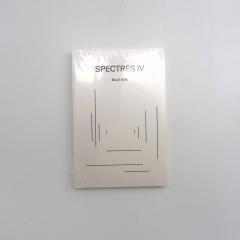
Fourth issue of Shelter Press' annual publication series »Spectres« (in association with INA GRM), this time themed around ›voice‹. Featuring contributions from/about François J. Bonnet, John Giorno, David Grubbs, Yannick Guédon, Lee Gamble, Sarah Hennies, Haela Ravenna Hunt-Hendrix, Stine Janvin, Joan La Barbara, Youmna Saba, Akira Sakata, Pierre Schaeffer, Peter Szendy and Ghédalia Tazartès.

The book includes an essay about the essence of improvisation by Joan La Barbara, Lee Gamble looking at neural networks and vocal simulation systems, an untitled anecdote from Ghédalia Tazartès (RIP) and Stine Janvin on the necessity of singing, plus much more.

»The voice is everywhere, infiltrating everything, making civilisation, marking out territories with infinite borders, spreading from the farthest reaches to the most intimate spaces. It can be neither reduced nor summarised. And accordingly, when taken as a theme, the voice is inexhaustible, even when seen in the light of its very particular relation with the sonic or the musical, as is the case in most of the texts collected in this volume. There is no point therefore in trying to circumscribe or amalgamate the multiple avatars of the voice. We must rather try to apprehend what the voice can do, to envisage its landscape, its potential effects.«

— Extract from the editors' foreword.

non in magazzino

Ordina ora e ordineremo l'articolo per te presso il nostro fornitore.

21,22

Last In: 55 days ago
Various - FUGA VII LP 2x12"

Various

FUGA VII LP 2x12"

12inchTOKEN139
Token Records
15.04.2026

The Fuga compilation returns to Token with its seventh installment by a fresh batch of artists emphasizing the cryptic sound of the Belgian record label. The V/A displays urgency as its focal point, expanding and contracting its acoustic space throughout to channel instability. With eight contributions, Fuga VII sifts through nail biting arpeggios, frenzied percussion, and obscure ambiance to recalibrate techno's current soundscape.

Opening the compilation is contemporary techno mainstay Rene Wise with his debut contribution to the record label 'Rough Rider'. In this A1, Wise plays to his strengths by blending deep techno influences with hyper-focused rhythmic work. With a hint of tribalism, he conjures up synthwork from far off to whip motion into heavy drum patterns. Following this first track, STIPP and Sandrien take control in presenting 'Corrie', a sequence-forward groover that slides through drum programing to streamline rhythm. A shrill pad comes in at the halfway mark, completely lifting the energy of 'Corrie' to strain the track's obscurity with an ethereal counterweight. The brief passage of these kinds of elements provides a lot of dynamic to what would otherwise be a powerfully straightforward piece. Diving deeper, Red Rooms unveils 'Limited Sensory' as the next chapter of the compilation. Always swift and exact, the German artist continues to push into the ultra immersive with a web of elements that whiz by for a peaktime lock in. Cold in attitude, Red Rooms tunnels through 'Limited Sensory' with quick drumsand far-off percussive hits that rumble through the track. Stepping up afterwards is Lindsey Herbert with 'Oscillations in Space' - an appropriately named recording that experiments with mania as a tool for the dancefloor. Fast and spiraling, Herbert keeps her hands on the arpeggio's filter to contain tension through thunderous reverb transitions, balancing panic with pace. AgainstMe then stretches out the followup with the commanding 'Phase Shift' to double down on weight. Textural intimidation and stomping percussion is given the space it needs to perform on heavy weight sound systems, making it an austere middle point for Fuga. MAL HOMBRE then guides the listener to more elastic sound design in 'Critical Velocity', in a most appropriate Token fashion. Snowballing in intensity halfway through, MAL HOMBRE pushes the cutoff of his melody and programs snare rolls for vintage craze through the second section. Bells clash with ringing hats to fly the track along its course without looking back or letting go. Conor Wall takes control with 'The Strategy' that focuses on pace rather than melody, weaponizing metallic texture for a deep dancefloor experience. The ambiance does a lot of story telling here, marking breaks and riding through drops to provide grit to an already substantial record. This leads us to the final contribution in Fuga VII - 'Ad Libitum'. Here, Porteix emphasizes the conclusion of the compilation with mystery. The synths slither around pulsating rhythm, creating uninterrupted motion throughout the track's entirety. Porteix draws the curtains on an inquisitive note, keeping the suspense high until the next Fuga compilation comes around.

non in magazzino

Ordina ora e ordineremo l'articolo per te presso il nostro fornitore.

21,64

Last In: 5 days ago
José González - Against The Dying Of The Light LP

José González has delivered a new album, Against the Dying of the Light, a companion and further meditation on the themes of his critically acclaimed album, Local Valley. Where Local Valley turned inward toward place, language, and personal reflection, this new record widens its gaze, becoming an urgent call to preserve the light of humanity with all its flaws, at a moment when, technology increasingly shapes how we think, feel, and relate to one another.

While José has always embraced technological advancement, he questions the assumption that every new possibility must be pursued to its maximum potential, especially when progress comes at the expense of human flourishing, attention, and empathy.

Keeping in the tradition of folk music as protest, José’s new single — sharing its title with the forthcoming album — urges listeners to resist systems that dehumanize and divide: “Disconnect from every algorithm, every perverse incentive that drags you down. Let’s rebel against the replicators, against the dying of the light. Kill the codes that feed the hate, keep the codes that make you thrive, celebrate the **king fact that we’re alive.”

Across the album, González works within a deliberately minimal framework, pushing his familiar palette to new heights through subtle variation, restraint, and detail. Each song unfolds with its own distinct character, proving how much emotional and musical range can be achieved within self - imposed limitations. Written in English, Swedish, and Spanish, the record reflects his Swedish - Argentine roots and frames its humanist message as a global one rather than a purely personal or political statement.

José González is one of the most quietly influential artists of our generation. The Swedish - Argentine artist has built a singular musical world from hypnotic, minimal guitar work and his unmistakably gentle voice — a sound that has become deeply personal to millions of listeners worldwide. With billions of streams across platforms and hundreds of thousands of physical records sold, González’s songs often act as emotional landmarks. Ask almost anyone, and they can name at least one of his tracks tied to a defining moment in their lives.

non in magazzino

Ordina ora e ordineremo l'articolo per te presso il nostro fornitore.

28,99

Last In: 58 days ago
Kjell Bjørgeengen & Lasse Marhaug - Flood Coil
 
9

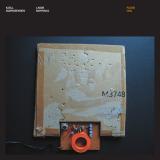
Some years ago, Kjell Bjørgeengen and Keith Rowe attempted to convert video signals into sound by setting up Rowe’s pickups next to an old CRT monitor, turning its magnetic field into a sound generator. Rowe further developed the system with David Jones at Alfred University, slimming down the setup using a copper coil, a circuit board, a video input, and a telephone pickup. Jones named it the »Flood Coil«, and it’s that instrument you can see on the album’s front cover and that lies at the core of these recordings, made without any physical live input from the artists themselves. In essence, it’s generative music in its purest form.

Bjørgeengen’s video feed is generated by oscillators, then routed into Marhaug’s pedals and then back into the Flood Coil, so any visual shifts alter the sound, and any modification to the sound changes the video. The duo have played this setup live many times, but for this studio version they left the system to do its thing without any intervention for two minutes at a time before moving onto the next idea. They recorded hours and hours using this process and then selected 18 highlights for this album, extracting harsh noise, power electronics, lulling feedback drone, and peculiar rhythmic snippets to show the scope of their technique.

A wall of growling, hi-octane Pulse Demon-style noise opens the set, gradually exposing us to more asymmetric textures, shifting through unstable repetitions that transform Merzbow’s metal-inspired screams into »Aaltopiiri«-era rhythmic noise. It’s remarkable, actually, how much Marhaug and Bjørgeengen can squeeze from the system, chancing on shivering, lower-case chugs and pops, galloping drums, soundsystem subs, and grinding blast beats that sound like Napalm Death’s »Scum« piped through a broken amp stack. It ain’t pretty, but noise/industrial freaks will revel in the fierce delights inside.

pre-ordina ora10.04.2026

dovrebbe essere pubblicato su 10.04.2026

32,35
Kilotoni - Barsebäck

Kilotoni

Barsebäck

12inchKILOTONI-04
Kilotoni
10.04.2026

Entering the abandoned warehouse full of haze and blinded by the strobe lights, you feel the rush when the bass kicks in. You have no idea if the year is 1996 or 2026, but it doesn't matter as long as you are alive.

Indeed, another batch of forgotten and previously unreleased radioactive acid techno has surfaced on the anonymous, vinyl-only Kilotoni imprint — possibly their strongest release so far.

A1 The peak of acid techno is perhaps found in its most stripped-down form. As the bass line throbs your breath out, you try to chase the kick drum in a game of hide-and-seek until complete exhaustion. It's something you play after the copies of Betty Ford and Sync In start to melt during a nuclear reactor accident.

A2 A ravey or hard-techno-oriented approach is applied to the acid techno formula here. The squelching, pulse-width-modulated synth makes for an eerie yet irresistible call to the dance floor. The snare rolls might just be your guilty pleasure.

B1 The flip side opens with funkier techno that the Voyager probes could bump to in outer space a million years from now. A wild acid line is accompanied by playful chords and beats. Detroit influences meet Nordic melancholy.

B2 The kick drum keeps pounding its way through while a lonely TB-303 is traveling in its own space and time. Influenced perhaps by the Midwest acid techno style, this could be a mid-90s DAT-tape lost inside the transatlantic postal system on its way to the Analog Records USA headquarters.

In stock dal10.06.2026

11,72

Last In: 48 days ago
Guilty Razors - Complete Recordings 1977 - 1978

UILTY RAZORS, BONA FIDE PUNKS.


Writings on the topic that go off in all directions, mind-numbing lectures given by academics, and testimonies, most of them heavily doctored, from those who “lived through that era”: so many people today fantasize about the early days of punk in our country… This blessed moment when no one had yet thought of flaunting a ridiculous green mohawk, taking Sid Vicious as a hero, or – even worse – making the so-called alternative scene both festive and boorish. There was no such thing in 1976 or 1977, when it wasn’t easy to get hold of the first 45s by the Pistols or the Clash. Few people were aware of what was happening on the fringes of the fringes at the time. Malcolm McLaren was virtually unknown, and having short hair made you seem strange. Who knew then that rock music, which had taken a very bad turn since the early 1970s, would once again become an essential element of liberation? That, thanks to short and fast songs, it would once again rediscover that primitive, social side that was so hated by older generations? Who knew that, besides a few loners who read the music press (it was even better if they read it in English) and frequented the right record stores? Many of these formed bands, because it was impossible to do otherwise. We quickly went from listening to the Velvet Underground to trying to play the Stooges’ intros. It’s a somewhat collective story, even though there weren’t many people to start it.
The Guilty Razors were among those who took part in this initial upheaval in Paris. They were far from being the worst. They had something special and even released a single that was well above the national average. They also had enough songs to fill an album, the one you’re holding. In everyone’s opinion, they were definitely not among the punk impostors that followed in their wake. They were, at least, genuine and credible.

Guilty Razors, Parisian punk band (1975-1978). To understand something about their somewhat linear but very energetic sound, we might need to talk about the context in which it was born and, more broadly, recall the boredom (a theme that would become capital in punk songs) coupled with the desire to blow everything off, which were the basis for the formation of bands playing a rejuvenated rock music ; about the passion for a few records by the Kinks or the early Who, by the Stooges, by the Velvet mostly, which set you apart from the crowd.
And of course, we should remember this new wave, which was promoted by a few articles in the specialized press and some cutting-edge record stores, coming from New York or London, whose small but powerful influence could be felt in Paris and in a handful of isolated places in the provinces, lulled to sleep by so many appalling things, from Tangerine Dream to President Giscard d’Estaing...
In 1975-76, French music was, as almost always, in a sorry state ; it was still dominated by Johnny Hallyday and Sylvie Vartan. Local rock music was also rather bleak, apart from Bijou and Little Bob who tried to revive this small scene with poorly sound-engineered gigs played to almost no one.
In the working class suburbs at the time, it was mainly hard rock music played to 11 that helped people forget about their gruelling shifts at the factory. Here and there, on the outskirts of major cities, you still could find a few rockers with sideburns wearing black armbands since the death of Gene Vincent, but it wasn’t a proper mass movement, just a source of real danger to anyone they came across who wasn't like them. In August 1976, a festival unlike any other took place in Mont-de-Marsan – the First European Punk Festival as the poster said – with almost as many people on stage as in the audience. Yet, on that day, a quasi historical event happened, when, under the blazing afternoon sun, a band of unknowns called The Damned made an unprecedented noise in the arena, reminiscent of the chaotic Stooges in their early adolescence. They were the first genuine punk band to perform in our country: from then on, anything was possible, almost anything seemed permissible.

It makes sense that the four+1 members of Guilty Razors, who initially amplified acoustic guitars with crappy tape recorder microphones, would adopt punk music (pronounced paink in French) naturally and instinctively, since it combines liberating noise with speed of execution and – crucially – a very healthy sense of rebellion (the protesters of May 1968 proclaimed, and it was even a slogan, that they weren’t against old people, but against what had made them grow old. In the mid-1970s, it seemed normal and obvious that old people should now ALSO be targeted!!!).
At the time, the desire to fight back, and break down authority and apathy, was either red or black, often taking the form of leafleting, tumultuous general assemblies in the schoolyard, and massive or shabby demonstrations, most of the time overflowing with an exciting vitality that sometimes turned into fights with the riot police. Indeed, soon after the end of the Vietnam War and following Pinochet’s coup in Chile, all over France, Trotskyist and anarcho-libertarian fervour was firmly entrenched among parts of the educated youth population, who were equally rebellious and troublemakers whenever they had the chance. It should also be noted that when the single "Anarchy in the UK" was first heard, even though not many of us had access to it, both the title and its explosive sound immediately resonated with some of those troublemakers crying out for ANARCHY!!! Meanwhile, the left-wing majority still equated punks with reckless young neo-Nazis. Of course, the widely circulated photos in the mainstream press of Siouxsie Sioux with her swastikas didn’t necessarily help to win over the theorists of the Great Revolution. It took Joe Strummer to introduce The Clash as an anti-racist, anti-fascist and anti-ignorance band for the rejection of old-school revolutionaries to fade a little.

The Lycée Jean-Baptiste Say at Porte d’Auteuil, despite being located in the very posh and very exclusive 16th arrondissement of Paris, didn’t escape these "committed" upheavals, which doubled as the perfect outlet for the less timid members of this generation.
“Back then, politics were fun,” says Tristam Nada, who studied there and went on to become Guilty Razors’ frontman. “Jean-Baptiste was the leftist high-school in the neighbourhood. When the far right guys from the GUD came down there, the Communist League guys from elsewhere helped us fight them off.”
Anything that could challenge authority was fair game and of course, strikes for just about any reason would lead to increasingly frequent truancy (with a definitive farewell to education that would soon follow). Tristam Nada spent his 10th and 11th unfinished grades with José Perez, who had come from Spain, where his father, a janitor, had been sentenced to death by Franco. “José steered my tastes towards solid acts such as The Who. Like most teenagers, I had previously absorbed just about everything that came my way, from Yes to Led Zeppelin to Genesis. I was exploring… And then one day, he told me that he and his brother Carlos wanted to start a rock band.” The Perez brothers already played guitar. “Of course, they were Spanish!”, jokes their singer. “Then, somewhat reluctantly, José took up the bass and we were soon joined by Jano – who called himself Jano Homicid – who took up the rhythm guitar.” Several drummers would later join this core of not easily intimidated young guys who didn’t let adversity get the better of them.

The first rehearsals of the newly named Guilty Razors took place in the bedroom of a Perez aunt. There, the three rookies tried to cover a few standards, songs that often were an integral part of their lives. During a first, short gig, in front of a bewildered audience of tough old-school rockers, they launched into a clunky version of the Velvet Underground's “Heroin”. Challenge or recklessness? A bit of both, probably… And then, step by step, their limited repertoire expanded as they decided to write their own songs, sung in a not always very accurate or academic English, but who cared about proper grammar or the right vocabulary, since what truly mattered was to make the words sound as good as possible while playing very, very fast music? And spitting out those words in a language that left no doubt as to what it conveyed mattered as well.
Trying their hand a the kind of rock music disliked by most of the neighbourhood, making noise, being fiercely provocative: they still belonged to a tiny clique who, at this very moment, had chosen to impose this difference. And there were very few places in France or elsewhere, where one could witness the first stirrings of something that wasn’t a trend yet, let alone a movement.

In the provinces, in late 1976 or early 1977, there couldn’t be more than thirty record stores that were a bit more discerning than average, where you could hear this new kind of short-haired rock music called “punk”. The old clientele, who previously had no problem coming in to buy the latest McCartney or Aerosmith LP, now felt a little less comfortable there…
In Paris, these enlightened places were quite rare and often located nex to what would become the Forum des Halles, a big shopping mall. Between three aging sex workers, a couple of second-hand clothes shops, sellers of hippie paraphernalia and small fashion designers, the good word was loudly spread in two pioneering places – propagators of what was still only a new underground movement. Historically, the first one was the Open Market, a kind of poorly, but tastefully stocked cave. Speakers blasted out the sound of sixties garage bands from the Nuggets compilation (a crucial reference for José Perez) or the badly dressed English kids of Eddie and the Hot Rods. This black-painted den was opened a few years earlier by Marc Zermati, a character who wasn’t always in a sunny disposition, but always quite radical in his (good) choices and his opinions. He founded the independent label Skydog and was one of the promoters of the Mont-de-Marsan punk festivals. Not far from there was Harry Cover, another store more in tune with the new New York scene, which was amply covered in the house fanzine, Rock News (even though it was in it that the photos of the Sex Pistols were first published in France).
It was a favorite hang-out of the Perez brothers and Tristam Nada, as the latter explained. “It’s at Harry Cover’s that we first heard the Pistols and Clash’s 45s, and after that, we decided to start writing our first songs. If they could do it, so could we!”
The sonic shocks that were “Anarchy in the UK”, “White Riot” or the Buzzcocks’s EP, “Spiral Scratch” – which Guilty Razors' sound is reminiscent of – were soon to be amplified by an unparalleled visual shock. In April 1977, right after the release of their first LP, The Clash performed at the Palais des Glaces in Paris, during a punk night organised by Marc Zermati. For many who were there, it was the gig of a lifetime…
Of course, Guilty Razors and Tristam were in the audience: “That concert was fabulous… We Parisian punks were almost all dressed in black and white, with white shirts, skinny leather ties, bikers jackets or light jackets, etc. The Clash, on the other hand, wore colourful clothes. Well, the next day, at the Gibus, you’d spot everyone who had been at this concert, but they weren’t wearing anything black, they were all wearing colours.”

It makes sense to mention the Gibus club, as Guilty Razors often played there (sometimes in front of a hostile audience). It was also the only place in Paris that regularly scheduled new Parisian or Anglo-Saxon acts, such as Generation X, Siouxsie and the Banshees, the Slits, and Johnny Thunders who would become a kind of messed-up mascot for the venue. A little later, in 1978, the Rose Bonbon – formerly the Nashville – also attracted nightly owls in search of electric thrills… In 1977, the iconic but not necessarily excellent Asphalt Jungle often played at the Gibus, sometimes sharing the bill with Metal Urbain, the only band whose aura would later transcend the French borders (“I saw them as the French Sex Pistols,” said Geoff Travis, head of their British label Rough Trade). Already established in this small scene, Metal Urbain helped the young and restless Guilty Razors who had just arrived. Guitarist for Metal Urbain Hermann Schwartz remembers it: “They were younger than us, we were a bit like their mentors even if it’s too strong a word… At least they were credible. We thought they were good, and they had good songs which reminded of the Buzzcocks that I liked a lot. But at some point, they started hanging out with the Hells Angels. That’s when we stopped following them.”

The break-up was mutual, since, Guilty Razors, for their part, were shocked when they saw a fringe element of the audience at Metal Urbain concerts who repeatedly shouted “Sieg Heil” and gave Nazi salutes. These provocations, even still minor (the bulk of the skinhead crowd would later make their presence felt during concerts), weren’t really to the liking of the Perez brothers, whose anti-fascist convictions were firmly rooted. Some things are non-negotiable.
A few months earlier (in July 1978), Guilty Razors had nevertheless opened very successfully for Metal Urbain at the Bus Palladium, a more traditonally old-school rock night-club. But, as was sometimes the case back then, the night turned into a mass brawl when suburban rockers came to “beat up punks”.

Back then, Parisian nights weren’t always sweet and serene.

So, after opening as best as they could for The Jam (their sound having been ruined by the PA system), our local heroes were – once again – met outside by a horde of greasers out to get them. “Thankfully,” says Tristam, “we were with our roadies, motorless bikers who acted as a protective barrier. We were chased in the neighbouring streets and the whole thing ended in front of a bar, with the owner coming out with a rifle…”
Although Tristam and the Perez brothers narrowly escaped various, potentially bloody, incidents, they weren’t completely innocent of wrongdoing either. They still find amusing their mugging of two strangers in the street for example (“We were broke and we simply wanted to buy tickets for the Heartbreakers concert that night,” says Tristam). It so happened that their victims were two key figures in the rock business at the time: radio presenter Alain Manneval and music publisher Philippe Constantin. They filed a complaint and sought monetary compensation, but somehow the band’s manager, the skilful but very controversial Alexis, managed to get the complaint withdrawn and Guilty Razors ended up signing with Constantin with a substantial advance.

They also signed with Polydor and the label released in 1978 their only three-track 45, featuring “I Don't Wanna be A Rich”, “Hurts and Noises” and “Provocate” (songs that exuded perpetual rebellion and an unquenchable desire for “class” confrontation). It was a very good record, but due to a lack of promotion (radio stations didn’t play French artists singing in English), it didn’t sell very well. Only 800 copies were allegedly sold and the rest of the stock was pulped… Initially, the three tracks were to be included on a LP that never came to be, since they were dropped by Polydor (“Let’s say we sometimes caused a ruckus in their offices!” laughs Tristam.) In order to perfect the long-awaited LP, the band recorded demos of other tracks. There was a cover of Pink Floyd's “Lucifer Sam” from the Syd Barrett era – proof of an enduring love for the sixties’ greats –, “Wake Up” a hangover tale and “Bad Heart” about the Baader-Meinhof gang, whose actions had a profound impact on the era and on a generation seeking extreme dissent... On the album you’re now discovering, you can also hear five previously unreleased tracks recorded a bit later during an extended and freezing stay in Madrid, in a makeshift studio with the invaluable help of a drummer also acting as sound engineer. He was both an enthusiastic old hippie and a proper whizz at sound engineering. Here too, certain influences from the fifties and sixties (Link Wray, the Troggs) are more than obvious in the band’s music.

Shortly after a final stormy and rather barbaric (on the audience’s side) “Punk night” at the Olympia in June 1978, Tristam left the band ; his bandmates continued without him for a short while.

But like most pioneering punk bands of the era, Guilty Razors eventually split up for good after three years (besides once in Spain, they’d only played in Paris). The reason for ceasing business activities were more or less the same for everyone: there were no venues outside one’s small circuit to play this kind of rock music, which was still frightening, unknown, or of little interest to most people. The chances of recording an LP were virtually null, since major labels were only signing unoriginal but reassuring sub-Téléphone clones, and the smaller ones were only interested in progressive rock or French chanson for youth clubs. And what about self-production? No one in our small safety-pinned world had thought about it yet. There wasn’t enough money to embark on that sort of venture anyway.

So yes, the early days of punk in France were truly No Future!

non in magazzino

Ordina ora e ordineremo l'articolo per te presso il nostro fornitore.

21,43

Last In: 61 days ago
Skeptical - Blimp LP

Skeptical

Blimp LP

12inchRUBI004
Rubi Records
09.04.2026

Ashley Tindall, AKA Skeptical, returns in peak form with Blimp EP — the fourth release on his Rubi Records imprint — delivering four meticulously crafted cuts of uncompromising drum & bass.

Opening with the title track, Blimp sets the tone with a deep, steppy wobbler that nods subtly to the title track from his second Rubi Records release, Capsize EP. All the signature Skeptical hallmarks are here: hypnotic, pared-back metronomic drums and shimmy-inducing, undulating subs that demand movement. Yet this time there's a noticeable shift — warm, underlying melodic pads bring an unexpected emotional depth. It's not dreamy, but it is more introspective than we're used to, showing another layer to his sonic palette.

So Good flips the script entirely. A dark, cinematic growler, it leans into ghosted vocal fragments and a futuristic film-noir aesthetic. Tense, claustrophobic rhythms and sinister textures create an unsettling atmosphere — tailor-made for those lights-out, pressure-heavy dancefloor moments.

Third comes the undeniable monster of the EP, Technology. Trademark "stink-face" Skeppiness is in full effect from the first bar. Disjointed sci-fi stabs and eerie pads collide with clinical, almost militaristic drum programming, all anchored by a devastatingly weighty bassline. Movement isn't optional — this is pure Skeptical, uncompromising and lethal.

Closing the EP is Bad Generation, a sound system–influenced weapon that finds Skeptical operating at his dubwise best. Fusing minimal D&B with heavyweight, roots-inspired rhythms is no easy task, but here it's executed with effortless authority. It's equally suited to shelling down a rave or getting lost in a deep, eyes-closed session.

Four tracks. Four distinct moods. 100% Skeptical.
Blimp EP confirms once again that his sound continues to evolve — sharper, deeper, and more refined with every release.

Support: Ben UFO, Joy Orbison, Gilles Peterson, dBridge, Break, DLR, Doc Scott, Mefjus, Kasra, Kings of the Rollers, Alix Perez, Jubei, Dub Phizix, Flight, Tasha, Loxy, Lens.

non in magazzino

Ordina ora e ordineremo l'articolo per te presso il nostro fornitore.

16,39

Last In: 33 days ago
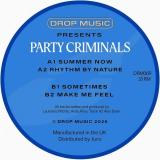
Inland Knights - Party Criminals

Andy Riley and Laurence Ritchie are Drop Music accomplices; the label is a natural outgrowth of yesterday's Smokescreen Soundsystem, one of the oldest and best-respected UK crews to endorse (sound-) systems thinking. In case you don't know, remember this: they were early 90s stanchions of pressure-dropping UK house heft. This rare new reissue hears their hugely in-demand classic 'Party Criminals' return to fully swung, gatecrashing mode. And boy, weren't they just. Their fourth ever Drop drop, it first surfaced in 1999 and turned instant heads for its crystalline blue inners and jacking, organic sound, not to mention a cameo from fellow duo Freaked on the A2's 'Rhythm By Nature'. But our favourite has to be 'Make Me Feel' with its soft-attack hi-hats, not tapping, more fizzing like metal leaf against the ears.

non in magazzino

Ordina ora e ordineremo l'articolo per te presso il nostro fornitore.

14,08

Last In: 62 days ago
Charif Megarbane & Ali - Tirakat LP

Tirakat brings together Jakarta-based trio Ali and Lebanese composer and multi instrumentalist Charif Megarbane in a collaboration rooted in long histories of cultural exchange between Indonesia and the Arab world. Ali are known for blending 1970s Indonesian psychedelic funk with Orkes Melayu, disco grooves, and Arab melodic forms, while Megarbane’s extensive catalogue has consistently explored similar cross-regional currents through jazz, library music, and Mediterranean-influenced arrangements. What connects the two is not genre alone, but a shared musical vocabulary shaped by overlapping histories, references, and lived cultural continuities.
The relationship between Indonesia and the Arab world stretches back over a thousand years, forged through Indian Ocean trade routes that carried not only goods, but languages, belief systems, instruments, and musical ideas. These exchanges were gradually absorbed into local traditions rather than replacing them. In Indonesia, Arabic musical elements entered through devotional practices and ensemble formats such as Gambus, Qasidah, and Orkes Melayu, where maq?m-derived melodic structures were adapted into local tuning systems and performance styles. Over time, these sounds became embedded within Indonesian popular music, shaping genres such as dangdut and informing a wider sonic landscape that remains audible today.

In stock dal10.06.2026

22,65

Last In: 9 days ago
Omega Tribe - SKM006

Omega Tribe

SKM006

12inchSKM006
Sekhem
08.04.2026

Sekhem opens a new portal. We are pleased to welcome Multivoq’s debut as Omega Tribe. He delivers four cuts engineered for the dancefloor, driven by razor-sharp grooves and strong basslines, with every element precisely tuned. Analog machines bring warmth, sequences pulse like coded transmissions, vocals drift through the mix as signals from space... Each detail shapes a journey built for powerful sound systems.

non in magazzino

Ordina ora e ordineremo l'articolo per te presso il nostro fornitore.

12,56

Last In: 8 days ago
Innershades - Heritage Volume 2

Three years after the release of Volume 1, Innershades returns to home turf with a second entry in his Heritage series. The New Beat territory that its predecessor tackled serves as the starting point for the A-side of Volume 2 as well. The glistening arpeggios and choir patches on "Mind State", alongside the unyielding kicks, alarm-like synth lines and plodding tempo of "System Breakdown," reaffirm how the genre's hallmarks smoothly align with the artist's own inclinations. The B-side draws from the broad spectrum of styles that emerged a bit later, in the beginning of the nineties, when it seemed the dance floor would move unimpeded between and bridge genres, its boundaries often not as firmly established. "Fuse Memory" nudges the pace forward, driven by the 909 and a staple hypnotic lead. When the drums come to a halt, a 303 emerges to flesh out the break. "Rhythm Composer" continues in a similar early techno vein, but pulls the track into outer space via its formant-heavy leads and Detroit-tinged sci-fi sweeps. On ALT023 Innershades appears in fine fettle, providing another batch of up-front club tracks that approach history as motion rather than memory, translating the past into forward momentum.

non in magazzino

Ordina ora e ordineremo l'articolo per te presso il nostro fornitore.

16,77

Last In: 20 days ago
The Council [Stekker & DJ Sofa] - We Must Proceed / On One

In the heart of an ancient forest deep in Europe, the Council, a secretive assembly of goblins and trolls, convenes under the light of the dancefloor. These beings, often misunderstood by the outside world, harness the power of music and sound to weave potent magick. Their rituals, held on hidden sound systems resonate with the echoes of nature. As the goblins fiddle their enchanted samplers and the trolls beat their massive drumbreaks, the air shimmers with vibrant energy. drawing the attention of mystical forces. Bound by ancient traditions, the Council safeguards the balance of the hardcore.

non in magazzino

Ordina ora e ordineremo l'articolo per te presso il nostro fornitore.

16,77

Last In: 36 days ago
ELUVIUM - VIRGA III

ELUVIUM

VIRGA III

12inchTRRLPC1452
Temporary Residence Ltd.
03.04.2026
  • A.m
  • The Fires At Night
  • Remains
  • Hallucination Ii
  • Microfauna
  • Communication
  • Virga Iii
  • Sore

Virga III ist der dritte Teil von Eluviums inspirierter Experimentalserie - und der erste seit fast fünf Jahren. Im unverkennbaren Gegensatz zu der dichten, bedrohlichen Ausdehnung von Virga II bieten die Werke, aus denen Virga III besteht, eine fast göttliche Atempause. Die nervöse Spannung, der Kontrollverlust und die geduldige Rekontextualisierung, die jeden Teil der Virga-Serie inspirieren, zeigen sich auf einzigartige Weise. Die Songs auf Virga III wurden wie immer von Cooper komponiert und gespielt, aber im Virga-Universum empfindet er im Grunde genommen eine einzigartige Zusammenarbeit mit sich selbst. Wie Cooper erklärt: ,Die Virga-Reihe gibt mir die Möglichkeit, zu einer älteren Version meiner selbst zurückzukehren, aber mit einem neuen Verständnis. Ich übe mich in mehr Geduld im Umgang mit diesen konstruierten musikalischen Systemen und Aufnahmen und duettiere zögerlich mit meinem früheren Ich in einer neuen Performance oder manipulativen Ebene, aber erst, nachdem ich die erste so lange wie möglich verdaut habe, bis sie neue und unbekannte Gefühle hervorruft, in der Hoffnung, ein Gefühl von therapeutischer Selbstwahrnehmung und Entdeckung zu entwickeln. Eine Mischung aus der explorativen Denkweise und einer malerischen emotionalen Resonanz, die sich allmählich zu sich selbst entfaltet."

pre-ordina ora03.04.2026

dovrebbe essere pubblicato su 03.04.2026

26,01
Various - Listen Up! - Ska LP

Welcome to the SKA BEAT!.
The sound that came from Jamaica between 1961-67.
Based on the American RnB and Doo-Wop records that Sound Systems in Kingston Town used to play.
The American records style started to mellow out while the Jamaican preferred a more upbeat sound..
So to meet this demand the Sound System bosses became record producers to cater for this demand.
Sir Coxonne and Duke Reid lead the way by putting the top musicians on the Island in the studio to make this Ska Sound!!
Here for your enjoyment is a selection of the some of the top tunes that made Ska so great...
We hope you enjoy the best....

non in magazzino

Ordina ora e ordineremo l'articolo per te presso il nostro fornitore.

13,24

Last In: 8 years ago
Bear McCreary - God of War LP 2x12"
  • God Of War
  • Memories Of Mother
  • Witch Of The Woods
  • Lullaby Of The Giants
  • Ashes
  • Peaks Pass
  • A Giant's Prayer
  • The Dragon
  • Mimir
  • Magni And Modi
  • Echoes Of An Old Life
  • Helheim
  • The Healing
  • The Reach Of Your Godhood
  • Stone Mason
  • Valkyries
  • Deliverance
  • Salvation
  • The Ninth Realm
  • The Summit
  • Epilogue

"The multiple award-winning action-adventure game God of War was first released in 2005, but became such an instant hit, that Santa Monica Studio created seven more versions of the game. The most recent one, released in 2018 for the PlayStation 4, focusses on main character Kratos' journey in the Greek world together with his son Atreus, following a path of vengeance as a result of being tricked into killing his family by Olympian gods. God of War received universal acclaim for its story, design, graphics, combat system, characters, and music. It was awarded 'Game of the Year' by numerous media outlets and award shows. God of War (2018) performed well commercially, selling over five million copies within a month of its release. It became one of the best-selling PlayStation 4 games. The official soundtrack won a BAFTA Award and is composed by Bear McCreary. It is set up around themes he created around primary characters in the game. Inspired by Viking folk music, McCreary used exotic instrumentation and languages from various Northern European folk traditions. It resulted in a score featuring deep choirs, pounding drums, shrieking brass and features Faroese singer-songwriter Eivør (Pálsdóttir). The American composer Bear McCreary is best known for his work on TV shows like Battlestar Galactica, Outlander, The Walking Dead and won an Emmy Award for the main title of Da Vinci's Demons. God of War is available on black vinyl. This package contains a 4-page booklet with liner notes by Bear McCreary."

God Of War by Bear Mccreary, released 15 March 2024, includes the following tracks: "Witch of The Woods", "Ashes", "A Giant's Prayer", "Mimir" and more.

This version of God Of War comes as a 2xLP in a(n) Gatefold Sleeve packaging. This release comes with (a) Booklet.

pre-ordina ora03.04.2026

dovrebbe essere pubblicato su 03.04.2026

48,32
Articoli per pagina:
N/ABPM
Vinyl