Grammy-nominated Ostinato Records presents "Abu Obaida Hassan & His Tambour: The Shaigiya Sound of Sudan" in a gatefold LP packaging with vintage photos and authentic Sudanese designs.
A complex blend of Arab melodies, Nubian rhythms, and signature Sudanese call and response by a legend of Shaigiya music from nothern Sudan.
Abu Obaida Hassan and the wonders of his five-string tambour remained largely a mystery. In the early 2000's, a prominent Sudanese newspaper declared him dead. Internet forums confirmed his passing. Many in Khartoum, Sudan's capital, said he had indeed died.
But rumors that he was still alive persisted.
What was always certain is Abu Obaida Hassan's mercurial talent.
His command of a modified tambour, backed by a chorus and two drummers, unleashed swirling melodies alongside complex Nubian rhythms and hypnotic Sudanese call and response. His bands roster constantly changed, but he remained at the helm, playing for sold out shows in cities across the country and capturing the dancefloors and youth of 1970's and 80's Sudan. This is a rich, raw example of the human experience with sound from northern Sudan, an ancient part of the world, and the birthplace of civilization. Music like this isn't mastered overnight.
The Ostinato team first came across Abu Obaida's recordings in 2011, finding scratchy bits and pieces along the years. We traveled to Sudan in 2016 to find the clues to piece together the Abu Obaida Hassan puzzle. Through some extensive detective work with our man in Khartoum, Ahmed Asysouti, and a generous dose of good fortune, we tracked Abu Obaida to the rural outskirts of Omdurman, the old capital just across the White Nile from Khartoum. Age has taken its toll, but he remains full of life and music, ready to jointly curate a selection of his eight best cuts. He has written over 100 songs, only 30 were recorded.
Abu Obaida comes from the Shaigiya people, whose culture is spread around the ancient city of Merowe, home of traditional Nubian culture, where pyramids older than those in Egypt still stand. They trace their entire lineage to one man, Shaig, who migrated from the Arabian peninsula in the 15th century. An endlessly rhythmic syncretism between Arab and Nubian styles, Abu Obaida's Shaigiya music was an in demand party affair in an era when a vibrant nightlife and roving sound systems were a staple of life in Sudan.
It was music for a modern era, and Abu Obaida, at just 19, rebelliously abandoned traditional Shaigiya music traditions, pioneering a new sound by adding an extra string to his tambour and electrifying an instrument adored across East Africa. The result was complexity in simplicity and a hyper-talented artist who mirrors the story of Sudan's highs and lows, from the leading tambour maestro of the hour to such obscurity on the fringes that he was believed dead. "They killed me!", he likes to joke.
Abu Obaida Hassan, his music and the musical traditions of the Shaigiya remain alive and kicking. A culmination of a 7-year journey — from first hearing Abu Obaida's distinct sound, found only in Sudan, to finding the man — has produced the first global release of Shaigiya music and is just the beginning of Ostinato's immersion into Sudan, with a full compilation of the lavish musical history of one the most diverse countries in Africa due later this year. All brought to you by the Grammy-nominated team behind last year's "Sweet As Broken Dates."
Buscar:system syn
Using a modular system comprised of Make Noise modules (as well as a Prophet 5 synthesizer), Kaitlyn Aurelia Smith created Abstractions as a live score for the film of the same name by visual artist Harry Everett Smith. Comprised of a single track across the record's two sides, Abstractions presents a unique experimental release within Kaitlyn's stellar catalog of contemporary electronic music. This Make Noise Records release was Digitally Mastered by Shawn Hatfield at Audible Oddities
Pressed to 12" Clear (140gm) vinyl and inserted into a black inner dust sleeve and Matte Jacket featuring artwork by Harry Everett Smith (comprised of film negatives from Abstractions, licensed from the Harry Smith Archives), assembled by Sean Curtis Patrick.
* In come the first of three releases celebrating a decade of pioneering label Kapsize. Fronted by leading light of Bristol dance music, Joker showcases one of his most iconic sounds to date.
* Suave sophistication not out of place in a Bond or Bourne film, backed with dancefloor aggression, 'Anamorphic' oozes the hi tech international espionage Purple sound Joker has carved out for himself. Opening with plush synth and horn washes, leading into unmistakable arpeggiators and guitar riffs, 'Anamorphic' manages to combine Joker's signature sexy RnB vibes into perfectly engineered system smashing bass lines with ease and style.
* 'Forever' explores the same theme with soundscapes and synth washes that Vangelis would be proud of. A textural flight over the landscape Joker painted with 'Anamorphic', 'Forever' gives listeners a chance to take in the sights and sounds of the neon cities and skylines that Joker made his name on.
* Joker continues the exploration and continuation of the sounds that made his name, elements of 'Snake Eater', 'Tron' and 'Neon City' can be found here with a new slant. A showcase of a unique pioneer at the top of his game.
Synthònia' is an electronic ambient album released only with analog synths (Roland System 100, Roland TB 303, Roland Jx 3p, Korg Polysix, Korg ms 10, Korg ms 20, Yamaha cs 15, Kawai 100f, Teisco 100f) which refers to Tangerine Dream, Jean Michel Jarre, Klaus Shulze and The Berlin Shool' and John Carpenter.
Dyno, from Pesaro, Italy, discovers the passion for electronic music and analog synthesizers at the early age of 15. His first single was released in 1995, for over 2 decades Dyno has established himself as one of the most eclectic and respected italian producers of techno music for many important labels (Global Underground, Yoshitoshi, ZYX Music, DJ Mag, Traum, ecc) supported by artists like Joris Voorn, James Zabiela, Sasha, Sharam (Deep Dish) and Umek to name a few.
His passion for analog synthesizers led him to realize this ambitious Ambient work that float just above, in a perfect geosynchronous orbit, casts enough shade to dampen the extraneous while causing a shift in our perceptions, enough to take us out of time and place, to wherever we need to be.
Having grown up with and on the internet, Martin Steer (1986) has transformed its pull into a concept album that is just as immediate and intangible as the digital world. Bad Stream is guitars and machines vanishing in the spaces between Radiohead and Nine Inch Nails only to reemerge amidst Ambient, Noise, and Drone. Bad Stream, then, is his modus operandi - a hybrid soundtrack to the feelings of resignation, isolation, and cynicism within neoliberal cyberspace and to that strangely numbing comfort of bodies transmuting into zeros and ones in real time.
'I look at my phone even when I play guitar,' says Martin Steer, 'and that isn't even entirely voluntary. The 2010s really changed my perception of how digital technologies and social media affect me as a musician. Through Bad Stream I want to make sense of this particular kind of anxiety, and to use sensory overstimulation as a way to develop an independent and progressive musical language.'
The past seven years took Martin and his laptop and guitar from Berlin to Mexico and Nepal and, as a founding member of Frittenbude, into the German charts and to various festival stages. And yet, Bad Stream is a true 'Berlin album,' out of Friedrichshain, Neukölln, and Kreuzberg and will be released on Martin Steers own label ANTIME. It was recorded with real drums and programmed beats, with shoegaze guitars, acid baselines, piano, smartphone synths, violins, field recordings from the darknet and his voice, whose hopeless timbre conveys reflections on systems, the future, drugs, people, and his own place. In his ever expanding A/V live shows and in the music videos, this is supplemented by complex visuals.
Mannequin Records presents a trilogy of reissues from the avantgarde Italian-born producer Doris Norton, "Nortoncomputerforpeace" (1983), "Personal Computer" (1984, originally released by Durium Records), "Artificial Intellingence" (1985).Apple's first music "endorsement" and Roland affiliate, Doris Norton is one of the most important women pioneer in the use of synths and in the early electro / computer music. Norton is the wife of Antonio Bartoccetti, progressive rock guitarist, and mother of the musician and techno producer Rexanthony. As a teenager, she was drawn to medieval, Renaissance and Baroque music, not to mention quantum physics, differential equations, organic chemistry, the experimentalism of John Cage and animated movie soundtracks. Her love for modules and circuits found expression through the waves of an old harmonium, the frequencies of a Minimoog, a Roland System 100M, a Roland System 700 and the ARP 2500/2600.
In 1980, Norton began her solo career by recording at Fontana Studio 7, the Milan studio of the composer and musician Tito Fontana, resulting in the electronic opera "Under Ground". Norton became more prolific, continuing her adventures in experimental electronics and computer music with Parapsycho (1981), Raptus (1981), Nortoncomputerforpeace (1983), PC (1984) - whose album cover prominently features Apple's colored logo - and Artificial Intelligence (1985).
While the beat-oriented style of Norton's music aligns her with such global fellow-travelers as Yellow Magic Orchestra and Kraftwerk, her championing of the personal computer as a tool for self-sufficient musical creativity also connects her to more artsy musicians such as Pietro Grossi, Laurie Spiegel, and the League of Automatic Music Composers. Norton's predilection for the bright, glossy timbres of early digital instruments also recalls Hubert Bognermayr and Harald Zuschrader's bizarre 1982 one-off Erdenklang.
Later, her talent and expertise attracted the attention of IBM, who in 1986 named her as an official consultant. Already the reigning queen of the Italian electronic scene, she recorded two CDs for IBM: Automatic Feeling and The Double Side Of The Science. Influenced by her son, the musician and producer Rexanthony, Norton brought her fascination with the early days of techno into the 1990s, when she released three volumes of Techno Shock on Italian trance/hardcore label Sound Of The Bomb.
While her music remains largely out of print and inaccessible, Norton's early records have recently begun to receive the inevitable rediscovery treatment.
"In the late sixties I had already conceived computers as personal.' I have always trusted in the benefits of solitude, (being) alone means freedom... What's better than a personal' computer for materializing ideas, by oneself" (Doris Norton)
- A1: Gnossienne #1 (Cabaret Piano)
- A2: Gymnopedie #1 (Sugar Plum Piano/Water Bell Synthesizer)
- A3: Gnossienne #3 (Street Corner Mouth Accordion)
- A4: Gnossienne #3 (Organ Ripple Synthesizer)
- A5: Gymnopedie #1 (Hesitant Piano/Confident Lips)
- A6: Gnossienne #1 (French Ice Piano/Siberian Snow Synthesizer)
- B1: Gnossienne #1 (German Haiku Pianica)
- B2: Gymnopedie #3 (Family Piano/A Hint Of La-La-La)
- B3: Gnossienne #2 (Perrier Swing Synthesizer)
- B4: Gymnopedie #2 (Resonant Concert Piano/Tide Synthesizer)
- B5: Gymnopedie #1 (Festival Soft Fanfare Synthesizer)
Sacred Summits returns after a two-year hiatus with an album of interpretations of the music of Eric Satie by acclaimed composer Morgan Fisher.
Active for over 50 years Morgan's career has moved from 60's number one hit wonders Love Affair, to 70's rock'n'roll keyboardist in Mott The Hoople, before finally on to 80's ambient, improvisation and soundtracks, working with the likes of Yoko Ono, Haroumi Hosono and Dip In The Pool.
Based in Japan since the mid-80s, Fisher's long-standing admiration for Erik Satie (1866-1925) led to these Inside Satie recordings. Satie's unique work as a precursor to artistic movements such as minimalism, surrealism and repetitive music are acknowledged but for long periods he not given the accolades his music warranted.
A strange, eccentric, surreal man, he was never as acclaimed as the established masters, but influenced not only the likes of Debussy but also many of the Dada artists. On this album Morgan played his music freely after just a brief look at the scores. Recorded in just three days, it features piano, melodica, synthesisers, and Morgan's favoured tape delay system.
'INSIDE SATIE is one of the first albums I recorded in Japan shortly after moving here in 1985. In three days I improvised on several of my favourite Satie themes. Mostly I played piano as well as the rich, analog-sounding Yamaha GS-1 (precursor of the DX-7), and sometimes used long tape delays to build layers of sound. All the pieces were recorded in single takes - no overdubs (no time!)'.
ALEX is a dark, haunting and brooding synthwave record that sets the night on fire, taking you from darkness all the way to the shining lights of Broadway. With hints of cyberpunk, outrun and other 80's inspired retrowave influences, ALEX has developed a true signature sound that is funky, groovy and totally rocking. X takes you on a futuristic, electronic music trip that's filled with nostalgia and suspense. Artist bio: Originating from Edinburgh Scotland, ALEX is a Scottish born electronic music producer, composer and DJ. After spreading his sound to every channel and label possible, ALEX broke through in the most significant way possible. If you get the attention of Playmaker and NewRetroWave in the Synthwave scene, you're doing something right, and ALEX's unique approach to composition and production led to his debut release with NRW, the 'Blood Club' EP. And things haven't slowed for the young producer, with two more EP's and an album since his debut, each showing another side to the artist. After the release of his Drive inspired EP 'Youth', fans of the powerful vocal tracks 'Rebel of the Night' and 'Youth' can get excited for the pair of major budget music videos ALEX has in store, with filming having taken place in Russia and New York City. ALEX grew up listening to the likes of Daft Punk, Justice, Underworld, Chromatics, Deadmau5, absorbing the sounds of Disco, House, Hip-Hop, and Rock, cherry picking his favourite elements to blend into the new retro haze of his own material. He also cites film composers, such as Disasterpiece, John Carpenter, Vangelis, Johan Johansson, and John Williams.
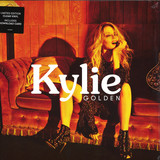
Limited Edition Clear Vinyl
Includes 12' Vinyl and Deluxe CD album, 30 page hard back book
Now that I've been to Nashville,' Kylie Minogue says with audible affection, I understand. It's like some sort of musical ley-line...'
Golden, Kylie's fourteenth studio album, is the result of an intensive working trip to the home of Country music, a city whose influence lingered on long after the pop legend and her team returned to London to finish the record: We definitely brought a bit of Nashville back with us,' she states. The album is a vibrant hybrid, blending Kylie's familiar pop-dance sound with an unmistakeable Tennessee twang. It was Jamie Nelson, Kylie's long-serving A&R man, who first came up with the concept of incorporating a Country element' into Kylie's tried-and-trusted style. That idea sat there for a little while, with Minogue and her team initially unsure about how to bring it to life. Then, when Grammy-winning songwriter Amy Wadge's publisher suggested Kylie should come over to collaborate in Nashville, a city Kylie had previously never visited, something clicked. You know when you're so excited about something,' she recalls, that you repeat it an octave higher and double the decibels I was like that. 'Nashville! Yes! Of course I would!'. I hoped it would help the album to reveal itself. I thought 'If I don't get it in Nashville, I'm not going to get it anywhere.''
Kylie's Nashville trip involved working alongside two key writers, both with homes in the city. One was British-born songwriter Steve McEwan (whose credits include huge Country hits for Keith Urban, Kenny Chesney and Carrie Underwood), and the other was the aforementioned Amy Wadge, another Brit (best known for her mega-selling work with Ed Sheeran). It was then a truly international project: Golden was mainly created with African-German producer Sky Adams and a list of contributors including Jesse Frasure, Eg White, Jon Green, Biff Stannard, Samuel Dixon, Danny Shah and Lindsay Rimes, and there's a duet with English singer Jack Savoretti.
However, the album's agenda-setting lead single Dancing was, significantly, first demoed with Nathan Chapman, the man who guided Taylor Swift's transition from Country starlet to Pop megastar. If anyone knows how to mix those two genres, Chapman does. Nathan was the only actual Nashvillean I worked with. He's got a huge studio in his house, which is probably due to his success with Taylor... there's plenty of platinum discs of her, and others on his walls.' There's something of the spirit of Peggy Lee's Is That All There Is, of Dylan Thomas' Do Not Go Gentle Into That Good Night, even of Liza Minnelli's Cabaret about Dancing, a song which not only opens the album but sets out its stall, providing a microcosm of what is to come. You've got the lyrical edge, that Country feel, mixed with some sampling of the voice and electronic elements, so it does what it says on the label. And I love that it's called 'Dancing', it's immediately accessible and seemingly so obvious, but there's depth within the song.'
The experience of simply being in Nashville was an overwhelming one, before Kylie had even arrived. Once I knew I was going to Nashville, people talked about the place with such enthusiasm. They said without doubt I would love it and, I would come back with songs. They were sending lists of restaurants, coffee shops and bars. It really was a beautiful and genuine response and it felt like I was about to have a life changing experience and in a way, I did.' The reality came as something of a surprise, when she found a far more modern metropolis than the vintage one she'd envisaged. I thought it would be like New Orleans: little houses and bars, with music spilling out onto the street. It reminded me more of Melbourne: apartment blocks going up everywhere! The main strip, Broadway, where the honky tonk bars are, that's where the street was filled with music and it was just amazing.' Mainly, Minogue remembers the heat and humidity. It was 100 degrees. It was like it was raining with no rain.' She also relished the chance to wander around unrecognised, visit a few venerable music bars and soak in the atmosphere. I didn't get to the Grand Ole Opry or the music museums but I managed to go to a couple of the institutions there like The Bluebird Cafe and The Listening Room, and just by being there, through some kind of osmosis, you get this rejuvenated respect for The Song, and the writing of The Song. There's no hoo-hah around it. There's a singer-songwriter there, talking about the song and singing the song, to an audience who are there to listen. Although, I have to confess I was guilty of starting to clap too soon during a long pause at the end of one of the songs. The guy made a bit of a joke out of it and got a laugh from it, but I thought 'Of all people in the audience, no...''
It's probably no coincidence, therefore, that every track on Golden is a Kylie co-write, making it arguably her most personal album to date. The end of 2016 was not a good time for me,' she says, referring to well-documented personal upheavals, so when I started working on the album in 2017, it was, in many ways, a great escape. Making this album was a kind of saviour. I'd been through some turmoil and was quite fragile when I started work on it, but being able to express myself in the studio made quick work of regaining my sense of self. Writing about various aspects of my life, the highs and lows, with a real sense of knowing and of truth. And irony. And joy!'
The songwriting process allowed Kylie to get a few things out of her system. Initially, she admits, it was cathartic, but it also wasn't very good. I think I was writing too literally. But I reached a point where I was writing about the bigger-picture, and that was a breakthrough. It made way for songs like Stop Me From Falling and One Last Kiss. It also meant I had enough distance to write an autobiographical song, like A Lifetime To Repair, with a certain amount of humour. The countdown in that song: 'Six-five-four-three, too many times...'. I don't know if that will be a single, but I can just imagine a girl with framed pictures of past boyfriends, and kind of going 'Oh god, when am I going to get this right'' When she listens back to Golden, Kylie can vividly hear the Nashville in it. It is, she'll agree, probably the first time that a Kylie album has sounded like the place it was made. You wouldn't normally relate my songs to the cities. Can't Get You Out Of My Head sounds more like Outer Space than London. But Shelby '68, for example, was written in London but it was done with Nashville in mind. It's about my Dad's car, and my brother recorded Dad driving it! I don't think I'd have written a number of the songs, including Shelby '68 and Radio On without having had that Nashville experience.'
The latter, she says, is about music being the one to save you.' Throwing herself into the making of the record, she says, crystallised that idea. If there's one love that will always be there for you, it's music. Well, it is for me, anyway.' That song, in particular, carries nostalgic echoes of the golden age of Country, as heard through Medium Wave transistors and tinny home stereos in the distant past. Like any child of the Seventies, Kylie had a basic grounding in Country music, mainly absorbed from older family members. My Step-Grandfather was born in Kentucky and though he lived most of his adult life in Australia, he never stopped listening to his beloved Country artists.' If there's any classic Country singer whose imprint can be heard on Golden, it's Dolly Parton.
Kylie saw Dolly live for the first time at the end of 2016, at the Hollywood Bowl. It was like seeing the light,' she beams. It was incredible. Everyone, whether they know it or not, is a Dolly Parton fan. When I was in Nashville, I did pick up a T-shirt that said 'What Would Dolly Do' Maybe that should be my mantra.' And, whether consciously or otherwise, there's a timbre and trill to Kylie's vocals on Radio On that is distinctly Parton-esque. My delivery is quite different on this album,' she says. A lot of things are 'sung' less. The first time I did that was with Where The Wild Roses Grow. On the day I met Nick Cave, when I recorded my vocals, he said 'Just sing it less. Talk it through, tell the story.' This album wasn't quite to that extreme, but a lot of the songs were done in fewer takes, to just capture the moment and keep imperfections that add to the song. I remember on my last album, a lot of producers were trying to take out literally every vibrato they heard. And that's not natural to my voice. I mean, I can make myself sound like a robot, but it's nice to sound like a human!' Working within the Country genre also gave Kylie permission to write in the Nashville vernacular. Because we were going there, I wasn't afraid to have lines like 'When he's fallen off the wagon we'd still dance to our favourite slow song', 'Ten sheets to the wind, I was all confused', 'I'll take the ride if it's your rodeo'. The challenge of bringing a Country element to the album made the process feel very fresh to me, kind of like starting over. I started to look at writing a different way, singing a different way.'
If ever Kylie lost confidence in the Country-Pop concept, and found herself pondering This is great, but back in the real world - my real world - how will this work', Jamie Nelson was there to badger her into sticking to the path. We found a way to make it a hybrid with what we'll call my 'usual' sound. It had to stay 'pop' enough to stay authentic to me, but country enough to be a new sound for this album. The closer we zoomed in, and the more we honed it, I knew Jamie was right. We sacrificed good songs that weren't right for this album, because we wanted it to be as cohesive as possible. The songs that were hitting the mark were these ones, so we decided to be strong, and that's how we wrapped up the album. What he said, that stuck with me, was that 'I'd hate to get to the end of this and really wish we'd gone for it.'' Having worked with Kylie for so long, Nelson was able to put this latest shift of direction into perspective. He said 'You've traditionally done it throughout your career. You had your PWL time, then you did a complete turn when you went to deConstruction, then another complete turn with Spinning Around, and R&B dance-pop, and then another turn with Can't Get You Out Of My Head, icy synth-pop, and this is another one.' He was right. It felt like the right time to have a change sonically. New label, new stories to tell, and a new decade almost upon me.'
Kylie Minogue will, it's scarcely believable, turn 50 this year. This looming milestone is partly behind the album's title, and title track. I had this line that I wanted to use: 'We're not young, we're not old, we're golden' because I'm asked so often about being my age in this industry. This year, I'll be 50. And I get it, I get the interest, but I don't know how to answer it. And that line, for my personal satisfaction, says it as succinctly as possible. We can't be anyone else, we can't be younger or older than we are, we can only be ourselves. We're golden. And the album title, Golden, reflects all of this. I liked the idea of everyone being golden, shining in their own way. The sun shines in daylight, the moon shines in darkness. Wherever we are in life, we are still golden.' One of the album's shiniest moments is Raining Glitter, an exuberant banger which ventures closest to Kylie's traditional dance-pop comfort zone. Eg White, who is one of the producers and writers and a great character, was talking about disco one day. I said 'I love disco, but you know the brief.' We needed to be going down the Country lane, so to speak. But we managed to bring them both together. When I wrote it, I was thinking about the Jacksons video for Can You Feel It where they're sprinkling glitter over everyone. And I think there's a Donna Summer record that's got that feel to it. I think that's my job: I basically leave a trail of glitter after every show I do anyway.'
Kylie is looking forward to the challenge of incorporating the Golden material into her live shows. Mixing these songs in with my existing catalogue is going to be fun. And it could be fun to do some of those songs with just a guitar. It'll make my acoustic set interesting...'Her incredibly loyal fans - to whom one Golden song, Sincerely Yours, is intended as a love letter' - will, she believes, have no problem with her latest stylistic shift. My audience have been with me on the journey, so I shouldn't be afraid that they won't come with me on this part. I've had fun with it, and I'm sure they will too.'
The time spent making Golden has, Kylie says, been a time of creative and personal renewal. I've met some amazing people, truly inspiring writers and musicians. My passion for music has never gone away, but it's got bigger and stronger.' And if there's an overriding theme to the record, it is one of acceptance. We're all human and it's OK to make mistakes, get it wrong, to want to run, to want to belong, to love, to dream. To be ourselves.'
I was able to both lose and find myself whilst making this album.'
Dutch artist Mokona returns to Templar Sound for his third release on the label with 'Love in Restricted Areas', described as being set in a private laboratory complex deep inside a forest, recorded during the summer after long nights of medical research.
* 'Love in Restricted Areas' continues the lush and serene soundscapes explored on 2015's 'Breathless' EP, while mixing more club friendly tracks like 'Perfumed Steel' and 'A.N.G.E.L. Guard System' with the meditative as found in 'Heart Sync' and 'Natalie's Aquarium Lab'. With a strong cinematic feel permeating throughout, and having taken his name from a character of the manga xxxHOLiC, which explores Japanese mythology and culture, it makes perfect sense that a track like 'Cupid's Bow' feels like it could have been lifted from a Studio Ghibli soundtrack.
* Though hard to pin down to a single genre, Mokona has produced a beautifully layered record that is just as fitting for head phone listening as the chill out room.
Darren Cunningham's eagerly~awaited new album is an adventurous, ultramodern, thoroughly British affair, rummaging about in the inner lives of house and techno, and brilliantly elaborating the accomplishments of his debut, Hazyville.
Determinedly off~the~map and resistant to pigeonholing, Cunningham is an enigmatic and playful figure, citing Francis Bacon and Monet as inspirations longside Theo Parrish, Anthony 'Shake' Shakir, Daft Punk, 'binary codes and numeral systems', and The Avengers. He's a hard man to pin down - somehow a key player in the post~dubstep diaspora and yet not there at all - but everything comes across in his shape~shifting, richly textured music.
The South Londoner's acclaimed debut lived up to its name: a series of dreamlike sketches and ideas. For Splazsh the fog has lifted, the sounds are less submerged than before, but still sticky and close - a signature combination of exuberance and introversion, luminescence and puzzlement. Unconstrained by the formal cliches of the dance music he loves, Actress' melodies and arrangements are enthralled by their own genies. Worlds of disturbance and melancholy revolve giddyingly inside the insidious funk of tracks like Get Ohn and Lost. A range of musical influences is redrawn, from speed garage (Always Human) to grime (Wrong Potion), with none crowned king. There is a reflectiveness - the ambient drift of Futureproofing, the radiophonic judder of
Supreme Cunnilingus - in amongst the industrial, synth~wave flavours of Casanova, and the stirring, stately Maze.
Actress has quickly and justly become one of the most respected names in the UK's new dance music underground. His own label, Werk Discs, has proven itself one of the most formidable and taste~making UK independents of recent times, bringing the world extraordinary albums from Zomby, Lukid, Lone and Actress himself. In love with the mysteries of groove and repetition, Splazsh is both a culmination and a new beginning for Actress, a substantial and eccentric work from a brave and coolly individual artist.
With international press interest gathering - photo features in Dazed And Confused, and Fader in the US, and a session with Wolfgang Tillmans for the cover of the German magazine Groove - the stage is set for Actress.
* From the pumping heart of The Magnetic System comes the 'dirtiest' Da-Da-dancefloor anti-jams with this lost 1979 blueprint of Italian conceptual cosmic disco played by the cream of the Goblin studio band. Ultra-rare and unscrubbed,Finders Keepers finally snip the trip from the cash machine to the trash machine.
* Carving its own grubby niche as an early prototype of cosmic disco cum Italo space funk whilst simultaneously harbouring Dada hat stand satire with a junkshop glam aesthetic, this ecological illogical poplitical crab cabaret clearly broke the mould before way before the jelly had set.
* Fans of 'other' obtuse outernational agit-camp might find a fantasy fusion between France's JP Massiera and Sweden's enviroMENTAL marvel Kaptain Zoom while trying to unravel the Madfilth tangle - but rest assured there were method men behind this madness and a portal to Italian funk royalty still festers
at the bottom of the psych rap scrapheap.
* Originally drip-fed out of Cesare Andrea Bixio's Cinevox stable as one of a tight grip of non-soundtrack LPs, made to test the label's commercial potential, Madfilth would follow the band Goblin (and their non-cinematic Roller) as well as the hens' teeth eponymous long player by the group The Motowns in what was perhaps the last-ditch attempt at custom built popsploitation - combining the skills of overqualified composers with undercooked conceptual mind belches. Naturally, after almost 40 years in the barrel, this micro-brewed oddity finally quenches the acquired taste of a new breed of shambolic psychotropic guzzlers proving that 1979 was obviously good year for fool's gold. The Madfilth medicine has finally come to cure your psychic ills so open wide and don't bite the spoon.
* It is beneath the flamboyant rhythm rants and vari-speed osric slop of alt-comedic sarcy-satirist Alberto Macaro (a genetic beneficiary of a vaudevillian comic bloodline) that we find The Magnetic System maestros Franco Bixio and Vince Tempera as the sonic driving force behind this unmarked treasure trove of
B-musical diamanté discoids. It will also come as little surprise that
Cinevox/Dario Argento favourites Goblin were not too distant from the whiff of this curate's egg with the men who many consider to be the group's greatest assets - bass player Fabio Pignatelli alongside sports rock drummer Agostino Marangolo. It was this unison that remained consistent throughout Goblin's career, weathering the temporary departure of Claudio Simonetti and
maintaining the stylistic heartbeat of the group. Madfilth's inclusion of Goblin synth Maverick Maurizio Guarini and the band's mid-period guitarist Carlo Penessi (founder of the band Etna) pinpoints the jobbing Goblin session group during the time they recorded the soundtracks for the films 'Buio Amiga' and 'Squadra Antigagsters'. This lesser-celebrated late 70s era also witnessed the mutating Goblin rhythm section providing discoid backbeats for records such as Giorgio Farina's 'Discocross' album, Simonetti's own Capricorn alter-ego and the homoerotic nightclub spin-off Easy Going - all of which, alongside Madfilth,
provide a strong mutual stylistic support system for their claim to cosmic disco's deep red bloodline.
After last year's stellar EP on L.I.E.S. Records, veteran, Brooklyn-based producer and DJ Jake Reif (Savage Hymn, Upsetting Keys) continues to make waves with his Device Control brand. The first side of the new "EP2" begins with Silhouettes: a robotic, techno-funk work out with a nasty kick drum, swirling modular sounds and a Timothy Leary inspired vocoded vocal. An instrumental version has been included for selectors who prefer tracks to songs.
On the flip, Joystuck continues the aural assault with a slightly more stripped-back approach. Hard-hitting metallic percussion and screaming, alien-esque synth bleeps are all that's necessary here to decimate a dance-floor. Finally, Divisive rounds out the EP with a stomping vengeance, its jacking claps and dissonant harmonics have been carefully designed to deliver a sonic gut-punch, taking no prisoners when played on a club system.
- A1: New Age Synthesis ( Unzipping The Zype )
- A2: Hurdy Gurdy Glissando (Live At Philips Halle )
- B1: Light In The Sky ( Live At Philips Halle )
- B2: Unidentified (Flying Being )
- C1: Radio ( Live At Philips Halle )
- C2: The Dervish Riff ( Live At Philips Halle )
- C3: Hurdy Gurdy Man ( Live At Philips Halle )
- D1: Motivation ( Live At Philips Halle)
- D2: 1988 Aktivator ( Live At Philips Halle )
- D3: Crystal City ( Live At Philips Halle )
- E1: Activation, Meditation ( Live At Philips Halle )
- E2: The Glorious Om Riff ( Live At Philips Halle )
- E3: Meditation Of The Dragon ( Live At Philips Halle )
- F1: It's All Too Much ( Live At Philips Halle )
- F2: Encore 1 : Electrik Gypsies ( Live At Philips Halle )
- F3: Encore 2 : Talking To The Sun ( Live At Philips Halle )
Some gigs are simply meant to be out there - even if they take decades to actually make it into our hands. This is without doubt one of those concerts, recorded at the Philips Halle, D sselsdorf on the 28th March 1979
during the Live Herald Tour. Includes the only known live recording of Talking to the Sun' Released following the AIM-nominated deluxe box set from Hillage, 'Searching for the Spark', this new 'Dusselsdorf' double CD showcases the Steve Hillage Band's prowess with excellent sound quality - a quality so high that you'll forget that it's a live recording until the applause. This is a band at the height of its powers, with Steve in great voice throughout, and most obviously utterly
enjoying themselves. The vibe is completely infectious and doesn't let up throughout the entire gig. Featuring Steve's own adventurous compositions and covers of Beatles and Donovan classics, all are approached with a joie-de-vivre and high sensibility. The trademark heady combination of vibrant psychedelic rock interwoven with an irresistible full blooded groove, interspersed with the smoothest of deepspace synth/guitar trips gathers all before it in a tsunami of up-lifting music.
With the benefit of hindsight, Steve's musical trajectory from the creative space riffs of Gong to the trance and techno of System 7 is made instantly clear. This version of 'Dusseldorf' will be released as a double CD presented in
mediabook packaging complete with a 24-page booklet and 3LP gatefold pressed on to 180g heavyweight vinyl.
Off the back of Rudeboyz follow up EP entitled Gqomwave, Goon Club Allstars are back with an EP from UK Funky producer KG. In 2007 Karen Nyame, otherwise known as KG, was at the Nottingham Trent University producing beats on Fruity Loops. Slightly isolated in Nottingham - away from the UK Funky scene's London epicentre - KG posted her tunes on popular UK Funky message boards and Facebook pages, but never had an opportunity to properly stake her claim as one of the scene's heavy hitters. 808 and Midnight (Flute Riddim) are two lost anthems from that era, although receiving support from the likes of Marcus Nasty and others, they were largely forgotten amongst the numerous stand out tracks of the era, appearing rarely in mixes of those lucky enough to have digital copies. 808 is the party anthem, it's joyous, quivering melodies ascend above the thumping kick drum, while relentless crashing snares and carnival whistles rain down - guaranteed to heat up the coldest of dancefloors. Midnight (Flute Riddim) on the flip side is the softer, slinkier bubbler. Built for smouldering club action and hot sunny days. BSNYEA is a new addition to Goon Club Allstars' burgeoning family of artists. Hailing from the Bronx he is a veteran of the Borough's Litefeet genre that soundtracks the performances of subway dancers cross New York City's transit system. On his remix of 808 he focusses on the whistles and gutter synth lines adding in booming bass drums and lock inducing chants. Hitmakerchinx comes fresh from his anthemic Night Slugs compilation. Bringing his signature FDM energy he drops the tempo and builds on the light, airiness, letting the flutes play out softly underneath the thumping drums.
Both hailing from Italy, Was A Be and Synth Ethics are two of the freshest talents emerging in drum & bass right now. Joining forces for Critical's Systems series sees them cementing this reputation even further with four unflinching tracks full of dance floor and ingenuity. Viva Italia!
Tachyon Audio is a new vinyl label that's focused on forward-thinking sounds in the techno realm targeting sweaty, dark places, with large, high-quality sound systems.
Inhabitants make a strong offering with their first EP as a duo, IGC. These two primates are often found inhabiting dark spaces, forging ahead on complex math equations. Their distinct, driving, mathematical, and drumming techno is a result. Expect more solid work from these two mysterious beings on Tachyon Audio as the label continues its progression.
Tachyon Audio is coming out of the gates strong with a diverse EP that touches on three techno sounds that are helping to lead the march forward into the future of sound production. The first Tachyon release comes from the mysterious dark studio of Inhabitants, who's inaugural release as a collaboration is sure to move feet on a diversity of dance floors. The A-side track, Mut14 (sc8.18 Mix) (A1) is a futuristic pounder that weaves its way into a frenzy with subtle yet penetrating synths that sweep through the soundscape. The simple and sound drumline will keep even the pickiest selectors satisfied. Side A ends with two separate open-source NASA space samples. The first, Iota_20_0.998_h (A2), is the repeating sound of two orbiting neutron stars. The second sample (A3) is two 50 solar mass black holes spiraling into an inevitable collapse, eventually becoming one. These samples are poised for reuse in production and make for good intro and looping material for performances.
The second side of the EP starts with the dark broken beat track, Mut7 (B1), that starts with a solid groove and works its way into a breakdown that captures the mind with a chopped and effected late 1990's Frankie Bones vocal. By the end of the track you'll be left wanting it to forge on, as it can flow well with a wide range of techno sub-genres, especially the dark, more broken beat tip. Inhabitants then continue to make their impression with Mut10 (B2), a track molded around an originally crafted 303 line that morphs and builds throughout and creates an atmosphere that separates itself from the remainder of the EP with a lighter, yet heady feel.
M=100 (2 - 50 Solar Mass Black Holes)
Granny13 opens with Nicola Ratti's 'Odd Doubt'. With the use of a modular system and tape loops, a broken rhythm is obtained by parallelism between single sound signals as LFO one or processed tapes.On the second side, Giovanni Lami's 'Johnny Leech' is made with a small bunch of equipment, just a chaotic hand-made synth (cacophonator) and a memoryman, working mainly on static electricity and leakage current in the synth used without any kind of power supply.
Reviews
The Wire
''Two Italian mucisians share a split single of glitchy fun and everyone goes some happy. Lami s piece uses a defective unplugged synthesizer to make huzzing chitters that have a kind of rhythm in spots. Ratti s contribution is a bit more structured it sounds like a record of accordion miniatures broken into pieces, then glued back together with little pieces of felt stuck onto it. Which would definitely be a pretty hep thing to hear.''
Textura
''Some releases qualify as art objects as much as musical collections, a case in point this recent seven-inch vinyl outing featuring material by Nicola Ratti on one side and Giovanni Lami on the other. That shouldn't be interpreted to mean that the musical content isn't worthy of one's time, as it assuredly is, but more to emphasize how striking the sleeve artwork by Opora is and how effectively it complements the musical content.Mastered by Giuseppe Ielasi and issued in an edition of 150 copies, the release opens with Odd Doubt, a concise experimental setting by the Milan-born Ratti, who's issued material on labels such as Anticipate, Preservation, Die Schachtel, and Entr'acte and who's presently working with Ielasi in the project Bellows, with Attila Faravelli as Faravelliratti, and with Enrico Malatesta and Faravelli in ~Tilde. Though Ratti started out as a guitar player, his current focus is more on beat-analog experimentation and sound installation. In Odd Doubt, Ratti's modular system and tape loops generate broken rhythms that varyingly call to mind dub-techno, even if dub-techno of an extremely wonky variety. Off-beat chords, crackle, and snare strikes add to the dubwise flavour of the material, though ultimately it registers as more of an experimental exploration than straight-up dub exercise.The flip side features Johnny Leech by Lami, a one-time photographer now known as both a field recordist and a musician focusing on soundscaping and sound-ecology. In his contribution to the seven-inch, Lami's chaotic hand-made synth (cacophonator) and memoryman give birth to blustery smears of static electricity that ultimately mutate into an Oval-like array of ripples and scratches. Johnny Leech is so removed from anything conventionally musical, it makes Odd Doubt sound like a Top 40 pop song. Like Ratti's piece, Lami's is short, so short, in fact, it gives the impression of being an excerpt from a larger sound art work. Here's a release where the abstract nature of the musical content matches its visual presentation.December 2014''
Vital Weekly 951
''Granny Records is from Greece, but the two musicians here are from Italy, of which I don't I heard from Giovanni Lami before. His piece is called 'Johnny Leech' and he uses a hand-made synth known as the cacophonator and a memory man (a delay machine), 'working mainly on static electricity and leakage current in the synth used without any kind of power supply'. It makes up for a nice piece of chaotic lo-fi sound, which is put forward through methods of improvisation. Quite a nice piece and it fits the format very well. The crackling of vinyl surely adds an extra layer. Nicola Ratti uses a modular synth and tape loops, of what seems to be percussive material, but the rhythm is broken down and the whole thing has a nice gentle feel to it, even when it bumps, clicks and glides, but the synth makes it more subtle. Here too one could say this perfect for a 7": one doesn't have the idea that this is cut from a longer part as is not unusual with this kind music. Especially Ratti seems to have worked out his music as a composition, which is very nice. (FdW)''Vital Weekly 951''Granny Records is from Greece, but the two musicians here are from Italy, of which I don't I heard from Giovanni Lami before. His piece is called 'Johnny Leech' and he uses a hand-made synth known as the cacophonator and a memory man (a delay machine), 'working mainly on static electricity and leakage current in the synth used without any kind of power supply'. It makes up for a nice piece of chaotic lo-fi sound, which is put forward through methods of improvisation. Quite a nice piece and it fits the format very well. The crackling of vinyl surely adds an extra layer. Nicola Ratti uses a modular synth and tape loops, of what seems to be percussive material, but the rhythm is broken down and the whole thing has a nice gentle feel to it, even when it bumps, clicks and glides, but the synth makes it more subtle. Here too one could say this perfect for a 7": one doesn't have the idea that this is cut from a longer part as is not unusual with this kind music. Especially Ratti seems to have worked out his music as a composition, which is very nice. (FdW)''Vital Weekly 951''Granny Records is from Greece, but the two musicians here are from Italy, of which I don't I heard from Giovanni Lami before. His piece is called 'Johnny Leech' and he uses a hand-made synth known as the cacophonator and a memory man (a delay machine), 'working mainly on static electricity and leakage current in the synth used without any kind of power supply'. It makes up for a nice piece of chaotic lo-fi sound, which is put forward through methods of improvisation. Quite a nice piece and it fits the format very well. The crackling of vinyl surely adds an extra layer. Nicola Ratti uses a modular synth and tape loops, of what seems to be percussive material, but the rhythm is broken down and the whole thing has a nice gentle feel to it, even when it bumps, clicks and glides, but the synth makes it more subtle. Here too one could say this perfect for a 7": one doesn't have the idea that this is cut from a longer part as is not unusual with this kind music. Especially Ratti seems to have worked out his music as a composition, which is very nice. (FdW)''
* Making his debut on Subaltern with SUBALT014 is Estonian producer Bisweed, famous for his trippy and intricate sound design and original take on bass music. A psychotropic journey into the weald, this is a typically dark and surreal release from the well-established Subaltern imprint.
* Shelter
Sinister sounds welcome the listener to the journey as we enter the weald. Dark synths lead into weighty bass-lines, embedded in driving percussive elements and a spine-chilling atmosphere. Tasteful orchestral elements accompany before reaching a climax of tribal percussion and pure bass. Bisweed's musical sensibility and dance-floor know-how blend symbiotically to create this heavy yet soulful bass music masterpiece.
* Swamp
Going deeper, haunting textures guide the listener into a pulsating implosion of low frequencies, which is bound to shake up the dance as well as your expectations of a quiet night in. Rumbling and chopping wobbles complete a captivating piece of sound system music. Tread lightly so you don't sink in too deep - the swamp might just consume you.
* Dolmen feat. Mentha
Like stepping into a clearing, Dolmen lightens the mood - but only ever so slightly. Chanting voices hail the listener, as wide planes of sound unfold into a bass-heavy yet deep stepper. Subtly and slowly, Bisweed is masterfully transitioning into a soothing and melodic vibe, featuring label head honcho Mentha on Guitar.
Rat Life Records presents Serial Error a Project by Credit 00, Jacob Korn & Sneaker. This outfit was brought to life in 2013 when Red D called for some New Beat style tracks for his "Our Beat Is Still New" Compilation. Flying a bit too low under the radar ever since Rat Life decided to reissue Drum Abuse on a Super Sound Maxi Single. The Track was made in Jacob Korn's headquarter studio / synthesizer museum. The task distribution was hit quickly: Jacob squeezing the acid out of his huge Formant modular system, Credit 00 beating the drums on the Boss DR 660 and Sneaker throwing his unique vocals on top!