On Fast Idol, LA-based Black Marble reaches back through time to connect with the forgotten bedroom kids of the analogue era, the halcyon days of icy hooks and warbly synths. Harmonies are piped in across the expanse of space, and lyrics capture conversations that seem to come from another room, repeat an accusation overheard, or speak as if in sleep of interpersonal struggles distilled down to one subconscious phrase. At the same time, percussive elements feel forward and cut through the mix with toms counting off the measures like a lost tribe broadcasting through the bass and tops of a basement club soundsystem.
Suche:t bones
- A1: Logos Kill
- A2: Halloween Kills (Main Title)
- A3: The Myer's House
- A4: First Attack
- A5: Stand Off
- A6: Let It Burn
- A7: He Appears
- A8: From The Fire
- A9: Strodes At The Hospital
- A10: Cruel Intentions
- B1: Gather The Mob
- B2: Rampage
- B3: Frank & Laurie
- B4: Hallway Madness
- B5: It Needs To Die
- B6: Reflection
- B7: Unkillable
- B8: Payback
- B9: Michael's Legend
- B10: Halloween Kills (End Titles)
Orange vinyl[22,48 €]
Der renommierte Komponist/Regisseur John Carpenter und seine kreativen Mitstreiter Cody Carpenter und Daniel Davies haben auch zum zweiten Teil der neuen "Halloween"-Trilogie, "Halloween Kills", den Soundtrack beigetragen. Wie der Film selbst bleibt auch Carpenters Filmmusik dem Geist dessen treu, was das Original von 1978 so großartig gemacht hat, und bringt es gleichzeitig fest in die Gegenwart. Die Musik ist unverkennbar John Carpenter: die düsteren Vintage-Synthesizer-Klänge, das atemberaubende Gefühl der Bedrohung, das mit nur wenigen dissonanten Tönen hervorgerufen wird. Doch mit einer breiteren Klangpalette, neuen digitalen Techniken und einem tieferen Sinn für Musikalität ist der Score zu "Halloween Kills" das Werk eines Meisters, der auch nach fast 50 Jahren in seiner Karriere immer wieder an seine kreativen Grenzen geht und neue Wege findet, seine Fans zu begeistern und zu erschrecken. John Carpenters hypnotisches Thema zu seinem Horror-Meisterwerk "Halloween" aus dem Jahr 1978 hat mittlerweile für Generationen von Kinobesuchern die Angst vor Slasher-Stalkern verkörpert und sich so sehr in die Popkultur eingewoben, dass es zum musikalischen Kürzel für das gesamte Horror-Genre geworden ist. Es sind nur fünf Noten, die auf einem Klavier gezupft werden, so spärlich arrangiert, dass es sich wie kaum mehr als eine Skizze anfühlt, so einfach, dass ein ungeübter Spieler es leicht aufschnappen kann, aber es ist eine der größten musikalischen Errungenschaften des Kinos. 2018 kehrte Carpenter zum ersten Mal seit "Halloween III: Season of the Witch" von 1982 zu dem Franchise zurück, das er mit seiner ikonischen Schöpfung ins Leben gerufen hatte, ließ die 40 Jahre an Fortsetzungen und Reboots unter anderen Filmemachern hinter sich und kehrte zu seiner ursprünglichen Vision zurück. Während David Gordon Green die Regie für den neuen "Halloween"-Film und seine Fortsetzungen übernommen hat, ist Carpenter geblieben, um ihnen ihre unverwechselbare akustische Identität zu verleihen, die zu "Halloween" gehört wie die Totenmaske und das schimmernde Schlachtermesser von Michael Myers.
- A1: Logos Kill
- A2: Halloween Kills (Main Title)
- A3: The Myer's House
- A4: First Attack
- A5: Stand Off
- A6: Let It Burn
- A7: He Appears
- A8: From The Fire
- A9: Strodes At The Hospital
- A10: Cruel Intentions
- A11: Gather The Mob
- A12: Rampage
- A13: Frank & Laurie
- B1: Hallway Madness
- B2: It Needs To Die
- B3: Reflection
- B4: Unkillable
- B5: Payback
- B6: Michael's Legend
- B7: Halloween Kills (End Titles)
Orange vinyl[22,48 €]
Der renommierte Komponist/Regisseur John Carpenter und seine kreativen Mitstreiter Cody Carpenter und Daniel Davies haben auch zum zweiten Teil der neuen "Halloween"-Trilogie, "Halloween Kills", den Soundtrack beigetragen. Wie der Film selbst bleibt auch Carpenters Filmmusik dem Geist dessen treu, was das Original von 1978 so großartig gemacht hat, und bringt es gleichzeitig fest in die Gegenwart. Die Musik ist unverkennbar John Carpenter: die düsteren Vintage-Synthesizer-Klänge, das atemberaubende Gefühl der Bedrohung, das mit nur wenigen dissonanten Tönen hervorgerufen wird. Doch mit einer breiteren Klangpalette, neuen digitalen Techniken und einem tieferen Sinn für Musikalität ist der Score zu "Halloween Kills" das Werk eines Meisters, der auch nach fast 50 Jahren in seiner Karriere immer wieder an seine kreativen Grenzen geht und neue Wege findet, seine Fans zu begeistern und zu erschrecken. John Carpenters hypnotisches Thema zu seinem Horror-Meisterwerk "Halloween" aus dem Jahr 1978 hat mittlerweile für Generationen von Kinobesuchern die Angst vor Slasher-Stalkern verkörpert und sich so sehr in die Popkultur eingewoben, dass es zum musikalischen Kürzel für das gesamte Horror-Genre geworden ist. Es sind nur fünf Noten, die auf einem Klavier gezupft werden, so spärlich arrangiert, dass es sich wie kaum mehr als eine Skizze anfühlt, so einfach, dass ein ungeübter Spieler es leicht aufschnappen kann, aber es ist eine der größten musikalischen Errungenschaften des Kinos. 2018 kehrte Carpenter zum ersten Mal seit "Halloween III: Season of the Witch" von 1982 zu dem Franchise zurück, das er mit seiner ikonischen Schöpfung ins Leben gerufen hatte, ließ die 40 Jahre an Fortsetzungen und Reboots unter anderen Filmemachern hinter sich und kehrte zu seiner ursprünglichen Vision zurück. Während David Gordon Green die Regie für den neuen "Halloween"-Film und seine Fortsetzungen übernommen hat, ist Carpenter geblieben, um ihnen ihre unverwechselbare akustische Identität zu verleihen, die zu "Halloween" gehört wie die Totenmaske und das schimmernde Schlachtermesser von Michael Myers.
Caleb Landry Jones is a continual creator. The Texan-born star found fame as an actor - you’ll recognise him from key roles in X-Men: First Class, Three Billboards Outside Ebbing, Missouri, amongst others - but music is perhaps his first love, and his source of greatest comfort. A chance encounter with famed auteur Jim Jarmusch brought him into the orbit of Sacred Bones, and the stalwart independent released Caleb’s 2020 debut album The Mother Stone. Psychedelic in a defiantly non-retro way, this indulgent, freewheeling trip won critical acclaim, but masked a secret - he’d already finished another album.
Filming alongside Tom Hanks in dystopian themed Finch, Caleb found himself writing during those long evenings after the shoot in locations across New Mexico, idling away his hours by focusing on creativity. “I need it,” he says, “I’ve tried working without it. On one acting job, I intentionally didn’t bring a guitar to try and do it without music... but that didn’t last long. I need to create
something - it could be a drawing, it could be a song - because otherwise I feel like I’m wasting time. Which is something I do plenty of on my own!”
With his creative faculties burning, Caleb knew he had to get straight back into the studio when filming stopped. Linking with the same cast who formed The Mother Stone, he resumed his partnership with producer Nic Jodoin, based out of the elegant Valentine Recording Studio in Los Angeles. A studio steeped in history - everyone from Bing Crosby to Frank Zappa worked there - he interrupted mixing sessions for his own debut album in order to focus on something different.
Gadzooks Vol. 1 is unlike anything you’ve heard before - comparisons range from Skip Spence’s fractured masterpiece Oar through to skewed troubadour Robyn Hitchcock, via John Lennon’s black moods on The White Album and Frank Zappa’s caustic surrealism. Recording to tape, Caleb would hack away at each take, re-assembling the songs like Escher diagrams. “It’s like when you’re swimming in the pool,” he smiles, “and you’re doing a bit of butterfly, and then that gets old after a while. So then you start doing breaststroke, and then that gets old after a while. I think it’s just a reaction from the place where we were before.”
Part of a flood-tide of creativity - as its title suggests, a second half to this album is already on the horizon - Gadzooks Vol. 1 is thrilling, shocking, and wonderfully entertaining. Each song starts and finishes in entirely unique places, often totally divorced from each other. “I’m trying to write something very simple,” he says, “And it gets really abstract because I don’t know any other way.”
- Follow up to the critically acclaimed debut The Mother Stone
- Actor in Finch, Get Out, Twin Peaks, Three Billboards Outside Ebbing, Missouri
- Positive press for The Mother Stone ran in Pitchfork, Billboard, Entertainment Weekly, FLOOD, Newsweek, The AV Club, Document Journal, The New Yorker, The FADER, NPR and others
Caleb Landry Jones is a continual creator. The Texan-born star found fame as an actor - you’ll recognise him from key roles in X-Men: First Class, Three Billboards Outside Ebbing, Missouri, amongst others - but music is perhaps his first love, and his source of greatest comfort. A chance encounter with famed auteur Jim Jarmusch brought him into the orbit of Sacred Bones, and the stalwart independent released Caleb’s 2020 debut album The Mother Stone. Psychedelic in a defiantly non-retro way, this indulgent, freewheeling trip won critical acclaim, but masked a secret - he’d already finished another album.
Filming alongside Tom Hanks in dystopian themed Finch, Caleb found himself writing during those long evenings after the shoot in locations across New Mexico, idling away his hours by focusing on creativity. “I need it,” he says, “I’ve tried working without it. On one acting job, I intentionally didn’t bring a guitar to try and do it without music... but that didn’t last long. I need to create
something - it could be a drawing, it could be a song - because otherwise I feel like I’m wasting time. Which is something I do plenty of on my own!”
With his creative faculties burning, Caleb knew he had to get straight back into the studio when filming stopped. Linking with the same cast who formed The Mother Stone, he resumed his partnership with producer Nic Jodoin, based out of the elegant Valentine Recording Studio in Los Angeles. A studio steeped in history - everyone from Bing Crosby to Frank Zappa worked there - he interrupted mixing sessions for his own debut album in order to focus on something different.
Gadzooks Vol. 1 is unlike anything you’ve heard before - comparisons range from Skip Spence’s fractured masterpiece Oar through to skewed troubadour Robyn Hitchcock, via John Lennon’s black moods on The White Album and Frank Zappa’s caustic surrealism. Recording to tape, Caleb would hack away at each take, re-assembling the songs like Escher diagrams. “It’s like when you’re swimming in the pool,” he smiles, “and you’re doing a bit of butterfly, and then that gets old after a while. So then you start doing breaststroke, and then that gets old after a while. I think it’s just a reaction from the place where we were before.”
Part of a flood-tide of creativity - as its title suggests, a second half to this album is already on the horizon - Gadzooks Vol. 1 is thrilling, shocking, and wonderfully entertaining. Each song starts and finishes in entirely unique places, often totally divorced from each other. “I’m trying to write something very simple,” he says, “And it gets really abstract because I don’t know any other way.”
- Follow up to the critically acclaimed debut The Mother Stone
- Actor in Finch, Get Out, Twin Peaks, Three Billboards Outside Ebbing, Missouri
- Positive press for The Mother Stone ran in Pitchfork, Billboard, Entertainment Weekly, FLOOD, Newsweek, The AV Club, Document Journal, The New Yorker, The FADER, NPR and others
The Men’s hugely influential album Leave Home came out during an exciting time in New York City. DIY lofts and shitty bars littered downtown Manhattan and North Brooklyn. The Acheron had just opened its doors. Kill Your Idols had broken up. Toxic State Records was just getting started with Crazy Spirit, Dawn of Humans, Hank Wood and Perdition EP’s. The city was alive with punk and noise and filth. And right at that time, The Men were the show to be at.
Every gig was dripping with sweat. Hallways and sidewalks were packed between sets. Chaos reigned in the pit. The Men hit like a bag of hard cement, a hardcore band with a familiar sound but with an aura of absolute chaos and intensity, like everything was on the brink of going off the rails at every moment of their set, a downhill freight train with no brakes. During these shows one’s focus could shoot back and forth between the intimidatingly angry-eyed, bald-headed Chris Hansell (who went on to front Warthog) and the long haired hippie punks Mark Perro, Nick Chiericozzi and Rich Samis, that made up the surrounding band.
Just one of the many juxtapositions the band embraced. If The Men were a chapter in Michael Azzerad’s Our Band Could Be Your Life, the early EP’s and cassettes would obviously be Minor Threat and Black Flag, while Leave Home would likely be… Sonic Youth. It was just before they made the full jump into each record being a smorgasbord of underground genres, from dream pop to folk;
before they had tracks called “Country Song,” for example. But it was a preview of what was to come. Leave Home was a pivot from pure hardcore punk (some might even call it mysterious guy hardcore), as the band got lost in the groove in a way one couldn’t on a straight up punk record. That groove was so strong on “If You Leave…,” “(),” and “Bataille,” while they spaced out on “Shitting With The Shaw,” and stayed as aggro as ever on “LADOCH.” But of course, Leave Home had a re-recording of their hardest track to date, “Think,” making it clear that they were still the moshers we all had come to know and love. If The Men raised their flag as an important New York punk band with Immaculada, they started waving it in the freakiest way with Leave Home.There is no doubt that Leave Home was one of the most influential records of the last decade.
You can hear their mark everywhere from Ty Segal and The Oh Sees to Milk Music and Hank Wood. Few bands have traversed as many genres as The Men and even fewer have done it so well. It is a testament to the band’s undying authenticity and adventurism that the record sounds as timeless and urgent now as it did when it blew the doors of New York punk off its hinges ten years ago, leaving a giant hole for bands of all kinds to come racing through.
Debut solo album from leader of legendary psych band Föllakzoid, Available on white color vinyl! RIYL: Föllakzoid, Beatrice Dillon, Huerco S., Arca, Amnesia Scanner, SOPHIE, Kaitlyn Aurelia Smith. Musician and filmmaker Domingæ is probably best known as the founder of experimental psych band Föllakzoid. Written whilst stranded in Mexico and Tokyo on her way to a world tour with Föllakzoid, her new debut solo album Æ has taken the decompositional system she devised for the band and added the depth of inner exploration and a symbiotic relationship with musical craft. The resulting sound is as groovy and hypnotic as the best Föllakzoid tracks but with a seductive and darkening electronic texture. She has become a channel in which the shadows inhabit. Domingæ's sounds and formats are articulated via depuration, expanding in time and space via the subtraction of shifting elements. The process of unlearning and uninstalling previously established creative softwares in order to achieve dissolution has always been a central focus in her creative pursuit. Æ is a result of said experimentation, the dissolution of preconceived notions to create a minimal sound yet rich in textures.
Albums often try to evoke a time and place, few manage to do that with such startling effect as the unlikely collaboration, Leave the Bones, between the multi-generational Haitian band Lakou Mizik, and Grammy-winning electronic music artist Joseph Ray. “Haiti'' is a word that conjures up a lot of images, it is a country judged by many, most of whom have never set foot on its shores. But its history is rich, its people proud and defiant, and nowhere is that more evident than in its music. Culture is what defines the country - its drums and Vaksins (traditional horns) are symbols of freedom and pride, liberty and struggle, and represent the escapist joy of dancing. Leave the Bones paints a musical portrait, a fresh glimpse of an oft misrepresented country, that through Vodou chants, chest-pounding Rara dance tunes and contemporary protest songs, conveys the listener to Haiti’s spiritual heart, a place that remains a compelling mystery for foreigners and a source of pride for every Haitian.
"Bones of a Dying World” is an hour long journey full of melody, melancholy, and cinematic post-metal. Hailing from Akron, Ohio, If These Trees Could Talk takes advantage of deep, layered sound full of reverberation and crisp guitar passages weaving in and out of the intense rhythm underneath. Overall, the album has a steady moderate pace with the majority of the songs maintaining catchy, melodic, clean guitar passages. The album also introduces a welcomed amount of distorted and heavy riffs built on top of the clean compositions, something only attainable with their trio of guitars. The group seems to stick to utilizing delay effects with long feedback trails; however, the band delivers a higher understanding of complexity by letting the effects organically enhance the amazing compositions." - The Sludge Lord
- A1: Eulogy
- A2: Peggy Sang The Blues
- A3: I Still Believe
- A4: Rivers
- A5: I Am Disappeared
- A6: English Curse
- B1: One Foot Before The Other
- B2: If Ever I Stray
- B3: Wessex Boy
- B4: Nights Become Days
- B5: Redemption
- B6: Glory Hallelujah
- C1: Eulogy (El Paso Demo)
- C2: 2. Peggy Sang The Blues (El Paso Demo)
- C3: I Am Disappeared (El Paso Demo)
- C4: English Curse (El Paso Demo)
- C5: One Foot Before The Other (El Paso Demo)
- D1: If Ever I Stray (El Paso Demo)
- D2: Redemption (El Paso Demo)
- D3: Song For Eva Mae (El Paso Demo)
- D4: Wanderlust (El Paso Demo)
- D5: Balthazar, Impresario (El Paso Demo)
This is the tenth anniversary edition of Frank Turners fourth album 'England Keep My Bones'. This is the album that saw Frank step up from underground, cult status to mainstream success. It originally entered the UK Album Chart at number 12 and has since been certified Gold by the BPI for sales of over 100K in the UK. It features the hit singles 'Peggy Sang The Blues', 'If Ever I Stray' and 'I Still Believe' and 'Wessex Boy' both of which Frank performed at the Olympic Opening Ceremony in 2012. At the end of the album campaign in April 2012 Frank headlined a sold out Wembley Arena.
Have you ever felt like you’re being watched? Have you felt unseen eyes staring at you, monitoring your every move? Composer and guitarist Daniel Davies reflects on this familiar paranoia on his new EP, Spies. Across its five stirringly atmospher- ic tracks, the frequent John Carpenter collaborator evokes the tingle you get on the back of your neck when you sense you’re under surveillance - a feeling some psychologists have dubbed the “psychic staring effect.”
The songs for Spies were composed in the fall and winter of 2020, in the depths of pandemic lockdown. Working in isolation in his L.A. studio, Davies composed the five tracks entirely alone. With no collaborators, his gaze turned inward, and the songs feel intimate and intense. Yet at the same time, they would become the most sonically expansive material he’s ever put on a solo record. His guitar and synthesizer are bolstered by double bass, cello, viola, and violin, adding a new depth to the music.
As he did for his 2020 full-length Signals, Davies teamed up with acclaimed visual artist Jesse Draxler for the artwork. The stark, black-and-white piece that Draxler contributed for the cover of Spies perfectly captures the mood of the record. Eyes are cut out, disassociated from faces, their gazes made inscrutable. Yet they seem to fix on the listener. Have you ever felt like you’re being watched? Maybe you are.
Australian artist Indigo Sparke has signed to Sacred Bones and announced a new release date for her debut album, echo, now due May 21st. To celebrate, she has shared a video for the album's latest single "Everything Everything."
Of the song, Sparke says "I wrote this song not long after coming back from a magical castle in Italy where a group of us had been making music and soaking in the golden honey days. I met a beautiful human Shahzad Ismaily who had discovered I also write poetry. One night around midnight he called across the castle and asked me to come over and speak some of my poetry over an instrumental track he had recorded. The only thing he asked me to do was to sing a line or so if I felt it. That song was dog bark echo. He invited me back to NYC and I was living in his empty spare room in Brooklyn briefly. I borrowed this little parlour guitar of his and completely fell in love. I just sat in that room for hours and days playing around and just laying next to the guitar looking at the ceiling thinking about life and death and the poetry of it all. How life and death will hold us up to light. How grief ripens inside us
all and we all decay and everything changes and flies away. I remember feeling this liberating sense of freedom and melancholic nostalgia. It was so hot and the wind almost blew through from a different dimension or plane. I guess the song came through from that place too. It just came out. I can almost still feel that time on my skin, or in my breath."
Indigo Sparke brings her deeply personal lived experiences to her music, highlighting the spaces between the polarity of softness and grit. Pulling from her experiences of addiction, of healing, of queerness, of heartbreak, of joy, of connection, of the softness and of the grit alchemizing it all into tenderness through her music, she conjures up a myriad of feelings that is undeniably potent.
echo was co-produced by Sparke, Big Thief's Adrianne Lenker and Andrew Sarlo.
Australian artist Indigo Sparke has signed to Sacred Bones and announced a new release date for her debut album, echo, now due May 21st. To celebrate, she has shared a video for the album's latest single "Everything Everything."
Of the song, Sparke says "I wrote this song not long after coming back from a magical castle in Italy where a group of us had been making music and soaking in the golden honey days. I met a beautiful human Shahzad Ismaily who had discovered I also write poetry. One night around midnight he called across the castle and asked me to come over and speak some of my poetry over an instrumental track he had recorded. The only thing he asked me to do was to sing a line or so if I felt it. That song was dog bark echo. He invited me back to NYC and I was living in his empty spare room in Brooklyn briefly. I borrowed this little parlour guitar of his and completely fell in love. I just sat in that room for hours and days playing around and just laying next to the guitar looking at the ceiling thinking about life and death and the poetry of it all. How life and death will hold us up to light. How grief ripens inside us
all and we all decay and everything changes and flies away. I remember feeling this liberating sense of freedom and melancholic nostalgia. It was so hot and the wind almost blew through from a different dimension or plane. I guess the song came through from that place too. It just came out. I can almost still feel that time on my skin, or in my breath."
Indigo Sparke brings her deeply personal lived experiences to her music, highlighting the spaces between the polarity of softness and grit. Pulling from her experiences of addiction, of healing, of queerness, of heartbreak, of joy, of connection, of the softness and of the grit alchemizing it all into tenderness through her music, she conjures up a myriad of feelings that is undeniably potent.
echo was co-produced by Sparke, Big Thief's Adrianne Lenker and Andrew Sarlo.
Australian artist Indigo Sparke Brings her deeply personal lived experiences to her music, highlighting the spaces between the polarity of softness and grit. Pulling from her experiences of addiction, of healing, of queerness, of heartbreak, of joy, of connection, of the softness and of the grit alchemizing it all into tenderness through her music, she conjures up a myriad of feelings that is undeniably potent. It was in 2019 that Indigo lived and travelled across America, in places like NYC, Minneapolis, Topanga, Taos, in many hotel rooms and amidst the vast stretching landscapes on the never ending highways, channelling her creative energy into the completion of her debut album, echo. echo was recorded between LA, Italy and New York, co-produced by Sparke, Adrianne Lenker (of Big Thief), and Andrew Sarlo (producer of Big Thief, Nick Hakim, Bon Iver, Hand Habits, etc). The record was completed at Figure 8 Studio in New York City, studio of musician Shahzad Ismaily. Phil Weinrobe (producer/engineer for Leonard Cohen, Damien Rice, Adrianne Lenker, Buck Meek, etc) engineered and mixed the album. "Indigo's writing and voice are ethereal and angelic and guide me through internal canyons and plains. I'm deeply grateful to have been part of this and to have gotten to play and sing along side Indigo, and to have been able to eternalize a very special space and time with her, which I will always cherish." -Adrianne Lenker "With these songs and her filament voice, Indigo brings us in to a private place and lights a fire there." -Feist
Red Smoke Vinyl[26,85 €]
John Carpenter, the Legendary Director and Composer behind Halloween, Escape From New York, They Live, Assault on Precinct 13 and many more announces his debut solo album ‘Lost Themes’ out February 3rd on Sacred Bones Records. In anticipation of his debut release, Carpenter shares a new track “Vortex,” a custom-designed video for “Vortex” set to clips from different Carpenter films and the full album artwork and track list.
John Carpenter has been responsible for much of the horror genre’s most striking soundtrack work in the fifteen movies he’s both directed and scored. The themes that drive them can be stripped to a few coldly repeating notes, take on the electrifying thunder of a rock concert, or submerge themselves into exotic, unholy miasmas. It’s work that instantly floods his fans’ musical memory with imagery of a menacing shape stalking a babysitter, a relentless wall of ghost-filled fog, lightning-fisted kung fufighters, or a mirror holding the gateway to hell. Lost Themes asks Carpenter’s acolytes to visualize their own nightmares.
“Lost Themes was all about having fun,” Carpenter says. “It can be both great and bad to score over images, which is what I’m used to. Here there were no pressures. No actors asking me what they’re supposed to do. No crew waiting. No cutting room to go to. No
release pending. It’s just fun. And I couldn’t have a better set-up at my house, where I depended on (collaborators) Cody (Carpenter, of the band Ludrium) and Daniel (Davies, who scored I, Frankenstein) to bring me ideas as we began improvising. The plan was to make my music more complete and fuller, because we had unlimited tracks. I wasn’t dealing with just analogue anymore. It’s a brand new world. And there was nothing in any of our heads when we started other than to make it moody.”
On Halloween 2014, the director and composer John Carpenter introduced the world to the next phase of his career with “Vortex,” the first single from Lost Themes, his first-ever solo record. In the months that followed, Lost Themes right-fully returned Carpenter to the forefront of the discussion of music and film’s crucial intersection. Carpenter’s foundational primacy and lasting influence on genre score work was both rediscovered and reaffirmed. So widespread was the acclaim for Lost Themes, that the composer was moved to embark on something he had never before entertained – playing his music live in front of an audience. 2016 will host the first ever John Carpenter tour and in true Carpenter spirit, a sequel to Lost Themes: Lost Themes II. The follow-up brings quite a few noticeable changes to the process, which result in an even more cohesive record.
Lost Themes’cowriters Cody Carpenter (John’s son) and Daniel Davies (John’s godson) both returned. Cody was recently also heard as a composer for Showtime’s Masters of Horror series (Cigarette Burns and Pro-Life), and NBC’s Zoo. Davies was a composer for NBC’s Zoo, as well as the motion picture Condemned. All three brought in sketches and worked together in the same city, a luxury they weren’t afforded on the first Lost Themes. The result was a more focused effort, one that was completed on a compressed schedule — not unlike Carpenter’s classic, notoriously low-budget early films. The musical world of Lost Themes II is also a wider one than that of its predecessor. More electric and acoustic guitar help flesh out the songs, still driven by Carpenter’s trademark minimal synth.Keep your eyes peeled for John and his co-writers to hit the road next year performing both lost and newly found themes, in addition to retrospective work from Mr. Carpenter’s multi-generational career. Long live the Horror Master.
- A1: Squrl - Streets Of Detroit
- A2: Squrl - Funnel Of Love (Feat Madeline Follin)
- A3: Jozef Van Wissem & Squrl - Sola Gratia (Part 1)
- A4: Jozef Van Wissem & Squrl - The Taste Of Blood
- B1: Squrl - Diamond Star
- B2: Squrl - Please Feel Free To Piss In The Garden
- B3: Squrl - Spooky Action At A Distance
- C1: Jozef Van Wissem & Squrl - Streets Of Tangier
- C2: Jozef Van Wissem - In Templum Dei (Feat Zola Jesus)
- C3: Jozef Van Wissem & Squrl - Sola Gratia (Part 2)
- C4: Jozef Van Wissem - Our Hearts Condemn Us
- D1: Yasmine Hamdan - Hal
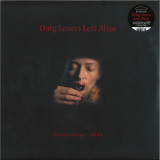
- D2: Jozef Van Wissem & Squrl - Only Lovers Left Alive
- D3: Jozef Van Wissem & Squrl - This Is Your Wilderness
Soundtrack for the critically acclaimed Jim Jarmusch film Only Lovers Left Alive, starring Tom Hiddleston and Tilda Swinton. The score for Only Lovers Left Alive - a collaboration between SQÜRL (Jim Jarmusch, Carter Logan and Shane Stoneback) and Dutch lutenist Jozef Van Wissem - serves as a reflection of the distinct textures of Detroit and Tangier, bridging ancient and modern sounds, entangled and timeless. Avant-Baroque lute weaves through twenty-first century guitar grit, heavy back beats, Moroccan percussion, synth bass, field recordings, and numerous sonic effects to create a cinematic tapestry. Guest vocalist Madeline Follin (Cults) appears on SQÜRL's syrup soaked re-interpretation of the Wanda Jackson hit "Funnel of Love". Zola Jesus' commanding vocal soars through Van Wissem's "In Templum Dei". And Yasmine Hamdan's intimate and evocative "Hal", recorded on the set of the film and mixed by SQÜRL. The film and soundtrack album were released worldwide in 2014, and quickly earned the group the Cannes Soundtrack Award from a consortium of film and music critics. In the years that have followed it has remained a favorite of critics and fans alike, who have continued to hunt down the limited vinyl copies in existence.
Tolle News für Fans von Suicide: Das New Yorker-Label Sacred Bones fördert das verschollene Album "Mutator" von Alan Vega zu Tage. Vegas Name ist ein Synonym für ungebremste Kreativität. Von den späten 1950er-Jahren über seine Zeit als Musiker beim legendären Protopunk-Duo Suicide bis zu seinem Tod im Jahr 2016 war Vega ständig am Schaffen (u.a. auch als Maler und Bildhauer). Dieser Prozess führte zwangsläufig zu einer Fülle von Material, das nicht sofort das Licht der Welt erblickte, als es aufgenommen wurde und bis heute im Vega Vault schlummert. Das Mitte der neunziger Jahre in Vegas NYC-Studio aufgenommene Album "Mutator" ist die erste in einer Reihe von anstehenden Veröffentlichungen aus seinem Privatarchiv. "Mutator" wurde mit Vegas langjähriger Partnerin Liz Lamere aufgenommen, die seit Beginn der 1990er-Jahre Keyboards und Gesang zu vielen seiner Aufnahmen beigesteuert hat und heute zusammen mit ihrem gemeinsamen Sohn Dante Vega Lamere den musikalischen Nachlass von Vega verwaltet. 2019 wurde das Album von ihr und Vegas engem Freund und Vertrauten Jared Artaud von The Vacant Lots im Vault entdeckt. Beide erkannten schnell das visionäre Potenzial, das in diesen Bändern steckte. Sie mischten und produzierten das Material, das jetzt erstmals als "Mutator" in Albumlänge vorliegt.