Black Truffle is pleased to announce the first vinyl reissue of Trancedance, a wild slice of Swedish Afro-fusion from Christer Bothén, originally released in 1984. A major figure in Swedish jazz and improvised music since the 1970s, often heard on bass clarinet and tenor sax, Bothen studied doso n’koni (the large six-stringed ‘hunter’s harp’ of the Wasulu) in Mali in 1971-2 before turning to the guinbri (the three-stringed lute of the Gnawa/Gnauoua) in Marakesh later in the decade. In between, he performed extensively with Don Cherry during his Organic Music Society period and taught Cherry the doso n’koni. In the later 70s and 80s he worked with the most important figures in the distinctive Swedish jazz-rock-world fusion scene, joining Archimedes Badkar for their African-influenced Tre and participating in Bengt Berger’s legendary Bitter Funeral Beer Band. Many of the musicians who played on the Bitter Funeral Beer Band’s ECM LP (including Berger on drums, Anita Livstrand on voice and percussion and Tord Bengstsson on piano, violin and guitar) joined Bothén for one of the sessions that produced Trancedance, the first release under his own name, dedicated to his compositions. The other session introduced his seven-piece group Bolon Bata, heard on the second track of each side. The title track opens the album with the rubbery buzzing strings of the doso n’goni playing a hypnotic ten beat pattern, soon joined by bass and piano before the entire nine-piece group kicks in with a rollicking Afro-jazz workout, Berger’s drums driving an intricate, winding melodic line played by the horns with Mattias Helden’s cello throwing in pizzicato slides and smears. Bothén then takes centre stage on tenor sax, soloing with a wide, vibrating tone and moving seamlessly from soaring melodies to guttural stutters. After a return to the composed horn lines and a solo from Elsie Petrén on alto sax, the piece builds to an ecstatic conclusion of yelping voices and handclaps, gradually simmering down to return to the solo doso n’koni where it began.
The hypnotic sounds of the hunter’s harp carries over to ‘Mimouna’, where it is joined by Bothen’s overdubbed guinbri. The piece develops into a haunting whispered and sung invocation, gradually building momentum until the organic textures of strings, voices, and hand percussion are ruptured by Lennart Söderlund’s distorted guitar, which brings an unmistakable touch of 1984 to the otherwise timeless sound. Joined by chicken scratch guitar and increasingly dominated by the insistent clang of three of Bolon Bata’s members on karqab (a kind of cast-iron castanet), the grove develops frenetically.
The B side opens with the multi-part epic ‘9+10 Moving Pictures for the Ear’, at over 16 minutes the record’s longest piece. Though Bothen is heard only on horns on this piece, the hypnotic repeating bass line carries on the first side’s link to African musical traditions. Using an expanded 16-piece ensemble, the music balances untethered improvisation with carefully arranged passages of knotty ensemble playing that at points suggest Mingus, Moacir Santos or some of the ambitious post-free work being done in the same years by figures like David Murray or Henry Threadgill. The piece ends with a triumphant passage of looping unison melody reminiscent of the Scandinavian folk explorations of Arbete och Fritid (whose Kjell Westling is heard on bass clarinet and soprano sax here). The sound of Bjorn Lundqvist’s fretless bass introduces the odd left turn made by the record’s final track, a spaced-out expedition into bluesy horn lines and distant guitar atmospherics set to a semi-reggae beat, perfumed by the core Bolon Bata group and bearing the appropriate title of ‘The Horizon Stroller’. A must for fans of the Swedish scene around groups like Arbete och Fritid and Archimedes Badkar, as well as any listener who has been seduced by Louis Moholo’s Spirits Rejoice!, The Brotherhood of Breath, or, more recently, the guinbri grooves of Natural Information Society, Trancedance is a lost classic ripe for rediscovery.
Cerca:t groove
This One Is For The Party is the final studio album by The Trammps, originally released in 1984. The Trammps, hailing from Philadelphia, were a prominent fixture in the disco scene of the 1970s. Consisting of Earl Young, Harold Wade, Jimmy Ellis, Robert Upchurch, and Stanley Wade, they were known for their infectious grooves and energetic live performances.
The Trammps earned their place in music history with hits like “Disco Inferno” and “Hold Back the Night”, but also “Shout” and “Move” became disco classics. 40 years after its original release, the tracks of This One Is For The Party continue to fill dance floors at parties and their influence can be heard in modern dance and pop music. The album also features a guest performance by the Dutch female group Mai Tai on “I Don’t Know (One For The Party)”.
"Recorded absolutely live in the USA, “Rock n’roll Sword Fight” captures the fun and exciting experience that is Gyasi (pronounced Jah-See) on stage. A flamboyant singer/guitarist/songwriter from Nashville, glam rocker Gyasi brings back the heavy sounds once pioneered by T-Rex, The Stooges and Led Zeppelin. This is raw power for new rock n’ roll people. Play it loud!
“Reviving the true spirit of the glam style.” — Tone Scott/GOLDMINE
“Groove and fizz with all the melodic energy of the 70's great.” – SHINDIG! “Sassy, stompy glam rock fun, dripping in sequins and colourful eyeshadow.” — Polly Glass/CLASSIC ROCK -
- Enrico Caruso & Gaetano Donizetti - Una Furtiva Lagrima
- Bunny Berigan & His Orchestra - Caravan
- Irving Aaronson & His Commanders - Let's Misbehave
- Eddy Howard & His Orchestra - Till We Meet Again
- Duke Ellington - Take The 'A' Train
- Fats Waller - I've Got A Feeling I'm Falling
- Sidney Bechet - Si Tu Vois Ma Mère
- Johnnie Ray & The Buddy Cole Quartet - Walkin' My Baby
- Stan Getz & Charlie Byrd - Desafinado
- Harry James & The Rhythm Section - Limehouse Blues
- Al Jolson - Toot, Toot, Tootsie! (Goo' Bye!)
- Stéphane Grappelli & Django Reinhardt - Out Of Nowhere
- Tommy Dorsey - Sleepy Lagoon
- Jackie Gleason - Serenade In Blue
- Erroll Garner - Lullaby Of Birdland
- The Modern Jazz Quartet - Bags' Groove
- Billie Holiday & The Teddy Wilson Orchestra - Easy To L
- Stephane Wrembel - Big Brother
- Fred Astaire & The Leo Reisman Orchestra - Cheek To Che
- Liberace - I'll Be Seeing You
- Glenn Miller & His Orchestra - Moonlight Serenade
- Hal Kemp & His Orchestra - With Plenty Of Money And You
- Leo Reisman & His Orchestra - What Is This Thing Called
- The Dave Brubeck Quartet - Take Five
In one sense, it’s easy for artists—songwriters, specifically—to express their feelings in their work. After all, that’s what the lyrics are for! But it’s much harder to convey emotional energy in how you play, slash at the guitar, and the structure of the music itself. That’s precisely why Girl and Girl’s Sub Pop debut, Call A Doctor, feels like such a vital, electrifying shock to the senses. Not since the early work of Car Seat Headrest or Conor Oberst’s widescreen emotional brutality as Bright Eyes has indie rock managed to come across as this intimate and grandiose, as the Australian quartet led by Kai James lay a lifetime’s worth of woes—mental health, the human race’s planned obsolescence if you’ve been living on this cursed rock you know what we’re getting at—across a canvas of indie rock that feels both timeless and in-the-moment.
An audacious and aggressively tuneful blast of a record, Call A Doctor is an unforgettable first bow from Girl and Girl, whose origins lie in James and guitarist Jayden Williams jamming in his mother’s garage in the afternoon after school. One afternoon, James’ Aunty Liss headed down to their practice space after walking her dog and asked if she could sit in on drums. “It sounded really great,” James recalls. “We begged her to stay, and she said, ‘I’ll stay until you find another drummer.’ We wore her down, and she eventually became a permanent member.”
After bassist Fraser Bell joined to round things out, Girl and Girl hit the road and began to make a name for themselves beyond the Australian bush, eventually signing to Sub Pop off the strength of word of mouth. Call A Doctor came together quickly soon after, largely recorded in marathon sessions in a two-story industrial complex over the course of two weeks. “That added to the intensity of the album,” James says about the frenzied creative process overseen by producer Burke Reid. “I can hear the stress in the record, which is good because that’s what it’s about—being tense, tied up, and in your own head.”
Call A Doctor’s eleven songs—spanning sweeping guitar epics and wry acoustic shuffles to spiky punk maneuvers and the type of raw, adoringly unvarnished indie-pop associated with legendary PacNW label K Records—are literally plucked from James’ personal history, as he reworked older recordings with newer lyrics reflecting his past struggles as well as new anxieties that emerged prior to the album’s recording. “I’ve struggled with mental health for a lot of my life,” he explains, “and I went through a particularly difficult patch when we were making the album; the band had started to get some attention, and I felt an enormous amount of pressure to live up to it.”
Far from the sound of collapsing under pressure, Call A Doctor finds James and Co. stepping up with their entire collective chest. This is a record that’s so out-and-out alive that you nearly feel like you’re in the same room with Girl and Girl as you listen to it; lead single “Hello” practically bursts through the speakers, amplified by Aunty Liss’ unbelievable stickhandling duties. “‘Hello’ is all about romanticizing your own misery. Letting those deep, dark, dirty thoughts take over. Understanding that even if you could pull yourself out, you wouldn’t because the constant stress and worry is far too familiar and comfortable.”
“Mother” pogos on a spiky groove that’s reminiscent of the geographically close New Zealanders who make up the legendary Flying Nun label, while “Oh Boy” draws from the Shins’ own jangly sound, injected with James’ wonderfully nervy vocals. Then there’s Call A Doctor’s sorta-centerpiece “Maple Jean and the Anthropocene,” a five-minute epic offering a new perspective on climate change and the notion of what it means, in a personal sense, to suffer: “I live in the bushland, and I was driving home one night and hit and killed a wallaby with my car,” James recalls while discussing the song’s lyrical inspiration. “My first thought was, ‘What is the universe trying to tell me?’ No remorse, no guilt, just total self-centeredness. Which was like, Woah, you fucking psychopath! This wallaby wasn’t put on this earth to send you a message. That’s what the song is about, our egocentric species - thinking you’re the main character and that everything that happens is somehow about you.”
“This record is about an individual who’s too far in their head, trying to get out,” James continues while discussing Call A Doctor’s overall outlook—specifically the snapshot it offers of its creator. But even though this record deals with uneasy topics we all know well from within ourselves, it’s important to emphasize how teeming with life Girl and Girl’s music is. There’s a brazen, bold sense of humor to this stuff, an undeniable brightness to the darkness that makes it impossible not to be drawn in as a listener. Feeling down never sounded so goddamn good.
Liebe zum Detail, Raum für Improvisationen, keinerlei Genregrenzen. Das ist die musikalische Philosophie hinter Orbit Kid Society. Kreativer Kopf des Ensembles ist die Berliner Sängerin und Komponistin Sophie Lindmüller. Statt in musikalische Beliebigkeit abzugleiten, präsentiert Lindmüller mit ihren hochkarätigen Bandkolleginnen und-Kollegen ein dramaturgisch geschlossenes, in jeder Hinsicht fesselndes Album. In ihrem Klanguniversum treffen freischwebende, im Moment entstehende Klänge auf auskomponierte Linien, blechernen Grooves und elektronische Samples.
Leading a dynamic trio with virtuoso bass player Leroy Vinnegar and drummer Donald Bailey, piano player Hampton Hawes released one of his best effort in 1970, focusing on an original blend of post-bop and rare groove. The record opens with a rendition of Bacharach "The Look Of Love" and offers a deep soulful voyage with the 11 minutes title track.
Jonas Landwehr & Felix Fleer, the minds behind R-Imprint, are back with their youngest brainchild ‘Serial Sound’. They are starting the new label off with an expertly crafted five track EP ranging from emotive 4 to the floor anthems, over ideosyncratically spaced out IDM experimentation, to cutting edge UK-infused club weapons. ‘Secrets’ is opening the A-Side with a raw vocal performance by LAINE, fused with an infectious groove, building up to a euphoric climax of layered poly-synths, sample flipping and abstract textures. ‘Blinded’ is carrying this vibe over into a more toolish format while maintaining an intricate narrative arch. ’Water Seven’ rounds off the A-Side with a more dreamy excursion into ambient territory. ‘Windows’ opens the B-Side with a catchy theme of pulsing modulated chords supported by subtle, micro- percussive textures. Aeon is closing off the record with an aggressive, synthetic rhythm, featuring syncopated vocal slices, contrasted with enthralling pad sounds. With this release the duo has opened up their sound into a more mature & eclectic direction, while staying true to their signature brand of contemplative harmonies and detailed textural layering.
Proper reissue of Ikebe Shakedown’s 2nd 45 Colemine is finally here! Newly remastered and now being pressed at Gotta Groove, the mid-tempo funky burner “No Answer” was an absolute standout track from their debut EP, Hard Steppin’. The flip features the same song, “No Answer”, done by labelmates The Jive Turkeys for a BATTLE RECORD SPECIAL!
- A1: Al Muqademah 1 (Introduction 1)
- A2: La`lan (Advertisement)
- A3: Mashad Al Fahes (Examination)
- A4: Tango
- A5: Break
- A6: Al Muqademah 2 (Introduction 2) - Inst
- A7: Al Muqademah (Introduction) - Inst
- A8: Tagheer Awal (First Change)
- A9: Oghniyat El Shahadeen
- B1: Tagheer Thani (Second Change)
- B2: Al Piano
- B3: Tagheer Thaleth (Third Change)
- B4: Al Jeel (The Generation)
- B5: Hake Ad Ma Baddak Fee
- B6: Oghniyat El Gharam
- B7: Mashhad Al Hob
- B8: End Of Chapter 1
- B9: Kabbaret Dancing
- B10: Kbareah Wa Mhajjaren
- B11: Slow
- B12: Mashhad Al Serk
- B13: Final - Al Adala
Wewantsounds is delighted to announce the reissue of Ziad Rahbani's cult album "Amrak Seedna & Abtal Wa Harameyah," one of his praised albums from the 80s, released on the sought-after Lebanese label Relax-in in 1987. This release is an event as the album, recorded at Rahbani's By-Pass studio, was only released in Lebanon at the time. Mixing Arabic music with Funk and Fusion Jazz and hints of Boogie, it's a bonified Rahbani classic, sought after by Arabic groove DJs and collectors around the world. The reissue features audio remastered by Colorsound Studio in Paris and a 2 page insert with a new introduction by Mario Choueiry from Institut du Monde Arabe in Paris (English/French).
London outfit Kassian continue their broadly- evolving yet highly detailed journey through and beyond sound towards something ever more expansive. Their second release for !K7 Records comes in the wake of creating a dedicated hardware-forward studio in a Northeast London container complex, where they have the freedom to interlink their machines. This renewed focus brought them to Supercontinent EP, named for the ancient geological era when Africa and South America were joined as Pangea.
A reformulation of rhythmic ideas inspired by South= African Amapiano and South American Baile Funk governs the two hemispheres of the record. The pair examine and deconstruct dancefloor material, eschewing 4/4 for interlocking shaker patterns, searing acid lines, cracking breakbeats, and vocal samples in Zulu and Brazil Portuguese.
The immediacy of the restless rhythm and bass-led funk of “Yena” (the word Yena translates to ‘he/him /man’)forms a sweet spot where double-time and half-time can coexist. “Yami” (‘mine’ in Zulu) is a slinkier proposition which sheds prominent percussion in favour of a weighty, fluid, acid-informed bassline undulating from below.
An ascending percussive riff marks the arrival of “Pulgueiro”, followed closely by break beats and the nostalgia of distinctly British acid electro; it is an intentionally future-forward retelling of a vintage sound, replete with a mind-melt breakdown of rave pads.
A dubbed-out groove dominates the bottom-heavy “Sistema” – a groovy, steady roller that chugs and propels and chugs with head-nod hypnotism through an intricately minimalistic approach.
First up in D’Julz’s ‘The School of Night’ EP on his Bass Culture label is 'Nu Bass', a fresh and upbeat house sound with kinetic percussion and well-swung drums. Steamy vocal coos and deft synth stabs build a compelling future vibe before 'Spooky Electrik' comes in with more punchy but deep house sound. Dancing hi-hats pepper the groove along with curious little synth motifs, bringing a cosmic feel while the all-important bassline powers things forward.
D'Julz's knack for cooking up killer grooves is evident again on 'Money, Honey, Monday?' which is jacked up and percussive but also hugely seductive, with the smeared vocals and warming pads keeping things classy and soulful. Last of all, 'Triperie' is more menacing and stripped back - a paranoid lead synth roams about the mix as the crisp drums rise and fall in a fashion that will get floors marching late into the night.
Julien Veniel, aka D'Julz, has been a mainstay of the European scene for decades. He has established his Bass Culture label as one of house music's finest, always with a focus on deep sounds and punchy drum work. As well as his effective and stylish club cuts, he dropped his ‘Silent Drums’ album of ambient back in 2020 and continues to DJ all over the world. He is an artist who knows how to get real feelings into his tracks and shows that again here.
Following a short hiatus, Superlux Records returns for their 9th exploration into the expanses of house, techno, and electro by welcoming the exciting, emerging Dutch producer and DJ Mathijs Smit to their roster.
As soon as Smit grabbed the attention of the Superlux crew with his hybrid production style and trademark vocoder work, they knew these were earworms destined for their catalog. Marking his first solo EP since 2021, Smit showcases his development In the studio on the 'Twisted Minds' EP with four modern, stylish house cuts loaded with versatility for use from peak time to warm up.
The release starts as it means to go on with 'Changed My Mind (But Not Myself).' A sleek, forward-thinking house jam that salutes to the past with a fast-paced, organ bass melody and intricate drum-machine programming, setting the tone nicely for what's to follow. The A-side wraps up with 'My Mind Is Yours'. Shades of golden-era Italian progressive to this one, a straight no-nonsense feel-good party starter; mark your cards for summer.
On the flip, we get deeper into the groove starting with 'Plugger'. A shuffling beat underscores a moodier bassline with acid flourishes to give this one a bit more of a basement feel, although the bright synths do leave enough versatility in this one to work in multiple settings; a testament to Smit's dexterity on the buttons! Closing out proceedings is the interminably funky 'Quiero, ' the last track submitted by Smit, which is suitably the one to close out a seriously impressive debut on the imprint.
The release continues Superlux's proud lineage of discerning dance music, with Smit being a welcome addition to a roster already sporting the quality of N-GYNN, Paul Blackford, LVCA & Thoma Bulwer. Expect more as the label continues its development in 2024 and beyond.
Continuing his rippin’ run of stellar EPs on the likes of Limousine Dream and Pleasure Club, Rudolf C rolls through with a new plate of precision engineered hardware for DATA DISK. The cryptic cabal laying down the 1’s and 0’s at DD have been tracking Rudi’s work via stealth satellite since his early production and A&R work at his own Salt Mines imprint. Smitten with his maximalist mutations, we’ve skulljacked four tracks of recursive, roiling Techno directly from Rudi’s brainstem and lovingly laid them wax. Mild acidity throughout has etched continuous looping grooves onto the medium, allowing the end user to retransmit this DATA through their choice of high-powered audio amplification system.
Finally, the stand-out cuts of Rasa’s 1978 LP feature on 45 for the first time - ‘When Will The Day Come’, coupled with ‘Within The Sound’. Back in the summer of ’78, when London McDaniels and his brother Chris frequented a Krishna temple to take advantage of the weekly open feasts, the heads of the temple soon learnt the duo were Berklee College Of Music students and asked them to record an album of contemporary Hare Krishna worship songs. The result was Everything You See Is Me by Rasa, a jazz funk laced classic that’s gained notoriety amongst record collectors across genres, steered by the sons of singer-songwriter Eugene Mcdaniels. Produced and composed by guitarist London McDaniels, with Chris McDaniels on vocals and drums, and lyrics written by Hare Krishna devotee Andrew Marks, the album is coveted by beat heads, rare groove, soul, and balearic heads alike. The songs feature an A-list collective of session players including bassist Anthony Jackson and trumpeter Randy Brecker and have been a sample-source for numerous hip-hop records including Common’s ‘Take It Ez’, Black’ Rob’s Can I Live’ and BDP’s ‘Beef’.
Warehouse Find!
Vienna-based producer Sam Irl popped up on our radar a couple of years ago following stellar releases on Jazz & Milk, but honestly we should have been paying far closer attention as this guy has been making the best crunchy, MPC-driven jazz-infused House music dating right back to 2006. EP's for S3A's Sampling As An Art and collaborative projects with Patrick Pulsinger and Dusty have won him fans including Gilles Peterson (leading to a release on Brownswood), Mr Scruff and Session Victim amongst many others. His live sets have also seen him perform at the hallowed grounds of Panorama Bar and Sonar Festival.
For his debut EP here on Freerange Sam has delivered four tracks which perfectly showcase his production skills and knowledge of what makes a dance floor tick, kicking off with title track Rain Technique. Quirky keys and a playful groove help build a warm and charming vibe, light and bouncy yet deep and driving enough to get your dance on to.
Trust follows with loping, lopsided percussion forming the basis of the groove, sparse Rhodes pads punctuating the beat and adding just the right musical element to the mix without cluttering the beats or compromising the sense of space.
Flipping over we have All That's Left which sees Sam utilising his trusted TR606 for some lovely snappy snares and sizzling hihats. Chiming arpeggios join the repeating chord riff creating another simple yet uplifting and playful mood which can't fail to get under your skin. Closing the EP we have a wonky, shuffling house track which once again shows Sam proving less is more, sampling his key elements into the MPC and jamming out the arrangement in a live and improvised way which brings a fresh, somewhat naive appeal to the production.
repress !
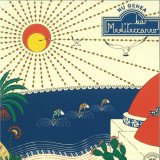
Four years after Nuova Napoli, Nu Genea are back with Bar Mediterraneo, a new album and journey, which projects the sounds of the Neapolitan duo formed by Massimo Di Lena and Lucio Aquilina even further.
Nu Genea's Bar Mediterraneo is an idea of a shared place where people meet and fuse together; a space that leaves its doors open to travellers and their lives, always exposed to the whims of fate. Some of this can be experienced through the multitude of sounds that come together in the tracks, layers of different acoustic instruments, voices and synthesizers merging in a unique musical blend.
Opening up to the voices of many different people, separated by languages but united by the sea and the music, Nu Genea's hometown, Napoli, becomes a true place of encounter.
You can hear this all along. In "Gelbi", a gorgeously deep and propulsive Ney flute plunges into murky waters of the melancholic Tunisian dialect sung by Marzouk Mejri. In "Marechia'", unbridled happiness and sun ooze from the delicate vocals of Célia Kameni and create an acrobatic bridge between French and Neapolitan language. In "Straniero", your soul is arrested from the moment the slow spell-binding mandolin ignites the hypnotic patterns recorded by the legendary Afrobeat drummer Tony Allen. In "Bar Mediterraneo", the title track, bittersweet guitar’s riffs, analog waves and choirs are overwhelming the song giving you what you would like to hear on a boat trip along the Amalfi Coast.
Nu Genea couldn't afford to overlook their firmly anchored roots into the Neapolitan culture and its dialect with "Tienaté", where the power of neapolitan language (interpreted by Fabiana Martone) supports those quarter-tone strings and the uncessant folk-disco groove that spreads to the entire song. In "Praja Magia", repetitive mandolin riffs lead the song, giving space to a choral yet tight vocal line that speaks of Varcaturo, a village close to Napoli. In "Rire", a volley of poetic, deceptively laidback, lyrical fury interpreted by Sicilian Marco Castello intimately combines with a highly musical, multi-textured instrumental backbone and the swoon of a chanson in its heart. In "La Crisi'', the lyrics of a Raffaele Viviani’s poem from 1930 have been adapted to a laidback jazz-funk groove in full NG style. In "Vesuvio", revaluing the evocative verses and powerful mantra of Vesuvio, Nu Genea re-adapted to the dancefloor a folk song by the working-class band E’ Zezi from Pomigliano D'Arco, combining the voices of a school choir with Jupiter-6 arpeggios and bold percussions.
Bar Mediterraneo is the place where people constantly return to transform curiosity into participation, tradition into sharing, unfamiliar into familiar. When travellers come through its “doors”, carrying their treasures of words and emotions, they aren’t strangers any more. They take part in a shared experience, enriching themselves and others by leading to unexpected musical journeys.
Soul Clap’s House of EFUNK label record label celebrates the 10th anniversary of their party of the same name that’s been ongoing each year at Movement Festival since 2014. The EFUNK party is commemorated with a 4-track house compilation that showcases some of the city’s finest talent. DJ Minx’s late night soulful house affair 'Sweet' bubbles with her seductive vocals set against percolating rhythms, romantic chords, and funky trumpets. Marcellus Pittman’s '888 In The Groove' is a chugging instrumental house jam that is surrounded in swirling synth arpeggios and cosmic pads centered by a hefty kick and meaty bass line. Mike (Agent X) Clark’s 'Where You Get That Funk From' pays reimagines the bright funk of Parliament-Funkadelic inside of a brooding and dank deep house beat with a loping bass line. On sillygirlcarmen’s 'Good Times' she delivers an angelic vocal performance with an uplifting message on her minimal but classic Detroit house sounding track.
The Selenites Band returns with a Live album ahead of their 3 Studio album, due for release in late 2024. 8 tracks of psychedelic jazz influenced by Ethio-groove, Swinging Addis and pentatonic grooves, recorded in analog on tape recorders during two concerts between 2021 and 2023.
These recordings are an opportunity to discover 5 previously unreleased tracks, as well as live versions from the previous album "Behind The Mask". The Selenites Band are first and foremost a live band, and we've seen them at the New Morning, in Paris, in Belgium, as well as opening for the prestigious group GONG, on their only date in France, and at many other festivals. The Selenites Band's lively style takes us into a world of traditional music, Shamarnic grooves, spicy jazz and bewitching rhythms. A melodic universe, a music of heady modal trance, a cinematic space of energetic jazz punk! . All compositions are by Antoine "Obi Riddim" Laloux, with the exception of two tracks by Seyoum Gèbrèyès and Tlahoun Gèssèssè.
All sleeves are hand-silk-screened and numbered / limited edition