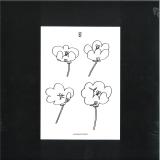
quête:t k lawrence
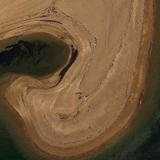
The collaborative project of Lawrence English and Werner Dafeldecker has consistently been concerned with processes of transformation. This is all the more true for »Fathom Tides,« the duo’s second album for Hallow Ground following up on »Tropic of Capricorn« from 2023. Using field recordings collected from diverse coastal environments made by English and later treated extensively by Dafeldecker, the two sound artists explore cyclical changes in nature across these seven pieces. Through its abstracted soundscapes, »Fathom Tides« poses concrete questions: What impact do we have on the world we inhabit?
»Tropic of Capricorn« was based on material English had recorded around Australia to highlight the country’s colonial past. On »Fathom Tides,« water and tides provided a conceptual framework for the duo’s remote working process—notions of states of action and tidal dynamics becoming guiding principles in their work with the source material. English and Dafeldecker were led by the question how the morphing of solid forms into more liquid states might be captured and used as compositional guides for their respective preparations treatments and the addition of electronics to the source material.
While eroding coastlines, river systems, and glacial transformation served as inspiration, the seven pieces resulted out of the two sound artists paying close attention to seemingly minute details through which immediate and distant histories peek through often in the most unexpected and rewarding ways. Hence, »Fathom Tides« does not provide a macro view on the catastrophic changes humans have facilitated on Earth. It is its own sound world guided by both the pace of its subjects and a recognition that time is fluid—a reminder that our clocks are not those of the world around us.
12
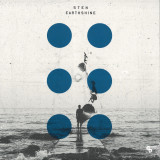
Dial's label boss Sten aka Lawrence presents his long awaited third album on the ever-classic Berlin based Sushitech Records. Earthshine is an extended journey of 12 tracks written and produced by Peter Kersten over the last 5 years. Atmospheric Ambient to deep Techno and everything in between put together by a true master of the craft.

- A1: Time, Earth
- A2: Mirage
- B2: Tasteless Soil
- B1: Re-Start
- B3: Tuning
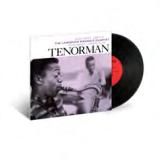
Hiesigen Jazzfans dürfte Larance Marable vor allem als Schlagzeuger des legendären Quartet West von
Charlie Haden aus den 80er und 90er Jahren in Erinnerung sein. Als er 1956 als Lawrence Marable sein
einziges Album als Bandleader aufnahm, galt er als einer der gefragtesten Schlagzeuger der West-CoastJazz-Szene in L.A. Den Titel “Tenorman” gab er dem Album, weil er darauf den damals noch relativ
unbekannten, jungen texanischen Tenorsaxofonisten James Clay vorstellte. Neben vier bekannten Standards ist das Quartett hier mit drei Kompositionen seines Pianisten Sonny Clark zu hören, dem kurze Zeit
später bei Blue Note der große Durchbruch gelingen sollte.
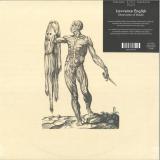
Do you remember the last time you were breathing consciously? Either way, you are likely doing it now. On his new album Observation of Breath« for the Swiss-based Hallow Ground label, Lawrence English worked exclusively with an organ for four compositions that are exercises in »maximal minimalism,« as their creator himself notes in a nod to Charlemagne Palestine, who coined this term. While it seems somewhat fitting that those four pieces based on a steady flow of air were conceived and recorded in a situation of accelerated standstill caused by a respiratory disease, the Room40 founder is not so much concerned with capturing the zeitgeist than rather incorporating the spirit of time itself. »It is a record about presence and patience,« he explains. Exploring the unique sonic affordances of a singular instrument, »Observation of Breath« is not only devoted to the durability of sound but also to its density. That it marks his debut on Hallow Ground after having shaped its sound by mastering most of the label’s releases in recent years is just as fitting then as its release following albums by Kali Malone and FUJI|||||||||||TA, whose innovative work with organ instruments have facilitated a rediscovery of their possibilities.English’s compositions however are neither directly indebted nor responding to these musicians. His exploration of the organ’s many facets started a decade ago when the composer was given access to an instrument built in 1889 that is presently housed at The Old Museum in Brisbane. After it had already played a crucial role on his seminal albums »Wilderness Of Mirrors« and »Cruel Optimism,« last year’s self-released »Lassitude« was the first record that English entirely composed and recorded with that instrument. »During the soft lockdowns, I spent many days playing to an empty concert hall, recording the pieces that became ›Lassitude‹ and then, this album,« says English in regards to an unfortunate situation that fortunately provided him with time and space—two major themes but also key qualities of the four new compositions. In this sense, he goes on, »Observation of Breath« resolves a number of the questions originally raised by »Lassitude.

- A1: Last Shot Fired
- A2: Hotel Hamburg
- A3: Using Only One Hand
- A4: Total Evasion Of Comfort
- A5: Susanna Reid
- B1: The Innocence Of Youth
- B2: You Must Be The Rain
- B3: Weary Eyed And Brainless
- B4: S.f’s Field Day
- B5: Desire
- B6: What Makes A Person?
DEADLETTER frontman Zac Lawrence’s latest solo venture hones in on the songwriter’s love of the contemporary folk scene of the 60s. Though not necessarily a conventional “Folk” sound, the acoustic guitar led songs intertwine the singer’s passion for lyricism and literacy with heart-string tugging melodies and arrangements. With the first single from this project expected in the summer of 2025, he brings a new band together made up of Misty Miller on vocal duties, Blossom Caldarone (English Teacher) on Cello, and Nathan Pigott (also of DEADLETTER) on clarinet. Antithetical to what we know from him as the frontman of the aforementioned, expect laid back, fingerpicked numbers that take you anywhere from Hamburg’s most gruesome hotel, to him imagining himself as a fifty something looking back on a life that he didn’t live in the way that was intended.
12
Das Debütalbum des britischen DJs, Produzenten und Multiinstrumentalisten Lawrence Hart.
Harts Stil verbindet seine technisch versierten Fähigkeiten mit emotionalen Vibes und Dancefloor-Treibstoff und schafft so einen Sound, der sowohl für den Club als auch für das Eintauchen in die eigenen vier Wände geeignet ist. Das 12-Track-Album ist emotional ein Garagenalbum, euphorisch und therapeutisch. Es ist eine Reise durch cineastische Melancholie, schwebende Synthies und Momente der Zerbrechlichkeit, gespickt mit Sprachsamples. Tech-Wizard Lawrence Hart, der allein schon durch seinen Großvater, den berühmten Computerpionier Geoff Tootill, eine wissenschaftliche DNA hat, wurde schon als Kind zum klassischen Musiker ausgebildet. Bereits mit 15 Jahren sprach er an einigen der renommiertesten Musikschulen New Yorks vor und studierte dann Jazztrompete am SUNY Purchase College bei berühmten VertreterInnen des Fachs. Er spielte an der Seite von Größen wie Bob Mover (einem ehemaligen Kollegen von Charlie Mingus und Chet Baker) auf den Bühnen der Jazzclubs New Yorks. Bald entdeckte Hart die elektronische Musik und das Clubbing für sich.Seine Fähigkeiten als Produzent entwickelte er während der Zusammenarbeit mit dem Double Six/Domino-Künstler George FitzGerald, mit dem ihn eine langjährige musikalische Beziehung verbindet. Bis heute hat Hart Solo-Singles, EPs und Remixe auf Hotflush, Attack Decay Sweet Release, LG105 und seinem eigenen Label SSEM veröffentlicht.

9
»Even The Horizon Knows Its Bounds« explores sound’s relationship with architecture, inspired by the Naala Badu building at the Art Gallery of NSW. Created from sound prompts responded to by artists like Jim O’Rourke and claire rousay, the work reflects on space, collaboration, and the fluid nature of sonic environments.
I like to think that sound haunts architecture.
It’s one of the truly magical interactions afforded by sound’s immateriality. It’s also something that has captivated us from the earliest times. It’s not difficult to imagine the exhilaration of our early ancestors calling to one another in the dark cathedral like caves which held wonder, and security, for them.
Today the ways in which sound occupies space, the so-called liquid architecture, holds just as much wonder, albeit one that is often dominated by functionality and form. Beyond those constraints however, how sound operates in the material world is something that exists at the fundament of our understanding of music, and moreover within the broad church we know as the canon of sound arts.
Even The Horizon Knows Its Bounds is a record born out of these relations. In a direct sense, the record is the product of an invitation by curator Jonathan Wilson to create a sound environment, reflecting on the Naala Badu building at the Art Gallery Of NSW. The building’s name, which translates from the Gadigal language to ‘seeing water’, was opened in 2022 and this piece was offered as an atmospheric tint to visitors walking through the building throughout the year following its opening.
It’s also a record born out of a recognition for the porousness sound affords, especially as a device for collaborative endeavour. This composition is one born out of generosity and acoustic solidarity. Even The Horizon Knows Its Bounds is comprised not just of my sounds, but also that of an incredible array of artists who have also operated in the orbit of the Art Gallery Of NSW. The players include Amby Downs, Chris Abrahams, Chuck Johnson, Claire Rousay, Dean Hurley, Jim O’Rourke, JW Paton, Madeleine Cocolas, Norman Westberg, Stephen Vitiello and Vanessa Tomlinson.
The piece was constructed around two long form sound prompts that each musician responded and contributed to. These materials there when digested into the final piece you hear. The work could not exist without the substantial offerings these artists made, and I am immensely grateful to each of them.
I’ll finish with a little note that appears on the LP itself.
Place is an evolving, subjective experience of space. Spaces hold the opportunity for place, which we create moment to moment, shaped by our ways of sense-making.
Whilst the architectural and material features of space might remain somewhat constant, the people, objects, atmospheres, and encounters that fill them are forever collapsing into memory.
Lawrence English
Performed by Amby Downs, Chris Abrahams, Chuck Johnson, Claire Rousay, Dean Hurley, Jim O’Rourke, JW Paton, Madeleine Cocolas, Norman Westberg, Stephen Vitiello, Vanessa Tomlinson


Somehow, 15 years has passed since I worked on A Colour For Autumn.
This recording was, in many ways, a critical one for me. In some respects, it rounded out a period of work that was focused on a particular marriage of thematics and harmony. Like For Varying Degrees Of Winter, it dwelled on old world impressions of the seasons, something that, in the southern hemisphere, isn’t intrinsically part of our way of approaching place. I think it was this incongruity with my own lived experience that kick started the interest in making these recordings.
The intention had originally been to take Vivaldi head-on , as the holder of the Four Seasons terrain (I jest of course), but shortly after completing this album, it became resoundingly clear that even in the old world, seasonality was a thing that was known ‘then’, and unknowable ‘now’.
Climate change, as a lived experience and not merely as a ‘possibility’, suddenly came into focus with reports flooding in about the climatic dynamics since the turn of the century and events like the Black Saturday fires here in Australia. It felt like, and continues to feel like, seasonality as some predictable measure of our world is relegated to the ‘before’ times. This record is not about these climatic shifts however, more a recognition of how we have used patterns and predictability to guide us over the centuries and perhaps a realisation that the way forward is not the path we have known historically.
Listening back to the record with fresh ears, a process made completely delightful by Stephan Mathieu who has carefully remastered it, I am struck by how minimal some of the structures were. There are moments that strike me as uncharacteristically patient and even generous, allowing one element to hold without interference. I’m grateful to still feel a deep connection to this edition and to the people and places that helped shape it.
I hope you find some sense of your place here. It’s offered with that intention and invitation.

13
The highly anticipated album from LAWRENCE is finally here and 15 years after the CD release for the first time available on vinyl!!!
Hamburg based DIAL and SMALLVILLE owner Peter Kersten aka LAWRENCE is one of the most valued and highly regarded artist's in the modern dance music community with a long history of releases on Nova Mute, Kompakt, Ladomat, Spectral, Ghostly, Mule and of course his own imprint DIAL. UNTIL THEN, GOODBYE kicks off with a special 'intro' version of a fan favourite FRIDAY'S CHILD followed by the introspective ambient piece SUNRISE. GREY LIGHT remarks the electronic style of DRUTTI COLUMN while JILL is purely sweet slow house music. The album shifts towards more acoustic driven material with songs such as FATHER UMBRILLO and TODERHAUSEN BLUES…don't fret purists as LAWRENCE hits back with his classic signature sounds with the likes of IN YOUR EYES, SLEEP and SUFFER. LAWRENCE leaves us with a whisper in the most beautiful of ways. The atmospheric ambient tune DON'T FOLLOW ME, the ebb and flow of the piano driven A NEW DAY and the title track leave the listener in a state of bliss. Dare we say, this is one of LAWRENCE's most daring and diverse albums to date…not necessarily a 'concept' album per say but definitely showcases his gift for provoking a remarkably diverse range of musical influences and styles.

8
ReleasedexclusivelydigitallyinDecember2023,thiscountry/americananuggetcouldn'tgowithoutavinylpressing. Theo Lawrence presents a new album, Pickin' & Singin'. Recorded in the living room of his Bordeaux home, alone with his guitar, he embodies the figure of the lone cowboy with disconcerting naturalness and irresistible charm. Blessed with a velvety voice and magnetic melodies that evoke lasting love, lovers on the move, and the moonlight on the roof of a roadside bar, this album is a jewel with Theo Lawrence'sunique signature.
7
Don’t let the list of stellar sideman gigs (with Elvin Jones, Miles Davis, Freddie Hubbard, McCoy Tyner, Woody Shaw et al.) make you overlook the solo work of saxophonist Azar Lawrence; for over 45 years he has recorded a string of spiritual ‘n’ soulful jazz albums that come closer to the ethos and aesthetic of John Coltrane than probably any of Lawrence’s contemporaries. Recorded for the legendary Prestige label in 1976, People Moving is his third solo album, and it’s one of his best; it features such luminaries as Lee Ritenour, Patrice Rushen, Harvey Mason, and Mtume on a soaring set of funky tunes produced by a young Skip Scarborough, who would go on to helm recordings by Bobbie Humphrey, Con Funk Shun, and Phyllis Hyman among others. First vinyl reissue!

10
Described as an "intensely British" record, Peanuts is a wry and observational album, with a newfound sense of compassion and reflection on Liz's inner feelings and their projection on the outside world. Peanuts is a playground game, also known as Mercy, where two kids twist each other's fingers until one cries out, 'Peanuts!', signaling that they have met their pain threshold. From 2013, Liz was performing as a backing singer for Bombay Bicycle Club up to their hiatus in 2016, and again when they reformed in 2019, touring the world. Liz has been a regular collaborator with the band ever since, "It was a life-raft for me. It was such a natural fit, and they became my friends for life" says Liz. Peanuts is Liz Lawrence's first album release with Chrysalis Records, spanning 11 tracks full of topics spanning from plant names to the gender wealth gap. "Peanuts is Cate Le Bon meets Primal Scream going off on one about landowners. It's learning the names of different trees and sweating over being polite in emails. It's a petition to stop Elon Musk from spacejunking up the atmosphere so we can't see the stars anymore and it's a big deep breath after going under." -Liz Lawrence
également disponible
Colored[29,37 €]
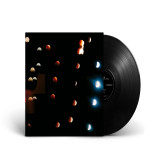
Atmosphere and gravity lean into each other. They are simultaneously expansive, and anchoring. They hold us, and lend a sense of perspective. They provide a stability and a knowingness which is essential in the absolute, and yet we can't help but find ourselves gazing upward, outward and reaching towards that which sits outside those things and ways we know. Selene is a record about that this lingering desire for that which sits beyond. It is work that seeks new perspectives snatched from familiar vistas, and it meditates on that sense of anchor and perspective. The work is also a speculative hymn to the visions of the celestial zones that spill ever outward. These visions, once merely what we could perceive with the naked eye are now so much more. Our minds eye is fed in equal parts by radio telecopy, filmic dreams and fiction renders of a place most of us will never know first-hand. This recording ties into a linage that reaches back, while stretching forward. It is just one story of so many, told across places, across cultures, across generations. It sits in the in-between of before and after, and in that moment invites us to situate ourselves and lean into it.

également disponible
Black[25,63 €]
Atmosphere and gravity lean into each other. They are simultaneously expansive, and anchoring. They hold us, and lend a sense of perspective. They provide a stability and a knowingness which is essential in the absolute, and yet we can't help but find ourselves gazing upward, outward and reaching towards that which sits outside those things and ways we know. Selene is a record about that this lingering desire for that which sits beyond. It is work that seeks new perspectives snatched from familiar vistas, and it meditates on that sense of anchor and perspective. The work is also a speculative hymn to the visions of the celestial zones that spill ever outward. These visions, once merely what we could perceive with the naked eye are now so much more. Our minds eye is fed in equal parts by radio telecopy, filmic dreams and fiction renders of a place most of us will never know first-hand. This recording ties into a linage that reaches back, while stretching forward. It is just one story of so many, told across places, across cultures, across generations. It sits in the in-between of before and after, and in that moment invites us to situate ourselves and lean into it.
