
12

With one foot planted in jazz and the other in the township groove of Mbaqanga, saxophonist Sello Mmutung was a powerful crossover figure in the history of popular music in South Africa. Using the stage name Bra Sello, meaning “brother” and used as a term of affection and respect in the jazz community, he came up in the era of shellac 78s as an exponent of the 1960s sax jive sound that brought the swinging rhythm of kwela into the domain of South African jazz. Despite the injection of American rhythm and blues into South African pop in the late-1960s, Bra Sello’s first releases on vinyl on the CBS label saw him backed by the group Abafana Bentuthuko and holding down an unapologetic township sound.
Joining the independent Soweto label under producer Cambridge Matiwane in the mid-1970s, Bra Sello recorded two records in the hit-making bump jive style popularised by serious jazz musician Dollar Brand on the one hand and prolific studio group the Movers, operating in funk and soul territory, on the other. Blending modern American and traditional African elements into joyful hip-swinging rhythms, Butterfly (1975) and The Battle of Disco (1977) reflect the vivacity of urban life in South Africa and document an era when dance music was performed by bands as extended jams laced with jaw-dropping solos. With music trends shifting dramatically in the late-1970s, the title of The Battle of Disco was an ironic call to arms in response to the territory that group musicians were beginning to cede to synthesisers and DJs.
For enthusiasts of African music from the 1970s, a full appreciation of the continent’s output is incomplete without South Africa’s pop-jazz sound providing a regional counterpoint to the funk experimentation of West Africa. Reissued for the very first time, Bra Sello returns in 2023 with limited replica editions from Afrodelic using master tape sources from the As-Shams/The Sun collection. Afrodelic’s unique edition of Butterfly features a previously unreleased track on Side B.

With one foot planted in jazz and the other in the township groove of Mbaqanga, saxophonist Sello Mmutung was a powerful crossover figure in the history of popular music in South Africa. Using the stage name Bra Sello, meaning “brother” and used as a term of affection and respect in the jazz community, he came up in the era of shellac 78s as an exponent of the 1960s sax jive sound that brought the swinging rhythm of kwela into the domain of South African jazz. Despite the injection of American rhythm and blues into South African pop in the late-1960s, Bra Sello’s first releases on vinyl on the CBS label saw him backed by the group Abafana Bentuthuko and holding down an unapologetic township sound.
Joining the independent Soweto label under producer Cambridge Matiwane in the mid-1970s, Bra Sello recorded two records in the hit-making bump jive style popularised by serious jazz musician Dollar Brand on the one hand and prolific studio group the Movers, operating in funk and soul territory, on the other. Blending modern American and traditional African elements into joyful hip-swinging rhythms, Butterfly (1975) and The Battle of Disco (1977) reflect the vivacity of urban life in South Africa and document an era when dance music was performed by bands as extended jams laced with jaw-dropping solos. With music trends shifting dramatically in the late-1970s, the title of The Battle of Disco was an ironic call to arms in response to the territory that group musicians were beginning to cede to synthesisers and DJs.
For enthusiasts of African music from the 1970s, a full appreciation of the continent’s output is incomplete without South Africa’s pop-jazz sound providing a regional counterpoint to the funk experimentation of West Africa. Reissued for the very first time, Bra Sello returns in 2023 with limited replica editions from Afrodelic using master tape sources from the As-Shams/The Sun collection. Afrodelic’s unique edition of Butterfly features a previously unreleased track on Side B.

For Fans Of: Laibach, Trepaneringsritualen, Ulver, Skinny Puppy, industrialized Dead Can Dance, Celtic Frost. FORGOTTEN SUNRISE is a band both legendary and current; inventors in one era, and innovators in the present day. Celebrating their 30th anniversary this year, the group has evolved and morphed over time into its current formation of Anders Melts, Kadri Sammel, and Jaan Pullerits. A huge part of the Estonian cultural landscape that comprises dark music, Forgotten Sunrise began life as a death metal band in the early 90s, part of the movement that spawned groups such as Amorphis, Beherit, Anathema, My Dying Bride, and Katatonia. As styles converged, and electronics entered the picture, the group incorporated newer techniques and a more industrial approach over time, consolidating their methods into a unique strain they call “OUTDUSTRIAL” – outsider industrial. elu is the first album in the “HALL-ELU-JAH” trilogy. Starting in the middle, the band has an expansive story arc set across 3 albums. In this first presentation of the trilogy, elu synchronizes the classic Death Metal style vocal with ethereal female voice, horror atmosphere, and pounding EBM rhythyms to create 8 memorable and visceral tracks. From high-energy dancefloor-fillers like “Orthotoxic Waste” and “Deep Emoceans” to heavy industrial grinders like “Near Bye” and “iSaid” to the emotional close of “Meating 8:08” into “Elukas”, the album provides a serene metamorphosis, guiding the listener through the many-worlds-as-one experience of Forgotten Sunrise. – Forgotten Sunrise are: Anders Melts – Vocals, bass, guitars, cymbals, djembe, thunder tube, knife and fork. Kadri Sammel – Vocals, bass, keyboards, shaman drum Jaan “Suva” Pullerits – Controlling the arrangements of chaos Ants “Ank” Lill – B(l)ack vocals on “Elukas” Recorded, mixed, and mastered at In Dreams 2020-2022 Artwork by Rene 13 Cover Picture by hellish.cav Executive Producer for Ohm Resistance – Alexandra Portaluppi

Radio Slave drops ‘Wild Life’ on Rekids this May
Following the recently dropped ‘Strobe Queen’, which picked up support from Honey Dijon, Sean Johnston, Laurent Garnier, BBC Radio 1’s Pete Tong and Danny Howard amongst many more, Radio Slave returns with another standout House cut ‘Wild Life’, turning in two exceptional Disco and Dub mixes.
“I’ve always adored the “Wildpitch” era of DJ Pierre, Roy Davis Jnr, DJ Duke and labels like Power Music It’s definitely influenced my work as Radio Slave and “Wild Life” started out as a nod to that early nighties sound. Conceived during the pandemic, I had the track mapped out and then with help of a good friend I decided to add live bass, loads of analogue keyboards and record the whole thing live and it became this super funky disco jam.” - Radio Slave
Radio Slave aka Matt Edwards is one of dance music’s undisputed heavyweights. Having made his name as a DJ in the 90s, he went on to become the king of edits, twisting pop, R&B and indie cuts into essential versions that consistently set clubs alight. Since the mid-2000s, Edwards’ originals have helped define modern dance music, tackling techno, house, breakbeat, minimal and disco whilst exploring dub, balearic sounds and ambient across the myriad of other aliases and projects.

Fresh takes on 90’s jungle and atmospheric drum & bass by Finland’s ODJ Pirkka. Starting track ‘OMG’ combines soulful R&B vibes with blunt basslines, radical samples programming and hard hitting beats. DJ Sofa remixes ‘OMG’ into a dope Bristol style roller with infectious bassline and some hi-energy buildups and cuts. Flipside ‘Bookworm’ is an atmospheric roller with memorable sunrise synths and a sneaky dark section in the middle that slams you with a crazy reese bassline and some red hot amens. Lastly Msymiakos from Norway uses the supplied atmospherics to remix ‘Bookworm’ into an intricate and brooding drum workout.

Most Excellent Unlimited is happy to announce the next release in its series of collaborations with master DJ and editor "Mr. K". Two exceptional deep classic album gems skillfully cut down to a maximum 7" 45rpm format, Luther’s “Funky Music (Is a Part of Me)” and Zulema’s “Giving Up.”
Long before “Never Too Much” and his other solo hits, Luther Vandross was an in-demand backup singer and vocal arranger, working with luminaries like Carly Simon, Bette Midler, and Donna Summer, along with his stand out performances in Change, Bionic Boogie, & so many more. Perhaps his most significant role, however, was backing David Bowie on the 1975 Young Americans album. It was during these sessions that Bowie heard Luther’s song “Funky Music (Is a Part of Me)” and re-tooled it to become the Bowie/Vandross joint composition “Fascination,” which went on to become a successful Bowie single.
For the latest edition of Most Excellent Unlimited’s series of edits, Mr. K has gone back to the original source, credited to the group (not the solo artist) Luther (which also features Christine Wiltshire). Mr. K's technique on this edit is cleverly subtle, in the process giving us the first opportunity to get almost the entire full-length song on compact 7-inch wax, keeping that irresistible building energy that places the track firmly on dancefloor-friendly territory.
“Giving Up” was the opening track on Zulema’s second LP, and given the drama of the intro, with its rolling piano, string ensemble, and piercing guitar, it’s not hard to hear why it was effective in that role. Mr. K’s edit benefits from a crystal clear remastering in which each element of the band is distinct in the soundfield, led by Zulema’s gutsy vocals upfront. Originally a 1964 Gladys Knight tearjerker that crept along at a tango’s pace, Zulema’s 1973 cover gives the song a new, powerfully soulful arrangement, championed by such disparate eras and tastemakers as Nicky Siano at the Gallery in the ’70s and breakbeat hunters the Beatnuts in the ’90s that has easily found favor with a wide variety of listeners and DJs, and this new issue should solidify that position. Never before available on 7-inch, “Giving Up” is a bonafide funk and proto-disco classic —
Repress.
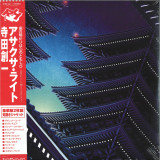
Back in 2015, Japanese DIY house pioneer Soichi Terada stepped back into the limelight courtesy of Rush Hour's 'Sounds From The Far East', a Hunee curated retrospective of material first released on his own Far East Recording label in the 1990s and early 2000s. Buoyed by the positive response and renewed interest in his work, Terada went back into studio to record his first new album of house music for over 25 years, Asakusa Light.
Developed over 18 months, Terada tried to recreate the mental and physical processes that led to the creation of his acclaimed earlier work. Those familiar with Terada’s celebrated, dancefloor-focused sound of the 1990s – a vibrant, atmospheric, and emotive take on deep house powered by the twin attractions of groove and melody – will find much to enjoy on Asakusa Light.
“I tried to recall my feelings 30 years ago, but when I tried it, I found it super difficult,” he explains. “I didn’t even know what I thought about myself five years ago, and the mental metabolic cycle seems to be faster than I thought. I tried different methods, including digging up my old MIDI data and composing by remembering old experiences. With the help of Rush Hour, I found some of the light from my heart that I had 30 years ago. I nicknamed the light I found in my heart, ‘Asakusa Light’.”
Produced using the very same synthesizers and drum machines that powered his 1990s work, the album is a joyous, colourful and life-affirming collection of timeless house music that not only recalls Terada’s own impeccable back catalogue, but also that of similarly celebrated contemporaries such as the Burrell Brothers or Ben Cenac (Dream 2 Science, Sha-Lor).
Terada, who has spent much of the last two decades writing video game music, has always had a gift for combining warm, undulating synthesizer basslines and perfectly programmed machine drums with stirring chords, smile-inducing melodies and mellow musical flourishes. It’s this immersive, sun-kissed and tuneful trademark style that takes centre stage on Asakusa Light, an album for the ages.
The set begins with the alien-sounding chords, soft-touch percussion and dawn-friendly warmth of ‘Silent Chord’ and ends on a high via the bouncing string stabs, starlight chords and thickset grooves of ‘Blinker’; in between, you’ll find a deluge of effortlessly feelgood music that’s the aural equivalent of a dopamine rush at sunrise.
There are subtle variations aplenty throughout the album – see the 8-bit lead lines and pulsing electronic textures of ‘Takusambient’, the vintage Tony Humphries flex of ‘Diving Into Minds’ and the effortlessly funky ‘Marimbau’ – but it’s the uniquely atmospheric, vivid and tactile nature of Terada’s loved-up sound that resonates. After well over 30 years in house music, the light in his heart is shining brighter than ever.

Debut full length vinyl from the UK/Italian duo of Ecka Mordecai and Valerio Tricoli, working together as Mordecoli. Individually these two travellers have carved out a path of ghostly musique concrete (Tricoli) and textural cello wandering (Mordecai). Alter is proud to present the album Château Mordécoly a result of two musicians (and friends) coming together to explore the middle ground of their individual investigations.
The results of a red wine induced residency at London’s Cafe Oto, Château Mordécoly is a panoramic audio field exploring both the physicality of sound, informed by the voice, cello and pictish harp of Mordecai, and the artificial manipulations of Tricoli’s revox tape machine. The delicate tension between the physical ‘real’ and the distortive ‘new’ leverages this release far beyond a tipsy residency and shifts it into a top tier electroacoustic take on the zeitgeist. Solo cello and voice appear rooted in the timbre of time. The magnetic tape is both a friend and covert manipulator.
The physical elements open themselves to disfigurement as a means of propagating the fantastical audio that unfolds from the initial enquiry. There’s no witchery or wizardry on part of either player but rather a symbiotic passing of the baton as the line between the real and the non-real flow in and out of themselves. The results are at once sedate, shocking and subversive.
Château Mordécoly is a disembodied sonic landscape; a phantasmagorical world of fantasy unfolds as the delicate beauty of Mordecai’s playing and singing is transformed into a playful and unusual landscape. Epoch’s are evoked as the visual stimuli resulting from these alchemical transformations conjure everything from a haunted house to the Middle Ages.

microCastle’s third offering of 2023 welcomes Ditian back to the label for his first artist EP. Splitting time between Buenos Aires, Berlin and Barcelona, the Argentinean artist has carved out a unique place in the electronic underground over the last half decade. With an immediately recognizable sonic signature, Ditian channels languages of varied musical landscapes, churning them into his own complex rollercoaster of intricate electronica. A sound that is equally at home on rebellious dance floors around the world or in the sweet spot of a late-night leftfield listening session. A short but meticulous discography reflects Ditian's choosy nature; with Exit Strategy, Innervisions and TAU serving as the primary landing spots for his musical output. Having remixed Ivory’s ‘Arpstairs’ for his microCastle debut last summer, a project which was followed by a contribution to Dixon and Ame’s Secret Weapons 15 collection to begin the year, Ditian now returns to the label with a four-track showcase entitled ‘Serpenta’.
The crushing title track crashes in and sets any preconceived ideas of Ditian’s music alight, forecasting jet force propulsions and wild signal bending synths. As somewhat of a departure from his previous experiments, Ditian’s clustered pungi mutations provide an enduring main theme, while a wonderfully warped break is sure to cast a paranoid spell over the dancefloor.
‘Venena’ follows in fine style and further hammers down Ditian’s elusive vision. Dizzying, rapid-fire sequences of rhythm, granular textures and heavily manipulated synths travel to the very edges, while maelstroms of drums and contorted basslines highlight a high-octane second act.
‘Inertia’ lands at the collection’s midway point and does so in remarkably twisted fashion, stepping decisively on the gas and steering into shadowy transgressions. Never one to shy away from darkness or pushing boundaries, Ditian’s metallic storyboarding rises and falls across act one, consciously withholding energy, as grooves pulse and effects orbit, creating tension that eventually gets resolved as clusters burst open and oscillate in kaleidoscopic fashion.
Ditian’s creative attitude reveals itself further on collection closer ‘Influenza’. Presenting some of his most club-adjacent rhythms yet, it’s a clever coax of billowing tones and scrappy melodica which get wrapped up in a concordant fog, eventually getting washed away; because after all, the oceanic drones are all the better when they’re magnified to full size.
Cover art: Mauricio Seidel

Born in Berlin, DJ, producer, and label owner Ben Rau has an unmistakable talent for getting to the wants and needs of the dancefloor. Having experienced the vibrant music scene of Berlin during the mid-'90s, Ben found himself at the heart of one of the most exciting periods in musical history. As the Berlin Wall fell, the city opened its arms to the sounds of house, techno, and trance, propelling Ben into a world of endless inspiration.
After also spending some time living in London, this EP combines the essence of his German roots with the energy of UK’s electronic music scene. He brings plenty of studio skill and musical creativity here, with three varied offerings. The EP opens with ‘Won't Stop’, a powerful track infused with acid influences, headed by a ridiculously catchy vocal. Next up is ‘Drop The Bass’, a psychedelic, mid-tempo chugger adorned with rolling drums. Finally, ‘I Luv It’ closes with playful synth patterns tumbling down over invitingly warm deep house drums.
This is a chunky bass-filled EP, ready to do plenty of damage to any dancefloor.

As it celebrates its 50th anniversary, Bill Withers' Still Bill remains true to its title – and stands as the greatest male-fronted soul album not made by a singer named Marvin, Al, Sam, James, or Ray. Though the saying "keeping it real" did not exist in popular parlance when Withers released his sophomore effort on Sussex Records, no words better capture the music's approach, mindset, and value. Every facet of Still Bill radiates honesty, truth, and emotion.
These characteristics – along with Withers' strong singing, hybrid arrangements, and deceptively simple songwriting – have allowed the album to endure to the point where it sounds as fresh today as in 1972.
After rising into the Top 5 of the Billboard Album charts and attaining gold status within a year of release, Still Bill has long been evaluated not by sales – but according to its merit, spirit, and agelessness. Included by The Guardian on its "1,000 Albums to Hear Before You Die" list (2007) as well as in Tom Moon's 1,000 Recordings to Hear Before You Die book (2008), its contemporary standing as one of history's most venerated soul efforts eclipses the positive reception it enjoyed in the early ‘70s.
Still Bill walks the same hallowed ground as What's Going On, Call Me, Night Beat, and Genius + Soul = Jazz. Like those landmarks, Still Bill plays with a mix of consistency, effortlessness, and complexity that rewards repeat listening and transcends categorization.
In combining four of the era's predominant styles – Philly soul, sweaty funk, Southern-reared blues, acoustic-based folk – and melding them with standout production borrowed from both minimalist affairs and sophisticated singer-songwriter albums, Still Bill occupies a distinct universe.
Its rhythmic fare is equally laidback and invigorating; relaxing and rollicking; eloquent and muscular; soft and tough. Withers' calm, self-assured voice hovers above it all, doubling as a warm blanket that adds comfort and grace to lyrics steeped in maturity, perspective, and compassion.
Withers' balanced outlook on human desires, needs, and situations stem from his own existence as a former blue-collar employee who believed his time as a musician would soon end. That grounding forever separates Withers from other contemporary soul greats – and stamps Still Bill with a conversational nature and egoless approachability.
"I mean look, I'm really a factory worker," said Withers in 1972. "That's a real job." There's that word again: real. The songs on Still Bill are tethered to modesty and actuality, wedded to a belief in simplicity, and connected to universal truths that link us all – independent of our economic or social standing. No track better exemplifies those principles than "Lean on Me," a feel-good paean to brotherhood and community that hit No. 1 on the pop and R&B charts en route to becoming a mainstream staple.
Withers approaches the plainspoken insight on "Lonely Town, Lonely Street" and heartbreaking vulnerability of "I Don't Want You on My Mind" with similar sincerity and straightforwardness. His proclivity for authenticity extends to the record's other big hit: the sexual, funk-laden "Use Me," which reached No. 2 and reflects the singer's everyman persona. It's an identity couched in keeping it real, the very inclination that ultimately led Withers to retire in the mid-'80s rather than bend to industry pressures or risk credibility.
That commitment to truthfulness and realism helps make Still Bill feel as unaffected as the air we breathe. Looking back on "Lean on Me" years later, Withers said it seemed like "something that was there before I got here" – the kind of song that could be 100 or 10 years old, or one we encounter anew 10 years into the future. The same can be said for every note on Still Bill.
Original release date: September 20, 1979
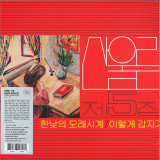
Along with the 3rd album, another excellent Sanullim album with the highest proportion of Kim Chang-hoon's songs. Based on a more stable and elegant performance than ever before, it is a work that attempted various experiments never before.
The guitar sound using rough fuzz tone and flanger effect, the strong rhythm and groove of the prominent bass line and dynamic drum, the keyboard expressing the rich string effect, and the stronger 'Korean' color are properly harmonized to each song. It conveys a kaleidoscopic, dramatic and refined fascination.
Mysterious and dreamy classic song Let’s Go To The Vineyard with a strong scent of progressive rock, and the Sanullim’s sounding hard rock A Portrait Of A Lady Shaman, the first song written by Kim Chang-wan, Why Are You Leaving Me? It contains songs that deliver new inspiration the more you listen to it.

repress !
Loredana Berte' is an artist that needs no introduction. Her musical career started in the mid seventies and year by year she proved to be one of the most iconic italian singer and performer. Groovin Recordings is now proudly repressing two songs from Loredana's 1980 album on a 7 inch, "E La Luna Busso'" and "In Alto Mare". Two great reggae and funky tunes, 40 years after their original release, still sounding full of their original groove. Officially licensed and remastered.

Under the name Matsutake, saxophonist Côme Rothé and producer Jérémy Vieille (2/3 of Zerolex Trio) collaborate with French ethnologists and the Echo System concert hall to create a book-record around the theme "Making materials sing".
The album 1538 dresses this project with an immersive and cinematic jazz, tinged with ambient and experimental music.
The organic and metallic sounds come into harmony with a rare sensitivity to illustrate this study on objects and their history.

Harold Melvin & The Blue Notes; one of the most successful worldwide cross-over hit-making soul groups of the early to mid-1970s.
This single presents two of the best cuts from the legendary album “The Blue Album”. On the A side we have Billboard R&B Chart Hit – “Prayin” – hugely popular within the UK dance music scene. On the flip we have the wonderful “Baby I’m Back” – written and produced by none other than disco hall of famers McFadden and Whitehead.
Remastered by Phil Kinrade and presented in a 7” discobag sleeve mirroring the original artwork. Part of the Demon Records Singles Club.

Ratkiller steps into daylight for a brief moment with two tracks of fizzy experimental shenanigans. Let it fry your brain. Step by step. On & on!
Ratkiller is one of many projects by Estonia's outsider don Mihkel Kleis.

The brilliantly entitled 1619 Bad Ass Band covered myriad different styles from mellow sound to furious funk on their superlative and self-titled debut long player back in 1976. Two of it's standout tunes now get pulled and pressed on this red hot 7" from P-Vine, complete with a flip-back sleeve.
That LP is a rare one amongst the famous TSG catalogue and first up from it is the mid-tempo dance gem 'Nothing Can Stop My Loving You' while on the flip there is the more heavy funk sound of 'Step Out' which anyone who has listened to any DJ Shadow will know he sampled.

Audio Reflex, aka Anderson, is back, with his final four tracker on Telomere Plastic!
This beautiful EP is another blend of mid tempo and deep electronics. Funky baselines and beats throughout will give you the chance to get moody and groovy deep in the middle of your sets!
Very limited black copies as always with a few colored copies available via the Wex bandcamp, be quick!

Expansion is the 7th EP on Belgium based Nightflight Records. On several levels it is a deft alignment of the label’s emotional techno aesthetic with Mihail Petrovski’s ability to deliver exquisitely poised music that drives deep into the mind and soul. The EP is a fine addition to his discography presented by the likes of Ferox, Common Dreams, Verdant Recordings & Distant Worlds over the last half decade.
Petrovski possesses an incredible appreciation of the history of deep techno and evidently distils that into his own craft, whilst adeptly melding a sound that is undoubtably his own. This 4 tracker, all original compositions, manifests an uncluttered platform to fully appreciate those talents. Elegantly programmed percussion is balanced with sumptuous basslines and pads but leave wide open spaces for heart warming melodies on each of these tracks.
Tsuris is arguably the most urgent on the record with a warm pressing kick. Omec switches around a superb elastic bassline. Dream Thief brings the tempo down but its innocent celestial melodies linger in the mind. Closing out with Circadian Rhythms, its broken percussion becomes the focus with a sophisticated nod to the finest of mid 90’s UK deep techno.
