Hailing from late-'60s Detroit, Black Merda (pronounced "Murder") were both aesthetically and musically way ahead of their time. When most black groups (including Parliament/ Funkadelic) were still sporting suits, singing about love and using a horn section, Black Merda had already become a tight guitar-heavy freak-funk four piece. By weaving guitar rock and psychedelia into soul and R&B they were the gods of the underground "black rock" movement which fell somewhere between Jimi Hendrix and Parliament and MC5. But it wasn't just about the music, the message was just as important.
quête:t move
Three years in the making only to be held up nearly another whole year due to COVID, this dark brooding monster of an EP by Brussels based Strapontin, aka multi-disciplinary artist Patrick Belmont, is finally seeing the light of day.
Clocking in at over 35-minutes the record is almost album length and spans a multitude of depths and moods with elements of techno, new wave, rock 'n' roll, house and tribal…...all glued together with a sleazy atmosphere reminiscent of the electronic body music pioneered by Strapontin’s Belgian forefathers Front 242 and their German peers DAF.
Add to this a heads-down-no-nonsense darkroom beast of a remix by techno maestro Sascha Funke and the package is complete.
Strapontin provides us with some insight:
“It started with a desire to move away a bit from my 'dancefloor' side and go into more undefined fields, I wanted to work with blurry sensations that I can't understand. I like mixed feelings. Dramatex 300 is made of that ambivalent mood. The voice is saying 'I'm feeling empty' and 'I'm feeling healthy' at the same time. I like that paradox. Eunuque is a song but is also a character I will develop in a short movie (which will act as the 'music video' of the song). The Eunuque is a character full of anger yet he doesn't want to fight nor has he a target to aim at. A restrained aggressivity is boiling inside him/it that has no opportunity to escape from the body and gain release. The song is the fever he feels from these inner battles. I think Le Bain d'Huile and Anti-sceptical have the same slow and angry feeling. I'm proud of these tracks because they are a bit mysterious to me and it feels like they controlled me more than I controlled them.”
Getting plays from Monika Seta & Alexis Le-Tan
On his new EP ‘Music from Organ’, producer and live musician Giulio Aldinucci offers up four tracks of layered and meticulously-crafted ambience.
In his own words: “The EP explores the interaction between the pipe organ and the sound environment, in terms of architectural space and soundscape. Every single sound of this work is created from pipe organ recordings using different techniques related to sound reflection, from granular processing to filters that “carve” the sound emulating the phonemes articulation inside the human vocal tract.”
Farron joins the EP bringing a dreamy remix. Unlike Giulio’s approach, Farron portrays a left-field dance-floor feel throughout the track with beautiful ambient pads, pulsating along a warm electronic space journey.
On Interior, Swiss composer Samuel Reinhard excavates intricate resonances at the periphery of our attention. Across four movements, Reinhard follows a process whereby he layers and loops fragments of piano improvisations. Yet Interior complicates its own systematicity by using samples that are not only recognizable as piano notes, but as live recordings of a piano being played. Reinhard composes from traces both analog and digital: we can hear static hiss and clicks, but also the soft trace of a finger pressing a key or the shuffle of a body shifting position.
Interior asks us to think about where we are, and how close we are willing to look, feel, and listen. Over the course of the four movements sounds return, familiar but transformed. What sounds like repetition is something more like accumulation, a thickening of space. Whether regarded at intimate range or from a distance, these compositions reveal more the longer we linger in the presence of each.
For Another Michael, it all boils down to trust. In mid-2017, the critically acclaimed indie three-piece packed their bags and collectively relocated from Albany, NY to a shared house in West Philadelphia. This move signaled not only the start of a new chapter for the trio, but also a deepening of the bonds that would come to define their captivating debut LP, `New Music and Big Pop.' "It's hard for a group of people to get closer than living together," says bassist and producer Nick Sebastiano. "The stronger our connection grew, the more it shaped the music we found ourselves making." It should come as little surprise, then, that `New Music and Big Pop' is Another Michael's most collaborative work yet. Recorded in a small A-frame house-turned-makeshift studio outside Ferndale, NY, the record finds the trio pushing their sound in a dreamier, more folk-influenced direction, building songs around vulnerable, intimate performances using an ethereal palette of breezy guitars, subtle keyboards, and layered harmonies. As on the band's early EPs, singer and songwriter Michael Doherty's mesmerizing voice is front and center here, calling to mind Robin Pecknold or Ben Bridwell in its reedy, crystalline timbre, but it feels more at home than ever before amidst the album's lush, Technicolor landscape, which the band partnered with producer and fellow housemate Scoops Dardaris to create. The result is a masterfully understated record that belies its status as a full-length debut, a thoughtful, poetic, collection all about growth and change, hope and faith, endings and beginnings, delivered by a band that's only just begun to scratch the surface of their story.
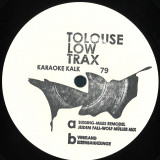
„Well recommended for the freaks“ the Manchester based independent music specialist Boomkat once finished a review about a release of Düsseldorf based DJ and producer Tolouse Low Trax aka Detlef Weinrich (also known as one fourth of the German avant-band Kreidler). What a freak distinguished we do not really know - we just assume he walks this world on a different path. Tolouse Low Trax surely does!
The latest evidence of this fact are four tracks of whom two are remixes by befriended artists, and two are coming right out of the middle of Tolouse Low Trax’s very own sense for odd and catchy grooves. His friend Miles, also known as one-half of the experimental industrial techno and dark ambient duo Demdike Stare, puts hand on the track “Sussing”, originally released on Tolouse Low Trax’s latest album “Jeidem Fall” in 2012. He covers it with an enigmatic, shadowy veil in terms of sounds, space, and obscure driving arpeggios in order to give the track a “brighter haze” feeling. A subliminal hypnotic transformation that swings with a unique dark and demanding drive. The second remix was done by Wolf Müller, a Düsseldorf based musician that released two highly acclaimed EPs on the German DIY label Themes for Great Cities. His profession as a percussionist calls the tune as he mutates the original track “Jeidem Fall” into a tribal celestial dance tune that jacks with an Afro-Baroque elegance.
Also the two EP contributions of Tolouse Low Trax himself move on very different terrains but seem to come out of the same experimental laboratory. With “Vindeland” he delivers a track full of dark synthlines and drunken shuffled patterns that morphs into a nervous soigné sensation. In contrast his arrangement “Eisenbahnzunge” starts with a celestial arpeggio until a strange alienated voice appears and everything melts layer by layer into an elliptical ambient experiment beyond the usual definition. Both tracks are deeply rooted in Tolouse Low Trax’s very own spontaneous minimal hardware approach of producing bold, hypnotic dance-not-dance music that shall not only illuminate the so called freaks!
Trumpeter Bill Hardman (1933-1990) was a long-time front-line Jazz Messenger.
This New York session from the summer of 1989 became Hardman’s last recording and saw him joined by tenor saxophonist Junior Cook and trombonist Robin Eubanks.
Plus the rhythm section of Mickey Tucker (piano), Paul Brown (bass) and Leroy Williams (drums). Bill Hardman was one of the leading trumpeters in the hard bop era of 50s playing with Art Blakey, Horace Silver, Charles Mingus among others. Hardman lived in Paris in the last years of his life. “(Hardman) has cultivated a strikingly personal style, which emerges on this album.”
(Birger J rgensen - Arhus Stiftstidende on What’s Up)
“In 1989 he made an excellent sextet album, What’s Up (SteepleChase), reuniting with Cook and adding Robin Eubanks’ trombone. At about the same time he moved to Paris, where he died Dec. 5th, 1990 of a cerebral stroke at 57.” (from the article Lest We Forget by George Kanzler - New York City Jazz Record, Dec. 2020)
- A1: Man Of The World
- A2: Long Grey Mare
- A3: Fast Talking Woman Blues A4: Jumping At Shadows (Live) A5: Black Magic Woman (Live) A6: Showbiz Blues
- B1: Uranus
- B2: Oh Well
- B3: If You Let Me Love You (Live) B4: Lazy Poker Blues
- B5: The Green Manalishi (With The Two Prong Crown)
- C1: A Fool No More
- C2: Tribal Dance
- C3: Apostle
- C4: Cryin’ Won’t Bring You Back C5: Watcha Gonna Do
- D1: Lost My Love
- D2: Shining Star
- D3: Big Boy Now
- D4: Same Old Blues
Peter Green’s genius has its main roots in musical influences from a chidlhood spent in London’s working class East End.
This intense collection features several of his best successes with the 1968-70 Fleetwood Mac — before their move torwards pop stardom – and some interesting
tunes from his tormented solo career throughout the 70s and the 80s.
London-Amsterdam connect for this lush one!
UK legend IG Culture brings some London bruk boogie to the mix of Believe as LCSM, the afro-futuristic jazz venture known as Likwid Continual Space Motion. A joint release between Dopeness Galore and INI Movement originator Shamis.
“One for the real heads, made for dance floors in dim basements”
We last heard from Radeckt on the Spektrum 2 compilation, now he’s back with his debut solo EP. The Danish producer specialises in emotionally-driven club music, designed to spark inspiration and moments of contemplation. The dance floor is a safe space for free expression, human interaction and catharsis… Radeckt’s music is the perfect accompaniment to these channels of connection, while encouraging you to dance. On the Corroded Mind EP we get four original cuts, all of which encapsulate Radeckt’s penchant for music that moves the soul… It all begins with the title track. ‘Corroded Mind’ has a subdued intro, gently guiding us into a mesmerising sonic landscape. Soft pads massage the mind while siren-esque effects and metallic beats encourage the body to move to their hypnotic rhythm. Radeckt imbues the second half with drama and energy, while still keeping the mood sombre. ‘Narrative Lie’ utilises layers of emotive synth and serene sounds, along with a meandering melody that lures you into its rhythmic flow. The glum low end counteracts the brighter elements of the track creating a neat juxtaposition. As the track progresses, the intensity of the main motif increases, sending temperatures rising. Next up is ‘Invisible Guard’ with its oscillating bass and simple, yet highly effective riff. Radeckt confidently applies the pressure, carefully increasing the tension until we reach a scintillating breakdown which takes us into the glorious second half.
‘Silver Lining’ closes the EP, bringing a little bounce to the release. Radeckt gives us stuttered beats with great use of percussion to provide the energetic allure of this cut. As it builds, he incorporates an earworm melody along with neon laser synth lines and the whole thing feels like an eighties TV show theme with 21st Century sheen.
The band that became Nightshift formed in 2019 in the ecosystem of Glasgow's current indie scene. The city's fertile & creative group of musicians have been committed to pushing the boundaries of and blurring the lines between DIY, punk, experimentalism and indie pop for decades now; a home to bands like Shopping, Vital Idles, Current Affairs, Still House Plants, and Happy Meals as well as forebears like Orange Juice, Teenage Fanclub and Yummy Fur. Nightshift slot right in with all mentioned, featuring members from current indie stalwarts Spinning Coin, 2 Ply and Robert Sotelo. Initially formed by guitarist David Campbell and bassist Andrew Doig as a "No Wave/No New York/ early Sonic Youth/This Heat-esque" group, the addition of Eothen Stern (keyboards/vocals) and Chris White (drums) instantaneously transformed their approach (guitarist/vocalist/clarinetist Georgia Harris joined as the band was writing "Zöe"). The band self-released a full-length tape on CUSP Recordings in early 2020, laying the foundation of their sound; hypnotic, melodic, understated indie post-punk with hooks that stick around long after you've heard them. "Zöe" is the band's newest effort, and first for Trouble In Mind. Unlike the band's previous album, the songs on "Zöe" weren't conceived live in the band's practice space, but rather pieced together and recorded remotely during quarantine lockdown, with each member composing or improvising their parts in homes/home studios, layering ideas over loops someone made and passing it on. The isolation actually allowed for an openness and creativity to flow and many of the songs took on radically different forms from when they were originally envisioned. Vocalist & primary lyricist Eothen Stern says "The process of writing these songs separately during lockdown was a kind of exquisite corpse - I liked this gesticulation of reaching out to one another and responding. Building up the next layer and passing it on." Stern says "poetic restraints" to writing & Eno's Oblique Strategies concepts were on their mind when composing the words to the songs on "Zöe" and lists the influence of author Rosi Bradiotti's book "The Posthuman". "Zöe" means "live drive", derived from the word conatus. Bradiotti defines conatus as "an effort or striving, endeavour, impulse, inclination, tendency, undertaking, serving is an innate inclination of a thing to continue to exist and enhance itself." and Stern views it as "...a kind of feminist re-claiming of communal public, anti- privatisation, looking to strive for social and environmental justice. Zöe kind of became a character of striving for me when writing.". "Zöe" kicks off with "Piece Together", a hypnotic song anchored by the band's chanted vocals and serpentine guitar licks. "Spraypaint the Bridge" showcases Harris' clarinet in an unexpected & delightful melodic shift during the song's anti-chorus. Elsewhere tunes like the swooning "Infinity Winner" and "Outta Space"s minimalist, slinky rhythm swirl in a late-night vibe, while "Make Kin" ruminates on "Looking to kinship as a way of engaging with entangled environmental and reproductive issues... how a band is a bond" and lurches forward with kinetic guitar strangling and staccato rhythmic percussion from White and Doig. "Power Cut" is the album's centerpiece, kicking off side two and lures the listener into its world over it's 7-minute runtime. Lulling them into involuntary movement with its waves of melodic harmonies, synth drones and metronomic pulse, until they all come crashing down in the song's dissonant midsection. The band acknowledges the whiffs of nostalgia prevalent in "Zöe"s songs (the title track in particular), and the nature of writing and recording the album is soaked in the self-work, reflection and reevaluations involved not only personally but creatively in each member's lives. Consequently, the album becomes a collection of sketches of hope, growth, awareness of the power of the world and the power of self, kith, kinship, friendship, resistance, and possibility.
Watching Abul Mogard’s Live performance in Atonal Festival 2017 and his releases on Not Waving’s Ecstatic record label were somewhat of a milestone in Malka Tuti’s sonic aesthetics. His ability to touch us with those pulsating sonic textures com-ing out of his modular machine inspired us in MTHQ for years to come. We were more then happy that Mogard chose to contact Tapan about their album and eventually deciding to remix not one but two track from the Belgrade duo… It was like a circle coming to a close.
On the A-side Mogard take the original 17 minute sax infused piece that is EUROPA and drenches it with drones and low freq pulses and atmosphere, creating a some sort of a post apoca-lyptic intense atmospheric soundtrack. The effect of drowning the horns from the original track in a sea of drones and pads, contributes to the over all impression of listening to a distant memory of music… fitting for days like these....
On the B-side Mogard takes it to the next level, capturing a line from Tapan's original collaboration with Jerusalem In My Heart's Radwan Ghazi Moumneh, and passing it through his modular system, amalgamating an epic piece of tension build ups and repetitive movements...
The original artwork was made by artist Marja de Sanctis and adapted, as always, to the sleeve by Morey Talmor.
Just when you thought every loner folk genius had been outed/discovered, hyped, and pontificated about, a new/old challenger lurks in the murky depths of time...and Maine. Sure, you have your Skip Spences, Dave Bixbys, Stone Harbours, and Perry Leopolds already, but have you heard the lonesome sound of Bill Stone? Well, don't feel bad or "unkool", hardly anyone has--unless you lived in rural Maine in the early 70s and grabbed his barely-ever seen LP in the day. Titled simply Stone, Bill's mysterious album was pressed in the micro-est of quantities, covering wistful, airy psychedelia on par with the UK's Mark Fry's classic Dreaming of Alice, while still evoking the earthy, evening-hour melancholy of Leonard Cohen or Tom Rapp. Stone was also especially influenced by one Donny P. Leitch, one Robby Zimmerman, and much trad folk, while growing up in his hometown of Old Town, Maine. Stone started out playing in a few small folk ensembles while also moonlighting with occasional solo gigs, finally recording this lone platter in 1969 in a pottery studio (!?) on a 2-track Panasonic tape recorder in Boothbay, Maine (where he says, they competed with a cat in heat). The LP features Tom Blackwell/Bill Stone-guitars, Arthur Webster-bass, Bob Blackwell/Skip Smith-drums, Bill/Beth Waterhouse on vocals. It also seems cover artist Doug Bane went on to become an acclaimed cosmic painter--committing loads of animals, psychedelic scenes, and Native American portraits to canvas, who knew? But we digress--anyhow, seems Stone's solo career slowed down after marriage hit, and he transitioned to playing covers in bars for cash, but after acquiring a masters and doctorate in education, he moved into the teaching walk of life. Bill published books and articles on subjects as diverse as school counseling and chaos theory--but now retired, he's returned to music, even recording a new album of originals and traditional numbers, based on his experiences as a cab driver (another wrinkle in the Stone Saga we must hear more of someday - but for now check out). So with Bill back in action and the world slowly crawling out of a disillusioning haze, now seems like the perfect time for a first-time-ever reissue of this incredibly rare, happy-sad, gently delicate, Stone(d) classic of a downer song-cycle.
During an unprecedented yet poignant global situation, Bobhowla’s debut album EVERYTHING’S WRONG, BUT
IT’S ALRIGHT serves to soundtrack our daily challenges we all face since the start of the pandemic.
Recorded and produced by Rod Jones at Post Electric Studio, this 11-track strong collection of songs bring
together a wider scope of influences than usually found in any particular group’s output. Years of solo acoustic
performances around the north west have honed an acoustic base into more gritted tones, alongside folk,
electronica and dream-pop influences.
The single Million $ Man is as direct as a song can be, with crunchy guitars harking back to simpler times of loud
choruses and powerful anthems. Their debut album is the culmination of recording sessions with Rod Jones
(Idlewild) at Post Electric Studio. Working together to form 11 tracks, an accumulation of songwriting ideas
spanning years. Million § Man is the album’s example of taking a staple live favourite and letting the studio process
completely re-map the track’s direction. The once folky-skiffle ditty is now a hard-hitting, anthemic call to arms,
complete with a crafty hook and chorus to match.
Behind the music, hides deeper meaning. In what singer Howard Doupé believes to be first - a track dealing with
the emotional complexities of a life, delicately touched with health-laden ‘survivor’s guilt.’ Like so many songs
before, Million $ Man is an upbeat indie-pop tune that masks a sobering and very rarely explored subject matter.
It’s an honest and frank perception that attempts to deal with issues that will resonate with a particular section of
our community. In a daringly brave move, Doupé expresses a personal narrative with the track, firmly cementing
the album’s themes in real life matters.
There is a blink-and-you’ll-miss-it anecdote tucked into one of
the many fine documentaries about seminal 20th Century artist
Jean-Michel Basquiat regarding the habits of his studio practice.
As we watch inspiring footage of Basquiat darting from one
piece to the next with rapid-fire brush strokes, a friend or
gallerist in a voice over says that it was not unusual for
Basquiat to be working on several paintings in the same
moment as several radio stations and televisions played in the
background. Not much more time is spent on the anecdote but
it feels like a skeleton key into Basquiat’s endlessly alluring,
neoexpressionist work.
And while Bryan Devendorf’s solo curio ‘Royal Green’ doesn’t
possess the only-in-New York vibe of Basquiat’s work, there is
something shared in its many-channels-open style of creation.
Satellite signals, strange voices from lost television
documentaries and radio operas are all woven into its fabric -
like it’s using these endless tides of media and information to
unlock the subconscious. Even its covers - Bob Dylan,
Fleetwood Mac, The National (with a nice big wink), The
Beatles - are like stunning, albeit satanic takes on hymns, or
like American standards almost dragged into the underworld.
Like the best of Spacemen 3, Sparklehorse or massively
underrated San Fran band Skygreen Leopards - the music
makes you queasy in one movement and lulls you into
blissmode in the next. It’s the very edge of outsider pop
songwriting.
For all the amphitheaters and festival fields Devendorf has
played to over his career, ‘Royal Green’ almost feels like an unlearning and a newfound love of homemade/found/fractured
sounds - and how, if collaged just so, detritus can become
stunningly gorgeous and surreal. And not without hooks. Look
no further than ‘Frosty’, which could be Little Billy Corgan’s
decayed demo tape from just before the Smashing Pumpkins
appeared on the scene. And the unspooling, slightly unglued
dream-pop of ‘Breaking the River’ is as rapturous as it is
sinister. And that’s probably where Devendorf wants it.
- 1: Let's Do That Again Space Cadet
- 2: Tyler Moonlight
- 3: In The Mouth Of Sadness
- 4: Kodak Break
- 5: Thus Spoke My Father, The Coward
- 6: Drug Dealer, Drug Dealer
- 7: Sway Me, Sway Me Into The Arms Of The Lord
- 8: Dis Dumbass Ghost
- 9: Brian's #1
- 10: Für Arvo (In 2025)
- 11: Death Of A Hip Hop Dancer
- 12: Black Addicts
- 13: Hatred For Muzak Pt 2
- 14: (...)
African-born, Baltimore-based experimental hip-hop producer Infinity Knives joins PhantomLimb for the release of his unique debut album Dear, Sudan, a vibrant and polymathic labyrinth of moods and colours.
Infinity Knives - aka producer and musician Tariq Ravelomanana - moved from Tanzania (via Kenya, South Africa and Madagascar) to Baltimore with his family as a teenager, soaking up the raw,vociferous hip hop culture around him, devouring Western classical music, and embedding himself with the city’s verdant music scene. This unique combination of life experiences and contrasting strands of musical education empowered and enabled him to create his Infinity Knives guise, allowing us a window into his singular energy with Dear, Sudan.
Tariq writes “Music has always been my medium. Since I was a child living in Tanzania, music has been my babysitter. The one central idea I kept dwelling on was that all humans experience sorrow, but despite the fact that it's universal, we still experience it as if we were alone.”
Appropriately, Infinity Knives casts a wide and thrilling net. Dear, Sudan runs like a masterful showreel of deftly balanced disparate elements, a late night channel-hopping between multiple, vital, powerful musics. Tariq himself offers “experimental, drone, hip hop, leftfield minimalism, neo-classical and Baltimore” as his key styles. “I wanted Dear, Sudan to be a record of the things that I enjoy, the things that keep me coming back to this life and I wanted it to be in the language I understand the most. I hope that this album can be a companion to those in need.”
- A1: Muddy Water Blues (Acoustic Version) (Feat. Buddy Guy)
- A2: Louisiana Blues (Feat. Trevor Rabin)
- A3: I Can’t Be Satisfied (Feat. Brian Setzer)
- A4: Rollin’ Stone (Feat. Jeff Beck)
- B1: Good Morning Little School Girl - Part I (Feat. Jeff Beck)
- B2: I’m Your Hoochie Coochie Man (Feat. Steve Miller)
- B3: She’s Alright (Feat. Trevor Rabin)
- C1: Standing Around Crying (Feat. David Gilmour)
- C2: The Hunter (Feat. Slash)
- C3: She Moves Me (Feat. Gary Moore)
- C4: I’m Ready (Feat. Brian May)
- D1: I Just Want To Make Love To You (Feat. Jeff Beck)
- D2: Born Under A Bad Sign (Feat. Neal Schon)
- D3: Good Morning Little School Girl - Part Ii (Feat. Richie Sambora)
- D4: Muddy Water Blues (Electric Version) (Feat. Neal Schon)
Muddy Water Blues: A Tribute to Muddy Waters is the second solo album by Paul Rodgers, best known as the vocalist of Free and Bad Company. This album features collaborations with many artists, including Brian May, Buddy Guy, David Gilmour, Jeff Beck, Gary Moore, Richie Sambora, Slash, and Steve Miller. He took these classic blues tunes and arranged them a little more towards rock. The album was recorded at various studios due to the many guests on the album, but producer Billy Sherwood managed to keep the sound pretty similar throughout. Muddy Water Blues was nominated for a Grammy Award.
Now available as a limited edition of 2000 individually numbered copies on translucent yellow coloured vinyl.
Chicago-area native Josh Johnson’s vital presence in the vanguard of new jazz music is evident by his features on countless critically-acclaimed
projects like Jeff Parker’s Suite for Max Brown and Makaya McCraven’s Universal Beings.
When he moved to L.A. eight years ago, he thought his stay would be temporary. The saxophonist and keyboardist would spend enough time there to learn from his heroes Herbie Hancock and Wayne Shorter, but not a complete geographic pivot. But eight years later, Johnson is still in L.A., where he recorded his debut album Freedom Exercise with three ‘musically omnivorous’ friends (the very quality that inspired him to stay on the West Coast).
The songs on Freedom Exercise reflect this idea of genreless exploration ‘ a fluid combination of jazz, post-rock and electronic music. Ultimately, Johnson’s compositions are concise yet expansive, like an intimate gathering in a sprawling city.