
12

Back in 1999, label boss Ewan Jansen took receipt of demo tapes by Kai Kroker (AKA Rawell) who subsequently appeared on Red Ember’s very first compilation record ‘Deepsounds One’.
These forgotten demos (lost even to Rawell himself) plus further works from 1995-2002, span a 2LP release of deeply emotive minimal house, techno & leftfield; an earnest synthesis of minimalism and romance from Berlin in the 90s. Included also is an ambient/downbeat 6-track digital EP (including the original version of ‘Tailwind’).
Move D’s gloriously moody and life-affirming ‘90s galore mix’ of ‘Tailwind’ is a very special reunion between close friends; the pair’s last collaboration dates back to 2005 under the ‘Faked.Info’ moniker and both recorded together along with Jamie Hodge under the collective ‘Studio Pankow’.


The Magic Movement welcomes Anatta to the family with her Fields Of Play EP.
Following her debut Album on Random Collective, her new EP comes as a four-track package:
In the original mix, Anatta invites us to discover a sonic world between pitched down UK House and future-primitive downbeat.
Rough Drumbeats, quirky synths, and catchy vocal chops guide us through a sophisticated arrangement with unforeseen twists and turns.
Salon des Amateurs resident Tolouse Low Trax delivers the 'Knights & Wheels Remix' in his signature style: While a hypnotic vocal loop hooks you up from the very beginning, minimalistic and dreamy synths slowly submerge the listener into a jam of stripped-down Lo-Fi funk.
The 'Beat Mix' by Rio de Janeiro's sound wizard Carrot Green and long time family member of the label, speeds up the tempo, and puts together a groove of classic electro boogie vibes with a P-Funky bassline that sounds like a futuristic liaison between Afrika Bambaataa and George Clinton.
Increasing the UK house vibe with strong drums and a wobbly bassline, Noema's 'Acid Ghetto Style Remix' works the mysterious vocals of Anatta into a delicious hook and creates a highly animating and fun dancefloor monster.
And now, let's get weird!!!

Tectonic is very proud to welcome Lamont to the team!
Bristol’s bendy-beats whizz kid is mainly known for dropping jaws with his releases on Swamp 81 and it’s various offshoots. This time, he’s been chipping away at 4 fine-cut gem, especially for Tectonic - bringing some darkside vibrations in addition to his usual bounce.
‘Hold Dat’ runs at 135bpm, sitting in-between grime, dubstep and housey/techno/whatever that thing Lamont usually does! Charged with a disgusting, totally greasy bassline, this one drops hard and keeps going - quality moves for (now, mostly imaginary) dancefloors.
‘Push’ takes it down a notch, to 130 for a more heads-y work out, laden with crackling, fizzing sonics - and heavily punctuated by sub bass hits. The energy levels step back a touch, while building intensity.
‘Brain’ sees Lamont working more familiar territories - sending a pounding 4/4 kick drum out to hold together a series of collapsing percussive hits and warping melodies - as a ‘brain’ sample, simply haunts your brain.
The EP closes off with ‘Open Letter’, taking things into a dread-space; dub wise, deep and dangerous. The lurching bass hits take charge and push you through layers of echo’ed hits and micro-melodramas, to round off this great EP in fine style.

“Don´t go out there, you might get shot” was the warning from Donna Maya relatives when she visited Detroit two years ago. That makes her even more curious to explore the city. Disturbed by, as well as fascinated from the dystopian state of Detroit she recorded many places that made (industrial) history, including the Ford factory, the world’s tallest, now abandoned central station and the once magnificent Michigan Theater, that was brutally converted into a parking garage. Donna Maya transformed the sound recordings into artificial sound sculptures combined with electronic beats. Every track is dedicated to one of those places and makes it musically alive. With her theremin Donna Maya guides the listener deeply inside. The result of Donna Mayas 6 weeksstay in Detroit is her album “Lost Spaces -> Detroit". “Lost Spaces ? Detroit” is about how to handle crises, how individuals get along with it and the relationship of society to its culture. Donna Maya understands Detroit as a perfect example for what capitalism does when people give up cultural values. With “Lost Spaces ? Detroit” Donna Maya draws a musical picture of how she experienced Detroit that shows that not only a city got lost, but a living space for everyone: Pure urban experimental electronics with theremin.


When Joakim aka Cray76 moved back from NYC to Paris in 2019, he knew he wouldn't have access to a studio for a little while. And although he welcomed that forced pause in making music, he felt the need to take at least one piece of gear with him in his suitcase. It was the legendary Roland TB303, one of the simplest and quirkest synth ever made and maybe the one that had the most important influence on electronic music since the mid 80s. Having recorded a few beats on his Roland TR808 before he packed his studio in Brooklyn to be shipped back to France, Joakim decided to make a record only using those 2 machines, an « exercice de style » that is a tribute to 30 years+ of acid house and techno and a way to make tools that he could use in his DJ sets. It goes deep, it goes hypnotic, it goes rough, many flavors of acid are packed in this 808+303=1111 12inch.

This is the first ever vinyl release of the now defunct Parisian formation None, whom have left very few traces of their recordings apart from a furtive tape appearance; keeping true to their name by favoring the intensity of their live performances to conventional sound fixations. Although only one single recording remained following the band’s dissolution back in 2019, the oddly titled Khneï Khneï Thnacapata Thnacapata is a compelling demonstration in self-restraint as well as one of the very few relics left to cherish of the short lived group. Arranged as a forty minute long movement, the posthumous album swallows us through free improvisation, jazz and post-punk in a composed mayhem that echoes their equally intense live conduct where steadfast drums and far out cassette manipulation meet head-on with troubled saxophone blows, lonesome crippled guitar action and unintelligible vocals in which to lose one’s mind.

Faitiche presents a new album by Frank Bretschneider. abtasten_halten was made as part of the raster.labor installation first presented at CTM Festival in 2019. It is perhaps the most radical work in Bretschneider’s distinctive oeuvre: abtasten_halten is a self-generating composition for synthesizer modules whose sole sound source is the movement of two VU meter needles. The resulting percussive sounds coalesce into rhythmic combinations – all random, without repetition. The album resembles a meditation on infinite rhythmic variation. abtasten_halten is Frank Bretschneider’s first release on Faitiche.
One sound can give birth to thousands of tones through self-fertilization. Pierre Henry, 1982
Frank Bretschneider on abtasten_halten:
abtasten_halten (sample_hold) is a largely self-generating composition for a modular synthesizer system. Self-generating here means that as soon as a current flows, the various modules interact, but within limits set by the composer via the connections between the modules (patches): timing, tempo, timbres, dynamics. These conditions are kept variable to a certain extent or left to chance, so that the composition created is always similar but never the same. On the one hand, the use of random generators opens up possibilities that would not otherwise have been considered. On the other, it offers the fascination of the unfinished and the unique: totally unexpected musical events that you might hear only once.
abtasten_halten combines my preferences for percussive music in general and electronic music in particular. Largely avoiding repetitive structures, the piece is more like a free improvisation, quiet and diffuse, but also extremely dense, in ever-changing contrasts and transformations.
The tone generators are two modified VU meters whose needles, driven by trigger impulses, create a simple one-bar pattern by hitting against a metal spring that is connected to a piezo element (thanks to Gijs Gieskes / Gieskes.NL). The tempo is continuously varied over a period of about ten minutes by several mutually modulating LFOs, ranging from about 0.06 Hz up to the lower audio range of about 18Hz.
The percussive sounds thus obtained are then passed through low-pass filters with moderate resonance and random frequency modulation to additionally colour the sound. Further processing is then executed by an echo module whose tempo and repetitions are again determined by random parameters. Finally the audio signal is occasionally enriched with reverb to add more spaciousness to the sound.
The concept for the installation raster.labor was developed by Olaf Bender, Frank Bretschneider and David Letellier. Many thanks to raster - artistic platform.
On Frank Bretschneider:
Frank Bretschneider works as a musician, composer and video artist in Berlin, making mainly electronic work based on complex rhythmic structures and interlocking textures, whose many-layered sound is inspired by the experimental set-ups of modern physics, often supplemented by perfectly synchronized computer-generated visualizations. In 1986, he founded AG Geige, one of the most influential underground bands in East Germany. In 1996, he co-founded the label raster-noton and has since released many solo albums.

Having previously brought together world-renowned Theremin soloist Carolina Eyck and electronic producer Eversines for a specially commissioned collaborative mini album, yeyeh founder Pieter Jansen has now conjured up another unlikely but inspired joint album, this time featuring award-winning free-jazz vocalist Greetje Bijma and leftfield house, techno and ambient producer Oceanic.
The project has its roots in a chance meeting between Jansen and Bijma, a legendary figure on the Dutch jazz scene who in 1990 became the first woman to win the country’s top jazz accolade, the VPRO/Boy Edgar award. Apart from having previously worked with the likes of Anna Homler (aka Breadwoman), Jasper van ’t Hof, Han Bennink, Louis Andriessen and Willem Breuker and her own solo projects, she’s in a league of her own.
Jansen is a big fan of Bijma’s 1996 heavily electronic collaboration with Jasper van’t Hof and Pierre Favre, Freezing Screens, and was with the friend who first introduced him to it when he bumped into Bijma.
Excited to meet someone who had made one of his favourite records, Jansen took the opportunity to ask Bijma if she would be interested in working with young electronic music producers. To Jansen’s delight, Bijma quickly agreed.
Weeks later, Bijma stepped into the studio with Oceanic, a rising star of the Dutch electronic underground whose releases as Oceanic for Nous’klaer Audio and BAKK Plafond revolve around mechanical rhythms, opaque ambient textures, minimalist melodic movements and effervescent electronics. The pair quickly connected on an emotional and musical level, with Bijma taking her cues from Oceanic’s electronic sounds and rhythms, and Oceanic drawing inspiration from Bijma’s dexterous, mind- bending and otherworldly vocalizations.
After two hugely productive days, the cross-generational duo had completed a couple of mesmerizing songs – breathlessly haunting album opener “Swallow a Party” and chilly ambient closer “A Window Drifting” – and recorded several hours or improvisations that Oceanic later edited, layered-up and re-modelled.
The results are little less than spellbinding. The range and versatility of Bijma’s vocalizations is breathtaking, while Oceanic’s music – which cleverly incorporates the free-jazz singer’s vocal notes, tones and proclamations – swings between becalmed beauty and breathless intensity.
Some of the set’s most striking moments are those where Oceanic re-contextualizes Bijma’s varied vocal sounds with the dancefloor in mind. On the pulsating “Technicolour Memories”, up-tempo “Step Snakes” and hypnotic “Never Done”, Bijma’s scat outbursts not only ride Oceanic’s rhythms, but also form part of the densely layered percussion tracks beneath.
Like the release’s more downtempo and ethereal moments, these hybrid organic- synthetic compositions defy easy categorization, offering a unique brand of alien electronic/acoustic musical fusion that lingers long in the memory.

At the end of the 90s, a movement began in West London that birthed a fresh direction in dance music. Though this movement never got mainstream press coverage, never had a crossover chart single, and never really transcended its community roots, there was a unique alchemy at work - a fertile moment of creativity, where a group of friends began to experiment with new cadences, rhythms and distilled influences, crafting a new direction in the attics and bedrooms of their neighbouring postcodes. Their music was a head-on collision between the sounds they had been raised on; the reggae sound system culture of Notting Hill Carnival, the sophistication and sheen of Electro-Funk, Jazz Fusion, Soulful House and Disco, the Afro-Beat sounds of Tony Allen and Fela Kuti, and the raw minimalism of early Hip Hop. Though "Broken Beat" was never a tagline that the producers anticipated, and one that they often publicly resisted, those two words would gradually come to represent the scattered rhythms, rolling basslines and soaring changes that were inherent to this exciting new sound. It's not clear who first coined the term "Broken Beat", but try to imagine how it felt to hear it for the first time; the production was grounded in MPCs and SP1200s, the hand-me-down samplers of the Hip-Hop and Jungle golden eras, and the drums that tumbled out of these machines at the hands of these creators had a jagged, stuttering feel, almost as though the groove was close to collapse.

The different seeds that have been planted throughout the life of Croatian Amor come to bloom on 'All In The Same Breath,' affirming an equilibrium that's all its own. Spiralling through the half-light electronics are gentle bumps and breaks that are layered into moments of elevation. A coarse edge remains just an arm's length away, but there is an unmistakable element of celebration throughout the album's 10 tracks. As the syncopated terrains ring out, their perpetual rhythmic motions call a medley of human voices that speak in security. They sing to everyone just as they sing to themselves. In the years since the seminal Croatian Amor album 'Love Means Taking Action' Loke Rahbek has strode a twofold path. There are the delicate, meditative compositions that he has made with Frederik Valentin; setting acoustic instrumentation against affecting digital treatments, each of their collaborative albums are an exercise in the magnificence of subtle restraint. And with the sharpest of turns you'll find Rahbek's parallel universe of rave-shocked rhythms and kinetic helixes that eddy through genre and tempo with few constraints. Collaborations with Varg²™ have yielded the wildest of this, and remain ongoing, yet the traces were already apparent across much of the previous Croatian Amor album 'Isa' with its treated vocalizations and cascading rhythmic mechanics. 'All In The Same Breath,' arrives as a steady handed synthesis of these divergent instincts. Elaborating the distinct techniques and themes that form the wistful essence of the project, the album's quiet composure is a sign that these familiarities have been set adrift to settle into their own private ecosystem.Small vessels travel in a perfect array. Light following shadows, following light. Every movement a signal, every second is camouflage. 'All In The Same Breath' is perhaps more than anything an invitation to be open to wonder.

Along with its sister imprint Fluid Electronics - dedicated to all things more muscularly 4x4 oriented, from house to techno via ambient, Fluid Funk will offer a platform of choice for creators and lovers of soulful house, hip-hop, jazz, funk, disco et al. The goal of the label is to bring a community of like-minded people together, cleared from the complexities that sometimes hamper the good course of the label-artist relationship.
First to grace Fluid Funk's dance floor-ready grooves is Rotterdam-based emerging talent Beau Zwart. Fresh off a choice inaugural sortie on INI Movements that hit the streets a few weeks ago, Beau steps in with his debut 12", "Beyond Two Souls" - an infectiously smooth and solarpowered six-track platter featuring Dutch duo Fouk on remix duty.
Expect lavishly orchestrated cascades of ankle-twisting breaks, prismatic synthwork and summer-flavoured melodies to wrap your ears around as your feet and body give in to the power of that funky bass. Brewing elements of fuzzy pop, pixelated soul and tropicalised rhythms, Beau Zwarts sound takes us on a wildly enjoyable ride across luxuriantly flowered scapes and fluttering cosmic house horizons. Interlaced with sugary Rhodes stabs and 8-bit harmonics a la "Floating Points", Sykes' warm vox intonations shows us the way into a pulsating heart of wonky, bop-infused boogie.
Expanding to further out-there, club-optimised bravura, Fouk's take on the title-track is the kind of track that'll make an impact in the sweatbox as well as in a more cabaret-like setting. Pulling out the weirdo harmonics and left-of-centre jazz aerobatics, "Ixodus" lets its free spirited sense of playfulness take over completely. Flip sides and here's "Marble Book" unbolts the spacious pads and whirling alien riffs as a sturdy sub-bass and gut-churning kicks beat time onto further estranged
dimensions.
A slightly more muscular but thoroughly sensuous workout, "Bustin Out" fuses classical two-step-indebted breaks with lascivious "P-Funk" tropes into one compelling club heater, before the EP's sluggish closer "Illustrate My Way" sends us into orbit for good with its slowed down romanticism and otherworldly piano fantasy.

For every celebrated name in jazz, soul and related music, there are probably another 1000 musicians who had all the talent and potential but for whom widespread recognition remained elusive. Roscoe Weathers is one such figure, a jazzman who earned his chops the hard way, a sideman in smoky clubs from Memphis to Seattle, before finally settling in LA. He recorded a significant amount of music through the 1960s, but never found the slightest modicum of commercial acclaim nor the success that comes with it.
Overlooked by all but the tiniest of record labels, Weathers' released much of his material himself. Indeed, we can lay claim to be the first outside label to release any of his music since the early 1960s. That's sixty years of being overlooked by the record industry, so we are delighted to release this first full length album of his music in a first attempt at righting that historic wrong.
A multi-instrumentalist, Weathers mainly led on the flute in his recorded output. The music here spans the course of the 1960s, and moves from laid back beatnik jazz stylings through to percussion heavy Afro-Latin influenced workouts. As usual with Jazzman, we have not only dug deep to unearth Weathers' music but also his background and biographical details, shining much deserved light on this enigmatic and largely unheralded figure for the first time.
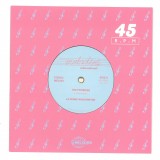
We're glad to be back with our latest reissue, a couple undercover soul gems from the Midwest originally self-released in 1984: LaVerne Washington's "The Promise" and "I Found What I've Been Searching For".
LaVerne has dedicated her life to the arts in every possible way. As an artist herself but also behind the scenes, helping and supporting her contemporaries fulfil their callings. Charlie Parker, Count Basie, Ella Fitzgerald, Mary Lou Williams - LaVerne grew up in Kansas City listening to the all time jazz greats, and soon discovered she was blessed with a keen sense for playing music by ear, playing the piano to what she would hear on the radio. In her teens whilst the 60s transitioned to the 70s' disco and funk era, LaVerne was there to witness it all, and she would go on to study music at the Charlie Parker Academy where she was inspired to become an entertainer.
At Langston University, LaVerne kept studying music where her career blossomed, founding and touring the US with the gospel group "Emery Shaw and the Voices of Praise", singing in several college bands and with her choir "The Voices Of Bethel". LaVerne would go on to perform notably with her bands "LaVerne Washington and Rococo" and the "LaVerne Washington Quartet", and record several songs in KC including "The Promise" and "I Found What I've Been Searching For" in 1984 before moving to Washington DC.
In DC, LaVerne was offered a position as a Program specialist with the National Endowment For The Arts where she started supporting other artists through her work. Over the next couple decades, LaVerne became an associate producer for the Rhythm and Blues Foundation and the Pioneer Awards Ceremonies held in New York, Philadelphia and Los Angeles, which saw the likes of Prince, Aretha Franklin and Jerry Butler attending among others. She has also managed and was mentored by DeeDee Sharp and consulted with artists including Bonnie Raitt (who acted as a mentor to Laverne as well), Kim Weston, Kathy Sledge (SisterSledge), Smokey Robinson and G.C Cameron (Spinners). During that time, LaVerne has kept singing, on her own and as a backing vocalist for DeeDee Sharp and Freda Payne and has never stopped her lifelong dedication to music and the Arts.
The Promise original 7" was LaVerne's last recording in Kansas City before her move to DC and the beginning of her involvement behind the scenes. Channelling her gospel roots - with impeccable arrangement, a contagious drum machine led rhythm section, soaring vocals and relatable lyrics, "The Promise" is guaranteed to bring back smiles to dancefloors and living rooms alike! "I Found What I've Been Searching For" on the flip is a beautiful soul ballad which really showcases the strength and emotion in LaVerne's voice.
Back again in it's original 7" format, we've had the audio transferred and restored from the original 24 track tape provided by LaVerne, and got the recordings re-mixed for the best possible sound! Floating Points behind the mixing desk for this new iteration of a lost classic, comes with a 14"x14" poster of the original picture

Eddie C's always on-point RED MOTORBIKE moves effortlessly into its 20's with another fine double A, dinked 7" !!
A beautiful lost folk-Disco frugger from Tel Aviv's Elado greets us on the A, while Eddie expertly re-jams a Turkish delight with some punchy 606 rhythms.
Pure class !
It is possible that a deeply fickle Bryn Jones, who was never happy with remixes of Muslimgauze music apart from his own, might be with this one.
Extreme, an earlier Muslimgauze label, had a long history of remixing the material Bryn sent to them and this was the main reason for the artist to move to the staalplaat label.
It’s an interesting coincidence that Extreme hired Anders Peterson to remaster Muslimgauze for them. In the process of listening to masters and studying the music, the idea of a remix or ‘rework’ seemed an intuitive next step, reflects Peterson, “The remixes are based on various material from about 6 DAT tapes. I did not choose any specific tracks, rather sections and parts of all the recordings on those tapes. I did not seek to do a remix, it just grew up of that remastering project. I think I could not find any artist in any genre, anywhere, that would be more interesting to rework / remix than Muslimgauze, so I definitely feel very honored having been able to record these remixes.”
Musically, this release falls in line with the more deep spiritual, meditative, abstract side of Muslimgauze, which is often overlooked. The music remains timeless, the production as crisp as ever. Those familiar with the Muslimgauze oeuvre know this music is more than just a series of infectious rhythmic works. Rather a historical document, a musical commentary on the tumultuous times that inspired it; a reflection on the Iran/Iraq war, Operation Desert Storm, the Soviet invasion of and retreat from Afghanistan and the first Intifada. Anders Peterson brings the music of Muslimgauze and successfully found new ways to reveal the artistries from one of the 20th century’s more intriguing artists. Through circumstance, Staalplaat is to ensure that the remix project sees the light of day, now available on the evidently timeless medium of a vinyl record.”

Presenting a collection of stone-cold classic breakbeats and b-boy jams from the sunkissed vaults of Miami's legendary TK Disco label!
NYC in the late 70's and early 80's saw a nascent street subculture fully evolve, a movement with it's own language, art, aesthetics, dances, fashion and way of living.
What would become what is now globally known as 'hip-hop' was in its infancy, with it's own legends and history being forged on an almost daily basis across the city's Black and Hispanic neighbourhoods. Music was central to hip-hop, the DJ was king and at the hands of people like Kool Herc, Grandmaster Flash, Grandmaster Flowers, Mean Gene, Jazzy Jay, Afrika Bambaataa, Charlie Chase and numerous other groundbreaking DJ's of the era, music took on a whole new meaning that would reverberate through popular culture for the rest of time.
The breaks - minute sections or breakdowns of a record where we get to the unadulterated groove and the band on the record cut loose - is what it was all about! Unlike the discotheque DJ's who favoured the long mixes and blends in their club scenarios, hip-hop DJ's were amassing huge collections of records that had these magical sections on them, often x 2 copies of each, so that they could elongate the best part of the record ad infinitum by cutting them up live - all killer no filler! These special on the fly mixes and edits were then unleashed in the local parks of their neighbourhoods, on gargantuan DIY sound systems for all of their friends and neighbours to party on down until the wee small hours. These breakbeat segments also gave the MC's space to address the gathered masses without their voices colliding with lavish string arrangements or vocals underneath. A clear, concise, stripped back slab of funk on which to put forth their ideas, feelings and rhymes for all to enjoy.
Collected here are some of those most infamous breakbeats, all from the TK vaults. These records were studied by these young DJ's, coveted, covered up, hunted down, whispered about in darkened corners by those who needed and obsessed over the freshest of beats. There's a good chance you will have heard these records in some form or another as they have been covered, sampled, recreated and spun in clubs across the galaxy for over 4 decades. These are the very building blocks upon which popular culture and club music have been built, and here they are all in one place for your listening enjoyment!
Released with love and respect by: Above Board and TK Disco, Miami FL. 2020.

When your roots have a broad geographical diversity, it’s very likely this will resonate in the music you make. This is certainly the case with Alma Negra and their new release on Heist. It seems they have embraced all their cultural influences more than ever in their new ‘Dakar Disco EP’. The whole record oozes class and musicality and feels like a carefree collage of the rich musical lives they live. The three originals on this EP vary in tempo and energy, giving you something for each moment of the day or night. They are accompanied by a remix from none other than the Japanese master of cosmic funk: Kuniyuki.
The EP kicks off with the title track ‘Dakar Disco’; an island style mid-tempo burner, rich with filtered guitars, bells and bleeps. Soothing chords and synth melodies are introduced for a lovely build up, but it’s the live horn section that takes centre stage. Here, the track really comes to full fruition, with a squeaky lead accompanying the horns for an electronic twist to what is above all a lovely summer jam.
‘Contra’ ups the pace and moves more into dance floor territory with loose claps, spacey pads and faraway chants. This track really gets to you with the live percussion and extremely catchy lead running throughout the track. This is afro house just the way we like it.
We’re very proud to have Kuniyuki remixing ‘Dakar disco’. This master of his craft has done an outstanding job with his cosmic take on ‘Dakar disco’. He lays down a great riff on bass guitar, while playing around with all the live elements and adds a serious bit of reverb for a stunning effect. This track is a perfect example of Kuniyuki’s musical skills and we can almost see him jamming this out, eyes closed and directed towards a distant point in space only he can see.
The EP’s closing track ‘Back in town’, is perhaps the clubbiest track of the set. A friendly acid line squeaks over tribal drums & chants and you immediately get pulled in by a great balafon hook. You can really hear how the guys feel at ease combining these worldly elements with modern electronics and ‘Back in town’ is a great example on how to blend these sonic worlds.
So there we are. A taste of the Alma Negra summer with a healthy dose of Japanese funk. Enjoy!
Yours sincerely,
Maarten & Lars
