Christy Essien was one of the leading female recording artists of her time in Nigeria. She was born in Akwa Ibom State in 1960 and enjoyed an accomplished career as a musician and an actress. Having conquered the music and TV worlds Christy moved on to feature in some of the early Hollywood films such as "Flesh and Blood" and "Scars of Womanhood", both of which addressed issues of child abuse and female circumcision. With a desire to make life better for Nigerian artists. She is also credited as having initiated the first meeting that brought about the formation of the Performing Musicians Association of Nigeria in 1981.
Dubbed Nigeria's "First Lady Of Song", Christy produced a respectable 9 studio albums across a number of labels. Her fifth album "Give Me A Chance" was released in 1980 by Afrodisia, and is being officially reissued again by the prolific Nigerian label.
"Give Me A Chance" showcases an impressive move on from her last album with a nice amount of variety. Her classic funky disco sound is most evident in what is her most notable song on the album "Rumours". This much sought after disco number is joined by a couple more disco grooves such as "Nobody Can Stop You" and "Onwu". "Ife" meaning love inflicts a little bit of reggae into the mix while the remaining tracks ("Saboteurs", "Don't Let Me Down", "Ikan Idomo" and title track "Give Me A Chance") take more of a traditional afrobeat - meets ballad approach.
Christy died after a brief illness in 2011. Close to the time of her death, she was involved in numerous successful businesses, organization and running the non-governmental organisation Essential Child Care Foundation involved in child welfare. Christy's achievements and awards are numerous. Too numerous to mention. Perhaps her greatest achievement however is her contribution to building a peaceful and tolerant Nigeria - which, alongside moral uprightness, remain constant themes of her songs.
Suche:t move
"Funky Reflections' is the second release of Leipzig based sound maker, DJ and vinyl collector Duktus on ThinkLoud. The Mini-LP reflects Duktus' daily vibe in his own way. It tries to move you to dance, to have respect for one another, to embrace life, and if you follow the records' instructions, the funk will be with you!
- 1: Dreams Never End
- 2: Truth
- 3: Senses
- 4: Chosen Time
- 5: Icb
- 6: The Him
- 7: Doubts Even Here
- 8: Denial
Out of the ashes of Joy Division, the remaining members decided to carry on recording under the name of New Order. The band's debut album Movement recorded between 24th April to the 4th May 1981 at Strawberry in Stockport and featuring all new material, produced by Martin Hannett was released in 11th November 1981 on Factory Records.
The Movement boxed set will include the vinyl LP with its original iconic sleeve designed by Peter Saville, original album CD in replica mini album sleeve, a bonus CD of previously unreleased tracks, DVD of live shows and TV appearances plus hard backed book all housed in a lift off lid box.
The vinyl LP of the original album is cut on 180g and features the 2015 remastered audio, presented in a replica of the original sleeve.
The second CD includes 18 completely unreleased tracks made from Demos, Sessions, Rehearsal Recordings and an Alternative 7' version of Temptation.
Accompanying the set is a 48page hard back book which features photos and an essay.
Available on vinyl for the first time in 40 years, Outernational Sounds is proud to present a masterpiece from the Los Angeles jazz underground - Horace Tapscott's burning, spiritualised 1978 set, The Call.
One of the unsung giants of jazz music, the composer, bandleader, arranger, pianist and community activist Horace Tapscott was the undisputed keystone in the grassroots Los Angeles jazz scene. Throughout the 1960s and 1970s, his radical community arts and music formations the UGMA (Underground Musicians Association, later changed to UGMAA - Union of God's Musicians and Artists Ascension), and his protean big band, the Pan Afrikan Peoples Arkestra, were at the epicentre of music, culture and politics in the Los Angeles area.
From their 1960s base at the Watt's Happening Coffee House on 103rd St, to their decade-plus- long 1970s residency at the Immanuel United Church of Christ on 85thE St and Holmes Ave, Tapscott's groups were the beating heart of underground music in LA. Hundreds of musicians passed through and played their part. Major figures in LA jazz such as Arthur Blythe, Azar Lawrence, Jimmy Woods, John Carter, Bobby Bradford, Sonny Criss, Ndugu Chancler and dozens of others all paid dues or just got down with Tapscott, not to mention the core Arkestra regulars who have since become celebrated names - Nate Morgan, Jesse Sharps, Adele Sebastian, Dadisi Komolafe, Gary Bias, to mention only a few.
Tapscott and the Arkestra were down on the ground - playing fundraisers in park and street, organising teach-ins and workshops for young and old, mixing it with radical theatre groups, firebrand poets, political radicals, Black separatists, community groups and churches. They lived communally, and built an ark for the Black arts in the heart of the city. But as a result of this grassroots community focus and Tapscott's antipathy to the music industry, the Arkestra didn't record for nearly two decades. That only changed when long-time jazz fan Tom Albach started Nimbus Records. The label was initiated specifically in order to document Tapscott and his circle, and the first three records showcased Horace and the Arkestra.
The Call was put together from two studio sessions in April 1978, one at Hollywood Sage and Sound, one at United Western - the latter session had the addition of a string section, who can be heard on the moody Cal Massey composition 'Nakatini Suite' and Jesse Sharps' swinging modal trip, 'Peyote Song No. III', with its swirling soprano solo. In keeping with the communal nature of the Arkestra, the other two compositions, 'The Call' and 'Quagmire Manor at Five A.M.' are also by Arkestra members. But at the centre of the music is the builder of the Ark, the visionary whose original call to action started a movement whose legacy continues to this day - Horace Tapscott.
Heed The Call!
Broke EP is the 6th release on the Deep & Roll imprint, and their
first various release. The vinyl is Electro/Breaks oriented and
features producers from all Europe.
On the A side, the rising Sicilian producer Clafrica - based in
Edinburgh - delivers 2 top notch bangers, that your mums will def
move their heads on. On the B side, the established Parisian
producer KM3 associates with Rob C. Trax and gets out of his
comfort zone, offering a Rave gem that might blow your speakers.
The B2 rounds off the vibe of this EP with acid flavors: the German
producer Colkin composed this track while living in Paris. Def a wax
to have on your shelves!
- A1: Turkey: Automobile On Mountain Road—Central Anatolian Dance
- A2: Turkey: Mevludin Nebevi (Religious Chant)
- A3: Syria: Rasd (Dervish Song)
- A4: Syria: Bedouin Song And Dance
- A5: Jordan: Bedouin Coffee Grinding
- A6: Iraq: Kesame-Meru (Kurdish Ballad)
- A7: Iran: Baba Karam (Love Song)
- B1: Iran: Rhythm Of A Train (Drums)
- B2: Iran: Humayun (Traditional Melody)
- B3: Afghanistan: Atan Dance Music
- B4: Pakistan: Neemakai (Wedding Folk Song)
- B5: India: Zila From Varanasi (Benares)
- B6: India: Temple Bells And Drums Of A Bengall Kali Temple—Bhajan (Hindu Devotional Song, Sung In Hindi)
The late Deben Bhattacharya was a noted Bengali record producer, ethnomusicologist, poet, documentarian, radio producer, and all around renaissance man. Having moved from Northern India to London as a young man, Bhattacharya began working for the BBC as a radio producer. In 1955, having worked all possible angles to securing funding, Bhattacharya traveled to India to record musicians. The success of this trip allowed him to travel again soon after to the countries of the Middle East. With recordings from Turkey, Syria, Jordan, Iraq, Iran, and Afghanistan, as well as India and Pakistan, this LP is one of the best and earliest documents of the diverse and rich musical traditions of the Middle East. Subtitled 'A Sound Travelogue by Deben Bhattacharya', 'Music On The Desert Road' is exactly that, a beautiful and flowing document of the region's sound.
- A1: Rain Of Terror (Prince Fatty Dub)
- A2: We Must Be Sacred (Prince Fatty Dub)
- A3: How Many Bullets (Prince Fatty Dub)
- A4: Certain Images (Prince Fatty Dub)
- B1: The Music (Prince Fatty Dub)
- B2: Understand What Black Is (Prince Fatty Dub)
- B3: What I Want To See (Prince Fatty Dub)
- B4: North, East, West, South (Prince Fatty Dub)
Last year saw The Last Poets celebrate their 50-year anniversary with the righteous, politically-charged poetic record, "Understand What Black Is". Now to continue the party, Brighton production-maestro Prince Fatty has reworked the album with a fresh twist and blend of smooth, dub-delights. Set to land on the 29th March, the revolution marches on - this is "Understand What Dub Is".
After Prince Fatty's involvement in the production of the original project, he was the perfect person to help update the record with five decades of experience for a new audience to enjoy. The ten tracks of "Understand What Black Is" depict a relevant, historical philosophy of identity and race that has followed The Poets over the last 50 years. Since the origins of the civil rights movements back in the late 60's, Abiodun Oyewole and Umar Bin Hassan (two of the longest-standing group members) have provided social commentaries and a voice to African-American consciousness that has now been heard on a global scale.
Their raps, exploitations and insights quickly evolved into the origins of hip-hop in Harlem, New York back in 1968, and now in 2019 they continue to voice their dedication to the cause with the backing of slick rock-steady infused beats to keep things moving. Having had their work sampled by the likes of NWA, Dr Dre, Kanye West, Snoop Dogg and countless others is just a testament to the timeless sounds and prophecy they have created, and now Prince Fatty has stepped up to put his stamp on it.
Prince Fatty's ever-reliable work gives "Understand What Black Is" another lease of life as he maintains an undeniably slick groove throughout. Both therapeutic and warm, the soulful rhythms of "Understand What Dub Is" provide the perfect platform for The Last Poets to delve into everything from Trump's inauguration, nods to Biggie Smalls and respect to Prince. The calm, collective and downright thought-provoking words go hand-in-hand with the roots-driven reggae medleys with ease - this is dub in its rawest form.
Not only do these songs explore personal struggles and individual endeavours, they also represent a collective of deprived aspects of humanity and socialism, that perhaps now need to be pointed out more than ever. Although there is a variation of sound, the overlying topics remain a constant - it is time to "Understand What Black Is" once more.
With brand new interest in beats and rhythm once again coming into play, Puzzlebox label owner, Keith (K-1) Tucker, has now decided to revise and revisit the music from his catalog as "Puzzlebox Classics." The very first release is a valued gem of an EP called, "Atomaton", featuring:
"Nemesis" - An instant classic, which brings on Tucker's signature Electro/Techno beats (Aux88), a tough as nails funky bassline, and his trademark eerie strings. Robo-vocals recall us to remember that "The future of the electro movement is upon us"... Believe it.
"Oscillator (bonus beats)" - Brings us the perfect beat, a dramatic bassline, and swinging percussion attitude to the fold.
Sure to be a hit with new ears as well as "heads" from its mid-90's release. Additionally brought to popularity in Detroit by WGRP TV's, "The New Dance Show", as a favorite go-to party recording. Made with the intent of DJ's, by a DJ.
"(Techno) On My Mind" - Mind-bending arps and clicky pecussion shoot this off-world thumper into overdrive for your ears. While the relentless hard snare battles for attention against a triggered piece of electrofunk provided by a 'K-1' bassline, weaving itself around anything constant in the tune, listeners are guaranteed transport to a realm within an alternate universe and the urge to move their feet. A mental-mover, indeed.
#thetimeisnow
#getthisenjoythis'AUX QUADRANT' for what it is.
- A1: Síria (Diana Combo): Por Riba (Beira Baixa)
- A2: Random Gods: Gazulo À Estronca Da Santosa (Beira Alta E Trás Os Montes)
- A3: Ondness: Malta Inquieta (Beira Litoral)
- A4: Filho Da Mãe: Manta (Outras Regiões)
- B1: Live Low: Montemor (Baixo Alentejo)
- B2: Banha Da Cobra - Asylo (Alto Alentejo)
- B3: Fantasma: Lamento Das Beiras (Beiras)
- B4: Gonzo - Tromba Rota
- B5: Luis Natero - Pastagens Sonoroas Ii
In 1959 Michel Giacometti moved to Portugal and dedicated the following thirty years of his life recording traditional music all over the country. In the present decade Portuguese music has been thriving and finally travelling abroad, long gone are the days those hidden gems were kept in secret in this distant corner of Europe. The discovery of current Portuguese music sparked an interest to Portuguese music, past and present.
With both of those ideas in mind, Giacometti and the interest in Portuguese music, 'Antologia de Música Atípica Portuguesa' creates an anthology of current sounds to the future. You can see it as history being made or a broad catalog of sounds that live and breathe the experimental and electronic that is happening in Portugal. The first step happened two years ago with the releasing of the first volume on this anthology, 'O Trabalho' ('The Labour') and we now move onto Vol. 2, 'Regiões' ('Regions'), with each track connecting with a different province from Portugal.
Some names return to this volume, like Live Low with the beautifully haunting 'Montemor' or Gonzo (our own Gonçalo F. Cardoso), affirming his path in building detailed and processed field recordings music. More than a list of names, or songs, this second volume of 'Antologia de Música Atípica Portuguesa' recreates a passage throughout different landscapes of Portugal, constantly leaving a trail of past, present and future. The trail doesn't limit itself to the music, but to the traditions contained in the sounds and the stories spelled by the words.
The beautifully slowed haunting-waltz 'Por Riba', by Síria (Diana Combo), sets everything in motion and builds the way to Random Gods' upbeat march 'Gazulo à Estronca da Santosa'. 'Malta Inquieta' (Ondness) embraces the most modern/contemporary side of this volume, proving that 'Regiões' goes beyond the idea of catalog or even its own concept of 'anthology' and provides music that's hard to categorize or even judge by modern standards. We are not afraid to say it: 'Malta Inquieta' is an experimental jazz-electronic modern gem.
It's followed by the guitar of Rui Carvalho, aka Filho da Mãe, with 'Manta', closing the A side with one of his enchantments. B side strikes with the aforementioned 'Montemor', setting the tone for a different trip, building up on more abstract and freeform music by Banha da Cobra ('Asylo'), Fantama ('Lamento das Beiras') and the track by Gonzo. 'Regiões' finishes with the right tone, fields recordings worked by Luís Antero, that tie the connection between Giacometti and the now - with the now still happening and building up on the story of the future 'Antologia de Música Atípica Portuguesa'.
Following "Night Moves" and "Kids We Own The Summer" and its harmonious keyboards, H-Burns goes back to the quintessence of his music style: an impeccable songwriting praised internationally and an interpretation undeniably precise. To narrate in one album the only two stories worth being narrated " the one about a man living his home, and the one about a man coming back to his home " H-Burns (aka Renaud Brustlein) first matured his project isolated in a home-studio owned by French underground collective La Souterraine before bringing it to the studio with a team of musicians and engineers that he meticulously picked as usual : Earl Harvin from Thidersticks on the drums, Kate Stables from This Is The Kit as a vocal guest, Noah Georgeson (The Strokes, Andy Shauf, etc.) for the mixing, etc.
Understandably title "Midlife" this new album recorded on analog tapes tells the story of a man who looks back over the journey of his life, remembering his dreams of glory, the lost love stories, what he left behind from the others and from himself.
Movente Is A Debut Lp From A Vital And Long Standing Figure Of Italy's Clubbing Scene Under A Brand New Alias. That Alias Is Cleptophonic, And The Album, Due In 2019, Is An Autobiographical Collage Of Experimental Trip Hop Sounds That Is Truly Immersive.
Under A Former Alias, Cleptophonic Has Spent Years Djing And Experimenting In The Studio And Has Made A Real Impact On His Native Scene As A Result. He Is A Very Delicate Person With Serious Attention To Detail That He Puts To Best Use By Delving Deep Into What He Loves: Playing On Turntables And Immersing Himself In A Sonic Realm Cuts Him Off From The Real World And Acts As Therapy For This Meticulous And Selective Person And Artist.
He Is A Master Of A Stylish Musical Collage Technique - Both In Sound And Images. As Such Movente Is A Collage Of Different Sounds, Sampled With The Turntables And Put Together With Logic, While His Passion For Collage Also Spills Over Onto The Album Cover, Which Is Made By Pieces Of Paper From Magazines, Newspapers And Comic Strips. The Result Is An Experimental Trip-hop Album With A Singular Sound That Puts Together Pieces Of Life, Sounds And Images That Are Meaningful For Him, Especially The Last Song, Which Is Dedicated To His Mother Who Sadly Committed Suicide A Few Years Ago.
There Is A Beauty And Delicacy To The Music Throughout This Most Excellently Escapist Album That Is Utterly Absorbing. Pads Swirl Round Louche Beats, Crisp Hits Ring Out Into The Night And You're Left In A Deep State Of Contemplation Throughout. There Are Warped And Shimmering Cuts, Dub Tracks Drenched In Reverb And Melodically Rich Broken Beats. The Whole Thing Is So Spacious You Get Sucked Right Into The Centre Of It All And The Thoughtful Moods And Deft Sonic Details All Making A Truly Lasting Impact. This Is An Exquisite Album That Encourages You To Really Get Lost In A Unique Musical World.
After a long wait, Melbourne's Public Opinion Afro Orchestra (The POAO) is set to release their second album, 'Naming & Blaming', a pulsing, percussive journey into classic afrobeat. Recorded by a 17 piece ensemble, led by fierce vocals and a howling horn section, it's a fitting 21st-century response to the world-shaking music of 1970s Nigeria. The result is true to the afrobeat blueprint of hypnotic, extended songs, improvisation and political comment but adds to the formula a host of pan-African influences and hip-hop elements that reflect the deep ranging roots of the band. As the title suggests, and in true afrobeat tradition, Naming & Blaming pulls no punches. It is an outspokenly political record, a cauldron of strong opinions where indignation and optimism coexist. Led by the vocals of MC One Sixth and singer Lamine Sonko, the critique of colonialism is applied to both the African and Australian experience, the battles of many cultures informing the group's ethos as does the importance of community and staying true to one's convictions. Uplifting visions of a brighter possible future as laid out in 'No Passport,' the album's rambunctious opening song, are balanced with honest reflections on injustice like guest Robbie Thorpe's take on Australia's chequered history in the title track.For the Naming & Blaming cover, the band was honoured to have the opportunity to work with one of the originators of the Afrobeat movement Lemi Ghariokwu, the legendary collage artist and illustrator responsible for all of Fela's most famous album covers of the 1970s. This relationship is what the POAO is all about, paying respects to the culture and keeping it alive and relevant in the 21st century. Over the last decade, The POAO have established themselves as a firm festival favourites with their contemporary approach to Afrobeat.
- A1: Sea (3:02)
- A2: Island (2:46)
- A3: Tree (3:21)
- A4: The Archway (3:10)
- A5: Waiting (3:24)
- B1: Seed Change (3:49)
- B2: Moments (3:14)
- B3: Adjustment (3:14)
- B4: On Rope (3:06)
- B5: A Different Tree (2:56)
FLOAT proudly welcomes their second artist into the fold. UK electronic artistand Szun Waves band member Luke Abbott, presents a special 10-track album tocelebrate Piano Day 2019 - an international event series initiated by NilsFrahm which acts as a platform for piano-related projects. 'Music From The Edge Of An Island' sees Abbott divert from his typicallyexperimental electronic style to explore a more compositional approach centredaround VST instruments. Rather than the usual themes of synthesis andimprovisation, the album is lead by piano motifs, structured around emotivemelodies and sparkling arrangements. The record began as a part of asoundtrack commission by producer / actor Jessica Hynes for her film 'TheFight' and ultimately became a fully-realised album. The film script had acoastal setting that created the record's thematic idea: "I had this ideaabout being on the edge of England, almost ready to fall off a cliff into thesea but keeping your balance on the edge." The idea of writing for the piano had been ruminating for some months asAbbott found himself spending an increasing amount of time playing on theinstrument. Without a piano of his own though, he found a strangely enchantingway to fulfil his creative impulse. "I used to have an upright piano, but I'dgiven it away when I last moved house, so I ended up using a piano VST in thecomputer, which I actually really enjoyed. Writing the music became a bit of aweird fantasy process, I was in an odd headspace for a few days." The writing process was remarkably quick, resulting in simple yet inspiredpieces that subtly blur the lines between MIDI computer music and liveperformance. 'Music From The Edge Of An Island' can be seen as a collection ofgentle reveries that sway between the twilight hours, marked by moments ofsoft, contemplative ballads and more active and expansive motions. Openingtrack 'Sea' begins with a mysterious piano waltz before unnerving synth dronestake over. 'Island continues with piano triplet figures plus addedorchestration of cello strokes and airy glass pads, before heading into themelancholic 'Tree', bringing in more strings and added pathos heard in therestless piano motif. Quieter passages are contrasted with the Gamelan-esque'Moments' and the uplifting 'On Rope', whilst more lyrical moments on thealbum can be found in tracks such as 'Adjustment' and closing track 'ADifferent Tree'.
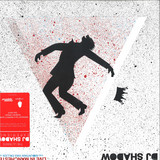
DJ Shadow has shared the artwork for his anticipated live album and film, Live In Manchester: The Mountain Has Fallen Tour. Recorded at a sold out Albert Hall in Manchester, England, the release (out 13th July on Mass Appeal Records) is now on vinyl, CD, and digitally.
Live In Manchester: The Mountain Has Fallen Tour, documents DJ Shadow's most ambitious, extensive worldwide tour yet - surrounded by stunning visuals, he blasts through classics and more obscure cuts from his discography. Watch the trailer here.
The release will be available on gatefold 12' vinyl, CD / DVD double pack, digital audio and digital video formats.
The news follows the recent announcement of DJ Shadow's podcast, DJ Shadow Presents Find, Share, Rewind, broadcast on Manchester-based radio station and music platform, MCR Live. Episodes are online here, and the first instalment hit number 1 in Apple's music podcasts chart.
Bay Area producer DJ Shadow (Josh Davis) was catapulted to prominence thanks to his landmark debut album, Endtroducing, acknowledged by Guinness World Records as the first LP created entirely from samples. Since then, Shadow has continually moved forward releasing innovative albums and collaborating with the likes of Thom Yorke, Massive Attack, Jason Newsted (Metallica), Mike D (Beastie Boys), Zack de la Rocha and several others. Live In Manchester: The Mountain Has Fallen Tour continues an exceptional couple of years for the producer: in 2016 he unleashed innovate new album The Mountain Will Fall, which birthed his biggest single yet, Nobody Speak featuring Run The Jewels; a massive worldwide tour followed - The Mountain Has Fallen Tour - plus an EP featuring collaborations with Oscar-winning film composer Steven Price, rap maverick Danny Brown and hip-hop hero Nas.
Recorded Between The Release Of Sand (1977) And Lost Secrets(1981), Symphonic Songs Is A Formerly Unreleased Work That Chronicles The Dynamic Shift And Development In Experimental Swedish Composer Ragnar Grippe's Canon.
Following His Seminal Release Sandin 1977, Swedish Experimental Composer Ragnar Grippe Worked On Various Art And Performance Commissions, Often Returning To Stockholm During The Summer Months To Focus His Efforts On His Compositional Practice. It Was There At The Famed Ems Studioswhere He Began Employing The Buchla Synthesizer And The Facilities Multi-tracking Capabilities As New Instruments To Map His Mining Of Sound And Movement.
During The Late 1970's, Grippe Formed A Creative Collaboration With Choreographer Susan Buirge, Specifically Writing Compositions For Her Works restes And tamis, Thus Pushing Grippe To Start Working In A More Intricate Studio Environment. These Passages Inspired Grippe Into A More Complex Layering Process That Focused More On Placement And Structure, Rather Than The Aural Floods And Flourishes Of His Previous Sand Album, Eventually Germinating In His First Full 24-track Composition Entitled orchestra.
After Debuting orchestra In 1980 At The Electronic Music Festival In Stockholm, Grippe Holed Up At Ems Studios With Those Lessons And The Fussy Buchla Synthesizer, In Which Grippe Affectionately Recalls needed To Be Tuned And Calibrated Every 20-30 Minutes. He Emerged With A New Commission For Susan Buirge Later Formally Titled Symphonic Songs And Used In Her Avant-garde Theater Piece ci-déla Which Debuted In Paris In 1981.symphonic Songsshowcased Grippe's Sound Au Courant, Pushing Dense Against Sparse, Calm Into Cacophonous, Using Each Track As Its Own Intersecting Plane. Using The Machinations Of Studio And Structure To Drive Symphonic Songs' Voice, Grippe Culled A Haunting, Often Cinematic Electronic Work That Dots And Darts Into Unexpected Corners With Curious Aplomb.
Listen To The Words, Both Terms Have Their Root In Classical Music, But Not In Its Form But Because Now I Had So Many More Stems Or Voices That Could Be Played Simultaneously Compared To My Earlier Pieces. Coming From A Classical Background, But With Big Nostrils For Pop And Jazz Music, I Can Now See A Thread In Which Classical Got A New Costume, Dressed Up In Buchla Synthesizer And Real Bass Sounds Grippe Says. Since Its Live Theater Debut Over 37 Years Ago, Dais Records Releases For The First Time Symphonic Songs, One Of Grippe's Most Ambitious Compositions, As A Deluxe Double Vinyl Lp (with Limited Edition Color Variants) And On Digital Formats. Artwork Packaging By Artist J.s. Aurelius (ascetic House) With Reflective Linear Notes By Ragnar Grippe.
Combo Lulo returns to Names You Can Trust for their sophomore single, digging deeper into the diversified sounds of the Caribbean that helped define their debut. While the first single took a Jamaican foundation south into the neighboring continent, fusing the sensibilities of rock steady with those of classic Afro-Latin orchestras, this single goes far east. Inspired by the heady and sublime sounds of foundational ska mixed with East African influences, (think Buster's Islam, Don D's Addis Ababa or Further East), The Sieve & The Sand is a brand new composition within this natural order, albeit with the fortune of different reggae eras and studio styles to draw from. Divided into two parts (but also available seamlessly as it was played in the studio), Combo Lulo's talented players move effortlessly from the galloping shuffle of ska into a deep and dark, Roots Radics-styled instrumental. It's a lovely ode to the original styles of reggae, but also another impressive accomplishment that will surely leave listeners and new fans in anticipation of the shape of things to come for Combo Lulo.
Born in Cagliari (Sardinia, Italy) in 1975, Irene Nonis started playing the guitar at the age of 13 and wrote her first songs at 17. Her influences come from the American soul, with variations towards jazz and bossa (Sade, Paul Weller, Astrud Gilberto, Johnny Marr). Her voice shines in the two new tracks included in this 7'': "This Love" is a blue-eyed soul track that moves between Northern Soul and Motown, while "Night Stuff" has more of a 70's London nocturnal atmosphere, with a great bass line.
A third of Italian production act Agents Of Time, Sharp Felon loops out of the trio's orbit to land his debut solo EP on Maceo Plex's Lone Romantic, 'Let The Game Begin' - featuring three stunt-driving cosmonautical bangers that aim to abolish all sense of gravity in the club and beyond. Breaking in at fierce speed, 'Devil Trail' attacks pedal to the metal and leaves prismatic wisps of vapor in its wake. A proper electro-magnetic dasher, the track alternates steady shooting sequences of 303-marinated bass with eloquent kosmische-indebted synth maneuvers and laser-precise breaks, all joining forces to have your feet shuffling and mind drifting up into higher spheres of consciousness in one potent backhanded caress.
A more straightforward affair, B-side opener 'Telework Titan' lifts its listener off to a further compelling state of meditative balance through a nonetheless muscular groove and epic-sized sub-bass moves. Cruising in the upper layers of the stratosphere, Sharp Felon's stamps on the accelerator of his shark-mouthed spaceship and hedgehops across craggy alien reliefs with personal hands-on skills. Intergalactic transmissions announce an imminent extra-terrestrial invasion, it's time to tune out and enter the melee. Laser guns blazing and acid stabs smoking, 'Cyber Fex' nose-dives in an enemy-occupied territory and washes over the ground brawl like a hi-tech tsunami. Purebred Donald-ian face-melter in sheer Dopplereffekt meets Arpanet fashion, this one lacks no oomph.
Inconspicuous French duo Nummer (made up of Silvère Letellier and Emmanuel Corre AKA E-Talking, best known for their work with Going Good) deliver a stunning five track EP laced with supersonic, hypnotic and funky fresh space oddities for people of the new age! A revitalising take on classic deep house and IDM styles, Space Oddities Volume 1 is infused with strong doses of organic percussion, odd samples and blissful melodies. Get up and move or sit back and experience the curious world of Nummer, in what could be their most exciting offering to date.
The New Creation were a local Los Angeles group who during 1974 recorded the H.B. Barnum produced 'The Fish Song' a tribute song dedicated to the door to door fish sellers of Whiting H&G. With the flipside again a tribute song dedicated to Elijah Muhammad the leader of Afro-American religious and political movement ,The Nation Of Islam. At the time of release the song received little radio airplay due to the radio stations deeming it a commercial song and demanding spot payments for it's promotion. Undeterred the group self promoted and distributed the 45 amongst the local community and the audiences at their shows. The group continued to perform right through until the early 1980's often sharing the stage with Philadelphia's The Delfonic's, L.A,s own The Youngheart's, New York's Cool & The Gang (who also recorded a LP track dedicated to Whiting H&G). Fast forward to the present and 'The Fish Song' and it's flipside 'Elijah Knows' has become a very desirable and sought after 45 (although most copies of the few copies found are not in great shape) amongst Lowrider, Crossover, Sweet and Group Harmony collectors both in Europe and the 45's native USA.