332 page paperback
Size: 13,7 x 20,8 x 3,0 cm
Label Text:
"Trance has been the flagship for electronic music across the globe during the nineties and early zeroes. The sound’s trademark optimistic and euphoric aspects has brought some of the most compelling musical pieces of its time, and undoubtedly had a significant influence on future electronic music to come. Yet, its historical significance has been highly overlooked. Hypnotised is the first encyclopaedia to cover the global trance movement during its most prolific years. The 332-page book spans a near-complete discography of supposedly essential albums, labels and releases, alongside exclusive photos and in-depth interviews with influential artists and label owners."
Search:t move
Vic Bang's "Oda" arrives quietly - it was waiting for the right moment. The eight tracks are shaped by listening, by circling around sound instead of chasing it... you can definitely hear patience in the pacing, a willingness to let ideas linger, to let all the small motifs breathe.
The album moves with a softer and more deliberate rhythm than much of Vic's earlier work, as the sound world here feels concentrated and cohesive, built from a limited set of elements that gradually reveal themselves. Melodies unfold without too much fuss, textures repeat and mutate very subtly and the whole record holds together like a single extended thought.
The title Oda - or "ode" in English - hints at devotion, but not in any grand or ceremonial way. These pieces seem devoted to sound itself: to tone, to gesture, to fragile and simple musical forms. There's a gentle melancholy running through the album, but also clarity, even tenderness. Each track is dedicated to something - a timbre, a rhythm, a resonance - living up to the title's etymology.
All Music composed by Victoria Barca in Buenos Aires, Argentina, between 2024 and 2025.
Saxophone (3) by Camila Nebbia
Vocal samples by Catu Hardoy and Nicolás Said
Cello samples by Gabriela Areal
Mastered by Adam Badi Donoval
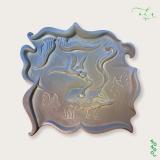
Front cover relief "Endulzando el oído" by Victoria Barca
Back cover photo by Indira Seoane
Design and layout by Paulina Ufnal and Janek Ufnal
Pioen is the second album by Elisabeth Klinck & Nils Vermeulen, released on blickwinkel. It was recorded in a small chapel of a monastery in the city center of Ghent. A chapel by nature is a place of contemplation and meditation, which automatically had influence on the music. Movements slow down, attention is sharpened and the overwhelming silence of the space becomes part of the music. Sound and silence are meticulously woven into each other. Even when the music grows at times dense and heavy, there is an ever-present sense of closeness and intimacy. This is reinforced by the use of the voice, which naturally appears throughout the album, not as a separate layer but as an extension of the instruments.
The pieces – this time more curated than on their previous album Pair, Paire – arose from hours-long improvisations where sound became space and space became sound. Bringing together violin, double bass and voice, Pioen unfolds as a serene and honest journey, inviting the listener into a state of contemplation.
Elisabeth Klinck is a contemporary violinist, composer and performer based in Brussels, known or her timeless, deep-listening sound worlds. Her album Picture a Frame (2023) and Chronotopia - selected by The Quietus as one of the best albums of 2025 - were released on the Swiss label Hallow Ground. A big part of her work revolves around tactility, fragility, and a very physical approaches to sound.
Nils Vermeulen is a Belgian double bass player active in all varieties of adventurous music. He has played with Paul Lytton, Martin Küchen, Seppe Gebruers, William Parker, John Dikeman, Luis Vicente, among others. He works across many scenes, from free improv to jazz to contemporary classical music, and in many distinct constellations, such as his own groups Kabas and Jukwaa, a Norwegian free jazz trio with Tollef Østvang and Heidi Kvelvane, a string duo with Elisabeth Klinck, and as the double bassplayer of Nemo ensemble. In 2023, he released his debut solo album on Aspen Edities.
- A1: The Letter
- A2: L'intrigue
- A3: Drinking At A Stream
- A4: Oakwood Green
- A5: Children Of Clay
- A6: Sur La Plage
- A7: Her Masters Voice
- B1: The Draw In Room
- B2: The Slides
- B3: Fleur's Dolls
- B4: Mortuary
- B5: The City Sleeps
- B6: Birds
- B7: Silence & Wisdom
- B8: Festival
- C1: Our English Friends
- C2: Piroette
- C7: Albert The Mud Fish
- C8: Who Art In Heaven
- C9: Shackleford Breeze
- C10: 2 Blind 2 See
- C11: Zazinthos
- C3: The Third Movement
- C4: Play Room
- D1: Little Brown Jig
- D2: Tounges
- D3: Shalama
- D4: The Sun On The Sea
- D5: Interlude
- D6: The Snow Falls & The Village Is Overflowing With Children
- D7: Double Happiness
- C5: Starboard She Said
- C6: Los Estrellas
The short, mysterious career of the female French duo Deux Filles is bookended by tragedy. Gemini Forque and Claudine Coule met as teenagers at a holiday pilgrimage to Lourdes, during which Coule's mother died of an incurable lung disease and Forque's mother was killed and her father paralyzed in an auto accident. The two teens bonded over their shared grief and worked through their bereavement with music. However, after recording two critically acclaimed albums and playing throughout Europe and North America, Forque and Coule disappeared without a trace in North Africa in 1984 during a trip to visit Algiers. The short and terribly unhappy lives of Forque and Coule are at the root of the small but fervent cult following the mysterious duo have gained since their disappearance, not least because the placid, largely instrumental music on the duo's albums betrays no hint of the sorrow that framed their personal lives.
This would be a terribly sad story if a word of it were true. In reality, Deux Filles were Simon Fisher Turner, former child star/teen idol and future soundtrack composer, and his mate Colin Lloyd Tucker. Turner and Tucker left an early incarnation of The The in 1981 to pursue another musical direction. Turner claims that the idea of Deux Filles came to him in a dream, and he and Tucker strictly maintained the fiction throughout the duo's career. Not only did they pose in drag for the album covers, the duo once even played live without the audience realizing that the tragic French girls on-stage were actually a pair of blokes from south London. Deux Filles released two albums through Turner and Tucker's Papier Mache label, 1982's Silence & Wisdom' and 1983's Double Happiness'. Both albums are included here and blend watery piano, occasionally ghostly vocals, sheets of synthesizers, heavily processed guitars and the barest minimum of percussion. Drifting and wistful, they're a pair of lost ambient gems from a time when the genre had yet to mature, an excellent example of post-Eno, pre-Orb ambient music.
All songs have been remastered for vinyl by George Horn at Fantasy Studios in Berkeley. The vinyl comes housed in gatefold sleeve with original front covers of both albums, and a centerfold of archive images and the original liner notes. Each LP includes a sticker of the Lino cuts by Adrian Gill that was included with the original pressing.
"Like an early French film soundtrack with melodramatic overtones, the sound is jagged and disjointed but never harsh. Lilting guitars and ample use of echo smack of Vini Reilly, relying on the hypnotic qualities of the sound rather than abrasive noise" (Sounds, 03/1983)
Bettye Swann possessed one of the most emotive voices in soul music’s cannon but her recording career was that of a shooting-star; it blazed at the start, then illumined brightly before abruptly dissipating, all in just eleven years. In 1975 she ceased recording, moved to Las Vegas and retired her Bettye Swann persona.
The Louisianan Betty Jean Champion had relocated to Los Angeles as a young woman where in around 1964 she was introduced to Al Scott, owner of Money Records. It was her fourth Money 45 “Make Me Yours” that propelled Swann into the stratosphere. One of the defining songs of the era, it was her pathway to Capitol Records with whom she signed in 1968.
By 1972 Bettye was at Atlantic Records. The initial Atlantic 45 “Victim Of A Foolish Heart” b/w “Cold Day In Hell” recorded at Fame with Mickey Buckins and Rick Hall, made for a promising debut reaching #16 on the Billboard chart. It was followed by Bettye’s version of Merle Haggard’s “Today I Started Loving You Again” and “Til I Get It Right”, a gentle country-soul labour. “I’m Not That Easy To Lose” also dates from those sessions.
In an attempt to broaden her appeal Atlantic sent Swann to Sigma Sound in Philadelphia where she cut Phil Hurtt’s’ and Tony Bell’s “Kiss My Love Goodbye”, “Time To Say Goodbye” and “When The Game is Played On You”. Her fortunes continued to wane so Swann was next placed with Nashville producer Brad Shapiro. The results were artistically stellar and included three unissued gemstones in The Isley’s “This Old Heart of Mine”, a definitive version of Maxine Weldon’s “I Want Sunday Back Again”, and “Either You Love Me Or Leave Me”.
Mia Zapata was the greatest rock singer of her time. She may have likely been the greatest blues singer in punk rock history, the woman who married the 78 and the '78. Tragedy did not make this true. Mia Zapata made this true, and the ferocious, spring-loaded shrapnel frame that was built around her by Andy Kessler (guitar: metronomic and furious), Matt Dresdner (bass: fluid, punching, beat-addicted and melodic), and Steve Moriarty (drums: martial and explosive) - who, with Mia, combined to form The Gits - made it true. The Gits were formed at Antioch College in Yellow Springs, Ohio in mid-1986, grabbing and swapping pieces of art, thrash, noise, punk rock, classic rock, and all the sorts of magical silly and bookish jingle bells that an old-school liberal arts education handed you; for the next few years they worked on turning it all into something tough, sensitive, both brutal and kind. Andy, Matt, Mia, and Steve moved to Seattle in middish 1989, landing in a house on Capitol Hill where they (and fellow travelers) wood-shedded and rehearsed for the next few years. The Gits put out three EPs in 1990 and '91 before signing with C/Z Records and releasing their first full-length album, Frenching the Bully. Seattle quickly claimed the quartet as their own and embraced the Gits blend of ferocious fangs and soft heart, the slug/slap of the guitars, and the gorgeous, soft underbelly of the poetic emotions. These qualities not only fit in with the doe-eyed/sharp-clawed grunge ethos but earned the Gits the respect of their peers, including Nirvana, who tapped them to open a major local show in 1990. Then other stuff happened, and their frantic, confessional barbed-heart snowball began rolling up hill very, very fast; the Gits "quickly" (hah! After half a decade learning to implode and explode hearts and stomping their boots on manifold beer-softened, Marlboro-weeded wood stages!) inspired rapture, awe, and the levitation that happened when peak emotion meets peak grindage in front of amps spitting out something that sounded like the mad marriage of Bolan swagger and Dischord tension_ all fronted by a genuinely incomparable woman who held her heart in her mouth and shared it, in all its celebration and fear, without hesitation. The Gits were an angry, inflamed slinky fully in tune with and tuned by the Bessie Patti Smith of her time, truly the only singer who could summon Joplin, Poly Styrene, Sam Cooke, Iggy Pop and Ian MacKaye all in the same goddamn song. In 1993, less than four weeks after accepting an offer from Atlantic Records, Mia died. I leave it at that, because this is not about death; it's about an extraordinary life. I do not say, "You should have been there," I say, "We are lucky so many of us were, and I am so glad we have this extraordinary evidence of the power and gifts of Mia and the Gits that you now can hold in your hands." And I note that Frenching the Bully, this extraordinary testament to the soul, shock, fury and feeling of the Gits, has been long out of print on vinyl and CD, and this new edition - remastered by legendary Seattle engineer Jack Endino - joyfully rectifies that. -Tim Sommer
- Walpurgisnacht 1996
- Shadow Sun
- Cemetery Youth
- A Dismal Romance
- She Haunts The Night
- Thicker Than Darkness Itself
- In Despair We Trust
- Death, That Elusive Mistress
- Hollow
- Full Moon Therianthropy
- Reburial
Conceived as a return to the music that shaped his formative years, the project draws its energy from late-night introspection, creative renewal, and a distinctly crepuscular sensibility. Initially conceived as a solo project, LOCUS NOIR is set to evolve into a fully-fledged band . Musically, LOCUS NOIR blends Type O Negative gloom, The Fields of the Nephilim mysticism, and Paradise Lost melancholy, all infused with a post- punk edge.
The result is a sound that feels both contemporary and timeless -- a modern interpretation of what Gothic Metal can be. On debut album 'Shadow Sun' , band main songwriter and vocalist Ben steps fully into a melodic, haunting vocal register, merging the theatrical delivery of Peter Murphy with subtle echoes of the late Peter Steele. The lyrics move between the esoteric and the intimate: love and death, desire and decay, nocturnal excess and the bitter aftertaste of parties stretching well past dawn.
raum…musik welcomes Giuliano Lomonte for its 120th release with Moonlight EP — a three-track journey cross-sectioning house and techno with hints of 90’s progressive trance, combining precise rhythmic control, atmospheric depth, and club-focused energy. Tools built for tension, release, and maximum dancefloor impact.
The EP opens with “Drynation”, a ten-minute prog-tech-house roller built on hypnotic grooves, rolling low-end, and evolving percussive patterns and synth textures, locking the floor in with a steady pulse and a masterful play of tension and release. “Moonlight” shifts into deeper, proggy techno territory, weaving subtle percussive motifs over a simple interchanged kick-and-bass foundation. Fluid and restrained, the track unfolds slowly, with minimal drum variations and gently filtered synths, creating an elegant sense of forward motion. Closing the EP, “One Step Ahead” balances stripped-back tribal house energy with rolling grooves, detailed percussion, and warm pads, resulting in a deeper cut that is precise, functional, and full of understated character.
With Moonlight EP, Lomonte confirms his mastery of tension, texture, and subtle movement, delivering a record that reinforces Raum…Musik’s reputation for high-quality, dancefloor-ready music while highlighting his signature blend of rhythm, refinement, and subtle progression.
- A1: Give It To Me Baby
- A2: Ghetto Life
- B1: Make Love To Me
- B2: Mr. Policeman
- C1: Super Freak
- C2: Fire And Desire
- D1: Call Me Up
- D2: Below The Funk (Pass The J)
Rick James Blends Brazen Attitude, Fearless Sexuality, and Shrewd Charisma on Street Songs:
Punk-Funk Album Aims for the Hips and Head, Includes the Timeless Hit “Super Freak”
Sourced from the Original Master Tapes and Strictly Limited to 4,000 Numbered Copies:
Mobile Fidelity’s 180g 45RPM 2LP Set Presents 1981 Smash in Audiophile Sound for the First Time
1/4” / 30 IPS analogue master to DSD 256 to analogue console to lathe
“Punk funk” was a relatively unknown concept before 1981. But once Street Songs took the charts by storm that year, the world soon knew about what became Rick James’ signature style. And how. True to its name, Street Songs blends outspoken sexuality, brazen attitude, and edgy commentary amid contagious R&B-fueled arrangements that simultaneously aim for the hips, head, and various nether regions. And it’s never sounded better.
Sourced from the original master tapes, strictly limited to 4,000 numbered copies, pressed at Fidelity Record Pressing, and housed in a Stoughton gatefold jacket, Mobile Fidelity’s 180g 45RPM 2LP set presents James’ platinum-certified effort in audiophile quality for the first time. Playing with crisp dynamics, lively textures, airy headroom, and revealing clarity, this collectible edition of the record that stayed at the No. 1 spot on the R&B Album Charts for 20 weeks invites you to get closer to music that beckons you to turn your space into a private dance floor.
Then again, you’ll likely be so taken by how the taut bass lines, snappy rhythms, and four-on-the-floor beats — all rendered in stunning detail and with full-bodied architecture — come across with such accuracy and presence, you might stay pinned to your seat. On this pressing, the soundstaging, imaging, and lit-fuse energy of Street Songs reach new heights. Everything from the rubbery feel of the guitar lines to the depth of James’ temperature-raising vocals to the scale of the horn charts emerges as if James and his ace session crew set up in your room.
The Buffalo native and his ensemble waste no time getting their message across. On the album-opening “Give It to Me Baby,” James and company lay down a mix of sleek funk and pulsing disco that practically activates the bright lights of a discotheque and stimulates the libido of anyone within earshot. Having reached No. 1 on the Billboard Hot Soul charts, the song is pure sex — and just one of the carnal delights on a record that embraces the subject as fearlessly as James does his identity.
Of course, the most famous of James’ erotic excursions — the timeless “Super Freak” — hit No. 1 on Hot Dance Club Play charts, No. 16 on the Hot 100, and, later, No. 153 on Rolling Stone’s list of the Top 500 Songs of All Time. Bolstered by a quavering keyboard theme and electro riffs, the much-sampled track worms itself inside your muscles with smile-inducing subject matter, gliding vocals, nimble movements, a hot tenor-saxophone solo, and backing vocals by the Temptations.
The iconic Motown group isn’t the only celebrated guest artist on the Grammy-nominated Street Songs. James’ then-labelmate, Stevie Wonder, lends harmonica to the frank sociopolitical narrative on “Mr. Policeman,” a protest tune that also manages to stroll ’n’ strut via simmering organ, staggering brass accents, and James’ gritty vocal performance. In addition to contributing backing vocals on several cuts, Teena Marie turns in one of the album’s signature moments on “Fire and Desire,” a romantic old-school duet with James that impresses with smoothness, sensitivity, and smokiness.
High-profile colleagues aside, James remains the undisputed star, a figure whose leather-and-latex attire, braided hair, and natural swagger made him misunderstood by some in the mainstream and embraced by everyone in the know as a true original. As a testament to his magnetism and skills, his charisma and rawness seemingly seep through every note, whether on the balladic sweep of the risqué “Make Love to Me” or strident, poke-and-prod persuasion of the moonwalking “Call Me Up.”
On the closing “Below the Funk (Pass the J),” an uptempo autobiographical tale that addresses the visionary musician’s second-favorite love, the singer acknowledges his upbringing and inseparable connection with his roots — an homage to where he began and a toast to where he’s gone.
Rick James, keepin’ it real on Street Songs, still as real as it gets.
Close Proximity lands on Second Sight with a four-track statement that spans the full spectrum of the label’s world. From upfront, peak-time club pressure to 90s-tinged house swing and Balearic-leaning warmth, the EP moves between late-night drive and sunlit release without losing momentum. Tight drums, bold hooks, and a vivid sense of space make it equally built for big systems and repeat listens — a focused package of energy, groove, and atmosphere.
From out of nowhere comes a unique collaborative album from Edvard Graham Lewis (WIRE) & Mark Spybey (ZOVIET FRANCE). Mixing lush electronic rhythms, sonic collage, ambient soundscapes and manipulated field recordings, these six compositions form an album with a strong identity. That this is such a vital and fertile partnership should come as no surprise. After all, both men have made careers out of creating confidently questing musics. Lewis with Wire, He Said, Hox, Dome etc. and Spybey with Dead Voices on Air, Beehatch, Altered Statesmen, Zoviet France and so on. This new album however, is something different again: experimental, yet tightly focused, and not averse to the groove or the sly hook. The pair met via an appearance on a podcast in November 2022, hosted by cEvin Key of Skinny Puppy. They hit it off immediately. “We did a live chat with Graham - which I think, went on for about three days” jokes Spybey. It was Spybey who first broached the idea of collaboration. “It was a bit like shy bairns get nowt: I just said ‘maybe we should make something together.’” And so, with no plan other than to see what might develop, the duo began to assemble the compositions at long distance. Indeed, Lewis and Spybey only met in the real world after the album had been completed. “Mark sent half a dozen tracks in a stereo mix,” says Lewis. “And I looked at the ’topography’, to see where the spaces might be. So then I’d add to those areas. But then, when do you take it away? Sometimes you let it drop off a cliff, land in the shingle, and it gets washed out to sea again.” The process moved at a pace. “Almost everything each of us brought, ending up being incorporated in some way.” Says Spybey. “We didn’t really go down any cul-de-sacs.” As Lewis observes “We have such a sympathetic tone.” Full of inventive sonics that draw on both men’s previous work, ‘Lewis/Spybey’ offers up a richly detailed soundworld
- A1: Raw Movements 5 52
- A2: Love Train Ii 4 47
- A3: Palace Strut 4 10
- B1: Coral Reef 4 52
- B2: Street Beat 4 41
- B3: What's The Time 5 53
- Rude | Movements
- C1: Rude Movements 7 49
- C2: Movement I 6 10
- D1: Movement Ii 7 40
- D2: Movement Iii 7 59
Repress !
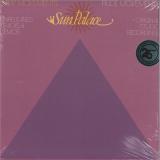
Way back in 1981, two musicians got together to make a record. Mike Collins played guitar and had just bought a Roland CR78 - the first programmable drum machine. Keith O'Connell played Fender Rhodes piano and Prophet 5 synthesizer. Excited about the quirky and unusual instrumental track they'd composed, when the duo entered London's Utopia Studios to finish off their creation, neither could have predicted what was to follow... Now viewed by many as one of the most influential early electronic dance records, 'Rude Movements' was swiftly picked up on by David Mancuso, who used it to devastating effect at his infamous 'Loft Parties', in turn introducing it to Larry Levan, Frankie Knuckles, David Morales and Kenny Dope, a group of young DJs who would go on to write the blueprint for dance music as we know it.
In the more than 35 years since its release, 'Rude Movements' has continued to inspire and excite, sampled by The Bucketheads' classic House track 'Whew!' (featured on recent BBE compilation '20 years of Henry Street Records') and listed by a veritable 'who's who' of dance music's elite as an all-time favourite. Rare and much sought-after on vinyl, BBE are happy to announce the release of a fully remastered version of 'Rude Movements' presented alongside the original demo version 'Raw Movements', plus three other versions of the iconic track. Also included on the vinyl package are the Afrika Bambaata inspired 'Street Beat' and 808/MiniMoog workout 'Palace Strut', as well as three other 80s SunPalace compositions. CD and digital versions expand the catalogue still further, with more experimental SunPalace magic. Timeless original, quirky and unique, these recordings are set to inspire yet another generation of DJs,
producers and music fans.
Andre Zimmer lands on Craigie Knowes with some certified block-rockin’ beats. The ‘Swamp Circuit’ EP pulls influences from the early UK hardcore scene, electro, the new-wave progressive movement, electro and more – rolling them into something new, cohesive, unique and furious. If that’s not a package worth listening to then we don’t know what is. A proper record for the proper DJs!
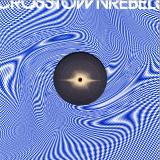
Franky Wah returns to Crosstown Rebels and reunites with Kuuda on ‘Light Years’.
Dropping on 13th February 2026, the two-tracker sees the acclaimed UK producer continue his collaborative journey alongside the impressive Brighton-based collective for both his and their second appearance on Damian Lazarus’ revered imprint.
Having made a splash with his impactful label debut last summer, Franky Wah returns to Damian Lazarus’ Crosstown Rebels imprint with ‘Light Years’, a two-track EP that explores emotion and movement with measured confidence. The release sees the Yorkshire-born producer further embed himself within the Crosstown universe, delivering a project built on patience, progression, and feeling, where every moment earns its weight.
The EP opens with the title track, a wide-screen, hypnotic solo burner that balances uplifting melodic energy with weighty, driving grooves. Built for long moments on the floor, the track unfolds, allowing atmosphere and tension to do the heavy lifting while maintaining a clear sense of momentum throughout. On the flip, Franky reunites with longtime collaborators, producer-songwriter-vocalist trio Kuuda, for their second outing alongside him on Crosstown Rebels with ‘House In My Veins’. Continuing a partnership rooted in shared musical language and emotional depth, the Brighton-based trio is central to the track, bringing drive, earworm vocals, and a distinctive identity, woven seamlessly throughout Franky’s cinematic production - grounding expansive moments with human connection.
Following heavy support from Pete Tong on his Crosstown Rebels debut, and a recent invitation to host Tong’s flagship BBC R1 show at the start of 2026, Franky continues to assert himself as an artist equally at home in club culture’s most intimate spaces and its widest-reaching platforms. Meanwhile, Kuuda continue their impressive start to 2026, hot on the heels of their recent collaboration with Hot Since 82 on Bedrock. This latest partnership delivers a focused yet expressive statement, music designed to breathe, to move, and to resonate long after the lights come up.
Dictaphone are back with their 6th full length called "Unstable". In the 25th year of the project Brussels born composer and mastermind Oliver Doerell is surrounded again by a lot of musicians & friends. Roger Döring is there, his clarinet and saxophone play has always been a trademark sound of the band - also Alexander Stolze's ghostly violins. The dark atmosphere and experimental sound of the new album is a reference to the 80s belgian art music scene, which Doerell had the luck to experience in his formative years. Minimal jazz meets musique concrete meets a postpunk mind. On this new album “Unstable“ more voices and vocals than usual can be heard - especially Helga Raimondi (who already sang on the last album “Goats and Distortions 5") . As a collage artist she is also responsible for the visual side of Dictaphone - she designed the cover artwork and the visuals for the live shows.
The Brussels-Berlin-Teheran connection: Other guests on "Unstable" are the voices of Kaveh Ghaemi and Ashkan Afsharian, who Doerell met during a modern ballet production by Modjgan Hashemian (2008). The trumpet of Shahab Anousha can be heard in the track “La fin“ - Oliver Doerell and Shahab Anousha also share the spoken words Project “Noufān”. For nearly 20 years Oliver Doerell is linked to the Iranian Diaspora in Berlin and the Dictaphone track “Rattle” from the classic album “ Poems from a rooftop “ (2012) has been a hit in Teherans underground scene since the beginning. Furthermore the title track “Unstable“ is a homage to Ian Curtis of Joy Division. The words of this piece are based on the setlist of Joy Divisions last show.
Dictaphone played more than two hundred shows all over the world (including festivals Mutek, Transmediale, Unsound , Benicassim and many others). Their music can be heard in countless films, tv series and theatre pieces - (“the responder“ (BBC) , “the love he knows” (Ali Mohammad) , “Don´t move“ (Modjgan Hashemian) , Ring (Felix Ruckert) among others.
Alongside with the release of the new album “Tote Winkel”, Sankt Otten will be delighting us with another limited vinyl bonus release. “Hymnen und Helden” (hymns and heroes) is a collection of cover versions created over the last few years. As the album title suggests, it pays homage to self-proclaimed musical hymns and heroes from the seventies and eighties.
HYMNEN UND HELDEN – track by track: A well-known Moog sequence leads us on the way into the cover album. Giorgio Moroders 1977 disco classic “I feel love” has been tackled here. Sankt Ottens instrumental interpretation starts out familiar, but ends in a slightly disturbing disharmony of mellotron and ebow guitar.
The instrumental version of the melancholy Wipers anthem from 1983 starts with a rather unusually fast 808 beat for Sankt Otten. The 80s electronic echoes suit the punk rock earworm “Doom Towen” surprisingly well.
Without Deutsch Amerikanische Freundschaft, more unusual electronic music would hardly have been conceivable in Germany in the early 1980s. “Alles ist gut” tribute to this band and singer Gabi Delgado-Lopez, who passed away in 2020 and with whom they shared the festival stage in 2015. Gabi‘s lyrics are rendered by text- to-speech software with the voice of an unknown Claudia.
“Wishing (If I had a photograph of you)” was made famous in 1982 by A Flock of Seagulls. This record was regularly played on Stephan Ottens turntable back then. Reason enough to remember this with “Sehnen (Hät- te Ich von dir eine Fotografie)”. The recordings for this album were made in 2007 and have been updated and completed in the last year. Carsten Sandkämper, who was also featured on Sankt Ottens debut album “Eine kleine Traurigkeit”, contributed the vocals and lyrics.
The Swiss band Grauzone became famous with the NDW hit “Eisbär”. Instead of this title, they took on the B-side of this single with “Ich liebe sie”. A synthpop love song full of innocence, stylishly sung by Carsten San- kämper and refined with Kraftwerk-like choral sounds and an herbaceous motorik beat.
The band has enjoyed a personal friendship with Harald Grosskopf since their collaboration in 2013 on the album “Messias Maschine”. With “So weit, so gut”, they take on his little hit from the album “Synthesist”, which is one of the gems of the synthesizer albums of the eighties.
“Kriegsmaschinen, fahrt zur Hölle” is an anti-war song from 1974 by Günter Schickert, the Berlin master of the echo guitar. Unfortunately, the lyrics are still relevant. Oliver Klemm contributes the delay guitars and Stephan Otten puts the lyrics through a vocoder. Sankt Otten compress the 17-minute original to just under 5 minutes and move it musically from the 70s to the 80s.
Sankt Otten’s adaptation of David Bowies “Heroes” is equipped with warm Juno 106 sounds, ebow guitar and synthesizer pads. The German “Helden” version, known from the movie Christiane F. – Wir Kinder vom Bahnhof Zoo, is sung in a touching way by Carsten Sandkämper.
New York-based Rafael Anton Irisarri was responsible for mastering the record. As part of the series with graphic covers, this die-cut artwork was also created by Mexican designer Daniel Castrejon. The one time only vinyl pressing, limited to 350 copies, comes in a beautifully designed die-cut cover and colored vinyl. The Osnabrück duo Sankt Otten, founded in 1999, have been releasing on Denovali since 2009. The band has dedicated itself to the holy trinity of Krautrock, Ambient and contemporary Electronics.
d Sehnen [Haette ich von Dir eine Fotografie]
Written during a period of geographic and artistic transition, Country Music traces Severin Black’s movement from London to Berlin, unfolding through cycles of isolation and adaptation. Composed on the city’s periphery, the album’s material was continually dismantled and reassembled, reflecting a process of both artistic and personal reconstruction. The album marks a shift in production methodology, moving away from the immediacy of summed live takes toward a more deliberate, stratified multitrack approach. Sparse yet hypnotic, the record distills layers of sound formed by constant relocation, recurrent solitude, and a recalibration of instinct. In many ways, it echoes the experience of exile, not in a political sense but in the quieter, more insidious form of displacement that alters one’s perception of time and self. The music drifts between structure and dissolution, a reflection of existing at the threshold of different spaces—both physically and sonically.
The shedding of the previously used Nape moniker signaled a decisive sonic transformation, informed by extended time spent in the Pyrenees and a renewed engagement with folkloric material. Severin began playing the clarinet while making this record, and though its presence is minimal, it reveals itself as an interest in acoustic simulation, particularly the digital approximations of classical instruments that emerged within 1990s synthesizer technology. This interrogation of authenticity and mediation parallels the album’s thematic engagement with memory, where recollection functions not as a retrieval of fixed experience but as an iterative process of distortion and reconstruction. The relocation to Berlin reignited an affinity for grime music, evident in the syncopated brass of Pilgrim Wine and the fractured vocal layers of March, while memories of childhood in rural Wales permeate the record’s atmospheric spaces. The album includes contributions from longtime collaborator Vanessa Bedoret and Berlin-based artist Pavel Milyakov (Buttechno).
Country Music situates itself within an unresolved dialogue—between past and speculative futures, between folk lineage and digital fragmentation, between place and its embodied and sonic traces. What emerges is not a fixed statement but a process, an ongoing negotiation between what is left behind and what is brought forward. Words by Chantal Michelle
Mastered by Owen Pratt / Design by Severin Black / Center label image by Nicky Kidd / Back cover text by Alya Kanıbelli
Yamila presents her second album on Umor Rex, Noor. Following Visions, Yamila returns with a work that merges nature-experience listening with expansive musicality. Noor was born from her time in an ecologist community, where she sought refuge in stillness, learned from animals, and tried to forget the human. In this communion with nature, she discovered a new compositional approach: reducing acoustic noise to allow unheard voices to emerge, transforming music into a possibility for interspecies dialogue.
Since ancient times, sound has been used to care for herds, to call across distances, to communicate with the non-human. Noor reimagines that ancestral role in a contemporary language, where epic harmonies collide with delicate micro-tonalities, and where rhythm unfolds not only as pulse but as movement for the body, a natural extension of Yamila’s work with dance companies and choreographers.
Her voice is interwoven with electronics and the resonant strings of Echo Collective, creating sonic landscapes that radiate intensity and fragility. At times monumental, at others almost whispered, Noor oscillates between composition and spontaneity, structure and suspension.
The album unfurls as a dialogue between the organic and the artificial, where sound grows like a sprout breaking through hard soil. Yamila’s music here is not only to be heard, but to be inhabited: a choreography of air, vibration, and resonance. Noor is both shelter and revelation, a reminder that music can still be epic, luminous, and deeply human, while listening beyond the human.
All music and voices by Yamila Ríos. Recorded at Destelheide by Christophe Albertijn. Strings by Trio Echo Collective (Violin: Margaret Hermant, Viola: Neil Leiter), (Cello: Stijn Kuppens), (Arrangements: Pierre Slinckx). Mastered by Rafael Anton Irisarri at Black Knoll Studio, NY. Photos by Assiah Alcázar. Design & layout by Daniel Castrejón.
- Feed (Feat. Deathbyromy)
- Nice Guy (Feat. Ekoh)
- Reject Vampirism (Interlude)
- Hostage (They Will Not Erase Us)
- The Resistance
- 6: Shots Left
- The Rain
- Singing Along
- Lost Souls
- Die Alone
- Murder Scene (Feat. Magnolia Park)
- Mad (Feat. Ice Nine Kills)
- The End Of Us (Feat. Black Veil Brides)
End of Us, ist das 13 Tracks umfassende Debütalbum von TX2, mit Features von DeathbyRomy, Ekoh, Magnolia Park, Ice Nine Kills und Black Veil Brides. Die Wahrheit ist simpel: TX2 polarisiert. Es gibt Kräfte in dieser Welt, die versuchen, das zu zerstören, wofür gekämpft und was hart erkämpft wurde, und zu einer Zeit zurückzukehren, in der die Menschen ihr wahres Ich versteckten. Es gibt Künstler wie TX2 - den Anti-Ronald Radke -, die dir zeigen wollen, dass du in diesem Kampf gegen den Hass nicht allein bist. TX2 hat Politiker namentlich genannt, schwenkt auf der Bühne eine Trans-Flagge, thematisiert in seinen Songs Waffengewalt, Essstörungen, Trauer und Depressionen und verspottet die Gatekeeper, die offensichtlich noch nie einen Punk-Song gehört haben. Der Sänger ist bereit, mit seiner Musik ein wenig Chaos zu verursachen, wenn es nötig ist, um die Aufmerksamkeit auf wichtige gesellschaftliche Themen zu lenken. So hat TX2 unter seinen Fans eine Bewegung ins Leben gerufen, die als ,X Movement" bekannt ist und deren Ziel es ist, das Bewusstsein für psychische Gesundheit zu schärfen und einen sicheren Raum für diejenigen zu schaffen, die jemanden zum Reden brauchen. In den letzten 24 Monaten tourte TX2 um die Welt, trat mit Ice Nine Kills, Hail the Sun, Dark Divine, tiLLie, In This Moment, Magnolia Park, Warped Tour & Summer of Loud Tour auf, wurde auf SiriusXM Octane gespielt, erreichte über 1 Million monatliche Hörer, gab über 50.000 Autogramme und erhielt 42 Millionen Likes auf Tik Tok. End of US ist ein lauter, unverblümter Aufruf zum Handeln. Beherzigen Sie den Aufruf oder treten Sie beiseite.