BBE Music presents J Jazz volume 3, the latest in its definitive compilation series exploring the finest modern jazz from Japan. Since the first volume in February 2018, the J Jazz compilation series has showcased some of the most creative, inspired and sought-after jazz recorded in Japan during a golden period spanning the 1960s to the 1980s. Illustrating the richness and versatility of the composers and musicians on this collection, the music spans a wide yet coherent range of styles: samba, funk fusion, modal, spiritual, post-bop and bossa all combine to present an aural portrait of a jazz scene that was constantly moving and shifting its multiple musical centres of gravity. Mastered at the Grammy-nominated Carvery studio in London, many of the tracks featured are reissued for the first time, including mega-rare private press cuts from the Yasuhiro Kohno Trio, Masaru Imada Trio, and Hideyasu Terakawa Quartet. There’s heavy post modal bop by J Jazz legends Kohsuke Mine and Koichi Matsukaze; samba heat from Tatsuya Nakamura, Hideo Shiraki and Seiichi Nakamura; and funky dance floor energy by Hiroshi Murakami, Ryojiro Furusawa Quartet and Shigeharu Mukai. Selected albums from which the tracks are drawn will be reissued in full as part of the acclaimed BBE Music J Jazz Masterclass Series. Released as a deluxe, heavyweight x3 vinyl set in a gatefold sleeve with obi strip and insert, the collection comes with extensive artist biographies and track information. J Jazz volume 3 is also available in a x2 CD set with three bonus tracks, and selected tracks are available across digital platforms for download and streaming. J Jazz is conceived, compiled and annotated by Tony Higgins and Mike Peden for BBE Music.
out of Stock
Last delivered 3 months ago available to reorder, subject to availability
We are proud to present this brand new 12inch release produced by veteran legend Mike Brooks.
He links up with regular collaborator Shalom out in Jamaica on two different riddims recorded in the UK by Mafia And Fluxy alongside Tony Ruffcutt. A side is a new song called Don't Worry, Mike also has a piece on it titled Hold Fast followed by a killer dub with mixdown from Dougie Conscious.
On the B side we put out again the incredible song Value Yourself from Shalom, which we sold in huge quantities on 7inch over the last few years. This is a slightly different mix from the same session. We of course release Mike's cut called River Nile and a new dub also from the same session by Dougie Conscious.
d b1. Shalom - Value Yourself [Alt mix]
out of Stock
Last delivered 7 months ago available to reorder, subject to availability
Interdimensional exotica in the form of eccentric space jazz, sonic experimentation, Afro-centric rhythms, and ostinato electronic freakouts! Includes three platters worth of tunes pressed on orange vinyl, all curated by Irwin Chusid - who also co-wrote the liners with Brother Cleve - for all those with cocktail in hand and ready for a slice of Ra’s jetpack jetset recorded legacy!
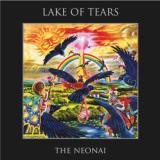
As the fifth chapter in the band's discography, " The Neonai" arrived at a critical juncture in Lake of Tears' career, marking both an end and a reluctant new beginning. Released in 2002, three years after the melancholic masterpiece Forever Autumn, the album came to life under less-than-ideal circumstances.
Despite the commercial and critical success of its predecessor (the band's best- selling album to date) Lake of Tears found themselves adrift, unsupported by their label at a time when the world expected them to rise higher than ever. Instead of world tours and deserved recognition, the band withdrew, disillusioned, and made the difficult decision to put all activities on hold. But one last obligation remained: to deliver a final album to Black Mark Productions. What could have been a soulless, contract- bound release turned out to be anything but. "The Neonai" pulses with haunting melodies, infectious refrains, and a deeper embrace of keyboards and electronic textures, without ever losing the emotional gravity and sorrowful beauty that define Lake of Tears.
If this album was truly written "in haste," then let us hope Daniel Brennare continues to compose under pressure, for rarely has urgency sounded so inspired. As with the previous vinyl releases, we do not single out any specific tracks. Each song, like every Lake of Tears album, carries its own unique charm, its own shade of shadow and light. "The Neonai" is not simply a continuation, it is a transformation, an echo from a band caught between endings and new beginnings. Another gem in the band's catalogue, a masterpiece where the doom/ gothic equation tilts gracefully in favor of the latter. A deeply cherished album, long adored by Lake of Tears' devoted followers, who have waited patiently for 23 years to finally see it released on vinyl. After all, every ending is but the beginning of something new. And as we've said before: The end for Lake of Tears has not yet come, and we truly hope it won't come for a long, long time.
As the fifth chapter in the band's discography, " The Neonai" arrived at a critical juncture in Lake of Tears' career, marking both an end and a reluctant new beginning. Released in 2002, three years after the melancholic masterpiece Forever Autumn, the album came to life under less-than-ideal circumstances.
Despite the commercial and critical success of its predecessor (the band's best- selling album to date) Lake of Tears found themselves adrift, unsupported by their label at a time when the world expected them to rise higher than ever. Instead of world tours and deserved recognition, the band withdrew, disillusioned, and made the difficult decision to put all activities on hold. But one last obligation remained: to deliver a final album to Black Mark Productions. What could have been a soulless, contract- bound release turned out to be anything but. "The Neonai" pulses with haunting melodies, infectious refrains, and a deeper embrace of keyboards and electronic textures, without ever losing the emotional gravity and sorrowful beauty that define Lake of Tears.
If this album was truly written "in haste," then let us hope Daniel Brennare continues to compose under pressure, for rarely has urgency sounded so inspired. As with the previous vinyl releases, we do not single out any specific tracks. Each song, like every Lake of Tears album, carries its own unique charm, its own shade of shadow and light. "The Neonai" is not simply a continuation, it is a transformation, an echo from a band caught between endings and new beginnings. Another gem in the band's catalogue, a masterpiece where the doom/ gothic equation tilts gracefully in favor of the latter. A deeply cherished album, long adored by Lake of Tears' devoted followers, who have waited patiently for 23 years to finally see it released on vinyl. After all, every ending is but the beginning of something new. And as we've said before: The end for Lake of Tears has not yet come, and we truly hope it won't come for a long, long time.
As the fifth chapter in the band's discography, " The Neonai" arrived at a critical juncture in Lake of Tears' career, marking both an end and a reluctant new beginning. Released in 2002, three years after the melancholic masterpiece Forever Autumn, the album came to life under less-than-ideal circumstances.
Despite the commercial and critical success of its predecessor (the band's best- selling album to date) Lake of Tears found themselves adrift, unsupported by their label at a time when the world expected them to rise higher than ever. Instead of world tours and deserved recognition, the band withdrew, disillusioned, and made the difficult decision to put all activities on hold. But one last obligation remained: to deliver a final album to Black Mark Productions. What could have been a soulless, contract- bound release turned out to be anything but. "The Neonai" pulses with haunting melodies, infectious refrains, and a deeper embrace of keyboards and electronic textures, without ever losing the emotional gravity and sorrowful beauty that define Lake of Tears.
If this album was truly written "in haste," then let us hope Daniel Brennare continues to compose under pressure, for rarely has urgency sounded so inspired. As with the previous vinyl releases, we do not single out any specific tracks. Each song, like every Lake of Tears album, carries its own unique charm, its own shade of shadow and light. "The Neonai" is not simply a continuation, it is a transformation, an echo from a band caught between endings and new beginnings. Another gem in the band's catalogue, a masterpiece where the doom/ gothic equation tilts gracefully in favor of the latter. A deeply cherished album, long adored by Lake of Tears' devoted followers, who have waited patiently for 23 years to finally see it released on vinyl. After all, every ending is but the beginning of something new. And as we've said before: The end for Lake of Tears has not yet come, and we truly hope it won't come for a long, long time.
As the fifth chapter in the band's discography, " The Neonai" arrived at a critical juncture in Lake of Tears' career, marking both an end and a reluctant new beginning. Released in 2002, three years after the melancholic masterpiece Forever Autumn, the album came to life under less-than-ideal circumstances.
Despite the commercial and critical success of its predecessor (the band's best- selling album to date) Lake of Tears found themselves adrift, unsupported by their label at a time when the world expected them to rise higher than ever. Instead of world tours and deserved recognition, the band withdrew, disillusioned, and made the difficult decision to put all activities on hold. But one last obligation remained: to deliver a final album to Black Mark Productions. What could have been a soulless, contract- bound release turned out to be anything but. "The Neonai" pulses with haunting melodies, infectious refrains, and a deeper embrace of keyboards and electronic textures, without ever losing the emotional gravity and sorrowful beauty that define Lake of Tears.
If this album was truly written "in haste," then let us hope Daniel Brennare continues to compose under pressure, for rarely has urgency sounded so inspired. As with the previous vinyl releases, we do not single out any specific tracks. Each song, like every Lake of Tears album, carries its own unique charm, its own shade of shadow and light. "The Neonai" is not simply a continuation, it is a transformation, an echo from a band caught between endings and new beginnings. Another gem in the band's catalogue, a masterpiece where the doom/ gothic equation tilts gracefully in favor of the latter. A deeply cherished album, long adored by Lake of Tears' devoted followers, who have waited patiently for 23 years to finally see it released on vinyl. After all, every ending is but the beginning of something new. And as we've said before: The end for Lake of Tears has not yet come, and we truly hope it won't come for a long, long time.
“The album explores the duality between nature and mankind, and the blurred line where we become both the executioner and the victim. I’ve always felt this inner struggle, the pull between instinct and reason, between animality and humanity. This album reflects that ambivalence: an intimate journey where I allow myself to be consumed by my contradictions in order to be reborn. It’s a cry, a waking dream where we shed our masks to become whole again. I blend wildness with tenderness, fury with poetry — because deep down, I’m an animal who dreams, and a man who roars.” Sébastien Tellier
The vinyl LP at the heart of this éthiopiques 31 tracks 2 to 11 was one of the very last vinyl records ever released in Ethiopia. But above all it represents, we felt, the absolute masterpiece of the Ethiopian Groove – the Swan Song of Swinging Addis. The album leaves a clear idea for posterity of the level of sophistication and mastery that modern Ethiopian music had achieved, before being crushed under the Stalino-military heel of the Derg – as the bloody revolution that was unfolding came to be called.
Ethiopia1976.
The Revolution that broke out in February 1974 rolled on in a ruthless march. The whole of Ethiopian society was utterly stunned. The bouquets of flowers handed joyfully to the first tanks of the coup d'état were to wilt very rapidly. From September 1976 to February 1978, 18 months of Red Terror (the name given by the junta itself) spilled blood throughout the country. This fratricidal conflict took its heaviest toll among students and youth. The shift from feudalism to a cruel and primitive Stalinism left the country's citizens deeply traumatised, and snuffed out any pretence of activism, whatever the sector of society. This ice age was to last for seventeen long years.
ሙሉቀን፡መለሰ Mulukèn Mellèssè Muluqän Mälläsä
It was three tracks by Muluken that served as the opener for éthiopiques-1 more than 25 years ago. Seven more tracks appeared on éthiopiques-3 and 13, all accompanied by The Equators, which was soon to become the Dahlak Band.
The first track, Hédètch alu, also the very first piece that Muluken ever recorded, left audiences both unsettled and amazed. Reflecting the singer's extremely young age (he was just 17 at the time), this angelic voice mystified many, who thought they were in fact listening to a feminine voice. He was not yet 22 when he released his last vinyl record in 1976 with Kaifa Records (KF 39LP), one of the very last to be issued in Ethiopia, before the cassette tape became the dominant medium for music distribution – and before the new revolutionary regime put a stop to all independent musical life, via an unspeakable barrage of prohibitions and other persecutions.
Mulu qèn, literally, “A well filled day”. This tender maternal intention wasn't enough to ward off the cruelty of fate. His mother's premature death drove Muluken to leave his native Godjam, in northeast Ethiopia, to live with an uncle in Addis Ababa. Born Muluken Tamer, he took his uncle's last name – Mèllèssè.
The spelling Muluken appeared in his administrative records. Transcription of Amharic to the Latin alphabet, both in Ethiopia and for scholars, gives rise to controversies and quibbles that can never be neatly settled. French allows for a closer approximation of the original pronunciation, thanks to its battery of accent marks, confusing as they may be to anglophones.
Between rather accommodating administrative record-keepers and the various versions that pop up in interviews given by the artist, Muluken's year of birth oscillates between 1953 and 1955…
1954? One thing is certain: the artist's talent made itself known very early indeed, because he got his start in 1966-67, at the age of 13 or 14. Photos from the period attest to his extreme youth. It's a strange sort of initiation for a very young teenager to become a sensation in the heart of Addis's nightlife at the time, Woubé Bèrèha – the Wilds of Woubé. And what's more, in the club of the Queen of the Night, the Godjamé Assègèdètch Alamrèw herself, the very same that was portrayed by Sebhat Guèbrè-Egziabhér in his novel-memoir Les Nuits d’Addis Abeba2… The legendary female club owner who is remembered to this day by the capital's ageing boomers.
Muluken first tried his hand at the drums, before he grabbed the microphone. He emigrated briefly to the Zula Club, across the street from the old Addis Post Office, one of the ground-breaking bars of the burgeoning musical scene, before joining the Second Police Band in 1968, for around three years. He spent a few months with the short-lived Blue Nile Band founded by saxophonist Besrat Tammènè. As the musical scene grew increasingly successful, and pulled slowly but decisively away from its institutional ties, Muluken released his first 45rpm single in February 1972 (Amha Records AE 440). It was included in two LP Ethiopian Hit Parade compilation albums in September of the same year. All in all, Muluken released eight two-track 45s and the same number of original cassette tapes between February 1972 and 1984, the year that he departed for permanent exile in the USA. After converting to Pentecostalism in 1980, Muluken gradually abandoned all secular musical activity. In 1985, at the end of a concert in Philadelphia, he decided to quit concerts and recording for good. Mèlakè Gèbré, the historic bass player from the Walias band who was playing with him that night, recalls that everything appeared so irredeemably diabolical in Muluken's eyes, that it was to be the end of his contribution to Ethiopian Groove.
The end of the story, the beginning of a legend.
Dahlak Band, forgotten by History
Aside from his personal history and vocal talents, it must be remembered that Muluken Mèllèssè was one of the biggest names in the musical innovations that marked the end of the imperial period. These éthiopiques aim to convince those who are just discovering this hidden gem... As for Ethiopians themselves, they are to this day captivated by this singular and atypical figure in the Abyssinian pop landscape – even though he withdrew from public life some 40 years ago. Incorrigible devotees of poetic twists, of more or less hidden meanings, Ethiopians appreciate above all the care Muluken took in choosing his lyrics and the writers who penned them, such as Feqerte Haylou, Alemtsehay Wodajo and, here, Shewalul Mengistu (1944-1977). Love songs, written by women, a far cry from the conventional drivel that pleases sappy sentimentalists.
Muluken is equally acclaimed for his perfectionism when it came to music, the opposite of the overly casual approach that is all too common. He remained a faithful partner of musicians who came from a lineage that borrowed from several inventive and pioneering bands (Venus, Equators, Dahlak). Amongst them were certain artists who began their musical lives with Nersès Nalbandian at the Haile Sellassie Theatre and who come of age in around 1973 – at just the wrong time, you might say. Among them were the pillars Shimèlis Bèyènè (trumpet), Dawit Yifru (keyboards) and Tilayé Gèbrè (sax & flute). Most notably Tilayé Gèbrè, certainly one of the most important musicians, composers and arrangers of his generation, of the end of the imperial era, and of the early years of the Derg.
It was only in 1981 that a miraculous opportunity arose for Tilayé to escape the Stalinist paradise of the dictator Menguistou Haylè-Maryam. Once again it was Amha Eshèté (1946-2021) who provided a solution. The spirited and courageous producer, who had been in exile in Washington since 1975, succeeded, thanks to his incredible perseverence, in bringing the Walias Band to the USA. It was, in fact an extended Walias Band comprising ten musicians3, six of whom chose to slip away after a few concerts and the recording of an LP (The Best of Walias, WRS 100). Tilayé Gèbrè was one of these. He has been living in the USA ever since. There he joined the then-nascent Ethiopian diaspora, which lived largely unto itself, and was making only very modest headway in the American musical market. It seems unfair that Tilayé Gèbrè and the Dahlak Band were not able to benefit earlier from the public recognition that they do deserve.
A similar draining away of the top-rate talents would lead to the reorganization of the major groups of the “Derg Time”. The remaining artists spread themselves around between Ibex Band (renamed Roha Band), Ethio Star Band and a remodeled Walias Band. That spelled the end of the Dahlak Band.
With this record, produced by the essential Ali Abdella Kaifa a.k.a. Ali Tango, we can appreciate everything that the Derg not only destroyed, but also prevented from flourishing. This gem of Ethiopian-style afrobeat came out in 1976 (and, by way of a parenthesis, before the FESTAC 1977 in Lagos, which was attended by an impressive delegation of Ethiopian musicians — although Fela was already personna non grata in his own country). Despite everything that might distinguish this ethio-groove from Fela’s music – no colonial axe to grind, no question of political confrontation with the authorities, no claims to negritude or Africanism for the Ethiopian musicians, and less extrovertion! –, this LP fits beautifully into the saga of intense and electrified soul of the new “African” groove that Fela and Manu Dibango embodied so well from that point onwards.
In restoring this record to its place in the afrobeat epic, it can be seen that, if nothing else, the timeline bestows a legitimate pedigree and a historical primacy to works that had no international impact when they were originally released.
Warning! Masterpiece!
out of Stock
Last delivered 3 months ago available to reorder, subject to availability
“The swaggering love song that launched new wave” The Wall Street Journal
Named as one of the 500 Songs That Shaped Rock and Roll by the Rock & Roll Hall of Fame.
Celebrating it’s 50th anniversary in 2025 this 50th anniversary edition is the first full 12” vinyl release for this iconic Roxy Music track that originally reached #2 on the UK Singles Chart in 1975 and is one of their top 3 most streamed tracks.
This 12” features the original and two of the most sought-after remixes, Greg Wilson’s extended edit and Todd Terje’s Disco Dub, as well as the original 7” b-side Sultanesque.
Driven by a seductive, iconic bassline and Bryan Ferry’s confident croon, Love Is the Drug helped redefine the sound of rock‑pop in the mid‑70s—heralded by critics as provocative, stylish, and proto‑new‑wave gold.
The track is one of the 70’s most identifiable tracks – a global chart hit that was an influence on bands such as Gang of Four, PiL, Simple Minds and the Human League, as well as Nile Rodgers of Chic, who acknowledged that its bass riff was a major influence on Chic’s Good Times.
out of Stock
Last delivered 7 months ago available to reorder, subject to availability
Ground-breaking percussive ambient recordings from Gabrielle Roth & The Mirrors, inducing altered states of consciousness through ecstatic dance. "Selected Works from 1985 to 2005" finally available on Time Capsule
Despite featuring an extraordinary cast of musicians (with credits including Pharoah Sanders, Miles Davis, Sun Ra, Santana and Milton
Nascimento) and selling hundreds of thousands of albums, the music of Gabrielle Roth & The Mirrors remains largely unheard beyond their sphere. Conceived as live, improvised soundtracks to Roth’s transcendental dance workshops, musical acclaim was never on the agenda.Instead, for a passionate dancer and spiritual polyglot like Gabrielle Roth, movement was a means through which to channel a wide spectrum of teaching, from experimental psychology to psychedelic counter-culture. It was from this heady mix that she devised a movement meditation known as 5Rhtyhms, which came to define her life’s work.
As “guide and catalyst”, Roth would dance to inspire the percussion-led instrumentals that would in turn fuel her 5Rhythms workshops, stimulating a secular form of ecstatic dance with roots in Native American shamanic traditions, Afro-Brazilian Candomblé and Yoruba drumming. Using anything from a Sioux pony drum to East African kihembe and Japanese Kabuki drums, Gabrielle’s lawyer-turned-drummer husband Robert Ansell set the foundational rhythms for The Mirrors’ recordings, each of which would then feature a rotating cast of friends and professional musicians.
“The secret of everything we’ve done is that we never told anybody what to play,” Robert shares. “Instead of our albums being a musical vision of one person like me or Gabrielle, they were the musical vision of a whole bunch of people.”At times the recordings have a Middle Eastern flair, at others, West African and spiritual jazz modes come to the fore. Hints of kosmische musik, proto-house and electronic ambience are laced like LSD through the organic rhythmic structures. This was kaleidoscopic ambient music to stir the body and free the mind.
In practice, the task of synthesising these different elements fell to Scott Ansell, Robert’s son and a recording engineer whose credits now include Nile Rogers, Duran Duran, Grace Jones. With meticulous attention to detail he captured and translated the dynamic energy of each drum onto record. Their sessions became legendary, and with access to the best studios in the NYC, The Mirrors sparkled.
Despite being initially overlooked by the burgeoning ‘80s New Age market, which preferred pipes and gongs to The Mirrors’ heavy-grooving drums, Robert Ansell set up Raven Recording to self-release the music, creating a vast sonic archive of sixteen albums over almost forty years. The breadth of Raven’s catalogue is such that curator Pol Valls had to cut an initial selection of sixty-six tracks down to the eleven featured here. What crystallises is a stunning, mind-altering collection which spans, in Pol’s words, “a variety of genres, styles, and vibes within their catalogue, whether it is emotional, esoteric, spiritual, melancholic, hypnotic, dark, or at times a combination of these elements together.”Music for immersive and intimate environments, Gabrielle Roth & The Mirrors were born from the dance. In the hands of the right DJ, at the right time, in the right place, they might just return there.
out of Stock
Last delivered 5 years ago available to reorder, subject to availability
South London’s Jerkcurb – aka Jacob Read – is back with news that his sophomore album ‘Night Fishing On A Calm Lake’ is to be released at the end of November following 2019’s ‘Air Con Eden’.
After that album’s successful release Read had planned to expand Jerkcurb into a full band setup when his father, a painter like himself and a creative inspiration, passed away. Instead of the envisioned plan of taking his project bigger Read returned to the family home and re-examined the material for the new album and instead the album became one of reflection, grief and redemption. It’s not much of a stretch to see clear musical inspirations for the record too – Prefab Sprout, Talk Talk and The Blue Nile, records where the moments of silence are stretched out.
Read produced and engineered the album himself, mostly at home with Lara Laeverenz and Gray Rimmer providing cocals. The album is mixed by Dilip Harris (King Krule, Mount Kimbie).
The enchanting cover artwork was painted at Read’s father’s studio in Camberwell, painted in oil with its dreamlike blur of blue and black . It hints at the early film noir and magical realist influences for the album.
NOW Music proudly presents the next release in our “NOW That’s What I Call An Era” series – NOW That's What I Call An Era - Disco: 1973-1980 – a dazzling celebration of the golden age of disco.
This stunning 3LP set, pressed on blue, violet and pink vinyl, showcases 48 essential tracks that lit up the dancefloors, charts, and airwaves at the height of disco fever — an era when glittering anthems, euphoric grooves, and iconic vocal performances defined nightlife around the world.
LP1 opens in iconic style with Chic’s monumental ‘Le Freak’ followed by Sister Sledge’s equally legendary ‘We Are Family’, and Gloria Gaynor’s empowering #1 ‘I Will Survive’. Anthems follow from Sylvester with ‘You Make Me Feel (Mighty Real)’ and Chaka Khan with ‘I’m Every Woman’, ahead of the timeless ‘Young Hearts Run Free’ by Candi Staton and the first side finishes with production by Chic’s Nile Rodgers and Bernard Edwards on massive hits for Diana Ross with ‘Upside Down’, and Sheila & B. Devotion with ‘Spacer’. Flip the LP over for Amii Stewart’s version of ‘Knock On Wood’ followed by The Three Degrees, Eruption and the first smash from Boney M., ‘Daddy Cool’. The Village People topped the chart with ‘YMCA’ which has become an enduring party favourite, which leads to the infectious ‘Let’s All Chant’ from the Michael Zager Band, Lipps Inc. with ‘Funkytown’ and to close the first LP, sci-fi disco from Dee D. Jackson with ‘Automatic Lover’.
LP2 begins with Donna Summer’s epic version of ‘MacArthur Park’, before Earth, Wind & Fire with The Emotions bring pure euphoria on ‘Boogie Wonderland’, and McFadden & Whitehead with the floor-filling ‘Ain’t No Stoppin’ Us Now’. Great vocals from Marvin Gaye and Harold Melvin & The Blue Notes come ahead of George McCrae’s ‘Rock Your Baby’, one of the collections’ earliest and inspirational moments. UK artist Tina Charles hit the top with ‘I Love To Love’, and Andrea True Connection complete the side with the ear-worm ‘More More More’ whilst over on the other side legends Frankie Valli & The Four Seasons hit dancefloor gold and the #1 spot with ‘December, 1963 (Oh, What A Night)’, ahead of The Trammps with their era-defining ‘Disco Inferno’. A Taste Of Honey, Grace Jones and a second appearance from Diana Ross are up next – before the LP closes with an enduring classic, ‘Follow Me’ from Amanda Lear, Patrick Juvet’s ‘I Love America’, and Frantique with ‘Strut Your Funky Stuff’.
LP3 bursts to life with the international smash and UK #1, ‘Yes Sir, I Can Boogie’ from Baccara, before a huge hit cover from Belle Epoque with ‘Black Is Black’. Next; Alicia Bridges, Rose Royce and UK chart toppers The Real Thing, ahead of funk-infused disco brilliance from Kool & The Gang and Barry White – whilst the side closer is Yvonne Elliman’s ‘If I Can’t Have You’, from the Saturday Night Fever soundtrack and over on the final side there’s a stellar run of Disco nuggets: kicking off with Elton John’s irresistible ‘Are You Ready For Love’, originally released in 1979 and a #1 in 2003 along with ‘Boogie Nights’ from Heatwave, The Emotions with ‘Best Of My Love’, and LaBelle’s influential ‘Lady Marmalade’. The anthemic ‘Got To Be Real’ from Cheryl Lynn is next ahead of the trio of closing tracks: Odyssey with the sublime ‘Native New Yorker’, Thelma Houston’s Grammy-winning ‘Don’t Leave Me This Way’, and fittingly, Donna Summer’s iconic ‘Last Dance’, ending the collection in perfect style.
An unforgettable journey through the songs that defined the dancefloor: NOW That’s What I Call An Era – Disco: 1973-1980 — the definitive celebration of disco’s golden age.
out of Stock
Last delivered 10 months ago available to reorder, subject to availability
A genre-defying Afrofuturist manifesto from Uganda. Producer,
dancer and choreographer Faizal Mostrixx"s singular vision of
East African electronic music is a lush sonic tapestry of
polyrhythms, modern dancefloor styles, amapiano, Nile basin
ceremonial chants and Pan-African field recordings. A stalwart
of the explosive Kampala electronic music scene Mostrixx has
collaborated with the Nyege Nyege collective appearing at both
the African and European editions of their festival. Mutations is
Faizal"s second full length album, following close on the heels of
his acclaimed digital EP Transitions (May 2022 / Glitterbeat). In
their review of Transitions, The WIRE noted: "If today"s currents
in East African electronic music have a more mainstream
destiny, this might be how it starts."
out of Stock
Last delivered 12 months ago available to reorder, subject to availability
Bryan Ferrys gefeiertes Album „Avonmore“ aus dem Jahr 2014 ist eine meisterhafte Mischung aus anspruchsvollem
Songwriting, eleganter Produktion und atmosphärischem Charme – von Kritikern als sein bestes Werk seit
„Avalon“ gefeiert. Mit Kollaborationen mit langjährigen Bandkollegen von Roxy Music und Gastauftritten
von Johnny Marr, Nile Rodgers und Marcus Miller liefert das Album einen modernen und doch klassischen
Ferry-Sound. Herausragende Tracks wie „Loop De Li“ und „Driving Me Wild“ zeigen seine charakteristische Mischung aus Eleganz und Melancholie, während Coverversionen von Stephen Sondheims „Send in
the Clowns“ und Robert Palmers „Johnny and Mary“ für zusätzliche Tiefe sorgen. Ein Muss für Fans von
Bryan Ferry und raffnierter Pop-Kunst und eine fesselnde Ergänzung für jede Sammlung.
Das Album erscheint zum ersten Mal seit 2014 wieder auf limitierter roter Vinyl-LP und CD. Bryan Ferry
hat auch das aktualisierte Artwork für beide Formate gestaltet.
*2025 RE-PRINT - Originally issued in 2013 ** ** No advertisements **
Wax Poetics takes you on a voyage through the music cosmos — from disco’s heyday to the underground scenes that gave birth to house, techno, and hip-hop.
We explore the rise, fall, and rebirth of disco, the backlash that tried to bury it, and the resilient Black and queer communities who kept the scene alive. From Nile Rodgers and Gino Soccio to De La Soul, Slum Village, J Dilla, and Teddy Riley’s genre-blurring New Jack Swing — this issue maps the interstellar lineage of dance music.
s its title suggested, Groove Armada’s third studio album, issued in September 2001, was a more upbeat statement than its predecessor, Vertigo, and spawned two singles - the certified banger ‘Superstylin’’ and the slyly funky ‘My Friend’ - alongside a series of accomplished grooves featuring guests of the calibre of Richie Havens, Nile Rodgers and rapper Jeru the Damaja.
Now approaching platinum status in the UK, this is a seamless journey through the many moods of clubland, encompassing house, hip-hop, left-field and disco-funk
out of Stock
Last delivered 81 days ago available to reorder, subject to availability
The A Side serves up a California tribute, vo-coded slapper that would make MORODER catch a stank face. The B-Side "YOU CAN'T STOP ME" delivers supreme disco boogie ala their idol NILE RODGERS with Grade A songwriting and excellently delivered vocals from studio collaborator DANKE.
out of Stock
Last delivered 13 months ago available to reorder, subject to availability