- A1: Love Me As I Have Loved You
- A2: Desperado
- A3: Loud
- A4: Thoughts From A Balcony
- A5: Aliens Fighting Robots
- B1: Vitamins
- B2: Fight The Feeling
- B3: Lucky Ass Bitch
- B4: The Mourning After
- C1: 1 Threw 8
- C2: Ignorant
- C3: The Question
- C4: Angels (When She Shuts Her Eyes)
- D1: Sunlight
- D2: Clarity
- D3: America
- D4: Fuck 'Em All
Поиск:t quest
Все
Following their groundbreaking collaboration with Art Ensemble of Chicago, Comme à la Radio, Areski and Brigitte Fontaine began recording almost exclusively together as a duo.
Deeply rooted in North African and European folk traditions, the album features evocative vignettes with breezy vocals and minimal accompaniment of classical guitar, strings and woodwinds.
As always, there is a mercurial quality to their lyrics. The title track (translated as "I Do Not Know This Man") suggests at once Apostle Peter's denial and a poetic acknowledgement. On "C'est Normal" Fontaine playfully questions the status quo while Areski offers satirical answers. What makes Je Ne Connais Pas Cet Homme one of their best-loved albums, though, is its remarkable sense of intimacy – as if Areski and Fontaine beckon listeners into their strange and beautiful world.
This first-time domestic release continues Superior Viaduct's reissue campaign of Fontaine's classic '70s catalog.
The Secret Sun rises once again, this time shining its light on the treasures stored in Dan Piu’s incredibly vast production archive, which dates back to the early ’90s. Selecting the music for this EP was a long but inspiring quest, a deeply rewarding dive into Dan’s artistic journey. It offers an insight into the studio universe of one of the producers we respect the most, and with whom we share the same vision and love for music.
We are grateful to once again bring to light four forgotten and unreleased productions from the ’90s, this time by Dan, infused with the novelty and ingenuity of that era, under the moniker Sensefinite.
Shepdog returns with 2 brand new killer blends in his inimitable dancehall/hip hip style, both utilising the vocals of the legendary Native Tongues collective. First up, A Tribe Called Quest's most popular posse cut gets the soundclash treatment as Shep lines up a selection of classic riddims for the seasoned MCs to flow over, creating a devastating dancefloor weapon. On the flip, De La Soul's classic Buddy gets flipped in a dancehall style riding another instantly recognisable instrumental, giving a new vibe and energy to this well loved anthem.
Available for the first time on vinyl and reaching #2 on the iTunes Jazz Album Chart, CODE RED brings together hits like SILENT MOVIE and the title track CODE RED with newer songs including the sultry album closer ALL THE WORLD'S A STAGE. The album is pure class from start to finish and has been the most requested vinyl issue on the FRESHLY SQUEEZED roster since its original digital release in 2021.
LEEDS based Little Violet is the writer, pianist and vocalist behind these impeccably rendered songs featuring her brilliant studio band. With its high quality contemporary production, vintage styling and superb musicianship, the album was described as "an instant classic of RETRO POP" that takes inspiration from the likes of Caro Emerald and runs with it to create something at once both modern and timeless. "If you think they don't make albums like they used to any more, this is probably one you should hear..."
Limited edition Red Vinyl Repress of the massive ‘Les Dance’
The original artist has been rather popular over the years, a hero to many, known for floating in tin cans, sporting screwed up eyes and a screwed down haircut, a man who has fallen towards his home planet and questioned life on others.
Needless to say JCG has taken the finest elements of the track and reworked them to bring joy to any serious dancefloor, moonlit or otherwise. Funky tribal percussion, dramatic synths and echoes add depth and modernity to the sound and vision of the original and of course that all-important instantly recognisable bass stab is stronger than ever. Flip for a stripped up, not down, dub and the result is a superb record that will be played far more than just for one day.
Having thrived throughout the underground realms for the last ten years, Question built a respectable body of work displaying a sound meeting constant progression, a vision sharpened and perfected with each output. Six years following the debut full-length recording, the Mexican quintet unleashes “Reflections of the Void”, a grand tome of sheer Death Metal might in eight tracks that take Question’s sonic traits and overall concept to a whole new level of magnitude. In perfect unison with the majestic Shoggoth Kinetics artwork that adorns the album’s cover, “Reflections of the Void” stands apart and invites the listener to a pathway beyond the horizon, a detailed journey on life and death and yonder. Such carefully threaded concept meets its aural accomplice as Question carries a cloud of impending doom, a dense and arrestive atmosphere on brilliantly crafted songs that drink from the fountain of the past yet blistering in its very own with a striking sense of dynamics which assuredly puts the group in the major leagues of Death Metal mastery. Obscure, threatening riffs blaze through the first moments of the record, trading somber licks and faster belligerent attacks, yet never failing to enter a redundant path, for a tempo change or a dissonant endeavor spells unexpectedly and takes the listener on an intense rollercoaster. Fiercely crafted, the pulsing bass impulses and organic drumming patterns exhale as the pounding heart of “Reflections of the Void”. Technical, precise, enter a scorching performance in taste and dexterity, never sounding dull or plastic but shining for its soulful presence, side by side with the dazzling production, utterly potent and vibrant, taking the defying arrangements to greater extents. In and above this sonic frenzy, a vociferated voice grunts the illusions of our existence with a resonating dark tone spawned directly from the imposing void. As this opus resumes into the boundless vacuum, we are left with a sense of distress and awe. Question crafted a work for the ages, one which with every listening reveals a further dimension, a hidden mystery, just like the classics in the unholy pantheon to which this opus will surely belong someday.
“Reflections of the Void” is released under the banner of Chaos Records.
Following a handful of singles and EPs, and a series of live performances that have only served to heighten the group's intensity and strengthen its sound, Bada-Bada - the trio of sought after instrumentalists/producers Lilian Mille, Tiss Rodriguez and Leo Fumagalli - finally unveil Portraits, their debut album. As a flagship of a new exciting French scene, melting the jazz idiom with the most innovative instrumental music, Bada-Bada stands out for its rare ability to transcend genres and to use the studio as an instrument in its own right.
“With this band, it’s all about searching for a sound”, says drummer Tiss Rodriguez. “It’s a quest for a sound as much as a quest for meaning," adds Leo Fumagalli (saxophone). A quest that requires unrushed studio experiments, of course, but one that never forgets to draw on the unmatched energy of the live performance and the chemistry at work between an audience that understands a band’s language and intentions and give it time to unfold them, and musicians at the top of their game.
Bada-Bada's sound is informed by its members’ backgrounds – all of whom have put their academic training to good use by confronting it with experience; by the way they relate to the time they’re living as much as the History of music; and by their ability to encapsulate a body of forward-thinking instrumental music (electronica, symphonic music, trance-based music and 21st century jazz).
- A1: Have You?
- A2: Be Nice To People
- A3: Hey Hey Girl
- A4: Love
- B1: Oh My Girl
- B2: Freaking Out
- B3: Scram Out
- B4: Mary Anne
The last great rock LP from Nigeria's post civil war underground. Be Nice to the People was recorded in 1977 by Fela producer Odion Iruoje as he chased the runaway success of high school band Ofege. The Western world was in the throes of peace, love and flower power as Nigeria descended into civil war in 1967. The rock scene that developed during the following three years of bloodshed and destruction would come to heal the country, propagate the world-wide ideal of the modern Nigerian, and propel Fela to stardom after the conflict ended in 1970. The members of Question Mark were children when the Nigerian civil war ended and by the time they recorded their only album in 1977 they were college students, chasing rock n' roll dreams as Afro-beat turned to Afro-disco. Theirs is a fiery reminder of a once vibrant scene.
- 1: Juliet As Epithet
- 2: Machiavelli’s Room
- 3: Big Cat Tattoos
- 4: Nancy Dearest
- 5: Autobiography Of Spy
- 6: You Can Film Me
- 7: Christopher St
- 8: Men Like Wire
- 9: Questionable Hit
- 10: Disingenuous
- 11: Milk An Ending
- 12: The Hard Won
“Writing this album, I opened up my closet, and a skeleton came out.” In a café just around the corner from his Edinburgh flat, Hamish Hawk is contemplating his extraordinary new record, A Firmer Hand. “The thing that links all of the songs is a sense of the unsaid, whether out of guilt, shame, repression, embarrassment, coyness, whatever it might have been. I realised: I am going to say these things, and not all of them are going to make me look good. The album made so many demands, and I just gave myself over to it.”
At this stage, where only a handful of close associates have heard the finished album, Hawk is still unsure of what the reaction might be from fans, critics, even family. He jokes that A Firmer Hand is the first of his records that his parents might not enjoy. “But the fact that it makes me nervous tells me it was the right thing to do.”
- A1: The Style You Haven't Done Yet
- A2: Why Is That? (Single Edit)
- A3: The Blueprint
- A4: Jack Of Spades (Lp Version)
- B1: Jah Rulez
- B2: Breath Contro
- B3: Who Protects Us From You?
- B4: You Must Learn
- C1: Hip Hop Rules
- C2: Bo! Bo! Bo!
- C3: Gimme Dat (Woy)
- C4: Ghetto Music
- D1: World Peace
- D2: Jack Of Spades (Remix)
- D3: Why Is That? (Remix)
PRESSED ON BLUE INK-IN-CLEAR COLORED VINYL IN A GATEFOLD JACKET WITH OBI, A FOLD-OUT LYRIC INSERT AND TWO BONUS REMIXES
Among hip-hop fans, Boogie Down Productions first two albums – Criminal Minded (1987) and By All Means Necessary (1988) – loom very large. And for good reason: they both captured one of the late 1980s most important and influential crews at their highest powers of lyricism and musical invention. That said, too many people sleep on BDPs third LP, Ghetto Music. Released in 1989, when the hip-hop world was truly beginning to explode and reach new heights of sales and exposure around the world, the album is arguably as powerful as the group's first two. As on By All Means Necessary, in the wake of the tragic death of the founder, producer, and DJ Scott LaRock, KRS-One pushed along mightily on the production side, with help from his extended crew. Musically the sound created on albums 2 & 3 was funky, catchy, and continually innovative, giving him the perfect backdrop to build his Edutainment syllabus. Lyrically there was never a question about KRS-One's power, and on Ghetto Music he continues to impress, teach, and ask important questions. Clear cases in point are two of the album's singles, "You Must Learn" and "Why Is That?" but he gets even deeper on tracks like the anti-police thought-piece "Who Protects Us From You" (still sadly relevant in 2024), "Ghetto Music" and "World Peace." Out of print on vinyl since 2017, Get On Down in partnership with Sony's CERTIFIED is proud to present this '89 classic fresh for 2024 you suckas! Pressed for the first time on double-colored vinyl and packaged in a gatefold jacket with a fold-out lyric sheet and two bonus remixes.
On December 6, 2024, Randomer will return with a new EP titled MTY-012: Everything Happens for No Reason, released via Anetha’s label, Mama Told Ya.
After a reflective hiatus, the UK prodigy is highly anticipated and ready to deliver meaningful music. The EP features five emotionally charged tracks—four produced by Randomer and one co-produced by Randomer and Anetha. Presented on a single vinyl, the release conveys a deeper message: life’s unpredictability can be embraced, reminding us that we can find our way even in chaos and randomness.
Torn between the meaningful and the meaningless, Randomer channeled his time into crafting music shaped by his extensive study of melodies, subconsciously
seeking to bring harmony to the world. The result is a cathartic journey across five tracks, each evoking a broad spectrum of emotions and inviting listeners to explore the depth of their feelings. Drawing from the music that deeply influenced him, Randomer traverses various genres and moods, seamlessly blending techno, trance, techstep, and sacred choral music in a perpetual act of personal reinvention.
Let the choir sing I Saw the World Melt (A1) right before my eyes, and let the people chant my melancholic melody. Nervous Breakdown. Lost in the riffs with dis ting from London, DHM Jam (A2) fuels me with adrenaline, I’m flying through memories, urged to move on. Yet, I’m still trapped : the clock shows Home Invasion (A3)—better start running. We will survive. But where’s my harmony? I Can’t Believe (B1) it. Why me? Why us? In this trance state of mind, I have so many questions, but those voices on the other side won’t answer. We’re doomed anyway, so why not plug in like the Two Perfect Machines (B2) we are, until the end.
For this new EP, Australian visual artist Nic Hamilton has been commissioned to create a poignant artwork alongside two melting teasers for MTY-012. As always, the design is expertly crafted by Diplomatie Studio, while the mastering is entrusted to Six Bit Deep, ensuring a polished and immersive listening experience.
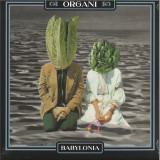
Well-versed in vintage vernaculars, Oakland-based producer/musician Mike Walti is about to return with his sophomore offering under the Organi moniker – as new album “Babylonia” follows 2020’s “Parlez-vous Français?,” a landmark in vibe acquisition ever since.
Wyldwood Studios is a portal. It’s a secret gateway to analog spheres. Cross the threshold and you’ll feel the difference: you can pick any ol’ time, any place, any tongue or vibe, in fact. Hit the dancefloor in 1967, feel that plushy loveseat in the early 70s. It’s a welcoming place where better, saner vibes are still within reach. Fueled, at least in part, by those long-classic 12”s on the walls – just imagine the sepia-tinted countenance of Melody Nelson alongside actual Birkin sans wig, right next to Shadow’s immortal crate diggers, forever blurred –, and channeled through ancient time travel devices such as the MCI 416B only to arrive on classic 2-inch tape (MM1000 aka Ol’ Bessy), it’s a haven for all things organic, for all things imbued with that warm élan. Built and run by Oakland’s own Mike Walti, countless artists from many different genres have felt that flair, creating sonic spheres and moving back and forth along the malleable axis that is space-time. Capturing magic.
Emerging from this unique portal back in 2020, Walti’s aka Organi’s first studio album was a stunning answer to its titular question – “Parlez-vous Français?” It was a soothing, somewhat psychedelic trip so magnétique and alluring that it immediately brought back those bits of Franglais you never knew you remembered. Whereas the debut LP indeed felt like a spontané voyage to the French Riviera ca. 1968, its follow-up “Babylonia” is so much more than linguistic confusion and ancient Akkadian Rhythms. Using that hidden portal near Alameda’s finest port to access all kinds of remote regions and sonic spheres, it’s super tight and feels, well, decent, even though, just like the ol’ Babylon, it’s full of surprising tongues and dreams, schemes and melodies.
“Where do we go from here?,” someone asks in opening “Organii-“ – all majestically cinematic boom bap, buoyant bass, sick strings. A fittingly massive opener that feels like cracking open a cold one after long weeks at work (that ecstatic “ahhhh”), it perfectly sets the tone for another half hour of pure time traveling, globe-spanning bliss. Whereas that certain prédilection pour all things French makes “La Rockette” so tempting and tantalizing (think MalMalNonBien), the sophomore album’s Berlin-based guest singer Nana Lacrima soon takes us elsewhere: title track “Babylonia” spins ever so softly, like a magic lantern, with images of dreamier Stones Throw funksters or Savath y Savalas looming over the steady flow of an arrangement that washes you clean like an ancient, unpolluted River Euphrates or Brazil’s actual Amazon. A sexy Portuguese-flavored anthem, occasional guest singer Alix Koliha also enters the scene to add yet another layer of French chic to this Brazilian landscape. Next, we’re back at the Riviera, but the “Italiano” version of it, splendido sunsets and bell towers in the distance, the ragazze laughing and shaking it up, perhaps even some Portofino Gin so you can really feel that “me ne batto il belin,” as your fingers align form some half-serious “ma che vuoi?”
Tim Maia-penned “Padre Cicero” (1970) deals with the stunning transformation of the titular hero – “De reverendo a lutador,” and what a soaring, sensual hook –, and Organi’s take on Elephant Memory’s “Old Man Willow” (now an “Old Man Waltz”) perfectly underlines what Walti’s Wyldwood endeavor is all about: Easy-Going Experimental Dream Pop, fueled by Gainsbourg, Broadcast, Stereolab, etc.
Later on, even though something seems to be tres complique in “Remembering Anna,” it all sounds carefree like a spontaneous Friday afternoon with a bottle of fine wine. Right before the outro, key album guest Yea-Ming Chen (of Yea-Ming & The Rumors) returns to the mic, adding her dark and dusky trademark timbre to melancholy anthem “Pictures Of Your Face”. Reminiscent of Nico and Trish (rip & rip), it’s a track that’s both dark and strangely propelling, hypnotic and hip-shaking.
A third generation Bay Area native, Mike Walti aka Organi has been running Wyldwood Studios in Oakland CA for some 15+ years (recording artists like Tommy Guerrero, Spelling, Why?, Latyrx, Del, Dan The Automator, and Big Freedia, to name but a few). A multi-instrumentalist who’s obviously in love with the 60s/70s, he loves to work with analog equipment (“We just love us some analog!” “Just listen to those relays purr…”). Recorded and mixed by Mike Walti at Wyldwood, “Babylonia” will be released on vinyl/digital by Alien Transistor.
"This is the time that we, who have benefitted from the Last Poets shouldbe able to say, 'it's the Last Poets. It's them we should be honouring, because we did not honour them for so many years_"
KRS One wasn't just addressing the hip hop fraternity when he uttered
those words by way of introducing the video for Invocation - a poem
written thirty years ago, around the time of the Last Poets' last significant comeback. He was speaking to everyone who's been affected by the word, sound and power issuing from the most revolutionary poetry ever witnessed, and that the Last Poets had introduced to the world outside of Harlem at the dawn of the seventies.
In 2018 the two remaining Last Poets, Abiodun Oyewole and Umar Bin
Hassan, embarked on another memorable return with an album -
Understand What Black Is - that earned favourable comparison with theirseminal works of the past, whilst showcasing their undimmed passion andlyrical brilliance in an entirely new setting - that of reggae music. Trackslike Rain Of Terror ("America is a terrorist") and How Many Bullets demonstrated that they'd lost none of their fire or anger, and their essential raison d'etre remained the same.
"The Last Poets' mission was to pull the people out of the rubble o f their lives," wrote their biographer Kim Green. "They knew, deep down that poetry could save the people - that if black people could see and hear themselves and their struggles through the spoken word, they would be moved to change."
Several years later and the follow-up is now with us. The project started when Tony Allen, the Nigerian master drummer whose unique polyrhythms had driven much of Fela Kuti's best work, dropped by Prince Fatty's Brighton studio and laid down a selection of drum patterns to die for. That was back in 2019, but then the pandemic struck. Once it had passed, the label booked a studio in Brooklyn, where the two Poets voiced four tracks apiece and breathed fresh energy, fire and outrage into some of the most enduring landmarks of their career. Abiodun, who was one of the original Last Poets who'd gathered in East Harlem's Mount Morris Park to celebrate Malcolm X's birthday in May 1968, chose four poems that first appeared on the group's 1970 debut album, called simply The Last Poets. He'd written When The Revolution Comes aged twenty, whilst living in Jamaica, Queens. "We were getting ready for a revolution," he told Green. "There wasn't any question about whether there was going to be one or not. The truth was many of us still saw ourselves as "niggers" and slaves. This was a mindset that had to change if there was ever to be Black Power." He and writer Amiri Baraka were deep in conversation one day when Baraka became distracted by a pretty girl walking by. "You're a gash man," Abiodun told him. The poem inspired by that incident, Gash Man, is revisited on the new album, and exposes the heartless nature of sexual acts shorn of intimacy or affection. "Instead of the vagina being the entrance to heaven," he says, "it too often becomes a gash, an injury, a wound_" Two Little Boys meanwhile, was inspired after seeing two young boys aged around 11 or 12 "stuffing chicken and cornbread down their tasteless mouths, trying to revive shrinking lungs and a wasted mind." They'd walked into Sylvia's soul food restaurant in Harlem, ordered big meals, then bolted them down and run out the door. No one chased after them, knowing that they probably hadn't eaten in days. Fifty years later and children are still going hungry in major cities across America and elsewhere. Abiodun's poem hasn't lost any relevance at all, and neither has New York, New York, The Big Apple. "Although this was written in 1968, New York hasn't changed a bit," he admits, except "today, people just mistake her sickness for fashion." Umar is originally from Akron, Ohio, but had arrived in Harlem in early 1969 after seeing Abiodun and the other Last Poets at a Black Arts Festival in Cleveland. That's where he first witnessed what Amiri Baraka once called "the rhythmic animation of word, poem, image as word- music" - a creative force that redefined the concept of performance poetry and stripped it bare until it became a howl of rage, hurt and anger, saved from destruction by mockery and love for humanity. When Umar's father, who was a musician, was jailed for armed robbery he took to the streets from an early age where he shined shoes and raised whatever money he could to help feed his eight brothers and sisters. By the time he saw the Last Poets he'd joined the Black United Front and was ready to join the struggle. Once in Harlem, Abiodun asked him what he'd learnt in the few weeks since he'd got there. "Niggers are scared of revolution," Umar replied. "Write it down" urged Abiodun. That poem still gives off searing heat more than fifty years later. In Umar's own words, "it became a prayer, a call to arms, a spiritual pond to bathe and cleanse in because niggers are not just vile and disgusting and shiftless. Niggers are human beings lost in someone else's system of values and morals." And there you have it. It's not just race or religion that hold us back, but an economic system that keeps millions in poverty and living in fear - a system born from political choice and that's now become so entrenched, so bloated on its own success that it's put mankind in mortal danger. It was many black people's acceptance of the status quo that inspired Just Because, which like Niggers Are Scared Of Revolution, was included on that seminal first album. Along with their revolutionary rhetoric, it was the Last Poets' use of the "n word" that proved so shocking, but it would be wrong to suggest that they reclaimed it, since it never belonged to black people in the first place. There's never any hiding place when it comes to the Last Poets. They use words like weapons, and that force all who listen to decide who they are and where they stand. Umar's two remaining tracks find him revisiting poems first unleashed on the Poets' second album This Is Madness! Abiodun had left for North Carolina by then where he became more deeply enmeshed in revolutionary activities and spent almost four years in jail for armed robbery after attempting to seize funds related to the Klu Klux Klan. Meanwhile, the 21 year old Umar was squatting in Brooklyn and had developed close ties with the Dar-ul Islam Movement. A longing for purity and time-honoured spiritual values underpins Related to What, whilst This Is Madness is a call for freedom "by any means necessary," and that paints a feverish landscape peopled by prominent black leaders but that quickly descends into chaos. "All my dreams have been turned into psychedelic nightmares," he wails, over a groove now powered by Tony Allen's ferocious drumming. Those sessions lasted just two days, and we can only imagine the atmosphere in that room as the hip hop godfathers exchanged the conga drums of Harlem for the explosive sounds of authentic Afrobeat. Once they'd finished, the recordings and momentum returned to Prince Fatty's studio, since relocated from Brighton to SE London. This was stage three of the project, and who better to fill out the rhythm tracks than two key musicians from Seun Anikulapo Kuti's band Egypt 80? Enter guitarist Akinola Adio Oyebola and bassist Kunle Justice, who upon hearing Allen's trademark grooves exclaimed, "oh, the Father_ we are home!" Such joy and enthusiasm resulted in the perfect fusion of Nigerian Afrobeat and revolutionary poetry, but the vision for the album wasn't yet complete. He wanted to create a new kind of soundscape - one that reunited the Poets with the progressive jazz movement they'd once shared with musicians like Sun Ra and Pharoah Sanders. It was at that point they recruited exciting jazz talents based in the UK like Joe Armon Jones from Mercury Prize winners Ezra Collective, also widely acclaimed producer/remixer and keyboard player Kaidi Tatham, who's been likened to Herbie Hancock, and British jazz legend Courtney Pine, whose genius on the saxophone and influence on the UK's now vibrant jazz scene is beyond question. The instrumental tracks on Africanism are in many ways as revelatory and exciting as the Last Poets' own. It's important to remember that the kaleidoscope of styles and influences we're presented with here aren't the result of sampling but were played "live" by musicians responding to sounds made by other musicians. That's where the magic comes from, aided by Prince Fatty's peerless mixing which allows us to hear everything with such clarity. Music fans today have grown accustomed to listening to all kinds of different genres. Their tastes have never been so broad or all- encompassing, and so the music on this new Last Poets' album is as groundbreaking as their lyrics, and perfectly suited to the era that we're now living in. John Masouri
San Jose slowcore/space rock outfit Duster returns with surprise album "In Dreams," continuing their of inclination of sonically capturing an open-ended question. These thirteen tracks hone in on their trademark dark, droning guitar tones, dialed back percussion, and alluring hard-panned vocals while expanding and exploring synth-heavy and drum machine avenues. it's the fifth duster album, ok
Aqua Tofana Colourless Vinyl. San Jose slowcore/space rock outfit Duster returns with surprise album "In Dreams," continuing their of inclination of sonically capturing an open-ended question. These thirteen tracks hone in on their trademark dark, droning guitar tones, dialed back percussion, and alluring hard-panned vocals while expanding and exploring synth-heavy and drum machine avenues. it's the fifth duster album, ok.
San Jose slowcore/space rock outfit Duster returns with surprise album "In Dreams," continuing their of inclination of sonically capturing an open-ended question. These thirteen tracks hone in on their trademark dark, droning guitar tones, dialed back percussion, and alluring hard-panned vocals while expanding and exploring synth-heavy and drum machine avenues. it's the fifth duster album, ok
- Cold Outside
- Nick Of Time
- Lonely One
- It's My Time
- Left Unsaid
- Try Try Try
- Hall Of Mirrors
- Much Too Much
- Your Kinda Thing
- New Questions
- Kill City
- I'm Not Gonna Do It
- Don't Wanna Play
- Nashville Nights
- Today I Shot The Devil
- Tell Me Things
- Live With Me
- Just Another Day
The Fluid are arguably the great unsung band from the fertile underground rock scene of the late '80s and early '90s. The Denver five-piece - John Robinson (vocals), James Clower (guitar), Matt Bischoff (bass), Garrett Shavlik (drums), and the dear departed Ricky Kulwicki (guitar) - fused the fire of '80s hardcore with crunching Detroit protopunk, '60s garage rock, and '70s rock swagger. Think MC5, Faces, '70s Stones, all cranked up and really high on Sex Pistols and Black Flag singles. Rising from the ashes of early-'80s Denver bands Frantix (whose "My Dad's a Fuckin' Alcoholic" is a true gem of American punk) and White Trash, The Fluid were the first non-Seattle band to sign to Sub Pop, and Clear Black Paper was the second full-length album the label ever released. The label honchos were fans of Frantix, and happily got involved with The Fluid when the opportunity arose via the label's European licensing partner, Glitterhouse. Witnessing The Fluid's dominant live presence helped - a particularly fiery early show at Seattle's Central Tavern featured The Fluid, Mudhoney, Mother Love Bone, and Soundgarden all trying to outdo one another on stage. The band fit right in on Sub Pop's nascent roster of acts who, wherever they stood on the spectrum of punk/rock/metal, shared a commitment to thunderous riffs and explosive live shows. Legendary for their ferocious stage presence, The Fluid toured all over the US and Europe, holding their own and then some on bills with Mudhoney, Nirvana, Soundgarden, Dinosaur Jr., and other powerhouses of the era. From 1986 to 1993, The Fluid put out four albums and a number of EPs and singles, including a split 7" with Nirvana in 1991, before doing one album for a major label and promptly disbanding. Yet, while their partners-in-crime bulldozed into the mainstream, The Fluid remained something of a cult band, their audience confined to those who got hip during the band's existence, and crate diggers who nabbed original vinyl or CDs, which had quickly become rarities after selling through their original runs. Why? Record industry machinations? The fickle finger of pop culture? Being from Denver, not Seattle? Who the hell knows_ and who cares! The point is the band ripped, and the world deserves to hear them again. The Fluid took influences they shared with their contemporaries and ran in their own direction, focused on ass-shaking grooves more than misanthropic sludge. Rock anthems like "Cold Outside" sit alongside Stooge-oid rhythmic poundings ("Black Glove"), bluesy romps ("Leave It"), the occasional grungy dirge ("Wasted Time"), and raw punk bangers ("Is It Day I'm Seeing?" from the seminal 1988 Sub Pop 200 compilation). The band wasn't shy about their inspiration, either: scattered through their catalog are covers of The Troggs, The Rolling Stones, MC5, Iggy Pop and James Williamson, and Rare Earth. The Fluid stand out as champions of a feral, urgent, exuberant approach to rock 'n roll. As it turns out, that wasn't a recipe for stardom in the era of hyper-slick pop, boomer dinosaurs crying tears in heaven, and hair-metal power-ballads. But someone had to do it. To set things right, Sub Pop, The Fluid, and producer Jack Endino (Nirvana, Soundgarden, High on Fire, Mudhoney) teamed up to refresh and reissue The Fluid's entire indie-label catalog: their 1986 debut, Punch N Judy; 1988's Clear Black Paper; 1989's Roadmouth; the 1990 Glue EP (produced by Butch Vig, of Nevermind fame); and a treasure trove of rarities and previously unreleased material. All the music has been remastered from original tapes by Endino and JJ Golden, and the bulk of it has been meticulously remixed by Endino and the band, righting some sonic quirks that diminished the impact of the original records. Now, with their definitive material sounding better than ever, it's high time The Fluid get their due.