A1 is 'On You', Loyal Hardware's minimal, moody, breakbeat tune that caught the attention of EDiT
(GlitchMob); Perera Elsewhere (FoF) and Luckyme's Jacques Greene who played the single across NTS, The Lot Radio and in his BBC Radio 1 'After Party playlist' with Monki; describing that 'it touches on the DNA of club music' with 'all these moments of beauty... it's got this mix of sorta' heavy drums but it's more vibey than it is a hard hard track'.
'Dust' and 'Round Here' accompany on the B-Side of Loyal Hardware's debut EP, confirming that the
producer who has supported the likes of Lapalux, Rival Consoles, Aisha Devi, Jacques Greene and DJRUM, is one to watch.
'Loyal Hardware EP' is released 17th April via new imprint BRIEF, distributed by ABOVE BOARD. Available to pre-order now, digitally and on limited 12' vinyl.
quête:t s monk
Seit über einer Dekade gehört James Connolly als Produzent (L-Vis 1990, Dance System) und Betreiber des Hip-Labels Night Slugs zur progressiven Speerspitze der Clubmusik. Nach Releases auf Clone und Jimmy Edgars Ultramajic-Label (und einer fünfjährigen Auszeit dazwischen), meldet sich Connolly nun auf Modeselektors Monkeytown Records zurück. Seine Dance System "Wind 'Em Up" EP bietet in der ernsten Techno-Welt von heute und entgegen aktueller politischer Strömungen genau die Sorte verspielter Frischluft, die wir alle brauchen.
"When Night Slugs boss L-Vis 1990, aka James Connolly, slips on his Dance System alias, the mission is simple: slamming - but pointedly simple and unfussy - tracks that get your ass on the dancefloor." - VICE
Launched in 2018 with two first EPs, Broken District continues to explore alternative music styles with the third instalment of its VA series.
The label's territory here expands to Jazz & Soul-influenced electronic music landscapes, with productions from Turbojazz, Setwun, Leon Revol, Duktus and the label's co-founders Jus Jam and Momla.
Ambient/Traditional Flute Music from Japanese Shakuhachi Master Teruhisa Fukuda
The shakuhachi is an end-blown bamboo flute with one dorsal and four frontal holes and a bevelled notch as mouthpiece. There are two elements in the name of the instrument: shaku refers to an ancient measurement which is the equivalent of 30,3 cm; hachi means eight. Originally shakuhachi thus refers to a flute that measures 1,8 shaku, that is, 54,5 cm.
For this CD, 2LP Master Fukuda chose a series of seven pieces from a repertoire dating back to the seventeenth century. These were originally performed by monks belonging to the Fuke sect of zenBuddhism, who viewed their instrument as means for meditation. The seven pieces are destined to be played solo, in the spirit of zen.
Teruhisa Fukuda
Born in 1949, Teruhisa Fukuda is an eminent artist who has explored a vast range of musical techniques from, both, traditional and contemporary music.
Vol.8 PT2[26,01 €]
Vol.1[23,49 €]
Vol.13 PT2[23,40 €]
Vol.13 PT1[23,49 €]
Vol.15[26,47 €]
Vol.16[26,01 €]
The Blue Note Record label needs little introduction. Musically, graphically and sonically iconic, the label created and defined the golden age of modern jazz on record. Founded in 1939 by German émigré Alfred Lion, the label's roster of artists is a litany of giants - Thelonious Monk, Sonny Rollins, Horace Silver, Lee Morgan, Art Blakey, Lee Morgan, Herbie Hancock and many more. With peerless musicians in the grooves, the legendary Rudy Van Gelder behind the boards, and graphic design genius Reid Miles creating emblematic artwork for every release, Blue Note - 'the Cadillac of the jazz lines' - was outstanding in every way.
Volume 8 of Jazzman's Spiritual Jazz series takes a close look at the deeper side of Blue Note - from the experimental avant-garde explored by younger musicians such as Bobby Hutcherson, Joe Henderson and Pete La Roca, to the exciting new developments in modal sounds put forward by stalwarts Hank Mobley, Jackie McLean and Duke Pearson. The music we have selected shows how musicians working with the label responded to a period of dramatic social and sonic change, charting the route toward the esoteric and spiritualised sounds that would dominate the deepest jazz of the 1970s.
As ever, Blue Note had lit the path, and this new Spiritual Jazz collection shows that the progressive and underground jazz sound of the 1960s was not only the preserve of obscure artists and private pressings. Blue spirits and heavy sounds on Blue Note - the finest in jazz since 1939, brought to you by Jazzman.
Demon Music presents a narrated full-cast TV soundtrack adventure starring William Hartnell as
the Doctor, in an epic quest to defeat his arch-adversaries, the Daleks.
In this classic 12 part 'lost' adventure, first shown on BBC TV from October 1965 to January 1966,
the Daleks threaten to destroy the fabric of time itself. In their quest to control the Solar System,
they have taken possession of the devastating Time Destructor. Determined to stop them, the
Doctor (William Hartnell) steals the core of the weapon. He and his friends are thus pursued
across Time and Space by their ruthless, powerful nemeses...
Presented across 7 x Heavyweight 180g Blue translucent pieces of vinyl, this narrated TV
soundtrack evokes a classic Doctor Who adventure in all its aural magnificence. From the eerie
sonics of Ron Grainer & Delia Derbyshire's theme tune, and the familiar 'wheezing, groaning' of
the TARDIS, through screaming jungle worlds and an array of spacecraft, the story is alive with
weird and wonderful sound.
Written by Terry Nation and Dennis Spooner, this is the longest single Doctor Who adventure ever
made for television. Linking narration is provided by Peter Purves (Steven) and the cast includes
Kevin Stoney as Mavic Chen, Nicholas Courtney as Bret Vyon, Jean Marsh as Sara Kingdom and
Peter Butterworth as the Meddling Monk. The film recordings of all but three episodes of this
story are lost from the BBC archives.
The prelude episode Mission to the Unknown is presented on its own single-sided disc with a
unique Dalek (standard edition) or TARDIS (exclusive edition) etched reverse.
Modeselektor präsentieren mit "I Am Your God / Bronko" rauen, deepen und abgrundtiefen Techno aus ihrem neuen Album "Who Else". 100%iges Dancefloor-Material, das gleichzeitig so detailliert und ausgearbeitet ist, dass es Dich im stundenlangem Listening-Modus hält. Auf der A-Side wirkt Otto von Schirach als schreiender, unheiliger Geist mit. Die hypnotische Qualität und das akribische Sounddesign der beiden Tracks belegen exemplarisch, wie klug und raffiniert sich die Produktionsweise des Berliner Duos in den letzten Jahren entwickelt hat.
Nach Releases Auf Going Good, Jinn, Lovers Rock, Gravity Grafitti Und Moscomans Disco Halal-label Veröffentlicht Der Japanische Produzent Yoshinori Hayashi Nun Sein Debütalbum Auf Smalltown Supersound. Als Schüler Des Avantgarde-komponisten Mica Nozawa Besitzt Sein Werk "ambivalence" Einen Kosmischen, Hypnotischen, Fast Rituellen Ansatz Und Wird Von Resident Advisor Als "komplexes Patchwork Aus Studiogeräten, Live-instrumenten, Verstaubten Jazz-platten Und Clever Geschnittenen Library-sounds Mit Weichen Und Einladenden Strukturen" Bezeichnet.
In the sweltering North-Eastern Brazilian state of Pernambuco lies the coastal city of Recife, where Amaro Freitas is pioneering the new sound of Brazilian jazz. For the prodigious young pianist, the spirit of his hometown runs deep. From the Afro-Brazilian maracatu born on the sugar plantations of slavery, to the high intensity carnival rhythms of frevo and baião, Amaro's heavily percussive approach to jazz is as indebted to these Pernambuco traditions as it is to Coltrane, Parker and Monk.
As with many of the greats before him, Amaro began playing piano in church aged 12, under the instruction of his father, leader of the church band. As his natural talents became obvious, the young prodigy quickly outgrew his father's instruction. He won a place at the prestigious Conservatório Pernambucano de Música but had to drop out as his family could not spare the money for the bus fare. Undeterred, Amaro gigged in bands at weddings and worked in a call centre to fund his tuition. The transformative moment came at age 15 when Amaro stumbled across a DVD of Chick Corea concert, 'he completely blew my mind, I'd never seen anything like it but I knew that's what I wanted to do with a piano'.
Despite not actually owning a piano, Amaro devoted himself to studying day and night - he would practice on imaginary keys in his bedroom, until eventually striking a deal with a local restaurant to practice before opening hours. By the age of 22 Amaro was one of the most sought-after musicians in Recife and resident pianist at the legendary jazz bar Mingus. It was during this time he met and begun collaborating with bassist Jean Elton and the pair went in search of a drummer. 'We kept hearing about this crazy kid who was playing in 7/8 or 6/4, we knew we had to meet him'. Hugo Medeiros joined, and the Amaro Freitas Trio was born.
'I want to show the simplicity of music, to break the stigma that the piano is for a particular social class. Yes, it's a difficult instrument, which many people do not have access to, but with it you can express everything.'
Following his critically acclaimed debut album Sangue Negro (black blood), the title of his sophomore release Rasif is a colloquial spelling of Amaro's home town. A love letter to his native northeast, Amaro explores its traditional rhythms through the jazz idiom, employing complex mathematical patterns reminiscent of some of the most challenging works by fellow Brazilian masters Hermeto Pascoal, Egberto Gismonti and Moacir Santos.
Preferring to see the piano as a though it were a drum with 88 unique tones, Amaro's intelligence and emotion intertwine on every track, from album opener 'Dona Eni': a scorching reconstruction of the baião rhythmic structure, played in seven measures instead of two, to the serene homage to the coastal reef and its ecosystems on the title track 'Rasif'. 'Aurora' is a suite of three parts, representing the sun's journey from the light and soft of the rise, to the aggressive dissonance at its midday zenith and descending chromatic cadences as the sun sets.
Due for an Autumn release on Far Out Recordings, Rasif sees Amaro Freitas take a deserved step onto the world stage. Having already made a name for himself in Brazil, Amaro and his phenomenal band will embark on their first European tour later this year.
Amaro Freitas - Piano
Hugo Medeiros - Drums & Percussion
Jean Elton - Double Bass
Henrique Albino - Baritone Sax, Flutes & Clarinet
All compositions by Amaro Freitas
Produced by Amaro Freitas
Recorded by Bruno Giorgi @ Carranca Studio, Recife, Brazil
Mixed and mastered by Bruno Giorgi @ Quarto Studio, Rio de Janeiro, Brazil
Executive producer and management: Laercio Costa
Auch Auf Seinem Dritten Album Nutzt Sebastian Kramer Aka Redshape Den Für Ihn Prägenden Sound Von 90er-jahre-techno Allgemein Und Speziell Aus Detroit Nicht Als Zitat, Sondern Erzeugt Mit Seinen Neuen Tracks Ein Sehr Spezielles, Eigenes Narrativ: Düster, Gespenstisch, Und Doch Entschieden Romantisch. In Gewisser Hinsicht Ist "a Sole Game" Sogar Die Erste Echte Redshape-lp Überhaupt, Die Nun Nichts Mehr Imitieren Will, Sondern Sich Durch Selbstbewusstsein, Selbstreflexion Und Souveränität Ausweist. Im Klassischer Redshape-manier Begeben Sich Die Acht Tracks Von "a Sole Game" Auf Eine Reise Durch Nächtliche Welten Und Düstere Industrielandschaften, Durchzogen Von Seltsamen Stimmen Und Geräuschen. Eines Der Wichtigsten Ziele Lag Unüberhörbar Darin, Ein Nahtlos Perfektes, Ganzheitliches Elektronisches Album Zu Produzieren, Das Ohne Interludes Oder Typisches Füllmaterial Funktioniert. Entsprechend Warm Und Analog Klingt Die Platte. Letztendlich Setzt Redshape Damit Klassisches Songwriting Mit Den Codes Von Techno Um Und Macht In Seiner Musikalischen Entwicklung Einen Großen Schritt Nach Vorne.
- A1: Lovecoaster
- A2: Truth (Feat. Beau Nox)
- A3: It's Alright (Feat. Jaël)
- A4: Keep Up
- B1: Get To Know You (Feat. Pip Millett)
- B2: Slow Down (Feat. Damon Trueitt)
- B3: It Ain't The Same
- C1: Awake In The Dark (Feat. James Chatburn)
- C2: Comfortable (Feat. High Høøps)
- C3: Better For Ya (Feat. Sacha Vee)
- D1: Revive
- D2: How I Feel (Feat. Sam Wills)
- D3: Zoom Out (Feat. Malia)
- D4: Take Off
Compilation of the works by MJ Lallo, weird harmonizing mantras layered with drummachine rhythms.. Very psychedelic compositions where she uses her voice to create all kinds of sound(scapes)
.
Take Me With You is a revelatory voyage through the captivating universe of voice artist and poet MJ Lallo. The works on this 2LP compilation were all recorded in her home studio between 1982 and 1997, primarily using drum computer, synth and her own voice processed through a Yamaha SPX 90 digital effects unit. They range from wordless harmonizer mantras and primitive drum computer meditations, to psychedelic latin dance-floor anthems and synth-drenched end-of-the-nighters. Lallo has created her own inimitable galaxy of sound where the human voice, liberated from the constraints of language and abstracted using digital technology, is able to explore the outer realms of human expression, like Joan La Barbara with an Eventide and a new-age sensibility. Although Lallo's flight path is distinctly her own, her journey converges with other travellers as diverse as Jon Hassell, Laraaji, Stereolab, William Aura, Laurie Anderson, Meredith Monk, Gertrude Stein and even Terry Gilliam (whose film Brazil was a big influence on Lallo). Like something beamed in from another planet, Lallo's work is both fascinatingly strange and strangely familiar, and will leave a lasting impression for lightyears to come. Double gatefold LP, remastered DDM pressing.
[E B1 | Midnight in the Sky
Here come The James Hunter Six! Serving yet another delicious dish of what you wish with the premier single off their upcoming LP, Whatever It Takes (DAP-051).
And I'll be a monkey's uncle if James hasn't delivered two of his most compelling sides to date on this one. I Don't Wanna Be With- out You' is a graduate level course in the Three R's of R&B: Rhythm, Rhyme, and Romance.
A sultry rumba sets the mood, as Hunter swaggers in - donning his finest voice like a crisp tuxedo, complete with ruffled vibrato and rhyming cuff-links - and proceeds to lay on an absolute heart-stealin', deal-sealin', panty-peelin' gem.
On the flip, I Got Eyes' loosens the collar and brings the metro- nome mark up a few clicks for a punchy tightened-up workout, edged-up with vibes and street corner backgrounds.
Bring your talcum powder and a change of clothes cause it's another jaw-droppin' showstop- per by that finger-poppin' pond-hopper, James Hunter
Auf ihrem zweiten gemeinsamen Album "Imagori II" zeigen Hans-Joachim Roedelius (Harmonia, Cluster) und Christoph H. Müller (Gotan Project) neue Facetten ihrer Zusammenarbeit. Die zwölf Stücke pendeln zwischen Zartheit und scharfen Kanten, zwischen Science Fiction und Garten Eden, lassen organische Klangkörper aufkommen, die sich wieder fragmentieren, erschaffen Stimmungen zwischen Melancholie und Euphorie, stets begleitet von jenem filmischen Pathos Roedelius', der ohne große Gesten auskommt und vielmehr die Grenzen des Minimalismus auslotet. Auffällig oft kommt dabei auch Sprache zum Einsatz, so zum Beispiel in der ersten Single "Fractured Being", der Miss Kenichi alias Katrin Hahner ihre Stimme leiht.
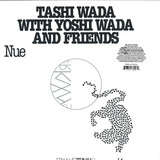
Composer Tashi Wada has performed for years with his father Yoshi Wada—artist, composer, and early member of the Fluxus movement. However, they have rarely appeared together in studio settings. Nue, the fourteenth entry in RVNG Intl.'s intergenerational FRKWYS series, finally brings Tashi and Yoshi, along with an eclectic group of close friends and extended family, together on tape.
Nue draws on aspects of Tashi's background for his widest vision to date—among them the minimalist bagpipe music of Yoshi, who co-composed three of the tracks, the psychoacoustic and perceptual explorations of his mentor, composer James Tenney, and reimagined forms of ancient and devotional music. The album, however, is not a tribute to the past or a recapitulation of familiar sounds. Instead, Nue is an intertwining of people and ideas as a means of growing, of looking inward to move outward, and of looking back to move forward.
To achieve this growth, Tashi assembled a core group of fellow travelers, including Yoshi, composer Julia Holter, producer Cole MGN, and percussionist Corey Fogel, to give life to this multifaceted suite. As an experience, Nue subtly navigates the interactions, intimacy and spaciousness of this group.
The album's title itself is a nod to Tashi's abiding interest in duality and the unknown: nue is a mythological Japanese chimera with the face of a monkey, the legs of a tiger, and a snake for a tail, a composite form, at once disturbing and otherworldly. But, as the composer points out, nue is also French for naked—stripped of complexity, bare and exposed, but also raw and essential.
From the doubling of tones—and the world of harmonic nuances such an action produces—to the rich interplay between individual musicians, all baring their own personalities and experiences through shared performance, Tashi's compositions allow space for these elements to join and grow. The multipartite creature that is an ensemble melds in the simplicity and purity of the music itself.
As explained by Tashi, each part was written with an individual in mind, not simply an instrument. And each individual performer makes their mark, from Holter's vocal performances on the cresting, oceanic 'Mutable Signs' and 'Ondine' with guest vocalists Simone Forti, Jessika Kenney and Laura Steenberge, to Fogel's resonant, precise percussion on 'Bottom of the Sky.' Producer Cole MGN, who has worked extensively with artists like Beck and Ariel Pink, helped to create a world of sound with minimal yet multi-dimensional materials. Like many of its influences, Nue uses deceivingly simple means to create complex, coherent worlds and narratives.
Tashi notes the influence of legendary Brazilian writer Clarice Lispector, whose work looked inward, investigating memory and emotion and dream, to understand the often overwhelming world outside the self. Like Lispector's classic novel Near to the Wild Heart, Nue cleaves these archetypal dualities—world/self, old/new, complex/simple—to create a work that allows them to coalesce into something singular.
As Tashi states in his liner notes: 'My desire was to create something both old and new sounding—ancient and futuristic—and ultimately something of its own world and other. Nue is a vision, an endless night of dreams, and a personal history of sorts, full of joys and demons.'
Matthew Dear's Black City Can't Be Found On Any Map. It's A Composite, An Imaginary Metropolis Peopled By Desperate Cases, Lovelorn Souls, And Amoral Motives. Like Most Literary Gothams, Black City Is A Place To Love And Hate, As Seedy As A Nightclub's Back Room And As Seductive As The Promise Of Power. Matthew Dear, The Musician, May Live In New York City, But The Matthew Dear Of Black City Inhabits A Sound-world Unlike Any Other: A Monument To The Shadowy Side Of Urban Life That Bumps And Creaks, Shudders And Wakes Up Screaming In The Middle Of The Night. Black City Is Matthew Dear's Third Album On Ghostly International, And It's His Darkest And Most Engrossing Work To Date.
From The rst Notes Of Album Opener "honey", It's Clear That The Love-obsessed Matthew Dear Of 2007's Asa Breed Has Given Way To A More Existentially Paranoid Entity, As Creeping Tempos Dominate, Cavernous Atmospherics Envelop The Listener, And Strange Distortions Crackle On The Horizon. In Black City, Nothing Is At It Seems: Leadoff Single "little People (black City)" Is A Nine-and-a-half Minute Disco odyssey, subverting its gleaming electronic lead with eerily giddy backing vocals and cryptic, ominous lyrics ("a frozen wasted heart / has died", "love me like a clown"); "You Put a Smell on Me" is a sordid sex romp set to hysterically chattering percussion and a serrated synth line that will set your teeth on edge; "More Surgery" at rst recalls the barely-there Krautrock of Harmonia in its burbling minimalism, until Dear's chanted chorus of "Alter genetics / to make my body glow / I need more surgery / there's so much more to know" sends the track hurtling into a dystopian future.
And yet, for all the foreboding moods on Black City, it's the album's sweeter moments that illustrate Matthew Dear's growing maturity as a songwriter. "Slowdance" is a futuristic lullaby in which Dear articulates a lover's helplessness ("I can't be the one to tell you everything's wrong") over breathy, Arthur Russell-esque cello swishes; the album-closing "Gem" is an achingly simple, reverb-drenched piano ballad that ends with a long, slow fade. Even in Matthew Dear's Black City, there is hope.
Here at Death & Leisure we are on a continuing mission to surprise and experiment, and so with our new release we present something very special, Blackmoon1348 and The Tibetan Monks of The Tashi Lhunpo Monastary. This project sounds like nothing else, it fuses heavy drone guitar sounds with traditional tibetan throat singing and live instrumentation.
BlackMoon1348 in collaboration with the Tibetan Monks of the Tashi Lhunpo Monastery (Tibet/ India). 2017 BlackMoon1348 embarked on a cultural experimentation of cultural diversity in the arts, forming a collaboration of ancient Tibetan ceremonial practises and instrumentation with sub-harmonic drones and industrial soundscapes. The music amalgamates sacred mantras that date back to the early teachings of Tibetan Buddhism practised in the Tashi Lhunpo Monastery, with heavy detuned western instruments, synths, and electronic music for the first time in recorded history. The Tashi Lhunpo monastery was once home to the Panchen Lama who subsequently 'disappeared' under the oppressive Chinese rule of Tibet. A handful of the Tashi Lhunpo monks were fortunate to escape into exile and have since re-built the monastery in Mysore, South India - now flourishing with over 400 monks practising within the monastery. Tibetan Buddhism is an outlawed ancient tradition within Tibet - monks, nuns, and Tibetans cannot openly practise their heritage and traditions, forcing Tibetans to inhabitable plateaus, with such areas are now under 'Chinese Re-development', the land being stripped of natural resources for China's ever growing economy and totalitarian rule. Tibetans face persecution for as little as owning a Tibetan flag, or picture of the Dali Lama, with such actions landing you in jail, tortured, poised, and/or being released just before the point of death. It is important for us to remember and celebrate the traditions of the Himalayas and its sacred, peaceful practises.
The music was recorded live in one take at Flesh and Bone studio in Hackney for NTS Radio's Black Impulse show. Engineered, mixed, and mastered by Oliver and Owen at Flesh and Bone, capturing the raw, ethereal essence of the collaboration and ceremonial sounds buried deep within the Himalayas. This was the first time in history for such collaboration of tradition, ideology from Adeline Rozario and orchestrated by David Kerry of BlackMoon1348 who created this music to diversify and bring together ceremonial instruments, diversifying the metaphysics of transcendence through ceremonial Tibetan practises.
It is important to understand that BlackMoon1348 are not attempting to change the fundamental meaning or belief of the Tashi Lhunpo Monks, or assume to have a deep-rooted understanding of the ancient traditions of Tibetan Buddhism, This is our understanding of Tibetan culture and practices as truly and honestly as we see and feel it, and our attempt to spread this beautiful, sacred, culture, and keep it alive within today's society.
Liberation through hearing.
Cold Beat is a San Francisco-based quartet fronted by Hannah Lew (synths, vocals) with Kyle King (synths, guitar), Luciano Talpini Aita (synths) and Sean Monaghan (guitar). Formed in 2013 the band has released three albums and two EPs. 'A Simple Reflection' is a 7-song collection of Eurythmics covers, yet feels just as personal as any of their original material. While digging through a collection of 12s for her record shop Contact Records, Lew stumbled across the earliest Eurythmics B-sides and was floored. This lead to the discovery of their debut album 'In The Garden'. Annie Lennox's abstract and poetic lyrics really struck a chord with Hannah. What had started out as a single cover quickly snowballed into a full blown obsession. The synth and drum programming resonated with her songwriting process, so reimagining them was very creatively fulfilling. The covers on this EP are simultaneously dynamic and atmospheric post-punk that plays to Lew's ethereal vocals and King's crystalline guitar. All songs have been mixed by Mikey Young (Total Control) and mastered by George Horn at Fantasy Studios. The record is housed in a jacket designed by Eloise Leigh, which features pink and purple clouds that evoke a dreamy softness and DIY playfulness and photos Lew in her best Lennox-inspired drag. Each copy includes a postcard with photos and notes. 'Sometimes a song seems to sing just for you, as if someone knows your most inner thoughts and feelings and has found a way to describe them effortlessly' - Hannah Lew