the iconic project returns late September with its milestone 10th studio album, ‘I Wrote You A Letter’.
Twenty-five years after his debut, M83 (Anthony Gonzalez) stands as a genuinely era-defining electronic act, renowned for pushing indie-electronic into the mainstream while maintaining absolute critical credibility. With a massive catalog compounding billions of streams—anchored by the timeless “MIDNIGHT CITY” (1.5B streams)—the iconic project returns late September with its milestone 10th studio album, I WROTE YOU A LETTER’.
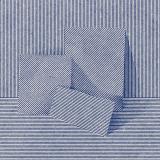
Recorded between Los Angeles and Paris alongside BENOIT DE VILLENEUVE, this new record follows the highly acclaimed ‘FANTASY’ (2023) and features striking artwork by celebrated Australian photographer BILL HENSON. This release marks a historic chapter, encapsulating a quarter-century of sonic evolution.
Commercially, M83’s power lies in an unmatched ability to transcend generations. Synonymous with cinematic emotion, nostalgia, and immense scale, M83’s sound is virtually a genre of its own, heavily sought after for film, TV, and sync. Live, the act holds top-tier global status, proven by headlining slots at major festivals like Coachella, Glastonbury, and Primavera.
‘I WROTE YOU A LETTER’ delivers exactly what M83 does best: big emotional scale, breathtaking cinematic atmospheres, and sharp hooks, all pushed into a fresh, modern palette.
Fünfundzwanzig Jahre nach seinem Debüt gilt M83 (Anthony Gonzalez) als ein wahrhaft epochaler Elektro-Künstler, der dafür bekannt ist, Indie-Elektro in den Mainstream zu bringen. Mit einem riesigen Repertoire, das Milliarden von Streams umfasst – angeführt von dem zeitlosen „MIDNIGHT CITY“ (1,5 Milliarden Streams) – kehrt das ikonische Projekt Ende September mit seinem wegweisenden zehnten Studioalbum „I WROTE YOU A LETTER“ zurück.
Das neue Album, das gemeinsam mit BENOIT DE VILLENEUVE in Los Angeles und Paris aufgenommen wurde, knüpft an das hochgelobte „FANTASY“ (2023) an und besticht durch ein eindrucksvolles Cover des gefeierten australischen Fotografen BILL HENSON.
Diese Veröffentlichung markiert ein historisches Kapitel und fasst ein Vierteljahrhundert klanglicher Entwicklung zusammen.
Kommerziell liegt die Stärke von M83 in der unübertroffenen Fähigkeit, Generationen zu verbinden.
Als Synonym für filmische Emotionen, Nostalgie und immense Größe ist der Sound von M83 praktisch ein eigenes Genre, das für Film, Fernsehen und Synchronisation sehr gefragt ist.
Live genießt die Band weltweit Spitzenstatus, was durch Headliner-Auftritte bei großen Festivals wie Coachella, Glastonbury und Primavera unter Beweis gestellt wird.
„I WROTE YOU A LETTER“ liefert genau das, was M83 am besten kann: große emotionale Bandbreite, atemberaubende filmische Atmosphären und eingängige Hooks, alles verpackt in einer
frischen, modernen Klangpalette.
For her new and most radical album »Electroacoustic Works for Halldorophone«, Martina Bertoni used the electronic instrument at EMS Stockholm to create four pieces that are massive in scale and incredibly intimate, sonically restrained and emotionally overwhelming—almost ambient and always demanding your full attention.
Martina Bertoni returns to Karlrecords with »Electroacoustic Works for Halldorophone,« her most radical album yet. The foundation for the four electroacoustic pieces was laid during a residency at Stockholm’s legendary Elektronmusikstudion (EMS) that the Berlin-based cellist and composer used to explore the curious instrument, originally designed by Halldór Úlfarsson in 2008, as an algorithmic system in order to examine tunings and the mathematical relationships between Aiming to analyse and understand their interaction beyond the composer’s control, Bertoni sought to engage more deeply with the concepts of time, tuning, and, most importantly, control. Accordingly, her four »Electroacoustic Works for Halldorophone« seem both massive in scale and incredibly intimate, sonically restrained and emotionally overwhelming— almost ambient and always demanding your full attention.
While the halldorophone—famously used by Hildur Guðnadóttir for her »Joker« score—roughly resembles a cello and can be played like one, it is an electronic instrument. The vibration of its strings is being picked up, amplified, and then routed through a speaker. This creates a feedback loop that becomes increasingly complex depending on how much gain is added to individual strings. Úlfarsson gave Bertoni a carte blanche for how to handle the instrument, but she stresses that she relied on »minimal interventions—some string strumming and plucking« that set the interactions of different sounds and frequencies into motion. »I decided to not approach it like a cellist would,« she explains. »Instead I used it as a kind of generative organ by turning it into a feedback machine, with tuned feedback triggering more feedback depending on the tuning, which was based on tetraphonic scales that I could apply on the four main strings as well as the sympathetic group of strings.«
Bertoni recorded the material in the EMS studio, later composing and arranging the four complex pieces in her home in Berlin, after which they were mixed and mastered by Ciaran O’Shea. While this can be considered a compositional abstraction process, traces of her concrete work as a performer are firmly ingrained in the music. »The halldorophone doesn’t have a line output, just a double set of speakers, which is why I recorded all sounds with two microphones in the EMS studio,« she explains. »That’s why there’s plenty of breathing sounds here and there—label owner Thomas Herbst and I jokingly refer to the album as my ›chamber music record‹.« And indeed, there is a striking sense of intimacy to these four pieces throughout which individual sounds, harmonic frequencies, and even subtle rhythmic figures seem to move both on their own accord but also according to a underlying vision that steers their interplay.
Indeed, »Electroacoustic Works for Halldorophone« is an album built on and marked by contrasts. The soothing polylogue of single sounds in the higher register on opener »Omen in G« is counterpointed by massive bass drones, while the second piece, »Nominal in D,« plays a cunning game of repetition and difference by combining thick textures with all kinds of rhythmic elements. »Fades in C«—the longest of the four pieces, clocking in at 17 minutes—unlocks the emotional potentials of the sonic qualities of the halldorophone, sounding at once serene and anthemic, and »Organon in D« closes the album by underscoring how Bertoni’s unconventional approach allows her to seamlessly transform simple, quiet tones into complex, towering walls of sound.
Tucked in the heart of Koreatown, Los Angeles, lies The Libra Hotel—the titular architecture of Nick Malkin's new album and site of his musical and psychogeographic exploration. Unlike most musical "site-specific" studies, Malkin remains wholly ambivalent to the documentarian approach, instead sharpening an auteur-like focus on the site as a conceptual and highly expressive backdrop. The Libra is musically explored as a space that houses a noir fragmentation of identity—the exhausted trope of a complicated protagonist walking through rain-soaked street corners and fumy neon lights—where an inner monologue is rendered in both miniature and at a cosmic scale. Casting aside stifling tropes around field recording, ambient, and improvised music, Malkin's work finds its own unique fidelity and emotional core through the assembly and reassembly of memory. Nearly every sound on the album—from frayed saxophones, lambent pianos, and dissected jazz drum kits—are multiplied, shattered, and reconstituted into shapes that adorn The Libra in a motion-blurred fog. The narrative of the Hotel suddenly appears as if out of the mist, with intersecting characters interacting within its walls by happenstance. Adminst the languid set pieces, wraith-like sonic grains gravitate around wide subbass beams that give structural form to The Libra, a narrative tension like when a scene is shot from hundreds of different perspectives: an image both luminous and veiled.
Much like Frank Sinatra's own spatial residency immortalized on "Live at The Sands," "At The Libra Hotel" showcases an exuberant view of entertainment, hospitality, and a form of masculinity, one that can quickly detourn into darkness. Knowing this, Malkin extracts a melancholic core out of The Libra locale. The flickering shadows of American decadence are shown in their ephemeral honesty, lines that trace how even in everyday life virtue is tested, sanity is tested, even reality is tested within the confines of desire, within the night. The album is draped in fleeting textures, carefully arranged with a trance-like microtonality, the faint inflections and articulations of a jazz band cascading into dissipated stillness. Voicemails about changed locations and covert eavesdropping on guests' whispered conversations provide an atmosphere of missed connection and voyeurism—a purloined letter of desire receding into a vanishing point. Like the music itself, The Hotel, a chapel perilous at the intersection of desolation row, the center of it all, yet simultaneously at the edge of town, becomes a structure between libidinous virtuality and actuality—our inevitable half-light.
Ultimately, the pensive atmosphere of "At The Libra Hotel," powerfully asserts a plea for the kinds of intimacy only possible in transient spaces. Here, memory cascades into a force that feels like something supernatural, perhaps even religious, yet always subject to the infidelity of our imagination. Here, the album opens into its primary psychodrama, the transient nature of subjectivity itself and how this becomes fractured in the tumult between our commitments and desires. Within this nocturnal space, to quote Louise Bourgeois, "you pile up associations the way you pile up bricks. Memory itself is a form of architecture."
In the ever-evolving landscape of the underground music scene, few bands have made an impact quite like Selofan, an immensely talented duo of Joanna Pavlidou and Dimitris Pavlidis, has carved a niche for themselves within the international pantheon of darkwave, post-punk, and '80s synthpop, blending these influences to create a sound uniquely their own. Their journey, marked by a commitment to artistic integrity and evolution, has taken them from the cozy confines of local venues to the grand stages of international festivals, earning them a dedicated following and critical acclaim along the way. Their sixth album, Partners in Hell, released in October 2020, navigated the band through unprecedented times, testing their adaptability and resilience. Despite the hurdles to performing live and the global pandemic's challenges, Selofan emerged stronger, embarking on international tours with a newfound appreciation and connection with their global audience, during this period of introspection and isolation, Joanna Pavlidou embarked on a new venture, GIOVANNA, released under Selofan’s house label, Fabrika Records. GIOVANNA, which places Pavlidou at the helm of vocal and lyrical composition, represents a full on foray into synth-pop. showcasing a different facet of her artistic identity, with lyrics entirely in Greek. In 2023, Selofan hit the circuit hard, lighting up revered festivals with their presence. They stood shoulder to shoulder with heavy hitters like Molchat Doma and Lebanon Hanover at Grey Scale and performed with with the likes of The Sisters of Mercy, VNV Nation, and She Past Away at the Death Disco fest in their hometown of Athens. With each album they have released Selofan made significant strides in their evolution, deepening their engagement with their art. And their forthcoming seventh full length studio release, Animal Mentality, is poised to be their most compelling work yet. Animal Mentality unfolds as a labyrinthine journey through the elemental aspects of human emotion and experience, set against the backdrop of Selofan's signature darkwave sound. Each track on the album delves into different facets of the human condition, from the depths of desire to the pangs of isolation, encapsulating the duo's profound understanding of the intricate spectrum of human emotion and subjective experiences. The album kicks off with "Sticky Fingers," a track that melds cinematic scope with a haunting storyline, reminiscent of Jean-Michel Jarre's icy synths and a lyrical nod to Joy Division. This opening salvo revisits the tragic allure of classic car accident songs, weaving a tale of joy turned to sorrow amidst the snowy Alps. "Love's Secret Game" delves into the depths of forbidden desire, with vocals that echo the melancholy timbre of Xmal Deutschland, Lebanon Hanover, and Nico. It's a tale of passion and ephemeral connection, promising an enduring presence despite the inevitable fracture of time and distance. In "Lucille," sung by Dimitris Pavlidis, the plot is ensnared in the machinations of a tempestuous affair, with gothic undertones evoking the dramatic soundscapes of Ultravox and Clan of Xymox. The lyrics are steeped in danger and desire - a dance with the shadows. "Sacrifice Me" plunges into the abyss of despair, driven by a Bauhaus-esque bassline. It's a plea for release from the chains of alienation, a yearning for a final gesture of solace in the face of overwhelming darkness. "Bluebirds" offers a poignant reflection on solitude, with the fleeting imagery of bluebirds symbolizing the elusive quest for happiness. The song serves as a meditation on the internal struggle to maintain hope in a world shaded by sorrow. The narrative shifts with "Glassplitter," where German lyrics paint a portrait of deceptive allure and toxic entanglement. We are confronted with irresistible danger, masked by a veneer of beauty. "Ignoranz" continues the exploration in German, pondering the universality of misunderstanding. It's a reflection on the subjective nature of truth and the shared human experience of ignorance. "Behind My Eyelids" closes the odyssey, a contemplation on melancholy and metamorphosis. The phoenix rises from the ashes of betrayal to the brighter realm of renewal - a beautiful homage to the resilience of the human spirit amidst the often harrowing cycles of life. More than just an album, Animal Mentality is a milestone in Selofan's career, marking a decade of musical innovation and growth. It's a testament to their enduring spirit and a bold step into new realms of artistic expression. As Selofan continues to evolve, they remain at the forefront of their genre, pushing boundaries and exploring the depths of the human psyche through their haunting melodies and poignant lyrics.
»Cosmogonical Ears« is Amosphère's first album for Hallow Ground. Following her contribution to the Swiss label’s »Epiphanies« compilation and her 2021 full-length debut »More Die of Heartbreak« on 33-33, it features three expansive pieces. The Paris-based composer and multidisciplinary artist delves deeper into themes of time, space, cosmology, human perception, and psycho-physical effects, crafting profound sonic meditations. Drawing on a minimalist approach while blending electronic and acoustic elements, Amosphère’s long-form compositions are living, breathing entities whose sonic richness and evocative power unfold gradually over time, putting »Cosmogonical Ears« in direct kinship with previous Hallow Ground releases by artists such as Kali Malone and FUJI|||||||||||TA.
The album opens with its longest piece, »Land of eternal delight,« composed for the Buddha10 exhibition at the Museo d'Arte Orientale in Turin. Written during three years of isolation—a period in which Amosphère explored meditation practices and diverse belief systems—it merges mythology with personal transcendental experiences, reflecting on a challenging time for humanity. »By blending Buddhist philosophy and sculpture with my own meditation practices, I sought to explore a way for people to transcend the boundaries of space and time—not as a believer, but as an observer,« she explains. Featuring handmade ceramic instruments and recorded by Thomas Lefevre, the piece combines Amosphère’s electronic organ with Marc Lochner’s flute contributions, creating a sound that is simultaneously minimalist and expansive.
The concept of teleportation and how it challenges traditional notions of time and space serves as the foundation for the second piece. »Recent advances in quantum physics suggest that teleportation might be possible through quantum entanglement,« Amosphère notes. »What if science fiction is becoming reality—or has already existed in ancient times?« Drawing inspiration from theories proposed by physicists such as Roger Penrose, Amosphère again worked together with flutist Lochner, this time using her VCS 3 synthesizer. »Teleportation« weaves single notes into intricate, non-linear patterns that defy conventional logic, creating a complex auditory tapestry. The last piece »Black hole in, white hole out« was recorded on Corsica and features Miao Zhao’s bass clarinet drones alongside Amosphère’s church organ. It imagines the possible sound of crossing a black hole while also suggesting the study of its theoretical exit and its potential applications for large-scale time and space travel.
The questions posed by »Cosmogonical Ears« do not yield straightforward answers. Instead, Amosphère’s restrained yet intricately layered compositions require full immersion and concentration from the listener. As expressed by the album’s title—which envisions the birth of a new universe through listening—»Cosmogonical Ears« offers an experimental approach to auditory perception as a tool for seeking truth, freedom, and harmony between the outer world and the inner self.
American DJ, producer and Lone Romantic / Ellum Audio label boss Maceo Plex joins Radio Slave’s Rekids with the ‘Monster’ EP.
Maceo Plex opens the ‘Monster’ EP with 'Flute Jam', a muscular, progressive cut with broken beats and subtle chords lighting up the airwaves. Drifting vocals and widescreen synths add great scale to this intergalactic journey while textured bass brings the weight. The hyper-real and aptly named 'Baby Monster' then features vocals from Baby Monsta, refracted through a full-bodied Electro-Techno fusion. The chords dance over fizzing bass, all with future-facing sound design and an outer space atmosphere. Closer 'Cold Flow' is a prickly breakbeat cut with dehumanised, trap-style vocals and precision engineering in the groove. It's a cinematic sound that takes breaks, techno and electro into new realms while retaining a soulful, melancholic core.
Active since the 90s, Maceo Plex haș long been operating in his own musical world, where Electro, Techno and House all fuse into something futuristic and fresh. He's been shaping the underground for three decades as a DJ and producer but also head of the infl ential Ellum Audio and Lone Romantic labels. Already this year he has dropped the dark 2-step sounds of his 'The Plan EP' via the latter, which also features Baby Monsta, and continues his purple patch with a standout debut on Rekids that finds him exploring yet more new ground.
out of Stock
Last delivered 11 days ago available to reorder, subject to availability
Lummer is the Swedish name for the now protected family of vascular plants (Clubmoss/Lycopodiaceae). Lummer grows slowly and the spores with which it reproduces can take 12—20 years to develop. These spores, known as Nikt in Swedish, were once ground into an extremely flammable light yellow “old woman’s gunpowder” that was used for early theatrical pyrotechnics. Volatile and explosive, Lummernikt requires careful handling.
There is something of the small scale dangerous in Finn Loxbo’s Lummernikt, too. A not-at-all-risk-free traversal at the limits of technique: building, blowing up and working through a band’s worth of harmonic scaffolding. Eight songs on a stage. Dramatic, breath-taking. At the same time the wild, flickering rush of tones spins up a centrifugal force that suspends a certain calm or sitting still at the music’s core.
On Lummernikt, Loxbo’s guitar often sounds more like a concert harp or the West African kora as he shifts a set of melodic fragments and extended lines through rapid-fire arpeggiated permutations with a spontaneous energy that is countered only by his extraordinary touch on the instrument and an undeniable sensitivity to his material’s dynamic potential.
It’s a glorious extension of the chiming chords and experimental preparations heard in his contributions to Magnus Granberg's Skogen (Another Timbre) or via his own ensemble Kommun (Fönstret, Thanatosis) and in striking contrast to the distorted wail he contributes to Anna Högberg Attack’s Ensamseglaren (Fönstret) or his all-in-the-red trio Kyosaku (Corbett vs Dempsey).
It’s now several years ago that Finn sent me the first recording of his new band Kommun and asked if I had suggestions for a label that might want to release it. I played that recording on repeat until I couldn’t shake the idea that I needed to start a label to put it out myself. Lummernikt is the spark that keeps that fire alive.
Issued on Crystal Clear vinyl is Max Richter’s emotive and minimal score to Damon Lindelof’s TV series about a post-apocalyptic global event where 2%
of the world’s population disappears without explanation. Richter’s approach explores the feelings of the protagonist’s family, the Garveys, through intimate,
small scale music. He tackles this psychological landscape by bringing a ritual quality to the score, while themes of departure and loss are represented by
a sense of sonic decay, relying on the instrumentation of a few sustained tones on pianos, harps and celesta.
Max Richter is a classically trained composer that defies boundaries. Trained at the Royal Academy of Music and finishing his studies under the tutelage
of avant-garde composer Luciano Berio in Florence, Richter’s career has followed many paths. His musical output ranges from ballets
(Wayne MacGregor’s Infra), reinventions of classical works (Vivaldi’s Four Seasons), collaborations with The Future Sound Of London, Roni Size and
Vashti Bunyan to writing scores for film and TV (Waltz With Bashir, Lost and Found, Last Days on Mars) and solo work.
Set sail for the next leg of the journey! Diggers Factory is thrilled to present the One Piece: Into the Grand Line (Soundtrack from the Netflix Series) Deluxe Vinyl Boxset.
Following the Straw Hat Crew as they finally move Into the Grand Line, the soundtrack captures the epic, high-seas energy of the hit series. Composed by the powerhouse duo Sonya Belousova & Giona Ostinelli, the score blends orchestral scale with pirate folk-rock grit, now pressed on stunning colored wax.
Whether you're dodging Baroque Works or looking for a giant whale, this box set is the ultimate treasure for any Straw Hat at heart.
2LP Black Audiophile Vinyl: Two black vinyl representing the fiery spirit of adventure and the deep mysteries of the Grand Line.
Custom Die-Cut Jackets: Two single jackets featuring a central die-cut hole that reveals the beautiful map-work of the inner labels.
16-Page Booklet: A deep dive into the production with exclusive set stills and behind-the-scenes imagery from Season 2.
Double-Sided Poster (20" x 27"): Choose your vibe with the cinematic group shot of the crew or the iconic "Grand Adventure Awaits" sunset art.
6 Exclusive Postcards: Vintage-style travel postcards from legendary stops like Loguetown, Little Garden, and Drum Island.
Sticker Board: A collection of high-quality stickers including Laboon, the Going Merry, and Luffy's legendary $30,000,000 Wanted Poster.
Collector's Box: All contents are housed in a premium, wooden-textured outer box.
Netflix's epic high-seas pirate adventure, ONE PIECE, returns for Season 2-unleashing fiercer adversaries and the most perilous quests yet. Luffy and the Straw Hats set sail for the extraordinary Grand Line-a legendary stretch of sea where danger and wonder await at every turn. As they journey through this unpredictable realm in search of the world's greatest treasure, they'll encounter bizarre islands and a host of formidable new enemies.
Von 1964 bis 1980 zauberte Lenny ,King Creole" LaCour auf verschiedenen geheimnisvollen Labels eine knallharte Mischung aus R&B, Keller-Beehive, Hard Funk, Gruppenharmonien und Proto-Disco aus dem Hut. Dieses Deluxe-Doppelalbum versammelt 26 soulige Tricks aus dem Zylinder von Magic Touch, ergänzt durch eine ganze Illusion an Notizen, Fotos und Ephemera im beiliegenden Booklet. Abracadabra.
out of Stock
Last delivered 30 days ago available to reorder, subject to availability
Almost Starlight is the extraordinary new album by Jem Finer (hurdy-gurdy) and John Matthias (violin). Produced by Jay Auborn and recorded in a Medieval Church, deep in the Devon countryside, in the Summer of 2025, the music is suffused with light, heat and the natural acoustics of the space.
The album defies categorisation; forced to pigeon hole it the nearest approximation would be ‘modern-classical’ but this ignores its myriad influences and explorations which encompass inspiration from Arvo Pärt through Terry Riley to Can via Delius, Alice Coltrane and a subtle reimagining of electronic music played purely with acoustic instruments, bending and shaping their possibilities in surprising and unexpected directions.
Jay Auborn plays cello on a number of the compositions and his production opens up and expands the music through a skilled and imaginative use of space, paying homage to the atmosphere of the church; ‘the sound evolved… chasing the imagined acoustics of that church in my mind; a place for worshipping light with sound.’
Almost Starlight will be released on the 4th September by Touch, available as CD, vinyl, cassette and on streaming platforms.
BIOS OF THE ARTISTS
Jem Finer
Since studying computer science in the 1970s, Jem Finer has worked in various fields, including photography, film, experimental and popular music, sound recording, sculpture and installation.
Much of his work relates to systems, extended processes and extremes of scale and includes Longplayer, a musical composition repeating once every 1000 years, and the Gurdy and Hurdy stones, ancient rocks set upright in fields in East Sussex and Gloucestershire with Jimmy Cauty. Their work together includes a band, The Standing Stones, whose most recent release is Twa Sisters, featuring Iona Zajac and Daragh Lynch.
He was a founder member of The Pogues, with whom he has played, written and recorded since 1981.
Recent music revolves around a fascination with the hurdy-gurdy and includes hrdy-grdy, a cassette released by Benedict Drew’s Thanet Tape Centre. His latest collaboration, with John Matthias, Almost Starlight, will be released by Touch in September 2026.
John Matthias
Since studying Theoretical Physics in the late 1980s and 1990s, John has created music and sound in many forms, including for installation, popular music, music for film, for dance and orchestra.
Much of John’s work plays with the physics of complex systems but he is also greatly influenced by stories and song. John has collaborated with Matthew Herbert, Stanley Donwood, Jay Auborn, Radiohead, Thom Yorke, Nick Ryan and many others to create music with a variety of textures and sonorities. He is particularly interested in simplicity and form and how context informs the way music sounds.
His latest collaboration, with Jem Finer, Almost Starlight, will be released by Touch in September 2026.
out of Stock
Last delivered 32 days ago available to reorder, subject to availability
This is a concept record that reflects on events that have had a calculable effect on a generation:
‘’By 83 and 84, it felt that nuclear war was going to happen. Not could happen but was going to.’’
Stephen Brotherstone
"What would you do in the event of a Nuclear war?"
I remember having discussions about what we would do when we heard the four minute warning siren. We would raid the sweet shop. I was 8 or 9 years old. The absurdity of this vivid memory encapsulates the concept of the record. It would take at least four minutes to get to the shop!
The record starts with an early memory of circling a church on a Raleigh Budgie (the smaller lesser known iconic Chopper bicycle) in 1981 and ends with staring up at a clear sky on Oldham Lows in 1990.
The record identifies and plays with the effects of an underlying fear of oblivion on a generation of children, but also society as a whole: The pieces take in media and government propaganda. Machinery (nuclear submarines) and buildings (nuclear bunkers) but also everyday activities of the civilian population, activities such as shopping, clubbing and staring at the sky. Thematically, the record is made up of personal memories mixed with historical events.
Instruments are mainly from 1980s. DX7 and 808 feature predominantly. The pieces feature numerous melodic motifs that develop and intertwine underlying ideas of espionage and layers of secret messaging. It also mirrors the ways in which governments and civilians interact. Decisions being made in the name of defence whilst people go about their daily lives. I am exploring the everyday experiences of the masses whilst major political decisions are taking place. For example, shopping on a Saturday afternoon versus heated Cold War tensions in 1983.
Although taking place conceptually in the years 1979-1991, this record mirrors current events. History repeating. It also mirrors the helplessness or maybe some oblivious everyday normality state that we adopt as a community whilst major political decisions are being made.
The idea that life goes on oblivious to larger scale politics, or on the other hand, the idea that we are all very aware but in a state of unreal normality. Adam Curtis goes into great detail about such things in his film 'Hyper Normalisation'.
Czarface opens another portal. On Czarface Meets Frankie Pulitzer, the boundary between comic book canon and hip-hop reality dissolves. Frankie Pulitzer, also known in certain dimensions as FacePuller, is no ordinary collaborator, character, or catalyst. He is a hybrid entity: part human, part alien force, fully embedded in the expanding Czarface universe.
Following landmark team-ups with MF DOOM and Ghostface Killah, Czarface continues its “Meets” saga with a full-scale crossover event that pushes deeper into story and sound. Frankie’s presence is both lyrical and mythological, bringing a chaotic, shape-shifting energy that challenges and complements Czarface’s razor-sharp precision. Dusty drums, cinematic soundscapes, and razor-edged bars bring the classic Czarface sound, yet mutated.
The universe widens with appearances from Busta Rhymes, Method Man, and El-P (of Run the Jewels), each adding their own gravitational pull to the project, thus grounding it in hip-hop legacy while amplifying its larger-than-life scope.
out of Stock
Last delivered 36 days ago available to reorder, subject to availability
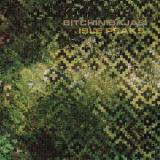
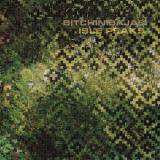
In the wake of the acclaimed Inland See, the on-growing analog ecosystem being animated for ten albums now by Bitchin Bajas boasts new high energy views. "Isle Peaks" speaks of directions in beats of time, weather and the heart to wherever coast they found themselves when they got it all laid out. Sourced from Inland See sessions, these cuts were subjected to further edits and tweaks, with electroacoustic textures of sampled kalimba, field recordings, autoharp and EWI to activate and transport divergent quadrants of the Bajas cinematic universe. The first two songs were previously released digitally on Qobuz in Jan "26. "Watch your Step" has been added to balance scales and acidity for the "Isle Peaks" vinyl edition. "Isle Peaks," throbs with the heat and humidity of an unknown landmass, ascending to signal-splitting heights on both atmospheric and ecstatic scales, the most wired ever but calm, then trancing ambiently in heavy modern electronic church thick with drone and atmosphere. High-energy music, first to dance, then to dream! The escaped & wild stepchild of Inland See is a half-hour highlight of the rest of your life to be: "Isle Peaks".
In the wake of the acclaimed Inland See, the on-growing analog ecosystem being animated for ten albums now by Bitchin Bajas boasts new high energy views. "Isle Peaks" speaks of directions in beats of time, weather and the heart to wherever coast they found themselves when they got it all laid out. Sourced from Inland See sessions, these cuts were subjected to further edits and tweaks, with electroacoustic textures of sampled kalimba, field recordings, autoharp and EWI to activate and transport divergent quadrants of the Bajas cinematic universe. The first two songs were previously released digitally on Qobuz in Jan "26. "Watch your Step" has been added to balance scales and acidity for the "Isle Peaks" vinyl edition. "Isle Peaks," throbs with the heat and humidity of an unknown landmass, ascending to signal-splitting heights on both atmospheric and ecstatic scales, the most wired ever but calm, then trancing ambiently in heavy modern electronic church thick with drone and atmosphere. High-energy music, first to dance, then to dream! The escaped & wild stepchild of Inland See is a half-hour highlight of the rest of your life to be: "Isle Peaks".
John Tchicai (1936 – 2012) was one of the most important free improvising saxophonists of the 20th Century: an artist of rare vision and aptitude whose lines soared and stood out even in the most hallowed company, and whose body of work as a leader / composer is among the most singular and distinct within the entire canon of that music. But Tchicai’s importance doesn’t end there. Born in Copenhagen, Denmark, to a Danish mother and a Congolese father, his life and career represent a crucial bridge between the European and American traditions of free jazz. Initially trained on violin as a child, Tchicai shifted his focus to the clarinet and alto saxophone during his mid-teens, and began touring Europe as a professional musician by his early 20s, which landed him at a socialist youth festival in Helsinki, Finland, where he met the trumpeter Bill Dixon and saxophonist Archie Shepp. Impressed by what they heard, Dixon and Shepp encouraged the young saxophonist to move to New York, and in so doing changed the history of jazz forever.
Tchicai’s arrival in New York marks the rare occurrence of a European player joining the intimate circle that was first wave of American free jazz. Following his landing in the city in November of 1962, in addition to regularly sitting in with Don Cherry’s group, Tchicai began playing with Bill Dixon's band alongside Archie Shepp and Roswell Rudd, forming the nucleus of the foundation of the New York Contemporary Five - one of the most important groups of the era - which counted Tchicai, Shepp, Cherry, Don Moore, and J. C. Moses as its members. From the ashes of this group, Tchicai would go on to found the legendary ensemble, New York Art Quartet, with Roswell Rudd, Milford Graves, and Lewis Worrell, as well as working within Albert Ayler's band, recording “New York Eye and Ear Control”, Shepp’s band, recording “Four for Trane”, the ensemble that recorded John Coltrane's “Ascension”, and the Jazz Composer's “Orchestra”.
By the time he decided to return to Denmark in 1966, had Tchicai chosen to record little else, his legacy within the history of music would have been ensured. Incredibly ambitious, his arrival home marked the beginning of an incredible period of activity which saw him radically expanding his creative explorations, which by the end of the decade would include becoming a founding member of Amsterdam's Instant Composers Pool and helping to record John Lennon and Yoko Ono's “Unfinished Music No.2: Life with the Lions”. This, however, was proceeded the formation of a new orchestra, Cadentia Nova Danica, led by Tchicai, dedicated to radical cross-disciplinary exploration. Remaining together between 1966 and 1971, the group and its shifting membership regularly fell into collaboration with artists and composers, notably Musica Elettronica Viva, who existed beyond the realms of jazz, as well as participating within multi-media events that incorporated the visual realms.
Cadentia Nova Danica’s only two LPs - “Cadentia Nova Danica” (Polydor, 1968), and “Afrodisiaca” (MPS, 1969) - are effectively Tchicai recorded efforts as a leader, and are legendary. There’s little mystery, once heard, why the later landed on Thurston Moore’s iconic “Top Ten from the Free Jazz Underground”, published by Grand Royal in 1996. Sadly, despite playing extensively during their five year run, with exception of a CD documenting a performance at Jazzhus Montmartre, in 1966, until now there has been no other publicly available recordings that allow us to capture a glimpse of this astounding band at work. Alga Marghen / Formalibera’s vinyl pressing of a never before released body of recordings, made in Copenhagen between 1969 and 1970, changes that in the most exciting of ways.
Comprising three pieces - “Mc Gub Gub, (I–VIII)”; “Ode to Skt. John”; and “Pladepip” - the material on this stunning LP comes from two specific events. The first, which encompasses the first side, “Mc Gub Gub, (I–VIII)” was recorded by Cadentia Nova Danica - in this instance, Tchicai, Sune Weimar, Theo Rahbek, Christian Kyhl, Niels Holt, Jørgen Thorup, Michael Schou, Morgens Bollerup, Allan Gregersen, Ole Matthiessen, Pierre Dørge, Willy Jaegert, Anthony Barnett, and Jon Finsen - on May 29th, 1969, at the ABC-Theatre in Copenhagen. Penned by Tchicai, the piece is a sprawling, evolutionary composition at the outer reaches of free jazz, rooted in large blocks of colliding tonality and rhythm - a sound only accessible to larger ensembles - that push territories explored by Charles Mingus to previously unimagined heights, threaded by moments of hard blown fire. Writhing like a stormy sea - skronking and devilish - “Mc Gub Gub, (I–VIII)” is a work of profound complexity that singlehandedly illuminates not only Tchicai’s singular vision as a composer, but also the power and uniqueness of Cadentia Nova Danica during the band’s most vital period.
The two pieces - “Ode to Skt. John” and “Pladepip” - taking up the flip side, were recorded on February 21st, 1970, at the Danish Broadcasting Corporation’s Radio House, and are the outcome of Cadentia Nova Danica’s extended residency there between 1969 and 1970. In many ways, these two recordings offer some of the best insights into the broad collaborative approaches that defined the band, in this case encountering them working with Danish experimental composer, Svend Erik Werner, who was among the earliest in his country to embrace stylistic pluralism and the use historical forms within a modern context. “Ode to Skt. John” - based on aspects of Gregorian music - was penned by Werner, incorporating heady improvisation by the members of Cadentia Nova Danica, this time made up by Tchicai, Sune Weimar, Hugh Steinmetz, Theo Rahbek, Christian Kyhl, Michael Schou, Morgens Bollerup, Ole Kühl, Torben Enghoff, Mauritz Tchikai, Kjeld Ipsen, Willy Jaegert, Ole Matthiessen, Ole Thilo, Pierre Dørge, Steffen Andersen, Jon Finse, and Clause Bøje. The piece is a fascinating binary of the composed and improvised, utilising the band’s large scale to introduce a remarkable sound within its slow progressions and furious, driving free moments, in this incredible meeting of worlds.
The album’s final piece, “Pladepip”, is arguably its most historically significant: an entirely singular piece, unlike anything in Tchicai’s recorded canon as his foray into musique concréte. Drawing upon two recordings of full-band improvisations by Cadentia Nova Danica, for its creation Tchicai also gouged the surfaces of 78rpm records in his collection to skip and create repeated phrases and patterns, creating a stunning sound collage of hard angles and abrupt phrase, that creates a striking counterpoint to the band’s flowing improvisations that bookend those passages. The result is an engrossing listen and easily one of the most unique and culturally important gestures in the entire history of musique concréte.
Truly incredible, Alga Marghen / Formalibera’s vinyl pressing of this never before released body of recordings, made by John Tchicai’s Cadentia Nova Danica, in Copenhagen between 1969 and 1970, offers an unprecedented window into one of the most important groups working in Europe during that period, significantly expanding their rare and slim discography to date. Accompanied by extensive exploratory liner notes by veteran jazz writer, Ed Hazell, this is easily one of the most historically important archival releases of the year and is impossible to recommend enough. Absolutely essential on every count.
Geometrik Records is delighted to once again play a part in the exclusive recovery of Marcelo Expósito's previously unpublished work, which had been lost since its original creation in the 1980s. Marcelo Expósito is one of Spain's most internationally renowned contemporary artists, whose work is regularly exhibited across Europe and Latin America. He began his career at a very young age during the era of sound experimentation that flourished in the wake of so-called industrial culture, which found particularly fertile ground in Spain. As co-editor of legendary publications such as the fanzine Experiencias (1983) and, above all, the cassette-fanzine publisher Necronomicón (1983-1987), which operated on an international scale, Marcelo Expósito has, in recent years, been reconstructing those of his sound experiments that had been lost for decades. The album we are now presenting brings together material previously released on cassettes as EGK023 in a very limited edition. These tracks have now been remastered and expanded to complete this record, which noise musician Mattin has described as "secret recordings that constitute a gem from the rich Spanish underground of the 1980s". In the words of Luis Alvarado, editor of the Peruvian label Buh Records, this album allows us to appreciate how "Expósito developed a style of his own that understood sound as a malleable material open to chance. The recordings gathered on The Lost Tapes reveal an artist who moves as much through territories of unsettling textures and atmospheres as through zones of abstraction and radical noise". Influenced by the early work of figures such as Maurizio Bianchi, Nurse With Wound, and La Otra Cara de un Jardín, the release of this album provides a key piece in reconstructing the genealogical puzzle of Spanish experimental music. This carefully curated edition-in Spanish and English-includes a lengthy essay by Marcelo Expósito on the creative processes behind his work and the historical context of the industrial culture of the 1970s and 1980s, as well as extensive liner notes contributed by Vittore Baroni, editor of the legendary Italian label Trax; Francisco Felipe, co-founder of the Ars Sonora programme on Radio Clásica (Radio Nacional de España) and one of the most active names on the Spanish experimental scene of the 1980s; Mattin and Susana López (Susan Drone), key figures in the sound experimentation of the generation that emerged in the 2000s; as well as the aforementioned Luis Alvarado.
Crossing borders between traditions, sonic territories, and instruments, musicians Tomáš Niesner and Aldana Duoraan created their first collaborative album Plot. The sound of khomus meets guitar melodies simplified into pentatonic scales, intertwining in a dialogue that remains playful while moving between meditative passages and bewitching, hypnotic moments. Solid yet ever-changing, these melodies explore a delicate relationship between the present interactions, their past, and possible futures. “I feel that the essence of our collaboration is not to close the songs off, but to leave them open so that they can develop and be interpreted a little differently each time, depending on the circumstances,” Niesner explains when describing the duo’s artistic approach. The recording therefore captures only the most essential moments and ideas, which continue to unfold in new directions during live performances.
Each segment of Plot, word meaning “fence” in Czech, while also referring in English to a narrative structure or hidden plan, represents a different constellation shaped by the pairing of specific khomuses and guitar tuning. The track titles, such as The Key of Radiance or The Key of Humbling, are inspired by the ancient Chinese text I Ching (usually translated as Book of Changes). Like the classical cosmological text itself, the compositions meditate on similar fundamental principles. The ideas explored in the chapters of the I Ching are thus loosely translated into musical language. Themes of Radiance, Attending, or Nearing thus loom over the reflective realm of Aldana and Tomáš.
The two musicians first met in 2021 through a collaboration organized by Konektiv, an event series that aims to create new connections between genres and musicians with diverse backgrounds. Aldana Duoraan is a Prague-based artist born in the Sakha Republic, whose experiments with the khomus (also known as the jaw harp) draw on the traditional music of her homeland. Tomáš Niesner, a sound artist and guitarist based in Brno, navigates the realms of American primitive guitar while incorporating influences ranging from folk to drone. Because the duo rarely finds themselves in the same city, an important moment in the development of Plot was a showcase at Cafe OTO, organized by mappa. The album, capturing the fleeting energy of this encounter and several others, has now been released on the Slovak experimental label, which helped bring the collaboration to life.
Nothing have always been rule-breakers. Shoegaze renegades who've rebuilt the stereotypically lightweight genre in their own bloodyknuckled American image. Outlaw poets spilling existential dread on mile-wide canvasses of fuzz and reverb. Beginning as a Philly-born bedroom solo project in 2010, Nothing's music has always captured the full scale of the human condition, both the blaring anger and the whispering sadness. a short history of decay, Nothing's fifth solo album and first for Run For Cover Records, widens that aperture even further, providing the most hi-def rendering of Nothing to date. The band have never sounded this colossal, never felt this intimate, never been this honest. With the strongest arsenal in Nothing's ever-shifting lineup locked in -- guitarist Doyle Martin (Cloakroom), bassist Bobb Bruno (Best Coast), drummer Zachary Jones (MSC, Manslaughter 777), and third guitarist Cam Smith (Ladder To God, also of Cloakroom) -- singer-songwriter Domenic "Nicky" Palermo knew he had the manpower to make the band's most ambitious record yet. Co-written and produced with Whirr guitarist Nicholas Bassett, and with additional production and mixing work from Sonny Diperri (DIIV, Julie), a short history of decay, is the most evolved musical statement in Nothing's catalog. Songs like "Cannibal World" and "Toothless Coal" are cataclysmic lashings of mechanized industrial-gaze that sound like My Bloody Valentine -- except more extreme. On the other end of the spectrum, the ornately morose "Purple Strings" boasts a beautiful string arrangement that includes harpist -- and two-time Nothing contributor -- Mary Lattimore. That baroque delicacy permeates other a short history of decay, highlights, particularly "The Rain Don't Care," a lilting ballad that channels the worn-down elegance of Mojave 3, and also "Nerve Scales," a pattering bop that resembles Radiohead in its marriage of otherworldly atmosphere and mortal precision. Palermo calls the new record "a final chapter." Not the end of Nothing, but the conclusion of a story that began with Nothing's 2014 debut, Guilty of Everything -- another album about time, regret, and confronting uncomfortable truths -- and now resolves with a short history of decay,. As much a snapshot of Palermo's past as it is a leap into Nothing's future.
First Word Records proudly bring you the sophomore EP from Ruby Wood - ‘No Rain, No Flowers’.
Ruby is a singer / songwriter hailing from Huddersfield, West Yorkshire in the UK. Her soulful yet distinctive voice has enabled her to front numerous projects over the years; perhaps best known as lead vocalist of the critically acclaimed Submotion Orchestra, since 2009.
Her first solo EP ‘Sincerely’ dropped back in 2023, and received love from the likes of Jamie Cullum, Craig Charles, Jyoty, Huey Morgan, Wordplay & saw Ruby named Mi-Soul Radio's 'One to Watch'.
The follow-up EP ‘No Rain, No Flowers’ is a personal tale of growth through adversity. Reflecting on long-term love, fleeting intimacy, grief, and the relationships that shape us. Rather than offering answers, the 8-track EP sits with life as it is. Imperfect, cyclical and shared. The title speaks to the belief that difficult experiences are not separate from growth, but essential to it.
Musically, the project encompasses contemporary flavours within the realms of r&b, soul and hip hop. It features an impressive collective of vocal collaboraters; Illa J, Devin Tracy, Abnormal Sleepz & PRIDO. Each bring their own distinct perspective, whilst complimenting the EP’s introspective tone; favouring warmth, restraint & lyrical authenticity. All are backed by a smooth sonic backdrop of beautifully rich instrumentation, produced primarily by Rob Mitchell of Abstract Orchestra.
Ruby has performed live shows with Nightmares on Wax & Abstract Orchestra as well as with r&b legend Bryson Tiller at his sell-out UK gigs, including Wembley Arena & Manchester Apollo. This is additionally to touring with Bonobo & Nubiyan Twist, and collaborating with the likes of Krept & Konan, Alfa Mist, GLXY and Roska, to name a few.
The diversity of her career, ranging from the intimate to the large-scale performances, gives Ruby a unique balance of vulnerability and musical depth, prioritising authenticity over spectacle. As a solo artist, her work is rooted in honest lived experiences, leading to a focus on songs that resonate long after first listen.
This EP offers a reflection of where Ruby is at now, informed by where she’s been before. It’s a project that embraces imperfection, recognising that those experiences that challenge us the most, shape us the deepest.
out of Stock
Last delivered 75 days ago available to reorder, subject to availability
We all remember Surgeon 16 Recordings and UK Skullfuck banging out some of the most intense music of the 90’s. Next up is a new label from ½ of UK Skullfuck, UK artist, Dr Machette. He had a great solo release on Special Forces back in 1998, The Damaged Skull EP. Machette Recordings #1 is a throwback to the punk-hardcore vibe of the mid-nineties. The sheer brutality of these tracks is off the scale. Without a doubt some of the most intense, uncompromising filth the scene has been subjected to in decades. Self-funded by Dr Machette himself so show some support for this label as he has lots more great music to come.
out of Stock
Last delivered 79 days ago available to reorder, subject to availability
FLO are leading the modern revival of the British girl group — and doing so at a scale not seen in over two decades. With over half a billion global streams, the trio have delivered the highest-selling tour by a British girl group in more than 20 years, becoming the first since the Spice Girls to reach that milestone. They are also the first British girl group to receive a Grammy nomination in two decades, alongside three MOBO nominations in 2026, cementing their status as both a commercial and cultural force. Rather than simply revisiting the past, FLO are reshaping the possibilities for what a contemporary girl group can be.
Comprised of Renée Downer, Stella Quaresma and Jorja Douglas, FLO’s story is one of intention, craft and deep-rooted connection. The trio had long been aware of one another through theatre school circles, social media and shared creative worlds before coming together as a group in 2019. That early familiarity quickly grew into a sisterhood, shaped behind the scenes through years of studio work, vocal development and trust. Raised by strong single mothers and immersed in performance from a young age, each member brings resilience, emotional intelligence and discipline into the group — qualities that underpin both their sound and their dynamic.
Individually, FLO’s balance comes from contrast. Renée is the group’s compass: composed, business-minded and creatively precise, grounding the trio with clarity and vision. Stella is the spark and the glue — sociable, emotionally intuitive and collaborative — shaped by a childhood between England and Mozambique where music was communal, expressive and felt. Jorja is the fire: outspoken, instinctive and vocally commanding, with a natural ear for harmony and arrangement. Their roles shift and evolve, but together they form a unit built on mutual respect, honesty and shared authorship.
That chemistry is central to FLO’s music. Drawing from classic R&B and soul while pushing it forward through modern production, their sound centres vocal harmony, emotional nuance and storytelling that reflects the realities of young womanhood. FLO reject the idea that strength requires emotional distance; instead, they explore power through vulnerability, confidence and control. From independence and self-worth to intimacy and desire, their writing is direct and unapologetically theirs. As Jorja puts it, FLO are “the brains, the heart and the soul” behind everything they do.
The success of their debut album marked a defining moment — not only for FLO, but for British pop more broadly. It confirmed the appetite for harmony-led, female-fronted groups operating with creative agency, and propelled FLO onto global stages, from sold-out headline tours to major festivals and international television. Along the way they have earned respect from R&B legends and peers alike, performing during Grammy Week for icons including Mariah Carey, Brandy and Chaka Khan, and showcasing their vocal chemistry on NPR’s Tiny Desk — a moment that further underlined the trio’s technical precision and emotional depth.
With their next chapter, Therapy At The Club, FLO expand this emotional honesty into a fully realised creative universe. The concept reimagines the club not just as a place of nightlife, but as a site of release, confession and self-possession — encompassing the moments before, during and after the night out. From mirror affirmations and pre-game chaos, to late-night Uber conversations, dance-floor catharsis and the clarity of the morning after, Therapy At The Club captures how women process desire, heartbreak, confidence and healing in real time, together. It is both fantasy and reality: cinematic, fashion-led and emotionally raw, grounded in sisterhood as a form of survival.
Sonically, the new music leans into dark, euphoric R&B and pop with sharper edges, built on vocal mastery and diaristic storytelling. Lead single “Leak It” sets the tone for the era — playful, charged and unapologetically self-aware — exploring what happens when desire spills over, secrets surface and control is reclaimed. Across the new songs, FLO move fluidly between intimacy and euphoria, turning the club into a space where vulnerability is power and feeling everything is the point.
As a trio built on discipline, joy and deep creative trust, FLO represent a new model for the British girl group: one rooted in authorship, harmony and cultural impact. Balancing softness with strength and ambition with authenticity, they are shaping the future of R&B and pop on their own terms. FLO are not looking backwards — they are setting the standard for what comes next.
Some words from Nat about the music – “For this recording I composed some songs using more “exotic” (for want of a better word) modes,
which I have always meant to explore in more depth but never really got around to very much. The first song for instance, Red, Gold & Green, uses an Ethiopian scale.
The title comes from the colours of the Ethiopian flag, which is also symbolic in Rastafari so has a kind of double meaning, like a lot of my songs.The title track, Path of Enlightenment, uses several modes,
starting in a major key then moving to the Phrygian mode, then to a minor key. The piano solo is in a 28 bar minor blues form. Menat is based on a mode of the Byzantine scale,
I’m not sure if it has a particular name or not. Amenhotep was the name of several Egyptian pharaohs,
Amenhotep IV being the original given name of Akhenaten.When I was writing this song it put me in mind of my song, Akhenaten, simply because they are both in 5/4 time,
so I decided to give this one a pharaonic name too. Spheshile is a Zulu word (and sometimes name) that means “beautiful gift”, the title was suggested by a friend from South Africa.
All this means nothing of course if the music doesn’t tell a story, I think the unfamiliar modes allowed us to speak of interesting things that may not have come to us otherwise.
Finally, I chose to use the quartet format for this recording because it occurred to me that it tends to make for a more cohesive group sound, and it had been a while since we recorded this way.”
out of Stock
Last delivered 3 months ago available to reorder, subject to availability
‘Cécile McLorin Salvant ... sings standards, show tunes and old novelties in a taut, flinty, elusively beautiful voice, erring toward material with difficult lyrics and tough places in history. Salvant wins over her audiences by tweaking them slightly: daring them to go there with her—not just into the archive, but toward the darkness of the past.’ – New York Times
‘Although Salvant is known as a jazz musician, her approach to music is defined by her instinct for experimentation ... Her music is beloved for ... embracing theatre and subverting classics with playful renditions.’ – Guardian
Salvant, who has performed with orchestras regularly over the last decade-and-a-half and intended to make an album with one sooner in her career, but logistics and her abundant creative ideas led to other new projects intervening. Having finally found time to make this album, With Every Breath I Take is a different sort of record than it might have been even ten years ago.
“It is a rare opportunity to be able to make an album at this scale, which has been a dream of mine for many years,” Salvant says. “Darcy James Argue wrote stunning arrangements and the Metropole Orkest, conducted by the extraordinary Jules Buckley, gave these stories a cinematic dimension. We overcame quite a few obstacles to even get into the recording studio for this project; it took almost four years for us to do so, and I am so incredibly proud to share it.
“I did not choose these songs because they are beautiful, but because they are crucial to me,” she adds.
Cécile McLorin Salvant, a 2020 MacArthur Fellow and three-time Grammy Award winner, is a singer and composer bringing historical perspective, a renewed sense of drama, and an enlightened musical understanding to both jazz standards and her own original compositions. Classically trained, steeped in jazz, blues, and folk, and drawing from musical theater and vaudeville, Salvant embraces a wide-ranging repertoire that broadens the possibilities for live performance.
Salvant’s performances range from spare duets for voice and piano to instrumental trios to orchestral ensembles. Her unreleased work Ogresse is an ambitious long-form musical fairy tale that is being made into a feature length animated film. She has performed at national and international venues and festivals such as the Newport Jazz Festival, the Monterey Jazz Festival, the Village Vanguard, and the North Sea Jazz Festival. Her previous Nonesuch albums, Ghost Song (2022) Mélusine (2023), and Oh Snap (2025) received critical accolades; the former two were both nominated for Grammy Awards. Salvant is also a visual artist, and Oh Snap was named a best album of 2025 by the Guardian, Jazzwise, JazzTimes, and the Francis Davis Jazz Critics Poll.
RocAmeriKKKa 3 marks the third and most refined chapter in the ongoing alliance between Flee Lord and ETO—two architects of modern East Coast street rap whose chemistry is rooted in precision, pain, and unfiltered realism.
Building on the foundation laid by the previous installments, RocAmeriKKKa 3 sharpens the series’ core aesthetic: cinematic production, stark lyricism, and an uncompromising portrayal of survival and ambition. Flee Lord’s militant cadence and razor-edged delivery collide seamlessly with ETO’s calculated, introspective bars, creating a dynamic that feels both confrontational and methodical. The result is a body of work that operates like a street manifesto—cold, deliberate, and unapologetic.
The album is elevated by a heavyweight supporting cast. Conway The Machine brings his signature steel-plated intensity, reinforcing the project’s Griselda-adjacent grit. NEMS injects raw, high-energy aggression, while Vel Nine adds sharp lyricism and perspective that cut clean through the production. Starz Coleman and Mummz contribute distinct textures, expanding the sonic palette without compromising the project’s hard-edged identity.
Sonically, RocAmeriKKKa 3 leans into brooding loops, stripped-down drums, and ominous sample work—production that leaves space for bars to breathe while maintaining a sense of tension throughout. There are no gimmicks here—just calculated storytelling, street philosophy, and the kind of lived-in authenticity that defines both artists’ catalogs.
As the third installment, this project doesn’t merely continue the series—it solidifies it. RocAmeriKKKa 3 stands as a testament to consistency, evolution, and the discipline of two emcees who understand that longevity in this lane is built on substance, not spectacle.
Originally released in 2008 on Ezekiel Honig’s own Anticipate Recordings, Surfaces of a Broken Marching Band finds the artist refining a compositional language rooted in the methodologies of musique concrete, ambient, and beat research. Working from a palette of environmental recordings, instrumental fragments, and soft electronic treatments, Honig pushes the source material into an array of sympathetic forms ranging from pillow-soft, lowercase ambient to diffuse downtempo and minimal house. For its reissue on Keplar, the album has been remastered by Kassian Troyer (D&M), bringing a new clarity to its intricate, low-lit architectures.
Throughout the record, serving almost as audiographic guideposts, are faint but insistent gestures toward propulsion, an abiding and recurrent 4/4 pulse that guides the music laterally and instantiates a slow negotiation between its various elements. This music invites close listening precisely by not revealing itself all at once, allowing small collisions of timbre and subtle shifts in emphasis to carry the weight. The traces of lived environments that remain embedded in the mix - distant crowds, sounds of transit, the indistinct acoustics of interiors in flux - expand the frame without breaking its intimacy, creating a potent dislocation between the nearness of the sound and the scale of its sources.
Rather than foregrounding any single voice, this is music that distributes attention equally across its materials, allowing background details to assert their presence as much as melody or rhythm. Honig presents listeners with an astute practice that’s concerned less with building from the ground up than with uncovering what happens when disparate textures and structures are brought into close contact with one another. (Alex Cobb, 2026)
Erased Tapes are proud to re-issue The Red Book by Penguin Cafe, with an expanded vinyl track list which now includes the CD and digital-only “And Yet…” plus two tracks from the limited-edition Umbrella EP. This new edition will be available on limited translucent vinyl and CD, both with updated art from Studio Torsten Posselt utilising the original drawing from renowned British sculptor and Simon Jeffes’ partner Emily Young.
Penguin Cafe was founded by Arthur Jeffes in 2009, bringing together a talented and disparate group of musicians initially to perform his father Simon Jeffes’ legacy of world-renowned Penguin Cafe Orchestra music, ten years after his untimely death in 1997. Following the release of A Matter of Life shortly after founding, The Red Book was released in 2014 to critical and fan acclaim.
“The name The Red Book comes from the book by Karl Jung of the same name. The book is about, among other things, the way our subconscious interacts with and intrudes into our daily lives. I thought this fitted what we were trying to achieve with the second album quite neatly — namely, exploring musical worlds that are at once both familiar and strange. There is another meaning which is that the main mastered disc you end up with, the one from which all other copies will be made, is called the Red Book Master — so somewhere at some point there will be a disc on which will be written “The Red Book — Red Book Master.”
The tracks on the album all fall on some point along a scale going from gently Apollonian at the one end to perhaps a bit more Dionysian at the other. For our purposes this would be the ‘spacey’ end — with tunes like 1420 and Aurora, and the ‘imaginary folk’ end — with tracks like Odeon, Radio Bemba and Black Hibiscus. The tracks between these extremes are, perhaps with Silent Sun in particular, an attempt to blend these two parts.”
Ten years ago, Anderson .Paak didn't just release an album; he staged a full-scale takeover of the soul and hip-hop landscape. Released on January 15, 2016, Malibu served as the definitive arrival of an artist who had spent years grinding in the underground before a star-making turn on Dr. Dre’s Compton. While his previous work hinted at his potential, Malibu was the moment the world met the "Cheeky Andy" persona in full—a virtuosic drummer, a raspy-voiced crooner, and a sharp-witted rapper all rolled into one. The album is a sprawling, sun-drenched journey through the Southern California coast, blending 1970s funk, church-reared gospel, and gritty boom-bap into something that feels both nostalgic and entirely futuristic. With a heavyweight production lineup including 9th Wonder, Madlib, Kaytranada, and Hi-Tek, the record maintains a warm, analog texture that was a breath of fresh air in an increasingly digital era. It’s an album that breathes, full of intentional imperfections and the kind of "in-the-pocket" groove that can only come from a seasoned live performer. Beyond the infectious, dance-floor-ready energy of tracks like "Am I Wrong" and "Come Down," the album is a deeply autobiographical masterwork. .Paak uses the 65-minute runtime to unpack his life story with startling clarity, touching on his mother’s gambling addiction, his father’s incarceration, and his own brushes with homelessness with a sense of resilience that never feels heavy-handed. He weaves these heavy themes through a lens of triumph, grounded by vintage surfing documentary samples that give the project its cinematic, coastal atmosphere. It’s a celebratory record born out of struggle, anchored by his impeccable technicality on the drums and a guest list—featuring ScHoolboy Q, Rapsody, and The Game—that feels hand-picked to complement his specific brand of West Coast swagger. A decade later, Malibu stands as a modern classic and the blueprint for the soulful revivalism that would eventually lead .Paak to global superstardom and Grammy-winning heights. It remains a testament to the idea that the most profound music often comes from the most personal places, proving ten years on that the best way to move forward is to stay rooted in the groove.
out of Stock
Last delivered 33 days ago available to reorder, subject to availability
‘ИМА (Ima)’ is a work by KiMiMi, the solo project of a musician Shin-ya Ohno, which captures the layers of time and the presence of people inhabiting ‘Arimasuton Building’―a self-built structure created over 20 years by architect Keisuke Oka, located in Mita, Tokyo, and reconstructs them into music.
A multi-instrumentalist who masterfully handles a diverse range of instruments, with the gaida (an ancestor of the bagpipes) – which he studied in Bulgaria – at the core of his sound, KiMiMi has previously brought traces of daily life and folk melodies recorded during his travels back to the scale of home recording, weaving fantastical folk soundscapes through cassette tape works and stage music.
Alongside his musical activities, he has participated in the construction work for ‘Arimasuton Building’, recording the sounds of hammers and steel beams echoing on site, lunchtime chatter, the melodies of instruments played by others, and the sound of cars passing by. From the end of 2022, a zine titled ‘Monthly Arimasuton Building Urimasu’, based on this construction project, was launched. KiMiMi incorporates these recordings into the musical works he contributes to each issue, layering sounds from live instruments―including the gaida, accordion, guitar, flute, ukulele, piano, foot-pump organ, melodica and xylophone―alongside a few synthesiser tones, to shape a soundscape imbued with the humidity and breath of the site.
KiMiMi’s creative process is characterised not by planned construction, but by an attitude of entrusting the work to chance, intuition and the passage of time. Fragmented recordings are layered, set aside for a time, and then unearthed again. Through this repetition, the music naturally takes shape. This resonates perfectly with the process of ‘Arimasuton Building’, which was built up improvisationally, layer by layer, without any pre-prepared blueprints.
‘ИМА (Ima)’ marks the current stage of KiMiMi’s sonic journey and represents an attempt to gracefully transcend the boundaries between architecture and music, documentation and creation, and the individual and the community. The clamour of the city, the tranquillity of manual labour, laughter, and every sound resonating at the Arimasuton Building site blend with KiMiMi’s music, reflecting the very passage of time in which people live.
“So Help Me God is the long-awaited second album from Kelsey Lu, arriving June 12 2026 via Dirty Hit. Moving between shadow and release, the 10-track record follows her groundbreaking 2019 debut Blood and is co-produced by Lu, Jack Antonoff and Yves Rothman, mixed by Oli Jacobs, with contributions from Sampha, Kamasi Washington and Kim Gordon. Across the record, Lu blends distorted guitars, choral swells and dark electronic pulses into a sonic landscape that moves between devotional intensity and cinematic scale. So Help Me God expands Lu’s singular creative universe - where music, visual art and performance converge into one multidisciplinary project, marking the return of one of contemporary music’s most singular voices.”
German-Turkish singer and composer Alev Lenz follows her self-released album 4 in a Cycle of Thirds (Jan 2026) with a complete, album length ambient rework by Simian Mobile Disco co-founder Jas Shaw. “The two records are very much intertwined," writes London-based German-Turkish singer and composer Alev Lenz. "I made 4 in a Cycle of Thirds with Jas in mind, inspired by a mix he created for my last album.” Lenz and Shaw have previously worked together on 2024 collaboration EP Bring Your Friends, as well as album mixes for Lenz' previous two solo records. Lenz' original album was created from a series of single-note drones, one for each note of the chromatic scale. "When I had this idea, I wanted Jas’ touch involved somehow. I asked him for drones on each note. He sent me 12 and I wrote most of the album listening to these drones. They eventually left the picture and were replaced by new drones I made, new sounds or vocals. But the memory of them lingers in the songs, like an imprint on the retina, an afterimage.
So naturally when the record was finished I sent the totality of it to Jas and said: here you go, make your versions!" 4 in a Cycle of Thirds in its original form touches on traditional folk musics, chamber music, contemporary composition, film score, and even interweaves subtle metal inflections, but now presented on double vinyl alongside Jas Shaw's versions as twin records, it has a newly foregrounded quietude, spectral and delicately nuanced. Through reduction, meticulous replacement, and sensitively applied edits, Shaw gently rebalances the light and shadow of the original pieces, coaxing new subtleties and harmonic resonance. "It occupies a space that is in-between the lines," describes Lenz. Shaw employs a "feedback system" he created for his piano, applied here to devastating effect. "Take the key bed off it and set up a resonators, mics and a mixer. Lots of gaffa tape, lots of precarious propping stuff open. You grub around on the floor and slowly the room fills with harmonics, it’s wonderful." And, on the relationship between the original record and these new versions, he explains "we could really let the songs drift into a different shape without worrying that we were missing elements that were great."
Alev Lenz is a singer, songwriter, composer, and producer born to a Turkish actor, activist, and artist mother and an Oscar-winning German engineer father. Alev’s creative foundation is as diverse as her musical output. Her solo discography includes three albums - Storytelling Piano Playing Fräulein (2009), Two-Headed Girl (2017), and 3 (2019). She has contributed vocals to scores by Oscar-winning composer Volker Bertelmann, including the US drama Conclave. She has collaborated with artists such as Anoushka Shankar, Jas Shaw (Simian Mobile Disco), Roomful of Teeth, and plenty more. Songwriter, composer, and producer Jas Shaw is best known for his work with Simian Mobile Disco, whom he co-founded in 2003. He mixed Alev Lenz' 2016 and 2019 albums Two-Headed Girl and 3, and also performs with Selling alongside Gold Panda, and Shaw & Grossfeldt with visual artist Bas Grossfeldt. Shaw and Lenz released the collaboration EP Bring Your Friends in 2024.
Crypt of the Wizard is proud to present Scimitar – Scimitarium I on vinyl and digital formats. Formed in 2024 by veterans of Copenhagen’s underground music scene—including members of Slaegt, Endless Glory, and Shaam Larein—Scimitar arrives as a fully formed force of nature. In their raucous wake lies Scimitarium I, a frenzied, whirling dervish of black occult rock. For those familiar with the members' previous efforts, this should come as no surprise. This piece of musical alchemy is a perfect knife-edge dance, seamlessly blending elements of black metal, post-punk, and occult rock. Dark and serpentine, onyx black, scaled and sacred, Scimitarium I unfurls itself like an endless snake wrapped tight around the world. With a dark heart and a head full of fever dreams, this is an album of breathless intensity. Shaam A.’s constant presence provides an abundance of rich, overflowing lyrics, delivered in her distinctive and haunting voice—written as if hurriedly scrawled in feverish reverie—and reinforced by winding, twisted narratives played out on violent yet harmonic duelling guitars, alongside a rhythm section of unyielding intensity. Scimitar has quickly become an indelible part of the city's fertile and ever-evolving metal scene—a place where stalwarts continue to push boundaries and break moulds with seemingly effortless zeal. This is an album of forged perfection, honed and sharpened like a curved blade—shimmering with lethal precision—driven straight into the heart of all matters
out of Stock
Last delivered 4 months ago available to reorder, subject to availability
In 1979, the Soviet label Melodiya released a record that immediately stood apart from most Soviet jazz of its time and perhaps for that very reason never became widely known. Oriental Suite by Oleg Gotskosik Quintet is a rare example of jazz, Eastern musical tradition, and compositional thinking coming together not as an exotic stylization but as a fully formed artistic statement.
This is not “Oriental colour” used as decoration, nor folklore treated as an ornament. Oriental Suite grows from within another musical tradition, with its monody, modal logic, slow unfolding of form, and focus on inner states rather than outward effect. The music is calm and concentrated. It does not try to impress, but gradually draws the listener into its own space.
Oleg Gotskozik was born in Tashkent in 1951, a city where Eastern music was part of everyday life rather than something distant or exotic. That may explain why his engagement with traditional material sounds so natural. He does not quote or stylize; he thinks in the same musical categories. By temperament, he was closer to a composer than to a jazz musician in the conventional sense. For him, jazz was not a style but a way of working with form and improvisation.There is no standard “theme and solos” logic in Oriental Suite. Improvisation is woven into the fabric of the music itself and unfolds in the same way as in oral traditions, gradually, with rising tension and a clear sense of arrival. Individual sections refer to traditional Uzbek genres such as lullabies, lyrical songs, and funeral laments, but these are not genre sketches. They are states of being. The music unfolds slowly, avoiding familiar harmonic drama and relying instead on modal scales and subtle internal movement.
A special role is played by trumpeter Yuri Parfyonov. His approach, with delayed vibrato, micro-glissandi, and melismatic phrasing, sounded unexpected at the end of the 1970s and still feels remarkably fresh today. This is not expressive jazz virtuosity but a focused, almost meditative voice, where improvisation becomes a form of inner speech.
It is also important to note that the original recording was not without technical flaws. Like many Soviet jazz releases of the time, Oriental Suite was captured under far from ideal conditions, and the master contained audible imperfections that were never part of the music itself. For this edition, the restoration was approached with great care and respect, working through the recording moment by moment to remove unwanted artifacts while preserving the character and atmosphere of the original. The aim was simple: to make sure nothing stands in the way of fully experiencing the music.
In the early 1980s, Oleg Gotskozik left the Soviet Union, and after that his name virtually disappeared from Soviet music journalism and literature. There were no official bans or public statements. He was simply no longer mentioned. Oriental Suite continued to exist on its own, without an author and without context. The record never entered the canon, received no continuation, and was never officially reissued. It seemed to fall out of time.
The original vinyl pressing was released in a run of around 32,000 copies, but most of them remained within the republic and never reached wide circulation. Today, original copies are hard to find and have long become objects of interest for collectors. There have been no official reissues, only attempts that never went beyond test pressings.
Today, Oriental Suite sounds surprisingly contemporary. It is music that can be described as deep ethno-jazz and even, in a certain sense, spiritual jazz. There is no exoticism here, no decorative borrowing, only a complete immersion in another musical way of thinking. It does not require explanations and does not need to be justified by its time.
This is not a forgotten curiosity revived for collectors’ sake. It is music that simply waited for the moment when it could be heard without ideological filters or genre expectations. Now it is returning quietly, without noise or hype, but with the clear sense that this is not an artifact of an era, but a living and genuinely rare artistic statement.
Church Andrews and Matt Davies return with Tilt, a pinpoint collection of skewed microtonal and discordant compositions for percussion and digital synth.
Tones ascend but don’t resolve, rhythms loop, collapse and reassemble, patterns wriggle with geometric precision, sounds tilt, the edges fray.
Kinetic, elastic, wonky without being obtuse, Church Andrews (aka Kirk Barley) and Matt Davies new LP Tilt is the culmination of six years of creative collaboration, refining and redrawing the relationship between Davies’ virtuoso percussive practice and Barley’s off-kilter synthesis.
Where their 2024 release Yucca, took rhythmic cues from the Fibonacci sequence, Tilt explores a more intuitive approach, returning the duo to a minimal sound interrogating the interplay of chance and control, system and body, freedom and mechanisation. Featuring prepared guitar, finely resonant muted percussion and a crisp palette of digital synths, it draws on the pair's long-standing interest in alternate time signatures.
Here, a tripped-up 11/8 beat gives ‘Yokai’ a disorientating quality, threading unusual paths through the playful, mysterious 5-note Hirajoshi scale - a pentatonic scale from Japan hinted at in the track’s playful reference to a supernatural spirit in the country’s folklore.
Using a simple on-off system between drum and synth to trigger a Shepard tone - an auditory illusion of a sound that ascends or descends in pitch without actually changing - ‘Shepherd’ revels in the stripped-back simplicity of its sonic palette, where the nuance lies in what Barley calls “subtleties in the timbre of the sounds” as they dialogue with Davies’ warped loops.
It’s these finely tuned melodic drum tones and an eerily abstracted prepared guitar that give ‘Debris’ its uncanny feel, yet never feeling overly controlled. Like the album’s meticulous, graphic artwork, Tilt seeks the shifting ground between the physical and the digital, as acoustic tones are tweaked and disambiguated into new and unexpected forms.
Tilt represents Church Andrews and Matt Davies’ ongoing collaboration in its purest form - a hyper-defined evocation of gravitational potential in their live sound.
The story begins in 2000 in Britany (France). Two guys decide to create a sound system with the aim of sharing their common passion for roots reggae and early digital. Rootystep (selecta) and MacGyver (operator) begin to collect records and purchase music equipment. They are quickly joined by Pupajim who becomes the MC, the singer and the dub builder. The Stand High Patrol first toured the land of Brittany, gradually moving towards stepper dub production emanating from the English stage. Fifteen years later, the sound is more present than ever. Stand High has created a true identity and has established itself as one of the essential sound systems of the French dub scene. In 2009, Stand High Patrol creates his own label "Stand High Records". In 2012, after releasing several records, the Dubadub Musketeerz present their debut album "Midnight Walkers", 13 exclusives & wicked tracks inna pure Dubadub Style. In 2015 the dubadub experience takes on new dimensions with their second album : "A Matter Of Scale". In 2017 they are back with "The Shift" a third LP totally dedicated to Boom Bap & 90s Hip Hop. Words, blue notes, boom bap and bad news: here comes "The Shift", the third album of Stand High Patrol.
IN 2017, TRYING TO MAKE BOOM BAP FROM THE 90s, INSPIRED BY JAZZ FROM THE 60s, MIXED WITH MACHINES FROM THE 50s
Lyrics, Boom bap and bad news: Stand High Patrol present their third album 'The Shift' and confirm their attachment to 90s hiphop.
out of Stock
Last delivered 4 months ago available to reorder, subject to availability
New album of one of the biggest Reggae/Dub french soundsystem starring MacGyver, Rooty Step & Pupajim (who worked with Alpha Steppa, Biga Ranx, High Tone, Mungo's Hi-Fi ...).
Since their inception at start of the 2000s, Stand High Patrol have rocked sound systems to their own riddim, assimilating and re-purposing the codes of the genre in their own unique style. From tiny bars in Brittany to huge festival stages, on independent radio or across national airwaves, the crew have quietly trod their own path, never compromising their core value of independence. Connoisseurs have long recognised Stand High’s credentials both as a dub group and a leading sound system, but they stand out from the crowd because of their ability to deliver the unexpected, whether live or on record. Their ability to draw such a diverse audience is testament to this atypical approach to making music.
In 2020, almost 20 years since their humble beginnings, the collective presents their fifth album, “Our Own Way”. As with their first two albums “Midnight Walkers” and “Matter Of Scale”, now considered as classics in their genre, this new opus asserts itself as the latest representation of the crew’s versatile approach to crafting sound. Their music, a blend of its own known as “Dubadub”, has always borrowed influences from multiple sources, and over the course of their career their roots in dub and reggae have intertwined with hip-hop, jazz, new wave, trip-hop and numerous other genres. The ‘Dubadub Musketeers’ have never ceased experimenting, forever seeking to increase the sonic territory they cover, day after day. Both live and recorded, they’ve made it a point of honour to never offer up the same thing twice. Any resemblance that “Our Own Way” might bear to those first two albums is a consequence of this obvious creative continuity, rather than of going “back to basics”.
In contrast to the last two Stand High Patrol records, the hip-hop inspired “The Shift”, or the Bristol indebted “Summer On Mars”, “Our Own Way” doesn’t have a unifying concept or theme. Rather than being limited to a single aesthetic, the LP pays respect to the entire canon of Jamaican music, all unified under Stand High’s inimitable production values. With the wealth of experience gained during the recording of their last two records, the collective decided to aim for a freer project, letting themselves be guided by their own music and their own instincts. The end result is a musical portrait of what Stand High Patrol is in the present moment.
The tracks that make up the new LP burst out of the studio, each born out of unbridled, impulsive creativity. Previously unheard compositions and specially re-tooled dub plates have been assembled into a tracklist that shifts and moves like a classic Dubadub Musketeer live set. Each step of the process has been refined by years of practice : composition, effects, and the final mix. Throughout “On Our Way”, the brutal dub stepper, though still a favourite for sound system sessions, is noticeable by its absence. Instead, it’s the full weight of the crew’s reggae heritage that’s expressed in the mix. It's not just the depth and weight of each tune that strikes the listener, but also the spaces heard between the notes that grab and hold their attention.. The sense of a trip, whether musical, internal or geographic, is omnipresent throughout the LP, linking each track to those before and after. “Our Own Way” finds Stand High Patrol exploring as usual, yet also narrating their journey as they’ve rarely done before.
out of Stock
Last delivered 4 years ago available to reorder, subject to availability
Caçador de Horizontes is the fourth and most ambitious album by Brazilian composer and songwriter Raphael Gimenes. Conceived as an expansive double album, it brings together voice and acoustic guitar with richly arranged strings, brass and a wide palette of percussion, engaging with the tradition of Brazilian songwriting while evoking the harmonic sensibility of artists such as Milton Nascimento, alongside elements of modern classical music.
Inspired by travels across the American continent, the album moves between intimate moments and large-scale instrumental passages, creating a cinematic and emotionally resonant atmosphere. Produced by Lucas Delacroix, Alexandre Andrés and Gimenes himself, it features more than 30 musicians from different countries and was supported by the Danish Arts Foundation (Statens Kunstfond).
Toronto’s Ducks Ltd. (formerly Ducks Unlimited), the bright jangle-pop duo of Tom McGreevy (lead vocal, guitar, bass, keyboards) and Evan Lewis (guitar, bass, drum programming), accomplish the impossible. The pair craft songs that play to very specific inspirations without drowning underneath them—immediately evidenced on their critically acclaimed EP, Get Bleak, and sharpened on Modern Fiction, their debut LP. “The Servants, The Clean, The Chills, The Bats, Television Personalities, Felt,” Evan rattles off. “Look Blue Go Purple is one I reference a lot with our production.” Echoes of ‘80s indiepop abound, but they never overwhelm. This is not a nostalgic record, after all, nor is it a derivative one. Instead, across 10 cheery-sounding songs, Ducks Ltd. explore contemporary society in decline, examining large scale human disaster through personal turmoil (hence the title, taken from a university course called Gnosticism and Nihilism in Modern Fiction, influenced by Graham Greene novels. Bookish indie fans, look no further.)
Writing the album was intimate. Tom drafted the nucleus of a song on an unplugged electric guitar and brought it over to Evan’s apartment, where the pair sat in his bedroom, placing percussive beats from a drum machine under nascent melodies, passing a bass back and forth, adding organs and bridges where necessary. “It’s computer music trying extremely hard not to sound like computer music,” Tom jokes. Fearful that limited and expensive studio time would kneecap the project creatively, eroding their charming naivete, the pair re-recorded the album in a storage space owned by Evan’s boss. Ornamentation through collaboration followed: there’s Aaron Goldstein on Pedal Steel in the Go-Betweens’ “Cattle and Cane”-channeling interlude “Patience Wearing Thin,” Eliza Niemi on cello (“18 Cigarettes,” a song loosely inspired by a 1997 Oasis performance of “Don’t Go Away”), and backing harmonies from Carpark labelmates The Beths (on an ode to friendship at a distance, “How Lonely Are You?,” “Always There,” and on the sped-up Syd Barrett stylings of “Under The Rolling Moon.”) While in his native Australia due to covid-19, Evan worked closely with producer James Cecil (The Goon Sax, Architecture in Helsinki) on Modern Fiction’s finishing touches—at one point, in the mountains of the Macedon Ranges in Victoria, recorded a string quartet (featured on “Fit to Burst,” “Always There,” “Sullen Leering Hope,” “Twere Ever Thus,” “Grand Final Day.”)
It’s danceable, depressive fun, with some relief: in “Always There” and “Sullen Leering Hope,” Modern Fiction’s faithful heart. “There’s a tendency in my writing, because of my world view, to be very bleak.” Tom explains. “A quality I don’t always see in myself and really appreciate in others is the courage to go on.” And yet, the record manages resiliency—enough for pop fans to fall in love with.
Josh Mason’s new collection, "Wave Salt +7," emerges from an oblique origin. Unearthed from a dormant hard drive, it documents a set of work sessions only partially recoverable, their original continuity and intent fractured by time and technical failure. What remains is a constellation of mercurial gestures that proves, against all odds, to be entirely consonant with Mason’s ongoing musical concerns.
In a sense, the very condition of partiality proves generative, with elision operating on multiple levels - structural, sonic, and archival - shaping both the music itself and the circumstances of its (re)appearance. Phrases surface only to be truncated or displaced, hovering at the edge of resolution, and transitions are implied rather than fully enacted. Absence functions not as a deficit, but as an important compositional resource.
Central to the album’s sound is a distinctive use of vocoding. Deployed not to simulate vocal presence but as a tool for tonal sculpting, it yields a shifting lattice of smeared harmonics, angular melody, and attenuated noise. Sounds are pressed through one another, their edges softened, shifted, or selectively erased, producing surfaces simultaneously articulated and porous. Rather than reconstructing a lost whole, the album posits a mode of listening attuned to gaps, interruptions, and unstable forms. Even so, in keeping with Mason’s broader practice, this music remains grounded in melodic logic and a distinctly human scale, ensuring that its fragmentary structures register not solely as experiments, but as expressions of proximity and feeling.