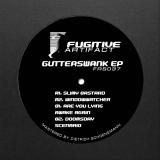
Four cuts of grimey, creepshow, noir tech and jackin Chicago House by Fugitive Artifact, NYC-via-Atlanta artist behind the Headcrack party. Not a rehash or revival, but still full of respect for the founders of jack (also John Carpenter!). At times on the A-side, these tracks are psychedelic…driving bass lines over syncopated claps and rimshots with building, atmospheric swells inviting you to tumble down the manhole into a world of insomniac crime bosses and bleary eyed pleasures. The B side opens with a more techno tempo, but keeps the swirling percussion cooking. The record ends with an ominous daybreaker. You can hear the arrival of a grey dawn. An invitation to join the freaks in the gutter. Will you heed the call and join the ranks?!
Search:t time
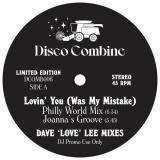
Coming in extra bloody hot is the 6th release on Disco Combine, harvested from the fields of musical gold by Mr. Dave Lee. First up the epic 'Lovin' You (Was My Mistake)' a throaty Philly-soul favourite , which has been lovingly re-worked into a beefy peak time floor filler. For those who prefer a more dubwise approach, the 'Joanna's Groove' version starts instrumentally with rippling piano, building into a big string finale. On the flip 'How I Love New York' swaggers into your ears with all the class, style & panache you would expect from a jazz-fusion connoisseur living in the big Apple. Don't miss heading to the 'Midtown Dub' if you like things more squelchy and funktified.
Trajectories collide in a wormhole as Tokyo-based Igaxx and Amsterdam-based Gropina converge on a crepuscular four-track 12-inch and digital release for Paesaggi Records. Igaxx drifts through near-beatless, spiralling psychedelia: “The Perception” is a slow-burn ascent, suspended in a state of perpetual anticipation, forever circling a climax that never arrives. “Someday in Time” settles into a steady pulse that glides outward, dissolving into the distance as if lost in quiet contemplation.
On the flip, Gropina reshapes the two pieces through his own sonic lens, like stepping through the looking glass. “The Perception (Version)” brings a supernatural, Kraut-inspired vibe, opening with a deceptive 2:35 intro before unfolding into Mother Sky-esque drums, primitive flutes, and reversed guitars. “Some Day In Time (Version)” is a dubby reinterpretation driven by a ’70s Ace Tone drum machine, a funky bassline, dub-soaked guitars, noir alto saxophone, and subtle details swirling through the mix.
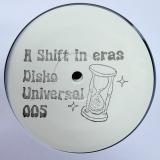
This EP marks the first release from a collaborative project between Tokyo based DJ/producer Iori Wakasa and Okayama's Keita Sano, born from a quiet resonance between their musical sensibilities.
In Japan, the academic year begins in April. Though born in 1988 and 1989, the two artists belong to the same school-year cohort under this system, yet within Japan's gengo era structure they stand at the symbolic end of one era and the beginning of another. The title 'A Shift of Eras' points to the moment when one era gives way to the next, suggesting not only the passage of time, but the subtle renewal of culture, perception, and values.
'Filtered Jewels' draws from the image of light shimmering like gemstones, or a space scattered with countless jewels, perceived through an imagined filter that gently alters the way the scene reveals itself.
'Heaven's Door' envisions the ascent of a transparent staircase floating above a sea of clouds, leading toward a quietly resting emerald-green door.
'Shocking Yellow', originally created in response to a specific request, incorporates carefully placed vocal samples while grounding the track in warm, rounded low frequencies and organic textures, shaped with DJ use in mind.
And finally, 'Time To Change' was reconstructed repeatedly with the hope of offering both solace and a quiet sense of encouragement, ultimately becoming a piece that reflects the underlying theme of the EP.
- 1: Urn Burial
- 2: The Redness In The West
- 3: The Third Migration
- 4: They Came Like Swallows
- 5: The Living Theater
- 6: The Oceans Are Crying
- 7: Insight
Black Vinyl[30,67 €]
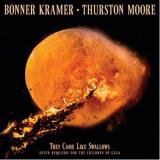
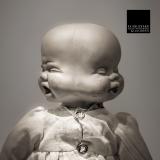
They Came Like Swallows is the first album-length collaboration between Thurston Moore and Kramer (now officially Bonner Kramer), two giants of alternative/ experimental music. The accomplishments and influence of these two artists in the world of independent music cannot be overstated and the result of their artistic union is a startlingly cohesive statement that burns through landscapes of primitive outsider rock, avant-garde composition, progressive ambient and further locales boldly and beautifully unnamable. “Kramer and I reconnected in Miami, Florida, a few years back, many many years after each of us had departed NYC on separate life adventures. It was only a matter of time before Kramer and I started making plans to record together and with his irrepressible due diligence he quickly set up a mobile recording contraption in the pad I was decamped in, the Florida sunshine flowing through the palm leaves, lithe lizards skittering across the windowsills, and we just went for it.
Kramer had the idea to cover a Joy Division tune, a left turn from the improvisations we had been tracking, though wholly in keeping with both our sensibilities of light and dark unifying in transcendent songwriting, both of us devotees of 'the song' as well as 'the freedom.’ What transpired is They Came Like Swallows, a session we immediately felt should exist as a prayer to the war-torn souls of the families of Palestine continually decimated by the brutality of genocide. We agreed beyond words to offer our music as a sonic activism and as a beneficent energy. This album is our duo exchange for human dignity, it is our soul music for any semblance of a peaceful planet.” ~ Thurston Moore “For the first time in our nearly 45 years of friendship, we had identical time windows open to make a record together,” recounts Kramer. After all this time not a moment is wasted as the duo immediately taps into the heightened core of improvisational tension across these seven offerings. Volcanic opener “Urn Burial” notches a similar historic union (John Cale and Terry Riley) to meet the circumstances of the moment, with swirling mists of organ and pounding toms over guitar that thickens the atmosphere with jagged, grimy dissonance.
Solemn strings open the second track, “The Redness In The West,” with Kramer’s cello and viola in dueling bow beneath the high tension drive and sustain of Thurston’s electric guitar, tapping out a Morse code of tension that mounts endlessly into a fog of inevitable war by the end. Moore and Kramer’s sense of experimentalism is in free and full grandeur throughout They Came Like Swallows, though the duo keep a strong and constant sideways eye on melody, composition and architecture, to the ends that any strict lines between song and improvisation are blurred beyond qualification.
As if to punctuate this point, Swallows closes with a nightwork cover of Joy Division’s “Insight,” a doleful coda that breathes out with a solemn inner grace under Thurston’s instantly stylistically recognizable guitar melodies as they weave into he and Kramer’s unison voices. As the lone vocal piece and only traditional ‘song’ form on the album, “Insight” is unique to this set and as a closing statement draws connective lines back to the kind of dynamic, electrified melodicism that wove deep, melancholy patterns into the untamed fire of Sonic Youth’s Sister and Daydream Nation. In the album’s final moments, the two voices repeat the lyric “I’m not afraid anymore” as mantra, underscoring the heavy, unsettled themes and methods that preceded it. Kramer describes the creative process of They Came Like Swallows: “I had composed and recorded a few pieces at my home studio over the course of a couple weeks. Thurston was spending the winter in South Florida, so I flew down and spent a few days recording his guitar parts in his home there. Watching him spontaneously compose his parts was pretty astonishing, to say the least. Once we'd finished working on those pieces, we began improvising and following wherever the music pointed us, and another few pieces were born. We got straight to it, without anything driving us other than the joy of finally working together.
My personal goal was to remain present and catch as many surprises as I could from Thurston's guitar work, and there were plenty during those few days. We had a fucking blast.” Thurston’s contributions here will be readily familiar to any acolytes of his other works, the through-line between his inspired playing, cradled in Kramer’s meticulous, solid arrangements. “If I had to make this record again, I'd do it all exactly the same way,” Kramer says. “It’s like jazz, you don't think about it. You just do it. It was miraculous, and you don't fuck with a miracle.”
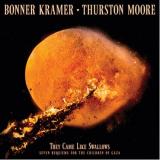
They Came Like Swallows is the first album-length collaboration between Thurston Moore and Kramer (now officially Bonner Kramer), two giants of alternative/ experimental music. The accomplishments and influence of these two artists in the world of independent music cannot be overstated and the result of their artistic union is a startlingly cohesive statement that burns through landscapes of primitive outsider rock, avant-garde composition, progressive ambient and further locales boldly and beautifully unnamable. “Kramer and I reconnected in Miami, Florida, a few years back, many many years after each of us had departed NYC on separate life adventures. It was only a matter of time before Kramer and I started making plans to record together and with his irrepressible due diligence he quickly set up a mobile recording contraption in the pad I was decamped in, the Florida sunshine flowing through the palm leaves, lithe lizards skittering across the windowsills, and we just went for it.
Kramer had the idea to cover a Joy Division tune, a left turn from the improvisations we had been tracking, though wholly in keeping with both our sensibilities of light and dark unifying in transcendent songwriting, both of us devotees of 'the song' as well as 'the freedom.’ What transpired is They Came Like Swallows, a session we immediately felt should exist as a prayer to the war-torn souls of the families of Palestine continually decimated by the brutality of genocide. We agreed beyond words to offer our music as a sonic activism and as a beneficent energy. This album is our duo exchange for human dignity, it is our soul music for any semblance of a peaceful planet.” ~ Thurston Moore “For the first time in our nearly 45 years of friendship, we had identical time windows open to make a record together,” recounts Kramer. After all this time not a moment is wasted as the duo immediately taps into the heightened core of improvisational tension across these seven offerings. Volcanic opener “Urn Burial” notches a similar historic union (John Cale and Terry Riley) to meet the circumstances of the moment, with swirling mists of organ and pounding toms over guitar that thickens the atmosphere with jagged, grimy dissonance.
Solemn strings open the second track, “The Redness In The West,” with Kramer’s cello and viola in dueling bow beneath the high tension drive and sustain of Thurston’s electric guitar, tapping out a Morse code of tension that mounts endlessly into a fog of inevitable war by the end. Moore and Kramer’s sense of experimentalism is in free and full grandeur throughout They Came Like Swallows, though the duo keep a strong and constant sideways eye on melody, composition and architecture, to the ends that any strict lines between song and improvisation are blurred beyond qualification.
As if to punctuate this point, Swallows closes with a nightwork cover of Joy Division’s “Insight,” a doleful coda that breathes out with a solemn inner grace under Thurston’s instantly stylistically recognizable guitar melodies as they weave into he and Kramer’s unison voices. As the lone vocal piece and only traditional ‘song’ form on the album, “Insight” is unique to this set and as a closing statement draws connective lines back to the kind of dynamic, electrified melodicism that wove deep, melancholy patterns into the untamed fire of Sonic Youth’s Sister and Daydream Nation. In the album’s final moments, the two voices repeat the lyric “I’m not afraid anymore” as mantra, underscoring the heavy, unsettled themes and methods that preceded it. Kramer describes the creative process of They Came Like Swallows: “I had composed and recorded a few pieces at my home studio over the course of a couple weeks. Thurston was spending the winter in South Florida, so I flew down and spent a few days recording his guitar parts in his home there. Watching him spontaneously compose his parts was pretty astonishing, to say the least. Once we'd finished working on those pieces, we began improvising and following wherever the music pointed us, and another few pieces were born. We got straight to it, without anything driving us other than the joy of finally working together.
My personal goal was to remain present and catch as many surprises as I could from Thurston's guitar work, and there were plenty during those few days. We had a fucking blast.” Thurston’s contributions here will be readily familiar to any acolytes of his other works, the through-line between his inspired playing, cradled in Kramer’s meticulous, solid arrangements. “If I had to make this record again, I'd do it all exactly the same way,” Kramer says. “It’s like jazz, you don't think about it. You just do it. It was miraculous, and you don't fuck with a miracle.”
- 1: Spinning
- 2: Heaven
- 3: Backseat
- 4: Tear
- 5: Lamp
- 6: Heart Breaks
- 7: Visual
- 8: In The Sky
- 9: Dreams For Somebody Else
- 10: Thinking Of You
Preston duo White Flowers announce new album, Dreams For Somebody Else - due for release 1st May 2026 via The state51 Conspiracy.
White Flowers, the long-running collaboration between Joey Cobb and Katie Drew, exists within what they call “the realm” – a shared creative space, wherein time, rather than being a restrictive force, is fluid and boundless, and music exists as an endless conversation with their past and present selves. Adopting what the band describe as a “sketchbook” approach to writing, White Flowers is the product of a decade’s worth of recordings - snippets nestled away on hard drives, only to truly make sense years later.
On Dreams For Somebody Else, the band expand upon the dark-hued dream pop of their debut, channeling the catharsis of dance music via repetitive structures and “sad, euphoric sounds”. Working alongside LCD Soundsystem and Hot Chip’s Al Doyle on production, the album maps out a mosaic of soaring choruses that swirl around imposing arrays of synths, guitars, and percussion.
Through this new lens, the band explore themes of isolation, dissociation and identity - drawing inspiration from Annie Ernaux’s The Years. “Whilst recording the songs for ‘Dreams For Somebody Else’, we really connected with the concept of Annie Ernaux’s book, ‘The Years’ - a ‘collective autobiography’ pieced together from mismatched fragments from her past, conjuring the effect that she’s merely an observer of her own life. This concept merges into the White Flowers world, where time, rather than being restrictive, is fluid and boundless, with our music existing as an endless conversation with versions of ourselves at different stages of our lives.”
“The album has that same feeling of disassociating from your own life, because you’re just blending into everyone else”, the band explains. “There’s a sadness there, because it’s as if you’re looking back on things that happened to you, and they feel like they don’t belong to you anymore”. It’s the dull ache of nostalgia intertwined with a sense of wonder at what could lie ahead - the hopeful optimism and endless loss that defines the human experience. “It’s this idea of identity not being a fixed thing, but something that’s always changing. It’s a fluid thing, similar to time. Things aren’t really fixed, but rather in a constant state of change. It’s important to remember that we’re all going through that.”
- 01: Un Du Akerst
- 02: Plane Wreck At Los Gatos (Deportee)
- 03: We Were Made For These Times
- 04: Crimean Freylekhs
- 05: Ikh Ken Nit Zogn Vitsn
- 06: Forty Year Freylekhs
- 07: Kegn Gold Fun Zun / Tatar Dance
- 08: Payklers Tants (Drummer's Dance)
- 09: Lashinke Vaysinke
- 10: Elegy For The Innocents
- 11: I Am Willing
- 12: Di Tsukunft (El Futuro)
Mit "We Were Made For These Times" feiern die Klezmatics ihr 40-jähriges Bandjubiläum - und veröffentlichen zugleich ein Album, das die Gegenwart direkt anspricht.
Die Grammy-ausgezeichnete Formation verbindet seit vier Jahrzehnten jiddische Musiktradition mit politischem Bewusstsein, kultureller Verantwortung und einem unverwechselbaren Klang, der Klezmer mit Punk-Energie, Jazz-Improvisation, Gospel und globalen Rhythmen verschmilzt. Das neue Album versteht Klezmer nicht als nostalgisches Archiv, sondern als lebendige Ausdrucksform, die Kraft, Verbundenheit und Widerstandsfähigkeit stiftet. In Zeiten gesellschaftlicher Spannungen, globaler Migrationsbewegungen und öffentlicher Debatten über Zugehörigkeit richten die Klezmatics ihren Blick auf die historische Aufgabe jüdischer Musik: Menschlichkeit einfordern, Gemeinschaft stärken und Hoffnung formulieren. Die Songs reichen von Protest- und Arbeiterliedern bis zu spirituellen Stücken und feiern gleichzeitig Lebensfreude, Glauben und kulturelles Gedächtnis. Texte von Woody Guthrie, Holly Near, Dovid Edelstadt oder Chaim Zhitlovsky treffen auf neue Interpretationen und internationale Gäste - darunter Sofía Rei, Janis Siegel, Joshua Nelson, La Manga, William Parker, James Brandon Lewis und Enver Izmaylov. Im Zentrum steht der Titelsong, inspiriert von Dr. Clarissa Pinkola Estés" Botschaft: Wir sind für diese Zeiten gemacht. Das Album bekräftigt, wofür die Klezmatics seit 40 Jahren stehen: Musik als Werkzeug für Mut, Würde und gemeinschaftliche Zukunft.
Meeting vulnerability with persistence, Lucerne-based musician Remo Helfenstein presents Spite, his first solo album on Präsens Editionen. Whereas his 2022 debut EP, Comforting Katharina, traced raw, devotional impulses, Spite expands the terrain—balancing psychedelic drift with sudden moments of clarity, wounded grandeur with flashes of pop transcendence.
The record thrives on contradiction: oscillating between the no wave austerity of Suicide and the meditative (and dadaist) expanses of Bitchin Bajas and Bonnie “Prince” Billy’s collaborative work, while opening into passages of gospel-infused spaciousness. At times intimate and porous, at times expansive and ecstatic, Helfenstein shapes a sound world that fuses analog and digital processes—both deeply personal and insistently collective. This duality comes to life most strikingly in recordings with fellow musicians Klara Germanier (background vocals and guitar), Raphael Loher (k
No-one could have predicted the success of The 88, the first album from Minuit
(minwee), or how warmly it would be received. Equally no-one could have predicted that the band would return to the live arena a decade after their final fling or consider pressing their debut on vinyl for the first time.
Formed in Nelson, NZ in 1997, the trio cut their teeth playing regularly around the South Island’s underground club and festival scene. After a hiatus overseas, they began recording The 88 in 2002 in Ryan’s home studio. The lyrics were influenced by their travels around Europe and Ruth's time working for the UN in Kosovo and East Timor; the beats by The Prodigy, Portishead and the UK’s trip-hop and breakbeat scenes.
Signed to indie label Tardus, their tunes were eagerly picked up by the bNet student radio network, which then ballooned into high rotates on TV station C4, helped along by Alyx Duncan’s stunning video for Except You. A busy summer playing live every weekend for three months and seemingly universal praise from the music press led to them swiftly gaining gold sales.
Now 22 years later, with live shows looming, the trio have decided to revisit their debut, completing two previously unfinished tracks from the period to add a bonus to this inaugural vinyl release.
As Corsica draws to a close, this is our homage to a space that has been our home for 18 precious years. A space that has nurtured us and allowed us to evolve - to find our own way of raving. The Rupture way. The Corsica way.
We wanted to celebrate 18 precious years with a release that truly embodies the spirit of Rupture at Corsica Studios. The music on this EP has mashed up the dance, time and time again!
Double O wrote ‘Corsica Jungle’ with the intention of capturing those peak 5am emotional Corsica vibes. Love and respect to dBridge & Skeptical for contributing to a project so close to our hearts with tracks that represent our sound so perfectly: dubwise, killer breaks and peak dancefloor energy! The EP closes with a spoken word poem from Mantra.
Viva la rave!
Corsica Forever!
As Corsica draws to a close, this is our homage to a space that has been our home for 18 precious years. A space that has nurtured us and allowed us to evolve - to find our own way of raving. The Rupture way. The Corsica way.
We wanted to celebrate 18 precious years with a release that truly embodies the spirit of Rupture at Corsica Studios. The music on this EP has mashed up the dance, time and time again!
Double O wrote ‘Corsica Jungle’ with the intention of capturing those peak 5am emotional Corsica vibes. Love and respect to dBridge & Skeptical for contributing to a project so close to our hearts with tracks that represent our sound so perfectly: dubwise, killer breaks and peak dancefloor energy! The EP closes with a spoken word poem from Mantra.
Viva la rave!
Corsica Forever!
Celebrated producer and musician Danger Mouse and prodigiously talented New York rapper Jemini are gearing up to release their long delayed collaborative album, Born Again Remarkably this soul and funk infused hip-hop tour de force arrives two decades after its creation and the duo's debut LP, Ghetto Pop Life which celebrates its 20th anniversary this year. Enthused by the response to Ghetto Pop Life, soon after Danger Mouse and Jemini began to tour and to write and record Born Again. Finally, having been recorded two decades ago and indefinitely shelved until now, Born Again will finally be released to coincide with the twentieth anniversary of Ghetto Pop Life. The previously unheard record retains many of the elements of Danger Mouse and Jemini's debut; the fun- loving, shit- talking innocence, but also adopts a noticeably more introspective and confessional tone. This time, in addition to lighthearted topics such as being an incredible artist (Knuckle Sandwich II, Brooklyn Basquiat), living large and being a magnet for attention (Me), Jemini also delivers highly- personal and occasionally devastating lyrics about missed opportunities and redemption (All I, Born Again), his time in prison (Locked Up) and complicated relationship with his father (Dear Poppa). His effortless free flowing cadence and indelible sing-song delivery elevate each track with a melodic infectiousness whilst Danger Mouse exhibits an affinity for resonant instrumentals built from sampled organ, vibraphone, or guitar loops and infused with his trademark minor key magic. The result is a classic, timeless hiphop record.
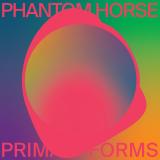
After their last album six years ago, "Primal Forms," the new album by Phantom Horse, finally arrives. The German duo of Ulf Schütte and Niklas Dommaschk have long established a reputation for expertly crafted, hypnotically slow-burning electronic music, and we do not hesitate to say that "Primal Forms" stands among the epitomes of their discography.
The sequencing of "Primal Forms" cannot be underestimated. It is an album in the classic sense. It demands to be listened to in its entirety, which also points to a closer affinity with Krautrock. Likewise, a touch of dub is perceptible, wafting around the songs, which, as usual, bear clandestine titles. It is not unreasonable to see in these compact compositions a clear statement against multitasking.
Phantom Horse are not trumpeters of dystopia. They present themselves resolutely, almost stoically, turned away from the world. This turning away is clearly a statement that can be contemplated in the Mariana Trench as well as in comet belts. In any case, it is best experienced in a space without any human beings. This does not mean that grumpy hermits are tinkering with synths behind closed shutters, armed with wooden walking sticks. This is still open minded music with a connection to current developments. The approach itself is what is audible, and with it, Phantom Horse proves once again that their main connection to time is timelessness.
In an age of all-encompassing distraction on every sensory, thematic, and semantic level, Phantom Horse explores the possibilities of reduction, searching for simplified melodic arcs without resorting to the vocabulary of classical minimalism. The overall impression is more electronic; the slowly shifting, polyrhythmic compositions repeatedly lead to a peculiar danceability. However, these are perhaps the dances of mechanical birds, undeterred by anything.
Written and produced in Hamburg, Nijmegen and Ojén by Niklas Dommaschk & Ulf Schütte
Mastering by Rafael Anton Irisarri at Black Knoll
Artwork by Daniel Castrejón
- A1: Le Petit Bonhomme Orange
- B1: Le Gros Hit
For the second time, the Geneva-based duo Cyril Cyril hands the microphone to the Syndicat du Futur. Behind this small group campaigning for a better future are Jeannot and Marilou, Zoé, Marlowe and Lenaïs — the respective children of Cyril (Yeterian) and Cyril (Bondi). Two years after La Météo / Le Monde Embêtant, the crew is back. The voices have grown and changed, but the sharp perspective remains, and the adult world had better watch out.
On Le Petit Bonhomme Orange, a certain D. Trump takes a hit. Seen from a child’s point of view, the war leader and his gesticulations look less like a figure of authority than a ridiculous scarecrow ruling through fear. And when power turns grotesque, it stops being intimidating.
With Le Gros Hit, it’s time for the absurd. A song that builds itself in plain sight, stacking lines with no apparent logic and embracing its own laziness. A reminder that you can make a track with three ideas and a chorus, and sometimes that’s all it takes.
Mit „In Times of Dragons“ folgt nun das 18. Studioalbum von Tori Amos. Mit mehr als 36 Jahren
Bühnenerfahrung, 12 Millionen verkauften Alben, unzähligen Konzerten sowie
zahlreichen Auszeichnungen (u.a. acht Grammy-Nominierungen) gehört sie zu den bedeutendsten Künstlerinnen unserer Zeit. So bezeichnete die amerikanische Sängerin Halsey Tori Amos kürzlich als eine ihrer
größten Inspirationen: „Ich bin mit Tori aufgewachsen und habe sie immer als eine einzigartige Person betrachtet.“ Und erst im Oktober dieses Jahres erhielt Amos den Inspirational Artist Award bei Music Week’s
‚Women in Music Awards‘.
- A1: Version Originale
- B1: Version Instrumentale
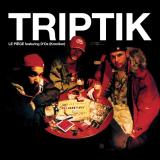
More than 25 years after its original release, Beatsqueeze Records brings back a classic of French rap: “Le Piège” by TRIPTIK.
Originally released in 2000 featuring D’Oz and Cutee B, this cult track is being reissued for the first time on 45 RPM vinyl.
A must-have for French rap fans and vinyl collectors alike.
The year 2000 was a turning point in TRIPTIK’s career.
The Parisian trio, then close to Cut Killer, released the maxi “Dat Shit” with the New York group Blahzay Blahzay, on the label of the famous French DJ.
At the same time, a 2-track maxi from Blahzay hit the shelves. It included the same track… but without the French MCs and without crediting the group’s beatmaker, Drixxxé.
Side B featured another of his productions, again without any credits.
In response, TRIPTIK decided to reclaim the appropriated beat. This reaction gave birth to the legendary “Le Piège”, featuring D’Oz and Cutee B.
- 1: Off With Their Heads
- 2: Down Down Down
- 3: Black Square
- 4: Wake The Dead In Bedlam
- 5: Questions // Answers
- 6: Four Letter Words
- 7: Hater Creator
- 8: Warpaint
With multiple bass players (at one point eight of them) and an array of rubber masks that give both children and adults sleepless nights, somehow, against all the odds, Evil Blizzard are set to release their fifth studio album of nightmare inducing noise and visuals. Titled, the new album sees Evil Blizzard pushing the boundaries further afield from their early sound of 'multiple bass psych', seeing elements of dub, krautrock and goth to provide a much more Post Punk vibe than previous work. Reference points were 'Metal Box', 'Ritual De Lo Habitual', Can and Discharge (whose singer JJ joins the band on the track 'Wake The Dead In Bedlam') as well as the omnipresent Hawkwind, Stooges and Sabbath vibes. By far the band's most stylistically varied and challenging album and yet their most cohesive body of work since their critically acclaimed second album 'Everybody Come To Church'. As well as their trademark 'multi bass onslaught', this album sees sequencing, sampling and even the use of string instruments made from bone.
Recorded between September and November 2025 at Rock Hard Studios, Blackpool, improvised sessions were edited down into more 'song' structures, then reworked into the final pieces. "Recording this was the hardest work we've done," claims Filthydirty. "Previously, we'd just turn up, turn up louder, press record and sieve through the debris and call it 'an album'. On this album we only had two, maybe three tracks that were finished when we went in, and the rest were worked out in reverse; ploughing through improvisations and jams and seeing what actually had any bones or gristle to work with. “Consequently, we had the time and focus to reappraise what we'd done in the past, highlight what we'd done right and realise where perhaps self-indulgence or lack of focus were overlooked instead of time or budget restraints, he continues. “The result is an album that reflects all our record collections. Lyrically it's been impossible to not absorb the chaos and anger transmitting on every news channel recently, and while we'd never write specifically about a certain issue or matter, the shitshow that is the 2020's definitely made its mark or our thinking.