Recorded in 1962, Hawkins’ quartet featuring Tommy Flanagan (Piano), Major Holley (Bass) and Eddie Locke (Drums) puts forth an easily palatable selection of repertoire, with up-tempo moments like ‘Go Li’l Liza’, and Swingin’ Scotch alongside a trio of ballads including Quincy Jones’ ‘Quintessence’. This Verve By Request title is pressed on 180-gram vinyl at Third Man in Detroit.
Search:t tommy fe
- Main Title
- The Principal's Office/Ashtray
- Margaret Comes Home/The Telephone Call
- The Closet/St. Sebastian/The Mirror/Reflection
- Calisthenics
- The Card Catalogue/Telekinesis
- Carrie And Miss Collins
- The Slaughter/The Storm Outside The Gym/Margaret Prays
- The Tuxedo Shop
- Waiting For Tommy/Tommy Arrives
- Born To Have It All (Vocals By Katie Irving)
- I Never Dreamed Someone Like You Could Love Someone Like Me (Vocals By Katie Irving)
- The Ballot/Carrie And Tommy/The Conspirators
- The Coronation/The Blood
- The Retribution
- Carrie Returns Home
- The Bath/Carrie And Margaret
- The Crucifixion
- The House
- The Dream/The Nightmare/End Titles
- Born To Have It All (Instrumental)
- I Never Dreamed Someone Like You Could Love Someone Like Me (Instrumental)
"Waxwork Records is thrilled to present CARRIE Original Motion Picture Soundtrack by Pino Donaggio! Expanded and re-mastered for its 45th anniversary, this deluxe double LP album marks the very first time that the complete film music has been released on vinyl. Carrie is a 1976 Horror film adapted from author Stephen King's very first published novel of the same name. The movie stars Sissy Spacek and is directed by Brian De Palma (Scarface, Phantom Of The Paradise).
The score by legendary composer Pino Donaggio (The Howling, Tourist Trap) skillfully captures the pressure of forced innocence, the humor of teen drama, and the trauma of coming of age as a girl in 1970’s America. The album also features the tracks “Born To Have It All” and “I Never Thought Someone Like You Could Love Someone Like Me” by Katie Irving. CARRIE Original Motion Picture Soundtrack features the expanded film music re-mastered and pressed to orange smoke colored vinyl, with new artwork by Phantom City Creative, and old-style tip-on gatefold jackets with matte satin coating."
Trumpeter Booker Little made only a few albums during his tragically short life including his astounding debut Booker Little 4 & Max Roach recorded in 1958 for United Artists. Little came to prominence in Max Roach’s band and the drummer joins him here along with George Coleman, Tommy Flanagan, and Art Davis. This stereo Tone Poet Vinyl Edition was produced by Joe Harley, mastered by Kevin Gray from the original analog master tapes, pressed on 180g vinyl at RTI, and packaged in a deluxe tip-on jacket.
Taylor Hollingsworth, the fingerpicking songwriter hailing from the vibrant city of Birmingham, AL, is back with an electrifying, foot stomper of an album titled "Yahola." With his unique blend of folk, rock, and blues, Taylor has carved out a distinct musical niche that he calls "folk n' roll" or electric folk. In a world full of manufactured pop sensations and cookie-cutter artists, Taylor Hollingsworth stands apart as a true maverick of original music.Taylor's dedication to his craft has earned him accolades and recognition both within and outside the local music scene. His immense talent on the guitar, coupled with his remarkable songwriting abilities, has earned him a rightful place among music connoisseurs. Notable achievements in Taylor's musical journey include having his works featured in popular TV shows, podcasts, and movies, showcasing his ability to strike an emotional chord with listeners. Esteemed artists such as Conor Oberst and Phoebe Bridgers have recognized Taylor's songwriting prowess by covering one of his songs.
Blending a mix of street intellect into pop music, Naughty by Nature delivered raw-edge but accessible East Coast rap and created some of the biggest and most contagious hits of the 90s. Naughty By Nature's brand new greatest hits compilation The Naughtiest, which has not been produced physically in over 20 years, contains the groups best known songs including "O.P.P" which hit #1 on the Billboard Rap Charts & #6 on the Hot 100, "Uptown Anthem" "Pin the Tail on the Donkey" from their self-titled album, along with "Feel Me Flow" & "Craziest" from Poverty's Paradise. And of course, select tracks from 19 Naughty III including "Hip Hop Hooray" which hit #1 in several countries and has become a defining anthem for hip hop music.
The Chronics is co-manager of the respected Bipolar Disorder and Primal Instinct labels along with Chlar and Alarico, and is known for his mastery of straight-up and compelling grooves and evocative anthems. He has been releasing for over a decade now and shows his versatility again here. This new release makes a debut vinyl offering from the Anglo-Australian Transition label, following millions of digital plays since its inception last summer and support from DJs like FJAAK, Anetha, Daria Kolosova, VTSS and Boys Noize.
Opener 'By My Soul' is a techno pumper with inescapable euphoria built into the diva vocals and the smart synth loops that rise up and up through the mix. It's lean and linear but packed with feelings that burst out of the speakers and hook in your heart. Dublin's Tommy Holohan is blazing an exciting path as a fine new talent who is part of Samba Boys with Kettama and has released on SCDD, Monnom Black and more. His remix is even more maximal, with happy piano stabs dropped in and a funky bassline that brings an all-new vibe.
The Chronics then serve up 'Body Harmony', a slamming but playful cut with a colourful lead synth motif and unrelenting drums. It's warm and energising while also hitting hard, especially during the epic jungle breakdown. Acclaimed techno producer and live artist Obscure Shape recently split from his long-time partner SHDW but is already making waves as a solo talent with a huge batch of unreleased music, including this remix. It's a turbocharged and nimble loop techno offering enriched with Detroit-style machine soul and precision percussion that keeps you hooked.
- 1: I'll Never Come Back
- 2: Friday Afternoon
- 3: Those Aren't Zombies
- 4: Flat Tire
- 5: Keep Evil Alive
- 6: Surveillance Tape
- 7: Job Is Done
- 8: Stolen Space
- 9: Stolen Space Pt. 2
- 10: Drug Deal
- 11: Meeting Place
- 12: Your Name Is Now 21
- 13: Cops Are Here
- 14: Looking For You
- 15: Elisabeth
- 16: Six Fucking Years
- 17: I'm Gonna Need The Keys
- 18: Bishop's Revenge
- 19: Escape From The Well
- 20: You Have To Get Out Of Here
- 21: Blood In The River
- 22: Hell On Earth
- 23: Eyeball Atmospheric Version
- 24: Survive
- 27: Bishop And Ram Fight
- 28: Batting Cages Are For Hitting
- 25: A Journey Through Hell
- 26: O Holy Night
Emmy-winning composers Kyle Dixon & Michael Stein, best known as the duo behind the score for Netflix’s 'Stranger Thing', have composed the original score for 'The Retaliators' (made by Better Noise Films). The revenge-driven horror thriller is Certified Fresh on Rotten Tomatoes with an audience score of 89% and stars Michael Lombardi (FX’s Rescue Me, the Deuce) and Marc Menchaca (Ozark, Black Mirror), alongside featured appearances from a who’s who of modern active rock chart-leading musicians including Tommy Lee (Motley Crue), Ivan Moody and Zoltan Bathory (Five Finger Death Punch, plus Jacoby Shaddix (Papa Roach).
- A1: Wise Man
- A2: Skylarka
- A3: Wild Man Street
- A4: Cow Town Skank
- A5: Northern Sound
- A6: Convention
- A7: The Joker From La Boka
- B1: Legs Man
- B2: Greenwich Farm
- B3: Girls Town
- B4: Tip Toe
- B5: Gold Coast
- B6: Boys Town
repress !
If one band could be cited for the emergence of Ska music, that band would be the Skatalites.
Formed around June 1965 and built around the many musicians that had honed their craft at the Alpha Boys School in Kingston, Jamaica. The early line up consisted of Don Drummond (Trombone), Roland Alphonso (Tenor Saxophone), Tommy McCook (Tenor Saxophone), Johnny ’Dizzy’ Moore (Trumpet), Lester Sterling (Alto Saxophone), Jerome ’Jah Jerry’ Hines (Guitar), Jackie Mittoo (Piano), Llyod Brevett (Bass) and Llyod Knibbs (Drums).
Named originally The Satellites after the big news of the day, the Soviet space satellite. They became The Skatalites when band member Tommy McCook introduced a play on the characteristic ‘Ska’ sound, made by the guitar when following the’ after beat’ of the music.The group had already cut its musical teeth by playing under various guises around the Jamaican island in numerous ‘hotel bands’. When the big Sound System operators Sir Coxsane Dodd, Duke Reid and King Edwards needed new material to play out with and their usual source of the material, American R & B records were drying up. They turned to this pool of musicians to back up their main singers of the day. Delroy Wilson, Alton Ellis and Lord Creator to name but a few. Also to cut the many instrumental tracks they needed usually under the tutor ledge of Don Drummond, official band leader and main musical director. Their knowledge of the old mento tunes and an understanding of Jazz and R&B music somehow blended to make this musical sound that was to dominate the island from the early 60’s up until around 1966 when the sound would slow down to what we now know as Rocksteady.
The time span of the Skatalites career considering their output of litually 100’s of sides of music, was a relatively short one of just over two years. We have delved into the vaults of Wirl Records and have selected some tunes that show the dexterity of the band and what great sounds this group of musicians were capable of producing and the high quality they maintained. They recorded before they were named as a collective The Skatalites, when personal and financial problems became an issue the band split into two halves. Jackie Mittoo and Roland Alfonso going on to form The Soul Brothers band for Coxsone Dodd. Tommy McCook moving over to work with Duke Reid as musical director. Sadly, Don Drummond suffering for years from depression would see his career cut short ending in Belle Vue hospital in 1969.
But while together they cut some of the finest Ska Sounds to be found on record. We hope you enjoy this set as much as we have in putting it together.
So, stand Up, Listen Hard and do the Ska……
repress !
“Tubby did three original dub albums, ‘Dub From The Roots’. ‘The Roots of Dub’ and the third is ‘Brass Rockers’ with Tommy McCook ‘pon the flying cymbals. Where he mixed it with the horn going in and out in a dub way and one named ‘Shalom Dub’ you can call Tubby’s too because he mixed the versions as they were off forty fives’’
Bunny ‘Striker‘ Lee
King Tubby and Producer Bunny ‘Striker’ Lee are intertwined in the birth of Dub Music. After discovering a mistake that made a ‘serious joke’ ( more of which later...) they went on to release the first pressings of this new musical genre namely ‘Dub Music’. Tubby’s vast knowledge of electronics and Bunny’s vast catalogue of rhythms would lay the foundations of what today is taken as a standard... the Remix / Version cuts to an existing vocal tune.
Osbourne ‘King Tubby’ Ruddock was born in Kingston, Jamaica on 28th January 1941 and grew up in the High Holborn Street area of downtown Kingston. He studied electronics at Kingston’s National Technical College and also on two correspondence courses from the U.S.A... When he had qualified Tubby began repairing radios and other electrical appliances in a shack in the back yard of his mother’s home. His work in the early days included winding transformers and building amplifiers for Kingston’s Sound Systems. Tubby built his first Sound System in 1957 playing jazz and Rhythm & Blues at local weddings and birthday parties. His reputation as a man who knew and understood both electronics and music grew steadily and as the sixties drew to a close. Tubby purchased his own basic two track equipment. He installed this alongside his dub cutting machine, a home made mixing console and his impressive collection of Jazz albums in the back bedroom of his home at 18 Dromilly Avenue which he christened his music room.
Tubby and Striker were at Treasure Isle Studio’s one day while Ruddy from Spanish Town was working with the engineer Byron Smith....
“Tubby and myself was talking when Ruddy was cutting some dub but Smithy (engineer) made a mistake through we were talking and forgot to put in the voice. It was two track recording in those days. Ruddy said ‘No Man! Make it stay! and so they cut the rhythm. When I went over to Ruddy’s that Saturday night a dance was in progress and when they played the vocal to the tune... then he said we’re going to play ‘Part Two’. They never called it ‘Version’..and then he played the rhythm track. The song was a catchy song and everybody started to sing along and the deejay started to toast so everything went down well. On Monday morning I went up and I said ‘Tubbs the mistake we made was a serious joke.It mash up Spanish Town! The people went wild. So you have to start to do that now ‘cause when the man put on the ‘Part Two’ everyone start singing this song. It played about twenty times. I said you try Tubbs!’...Well the next Saturday night now when Tubby strung up down the farm U Roy said he’s going to play ‘Part Two’ but Tubby did it different now. He started with the voice then dropped it out and let the rhythm run and then he brought in the voice in the middle and from there Tubby started to get really popular.’’
Bunny ‘Striker’ Lee
Dynamic Sounds upgraded to sixteen track recording in 1972 and Tubby purchased, again with the help of a deal brokered by Bunny Lee. The old four track equipment and the MCI console from their Studio B. The four tracks now gave him far wider scope to work with and he began to create a new musical form where the bass and drum parts were brought up while the faders allowed Tubby to ease the vocal and rhythm in and out of the mix. It was only a matter of time before Tubby’s dub plate experiments began to make it on to vinyl and the first ever long playing King Tubby releases would feature a collection of his mixes to a selection of Strikers rhythms. So please sit back and enjoy this historic set of sounds. Lovingly restored and with a few extra gems added to the CD Editions. These releases were the first to carry the name of King Tubby and the first to credit the great musicians that contributed so much to the rhythms that made these albums possible.
Die aus Hawthorne, Kalifornien, stammenden Thee Heart Tones setzen mit ihrer Musik sowohl eine Tradition fort als auch neue Grenzen. Leadsängerin Jazmine Alvarado ist gerade mal 19 Jahre alt und das älteste Mitglied der Gruppe, Jorge Rodriguez, ist 21, aber wenn man sich ihre Platte anhört, wird deutlich, dass sie weit über ihr Alter hinaus talentiert sind. Thee Heart Tones, das sind Jazmine (Gesang), Ricky Cerezo (Tasten und Orgel), Jorge (Schlagzeug), Jeffrey Romero (Bass), Peter Chagolla (Leadgitarre) und Walter Morales (Rhythmusgitarre). "Eines Tages bekam ich eine Mail von Ricky Cerezo mit der Frage, ob ich einen Song für seine neue (damals noch namenlose) Band schreiben wolle", erzählt Jazmine. "Ich kannte seinen Schlagzeuger und die anderen Jungs aus der Mittelschule, sie waren also bekannte Gesichter. Sie schickten mir ein mp3 eines Instrumentalstücks, das sie geschrieben hatten, und sagten mir, sie wollten einen Text, also schrieb ich einen und schickte ihn ihnen." Dieser Song wurde schließlich "Don't Take Me as a Fool", eine schwermütige Moll-Ballade, in der Jazmines schwülstiger, perfekter Gesang erklingt, und die nun für ihr Debütalbum bestimmt ist. Ricky ging nach Hause und spielte seinem Vater "Don't Take Me As a Fool" vor, das er als Sprachnotiz auf seinem Telefon aufgenommen hatte. "Ich war zögerlich. Dad kannte diese Musik besser als jeder andere, er ist damit aufgewachsen. Aber er hat sich mein Telefon geschnappt und es an sein Ohr gehalten. Seine Zustimmung bedeutete mir sehr viel. Aber er hatte die gleiche Reaktion wie Jorge und ich, als wir Jazmine zum ersten Mal singen hörten. 'Das wird ein Hit', sagte er mir. Ihr habt hier etwas ganz Besonderes". Es war dieselbe Aufnahme, die Leon Michels und Danny Akalepse von Big Crown Records aufhorchen ließ, die beide sofort das Potenzial der Gruppe erkannten. Nachdem sie bei dem Label unterschrieben hatten, flog Leon nach Los Angeles, um mit Tommy Brenneck in Tommys Diamond West Studio ihr Debütalbum aufzunehmen. In fünf Tagen haben sie 14 Songs aufgenommen, die den Charme des Teenager-Souls einfangen und ihn mit ihren bewährten Produktionsfähigkeiten mischen - das Ergebnis ist ein modernes klassisches Soul-Album. Der Album-Opener und Titeltrack "Forever & Ever" ist ein ansteckender Two-Stepper, der sofort die Stimmung hebt, während schwere B-Seiten-Balladen wie "Should I Call You Tonight", "Cry My Tears Away" und "It's Time" den Klassikern des Genres den Rang ablaufen. Mit "Need Something More" ziehen sie das Tempo an und füllen die Tanzfläche, während Jazmine mit einem Track im Northern-Soul-Stil ganz sachlich die Dinge auf den Punkt bringt. Sie covern den Klassiker "Sabor A Mi" aus der Feder von Alvaro Carrillo mit großem Effekt, werden ihm gerecht und stellen ihre Version auf eine Stufe mit den besten von ihnen. Ein weiterer Höhepunkt ist ihre Version des The Vanguards-Klassikers "Somebody Please", den sie auf eine ganz andere Ebene heben. Die stampfenden Drums von "No Longer Mine" stehen im Kontrast zu Jazmines honigsüßem Gesang und enden mit der düsteren Energie eines Hip-Hop-Samples aus den mittleren 90ern. Forever & Ever ist sowohl ein Beweis für die unverwechselbare musikalische Chemie als auch für das Talent der beiden. Ihre Intentionen als Band sind ein Beweis für ihren kollektiven Charakter. Die Entscheidung, "Sabor A Mi" zu covern, "erlaubt es uns, unser Publikum wissen zu lassen, dass wir zu unseren Wurzeln zurückkehren", sagt Jazmine. "Wenn man in L.A. aufwächst, wird man von der Stadt, den Kunstwerken und der Musik beeinflusst", sagt Ricky. "Dad besaß kein Lowrider-Auto, aber andere Mitglieder unserer Familie schon. Impalas. El Caminos. Wir waren von der Kultur beeinflusst, insbesondere von der Chicano-Kultur. Und Oldies und Soulmusik spielten eine große Rolle." Der Stil. Die Kultur. Die Anspielung auf die Vergangenheit. "Das ist es, was wir anstreben. Wir wollen junge Chicanos mit ihrem Erbe verbinden. Und wir wollen die Menschen vereinen_ alt und jung."
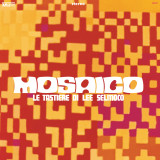
- A1: Ora Di Punta (Ruscigan)
- A2: Sin Palabras (Ruscigan)
- A3: Sole Rosso (Ruscigan)
- A4: Il Giorno Dopo (Ruscigan)
- A5: Festa Al Quartiere (Ruscigan)
- A6: Ansiedad (Ruscigan)
- A7: Chemin De Fer (Selmoco)
- B1: Itinerario B. (Ruscigan)
- B2: Semplice E Bella (Ruscigan)
- B3: Fuoco Freddo (Ruscigan)
- B4: Parentesi (Ruscigan)
- B5: Corner (Ruscigan)
- B6: Verso Sud-Ovest (Ruscigan)
- B7: Spag E Spig (Selmoco)
Francesco Anselmo, also known as Lee Selmoco, Dorsey Dodd, Alex Brown, Arsenio Bracco or Tommy Ruff, is an Italian keyboardist that covered the role of of artistic director for Vedette Records, historical Italian imprint founded by director and violinist Armando Sciascia, and also recorded for its notorious Phase 6 Super Stereo, its sub-label focused on instrumental records and production music.
"Mosaico (Le Tastiere Di Lee Selmoco)" is an incredible display of his creative and composing skills, featuring 14 tracks of what could be classified as "happy music", with killer electric organ and rhythms alternating with fuzzy guitars and spacey / psychedelic hints thrown in for good measures, written alongside Guido Baggiani, alias Ruscigan. We are very happy to start a series of reissues from the Vedette Records catalog with the first ever reissue of this title after 50 years from its original release, and since the original pressing did not feature the correct track listing, it is reissued here for the first time in its correct version!
Limitiertes farbiges Vinyl, 2024 Pressung! Valley of Rain ist das Debütalbum von Giant Sand, das 1983 von Howe Gelb (Gesang, Gitarre) und Winston Watson (Schlagzeug), Tommy Larkins (Schlagzeug) und Scott Garber (Bass) aufgenommen und schließlich 1985 veröffentlicht wurde. Zum Zeitpunkt der Aufnahme war Howe Gelb mit den Möglichkeiten von Röhrenverstärkern nicht vertraut und hatte den Großteil des Albums mit einem Roland JC120 in den wunderbaren 8-Spur-Studio The Control Center in Korea Town, Los Angeles zusammen mit Ricky "Mix" Novak produziert. Gesamtkosten der eineinhalbtägigen Aufnahme betrugen $400. Als Enigma Records anbot, das Album zu veröffentlichen, baten sie um weitere 15 Minuten Musik, um es zu einer vollständigen LP zu machen. Ron Goudie wurde dann hinzugezogen, um die zusätzlichen Aufnahmen in einem Studio in Venedig, CA namens Mad Dog mit Eric Westfall Engineering zu überwachen. Es war dort, als Howe sich einen Verstärker auslieh, der im Studio gelagert worden war, dass er das Polster eines Röhrenverstärkers entdeckte und seine Welt sich veränderte. Der Verstärker war ein leicht modifizierter Fender Twin Reverb von Robbie Krieger von The Doors. 30 Jahre später, nachdem die Band auf unbestimmte Zeit eingeschläfert worden war, begannen sich die ersten Songs in die letzten Giant Sand Tourneen einzuschleichen. Irgendwie schien es angebracht, ihnen einen weiteren Versuch mit dem richtigen Verstärker zu geben, nur um zu sehen, was sie hätten sein können. Was die Idee zugänglicher machte, war die Verfügbarkeit der beiden ursprünglichen Schlagzeuger, die in Tucson lebten. Der erste Versuch kam letzten Sommer mit Winston & Tommy und Thoger Lund am Bass, sowie den beiden neuesten Mitgliedern, dem 29-jährigen Gabriel Sullivan und der 23-jährigen Annie Dolan an Doppelhalsgitarren. Das Geräusch war wahnsinnig. Der lustige Teil war Gabriel, der die Session entwickelt und gemischt hat und ihr einen absichtlichen 80er Jahre Produktionssound gab. Howe erklärte ihm später, dass er sich seit den ersten Originalaufnahmen im Krieg mit diesem Produktionstrend befand. So versuchten sie es alle noch einmal zur Weihnachtszeit, diesmal mit einem neu entdeckten Fender 30 Amp, der von 1980 - 1983 in Produktion war. Diese neue Neuaufnahme des ersten Albums klingt jetzt so, wie es hätte klingen sollen. Es wurde für $400 und am selben Tag und in der halben Sessionzeit wie das Original neu gemacht. Scott Garber kam sogar von Austin TX mit seinem Fretless Bass, so dass das Album buchstäblich die ursprüngliche Besetzung für mindestens die Hälfte der Songs zusammen hat. Giant Sand sind an den Anfang zurückgekehrt.
Als BRAINDANCE Anfang der 90er auf "Helen of Oi!"-Records nach ihrer Debut EP "Streets of Violence" ihr erstes Album "At full Volume" veröffentlichten, katapultierte sich die Band um Sänger Sloss mit einem Knall in die britische Oi! & Punk-Szene. Spätestens mit ihrer Split-LP zusammen mit OXYMORON und Veröffentlichungen auf "Knockout" & "We Bite" gehörten die Norwicher auch in Deutschland zu den angesagtesten Bands der 90er bis zu ihrer Auflösung 10 Jahre später! 2015 reaktivierte Sloss (der mit "ON THE HUH" ein weiteres Ass im Ärmel hat) die Band wieder mit neuen Mitstreitern. "This world is a fuckin ASYLUM" and the BRAINDANCE-story continues_ die Working Class-Underdogs rebellieren und rüpeln auch im Alter noch mit fetter Mittelfinger-Attitüde und süffisanten Hieben gegen das Establishment; der Sound weiterhin im perfektem 90er Style zwischen catchy Streetpunk & rauh-melodiösem Oi. Die 15 neuen Songs klingen teilweise eine Nuance härter aber eingängig-mitreißend wie eh und je. "Do it all again"_ja bitte, wenn es so klingt!
Celebrated by fans and fellow musicians as being among the blues' most talented and exciting guitarists, Chris Cain is, according to Living Blues magazine, "turning out the best work of his career." Good Intentions Gone Bad debuts 13 striking new songs, with Cain delivering top-shelf performances on blistering shuffles, slow-burning blues and joyful soul. Fellow Alligator artist Tommy Castro guests on one track.
Color Vinyl[24,58 €]
Valley of Rain was Tucson’s Giant Sand’s debut album recorded in 1983, and eventually released by 1985. It included Howe Gelb on vocals, guitar and Winston Watson on drums for most of it, Tommy Larkins on drums for some of it and Scott Garber on fretless bass for all of it. At the time of the recording, Howe was unacquainted with the possibilities of tube (valve) amps and had recorded most of the album with a Roland JC120 at the miraculous 8 track facilities of The Control Center in Korea Town, Los Angeles by Ricky “Mix” Novak. This impromptu recording had occurred because the band refused to cancel their first Los Angeles live gig, at Madame Wong’s, when the band (Giant Sandworms) had broken up days before in Tucson. Instead, Howe headed out anyway with Scott, the newest member who’d only been in the band for about a year, after band mainstays Billy Sed and Dave Seger reasonably decided ‘enough was enough’ following a rough and tenuous year spent in the lower east side of NYC attempting to further the band circa 1981/82. Tucsonan Winston Watson, (who would go on to tour with Bob Dylan in the 90s, as well as Alice Cooper, Warren Zevon etc ) was already living in Los Angeles and was brave/kind enough to jump in for the live date with no rehearsal. The result was so sparked with adrenalin, that the trio set up an impromptu studio session the next day to attempt to capture the sonic thrust on tape. The total cost of the day and a half recording was $400 including one 1” reel of 30 minute tape. When Enigma Records offered to release the album they requested another 15 minutes of music to make it a full LP. Ron Goudie was then called in to oversee the extra recordings at a Venice, CA studio called Mad Dog with Eric Westfall engineering. Tommy Larkins, who had been on the previous country punk album of Howe’s “The Band of ... Blacky Ranchette” came in to drum for those last 3 songs. It was there when Howe borrowed an amp that had been stored at the studio did he discover the bolster of a tube amp and his world changed. The amp was a slightly modified Fender Twin Reverb owned by Robbie Krieger of The Doors. 30 some years later, now that the band had been put to sleep indefinitely, those very first songs had begun creeping into the last Giant Sand tours. It somehow seemed appropriate to give them another shot with the proper amp just to see what they could’ve been. What made the idea more approachable was the availability of both original drummers living back in Tucson. The first attempt came last summer with both Winston & Tommy and Thøger Lund on bass, as well as the 2 newest members, 29 year old Gabriel Sullivan and 23 year old Annie Dolan on double neck guitars. The sound was insane. The funny part was Gabriel, who engineered and mixed the session, gave it an intentional 80s production sound. Howe later explained to Gabe he had been at war with that production trend since those first original recordings. So they all tried it again at Christmas time, this time with a newly discovered Fender 30 amp that had only been in production from 1980 – 1983. This new re-recording of that first album now sounds like it should’ve sounded. It was re-done for $400 and the same day and a half session time as the original. Scott Garber even drove up from Austin TX with his fretless to play so that the album is literally the originally line up for at least half of the songs. And yes, no pedal boards were used too. The band intends to tour this summer playing only those Valley of Rain songs. Giant Sand Returns To Valley Of Rain.
It tells the story of three different people and their everyday struggles, urging empathy from the audience, all over a genre-bending mix of rock, hip-hop and blues. Arguably his most successful song as a solo artist, the single reached number one on both the US Billboard Mainstream Rock and Modern Rock tracks charts and peaked at # 13 on the Billboard Hot 100. This 7' single also featured a b-side, "Ends," the second single from the same album.
In the late 90s, the bands that Mike Badger had been part of vanished in the rear-view mirror. The La’s and The Onset were no more. With a young family and his tin-can sculptures emerging as his primary source of income, the evenings in Allerton (south Liverpool) found him quietly strumming his acoustic guitar, careful not to disturb the sleeping children. Weekends often led to the Penny Lane Wine Bar and later to Henry Epstein’s residence, a haven for revelry after closing time. A place where acoustic guitars adorned the walls, and impromptu musical sessions unfolded. In the midnight hours at Henry Epstein’s house, Paul Hemmings conceived the idea of compiling an album featuring Mike’s new tunes, which seemed to carry a basic “pastoral” theme reflective of settled domestic life. Demos were recorded on a porta-studio, and the album, initially titled “Naked and Beyond,” was crafted with starkness and simplicity, adorned with selected embellishments contributed by associates who shared drinks and stages. Recording took place at “The Lab” studio just north of the city, utilizing a Teac 24 Track machine and the warmth of analogue recording. The studio featured an old Italian “Eko” acoustic guitar, a classical guitar, Louis Johnson’s cello arrangements, and Tommy Scott’s backing vocals. Once the core of the album was laid down, the journey continued to Anglesey, to Henry Priestman’s “Gossamer Dome” Studio, where a baby grand piano, Farfisa organ, and “Parrot” accordion were added to enrich the songs with colors, harmonies, and magic, all against the backdrop of a sea view. The front cover of the album was adorned with an objet d’art created from a spiraled frying implement, part of Mike Badger’s “Lost and Found” exhibition. As the need to release the album arose, Mike Badger and his collaborators established their own label, “Viper,” and secured a distributor. The album, titled “Volume,” reflected its creation – from its initial sound considerations to the organic body of work composed in recent years. The recording process, though thorough, embraced imperfections, as Mike Badger believed that completeness emerged from these flaws, giving the performance its distinct character. The spirit of the performance took precedence over perfection, resulting in a product that felt genuine, unfettered, and honest – created simply because it was meant to be made. Now the album turns 25 it is released on vinyl for the first time via Nine X Nine Records.