Heavyweight soul providers Fat Freddy's Drop are about to take flight once again with the worldwide release of new album Blackbird on 24th June 2013. Blackbird is the third full-length release from the New Zealand band and will see Fat Freddy's Drop exceed half-a-million album sales worldwide, the result of playing over 800 shows in their career-to-date, clocking up 412 appearances in Europe, 27 Australian Tours and over 300 shows in their homeland.
Fat Freddy's Drop celebrate a decade of European touring by releasing Blackbird in East London. The already sold-out show at Village Underground attracted over 4,000 hopeful ticket ballot entries in just 24 hours for only 500 lucky spots.
Featuring nine tracks, Blackbird was written and recorded at Bays, the band's own studio, which was one of the last vinyl pressing plants in New Zealand and then an apostolic church. Fitchie says, 'What you hear on the album is the sound of Bays, the room itself, the vibe of the place and the performance we can get out of the band in there.'
'Blackbird is truer to FFD's musical philosophy than anything else we've done', says Chopper Reeds. 'The song structures are open and unruly - just like our live shows - whilst we've pushed ourselves to deliver rich and deeply layered arrangements that showcase Joe Dukie's exceptional voice. We feel totally at home melding together this unholy mix of disco, rootsy dub, blues, soul and electronic funk - it's what we do.'
Fat Freddy's Drop have released two studio albums, 'Based On A True Story' (2005) and 'Dr Boondigga & The Big BW' (2009), two live albums, 'Live At The Matterhorn' (2001) and 'Live At Roundhouse' (2010) and a stash of limited edition vinyl singles, including the now legendary 'Midnight Marauders' and 'Hope For
Cerca:t total
Ibifornia, the new album of Cassius, will be released the 24th June. The French duet composed of Zdar & Boombass is back with its filth album. Take a piece of Ibiza ("Ibi") and another one of California ("fornia"), and you'll get all what you need to dance and dream beneath the sun of Ibifornia. For this new record, the 2 acolytes have once again managed to surround themselves with talented artists such as their old partner in crime, Pharell Williams, a totally transformed Cat Power, the great Mike D (Beastie Boys), and the over-playful guitarist Matthieu Chedid, among other names. Action", the first single that features Pharell Williams and Cat Power will be out in EP vinyl as a first teasing support, one month before the release of the album. It features as an exclusiveness the long version of the song Action", and 2 remixes that have already taken us elsewhere, as we're getting ready for the next sound jetlag...rendez-vous at Ibifornia's!
Ark & Pit Spector continue their inspired journey with an extended EP full of groovy jams and absorbing rhythms for Hold Youth. The Frenchmen have formed a potent alliance with a series of expertly-crafted, high-quality releases dropping over the last couple of years. On this new EP they go deeper into their sound explorations with five original works and a remix from their Parisian buddy and Hold Youth member, Le Loup. First up, we go into bumping jazzy territory with 'Chauffage Central', a mesmerising cut with swirling pads, soulful vocal clips and a jaunty b-line. Straight up after that, Hold Youth rudeboy Le Loup gives 'Chauffage Central' a funky little rework, throwing live sounding percussion, Nubian vocal clips, trumpet parps and a pumping bassline into the mix which gives a totally different identity. The final track on side A, is a cheeky teaser called 'Petite Ondée'. Rolling out for just under two minutes the track has a muffled, jazz-esque feel to it with a warm rolling bassline and bright, sparkling piano keys.
On the flip we kick off with 'Air Conditionelle', a lush, retro feeling with those oh-so-familiar heavy-hitting eighties snare licks. The bassline takes you to a New York City street and the whole atmosphere is that of an old school NYC neighbourhood, while a spoken-word sample adds a human touch just before the track comes to an end. 'Sub Tropical' goes a little leftfield with an unusual combination of sounds in tandem with a pulsating low end, occasional sax licks and punchy percussion to give it plenty of energy. 'Averse Et Contre Tous' closes out the EP with a slothish ride into the sunset - Ark and Pit Spector show their experimental side presenting an odd union between blues samples, gruff electronic sounds and piano keys.
Another triumphant effort from Ark and Pit Spector, in fact, some of the finest work to date. Make sure you check it out!
Coming from Geneva (Switzerland) but "napoletano" by heart, Pascal Viscardi is a new face in the deep-house panorama. The 31 years old fellow started his career (as a producer) a few years ago with 2 twelve inches on "The Exquisite Pain", including remixes from some heavy weights : Mark E, Session Victim and Agnes.
For his debut on "Frole Records", Pascal kicks in with a single track. "The Warmest Color" is the kind of cut you might play when the sun shows up and the bodies are ready for the slower and sexiest loops. In a totaly "Modern Swiss Vibe" (Did you say Agnes...) this double kicked tune offers you a straight, extra-shuffled, moodygritty and dubby moment. Is this Love at first sight! Yes, it is...
Our new friend didn't come alone, chosing carefully his remixers to complete your wax in a most accurate way.
On the A side - together with Pascal's "Original Swiss Swing"- we're proud to present you the greek berliner : Kindimmer. If you ask Ralph Lawson (2020 Records), the boss could tell you how talented the young dude is... At least, his record on the inconic label proves it all. Here on our release, Kindimmer offers a subtle and minimalistic approach to satisfy all your germanic house needs.
The B side starts with the german puncher Manooz, well known for his bangers on labels like "Tomorrow is Now Kid!", "Morris Audio", " Housewax ", and more... His version is a devastating big room nugget you should drop if you wanna see your dancefloor burning.
On B2 we have the third remix which comes from a really interesting outsider, our french mate : Toni Be. His releases on "Courtesy Of Balance Recordings", "Soul Notes" and "Rawthenticity" have truely convinced the genre specialists. Concerning his tune : dont look further, here you have the deepest cut of the bunch.
After closing the year with four tracks of wintery house from San Laurentino, Aficionado set their sights on the spring with their latest release, which comes courtesy of Glaswegian trio Imperfect Product.Opening with a drifting dreamscape, reminiscent but intangible (entirely fitting for a track reborn out of decade's old rehearsal tapes) 'Solina' blooms into colour and focus at the rattle and crash of a jazzy drum break. An irresistible rolling bassline carries the groove onwards and upwards, loosening your shoulders nicely before spiralling synthesisers, swaggering wah guitar and rippling piano take your breath away completely.
As the fuzzy organ stabs and shimmering drones flood the soundscape, you're overcome with memories of youthful mixtapes where Innerzone Orchestra and Eddie Henderson rubbed shoulders with 'Summer Madness'. Understated but overwhelming, 'Solina's' sweltering perfection works just as well as an end of night life changer as the soundtrack to a spliff and sangria in the back garden.
On the B-side, London's Les Crocodiles deconstruct the track inna dubwise style, turning up the heat for some far out Balearic beat. The head nodding rhythm holds things together perfectly while the acid-tinged rubber bassline, echo drenched middle eastern strings and psychedelic synth lines do their very best to totally blow your mind.
As you head deeper into the groove, the dreamy piano of the original leads us into a euphoric breakdown before pulling us back in for more ecstatic dancing.
A score of releases in and with no two records sounding the same, Aficionado continue to fly the flag for open minded music.
Officially Aficionado.
Marcos Valle - EstrelarMarcos Valle is back again, this time with the almighty 'Estrelar', his most well-known disco/boogie track co-written with Leon Ware. Added hints of Yacht Rock too!
Marketed as workout music" at the time, 'Estrelar' was his best-selling record with a total of around 90,000 sales.'Estrelar' is taken from his 1983 self titled LP released on Som Livre.
Robson Jorge & Lincoln Olivetti - AlleluiaTwo of the masters of the Brazilian Boogie sound joined forces to make a self-titled LP released in 1982 that epitamised the sound of early 80's Rio de Janeiro. Synths and keys float over razor sharp samba, jazz and 2-step drum grooves backed by huge layers of horns. Production is as shiny, bright and ultra clean as it ever got!'Alleluia' is a mid tempo groover, with rich horns, guitar, synth and vocal lines. An end of the night jam if ever there was one.Released on the LP mentioned above and also on 7' in 1983.
With House Warming - Andy Vaz returns with his 3rd full lenght album on his own Yore Imprint. Due to Andy's half Indian roots, he is lucky enough to owe a Beach House just outside of Mangaluru, South India in the State of Karnataka. - where most parts of the Album were written over a period of 6 months. In this totally isolated, entirely tourist free hidden spot, which had become Andy's second home over the past years, he found himself away from the usual routines of western life, to find himself in a position to simply sit down and create. The result is House Warming". As the Title suggest's - think of house, sure and no doubt- but here on this album, thought all the way thru from beginning to end. The result then is House Music in all it's aspects: The Soulful, the deep and the raw or if you want - Deep House, Acid House, Garage/Vocal House - the joints range from downtempo, elektro and even hip hop beats. Oldschool you may think Maybe in spirit, as entirely produced with analogue synths & the roland series from 808, 909, 505, 606 to the original 303, but used in a modern studio environment. Andy Vaz is someone who has been around long enough to know how to programme his very personal idea's into the music - without denying influences such as Detroit, Chicago and New Jersey, to create something that goes further than a simple reflection of the past. Deep isn't a genre, it's a feeling. A warm feeling most of all. Be invited to come and see if you'll find it here.
Eliot Sumner präsentiert ihr erstes Solo-Album "Information"! Nach vier Jahren des Schreibens, Tourens und Erwachsenwerdens meldet sich die ehemalige I Blame Coco-Frontfrau jetzt als
Solokünstlerin unter ihrem bürgerlichen Namen Eliot Sumner zurück. - Ich bin stolz auf die Musik, die ich mache, und jetzt ist es an der Zeit, auch mit meinem echten Namen dafür zu stehen so Eliot. Die Tochter von Sting hat sich für ihr erstes Solo-Album - Information" genug Zeit gelassen um erwachsen
zu werden, zu experimentieren und ihren eigenen Sound zu finden. Fündig wurde Eliot im Lake District, dorthin zog sie sich für fünf Monate zurück und arbeitete in totaler Isolation an ihrem neuen Album - Information . Die neuen Songs sind viel organischer, frisch und voller Energie. Beeinflussen
ließ sich die Sängerin u.a. auch von ihrer Lieblings-Band aus Teenagerzeiten den Bad Seeds. Die erste Single - Information ist ein Song mit Synthesizern und Strings der von Duncan Mills (The
Vaccines, Spector, Crocodiles) produziert und in den Strongroom-Studios in London aufgenommen wurde. Zusammen mit ihrer Band I Blame Coco veröffentlichte sie 2010 ihr Debütalbum - The Constant . Das Album verkaufte sich in Deutschland rund 40.000 Mal.
- A1: Interview - Salut Des Salauds
- A2: Philippe Krootchey - Qu'est Ce Qu'il A (D'plus Que Moi Ce Négro-Là)
- A3: Gérard Vincent - Gérard Vincent Pas Gérard Vincent
- A4: Style - Playboy En Détresse
- B1: Pierre-Edouard - A Mon Age Déjà Fatigué
- B2: Casino - Pât Impérial
- B3: Bianca - La Fourmi
- B4: Trigo & Friends - La Dégaine
- B5: Hugues Hamilton - Je M'laisse Aller
- C1: Pascal Davoz - Cinéma
- C2: Anisette - Scratch Au Standard
- C3: Pilou - Ça Va
- C4: Henriette Coulouvrat - Miam Miam Goody
- D1: New Paradise - Easy Life
- D2: Gérard Vincent - Tas Qu'à Fermer Ta Gueule
- D3: Ich - Ma Vie Dans Un Bocal
- D4: Attaché Case - Les Crabes
- D5: Yannick Chevalier - Ecoute Le Son Du Soleilv
This is France in the Mitterrand years: fashions fleet as fast as governments. In the early eighties, the happy-go-lucky gather the nectar of each and every new release.
Believing in a bright future for videotex, and loosened up by the sexy talks broadcasted on the budding pirate radios, the new generation dreams of dance floors and holiday clubs. French Boogie, which preserves the spirit of these years of boodle and bunkum, is the ideal soundtrack to their dreams.
What the web now refers to as French Boogie is some synthetic funk reflecting the spirit of those days when nothing was impossible, or so it seemed. Its syncopated flow heralded the dawning of French rap. Often considered as some kind of post-disco, inspired as much by black music as by new wave, this carefree pop music with bawdy lyrics indulged in simple pleasures: holidays, swank and sun were recurrent themes. Totally in tune with its time, it incidentally glorified luxury, success, and a certain consumerism embodied, for instance, in Bernard Tapie.
In popular clubs such as La Main Bleue in Montreuil, or L'Echappatoire in Clichy-sous-Bois - where Micky Milan could be seen behind the decks - an enthusiastic audience discovered this new sonic wave, influenced as much by French pop as by Sugar Hill Gang or Kurtis Blow. The artists who first launched the movement engaged in it wholeheartedly, but as often the case with new music trends in France, humour and casualness quickly became a decoy to impose a new style. This explosive mixture, in which startling and typically Frenchy French lyrics go along New-York-style tunes, is sometimes reminiscent of the kinky comedies directed by Max Pécas or Claude Zidi. On this prolific scene, partly originating from the Jewish community, everybody was looking for success, trying to hit the jackpot with what was to hand. Famous media personalities, one-hit wonders or John Does in quest of fame, all had a go at French Boogie - more or less successfully. Apart from « Vacances j'oublie tout » by Elégance, « Un fait divers et rien de plus » by Le Club, or « Chacun fait ce qui lui plaît » by Chagrin d'amour (produced by Patrick Bruel), very few songs became hits: the story of funk in France is that of a half-baked robbery.
In this myriad of new musicians, the very young François Feldman and Phil Barney pioneered a fresh and hybrid style. Other well-known artists like Gérard Blanc from Martin Circus (Attaché Case), Richard de Bordeaux (Ich), or Jean-Pierre Massiera (Anisette, Pirate Scratch Band, Mandrake, Scratch Man...) added an eccentric touch to this sound-wave, making it often entertaining, and sometimes showy.
Capture d'écran 2015-10-26 à 12.55.43Singers like Agathe (the author of 'La Fourmi' and of the hit song 'Je ne veux pas rentrer chez moi seule') were far more than just window dressing. They even tried to give an ironic and subversive twist to this rather harmless genre. The very vindictive rebel Gérard Vincent shared in this spirit, but as a whole, French Boogie became associated with nonchalance and sauciness. Thus, Stéphane Collaro, Gérard Jugnot, Alain Gillot Pétré and other TV clowns would clumsily contribute to this French variation on funky sounds. In a few but intense years, French Boogie gave all the tips to party with style.
If some hits made it possible for the happy few to get a real house under truly exotic palm trees, the wave actually ebbed away very quickly, leaving quite a few musicians stranded on the shore. Whether they were sincerely motivated, or simply opportunistic, they had failed. In 1984, French Boogie was already breathless, and got merged with other genres: on the one hand, rap and breakdance adapted its flow to a more urban world, especially with Sydney's show, H.I.P.H.O.P, and Dee Nasty's broadcasts on Radio Nova; on the other, italo, new beat and house began to rule over dance floors, even more strongly asserting the will to develop music for clubs.
Squeezed in between the age of disco and that of modern electronic music, French Boogie was a transitional phase, but it remains an amazingly refreshing testimony to the intermingling of pop and underground cultures. The genre was hastily categorized as anecdotal in spite of its pioneering synthetic groove and matchless bass lines. An attentive ear will discover the poetry of the ephemeral beyond the eccentricities of the genre, as well as a certain unexpected avant-gardism. At the origin of major music trends, always cheerful and catchy, French Boogie is what you need to party.
Drew McDowall's back story reads like a primer of psychedelic fiction woven into statements of the unbelievable, superhuman and outright insane. Somewhere in the chaotic madness, comes an artist such as McDowall with total control and absolute calm within his songs and artistic method.
Growing up in the gangs of 1970's Scotland, Drew McDowall started to shy away from the daily violence once punk took hold of the counterculture youth. Drew McDowall quickly scrambled to form his own punk band in 1978 with his then wife, Rose McDowall, called The Poems. Shortly lived, the Poems released a single and various tracks but more importantly, the band allowed McDowall to network with other local musicians in Glasgow, such as Orange Juice, and allowed him to travel down to London thus forming friendships with Genesis P-Orridge, David Tibet and countless others, bringing Drew into the fold of the experimental revolution happening in the UK brought upon by Throbbing Gristle and executed by bands such as Psychic TV and Current 93.
During the 1980's, McDowall found himself in the ranks of P-Orridge's Psychic TV and collaborating with the mysterious duo comprised of former Throbbing Gristle creator Peter 'Sleazy' Christopherson and the enigmatic John Balance who had been creating esoteric and progressive electronic music under the title of Coil. It was during his formative collaborations with Coil that McDowall saw himself shift from occasional contributor to austere full-time member of the arcane outfit. McDowall's impact on the band's sound was apparent as the releases transformed from their previous avant pop signature to a more complex and methodic electronic imprint accompanied by even more abstruse subject matter than previous years. McDowall would continue honing his compositional skills with Coil until the release of the band's two most broad-minded albums, Astral Disaster and Musick to Play in the Dark.
The past decade, Drew McDowall found himself living in New York City and re-appropriating himself within the local music scenes he found himself contributing to. In 2011, alongside his friend and collaborator, Tres Warren (Psychic Ills), McDowall found himself exploring his passion of meditative drone and abstract sound patterns in their project Compound Eye. In recent times, McDowall's production work has provided the music world with some of the most outstanding remixes for bands such as Nine Inch Nails, Azar Swan and Long Distance Poison as well as his well-received scores he composed alongside artist Tamaryn for the works of Bret Easton Ellis. Outside of his collaborative duties, McDowall formed an audience as a solo artist, playing countless performances and showcases around New York's electronic music haunts.
Dais Records approached Drew to solidify his standing as a leading electronic musician with the recording of new material neatly wrapped up in his debut album entitled 'Collapse'. Recorded in 2015 in Brooklyn, NY, McDowall's synonymous modular synthesizer compositions are augmented by obtuse sampling cut-ups and contributions from Nicky Mao (Hiro Kone / Effi Briest) rounding out the lumbering sequential knot work that has become synonymous with McDowall and craft.
Ontal's work excites many conflicting emotions. Exuberant, convoluted and theatrical plots define the watchwords attached to the Serbian duo. They represent one of the most paradigmatic examples of how industrial/techno can still offer a wide range of pleasant surprises. A visceral understanding of the scenic rhythm space vs. void establishes a metamorphic composition in short of an almost Baroque sensitivity. Always moving around an unstable fringe of intuition-rules-over-eclecticism, together with an attitude of total irreverence against the old aphorisms, but keeping at the same time an incredible discipline of sophistication, produce a situation where anything touched by them have to be immediately placed at the top of the evolution line of the electronic music
BACK IN!! THEO PARRISH and an all-star cast featuring Warren harris, Marcellus Pittman, Bill Beaver, Jerrald james and Mellissa Botts take you on a deep excursion to the roots of afro-american music with this free-spirited live jam. after setting the mood with live percussion and a thick live bass, a bluesy guitar, cosmic keys with a Sun Ra vibe, wailing soul vocals, Theo's instantly recognizable beat and later a bitter-sweet violin solo all join in and create an unique atmosphere that is totally mesmerizing. the 'Reprise' on the flip continues in a more stripped down, piano led way. two shining example of sheer musical genius!
After starting up the infamous Invite's Choice podcast series in 2011, Tim van Paradijs (a.k.a. Invite) notes that the time feels right to contribute to the techno scene in a totally different way. The long cherished wish of starting up a recordlabel under the Invite moniker and thus propagating his view on electonic music is now to be fulfilled.
Phonology is a deep and droning track which lends itself perfectly for building tension. Plenary is a more repetitive track with less of a deep vibe than the A-side track, but nonetheless is a track that manages to form a bridge between deep tracks and more straight forward ones. The EP is concluded by a short, funky and frivolous track dubbed Bisonspoor. All together the first Invite's Choice Records EP is a very versatile and thought through record with three tracks that stand alone and somehow still manage to form one entity.
Originally released as a strictly limited 10-inch vinyl record exclusive on Record Store Day 2012, this long sold-out must-have for fans of these two artists will finally be re-issued - this time in 12-inch format!
Erased Tapes label mates Ólafur Arnalds and Nils Frahm recorded and mixed their first collaborative record between Reyjkjavík and Berlin as a surprise release for label founder Robert Raths.
The ambient/electronic work 'Stare' is a true family effort with long-time collaborator Anne Müller joining in on cello and all graphics created by close label-friend and designer Torsten Posselt of FELD Studios.
Words by Nils Frahm: 'I heard 'Eulogy For Evolution' for the first time six years ago and I was totally captivated. Impossible to know back then that I was supposed to meet Ólafur many years later as my label mate. Later when he took me along a tour of his we also noted that we kind of like hanging out together, doing important things like cover versions of long forgotten songs or eating veggie pizza. Also he would join my live set for a jam and I would return the favour by playing along with his set.
All in all, I fell for Óli and after one memorable jam session we had in Berlin at Roter Salon in 2011, he finally proposed the idea to visit me in my studio in Berlin to work on 'some music'. I was happy and delighted about that idea, so we got together in April 2011 and after having a big pizza, I plugged in some old analogue synths and we played for four days until late in the night. Also queen Anne Müller stopped by after a show with Agnes Obel to record some cello at 5 am in the morning for 'b1'. Making music together with people is lovely!
The time I spent with Óli in Berlin made me very happy and the music wasn't like anything I have heard before. It was all very reduced and minimal and I felt like I couldn't have done this alone. So we decided to do another 4-day jam at Óli´s E7 studio in Reykjavik. So I flew there in the end of October 2011 to repeat the trick and record some out of this world ambient music. It didn't take us too long to write 'a1' and 'a2'. I can't wait for the follow up!'
The enigmatic Amara Touré from Guinée Conakry finally getting a well deserved compilation showcasing all of the 10 songs ever released between 1973 and 1980. Cuban influenced music of a different kind featuring amazing spaced-out guitar works!! Analog Africa compiles a complete collection of Amara Touré's Afro-Cuban compositions, originally released between 1973 and 1980."Lamento Cubana and Temedy are the two finest Afro-Cuban compositions ever recorded. As if they were played in a smokey, poorly lit ballroom where dark rum was sipped ever so slowly" - Vikram Sohonie - Ostinato Records
Analog Africa to release a compilation by Amara Toure, the enigmatic Afro-Cuban musician from Guinea-Conakry, showcasing all of the 10 songs he ever released between 1973 and 1980.
"Latin music, is it really foreign to us Africans I don't think so. Listen to the drums, to the rhythm. It all seems very close to us - it feels like it's our own culture," declared enigmatic singer Amara Toure. It is the late 50s, and Senegal is going crazy to the groove of Son Montuno and Patchanga. Brought to West Africa by Cuban sailors in the early 40s, these styles were immediately adopted by a flourishing music scene that did not hesitate to embrace the Caribbean sound, mixed it with their own Folklore, and, in the process, created something new. Through the unique cultural fusion of West African and Caribbean influences, Latin music took on a new and unique sound - the format was reinvented. Producer Ibra Kasseì and his Miami nightclub acted as the spearheads of this movement. They brought a breath of fresh air into Dakar's nightlife, further energising one of West Africa's most exciting cities. The demand for ballroom parties and live acts exploded, attracting numerous musicians from surrounding countries. One of the musicians who answered this call was percussionist and singer Amara Toureì, from Guinea-Conakry. Spotted by Kasseì while performing with Dexter Johnson, Toureì was asked if he would like to be part of a new project. Little did he know that this project would become a phenomenon.Immensely important for the development of Senegalese modern music, Le Star Band de Dakar, led by Mady Konate, became a sort of musical incubator and workshop, where many musicians learned and practiced their trade before moving on to become stars in their own right. Toureì's talent on percussion was undeniable, but it was his powerful and raw voice that captivated the producer. The fascinating way Toure interpreted Cuban music was unparalleled, and it was this feature that encouraged Kasse to recruit the unknown artist.
Although already brimming with incredible talent, Amara Toure's joining of Le Star Band de Dakar in 1958 began the band's meteoric rise to the top. The band quickly became Dakar's number one orchestra, and it cemented the reputation of the Miami nightclub as the hottest spot in the country. The place was packed nightly, and Dakar was boiling.
Amara Toure's Senegalese adventure lasted for ten years when he received an irrefutable offer and in 1968, joined by a few talented Senegalese musicians, headed to Cameroon and immediately formed the Black and White ensemble. Many live gigs later and it was time for the first songs to be recorded. A total of three singles were produced between 1973 and 1976. These singles, representing the first six songs on this compilation, fully epitomise and distill the essence of what Toureì had learned during his career. His Mandingue roots fused with the Senegalese sound that he had mastered - the perfect foundation for the Toureì's Cuban interpretations.
If Toure's intention was to create the most sensual music ever recorded in Africa, he might very well have reached this goal. The musicians on the recording sound like they are playing in a smokey, poorly lit juke joint, where dark rum was sipped ever so slowly, and the pulse of the music took up a life of its own. How many couples have danced, swayed, and melted together to the distinct sound of Amara Toure Nobody can say for sure ...
Amara Toureì's success poured across the borders of Cameroon, and in 1980 he went to Libreville, Gabon, to team up with the powerful Orchestre Massako. Toureì recorded an LP at that time which is hailed by many music aficionados as one of the very best African albums. The songs from that LP are the last four on this compilation. It took only ten songs for Amara Toureì to become a legend. These ten treasures, representing Toure ìs complete discography, have been carefully re-mastered from original session tapes and vinyl records, and will be released by Analog Africa on 22 June 2015. After the release of his LP in 1980, Toureì seems to have disappeared. Apparently he was last seen in Cameroon but it is unknown if he is still alive today. His music though is definitely alive.
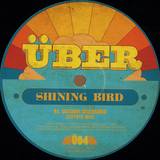
Uber picked up this beautiful mellowed out pop song by Shining Bird for a vinyl release after becoming totally captivated by its warm laid back Balearic feel. Shining Bird hail from Austinmer a coastal town just south of Sydney, Australia. They are a collective of friends who got together over their love of the sea, Australian cinema, Dennis Wilson's "Pacific Ocean Blue" Lp and the great Australian poet Henry Lawson. The second track Stitzing/Wipeout is another great alternative pop song in the same vein as Destroyer with the song blending into a 5 min piece of psyched out ambient. On the flip side Coyote remix Distant Dreaming into a horizontal percussion led dubby contemplative trip with pitched down vocals and a throbbing bassline. Uber continuing its crusade of finding and releasing music that captures their Balearic ethos.
Serious heat alert! Ridiculously rare sun drenched funky Soul from the mythical Raw Soul Express....
"The Way We Live" is as flawless as it gets, a superior piece of sweet Soul music from all the way down there in Miami, ultra sought after in it's original 45 issue & featuring some absolutely stellar production from the underrated George "Chocolate" Perry this record is an instant party starter! Featured on the mix-tapes & in the play-lists of some of the most discerning crate digging DJ's out there & an OG 45 will literally cost you an arm & a leg ($600 plus) this total gem of a record gets an overdue repress in it's original form. Essential!
Backed here with it's original b-side slow jam "This Thing Called Music" this ultra-rare 45 has been re-mastered, re-pressed & brought back for 2015's dance-floors in conjunction & with the permission of T.K. Disco / Henry Stone Music, Miami USA.
This EP was made during a period where my whole outlook on everything was transforming. The Voidloss project started as an investigation, I was conducting a lot of research and study on the mind, the occult, on different thought modes, and the Voidloss project represented this. The idea was about a leap in to the void. A leap of abandonment into the dark, with total acceptance, total commitment. The idea was to lose myself to the void. This was mainly a spiritual journey for me, and could be best explained by 3 things, the void of Miyamoto Musashi from Go Rin No Sho, The concept of the Tao from the writings of Lao Tzu, and the concept of the abyss from the works of Aleister Crowley. Part of this journey deep inside the self was frightening and horrific, the total loss of self, of all identity and ego, and part of it was beautiful and enlightening. I wanted the music to reflect this, and I wanted the music to change as I changed, as I went to and through all these interesting places. In essence this was about freedom. So fast forward some years and I felt I had sharpened my mind quite effectively, the music had twisted and changed and flowed with me. At the point I began making the music for this EP, I had grown quite angry with the amount of conformity I was perceiving in life. Politically, socially, musically, there was this drive of conformity in the world. I think part of it, and only a part, comes from the prevalence of social media, the need to belong and to be liked, the idea of judging yourself and your works through the perception of others. Musically I felt that within techno there was a tendency for the music to fit within a set of confines dictated by fashion and hype, and this was reducing the diversity of the music, it seemed also that the practices of commercial music were seeping in to techno as the music became more popular. Hype and business driven decisions, brand building and so on. I always felt techno was more about art, and I began to get frustrated. Equally I felt that politically there was less and less choice, as all decisions seemed to lead to the same outcomes. I became more interested in the concept of anarchism, of the idea that government was no longer needed. I have always in my life had a drive to question everything. I've always been 'naughty' and rebellious and done things my way, to my advantage or my disadvantage, I could never accept being anything other than myself all the way. If everyone walks in one direction, I will walk the other way, even if it takes me over the edge of a precipice, just to see what is there. All this stuff influences my music, and during the period of making this EP I was angry, kicking against the things I no longer liked or wanted, screaming dissent. There is a lot of anger and rage, and of course rebellion. I wanted the music to capture that unbridled fury you have when you are in your late teens, when you just start learning about yourself and you start rebelling and questioning things around the time the world is really pushing you to conform. I was soundtracking my own philosophical riot. Previous to this my Voidloss stuff had been more introverted, more pensive and melancholy, more self destructive, more cerebral. For this new music I wanted something more immediate but without being too obvious. In terms of the choices I made I still leaned more towards broken rhythms for beat structure. I find it very difficult to do anything interesting with 4x4 kicks any more, it's too rigid for me, it limits my freedom. I like the looseness you get from more 'drummer' like beats, I guess probably because I have been playing drums all my life. The challenge is to get the same rolling power from broken rhythms as you get from 4 to the floor. It's not easy, there is a ridiculous amount of trial and error and the rejection percentage is high. I also was trying to use less 'synthy' sounds. I wanted to try to take a more acousmatic approach to sound design. With the current modular synth revival in techno I was hearing a lot of 'old' synth sounds re-emerging, and this didn't seem like a progression to me. I wanted to make sounds that were hard to source for the listener, where they weren't sure if it was synth or real world sample, digital or analogue. This involved a lot of experimentation. My process involved a lot of field recording, especially with contact microphones, which open up a whole new world of interesting sounds. You are effectively recording sounds through objects in the environment, 'hearing' the world as these objects hear them, I was using guitars, feedback loops, handmade instruments as well. So I was combining this with different synthesis, granular synthesis, sample synthesis, physical modelling, FM synthesis and of course analogue. Everything was reprocessed and re-synthesised, I tried hard to obscure the source and make something new as much as possible. The stuff on this EP was part of my live PA for some time, so as I learned how the music worked live I could go back and make changes, sometimes the environment I was playing in transformed the sound as well, and so I would try to go back an incorporate this in to the music. For remixes I wanted to choose artists that I respected for their vision as well as for their output, so my list of people I wanted was extremely short. Inigo Kennedy has always been an artist I have respected greatly. His music has always been unique to himself, he remains outside of fashions and trends even though his name has become very big recently. He takes risks with his work, experimenting and exploring, yet remaining relevant to the club, and just tirelessly forging ahead, seemingly for the sake of art above all else. And he's just a really nice guy to deal with. His remix is everything I expected it to be in that it is the unexpected. Regis is another artist who forges his own path in music, you cant really even begin to discuss the avantgarde in techno without including his name, he is one of the foundation stones for artistry and the outsider mentality in techno. His music is always unique to his own vision, and along with it comes an interesting artistic philosophy taking in situationism, post punk and industrial ideology and a good dose of tricksterism ala PT Barnum, all of which comes out in his music and the way it is presented. The man is a truly singular force and it is an honour to have him on this record. Overall the concept here is that of rebellion and dissent. Of asking questions, following your own path, of maintaining some place in yourself that burns like a forest fire.
Whether or not I have succeeded I guess is down to the listener, I'm never happy with my music, I keep wanting to move forwards, or somewhere else, and am constantly trying and failing to capture some essence of perfection. But like Bukowski said
'It's the only good fight there is'