‘Perfect We Are Not’ the latest track from Soulwax, emerges directly from the band’s recent Abbey Road After Hours project - a unique collaboration with the iconic London studio that saw Soulwax take over the building for a series of recording sessions and a landmark live event.
Working across Abbey Road’s historic spaces - from Studio Three, to Studio Two, to Studio One - the band used all three rooms as a continuous creative environment, moving fluidly between them in pursuit of new material. It was within these sessions that ‘Perfect We Are Not’ was written and recorded with their full live band (including three drummers).
The track was cut using the studio’s vast array of analogue equipment before being pressed direct to vinyl and played as the opening moment of their 2manydjs set inside Studio One
Now released as a standalone single, ‘Perfect We Are Not’ carries that immediacy forward — a driving, full-bodied track that reflects the band’s instinctive, performance-led approach in the studio, and will also be released as a limited edition 12” via DEEWEE.
Suche:ta
2026 REPRESS
Pure, Distilled Dub. Upholding Jamaica's Legacy As Well As Germany's Unequivocally Influential Dub Techno Spirit, Moonshine Recordings Proudly Welcomes Their Next Addition To The Roster. On The Controls For The 9th Full-length Album Release, A True-to-the-roots, All-analogue Musician: Another Channel. Having Put Himself On The Map With Releases On Soukah's Blacksoil Records, Bristol's Transient Audio As Well As On Australian Imprint Modern Hypnosis, It's Now Time For The Album Release, We've All Been Waiting For. No Computer Involved As Impeccable Arrangements And Analogue Reverberations Unfold. Live And Direct In The Original Dub Mixing Fashion, The Augsburg-based Artist Uniquely Transports The Sonic Characteristics Of Rhythm & Sound Into The Present Time.
Subtle Vinyl Crackles Gently Introducing Meditative Beats, 'run Dub' Sets The Pace. Keen Listeners Find Themselves Embedded In Lively Echoes And Reverbs, Left To Bask In Smooth, Sonic Contemplation. Engineered To Soothe The Soul, Timeless Foundation Sound. Intensified Groove Meets Low-frequency Pressure In 'amir Dub' Among Haunting Melodica Fragments. '(yes!) Badness' Unsheathes Its Off-kilter Swing, Vocal And Foley Samples Musing In The Distance - Further Showcasing Another Channel's Technical Prowess. Heavy Chord Stabs And Delicate Overdrive Counterpoint The Immense Scope Of Conjured Space In 'ael Na Dub', Concluding A Beautiful A-side.
Lush Chords Lure Us To The Flip-side - 'solid' Kicks Off With A Staccato Bass-line In The Midst Of Lavish White Noise Surges And Minimal Drums. Rooted In Endless Feedback Trails, Steadily Kept In Check. Previously Teased, The Mighty 'ethiopian Dub' Steps Through In Full Glory, Carried By Militant Drum Motion And Forceful Low-end. On A More Spacious Excursion, 'uranus' Takes A Brightly Lit Stroll Through The Analogue Dub Universe, Led On By Another Channel's Signature Groove Propulsion. Pointing Back Towards A-side, Prolific Dub Proponent Babe Roots Presents His Musical Qualities In A Monumental Remix Of 'run'.
Berlin lo-fi crooner Der Assistent returns with "Ultramarin", a sun-faded suite of soft-focus pop, Balearic grooves and late-night yacht moods drifting between languages, moods and references – slightly surreal, and quietly melancholic.
Following the tropical haze of its predecessor "Amnesie am Amazonas", his third album makes a slightly bigger splash: classic late-80s digital pianos, downbeat grooves and flashes of dub-reggae intertwine with subtle soprano and alto saxophone lines that drift between lounge melancholy and nocturnal jazz.
Laid-back opening cut “Wenn der Scirocco weht” pays homage to Japanese lovers rock, while the dubby downbeat title track celebrates the color blue in French, English, Italian and German, echoing situationist slogans and painter Yves Klein’s idea of “the invisible becoming visible.” Lead single “Mann am Telefon” dives into hazy yacht-pop and lo-fi soul, gradually unfolding into an instrumental outro that recalls the early synth romanticism of Vangelis.
Across the album, Der Assistent traces a playful tale of split personalities – with subtle nods to Fight Club and Blade Runner – culminating in the lush closing 80s R&B ballad “Total Confusion”.
Written, recorded, produced and mixed entirely by Der Assistent, Ultramarin also inaugurates his new imprint of the same name.
RIYL: Fishmans, Eddie Chacon, The Zenmenn.
- 1: Punk Art
- 2: Someone’s Tuning Up
- 3: Punk Rock Daze
- 4 1: 2-3-4
- 5: Mal-One’s Out To Lunch
- 6: The Ballad Of Punk Rock
- 1: Holiday In Other People’s Misery
- 2: Future Nostalgia
- 3: Welcome To The Punk Rock Disco
- 4: The Ballad Of Johnny Rotten
- 5: Those New York Dolls
- 6: Punky Rocking Xmas
Yes here we are 50 years on from year zero 1976 (where did that go!!!). To celebrate this and the fact we are all still here and talking about the importance of the Punk Rock movement i put together an album under the banner Punk Rock Daze. The title reflects it was all such a daze, as it ran by so fast and also as a reminder of an old Malcolm McLaren remark that came to mind. That when the band and management were discussing the look and name of the Sex Pistols forthcoming album ‘Never Mind The Bollocks’. Malcolm remarked, lets sell it as you would sell washing powder, bright, simple and with fluorescence colours. Great idea so here is my homage to that thought.
So I hope you enjoy the gesture and here’s to another 50 years of Alchemy, Joyousness and
instruction (Anarchy, Chaos and Destruction).
Peace and Punk Mal-One
Precisely one year after Lézire, Crush of Souls is back with his third full-length album.
The musical endeavour of Charles Rowell – active in the indie/punk global scene since 2008 with bands like Crocodiles, Flowers of Evil, Issue – is just like its creator: always cooking up something. Relentlessly.
Now, as it was perceivable by the trajectory undertaken by after his previous LP, Captive Youth leaves goth rock and dark folk aside and head swiftly towards some old school 80’s EBM & 90’s Industrial dance vibe. After all, any album exploring themes of dystopia, politics and sexuality requires a strong rhythm. So how could this new chapter not mention seminal synth-pop and body music classics such as Technique by New Order, Belief by Nitzer Ebb, Towards Thee Infinite Beat by Psychic TV and Pressure Points by Anne Clark?
Forever a displaced soul, Charles’ album number three feels like a revision of Crush Of Souls and also a reanimation of his captive youth spent moving from town to town. The energy of the wandering worker poet. Warehouse basslines, artillery fire backbeats. Romance and melancholy wrapped in barbed wire. All this and more oozes from nine new tracks that inevitably deliver that blurry sexy urban vibe that’s become the project’s trademark.
Features collabo hit single Domination with Sade Sanchez from L.A. Witch.
Yellow Vinyl[26,68 €]
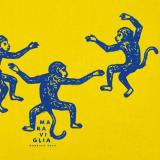
araviglia, the sixth album by Italian percussionist and producer Gabriele Poso, celebrates collective musicianship through a vibrant, groove-driven sound. Inspired by late 70s Italian disco and global rhythms, the record blends Mediterranean warmth, Afro Caribbean percussion and jazz sensibility, with one foot firmly on the dancefloor. Recorded live to tape in an analog studio in southern Italy, with heavy percussion, Rhodes, Hammond and a full brass section, the album delivers an organic, joyful sound built for both deep listening and global dance floors.
Black Vinyl[25,00 €]
araviglia, the sixth album by Italian percussionist and producer Gabriele Poso, celebrates collective musicianship through a vibrant, groove-driven sound. Inspired by late 70s Italian disco and global rhythms, the record blends Mediterranean warmth, Afro Caribbean percussion and jazz sensibility, with one foot firmly on the dancefloor. Recorded live to tape in an analog studio in southern Italy, with heavy percussion, Rhodes, Hammond and a full brass section, the album delivers an organic, joyful sound built for both deep listening and global dance floors.
Black Vinyl[26,68 €]
2026 Repress
Here's to a special one..
Ashtar Afterhours is Kenneth Graham - originally from Los Angeles, he has been a defining presence in electronic music ever since the 90s. Buying his first classic synthesizer, a Yamaha CS01, in 1984, he delved into music production at an early stage. Kenneth put out over 40 releases over the years- under his own name as well as stepping up under various aliases- Estelle Montenegro, KG Beat, Exit Strategy and many others. Kenneth also formed some super-groups together with friends, his Sun Children / Sunkiss project- together with David Alvarado- put out highly influential music on legendary Peacefrog Records.
Body Music was originally released on Plastic City in 2001 and it has been a Smallville favourite since a long time, so we are super happy to present this beauty as a repress, as always with a full cover artwork by Stefan Marx.
All tracks written & produced by Kenneth Graham, B3 w&p by Kenneth Graham & Gabriel Ortega
Vinyl cut by Helmut Erler at Lathesville
Early DJ Support: Massimiliano Pagliara, Paranoid London, Logan Fisher, Terry Farley, James Holroyd, Rocky (X Press 2), Francois K, Marcel Vogel, Sean Johnston, Austin Ato, Ron Basejam, Richard Rogers, Oliver Dollar, Crazy P and many more
Creating an international name for itself over the past decade as a sample pack label, Samples From Mars made its inevitable venture into the music world originally as a home for founder Teddy Stuart’s work. Long before making samples, Stuart garnered credits working as a grammy-nominated recording engineer in the hip hop world, and DJing / producing with Justin Strauss as A/JUS/TED, for labels such as DFA, Domino Records and Southern Fried Records. Now the label is set to release a variety of genres - house, disco, techno, ambient, all with a vintage tinge and a focus on high quality, analog production.
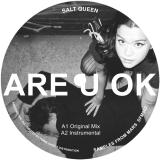
Enter Salt Queen. Visual artist and musician Magali van Caloen together with Samples From Mars founder, Teddy Stuart. Based in New York, the duo combine hardware dance aesthetics with dry, salty takes on familiar club moments into music that sits somewhere between funny, raw and unpredictable.
Salt Queen’s debut ‘ARE U OK’ is an acid-laced, deadpan spoken word track with an opening line that snaps any room to attention. A disorienting club encounter unfolds over Italo-inflected 808s and a relentless 303 bassline. There are no chords and no melodies - just a skeletal groove and an intimate voice circling the dancefloor. Drifting between concern and provocation, the vocal runs through cliché club conversations before destabilizing completely into a siren-laden crash out. The ‘Freak Nasty Club Mix’ ditches the plot and lets the hardware breathe, with a thick SH-101 bassline anchoring the first half before a sudden switch into an unrelenting acid pattern that refuses to settle. Two versions of the same wild night out.
- A1: Trigger
- A2: I’m Hungover And Went To Church
- A3: Hockey
- A4: D.o.a
- A5: Intrusive Thoughts
- B1: Jumper
- B2: Eleven87
- B3: Substance
- B4: Human Stereotype
- B5 5: Bridges
Near the end of fifth grade, Eli Edwards’ mom gave him $20 and told him to go find a friend. His team had won its soccer game that day, so they were out celebrating at a local pizza parlor with games. But, more importantly, there had been one other Black kid that day on the pitch in Spanaway, WA, a Tacoma suburb and military-base town at the rainy northwest corner of the United States. That kid just happened to be Xayvien Young. An instant deep connection was formed between Edwards and Young—Eli and Xay, as they prefer to be called were inseparable— and now twelve years later they are the electrifying, boundary-skipping duo Casi.
Along the way, Eli had relocated to Los Angeles with the indie rock band Enumclaw he had helped found, but he found himself flying home maybe a little too much. He was ostensibly visiting his girlfriend, but he spent most of his time with Xay. They cut tracks in every bit of free time they found until they had an epiphany: Maybe this music they’d made together for a dozen years was actually something special. Casi’s 10-track, self-titled debut out on Carpark Records is the electrifying proof they needed.
On the record, they enthusiastically explore every musical interest they have ever had—explosive hip-hop and unbridled hardcore, high-gloss nü metal and a little bit of emo—as a pair. These songs don’t ignore genre lines; they delight in destroying them, in finding ways to slam hip-hop and hardcore, emo and nü metal together until it seems illogical that they were ever apart. Take “Jumper,” where heavy metal guitars and face-kicking drums stir the moshpit for rabid verses about crushing ICE and the lessons you learn riding the poverty line. And take closer “Bridges,” where the melodic imprint of Deftones meets the relentless confessions of Death Grips. Here are the hard, funny, and loud stories of two 23-year-olds, screaming about the world over a breathless composite of all the music they’ve ever loved.
When Eli was in Los Angeles, Xay missed his friend. But in his absence, he also felt the spark of inspiration. Music was something that had just been their childhood hobby, but now Eli was in a rock band that had press accolades and tours. He got serious about the craft. Eli would write about the dislocation and isolation he felt in California, while Xay would document the hardships of being a young Black man with a complicated family while working menial jobs in Spanaway.
This isn’t a coming-of-age album for Casi; it is, instead, a raw and riveting snapshot of that process, painful as it can be. “Eleven87” is a breakup song, a soul beat springing beneath arching emo vocals. And “Intrusive Thoughts” treats that topic like a punching bag, Eli and Xav fighting against the mental habits that keep them down. These 10 songs instantly close that gap.
- 1: Double Moon
- 2: Dusk (How To Fly)
- 3: Double Moon (Wilson Tanner Dub)
Die Synthesistin und Komponistin Emily A. Sprague verbindet intuitive Klangstrukturen mit ausdrucksstarkem Songwriting und schafft so weitläufige Klangwelten, die unmittelbar und mitreißend sind. Nach ersten Experimenten mit Gitarre und Keyboard als Teenager gründete Sprague Anfang der 2010er Jahre die Indie-Band Florist, mit der sie ein treues Publikum gewann, bevor sie sich 2017 unter ihrem eigenen Namen auf Umwelt- und Ambient-Kompositionen verlegte. Zu ihren Veröffentlichungen zählen mehrere Alben aus beiden Projekten, zuletzt Florists ,Jellywish" und ,Cloud Time" aus dem Jahr 2025 sowie nun die EP ,Double Moon". ,Double Moon" zeichnet psychische und greifbare Landschaften als parallele Welten nach. Durch beschwörende Wiederholungen und durchscheinende Klangfluten ebnet Sprague einen initiatorischen Weg mit modularer Komplexität und lyrischer Weitsicht, untermalt von V Haddads transparenter Stimme. Mit instinktiver Präzision offenbart ,Double Moon" sensorische Weite durch viszerale, szenische Komposition. Geprägt von gepatchten Farbverläufen, frostigen Winkeln und warmen, melodischen Wellen dreht sich jeder Klang um den nächsten, taucht gleichzeitig auf und verschwindet wieder in einem fesselnden Klangbogen. Dieser Track bewegt sich in schillernder Subtilität - die Farbe der Nacht, die sich über den Himmel zieht und die Silhouetten beleuchtet, die sie erst möglich macht.Der mittlere Track, ,Dusk (How to Fly)", ist seinem Titel getreu ein subtiles und bewegendes Experiment, das den Ausklang des Tages heraufbeschwört, zusammen mit einem flüchtigen Anflug von Erhabenheit und der nahen Möglichkeit des Fliegens. Faszinierend in seiner nachdenklichen Drift und leuchtenden Bildsprache verschmilzt der Track sanft synthetisierte Fäden mit einem langsamen akustischen Rausch - eine Melodie, die in grenzenlose Richtungen treibt. Geleitet von Spragues unverwechselbarer Gesangskaskade und briefartigen Fäden webt sich eine beschwingte Sequenz mühelos von grundlegenden Erinnerungen zu einer weiten emotionalen Öffnung und fragt: Wie könnten wir auf andere Weise hier sein? Wie können wir überhaupt etwas fühlen?« ,Double Moon (Andras Dub)" verleiht Spragues Originalkomposition eine strahlende Note: Der australische Produzent Andrew Wilson, alias Andras und eine Hälfte von Wilson Tanner, verwandelt die Textur des Originaltracks durch tiefe, strahlende Rhythmen. Jeder Takt springt und zerstreut sich, um etwas völlig Neues zu erschaffen.
The Trip To Vega is about deep outer space odyssey that occurs in the process of traveling from Earth through the Cosmos to another "favorable" star system 25.3 light-years away.
The time is year 2097, Sept 23rd.
To this day, Earthlings have managed to dodge some of nature's more dangerous extremities, massive volcanic eruptions, Earthquakes, solar burst that knocked out the Planet's entire electrical grid for 3 years, numerous plagues of disease, food and fresh water shortages, domestic and International Wars and many other life-changing operas, but for this event, what remains is a realization that has no remedy. The cause: Earth's physicality has changed. It is no longer favorable for living things.
It is the constant shifting of the planet's internal tectonic plates which has unfortunately produced an unexpected and impassable dilemma.
Because of the collisions, deep within the planet's core, the planet is now producing an extraordinary amount of sound that includes a specific harmonic frequency that erodes the natural senses of all life on Earth.
It is intensifying. It is intolerable and it is unlivable.
Yet, some humans prefer to stay, to "ride it out" like the Titanic captain going down with his ship. Some, in total disbelief as some have concluded it is the second coming of Jesus Christ. But for most, the decision is clear. Tolive another day, leaving is the only rational choice.
At an increasing rate, scientific research data shows that humans and most animals, excluding the Jellyfish will eventually lose the usage of hearing and are to greatly suffer from an array of other neurological and psychological effects. The sense of touch and taste, sleep depreciation, severe nerve damage, constant hallucinations. Everyone will lose many of their cognitive abilities within an estimated 12 months from now.
On this day and every 7 days afterwards until all registered passengers have departed, the first of a fleet of large number of massive size spacecraft carrying approximately 1 million humans per vessel will permanently leave Earth to begin the long and adventurous trek across outer space to a new home: Vega.
This is not a precautionary tale as there is nothing to learn. Instead, a decision has been made and a Trip To Vega is the consequence.
- Jeff Mills
- 1: Dee Dee Brave – My My Lover (Tony Humphries Dub)*
- 2: The Brotherhood – Love Will Make It Right (Club Mix)
- 3: Deuce & Satin – Hyper
- 4: Jomanda – Make My Body Rock
- 5: Bobby Harding – Feelin' Happy (The Kiki Club Mix)
- 6: Man Machine – Elektro-Genetik
- 7: Mae-1 – Sweet Feelin’
- 8: Romanthony – Falling From Grace (Tony Humphries Demo Mix)*
- 9: Kerri Chandler – Kerri Kaoz Beat (Acetate Instrumental)*
- 10: Jomanda – Don’t You Want My Love (Street Style Mix)
- 11: Anthony Thomas – You Don’t Love Me
- 12: Jay Williams – Sweat (Dance Track)
- 13: Jay Williams – Sweat
- 14: Precious – Definition Of A Track
- 15: Victor Romeo Presents Leatrice Brown – Love Will Find A Way (Zanzibar Edit)*
- 16: When Worlds Collide – Deep (2263 Mix)
- 17: Mondee Oliver – Make Me Want You (Club Mix, Extended)
- 18: Deskee – Let There Be House (Mix Abcd I)
- 19: Ed The Red Feat. Mj White – Broken Promises (Club Mix)
- 20: Mr. Monday – Appreciate
- 21: How Ii House – Time 2 Feel The Rhythm (Symphonic Mix)
- 22: Romanthony – In The Mix (A Tribute To Tony Humphries)
- 23: Billy “Jack” Williams Presents Utterance – Grant Me Utterance
(*Previously unreleased)
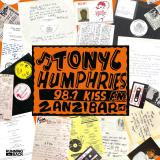
Telling a tale of house music’s early days or roots without mentioning Tony Humphries as a club DJ, remixer and radio disc jockey would make it an incomplete, forged and most of all a bit of a yawn.
Born in Brooklyn in 1957, Humphries’ musical journey is synonymous with New York City’s dance music history and the evolution from uptempo soul music to house: from being a dancer at David Mancuso’s infamous Loft parties to becoming a mobile DJ and getting the call from Shep Pettibone to become his right hand at
the then new Kiss FM radio station, followed by countless remix offers and a legendary residency at Newark’s Club Zanzibar. Next to that one, is was especially his work as a radio disc jockey for said station during most of the 1980s until 1994 that gave him majestic clout. Breaking new records week in, week out,
putting New Jersey acts like Adeva and Jomanda or countless up-and-coming producers from there on the musical map, while simultaneously playing the hottest imports from Europe, trax from Chicago, dance classics and all things straight from New York’s music factory that never seemed to stop.
Going to his vast and almost complete archive of radio shows from way back when he graced those airwaves, we at Running Back Records have pickedNew Release Information original recordings that symbolize his importance as an industry giant and ambassador of this style of music.
„But one thing I would like to point out is that, as a DJ, the music I play is not my music. I want to make it perfectly clear that it is music that is released, and it’s everyone’s music. I do not take any other credit than being the middle person exposing this music.“
(Tony Humphries in: What Kind of House Party Is This?, Jonathan Fleming, 1996)
- A1: Dee Dee Brave – My My Lover (Tony Humphries Dub)*
- A2: Jomanda – Don’t You Want My Love (Street Style)
- B1: R-Tyme – Illusions (Mayday Mix)
- B2: Blakk Society Feat. David Hollister – Just Another Lonely Day (Club Mix)
- C1: Anthony Thomas – You Don’t Love Me
- C2: Victor Romeo – Love Will Find A Way (Zanzibar Edit)*
- C3: Romanthony – In The Mix (Tony’s Classic Mastermix)
- D1: Slam – Eternal
- D2: Mondee Oliver – Make Me Want You (Club Mix, Extended)
- E1: Bobby Harding – Feelin' Happy (The Kiki Club Mix)
- E2: Deskee – Let There Be House (Mix Abcd I)
- E3: Bizzy B – B With U
- F1: When Worlds Collide – Deep (2263 Mix)
- F2: Jay Williams – Sweat (Dance Track)
(*Previously unreleased)
Telling a tale of house music’s early days or roots without mentioning Tony Humphries as a club DJ, remixer and radio disc jockey would make it an incomplete, forged and most of all a bit of a yawn.
Born in Brooklyn in 1957, Humphries’ musical journey is synonymous with New York City’s dance music history and the evolution from uptempo soul music to house: from being a dancer at David Mancuso’s infamous Loft parties to becoming a mobile DJ and getting the call from Shep Pettibone to become his right hand at
the then new Kiss FM radio station, followed by countless remix offers and a legendary residency at Newark’s Club Zanzibar. Next to that one, is was especially his work as a radio disc jockey for said station during most of the 1980s until 1994 that gave him majestic clout. Breaking new records week in, week out,
putting New Jersey acts like Adeva and Jomanda or countless up-and-coming producers from there on the musical map, while simultaneously playing the hottest imports from Europe, trax from Chicago, dance classics and all things straight from New York’s music factory that never seemed to stop.
Going to his vast and almost complete archive of radio shows from way back when he graced those airwaves, we at Running Back Records have pickedNew Release Information original recordings that symbolize his importance as an industry giant and ambassador of this style of music.
„But one thing I would like to point out is that, as a DJ, the music I play is not my music. I want to make it perfectly clear that it is music that is released, and it’s everyone’s music. I do not take any other credit than being the middle person exposing this music.“
(Tony Humphries in: What Kind of House Party Is This?, Jonathan Fleming, 1996)
- A1: Jomanda – Make My Body Rock
- A2: Mae-1 – Sweet Feelin’
- B1: Billy “Jack” Williams Presents Utterance – Grant Me Utterance *
- B2: Precious – Definition Of A Track
- B3: Man-Machine – Elektro-Genetik
- C1: Jay Williams – Sweat (Sweat The Club Mix)
- C2: Kerri Chandler – Kerri Kaoz Beat (Acetate Instrumental)
- D1: Romanthony – Falling From Grace (Tony Humphries Demo Mix)*
- D2: Ed The Red Feat. Passion In Fashion – 1-900 (Instrumental)
- E1: The Brotherhood – Love Will Make It Right (Club Mix)
- E2: A Slice Of Life – You Make Me Feel So (Asol Mix)
- F1: The It – Donnie (Hardy Mix By Ron Hardy)
- F2: Cisco Ferreia – Cisco’s Groove
(*Previously unreleased)
Telling a tale of house music’s early days or roots without mentioning Tony Humphries as a club DJ, remixer and radio disc jockey would make it an incomplete, forged and most of all a bit of a yawn.
Born in Brooklyn in 1957, Humphries’ musical journey is synonymous with New York City’s dance music history and the evolution from uptempo soul music to house: from being a dancer at David Mancuso’s infamous Loft parties to becoming a mobile DJ and getting the call from Shep Pettibone to become his right hand at
the then new Kiss FM radio station, followed by countless remix offers and a legendary residency at Newark’s Club Zanzibar. Next to that one, is was especially his work as a radio disc jockey for said station during most of the 1980s until 1994 that gave him majestic clout. Breaking new records week in, week out,
putting New Jersey acts like Adeva and Jomanda or countless up-and-coming producers from there on the musical map, while simultaneously playing the hottest imports from Europe, trax from Chicago, dance classics and all things straight from New York’s music factory that never seemed to stop.
Going to his vast and almost complete archive of radio shows from way back when he graced those airwaves, we at Running Back Records have pickedNew Release Information original recordings that symbolize his importance as an industry giant and ambassador of this style of music.
„But one thing I would like to point out is that, as a DJ, the music I play is not my music. I want to make it perfectly clear that it is music that is released, and it’s everyone’s music. I do not take any other credit than being the middle person exposing this music.“
(Tony Humphries in: What Kind of House Party Is This?, Jonathan Fleming, 1996)
Dewa Alit, master of radical Balinese gamelan, returns to Black Truffle with Baur Bentur. Genetic (2020, BT063) introduced international listeners to the magical sound-world of Alit’s Gamelan Salukat, who perform on instruments tuned to a unique scale derived from modified versions of two traditional Balinese scales. The two pieces heard on Chasing the Phantom (2022, BT093) further demonstrated his radical fusion of tradition and experimentation, with passages where unorthodox techniques make the acoustic ensemble resemble glitching electronics. Baur Bentur now highlights another aspect of Alit’s work, presenting pieces composed in 2024 and 2025 where Gamelan Salukat performs alongside virtuoso pianist Sri Hanuraga. Alit’s music is grounded in deep reflection on the tradition of Balinese gamelan and its place in the contemporary world. His title, ‘Baur Bentur’, which translates as ‘mixing and smashing’, points to his embrace of the intercultural mixture of Eastern and Western elements in the search for innovation. Against the calcification of Balinese music into tourist entertainment, Alit poses his searching, experimental work, which celebrates the communal values and performance practices of traditional gamelan while pushing into startling new directions.
‘Sukat Tacara’ is a study in layered tempos, meters, and polyrhythms, a constantly shifting dialogue between piano and the instruments of Gamelan Salukat. It begins close to a traditional concerto, pairing a brisk sequence of melodic variations from the piano with a spare but propulsive accompaniment of drums and hanging metallophone tones, punctuated by low gong strikes. The piano builds in volume and density across a rapid succession of fragments, at points recalling George Antheil’s ticking wind-up machinery, though Hanuraga’s jazz background shines through in the fluidity with which he navigates the complexities of the score, where chromatic movement co-exists with bluesy phrases. An abrupt change in the piano to patterns of dense clusters introduces a new episode, during which the metallic instruments of the gamelan enter the foreground. The piece dazzles with its inventive rhythms and dynamics, building to a stunning passage featuring the signature heavy muting technique of the Gamelan Salukat metallophones in kinetic patterns that would be at home on a Príncipe release.
The title piece begins at high intensity and rarely lets up, working through bracing unison ensemble melodies and punctuation points where piano and gamelan together seem to become a single, thudding drum. For much of the piece the piano is tightly integrated into the ensemble, the harmonic extensions of the melodic line subsumed into a moving cloud of complex overtones generated by the gamelan instruments. Wildly kinetic on the rhythmic level, the piece swarms with microscopic movements of beating patterns generated by the ‘blend and crush’ of three simultaneous tuning systems: the equal temperament of the piano and the saih cenik (small scale) and saih gede (big scale) used by the gamelan instruments. Accompanied by the composer’s thoughtful liner notes and images of the musicians, Baur Bentur is a stunning next step in Alit’s radical combination of tradition and innovation.
Staffan Lindberg’s Revéillon EP links Rio baile funk, São Paulo club mutations and Stockholm electronic craft. Made with Brazilian MCs Maromba and G7, it grew from Instagram DMs, nights at Pedra do Sal, Copacabana on New Year’s Eve and a shared taste for whisky, Red Bull and pick-and-mix.
Raw, playful and transportive, the EP landed digitally on April 3rd, with vinyl to follow in June on Studio Barnhus.